Layer-Resolved Grain Morphology and Recrystallized Crystal Evolution in FSP-Assisted Wire Arc Additive Manufacturing of Aluminum Alloy 4043


Abstract
1. Introduction
2. Materials and Methods
2.1. Materials
2.2. Wall Fabrication
2.3. FSP Torque Measurement
2.4. Microstructural Characterization
2.5. Constitutive Framework
2.6. Sampling and Repeatability
2.7. Statistical Analysis
2.8. Mechanical Characterization
3. Results
3.1. FSP Torque per Layer
3.2. MIG vs. MIG + FSP: Layer-Resolved Grain Area
3.3. MIG + FSP Multi-Descriptor Layer-Resolved Grain Morphology
3.4. P/A Ratio: Non-Monotonic Layer Evolution
3.5. Grain Size Distributions: Log-Normal Analysis by Layer
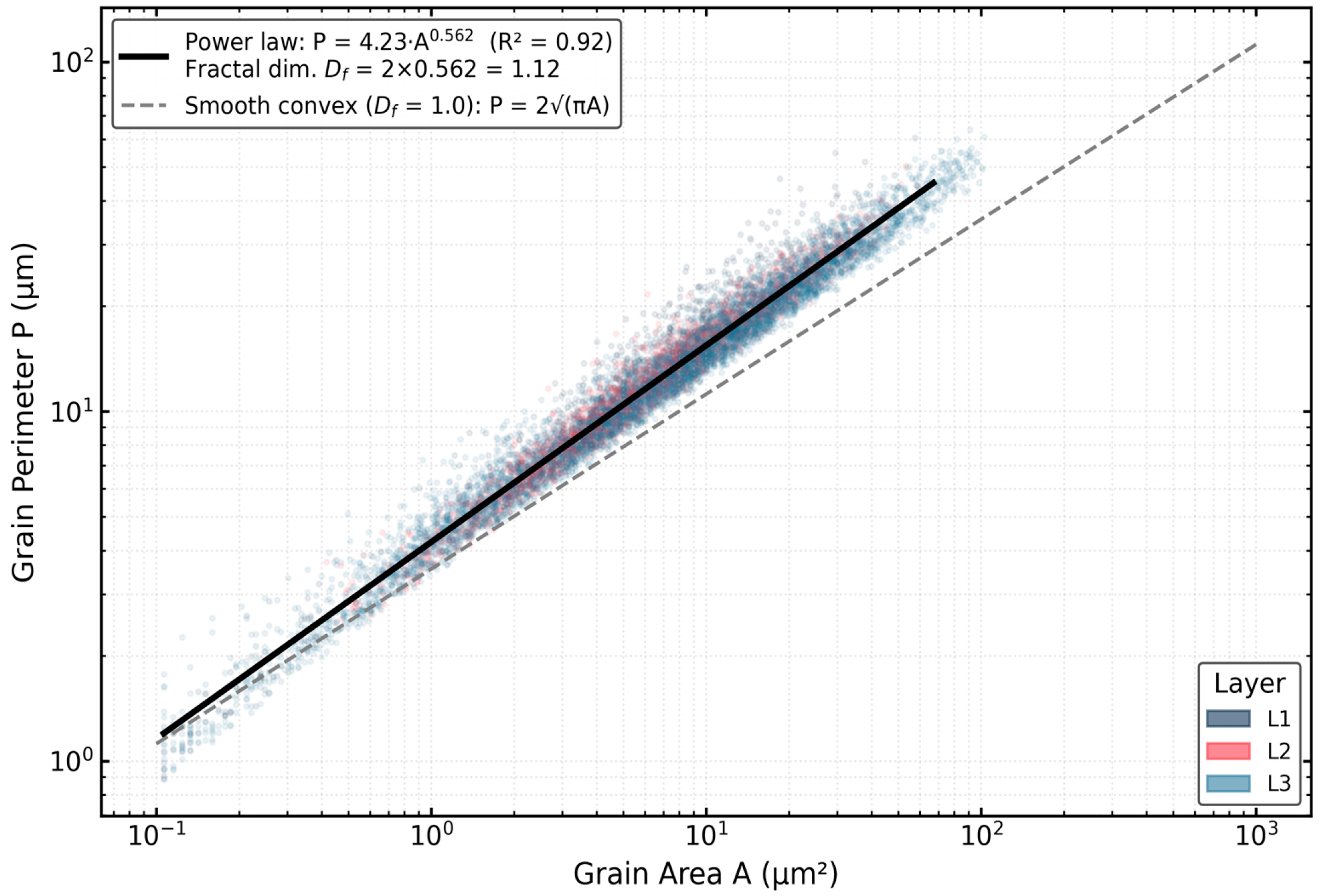
3.6. Perimeter–Area Power Law
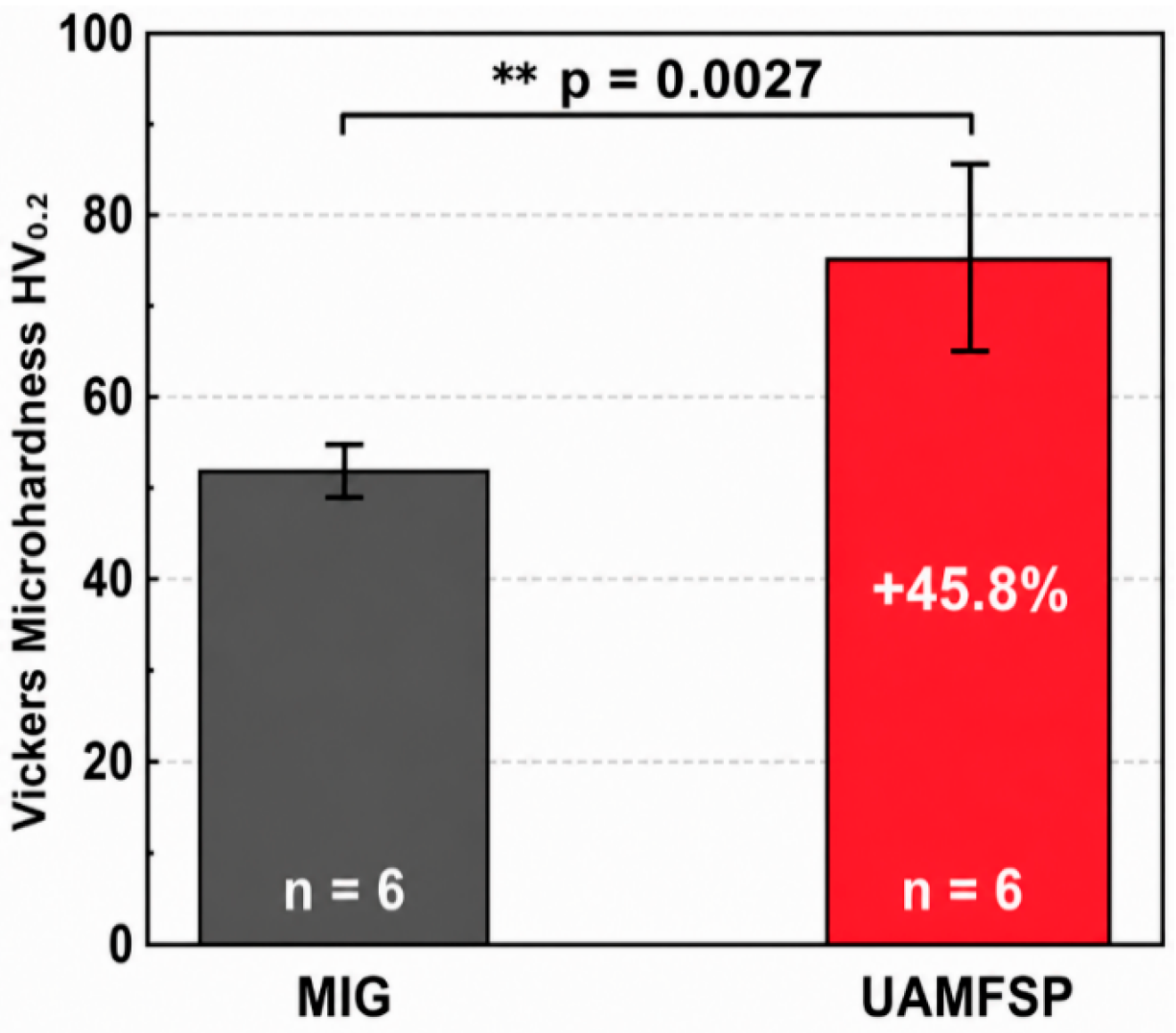
3.7. Mechanical Properties
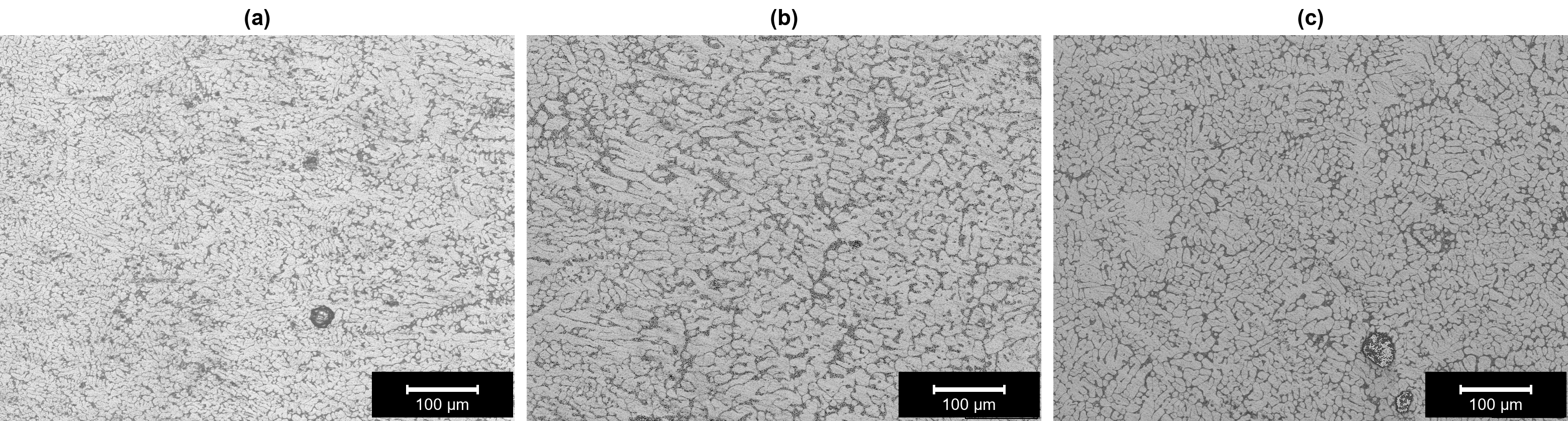
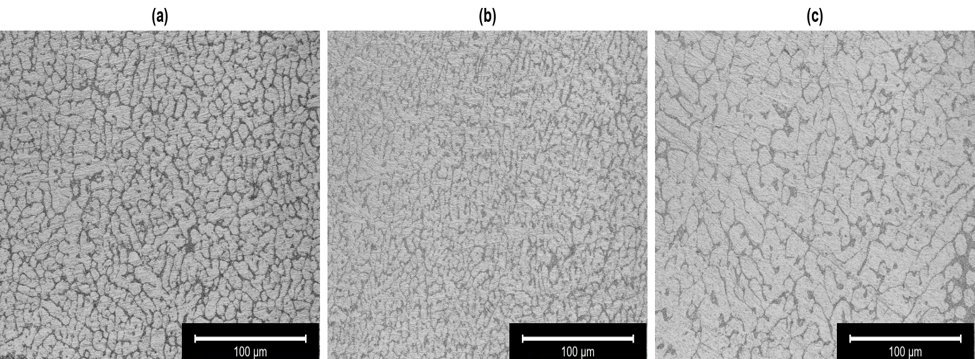
3.8. Representative Optical Micrographs
3.9. Scanning Electron Microscopy: Grain Structure and Second-Phase Particles
4. Discussion
4.1. Torque–Grain Size Coupling: Physical Mechanism
4.2. P/A Ratio as a Layer-Resolved Stored Energy Index
4.3. Grain Size Distribution and DRX Mechanism
4.4. Process–Microstructure–Property Chain
4.5. Limitations
5. Conclusions
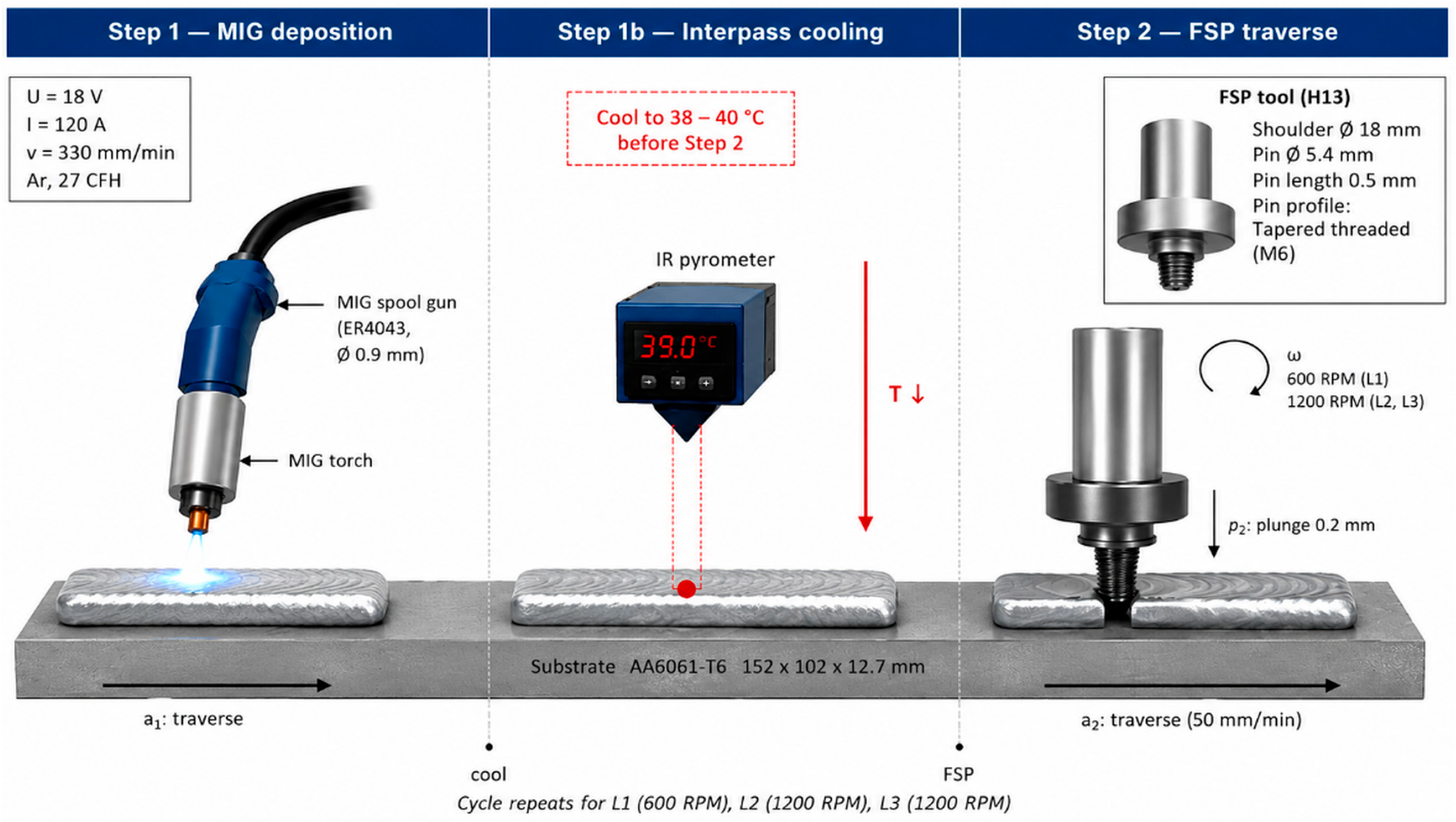
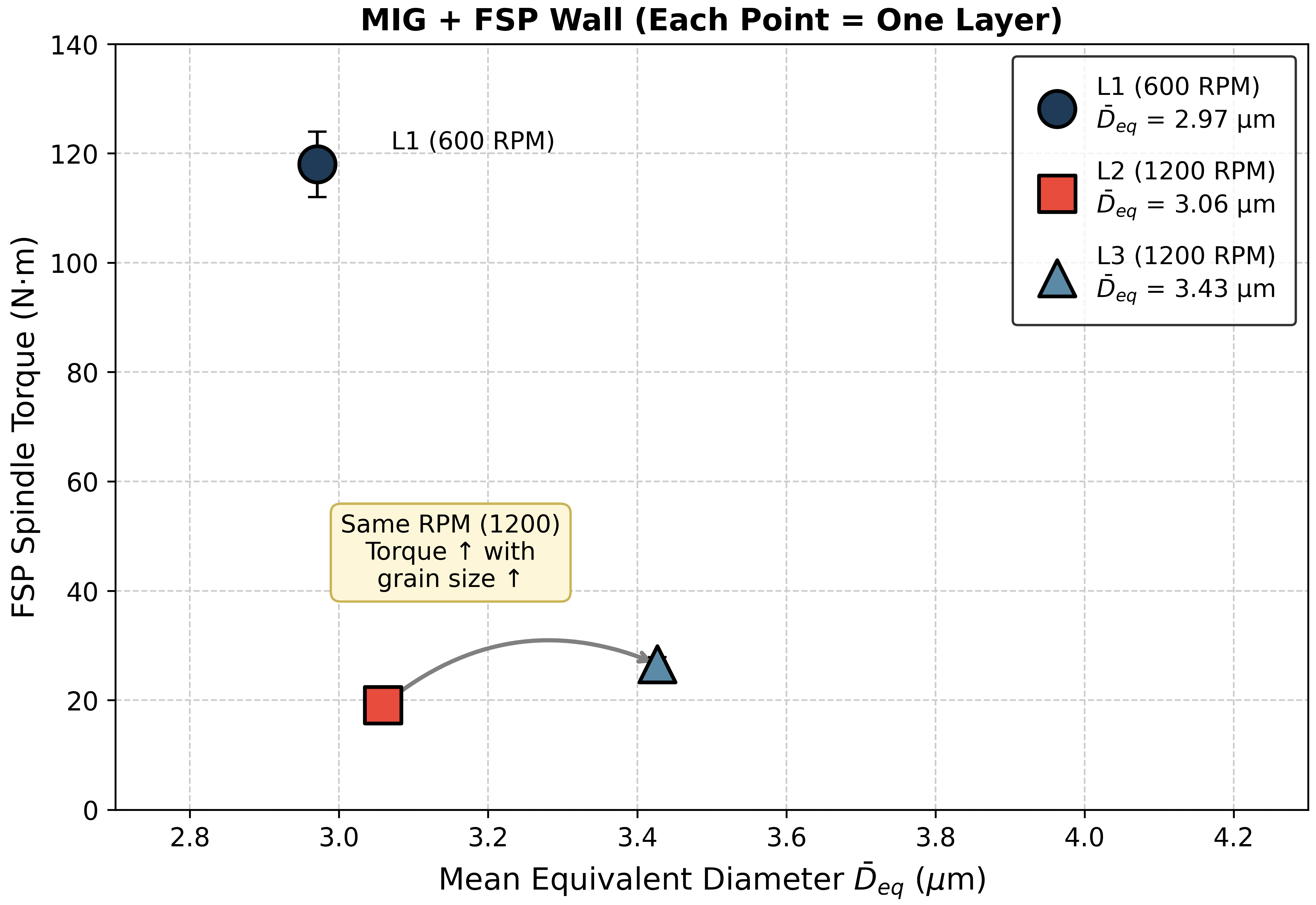
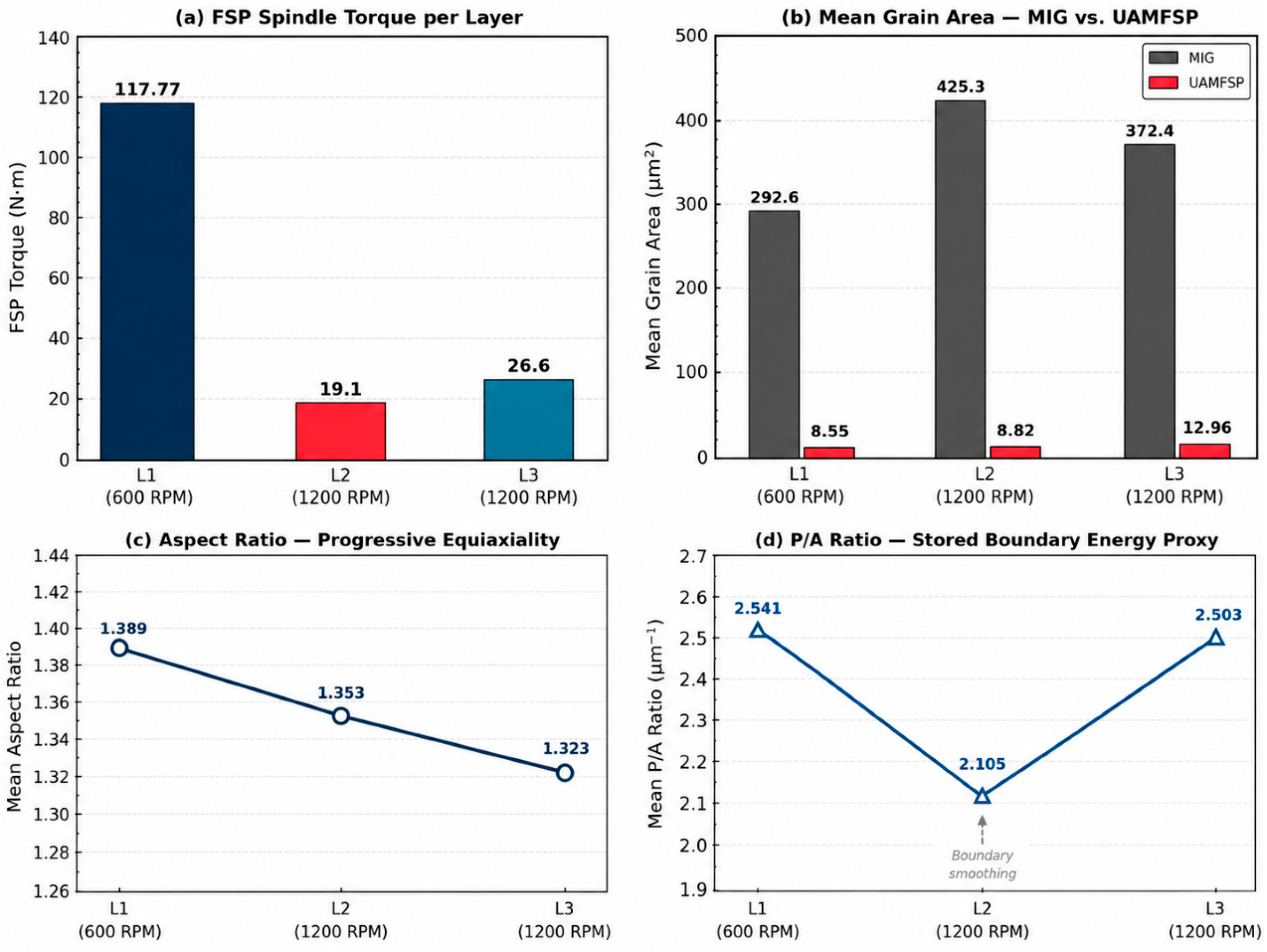
- The FSP spindle torque varied systematically across the three build layers: 118 ± 6 N·m at 600 RPM (L1), and 19.1 ± 1.0 and 26.6 ± 1.3 N·m at 1200 RPM (L2 and L3). Within the 1200 RPM group, Layer 3 required approximately 39% higher torque than Layer 2, which is qualitatively consistent with the larger grains at L3 (D(A) = 4.06 vs. 3.35 μm) providing less grain boundary resistance, in line with the d−p term in Equation (1). The L1 → L2 contrast at the RPM step couples temperature, strain rate, and grain-size effects and is interpreted directionally rather than quantitatively.
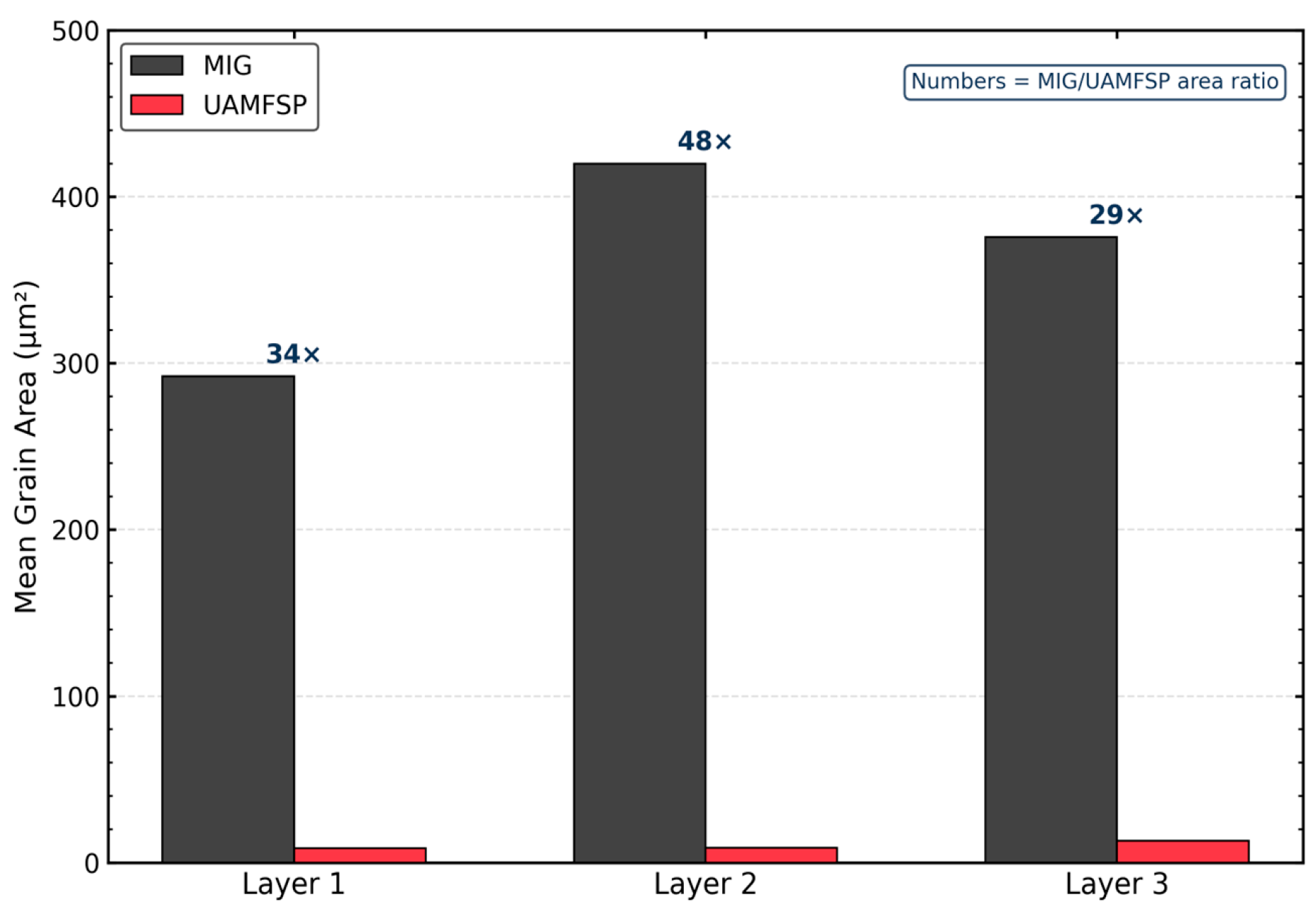
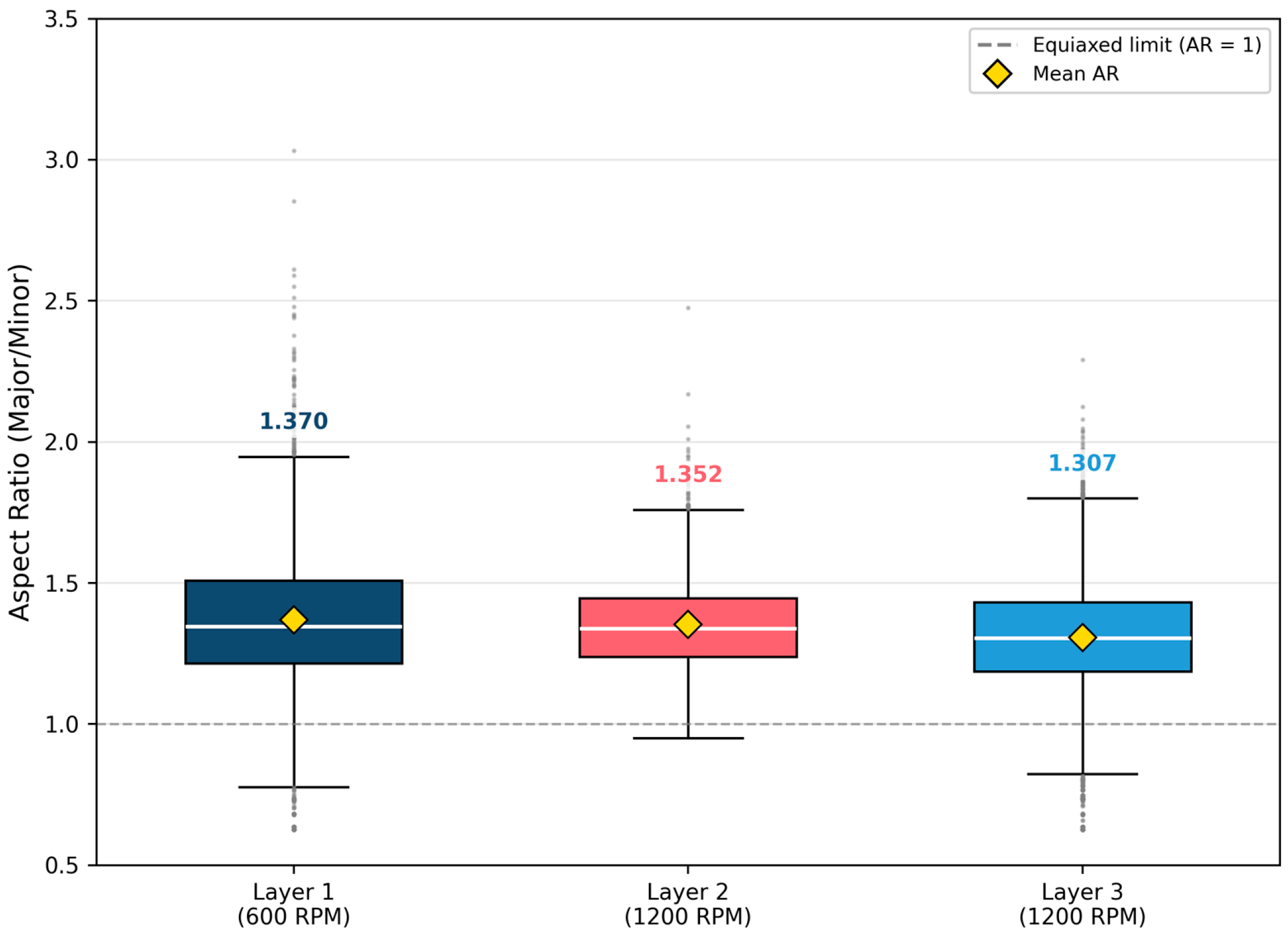
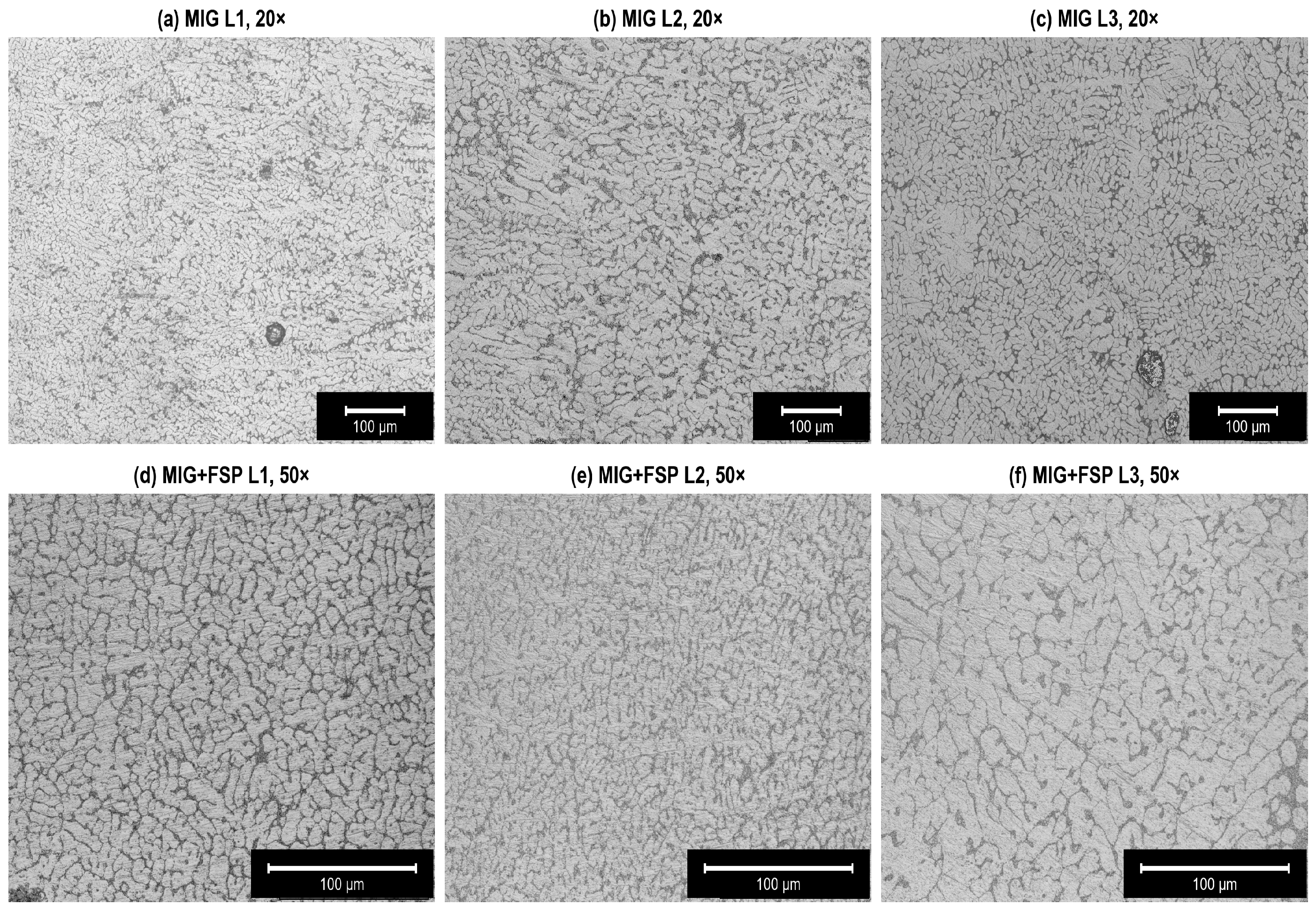
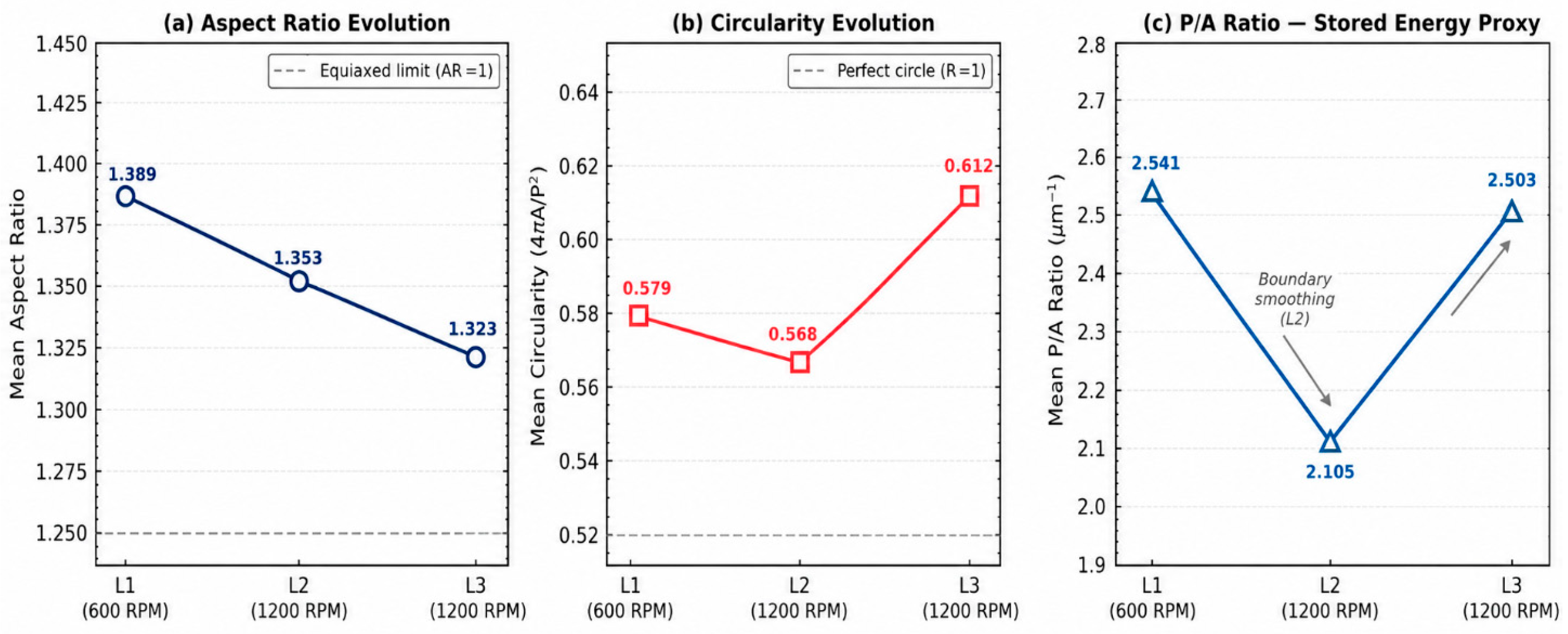
- The MIG + FSP wall achieved grain areas of 8.55, 8.82, and 12.96 μm2 (L1–L3), representing 34×, 48×, and 29× refinement relative to the MIG wall (292–420 μm2). The aspect ratio decreased monotonically (1.389 → 1.323), which is consistent with the enhanced DRX under the higher heat input and strain rate of the 1200 RPM upper-layer processing.
- The P/A ratio exhibited a non-monotonic layer dependence (2.541 → 2.105 → 2.502 μm−1). Layer 2 showed the lowest boundary energy density from the double thermal exposure; Layer 3 retained a higher complexity from a single FSP pass without annealing. This asymmetry encodes the build position-dependent stored energy that is not captured by the mean grain size.
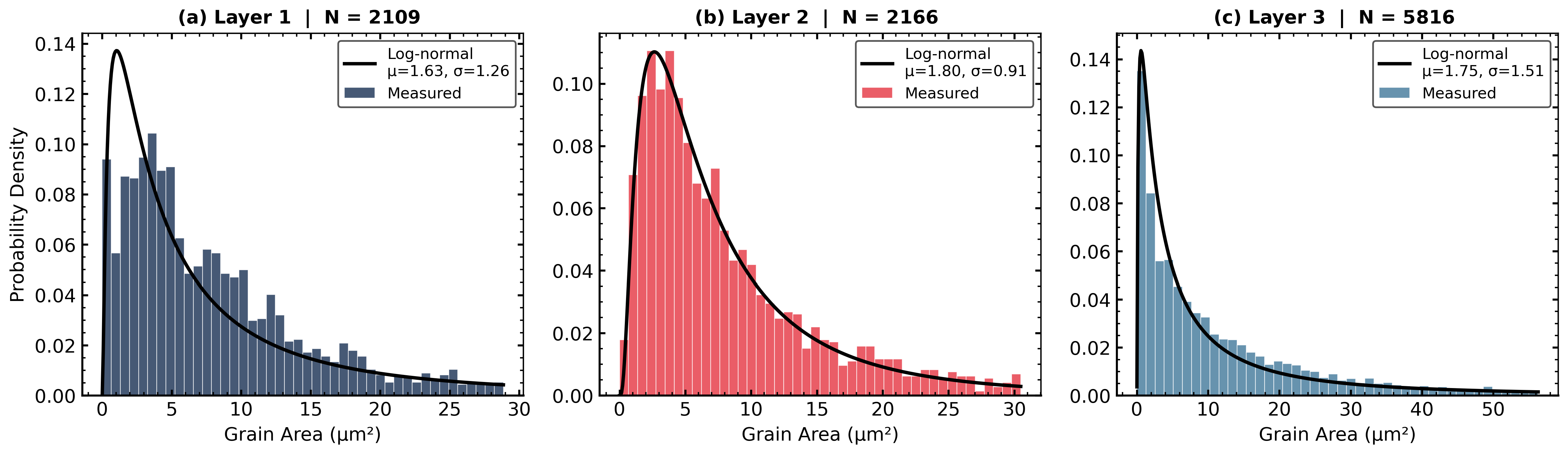
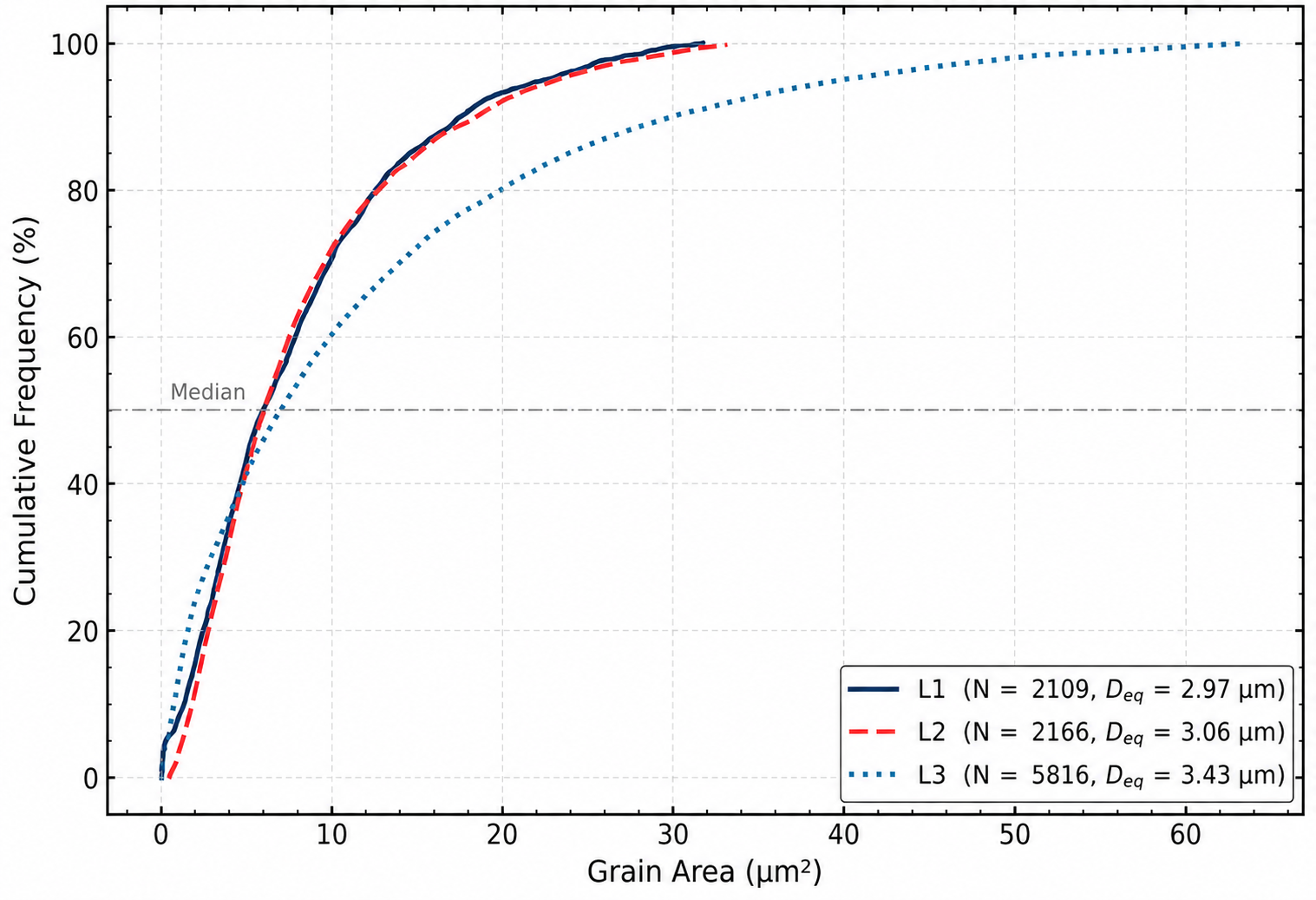
- The Layer 2 grain area distribution conformed to a log-normal form (KS p = 0.601, μ = 1.796, σ = 0.906), which is consistent with a unimodal grain area population. Log-normal conformance alone does not uniquely identify the recrystallization mechanism. Layers 1 and 3 deviated significantly (p < 0.001), which may be attributed to a bimodal or mixed population near the substrate interface and to a grain growth tail, respectively. The morphological and distributional evidence is consistent with DRX; discrimination between continuous and discontinuous DRX requires EBSD-based mechanism analysis, identified as a priority for future work.
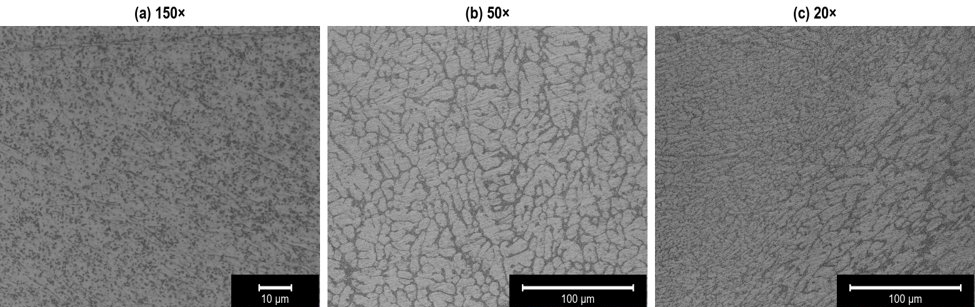
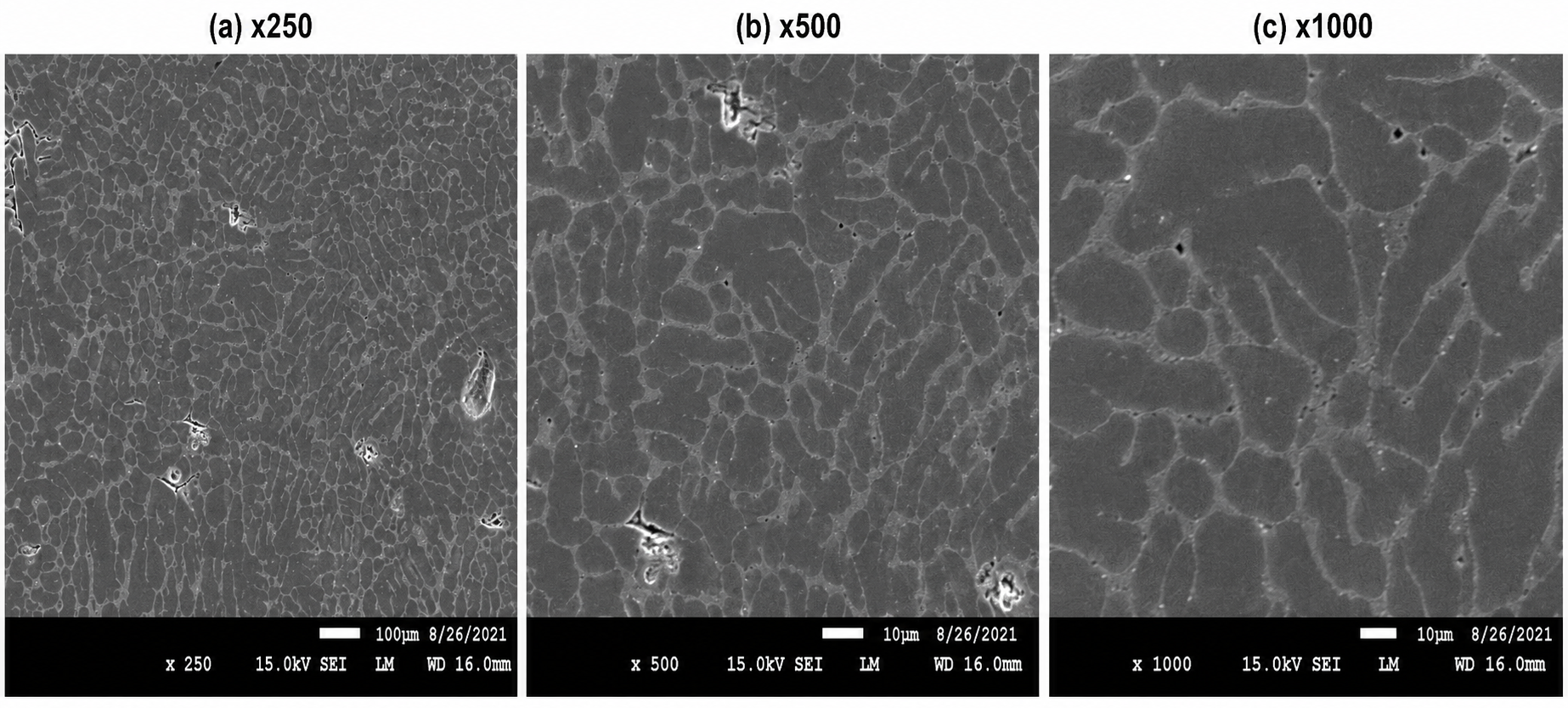
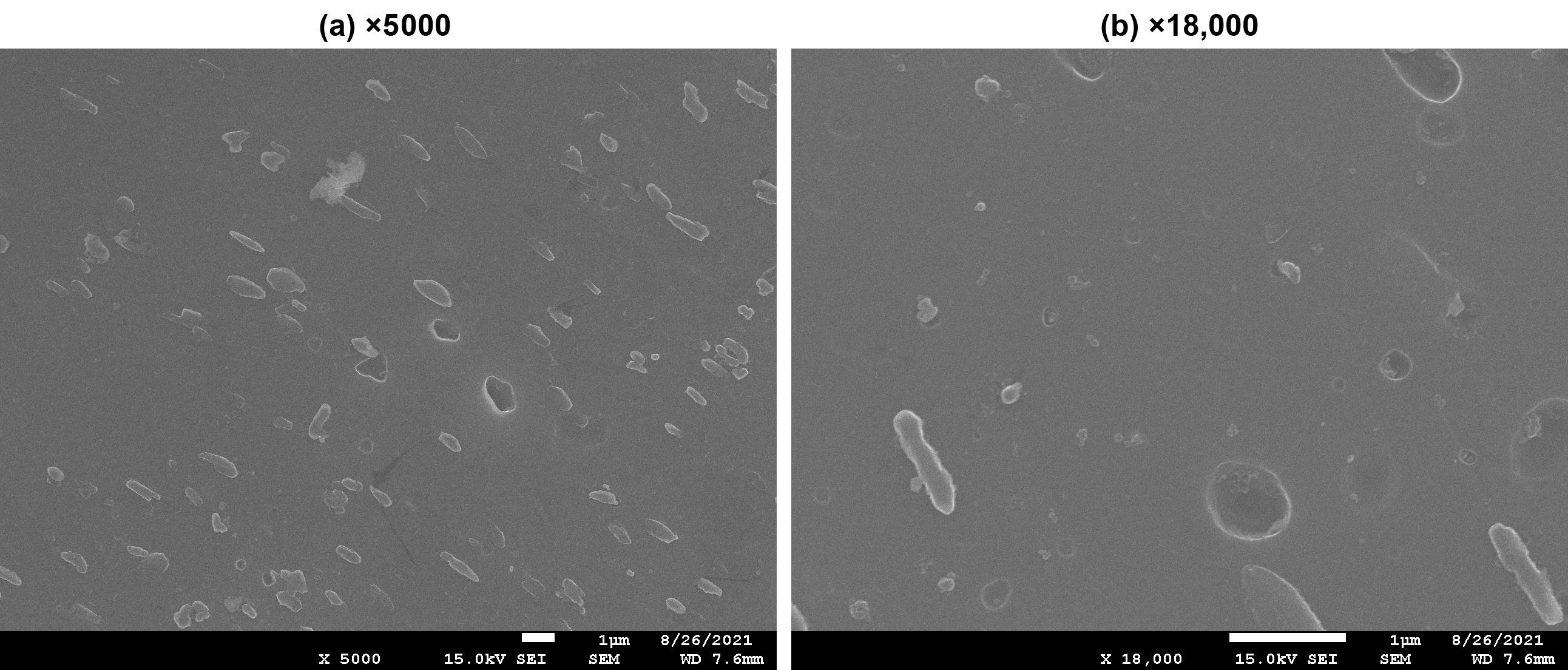
- The optical micrographs (20×–150×) and SEM (×250–×1000) support the equiaxed grain structure of the MIG + FSP wall: there are clean polygonal boundaries, triple junctions whose geometry is consistent with near-equilibrium dihedral configurations (pending dihedral-angle measurement), and faint sub-boundary traces in grain interiors. The SEM at ×5000–×18,000 reveals FSP-driven fragmentation of the eutectic Si network into discrete elongated rods and equiaxed particles (approximately 0.2–1.5 μm), which contributes Orowan strengthening supplementary to Hall–Petch. A first-order strengthening partition consistently using D(A) for both walls (Table 4) yields three contributions: Δσ_HP ≈ 22.6 MPa (k_HP ≈ 0.07 MPa·m^(1/2) [34], d_FSP = 3.30 μm, d_MIG = 19.29 μm at L1); Δσ_OR ≈ 28 MPa from Orowan bypass of the refined Si particles; and Δσ_ρ = αMGb√ρ ≈ 30–40 MPa from retained dislocation density (ρ ≈ 1014 m−2, α ≈ 0.3, M = 3.06, G = 26 GPa, b = 0.286 nm). The summed increment (approximately 80 MPa) is consistent with the hardness-derived flow stress difference (Δσ_hardness ≈ 78 MPa via H ≈ 3σ Tabor conversion). The full strengthening partition is detailed in Supplementary Note S1. The partition is first-order; the per-layer Hall–Petch slope is not tested with the present n = 6 sampling.
- Overall, the FSP spindle torque carries enough microstructural information to track the layer-to-layer grain size differences in the MIG + FSP process, which points to a practical route toward post-pass microstructure monitoring without post-process metallography. A closed-loop extension will require experiments at intermediate RPM values and in situ subsurface temperature measurement.
Supplementary Materials
Author Contributions
Funding
Data Availability Statement
Acknowledgments
Conflicts of Interest
References
- Li, J.L.Z.; Alkahari, M.R.; Rosli, N.A.B.; Hasan, R.; Sudin, M.N.; Ramli, F.R. Review of wire arc additive manufacturing for 3D metal printing. Int. J. Autom. Technol. 2019, 13, 346–353. [Google Scholar] [CrossRef]
- Chaturvedi, M.; Scutelnicu, E.; Rusu, C.C.; Mistodie, L.R.; Mihailescu, D.; Subbiah, A.V. Wire arc additive manufacturing: Review on recent findings and challenges in industrial applications and materials characterization. Metals 2021, 11, 939. [Google Scholar] [CrossRef]
- Elalem, A.N.; Wu, X. Process–Microstructure–Property Characteristics of Aluminum Walls Fabricated by Hybrid Wire Arc Additive Manufacturing with Friction Stir Processing. Materials 2026, 19, 580. [Google Scholar] [CrossRef]
- Liu, H.; Yu, H.; Guo, C.; Chen, X.; Zhong, S.; Zhou, L.; Osman, A.; Lu, J. Review on fatigue of additive manufactured metallic alloys: Microstructure, performance, enhancement, and assessment methods. Adv. Mater. 2024, 36, 2306570. [Google Scholar] [CrossRef]
- Evstifeev, A.; Volosevich, D.; Smirnov, I.; Yakupov, B.; Voropaev, A.; Vitokhin, E.; Klimova-Korsmik, O. Comparative study of the relationship between microstructure and mechanical properties of aluminum alloy 5056 fabricated by additive manufacturing and rolling techniques. Materials 2023, 16, 4327. [Google Scholar] [CrossRef]
- Guan, R.-G.; Tie, D. A review on grain refinement of aluminum alloys: Progresses, challenges and prospects. Acta Metall. Sin. (Engl. Lett.) 2017, 30, 409–432. [Google Scholar] [CrossRef]
- Fu, R.; Tang, S.; Lu, J.; Cui, Y.; Li, Z.; Zhang, H.; Xu, T.; Chen, Z.; Liu, C. Hot-wire arc additive manufacturing of aluminum alloy with reduced porosity and high deposition rate. Mater. Des. 2021, 199, 109370. [Google Scholar] [CrossRef]
- Heidarzadeh, A.; Mironov, S.; Kaibyshev, R.; Çam, G.; Simar, A.; Gerlich, A.; Khodabakhshi, F.; Mostafaei, A.; Field, D.P.; Robson, J.D.; et al. Friction stir welding/processing of metals and alloys: A comprehensive review on microstructural evolution. Prog. Mater. Sci. 2021, 117, 100752. [Google Scholar] [CrossRef]
- Wu, X.; Yang, Q.; Elalem, A.N. Additive Manufacturing System and Unified Additive-Deformation-Machining (ADM) Process of Manufacturing. U.S. Patent 12,311,597 B2, 27 May 2025. [Google Scholar]
- Wei, J.; He, C.; Li, Y.; Zhang, Z.; Tian, N.; Qin, G.; Zuo, L. Improvement of microstructure and fatigue performance of wire-arc additive manufactured 4043 aluminum alloy assisted by interlayer friction stir processing. J. Mater. Sci. Technol. 2023, 133, 183–194. [Google Scholar]
- Yuan, T.; Xu, D.; Jiang, X.; Chen, S. Origins and optimization mechanisms of periodic microstructures in Al-Cu alloys fabricated by wire arc additive manufacturing combined with interlayer friction stir processing. Mater. Sci. Eng. A 2024, 916, 147337. [Google Scholar] [CrossRef]
- Sun, Z.; Dai, G.; Ye, W.; Xing, Y.; Yao, J.; Jiang, T.; Guo, Y.; Lu, H.; Lu, J. Modified microstructure and enhanced mechanical performance of WAAM-fabricated 2319 aluminum alloy via interlayer friction stir processing. J. Mater. Res. Technol. 2025, 34, 3286–3298. [Google Scholar]
- Ma, J.; Fan, S.; Gong, Y.; Jiang, Q.; Li, F. Influence of friction stir processing post-treatment on the microstructure and mechanical properties of 205A aluminum alloy produced by wire arc-directed energy deposition. Metals 2025, 15, 331. [Google Scholar] [CrossRef]
- Zhou, G.; Huang, T.; Su, L.; Huang, Q.; Wu, S.; Zhang, B. The microstructure and mechanical properties of deposited AlCuSc alloy wall structures fabricated by WAAM with FSP assistance. Thin-Walled Struct. 2025, 209, 112954. [Google Scholar] [CrossRef]
- Doherty, R.D.; Hughes, D.A.; Humphreys, F.J.; Jonas, J.J.; Juul Jensen, D.; Kassner, M.E.; King, W.E.; McNelley, T.R.; McQueen, H.J.; Rollett, A.D. Current issues in recrystallization: A review. Mater. Sci. Eng. A 1997, 238, 219–274. [Google Scholar] [CrossRef]
- Underwood, E.E. Quantitative Stereology; Addison-Wesley: Reading, MA, USA, 1970. [Google Scholar]
- Huang, K.; Logé, R.E. A review of dynamic recrystallization phenomena in metallic materials. Mater. Des. 2016, 111, 548–574. [Google Scholar] [CrossRef]
- Humphreys, F.J.; Hatherly, M. Recrystallization and Related Annealing Phenomena, 2nd ed.; Elsevier: Oxford, UK, 2004. [Google Scholar]
- Sakai, T.; Belyakov, A.; Kaibyshev, R.; Miura, H.; Jonas, J.J. Dynamic and post-dynamic recrystallization under hot, cold and severe plastic deformation conditions. Prog. Mater. Sci. 2014, 60, 130–207. [Google Scholar] [CrossRef]
- Singh, A.; Sharma, S.K.; Batish, A. Dynamic recrystallization during solid state friction stir welding/processing/additive manufacturing: Mechanisms, microstructure evolution, characterization, modeling techniques and challenges. Crit. Rev. Solid State Mater. Sci. 2025, 50, 77–135. [Google Scholar] [CrossRef]
- Elalem, A.N. A Combined Additive–Deformation–Machining (ADM) Manufacturing Process with Controlled Microstructures. Ph.D. Dissertation, Wayne State University, Detroit, MI, USA, 2022. [Google Scholar]
- ASTM E112-13; Standard Test Methods for Determining Average Grain Size. ASTM International: West Conshohocken, PA, USA, 2021.
- Russ, J.C. The Image Processing Handbook, 7th ed.; CRC Press: Boca Raton, FL, USA, 2016. [Google Scholar]
- Mukherjee, A.K.; Bird, J.E.; Dorn, J.E. Experimental correlations for high-temperature creep. Trans. ASM 1969, 62, 155–179. [Google Scholar]
- Sherby, O.D.; Burke, P.M. Mechanical behavior of crystalline solids at elevated temperature. Prog. Mater. Sci. 1968, 13, 323–390. [Google Scholar] [CrossRef]
- Sellars, C.M.; Tegart, W.J.M. Hot workability. Int. Metall. Rev. 1972, 17, 1–24. [Google Scholar] [CrossRef]
- Frost, H.J.; Ashby, M.F. Deformation-Mechanism Maps: The Plasticity and Creep of Metals and Ceramics; Pergamon Press: Oxford, UK, 1982. [Google Scholar]
- Mohanty, P.S.; Gruzleski, J.E. Mechanism of grain refinement in aluminum. Acta Metall. Mater. 1995, 43, 2001–2012. [Google Scholar] [CrossRef]
- Fields, D.S.; Backofen, W.A. Determination of strain-hardening characteristics by torsion testing. Proc. ASTM 1957, 57, 1259–1272. [Google Scholar]
- Węgłowski, M.S. Experimental study and response surface methodology for investigation of the FSP process. Arch. Mech. Eng. 2014, 61, 539–552. [Google Scholar] [CrossRef]
- Jonckheere, C.; de Meester, B.; Denquin, A.; Simar, A. Torque, temperature and hardening precipitation evolution in dissimilar friction stir welds between 6061-T6 and 2014-T6 aluminum alloys. J. Mater. Process. Technol. 2013, 213, 826–837. [Google Scholar] [CrossRef]
- Rhines, F.N.; Patterson, B.R. Effect of prior cold work on grain volume distribution and grain growth rate of annealed aluminum. Metall. Trans. A 1982, 13, 985–993. [Google Scholar] [CrossRef]
- Frigaard, Ø.; Grong, Ø.; Midling, O.T. A process model for friction stir welding of age hardening aluminum alloys. Metall. Mater. Trans. A 2001, 32, 1189–1200. [Google Scholar] [CrossRef]
- Hansen, N. Hall–Petch relation and boundary strengthening. Scr. Mater. 2004, 51, 801–806. [Google Scholar] [CrossRef]





| Material | Mg | Si | Cu | Cr | Fe | Mn | Zn | Al |
|---|---|---|---|---|---|---|---|---|
| AA6061 | 0.8–1.2 | 0.40–0.80 | 0.15–0.40 | 0.04–0.35 | ≤0.70 | ≤0.15 | ≤0.25 | Bal. |
| ER4043 | ≤0.05 | 4.5–6.0 | ≤0.30 | n.s. | ≤0.80 | ≤0.05 | ≤0.10 | Bal. |
| Parameter | MIG Stage (Both Walls) | FSP Stage (MIG + FSP Only) |
|---|---|---|
| Voltage/Current | 18 V/120 A | |
| Travel speed | 330 mm/min | 50 mm/min |
| Spindle speed | Wire feed (current-controlled) | L1: 600 RPM; L2–3: 1200 RPM |
| Plunge depth | 0.2 mm | |
| Interpass temperature | Cooled to 38–40 °C (IR pyrometer) | After cooling to 38–40 °C (IR pyrometer) |
| Layers/beads per layer | 3 layers, 4 beads, 50% overlap | 3 FSP passes (one per layer) |
| Layer | Spindle Speed (RPM) | Spindle Power (kW) | Torque (N·m) | Measurement Location |
|---|---|---|---|---|
| L1 | 600 | 7.4 | 118 ± 6 | 110–115 mm from start |
| L2 | 1200 | 2.4 | 19.1 ± 1.0 | 80–85 mm from start |
| L3 | 1200 | 3.3 | 26.6 ± 1.3 | 50–55 mm from start |
| Layer | MIG Area (μm2) | MIG eq (μm) | MIG + FSP Area (μm2) | MIG + FSP D(A) (μm) | Refin. (×) | FSP Torque (N·m) |
|---|---|---|---|---|---|---|
| L1 | 292.10 | 19.29 | 8.55 | 3.30 | 34.2× | 118 ± 6 |
| L2 | 419.95 | 23.12 | 8.82 | 3.35 | 47.6× | 19.1 ± 1.0 |
| L3 | 375.84 | 21.88 | 12.96 | 4.06 | 29.0× | 26.6 ± 1.3 |
| Layer | N | A (μm2) | σA (μm2) | eq (μm) | AR | Circ. | Mean (P/A) Ratio (μm−1) | (μm) |
|---|---|---|---|---|---|---|---|---|
| L1 | 2109 | 8.55 | 7.90 | 2.971 | 1.389 | 0.579 | 2.541 | 13.22 |
| L2 | 2166 | 8.82 | 8.13 | 3.059 | 1.353 | 0.569 | 2.105 | 13.34 |
| L3 | 5816 | 12.96 | 15.65 | 3.427 | 1.323 | 0.612 | 2.502 | 14.47 |
| Layer | ln(A) Mean (μ) | ln(A) Std σ | KS Stat. | KS p-Value | N | Interpretation |
|---|---|---|---|---|---|---|
| L1 | 1.629 | 1.258 | 0.099 | <0.001 | 2109 | Non-log-normal: possible bimodal DRX/parent grain mixture near substrate interface |
| L2 | 1.796 | 0.906 | 0.016 | 0.601 | 2166 | Log-normal: statistically unimodal population (CV = 92%, reflecting inherent grain size variability in DRX) |
| L3 | 1.746 | 1.505 | 0.064 | <0.001 | 5816 | Non-normal: grain growth tail broadens distribution |
Disclaimer/Publisher’s Note: The statements, opinions and data contained in all publications are solely those of the individual author(s) and contributor(s) and not of MDPI and/or the editor(s). MDPI and/or the editor(s) disclaim responsibility for any injury to people or property resulting from any ideas, methods, instructions or products referred to in the content. |
© 2026 by the authors. Licensee MDPI, Basel, Switzerland. This article is an open access article distributed under the terms and conditions of the Creative Commons Attribution (CC BY) license.
Share and Cite
Elalem, A.N.; Wu, X. Layer-Resolved Grain Morphology and Recrystallized Crystal Evolution in FSP-Assisted Wire Arc Additive Manufacturing of Aluminum Alloy 4043. Metals 2026, 16, 645. https://doi.org/10.3390/met16060645
Elalem AN, Wu X. Layer-Resolved Grain Morphology and Recrystallized Crystal Evolution in FSP-Assisted Wire Arc Additive Manufacturing of Aluminum Alloy 4043. Metals. 2026; 16(6):645. https://doi.org/10.3390/met16060645
Chicago/Turabian StyleElalem, Ahmed Nabil, and Xin Wu. 2026. "Layer-Resolved Grain Morphology and Recrystallized Crystal Evolution in FSP-Assisted Wire Arc Additive Manufacturing of Aluminum Alloy 4043" Metals 16, no. 6: 645. https://doi.org/10.3390/met16060645
APA StyleElalem, A. N., & Wu, X. (2026). Layer-Resolved Grain Morphology and Recrystallized Crystal Evolution in FSP-Assisted Wire Arc Additive Manufacturing of Aluminum Alloy 4043. Metals, 16(6), 645. https://doi.org/10.3390/met16060645