1. Introduction
Additive Manufacturing (AM) is a new innovative technology that allows the direct fabrication of complex, individual and high-strength metal products, based on their 3D data. The technology generally refers to processes where the computational design is used for the production of components through the addition of material. Contrary to conventional manufacturing methods, AM is based on production through layer increments [
1]. In the AM of metals, metallic powders are totally or partially fused by energy of a laser and transformed by layers into a solid component that has practically no geometric constraints [
2].
In spite of numerous advantages of AM like a significant reduction in waste, reduction in manufacture time, and reduction in labour costs, an application of AM is connected with numerous challenges. One of the main targets of AM is to manufacture parts to the net-shape or near-net-shape, which are characterised by no or minimal surface processing for targeted applications. This requires an in-depth understanding of the formation of various types of AM surfaces, including the variation in surface condition and controlling factors, and their influence on mechanical performance [
3].
Fatigue resistance of numerous AM parts has to be considered, as the parts are usually dynamically loaded in service. In this area, a lot of knowledge can be found in the literature. Factors controlling the fatigue resistance are namely complex, affecting each other. Some examples can be given as follows.
An important factor is surface roughness, particularly, when no additional final machining is applied. Surface roughness is often affected by the presence of partially molten particles. Surface finishing treatments improve the surface quality and the fatigue life. However, the achievement of the lowest surface roughness does not necessarily correspond to the best fatigue performance, thus suggesting that multiple mechanisms may be active and that besides surface roughness also residual stresses contribute to increase the fatigue strength [
4].
Another factor is porosity, which in the case of laser powder-bed fusion may depend on different laser velocities [
5]. Inappropriate process parameters can cause either under-melting or over-melting. In the former case, lack of fusion and balling defects [
6,
7] can be formed, whereas in the latter case, keyhole pores [
8] and spatter particles [
9] are often observed. Under cyclic loading, these pores create local stress concentration and trigger fatigue crack initiation. Results from existing studies highlighted the influence of defects, such as porosity and surface roughness, as the cause for the premature fatigue failure of L-PBF parts [
10,
11,
12,
13]. AM metal parts are usually characterised by high strength, which can experience up to a 40% reduction in fatigue performance due to manufacturing defects [
14]. It is well known that high strength positively affects fatigue resistance of metals with a low surface roughness and not containing defects. On the other hand, high-strength metals are sensitive to crack-like defects and surface microscopic notches, which initiate fatigue cracking, particularly in high-cycle or very-high-cycle regimes at low stress amplitudes, when the failure may occur after many cycles. A good indicator of notch sensitivity is fracture toughness [
14].
The fact that high-strength metals are sensitive to crack-like defects and surface microscopic notches is supported by results published in [
15]. The Inconel 718 steel produced by AM had a higher microhardness and higher tensile strength than the forged and rolled material, but its fatigue performance was lower. The steel manufactured by Laser Beam—Powder Bed Fusion (LB-PBF) demonstrated shorter fatigue life, especially under low and medium stresses, i.e., in high-cycle regime. The shorter fatigue life of the material obtained by PBF-LB was attributed to typical process defects besides microstructural differences, in connection to the higher sensitivity to defects.
Effects of post-processing treatments on fatigue performance of an alloy manufactured by LB-PBF were studied in [
16]. The material was the Ti6Al4V alloy, which is known to be highly susceptible to the notch effect. The material was post-processed by machining and combinations of alternative mechanical and electrochemical surface treatments. Compressive residual stresses were introduced in all surface-treated samples. After tribofinishing, surface roughness was reduced to 0.31 ± 0.10 µm, which was found to be the most critical factor. It was concluded that machined surfaces presented fatigue behaviour comparable to wrought material. Additionally, alternative surface treatments showed a fatigue behaviour equivalent to the casting material. The results concerned the titanium alloy, but can be generalised to other metallic materials.
Another important issue concerning fatigue resistance of additively manufactured metals is the building direction. As an example, the anisotropic fatigue behaviour was shown in [
17], where an additively manufactured AISI 316L Stainless Steel had higher fatigue strength for horizontally built specimens compared to the vertical building direction. This result can be generalised. Similar results were namely obtained for the 3D printed Inconel 718 Alloy—higher fatigue strength for horizontally built specimens [
18].
It can be pointed out as a conclusion that fatigue resistance of additively manufactured metals is a complex phenomenon affected by many different factors, often acting mutually. In spite of the fact that computational modelling is being used (e.g., [
3]), this field usually needs a lot of experimental works targeted at specific cases of AM with the aim to optimise manufacturing parameters and considering specific service conditions of AM parts and components. The aim of this work is an evaluation of properties of laser-welded overlay of powder H13 steel on structural S355 steel, which is a cost-effective solution, as the S355 steel is quite a non-expensive material. The second part of the project concerned welded overlay of powder H13 also on H11 tool steel, which is important particularly for repairs of tools and dies. The technologies are to be used for an advanced, low-cost and effective manufacture of tools with a high temperature and high wear resistance like dies, and for repairing such tools. As these tools are usually loaded also dynamically besides wear, the investigation described in this article was targeted on fatigue properties.
2. Materials and Methods
2.1. Overlaying of H13 Tool Steel on S355 Structural Steel
The base metal was a plate of commonly used S355 structural steel. On the surface of the plate of the thickness 25 mm, different configurations of layers of the H13 tool steel were welded using laser beam. For the purpose of welding, the H13 steel was in a powder state, namely powder LPW-H13-AABM, granulation 44–105 μm. The powder was produced using the technology VIGA, i.e., gas atomised. Surface speed of laser beam was 0.5 m/min. Laser overlaying was performed at MATEX PM s.r.o. company, Plzeň, Czech Republic, using robotic laser cladding workstation, consisting of KUKA KR16 (Augsburg, Germany) robot, Laserline (Laserline GmbH, 56218 Mülheim-Kärlich, Germany), diode laser LDF 5000-40 and powder cladding optics Precitec YW-52 (Precitec GmbH & Co. KG, Gaggenau, Germany).
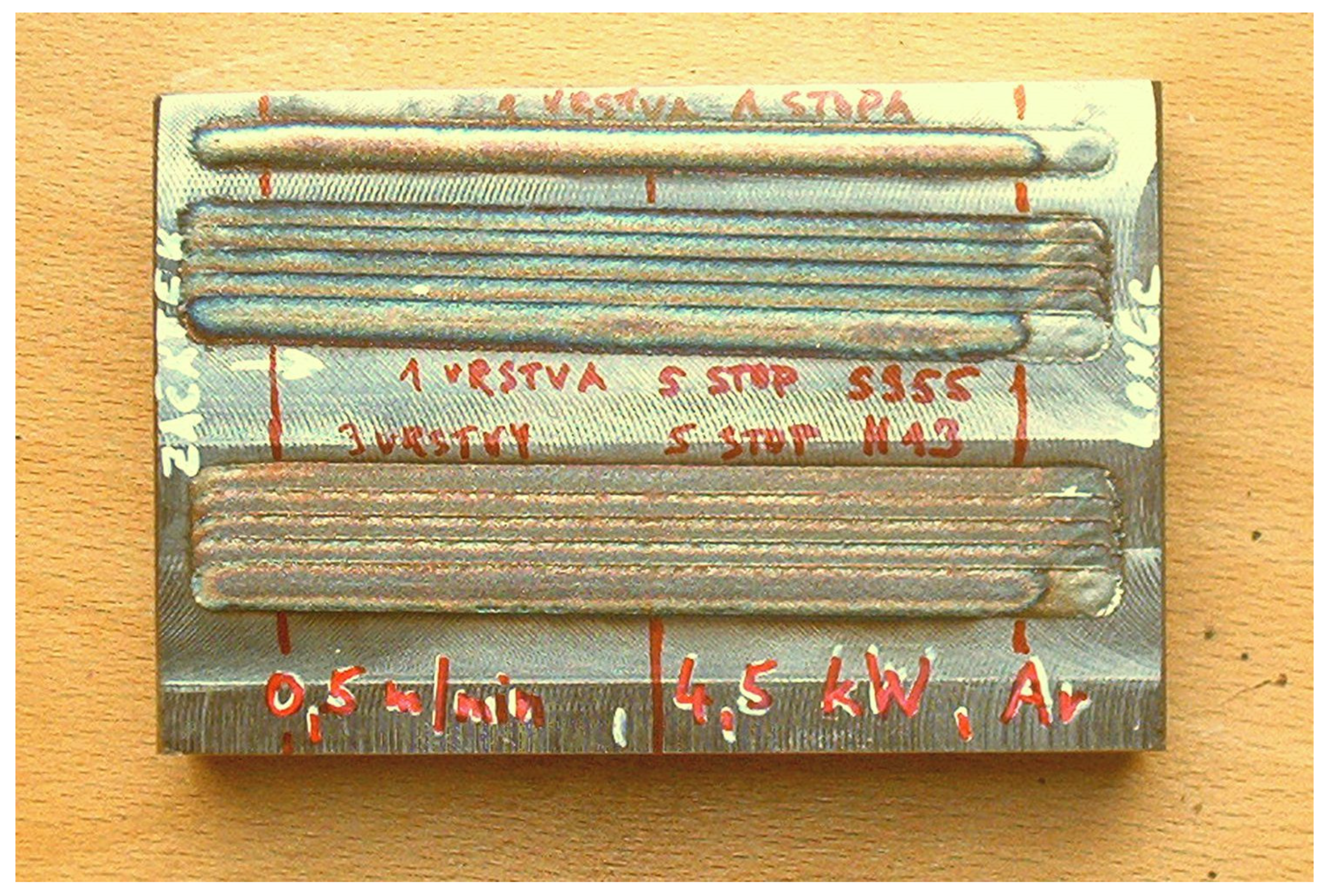
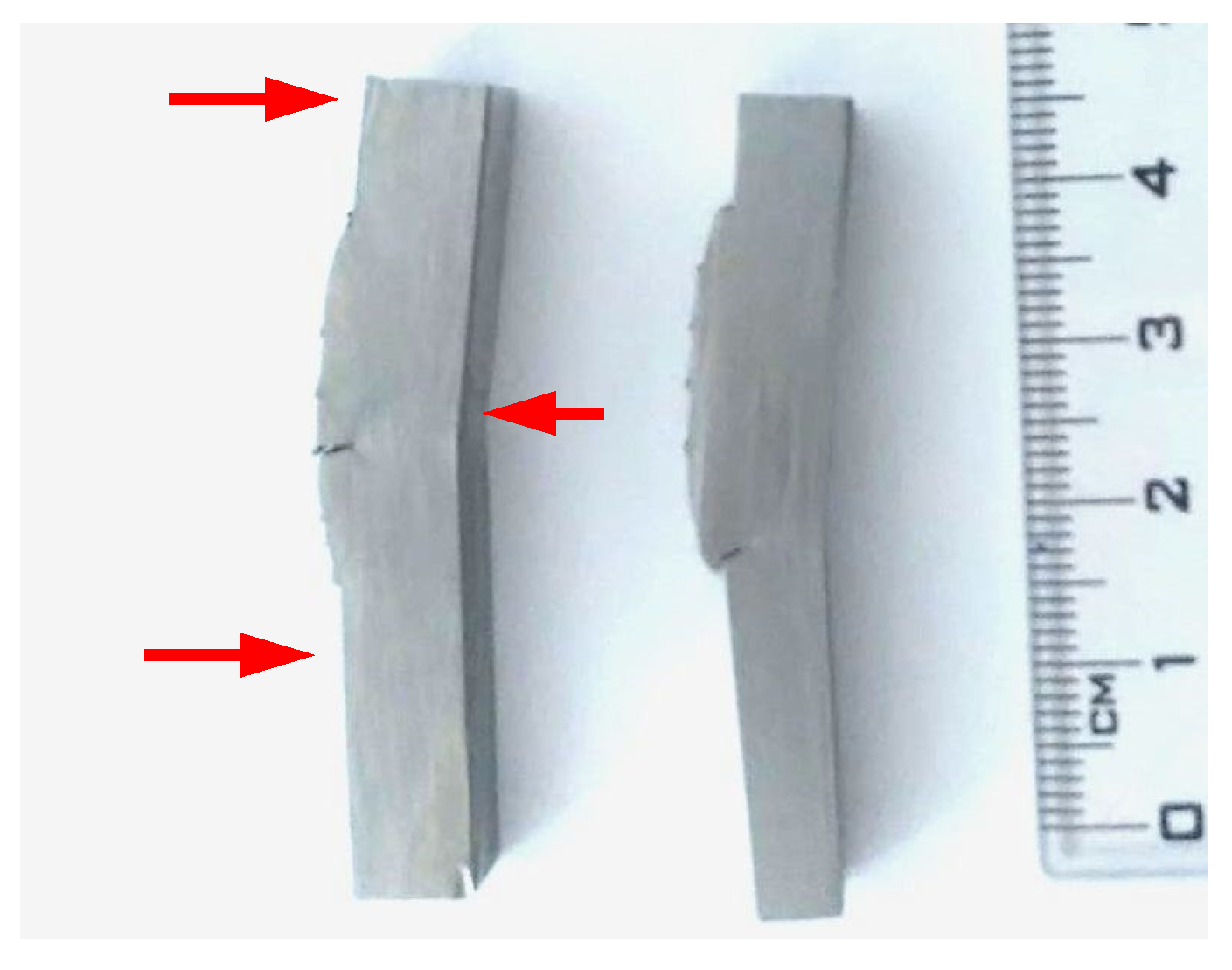
As the first step, one layer of a single H13 surface track was welded on the plate surface—
Figure 1. Note that the plates were marked by a marker pen, by hand, using a decimal comma (,) as a symbol to separate the integer part from the fractional part of a number. The use of decimal comma is typical for continental Europe (including Czechia), unlike UK, USA and numerous other countries, where decimal point is used. The second configuration was represented by the weld of five partially overlapping tracks, where the tracks were in a single layer. The third configuration was represented by five tracks like in the previous case, but in two layers, layer upon layer—
Figure 1 at the bottom. Time between layers was long enough to enable complete heat dissipation, and the layers were not thermally affected by previous ones.
As regards the order of the tracks in case of five tracks overlays in
Figure 1, the order is from top to bottom. That is why the bottom track is the widest, because it was welded as the last one, not partially overlapped by another track like the previous four ones.
In all three cases, laser overlaying was carried out in a protective atmosphere of argon by laser beam of the power 4.5 kW. The beam surface speed was 0.5 m/min.
In the first step of experimental works, metallographic analyses were performed on transverse cuts of the plate with the welds. Metallographic samples were prepared by grinding and polishing. Macro- and microstructure was displayed by Villela-Bain metallographic etchant. Metallographic analyses were performed on the Zeiss Axio Observer light microscope (Carl Zeiss Microscopy GmbH, Jena, Germany).
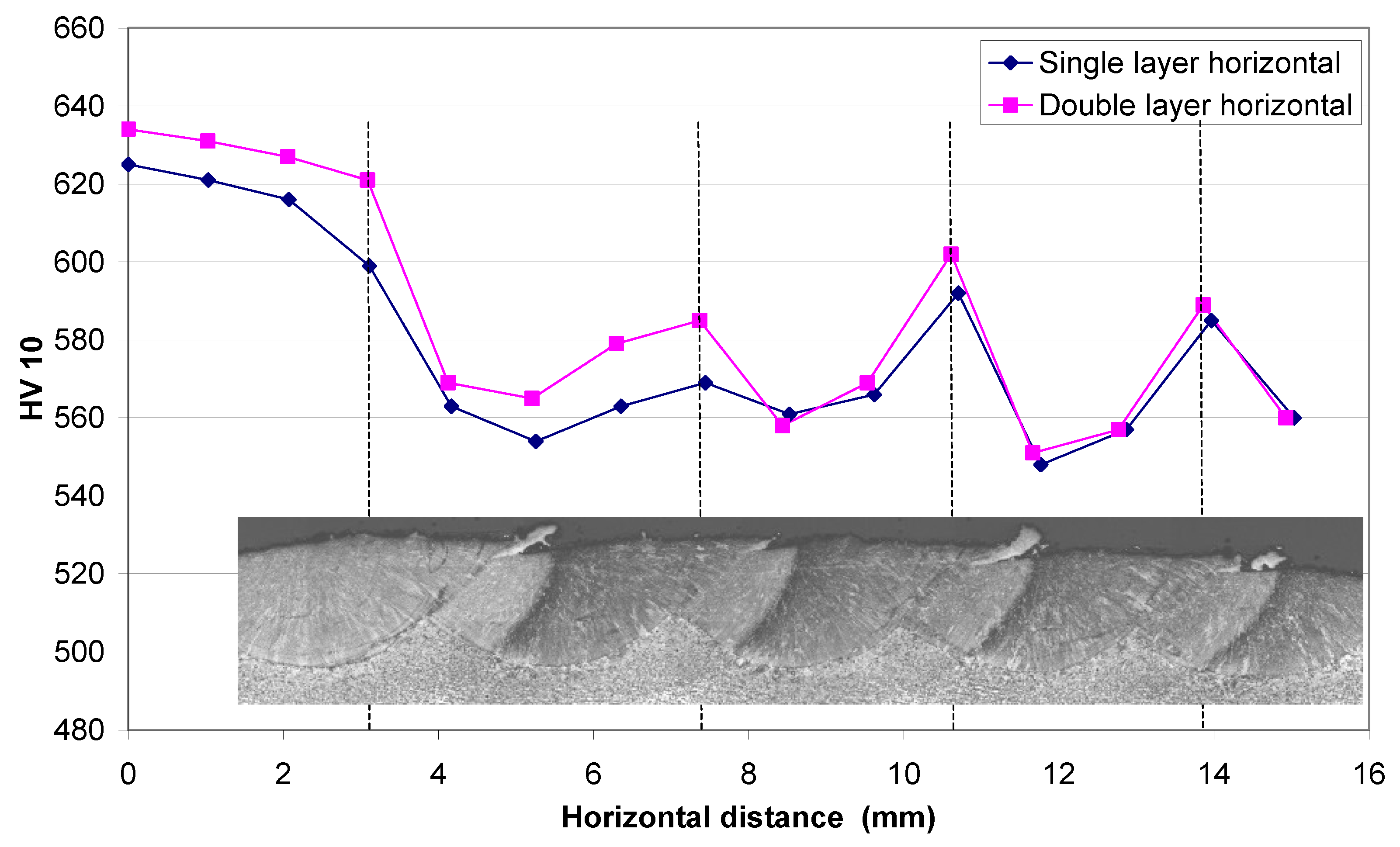
Hardness was measured using the Vickers HTM 7307 hardness tester (Grayford, Kent, UK). Hardness of welded layers and courses of hardness were measured as HV10 Vickers hardness. Two directions of HV10 courses were evaluated, namely parallel or perpendicular to the surface, respectively. The parallel course was evaluated at the depth of several tenths millimetres from the surface, in both single-layer and three-layer welds. The perpendicular course comprised both values from the welds and base material.
4. Conclusions
The aim of this work was an evaluation of properties of laser-welded overlay of powder H13 steel on structural S355 steel, which is a cost-effective solution, as the S355 steel is quite a non-expensive material. The second part of the project concerned welded overlay of powder H13 on H11 tool steel with the potential to be used for repairing of H11 tools, e.g., dies. The results of this work are essential particularly for industrial applications of the technologies, e.g., dies, besides an improvement of scientific knowledge in the field. The main conclusions can be summarised as follows:
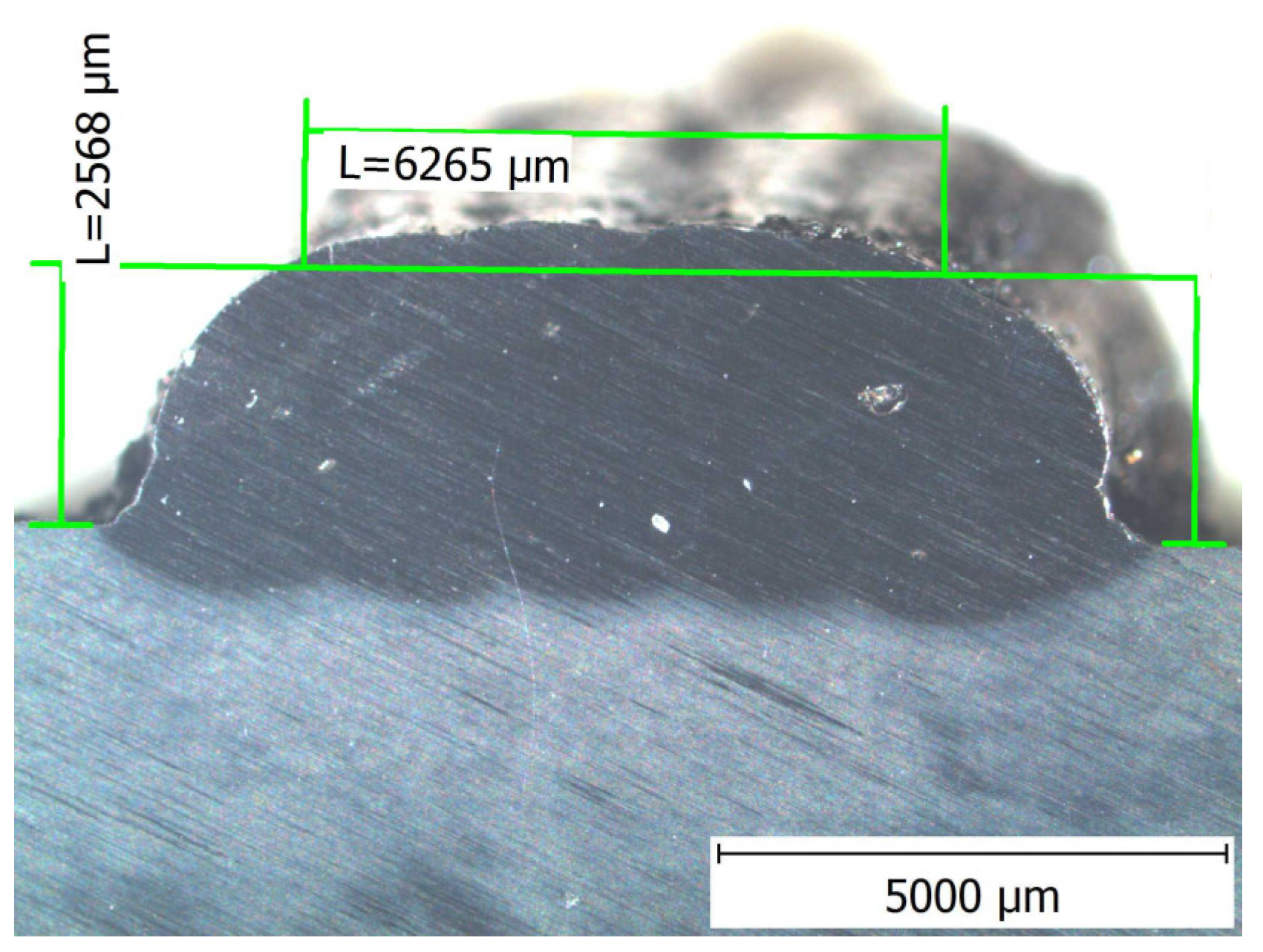
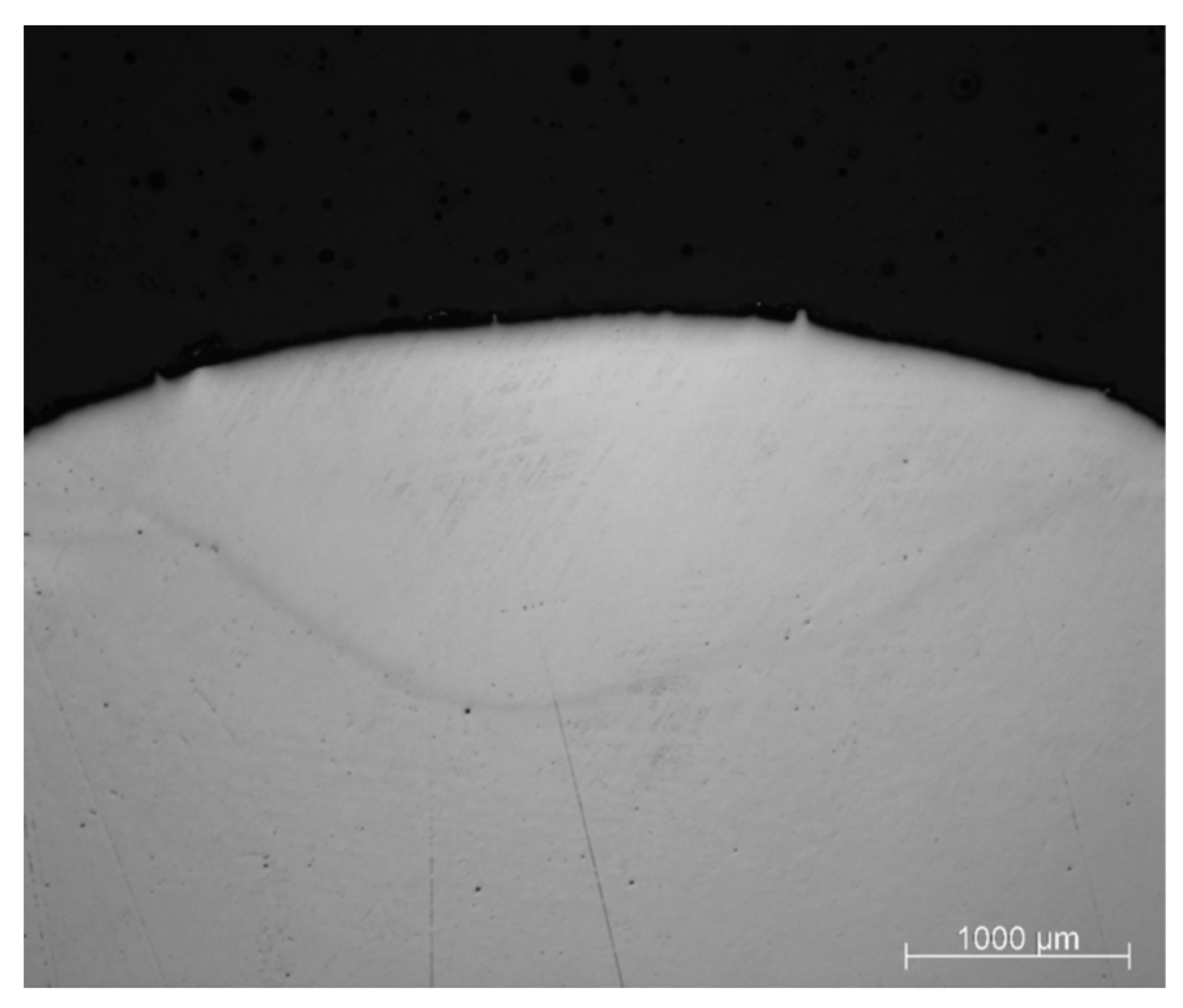
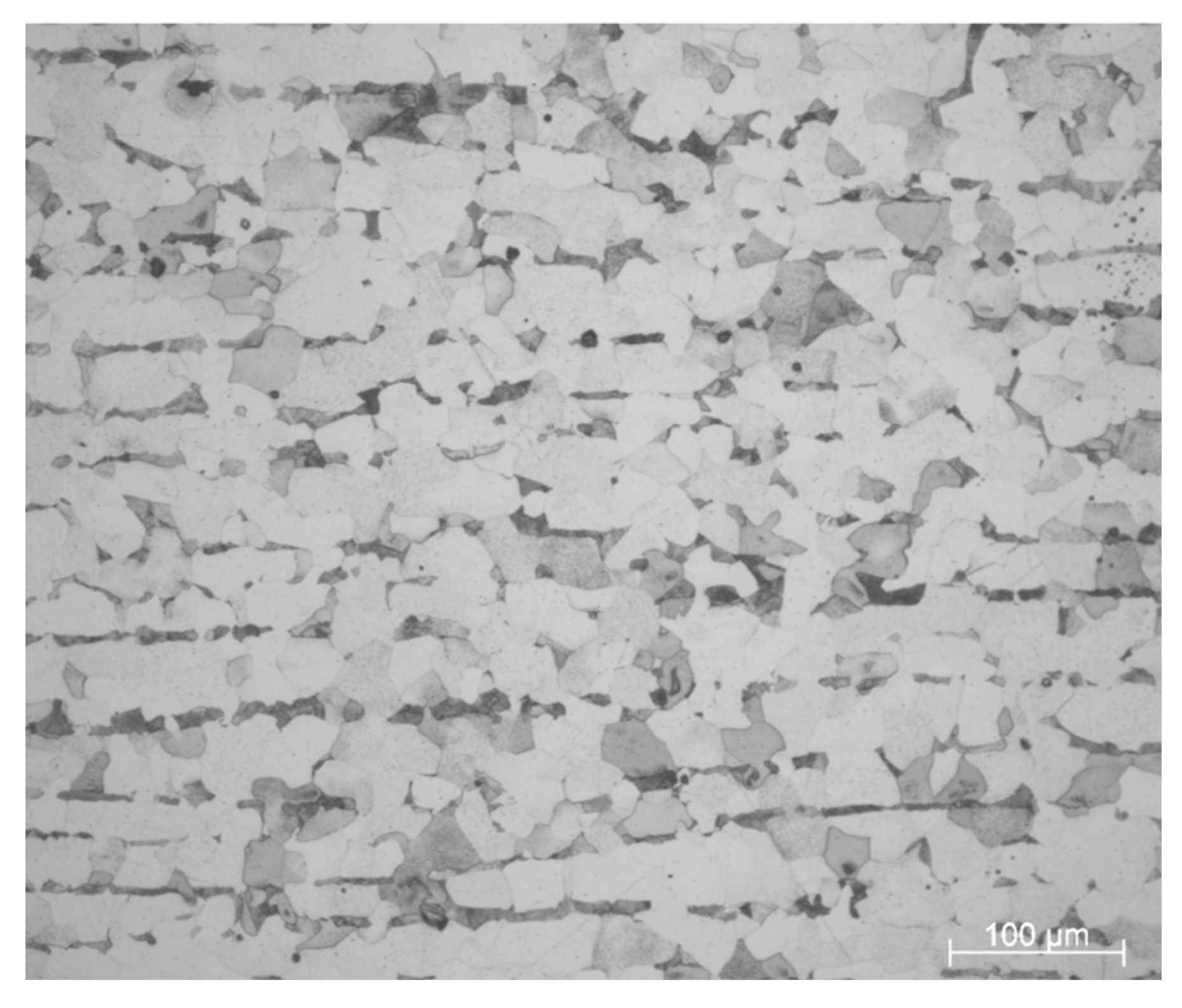
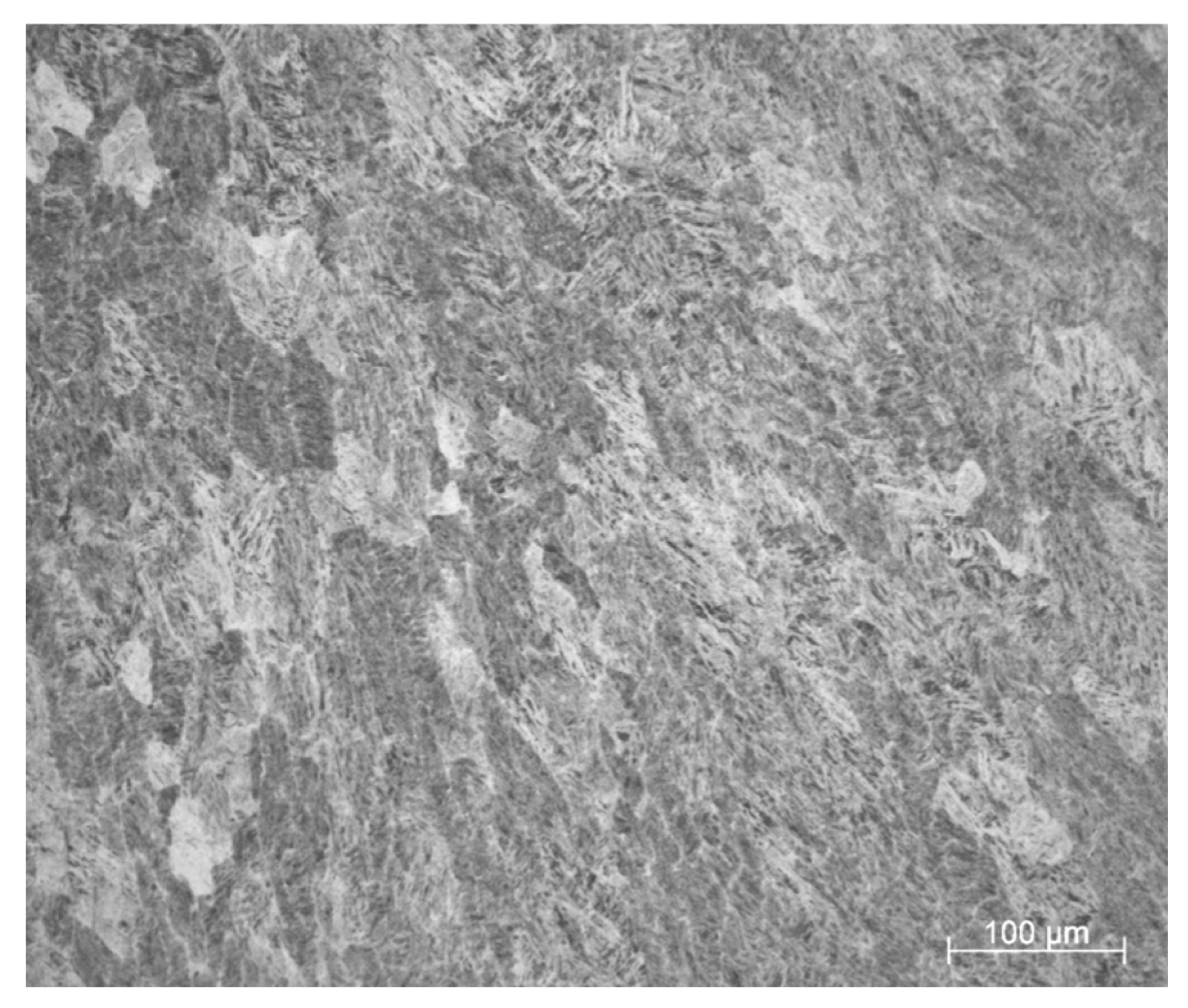
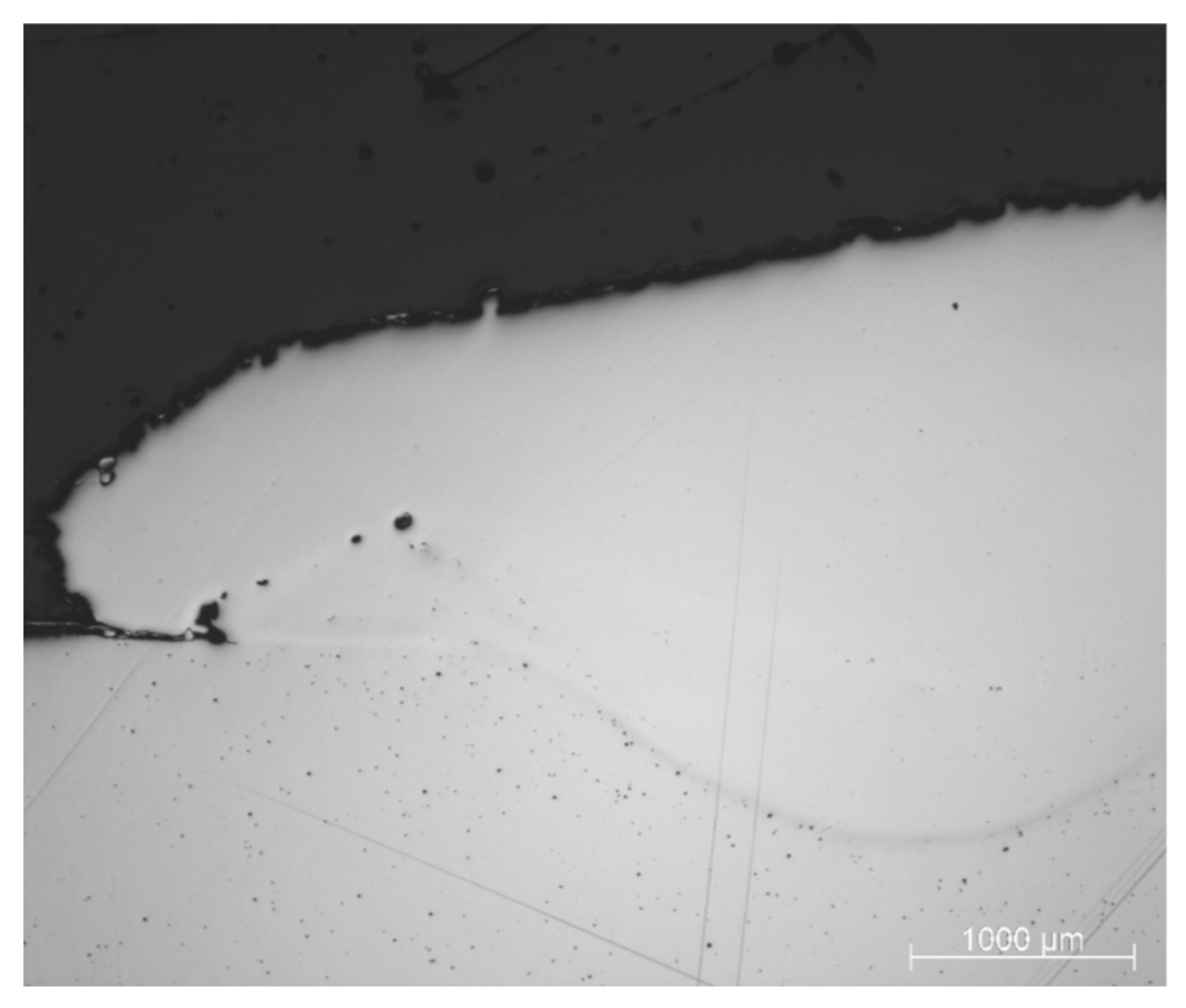
In the case of the H13 welds on the S355 steel plate, the quality of the welds was mostly acceptable, without pores or segregate impurities and with a good interconnection between the weld track and base material. The microstructure of the base material was ferritic-pearlitic, with uniform grain size. The heat-affected zone was approximately 0.9 mm wide, refined in the direction of the fusion zone, which was formed by martensitic structure. The welds were formed by the martensitic structure of a dendritic type. Problematic was the outer weld track, which contained pores and lacked fusion.
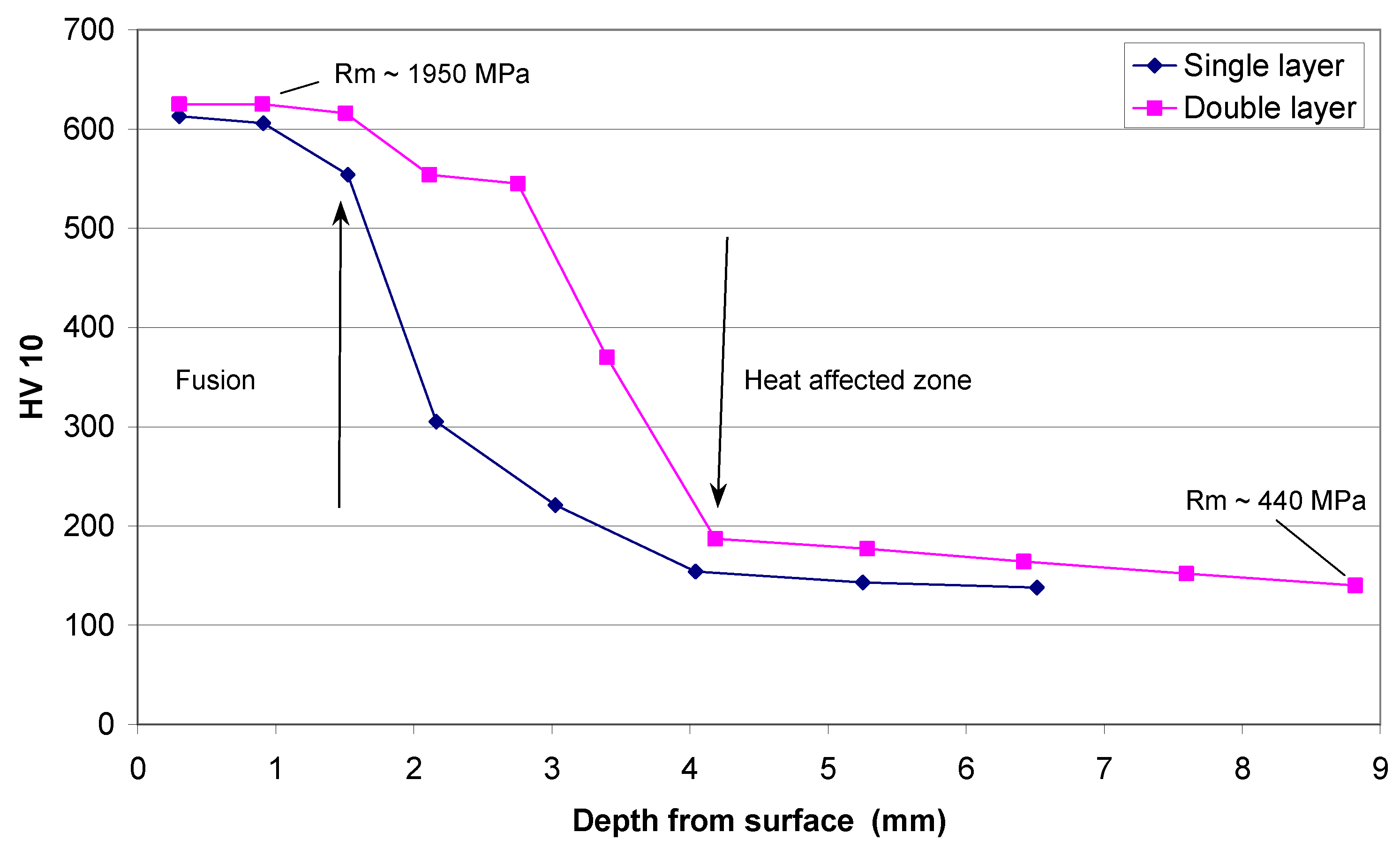
Tensile strength values, Rm, of overlays estimated from hardness corresponded to 1950 MPa in comparison with the 440 MPa strength of the S355 base metal. The overlay thickness was 2 mm and 3.5 mm in the case of the single-layer and double-layer overlays, respectively.
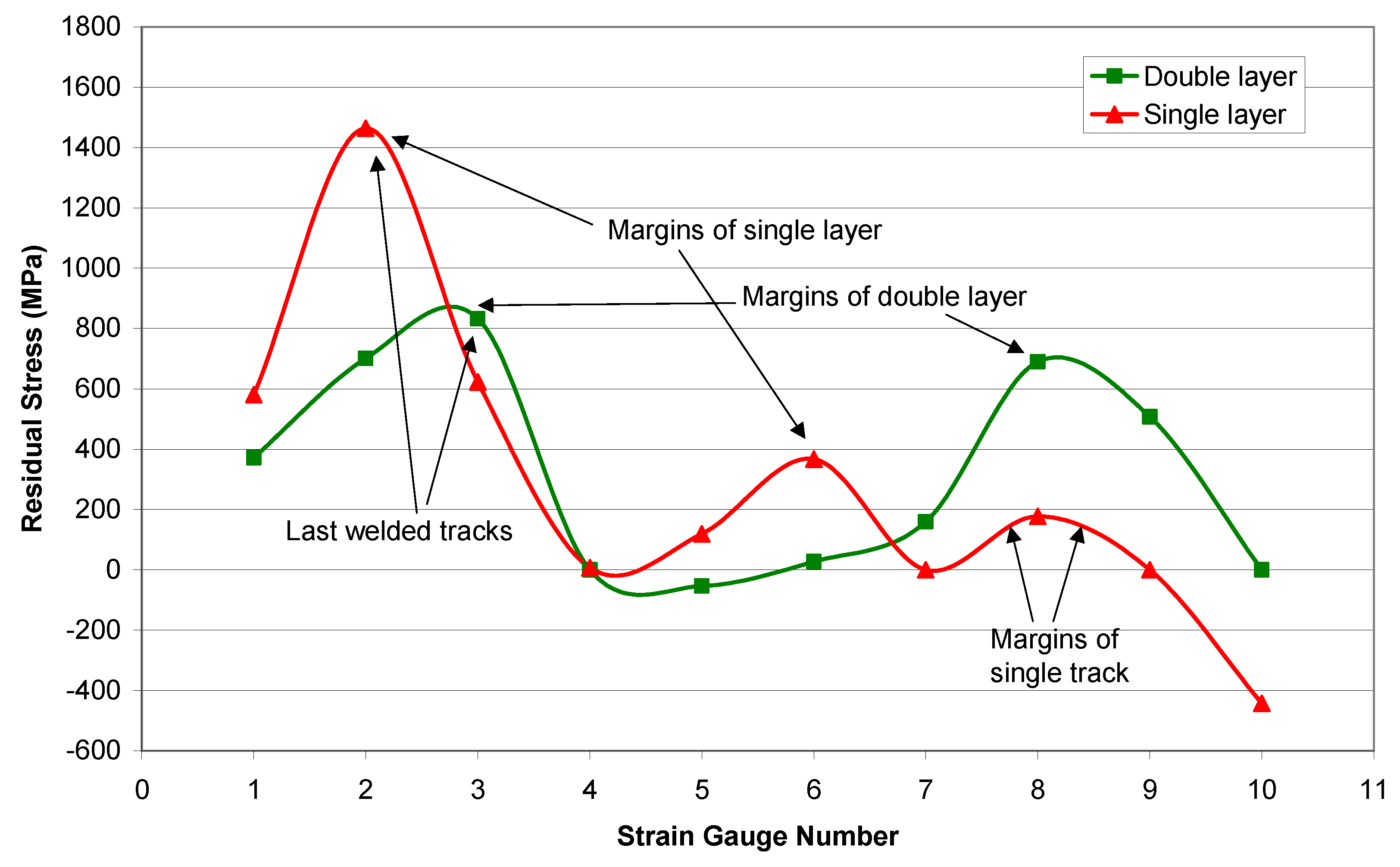
High tensile residual stresses were measured at the boundary of the first track of the single-layer overlay, namely 1465 MPa. The peak on the opposite boundary was considerably lower, only 370 MPa. Residual stresses in the double-layer overlay were more uniform, between 700 and 860 MPa.
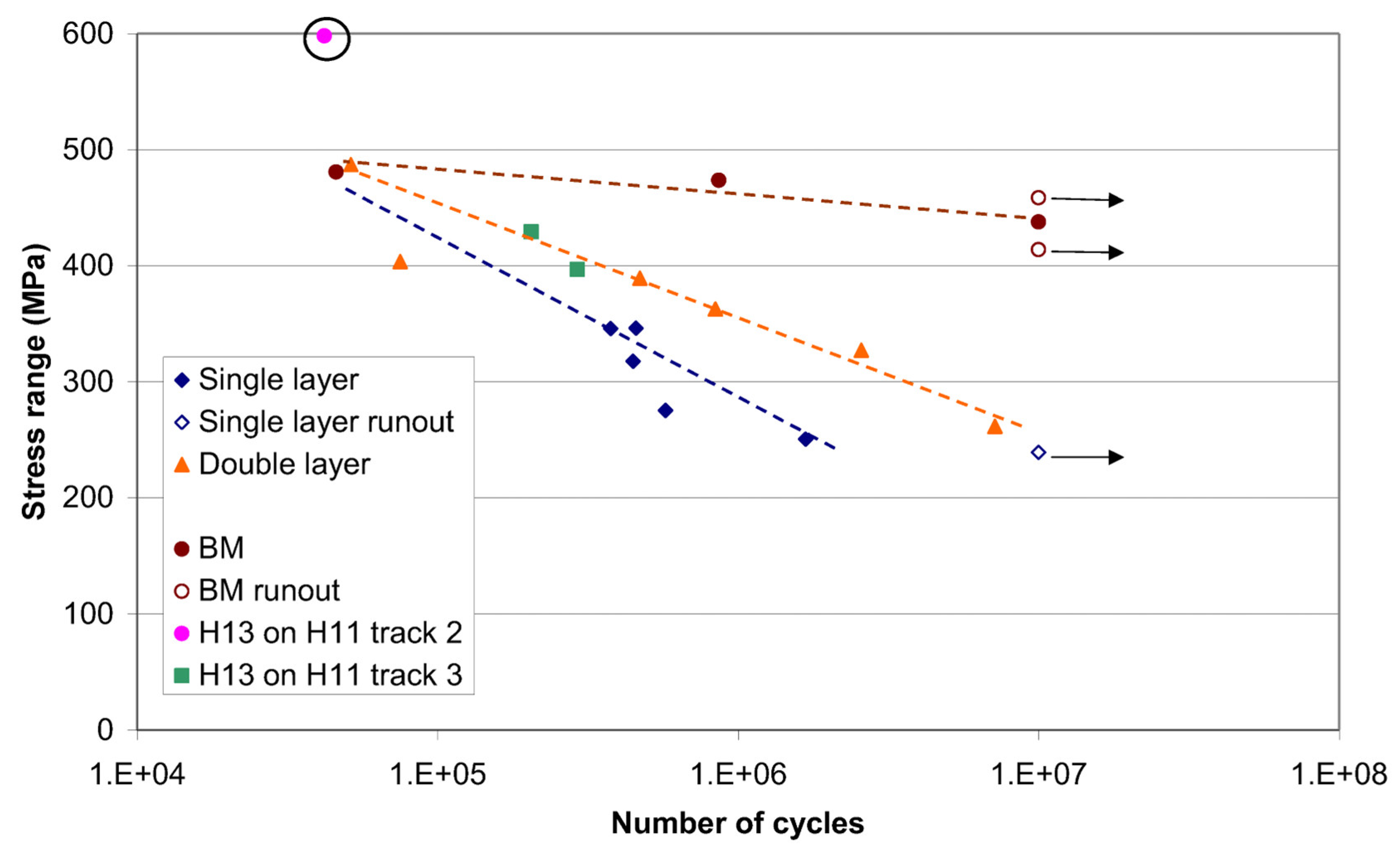
The fatigue strength of specimens with the single-layer overlay was considerably lower than fatigue strength of the S355 steel. The decrease was between 25% and 50% of the strength of the double-layer overlay on S355 steel, similar to that of the overlay on H11 steel. The decrease compared with the S355 steel was only between 25% and 30%. At high-stress range, namely 480 MPa, there were almost no differences between all tested modifications.
Fatigue resistance of all overlaid specimens was affected by notch sensitivity and resistance of short cracks to growth from defects. In spite of considerable new knowledge generated within the work, the findings open occasions for further investigations in the field. Consequential research is being continued to further optimise the laser overlaying parameters and to minimise defects. Results are promising.
Author Contributions
Conceptualization, I.Č. and T.M.; methodology, I.Č., T.M. and F.W.; validation, I.Č. and J.K.; investigation, I.Č., T.M. and J.K.; resources, T.M. and F.W.; data curation, J.K. and T.M.; writing—original draft preparation, I.Č.; writing—review and editing, I.Č.; visualization, I.Č. and T.M.; supervision, T.M. and J.K.; project administration, I.Č. and T.M.; funding acquisition, I.Č. All authors have read and agreed to the published version of the manuscript.
Funding
This research was funded by Technology Agency of the Czech Republic, grant number TG03010032-30-2.
Data Availability Statement
The original contributions presented in this study are included in the article. Further inquiries can be directed to the corresponding author.
Conflicts of Interest
Authors Tomáš Mužík and František Wágner are employed by the company MATEX PM, s.r.o. The remaining authors declare that the research was conducted in the absence of any commercial or financial relationships that could be construed as a potential conflict of interest.
Abbreviations
The following abbreviations are used in this manuscript:
| FCG | Fatigue Crack Growth |
| RS | Residual Stresses |
| AM | Additive Manufacturing |
| LB-PBF | Laser Beam—Powder Bed Fusion |
References
- Srinivas, M.; Babu, B.S. A Critical Review on Recent Research Methodologies in Additive Manufacturing. Mater. Today Proc. 2017, 4, 9049–9059. [Google Scholar] [CrossRef]
- Herzog, D.; Seyda, V.; Wycisk, E.; Emmelmann, C. Additive manufacturing of metals. Acta Mater. 2016, 117, 371–392. [Google Scholar] [CrossRef]
- Elambasseril, J.; Rogers, J.; Wallbrink, C.; Munk, D.; Leary, M.; Qian, M. Laser powder bed fusion additive manufacturing (LPBF-AM): The influence of design features and LPBF variables on surface topography and effect on fatigue properties. Crit. Rev. Solid State Mater. Sci. 2023, 48, 132–168. [Google Scholar] [CrossRef]
- Denti, L.; Sola, A. On the Effectiveness of Different Surface Finishing Techniques on A357.0 Parts Produced by Laser-Based Powder Bed Fusion: Surface Roughness and Fatigue Strength. Metals 2019, 9, 1284. [Google Scholar] [CrossRef]
- Segurajauregi, U.; Álvarez-Vázquez, A.; Muñiz-Calvente, M.; Urresti, I.; Naveiras, H. Fatigue Assessment of Selective Laser Melted Ti-6Al-4V: Influence of Speed Manufacturing and Porosity. Metals 2021, 11, 1022. [Google Scholar] [CrossRef]
- Gu, D.; Shen, Y. Balling phenomena in direct laser sintering of stainless steel powder: Metallurgical mechanisms and control methods. Mater. Des. 2009, 30, 2903–2910. [Google Scholar] [CrossRef]
- King, W.E.; Barth, H.D.; Castillo, V.M.; Gallegos, G.F.; Gibbs, J.W.; Hahn, D.E.; Kamath, C.; Rubenchik, A.M. Observation of keyhole-mode laser melting in laser powder-bed fusion additive manufacturing. J. Mater. Process. Technol. 2014, 214, 2915–2925. [Google Scholar] [CrossRef]
- Liu, Y.; Yang, Y.; Mai, S.; Wang, D.; Song, C. Investigation into spatter behavior during selective laser melting of AISI 316L stainless steel powder. Mater. Des. 2015, 87, 797–806. [Google Scholar] [CrossRef]
- Siddique, S.; Imran, M.; Rauer, M.; Kaloudis, M.; Wycisk, E.; Emmelmann, C.; Walther, F. Computed tomography for characterization of fatigue performance of selective laser melted parts. Mater. Des. 2015, 83, 661–669. [Google Scholar] [CrossRef]
- Akita, M.; Uematsu, Y.; Kakiuchi, T.; Nakajima, M.; Kawaguchi, R. Defect-dominated fatigue behavior in type 630 stainless steel fabricated by selective laser melting. Mater. Sci. Eng. A 2016, 666, 19–26. [Google Scholar] [CrossRef]
- Wycisk, E.; Solbach, A.; Siddique, S.; Herzog, D.; Walther, F.; Emmelmann, C. Effects of defects in laser additive manufactured Ti-6Al-4V on fatigue properties. Phys. Procedia 2014, 56, 371–378. [Google Scholar] [CrossRef]
- Yadollahi, A.; Shamsaei, N.; Thompson, S.M.; Elwany, A.; Bian, L. Effects of building orientation and heat treatment on fatigue behavior of selective laser melted 17-4 PH stainless steel. Int. J. Fatigue 2017, 94, 218–235. [Google Scholar] [CrossRef]
- Brandl, E.; Heckenberger, U.; Holzinger, V.; Buchbinder, D. Additive manufactured AlSi10Mg samples using Selective Laser Melting (SLM): Microstructure, high cycle fatigue, and fracture behavior. Mater. Des. 2012, 34, 159–169. [Google Scholar] [CrossRef]
- Parareda, S.; Frómeta, D.; Casellas, D.; Sieurin, H.; Mateo, A. Understanding the Fatigue Notch Sensitivity of High-Strength Steels through Fracture Toughness. Metals 2023, 13, 1117. [Google Scholar] [CrossRef]
- Cubi, R.E.; Gonçalves, R.L.P.; Massi, M.; Ribeiro, G.L.X.; Reis, L.; Couto, A.A. Comparison of Microstructure and Fatigue Life of Laser Powder Bed Fusion and Forging/Rolling Inconel 718 Alloy After Solution Heat Treatment and Double Aging. Metals 2026, 16, 57. [Google Scholar] [CrossRef]
- Mancisidor, A.M.; García-Blanco, M.B.; Quintana, I.; Arrazola, P.J.; Espinosa, E.; Cuesta, M.; Albizuri, J.; Garciandia, F. Effect of Post-Processing Treatment on Fatigue Performance of Ti6Al4V Alloy Manufactured by Laser Powder Bed Fusion. J. Manuf. Mater. Process. 2023, 7, 119. [Google Scholar] [CrossRef]
- Blinn, B.; Klein, M.; Gläßner, C.; Smaga, M.; Aurich, J.C.; Beck, T. An Investigation of the Microstructure and Fatigue Behavior of Additively Manufactured AISI 316L Stainless Steel with Regard to the Influence of Heat Treatment. Metals 2018, 8, 220. [Google Scholar] [CrossRef]
- Černý, I.; Kec, J.; Poloch, A.; Zetek, M. Mechanical properties and high-cycle fatigue strength of 3D printed Inconel 718 alloy and effects of high-temperature exposure to corrosive atmosphere. AIP Conf. Proc. 2020, 2309, 020026. [Google Scholar] [CrossRef]
- ČSN EN ISO 18265; Metallic Materials—Conversion of Hardness Values. ISO: Geneva, Switzerland, 2014.
- Jakost S355 (ČSN 11523, St 52-3 U, Fe 510, ozn. W nr. 1.0547, 1.0553, 1.0554, 1.0570). Atreon, s.r.o., Čelákovice, Prague-East District, Czech Republic. Available online: https://www.atreon.cz/jakost-s355/ (accessed on 1 March 2022). (In Czech)
- ASTM E647-23a; Standard Test Method for Measurement of Fatigue Crack Growth Rates. ASTM International: West Conshohocken, PA, USA, 2024.
Figure 1.
Total view of the first sample.
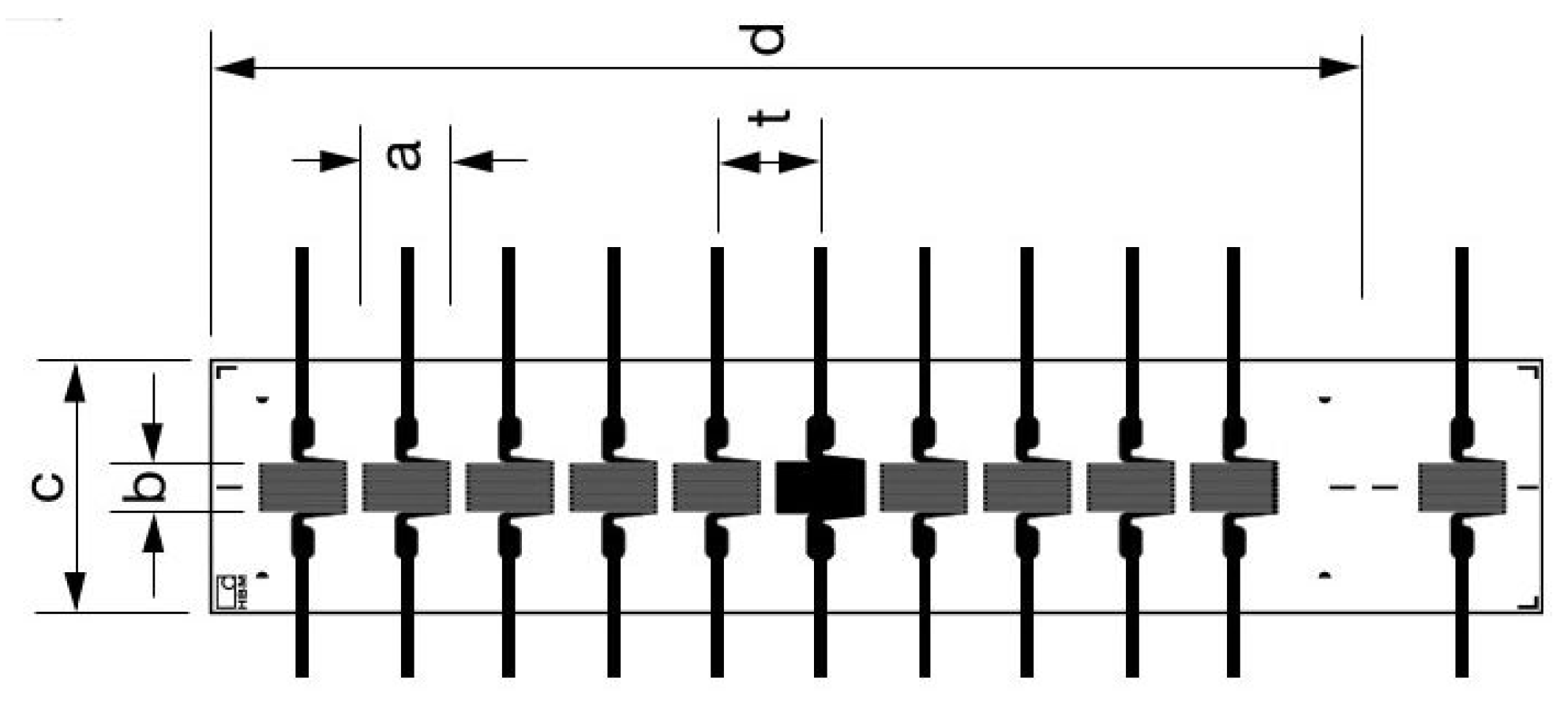
Figure 2.
Scheme of HBM 1-KY11-4/120 strain gauge chains. Dimensions in mm: a = 3, b = 2.1, c = 9.7, d = 44.5, t = 4.
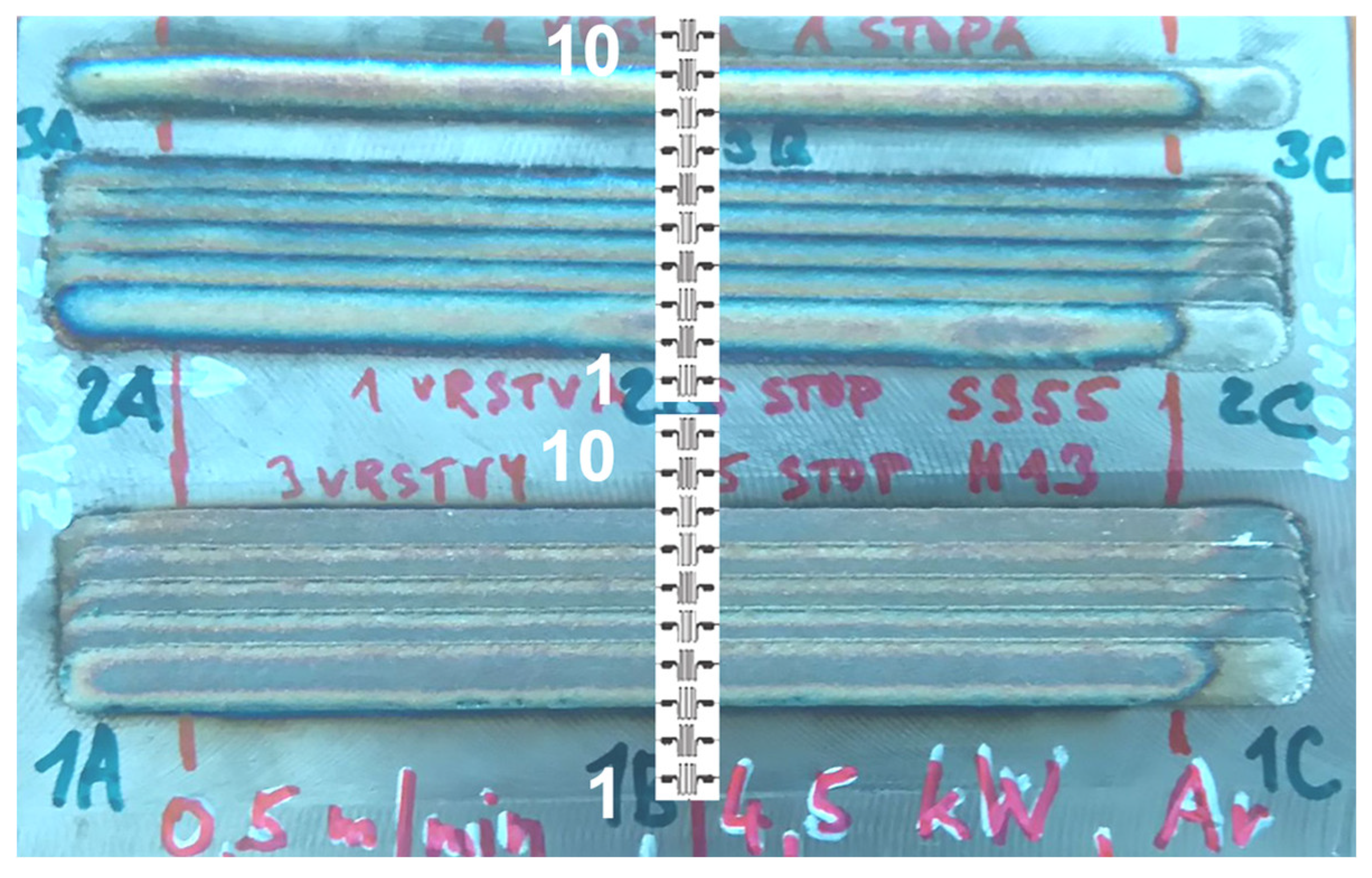
Figure 3.
Position of strain gauge chains on the specimen. Markings 1A–1C, 2A–2C, 3A–3C are just work marking, not important for understanding.
Figure 4.
Three-point bending specimens used for fatigue tests.
Figure 5.
Example of grinding of the surface layer of the H13 welds on the H11 steel.
Figure 6.
Single-weld track on BM plate.
Figure 7.
Ferritic-pearlitic microstructure of BM with uniform grain size, under single-weld track.
Figure 8.
Weld martensitic microstructure of a dendritic type, single-weld track.
Figure 9.
Outer weld track with pores and lacks of fusion, single-weld track.
Figure 10.
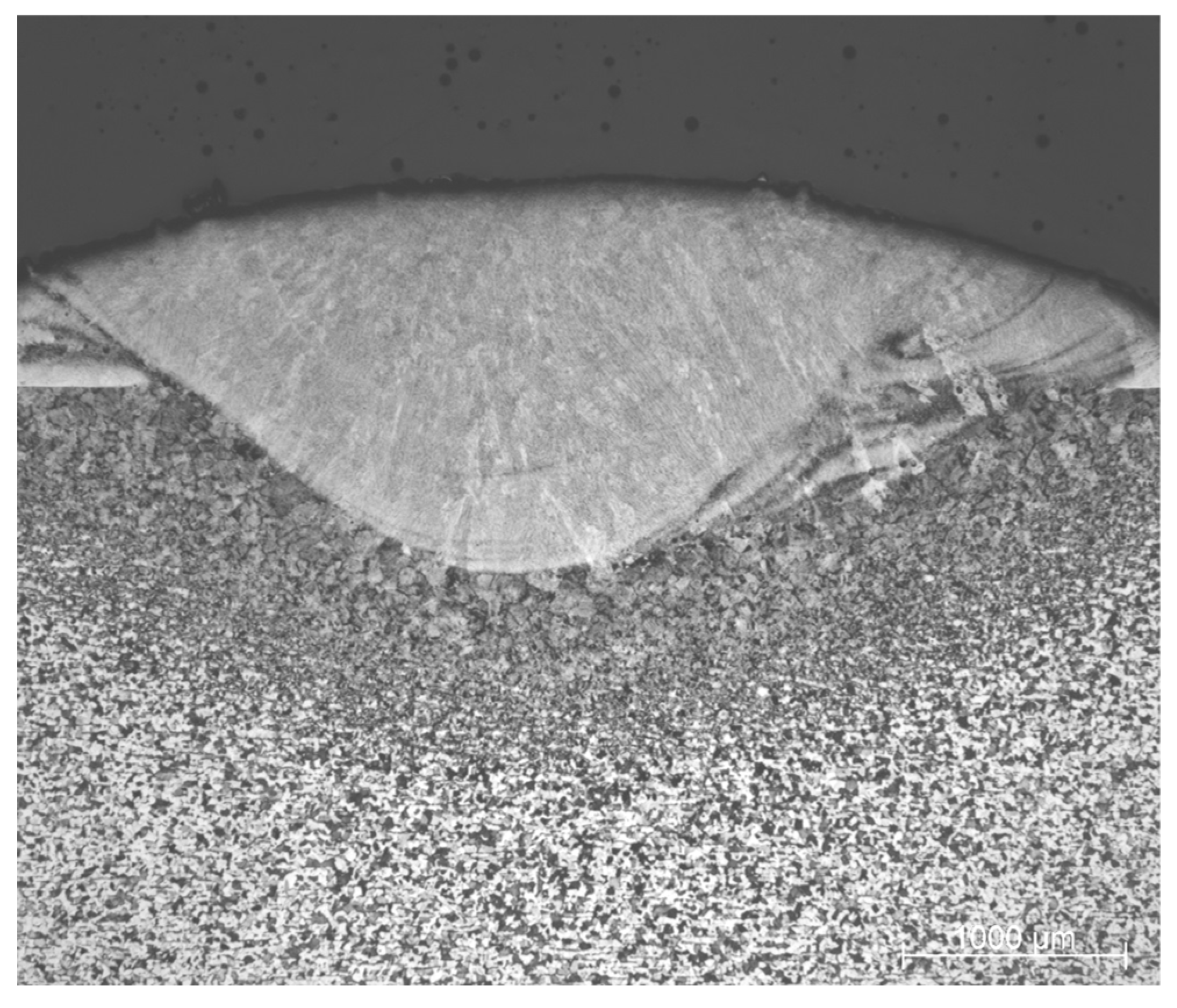
Macrostructure of single-weld track after etching.
Figure 11.
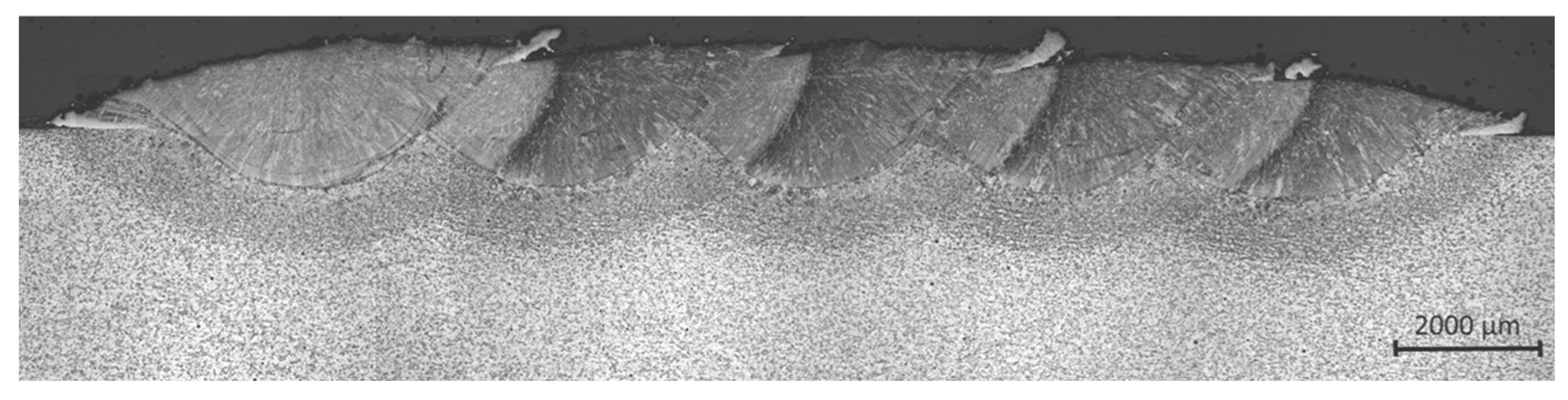
Macrostructure of single-layer overlay with five tracks.
Figure 12.
Course of HV10 hardness from the surface through welds to base material. Overlay on S355 steel.
Figure 13.
Courses of hardness in the direction parallel to the surface. Overlay on S355 steel.
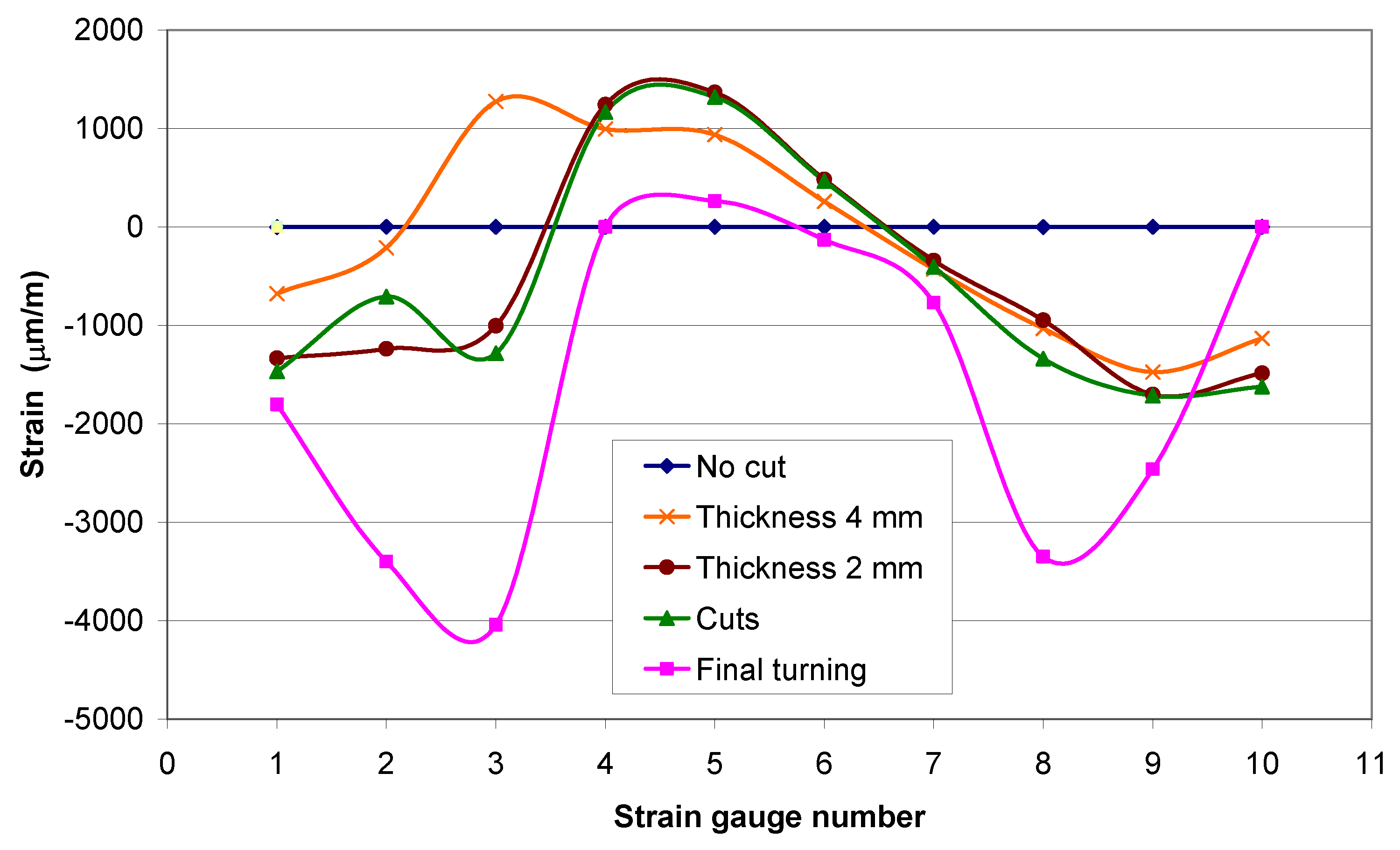
Figure 14.
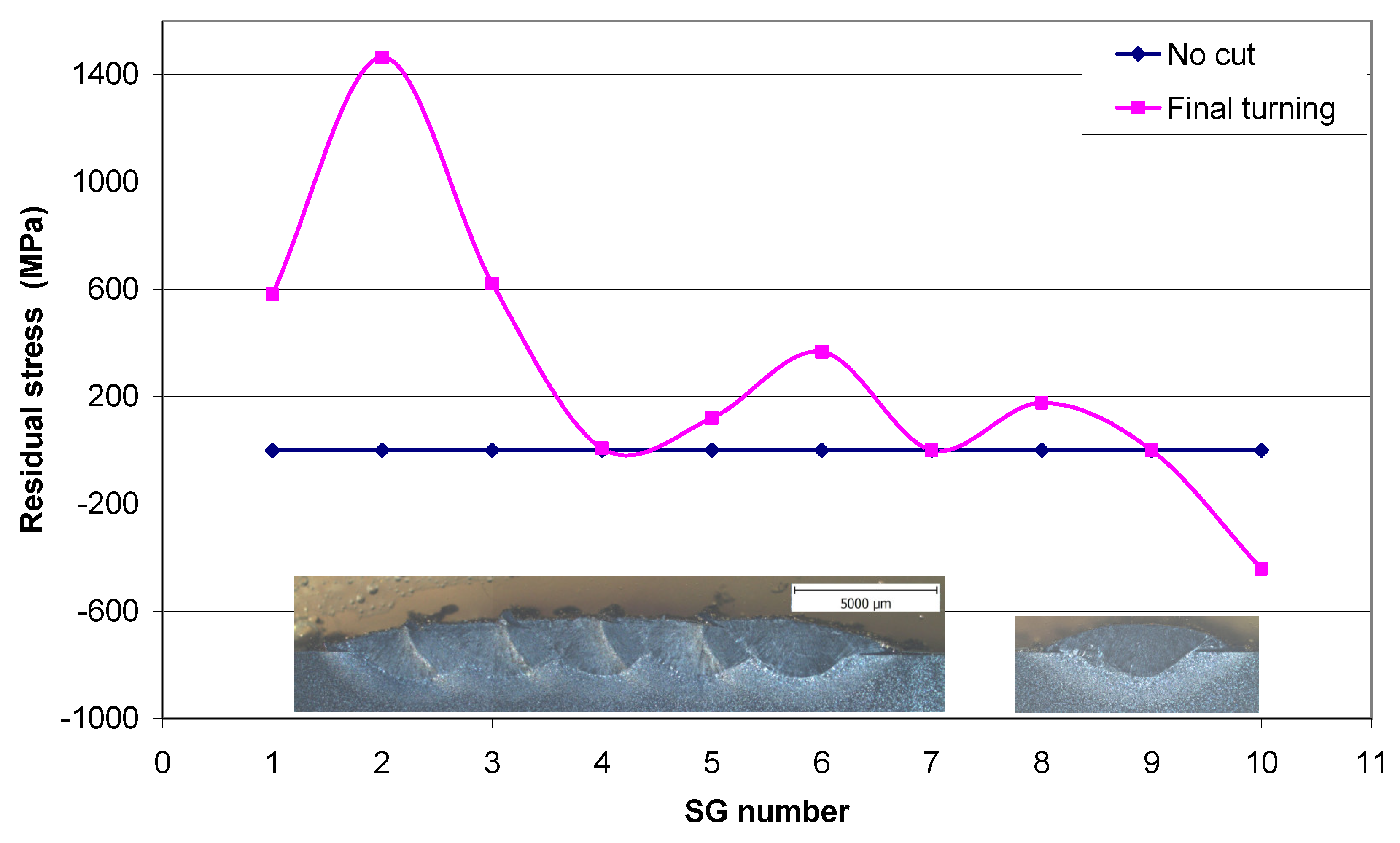
Strains measured at different stages of machining the material off. Overlay on S355 steel.
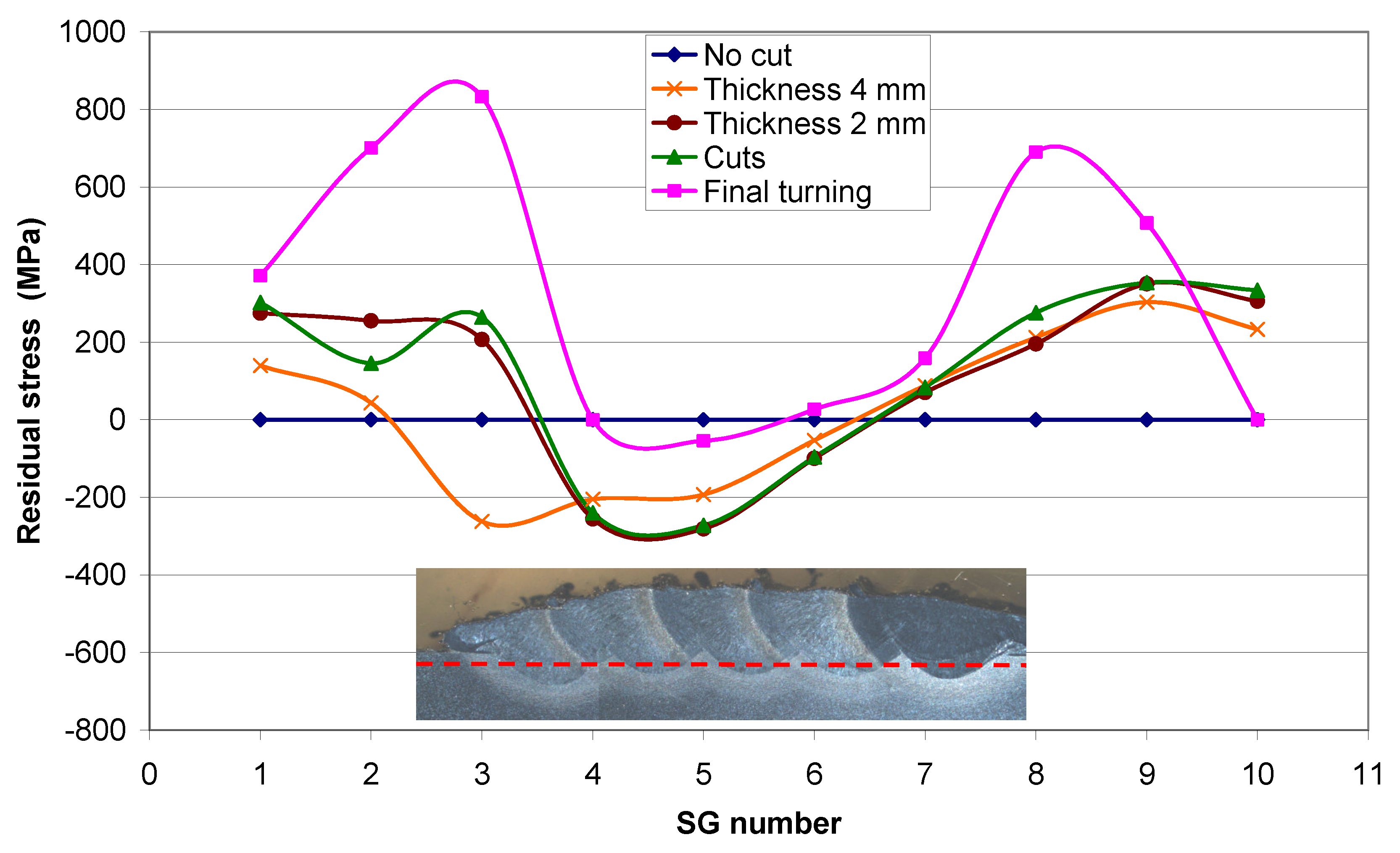
Figure 15.
Original residual stresses recalculated from strains in
Figure 13. Overlay on S355 steel. The red dash line indicates the final machining.
Figure 16.
Original residual stresses in the single-layer overlay and separate track on S355 steel.
Figure 17.
Comparison of residual stresses in single- and double-layer overlays on S355 steel.
Figure 18.
Results of high-cycle fatigue tests. The point indicated by the circle represents an exceptionally high fatigue resistance, as mentioned in the text.
Figure 19.
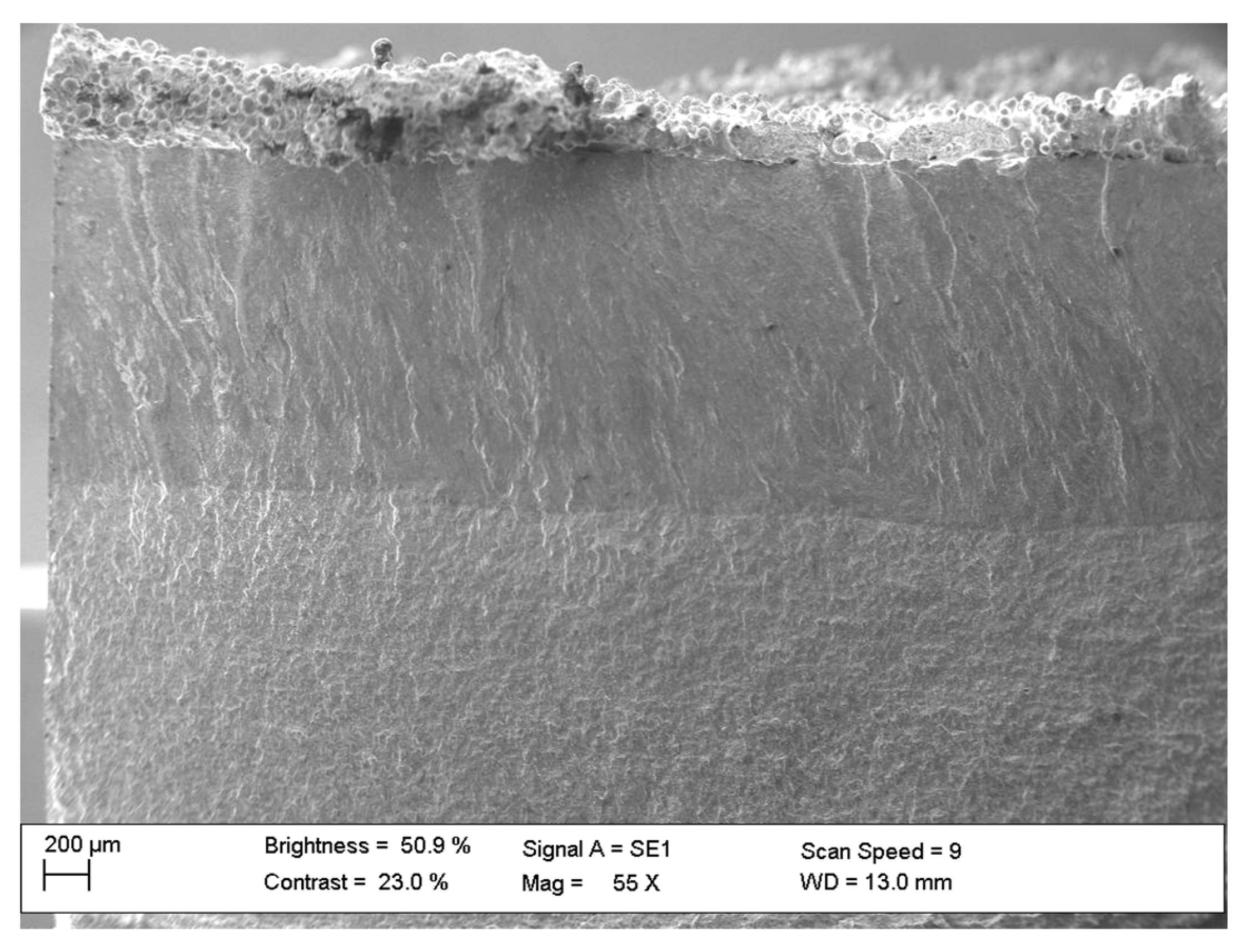
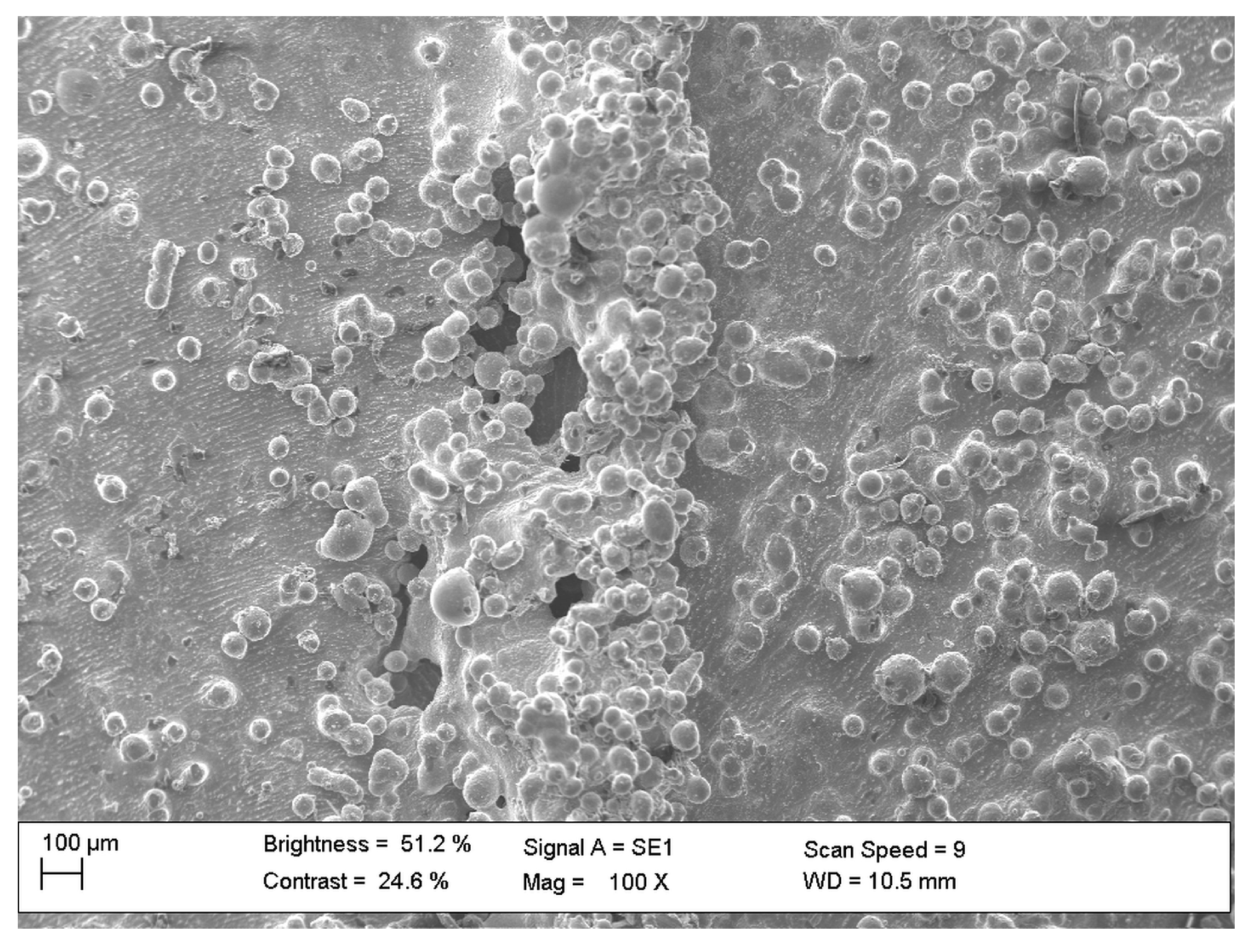
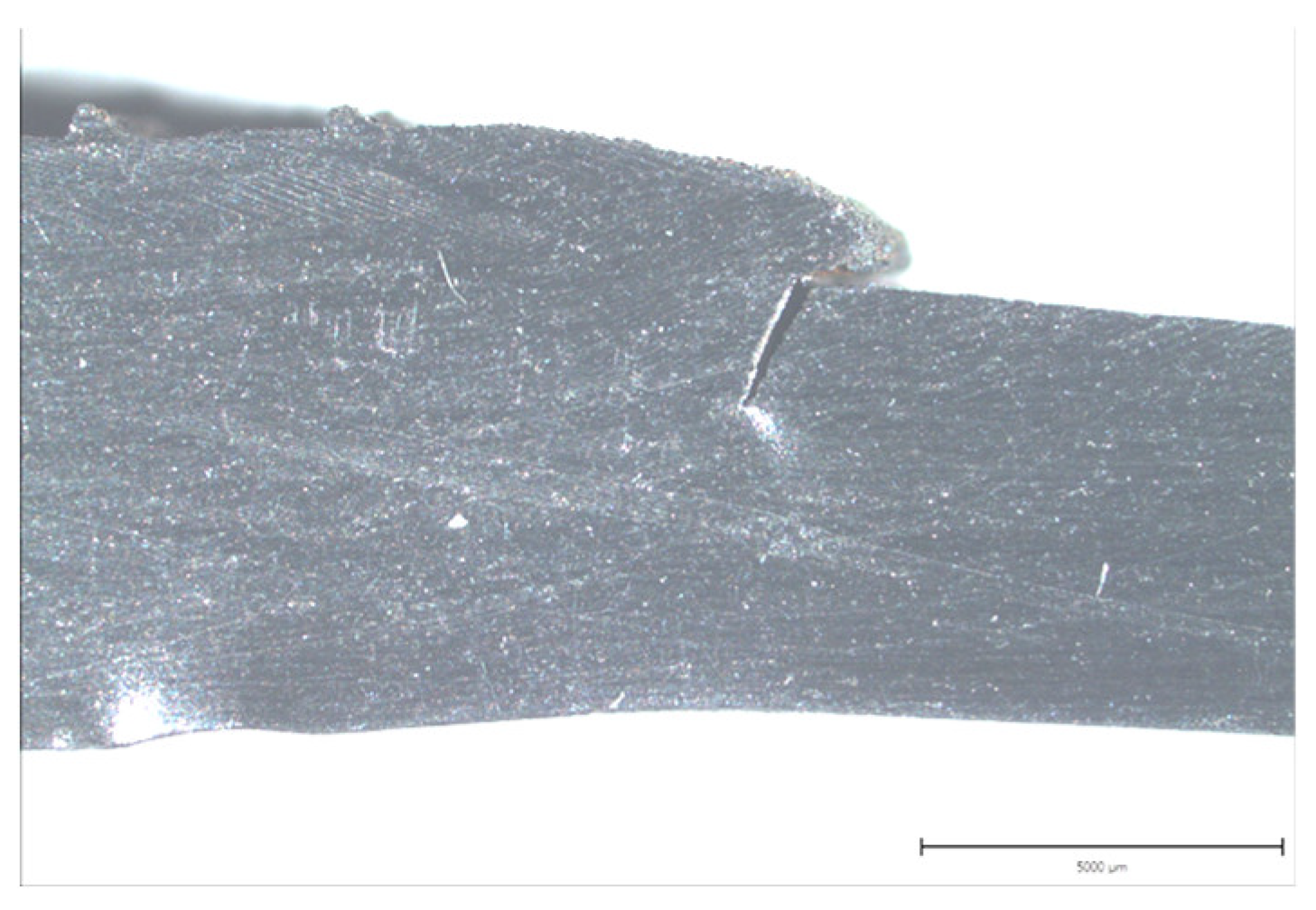
Example of surface defects on the single-layer overlay on S355 steel.
Figure 20.
Fatigue crack initiated at the notch at the overlay boundary. Overlay on S355 steel.
Figure 21.
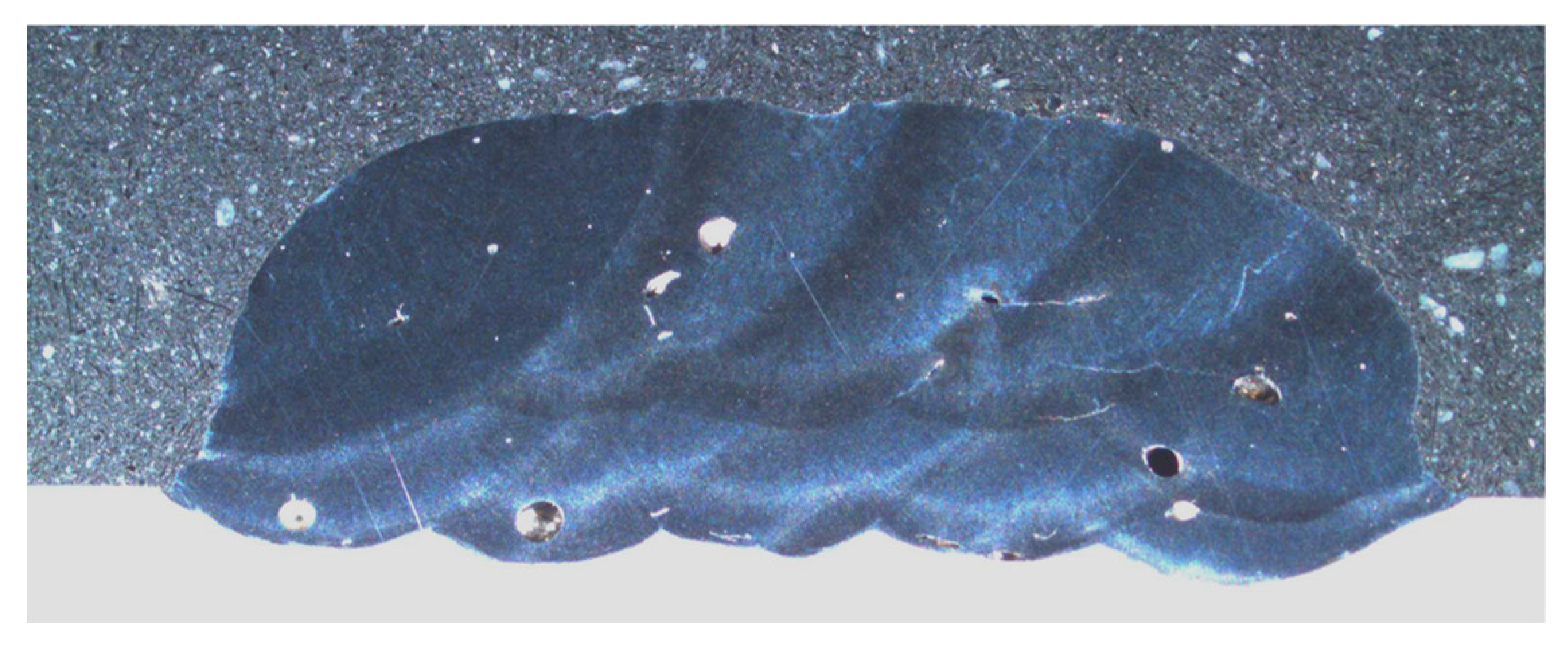
Pores inside three-layer overlay of H13 on H11.
Figure 22.
Fatigue crack initiation on surface defect and growth through single-layer overlay of thickness 1.9 mm on S355 steel.
| Disclaimer/Publisher’s Note: The statements, opinions and data contained in all publications are solely those of the individual author(s) and contributor(s) and not of MDPI and/or the editor(s). MDPI and/or the editor(s) disclaim responsibility for any injury to people or property resulting from any ideas, methods, instructions or products referred to in the content. |