Article

Study of the Effect of Endemic Microorganisms from a Copper Deposit on the Efficiency of Sulfuric Acid Leaching

JSC “Institute of Metallurgy and Ore Beneficiation”, Satbayev University, Almaty 050010, Kazakhstan
*
Author to whom correspondence should be addressed.
Metals 2026, 16(6), 630; https://doi.org/10.3390/met16060630 (registering DOI)
Submission received: 12 May 2026 / Revised: 1 June 2026 / Accepted: 3 June 2026 / Published: 8 June 2026
(This article belongs to the Special Issue Advances in Mineral Processing and Hydrometallurgy—4th Edition)

Abstract

This paper presents the results of testing a copper bioleaching technology applied to two types of ore sampled from different sections of deposits within one of the deposits in the Balkhash region. Preliminary microbiological studies of microorganisms present in mineral raw material samples from the deposit revealed that, under conditions favorable for the growth of iron- and sulfur-oxidizing bacteria, active proliferation of yeast-like fungi was also observed, along with a bacterial culture identified as Skermanella aerolata. Preliminary experiments demonstrated that the effect of the identified bacterial culture, in association with Acidithiobacillus ferrooxidans and Acidithiobacillus thiooxidans, positively influences oxidative processes involved in the decomposition of sulfur- and iron-containing minerals. The complete consortium of endemic microorganisms used in bioleaching experiments exhibited the highest efficiency compared to both individual cultures and the conventional sulfuric acid leaching method. The effect of biological oxidation on a simple-composition ore sample resulted in a 5.4% increase in copper recovery, while the efficiency of sulfuric acid consumption improved by nearly 40%. The use of bacterial oxidation for a low-grade, high-acid-consuming ore sample showed comparable copper recovery; however, sulfuric acid consumption was reduced by a factor of 2.5.

1. Introduction

The global trend of declining copper ore grades, combined with the increasing importance of copper in modern industry as an excellent material for electrical conductivity applications, necessitates the development of innovative approaches for the inclusion of low-grade copper ores into production with economically viable processing methods. One promising approach is the implementation of bioleaching technology. Over the past two decades, modern studies on both conventional heap leaching technology for copper and methods involving bacterial oxidation have been comprehensively reported in the scientific works of domestic and international researchers [1,2,3,4,5,6,7,8]. The accumulated global experience in copper bioleaching research has demonstrated significant techno-economic advantages of this technology, particularly in the processing of low-grade and complex waste ores. Among the microorganisms used in sulfide ore leaching processes, bacteria of the species A. ferrooxidans have found the widest application. As a result of the oxidative action of this bacterial culture on copper- and iron-bearing sulfide minerals during biogeotechnological processes, metals are converted from water-insoluble sulfides into soluble sulfates [9,10,11,12,13]. During the metabolism and active growth of A. ferrooxidans, specific changes in the parameters of the leaching solution are observed [14,15], including a decrease in Fe2+ concentration and an increase in Fe3+ ions, variations in redox potential, and immobilization of bacterial cells on mineral surfaces such as chalcopyrite [16]. However, the use of A. ferrooxidans is most effective when chalcopyrite and iron-containing sulfides predominate in the ore, whereas for certain copper sulfides, the oxidative effect may be limited or absent. Flotation beneficiation is most commonly considered the primary method for processing sulfide copper raw materials. However, in practice, flotation of low-grade ores and waste dumps yields copper concentrates rather than finished cathode copper. Moreover, nearly all sulfide copper ores contain iron-bearing sulfides, necessitating additional selective flotation stages to separate copper sulfides from iron sulfides. In some cases, copper deposits include both oxidized and sulfide (as well as mixed-type) ore bodies. Oxidized portions of such deposits can be directly processed using hydrometallurgical methods, whereas the implementation of beneficiation technologies requires the installation of energy-intensive facilities for crushing, grinding, and flotation. In addition to the high energy consumption and operational costs associated with crushing and grinding, flotation processes also generate significant amounts of waste in the form of tailings, which require proper disposal. Therefore, for hydrometallurgical operations managing mixed ore types, the integration of sulfide ore reserves into leaching processes represents a relevant and important challenge.
The importance of implementing innovative hydrometallurgical methods for the rational processing of mineral resources is further emphasized by the need to address existing environmental issues. For example, the proceedings of the Mining in the Era of Green Solutions conference present various preventive measures aimed at reducing environmental risks to acceptable levels, as well as studies on the impact of mining emissions on regional vegetation, including those associated with copper ore deposits [17]. Technogenic mineral formations are often significant sources of heavy metal contamination; in combination with acid precipitation and associated water and aeolian transport processes, these pollutants can be dispersed into surrounding landscapes [18]. Natural long-term leaching processes occurring in such waste dumps contribute to the gradual release and spread of heavy metals into the environment, further highlighting the necessity and feasibility of their inclusion in integrated and environmentally responsible processing schemes. Studies on the immobilization of copper and other heavy metals using geopolymers have demonstrated the high toxicity and carcinogenicity of these elements, as well as their tendency to accumulate in environmental components at levels significantly exceeding those of many organic pollutants [19]. Thus, hydrometallurgical processing of waste ores, when conducted in compliance with environmental protection measures, can be considered an initial stage in the utilization of mining waste derived from subeconomic ore reserves. Modern hydrometallurgy is widely recognized as the only viable approach for achieving more efficient and sustainable utilization of copper deposit resources [20].

Review of Modern Principles of Bioleaching

The fundamental principle of bioleaching is based on the metabolic properties of microorganisms, which enhance the extraction of metals from ores, mineral resources, and technogenic waste. Bioleaching is also considered a more environmentally friendly alternative to conventional technologies for the extraction of valuable metals. However, despite its significant potential, a comprehensive understanding of the principles and application mechanisms of bioleaching in the context of microbially mediated metal mobilization remains incomplete [21]. The diversity of microbial species and their application methods is largely determined by the properties of the target metal and its modes of occurrence within mineral matrices. For example, lithium bioleaching has emerged as an environmentally sustainable and promising technology that utilizes microbial metabolic activity to extract lithium from both primary ores and secondary sources, including waste materials and other lithium-bearing substrates [22]. Another example is the biohydrometallurgical recovery of heavy metals from electronic waste using such microorganisms as Chromobacterium violaceum, Acidithiobacillus ferrooxidans, Leptospirillum ferrooxidans, and Aspergillus niger [23]. However, unlike natural ores, many waste materials contain inhibitory components; among these, fluoride represents a significant challenge due to its toxicity to acidophilic microorganisms even at low concentrations, thereby necessitating the development of integrated biotechnological processing approaches [24].
A key determining factor in selecting an effective combination of microorganisms is achieving a high redox potential (Eh), which is essential for efficient leaching of valuable metals from ore minerals [25]. Recent studies indicate that the dynamics and diversity of redox reaction mechanisms are more strongly influenced by microbial consortia than previously assumed. Genomic and transcriptomic analyses have shown that sulfur- and iron-oxidizing bacteria can adapt to extreme environmental conditions, including variations in pH, redox potential, and metal toxicity [26]. Certain microorganisms, including both bacteria and microfungi, exhibit unique oxidative mechanisms. For instance, A. ferrooxidans and A. thiooxidans primarily promote the oxidative dissolution of iron and sulfur, whereas Sphingomonas desiccabilis, Pseudomonas spp., and some microfungi exert catalytic effects on oxidative activity and acid regeneration processes [27].
A substantial proportion of studies on the application of biological oxidation in hydrometallurgical processes primarily focus on achieving maximum metal recovery from ore into solution. Laboratory-scale tests of preliminary biological oxidation of copper ores have also demonstrated increased metal recovery compared to conventional sulfuric acid leaching. Such experiments are often limited to stirred tank leaching or small-scale column tests, where the liquid-to-solid ratios are relatively high. In addition to favorable liquid-to-solid ratios, bio-oxidizing agents are typically represented by pure bacterial cultures or their combinations cultivated under optimal nutrient conditions. However, practical experience shows that when scaling bioleaching parameters to larger systems that simulate real hydrometallurgical copper production processes, the effect of preliminary biological oxidation may differ significantly. For instance, previous studies on the bioleaching of copper deposits in the vicinity of the cities of Zhezkazgan and Satpayev reported copper recovery levels of up to 90%, while the effect of bacterial oxidation in this case contributed primarily to a substantial reduction in sulfuric acid consumption [28]. The reduction in sulfuric acid consumption subsequently facilitates the environmental management and disposal of spent heaps after maximum copper extraction [29]. A decrease in residual acidity and improved water–salt balance in processed heaps, when combined with additional reclamation measures, can lead to significant improvements in environmental conditions within 2–3 years [30], enabling the full revegetation of previously exploited areas within the deposit region [31,32,33].
Ore samples from two sections of a single deposit located in the vicinity of Balkhash were taken as mineralogical objects for copper leaching studies. The deposit is characterized by the presence of both oxidized and sulfide forms of copper ore. At the same time, due to the ongoing hydrometallurgical operations at the deposit, the reserves of oxidized copper ore are being rapidly depleted. Therefore, to ensure the continued operation of cathode copper hydrometallurgical production, it becomes necessary to implement leaching technologies for sulfide copper ores. This approach would enable the utilization of existing infrastructure while avoiding the need for costly construction of a beneficiation plant at the deposit.

2. Materials and Methods

2.1. Study of the Material Composition of Ore Raw Materials

According to the technical data provided by the geological service, copper ore samples from two different deposit sites are sulfide in nature. However, before the start of the experiments, the composition of the ore samples presented was additionally determined. Prior to the main experimental work, the initial composition of both ore samples was analyzed. The detailed elemental composition of the ore samples was determined using X-ray fluorescence (XRF) analysis on a Venus 200 Axios spectrometer (PANalytical, Almelo, The Netherlands). The results are presented in Table 1.
Additional verification of copper, iron, and sulfur contents in the analyzed samples using chemical analysis methods showed generally consistent results for these components (Table 2).
According to the results of rational phase analysis, the principal copper-bearing minerals in the studied samples (in decreasing order of abundance) are chalcocite, covellite, chalcopyrite, chrysocolla, and tenorite. Other ore minerals identified include pyrite, goethite, and others. The distribution of copper occurrence forms is presented in Table 3. The content of copper forms in the table is expressed as absolute and relative. The absolute value reflects the content of a specific form of copper in the ore, and the relative value shows how much of this form of copper is from its total content.

2.2. Microbiological Studies of Ore Samples

In addition to the investigation of material composition, microbiological studies were conducted on the ore samples to identify endemic microorganisms, assess their potential effect on oxidative processes, and evaluate their role in subsequent leaching. To examine the microbial environment, samples of both ore types were delivered to the laboratory of the Institute of Microbiology and Virology. The primary objective of the microbiological studies was to isolate iron- and sulfur-oxidizing bacteria and to determine the optimal conditions for their growth. During the course of the study, chemolithotrophic bacteria, including A. Ferrooxidans, A. Thiooxidans, Leptospirillum, and Sulfobacillus, as well as archaea, were identified in the ore samples. In addition, chemoorganotrophic bacteria, archaea, and fungi were detected, all of which may have potential applications in metal bioleaching. The main method for isolating acidophilic iron-oxidizing microorganisms involved the use of specialized nutrient media (9K) containing ferrous sulfate at pH values ranging from 1.8 to 3.0, without an organic carbon source, as chemolithotrophic microorganisms utilize atmospheric carbon dioxide as their carbon source. It should be noted that such conditions do not exclude the growth of other microbial groups. Thus, when working with sulfide ore samples, chemoorganotrophic bacteria and fungi may also develop, and their presence can positively influence the oxidative decomposition of certain ore minerals. At the same time, the detected iron-oxidizing archaea are thermophilic microorganisms that do not grow under moderate temperature conditions. Initial cultivation was carried out over a period of 5 days, resulting in the isolation of microbial colonies from both ore samples.
In the present study, a 9K medium was used to isolate and purify acidophilic iron-oxidizing microorganisms.
The 9K liquid medium consists of two solutions, A and B. Solution A includes (NH4)2SO4—3.00 g/L; KCl—0.10 g/L; K2HPO4 · 3H2O—0.655 g/L; MgSO4 · 7H2O—0.50 g/L; and Ca(NO3)2·4H2O—0.01 g/L.
Solution B contains FeSO4 · 7H2O and is sterilized separately from solution A. After cooling to room temperature, solutions A and B were evenly mixed before use.
The 9K solid medium includes solutions A, B (as described above), as well as solution C. Solution C is an agarose solution, and 7.5 g/L is standard; however, in our case, a concentration of 20 g/L was used. Alkali was added to the agar and the pH was adjusted to 9–10 to ensure a final pH of 3.0 when mixed with an acidic solution and solidification of the agarized medium.
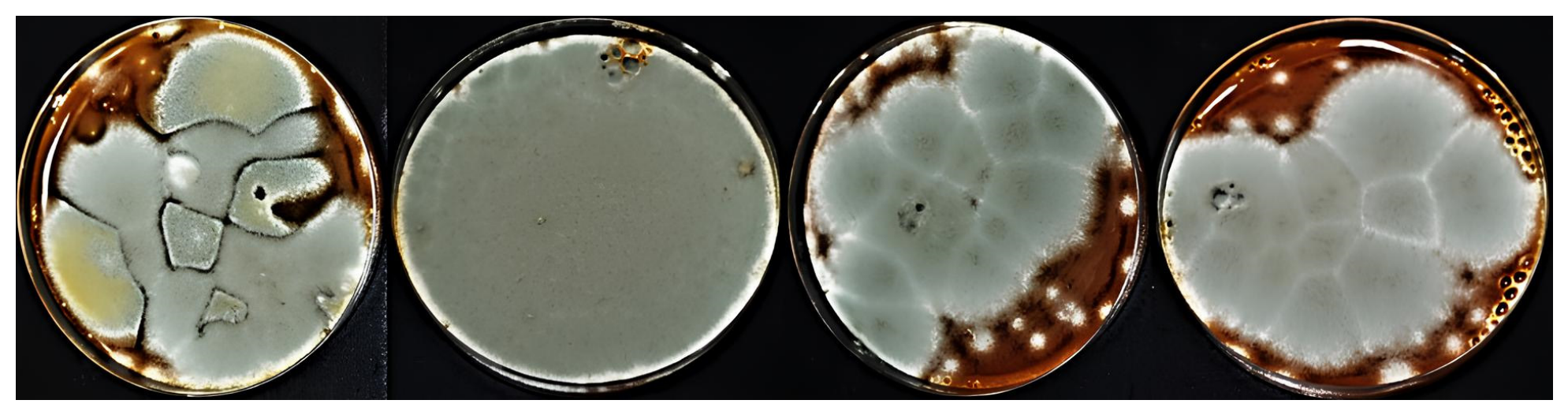
Detailed examination of microbial colonies revealed active growth of yeast fungi alongside bacterial populations (Figure 1), which complicated the identification of bacterial cultures.
The conditions favorable for the growth of iron- and sulfur-oxidizing bacteria were also conducive to the proliferation of yeast microfungi. To enable further identification of other microorganisms, the antifungal antibiotic nystatin was added to the medium. Following the elimination of yeast colonies, subculturing was performed to isolate and identify bacterial cultures.
Microscopic examination of mixed microbial cultures revealed the predominance of rod-shaped bacteria. Subculturing from individual colonies was carried out to isolate iron- and sulfur-oxidizing bacterial cultures. The isolated cultures were inoculated into liquid media and subjected to microscopic analysis. Identification of the isolated cultures from both ore samples demonstrated the predominance of iron- and sulfur-oxidizing bacteria—A. ferrooxidans. A. thiooxidans.
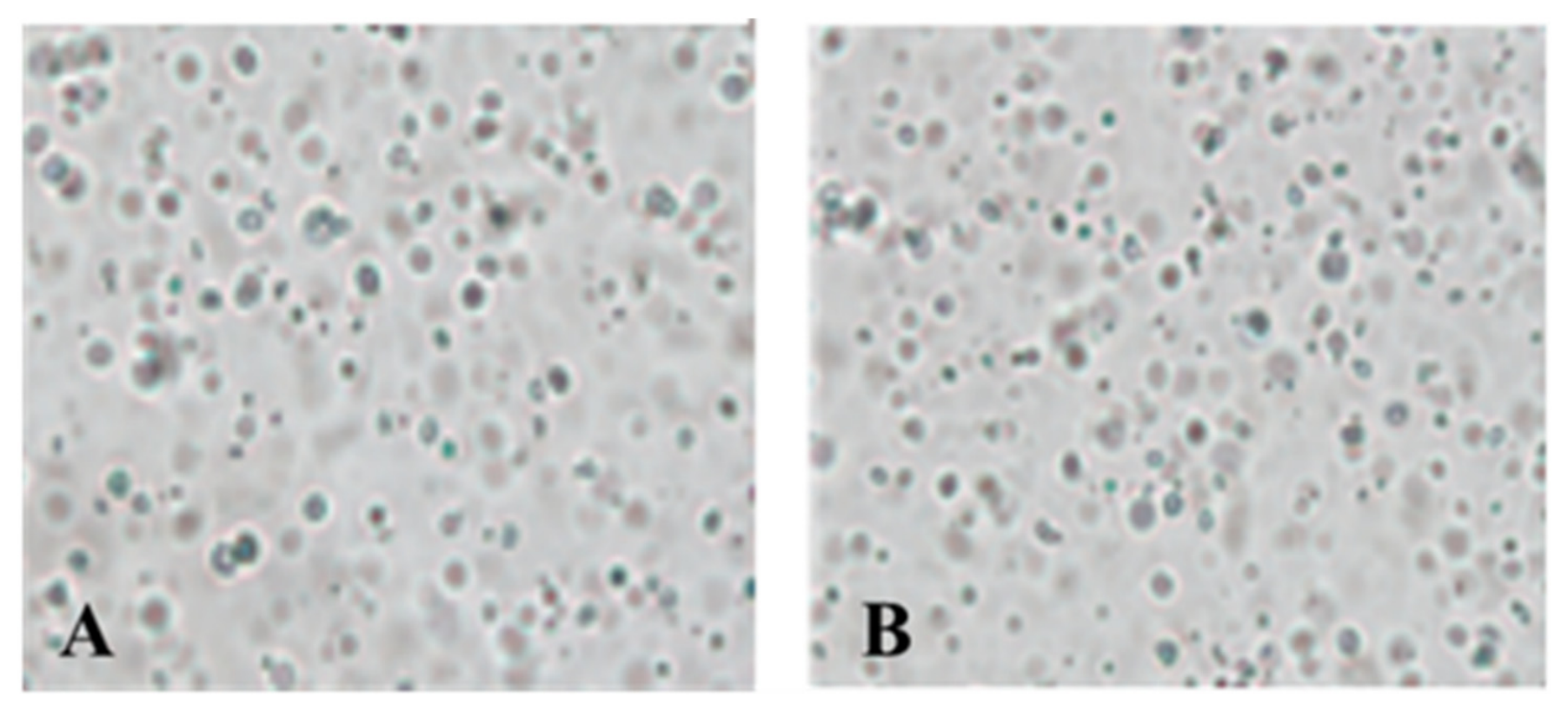
After isolation of the dominant cultures, the remaining microorganisms were subjected to genetic identification based on analysis of the 16S rRNA gene nucleotide sequences. Micrographs of these bacteria are presented in Figure 2, where coccoid-shaped cells are clearly visible.
The unidentified cultures were sent for further biological analysis and species identification to the National Center for Biotechnology (Astana). Bacterial identification was performed by direct sequencing of a fragment of the 16S rRNA gene, followed by comparison of nucleotide identity with sequences deposited in the international GenBank database. DNA extraction from biological samples of ore samples No. 1 and No. 2 was carried out using the method of Kate Wilson [34].
PCR product purification from unbound primers was performed enzymatically using Exonuclease I (Fermentas, Thermo Fisher Scientific Inc, Waltham, MA, USA) and alkaline phosphatase (FastAP, Fermentas, Thermo Fisher Scientific Inc, Waltham, MA, USA). The nucleotide sequences of the 16S rRNA gene of the identified cultures were analyzed and assembled into a consensus sequence using SeqMan software (Version 5, Applied Biosystems, Waltham, MA, USA). Subsequently, terminal fragments (primer sequences and low-quality regions) were removed, yielding nucleotide sequences that were identified in GenBank using the BLAST algorithm. The identification results are presented in Table 4.
The results of strain identification based on analysis of 16S rRNA gene fragments revealed that the strains present in both ore samples correspond to Skermanella aerolata in terms of their molecular and biological characteristics. This bacterial species is predominantly soil-associated; however, it is also classified as a sulfur-oxidizing chemolithotrophic microorganism. Thus, considering the initial microbiological composition of the ore samples, the effect of the identified strain, in association with other microorganisms, is expected to promote the oxidation of iron- and sulfur-bearing minerals. Moreover, these bacteria are capable of oxidizing sulfur independently, even in the absence of an organic carbon source.
Based on the results of the microbiological studies, a consortium of endemic microorganisms will be considered as the biological agent for oxidative processes in subsequent copper bioleaching. This consortium includes the identified chemolithotrophic bacteria A. Ferrooxidans, A. Thiooxidans, Leptospirillum, Sulfobacillus, the identified Skermanella aerolata, as well as yeast fungi.

3. Experimental Section

Prior to the main bioleaching experiments, a series of agitation leaching tests was conducted using individually isolated bacterial cultures as well as their combinations. These preliminary tests made it possible to evaluate the effect of each culture separately on the decomposition of copper-bearing mineral raw materials. The main experimental stage focused on investigating the effect of bacterial oxidation on the efficiency of subsequent copper leaching, under conditions simulating those of the deposit as closely as possible. A consortium of endemic microorganisms was considered as the bio-oxidizing agent, including iron- and sulfur-oxidizing bacteria A. Ferrooxidans and A. Thiooxidans, in combination with other naturally occurring microorganisms identified in the ore mass of the deposit. Biological oxidation was carried out by introducing cultivated A. Ferrooxidans and A. Thiooxidans cultures without creating conditions typical of small-scale laboratory experiments, such as strict sterility and optimized nutrient media specific to individual bacterial strains. The 9K nutrient medium containing ferrous sulfate was used only at the initial stage of bacterial selection and included the following components: (NH4)2SO4—3.00 g/L; KCl—0.10 g/L; K2HPO4·3H2O—0.655 g/L; MgSO4·7H2O—0.50 g/L; Ca(NO3)2·4H2O—0.01 g/L. Scaled laboratory bio-oxidation experiments involved the use of diluted raffinate (post-copper extraction solution) obtained from the process pond of an operating leaching site. The use of raffinate in large-scale laboratory tests was considered as an alternative to nutrient media for potential application in pilot-scale and industrial bioleaching operations. For example, even in pilot-scale tests involving a heap of 1000 tons of ore, preliminary bacterial oxidation would require at least 100 m3 of bio-solution. Preparation of such a volume of biological solution would require additional water and reagent consumption, particularly ferrous sulfate 2, whereas the use of spent raffinate allows for more rational utilization of reagents. Based on the required properties and composition of the biological solution, the raffinate was diluted to achieve the following parameters: pH 1.8–2.2 (for acidophilic cultures, pH may be as low as 1.0), Fe2+ concentration of approximately 10 g/L, Cu content not exceeding 0.1 g/L, and H2SO4 concentration of 3–5 g/L (depending on the target pH). The water balance of the bacterial oxidation process depends on the initial properties of the spent raffinate. Thus, for oxidative treatment with acidophilic cultures (pH 1.0–1.8), undiluted raffinate may be used. In contrast, for bacterial cultures requiring a pH range of 1.8–2.2, dilution of the raffinate with water is necessary. Water was added to achieve the required raffinate parameters at a ratio of 1:5, followed by inoculation with A. Ferrooxidans and A. Thiooxidans cultures grown on nutrient media at a ratio of 1:100.
The main experiments were carried out using column percolation leaching, simulating heap leaching conditions over a period of 125 days. Two types of copper ore samples (Type 1 and Type 2) were used in the percolation experiments. The column tests included comparative evaluation of conventional sulfuric acid leaching and a method involving preliminary bacterial treatment followed by leaching.

Daily Measurements

Leaching of each experimental variant was carried out over a period of 125 days. On a daily basis, copper recovery from the ore into solution was calculated based on the results of copper concentration analysis in productive solutions and the initial copper content in the ore. Copper concentration was determined using a titrimetric method [35], with regular verification by atomic absorption analysis. Solution analyses also included measurements of sulfuric acid concentration, ferrous (Fe2+) and ferric (Fe3+) ions, as well as pH and redox potential (Eh). Based on residual acid concentrations in the solutions, additions of concentrated sulfuric acid were made to maintain the required level of 25 g/L during the main leaching stage. The total amount of sulfuric acid added for each test variant was recorded and subsequently used to calculate overall consumption and acid efficiency. After completion of percolation leaching, the spent ore in each column was subjected to water washing, during which residual copper salts were removed. As a result, additional copper recovery from the ore mass was also observed in the wash solutions.
During the initiation of bacterial oxidation, measurements of Eh, pH, and viable bacterial cell counts are typically performed on solution samples. However, such measurements do not fully reflect the progression of oxidative processes due to the immobilization of bacterial cultures on mineral surfaces. Measurements of Eh and pH in solutions from both conventional and bioleaching processes often show similar values, while enumeration of viable bacterial cells indicates their unstable presence in the solution flow. The accumulation of bacteria within the ore mass, particularly on mineral surfaces rather than in the solution phase, enhances their survival during the introduction of higher concentrations of sulfuric acid, which reduce pH to below 1.0. It was observed that Eh values measured in productive leaching solutions for both conventional and biological variants did not differ significantly, remaining within the range of 330–360 mV.

4. Results and Discussion

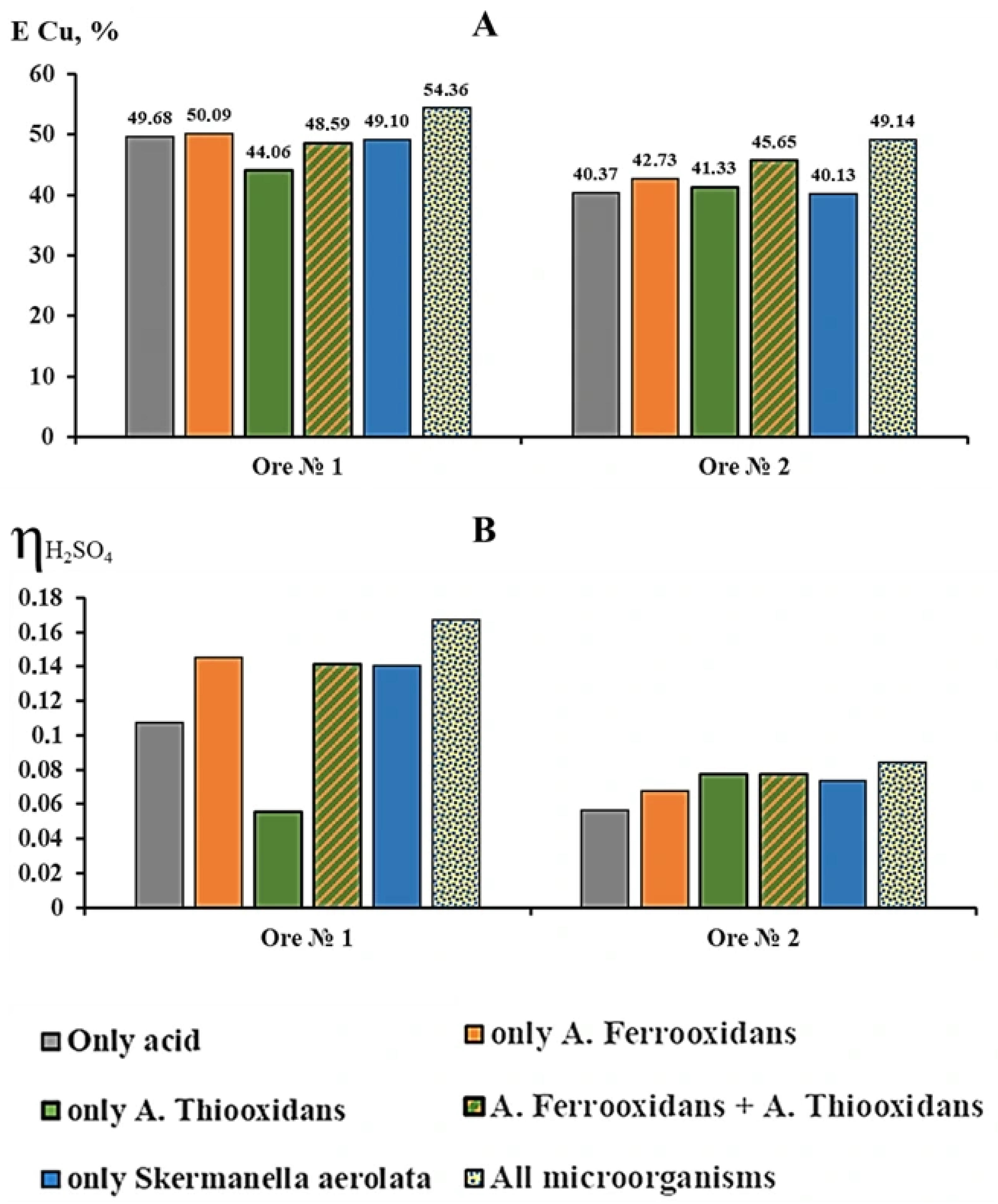
The results of preliminary agitation leaching tests confirmed the effectiveness of using a consortium of endemic microorganisms cultivated under nutrient conditions for Acidithiobacillus ferrooxidans and Acidithiobacillus thiooxidans. The microbial combination, including A. Ferrooxidans, A. Thiooxidans, Skermanella aerolata, and yeast microfungi, resulted in an increase in copper recovery by 5.4% compared to both the use of individual bio-oxidizing cultures and conventional sulfuric acid leaching. Based on residual acid concentrations and the total amount of sulfuric acid added to maintain the leaching process, the efficiency of acid consumption was calculated. This parameter can be expressed as the ratio of the mass of copper extracted from the ore to the mass of sulfuric acid consumed: ηH2SO4 = mCu/mH2SO4. Stabilization of this parameter indicates the attainment of a steady-state sulfuric acid concentration in solution and the limit of metal recovery from the ore. A decline in the efficiency value indicates the addition of sulfuric acid to maintain the required concentration under conditions of insufficient or ceased metal extraction. In addition to increased copper recovery, the preliminary tests also demonstrated more efficient sulfuric acid consumption during leaching following biological oxidation using the endemic microbial consortium. Figure 3 presents a comparison of copper recovery (Figure 3A) and acid consumption efficiency (Figure 3B).
The preliminary agitation leaching tests demonstrated the effectiveness of applying the full consortium of microbiological organisms cultivated under nutrient conditions favorable for iron- and sulfur-oxidizing bacteria, compared to the effect of individual bacterial cultures. The minimal differences in copper recovery during bio-leaching are explained by the insufficient duration of contact of the bio-solution with the ore mass during mixing, which is more achievable during subsequent testing on a column. Therefore, in subsequent column tests simulating heap leaching, only the complete consortium of endemic microorganisms was used as the biological oxidation variant. The final results in terms of copper recovery, total acid consumption (kg per ton of ore), and acid consumption efficiency are presented in Table 5.
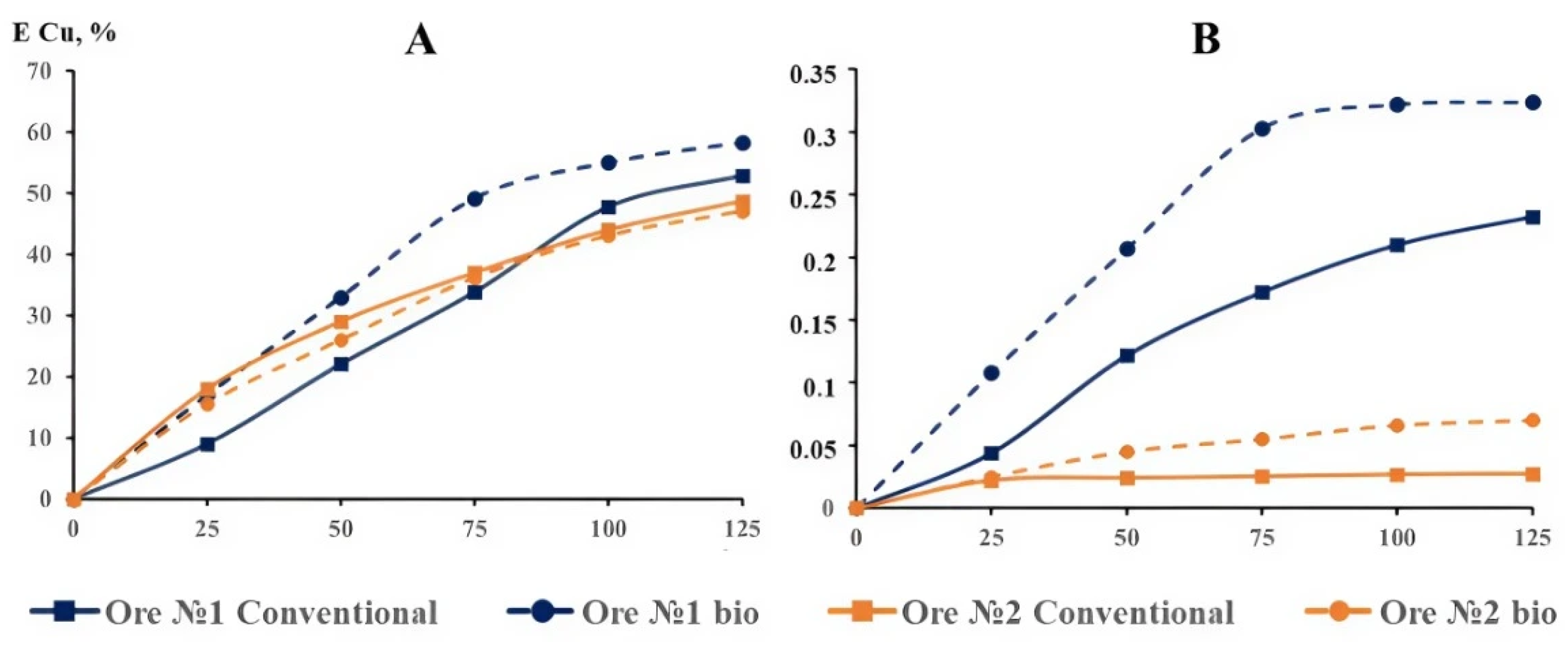
Analysis of the data presented in Table 5 shows that the application of preliminary bacterial oxidation to ore sample No. 1 resulted in an increase in copper recovery by 5.4%, as well as a significant improvement in sulfuric acid consumption efficiency. The calculated ratio of extracted copper to total acid consumption reached 0.324. This corresponds to the extraction of 324 kg of copper per ton of sulfuric acid under bioleaching conditions, compared to 232 kg per ton under conventional leaching. For ore sample No. 2, copper recovery levels in both the conventional and biological leaching variants were relatively similar, at approximately 47%. At the same time, ore sample No. 2 exhibited significantly higher sulfuric acid consumption compared to ore sample No. 1. However, preliminary biological treatment of ore sample No. 2 reduced sulfuric acid consumption by a factor of 2.5, from 50.94 kg to 20.07 kg per ton of ore. Considering this factor, and given the initial copper content of 0.29% in ore sample No. 2 with comparable recovery levels, the efficiency of sulfuric acid utilization after biological oxidation was correspondingly higher than under conventional leaching. Based on the copper-to-acid mass ratio, one ton of sulfuric acid during bioleaching of ore sample No. 2 enables the extraction of 67 kg of copper, compared to only 27 kg under the standard method. The dynamics of copper recovery and sulfuric acid efficiency during the 125-day leaching of ore samples No. 1 and No. 2 are presented in Figure 4.
The presented graphs demonstrate a significant intensification of copper recovery (Figure 4A) and an increase in sulfuric acid efficiency (Figure 4B) during bioleaching of ore sample No. 1 compared to the conventional method. After approximately 75 days of bioleaching of ore sample No. 1, the rate of increase in acid efficiency began to decline, indicating an approach to the maximum achievable copper recovery under stable sulfuric acid concentration conditions.
For the more complex ore sample No. 2, the dynamics of copper recovery did not show significant differences between biological and conventional leaching. However, after approximately 25 days, stabilization of sulfuric acid concentration in the leaching solution was observed in the biological variant, reducing the need for additional acid input. Given the stable increase in copper recovery, this reduction in reagent consumption indicates improved efficiency of sulfuric acid utilization during bioleaching.
Although the efficiency of sulfuric acid consumption for ore sample No. 2 remained significantly lower than for ore sample No. 1, preliminary biological oxidation enables consideration of this material for hydrometallurgical processing. Preliminary techno-economic calculations, assuming an average sulfuric acid price of US$ 90 per ton, indicate that for ore sample No. 1, the production cost of one ton of copper is US$ 3677 under conventional leaching and US$ 3112 with preliminary bio-oxidation. For the more complex ore sample No. 2, due to high sulfuric acid consumption, production costs reach US$ 12,287 per ton of copper under conventional leaching, while preliminary bio-oxidation reduces this value to approximately US$ 10,100. Thus, even considering copper market prices of approximately US$ 13,000 per ton in 2026, processing of ore sample No. 2 using conventional sulfuric acid leaching remains economically unviable, whereas bioleaching reduces economic risks, bringing the process closer to marginal profitability. A review of global studies [36,37] indicates that high profitability of hydrometallurgical copper production is typically achieved when operating costs do not exceed US$ 4000 per ton of copper.

5. Conclusions

The conducted bioleaching studies on both simple and complex ore samples from the same copper deposit demonstrated the high efficiency of applying a consortium of endemic microorganisms at the stage of preliminary oxidation of mineral raw materials. Detailed microbiological investigations revealed that, in addition to iron- and sulfur-oxidizing bacteria, optimal environmental conditions promote the active growth of Skermanella aerolata and yeast microfungi within the ore. Preliminary agitation leaching tests showed that the full consortium of endemic microorganisms provides the most effective oxidative impact on the decomposition of mineral phases, compared to the use of individual bacterial cultures. Thus, the consortium comprising A. Ferrooxidans, A. Thiooxidans, Skermanella aerolata, and yeast microfungi resulted in increased copper recovery and improved sulfuric acid consumption efficiency compared to both the use of individual bio-oxidizing cultures and conventional sulfuric acid leaching. Subsequent large-scale laboratory tests using column percolation, simulating heap leaching over a period of 125 days, confirmed the high efficiency of the biohydrometallurgical approach compared to conventional leaching. To maximize the simulation of industrial conditions, the biological solution was prepared using spent raffinate obtained from the hydrometallurgical plant of the deposit. As a result of preliminary oxidation of ore sample No. 1 using the endemic microbial consortium, copper recovery increased by 5.4%, while sulfuric acid consumption efficiency improved by nearly 40% compared to the baseline sulfuric acid leaching method. In experiments with the low-grade, more refractory, and acid-consuming ore sample No. 2, biological treatment significantly reduced sulfuric acid consumption, despite similar levels of copper recovery.
Technical and economic calculations based on the results of these large-scale laboratory tests demonstrated the full suitability of ore sample No. 1 for hydrometallurgical processing, whereas conventional leaching of ore sample No. 2 appears considerably less feasible. The economic effect of preliminary biological oxidation indicates the potential for an additional profit of approximately US$ 500 per ton of copper in the biohydrometallurgical processing of ore corresponding to sample No. 1. For subeconomic deposits represented by ore sample No. 2, the application of biological technology enables their inclusion in hydrometallurgical processing, shifting this material into the category of low-profit rather than unprofitable resources.
Thus, the results of the present study are particularly relevant for copper deposits with mixed-type ore bodies. The implementation of bioleaching technology would enable the processing of sulfide ores from subeconomic zones within the deposit as oxidized ore reserves become depleted. The utilization of existing hydrometallurgical infrastructure, combined with the preparation of biological solutions using diluted spent raffinate, enhances the economic viability of bioleaching technology for mixed-type copper deposits.

Author Contributions

Conceptualization, A.K. and B.K.; methodology, D.M. and A.K.; software, N.A.; validation, M.Y. and A.B.; formal analysis, A.B. and D.M.; investigation, D.M., A.K. and B.K.; resources, N.A.; data curation, M.Y.; writing—original draft preparation, D.M.; writing—review and editing, B.K.; visualization, A.K.; supervision, A.K.; project administration, A.K. All authors have read and agreed to the published version of the manuscript.

Funding

This research was supported by a grant project of the Science Committee of the Ministry of Education and Science of the Republic of Kazakhstan (Grant No. AP23484645).

Data Availability Statement

The original contributions presented in this study are included in the article. Further inquiries can be directed to the corresponding author.

Conflicts of Interest

The authors declare no conflicts of interest.

References

  1. Yin, S.; Wang, L.; Eugie, K.; Chen, X.; Yan, R.; An, K.; Zhang, L.; Wu, A. Copper Bioleaching in China: Review and Prospect. Minerals 2018, 8, 32. [Google Scholar] [CrossRef]
  2. William, H.D. Producing Copper Nature’s Way: Bioleaching. Innovations. 2004. Available online: https://www.copper.org/publications/newsletters/innovations/2004/05/producing_copper_natures_way_bioleaching.html (accessed on 2 June 2026).
  3. Gentina, J.C.; Acevedo, F. Application of bioleaching to copper mining in Chile. Electron. J. Biotechnol. 2013, 16, 15. [Google Scholar] [CrossRef]
  4. Anna Hayes investigates developments in leaching equipment and process technology, Heap Leaching. Mining Magazine, 9 June 2011; p. 67. Available online: https://www.miningmagazine.com/equipment/news/1259871/heap (accessed on 2 June 2026).
  5. Lapshin, D.A.; Prostakishin, M.F.; Zolotarev, V.N.; Volozhaninov, A.B. Development of ore processing technology for the Udokan deposit. Chapter 3. Semi-industrial testing of the technological scheme. Non-Ferr. Met. 2016, 5, 17–22. [Google Scholar]
  6. Ochromowicz, K.; Chmielewski, T. Solventextractionofcopper (II) fromconcentratedleachliquors. Physicochem. Probl. Miner. Process 2013, 49, 357−367. [Google Scholar]
  7. Mamyrbayeva, K.K.; Igbayeva, A.E.; Zhumadilova, A.S.; Aisa, N.M. Extraction of copper from sulfate solutions using Lix 984N and Acorgaopt 5510 extractants. In Collection of International Satpayev Readings “The Role and Place of Young Scientists in the Implementation of Kazakhstan’s New Economic Policy”; Satbayev University: Almatî, Kazahstan, 2015; Volume 2, pp. 512–517. [Google Scholar]
  8. Shiri, H.R.; Mokmeli, M.; Ghadamgahi, S.M.; Babakhani, A. Deep eutectic solvents (DESs) for chalcopyrite concentrate extraction: Leaching, optimization and kinetics mechanism. J. Environ. Chem. Eng. 2025, 13, 117779. [Google Scholar] [CrossRef]
  9. Santaolalla, A.; Gutierrez, J.; Gallastegui, G.; Barona, A.; Rojo, N. Immobilization of Acidithiobacillus ferrooxidans in bacterial cellulose for a more sustainable bioleaching process. J. Environ. Chem. Eng. 2021, 9, 105283. [Google Scholar] [CrossRef]
  10. Zhou, Z.; Ma, W.; Liu, Y.; Ge, S.; Hu, S.; Zhang, R.; Ma, Y.; Du, K.; Syed, A.; Chen, P. Potential application of a knowledgebase of iron metabolism of Acidithiobacillus ferrooxidans as an alternative platform. Electron. J. Biotechnol. 2021, 52, 45–51. [Google Scholar] [CrossRef]
  11. Lin, M.; Yang, B.; Lin, H.; Liu, S.; Wang, J. Catalytic Effects of Red Mud and Acidithiobacillus ferrooxidans on Biodissolution of Pyrite. IOP Conf. Ser. Earth Environ. Sci. 2021, 768, 012019. [Google Scholar] [CrossRef]
  12. Lv, X.; Zhao, H.; Zhang, Y.; Yan, Z.; Zhao, Y.; Zheng, H.; Liu, W.; Xie, J.; Qiu, G. Active destruction of pyrite passivation by ozone oxidation of a biotic leaching system. Chemosphere 2021, 277, 130335. [Google Scholar] [CrossRef]
  13. Koizhanova, A.K.; Kenzhaliyev, B.K.; Magomedov, D.R.; Erdenova, M.B.; Bakrayeva, A.N.; Abdyldaev, N.N. Hydrometallurgical studies on the leaching of copper from man-made mineral formations. Complex Use Miner. Resour. 2024, 330, 32–42. [Google Scholar] [CrossRef]
  14. Kenzhaliyev, B.; Koizhanova, A.; Surkova, T.; Yessimova, D.; Magomedov, D.; Dosymbaeva, Z. Influence of Bioadditives on Copper Leaching from Low-Grade Raw Materials. ChemEngineering 2025, 9, 103. [Google Scholar] [CrossRef]
  15. Song, C.-I.; Jo, C.-M.; Ri, H.-G. Immobilization of Acidithiobacillus ferrooxidans-1333 on the waste ore particles for the continuous oxidation of ferrous iron. Iran. J. Biotechnol. 2020, 18, e2224. [Google Scholar] [CrossRef]
  16. Mining in the Era of Green solutions—TechnologicAl and natural TRANSFORMation of Disturbed Areas the External Section of the XXXIII School of Underground Mining 2024; Institute of Physics Publishing (IOP): Bristol, UK, 2024; Volume 1, p. 1457. Available online: https://www.proceedings.com/79713.html (accessed on 2 June 2026).
  17. Shabanov, M.V.; Marichev, M.S.; Nevidomskaya, D.G.; Minkina, T.M. Acidic sulphate water influence on terricon soil pollution in the Karabash ore district. Sustain. Dev. Mt. Territ. 2023, 15, 888–900. [Google Scholar] [CrossRef]
  18. Gupta, P.; Nagpal, G.; Gupta, N. Fly ash-based geopolymers: An emerging sustainable solution for heavy metal remediation from aqueous medium. Beni-Suef Univ. J. Basic Appl. Sci. 2021, 10, 89. [Google Scholar] [CrossRef]
  19. Chmielewski, T. Hydrometallurgy in Kghm Polska Miedz SA—Circumstances, Needs and Perspectives of Application. Sep. Sci. Technol. 2012, 47, 1264–1277. [Google Scholar] [CrossRef]
  20. Li, X.; Kang, Y. Agricultural utilization and vegetation establishment on saline-sodic soils using a water–salt regulation method for scheduled drip irrigation. Agric. Water Manag. 2020, 231, 105995. [Google Scholar] [CrossRef]
  21. Bhasha, S.; Thulasi, M.; Chintada, V. Bioleaching: Concepts and Application in Microbial Metal Mobilization. Sustainable Green Technologies. In Sustainable Economy and Ecotechnology; Kiran, Ed.; Springer: Cham, Switzerland, 2025. [Google Scholar] [CrossRef]
  22. Priyadarsini, S.; Das, A.P. Lithium Bioleaching: Prospective Technology for Lithium Recovery from Spent Mobile Battery. In Electronic Waste and Environmental Pollution. Sustainable Environmental Waste Management Strategies; Das, A.P., Priyadarsini, S., Eds.; Springer: Cham, Switzerland, 2026. [Google Scholar] [CrossRef]
  23. Mohanta, S.; Parida, L.; Sarkar, A.; Dassanayake, D.A.M. Bioleaching of Heavy Metals from Electronic Waste. In Electronic Waste and Environmental Pollution. Sustainable Environmental Waste Management Strategies; Das, A.P., Priyadarsini, S., Eds.; Springer: Cham, Switzerland, 2026. [Google Scholar] [CrossRef]
  24. Fritze, M.T.; Hedrich, S. Fluoride toxicity and mitigation strategies in acidophilic bioleaching microorganisms. Appl. Microbiol. Biotechnol. 2026, 110, 32. [Google Scholar] [CrossRef]
  25. Perdigones, B.; Mazuelos, A.; Ramírez, P. Impact of inoculum activity on bioleaching: Avoiding the lag phases. Miner. Eng. 2026, 235, 109900. [Google Scholar] [CrossRef]
  26. Dash, J.; Ojha, R.; Pradhan, D. Progress in bioleaching and its mechanism: A short review. Discov. Environ. 2025, 3, 238. [Google Scholar] [CrossRef]
  27. Kumar, A.; Lima, A.T.; Kirkelund, G.M.; Jensen, P.E.; Ottosen, L.M.; Funari, V.; Shemi, A.; Ndlovu, S.; Gomes, H.I. Bioleaching: From natural ores to urban mines for sustainability, circularity, and carbon neutrality. Resour. Conserv. Recycl. 2026, 227, 108746. [Google Scholar] [CrossRef]
  28. Koizhanova, A.; Kenzhaliyev, B.; Magomedov, D.; Kamalov, E.; Yerdenova, M.; Bakrayeva, A.; Abdyldayev, N. Study of Factors Affecting the Copper Ore Leaching Process. ChemEngineering 2023, 7, 54. [Google Scholar] [CrossRef]
  29. Koizhanova, A.; Kenzhaliyev, B.; Magomedov, D.; Yerdenova, M.; Bakrayeva, A.; Abdyldayev, N. Project of green recycling and disposal of spent copper heaps in a closed ecosystem. Acta Metall. Slovaca 2025, 31, 156–162. [Google Scholar] [CrossRef]
  30. Muraro, L.; Adler, A.; Böhlenius, H. Effect of Wood Ash, Lime, and Biochar on the Establishment and Early Growth of Poplars on Acidic Soil Conditions. Bioenergy Res. 2025, 18, 29. [Google Scholar] [CrossRef]
  31. Böhlenius, H.; Nilsson, U.; Salk, C. Liming increases early growth of poplars on forest sites with low soil pH. Biomass Bioenergy 2020, 138, 105572. [Google Scholar] [CrossRef]
  32. Skousen, J.; Fowler, J.; Gormley, L.; Holaskova, I.; Nottingham, A.; Connolly, S. Beneficial effects persist 5 years after liming acid forest soils in West Virginia. Soil Sci. Soc. Am. J. 2025, 89, e70013. [Google Scholar] [CrossRef]
  33. Van Der Bauwhede, R.; Van Den Berg, L.; Vancampenhout, K.; Smolders, E.; Muys, B. Field phytometers and lab tests demonstrate that rock dust can outperform dolomite and fertilisers for acid forest soil restoration. Plant Soil 2025, 513, 237–257. [Google Scholar] [CrossRef]
  34. Clayton, R.A.; Sutton, G.; Hinkle, P.S.; Bult, C., Jr.; Fields, C. Intraspecific variation in small-subunit rRNA sequences in GenBank: Why single sequences may not adequately represent prokaryotic taxa. Int. J. Syst. Bacteriol. 1995, 45, 595–599. [Google Scholar] [CrossRef]
  35. Hillebrand, W.F.; Lundell, G.E.F. Applied Inorganic Analysis; John Wiley & Sons, Inc.: Hoboken, NJ, USA, 1953; p. 256. [Google Scholar]
  36. Panda, S.; Sanjay, K.; Sukla, L.B.; Pradhan, N.; Subbaiah, T.; Mishra, B.K.; Prasad, M.S.R.; Ray, S.K. Insights into heap bioleaching of low grade chalcopyrite ores—A pilot scale study. Hydrometallurgy 2012, 125–126, 157–165. [Google Scholar] [CrossRef]
  37. Mokmeli, M.; Parizi, M.T. Low-grade chalcopyrite ore, heap leaching or smelting recovery route? Hydrometallurgy 2022, 211, 105885. [Google Scholar] [CrossRef]
Figure 1. Yeast fungi isolated from copper ore samples.
Metals 16 00630 g001
Figure 2. Micrographs of bacteria requiring genetic identification. (A) From ore sample No. 1; (B) from ore sample No. 2.
Metals 16 00630 g002
Figure 3. Results of preliminary bioleaching tests. (A) Copper recovery into solution; (B) sulfuric acid efficiency (mass ratio mCu/mH2SO4).
Metals 16 00630 g003
Figure 4. Dynamics of column leaching results. (A) Copper recovery into solution; (B) sulfuric acid efficiency (mass ratio mCu/mH2SO4).
Metals 16 00630 g004
Table 1. Results of X-ray fluorescence analysis (multi-element automated analysis) of the initial ore samples from the deposit.
Element NameContent in Samples, %
Sample 1Sample 2
O47.15047.466
Na0.1271.402
Mg0.5800.933
Al10.1279.453
Si26.67429.008
P0.0640.044
S1.6651.229
Cl0.0170.016
K2.2551.844
Ca0.0430.165
Ti0.3200.569
Mn0.0140.017
Fe1.1511.879
Cu0.6970.273
Zn0.0070.040
Rb0.0250.022
Sr0.0150.020
Mo0.0120.022
Pb0.0310.014
Table 2. Results of chemical analysis for copper, iron, and sulfur content.
SampleContent, %
CuFeStotal
No. 10.7131.3581.862 
No. 20.295 1.5731.160
Table 3. Results of rational phase analysis of copper occurrence forms in the ore.
Forms of CopperCopper Distribution, %
Type 1Type 2
AbsoluteRelativeAbsoluteRelative
Oxidized0.0273.820.0124.08
Secondary sulfides (covelline, chalcocite, etc.) 0.3752.330.14950.68
Primary sulfides (chalcopyrite)0.3143.850.13345.24
Total content0.707100.000.294100.00
Table 4. Results of 16S rRNA gene nucleotide sequence identification.
NameIdentification Results in BLAST
Accession №
GeneBank
Name of StrainIdentification %
Bacteria from ore sample No. 1MH398562.1Skermanella aerolata99.15%
OK626782.1Skermanella aerolata99.15%
Bacteria from ore sample No. 2MH398562.1Skermanella aerolata98.83%
OR777983.1Skermanella aerolata98.66%
Table 5. Final performance indicators of copper ore leaching over 125 days.
ParameterOre No. 1Ore No. 2
ConventionalBioConventionalBio
Cu recovery, %52.8758.3147.6947.03
H2SO4 kg/ore t15.9512.6050.9420.07
ηH2SO4 = m Cu/mH2SO40.2320.3240.0270.067
Disclaimer/Publisher’s Note: The statements, opinions and data contained in all publications are solely those of the individual author(s) and contributor(s) and not of MDPI and/or the editor(s). MDPI and/or the editor(s) disclaim responsibility for any injury to people or property resulting from any ideas, methods, instructions or products referred to in the content.