Article

Study on the Synergistic Recovery of Zinc and Iron from Cold-Bonded Briquettes Prepared from High-Zinc Blast Furnace Dust

State Key Laboratory of Advanced Special Steel, School of Materials Science and Engineering, Shanghai University, 99 Shangda Rd., Shanghai 200444, China
*
Author to whom correspondence should be addressed.
Metals 2026, 16(6), 618; https://doi.org/10.3390/met16060618
Submission received: 14 May 2026 / Revised: 29 May 2026 / Accepted: 2 June 2026 / Published: 4 June 2026
(This article belongs to the Special Issue Metal Leaching and Recovery)

Abstract

High-zinc blast furnace dust is a zinc-bearing solid waste generated during ironmaking. Efficient de-zincing and iron enrichment are required for its resource utilization. This study investigated the high-temperature reduction behavior and kinetic transition mechanism of cold-bonded briquettes made from high-zinc blast furnace dust with a small addition of iron ore powder, with particular emphasis on the effects of reduction temperature (1000–1200 °C) and holding time (10–60 min). The results show that reduction at 1200 °C for 60 min can effectively remove zinc and enrich iron. The de-zincing rate reached 92%, and the TFe grade increased to 50 wt.%, achieving the goal of efficiently removing zinc while improving the TFe grade of the reacted briquettes. During the middle and later stages of reduction (1100–1200 °C, 30–60 min), the content of newly formed metallic iron increased, which restored the briquette strength to 524 N after reduction. In addition, the reduction kinetics of the system evolved from interfacial chemical reaction control in the initial stage to three-dimensional internal diffusion control in the middle and later stages. These results provide a theoretical basis and technical reference for the resource utilization of high-zinc blast furnace dust.

1. Introduction

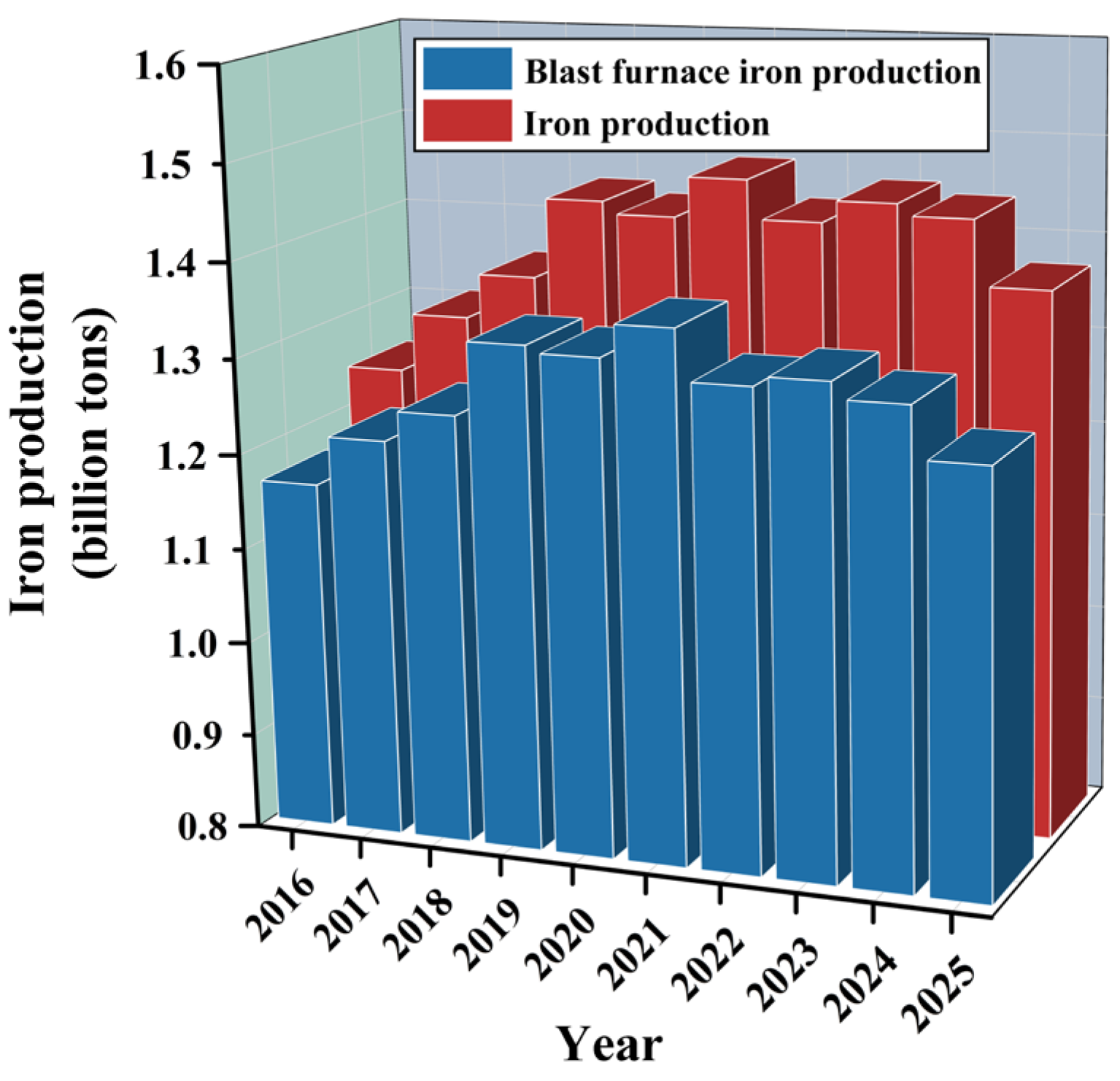
Blast furnace dust is one of the main by-products generated during ironmaking. As shown in Figure 1, according to the World Steel in Figures published in recent years by the World Steel Association, global blast furnace iron production has remained stable at approximately 1.2 to 1.3 billion tons per year [1]. Given that the generation of blast furnace dust accounts for about 1% to 3% of hot metal production, its annual discharge has reached tens of millions of tons [2]. Blast furnace dust has a complex phase composition. It is not only rich in valuable elements such as iron and carbon, but also contains harmful elements such as zinc and alkali metals [3]. If it is stored in the open air or landfilled directly, it will lead to the waste of iron and carbon resources and cause pollution to the ecosystem [4]. If it is directly added to sinter feed for in-plant recycling in order to utilize its carbon content, zinc will continuously accumulate in the blast furnace, resulting in refractory erosion and deterioration of burden permeability [5]. This problem becomes more severe when the zinc content in blast furnace dust is high. Therefore, de-zincing treatment is necessary. In this study, such blast furnace dust is referred to as high-zinc blast furnace dust.
At present, the industrial treatment of high-zinc blast furnace dust mainly relies on pyrometallurgical processes, such as the rotary kiln process and the rotary hearth furnace process. These processes can efficiently remove zinc by volatilization and recover iron in the form of direct reduced iron (DRI) [6]. However, owing to differences in origin and processing conditions, the zinc content in different types of blast furnace dust varies considerably [7]. For high-zinc blast furnace dust, the relatively low TFe grade of the raw material, together with the retention of gangue components such as silicon oxide and aluminum oxide in the de-zincing residue after reduction, results in a low TFe grade of the residue. As a result, it cannot directly meet the requirements for subsequent use as an ironmaking raw material [8,9] and eventually becomes a secondary solid waste.
To address this problem, some studies have begun to use iron ore powder and zinc-containing dust as mixed raw materials to prepare cold-bonded briquettes for high-temperature reduction. Through room-temperature compaction and binder curing, the briquette process can convert powder materials into cold-bonded briquettes with high strength. This approach can not only reduce dust generation and material loss during direct charging [10], but also has the potential to improve the TFe grade and strength of the de-zincing residue when iron ore powder is added. In this way, the residue can be directly converted into an ironmaking raw material suitable for furnace charging, which is beneficial for improving the resource utilization efficiency of high-zinc blast furnace dust. Mousa [11] and Mantovani et al. [12] found that the addition of iron ore powder can not only improve the particle size distribution and briquetting performance of the mixture, but also increase the TFe grade of the reacted briquettes, thereby improving their subsequent value as ironmaking raw material. The proposed approach of adding iron ore powder therefore provides a possible solution to this problem. Under experimental conditions with a small amount of iron ore powder, studying the preparation of cold-bonded briquettes from high-zinc blast furnace dust and their high-temperature reduction behavior is of great significance for improving the resource utilization of high-zinc blast furnace dust.
However, the reduction behavior and kinetic mechanism of this composite system at a high temperature have not yet been systematically investigated. Therefore, further study is necessary to provide a theoretical basis and data support for the resource utilization of high-zinc blast furnace dust.
Figure 1. Global iron production and blast furnace iron production, 2016–2025.
Metals 16 00618 g001

2. Materials and Methods

2.1. Raw Material Composition

The high-zinc blast furnace dust used in this study was sourced from a steel enterprise in southern China, and the iron ore powder was obtained from another company in southern China. The chemical composition of the high-zinc blast furnace dust was jointly characterized using X-ray fluorescence spectrometry (XRF) and inductively coupled plasma spectroscopy (ICP), as shown in Table 1. The results indicate that this high-zinc blast furnace dust contains relatively high levels of zinc and iron, reaching 33.79 wt.% and 16.96 wt.%, respectively, classifying it as a high-zinc blast furnace dust. Its carbon content is also relatively high, at 10.01 wt.%.
The main chemical composition of the iron ore powder was determined from the manufacturer’s test report and confirmed by repeated measurements in this study. The results were consistent within the experimental error range, as shown in Table 2. The results indicate that the Fe3O4 and FeO contents in the iron ore powder are 59.91 wt.% and 28.17 wt.%, respectively, indicating that it is magnetite powder. According to the manufacturer’s report, all particles in this iron ore powder are smaller than 0.074 mm.
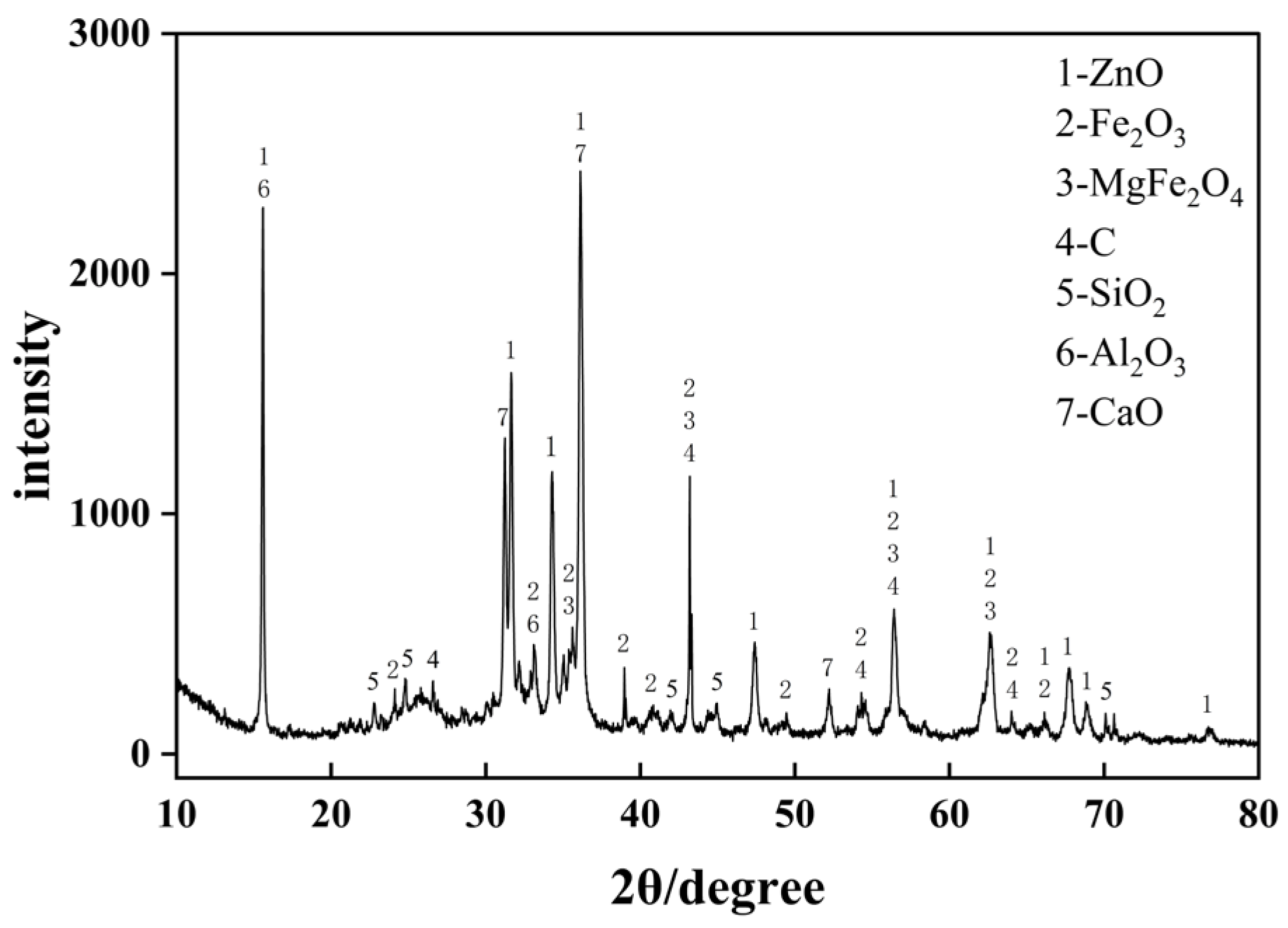
The high-zinc blast furnace dust was analyzed using a D8 Advance X-ray diffractometer (XRD, Bruker AXS GmbH, Karlsruhe, Germany). The raw material was ground to below 0.074 mm and then prepared by the back-pressing method. Continuous scanning was conducted over a 2θ range of 10° to 80°, with a step size of 0.01° and a dwell time of 0.12 s per step. Phase identification was performed using HighScore Plus software (v. 3.0.5), and the results are shown in Figure 2. The XRD analysis indicates that the main phases in the high-zinc blast furnace dust are zinc oxide (ZnO), hematite (Fe2O3), and graphite (C), together with minor quartz (SiO2) and corundum (Al2O3).
Figure 2. XRD results of high-zinc blast furnace dust.
Metals 16 00618 g002
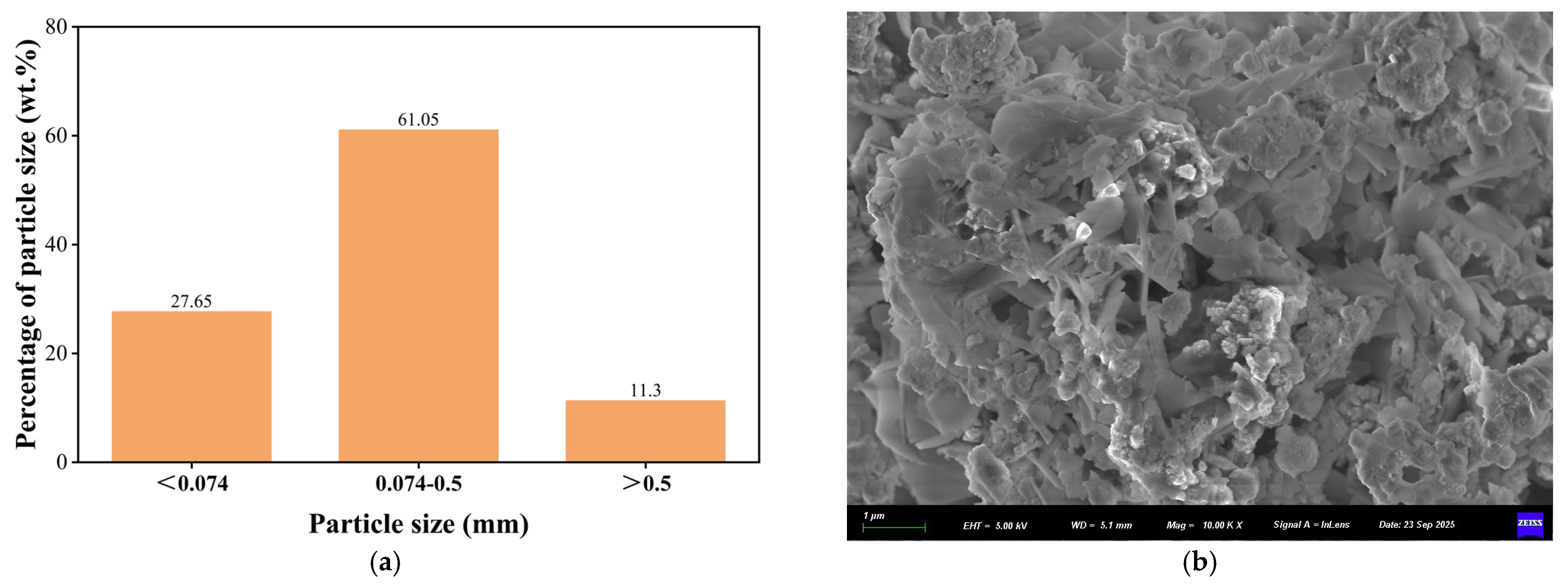
The particle size distribution of the high-zinc blast furnace dust was determined using 200-mesh and 30-mesh sieves, and its micro-morphology was examined by SEM, as shown in Figure 3. The results show that the particles were mainly concentrated in the 0.074–0.5 mm and <0.074 mm size fractions, with mass fractions of 61.05 wt.% and 27.65 wt.%, respectively. Overall, the high-zinc blast furnace dust had a fine particle size and a relatively narrow size distribution.
In addition, its morphology was complex and varied. Most particles were irregular flakes, some exhibited rod-like forms with intergrown structures, and others appeared as agglomerates formed by fine particles. These irregular particles were intertwined and stacked together, forming a complex microporous structure. During cold compaction, such a structure facilitates particle displacement and rearrangement, plastic deformation, and mechanical interlocking under compaction pressure, thereby increasing the strength of the cold-bonded briquette [13].
Figure 3. (a) Particle size sieving results of high-zinc blast furnace dust; (b) SEM scan image.
Metals 16 00618 g003
The coke powder was obtained from screened material supplied by an ironmaking plant in China. Its proximate analysis results were determined according to the national standard GB/T 212-2008 [14], Method for Proximate Analysis of Coal, and are listed in Table 3. The results show that the fixed carbon (FCd), volatile matter (Vd), and ash content (Ad) of the coke powder were 86.89%, 1.70%, and 11.41%, respectively. To prevent excessive particle size from affecting cold-bonded briquette preparation, the coke powder was mechanically crushed and sieved before use to obtain a uniform particle size below 0.5 mm.

2.2. Experimental Procedure

2.2.1. Cold-Bonded Briquette Preparation Process

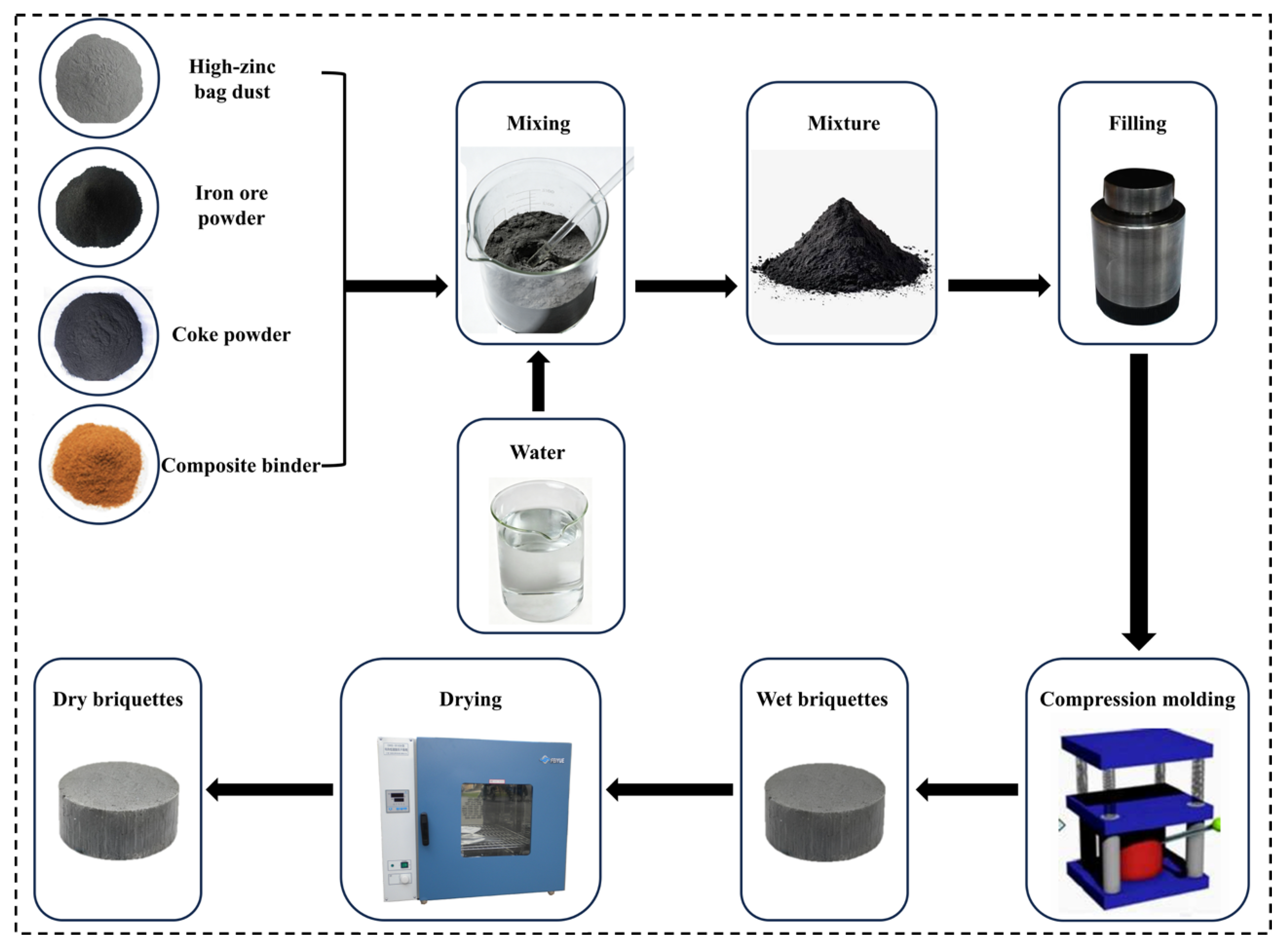
The present study used the cold-bonded briquette process (Figure 4) to agglomerate high-zinc blast furnace dust into briquettes. This process offers the advantages of low energy consumption and significant environmental benefits [15]. In addition, briquettes with high strength can provide a physical framework for subsequent conversion into iron ore products with a certain level of strength.
Based on the preliminary mass balance calculations and forming-mechanics verification, the optimal briquetting parameters were determined as follows: 73 wt.% blast furnace dust, 9 wt.% iron ore powder, 4 wt.% coke powder, 9 wt.% composite binder, and 5 wt.% moisture, followed by drying at 200 °C for 120 min. Under these conditions, the compressive strength of the briquettes reached 2359 N. This raw material ratio can theoretically raise the TFe grade of the briquettes after reaction to above 48 wt.%.
Figure 4. Cold-bonded briquette preparation process.
Metals 16 00618 g004

2.2.2. High-Temperature Reduction Experimental Procedure

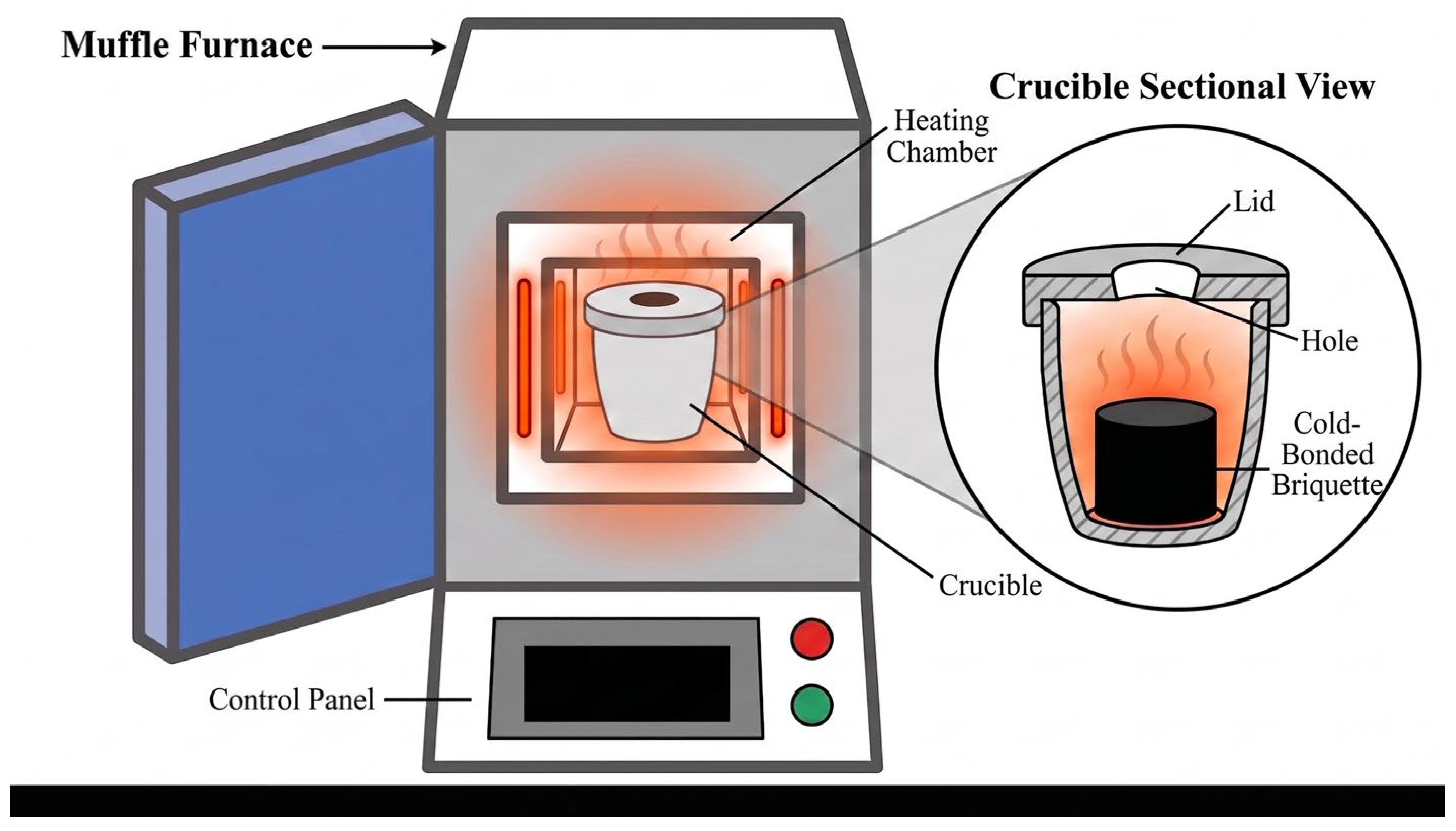
Figure 5 shows the schematic of the high-temperature reduction experiment. First, an electronic balance and XRF were used to record the briquette mass and the zinc and iron contents before charging into the furnace. The briquettes were then placed in an alumina crucible, covered with a lid with a small hole, and put into the furnace chamber. The target temperature was set (1000, 1050, 1100, 1150 and 1200 °C), and heating started in an air atmosphere. After the furnace reached the target temperature in 30 min, the holding time was counted, and the sample was kept at that temperature for the specified period (the holding times were set at 10, 20, 30, 40, 50, and 60 min). After the experiment, the furnace was turned off. Once the briquettes cooled to room temperature, they were removed, weighed, and tested for compressive strength. Finally, the zinc and iron contents of the reacted briquettes were analyzed.
Figure 5. Schematic diagram of the high-temperature reduction experiment.
Metals 16 00618 g005

2.3. Performance Testing Methods

2.3.1. Post-Reaction Compressive Strength

The post-reaction compressive strength of the briquettes was measured using a WDW-20 microcomputer-controlled electronic universal testing machine (Shanghai Bai-ruo Testing Instrument Co., Ltd., Shanghai, China). Since one objective of this study is to use the post-reaction briquettes as iron ore in subsequent ironmaking processes, their compressive strength must satisfy industrial requirements. In related research, 500 N is adopted as one of the strength thresholds for qualified metallized pellets [16]; therefore, we set the target strength for the post-reaction briquettes at above 500 N per briquette. The testing procedure was as follows: ten post-reaction briquettes cooled to room temperature were selected, and the maximum compressive strength before fracture was measured using the universal testing machine. The result was reported as the arithmetic mean.

2.3.2. Mass Loss Ratio

Mass loss ratio is a key indicator of the extent of the reduction reaction, and it is calculated using Equation (1):
ω w e i g h t = m 1 m 2 m 1
where m1 is the mass of the cold-bonded briquette before reaction (g), and m2 is the mass of the post-reaction briquette (g).

2.3.3. TFe Grade

The zinc content and TFe grade were measured using an M4 Tornado high-performance micro-X-ray fluorescence spectrometer (Bruker Nano GmbH, Berlin, Germany). To obtain representative samples, multi-point sampling was applied to the ten post-reaction briquettes from each high-temperature reduction experiment. A small amount of sample was drilled from the top, center, and bottom of each briquette, yielding a total of 30 sampling points. The collected samples were ground into powder with a particle size smaller than 0.074 mm, pressed into pellets without a binder, and then tested in an air atmosphere. During testing, ten points were randomly selected on the pellet surface for analysis, with an acquisition time of 60 s per point. The final result was reported as the average value to ensure accuracy.
This study adopts the requirements for Grade 5 iron ore products from the current national standard GB/T 32545-2016, Classification of iron ore products. According to this standard, the TFe grade of Grade 5 iron ore products ranges from 48.0 to 58.0 wt.% [17]. Accordingly, the target TFe grade range for the post-reaction briquettes is set at 48.0–58.0 wt.%.

2.3.4. De-Zincing Rate

The de-zincing rate is a core indicator for evaluating the effectiveness of zinc elimination during the reduction process. It is calculated using Equation (2), with the zinc contents in the cold-bonded briquette before and after reaction determined by XRF.
ω z i n c = m 1 · W 1 m 2 · W 2 m 1 · W 1
In the equation, m1 and m2 represent the masses (g) of the cold-bonded briquette before reaction and the post-reaction briquette, respectively; W1 and W2 denote their corresponding zinc contents (wt.%).

2.3.5. Kinetic Models

Under isothermal conditions, the relationship between the reduction degree of a solid reaction and reaction time can be described by kinetic mechanism equations in their integral form. In this study, nine solid-state reaction kinetic models suitable for cold-bonded briquette reduction, as listed in Table 4, were selected to fit the experimental data.
After logarithmic transformation of the Arrhenius equation, the relationship between the reaction rate constant and temperature can be expressed as:
lnk = lnA − Ea/RT
where α is the de-zincing rate (%), k is the reaction rate constant (min−1), A is the pre-exponential factor (min−1), Ea is the activation energy (kJ/mol), R is the gas constant (8.314 J/(mol·K)), and T is the thermodynamic temperature (K).
By substituting α into the integral function expression G(α), the reaction rate constant k was obtained. The k values were then fitted to the logarithmic form of the Arrhenius equation (Equation (12)). Plotting the data against 1/T yielded a linear relationship (Arrhenius plot), and the apparent activation energy Ea was calculated from the slope (−Ea/R). The kinetic model with the highest coefficient of determination (R2) was identified as the rate-controlling mechanism.

3. Results

3.1. Thermodynamic Analysis

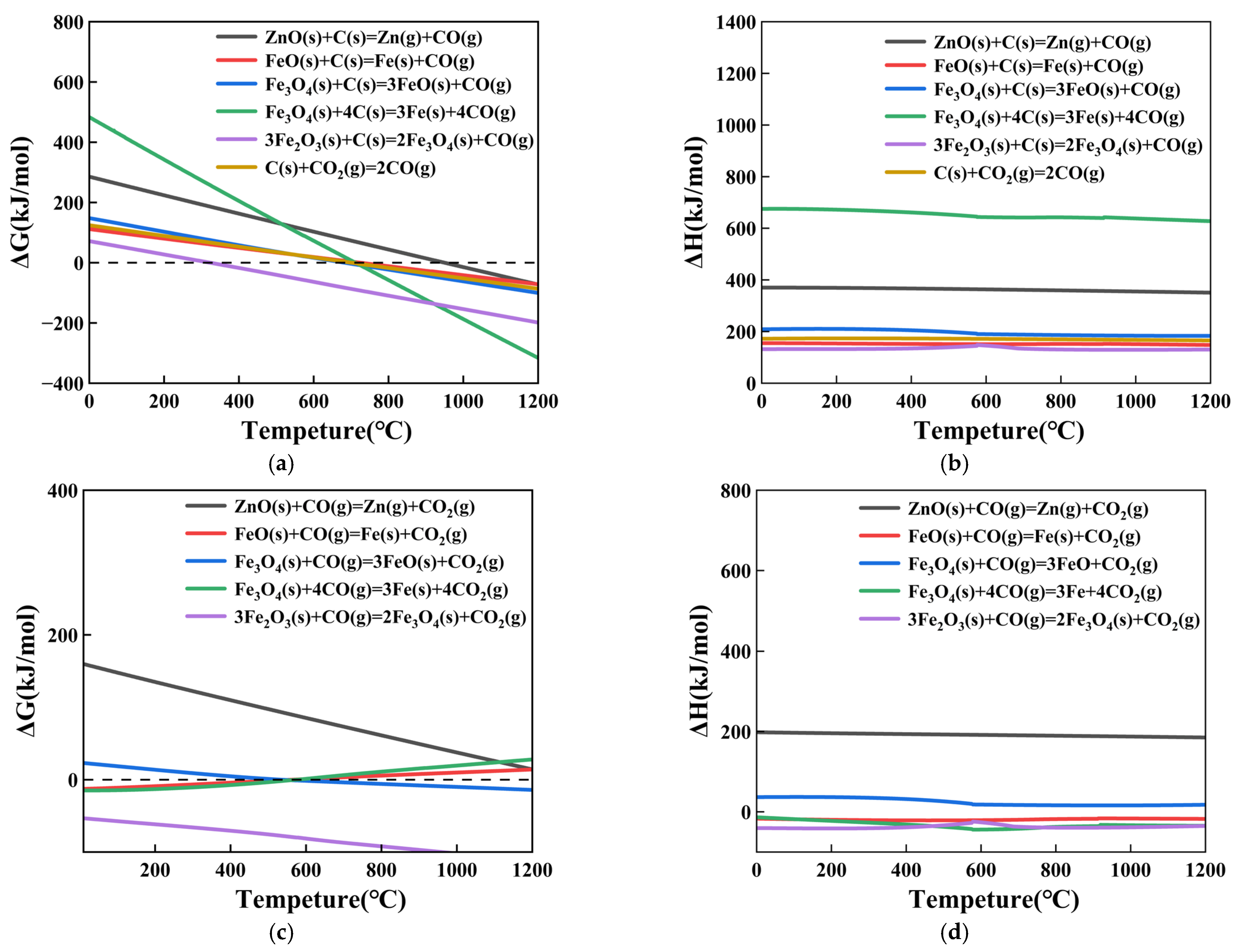
FactSage 7.2 software was employed to calculate the Gibbs free energy change (ΔG) and enthalpy change (ΔH) of the direct and indirect reduction reactions in the cold-bonded briquette system. The results are presented in Figure 6. As shown in Figure 6a,b, the ΔG values of all reactions in the carbothermic direct reduction system decreased with increasing temperature. Compared with iron oxides, the direct reduction of ZnO required a higher initial reduction temperature of 951 °C and exhibited a significant endothermic effect, with a ΔH value of approximately 380 kJ/mol. As shown in Figure 6c,d, the thermal effects in the CO indirect reduction system were markedly lower, and the ΔH values of most reactions were below 200 kJ/mol. The reduction of iron oxides could proceed below 569 °C, whereas the indirect reduction of ZnO by CO required temperatures above 1308 °C.
Based on the thermodynamic calculations presented above, the reduction of iron oxides in the system primarily depends on CO indirect reduction, which offers more favorable thermodynamic conditions, whereas the reduction of ZnO exhibits a pronounced temperature dependence. The overall reduction process requires a high temperature of 1000 °C or above. It relies on the carbon gasification reaction to sustain a locally high CO partial pressure and is accomplished through the synergistic effect of direct and indirect reduction. Accordingly, the high-temperature reduction experiments were conducted at 1000 °C or above. This temperature regime promotes ZnO reduction and iron enrichment, raises the TFe grade of the post-reaction briquettes, and makes them suitable for subsequent use as ironmaking feedstock.
Figure 6. Thermodynamic parameters of the system reaction: (a) Direct reduction—Gibbs free energy change ΔG; (b) Direct reduction—enthalpy change ΔH; (c) Indirect reduction—Gibbs free energy change ΔG; (d) Indirect reduction—enthalpy change ΔH.
Metals 16 00618 g006

3.2. Effect of Reduction Temperature on the High-Temperature Reduction Behavior of Cold-Bonded Briquettes

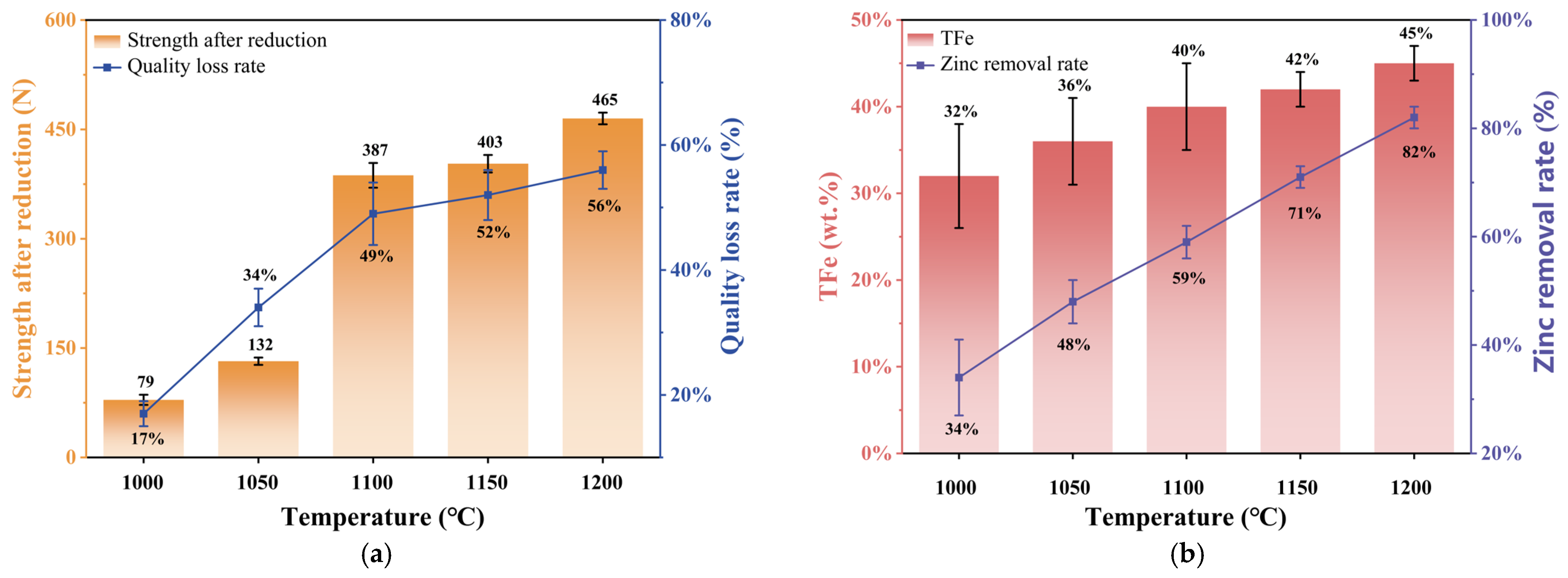
Cold-bonded briquettes were prepared with the optimal composition: 73 wt.% blast furnace dust, 9 wt.% iron ore powder, 4 wt.% coke breeze, 9 wt.% composite binder, and 5 wt.% moisture. After drying at 200 °C for 120 min, the briquettes exhibited a compressive strength of 2359 N. These briquettes were then placed in a muffle furnace under an air atmosphere and held at different temperatures for various durations. The aim was to investigate the effects of reduction temperature and reduction time on the mass loss ratio, post-reaction compressive strength, de-zincing rate, and TFe grade of the cold-bonded briquettes. Figure 7 illustrates the influence of temperature (1000–1200 °C) on the high-temperature reduction behavior at a fixed reduction time of 30 min. The experimental results show that as the reduction temperature increased from 1000 to 1200 °C, the mass loss ratio rose sharply from 17% to 56%, the post-reaction compressive strength increased from 79 N to 465 N, the de-zincing rate reached 82%, and the TFe grade was enriched to 45 wt.%. Reduction temperature significantly affected the high-temperature reduction behavior: despite the substantial increase in mass loss, the post-reaction strength did not decline but instead improved. According to findings by other researchers, this likely results from sintering and bonding between newly formed metallic iron particles, which enhances the strength [18,19].
Figure 7. Effects of different temperatures on the high-temperature reduction behavior of cold-pressed blocks: (a) weight loss and strength after reduction; (b) dezincification rate and TFe grade.
Metals 16 00618 g007

3.3. Effect of Reduction Time on the High-Temperature Reduction Behavior of Cold-Bonded Briquettes

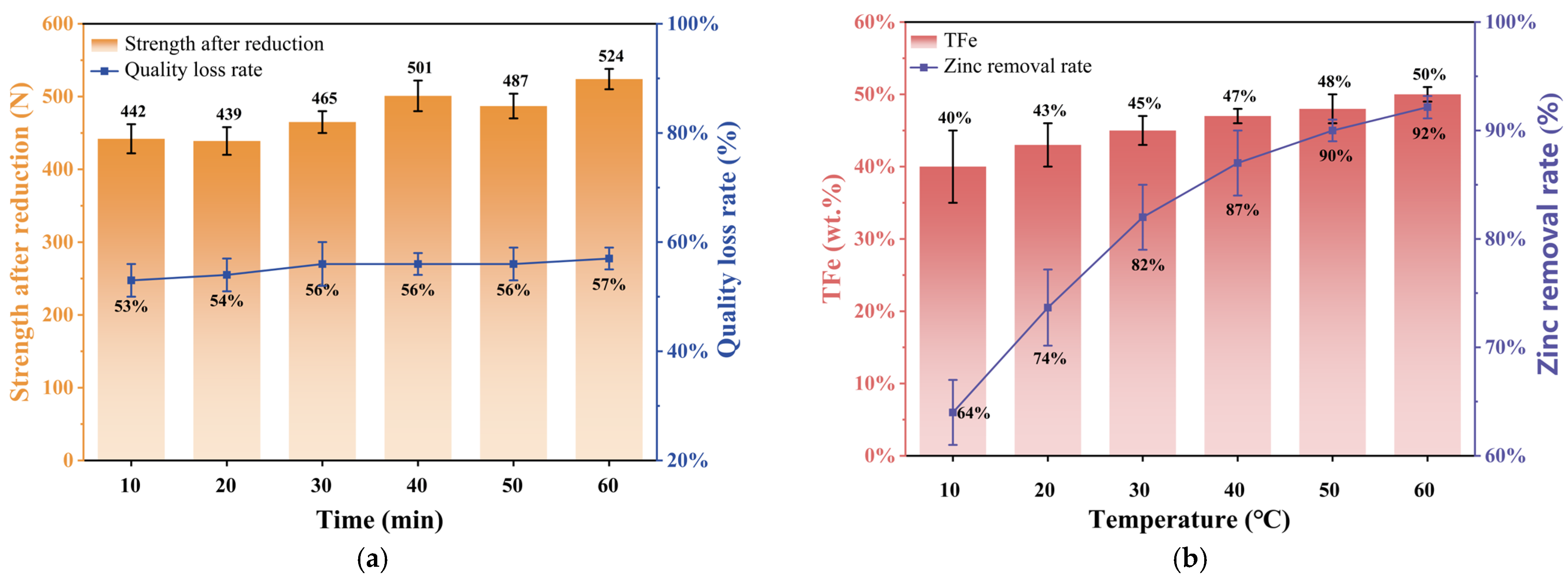
Figure 8 shows the effect of reduction time (10–60 min) on the high-temperature reduction behavior of cold-bonded briquettes at a fixed reduction temperature of 1200 °C. The mass loss ratio remained stable at approximately 55%, and the post-reaction compressive strength also leveled off, reaching a maximum of 524 N. The de-zincing rate peaked at 92%, and the TFe grade was gradually enriched to 50 wt.%, thereby satisfying the Grade 5 standard specified in GB/T 32545-2016, Classification of iron ore products. At high temperatures, all reduction behaviors tended to stabilize with prolonged time. This indicates that temperature plays a more dominant role than time in the reduction of cold-bonded briquettes. When the reduction temperature is high, a substantial degree of reduction is already achieved in the early stage. Combined with the previous mass balance calculations, the theoretical maximum weight loss of the briquette during reduction is about 59%. At higher reduction temperatures (1100–1200 °C), a relatively high degree of reduction and weight loss was already observed in the early reaction stage (10–30 min). In the later stage (30~60 min), the reaction rate gradually slowed, and the dezincification rate and weight loss rate increased only gradually.
Figure 8. Effects of different holding time periods on the high-temperature reduction behavior of cold-pressed blocks: (a) weight loss and strength after reduction; (b) dezincification rate and TFe grade.
Metals 16 00618 g008

3.4. Phase Analysis of Reduced Briquettes

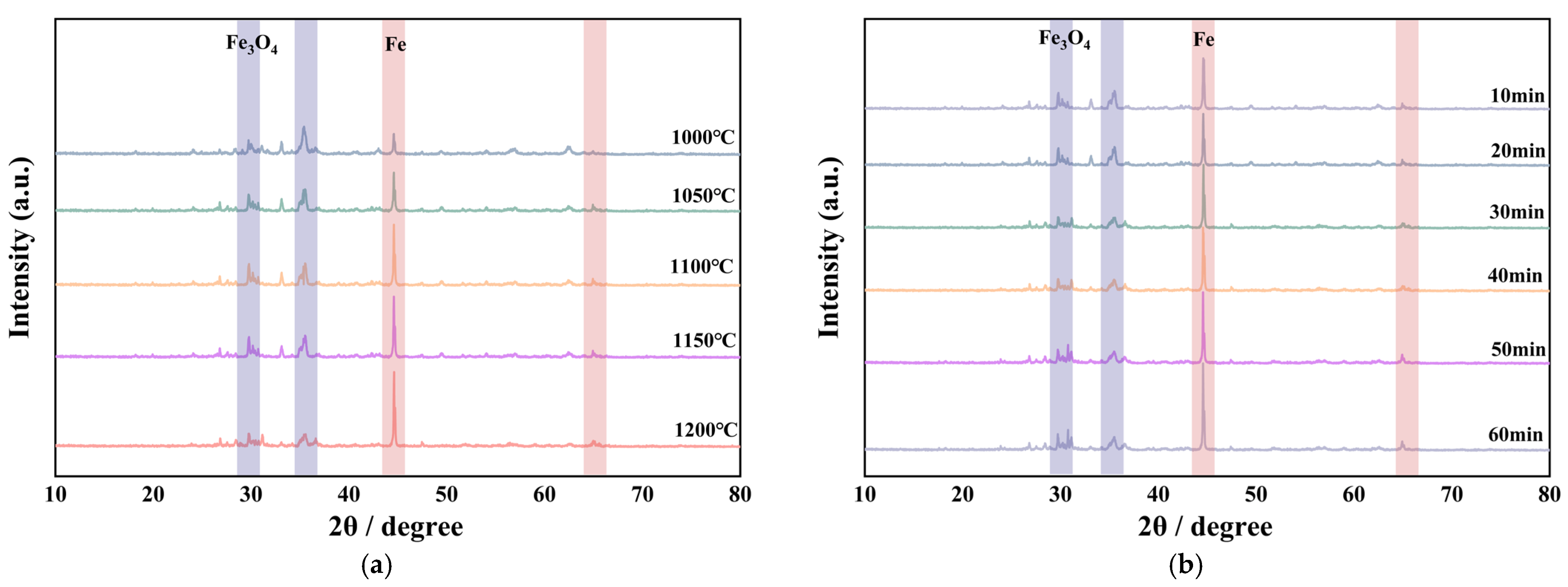
Figure 9 presents the XRD patterns of the post-reaction briquettes obtained from the above experiments. The results show that the intensity of Fe diffraction peaks increased progressively with rising temperature or prolonged reduction time. When considered together with the changes in post-reaction compressive strength, this trend suggests that the formation of metallic iron is likely a major reason for the strength recovery [3,20]. In the early stage of reduction, the reduction of iron oxides gradually progressed, producing a large amount of metallic iron within the briquettes. During the middle and later stages, as the metallic iron phase was further enhanced, the degree of metallization in the system steadily increased, and the proportion of newly formed metallic iron in the briquettes rose accordingly. As a result, the post-reaction briquette strength did not collapse; instead, it recovered to a maximum of 524 N.
Figure 9. XRD results of the reduced blocks: (a) at different reduction temperatures; (b) at different holding times.
Metals 16 00618 g009

3.5. Kinetic Analysis

The reduction degree–time data obtained from experiments were substituted into the nine kinetic mechanism functions described in Section 2.3.5 for linear regression. By comparing the coefficients of determination (R2) of the fittings for each model in the temperature range of 1000–1200 °C, the dynamic evolution pathway of the rate-controlling step in the high-zinc blast furnace dust cold-bonded briquette system was determined, and the transitions of the rate-controlling step during the reduction process were analyzed.
Piecewise linear fitting was conducted for each temperature based on the zinc removal behavior across various stages. The 1000 °C data were fitted without segmentation. However, two-stage fitting was applied to the remaining temperatures: 0–40 and 40–60 min at 1050 °C; 0–30 and 30–60 min at 1100 °C and 1150 °C; and 0–20 and 20–60 min at 1200 °C. The fitting results are summarized in Table 5 and Table 6.
It is evident that at lower reduction temperatures and during the initial reaction stages, the R3 model yields the highest determination coefficient. This indicates that the system is primarily controlled by interfacial chemical reactions. In the mid-to-late stages, the D4 model achieves the highest determination coefficient, demonstrating that the rate-controlling step transitions to three-dimensional internal diffusion.
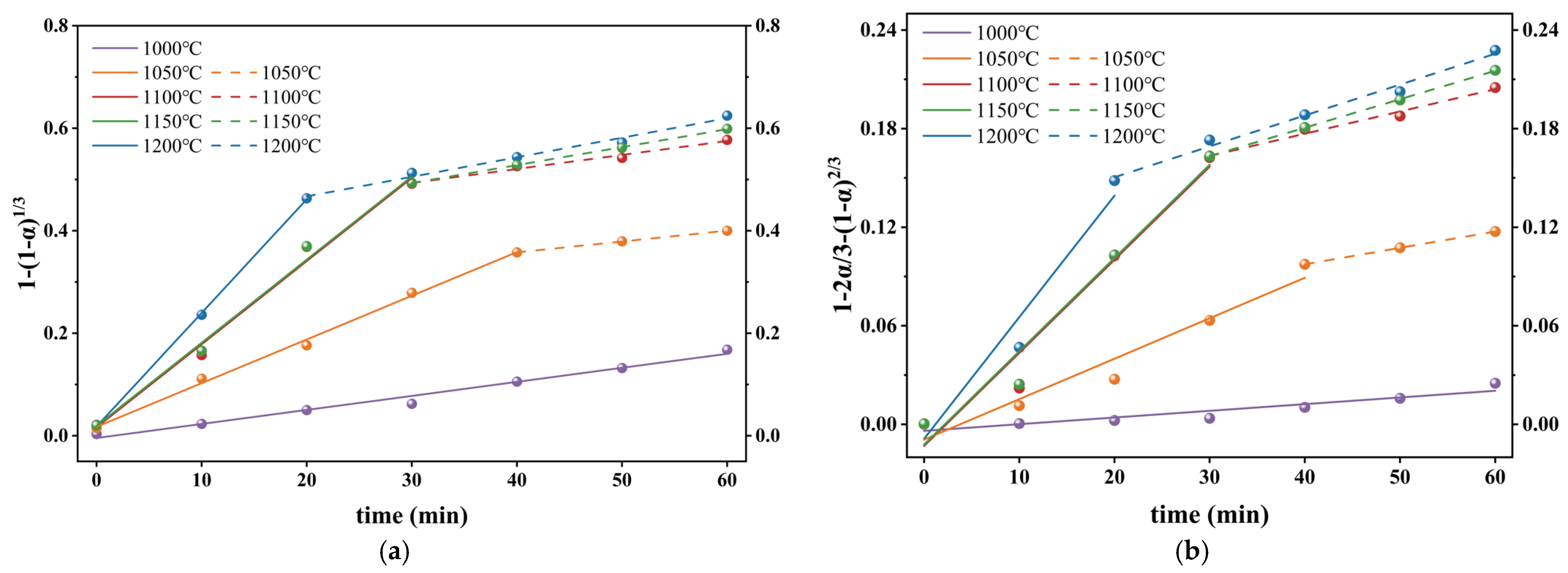
The fitting trends of the R3 and D4 models at different temperatures are shown in Figure 10. The kinetic fitting results were consistent with the experimental observations obtained from the high-temperature reduction tests. During the initial stage of the reaction, the process was mainly limited by the chemical reaction occurring at the interface between the reducing agent and the oxides. At this stage, the reduction degree inside the briquettes remained relatively low, and the amount of newly formed metallic iron was limited. Therefore, the reaction behavior conformed to the interface chemical reaction model (R3) [21].
As the reaction proceeded, the intensity of the Fe diffraction peaks increased significantly, indicating the formation of a large amount of metallic iron. The newly formed metallic Fe underwent sintering, which refilled the pores generated during the early reduction stage of the cold-bonded briquettes. This process increased the resistance to the outward diffusion of gaseous products formed in the subsequent reaction stages. Consequently, the rate-limiting step gradually transformed into three-dimensional internal diffusion through the product layer, corresponding to the D4 model [22].
Figure 10. Fitting trends of R3 and D4 models at different temperatures: (a) R3 model; (b) D4 model.
Metals 16 00618 g010
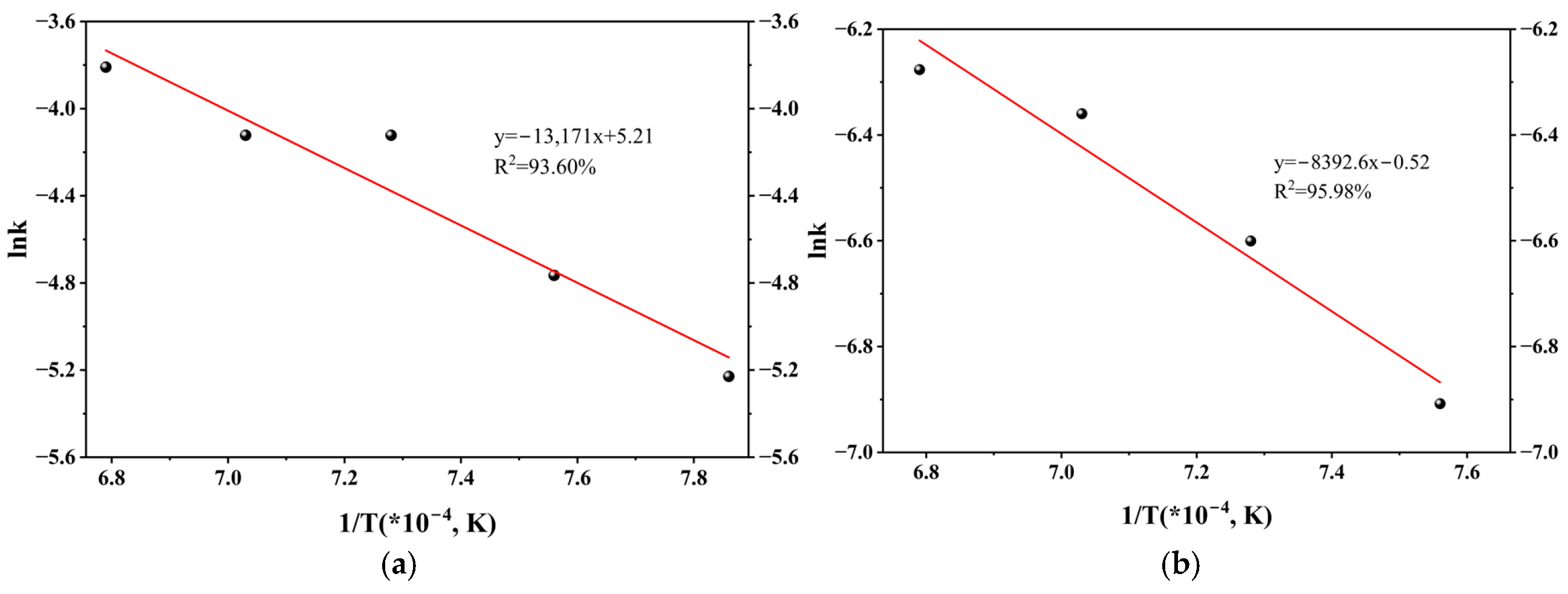
Within the 1000–1200 °C range, the activation energy in the interface chemical reaction-controlled (R3) stage was 109.10 kJ/mol. After the process entered the three-dimensional internal diffusion-controlled (D4) stage, the activation energy decreased to 69.78 kJ/mol. This decrease in activation energy provides physicochemical evidence that the system evolved from a “reaction-controlled” regime to a diffusion-controlled” regime. Figure 11 shows the fitting results of the activation energies for the system reaction when it is controlled by the R3 and D4 models, respectively.
Figure 11. Relationship between T and lnk under different model control: (a) R3 model; (b) D4 model.
Metals 16 00618 g011

4. Conclusions

(1)
The enthalpy change for the direct reduction of ZnO is about 380 kJ/mol, and its theoretical onset temperature is 951 °C. This reaction is strongly endothermic. In contrast, iron oxides can be reduced gradually at lower temperatures. Based on the thermodynamic analysis, the high-temperature reduction temperature should be above 1000 °C to ensure both the reduction and removal of Zn and the reduction of iron oxides.
(2)
During high-temperature reduction, the briquette strength first decreased and then increased. In the 1100–1200 °C range, the reduction degree of the iron oxides increased in the middle and later stages of the reaction (30–60 min), and the metallization degree of the system continued to rise. The formation of metallic iron may be an important reason for the strength recovery, allowing the final strength of the reduced briquette to recover to 524 N.
(3)
Reduction at 1200 °C for 60 min was the optimal process condition. Under these conditions, the de-zincing rate reached 92%, and the TFe grade was enriched to 50 wt.%, meeting the requirements for Grade 5 products in the national standard GB/T 32545-2016, Classification of Iron Ore Products. This shows that by adding a small amount of iron ore powder, it is possible to efficiently remove zinc while also increasing the TFe grade of the reacted briquette, so that it can directly meet the requirements for use as an ironmaking raw material.
(4)
The reduction process in this system involved a change in the kinetic mechanism. In the initial stage, it was controlled by interfacial chemical reaction, with an activation energy of 109.10 kJ/mol. In the middle and later stages, the formation of newly generated metallic iron increased the resistance to gas diffusion, and the control mechanism shifted to three-dimensional internal diffusion, with an activation energy of 69.78 kJ/moL.

Author Contributions

Conceptualization: T.W. and Y.Y.; methodology: T.W.; software: T.W.; validation: T.W.; formal analysis: T.W.; investigation: T.W.; resources: T.W.; data curation: T.W.; writing—original draft preparation: T.W.; writing—review and editing: T.W. and Y.Y.; visualization: T.W.; supervision: Y.Y.; project administration: Y.Y.; funding acquisition: Y.Y. All authors have read and agreed to the published version of the manuscript.

Funding

This work was financially supported by the project Research and Development of Cold-Bonded Briquettes Prepared from Sinter Return Fines (Project No. 19H02679), the National “111” Program (Grant No. D17002), the project Study on Hearth Erosion and Long-Campaign Operation Technology of Baosteel No. 1 Blast Furnace (Project No. BGFZ18A13-03B), and the Microwave Dezincification Technology of Steel Dust project funded by the National Center of Excellence for Innovation (Grant No. 2.23-XM-Microwave dezincing-02).

Data Availability Statement

The original contributions presented in the study are included in the article. Further inquiries can be directed to the corresponding authors.

Conflicts of Interest

The authors declare no conflicts of interest.

References

  1. World Steel Association. World Steel in Figures 2025; World Steel Association: Brussels, Belgium, 2025; Available online: https://worldsteel.org/data/world-steel-in-figures/world-steel-in-figures-2025/ (accessed on 1 May 2026).
  2. Zhang, J.; Zhang, Y.; Long, Y.; Tian, C.; Du, P.; Ren, Q. Characterization of Physical and Chemical Properties of Multi-Source Metallurgical Dust and Analysis of Resource Utilization Pathways. Metals 2024, 14, 1378. [Google Scholar] [CrossRef]
  3. Wen, S.; Shen, S.; Gao, L.; Zhang, J.; He, Z. An effective strategy for preparing fluxed metallized pellets from hazardous blast furnace dust by a deep self-reduction technology: Synergistic mechanism and consolidation behavior. J. Environ. Chem. Eng. 2025, 13, 116188. [Google Scholar] [CrossRef]
  4. Ma, X.Y.; Peng, J.; Zhang, F.; Chang, H. Analysis of the technical status of valuable element extraction from blast furnace dust. China Foundry Mach. Technol. 2021, 56, 53–56. [Google Scholar]
  5. Ye, F.; Li, M.; Su, S.; Xia, H.; Wei, C.; Li, X.; Deng, Z. Separation and recovery of zinc from blast furnace dust via coordination leaching of Cl and hydrolysis of NH4+. Sep. Purif. Technol. 2024, 330, 125361. [Google Scholar] [CrossRef]
  6. Gao, X.; Chai, Y.; Luo, G. Process and mechanism of preparing metallized blast furnace burden from metallurgical dust and sludge. Sci. Rep. 2024, 14, 9760. [Google Scholar] [CrossRef] [PubMed]
  7. Wang, L.; Chen, C.; Li, Z.; Lyu, W.; Liu, X.; Wang, H.; Nie, Y.; Wang, L.; Liu, S.; Xue, N. Recovery of zinc from blast furnace dust via ultrasonic-enhanced crotonic acid leaching: Leaching kinetics and mechanism. Ultrason. Sonochem. 2025, 120, 107489. [Google Scholar] [CrossRef] [PubMed]
  8. Li, H.W.; Wang, K.; Kang, H.J. Measures for reducing alkali metal and zinc load in Jingtang blast furnace. Ironmaking 2021, 40, 37–39. [Google Scholar]
  9. Grudinsky, P.I.; Yurtaeva, A.A.; Volkov, A.I.; Dyubanov, V.G. A study on processing of blast furnace dust and sludge using reduction roasting and magnetic separation. Izv. Ferr. Metall. 2024, 67, 531–541. [Google Scholar] [CrossRef]
  10. Blesa, F.; Flores, I.; Dias, F. Briquettes composed of LD converter steel mill wastes and blast furnace dust to produce primary iron and liquid steel. Chem. Eng. Trans. 2024, 111, 115–120. [Google Scholar] [CrossRef]
  11. Mousa, E.A.; Babich, A.; Senk, D. Reduction behavior of cold-bonded briquettes produced from iron ore fines and steelmaking dusts. ISIJ Int. 2013, 53, 16–22. [Google Scholar] [CrossRef]
  12. Mantovani, M.C.; Takano, C. The strength and reduction of cold-bonded briquettes of iron and carbon bearing wastes. ISIJ Int. 2000, 40, 224–231. [Google Scholar] [CrossRef]
  13. Ren, J.; Xu, C.C.; Aisaiti, C.; Ahmed, M.; Cao, S.; Lu, C.; Zhang, D.; Helle, M.; Yu, Y. Evolution and mechanistic study of hot compressive strength of cold-bonded iron ore briquettes during reduction under simulated blast furnace conditions. Powder Technol. 2026, 479, 122529. [Google Scholar] [CrossRef]
  14. GB/T 212-2008; Proximate Analysis of Coal. Standardization Administration of the People’s Republic of China: Beijing, China, 2008.
  15. Abdelrahim, A.; Nguyen, H.; Illikainen, M.; Kinnunen, P.; Iljana, M.; Illikainen, M.; Fabritius, T. Development of cold-bonded briquettes using by-product-based ettringite binder from ladle slag. J. Sustain. Metall. 2022, 8, 468–478. [Google Scholar] [CrossRef]
  16. Li, Y.; Qiu, D.; Li, M.; Xiong, Y.; Fabritius, T.; Cao, S.; Li, A.; Elsherbiny, A.A.; Ren, J.; Wei, H.; et al. Analysis of the Softening-Melting Mechanism of Cold-Bonded Briquette from Return Sinter Fines. J. Clean. Prod. 2025, 487, 144581. [Google Scholar] [CrossRef]
  17. GB/T 32545—2016; Classification of Iron Ore Product Grades. Standards Press of China: Beijing, China, 2016. Available online: https://openstd.samr.gov.cn/bzgk/std/newGbInfo?hcno=8601B06862242360C1469695BF55689E (accessed on 1 May 2026).
  18. Luo, G.; Peng, Z.; Gao, K.; Fan, W.; Tian, R.; Yi, L.; Rao, M. Preparation of Metallized Pellets for Steelmaking by Hydrogen Cooling Reduction with Different Cooling Rates. Materials 2024, 17, 4362. [Google Scholar] [CrossRef] [PubMed]
  19. Wang, Y.; Peng, J.; Liu, S.; Luo, G.; Zhang, F.; An, S. Effects of Magnesium Mineral on the Reduction and Expansion Performances of Baiyun Ebo Iron Pellets. Metals 2024, 14, 116. [Google Scholar] [CrossRef]
  20. Wang, G.; Wu, J.Y.; Sun, G.J.; Karasev, A.; Ren, Z.; Zhang, X.; Ning, X.; Wang, C. Influence of reduction process on structural evolution and mechanical properties of bio-char-containing briquettes. ISIJ Int. 2026, 66, 13–23. [Google Scholar] [CrossRef]
  21. Liu, D.H.; Wang, X.Z.; Zhang, J.L.; Liu, Z.; Jiao, K.; Liu, X.; Wang, R. Study on the controlling steps and reduction kinetics of iron oxide briquettes with CO-H2 mixtures. Metall. Res. Technol. 2017, 114, 611. [Google Scholar] [CrossRef]
  22. Li, Y.; Ren, J.; Wei, H.; Khan, I.U.; Omran, M.; Fabritius, T.; Shu, Q.; Wang, C.; Zang, Y.; Yu, Y. Reduction kinetics of cold-bonded briquette prepared from return fines of sinter with carbon monoxide and coke. Steel Res. Int. 2023, 94, 2300057. [Google Scholar] [CrossRef]

Table 1. Main chemical components of high-zinc blast furnace dust.
ComponentsZnK2ONa2OCClFeSiO2CaOMgOAl2O3
wt.%33.791.260.5510.014.2816.964.322.043.581.48
Table 2. Main chemical components of iron ore powder.
ComponentsTFeFe3O4FeOSiO2CaOAl2O3TiO2MgOSP
wt.%65.2559.9128.177.980.160.160.010.380.0240.0078
Table 3. Industrial analysis results of coke powder.
ComponentsFCdVdAd
wt.%86.891.7011.41
Table 4. Kinetic models and integral function expressions.
Mechanism CategoryModel CodeG(α)No.
Interfacial chemical reaction controlR2 1 ( 1 α ) 1 2   (3)
R3 1 ( 1 α ) 1 3 (4)
One-dimensional/
two-dimensional diffusion control
D1 α 2 (5)
D2 1 α ln 1 α + α (6)
Three-dimensional internal diffusion controlD3 [ 1 ( 1 α ) 1 3 ] 2 (7)
D4 1 2 3 α ( 1 α ) 2 3 (8)
Nucleation and growth controlA2 [ l n ( 1 α ) ] 1 2 (9)
A3 [ l n ( 1 α ) ] 1 3 (10)
Reaction order controlF1 l n 1 α (11)
Table 5. Results of fitting different kinetic models (1000 °C, 1050 °C, 1100 °C).
MechanismNo.1000 °C R21050 °C R21100 °C R2
0~60 min0~40 min40~60 min0~30 min30~60 min
Interfacial chemical reactionEquation (3)98.93%99.57%99.57%98.64%98.16%
Equation (4)99.01%99.67%99.67%98.95%98.15%
One/two-dimensional diffusionEquation (5)96.82%97.76%97.76%97.14%97.97%
Equation (6)94.83%95.78%95.78%96.48%98.15%
Three-dimensional internal diffusionEquation (7)91.94%92.77%92.77%94.36%98.05%
Equation (8)93.91%94.83%94.83%95.94%98.64%
Nucleation and growthEquation (9)96.68%97.27%97.27%98.32%98.12%
Equation (10)93.63%94.21%94.21%96.46%98.14%
Reaction orderEquation (11)98.71%98.25%98.25%98.69%98.01%
Table 6. Results of fitting different kinetic models (1150 °C, 1200 °C).
MechanismNo.1150 °C R21200 °C R2
0~30 min30~60 min0~20 min20~60 min
Interfacial chemical reactionEquation (3)98.77%99.87%99.92%98.74%
Equation (4)99.18%99.67%99.88%98.76%
One/two-dimensional diffusionEquation (5)97.68%97.78%99.29%98.02%
Equation (6)97.02%98.98%96.94%98.73%
Three-dimensional internal diffusionEquation (7)94.78%99.80%92.75%98.41%
Equation (8)96.45%99.89%95.61%98.82%
Nucleation and growthEquation (9)98.14%98.91%99.11%98.62%
Equation (10)95.99%98.94%97.38%98.25%
Reaction orderEquation (11)99.03%96.75%99.01%98.22%
Disclaimer/Publisher’s Note: The statements, opinions and data contained in all publications are solely those of the individual author(s) and contributor(s) and not of MDPI and/or the editor(s). MDPI and/or the editor(s) disclaim responsibility for any injury to people or property resulting from any ideas, methods, instructions or products referred to in the content.