1. Introduction
AISI 52100 steel (equivalent to 100Cr6) is a high-carbon, chromium bearing steel widely used in precision mechanical systems due to its exceptional hardness, resistance to rolling contact fatigue, and wear behavior under severe loading conditions [
1,
2,
3]. These properties make it an attractive substrate for demanding tribological applications, including bearings, shafts, and contact components operating under cyclic mechanical stress. However, despite its favorable mechanical response, AISI 52100 exhibits significant susceptibility to electrochemical degradation in chloride-containing environments, where localized corrosion and widespread dissolution can compromise surface integrity and accelerate premature failure [
2,
3]. This limitation becomes particularly critical in marine or humid service conditions, where corrosion-assisted degradation can act synergistically with wear processes.
Therefore, surface engineering strategies have become essential for extending the service life of AISI 52100 steel in aggressive environments. Among these, diamond-like carbon (DLC) coatings have emerged as a technologically relevant solution due to their combination of high hardness, low coefficient of friction, chemical inertness, and barrier properties against the diffusion of aggressive ionic species [
4,
5,
6,
7,
8]. DLC coatings consist of metastable amorphous carbon structures containing varying proportions of tetrahedral (sp3) and trigonal (sp2) carbon bonds, where the relative configuration of the bonds strongly influences hardness, residual stress, tribological behavior, and electrochemical stability [
4,
5,
6,
7,
8]. In corrosive environments, dense DLC coatings can substantially restricting the access of the electrolyte to the metallic substrate from the electrolyte, significantly reducing corrosion kinetics and delaying interfacial degradation [
9,
10,
11,
12,
13,
14].
Despite these advantages, the long-term corrosion behavior of DLC coatings is intrinsically dependent on coating density, the population of structural defects, the residual stress state, and adhesion to the substrate [
4,
6,
7]. Defects such as pores, microcracks, or micro fissures can serve as preferential diffusion pathways for chloride ions, allowing localized electrochemical attack at the coating/substrate interface and ultimately leading to interfacial delamination [
9,
10,
11,
15]. Consequently, the electrochemical behavior of DLC systems cannot be interpreted solely in terms of the carbon layer itself, but rather as a coupled response involving the coating architecture, substrate properties, and interfacial stability.
Achieving durable adhesion of DLC coatings to high-hardness bearing steels such as AISI 52100 remains a significant technical challenge. This substrate exhibits high hardness, carbide heterogeneity, and a substantial difference in elastic modulus compared to amorphous carbon coatings conditions that promote interfacial stress concentration and increase the coating’s susceptibility to failure under service conditions [
1,
4,
6]. Conventional DC magnetron sputtering, although widely used for carbon film deposition, often produces coatings with limited plasma ionization, reduced adatom mobility, and decreased film densification, which can result in higher defect density and weaker interfacial bonding [
16,
17,
18]. In the present study, the HiPIMS process was operated using pulse frequencies of 300 Hz and pulse amplitudes between 50 and 200 μs, promoting high instantaneous power densities and enhanced plasma ionization during deposition. These conditions are associated with increased ion bombardment and improved coating densification compared to conventional DC sputtering [
16,
17,
18,
19]. These characteristics make HiPIMS a particularly attractive deposition route for demanding substrates such as AISI 52100 steel.
Although numerous investigations have been conducted on the tribological behavior of DLC coatings, comparatively fewer studies have focused on the electrochemical corrosion response of DLC systems deposited by HiPIMS on high-carbon bearing steels under marine exposure conditions [
11,
12,
13]. Furthermore, the interaction between substrate condition, coating integrity, electrochemical barrier performance, and defect-mediated degradation has not yet been fully elucidated. In particular, the effect of pre-heat treatment of AISI 52100 steel on subsequent corrosion behavior and coating response has received little attention.
Electrochemical characterization methods, such as potentiodynamic polarization, linear polarization resistance (LPR), and electrochemical impedance spectroscopy (EIS), provide valuable information on corrosion kinetics, barrier effectiveness, and interfacial degradation mechanisms in coated metal systems [
15,
20,
21,
22,
23]. Similarly, Raman spectroscopy remains a powerful tool for evaluating the structural organization of DLC through D/G band analysis, enabling an indirect assessment of bonding characteristics associated with film stability [
4,
5,
8]. Combined with post-corrosion microstructural observations, these techniques allow for a comprehensive understanding of degradation mechanisms in carbon-based protective coatings. Chloride-containing marine environments are particularly aggressive for high-carbon steels because chloride ions destabilize corrosion-product layers, promote localized electrochemical activity, and accelerate interfacial degradation processes. In prolonged immersion conditions, corrosion-product accumulation may transiently modify the electrochemical response of steel surfaces without providing durable passivation, owing to the continued aggressive action of chloride-containing species [
24,
25,
26,
27].
Three conditions were evaluated: AISI 52100 steel in its original state (M1), heat-treated steel (M2), and steel coated with DLC deposited using a chromium-assisted HiPIMS architecture (M3). The objective of this study evaluates the electrochemical corrosion of Diamond-Like Carbon coatings (DLC) deposited by High-Power Impulse Magnetron Sputtering (HiPIMS). This research focuses specifically on the role of steel substrate and its subsequent impact on the coating’s integrity when exposed to synthetic seawater.
2. Materials and Methods
AISI 52100 bearing steel specimens were used as substrate material under three experimental conditions: raw steel (M1), heat-treated steel (M2), and diamond-like carbon (DLC) coated steel (M3). Disc-shaped samples with dimensions of 25.4 mm in diameter and 5 mm in thickness were machined from the base material. For the heat-treated condition (M2), the samples were subjected to an austenitizing treatment at 864 °C for 20 min, followed by rapid cooling in oil, in order to modify the microstructural condition of the substrate and the mechanical response prior to electrochemical evaluation. No post-quench tempering treatment was applied prior to DLC deposition. Surface preparation was performed using a sequential grinding process with silicon carbide abrasive papers up to 2000 grit, followed by polishing with polycrystalline diamond suspensions of 6 μm, 3 μm, and 0.05 μm, achieving a suitable for coating deposition and electrochemical testing. Subsequently, the samples were ultrasonically cleaned in acetone and isopropyl alcohol for 15 min each and dried under a nitrogen flow.
DLC (M3) coatings were deposited using high-power pulsed magnetron sputtering (HiPIMS). Prior to deposition, the substrates were cleaned with argon plasma, followed by chromium-assisted ion bombardment pretreatment to activate the surface and enhance interfacial adhesion. A chromium-based intermediate layer was incorporated to optimize coating adhesion and reduce stress concentration at the substrate/coating interface. The deposition parameters used are summarized in
Table 1. During the deposition process, silicon wafers were simultaneously placed inside the chamber as reference substrates for the evaluation of coating thickness and morphological characterization of the cross-section. The peak power density (PDD) was obtained from the formula PPD = (Ipeak × Vpeak)/A
target, where Ipeak is the current peak, Vpeak is the voltage peak and A
target is the entire surface of the sputter target (19.6 cm
2).
The structural characteristics of the DLC coatings were analyzed by Raman spectroscopy using a Thermo Fisher Scientific DXR confocal Raman microscope (Thermo Fisher Scientific, Waltham, MA, USA) with a 532 nm excitation laser. Surface and cross-sectional morphology were examined using a JEOL JSM-7600F field emission scanning electron microscope (SEM) (JEOL, Tokyo, Japan) equipped with an energy-dispersive X-ray spectroscopy (EDS) detector (Bruker XFlash 630, Bruker Nano GmbH, Berlin, Germany). EDS analyses were used to provide semi-quantitative compositional support for the surface observations. EDS measurements were performed using an acceleration voltage of 15 kV and a working distance of approximately 15 mm. Spectra were acquired from multiple representative regions distributed across the analyzed surfaces in order to improve qualitative reproducibility of the compositional observations. Acquisition times were maintained constant during all measurements to ensure comparable signal conditions between samples. The EDS analyses presented in this research were primarily used as semi-quantitative compositional support for the observed surface degradation morphology and localized corrosion-related features. Therefore, the reported elemental distributions should not be interpreted as statistically representative overall surface compositions. A full statistical compositional analysis based on multiple mapped regions was beyond the scope of the present research and should be addressed in future work involving the quantitative characterization of large area surfaces.
Electrochemical characterization was performed using a computer-controlled ACM Instruments (Cartmel, UK) potentiostat in a conventional three-electrode cell configuration. A saturated calomel electrode (SCE) was used as the reference electrode, while a graphite rod served as the counter electrode. The exposed working area of the samples was 1 cm2.
Synthetic seawater solution was prepared according to controlled laboratory procedures intended to reproduce the ionic aggressiveness of marine chloride-containing environments, following standardized substitute ocean water preparation practices [
28], using analytical-grade reagents sequentially dissolved in distilled water under continuous stirring to ensure complete homogenization (
Table 2). The initial pH of the electrolyte was adjusted to 8.2 ± 0.2 with NaOH, representative of marine exposure conditions. The pH was adjusted before testing but was not continuously monitored during exposure.
All electrochemical measurements were performed at room temperature under static conditions. Prior to electrochemical testing, samples were allowed to stabilize at open circuit potential (OCP) for 60 min to achieve electrochemical stability. Potentiodynamic polarization tests were performed according to ASTM G3, varying the potential from −500 mV to +1500 mV with respect to OCP at a sweep rate of 1 mV·s−1.
Linear polarization resistance (LPR) measurements were performed by polarizing the working electrode between ±15 mV with respect to the open circuit potential (OCP) at a sweep rate of 1 mV·s−1 at regular intervals during 24 h immersion. Electrochemical impedance spectroscopy (EIS) measurements were performed using a sinusoidal perturbation amplitude of 20 mV with respect to the OCP over a frequency range of 0.05 Hz to 10 kHz.
Corrosion rates were estimated according to ASTM G102 using electrochemical parameters derived from polarization resistance. The Stern-Geary constant (B) was determined from the experimentally obtained anodic and cathodic polarization slopes according to:
and the corrosion current density was estimated as:
All electrochemical experiments were performed in duplicate (n = 2), which provided acceptable reproducibility for comparative analysis.
4. Discussion
The electrochemical behavior of the DLC coating system deposited by HiPIMS on AISI 52100 steel was strongly influenced by the interaction between the coating architecture, the substrate condition, electrolyte accessibility, and defect-mediated interfacial processes. The combined analysis of Raman spectroscopy, polarization measurements, long-term electrochemical evolution, porosity estimation, SEM/EDS observations, and EIS fitting provides evidence that the DLC coating substantially modified the electrochemical response of the substrate in synthetic seawater, although without completely eliminating localized electrolyte accessibility through coating discontinuities.
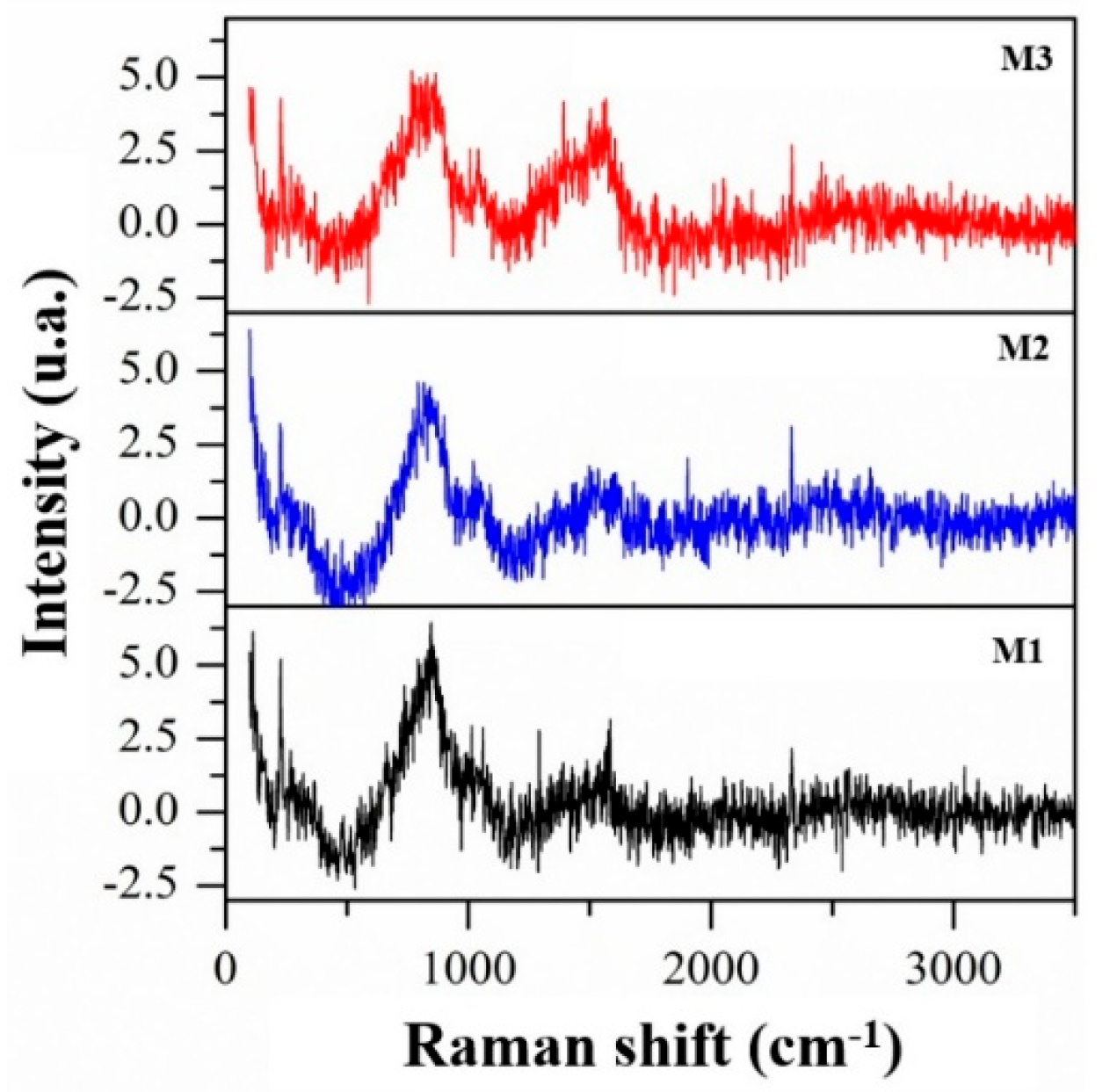
The Raman spectra presented in
Figure 2 confirmed the formation of a characteristic amorphous carbon structure, composed of mixed sp
2/sp
3 bonding configurations, typical of sputter-deposited DLC coatings [
4,
5,
6,
7,
8]. The broadening and relative intensity of the D and G bands indicate the presence of a structurally disordered carbon network associated with the non-equilibrium growth conditions characteristic of HiPIMS deposition. Previous research has shown that highly ionized deposition environments promote greater adatom mobility and increased film densification, resulting in DLC architectures with improved barrier properties and lower defect density compared to conventional sputtering methods [
16,
17,
18,
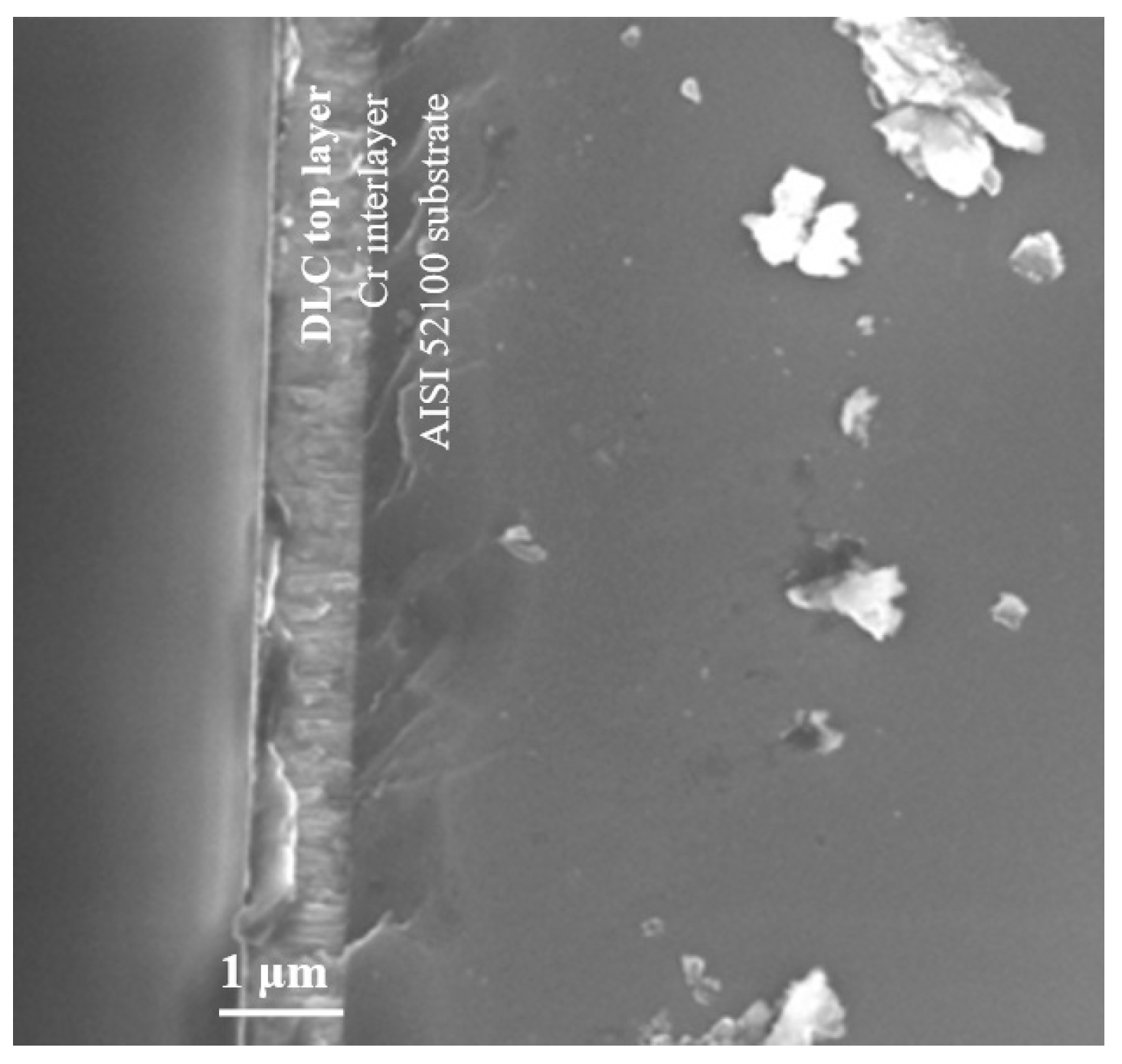
19]. The dense morphology observed in the cross-sectional SEM image (
Figure 1) is consistent with this behavior.
From an electrochemical perspective, the Raman response associated with a structurally disordered but relatively dense amorphous carbon network is consistent with the impedance behavior observed during immersion. In particular, the partial restriction of electrolyte accessibility, the presence of coating-related impedance contributions, and the finite Rpore values obtained through equivalent circuit fitting suggest that the HiPIMS process promoted a compact DLC architecture capable of substantially reducing ion transport without completely suppressing defect-mediated electrochemical pathways.
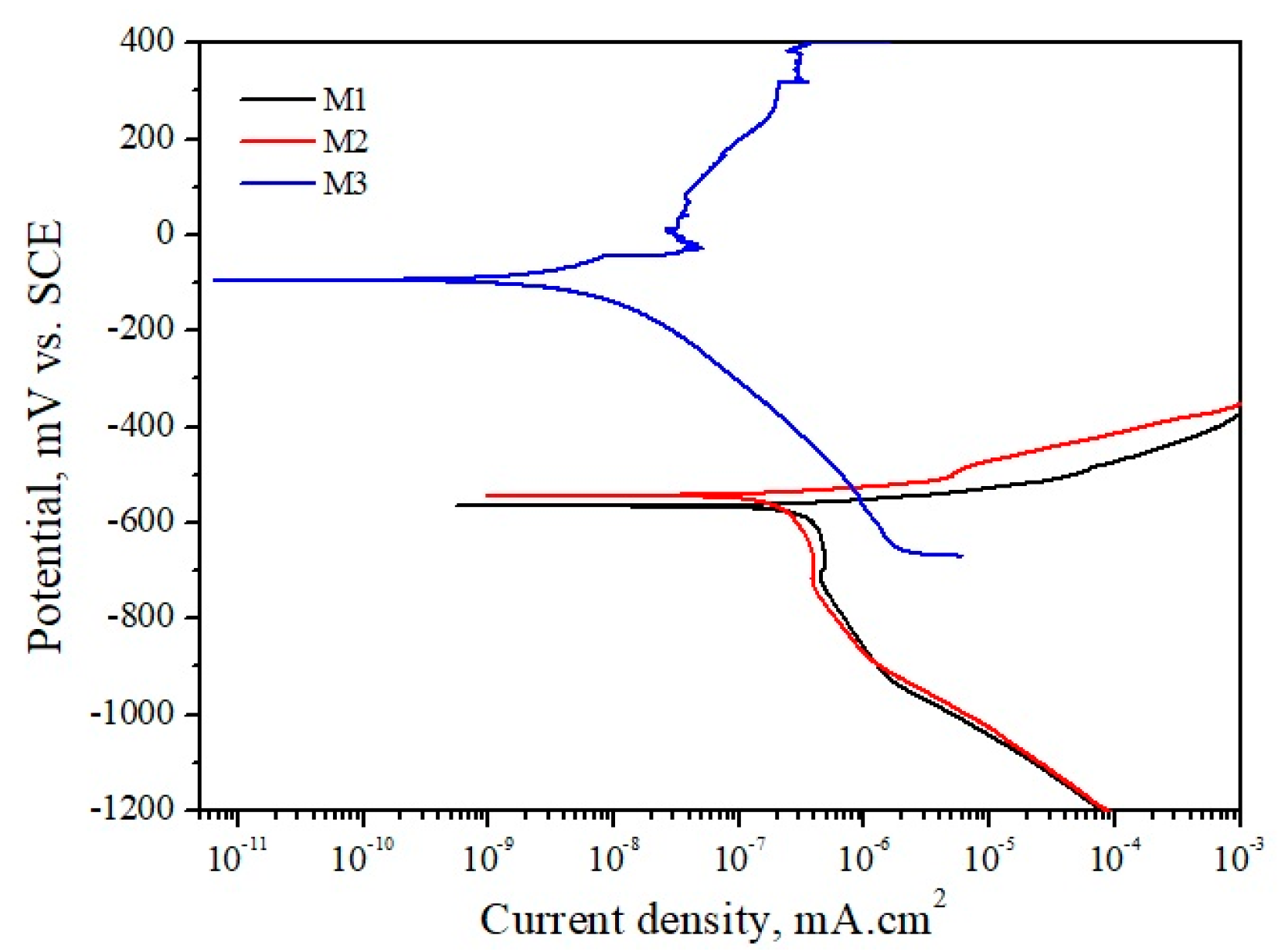
Potentiodynamic polarization results demonstrated a significant reduction in apparent corrosion current density for the DLC-coated condition (M3), decreasing from approximately 10
−7 to 10
−9 mA·cm
−2 compared to uncoated substrates. Simultaneously, the corrosion potential shifted toward more noble values, indicating a substantial modification of the electrochemical interaction between the substrate and the chloride-containing electrolyte. Similar electrochemical improvements have been reported for dense DLC coatings deposited under highly ionized plasma conditions, where the coating acts as a physical barrier restricting electrolyte transport and limiting charge transfer processes at the substrate/electrolyte interface [
9,
10,
11,
12,
13].
However, the electrochemical response of the coated system should not be interpreted as evidence of complete electrochemical isolation from the substrate. The polarization behavior of M3 differs significantly from that of a conventional metal electrode in active solution, as the measured electrochemical response is governed by the combined contribution of coating capacitance, localized ion transport, and interfacial electrochemical accessibility through coating defects [
15,
20,
21,
22,
23]. Consequently, apparent corrosion current values obtained by polarization fitting should be interpreted comparatively, rather than as absolute descriptors of uniform substrate dissolution kinetics.
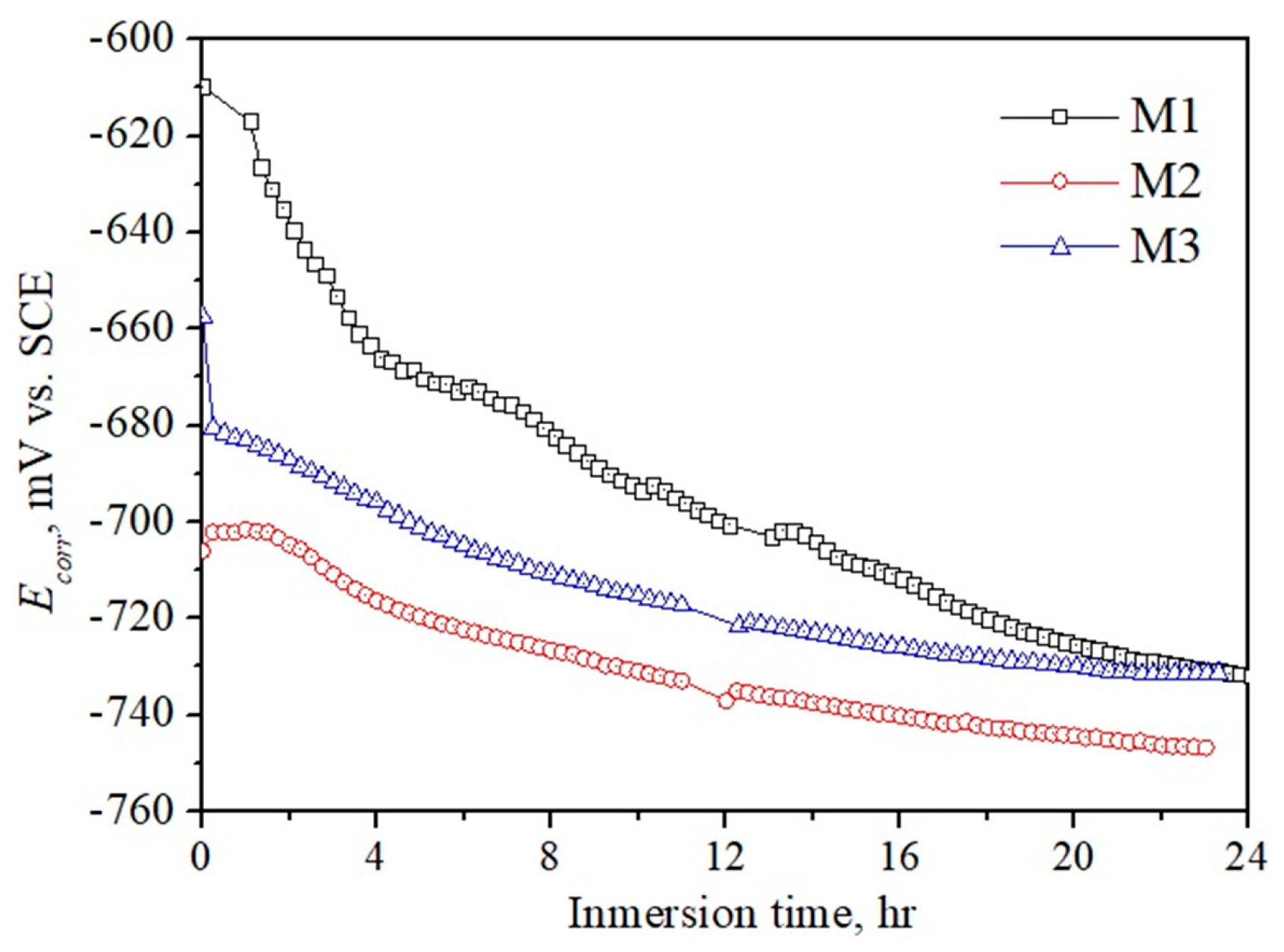
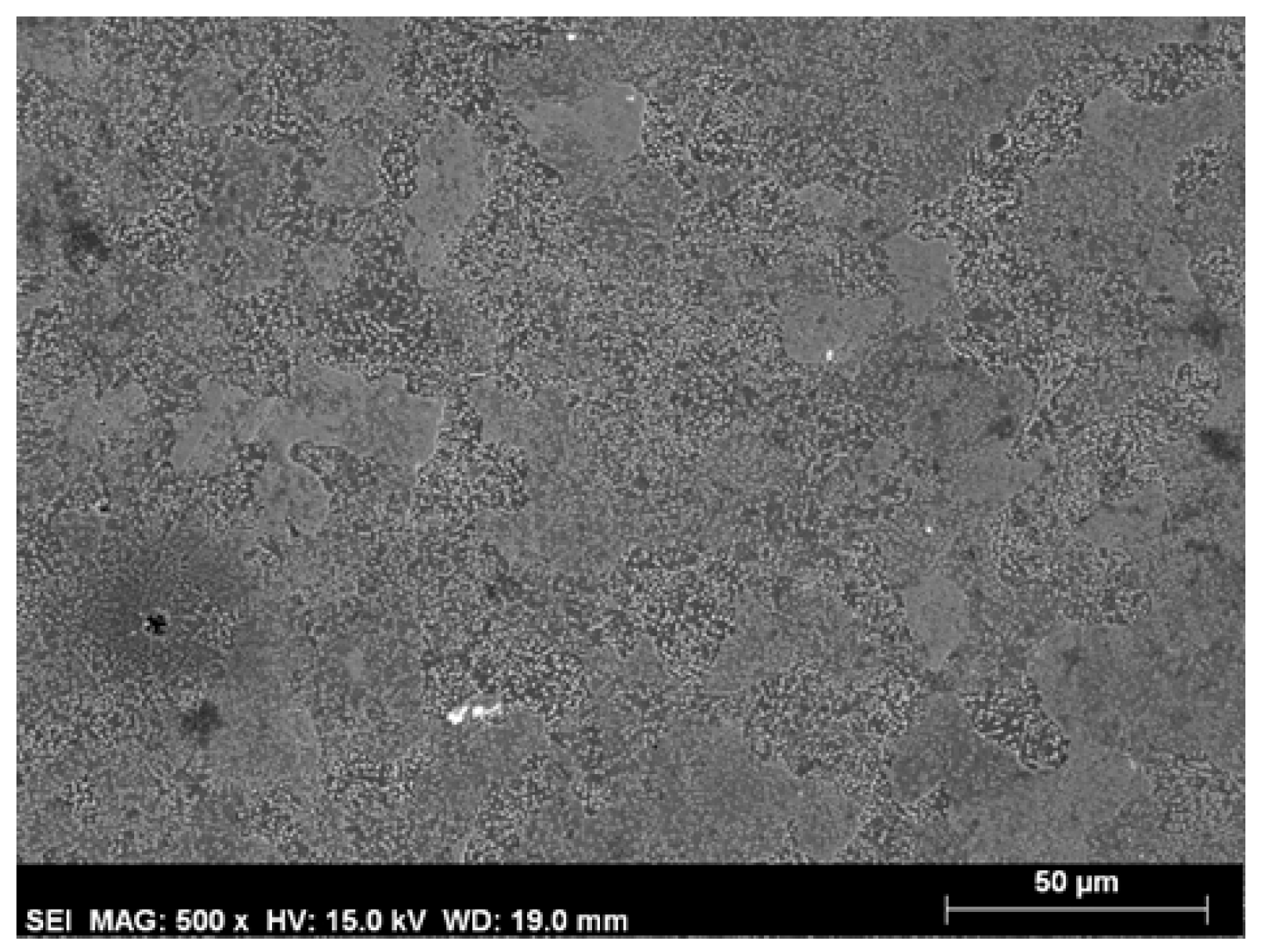
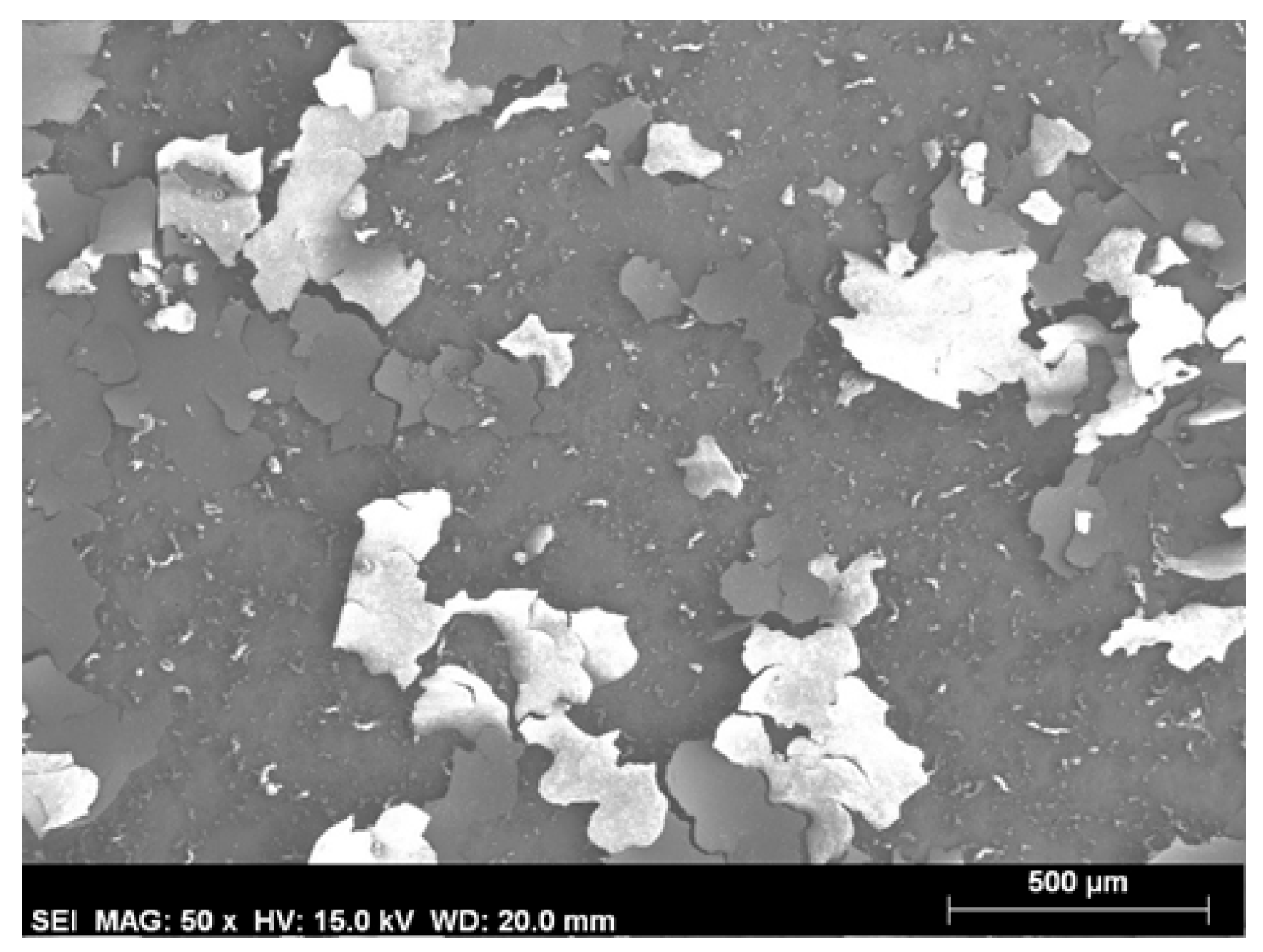
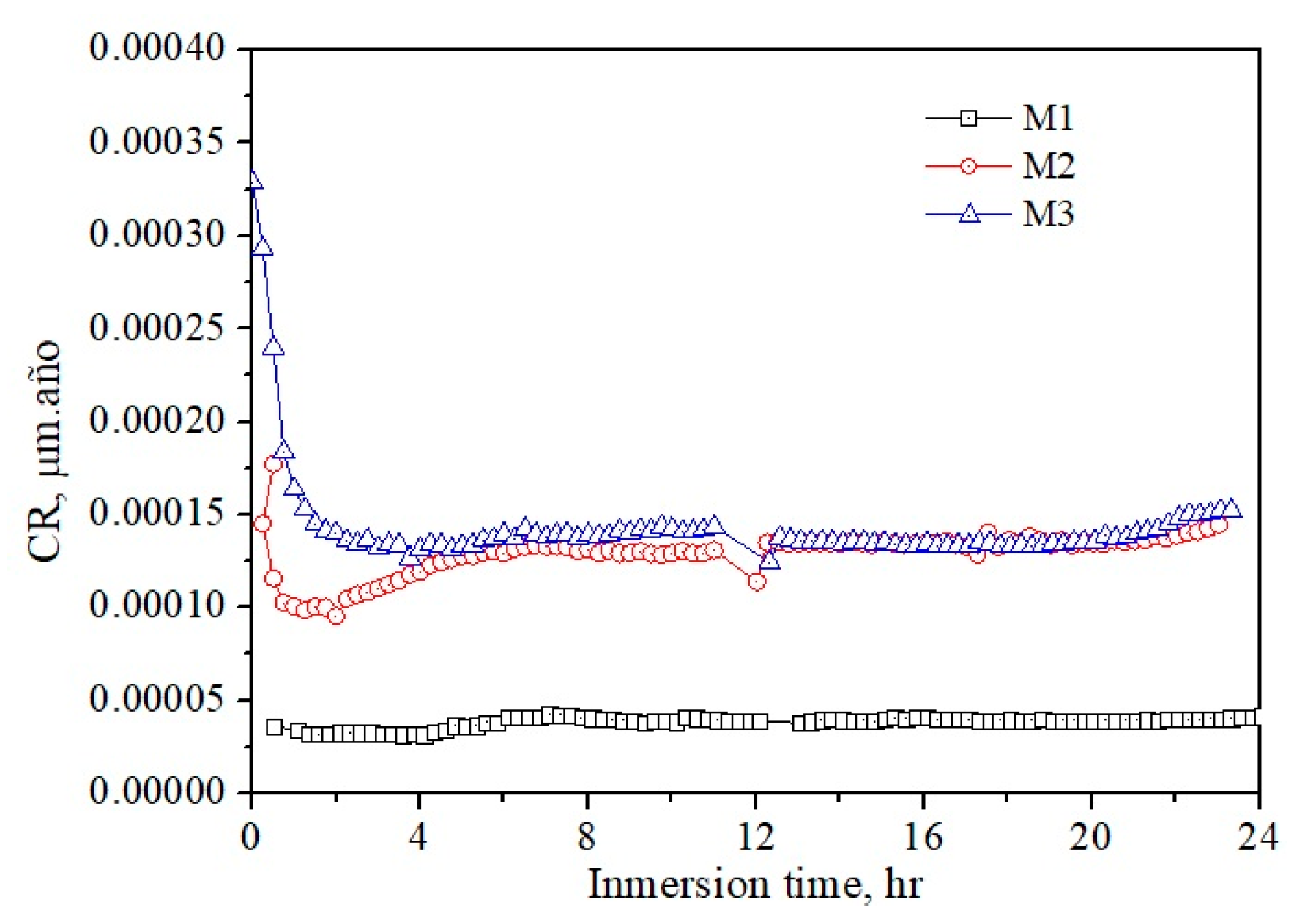
The long-term evolution of Ecorr during 24 h of immersion further supports this interpretation. The untreated substrate (M1) showed progressive electrochemical activation characterized by a continuous shift toward more negative potentials, consistent with unrestricted electrolyte accessibility and widespread chloride-induced corrosion. SEM observations after immersion revealed widespread surface degradation and an accumulation of corrosion products distributed relatively homogeneously across the exposed surface. This behavior is characteristic of steel surfaces undergoing active corrosion, where corrosion products partially modify the interfacial electrochemical conditions without establishing stable passivation [
24,
25,
26,
27].
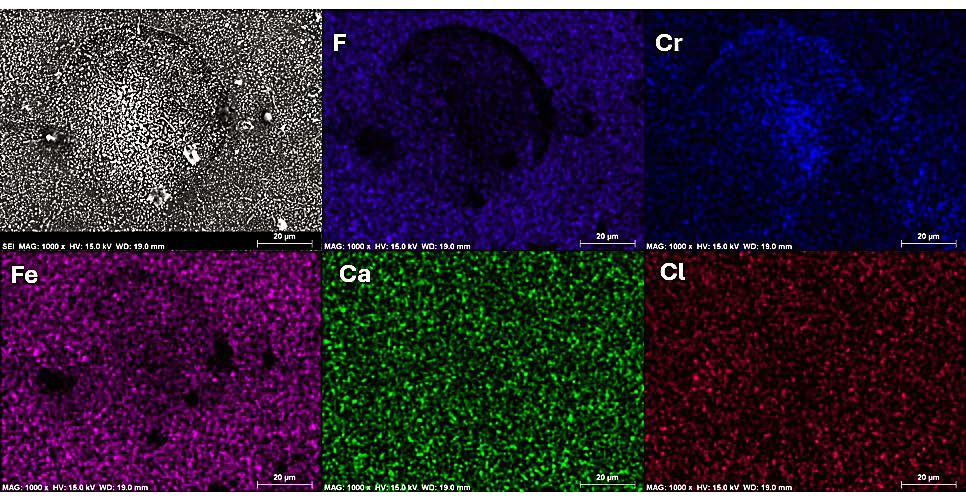
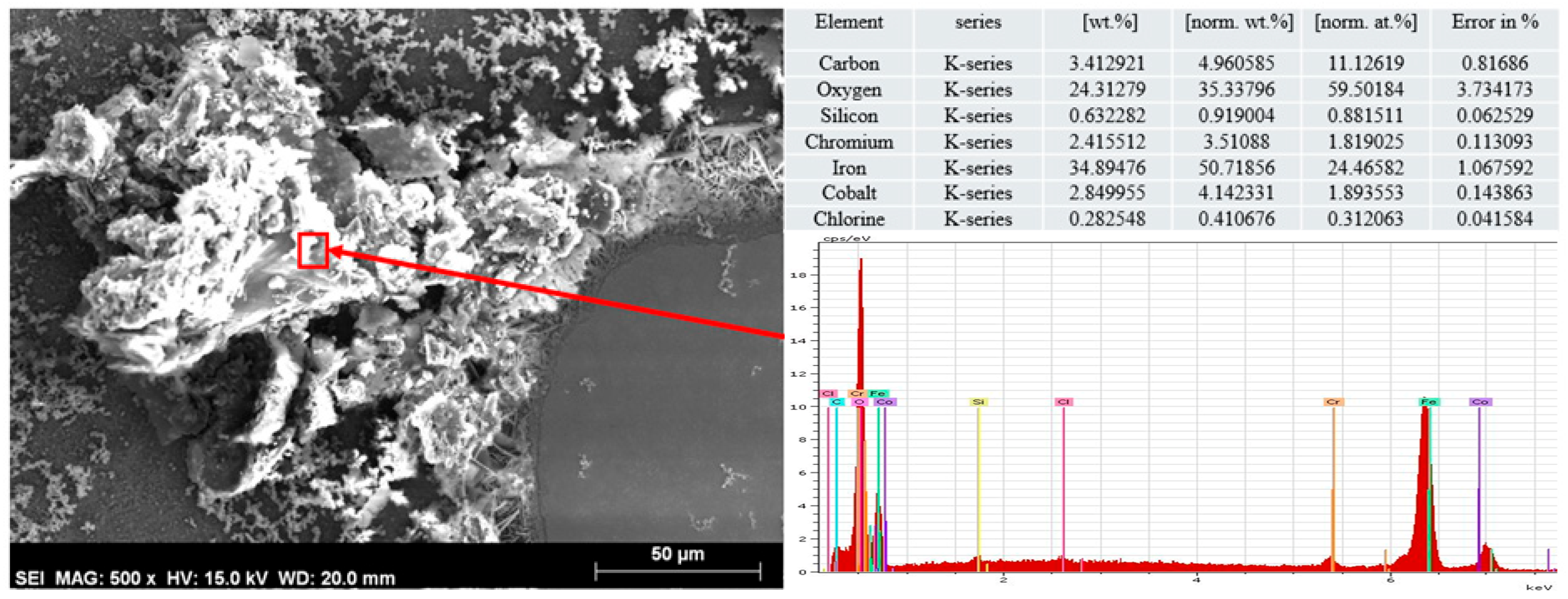
The heat-treated condition (M2) exhibited the most negative electrochemical response during immersion, indicating lower electrochemical stability compared with both the untreated and coated conditions. This behavior suggests that the microstructural modifications induced by quenching increased the susceptibility of the substrate to chloride-assisted degradation. Although martensitic transformation is expected after the applied heat treatment, the absence of XRD phase quantification prevents direct determination of retained austenite fractions, which may influence residual stress accommodation, coating adhesion, and localized electrochemical response. SEM/EDS observations revealed heterogeneous accumulation of corrosion products containing Fe, O, Cr, Ca, and Cl, indicating unstable interfacial degradation and sustained electrolyte accessibility throughout immersion.
The electrochemically estimated porosity analysis provided additional information regarding the accessibility of defect-mediated pathways within the coated system. According to the Creus model [
15], the effective electrochemical porosity decreased from 3.73% after 12 h immersion to 3.06% after 24 h exposure. Since this methodology estimates the fraction of electrochemically accessible substrate rather than the geometric porosity of the coating itself, these values should be interpreted as indirect indicators of localized electrolyte penetration through coating discontinuities.
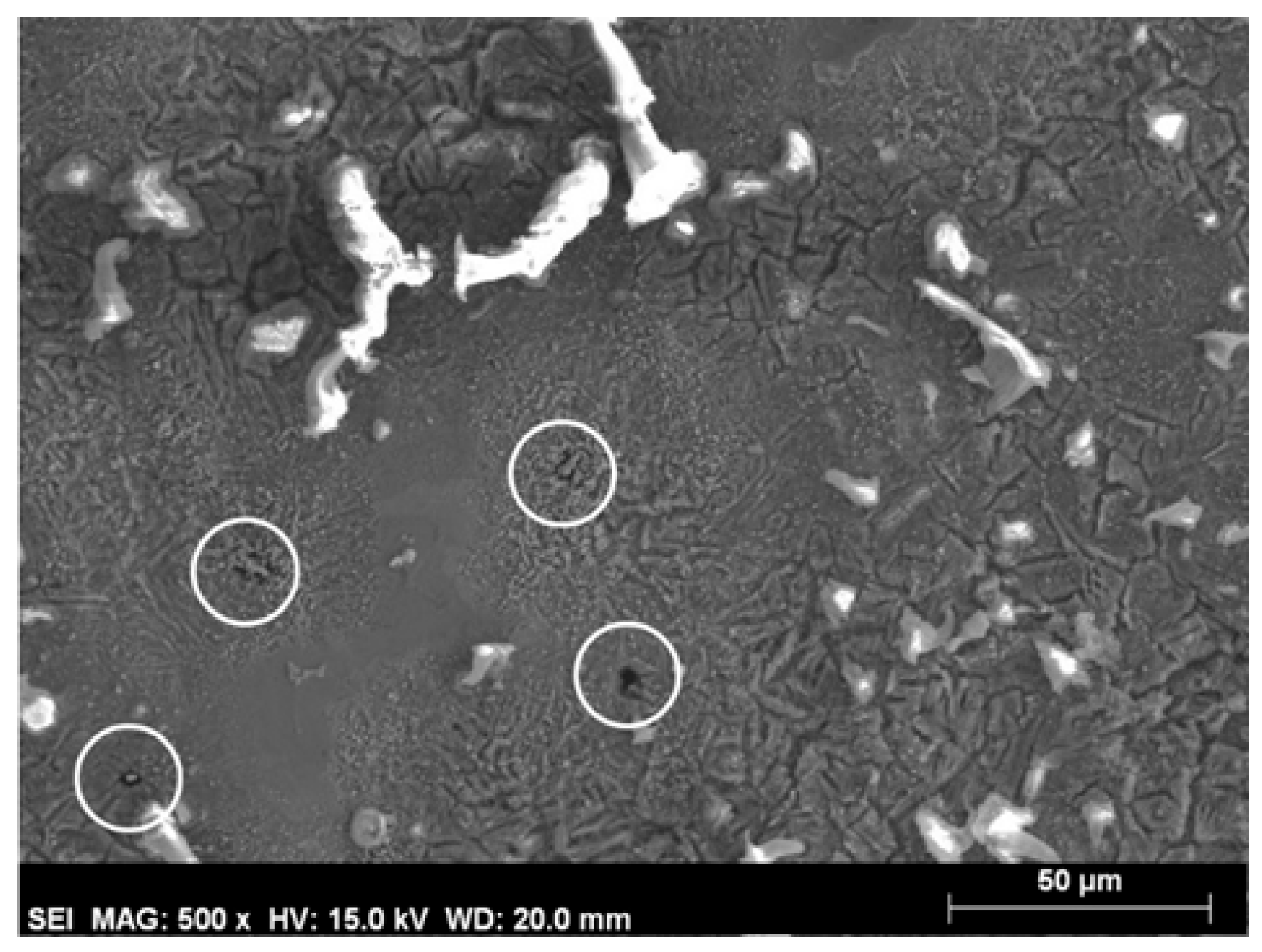
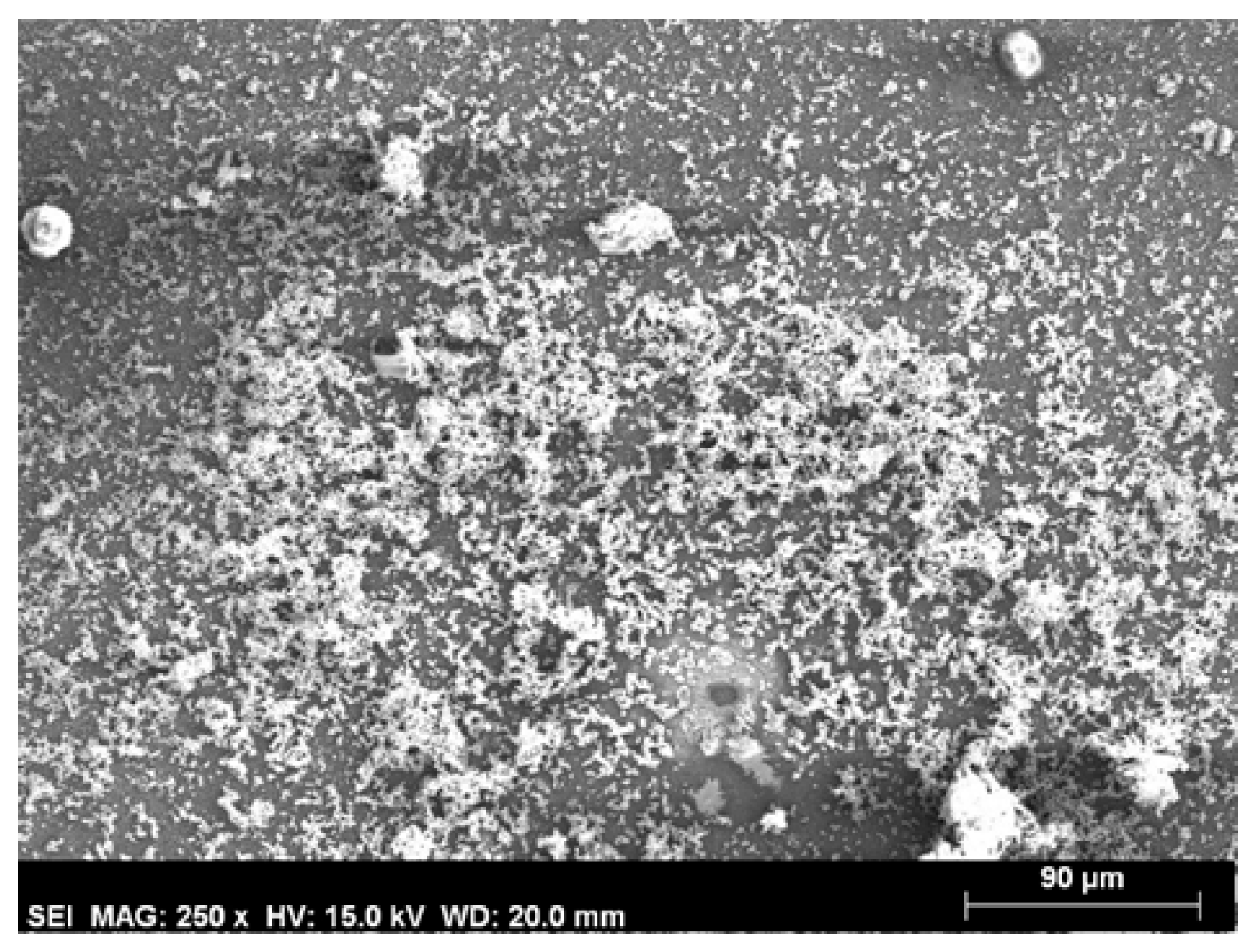
The progressive reduction in effective electrochemical porosity suggests partial interfacial stabilization during immersion, potentially associated with the localized accumulation of degradation products within accessible coating defects. Such localized obstruction may partially restrict ionic transport and increase resistance to charge transfer during prolonged exposure. However, the persistence of finite porosity values above 3% confirms that a fraction of the substrate remained electrochemically accessible through localized discontinuities in the coating architecture. SEM observations shown in
Figure 9 support this interpretation by revealing heterogeneous degradation sites and localized discontinuities distributed across the coated surface after exposure to synthetic seawater.
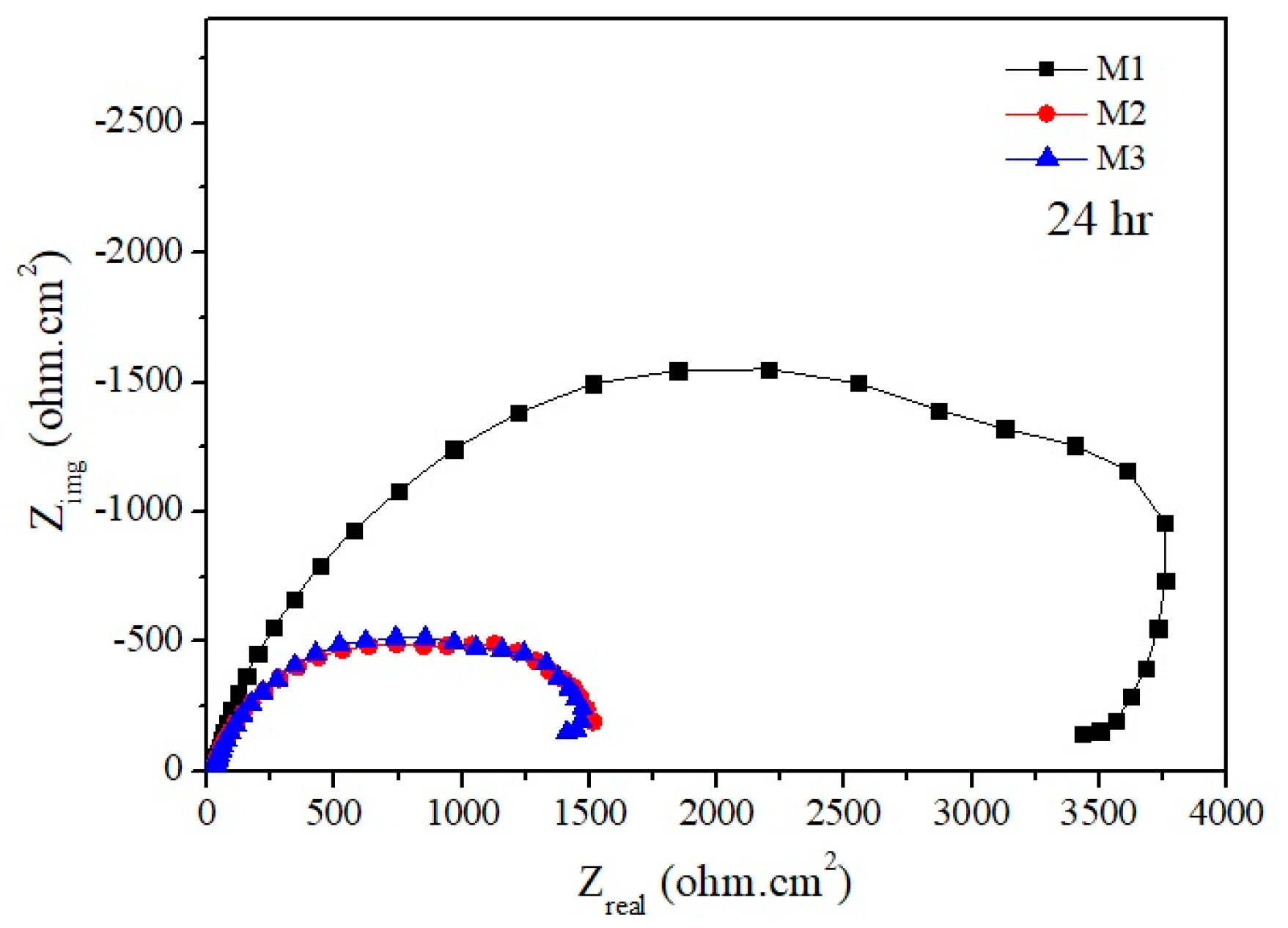
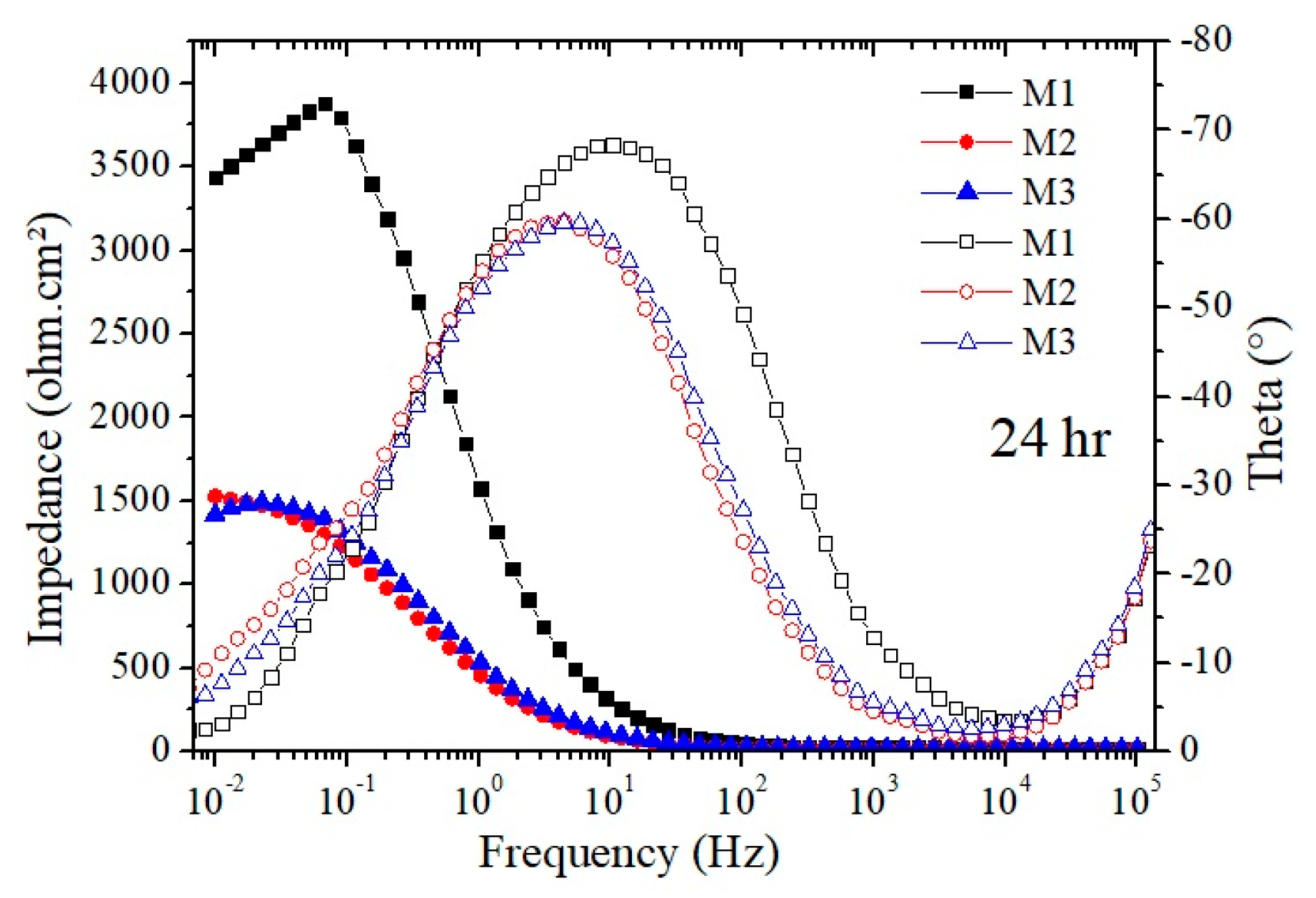
The EIS response obtained after 24 h immersion provides the clearest evidence of the electrochemical mechanisms governing the three evaluated systems. The Nyquist and Bode responses demonstrated that the electrochemical behavior was strongly influenced by substrate condition, corrosion-product evolution, and coating-related transport phenomena. For M1 and M2, the equivalent electrical circuits incorporated a Warburg diffusion contribution, indicating that the electrochemical response was partially controlled by diffusion-assisted processes through corrosion-product layers and electrolyte-accessible surface heterogeneities [
15,
20,
21,
22,
23].
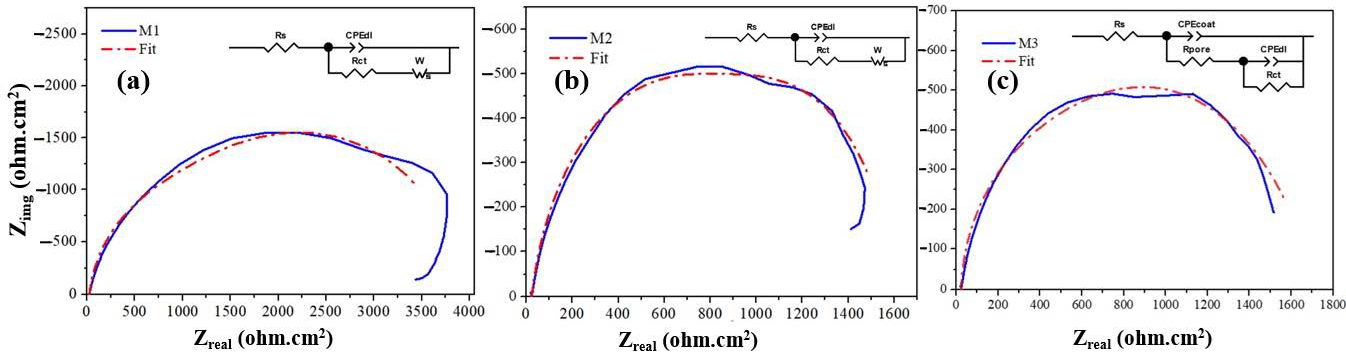
The large capacitive semicircle observed for M1 and the comparatively high fitted charge-transfer resistance (Rct = 2036 Ω·cm2) should therefore not be interpreted as evidence of stable passivation. Instead, the elevated impedance response is more reasonably associated with the transient accumulation of corrosion products and diffusion-controlled interfacial processes occurring on the actively degrading steel surface. This interpretation is fully consistent with the broad phase-angle dispersion observed in the Bode response and with the extensive Fe- and O-rich degradation products identified by SEM/EDS analysis.
Similarly, M2 exhibited lower impedance magnitude and lower fitted charge-transfer resistance (Rct = 1080 Ω·cm2), indicating increased electrolyte accessibility and sustained electrochemical activity. The incorporation of the Warburg element into the equivalent circuit further supports the interpretation that ionic diffusion through heterogeneous corrosion-product layers remained an important contributor to the electrochemical response. The heterogeneous morphology and chloride-containing degradation products observed by SEM/EDS are fully consistent with this interpretation.
In contrast, the DLC-coated condition (M3) required a more complex equivalent circuit incorporating an additional coating-related time constant composed of a pore resistance element (Rpore) and a coating constant phase element (CPEcoat). The presence of Rpore physically represents the resistance associated with ionic transport through localized coating discontinuities and accessible electrolyte penetration pathways. Consequently, the electrochemical response of the coated system was governed not only by substrate charge transfer processes but also by coating capacitance, localized electrolyte penetration, and restricted ionic transport through defect-mediated pathways.
The fitted Rpore value of 600 Ω·cm2 confirms that electrolyte penetration through localized coating defects remained possible despite the substantial barrier contribution of the DLC layer. This behavior is consistent with the electrochemically estimated porosity values and with the localized degradation features observed by SEM after immersion. However, the absence of a Warburg diffusion contribution in the M3 equivalent circuit indicates that the dominant electrochemical mechanism differed substantially from that of the uncoated substrates. Instead of diffusion through corrosion-product layers, the electrochemical response of M3 was controlled primarily by coating-modified transport processes and localized interfacial electrochemical accessibility.
The fitted charge-transfer resistance obtained for M3 (Rct = 1100 Ω·cm2) remained comparable to that of M2, indicating that localized electrochemical activity persisted at electrochemistry.
Author Contributions
Conceptualization, I.A., E.H. and A.M.; writing—original draft preparation I.A., E.H. and A.M.; formal analysis, I.A., E.H., M.F. and A.M.; writing—review and editing, A.M. and H.C.; methodology E.H. and J.B.; validation, M.F. and A.M.; resources, E.H., M.F., J.B., H.C. and A.M. All authors have read and agreed to the published version of the manuscript.
Funding
This research received no external funding.
Data Availability Statement
The original contributions presented in this study are included in the article. Further inquiries can be directed to the corresponding authors.
Acknowledgments
I.A. wish to express her gratitude to the Secretariat of Science, Humanities, Technology and Innovation (Secihti) for the scholarship received during her postgraduate studies. The authors of this article wish to express their gratitude to the Materials Degradation Laboratory of the FIM-UMSNH for the support provided. During the preparation of this manuscript, the authors used Gemini AI 2.5 Pro as a translation tool from Spanish to English.
Conflicts of Interest
The authors declare no conflicts of interest.
Abbreviations
The following abbreviations are used in this manuscript:
| AISI | American Iron and Steel Institute |
| ASTM | American Society for Testing and Materials |
| CPE | Constant Phase Element |
| Cr | Chromium |
| DLC | Diamond-Like Carbon |
| EDS | Energy-Dispersive X-ray Spectroscopy |
| EIS | Electrochemical Impedance Spectroscopy |
| Ecorr | Corrosion Potential (Open Circuit Corrosion Potential) |
| Fe | Iron |
| HiPIMS | High-Power Impulse Magnetron Sputtering |
| LPR | Linear Polarization Resistance |
| M1 | As-Received AISI 52100 Steel |
| M2 | Heat-Treated AISI 52100 Steel |
| M3 | HiPIMS-Deposited DLC-Coated AISI 52100 Steel |
| NaOH | Sodium Hydroxide |
| OCP | Open Circuit Potential |
| P | Effective Electrochemical Porosity |
| Rct | Charge Transfer Resistance |
| Rpore | Coating Pore Resistance |
| Rs | Solution Resistance |
| SCE | Saturated Calomel Electrode |
| SEM | Scanning Electron Microscopy |
| XRD | X-ray Diffraction |
References
- Li, Y.; Jiang, Z.; Li, L.; Wang, P.; Li, D.; Xue, W.; Duan, D. Wear Behavior and Damage Characterization for AISI 52100 Bearing Steels: Effect of Hardness and Spherical Carbides. J. Mater. Res. Technol. 2024, 30, 8359–8370. [Google Scholar] [CrossRef]
- Wang, W.; Srinivasan, V.; Siva, S.; Albert, B.; Lal, M.; Alfantazi, A. Corrosion Behavior of Deep Cryogenically Treated AISI 420 and AISI 52100 Steel. Corrosion 2014, 70, 708–720. [Google Scholar] [CrossRef]
- Xie, J.; Alpas, A.T.; Northwood, D.O. The Role of Heat Treatment on the Erosion-Corrosion Behavior of AISI 52100 Steel. Mater. Sci. Eng. A 2005, 393, 42–50. [Google Scholar] [CrossRef]
- Robertson, J. Diamond-Like Amorphous Carbon. Mater. Sci. Eng. R Rep. 2002, 37, 129–281. [Google Scholar] [CrossRef]
- Ferrari, A.C.; Robertson, J. Interpretation of Raman Spectra of Disordered and Amorphous Carbon. Phys. Rev. B 2000, 61, 14095–14107. [Google Scholar] [CrossRef]
- Grill, A. Diamond-Like Carbon: State of the Art. Diam. Relat. Mater. 1999, 8, 428–434. [Google Scholar] [CrossRef]
- Lifshitz, Y. Diamond-Like Carbon—Present Status. Diam. Relat. Mater. 1999, 8, 1659–1676. [Google Scholar] [CrossRef]
- Casiraghi, C.; Ferrari, A.C.; Robertson, J. Raman Spectroscopy of Hydrogenated Amorphous Carbons. Phys. Rev. B 2005, 72, 085401. [Google Scholar] [CrossRef]
- Sharma, R.; Barhai, P.K.; Kumari, N. Corrosion Resistant Behaviour of DLC Films. Thin Solid Film. 2008, 516, 5397–5403. [Google Scholar] [CrossRef]
- Fenili, C.P.; de Souza, F.S.; Marin, G.; Probst, S.M.H.; Binder, C.; Klein, A.N. Corrosion Resistance of Low-Carbon Steel Modified by Plasma Nitriding and Diamond-Like Carbon. Diam. Relat. Mater. 2017, 80, 153–161. [Google Scholar] [CrossRef]
- Cao, L.; Liu, J.; Wan, Y.; Pu, J. Corrosion and Tribocorrosion Behavior of W-Doped DLC Coating in Artificial Seawater. Diam. Relat. Mater. 2020, 109, 108019. [Google Scholar] [CrossRef]
- Vicen, M.; Kajánek, D.; Trško, L.; Bokůvka, O.; Buchtík, M.; Florková, Z.; Frkáň, M. Improving of 100Cr6 Steel Corrosion and Wear Properties in Simulated Sea Water Environment by Tungsten-Doped DLC Coating. Materials 2023, 16, 4334. [Google Scholar] [CrossRef] [PubMed]
- Li, S.; Li, H.; Guo, P.; Li, X.; Yang, W.; Ma, G.; Nishimura, K.; Ke, P.; Wang, A. Enhanced Long-Term Corrosion Resistance of 316L Stainless Steel by Multilayer Amorphous Carbon Coatings. Materials 2024, 17, 2129. [Google Scholar] [CrossRef] [PubMed]
- Kolanji, S.; Sivakatatcham, M.; Palani, S. Studies on Nano-Indentation and Corrosion Behavior of Diamond-Like Carbon Coated Stainless Steel (316L). Trends Sci. 2024, 21, 7677. [Google Scholar] [CrossRef]
- Creus, J.; Mazille, H.; Idrissi, H. Porosity Evaluation of Protective Coatings onto Steel, through Electrochemical Techniques. Surf. Coat. Technol. 2000, 130, 224–232. [Google Scholar] [CrossRef]
- García, J.A.; Rivero, P.J.; Barba, E.; Fernández, I.; Santiago, J.A.; Palacio, J.F.; Fuente, G.G.; Rodríguez, R.J. A Comparative Study in the Tribological Behavior of DLC Coatings Deposited by HiPIMS Technology with Positive Pulses. Metals 2020, 10, 174. [Google Scholar] [CrossRef]
- Gómez, I.; Claver, A.; Santiago, J.A.; Fernandez, I.; Palacio, J.F.; Diaz, C.; Mändl, S.; Garcia, J.A. Improved Adhesion of the DLC Coating Using HiPIMS with Positive Pulses and Plasma Immersion Pretreatment. Coatings 2021, 11, 1070. [Google Scholar] [CrossRef]
- Ganesan, R.; Fernandez-Martinez, I.; Akhavan, B.; Matthews, D.T.A.; Sergachev, D.; Stueber, M.; McKenzie, D.R.; Bilek, M.M.M. Pulse Length Selection in Bipolar HiPIMS for High Deposition Rate of Smooth, Hard Amorphous Carbon Films. Surf. Coat. Technol. 2023, 454, 129199. [Google Scholar] [CrossRef]
- Hassan, M.; Qayyum, A.; Ahmad, S.; Mahmood, S.; Shafiq, M.; Zakaullah, M.; Lee, P.; Rawat, R.S. DLC Coating on Stainless Steel by Pulsed Methane Discharge in Repetitive Plasma Focus. Appl. Surf. Sci. 2014, 303, 187–195. [Google Scholar] [CrossRef]
- Stern, M.; Geary, A.L. Electrochemical Polarization: I. A Theoretical Analysis of the Shape of Polarization Curves. J. Electrochem. Soc. 1957, 104, 56–63. [Google Scholar] [CrossRef]
- Mansfeld, F. Use of Electrochemical Impedance Spectroscopy for the Study of Corrosion Protection by Polymer Coatings. J. Appl. Electrochem. 1995, 25, 187–202. [Google Scholar] [CrossRef]
- Orazem, M.E.; Tribollet, B. Electrochemical Impedance Spectroscopy, 2nd ed.; John Wiley & Sons: Hoboken, NJ, USA, 2017. [Google Scholar]
- Macdonald, J.R. Impedance Spectroscopy. Ann. Biomed. Eng. 1992, 20, 289–305. [Google Scholar] [CrossRef]
- Revie, R.W. Uhlig’s Corrosion Handbook, 3rd ed.; Wiley: Hoboken, NJ, USA, 2011. [Google Scholar]
- Marcus, P. Corrosion Mechanisms in Theory and Practice, 3rd ed.; CRC Press: Boca Raton, FL, USA, 2011. [Google Scholar]
- Melchers, R.E. Modeling immersion corrosion of structural steels in natural seawater. Corros. Sci. 2003, 45, 923–940. [Google Scholar] [CrossRef]
- Melchers, R.E.; Jeffrey, R. The critical involvement of anaerobic bacterial activity in modelling the corrosion behaviour of mild steel in marine environments. Electrochim. Acta 2008, 54, 80–85. [Google Scholar] [CrossRef]
- Zhang, H.; Cherng, J.-S.; Chen, Q. Recent progress on high power impulse magnetron sputtering (HiPIMS): The challenges and applications in fabricating VO2 thin film. AIP Adv. 2019, 9, 035242. [Google Scholar] [CrossRef]
- Eliasson, H.; Rudolph, M.; Brenning, N.; Hajihoseini, H.; Zanáška, M.; Adriaans, M.J.; A Raadu, M.; Minea, T.M.; Gudmundsson, J.T.; Lundin, D. Modeling of high power impulse magnetron sputtering discharges with graphite target. Plasma Sources Sci. Technol. 2021, 30, 115017. [Google Scholar] [CrossRef]
- ASTM D1141-98(2021); Standard Practice for the Preparation of Substitute Ocean Water. ASTM International: West Conshohocken, PA, USA, 2021.
- He, M.; Yeo, C. Evaluation of Thermal Degradation of DLC Film Using a Novel Raman Spectroscopy Technique. Coatings 2018, 8, 143. [Google Scholar] [CrossRef]
Figure 1.
Cross-sectional SEM micrograph of the HiPIMS-deposited DLC coating system showing the DLC top layer, Cr adhesion interlayer, and AISI 52100 steel substrate.
Figure 2.
Raman spectra obtained from samples M1 (AISI 52100 steel in its original state), M2 (heat-treated AISI 52100 steel) and M3 (DLC-coated sample using HiPIMS), used for comparative structural characterization of the substrate and coating conditions.
Figure 3.
Potentiodynamic polarization curves recorded for the as-received (M1), heat-treated (M2), and HiPIMS DLC-coated (M3) AISI 52100 steel samples in synthetic seawater.
Figure 4.
Evolution of the open circuit corrosion potential (Ecorr) of samples M1 (AISI 52100 in original state), M2 (AISI 52100 with heat treatment) and M3 (AISI 52100 coated with DLC by HiPIMS) during 24 h of immersion in synthetic seawater.
Figure 5.
SEM micrograph of the surface of sample M1 after 24 h of immersion in synthetic seawater, showing generalized surface degradation consistent with generalized corrosion of the uncoated AISI 52100 substrate.
Figure 6.
SEM surface micrograph of sample M2 after 24 h immersion in synthetic seawater, showing heterogeneous accumulation of corrosion products associated with active degradation of the heat-treated AISI 52100 substrate.
Figure 7.
SEM micrograph of the surface of sample M3 after 24 h of immersion in synthetic seawater, showing localized accumulation and partial scaling of corrosion-related surface deposits on the DLC-coated substrate.
Figure 8.
Evolution of the apparent corrosion rate of samples M1, M2 and M3 during 24 h of immersion in synthetic seawater, estimated from polarization resistance measurements.
Figure 9.
SEM micrograph of the surface of sample M3 after 24 h of immersion in synthetic seawater, showing localized features similar to discontinuities and heterogeneous surface degradation on the DLC-coated substrate.
Figure 10.
Nyquist plots of samples M1, M2, and M3 after 24 h immersion in synthetic seawater, showing the comparative electrochemical impedance response of the evaluated conditions.
Figure 11.
Bode plots of samples M1, M2, and M3 after 24 h immersion in synthetic seawater, illustrating the frequency-dependent electrochemical response of the evaluated systems.
Figure 12.
SEM surface micrograph and EDS elemental mapping of the corroded surface after 24 h immersion in synthetic seawater, showing the spatial distribution of Fe, O, Cr, Ca, and Cl on degradation-related surface deposits.
Figure 13.
SEM surface micrograph and localized EDS analysis of corrosion-related deposits formed on sample M2 after 24 h immersion in synthetic seawater.
Figure 14.
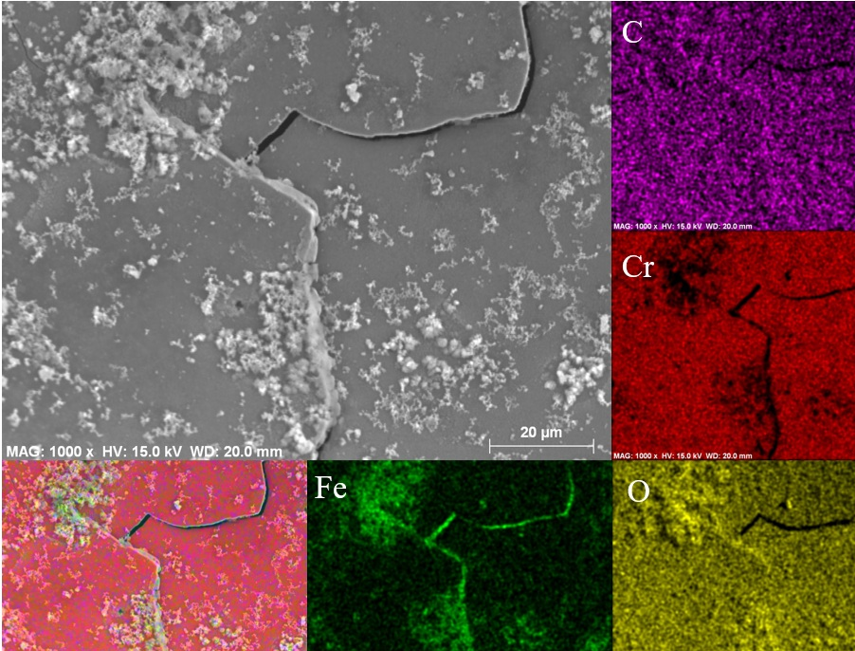
Surface SEM micrography and X-ray elemental mapping of sample M3 after 24 h immersion in synthetic seawater, showing the spatial distribution of C, Cr, Fe and O associated with localized surface heterogeneity related to degradation in the DLC-coated system.
Table 1.
Parameters used for the deposition of DLC coatings on AISI 52100 steel using HiPIMS.
| Parameters | Etching Ar+ | Etching + Cr | CrC | DLC |
|---|
| Voltage (V) | 700 | 700/702 | 702/690 | 700 |
| Current (mA) | 4 | 4/284 | 313/36 | 36 |
| Power (W) | 3 | 3/200 | 219/23 | 25 |
| PPD (W/cm2) | 0 | 0/500 | 428/286 | 178 |
| Pulse amplitude (ms) | 50 | 50/200 | 200/50 | 50 |
| Frequency (Hz) | 300 | 300/300 | 300/300 | 300 |
| FAR (sccm) | 10 | 10 | 10 | 10 |
| Pressure (Torr) | 3.61 × 10⁻³ | 3.14 × 10⁻³ | 3.09 × 10⁻³ | 3.53 × 10⁻³ |
| Time (s) | 1800 | 1800 | 2400 | 2400 |
Table 2.
Reagents and quantities used for the preparation of seawater.
| Reagent | Quantity (g/L) |
|---|
| Sodium chloride | 24.53 |
| Sodium sulfate (anhydrous) | 4.09 |
| Magnesium chloride hexahydrate | 5.20 |
| Calcium chloride (anhydrous) | 1.16 |
| Strontium chloride hexahydrate | 0.025 |
| Potassium chloride | 0.695 |
| Sodium bicarbonate | 0.201 |
| Potassium bromide | 0.101 |
| Boric acid | 0.027 |
| Sodium fluoride | 0.003 |
Table 3.
Comparative hardness values reported for DLC coatings deposited under HiPIMS or related high-ionization sputtering conditions.
| Deposition System | Deposition Method | Hardness (GPa) | Ref. |
|---|
| DLC on bearing steel | HiPIMS | 18–22 | [16] |
| Cr/DLC multilayer | HiPIMS | 20–28 | [17] |
| Hydrogenated DLC | Magnetron sputtering | 15–20 | [4] |
| Dense amorphous carbon coating | HiPIMS | 22–30 | [18] |
| DLC with Cr interlayer | Pulsed sputtering | 18–25 | [19] |
Table 4.
Electrochemical parameters obtained from potentiodynamic polarization tests.
| Sample | Ecorr
(mV) | Icorr
(mA/cm2) | βa
(mV/Decade) | βc
(mV/Decade) |
|---|
| M1 | −564.43 | (1.807 ± 0.12) × 10−7 | 67 | 270 |
| M2 | −543.02 | (1.000 ± 0.08) × 10−7 | 80 | 240 |
| M3 | −91.5 | (1.031 ± 0.09) × 10−9 | 142 | 116 |
Table 5.
Electrochemical parameters and estimated effective electrochemical porosity of DLC-coated steel after 12 and 24 h immersion in synthetic seawater.
| Sample | RPS
(Ω∙cm2) | RP
(Ω∙cm2) | Esteelcorr
(mV) | Ecorr
(mV) | βa
(mV/Decade) | P
(%) |
|---|
| DLC12 | 6359.7 | 2389.4 | −700.62 | −721.57 | 142 | 3.73 |
| DLC24 | 6045.3 | 1953.1 | −731.88 | −731.33 | 142 | 3.06 |
Table 6.
Equivalent circuit fitting parameters obtained from EIS measurements after 24 h immersion in synthetic seawater.
| Sample | Rs
(Ω∙cm2) | Rpore
(Ω∙cm2) | Y0,coat
(F/cm2) | ncoat
| Rct
(Ω∙cm2) | Y0dl
(F/cm2) | ndl | W-R | W-T | W-P | x2 |
|---|
| M1 | 22.87 | --- | --- | --- | 2036 | 5.9698 × 10⁻³ | 0.93282 | 1850 | 100 | 0.5 | 5.6 × 10⁻⁴ |
| M2 | 22.6 | --- | --- | --- | 1080 | 5.9542 × 10⁻³ | 0.86221 | 500 | 110 | 0.5 | 2.3 × 10⁻⁴ |
| M3 | 22.27 | 600 | 6.62 × 10⁻⁵ | 0.94871 | 1100 | 3.923 × 10⁻⁴ | 0.6765 | --- | --- | --- | 2.7 × 10⁻³ |
| Disclaimer/Publisher’s Note: The statements, opinions and data contained in all publications are solely those of the individual author(s) and contributor(s) and not of MDPI and/or the editor(s). MDPI and/or the editor(s) disclaim responsibility for any injury to people or property resulting from any ideas, methods, instructions or products referred to in the content. |




 ,
,