Study on Efficient Potassium Removal and Lithium Recovery from Potassium-Rich Mother Liquor

Abstract
1. Introduction
2. Experimental Section
2.1. Main Materials, Reagents, and Equipment Used in the Experiment
2.2. Potassium Removal Experiment
3. Results and Discussion
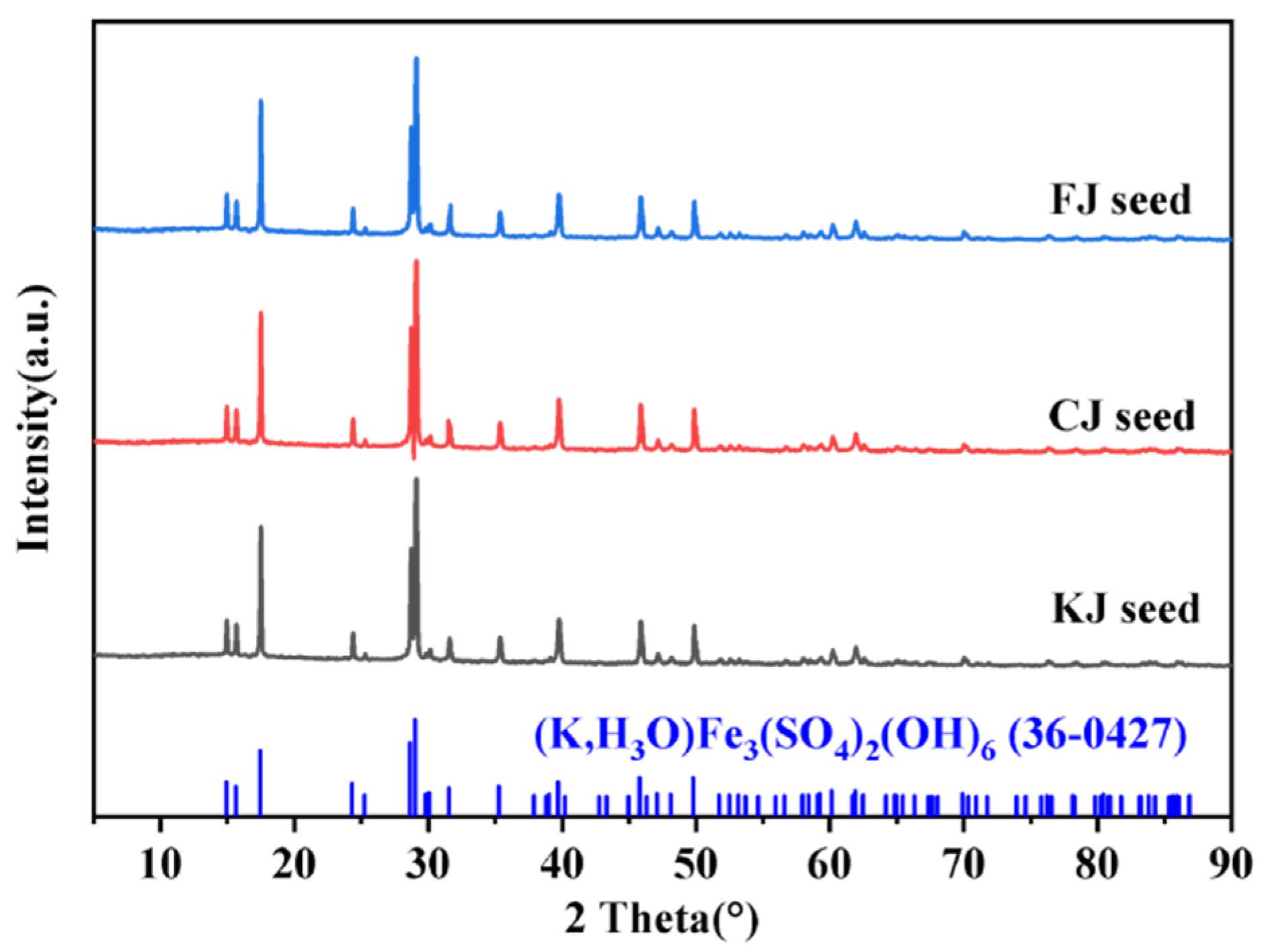
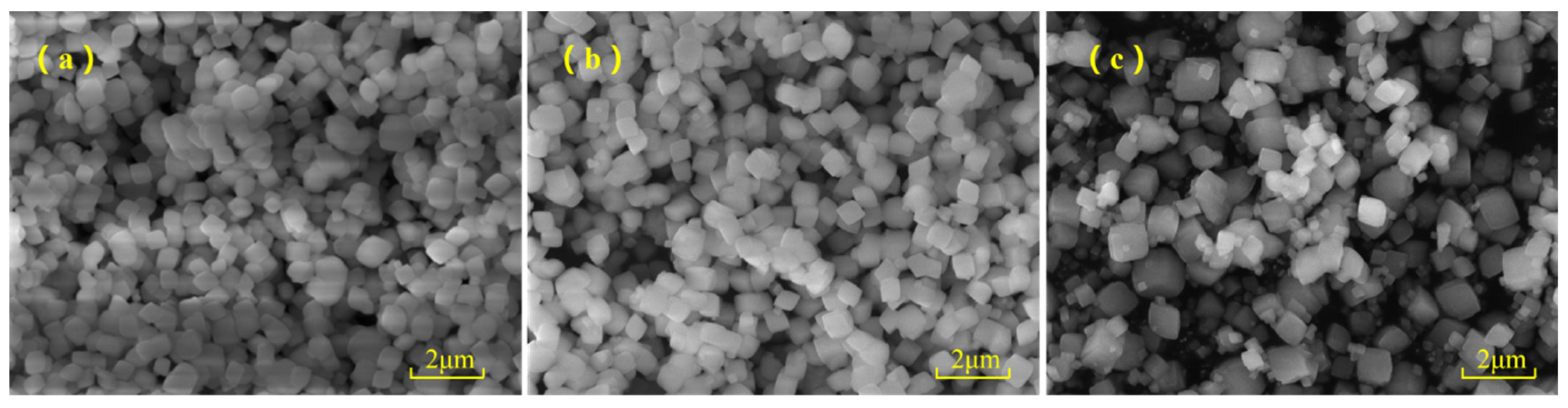
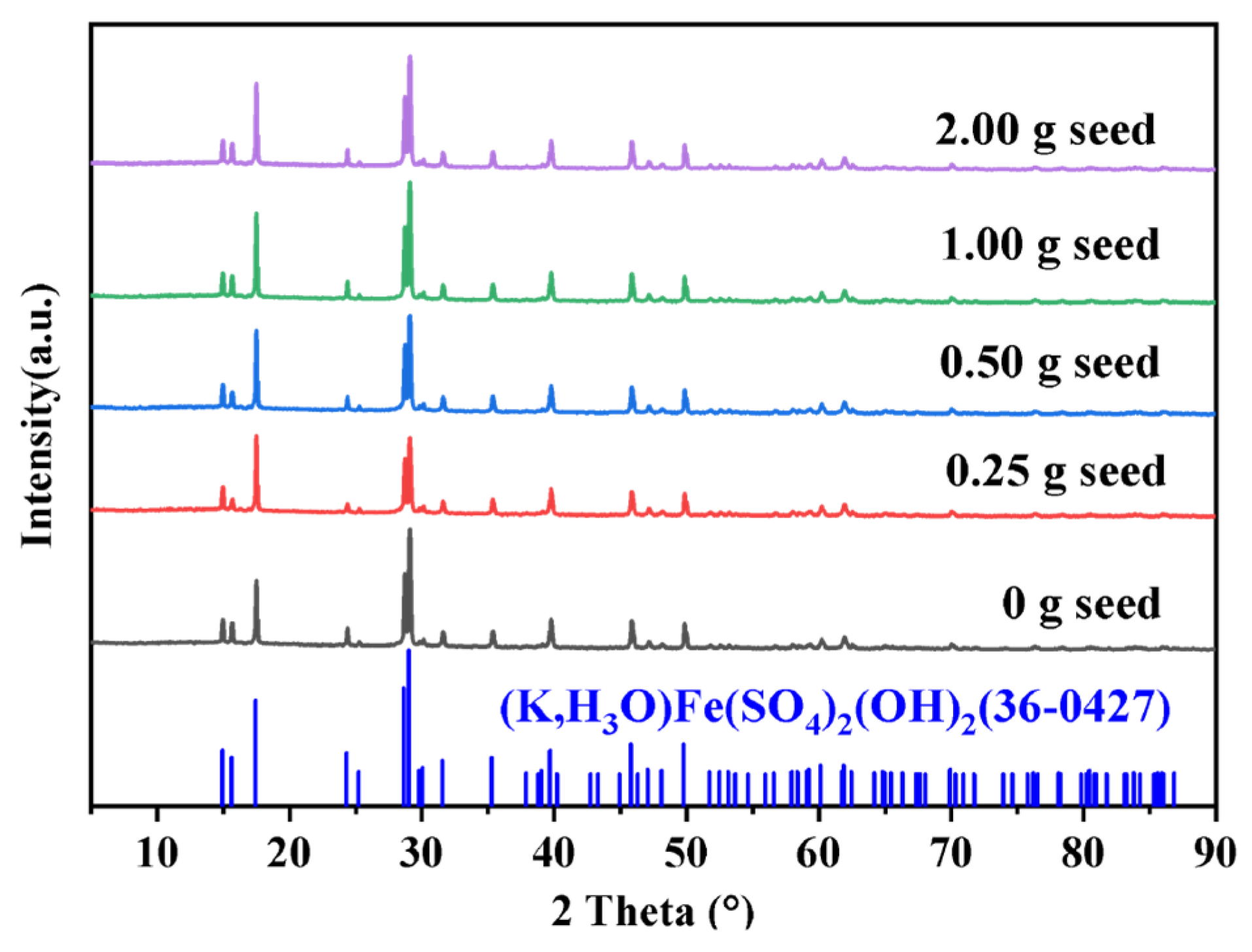
3.1. Mechanisms by Which Seed Crystal Type Regulates Potassium Removal
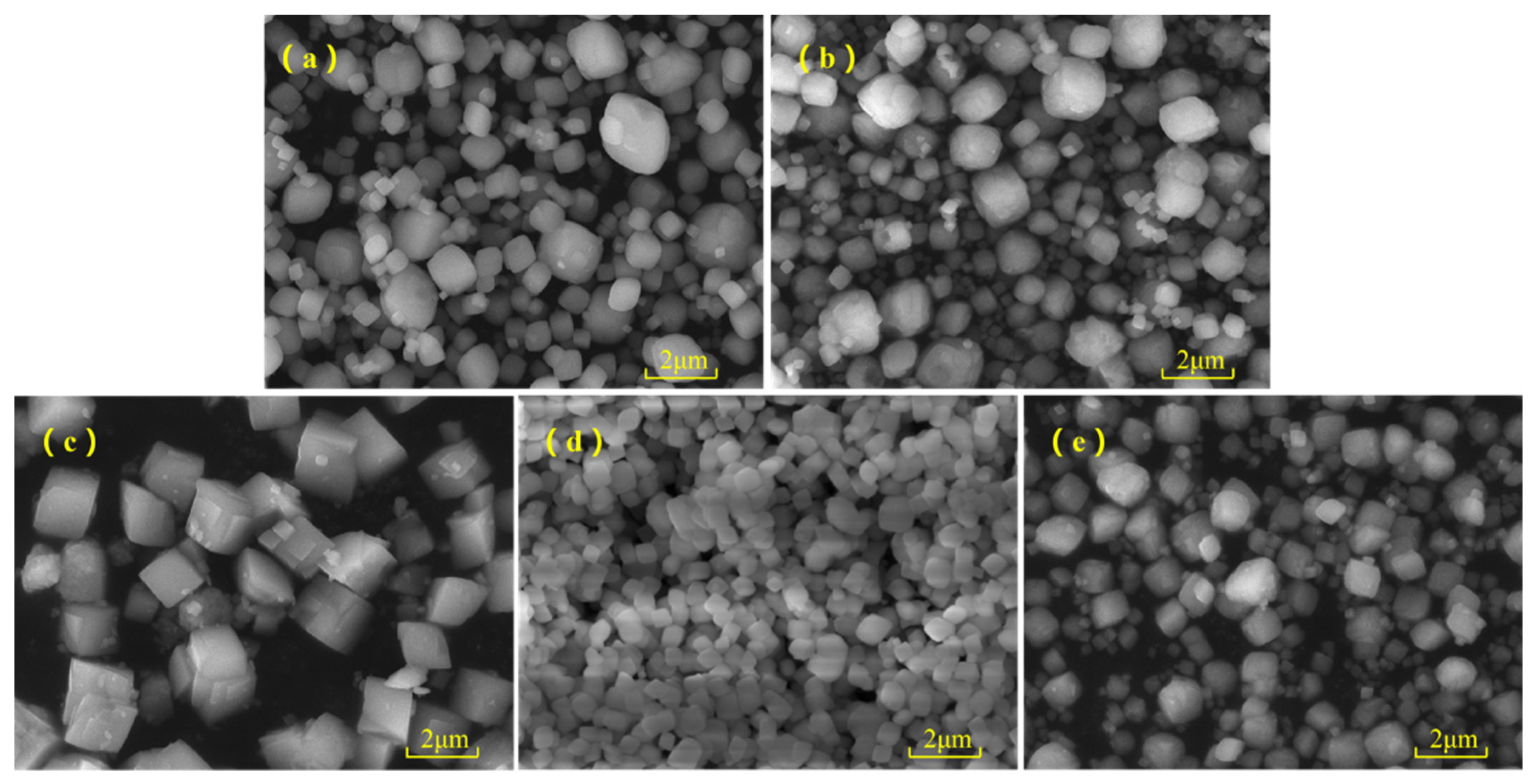
3.2. Mechanism of Nucleation-Growth Kinetics Mediated by Seed Quantity
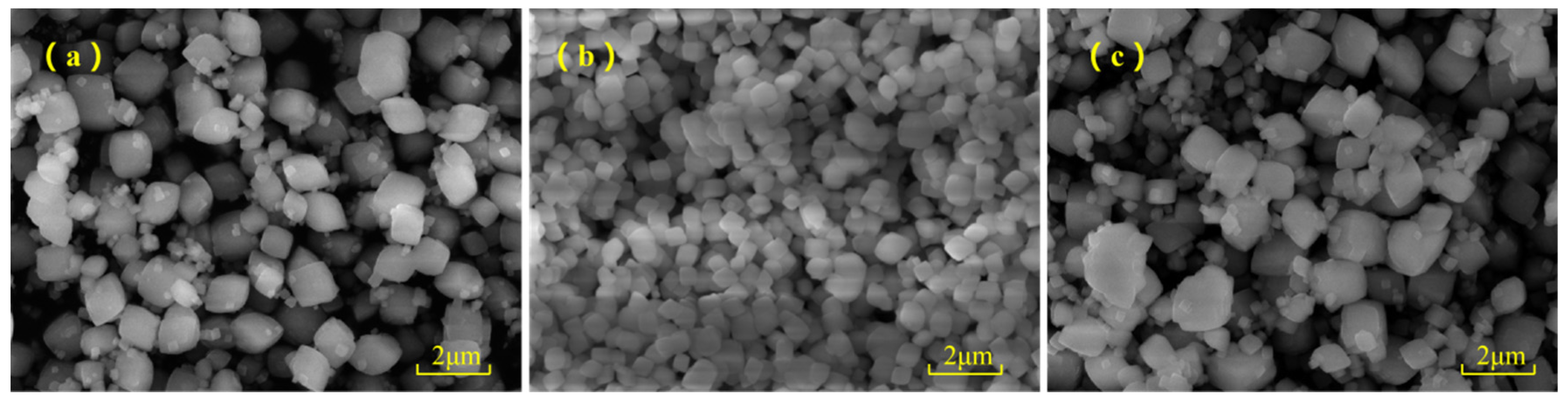
3.3. Mechanisms Governing the Influence of Seed Particle Size on Interfacial Crystallization and Aggregation Behavior
3.4. Thermodynamic and Kinetic Analysis of Potassium Removal
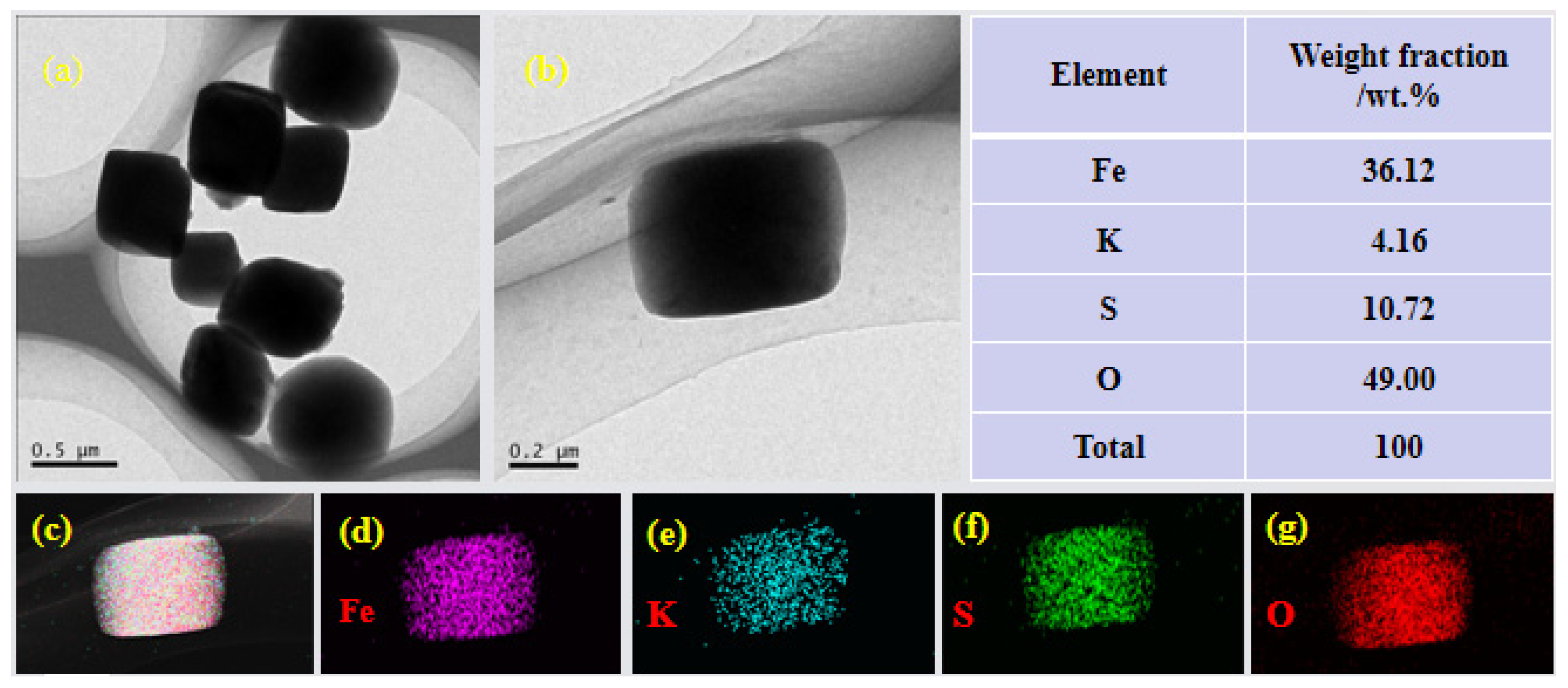
3.5. Characterization of the Product Under Optimal Conditions
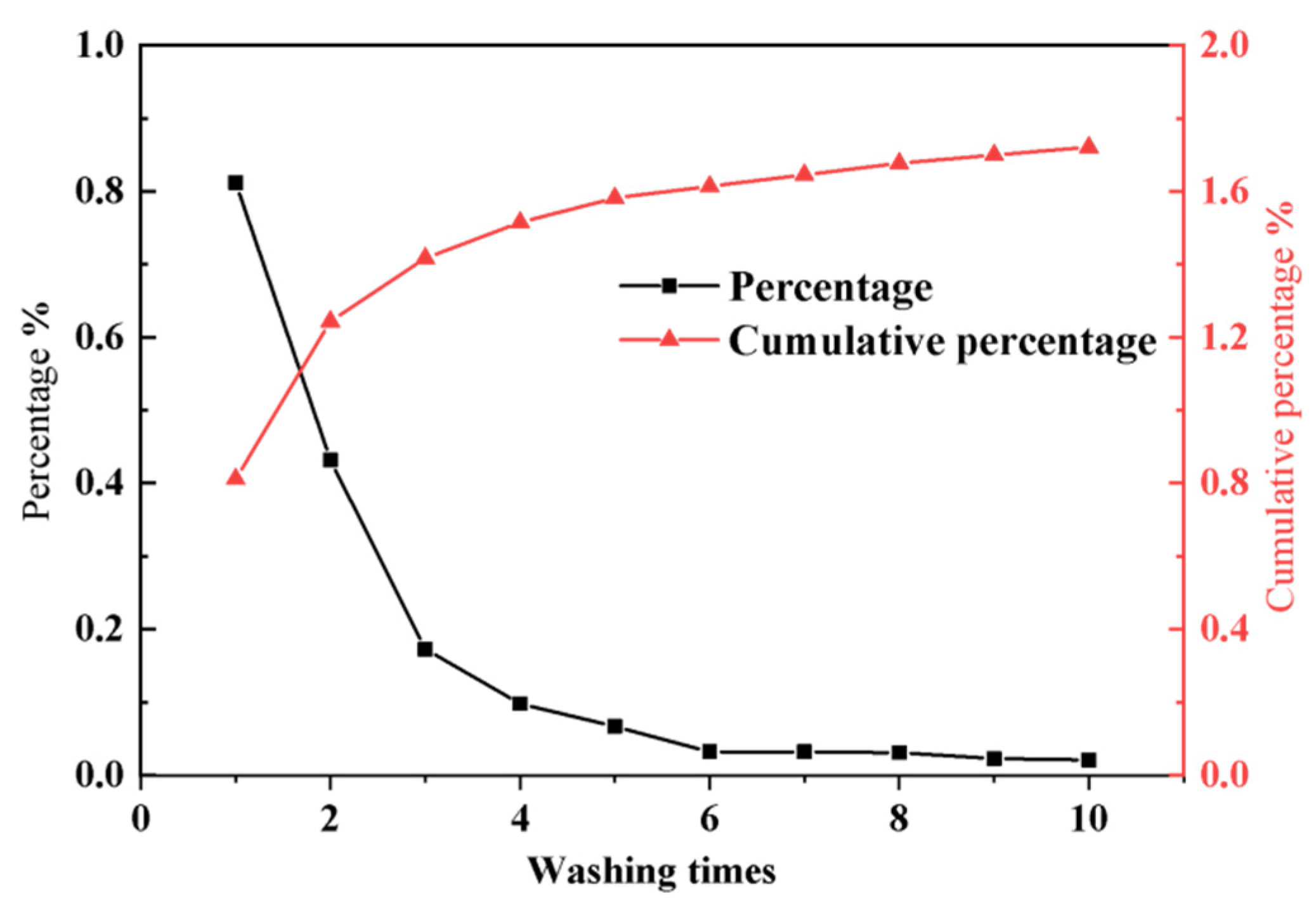
3.6. Analysis of Lithium Loss Pathways

3.7. Statistical Analysis
3.8. Industrial Feasibility Analysis
4. Conclusions
- The role of seed crystals is dual in nature. An appropriate amount of seed promotes crystallization by providing heterogeneous nucleation sites, whereas an excessive amount reduces process efficiency. The effect of seed particle size is essentially a trade-off between surface energy and dispersibility. When the seed particles are too fine, their large specific surface area may lead to aggregation, which undermines the effective distribution of nucleation sites; when they are too coarse, the number of active sites is insufficient. An optimal particle size range exists that best balances nucleation site density and dispersibility.
- Li+ cannot stably occupy the A-site cavity because its ionic radius is far smaller than the cavity size; thus, lithium hardly enters the crystal lattice, and lithium loss arises only from physical entrainment and insufficient washing. The potassium removal reaction shifts from being controlled by K+ concentration (first-order kinetics) at low temperature (80 °C) to being controlled by the surface chemical reaction (zero-order kinetics) at high temperature (95 °C). This indicates that raising the temperature eliminates liquid-phase diffusion limitations, making the surface reaction on the seed crystals the sole rate-determining step.
- By optimizing the type, dosage, and particle size of the seed crystals, the system can be shifted from being dominated by homogeneous nucleation to being dominated by heterogeneous nucleation, thereby yielding crystals with regular morphology and uniform size. This strategy is potentially transferable to other hydrometallurgical processes for impurity removal or resource recovery.
Author Contributions
Funding
Data Availability Statement
Conflicts of Interest
References
- Zhang, X.; Zeng, X.; Shan, Y.; Li, Z.; Zeng, Y.; Asselin, E. Solubility and Modeling of Li2SO4·H2O in Aqueous H2SO4–MgSO4 Solutions for Lithium Extraction from Spodumene. J. Chem. Eng. Data 2022, 67, 919–931. [Google Scholar] [CrossRef] [Scilit]
- Xiong, J.; He, L.; Zhao, Z. Lithium extraction from high-sodium raw brine with Li0.3FePO4 electrode. Desalination 2022, 535, 115822. [Google Scholar] [CrossRef] [Scilit]
- Rioyo, J.; Tuset, S.; Grau, R. Lithium Extraction from Spodumene by the Traditional Sulfuric Acid Process: A Review. Miner. Process. Extr. Metall. Rev. 2020, 43, 97–106. [Google Scholar] [CrossRef] [Scilit]
- Dmytro, Y.; Anatoliy, M. Processing of lithium ores: Industrial technologies and case studies—A review. Hydrometallurgy 2021, 201, 105578. [Google Scholar] [CrossRef] [Scilit]
- GB/T 26008-2020; Battery Grade Lithium Hydroxide Monohydrate. China Standards Press: Beijing, China, 2020.
- YS/T 582-2023; Battery Grade Lithium Carbonate. Metallurgical Industry Press: Beijing, China, 2023.
- Chen, W.; Li, X.; Chen, L.; Zhou, G.; Lu, Q.; Huang, Y.; Zhu, W. Tailoring hydrophobic deep eutectic solvent for selective lithium recovery from the mother liquor of Li2CO3. Chem. Eng. J. 2020, 420, 127648–127652. [Google Scholar] [CrossRef] [Scilit]
- Zhang, X.; Zhang, F.; He, Z.; Guo, W. Application of Centrifugal Extraction for the Efficient Recovery of Lithium from Lithium-Containing Mother Liquor. Pap. Mak. Equip. Mater. 2024, 53, 65–67. [Google Scholar] [CrossRef]
- Peng, J. A Study on a New Process for Lithium Recovery from Lithium Carbonate Precipitation Mother Liquor. Master’s Thesis, Chengdu University of Technology, Chengdu, China, 2021. [Google Scholar]
- Zhang, C. A Study on the Process for Recovering Lithium Resources from Lithium Carbonate Precipitation Mother Liquor. Contemp. Chem. Res. 2023, 146–148. [Google Scholar] [CrossRef]
- Li, S.C.; Qu, Z.; Liu, D.R.; Gao, G.M.; Zhang, Y.F.; Hong, Y.; Zhang, J. Recent Advances in Lithium Recovery from Lithium-Containing Mother Liquor. Rare Met. Cem. Carbides 2024, 52, 11–17+44. [Google Scholar] [CrossRef]
- Wu, S.; Zhang, M.; Zan, C.; Zhou, H. A Study on the Process for the Advanced Recovery of Lithium from Lithium-Containing Mother Liquor Using the Phosphate Precipitation Method. J. Tianjin Univ. Sci. Technol. 2023, 38, 35–41. [Google Scholar] [CrossRef]
- Han, H.; Wang, Y.; Sun, W.; Wang, Y.; Song, Y.; Liu, R.; Zhai, Q.; Zhu, X.; Xie, Z.; Mao, Z. A Method for the Selective Separation of Lithium and Potassium CN114231741B, 15 November 2024.
- Wang, C.; Jiang, J.; Xie, C.; Qiu, Y.; Cheng, C.; Xiang, Q.; Zhao, M. Research on Potassium Removal Processes for Battery-Grade Lithium Salts. Sichuan Chem. Ind. 2024, 27, 23–25+52. [Google Scholar] [CrossRef]
- Zhang, G.; Zhu, B.; Chen, X.; Yao, Y.; Cheng, S.; Li, Y.; Li, K. A Study on Methods and Applications of Zinc-Iron Separation in Hydrometallurgical Zinc Production. Non-Ferr. Met. Smelt. 2021, 20–26. [Google Scholar] [CrossRef]
- Wang, H.; Wang, X.; Jin, Z.; Wang, Z.; Li, Y.; Wang, P.; Zhao, L. A Study on the Application of the Three-Stage Potassium Ferric Sulfate Leaching Process in Hydrometallurgical Zinc Production. Energy Conserv. Nonferrous Metall. 2022, 38, 26–30+45. [Google Scholar] [CrossRef]
- Lei, W.; Li, J.; He, Q.; Niu, F.; Li, J.; Shen, Y. Recent Advances in Wet-Process Zinc Production and Iron Removal. Hydrometallurgy 2023, 42, 458–463+479. [Google Scholar] [CrossRef]
- Lu, Y.; Huang, Y.; Huang, R.; Cen, X.; Su, L. Experimental Study on the Removal of Iron from Manganese Oxide Leachate Using the Potassium Ferric Sulfate Method. China Manganese Ind. 2020, 38, 28–30+6. [Google Scholar]
- Yan, M. A Study on Factors Affecting the Removal of Iron and Aluminum from Nickel-Containing Leachate Using the Sodium Ferrate Precipitation Method. Master’s Thesis, Central South University, Changsha, China, 2022. [Google Scholar]
- Wang, Y.; Song, Y.; Zhai, Q.; Mao, Z.; Liu, R.; Sun, W.; Hu, Y. A Method for the Synergistic Extraction of Lithium from Spodumene and Mica CN116240373A, 9 June 2023.
- Zhai, Q.; Song, Y.; Liu, R.; Wang, Y.; Zhu, X.; Xie, Z.; Sun, W. An innovative scheme for the separation of potassium from lithium-bearing solution: A jarosite precipitation method. Sep. Purif. Technol. 2023, 322, 124283. [Google Scholar] [CrossRef] [Scilit]
- Zou, X. Theoretical Analysis of Iron Removal Using Potassium Ferric Sulfate. Metall. Ser. 1998, 15+18–20. [Google Scholar] [CrossRef]
- Eftekhari, N.; Kargar, M.; Zamin, F.R.; Rastakhiz, N.; Manafi, Z. A Review on Various Aspects of Jarosite and Its Utilization Potentials. Ann. Chim. Sci. Matériaux 2020, 44, 43–52. [Google Scholar] [CrossRef] [Scilit]
- Monrserrat, C.; Antoni, R. Jarosites: Formation, Structure, Reactivity and Environmental. Metals 2022, 12, 802–808. [Google Scholar] [CrossRef] [Scilit]
- Drouet, C.; Navrotsky, A. Synthesis, characterization, and thermochemistry of K-Na-H3O jarosites. Geochim. Cosmochim. Acta 2003, 67, 2063–2076. [Google Scholar] [CrossRef] [Scilit]
- Majzlan, J.; Stevens, R.; Boerio-Goates, J.; Woodfield, B.F.; Navrotsky, A.; Burns, P.C.; Amos, T.G. Thermodynamic properties, low-temperature heat-capacity anomalies, and single-crystal X-ray refinement of hydronium jarosite, (H3O)Fe3(SO4)2(OH)6. Phys. Chem. Miner. 2004, 31, 518–531. [Google Scholar] [CrossRef] [Scilit]
- Majzlan, J.; Glasnák, P.; Fisher, R.A.; White, M.A.; Johnson, M.B.; Woodfield, B.; Boerio-Goates, J. Heat capacity, entropy, and magnetic properties of jarosite-group compounds. Phys. Chem. Miner. 2010, 37, 635–651. [Google Scholar] [CrossRef] [Scilit]
- Baron, D.; Palmer, C.D. Solubility of jarosite at 4–35 °C. Geochim. Cosmochim. Acta 1996, 60, 185–195. [Google Scholar] [CrossRef] [Scilit]




| Types of Metal Elements | Ion Concentration/g·L−1 | Relative Standard Deviation (RSD)/% |
|---|---|---|
| K+ | 11.5 | 2.09 |
| Li+ | 12.5 | 0.59 |
| Na+ | 60.0 | 0.17 |
| Types of Metal Elements | Potassium Removal Rate/% | RSD/% | Lithium Recovery Rate/% | RSD/% |
|---|---|---|---|---|
| KJ seed | 92.60 ± 0.48 | 0.51 | 95.20 ± 0.34 | 0.36 |
| CJ seed | 93.47 ± 0.49 | 0.52 | 95.41 ± 0.27 | 0.28 |
| FJ seed | 91.70 ± 0.51 | 0.55 | 95.12 ± 0.54 | 0.56 |
| KJ Seed Crystal Dosage/g | Potassium Removal Rate/% | RSD/% | Lithium Recovery Rate/% | RSD/% |
|---|---|---|---|---|
| 0 | 88.19 ± 0.52 | 0.59 | 95.11 ± 0.80 | 0.85 |
| 0.25 | 89.50 ± 1.00 | 1.11 | 94.10 ± 0.26 | 0.27 |
| 0.50 | 92.43 ± 0.41 | 0.45 | 94.53 ± 0.88 | 0.93 |
| 1.00 | 92.60 ± 0.48 | 0.51 | 95.20 ± 0.34 | 0.36 |
| 2.00 | 90.47 ± 0.56 | 0.62 | 94.73 ± 0.53 | 0.56 |
| Seed Particle Size | Potassium Removal Rate % | RSD/% | Lithium Recovery Rate % | RSD/% |
|---|---|---|---|---|
| Unfiltered | 92.13 ± 2.38 | 2.60 | 95.21 ± 0.83 | 0.87 |
| Sifted through a 200-mesh screen | 92.60 ± 0.48 | 0.51 | 95.20 ± 0.34 | 0.36 |
| Pass through a 300-mesh sieve | 90.73 ± 1.22 | 1.34 | 95.30 ± 0.94 | 0.99 |
| Temperature/°C | Correlation Coefficients/R2 | ||
|---|---|---|---|
| α (Zero-Order) | −ln(1 − α) (First-Order) | 1/(1 − α) − 1 (Second-Order) | |
| 80 | 0.9531 | 0.9943 | 0.9368 |
| 95 | 0.9901 | 0.9197 | 0.7866 |
| Experimental Type | Comparison Groups | Potassium Removal Rate | Lithium Recovery Rate | ||
|---|---|---|---|---|---|
| p | Significance (α = 0.05) | p | Significance (α = 0.05) | ||
| Seed crystal type | KJ seed vs. CJ seed | 0.093 | No | 0.377 | No |
| KJ seed vs. FJ seed | 0.127 | No | 0.426 | No | |
| CJ seed vs. FJ seed | 0.014 | Yes | 0.490 | No | |
| Seed quantity | 0 g vs. 0.50 g | 0.002 | Highly | 0.085 | No |
| 0 g vs. 1.00 g | 0.003 | Highly | 0.614 | No | |
| 0.25 g vs. 0.50 g | 0.011 | Yes | 0.059 | No | |
| 0.50 g vs. 1.00 g | 0.671 | No | 0.287 | No | |
| 1.00 g vs. 2.00 g | 0.076 | No | 0.326 | No | |
| Seed particle size | Unfiltered vs. Pass through a 300-mesh sieve | 0.446 | No | 0.911 | No |
| Unfiltered vs. Pass through a 200-mesh sieve | 0.753 | No | 0.784 | No | |
| Pass through a 300-mesh sieve vs. Pass through a 200-mesh sieve | 0.081 | No | 0.817 | No | |
| Material | Mass/t | Unit Price /USD∙t−1 | Subtotal/USD | Total /USD | ||
|---|---|---|---|---|---|---|
| Revenue | Li2SO4∙H2O | 0.11 | 4400 | 484.0 | 484.0 | |
| Costs | Reagents | H2SO4 | 0.16 | 275 | 44.0 | 192.2 |
| Fe2(SO4)3 ∙ xH2O | 0.20 | 180 | 36.0 | |||
| KJ seed | 0.01 | 690 | 6.9 | |||
| Labor cost | / | / | / | 13.8 | ||
| Water, electricity and gas | / | / | / | 4.0 | ||
| Solid waste | Jarosite residue | 0.25 | 350 | 87.5 | ||
| Liquid waste | Filtrate and washing solutions | / | / | 0 | ||
| Profit | / | / | / | / | 291.8 | |
Disclaimer/Publisher’s Note: The statements, opinions and data contained in all publications are solely those of the individual author(s) and contributor(s) and not of MDPI and/or the editor(s). MDPI and/or the editor(s) disclaim responsibility for any injury to people or property resulting from any ideas, methods, instructions or products referred to in the content. |
© 2026 by the authors. Licensee MDPI, Basel, Switzerland. This article is an open access article distributed under the terms and conditions of the Creative Commons Attribution (CC BY) license.
Share and Cite
Wang, L.; Lin, T.; Li, J. Study on Efficient Potassium Removal and Lithium Recovery from Potassium-Rich Mother Liquor. Metals 2026, 16, 619. https://doi.org/10.3390/met16060619
Wang L, Lin T, Li J. Study on Efficient Potassium Removal and Lithium Recovery from Potassium-Rich Mother Liquor. Metals. 2026; 16(6):619. https://doi.org/10.3390/met16060619
Chicago/Turabian StyleWang, Lichao, Tieqiang Lin, and Jian Li. 2026. "Study on Efficient Potassium Removal and Lithium Recovery from Potassium-Rich Mother Liquor" Metals 16, no. 6: 619. https://doi.org/10.3390/met16060619
APA StyleWang, L., Lin, T., & Li, J. (2026). Study on Efficient Potassium Removal and Lithium Recovery from Potassium-Rich Mother Liquor. Metals, 16(6), 619. https://doi.org/10.3390/met16060619