Article

Thermodynamic Assessment and Process Development for Smelting Aluminosilicochrome from Technogenic Wastes of Ferroalloy and Coal Production


by
Issagulov Aristotel
1,
Myrzagaliyev Aibar
1,2,*,
Sagintayeva Saule
1 and
Makhambetov Yerbolat
3
1
Department of Metallurgy and New Materials, Karaganda Technical University Named After A. Saginov, N. Nazarbayev Avenue 56, Karaganda 100027, Kazakhstan
2
LLP “ERG Research & Development”, Aktobe 030000, Kazakhstan
3
Zh. Abishev Chemical-Metallurgical Institute, Yermekov Street 63, Karaganda 100009, Kazakhstan
*
Author to whom correspondence should be addressed.
Metals 2026, 16(6), 613; https://doi.org/10.3390/met16060613
Submission received: 9 April 2026 / Revised: 15 May 2026 / Accepted: 15 May 2026 / Published: 4 June 2026

Abstract

This study evaluated the production of aluminosilicochrome alloy (ASC) from technogenic wastes generated by ferroalloy and coal production. Chromite spinel dust from high-carbon ferrochrome gas cleaning, microsilica from ferrosilicon gas cleaning, and coal sludge as a reductant were used as raw materials. Thermodynamic modeling of the Fe–Cr–Si–Al–C–O system in HSC Chemistry 10 predicted that ASC formation is most favorable at 2000–2200 °C, where the metallic phase should contain (wt. %) 28.27–29.46 Cr, 35.21–36.06 Si, 10.14–11.89 Al, and 10.21–10.45 Fe. These predictions were tested by smelting a pre-agglomerated monocharge in a 100 kVA single-electrode electric arc furnace. The resulting alloy contained (wt. %) 24.23 Fe, 32.03 Si, 22.32 Cr, 18.70 Al, 0.36 C, 0.028 P, and 0.015 S. The experiments confirmed the formation of Si-, Cr-, and Al-rich ASC and demonstrated the feasibility of carbothermic production from these wastes. SEM-EDS revealed a multicomponent metallic matrix with pronounced microstructural heterogeneity and local redistribution of Fe, Si, Cr, and Al. Overall, the results support the use of fine technogenic wastes for producing a complex Fe–Cr–Si–Al alloy.

1. Introduction

The rapid development of the ferroalloy and coal industries is accompanied by the accumulation of substantial amounts of technogenic waste containing chromium, silicon, aluminum, and iron oxides. Such materials include chromite spinel powder (CSP), i.e., dust collected by gas-cleaning systems during high-carbon ferrochrome production, fine coal sludge, and microsilica generated by ferrosilicon gas-cleaning systems. These materials are characterized by high dispersity, complex phase composition, and limited direct reuse; therefore, they are commonly stockpiled, creating a persistent environmental burden [1,2,3,4,5,6].
At the same time, their chemical composition, including Cr2O3, SiO2, Al2O3, iron oxides, and carbon, makes them promising secondary raw materials for producing complex ferroalloys in the Fe–Cr–Si–Al system. The conversion of such wastes into a target metallic product is therefore both an environmental and a technological task aimed at expanding the raw-material base of ferroalloy production and reducing dependence on high-grade ore under conditions of raw-material shortage [7,8,9,10].
Previous studies on the use of aluminosilicochrome (ASC) in metallothermic processes have shown that complex silicon–aluminum reductants provide favorable thermodynamic conditions for chromium reduction and promote the formation of alumina-containing slags with modified phase compositions [11]. Thermodynamic analyses of Cr2O3 reduction by silicon and aluminum have confirmed the exothermic nature of these reactions and the negative Gibbs free energy change over a wide temperature range [11]. Kinetic studies have also demonstrated that aluminum enters the reduction process earlier than silicon and lowers the onset temperature of reduction when a complex reductant is used [12]. In addition, the production of aluminosilicochrome from off-grade or unconventional raw materials has confirmed the possibility of forming a stable Fe–Al–Si–Cr metallic system with silicide and aluminosilicide phases [13]. More recent studies have demonstrated the practical relevance of complex Fe–Cr–Si–Al-containing reductants and related alloy systems for ferrochrome smelting and chromium-bearing waste recycling [14,15,16]. The feasibility of applying multicomponent technogenic raw materials in reduction-smelting processes is also supported by studies on microsilica-containing composite briquettes [17].
In industrial low-carbon ferrochrome production, solid or liquid ferrosilicochrome (FSC) is commonly used as the reductant, and chromium oxides are reduced predominantly through a silicothermic mechanism [18,19,20,21,22]. This process may be implemented either by a single-stage electric-furnace route or by mixing ore-lime melt with liquid or solid FSC in ladles. However, silicothermic reduction is accompanied by the formation of significant amounts of SiO2, which increases slag volume and requires higher basicity through the additional introduction of lime. As a result, chromium losses to slag increase, and overall process efficiency becomes strongly dependent on reductant quality and furnace operating conditions [18,19,20,21,22]. Reported industrial and literature data indicate that conventional silicothermic routes are often associated with moderate chromium recovery, elevated Cr2O3 losses in slag, high slag ratios, significant lime consumption, and increased specific electricity consumption [18,19,20,21,22].
These limitations arise because the reduction of Cr2O3 by silicon is accompanied by SiO2 formation. The introduction of aluminum as part of a complex reductant fundamentally changes the reduction mechanism. Owing to its higher chemical affinity for oxygen, aluminum can promote deeper chromium oxide reduction with lower silica formation and a more favorable thermal balance of the process [11,12,13,14,15,16]. Consequently, the direct production of aluminosilicochrome from technogenic wastes of ferroalloy and coal production may provide an alternative to conventional FSC. The use of ASC may reduce slag volume, decrease lime consumption, improve chromium recovery, enhance process heat balance due to the exothermic aluminothermic contribution, and simultaneously enable the utilization of accumulated industrial wastes [11,12,13,14,15,16].
A specific feature of these technogenic materials is their high dispersity, which makes their direct use in ore-thermal smelting difficult. For this reason, preliminary agglomeration into a mechanically stable monocharge is required to improve handling, reduce dust losses, and ensure more stable behavior during furnace operation [16,23].
Therefore, the aim of this study was to evaluate the feasibility of producing aluminosilicochrome alloy from technogenic wastes of ferroalloy and coal production by combining thermodynamic modeling of the Fe–Cr–Si–Al–C–O system with experimental electric-smelting tests of a pre-agglomerated monocharge. Particular attention was paid to the temperature conditions of alloy formation, the chemical composition of the metallic phase, and its microstructural features. The study also assessed the potential of this approach for the resource-saving utilization of fine technogenic wastes.

2. Materials and Methods

2.1. Raw Materials

The chemical composition of chromite spinel powder, microsilica, and smelting products was determined by conventional wet chemical analysis after acid digestion. The proximate analysis of coal sludge (ash content, moisture, volatile matter yield, and fixed carbon content) was performed in accordance with GOST 15848.0–90 [24], GOST 11014-2001 [25], and GOST 6382-2001 [26].
In Table 1, Ac denotes ash content, Vc refers to volatile matter yield, Cfix represents fixed carbon content, and Crmet corresponds to metallic chromium. As shown in Table 1, chromite spinel powder (CSP) is characterized by the presence of chromium- and iron-bearing components, including Cr2O3, iron expressed as FeO equivalent, and metallic chromium, which indicates its potential as a chromium-containing technogenic raw material for the production of aluminosilicochrome ferroalloy. Microsilica is distinguished by its high SiO2 content, reaching up to 98 wt. %, and can therefore be regarded as the main silica-bearing component of the charge. Coal sludge, containing 43.84 wt. % fixed carbon together with an ash-forming mineral fraction, was used as a carbonaceous reductant to ensure the reduction of oxide components in the charge and to participate in the formation of the metallic phase during ore-thermal smelting.
The obtained data on the chemical and technical compositions of the raw materials (Table 1) were used as the initial basis for calculating the charge composition and for the thermodynamic analysis of reduction processes in the Fe–Cr–Si–Al–C–O system. Based on these data, the conditions for preparing an agglomerated monocharge were determined, and compositions for the experimental ore-thermal smelting of aluminosilicochrome ferroalloy were developed.

2.2. Thermodynamic Modeling

Thermodynamic modeling was performed using HSC Chemistry 10 (Outotec Research, Pori, Finland) [27]. The equilibrium composition of the products was calculated using the Equilibrium Compositions (Gibbs) module based on Gibbs free energy minimization. The calculations were carried out over the temperature range of 500–2500 °C at a constant pressure of 0.1 MPa. The calculations were carried out for the multicomponent Fe–Cr–Si–Al–C–O system, which describes the process of producing an aluminosilicochrome alloy from technogenic raw materials. The aim of the modeling was to assess the thermodynamic feasibility of reducing the main oxide components of the charge, to predict the phase composition of the smelting products, and to determine the temperature range most favorable for the formation of the ASC metallic phase. The calculations were based on the concept of thermodynamic equilibrium, which makes it possible to trace the distribution of components among the metallic, slag, and gas phases as a function of temperature.
The calculations were performed using the Equilibrium Compositions (Gibbs) module of HSC Chemistry 10, which determines the equilibrium composition of reaction products by minimizing the total Gibbs free energy. The system was treated as closed, without mass exchange with the surrounding environment, at a constant pressure of 0.1 MPa.
No special non-ideal activity coefficient model was applied in the present calculation. Condensed phases were treated as stoichiometric individual phases from the HSC database with unit activity, while gaseous species were considered within the equilibrium gas phase. This assumption was used because the purpose of the modeling was to evaluate the thermodynamic feasibility of oxide reduction and the equilibrium distribution of components between metallic, oxide, and gas phases, rather than to describe non-ideal liquid-solution behavior in detail.
The initial composition was introduced as an integral charge composition expressed in oxide equivalents and fixed carbon. The main input components included Cr2O3, FeO equivalent, SiO2, Al2O3, MgO, CaO, P2O5, S, metallic Cr, and C. The charge composition was selected based on the stoichiometric oxygen demand of the oxide components, with an additional technological excess of carbon required to maintain reducing conditions under ore-thermal smelting.
The main species considered in the equilibrium calculation included Fe, Cr, Si, Al, C, FeSi, CrSi, CrSi2, Cr5Si3, SiC, Al2O3, SiO2, MgO, MgSiO3, Mg2SiO4, MgCr2O4, FeAl2O4, CO (g), SiO (g), Mg (g), Al (g), and Si (g).
During modeling, the system was treated as closed, i.e., without mass exchange with the surroundings, which corresponds to the conditions of most pyrometallurgical processes. The calculations were performed assuming thermodynamic equilibrium, and the phase composition of the products was evaluated as a function of temperature. This approach makes it possible to identify the most stable forms of component occurrence under the specified parameters and to evaluate the probability of reduction reactions in the studied charge system.
The input data for the thermodynamic calculations included the chemical compositions of chromite spinel powder, microsilica, and coal sludge, as well as the calculated composition of the charge mixture. The charge calculation was based on the stoichiometric balance of reduction reactions in the Fe–Cr–Al–Si–C–O system. The amount of carbon in the coal sludge was selected to ensure the reduction of chromium and iron oxides contained in CSP, silicon dioxide in microsilica, and the oxide fraction of the coal-sludge ash itself. The total amount of reductant was determined as the overall stoichiometric requirement for the oxide components, taking into account a technological excess necessary for the stable course of reduction reactions under ore-thermal conditions.
Based on the resulting integral composition of the charge, the expected equilibrium compositions of the metallic and slag phases were calculated, and the conditions for the formation of the target aluminosilicochrome alloy components were evaluated. The results of the thermodynamic modeling were used to justify the composition of the agglomerated monocharge, to select the component ratios, and to determine the rational temperature regime for the subsequent experimental smelting stage. The calculated composition of the charge mixture used for thermodynamic modeling and subsequent experimental smelting is presented in Table 2.
The results of the thermodynamic modeling were used to assess the conditions for the reduction of the oxide components of the charge, to predict the phase composition of the products, and to select a rational temperature regime for the experimental ore-thermal smelting of aluminosilicochrome alloy. Particular attention in the calculations was paid to the probability of forming a metallic phase in the Fe–Cr–Si–Al system, as well as to identifying the temperature range in which the formation of silicide and aluminosilicide compounds is most likely.
Since the investigated process was aimed at producing ASC under a low-slag (near slag-free) regime typical of ferrosilicochrome smelting technology, the calculation of the technological properties of a developed slag phase, including its viscosity, was not a determining factor in the present study. For this reason, the thermodynamic analysis was focused primarily on equilibrium transformations in the Fe–Cr–Si–Al–C–O system, the distribution of components in the metallic phase, and the substantiation of the charge composition for subsequent experimental smelting trials.
The obtained calculation results served as the basis for selecting the ratio of the initial components, preparing the agglomerated monocharge, and designing the experimental smelting tests aimed at confirming the feasibility of producing aluminosilicochrome alloy from the studied technogenic raw materials.

2.3. Agglomeration of Raw Materials

Since the initial charge components were characterized by high dispersity and low bulk density, their direct electric-smelting treatment could have been accompanied by intense dust carryover, unstable charging, and deterioration of the furnace thermal regime. When fed into the smelting unit, such materials tend to loosen, heat unevenly, and be partially entrained by the gas flow, which may reduce the degree of reduction and worsen the technological performance of the process. For this reason, preliminary agglomeration of the charge was carried out before smelting in order to obtain a mechanically strong monocharge suitable for the ore-thermal smelting of ASC.
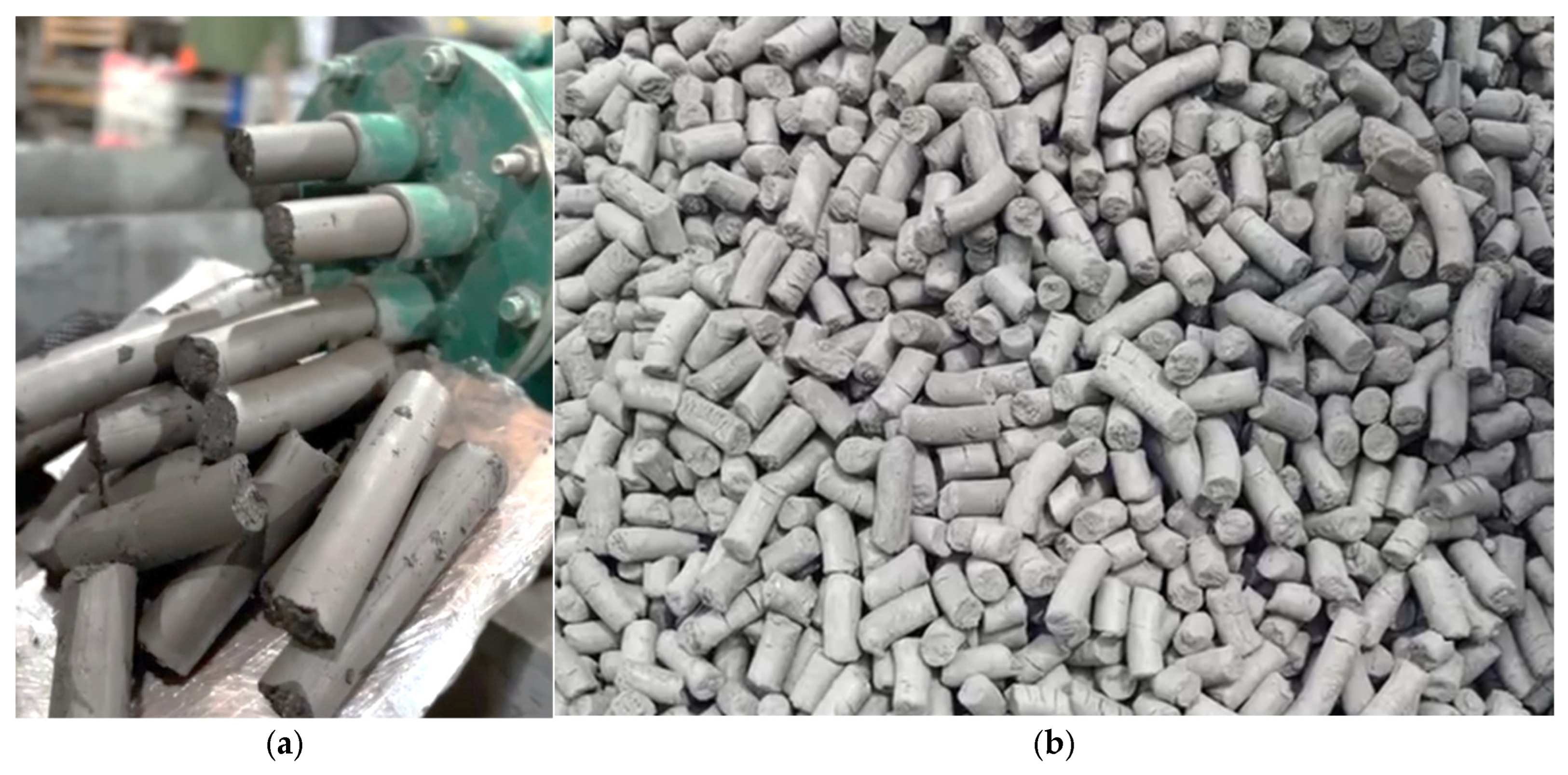
Agglomeration was performed by rigid extrusion, which ensured the formation of dense cylindrical briquettes from fine multicomponent mixtures. Unlike the free charging of powdered materials, extrusion molding makes it possible to increase the charge density, improve contact between the reductant and the oxide components, and ensure more stable behavior of the material during charging and smelting. This approach is especially important for technogenic raw materials containing fine dust-like and sludge components.
Charge preparation included preliminary drying of the raw materials to an air-dry state and their mechanical mixing until a uniform particle distribution throughout the mixture volume was achieved. Liquid sodium silicate was used as a binder, and its amount was selected so as to obtain a plastic mass suitable for subsequent extrusion. After moistening and mixing, the charge mass was fed into a screw press-extruder, where it was compacted, partially deaerated, and forced through a shaping die to form cylindrical briquettes.
The briquettes were formed using an EB-500 press-extruder (Zh. Abishev Chemical-Metallurgical Institute, Karaganda, Kazakhstan) installed at the pilot production base of the Zh. Abishev Chemical-Metallurgical Institute. The obtained products had the form of cylindrical briquettes with a diameter of 30–40 mm and a length of 50–200 mm. Agglomeration was carried out without external heat supply; compaction of the mass was accompanied by local heating due to internal friction and plastic deformation of the material in the working zone of the extruder.
The formed briquettes were dried under natural conditions until a stable state was reached, after which their geometric parameters, density, mechanical strength, and hot strength were determined. To assess the technological suitability of the agglomerated material, drop and compression strength tests were performed to establish the resistance of the briquettes to mechanical loads during transportation, handling, and furnace charging.
The charge materials were used in the form of a monocharge. The binder system consisted of 9.5 wt. % water and 0.5 wt. % liquid sodium silicate (liquid glass), relative to the total briquetting mixture. All components were thoroughly mixed until a homogeneous mass was obtained, after which the mixture was directed to extrusion molding. The formed briquettes were aged until their structure stabilized and were then subjected to mechanical strength evaluation. For additional assessment of technological suitability, drop-strength tests were performed after drying. Each briquette was dropped three times from a height of 2 m onto a metal plate, after which the remaining material was sieved and weighed.

2.4. Experimental Smelting in an Electric Arc Furnace

Experimental smelting of aluminosilicochrome (ASC) was carried out in a single-electrode electric arc furnace with a capacity of 100 kVA at the Zh. Abishev Chemical-Metallurgical Institute (Karaganda, Kazakhstan). The furnace operated on alternating current (AC) under atmospheric conditions (in air), without the use of an inert atmosphere. Heating and maintenance of the high-temperature zone were provided by a graphite electrode 100 mm in diameter. The working space of the furnace was lined with fireclay refractory, while the hearth was made of rammed carbonaceous mass with a slope toward the tap hole.
Before the start of smelting, the hearth was subjected to preliminary heating and baking. After furnace preparation, the first portion of the pre-agglomerated monocharge was fed into the working zone. The charge was introduced gradually, with uniform distribution of the material around the electrode as the charge bed subsided. This charging regime ensured uniform filling of the bath, promoted more stable smelting conditions, and prevented sharp fluctuations in electrical load.
Smelting was carried out at a voltage of 18–24 V using secondary voltage steps of 12/18/24 V, with a line voltage of 380 V. The process was conducted in a continuous mode with stepwise charge feeding. The charge was fed in small portions as the charge bed subsided. For each addition, approximately 15 kg of briquettes was charged, and a total of 6 smelting runs were performed. During smelting, the stability of the electrical regime and the formation of the molten metallic phase were monitored. The smelting products were tapped periodically into cast-iron molds. After each tap, the metal was weighed and samples were taken for subsequent chemical analysis.
The total duration of each smelting run was approximately 2 h, including charge feeding, melting, reduction, accumulation of the metallic phase, and tapping. Thus, the total active smelting time for six runs was approximately 12 h. During smelting, the stability of the electrical regime, charge descent, and formation of the molten metallic phase were continuously monitored.
Continuous direct measurement of the molten bath temperature was not performed because of the limitations of the large-scale laboratory ore-thermal furnace. Therefore, the effective high-temperature range was estimated indirectly from the stable electrical regime, the formation and tapping of the molten Fe–Cr–Si–Al alloy, and the thermodynamic modeling results. According to the modeling, the most favorable conditions for simultaneous recovery of Fe, Cr, Si, and Al into the metallic phase are formed at approximately 2000–2100 °C.
The mass data obtained during the smelting trials were used to prepare a simplified material balance of the experimental smelting stage. Since continuous direct measurement of the molten bath temperature was not performed, the effective high-temperature range was estimated indirectly from the stable electrical regime, the formation and tapping of the molten Fe–Si–Cr–Al alloy, and the thermodynamic modeling results.
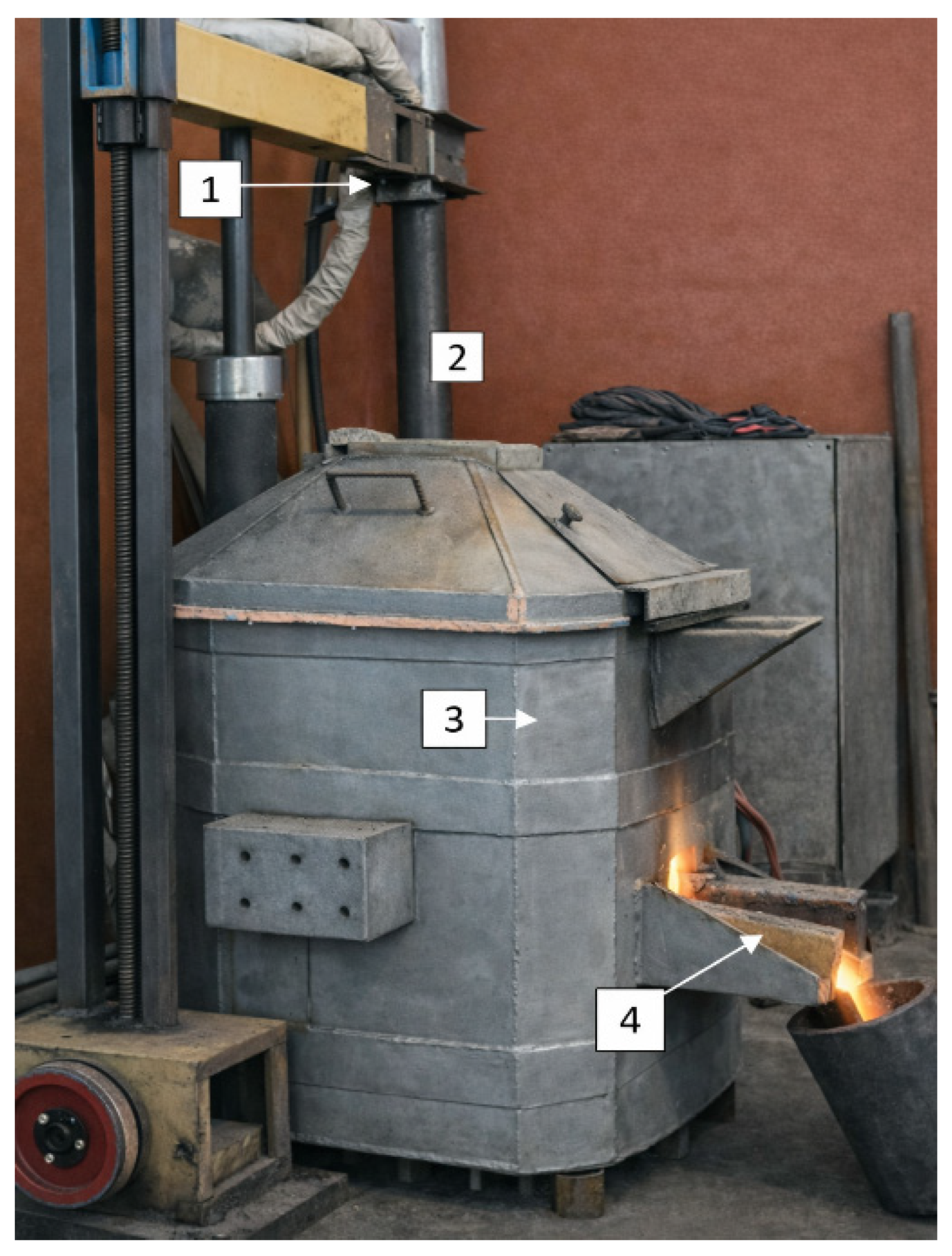
The energy consumption of the experimental stage was evaluated as an engineering estimate. Based on the obtained metallic product and literature data for aluminosilicochrome smelting, the specific electricity consumption was considered to be in the range of 9.1–11.3 MWh/t of alloy. This estimate was used only for a simplified energy assessment of the experimental smelting stage. A general view of the single-electrode 100 kVA electric arc furnace used in the experiments is shown in Figure 1.
After completion of the smelting experiments, the obtained products were subjected to comprehensive characterization. The chemical composition of the smelting products was determined by conventional wet chemical analysis after acid digestion. The morphology, microstructure, and phase-distribution features of the samples were investigated by scanning electron microscopy using a ZepTools ZEM-20 (Anhui Zeyou Technology Co., Ltd., Tongling, China) instrument equipped with an Oxford energy-dispersive X-ray spectroscopy attachment. The EDS results were treated as semi-quantitative and were used primarily for phase identification and comparative analysis rather than for determining absolute chemical composition.

3. Results and Discussion

3.1. Results of Thermodynamic Calculations

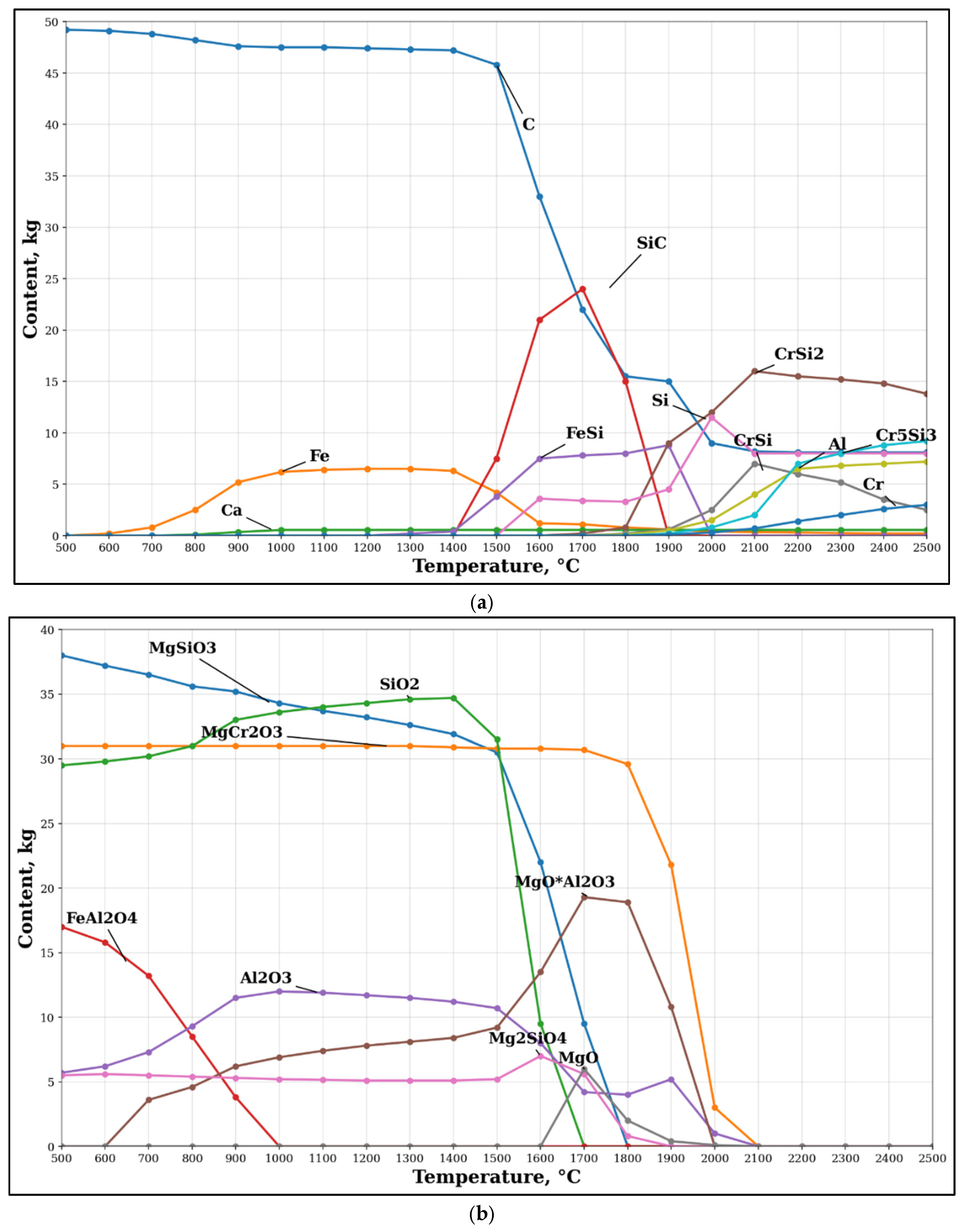
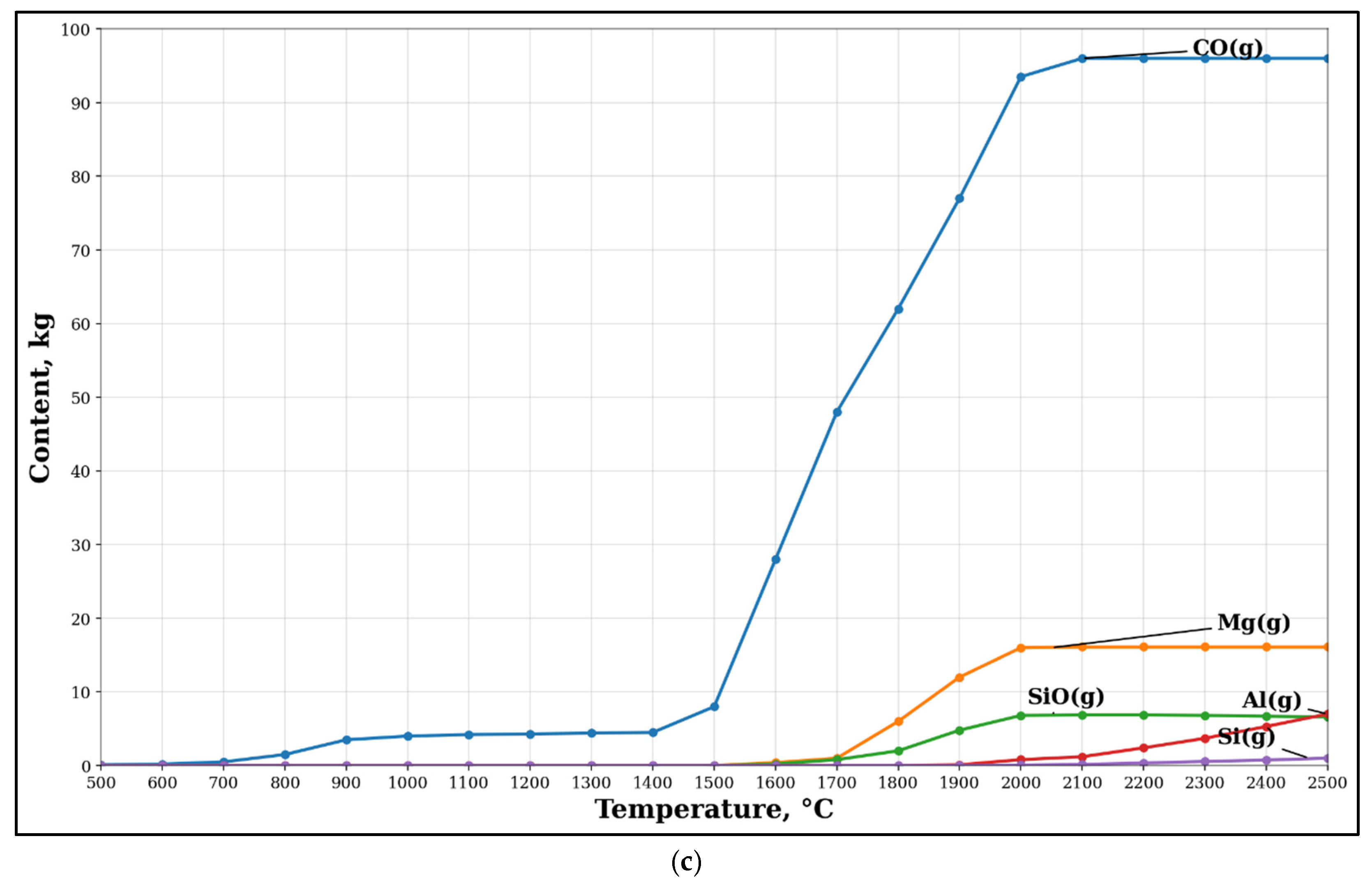
The results of the thermodynamic modeling obtained using the Equilibrium Compositions module of the HSC Chemistry software show that, during the carbothermic production of aluminosilicochrome alloy in the Fe–Cr–Si–Al–C–O system, a series of sequential phase transformations occurs within the investigated temperature range (Figure 2).
The reduction of the oxide components in the charge can proceed through both direct reduction by solid carbon and indirect reduction by CO formed in the carbon-containing charge. The main reduction reactions may be represented as follows:
FeO + C = Fe + CO
FeO + CO = Fe + CO2
Cr2O3 + 3C = 2Cr + 3CO
Cr2O3 + 3CO = 2Cr + 3CO2
SiO2 + 2C = Si + 2CO
SiO2 + 2CO = Si + 2CO2
Al2O3 + 3C = 2Al + 3CO
For Al2O3, direct carbothermic reduction at high temperature and participation of intermediate gaseous suboxides may be more relevant than simple indirect reduction by CO. Therefore, the listed reactions should be considered simplified overall reactions describing the possible reduction paths.
The CO/CO2 ratio in the gas phase is controlled by the Boudouard reaction:
CO2 + C = 2CO
At elevated temperatures, this equilibrium shifts toward CO formation, increasing the reducing potential of the gas phase. Therefore, the reduction mechanism in the studied agglomerated monocharge should be considered as combined: direct reduction occurs at oxide–carbon contact points, while indirect reduction by CO proceeds through the gas phase inside the porous briquettes and furnace charge bed.
In the case of silica reduction, SiC can form as an intermediate phase:
SiO2 + 3C = SiC + 2CO
SiC + SiO2 = 2SiO + CO
SiO + C = Si + CO
The formation and subsequent consumption of SiC predicted by thermodynamic modeling indicate its transitional role in silica reduction and subsequent formation of silicide and aluminosilicide phases.
As follows from Figure 2b, in the low-temperature region the calculated equilibrium oxide phase is predicted to contain predominantly by MgSiO3, MgCr2O3, SiO2, FeAl2O4, and Al2O3. In the range of 500–900 °C, FeAl2O4 remains present in a noticeable amount; however, with increasing temperature, its content decreases rapidly and it almost completely disappears at about 900–1000 °C, indicating an early restructuring of the iron-bearing oxide portion of the charge. At the same time, the content of Al2O3 increases, reaching a maximum at approximately 1000–1100 °C, and then gradually decreases. The amount of SiO2 initially increases and reaches its maximum in the range of about 1300–1450 °C, after which it declines sharply, indicating the involvement of silica in reduction reactions and subsequent silicide formation. The MgSiO3 and MgCr2O3 phases remain stable over a wider temperature range; however, MgSiO3 decomposes intensively above 1500–1700 °C.
Changes in the composition of the metallic phase (Figure 2a) show that, at the early stages of the process, free carbon plays the dominant role, and its content remains high up to temperatures of about 1400–1500 °C, after which it decreases sharply. This indicates the intensification of carbothermic reactions in the high-temperature region. Iron is reduced earlier than the other components: the content of metallic Fe increases already in the range of 800–1100 °C, reaches a maximum at relatively moderate temperatures, and then gradually decreases as iron becomes incorporated into silicide and other metallic compounds. In the range of 1500–1800 °C, SiC forms actively, its content rising rapidly to a maximum and then declining. This behavior indicates the intermediate role of silicon carbide in silica reduction and the subsequent formation of silicide phases.
With further temperature increase, FeSi, CrSi, Cr5Si3, and CrSi2 form successively in the metallic phase, while free Si, Al, and Cr also appear. The most intensive silicide formation is observed above 1700 °C. Among the high-temperature phases, CrSi2 is particularly notable, as its amount increases sharply and remains high in the overheated region. At the same time, the content of Cr5Si3 also increases, whereas FeSi and SiC are more transitional in nature. The appearance of free Al in the metallic phase at elevated temperatures confirms the possibility of its participation in aluminosilicochrome alloy formation. Free chromium begins to accumulate only at still higher temperatures, indicating a later reduction of part of the chromium-bearing compounds compared with iron.
Significant changes also occur in the gas phase (Figure 2c), which is represented mainly by CO (g), as well as by the volatile species Mg (g), SiO (g), Al (g), and Si (g). Up to temperatures of about 1400–1500 °C, the amount of CO (g) increases relatively slowly; however, it then rises sharply and becomes the dominant gaseous component at around 2000 °C. This confirms the strong intensification of carbothermic reduction in the high-temperature zone. The formation of Mg (g) and SiO (g) begins at higher temperatures and becomes noticeable above 1600–1700 °C, whereas Al (g) and Si (g) appear mainly in an even more overheated region. The presence of these gaseous species indicates the possibility of partial evaporation of some reduced components in the zone of maximum temperatures.
Overall, the most intensive phase transformations in the Fe–Cr–Si–Al–C–O system occur in the range of 1500–2000 °C, where oxide reduction, CO evolution, decomposition of stable oxide phases, and silicide formation proceed simultaneously.
Based on the thermodynamic data obtained for the charge mixture, changes in the composition of the metallic phase were calculated over the temperature range of 1100–2200 °C (Table 3). As follows from the calculations, at temperatures up to 1500 °C the metallic phase is characterized mainly by a high carbon and iron content, whereas the contents of Cr, Si, and Al remain negligible. Starting from 1600 °C, a pronounced increase in silicon content is observed, and with a further temperature increase to 1900–2200 °C, the contents of chromium and aluminum rise sharply, indicating the formation of a metallic phase close in composition to aluminosilicochrome ferroalloy.
It should be emphasized that the calculated C values do not represent the measured carbon content in the final alloy, but the amount of residual solid carbon remaining in the idealized closed equilibrium system [15].
According to the calculated data, the most favorable temperature interval for ASC formation corresponds to 2000–2200 °C. Within this range, the chromium content is 28.27–29.46 wt. %, the silicon content is 35.21–36.06 wt. %, the aluminum content is 10.14–11.89 wt. %, and the iron content stabilizes at 10.21–10.45 wt. %.
The calculated metallic phase in the range of 2000–2200 °C also contains 12–13 wt. % C. Since these values were obtained for an idealized equilibrium system, the actual carbon content under real ore-thermal smelting conditions is expected to be lower.
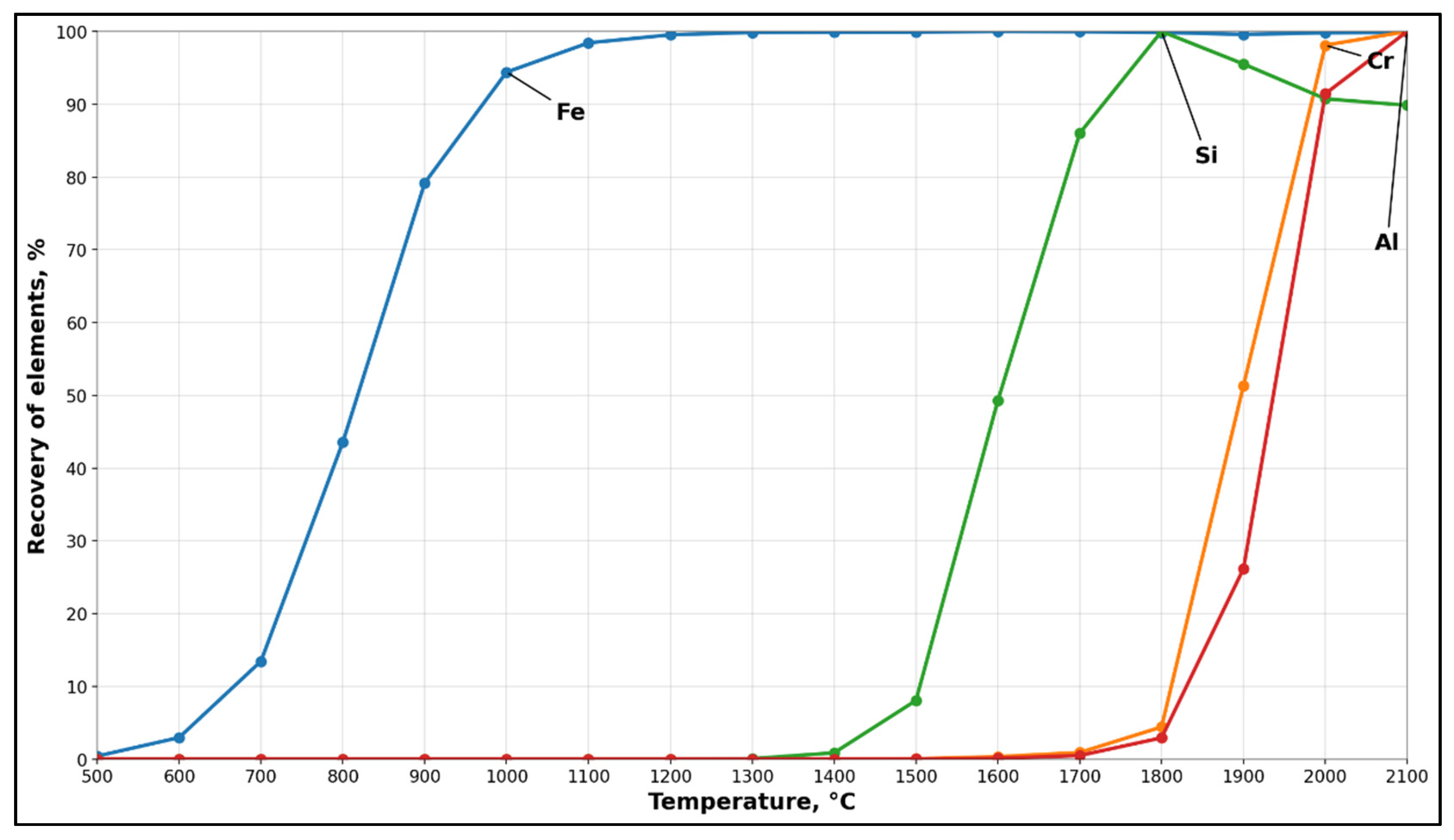
The temperature dependence of the recovery of the main elements (Fe, Cr, Si, and Al) according to the thermodynamic modeling results is shown in Figure 3. It was established that iron is reduced at the lowest temperatures. Already at 800–900 °C, Fe recovery increases markedly and reaches approximately 44–79%, while in the range of 1000–1100 °C it rises to about 94–98%. With a further temperature increase to 1200–1400 °C, iron recovery practically reaches 100%, indicating the high thermodynamic feasibility of reducing iron-bearing compounds and the almost complete transfer of iron into the metallic phase already at relatively moderate temperatures.
Silicon is characterized by a higher reduction temperature threshold. A noticeable increase in Si recovery is observed starting from 1600 °C: at this temperature it is about 49%, at 1700 °C it increases to approximately 84–86%, and it reaches a maximum value close to 100% at 1800 °C. With further temperature increase, silicon recovery decreases slightly and remains at about 79–91% in the range of 1900–2100 °C. This behavior may be associated with the redistribution of silicon among the metallic, silicide, and gas phases at high temperatures.
Chromium and aluminum are characterized by the highest reduction temperature thresholds. At temperatures up to 1800 °C, their recovery remains almost zero, indicating an insufficient thermodynamic driving force for the deep reduction of chromium- and aluminum-bearing compounds in the lower-temperature region. A sharp increase in chromium recovery is observed in the range of 1900–2100 °C: at 1900 °C, Cr recovery is about 56%, at 2000 °C it reaches approximately 98%, and at 2100 °C it approaches 100%. A similar trend is observed for aluminum: its recovery becomes noticeable only above 1900 °C, reaches about 91% at 2000 °C. This confirms the necessity of a high-temperature regime for the effective reduction of chromium and aluminum during the production of aluminosilicochrome alloy.
Thus, the thermodynamic modeling shows that the most favorable conditions for the simultaneous high recovery of Fe, Cr, Si, and Al into the metallic phase are created at 2000–2100 °C. This temperature range was therefore taken as the thermodynamic basis for evaluating the experimental smelting results.

3.2. Experimental Smelting

To evaluate the technological suitability of the agglomerated monocharge, the splitting strength, impact strength, abrasion resistance, and drop strength were analyzed, as well as the yield of the coarse fraction after mechanical testing. According to the preliminary test results, the extruded briquettes were characterized by high splitting strength, satisfactory impact resistance, low abrasion, and a high yield of the coarse fraction, indicating their suitability for subsequent smelting. The characteristics of the obtained briquettes are presented in Table 4.
As can be seen from Table 3, the obtained briquettes exhibited high mechanical strength and resistance to the main types of loads arising during transportation, handling, and furnace charging. This confirms the technological suitability of the agglomerated monocharge for the subsequent ore-thermal smelting of aluminosilicochrome alloy.
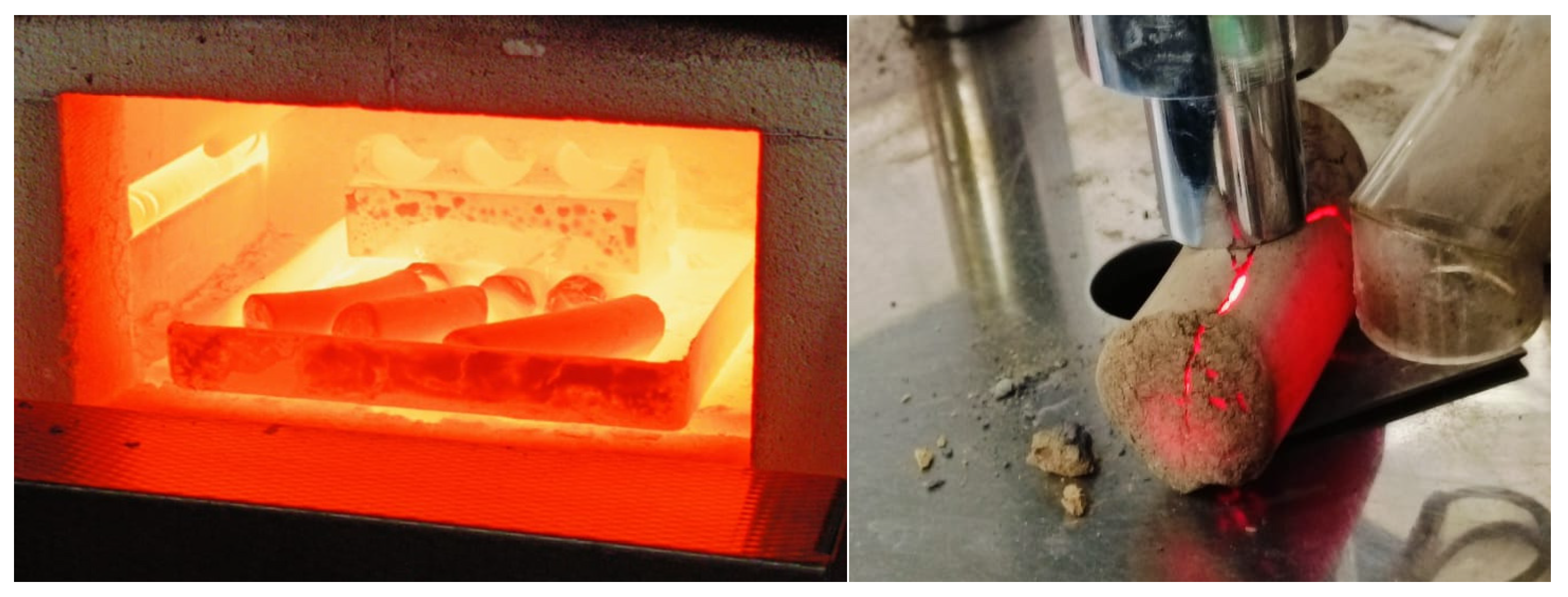
In addition, hot-strength tests were carried out for the monocharge briquettes. The procedure involved heating the briquette samples to 1100 °C under conditions simulating their presence in the upper part of the smelting unit, followed by an assessment of shape retention and strength after thermal exposure (Figure 4). This approach made it possible to evaluate the stability of the agglomerated charge at the initial stages of heating and its ability to maintain structural integrity before entering the high-temperature zone of the process.
The tests showed that after heating the briquette samples to 1100 °C, the average hot splitting strength was 22 kg/briquette; at the same time, the samples heated under load retained their original shape without noticeable weakening. Preliminary agglomeration made it possible to reduce dust formation, increase the resistance of the charge to mechanical stresses, and create more favorable conditions for reduction processes in the furnace. Thus, the applied agglomeration scheme ensured the production of a mechanically strong and technologically stable monocharge suitable for subsequent ore-thermal smelting in a 100 kVA furnace.
An experimental batch of briquettes with a total mass of 700 kg was produced for the smelting trials (Figure 5).
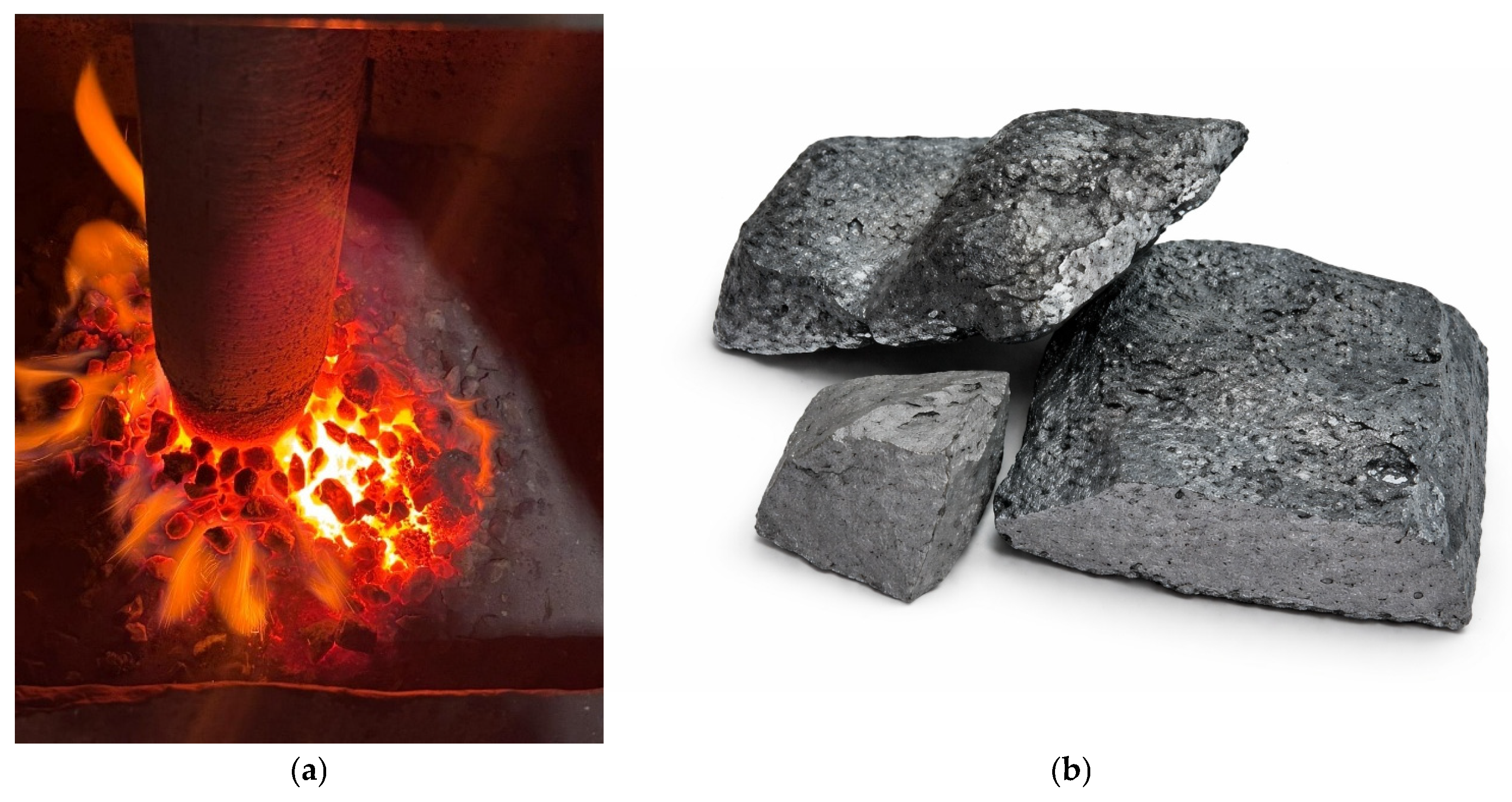
Under large-scale laboratory conditions at the Zh. Abishev Chemical-Metallurgical Institute, an aluminosilicochrome metallic alloy was produced by smelting in a 100 kVA ore-thermal furnace. The appearance of the obtained alloy is shown in Figure 6.
Smelting with gradual charge feeding showed satisfactory process performance: the current load was stably maintained within the range of 80–100 A. During operation, the hearth surface was gradually covered by a molten metallic phase, indicating the stable development of reduction processes and the accumulation of alloy in the furnace bath. The process was characterized by stable furnace operation and regular descent of the charge, resulting in the formation of a metallic product enriched in Cr, Si, and Al, which corresponds to the target composition of the aluminosilicochrome alloy. In total, six smelting runs with periodic metal tapping were carried out in the ore-thermal furnace. It is shown in Table 5.
Based on the chemical analysis of the smelting products, the compositions of the obtained aluminosilicochrome alloy were determined for each individual tap. The average composition of the metallic phase was, wt. %: Fe, 24.23; Si, 32.03; Cr, 22.32; Al, 18.70; C, 0.36; P, 0.028; and S, 0.015. The sum of the reported average components is 97.68 wt. %, and the remaining approximately 2.32 wt. % corresponds to unreported minor and trace components, possible oxygen and analytical uncertainty. The reported values were not normalized to 100 wt. %. These results indicate the formation of an aluminosilicochrome alloy enriched in Si, Cr, and Al.
To evaluate the consistency of the experimental results with the thermodynamic predictions, the average composition of the obtained alloy was compared with the equilibrium modeling data in the temperature range of 2000–2200 °C. Compared with the equilibrium predictions, the experimentally obtained alloy contained lower Cr and Si, higher Fe and Al, and substantially lower C. Nevertheless, the experimental data confirm the formation of an Fe–Si–Cr–Al alloy system corresponding to aluminosilicochrome.
To provide a clearer quantitative comparison between the thermodynamic prediction and the experimental smelting results, the calculated metallic-phase composition in the most favorable ASC formation range of 2000–2200 °C was compared with the average composition of the experimentally obtained alloy. The comparison is presented in Table 6.
The comparison shows that the experimental alloy differs noticeably from the calculated equilibrium composition. The higher Fe content can be explained by the early and almost complete reduction of iron-bearing components, while the incomplete transfer of Cr and Si increases the relative Fe fraction in the final alloy. The lower Cr and Si contents are associated with kinetic limitations of oxide reduction, nonuniform temperature distribution in the furnace, partial retention of these elements in residual oxide products, and possible losses with gas–dust products. Silicon may also be partially removed through volatile SiO (g) and Si (g), as predicted by the thermodynamic modeling.
The largest deviation is observed for carbon. The calculated C values in Table 3 should not be interpreted as the dissolved carbon content in the final metallic alloy. They represent residual solid carbon predicted under closed-system equilibrium conditions. In the real ore-thermal smelting process, carbon is continuously consumed by the reduction of oxide components, participates in the Boudouard reaction, and is removed mainly as CO gas. In addition, the process was carried out in an open electric arc furnace under air atmosphere, which can further promote carbon oxidation. As a result, the measured carbon content in the final ASC alloy was only 0.36 wt. %.
From a technological standpoint, these results indicate that the selected charge composition and smelting regime are suitable for producing ASC from the studied technogenic raw materials.

Simplified Material Balance and Residual Products

A simplified material and energy balance was prepared for the experimental smelting stage in order to improve the engineering interpretation of the obtained results. The balance was calculated for 700 kg of agglomerated monocharge used in the smelting trials. According to the charge composition presented in Table 2, the monocharge contained 186.13 kg C, 22.33 kg metallic Cr, 0.21 kg P2O5, 1.47 kg S, 101.36 kg MgO, 3.78 kg CaO, 68.32 kg Al2O3, 216.23 kg SiO2, 31.64 kg FeO, and 68.53 kg Cr2O3.
In elemental terms, the charge contained approximately 69.2 kg Cr, 101.1 kg Si, 36.2 kg Al, 24.6 kg Fe, and 186.1 kg C. During the experimental smelting of the 700 kg monocharge batch, approximately 0.19–0.20 t of aluminosilicochrome alloy was obtained. The remaining mass was mainly associated with gas formation during carbothermic reduction, gas–dust losses, volatile components, accretions, and minor residual oxide products.
It should be emphasized that the near slag-free character of the process does not mean that the entire mass of the charge is converted into metal. The process is aimed at maximum transfer of the target elements Cr, Si, Al, and Fe into the metallic phase, whereas oxygen bound in the oxide components and most of the carbon are removed mainly as CO gas. In addition, minor amounts of SiO (g), Mg (g), Al (g), and Si (g), as predicted by thermodynamic modeling, may contribute to gas–dust formation.
The simplified material and energy balance of the experimental smelting stage are presented in Table 7 and Table 8.
The calculated balance shows that the main part of the mass loss is associated with the removal of oxygen from the oxide components in the form of CO. This is consistent with the carbothermic mechanism of the process. The residual non-metallic products are not considered as a developed slag phase, since the process was aimed at a low-slag or near slag-free regime. Instead, these products are represented by minor oxide residues, accretions, condensed dust and volatile-component products.
Based on the simplified material balance, the apparent recovery of the main target elements into the metallic phase was additionally assessed. Under the conditions of the large-scale laboratory smelting, Fe and Cr showed the highest transfer to the alloy, while the apparent recovery of Si and Al was lower and was affected by partial volatilization, gas–dust losses, and redistribution into minor residual oxide products.
The total electrical energy consumption for the experimental batch was estimated at approximately 1.8–2.3 MWh, corresponding to 6.5–8.3 GJ. This energy was consumed by charge heating, carbothermic reduction of oxide components, melting of the metallic phase, formation and removal of gaseous products, and heat losses through the furnace lining and off-gas system. Since the experiments were performed under large-scale laboratory conditions, the presented energy balance should be considered as an engineering approximation rather than a full industrial heat balance.
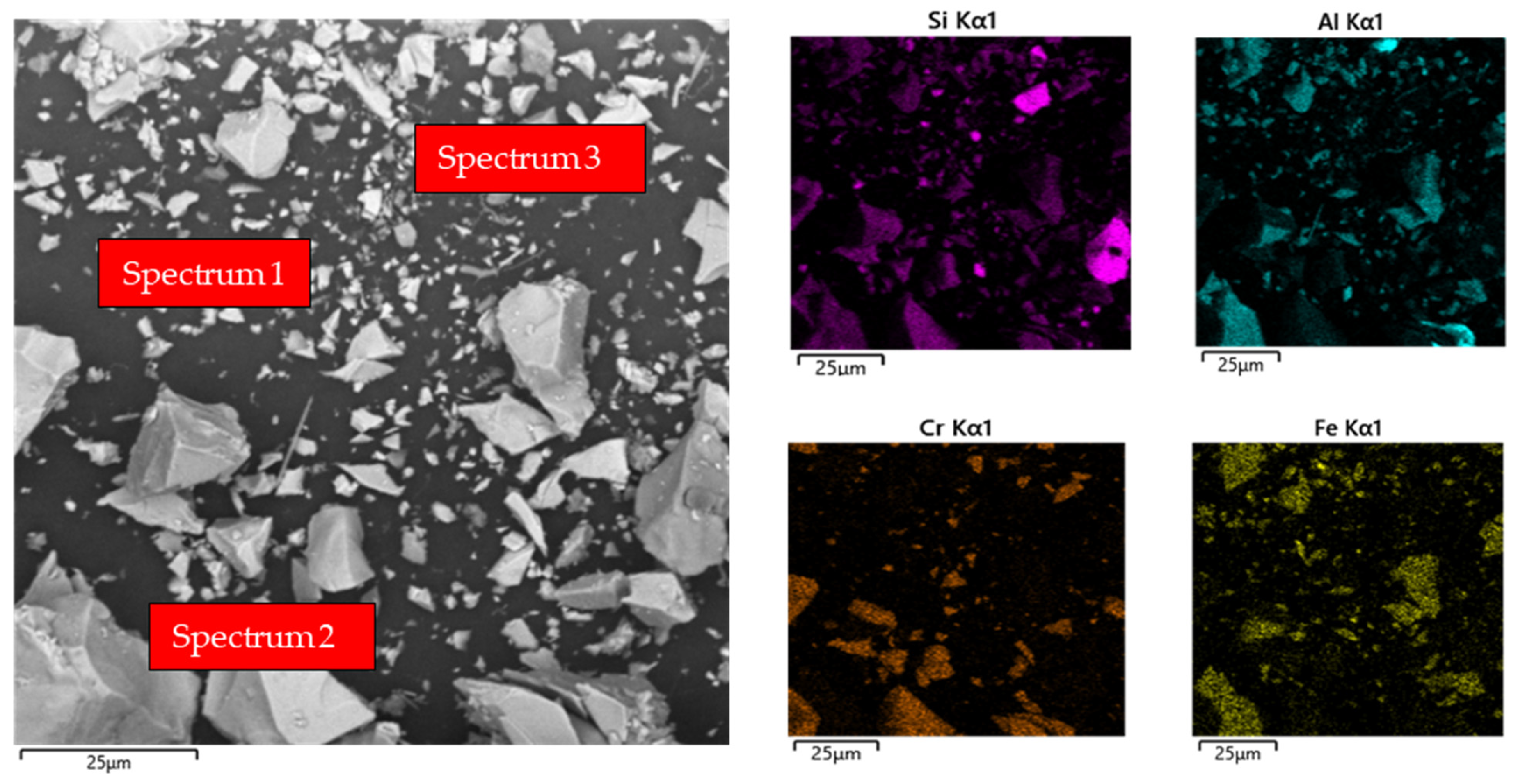
To confirm the phase composition and the distribution behavior of the main elements in the obtained alloy, the samples were examined by scanning electron microscopy combined with energy-dispersive X-ray spectroscopy (SEM-EDS). The morphology and microstructural features of the metallic phase are shown in Figure 7, and the results of the local microanalysis are presented in Table 9.
The microstructural and elemental analysis of the metallic phase carried out by SEM-EDS revealed the formation of a multicomponent metallic matrix of aluminosilicochrome composition, characterized by pronounced microstructural heterogeneity. The SEM image shows a well-developed dispersed structure with regions differing in contrast, which indicates local variations in chemical composition and redistribution of elements during melt crystallization.
According to the local EDS microanalysis data, the examined regions of the metallic phase contain predominantly Si, Al, Cr, and Fe. In the selected areas, the Si content varies from 32.82 to 42.08 wt. %, Al from 23.47 to 31.55 wt. %, Cr from 11.06 to 23.26 wt. %, and Fe from 12.64 to 24.58 wt. %. These values indicate that the metallic phase can be described as a Si–Al-rich matrix containing significant amounts of Cr and Fe. At the same time, the differences between individual regions point to local microsegregation of the components formed during melt cooling and solidification.
The most characteristic feature is the consistently high Si and Al contents in all examined regions. This suggests that silicon and aluminum play a decisive role in the formation of the main metallic matrix of the alloy, whereas Cr and Fe are redistributed between individual microzones depending on the conditions of local crystallization. The increased chromium content in certain regions, reaching 23.26 wt. %, may be associated with the formation of locally Cr-enriched microdomains, whereas the higher iron content, up to 24.58 wt. %, reflects the participation of Fe in forming the overall metallic base of the alloy. This distribution is consistent with the multicomponent nature of the Fe–Si–Cr–Al system and confirms that alloy solidification proceeded under non-equilibrium conditions.
It should be noted that the EDS data are semi-quantitative and are intended primarily for the comparative assessment of local elemental distribution within the microstructure. Nevertheless, the obtained results are in good agreement with the chemical analysis data of the smelted metal, according to which the alloy is characterized by elevated Si, Cr, and Al contents, and they confirm the formation of an aluminosilicochrome product with a multicomponent metallic matrix [11,12,13]. Taken together, the SEM-EDS results indicate the formation of a structurally stable multicomponent metallic system with local microsegregation of Fe, Si, Cr, and Al caused by non-equilibrium solidification [12]. Carbon was excluded from the quantitative EDS evaluation because the samples were mounted on conductive carbon tape, whereas O, Mg, and Ca were not artificially excluded but were not detected in significant amounts in the analyzed metallic microareas.
Overall, the SEM-EDS results are consistent with the thermodynamic prediction that ASC formation proceeds through the development of a multicomponent Fe–Si–Cr–Al metallic phase under high-temperature smelting conditions.

4. Conclusions

In this study, thermodynamic modeling of reduction processes, preparation of an agglomerated monocharge, and experimental ore-thermal smelting of an aluminosilicochrome alloy were carried out using technogenic wastes from ferroalloy and coal production, which made it possible to assess the feasibility of producing ASC from secondary raw materials.
Thermodynamic modeling was performed using the HSC Chemistry 10 software package for the multicomponent Fe–Cr–Si–Al–C–O system characteristic of aluminosilicochrome production from chromite spinel powder, microsilica, and coal sludge. It was established that the most favorable range for the formation of the ASC metallic phase corresponds to 2000–2200 °C. Within this interval, the calculated composition of the metallic phase was, wt. %: Cr, 28.27–29.46; Si, 35.21–36.06; Al, 10.14–11.89; and Fe, 10.21–10.45. At the same time, the calculated carbon values remained elevated, reflecting the equilibrium character of the thermodynamic model.
Before smelting, the initial charge components were preliminarily agglomerated by rigid extrusion using an EB-500 press-extruder and liquid glass as a binder [16,24,25,26]. An experimental batch of briquettes with a total mass of 700 kg was produced. The obtained briquettes were characterized by high mechanical strength: the splitting strength was 43.4 kg/briquette, the impact strength was 89.2%, the abrasion was 0.23%, and the drop strength was 99.2%. After heating to 1100 °C, the average hot splitting strength was 22 kg/briquette, which confirms the technological suitability of the agglomerated monocharge for subsequent smelting in a 100 kVA ore-thermal furnace.
Experimental smelting was carried out in a single-electrode 100 kVA electric arc furnace. In the course of the study, six smelting runs with periodic metal tapping were performed. According to the chemical analysis results, the average composition of the obtained alloy was, wt. %: Fe, 24.23; Si, 32.03; Cr, 22.32; Al, 18.70; C, 0.36; P, 0.028; and S, 0.015. These data confirm the formation of an aluminosilicochrome alloy enriched in Si, Cr, and Al, which is consistent with the target process route and confirms the feasibility of producing ASC by a carbothermic route from the studied technogenic raw materials [11,12].
The experimental values of the metal composition are generally consistent with the thermodynamic modeling results and confirm the correctness of the selected smelting temperature regime. The observed deviations from the calculated equilibrium values can be explained by the features of the real smelting process, including the non-equilibrium nature of solidification, kinetic limitations of reduction reactions, mass-transfer conditions, and partial oxidation of carbon in the open electric arc furnace [15,28]. The substantially lower carbon content in the metal compared with the calculated value indicates its consumption in reduction reactions and burnout with CO formation.
To clarify the phase state and the distribution behavior of the main elements, the samples were examined by SEM and EDS. The SEM-EDS analysis of the metallic phase revealed the formation of a multicomponent metallic matrix of aluminosilicochrome composition. In the investigated microareas, the Si content varied from 32.82 to 42.08 wt. %, Al from 23.47 to 31.55 wt. %, Cr from 11.06 to 23.26 wt. %, and Fe from 12.64 to 24.58 wt. %. These results confirm local redistribution of elements during melt solidification and are generally consistent with the chemical analysis data and the thermodynamic modeling results [2,3,19].
Thus, the results of the study confirm the feasibility of producing an aluminosilicochrome alloy from chromite spinel powder, microsilica, and coal sludge under ore-thermal smelting conditions. The proposed approach simultaneously addresses the utilization of technogenic wastes and the production of a new complex Fe–Cr–Si–Al alloy suitable for further investigation and practical application in refined ferrochrome production [11,12,15].

Author Contributions

Conceptualization, I.A. and M.Y.; methodology, M.A.; software, M.A.; validation, I.A., M.Y. and M.A.; formal analysis, I.A. and M.Y.; investigation, M.A. and M.Y.; resources, I.A., S.S. and M.Y.; data curation, M.A. and M.Y.; manuscript preparation, M.A.; review and editing, I.A. and M.Y.; visualization, S.S.; scientific supervision, I.A. and M.Y.; project ad-ministration, I.A. and M.Y.; funding acquisition, I.A. and S.S. All authors have read and agreed to the published version of the manuscript.

Funding

This research was funded by Scientific Committee of the Ministry of Science and Higher Education of the Republic of Kazakhstan, grant number BR24993020.

Data Availability Statement

The original contributions presented in this study are included in the article. Further inquiries can be directed to the corresponding authors.

Conflicts of Interest

Author Myrzagaliyev Aibar was employed by the company LLP “ERG Research & Development”. The remaining authors declare that the research was conducted in the absence of any commercial or financial relationships that could be construed as a potential conflict of interest.

Abbreviations

The following abbreviations are used in this manuscript:
ASCAluminosilicochrome alloy
CSPChromite spinel powder
FSCFerrosilicochrome
SEMScanning electron microscopy
EDSEnergy dispersive spectroscopy
ACAlternating current

References

  1. World Steel Association. World Steel in Figures 2025; World Steel Association: Brussels, Belgium, 2025. [Google Scholar]
  2. International Chromium Development Association (ICDA). Statistical Bulletin/Chrome & Ferrochrome Market Statistics; ICDA: Paris, France, 2024. [Google Scholar]
  3. du Preez, S.P.; van Kaam, T.P.M.; Ringdalen, E.; Tangstad, M.; Morita, K.; Bessarabov, D.G.; van Zyl, P.G.; Beukes, J.P. An overview of currently applied ferrochrome production processes and their waste management practices. Minerals 2023, 13, 809. [Google Scholar] [CrossRef]
  4. Tseshkovskaya, Y.; Tsoy, N.; Oralova, A.; Tseshkovskiy, V.; Ibrayev, M.K.; Zakharov, A. Research Progress of Coal Stacks Reducing Dust Emissions: Ecological Technology in the Example of the Karaganda Region. Resources 2025, 14, 142. [Google Scholar] [CrossRef]
  5. Pak, Y.; Pak, D.; Ibragimova, D.; Matonin, V.; Tebayeva, A. Assessment of Natural Radioactivity and Trace Element Composition of Coals and Ash and Slag Waste in Kazakhstan. Atmosphere 2025, 16, 125. [Google Scholar] [CrossRef]
  6. Junussov, M.; Zholtayev, G.Z.; Moghazi, A.H.; Nurmakanov, Y.; Oraby, M.A.; Umarbekova, Z.T.; Mashrapova, M.A.; Togizov, K. Evaluating Coal Quality and Trace Elements of the Karagandy Coal Formation (Kazakhstan): Implications for Resource Utilization and Industry. Resources 2026, 15, 5. [Google Scholar] [CrossRef]
  7. Makhambetov, Y.; Kutzhanov, M.; Toleukadyr, R.; Myrzagaliyev, A.; Sadyk, Z.; Saulebek, Z.; Akhmetov, A. Utilization of Chromite Spinel Powder in the Metallothermic Smelting of Low-Carbon Ferrochrome. Processes 2025, 13, 2288. [Google Scholar] [CrossRef]
  8. Zhumagaliyev, Y.; Shabanov, Y.; Almagambetov, M.; Jundibayev, M.; Ulmaganbetov, N.; Laikhan, S.; Jundibayeva, A.; Abilberikova, A.; Ubaidulayeva, N.; Adaibayeva, R. Processing of Secondary Raw Materials from Ferrochrome Production via Agglomeration and Study of Their Mechanical Properties. Metals 2025, 15, 878. [Google Scholar] [CrossRef]
  9. Sariyev, O.; Almagambetov, M.; Nurgali, N.; Bilyalov, K.; Kelamanov, B.; Yessengaliyev, D.; Abdirashit, A. Briquetting and Remelting of Aspiration Dust Generated During High-Carbon Ferrochrome Crushing in Direct Current Electric Arc Furnaces. Materials 2026, 19, 1149. [Google Scholar] [CrossRef] [PubMed]
  10. Druinsky, M.I.; Zhuchkov, V.I. Production of Complex Ferroalloys from Mineral Raw Materials of Kazakhstan; Nauka: Alma-Ata, Kazakhstan, 1988.
  11. Akuov, A.M.; Tolymbekov, M.Z.; Izbembetov, D.D.; Almagambetov, M.S. Possibility of application of aluminosilicochrome in the metallothermy of refined ferrochrome. Russ. Metall. (Met.) 2012, 2012, 1041–1044. [Google Scholar] [CrossRef]
  12. Orlov, A.S.; Isagulov, A.Z.; Sariev, O.R.; Tolymbekov, M.Z. Production of Aluminum–Chromium–Silicon Alloy from Unconditioned Materials. Steel Transl. 2018, 48, 558–563. [Google Scholar] [CrossRef]
  13. Shabanov, E.Z.; Baisanov, S.O.; Isagulov, A.Z.; Baisanov, A.S.; Chekimbaev, A.F. Fabrication of a complex aluminosilicochrome alloy by a slag-free method. Russ. Metall. (Met.) 2014, 2014, 358–360. [Google Scholar] [CrossRef]
  14. Akhmetov, A.; Zulhan, Z.; Sadyk, Z.; Burumbayev, A.; Zhakan, A.; Kabylkanov, S.; Toleukadyr, R.; Saulebek, Z.; Ayaganova, Z.; Makhambetov, Y. Carbon-Free Smelting of Ferrochrome Using FeAlSiCa Alloy. Processes 2025, 13, 1745. [Google Scholar] [CrossRef]
  15. Makhambetov, Y.; Sadyk, Z.; Zhakan, A.; Burumbayev, A.; Kabylkanov, S.; Myrzagaliyev, A.; Aubakirov, D.; Lu, N.; Akhmetov, A. Electric Arc Metallothermic Smelting of FeCr Using FeAlSiCa as a Reductant. Materials 2025, 18, 4221. [Google Scholar] [CrossRef] [PubMed]
  16. Baisanov, A.; Vorobkalo, N.; Shabanov, Y.; Zobnin, N.; Baisanova, A.; Sharieva, S.; Akuov, A.; Samuratov, Y.; Ibrakhimova, Z.; Zhumagaliev, T. Optimization of the Properties of Microsilica-Based Composite Briquettes Depending on Their Granulometry. J. Compos. Sci. 2024, 8, 439. [Google Scholar] [CrossRef]
  17. Weitz, H.; Garbers-Craig, A.M. Evaluation of the Furnace Method for the Production of Low Carbon Ferrochrome. Miner. Process. Extr. Metall. Rev. 2016, 37, 168–178. [Google Scholar] [CrossRef]
  18. Salina, V.A.; Zhuchkov, V.I.; Zayakin, O.V. Thermodynamic Simulation of Silicothermic Reduction of Chromium. Steel Transl. 2020, 50, 84–89. [Google Scholar] [CrossRef]
  19. Gasik, M.I.; Lyakishev, N.P.; Emlin, B.I. Theory and Technology of Ferroalloy Production; Metallurgy Publisher: Moscow, Russia, 1988. [Google Scholar]
  20. Gasik, M.I.; Lyakishev, N.P. Teoriya i Tekhnologiya Elektrometallurgii Ferrosplavov; Intermet Inzhiniring: Moscow, Russia, 1999. [Google Scholar]
  21. Gasik, M. Handbook of Ferroalloys: Theory and Technology; Butterworth-Heinemann: Oxford, UK, 2013. [Google Scholar]
  22. Ringdalen, E.; Tangstad, M. Reaction mechanisms of chromium ore reduction in submerged arc furnace ferrochrome production. Trans. Inst. Min. Metall. Sect. C Miner. Process. Extr. Metall. 2013, 122, 197–207. [Google Scholar]
  23. Alimbaev, S.A.; Almagambetov, M.S.; Nurgali, N.Z.; Pavlov, A.V. The use of extrusion briquetes for smelting carbon ferrochrome. Chernye Met. 2020, 5, 4–8. [Google Scholar]
  24. GOST 15848.0–90; Chromium Ores and Concentrates. General Requirements for Methods of Chemical Analysis. Izdatelstvo Standartov: Moscow, Russia, 1991.
  25. GOST 11014-2001; Brown Coals, Bituminous Coals, Anthracite, and Oil Shales. Shortened Methods of Moisture Determination. Izdatelstvo Standartov: Moscow, Russia, 2001.
  26. GOST 6382-2001; Solid Mineral Fuel. Methods for the Determination of Volatile Matter Yield. Izdatelstvo Standartov: Moscow, Russia, 2001.
  27. HSC Chemistry. Database Applications-HSC Chemistry; chem IT Services: Würzburg, Germany, 2023; Available online: https://www.chemits.com/en/software/database-applications/hsc-chemistry.html (accessed on 15 December 2025).
  28. Salkynbaev, B.Z.; Dosekenov, M.S.; Manashev, I.R. Utilization of High-Carbon Ferrochrome Metal Powder by Self-Propagating High-Temperature Synthesis (SHS) Method. Bull. K. Zhubanov Aktobe Reg. Univ. 2024, 77, 124–129. [Google Scholar]
Figure 1. General view of the single-electrode 100 kVA electric arc furnace: 1—electrode holder; 2—graphite electrode; 3—furnace shell; 4—tap hole [15].
Metals 16 00613 g001
Figure 2. Effect of temperature on the phase composition of the charge mixture: (a) metallic phase; (b) oxide phase; (c) gas phase. «C» denotes residual solid carbon predicted under closed-system equilibrium conditions.
Metals 16 00613 g002aMetals 16 00613 g002b
Figure 3. Element recovery as a function of temperature (thermodynamic modeling).
Metals 16 00613 g003
Figure 4. Measurement of the hot strength of briquettes at 1100 °C.
Metals 16 00613 g004
Figure 5. Preparation of the briquette batch: (a) briquettes after extrusion; (b) briquettes dried under natural conditions.
Metals 16 00613 g005
Figure 6. Smelting process in the 100 kVA large-scale laboratory furnace (a) and the product of experimental smelting—an aluminosilicochrome alloy (b).
Metals 16 00613 g006
Figure 7. SEM image of the sample microstructure and EDS results: elemental distribution maps and the integrated spectrum of the mapped area.
Metals 16 00613 g007
Table 1. Chemical and technical composition of the raw materials used.
MaterialCr2O3FeOSiO2Al2O3CaOMgOSP2O5CrmetAcVcCfix
CSP21.958.4317.605.620.6831.580.480.017.156.33
Coal sludge3.6157.3334.321.111.890.13438.9915.6443.84
Microsilica98.00
Note: The oxide contents in Table 1 represent bulk chemical composition expressed as oxide equivalents. They should not be interpreted as direct phase identification.
Table 2. Composition of the charge mixture (wt. %).
Cr2O3FeO *SiO2Al2O3CaOMgOSP2O5CrC
9.794.5230.899.760.5414.480.210.033.1926.59
* Total iron in the charge mixture is expressed as FeO equivalent.
Table 3. Predicted chemical composition of the metallic phase according to thermodynamic modeling data (wt. %).
T, °CCrSiFeAlCaC
11000.000.0011.700.001.3087.00
12000.000.0011.820.001.3086.89
13000.000.0311.850.001.3086.82
14000.000.3911.850.001.3086.47
15000.013.6311.800.001.2983.27
16000.1121.6511.510.011.2665.45
17000.2937.1811.320.061.2449.87
18001.4544.5211.640.391.2740.57
190016.0840.6011.083.371.2227.44
200028.2735.4610.2110.841.1213.97
210028.9035.2110.2511.891.1212.54
220029.4636.0610.4510.141.1412.67
Note: C denotes residual solid carbon predicted under closed-system equilibrium conditions.
Table 4. Characteristics of the obtained briquettes.
MaterialSplitting Strength,
kg/Briquette
Impact Strength,
%
Abrasion,
%
Drop strength,
%
Briquettes43.489.20.2399.2
Table 5. Chemical composition of the metal (wt. %).
No.FeSiCrAlCPS
125.1033.3022.8016.300.370.010.018
225.1033.9022.3016.500.180.010.017
326.7031.7023.5015.800.160.020.016
422.0031.5022.3019.800.300.090.015
522.7031.5021.0021.600.600.020.014
623.8030.3022.0022.200.580.020.012
Average
composition
24.2332.0322.3218.700.360.0280.015
Note: The values in Table 5 are presented as directly measured analytical data and were not normalized to 100 wt. %. The balance to 100 wt. % is attributed to minor and trace elements, possible oxygen contents, and the overall analytical uncertainty.
Table 6. Quantitative comparison between the calculated and experimental compositions of the metallic phase.
ElementCalc. Range, wt. %Calc. Avg., wt. %Exp. Avg., wt. %Δ, wt. %Brief Explanation
C12.54–13.9713.060.36−12.70In calculations, C remains as solid carbon; in smelting it is consumed for reduction and removed mainly as CO.
Fe10.21–10.4510.3024.23+13.93Fe is reduced early and almost completely, while lower Cr and Si transfer increases the relative Fe content.
Si35.21–36.0635.5832.03−3.55Si partly volatilizes as SiO (g)/Si (g) and is also lost with gas–dust products.
Cr28.27–29.4628.8822.32−6.56Cr reduction is incomplete, with part of Cr retained in oxide residues, accretions, or dust.
Al10.14–11.8910.9618.70+7.74Al2O3 from coal-sludge ash contributes to Al enrichment under non-equilibrium conditions.
Table 7. Simplified material balance of the experimental smelting stage.
Balance ItemMass, kgShare of Initial Charge, %Comment
Agglomerated monocharge700100.0Initial briquetted charge
Aluminosilicochrome alloy19427.7Metallic Fe–Cr–Si–Al product
Gas phase, mainly CO30042.8Formed during carbothermic reduction
Gas–dust products, volatile species, accretions and minor residual oxide phase20629.4By difference
Total700100.0
Table 8. Simplified energy balance of the experimental smelting stage.
ParameterValueComment
Mass of monocharge700 kgExperimental briquette batch
Obtained ASC alloy194 kgMetallic product
Specific electricity consumption9.1–11.3 MWh/t alloyBased on aluminosilicochrome smelting data
Total electricity consumption1.8–2.3 MWhFor 0.19–0.20 t alloy
Total energy input6.5–8.3 GJElectrical energy equivalent
Main energy-consuming stagesHeating, oxide reduction, melting, gas formation, heat losses
Table 9. Semi-quantitative local EDS analysis of selected micro areas, wt. %.
Spectrum No.FeSiCrAl
115.9442.0818.5223.47
212.6439.8323.2624.27
324.5832.8211.0631.55
Sigma, ±0.16–0.220.15–0.170.15–0.170.11–0.15
Disclaimer/Publisher’s Note: The statements, opinions and data contained in all publications are solely those of the individual author(s) and contributor(s) and not of MDPI and/or the editor(s). MDPI and/or the editor(s) disclaim responsibility for any injury to people or property resulting from any ideas, methods, instructions or products referred to in the content.