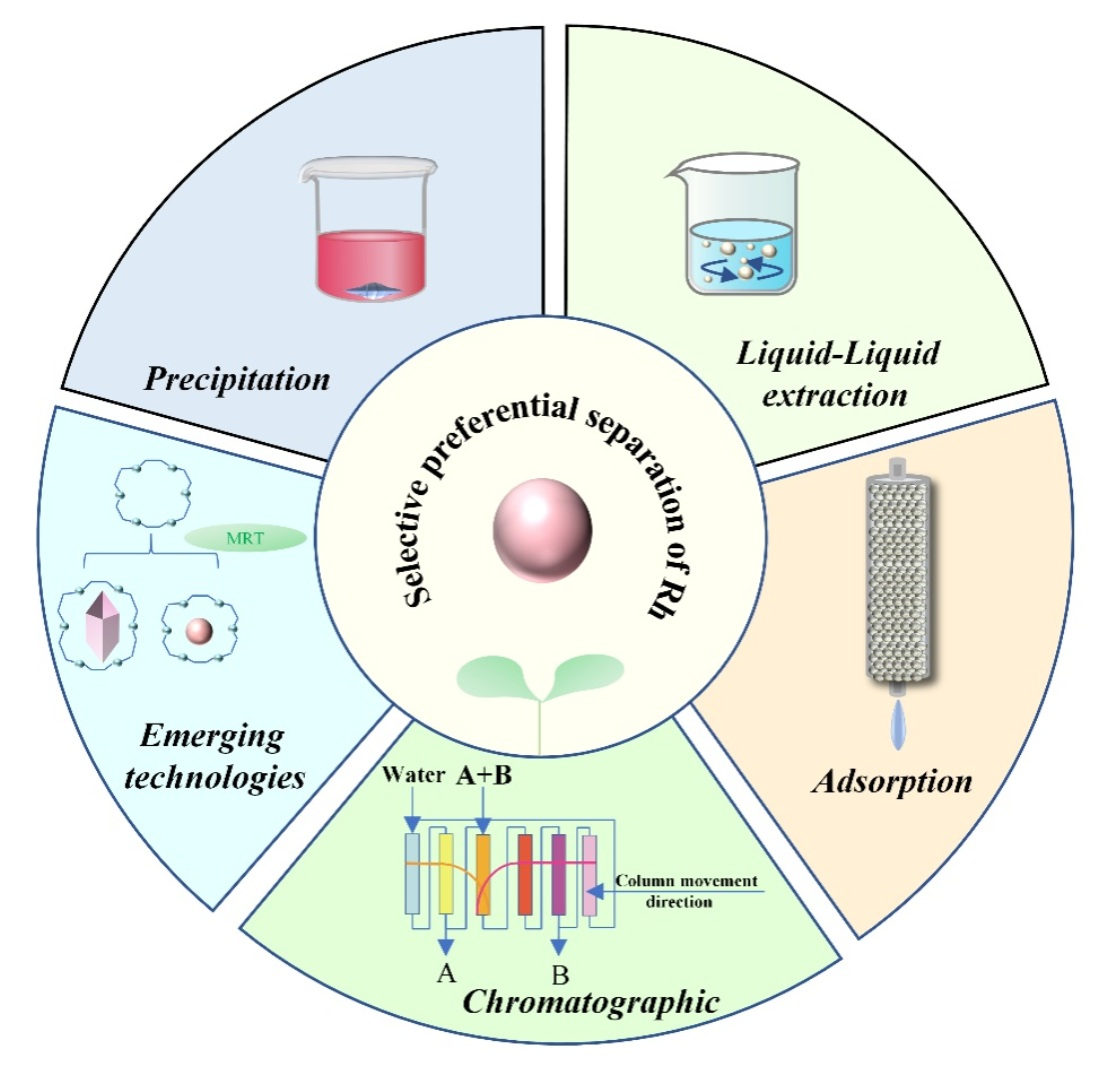
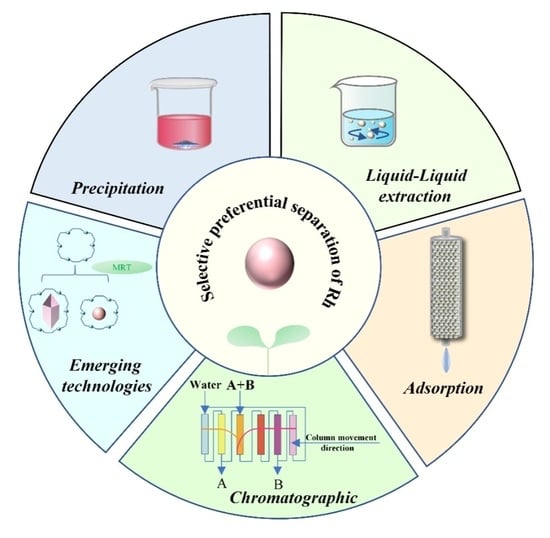
Selective Preferential Separation and Extraction of Rhodium: A Review

 ,
, 
Abstract
1. Introduction
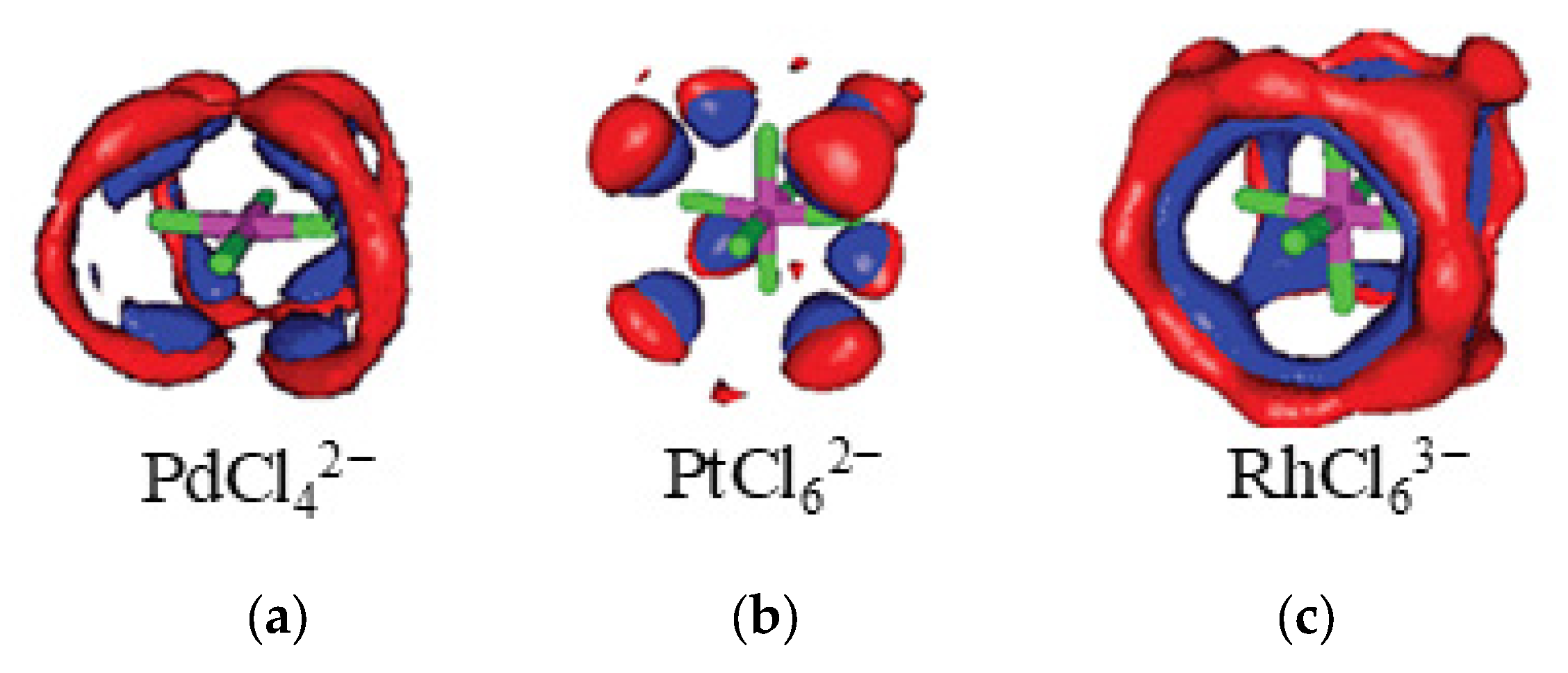
2. Difficulties in Selective Preferential Separation and Extraction of Rh
3. Selective Precipitation

| Precipitation Reagents | Application Conditions | Core Reasons for Selectivity Difference | Interaction Mechanism with Rhodium Complexes | Recovery Yield | Ref. |
|---|---|---|---|---|---|
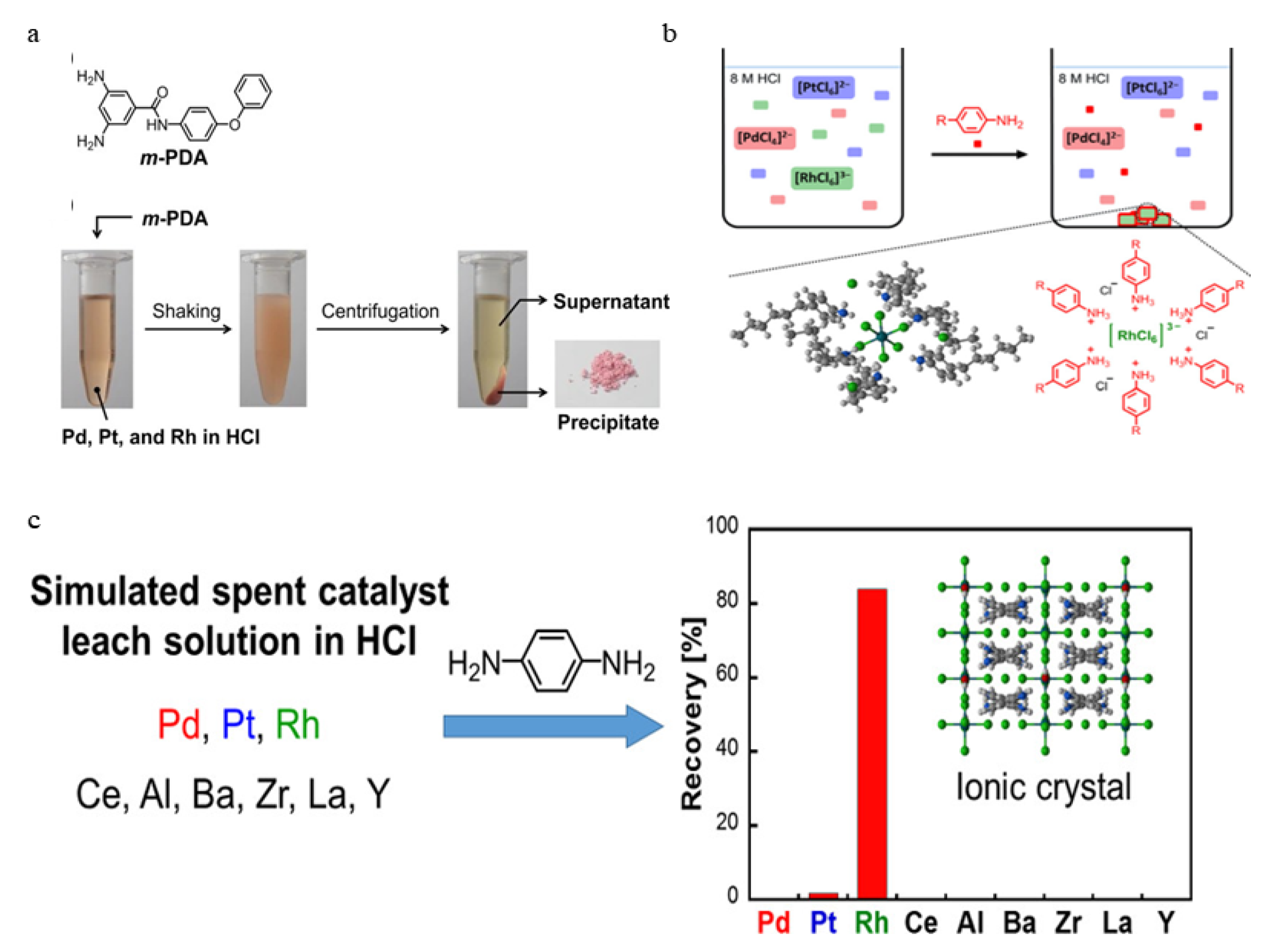
| 4-Alkylanilines | nDAB = 0.2 mmol/Lol, [Metal]init = 1 mmol/L, [HCl]init = 3–8 M, and [L]/[Metal]init = 30. mol/mol | Hydrophobic alkyl chain structure; Rh forms stable hydrophobic ion-pairs under high HCl concentration, while Pd/Pt ion-pairs are prone to proton exchange and dissolution; co-precipitation of Pd easily occurs in low-acid environments | Hydrophobic ion-pair mechanism: 6 aniline cations encapsulate 1 [RhCl6]3− to form a 1:6:3 hydrophobic ion-pair, which is stable under high acid and easily dissociates under low acid | Rh > 80%, Pd < 30%, Pt < 30% | [8] |
| p-phenylene diamine dihydrochloride (PPDA) | [Metal]init = 300 mg/L, [HCl]init = 3–9 M, and [L]/[Metal]init = 15 mol/mol | Smallest aromatic diamine structure with extremely strong hydrophilicity; the three-dimensional ionic crystal has precise lattice matching with [RhCl6]3−; Pd/Pt complexes have mismatched size/charge and do not precipitate at all | Three-dimensional ionic crystal mechanism: 2 PPDA cations + 1 Cl− + 2 crystal water form a 1:2:1:2 three-dimensional network lattice with [RhCl6]3−, achieving molecular-level selectivity | Rh > 80%, Pd < 50%, Pt < 5% | [14] |
| 3,3′-diaminobenzidine (DAB) | nDAB = 0.15 mmol/Lol, [Metal]init = 10 mmol/L, [HCl]init = 7.0–10 M, and [L]/[Metal]init = 3.0 mol/mol | Tetraamine structure with rigid biphenyl skeleton; trihydrochloride precipitate is first formed in concentrated HCl, followed by specific binding to Rh via anion exchange; Pd/Pt only form coordination complexes without stable precipitation | Anion exchange mechanism: [H3·DAB]Cl3 precipitate is first formed, then Cl− in the precipitate is replaced by [RhCl6]3− to form a 1:2 ion-pair, preferentially binding to -3 valent Rh complexes | Rh > 90%, Pd < 20%, Pt < 20% | [16] |
| m-phenylene diamine (m-PDA) | nDAB = 0.2 mmol/Lol, [Metal]init = 1 mmol/L, [HCl]init = 3–8 M, and [L]/[Metal]init = 15 mol/mol | Diamine structure with balanced hydrophilicity and hydrophobicity; the strong hydrophilic end can overcome the large hydration shell of Rh complexes; the hydrophilic end of Pd/Pt ion-pairs is easily protonated, resulting in poor stability and no precipitation | Hydrophilic ion-pair mechanism: 3 m-PDA cations form a 1:3 hydrophilic ion-pair with 1 [RhCl6]3−, stabilized by hydrogen bonds and electrostatic attraction | Rh > 90%, Pd < 5%, Pt < 5% | [17] |
4. Selective Liquid–Liquid Extraction
4.1. Extraction of Rh Complex Anion [RhCl6]3− or [RhCl5 (H2O)]2−
4.2. Replacing the Ligand of Rh
4.3. Extraction Using Chlorine-Free Medium
4.4. Extraction Using Ionic Liquids (ILs)
4.5. Extraction Using Deep Eutectic Solvents (DES)
5. Selective Adsorption
5.1. Ion Exchange Resins
5.2. Silica-Based Adsorbent
5.3. Carbonaceous Adsorbent
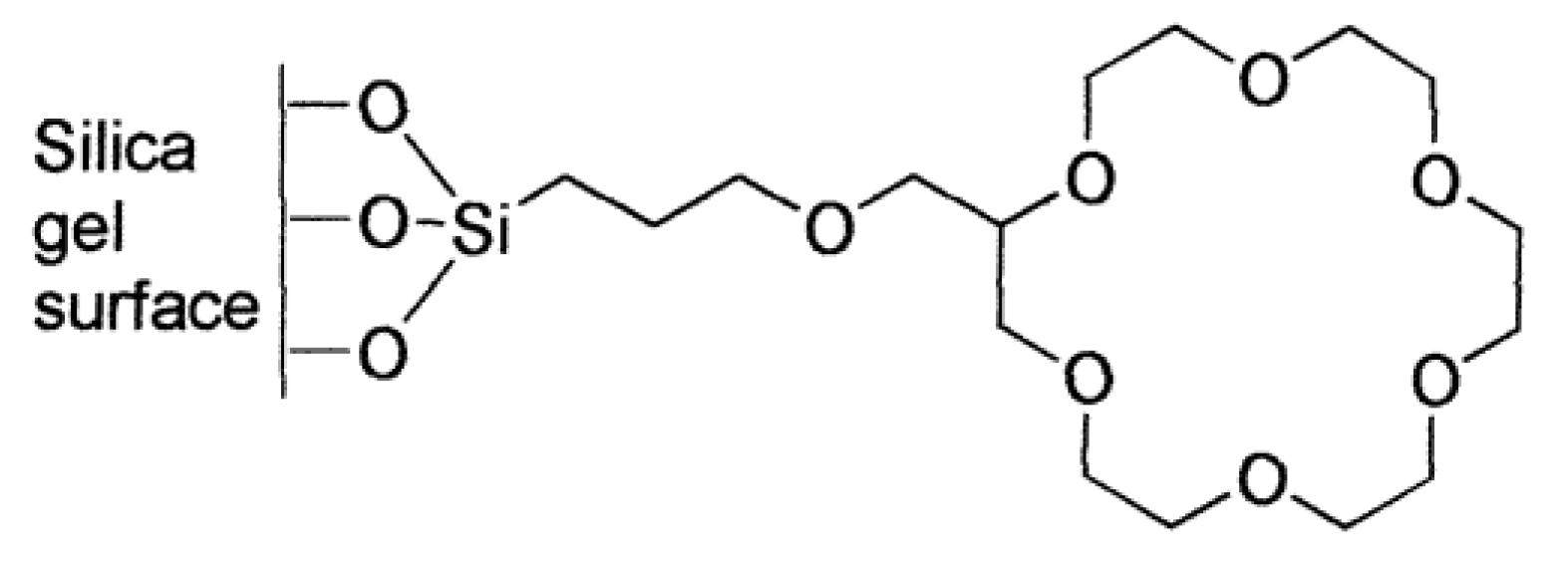
5.4. Solid Phase Extraction (SPE)
6. Molecular Recognition Technology (MRT)
7. Conclusions and Prospects
Author Contributions
Funding
Data Availability Statement
Conflicts of Interest
References
- Jia, M.; Jiang, G.; Chen, H.; Pang, Y.; Yuan, F.; Zhang, Z.; Miao, N.; Zheng, C.; Song, J.; Li, Y.; et al. Recent Developments on Processes for Recovery of Rhodium Metal from Spent Catalysts. Catalysts 2022, 12, 1415. [Google Scholar] [CrossRef]
- Saguru, C.; Ndlovu, S.; Moropeng, D. A review of recent studies into hydrometallurgical methods for recovering PGMs from used catalytic converters. Hydrometallurgy 2018, 182, 44–56. [Google Scholar] [CrossRef]
- Zheng, H.-D.; Ding, Y.-J.; Wen, Q.; Liu, B.; Zhang, S.-G. Separation and purification of platinum group metals from aqueous solution: Recent developments and industrial applications. Resour. Conserv. Recycl. 2021, 167, 105417. [Google Scholar] [CrossRef]
- Bernardis, F.L.; Grant, R.A.; Sherrington, D.C. A review of methods of separation of the platinum-group metals through their chloro-complexes. React. Funct. Polym. 2005, 65, 205–217. [Google Scholar] [CrossRef]
- Benguerel, E.; Demopoulos, G.P.; Harris, G.B. Speciation and separation of rhodium(III) from chloride solutions: A critical review. Hydrometallurgy 1996, 40, 135–152. [Google Scholar] [CrossRef]
- Pianowska, K.; Kluczka, J.; Benke, G.; Goc, K.; Malarz, J.; Ochmański, M.; Leszczyńska-Sejda, K. Solvent Extraction as a Method of Recovery and Separation of Platinum Group Metals. Materials 2023, 16, 4681. [Google Scholar] [CrossRef]
- Crundwell, F.K.; Moats, M.S.; Ramachandran, V.; Robinson, T.G.; Davenport, W.G. Chapter 37-Refining of the platinum-group metals. In Extractive Metallurgy of Nickel, Cobalt and Platinum Group Metals; Crundwell, F., Moats, M., Ramachandran, V., Robinson, T., Davenport, W.G., Eds.; Elsevier: Oxford, UK, 2011; pp. 489–534. [Google Scholar]
- Matsumoto, K.; Yamakawa, S.; Sezaki, Y.; Katagiri, H.; Jikei, M. Preferential precipitation and selective separation of Rh(III) from Pd(II) and Pt(IV) using 4-alkylanilines as precipitants. ACS Omega 2019, 4, 1868–1873. [Google Scholar] [CrossRef]
- Ding, Y.J.; Zhang, S.G.; Liu, B.; Zheng, H.D.; Chang, C.C.; Ekberg, C. Recovery of precious metals from electronic waste and spent catalysts: A review. Resour. Conserv. Recycl. 2019, 141, 284–298. [Google Scholar] [CrossRef]
- Trinh, H.B.; Lee, J.C.; Suh, Y.J.; Lee, J. A review on the recycling processes of spent auto-catalysts: Towards the development of sustainable metallurgy. Waste Manag. 2020, 114, 148–165. [Google Scholar] [CrossRef] [PubMed]
- Narita, H.; Tanaka, M.; Shiwaku, H.; Okamoto, Y.; Ikeda-ohno, A.; Yaita, T. Inner-sphere structure of rhodium complexes with Tin(II) chloride in concentrated hydrochloric acid solution. Bull. Chem. Soc. Jpn. 2013, 86, 203–209. [Google Scholar] [CrossRef]
- Narita, H.; Morisaku, K.; Tanaka, M. Highly efficient extraction of rhodium(III) from hydrochloric acid solution with amide-containing tertiary amine compounds. Solvent Extr. Ion. Exch. 2015, 33, 407–417. [Google Scholar] [CrossRef]
- Nikoloski, A.N.; Ang, K.L. Review of the application of ion exchange resins for the recovery of platinum-group metals from hydrochloric acid solutions. Miner. Process. Extr. Metall. Rev. 2014, 35, 369–389. [Google Scholar] [CrossRef]
- Matsumoto, K.; Hata, Y.; Sezaki, Y.; Katagiri, H.; Jikei, M. Highly selective Rh(III) recovery from HCl solutions using aromatic primary diamines via formation of three-dimensional ionic crystals. ACS Omega 2019, 4, 14613–14620. [Google Scholar] [CrossRef]
- Naidoo, K.J.; Klatt, G.; Koch, K.R.; Robinson, D.J. Geometric Hydration Shells for Anionic Platinum Group Metal Chloro Complexes. Inorg. Chem. 2002, 41, 1845–1849. [Google Scholar] [CrossRef]
- Suzuki, T.; Ogata, T.; Tanaka, M.; Kobayashi, T.; Shiwaku, H.; Yaita, T.; Narita, H. Unique anion-exchange properties of 3,3′-diaminobenzidine resulting in high selectivity for rhodium(III) over palladium(II) and platinum(IV) in a concentrated hydrochloric acid solution. Anal. Sci. 2019, 35, 1353–1360. [Google Scholar] [CrossRef] [PubMed]
- Matsumoto, K.; Yamakawa, S.; Haga, K.; Ishibashi, K.; Jikei, M.; Shibayama, A. Selective and preferential separation of rhodium (III) from palladium (II) and platinum (IV) using a m-phenylene diamine-containing precipitant. Sci. Rep. 2019, 9, 12414–12422. [Google Scholar] [CrossRef] [PubMed]
- Kostanski, M.T.; Freiser, H. Extraction of rhodium and iridium with 4-(non-5-yl) pyridine. Anal. Chim. Acta 1991, 242, 191–201. [Google Scholar] [CrossRef]
- Narita, H.; Morisaku, K.; Tanaka, M. The first effective extractant for trivalent rhodium in hydrochloric acid solution. Chem. Commun. 2008, 5921–5923. [Google Scholar] [CrossRef] [PubMed]
- Shafiqul, A.M.; Inoue, K. Extraction of rhodium from other platinum group metals with Kelex 100 from chloride media containing tin. Hydrometallurgy 1997, 46, 373–382. [Google Scholar] [CrossRef]
- Mhaske, A.; Dhadke, P. Liquid-liquid extraction and separation of rhodium(III) from other platinum group metals with Cyanex 925. Sep. Sci. Technol. 2001, 36, 3253–3265. [Google Scholar] [CrossRef]
- Malik, P.; Paiva, A.P. A novel solvent extraction route for the mutual separation of platinum, palladium, and rhodium in hydrochloric acid media. Solvent Extr. Ion Exch. 2010, 28, 49–72. [Google Scholar] [CrossRef]
- Le, M.N.; Nguyen, T.H.; Lee, M.S. Comparison of separation behavior of Ir(IV) and Rh(III) between tin(II) chloride and ascorbic acid as a reducing agent in the extraction with Cyanex 921 and Cyanex 301. Solvent Extr. Ion Exch. 2018, 36, 272–285. [Google Scholar] [CrossRef]
- Zou, L.H.; Chen, J.; Huang, Y. An alternative way to separating Ir(IV) and Rh(III) ions from a mixed chloride solution with added stannous chloride. Hydrometallurgy 2004, 72, 31–37. [Google Scholar] [CrossRef]
- Sun, P.-P.; Lee, M.S. Separation of Ir(IV) and Rh(III) from mixed chloride solutions by solvent extraction. Hydrometallurgy 2011, 105, 334–340. [Google Scholar] [CrossRef]
- Sole, K.C.; Brent Hiskey, J.; Ferguson, T.L. An assessment of the long-term stabilities of Cyanex302 and Cyanex301 in sulfuric and nitric acids. Solvent Extr. Ion Exch. 1993, 11, 783–796. [Google Scholar] [CrossRef]
- Kolekar, S.S.; Anuse, M.A. Solvent extraction separation of rhodium(III) with N-n-octylaniline as an extractant. Talanta 2002, 58, 761–771. [Google Scholar] [CrossRef]
- Suryavanshi, V.J.; Patil, M.M.; Kokare, A.N.; Zanje, S.B.; Pawar, R.R.; Anuse, M.A.; Mulik, G.N. Development of a liquid-liquid extraction system for rhodium(III) by 2-octylaminopyridine from weak malonate media. J. Chin. Chem. Soc. 2016, 63, 694–702. [Google Scholar] [CrossRef]
- Paiva, A.P.; Nogueira, C.A. Ionic liquids in the extraction and recycling of critical metals from urban mines. Waste Biomass Valor. 2021, 12, 1725–1747. [Google Scholar] [CrossRef]
- Yan, Y.; Wang, Q.; Xiang, Z.Y.; Yang, Y.Z. Separation of Pt(IV), Pd(II), Ru(III), and Rh(III) from chloride medium using liquid–liquid extraction with mixed imidazolium-based ionic liquids. Sep. Sci. Technol. 2018, 53, 2064–2073. [Google Scholar] [CrossRef]
- Funaki, K.; Ma, S.; Kawamura, S.; Miyazaki, A.; Sugie, A.; Mori, A.; Muramatsu, A.; Kanie, K. Metal-selective deprotection-mediated palladium(II) extraction by ionic liquids with tetrahydropyran-2H-yl-protected thiol moieties. Chem. Lett. 2017, 46, 434–437. [Google Scholar] [CrossRef]
- Kakoi, T.; Muranaga, K.; Goto, M. Extraction of rhodium by liquid surfactant membranes containing ionic liquid as a carrier from hydrochloric acid solutions. J. Chem. Eng. Jpn. 2018, 51, 917–920. [Google Scholar] [CrossRef]
- Yin, X.L.; Yi, H.L.; Wang, Q.; Wang, Y.D.; Sun, X.; Lv, C.; Guo, J.X.; Yang, Y.Z. Extraction and separation of multiple platinum group metals from hydrochloric acid solution with sole 1-hexyl-3-methylimidazole-2-thione using microextraction method. Hydrometallurgy 2017, 174, 167–174. [Google Scholar] [CrossRef]
- Lanaridi, O.; Platzer, S.; Nischkauer, W.; Limbeck, A.; Schnürch, M.; Bica-schröder, K. A combined deep eutectic solvent–ionic liquid process for the extraction and separation of platinum group metals (Pt, Pd, Rh). Molecules 2021, 26, 7204. [Google Scholar] [CrossRef]
- Lee, J.-C.; Kurniawan; Hong, H.-J.; Chung, K.W.; Kim, S. Separation of platinum, palladium and rhodium from aqueous solutions using ion exchange resin: A review. Sep. Purif. Technol. 2020, 246, 116896. [Google Scholar] [CrossRef]
- Kramer, J.; Erkelens, J.A.; Garcia, A.R.A.; Driessen, W.L.; Reedijk, J. Remarkably fast and selective recovery of a rhodium-containing catalyst with silica-based (poly)amine ion exchangers. New J. Chem. 2002, 26, 822–826. [Google Scholar] [CrossRef]
- Kramer, J.; Driessen, W.L.; Koch, K.R.; Reedijk, J. Highly selective extraction of platinum group metals with silica-based (poly)amine ion exchangers applied to industrial metal refinery effluents. Hydrometallurgy 2002, 64, 59–68. [Google Scholar] [CrossRef]
- Kramer, J.; Dhladhla, N.E.; Koch, K.R. Guanidinium functionalised silica-based anion exchangers significantly improve the selectivity of platinum group metal recovery from process solutions. Sep. Purif. Technol. 2006, 49, 181–185. [Google Scholar] [CrossRef]
- Shen, S.B.; Pan, T.L.; Liu, X.Q.; Yuan, L.; Wang, J.C.; Zhang, Y.J.; Guo, Z.C. Adsorption of Rh(III) complexes from chloride solutions obtained by leaching chlorinated spent automotive catalysts on ion-exchange resin Diaion WA21J. J. Hazard. Mater. 2010, 179, 104–112. [Google Scholar] [CrossRef]
- Gaita, R.; Al-bazi, S.J. An ion-exchange method for selective separation of palladium, platinum and rhodium from solutions obtained by leaching automotive catalytic converters. Talanta 1995, 42, 249–255. [Google Scholar] [CrossRef]
- Kononova, O.N.; Melnikov, A.M.; Borisova, T.V.; Krylov, A.S. Simultaneous ion exchange recovery of platinum and rhodium from chloride solutions. Hydrometallurgy 2011, 105, 341–349. [Google Scholar] [CrossRef]
- Abughusa, A.; Amaratunga, L.; Mercier, L. The recovery of rhodium ions at ultra-low concentrations using nanostructured adsorbents. In Nanoporous Materials Iv; Sayari, A., Jaroniec, M., Eds.; Studies in Surface Science and Catalysis; Elsevier: Amsterdam, The Netherlands, 2005; Volume 156, pp. 957–962. [Google Scholar] [CrossRef]
- Xing, X.Z.; Pan, C.M.; Yang, L.H.; Yang, W.H.; Gao, X.Q.; Li, R.; Pan, W. Method for Recovering Rhodium and Iridium from Rhodium and Iridium Replacement Slag. 114277248A, 5 April 2022. [Google Scholar]
- Kononova, O.N.; Leyman, T.A.; Gavrilova, V.N.; Konontsev, S.G.; Kashirin, D.M. Sorption of platinum and rhodium on carbon adsorbents from chloride solutions. J. Porous Mater. 2010, 17, 351–358. [Google Scholar] [CrossRef]
- Wang, F.; Wang, Y.J.; Li, Y.H.; Wang, Q.; Qi, X.Y.; Zhang, L. New approach for highly selective separation and recovery of osmium and rhodium by using a nanoparticle microcolumn. Ind. Eng. Chem. Res. 2014, 53, 15200–15206. [Google Scholar] [CrossRef]
- Alam, M.S.; Inoue, K.; Yoshizuka, K.; Ioshizuka, H. Adsorptive separation of rhodium(lll) using Fe(Ill)-templated oxine type of chemically modified chitosan. Sep. Sci. Technol. 1998, 33, 655–666. [Google Scholar] [CrossRef]
- Uheida, A.; Iglesias, M.; Fontàs, C.; Hidalgo, M.; Salvadó, V.; Zhang, Y.; Muhammed, M. Sorption of palladium(II), rhodium(III), and platinum(IV) on Fe3O4 nanoparticles. J. Colloid Interface Sci. 2006, 301, 402–408. [Google Scholar] [CrossRef]
- Yang, B.; Zhang, T.; Tan, W.X.; Liu, P.; Ding, Z.T.; Cao, Q.E. Determination of rhodium by resonance light-scattering technique coupled with solid phase extraction using Rh(III) ion-imprinted polymers as sorbent. Talanta 2013, 105, 124–130. [Google Scholar] [CrossRef] [PubMed]
- Pedersen, C.J. Cyclic polyethers and their complexes with metal salts. J. Am. Chem. Soc. 1967, 89, 7017–7036. [Google Scholar] [CrossRef]
- Izatt, R.M.; Bradshaw, J.S.; Nielsen, S.A.; Lamb, J.D.; Christensen, J.J.; Sen, D. Thermodynamic and kinetic data for cation-macrocycle interaction. Chem. Rev. 1985, 85, 271–339. [Google Scholar] [CrossRef]
- Izatt, N.E.; Bruening, R.L.; Krakowiak, K.E.; Izatt, S.R. Contributions of professor Reed M. Izatt to molecular recognition technology: From laboratory to commercial application. Ind. Eng. Chem. Res. 2000, 39, 3405–3411. [Google Scholar] [CrossRef]
- Izatt, S.R.; Bruening, R.L.; Izatt, N.E. Green Chemistry Approach to Platinum Group Metals Refining. In Proceedings of the International Precious Metals Institute 38th Annual Conference, Orlando, FL, USA, 7–10 June 2014. [Google Scholar]
- Jyothi, R.K.; Lee, J.Y. The role of macrocyclic compounds in the extraction and possible separation of platinum and rhodium from chloride solutions. Sci. Rep. 2016, 6, 27668–27681. [Google Scholar] [CrossRef]
- Kim, J.Y.; Morisada, S.; Kawakita, H.; Ohto, K.; Kim, Y. Relationship between chemical structure and extraction efficiency toward palladium with ketonic derivatives of p-tert-octylcalix 4 arene in nitric acid media. J. Incl. Phenom. Macrocycl. Chem. 2015, 82, 25–32. [Google Scholar] [CrossRef]
- Atanassova, M.; Kurteva, V. Synergism as a phenomenon in solvent extraction of 4f-elements with calixarenes. RSC Adv. 2016, 6, 11303–11324. [Google Scholar] [CrossRef]
- Ohto, K.; Ishii, H.; Kawakita, H.; Harada, H.; Inoue, K. Solvent extraction of rare earth and precious metals with quaternary ammonium type of calix [4] arene. J. Ion Exch. 2007, 18, 390–395. [Google Scholar] [CrossRef]
- Kumar, A.; Sharma, P.; Chandel, L.K.; Kalal, B.L.; Kunsagi-mate, S. Synergistic solvent extraction of copper, cobalt, rhodium and iridium into 1, 2-Dichloroethane at trace level by newly synthesized 25, 26, 27, 28-tetrahydroxy-5, 11, 17, 23-tetra-[4-(N-hydroxyl-3-phenylprop-2-enimidamido) phenylazo] calix[4]arene. J. Incl. Phenom. Macrocycl. Chem. 2008, 62, 285–292. [Google Scholar] [CrossRef]
- Sessler, J.L.; Roznyatovskiy, V.; Pantos, G.D.; Borisova, N.E.; Reshetova, M.D.; Lynch, V.M.; Khrustalev, V.N.; Ustynyuk, Y.A. Synthesis and Anion Binding Properties of 2,5-Diamidothiophene Polypyrrole Schiff Base Macrocycles. Org. Lett. 2005, 7, 5277–5280. [Google Scholar] [CrossRef]
- Carrick, A.I.; Patrick, J.; Schofield, E.R.; O’Shaughnessy, P.; Breeze, B.; Love, J.B.; Morrison, C.A. Separation of rhodium from iridium through synergistic solvent extraction. Sep. Purif. Technol. 2024, 333, 125893. [Google Scholar] [CrossRef]
- Yang, Z.; Zhou, H.; Wu, X.; Huang, K. Confined molecular recognition in microchannels: Specific recognition of hydrated anions at interface. Colloids Surf. A 2026, 734, 139335. [Google Scholar] [CrossRef]
- Yang, Z.; Zhou, H.; Li, S.; Cui, K.; Huang, K. Shear Laminar Flow-Induced Controllable Preferential Separation of Rh(III) Chloric-Complexing Anions Using Microfluidic Extraction. Ind. Eng. Chem. Res. 2024, 63, 13762–13775. [Google Scholar] [CrossRef]
- Zhou, H.; Yang, Z.; Sui, N.; Li, S.; Meng, F.; Huang, K. Molecular recognition on the surface of concentrated hydrochloric acid: Hydration configuration-driven preferential recognition of Rh (III) anions with inner-coordinated water molecules. J. Mol. Liq. 2024, 409, 125393. [Google Scholar] [CrossRef]




| Company | Country | Recovering Technology | Separation Sequence | First-Pass Yields (Rh) | Ref. |
|---|---|---|---|---|---|
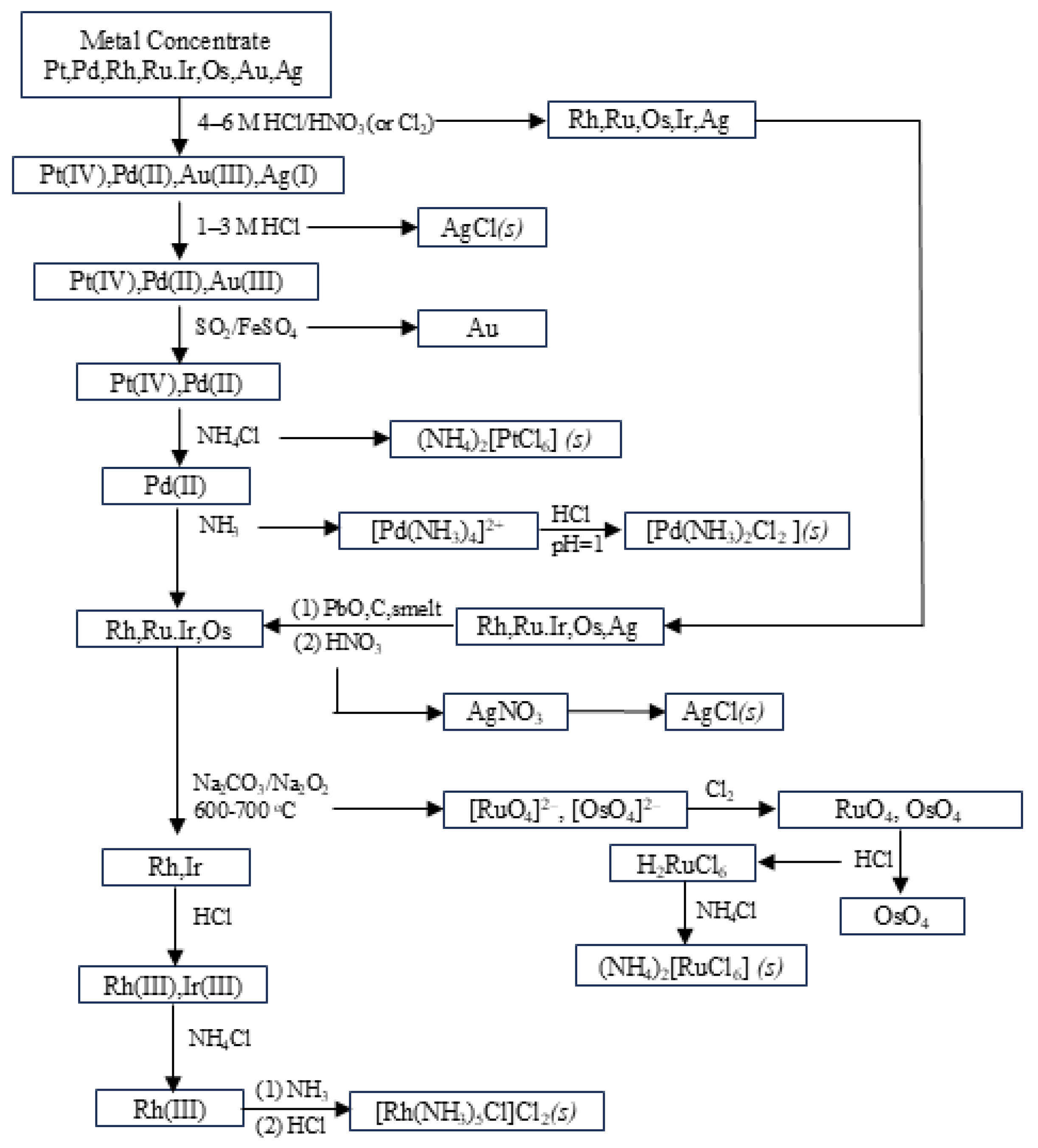
| Lonmin’s Western Platinum Refinery | South Africa | Distillation and precipitation | Au-Base metals-Os-Ru-Ir-Rh-Pt-Pd | 77% | [7] |
| Krastsvetmet Refinery | Russia | Precipitation and solvent extraction | Ag-Au-Pt-Pd-Os-Rh-Ru-Ir | - | [7] |
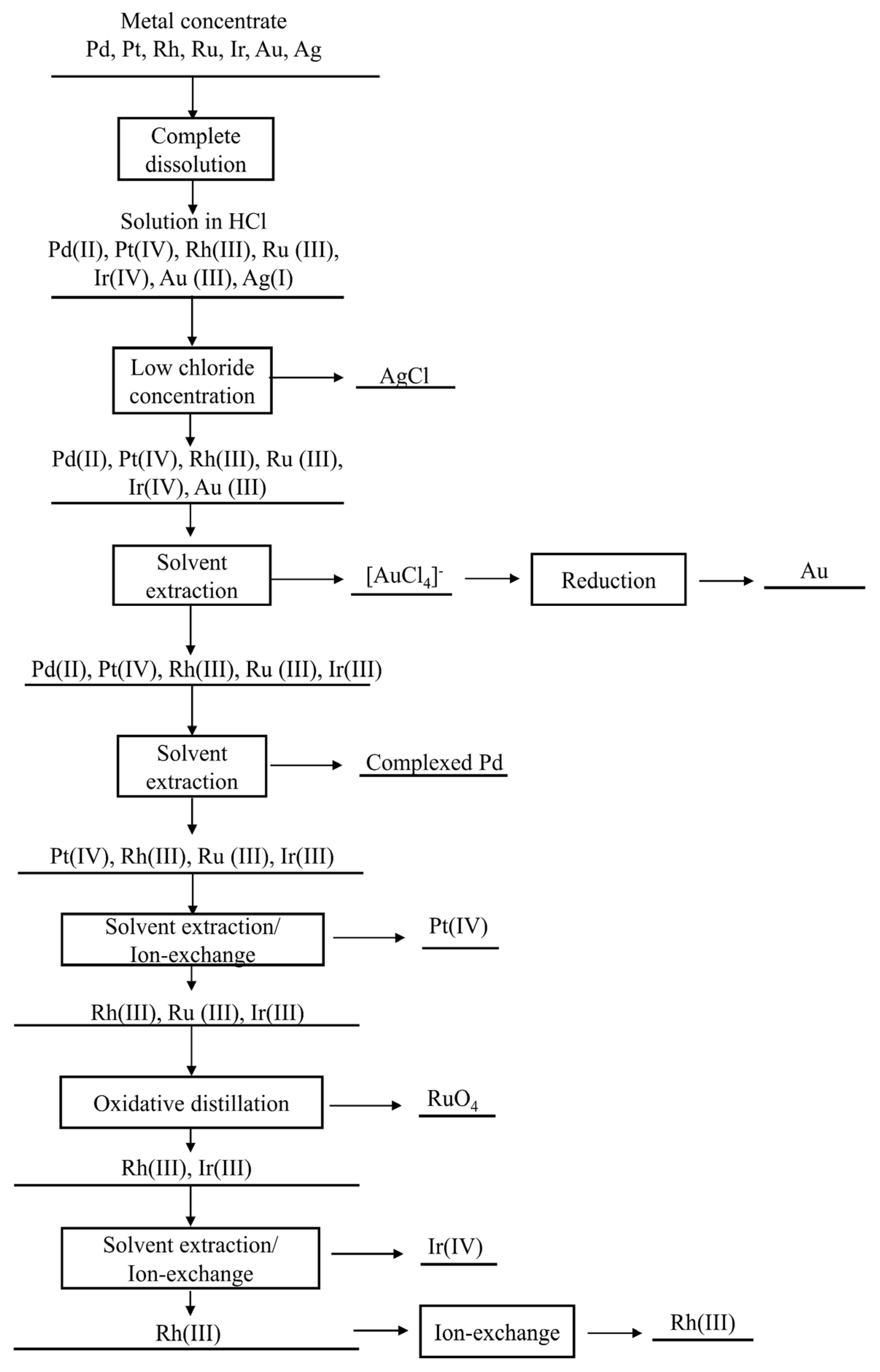
| Johnson Matthey | United Kingdom | Solvent extraction and distillation | Ag-Base metals-Os-Ru-Au-Pd-Pt-Ir-Rh | 80% | [7] |
| Anglo American | South Africa | Solvent extraction and distillation | Os-Au-Pd-Pt-Ru-Ir-Rh | 82% | [7] |
| Impala Platinum | South Africa | Ion exchange and precipitation | Ag-Au-Pd- Base metals-Ru-Pt-Ir-Rh | 80% | [7] |
| System | Extractant | Rh/Ir Separation Factor (β) | Extraction Equilibrium Time | Extractant Stability | Process Cost | Ref. |
|---|---|---|---|---|---|---|
| Conventional extractants | Cyanex 921/Cyanex 301 + SnCl2 | Cyanex921: 150 Cyanex301: 80 | 30 min | Stable, hydrolysis-resistant, with good | Moderate | [23] |
| TBP + SnCl2 | 400 | 60 min | Acid-resistant and recyclable | Low | [24] | |
| Alamine 336 + SnCl2 | 1750 | 30 min | Acid-resistant, but prone to emulsification and degradation | Moderate | [25] | |
| Ionic liquid extractants | HMImT + SnCl2 | >10,000 | <5 min | Thermally/chemically stable, non-volatile; high viscosity | High | [33] |
| Processing Method | Matrix | Experimental Conditions | Technological Indicators of Recovery | Ref. |
|---|---|---|---|---|
| Selective precipitation | 4-alkylaniline | 1.0 mmol/L Pd, Pt, Rh; 0.2 mmol/L 4-alkylaniline; 6~8 mol/L HCl; 3 h of shaking | RRh > 85%, RPt < 5%, RPd < 5% | [8] |
| p-phenylene diamine dihydrochloride (PPDA) | 300 mg/L Pd(II), Pt(IV), and Rh(III); PPDA/Rh = 15 mol/mol, 3~7 mol/L HCl; 6 h of shaking | RRh > 80%, RPd < 2%, RPt < 5% | [14] | |
| 3,3′-diaminobenzidine (DAB) | 10 mmol/L Pd(II), Pt(IV), and Rh(III); [L]/[Metal]init = 3.0, 3~7 mol/L HCl; 1 h of shaking | RRh > 90%, RPd < 20%, RPt < 20% | [16] | |
| m-PDA | 1.0 mmol/L Pd, Pt, Rh; m-PDA/Rh molar ratio of 15:1; 3~8 mol/L HCl; 1 h of shaking | RRh > 90%, RPt < 5%, RPd < 5% | [17] | |
| Selective Liquid–Liquid Extraction | HBMOEAA | 10−3 mol/L Pt, Pd, Rh; 0.5 mol/L HBMOEAA in chloroform; shake for 30 min, 2 mol/L HCl; Back-extraction: 10 mol/L HCl | Back-extraction percentage of Rh = 90%, about 0% for Pd and Pt | [19] |
| Kelex 100 | 2 vol.% Kelex 100 in toluene; 5 mol/L HCl; CSn/CPGMs > 10; shake for over 24 h, 303 K | ERh > 97% | [20] | |
| Cyanex 925 | 200 g Rh(III), 100 g Pt(IV), 25 g Pd(II); 1.0 mol/L HCl; 0.4 mol/L SnCl2; 0.1 mol/L Cyanex 925 | ERh > 91.10%, EPt > 99.20%, EPd > 99.45% | [21] | |
| DMDPHTDMA | (PGM] = 1 × 10⁻³ mol/L, PGM:Sn(II) = 1:10, [DMDPHTDMA] = 0.1 mol/L in 1,2-DCE, 1~9 mol/L HCl; A/O = 1, stirring speed 900 rpm, room temperature, equilibration time 10 min | ERh > 70%, EPt ≈ 100%, EPd < 10%, EIr < 10%, ERu < 10% | [22] | |
| Cyanex 921 | 110 mg/L Ir, 100 mg/L Rh, 1~5 mol/L HCl; 0.1 mol/L Cyanex 921 in kerosene; 0.005 mol/L SnCl2; O/A = 1 | ERh ≈ 80%, EIr ≈ 0% | [23] | |
| tri-butyl phosphate (TBP) | 1.94 × 10⁻³ mol/L RhCl63−, 1.02 × 10⁻³ mol/L IrCl62− and 1.18 × 10⁻² mol/L SnCl3− | ERh ≈ 99%, EIr ≈ 1% | [24] | |
| Alamine 336 | 0.00025 mol/L Ir, 0.0005 mol/L Rh, 9 mol/L HCl; 0.5 mol/L Alamine 336; 0.01 mol/L SnCl2; shake for 30 min, O/A = 1 | DRh/Ir = 1750 | [25] | |
| 2-OAP | 200 μg Rh, 0.025 mol/L malonate, 0.05 mol/L 2-OAP in xylene, pH = 8, back-extraction: 2 mol/L HCl | ERh ≈ 100%, other precious metals and base metals remained unextracted | [28] | |
| 1-octyl-3-methyl-imidazolium hexafluorophosphate ([Omim][PF6]) | 4 mg/L Rh, 240 mg/L Sn, 1 mol/L HCl; 0.05 mol/L [Omim][PF6] | - | [32] | |
| HMImT | 1.0 mmol/L Rh and Ir, 1.0 mol/L HCl solution, Sn/Rh molar ratio = 10, activation time 5.0 min; dosage of HMImT > 1.6 mg | ERh = 99.6%, EIr = 0.1% | [33] | |
| P66614Cl | 48 mg/L Pt, Pd, Rh; 1.0 M HCl; 50% (w/w) IL P66614Cl | EPt ≈ 100%, EPd ≈ 100%, ERh ≈ 99% | [34] | |
| Selective adsorption | Ion exchanger | 100 mg ion exchanger 3, ligand to metal molar ratio = 2:1; pH 2, base metal ions: Cd2+, Zn2+, Ni2+ and Cu2+; desorption: 2 mol/L HNO3 | Adsorption percentage of Rh = 60%, desorption percentage of Rh = 100% | [36] |
| Silica-based (poly)amine ion exchangers | 100 mg ion exchanger 3, ligand to metal molar ratio = 2:1; pH 0.8~3.7, base metal ions: Cd2+, Zn2+, Ni2+ and Cu2+; desorption: 2 mol/L HNO3 | Adsorption percentage of Rh = 30%, Rh = 30%, Cd, Zn, Ni and Cu < 15%, | [37] | |
| Guanidinium-containing silica-based ion exchanger | 300 mg Guanidinium-containing silica-based ion exchanger; pH 3.2, other metals: Pt, Ir, Cu, Fe and Ni | ERh = 32%, base metals were not adsorbed | [38] | |
| Diaion WA21J ion-exchange resin | 43.9 mg/L Pd, 29.5 mg/L Pt, 8.9 mg/L Rh, 999.8 mg/L Al, 560 mg/L Fe, etc., resin = 10.000 g; 21 °C; 150 rpm; 40h | Adsorption percentage of Rh = 89.89%, Pd = 90.21%, Pt = 91.53%, base metals < 1% | [39] | |
| Amberlite IRA-93 resin | 340 mg/L Pd, 280 mg/L Pt, 380 mg/L Rh; resin = 2 g | Adsorption percentage of Rh = 61%, Pd = 99%, Pt = 97%, base metals < 1% | [40] | |
| Purolite S 985 | Purolite S 985 0.1~0.2 g resin; 1~4 mol/L HCl, 0.25 mmol/L Rh, other metal: Pt; desorption: 1 mol/L thiourea in 2 mol/L KOH | Adsorption percentage of Rh = 94%, desorption percentage of Rh = 97.4% | [41] | |
| MP-HMS | MP-HMS 2 mg, other metals: Cu2+, Ni2+ and Zn2+ | Adsorption percentage of Rh = 100%, base metals < 5% | [42] | |
| Nano-Al2O3 | 2.60 × 10⁻⁵ mol/L Os, 4.85 × 10⁻⁵ mol/L Rh, 0.02 mol/L Cu, Zn, Co, Ni, Cd, Pb and Fe; 10 mg nano-Al2O3, flow rate 0.2 mL/min, pH = 2.5 | RRh = 99.9%, ROs = 95.1%, base metals remained unabsorbed | [45] | |
| SPE extractant | 9.7 × 10⁻⁴ mol/dm3 Rh, 1.6 × 10⁻³ mol/dm3 Cu, 5.1 × 10⁻⁴ mol/dm3 Pt, 8.4 × 10⁻³ mol/L Sn; SPE extractant: Fe (III)-templated oxine chitosan | Sequence of adsorption selection: Rh > Pt > Cu | [46] | |
| Fe3O4 nanoparticles | Aqueous solution containing Pd, Rh, and Pt; 1.0 mg/mL Fe3O4 nanoparticles, pH 2.5, contact time 1 h, 22 ± 1 °C | Maximum capacity of Pd, Rh, and Pt is 0.103, 0.149 and 0.068 mmol/Lol/g | [47] | |
| SPE extractant | Loading: 2 mL of sample solution containing 100 mg Rh, Ru, Pd, Ir and Pt, pH 6.0, flow rate 0.5 mL/min; washing: pH 5.0, flow rate 2.0 mL/min; eluting: 2 mL 3 mol/L HCl, flow rate 0.5 mL/min; SPE extractant: Rh (III) ion-imprinted polymer | ERh = 94.2%, ERu = 10.7%, EPd = 11.2%, EIr = 8.9%, EPt = 9.6% | [48] | |
| Emerging technologies (Molecular Recognition Technology) | SuperLig® 190 | Rh, Pd, Ir, Pt, based metal, 6 mol/L HCl, 900–950 mV vs. Ag/AgCl | - | [52] |
| CE | 5 × 10⁻³ mol dm−3 for each CE, 5 × 10⁻⁴ mol dm−3 Pt and Rh, A/O = 1; 25 ± 1 °C, 250 rpm, 0.1~10.0 mol dm−3 HCl | ERh > EPt for 4 CEs in 10.0 mol/L HCl | [53] | |
| Calix[4]arene | Synthetic solution containing Cu, Co, Rh and Ir, 3 mol/L HNO3; 0.02 mol/L THPAC in 30% 1, 2-dichloroethane in DMF | DRh > DIr | [57] |
Disclaimer/Publisher’s Note: The statements, opinions and data contained in all publications are solely those of the individual author(s) and contributor(s) and not of MDPI and/or the editor(s). MDPI and/or the editor(s) disclaim responsibility for any injury to people or property resulting from any ideas, methods, instructions or products referred to in the content. |
© 2026 by the authors. Licensee MDPI, Basel, Switzerland. This article is an open access article distributed under the terms and conditions of the Creative Commons Attribution (CC BY) license.
Share and Cite
Zhou, H.; Yang, Z.; Meng, X.; Zou, X.; Jiang, Y.; Huang, K. Selective Preferential Separation and Extraction of Rhodium: A Review. Metals 2026, 16, 612. https://doi.org/10.3390/met16060612
Zhou H, Yang Z, Meng X, Zou X, Jiang Y, Huang K. Selective Preferential Separation and Extraction of Rhodium: A Review. Metals. 2026; 16(6):612. https://doi.org/10.3390/met16060612
Chicago/Turabian StyleZhou, Haitao, Zhizhuo Yang, Xiaofei Meng, Xiaoping Zou, Yingping Jiang, and Kun Huang. 2026. "Selective Preferential Separation and Extraction of Rhodium: A Review" Metals 16, no. 6: 612. https://doi.org/10.3390/met16060612
APA StyleZhou, H., Yang, Z., Meng, X., Zou, X., Jiang, Y., & Huang, K. (2026). Selective Preferential Separation and Extraction of Rhodium: A Review. Metals, 16(6), 612. https://doi.org/10.3390/met16060612