Article

Mechanism of Ring Formation in Nickel Ore During Rotary Kiln Processing and Its Mitigation Strategies

1
Department of Advanced Components and Materials Engineering, Sunchon National University, Suncheon 57922, Jeonnam, Republic of Korea
2
Department of Energy Science and Engineering, Sunchon National University, Suncheon 57922, Jeonnam, Republic of Korea
*
Author to whom correspondence should be addressed.
Metals 2026, 16(5), 545; https://doi.org/10.3390/met16050545
Submission received: 27 March 2026 / Revised: 9 May 2026 / Accepted: 14 May 2026 / Published: 18 May 2026
(This article belongs to the Section Extractive Metallurgy)

Abstract

Ring formation in rotary kilns is a major operational problem in the ferronickel dry smelting process, in which nickel laterite ore undergoes drying, calcination, and partial reduction. Excessive ring accretion reduces thermal efficiency and disrupts stable kiln operation. In this study, the mechanism of ring formation was investigated through a combined approach integrating laboratory-scale experiments and long-term operational data obtained from a large-scale industrial rotary kiln. The effects of ore composition, particle size, and temperature on melting and sintering behavior were examined, and their correlations with operating variables such as fuel input and kiln rotational speed were analyzed. The results show that ring formation is governed by the selective melting and adhesion of low-melting constituents, particularly in ores with low basicity (MgO/SiO2 < 0.55) and high Fe content (>14 wt.%). A high fraction of fine particles (<75 μm) further promotes adhesion due to their lower melting temperature and enhanced mechanical retention on the refractory surface. In industrial operation, localized overheating near the burner zone and low kiln rotational speeds (0.9–1.1 rpm) significantly accelerate ring growth. These findings provide a mechanistic understanding of ring formation and suggest that appropriate ore blending and optimized control of fuel input and kiln rotation are effective strategies for mitigating ring accretion in commercial ferronickel rotary kilns.

1. Introduction

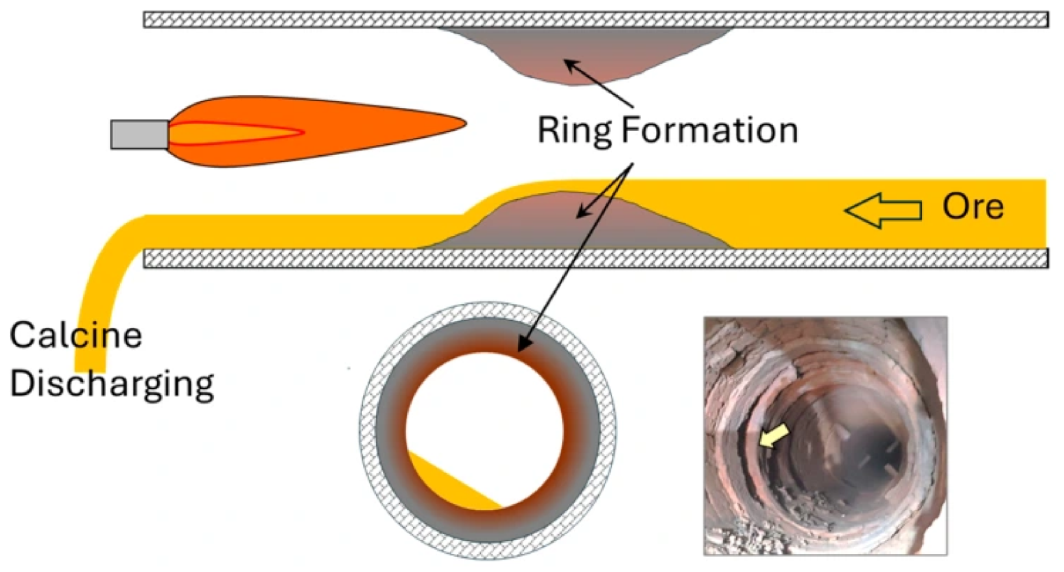
In all ferronickel and iron ore rotary kiln operations, the burner is installed at the end opposite to the feed inlet. Due to direct flame impingement and intense radiative heat transfer, the region near the burner, typically located approximately 3–15 m from the discharge end, exhibits the highest temperature along the entire kiln length [1,2]. In recent years, with the escalation of electricity costs and the tightening of carbon emission regulations, considerable efforts have been made across the industry to increase the discharge temperature of calcine ore from rotary kilns in order to reduce the energy consumption of subsequent electric furnace processes. However, when the fuel input to the burner is increased to elevate the discharge temperature, localized overheating occurs in the vicinity of the burner. As a result, partial melting and agglomeration of the ore take place, and a repetitive thermal cycle of melting, adhesion, and solidification is established during kiln rotation. This process frequently leads to the formation of ring-like accretions on the kiln lining, as illustrated in Figure 1. In the case of iron ore pellets, strong ring formation has been reported to occur at temperatures above 1200 °C [3].
Several studies have demonstrated that the presence of low-melting liquid phases such as low-molecular-weight silica, alkali species in coal ash, and low-melting complex silicates promotes ring formation in rotary kilns [4,5]. In rotary kilns used for iron ore processing, when the feed is mixed with reductants such as coal, partial reduction of hematite generates Fe2+ ions, which further facilitates the formation of low-melting silicate phases [6,7]. These low-melting compounds may react with the refractory lining of the kiln, leading to refractory degradation through repeated adhesion and spalling. In addition, fine low-melting powders can infiltrate small cracks within the refractory lining and act as strong binding agents, thereby intensifying accretion [8,9]. Such ring formation reduces the effective cross-sectional area of the kiln, impedes material flow, accelerates gas velocity, and deteriorates heat-transfer efficiency. When excessive growth occurs, the rings may collapse and be discharged as large fragments, sometimes several meters in size, resulting in severe operational disruptions, including unplanned shutdowns [10,11]. Nickel ores from New Caledonia originate from mafic and ultramafic rock formations uplifted from the oceanic crust. During prolonged weathering, nickel and iron partially substitute for magnesium within serpentine minerals formed by the hydration of olivine and pyroxene [12,13,14,15,16]. In New Caledonian nickel ores, the serpentine group is dominated primarily by the lizardite polymorph. Talc, quartz, and forsterite in nickel ore are considered to be partially generated during the serpentinization of peridotite and pyroxene, as described by Equations (1) and (2), while minor amounts of goethite are presumed to originate from limonite in the overburden layer introduced during mining operations [14,15].
2 Mg 2 SiO 4 ( Olivine ) + 3 H 2 O Mg 3 Si 2 O 5 ( OH ) 4 ( Serpentine ) + Mg ( OH ) 2
2 MgSiO 3 ( Pyroxene ) + H 2 O Mg 3 Si 2 O 5 ( OH ) 4 + SiO 2
Upon heating in a rotary kiln, these hydrated ores undergo dehydroxylation at approximately 500–600 °C, transforming into metastable magnesium silicates. Subsequent decomposition and phase transformation occur at 800–1000 °C, producing more stable silicate phases with simpler crystal structures, such as forsterite and enstatite [17,18,19,20,21,22]. Serpentine (lizardite) and talc possess a phyllosilicate (layered) structure characterized by well-developed cleavage planes. Due to their relatively soft and brittle nature, these minerals readily disintegrate into fine particles during thermal decomposition under the rotational motion of a rotary kiln, resulting in substantial compositional variation among individual particles. [23,24]. In contrast, unhydrated minerals such as quartz and olivine exhibit comparatively robust crystal structures and are less prone to fragmentation during heating. Particles enriched in Fe and SiO2 are known to form low-melting silicates such as FeO·SiO2 under reducing conditions, thereby accelerating melt adhesion to the kiln lining. Several studies have also reported that such fine particulates directly contribute to ring accretion [3,25].
Rotary kilns are widely used in large-scale cement production and direct reduced iron (DRI) processes. Extensive investigations have been conducted on ring formation phenomena as a function of operational conditions, raw material composition, temperature profiles, and coal characteristics [3,9,26]. However, in ferronickel production, research has largely been limited to laboratory-scale batch-type kiln experiments and studies focusing on smelting reduction within rotary kilns. Systematic investigations addressing ore-specific effects and long-term operational data from large-scale industrial kilns, particularly with respect to particle size distribution, fuel injection rate, kiln rotational speed, and ore mineralogical characteristics, remain relatively scarce [17,26,27]. In other words, comprehensive analyses integrating microscopic aspects such as the influence of fine particles generated by fragmentation, ore chemistry, and the mineralogical characteristics of ring deposits with operational parameters, including rotational speed, in-kiln temperature, and coal (reductant) charging rate, remain insufficient. To enhance the energy efficiency of ferronickel smelting, it is necessary to increase the calcine discharge temperature while simultaneously maintaining production targets. Minimizing ring formation is therefore essential, which requires an integrated understanding from both mineralogical and industrial operational perspectives. To clarify the technological context of the present study, representative previous studies on rotary kiln ring formation, furnace size, raw materials and operating conditions are summarized in Table 1. The present study aims to elucidate the mineralogical and thermochemical mechanisms of ring formation in New Caledonian nickel ore and to identify the key factors governing ring growth in a large-scale commercial rotary kiln based on long-term operational data. Furthermore, practical mitigation strategies through process parameter optimization are proposed.

2. Materials and Methods

In this study, nickel ore mined in New Caledonia and used in a ferronickel smelter, together with calcine produced during the rotary kiln process and ring accretions formed on the kiln lining, were systematically analyzed in terms of chemical composition, mineral phases, and thermal behavior. The primary objective was to elucidate the mechanism of ring formation and the principal factors influencing this phenomenon. The chemical composition of the nickel ore employed in this study is summarized in Table 2. The chemical compositions presented in Table 2 were determined by averaging the results obtained from analyses of at least three representative samples for each ore type. Calcination of the ore and investigation of ring accretion were conducted using a large-scale industrial rotary kiln with an inner diameter of 5.5 m and a length of 131 m. The kiln was operated at an ore feed rate of 130 ton·h−1, a rotational speed ranging from 0.1 to 2.7 rpm, and an inclination angle of 1.2°. Industrial rotary kilns typically have diameters of 5–6 m and lengths of 100–150 m [32]. The calcine discharge temperature ranged from 750 to 950 °C. The internal residence time of the ore varies depending on the rotational speed and can be estimated using Equation (3):
Retention   time   ( min ) = 1.77 × θ 0.5 × L S × N × D
where θ is the angle of repose of the ore (35.5°), L is the kiln length (131 m), S is the kiln inclination (1.2°), D is the internal kiln diameter (5 m), and N is the rotational speed (rpm).
In this rotary kiln, ring accretions were typically observed at locations 5–15 m from the end of the rotary kiln, with thicknesses ranging from approximately 500 to 1000 mm. The chemical compositions of the ore, calcine, and ring accretions were analyzed by X-ray fluorescence (XRF; S4 EXPLORER, Bruker AXS GmbH, Karlsruhe, Germany). Elemental distribution mapping of Mg, Si, and Fe within the ring accretions was performed using an electron probe microanalyzer (EPMA; JXA-8530F, JEOL Ltd., Tokyo, Japan). Mineralogical phases of the ore and ring samples were identified by X-ray diffraction (XRD; D/Max-2500 V, Rigaku Corporation, Tokyo, Japan). Direct sampling of ring deposits from the operating kiln poses significant safety risks. Therefore, detached ring fragments were collected for analysis. A total of ten samples were obtained and averaged for representative data. Calcine samples were collected at approximately 900 °C from the discharge end of the rotary kiln.
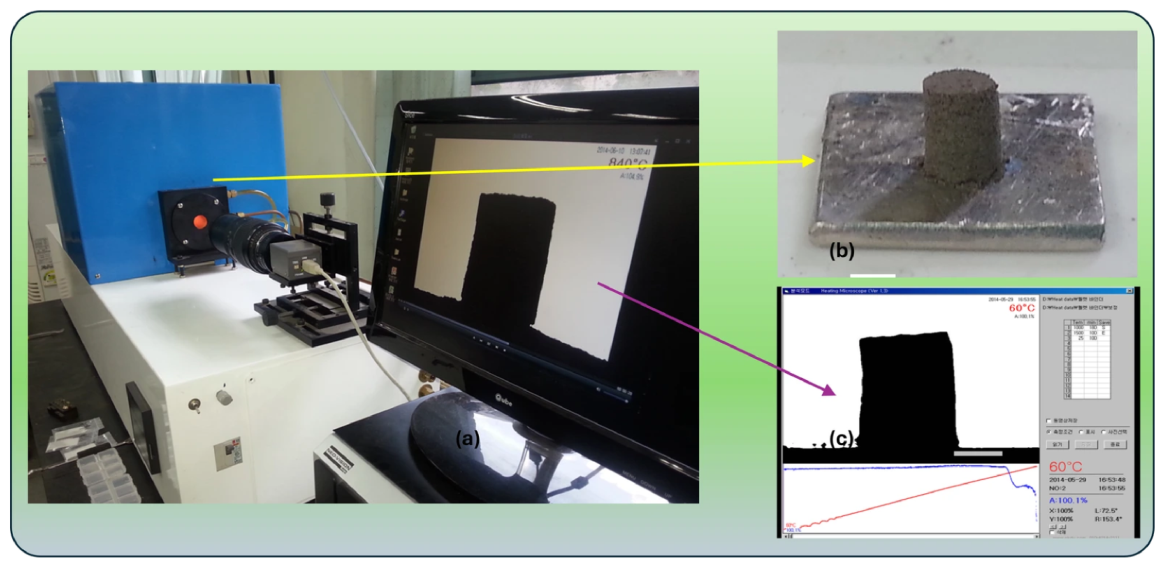
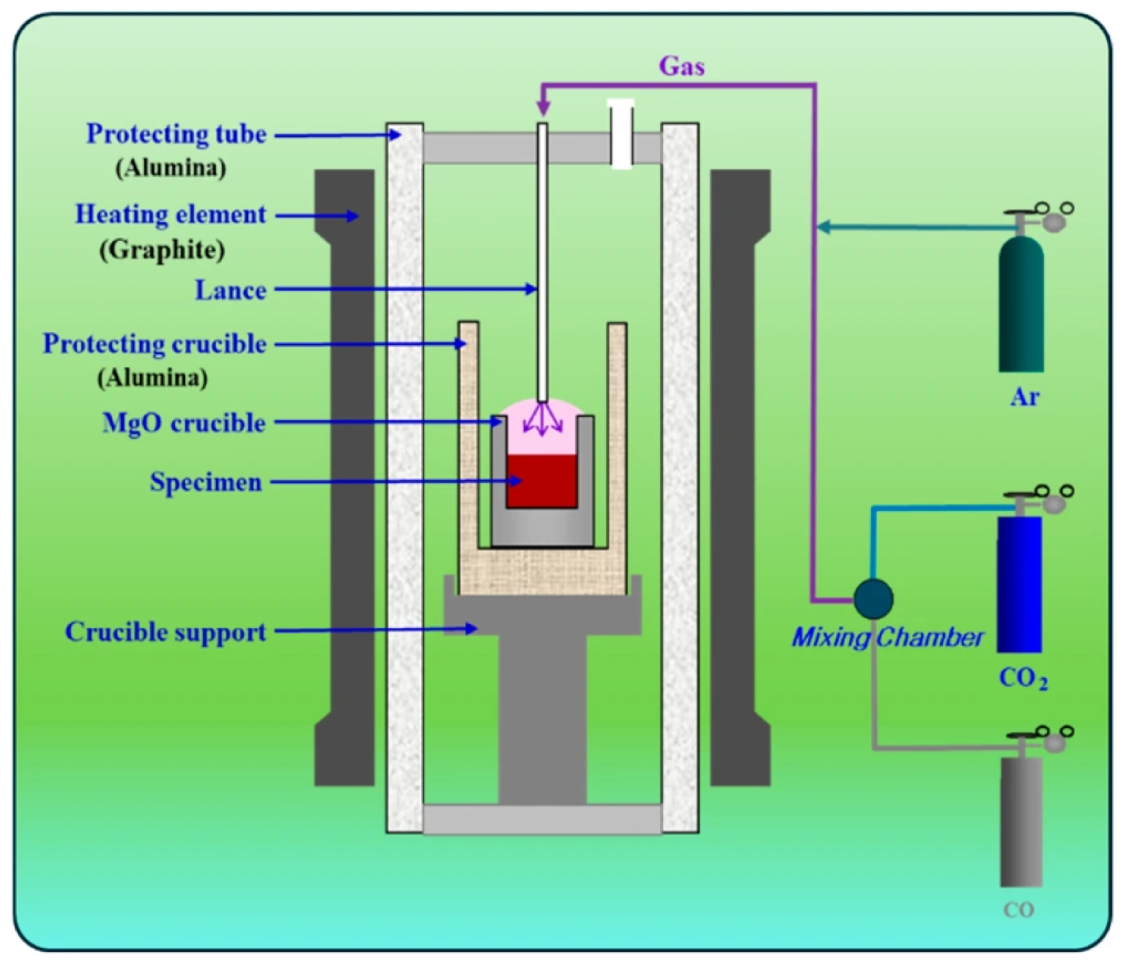
The thermal decomposition behavior and phase transformation temperatures of the ore were evaluated using differential thermal analysis (DTA) and thermogravimetric analysis (TGA) with Setaram SETSYS Evolution (Caluire, France) and CAHN TG-171 instruments (Cerritos, CA, USA), respectively. High-temperature behavior and melting characteristics of the ore, calcine, and ring samples were analyzed using a custom-built heating microscope (Okdu electric furnace, Seoul, Republic of Korea), as illustrated in Figure 2. The temperature was increased from 500 to 1500 °C at a heating rate of 10 °C·min−1, and heating was terminated when the specimen was judged to have reached a molten state. Cylindrical specimens with a diameter of 5 mm and a height of 8 mm (Figure 2b) were prepared by uniaxial pressing under a load of 10 kgf. The samples were fabricated from sintered materials that were subsequently crushed and sieved to a particle size below 200 mesh (≤75 μm). In this study, particles with sizes smaller than or equal to 75 μm were classified as “fine ore”, whereas particles with sizes larger than or equal to 1 mm were classified as “coarse ore”. As shown in Figure 2c, melting was defined as the point at which the specimen height decreased to less than 50% of its original height. All additional testing procedures were conducted in accordance with DIN 51730. To evaluate the sintering characteristics associated with ring formation during the heating of nickel ore, phase transformations and sintering behavior under controlled temperature and atmospheric conditions were investigated using a Tammann furnace (Figure 3). The experimental temperature range was set between 1000 and 1300 °C.
After reaching the target temperature, the specimens were held isothermally for 10 min, followed by furnace opening and air cooling. The heating rate was fixed at 10 °C·min−1, considering the actual residence time inside the rotary kiln (approximately 90–120 min). The experimental atmospheres included air, argon (Ar), and reducing gas mixtures with CO/CO2 ratios of 1:1, 7:3, and 9:1. Under these conditions, the theoretical equilibrium oxygen partial pressure ranged from 7.7 × 10⁻¹⁵ to 2.52 × 10⁻¹² atm. The sintered specimens were fabricated in cylindrical form with a diameter of 13 mm and a height of 7 mm and were uniaxially pressed under a load of 1 tonf, approximately 9.8 kN. The specimens were prepared from crushed and sieved powders with particle sizes below 200 mesh (≤75 μm). Melting tests using the heating microscope and the heating/sintering experiments using the Tammann furnace were conducted to comparatively assess the relative susceptibility of different samples to ring formation. Because it is difficult to experimentally determine the melting characteristics for all possible ore compositions, composition-dependent melting temperatures and phase equilibria were further predicted using the thermodynamic calculation software FactSage 8.2. In these calculations, the atmospheric oxygen partial pressure was applied to examine variation in melting temperature associated with changes in oxide phase composition. To improve the reliability of the experimental results and ensure repeatability and reproducibility, repeated measurements and tests were performed using the same samples. XRF and XRD analyses were conducted in duplicate for each sample, whereas EPMA analysis was performed at three representative locations on each sample. The heating microscope and Tammann sintering tests were also repeated twice under identical experimental conditions. Furthermore, the industrial operational data used in this study were collected over more than six months of plant operation, with approximately three to six data points obtained per month.

3. Results

3.1. High-Temperature Behavior of the Ore

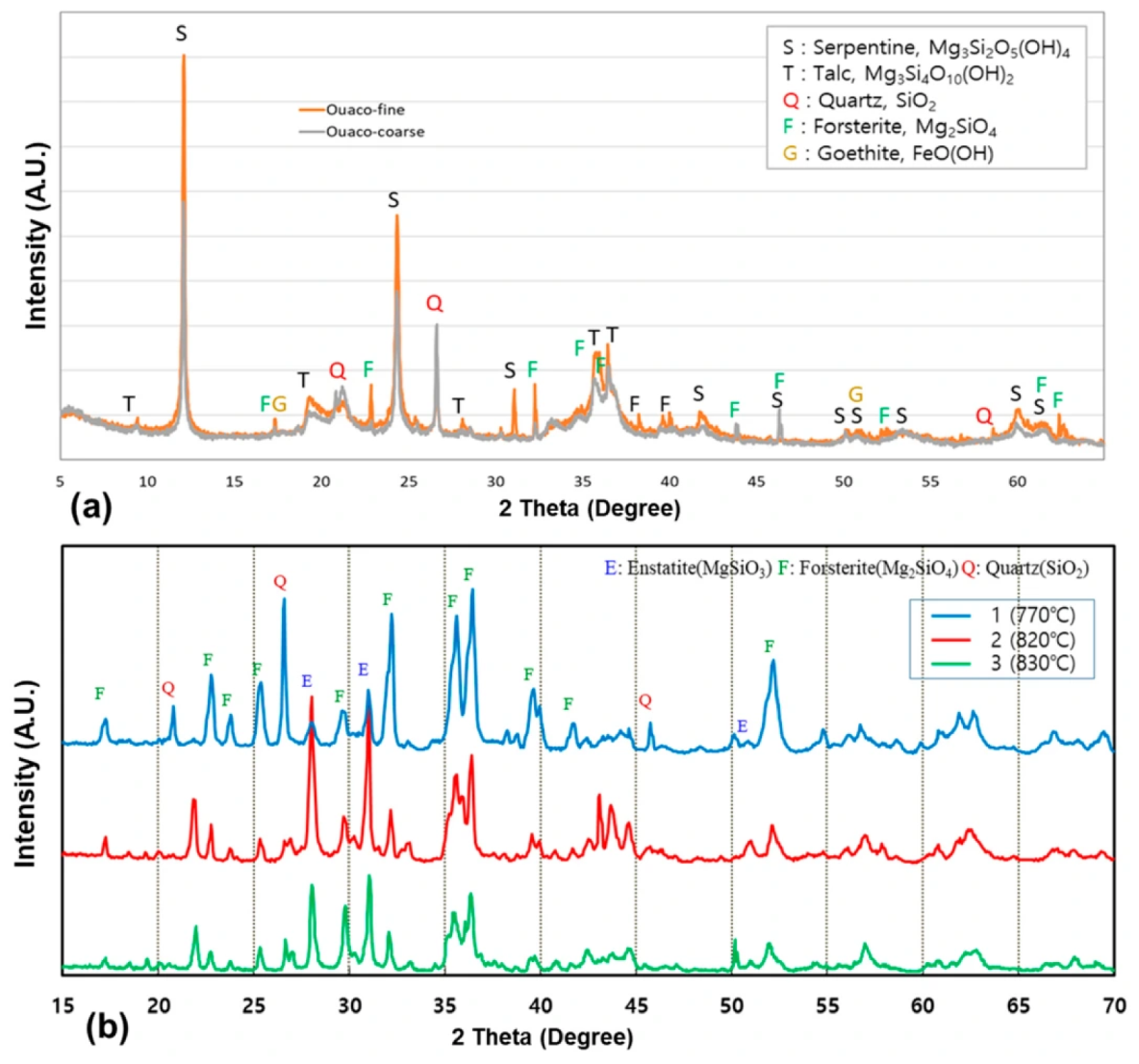
To elucidate the melting and adhesion characteristics associated with ring formation, a mineralogical analysis of the nickel ore was conducted. Previous studies [3,27] have reported that smaller particle sizes facilitate ring accretion in rotary kilns. Therefore, phase analysis was performed as a function of particle size. The results indicate that the nickel ore consists predominantly of serpentine ((Mg,Fe,Ni)3Si2O5(OH)4) and talc ((Mg,Fe,Ni)3Si4O10(OH)2), with minor amounts of quartz (SiO2), as shown in Figure 4a. In general, coarser particles contain relatively higher fractions of quartz and forsterite, whereas finer particles exhibit increased contents of serpentine and talc. This trend is attributed to the more extensive weathering experienced by smaller particles. In addition, the content of goethite ((Fe,Ni)O(OH)) increases in the finer fraction, depending on the degree of weathering, mining conditions, and the composition of the parent rock. It is well established that higher Ni contents are typically associated with increased talc fractions, whereas ores derived from the upper weathered layers of the deposit contain higher goethite contents due to intense surface weathering [13]. These compositional variations suggest that fine-grained ores, following dehydration and thermal decomposition, are more prone to forming low-melting silicate phases, thereby increasing their susceptibility to ring accretion in the rotary kiln. In addition, a ferrosilite phase was identified in most of the samples, indicating that Fe present in the ore partially substitutes for Mg within the silicate lattice. However, previous studies have reported that substitution of Mg by Fe or Ni in minerals such as forsterite induces only negligible lattice distortion, resulting in shifts in the XRD 2θ peak positions of far less than 1° [33,34]. Furthermore, the amounts of Fe and Ni substitution are relatively small compared with the overall MgO and SiO2 contents. Therefore, in the present study, the influence of Fe- and Ni-substituted mineral phases was reasonably approximated within the MgO–SiO2 system without introducing significant error. A comprehensive summary of the mineral phases identified in the ore, calcine, and detached clinker (spalled ring fragments) is presented in Table 3.
In the calcine and clinker samples, thermal decomposition of serpentine (lizardite) and talc resulted in the formation of forsterite and enstatite phases. Figure 4b illustrates the temperature-dependent phase evolution of the Ouaco nickel ore. As the temperature increases, the enstatite phase becomes more pronounced, whereas the fraction of forsterite slightly decreases.
This behavior is attributed to the enhanced thermal decomposition of talc and serpentine at elevated temperatures, which promotes the formation of quartz and enstatite and increases the activity of SiO2, thereby facilitating enstatite formation according to Equations (4) and (5):
Mg 3 Si 4 O 10 ( OH ) 2 ( Talc ) 3 MgSiO 3 ( Enstatite ) + SiO 2 + H 2 O ( 900 1050 C )
Mg 2 SiO 4 ( Forsterite ) + SiO 2 2 MgSiO 3 ( Enstatite )
In the clinker samples, quartz was scarcely detected, whereas a significant amount of spinel phase was observed. This suggests that quartz reacted at high temperatures in the molten state with alumina (Al2O3), which is relatively enriched in the fine particles (Table 3), leading to spinel formation as expressed in Equation (6):
MgO , FeO + Al 2 O 3 ( Mg , Fe ) Al 2 O 4
This phenomenon indicates that the clinker fragments were exposed to high temperatures for a prolonged period within the ring formation zone compared with the bulk calcine. Considering the internal temperature profile of the 131 m industrial rotary kiln used in this study, chemical dehydration (dehydroxylation) and thermal decomposition reactions of the nickel ore are expected to initiate approximately 50 m from the burner end. For hydrated minerals such as serpentine and goethite, chemically bound water is removed at temperatures above approximately 600 °C, whereas further thermal decomposition into simpler oxide and silicate phases including enstatite, forsterite, and wüstite occurs at temperatures exceeding approximately 800 °C [18,19,22].
Although slightly different interpretations have been proposed regarding the thermal decomposition of serpentine, it is generally accepted that dehydration occurs in the intermediate temperature range of 600–800 °C, accompanied by transformation into an amorphous phase and the partial formation of low-molecular-weight products such as forsterite. At higher temperatures (approximately 800–1000 °C), the formation of new crystalline phases and subsequent crystal growth occur [18,20]. The dehydration and thermal decomposition of serpentine can be summarized by Equations (7)–(9).
Low-temperature dehydration (400–600 °C):
Mg , Fe , Ni ) 3 Si 2 O 5 ( OH ) 4 ( Mg , Fe , Ni ) 3 Si 2 O 5 ( OH ) 4 x + x H 2 O
High-temperature dehydroxylation (700–800 °C):
Mg , Fe , Ni ) 3 Si 2 O 5 ( OH ) 4 ( Mg , Fe , Ni ) 3 Si 2 O 7 + 2 H 2 O
Crystalline phase formation (800–900 °C):
Mg , Fe , Ni ) 3 Si 2 O 7 ( Mg , Fe , Ni ) 2 SiO 4 ( Forsterite ) + ( Mg , Fe , Ni ) SiO 3 ( Enstatite
In Equation (7), partial dehydration proceeds without significant structural alteration of the ore, and the serpentine diffraction pattern remains detectable by XRD. Such partially decomposed phases are occasionally observed in calcine produced under suboptimal calcination conditions in industrial rotary kilns. In Equation (8), complete dehydroxylation leads to the formation of a metastable intermediate phase (meta-silicate), during which a small amount of forsterite may already be detected. In Equation (9), the intermediate meta-silicate subsequently decomposes and crystallizes into forsterite and enstatite phases. This stage corresponds to the majority of calcine produced in full-scale industrial rotary kilns. Goethite also undergoes dehydroxylation in the temperature range of 300–800 °C (Equation (10)), generally at slightly lower temperatures than serpentine [21]:
2 FeO ( OH ) Fe 2 O 3 + H 2 O
Talc may be generated through the incomplete thermal decomposition of serpentine. However, mineralogical analysis of the raw ore confirmed that talc is also present in substantial amounts prior to calcination (Table 3). Upon heating, talc undergoes dehydroxylation and forms pyroxene-type enstatite, as expressed in Equation (4) [19]. Under non-equilibrium conditions, such as rapid thermal shock, talc may decompose to produce forsterite and enstatite along with quartz (or cristobalite), as described by Equation (11):
Mg 3 Si 4 O 10 ( OH ) 2 Mg 2 SiO 4 + MgSiO 3 + SiO 2 + H 2 O
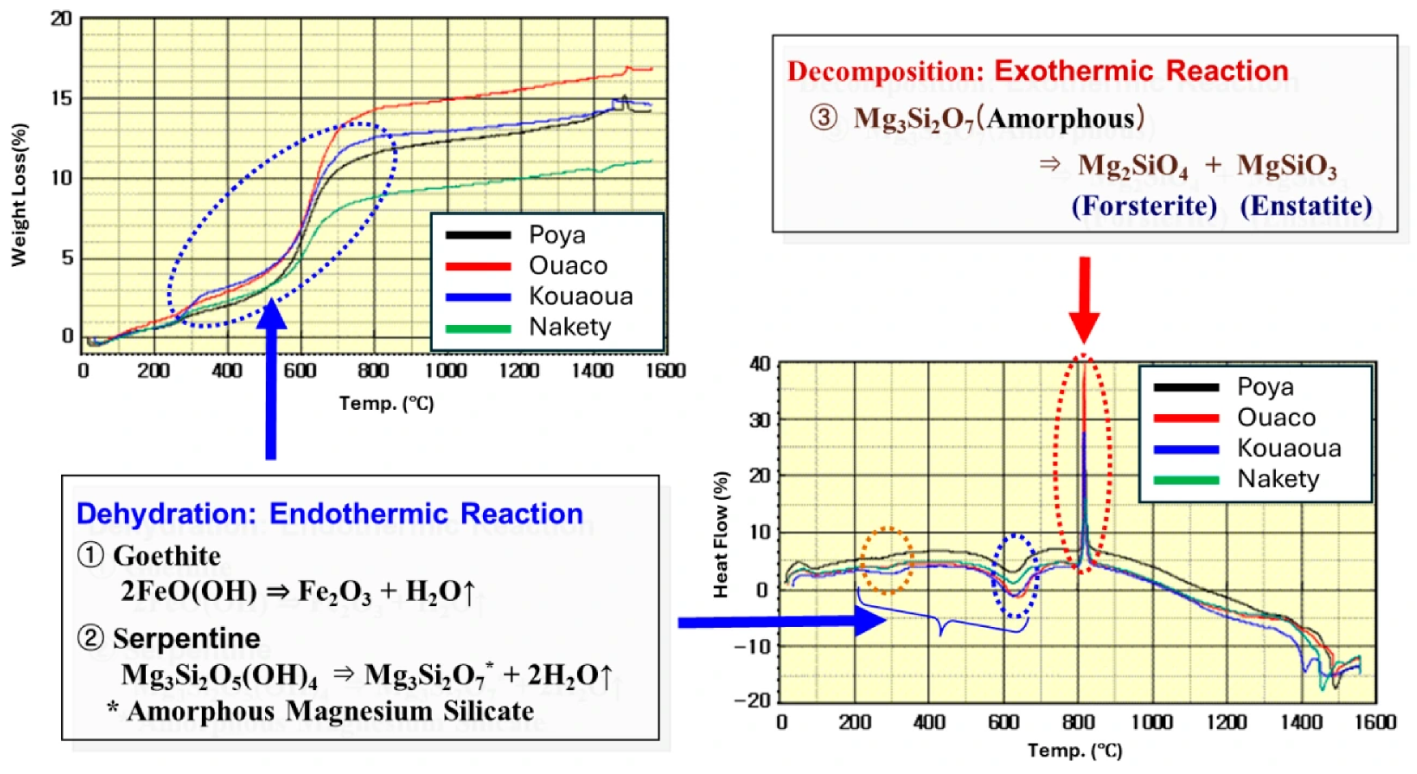
During the calcination of nickel ore in the rotary kiln, high-temperature physical and chemical transformations can be evaluated using DTA and TGA analyses. Figure 5 presents the DTA and TGA results obtained to characterize the thermal behavior of the nickel ore during heating. The TGA curve shows a pronounced weight loss in the range of 600–700 °C, which corresponds to the rapid dehydration reactions of serpentine, talc, and goethite described in Equations (7) and (8). The DTA results reveal an endothermic peak within the same temperature interval, consistent with these dehydration reactions. A minor endothermic effect observed between 200 and 300 °C is attributed to the evaporation of physically adsorbed moisture. In contrast, the sharp exothermic peak near 800 °C is associated with the decomposition of metastable silicate phases such as Mg3Si2O7 and the crystallization of forsterite and enstatite [18,20].
As shown in Figure 5, although the magnitude of heat flow and weight loss varies depending on the relative contents of serpentine, talc, and goethite among ores from different mines, the overall transition temperatures show no significant differences. From these results, it can be inferred that rapid fragmentation of the ore is likely to occur at temperatures above approximately 800 °C. Accordingly, it may be reasonably assumed that abrupt ring accretion in the rotary kiln occurs only after the ore has been heated beyond this temperature range.
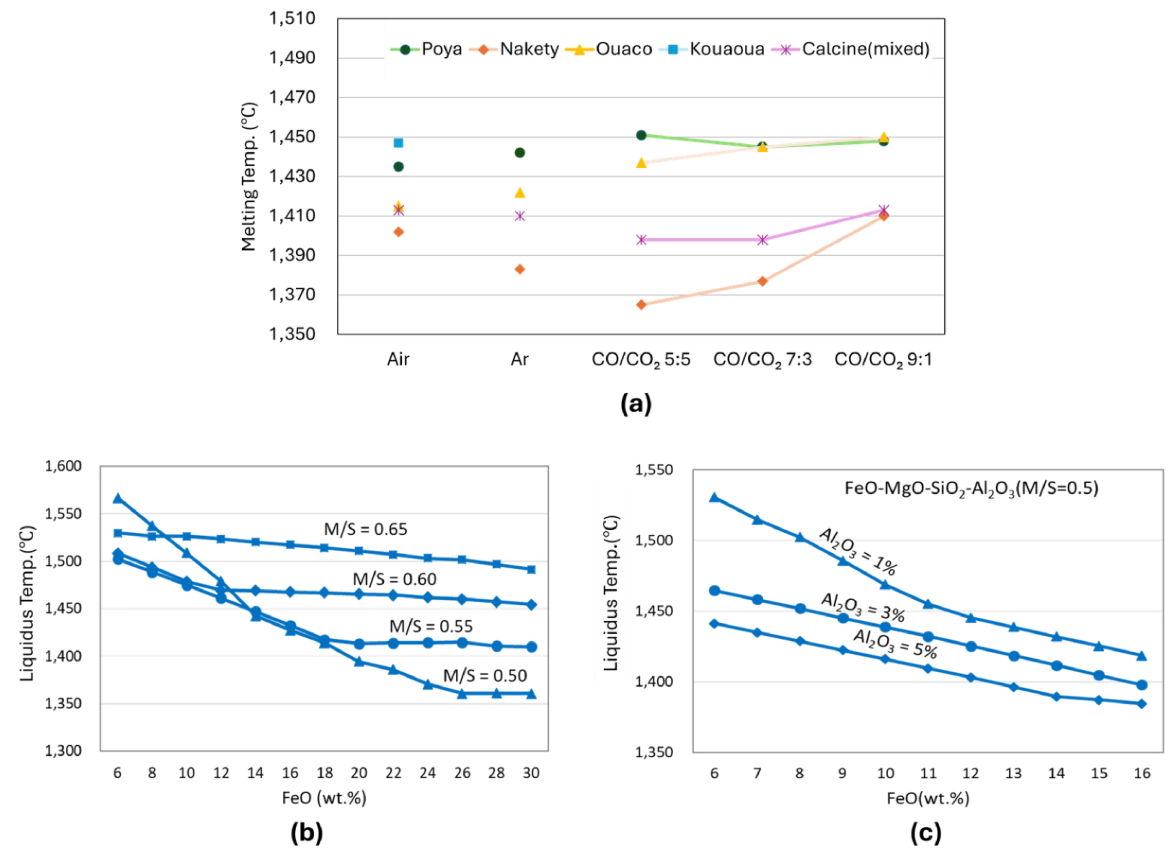
Figure 6a presents the high-temperature melting behavior of the ore observed using a heating microscope. The melting temperature was defined as the temperature at which the height of the cylindrical specimen decreased to less than approximately 50% of its original height. Under an oxidizing (air) atmosphere, melting occurred within the range of 1400–1450 °C, with no substantial variation among different ore types. This behavior is attributed to the fact that, under atmospheric conditions, metallic elements such as Ni and Fe predominantly exist as oxides (NiO and Fe2O3). Despite compositional differences among ore types, the equilibrium melting behavior within the MgO–SiO2–Fe2O3 system therefore occurs within a similar temperature range. In contrast, under CO/CO2 atmospheres, significant deviations in melting temperature were observed depending on the ore type. Under reducing conditions, the melting temperature of the ore may increase due to an increase in reduced metallic components, the inhibition of reducing gas penetration caused by pore blockage within the specimen by reaction products formed during reduction, and the formation of MgO-rich silicates. Conversely, the formation of low-melting phases such as fayalite (FeO·SiO2) may lower the melting temperature. Therefore, the observed differences in melting temperature among ore types are considered to arise from the combined effects of these competing phenomena.
The combined and competing effects of these mechanisms result in pronounced differences in melting temperature among ore types. Since industrial rotary kilns for ferronickel smelting operate under reducing atmospheres, variations in ore composition are expected to influence the degree of ring accretion. Moreover, due to kiln rotation, differences in gas–solid contact conditions may arise compared with laboratory-scale experiments, potentially leading to discrepancies between experimental and industrial observations. Several studies have reported that, under reducing atmospheres, the high-temperature softening behavior of nickel ore strongly depends on its chemical composition [35,36,37]. This is consistent with previous findings indicating that increases in FeO content and variations in the MgO/SiO2 (M/S) ratio significantly affect the melting temperature of ferronickel ores and slags [35]. Heating microscope measurements further revealed that the specimen height begins to decrease gradually above approximately 800 °C, which is attributed to dehydration and thermal decomposition reactions. Under reducing conditions with CO gas, however, partial reduction of Ni and Fe oxides and the formation of low-melting phases, combined with CO gas evolution, may lead to transient volume expansion in the temperature range of 900–1100 °C. In nickel ore rotary kiln operation, localized reducing environments are generated in high-temperature regions due to coal addition. The variations in melting temperature and volumetric behavior observed under CO/CO2 atmospheres in this study may therefore be interpreted as a simulation of such industrial conditions. In addition, differences in high-temperature melting behavior are likely influenced by the size and distribution of recrystallized forsterite and enstatite phases, which constitute the major fraction of the calcined ore, as well as by minor components such as metal oxides and SiO2. In particular, when low-melting liquid phases are preferentially formed in specific ore types, the probability of excessive wall adhesion and ring formation is expected to increase significantly.
Figure 6b presents the variation in melting temperature as a function of FeO content in the MgO–SiO2–FeO ternary system, simulated using FactSage under atmospheric pressure (1 atm). Consistent with previous studies, the melting temperature decreases with increasing FeO content up to a certain concentration. Within the compositional range of the ores investigated in this study, a lower MgO/SiO2 (M/S) ratio results in a more pronounced reduction in melting temperature. As shown in Table 4, elevated FeO content and reduced M/S ratio are characteristic features of the fine particles and ring accretions. Such compositional conditions are expected to promote ring formation due to the associated decrease in melting temperature. This tendency is consistent with the experimental observations in Figure 6a, where Nakety ore, characterized by a lower M/S ratio and higher Fe content, exhibited a relatively lower melting temperature under reducing conditions compared with other ores. In particular, when the FeO content was below 20% and the M/S ratio was below 0.5, the melting temperature decreased to below 1400 °C, in some cases approaching approximately 1350 °C. Furthermore, the Al2O3 content in fine particles and ring accretions was found to be higher than that in the bulk ore. As illustrated in Figure 6c, thermodynamic simulations of the SiO2–MgO–FeO–Al2O3 quaternary system demonstrate that Al2O3 contributes to the formation of low-melting phases. Figure 6c shows the variation in melting temperature as a function of Al2O3 content at an M/S ratio of 0.5, which is representative of actual ring accretions. The results indicate that the melting temperature decreases with increasing Al2O3 content.
For New Caledonian nickel oxide ores with M/S ≈ 0.55 and FeO content in the range of 14–18%, the Al2O3 content typically ranges from 1 to 3%. This compositional characteristic indicates an inverse relationship between Al2O3 concentration and melting temperature. In industrial ferronickel production, rotary kilns are generally operated at rotational speeds between 0.8 and 1.8 rpm. Pulverized coal or gas burners are commonly employed as heat sources and are installed near the calcine discharge end. Because the solid feed and high-temperature combustion gases flow in opposite directions (countercurrent configuration), the temperature of the raw material gradually increases as it approaches the discharge end, leading to progressive enhancement of the calcination degree.
Figure 6. (a) Melting temperatures of lateritic nickel ores under different gas atmospheres. (b) Calculated liquidus temperature as a function of FeO content at different MgO/SiO2 (M/S) ratios under atmospheric pressure (1 atm) in the FeO–MgO–SiO2 system. (c) Thermodynamically calculated liquidus temperatures in the FeO–MgO–SiO2–Al2O3 system at M/S = 0.5 as a function of FeO and Al2O3 contents (1 atm).
Metals 16 00545 g006

3.2. Mechanism of Ring Formation in the Rotary Kiln

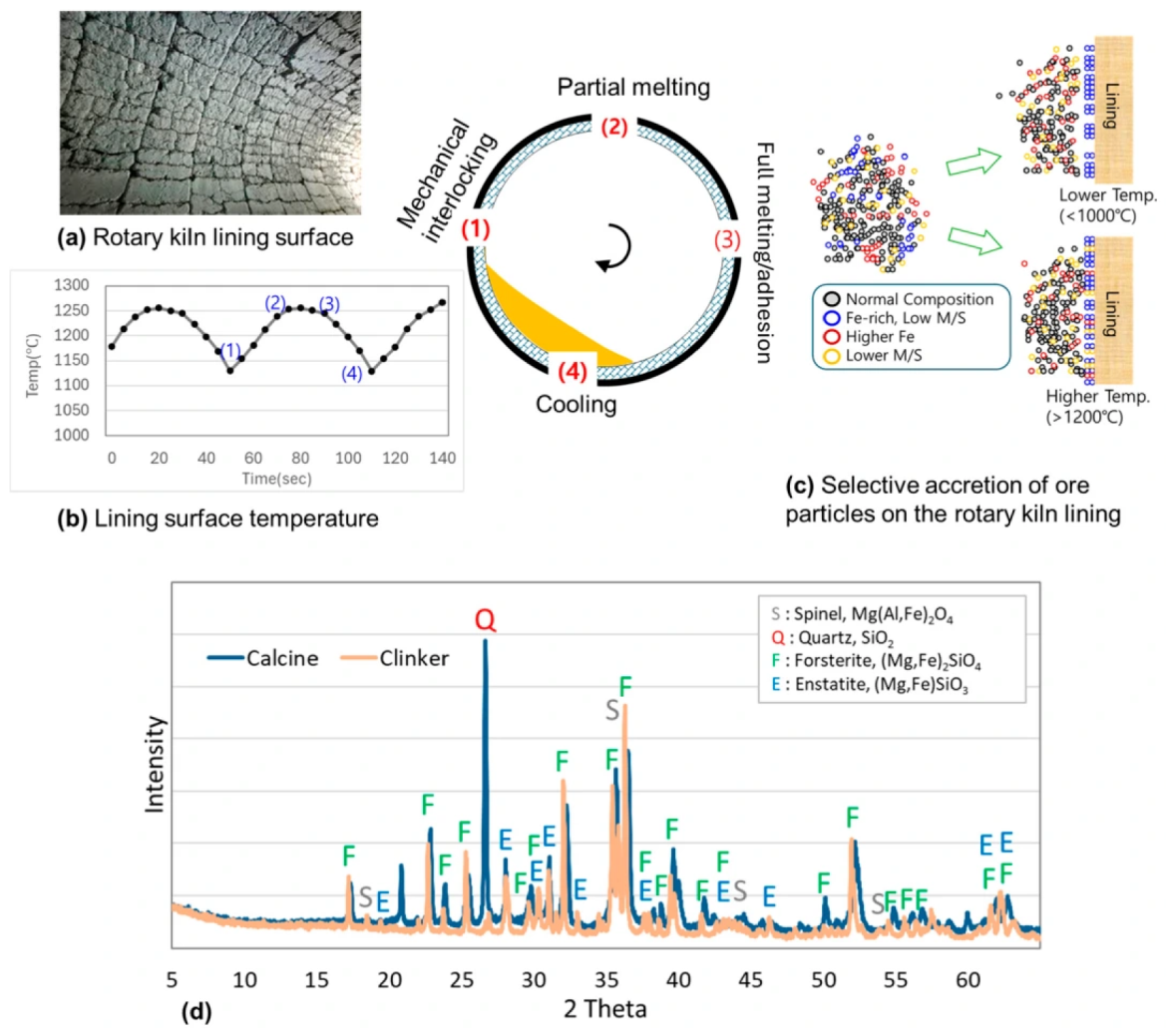
In commercial rotary kilns, the highest temperatures are generated in the vicinity of the burner flame, resulting in correspondingly elevated temperatures at the rotary kiln lining. In this study, the highest-temperature region was identified approximately 10–15 m from the discharge end of the rotary kiln, coinciding with the region where most ring accretion occurred. Accordingly, in ferronickel rotary kilns, phase transformations and fragmentation of nickel ore occurring near the flame zone are considered to promote ring formation through melt adhesion to the inner lining (Figure 1). Because nickel ores contain Fe and Ni oxides, certain ore types readily form low-melting compounds such as fayalite (2FeO·SiO2) under reducing gas conditions, as indicated in Figure 6a. This tendency is expected to be further enhanced in high-temperature regions where fine particles are generated during thermal decomposition and where substantial amounts of FeO are produced by CO-induced reduction. In the case of iron ore pellets, it has been reported that ring accretion increases sharply above 1200 °C compared with that at 950 °C during DRI formation in rotary kilns [3]. When particles of various sizes rotate within the kiln, segregation occurs such that larger particles migrate upward while smaller particles accumulate in the lower portion of the bed [38,39]. Fine particles accumulated near the wall may become trapped in surface irregularities of the refractory lining (Figure 7a), where they are readily heated and partially melted due to the elevated wall temperature. The upper half of the kiln circumference is directly heated by the burner flame and high-temperature gases, whereas the lower half is cooled through contact with the ore bed. During continuous rotation, the heated wall segment passes through the ore bed, allowing fine, low-melting particles to adhere to the surface. As the kiln rotates further, the adhered layer is reheated and partially remelted in the upper zone. Repetition of this heating–melting–adhesion–cooling cycle progressively increases ring thickness. Thus, ring formation during ferronickel calcination proceeds through a repetitive “heating–melting–adhesion–cooling” mechanism, as schematically illustrated in Figure 7a–c. This phenomenon becomes more pronounced when a large temperature difference exists between the refractory lining and the ore bed [10,29]. More discussion about ring formation is given in Section 4.1.
Figure 7d presents the XRD patterns of ring accretions and calcine. Although the overall mineral phases of the ring deposits are similar to those of the calcine, quartz is scarcely present in the ring, whereas spinel phases are observed. This observation indicates that the ring formation zone experienced higher temperatures and prolonged thermal exposure, and that relatively elevated alumina contents contributed to spinel formation. As shown in Table 4, the chemical composition of ring deposits closely resembles that of fine particles, characterized by significantly higher Fe content and markedly lower basicity (M/S) compared with the bulk ore. As discussed in Figure 6b,c, such compositional conditions substantially reduce the melting temperature of the material. Integrating the results presented in Table 2 and Table 3 and Figure 6 and Figure 7, it can be concluded that the ore consists of highly heterogeneous particles. At relatively lower temperatures (<1200 °C), particles with high Fe content and low M/S preferentially form low-melting fayalite (FeO·SiO2), which adheres to the kiln lining and acts as an initial bonding phase. As the internal kiln temperature further increases (>1300 °C), particles with higher intrinsic melting points may also melt and adhere, and even large particles exceeding 10 mm in diameter may become mechanically attached due to the sticky surface condition (Figure 7c). Therefore, selective adhesion of fine, low-melting particles predominates at relatively lower temperatures, whereas at higher temperatures, adhesion becomes less sensitive to particle size and composition. Consequently, clinkers formed at elevated temperatures often exhibit a chemical composition similar to that of the average calcine.
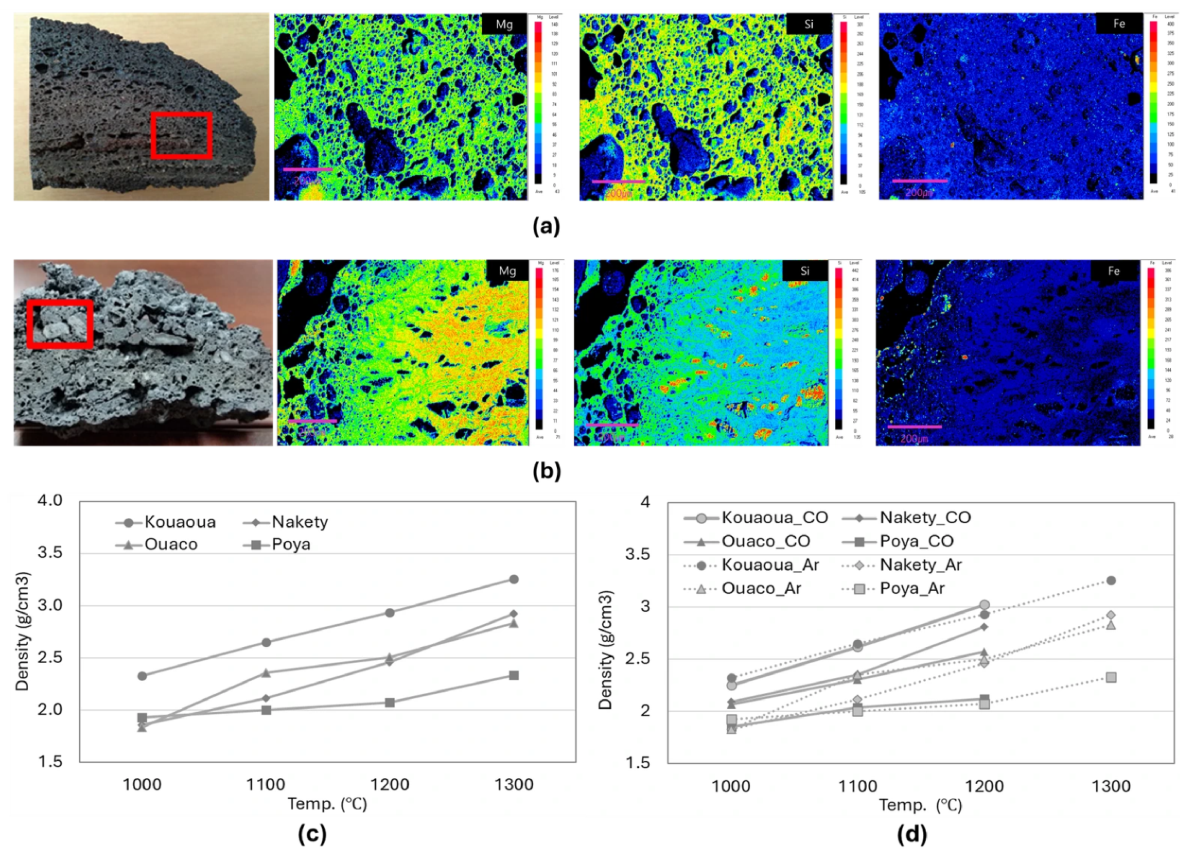
Figure 8a,b illustrate the cross-sectional compositional distribution of ring accretions (clinker). In large-scale industrial rotary kilns, post-cooling internal inspection reveals that the morphology of the accreted layer varies depending on the distance from the burner, i.e., the local temperature. In relatively low-temperature regions (<1200 °C), a thin (0.1–0.3 m), weakly bonded accretion layer containing fine pores is typically formed, and a layered structure is frequently observed. In contrast, in high-temperature regions (>1300 °C), the accretion layer becomes significantly thicker (>1 m), and even relatively large particles from the ore bed adhere to the wall. In such cases, the layer boundaries disappear due to extensive melting, and large, heterogeneous pores are present within the structure. These large pores are presumed to originate from CO gas generated by reactions involving coal particles trapped or adhered within the molten or semi-molten ore. This feature is characteristic of rotary kiln operations employing solid coal as a reductant and is commonly observed in rotary kilns processing iron ore or nickel ore. Below 1200 °C, partial sintering may occur due to particles with relatively low melting temperatures. Pronounced layered structures may develop due to variations in sintering rate caused by fluctuations in operating temperature. However, in high-temperature zones, rapid melting produces sticky liquid phases that trap or mechanically attach nearby fine particles, leading to accelerated ring growth. In industrial practice, rings formed under such high-temperature conditions have been observed to grow by more than 1 m within a single day. These characteristics are also reflected in the EPMA analysis. In relatively uniform microstructures Figure 8a, the elemental distribution appears comparatively homogeneous. In contrast, accretions formed rapidly under high-temperature melting conditions (Figure 8b) exhibit pronounced compositional heterogeneity due to the attachment of partially unmelted large particles.
Sintering experiments were conducted on four types of New Caledonian nickel ores listed in Table 2 using the Tammann furnace shown in Figure 2. The tests were performed under argon and CO atmospheres, and the degree of sintering was evaluated based on density changes. The results are presented in Figure 8c. Above 1000 °C, a distinct increase in density with temperature was observed for all ore types, indicating enhanced interparticle bonding (sintering) and pore reduction due to partial liquid phase formation. In the case of Poya ore, which has relatively low Fe content, the density increase was limited. This behavior can be attributed to the relatively small amount of liquid phase formed, resulting in less effective pore elimination. Figure 8d shows the influence of furnace atmosphere. Below 1100 °C, no significant difference in density was observed among the different atmospheres. However, at 1200 °C, samples sintered under a CO/CO2 atmosphere (CO/CO2 = 1) exhibited higher densities than those sintered under Ar for all four ore types. This increase is attributed to the reduction of metal oxides such as NiO and Fe2O3 and the formation of low-melting silicates associated with partially reduced species, which promote volumetric shrinkage and densification. At temperatures above 1300 °C under a CO atmosphere, swelling caused by CO2 gas generated during the reduction process reduced the accuracy of density measurements; therefore, these data were excluded from the present analysis. Such partial melting and swelling associated with internal gas evolution are frequently observed in rotary kiln accretions, particularly those formed in high-temperature regions. It is well established that partially reduced iron ores exhibit decreased softening temperatures at elevated temperatures. From these results, it can be inferred that rings formed at relatively low temperatures possess lower density and weaker mechanical strength due to limited interparticle bonding, whereas rings formed at higher temperatures are characterized by partial melting, higher densification, and consequently greater structural integrity.

4. Discussion

4.1. Integrated Mechanism of Ring Formation

The results of this study indicate that ring formation in ferronickel rotary kilns is governed by the combined effects of ore chemistry, fine particle behavior, local thermal conditions, refractory surface conditions, and kiln operation. Mineralogical and chemical analyses revealed that fine particles and ring accretions exhibited similar compositional characteristics, particularly higher Fe content and lower M/S ratios compared with coarse ore particles. Heating microscope observations and thermodynamic calculations further demonstrated that Fe-rich and low M/S ratios are more susceptible to the formation of low-liquidus-temperature silicate phases under reducing conditions. Consequently, these particles can act as preferential bonding media during the initial stage of ring formation. Table 5 summarizes the ring formation mechanisms reported in previous studies. Most earlier investigations primarily emphasized individual factors, such as low-melting silicate formation, coal ash chemistry, wall–bed temperature gradients, pellet basicity, and fine-particle adhesion (also Table 1). However, relatively few studies have comprehensively integrated ore chemistry, particle-size effects, thermodynamic melting behavior, and long-term industrial operating data for ferronickel rotary kilns. In contrast, the present study focuses on the combined influence of Fe content, M/S ratio, fine particle fraction, burner fuel input, and kiln rotational speed on ring formation in a commercial ferronickel rotary kiln.
The proposed ring formation mechanism can be described as a repeated sequence of mechanical retention, partial melting, adhesion, solidification, and reheating. Fine particles accumulated near the kiln wall may become trapped within surface irregularities of the refractory lining, as schematically illustrated in Figure 7a. These trapped particles are readily heated and partially melted because of the elevated wall temperature. The upper half of the kiln circumference is directly exposed to burner flames and high-temperature gases, whereas the lower half is relatively cooled through contact with the ore bed. During continuous kiln rotation, the heated wall segment passes through the ore bed, enabling fine particles with low melting temperatures to adhere to the refractory surface. As the kiln rotates further, the adhered layer is reheated and partially remelted in the upper high-temperature region. Repetition of this heating–melting–adhesion–cooling cycle progressively increases the thickness of the ring accretion. Thus, ring formation during ferronickel calcination proceeds through a repetitive heating–melting–adhesion–cooling mechanism, as schematically illustrated in Figure 7a–c.
In the present industrial kiln, the temperature difference between the overheated wall region and the ore bed exceeded 100 °C (Figure 7b). Because thermocouples in rotary kilns are enclosed within protective steel sheaths of approximately 5 mm thickness, measurement delays and localized conditions may lead to underestimation of the actual peak wall temperature. Consequently, the true wall–bed temperature gradient may be substantially greater than the measured values. Such large thermal gradients and localized overheating are known to accelerate ring formation [11,27]. In addition, surface roughness of the kiln lining has been reported to strongly influence ring adhesion. In practice, ring formation is often reduced after long-term kiln operation followed by refractory resurfacing or installation of a new, smoother lining. This observation suggests that cracks and surface irregularities developed during prolonged service facilitate the initial adhesion of particles. Examination of the cross-section of adhered ring deposits revealed a denser microstructure near the lining interface, whereas larger pores (1–3 mm in diameter) were frequently observed in regions farther from the wall. As ring thickness increases, heat transfer to the wall becomes less efficient, leading to localized heat accumulation and enhanced melting near the flame-exposed surface. This process promotes rapid adhesion–melting behavior in the outer region of the ring layer. At relatively lower temperatures, ring formation generally requires very fine particles. However, under localized overheating conditions above approximately 1400 °C, adhesion of particles larger than 3–5 mm has also been observed. When ring formation caused by fine particles becomes severe, it can be mitigated by pelletizing or briquetting the fine ores before charging them into the rotary kiln. Inorganic binders are particularly effective under high-temperature operating conditions.

4.2. Analysis of Operational Factors Affecting Ring Formation

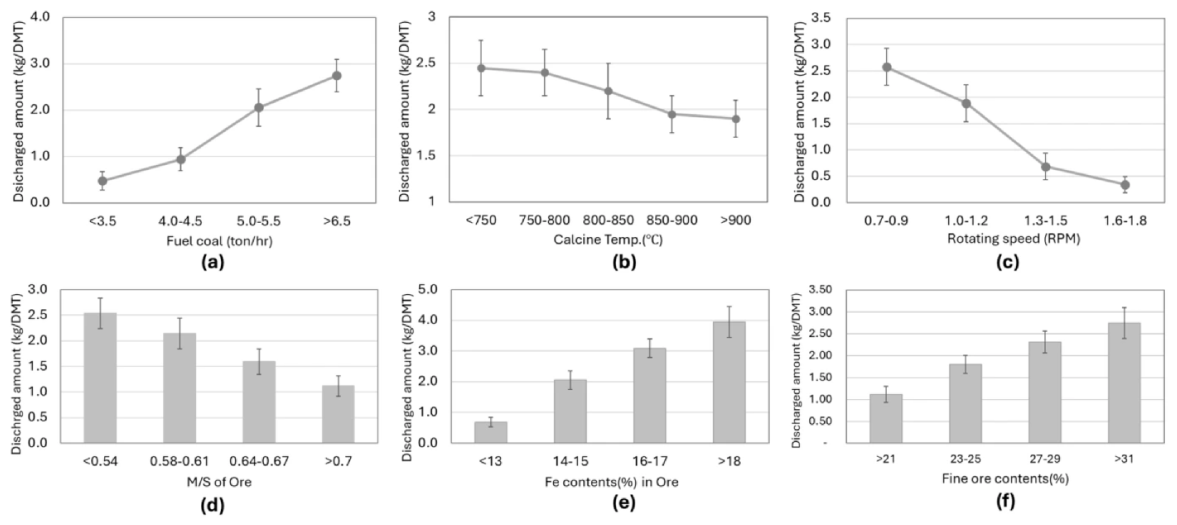
Ring formation in a rotary kiln is influenced not only by ore characteristics and gas atmosphere, but also by operational parameters. In this study, operational variables associated with the generation of ring accretions in a large-scale industrial rotary kiln (diameter 5.5 m, length 131 m) were examined. Because ring formation in industrial rotary kilns proceeds through repeated adhesion and spalling, direct measurement of the accumulated ring thickness at regular intervals is impractical. Instead, the quantity of ring material collapsed and discharged from the kiln was measured. Ring fragments larger than 500 mm are discharged through the kiln outlet; therefore, the amount of such discharged material was used as an indirect indicator of ring generation. Although smaller, fragmented accretions were excluded from the measurement, the monitoring period exceeded six months in order to minimize the influence of short-term fluctuations. Figure 9a–c present the variation in discharged ring accretions as a function of rotary kiln operating conditions. The influence of pulverized coal feed rate on the burner, calcine discharge temperature, and kiln rotational speed was analyzed over the same six-month period using the same equipment. Accordingly, the compositional variation in the charged ore was considered to have a limited influence, and interaction effects among the operational variables were assumed to be negligible. The discharged accretion quantity is defined as the mass of lump-type ring fragments expelled from the kiln divided by the total ore feed. The ore feed is expressed in dry metric tons (DMT), representing the moisture-free mass.
The relationship between pulverized coal feed rate and ring discharge quantity is shown in Figure 9a. The unit of discharge (kg/DMT) represents the mass of accretion discharged per unit dry ore feed. Increasing the pulverized coal input enlarges the flame and raises the wall temperature, thereby heating both the refractory lining and mechanically retained fines on the wall surface, which promotes ring adhesion. A pronounced reduction in accretion discharge was observed when the coal feed rate was maintained below approximately 4.5 ton·h−1. Direct measurement of the wall temperature in the ring formation zone was not feasible because ring accretion around thermocouples embedded in the refractory lining caused rapid temperature drops, resulting in low measurement accuracy. As shown in Figure 9b, the calcine discharge temperature exhibited no strong correlation with ring discharge quantity. This is likely because the calcine temperature is influenced by multiple factors including feed rate, kiln rotational speed, and auxiliary heat sources and therefore may not directly reflect localized overheating conditions responsible for melt adhesion. Interestingly, a slight increase in accretion was observed when the calcine discharge temperature fell below 750 °C. This behavior may be attributed to operational adjustments, such as increased burner input or reduced rotational speed, intended to maintain calcine temperature, which can induce localized overheating near the burner zone. These findings suggest that localized overheating within the kiln is more critical for ring formation than the average bulk temperature of the charge. However, if the bulk material temperature approaches the melting range and extensive melting and reduction reactions occur throughout the kiln, a fundamentally different ring formation behavior may arise [2]. The relationship between kiln rotational speed and ring accretion is shown in Figure 9c. Increasing rotational speed led to a marked reduction in ring discharge. At higher rotational speeds, the refractory lining spends less time in the high-temperature zone, resulting in reduced heating of both the wall and attached fine particles, thereby suppressing the melting and adhesion of low-melting particles. Although quantitative data are not presented, experimental observations indicated that higher rotational speeds and frequent changes in rotating speed increased mechanical stress and fatigue within the formed ring layer, thereby promoting small-scale spalling and suppressing excessive ring growth. Moreover, large fluctuations in the fuel charging rate could also impose thermal shock on the formed ring, thereby inducing earlier collapse of the accreted layer.
Figure 9d–f analyze the influence of ore composition and particle size on ring accretion. The data collection period was identical to that used for Figure 9a–c (long-term monitoring exceeding six months), and only operational data within comparable ranges (Table 6) were selected to minimize the influence of process variability. As shown in Figure 9d, ring discharge increased as the MgO/SiO2 ratio (M/S) of the ore decreased. This trend is consistent with the FactSage simulations presented in Figure 6b, which demonstrated that lower M/S values reduce the melting temperature, thereby promoting wall adhesion. Figure 9e indicates that when the Fe content of the ore exceeded approximately 14%, the quantity of ring discharge increased sharply. This observation is in good agreement with the thermodynamic simulation results shown in Figure 6b,c. Figure 9f presents the effect of fine particle content on ring formation. The fine particle fraction was quantified by collecting particulates entrained in the exhaust gas and expressing their amount relative to the total ore feed. This ratio serves as an indirect indicator of the fine particle content in the feed material. When the fine particle discharge fraction approached approximately 30%, a rapid increase in ring formation was observed. As discussed previously, fine particles generally exhibit lower melting temperatures and are more readily mechanically retained on the refractory surface, thereby creating favorable conditions for adhesion in high-temperature zones. The influence of reduced particle size on increased ring formation has also been reported in studies on iron ore pellets [3,25,30]. As shown in Table 4, the chemical compositions of the collected fine particles and clinker are highly similar, both characterized by elevated Fe content and low M/S ratios. Overall, the industrial data indicate that ring accretion is promoted by high burner fuel input, low kiln rotational speed, low M/S ratio, high Fe content, and a high fine-particle fraction. These results provide the operational and compositional basis for the integrated mitigation strategy discussed in Section 4.3.

4.3. Industrial Applicability and Mitigation Strategy

The industrial data demonstrates that ring formation is closely associated with both raw-material characteristics and operating conditions. Among ore-related factors, high Fe content, low M/S ratio, high Al2O3 content in fine particles, and a high fine-particle fraction were strongly correlated with increased ring discharge. These trends are consistent with the laboratory and thermodynamic results, which showed that Fe-rich, low-M/S materials exhibit lower liquidus temperatures and greater susceptibility to partial melting. Therefore, ore blending represents a practical and effective strategy for reducing ring formation in commercial ferronickel rotary kilns.
To minimize ring formation caused by the formation of low-melting phases, blending ores with easily fusible characteristics (high Fe and low M/S ratio) and ores with more refractory characteristics (low Fe and high M/S ratio) can effectively suppress excessive ring growth and improve operational stability. In the present study, ring accretion increased sharply when Fe content exceeded approximately 14 wt.% and when the M/S ratio decreased below approximately 0.55. Although these values should not be regarded as universal thresholds, they provide useful operational indicators for the investigated New Caledonian ore system.
Control of the fine-particle fraction is also critical. Fine particles not only exhibit lower apparent melting temperatures because of their Fe-rich and low-M/S composition, but also are more readily retained on rough refractory surfaces. In the laboratory experiments, fine powders smaller than 200 mesh (≤75 μm) were used to evaluate melting and sintering behavior, whereas in the industrial analysis, the fine ore fraction was represented by particles smaller than approximately 0.1 mm or by particulates entrained in the exhaust gas. The industrial data showed that ring accretion increased rapidly when the fine-particle fraction approached approximately 30%. Therefore, feed preparation, screening, dust handling, and ore blending strategies should be designed to prevent excessive accumulation of fine, Fe-rich, low-M/S particles in the kiln feed.
The actual calcine temperature is influenced by both the total heat input and the heat-transfer efficiency; therefore, a higher calcine temperature does not necessarily result in accelerated ring formation. Only the heat input supplied from the burner side acts as a direct influencing factor. During analysis of the operational data, cases were identified in which the calcine temperature and ring formation exhibited an inverse relationship. This behavior occurred because operators excessively increased the fuel coal input to maintain the target calcine temperature, resulting in localized overheating near the burner zone. Consequently, a clear direct correlation between calcine temperature and ring formation could not be established in the industrial rotary kiln.
From an operational perspective, maintaining the rotary kiln rotational speed above approximately 1.3 rpm and reducing burner fuel input to suppress localized overheating are critical measures. The results showed that increasing burner fuel input promoted ring accretion, whereas calcine discharge temperature did not exhibit a strong direct correlation with ring discharge. This finding indicates that the average bulk temperature of the calcine is not a sufficient indicator of ring formation risk. Instead, the local wall temperature near the burner, the wall–bed temperature gradient, and the residence time of the refractory surface within the high-temperature zone are more critical factors governing ring formation.

4.4. Limitations and Future Work

Although this study provides a mechanistic and industrially relevant interpretation of ring formation in ferronickel rotary kilns, several limitations should be acknowledged. First, the numerical threshold values proposed in this work, such as Fe content above approximately 14 wt.%, M/S ratio below approximately 0.55, fine-particle fraction near 30%, and recommended rotational speed above approximately 1.3 rpm, were derived from New Caledonian lateritic nickel ores and a specific industrial rotary kiln. These values should therefore be regarded as system-specific operational guidelines rather than universal criteria. Different ferronickel plants may exhibit different threshold values depending on ore mineralogy, coal ash chemistry, refractory condition, kiln geometry, and operating practices.
Second, the industrial data were obtained under actual plant operating conditions, in which multiple variables inevitably change simultaneously. Although operating data within comparable ranges were selected to minimize the influence of uncontrolled variables, complete isolation of individual factors is not possible in commercial kiln data. Therefore, the observed relationships should be interpreted as operational correlations supported by laboratory experiments and thermodynamic calculations, rather than as fully independent single-variable effects.
Third, FactSage calculations were used to evaluate equilibrium liquidus trends in simplified oxide systems. Actual rotary kiln operation involves non-equilibrium heating, gas–solid reactions, local reducing conditions, particle segregation, coal ash interaction, and refractory surface effects. Accordingly, the calculated liquidus temperatures should be regarded as reference trends for interpreting compositional effects, rather than exact melting temperatures under industrial kiln conditions. The consistency between the calculated trends and the heating microscope observations supports the proposed compositional interpretation; however, further validation is required for quantitative prediction under industrial operating conditions.
Future work should include more detailed quantification of ring growth kinetics, in situ or indirect monitoring of local wall temperature, and validation using different lateritic ores, coal ash compositions, refractory materials, and kiln geometries. Additional microstructural analysis of ring layers formed under different operating conditions would also help clarify the relationship among local temperature, liquid-phase formation, pore structure, and mechanical strength of accretions. Such studies would improve the broader applicability of the proposed mitigation strategy and support more reliable control of ring formation in commercial ferronickel rotary kilns.

5. Conclusions

This study investigated the mechanism of ring formation in a commercial ferronickel rotary kiln through a combination of mineralogical analysis, high-temperature melting and sintering experiments, thermodynamic calculations, and long-term industrial operational data. The results showed that ring accretion is primarily promoted by the selective adhesion and partial melting of Fe-rich, low-M/S fine particles under localized overheating conditions near the burner zone. Ores with Fe contents above approximately 14 wt.% and M/S ratios below approximately 0.55 exhibited a higher tendency to form low-liquidus-temperature silicate phases, which can serve as initial bonding media for ring growth.
The industrial data further demonstrated that excessive burner fuel input and low kiln rotational speed accelerate ring accretion, whereas calcine discharge temperature alone is not a reliable indicator of ring formation. Therefore, ring formation can be mitigated through appropriate ore blending, reduction in fine-particle input, suppression of localized overheating, and maintenance of sufficient kiln rotational speed. The numerical thresholds proposed in this study are specific to the investigated New Caledonian lateritic nickel ores and rotary kiln conditions; consequently, further validation using different ores, fuels, refractory materials, and kiln systems is required.

Author Contributions

Conceptualization, S.-H.C. and K.-D.L.; methodology, K.-D.L. and W.-G.S.; software, K.-D.L.; validation, K.-D.L., A.G. and W.-G.S.; formal analysis and W.-G.S., K.-D.L.; investigation, K.-D.L. and W.-G.S.; resources, S.-H.C.; data curation, A.G.; writing—original draft preparation, K.-D.L.; writing—review and editing, A.G. and S.-H.C.; visualization, S.-H.C.; supervision, S.-H.C.; project administration, S.-H.C.; funding acquisition, S.-H.C. All authors have read and agreed to the published version of the manuscript.

Funding

This work was supported by the Technology Innovation Program (RS-2025-02220764) funded by the Ministry of Trade, Industry and Energy (MOTIE, Korea).

Data Availability Statement

The original contributions presented in this study are included in the article. Further inquiries can be directed to the corresponding author.

Conflicts of Interest

The authors declare that they have no known competing financial interests or personal relationships that could have appeared to influence the work reported in this paper.

References

  1. Tsuji, H.; Tachino, N. Ring Formation in the Smelting of Saprolite Ni-Ore in a Rotary Kiln for Production of Ferro-Nickel Alloy: Mechanism. ISIJ Int. 2012, 52, 1724–1729. [Google Scholar] [CrossRef]
  2. Watanabe, T.; Ono, S.; Arai, H.; Matsumori, T. Direct Reduction of Garnierite Ore for Production of Ferro-Nickel with a Rotary Kiln at Nippon Yakin Kogyo Co., Ltd., Oheyama Works. Int. J. Miner. Process. 1987, 19, 173–187. [Google Scholar] [CrossRef]
  3. Guo, Z.; Tian, T.; Zhang, Y. Research on the Ring Formation Mechanism of Magnesian Flux Pellets in Rotary Kiln. Sci. Rep. 2023, 13, 2397. [Google Scholar] [CrossRef] [PubMed]
  4. Singh, M.A.; Jain, P. A Study on the Accretion Formation in DRI Kilns and Possible Ways for Its Reduction. IOSR J. Mech. Civ. Eng. 2015, 12, 98–103. [Google Scholar] [CrossRef]
  5. Wang, S.; Guo, Y.; Liu, K.; Yang, Z.; Liu, Y.; Jiang, Y.; Chen, F.; Zheng, F. The Deposit Formation Mechanism in Coal-Fired Rotary Kiln for Iron Ore Pellet Production: A Review. Crystals 2021, 11, 974. [Google Scholar] [CrossRef]
  6. Guo, Y.; Yang, Z.; Fan, J.; Wang, S.; Chen, F.; Yang, L.; Liu, Y. Effects of Pellet Basicity on the Simulated Deposit Formation in Coal-Fired Rotary Kilns for Iron Ore Pellet Production. ACS Omega 2022, 7, 4640–4647. [Google Scholar] [CrossRef]
  7. Wang, S.; Guo, Y.; Fan, J.; Chen, F.; Yang, L.; Yang, Z.; Liu, K.; Liu, Y. Investigations of the Effect of Unburnt Pulverized Coal on the Deposit Formation Mechanism in a Rotary Kiln for Fluxed Pellet Production. Powder Technol. 2022, 404, 117475. [Google Scholar] [CrossRef]
  8. Chen, J.; Yan, M.; Su, J.; Li, B.; Sun, J. The Kiln Coating Formation Mechanism of MgO–FeAl2O4 Brick. Ceram. Int. 2015, 42, 569–575. [Google Scholar] [CrossRef]
  9. Eriksson, M.; Carlborg, M.; Broström, M. Characterization of Ring Deposits Inside a Quicklime Producing Long Rotary Kiln. Energy Fuels 2019, 33, 11731–11740. [Google Scholar] [CrossRef]
  10. Pisaroni, M.; Sadi, R.; Lahaye, D. Counteracting Ring Formation in Rotary Kilns. J. Math. Ind. 2012, 2, 3. [Google Scholar] [CrossRef]
  11. Shankar Rao, V.; Gurugubelli, S.N. A Case Study on Accretion Formation in Rotary Kiln of DRI Process. Trans. Indian Inst. Met. 2021, 74, 45–49. [Google Scholar] [CrossRef]
  12. Zulumyan, N.; Mirgorodski, A.; Isahakyan, A.; Beglaryan, H. The Mechanism of Decomposition of Serpentines from Peridotites on Heating. J. Therm. Anal. Calorim. 2014, 115, 1003–1012. [Google Scholar] [CrossRef]
  13. Butt, C.R.M.; Cluzel, D. Nickel Laterite Ore Deposits: Weathered Serpentinites. Elements 2013, 9, 123–128. [Google Scholar] [CrossRef]
  14. Yang, X.; Feng, B.; Wang, Z.; Jiang, L.; Bayoundoula, J. Aggregation Relations and Flotation Behavior of the Depressant Pectin on Talc, Chlorite, and Serpentine and Its Mechanism of Action. Miner. Eng. 2025, 233, 109637. [Google Scholar] [CrossRef]
  15. Huang, R.; Sun, W.; Ding, X.; Zhao, Y.; Song, M. Effect of Pressure on the Kinetics of Peridotite Serpentinization. Phys. Chem. Miner. 2020, 47, 33. [Google Scholar] [CrossRef]
  16. Mccollom, T.M.; Klein, F.; Moskowitz, B.; Berquo, T.S.; Bach, W.; Templeton, A.S. Hydrogen Generation and Iron Partitioning during Experimental Serpentinization of an Olivine-Pyroxene Mixture. Geochim. Cosmochim. Acta 2020, 282, 55–75. [Google Scholar] [CrossRef]
  17. Li, G.; Luo, J.; Rao, M.; Peng, Z.; Jiang, T. Advances and Innovations in Ferronickel-Making; Springer: Singapore, 2023. [Google Scholar]
  18. Dlugogorski, B.Z.; Balucan, R.D. Dehydroxylation of Serpentine Minerals: Implications for Mineral Carbonation. Renew. Sustain. Energy Rev. 2014, 31, 353–367. [Google Scholar] [CrossRef]
  19. Liu, X.; Liu, X.; Hu, Y. Investigation of the Thermal Decomposition of Talc. Clays Clay Miner. 2014, 62, 137–144. [Google Scholar] [CrossRef]
  20. Giacobbe, C. High Temperature Reactions of Serpentine Group Minerals. In Proceedings of the European Mineralogical Conference 2012, Frankfurt, Germany, 2–6 September 2012; Available online: https://iris.unimore.it/handle/11380/1316186 (accessed on 15 January 2026).
  21. Goss, C.J. The Kinetics and Reaction Mechanism of the Goethite to Hematite Transformation. Mineral. Mag. 1987, 51, 437–451. [Google Scholar] [CrossRef]
  22. Zhang, Y.; Yan, X.; Wang, L.; Sun, W. Forsterite Refractory Preparation Using Magnesium Resources from Salt Lake Brines. Miner. Eng. 2023, 203, 108333. [Google Scholar] [CrossRef]
  23. Forbes, E.; Ma, M.; Bruckard, W. Clay Minerals in Flotation and Comminution Operations. In Clays in the Minerals Processing Value Chain; Gräfe, M., Klauber, C., McFarlane, A.J., Robinson, D.J., Eds.; Cambridge University Press: Cambridge, UK, 2017; pp. 302–326. [Google Scholar]
  24. Petrounias, P.; Giannakopoulou, P.P.; Rogkala, A.; Lampropoulou, P.; Koutsopoulou, E.; Papoulis, D.; Tsikouras, B.; Hatzipanagiotou, K. The Impact of Secondary Phyllosilicate Minerals on the Engineering Properties of Various Igneous. Minerals 2018, 8, 329. [Google Scholar] [CrossRef]
  25. Min, X.; Huang, L.; Yu, M.; Wang, Y.; Ke, Y.; Peng, C.; Yan, X.; Huang, Q.; Li, Y. Formation Mechanism of Deposits in Rotary Kiln during Steelmaking Dust Carbothermic Recycling. Separations 2024, 11, 137. [Google Scholar] [CrossRef]
  26. Guo, X.; Xu, C.; Wang, Y.; Li, X.; Sun, T. Recovery of Nickel and Iron from Low–Grade Laterite Ore and Red Mud Using Co–Reduction Roasting: Industrial-Scale Test. Physicochem. Probl. Miner. Process. 2021, 57, 61–72. [Google Scholar] [CrossRef]
  27. Tsuji, H.; Tachino, N. Ring Formation in the Smelting of Saprolite Ni-Ore in a Rotary Kiln for Production of Ferro-Nickel Alloy: Examination of the Mechanism. ISIJ Int. 2012, 52, 1951–1957. [Google Scholar] [CrossRef]
  28. Wang, Y.; Zhang, J.; Liu, Z. Rings Growth Behavior within a Pre-Reduction Rotary Kiln: The Layered Structure and Formation Mechanism. Powder Technol. 2019, 356, 73–82. [Google Scholar] [CrossRef]
  29. Yi, L.; Zhang, N.; Liang, Z.; Wang, L.; Xiao, H.; Huang, Z. Coal Ash Induced Ring Formation in a Pilot Scale Rotary Kiln for Low-Grade Iron Ore Direct Reduction Process: Characterization and Mechanism. Fuel 2022, 310, 122342. [Google Scholar] [CrossRef]
  30. Alqenai, Y.; Zooyousefin, M.; Farnam, Y. Evaluating the Deposit Layer and Ring Formation during Coal-Ash-Based Lightweight Aggregates Sintering. Powder Technol. 2026, 469, 121761. [Google Scholar] [CrossRef]
  31. Guo, Y.; Liu, K.; Wang, S.; Chen, F.; Yang, Z.; Yang, L.; Li, D. Deposit Formation in a Coal-Fired Rotary Kiln for Fluxed Iron Ore Pellet Production: Effect of MgO Content. Crystals 2022, 12, 1214. [Google Scholar] [CrossRef]
  32. Warner, A.E.M.; Díaz, C.M.; Dalvi, A.D.; Mackey, P.J.; Tarasov, A.V. JOM World Nonferrous Smelter Survey, Part III: Nickel: Laterite. JOM 2006, 58, 11–20. [Google Scholar] [CrossRef]
  33. Estola, F.N.; Asqual, D.P.; Myth, J.R.S.; Ovella, D.N.; Ecco, L.S.; Anghnani, M.H.M.; Negro, A.D.; Geoscienze, D.; Padova, U.; Gradenigo, V.; et al. New Accurate Elastic Parameters for the Forsterite-Fayalite Solid Solution. Am. Mineral. 2011, 96, 1742–1747. [Google Scholar] [CrossRef]
  34. Morfin, A.M.; Stanfield, C.H.; Murchland, M.A.; Bartels, M.F.; Nagurney, A.B.; Miller, Q.R.S.; Schaef, H.T. Structure–Composition Relationships for Mg–Ni and Mg–Fe Olivine. ACS Earth Space Chem. 2024, 8, 1713–1724. [Google Scholar] [CrossRef]
  35. Tsuji, H. Influence of Non-Stoichiometric Serpentine in Saprolite Ni-Ore on a Softening Behavior of Raw Materials in a Rotary Kiln for Production of Ferro-Nickel Alloy. ISIJ Int. 2012, 52, 333–341. [Google Scholar] [CrossRef]
  36. Wu, S.; Wang, L.; Lu, Y.; Gu, K. Influence of High Temperature Interaction on the Softening and Melting Behaviors of Iron Bearing Materials in the Blast Furnace. Steel Res. Int. 2018, 89, 1800041. [Google Scholar] [CrossRef]
  37. Ma, Y.T.; Yang, P.; Lu, B.G.; Dou, Y.L.; Tian, J.K.; Guo, W.B.; Zhang, Z.Q.; Shen, Y.Y. Effect Of Feo Content On Melting Characteristics and Structure of Nickel Slag. J. Min. Metall. Sect. B Metall. 2022, 58, 427–438. [Google Scholar] [CrossRef]
  38. Liu, X.; Ge, W.; Li, J. Radial Segregation Driven by Axial Migration. AIP Conf. Proc. 2013, 1542, 743–746. [Google Scholar] [CrossRef]
  39. Xu, Y.; Li, J.; Jiang, Y.; Wu, S.; Ma, S.; Hao, X.; Xin, W. Screening of Sustainable Binders for Alkali Roasted Mixed Rare Earth Concentrate Pellets: Mechanistic Study of Xanthan Gum for Pelletization, Kiln Skin Inhibition and Closed-Loop Resource Recovery. Miner. Eng. 2025, 234, 109724. [Google Scholar] [CrossRef]
Figure 1. Schematic illustration of ore ring accretion in a ferronickel rotary kiln.
Metals 16 00545 g001
Figure 2. Heating microscope system for high-temperature observation of softening and melting behavior: (a) experimental setup including the heating furnace and optical imaging unit; (b) cylindrical specimen prepared for softening and melting evaluation; (c) real-time analysis screen showing the specimen silhouette and temperature profile during heating.
Metals 16 00545 g002
Figure 3. Schematic diagram of the Tammann furnace system used to evaluate the sintering behavior of ore, calcine, and ring accretion under controlled temperature and gas atmospheres.
Metals 16 00545 g003
Figure 4. (a) XRD patterns of Ouaco nickel ore as a function of particle size: the fine fraction (<0.1 mm) and coarse fraction (>5 mm) are compared to illustrate mineralogical variations with particle size. (b) XRD patterns of Ouaco nickel ore calcined at different temperatures.
Metals 16 00545 g004
Figure 5. Thermogravimetric (TGA) and differential thermal analysis (DTA) curves of lateritic nickel ores during heating, showing the endothermic dehydration and exothermic decomposition reactions associated with mineral phase transformation.
Metals 16 00545 g005
Figure 7. Proposed accretion model for ring formation in a rotary kiln: (a) Surface condition of the refractory lining, (b) Periodic temperature fluctuation at the lining surface during kiln rotation, (c) Schematic illustration of selective adhesion of ore particles, showing preferential melting and attachment of Fe-rich, low-M/S particles at elevated temperatures. (d) XRD patterns of calcine and ring accretion (clinker). The numerical labels in subfigure (b) indicate (1) mechanical interlocking, (2) partial melting, (3) full melting/adhesion and (4) cooling.
Metals 16 00545 g007
Figure 8. EPMA elemental mapping of ring accretion (clinker). (a) Clinker formed under relatively low temperature conditions (<1200 °C), showing fine and uniformly distributed pores. (b) Fully molten clinker formed at higher temperatures (>1300 °C), exhibiting irregular, large pores and compositional heterogeneity. (c) Sintering behavior of lateritic nickel ores under Ar atmosphere. (d) Comparison of density evolution under Ar and CO atmospheres.
Metals 16 00545 g008
Figure 9. Effect of operational parameters on discharged ring accretion in the rotary kiln: (a) fuel coal input to the burner; (b) calcine discharge temperature; (c) kiln rotational speed. Influence of ore composition on discharged ring accretion; (d) effect of M/S ratio at a constant Fe level (15–16%); (e) effect of Fe content at a constant M/S ratio (0.56–0.60); (f) effect of fine ore fraction. To minimize the influence of interacting variables, the data presented in each graph were selected from operating records obtained within fixed ranges of all other variables, except for the variable plotted on the x-axis. The controlled ranges were as follows: M/S = 0.58–0.60, Fe content = 13.5–15.5 wt.%, fine ore content = 23–26%, fuel coal input = 5–6 ton·h−1, calcine temperature = 780–830 °C, and kiln rotational speed = 1.0–1.2 rpm.
Metals 16 00545 g009
Table 1. Review of previous studies on ring formation indicating numerical data of mechanical specifications and operational conditions. Kiln size, raw materials used, and operation conditions are given and compared between the previous and present studies.
LiteraturesKiln/Furnace SizeRaw MaterialOperating/Experimental Conditions
Pisaroni et al.
(2012) [10]
CFD model,
Length and diameter N.R.
Calcium-bearing limestone, aluminum-bearing materialOperation temp.: ~1800 °C
rotational speed N.R.
Tsuji and
Tachino (2012) [1]
72 m length × 4.2 m diameterSaprolite Ni ore, anthracite, limestoneOperation temp.: 1000–1400 °C
Rotating speed: N.R.
Tsuji and
Tachino (2012) [27]
Batch-type experimental kilnSaprolite Ni-ore briquettesRing formation temp.: 1200 °C
Rotational speed: 0.33 rpm
Wang et al.
(2019) [28]
Industrial rotary kiln (size N.R.) and experimental furnaceIron ore particlesExperimental temp.: 1000–1200 °C
Na2O: 0.15–1.15%
Rotation speed: N.R.
Guo et al.
(2023) [3]
Laboratory tubular furnaceIron concentrate powder, flux, and bentoniteExperimental temp.:
—Preheating: 950 °C
—Roasting: 1250 °C
Eriksson et al.
(2019) [9]
150 m length × 3.4 m diameterLimestoneCalcination zone temp.: 800–915 °C
Product temp.: 1311–1500 °C
Rotational speed N.R.
Yi et al.
(2022) [29]
15 m length × 1.5 m diameterLow-grade iron ore pelletsOperation temp.: 1000–1100 °C
Rotation speed: 0.6–1.0 rpm
Alqenai et al.
(2026) [30]
Laboratory electric rotary furnace (1.2 m length)Coal ashExperimental temp.: 1100–1250 °C
Rotation speed: 7 rpm
Guo et al.
(2022) [31]
Laboratory tube furnaceIron ore pelletExperimental temp.: 1100–1300 °C
(deposit range: 1200–1250 °C)
Rotation speed N.R.
Wang et al.
(2021) [5]
Rotary kiln size N.R.Iron ore pelletsReview of existing literature
Sintering temp.: 1200–1350 °C
Wang et al.
(2022) [7]
Laboratory tube furnaceIron ore pellets, unburnt pulverized coalExperimental temp.: 1200–1250 °C
Rotation: N.R.
Present Study131 m length × 5.5 m inner diameterNew Caledonian lateritic nickel oreCalcine temperature: 800–900 °C
Ring formation temp.: 1200–1400 °C
Fuel coal: 3–7 ton/h
Typical rotating speed: 0.9–1.5 rpm
Note: N.R. = not reported in the cited study.
Table 2. Chemical composition (wt.%) of lateritic nickel ores from major mining areas in New Caledonia used in this study. Fe(total) denotes total iron content, and M/S represents the MgO/SiO2 ratio.
MineNiH2OFe(total)MgOSiO2Al2O3Cr2O3Fe/NiM/S
Ouaco1.9823.212.9 25.140.51.220.956.490.62
Poya1.9820.910.225.645.20.540.775.150.57
Nakety1.9527.316.222.437.81.531.248.300.59
Kouaoua1.9624.117.524.732.01.921.278.940.77
M/S: MgO/SiO2.
Table 3. Quantitative phase composition (wt.%) of ore, calcine (900 °C), and clinker samples.
Mineral PhaseOre (<0.075 mm)Ore (>1 mm)Calcine (900 °C)Clinker
Serpentine/Lizardite ((Mg,Fe)3Si2O5(OH)4)54.829.3  
Quartz (SiO2)3.943.014.8 
Forsterite ((Mg,Fe)2SiO4, Olivine)5.322.066.856.7
Talc ((Mg,Fe)3Si4O10(OH)2)35.15.7  
Enstatite ((Mg,Fe)SiO3, Pyroxene)  18.423.0
Goethite (FeO(OH))0.9   
Spinel ((Mg,Fe)Al2O4)   20.3
Total100100100100
Blank cells indicate that the corresponding phase was not detected.
Table 4. Comparison of chemical compositions (wt.%) of ring accretion, coarse ore (>1 mm), and fine ore (<0.1 mm) from Ouaco.
Accretion/OreChemical Composition (wt.%)M/S
NiFeSiO2MgOAl2O3CaOCr2O3
Ring accretion2.1017.543.720.34.500.301.30 0.46 
Ore
(Ouaco)
Coarse
(>1 mm)
1.9313.839.822.61.500.191.040.57
Fine (<0.1 mm)2.3218.538.118.34.130.240.720.48
Table 5. Review of previous studies on ring formation, including the mechanisms of ring formation and sintering, as well as their mitigation and countermeasures. A comparison between previous studies and the present study is also provided.
LiteraturesRing Formation & Sintering MechanismMitigation & Countermeasures
Pisaroni et al.
(2012) [10]
Adhesion of fly dust in high-temp zones
Formation of liquid bridges between particles
Hardening via solid-state sintering during cooling
Precise control of internal temperature profiles by 2nd air injection
Implementation of mechanical scrapers
Optimization of burner flame geometry
Tsuji and
Tachino (2012) [1]
Generation of low-melting silicate liquid phases
Sintering by liquid phase → formation of liquid bridges
2nd melt by fine ore
Adjusting basicity to increase the melting point
Burner optimization: adjust flame length and shape
External cooling: use cooling fans on the kiln shell
Variable kiln speed: periodically change the rotation speed (RPM)
Tsuji and
Tachino (2012) [27]
Low-melting liquid phase: MgO–FeO–SiO2 eutectic melt
Adhesion and growth: sticky melts bond to refractory walls
Semi-molten surface layers acting as adhesives
Consolidation by kiln load and rotational forces
Chemical control: increase the MgO/SiO2 ratio
Temperature management: operate below the solidus line
Cooling shocks to crack the rings
Wang et al.
(2019) [28]
Initial layer anchoring into the refractory
Stratified accumulation by cyclic exposure to heat
Thermal-chemical sintering: alternating oxidation and reduction cycles
Homogenizing the ore and coal mixture
Fines control: strictly limiting particles under 1 mm
Stable thermal profile: minimizing temperature fluctuations
Guo et al.
(2023) [3]
Low-melting slag formation: MgO–CaO–SiO2 creates a fluid silicate melt
Mineral lattice diffusion: magnesium ions diffuse into the iron oxide structure, creating complex mineral bridges
Controlling the MgO/SiO2 ratio to minimize the volume of liquid phase
Sufficient “green strength” in the pre-heat zone
Eriksson et al.
(2019) [9]
Impurity-driven melting: SiO2, Al2O3, and iron oxides react with CaO → formation of low-melting calcium silicates and aluminates
Sulfur and ash from coal/coke react with the lime bed to create sticky sulfate- rich phases
CaO + CO2 → CaCO3, which acts as a hard chemical bridge
Higher-purity limestone with low silica and iron content: reduction in liquid glue
Low-sulfur fuels or gas to prevent formation of sticky calcium sulfates on the kiln wall
Prevention of localized overheating
Yi et al.
(2022) [29]
Ash-ore chemical reaction to form low-melting silicate phases like fayalite
Sticky ash-derived melts acting as a “glue” to the refractory
Coal selection: higher Ash Fusion Temperature (AFT)
Operational control: kiln bed temperature strictly below the ash softening point
Alqenai et al.
(2026) [30]
Bloating-induced melt: excessive surface liquid and highly adhesive
Viscous accretion: molten coal ash phases bridge individual aggregates
Addition of regulators to increase melt viscosity
Reduction in sintering and retention times
Smoothing the temperature gradient in the kiln
Wang et al.
(2022) [31]
Formation of low-melting fayalite by unburnt coal particles
FeO-rich liquid phase acts as a high-strength adhesive
Improved coal burnout: increasing coal fineness and optimizing the primary air-to-fuel ratio
Flame trajectory control: keep unburnt pulverized coal away from the refractory lining
Present Study
Selective melting and adhesion of Fe-rich, low-M/S fine particles
Repeated heating–melting–adhesion–cooling cycle near burner zone
Overheat around front of burner due to too much fuel
Control of overheating zone (distribution of fuel input)
Increasing rotating speed
Ore blending (avoid low M/S, high Fe)
Increasing green pellet strength
Table 6. Typical operational conditions of the industrial rotary kiln during the monitoring period.
VariablesRotating Speed (rpm)Calcine Temp ( ℃ )Fuel Coal Input (ton/hr)Ore Input (ton/hr)
Operation0.9~1.1750~8505~6100~120
Disclaimer/Publisher’s Note: The statements, opinions and data contained in all publications are solely those of the individual author(s) and contributor(s) and not of MDPI and/or the editor(s). MDPI and/or the editor(s) disclaim responsibility for any injury to people or property resulting from any ideas, methods, instructions or products referred to in the content.