1. Introduction
Chromium-containing wastes generated during ferroalloy production represent an important secondary resource due to their significant content of chromium, iron, and associated elements. In the context of increasingly stringent environmental regulations and the need for sustainable resource utilization, the processing of such technogenic materials has become a critical scientific and technological challenge. Chromium-bearing dusts and slags are now regarded not only as hazardous wastes but also as valuable raw materials for metal recovery. Recent studies have demonstrated that efficient recycling of chromium-containing residues can significantly reduce environmental impact while improving the overall resource efficiency of metallurgical industries [
1,
2,
3].
In addition, metallurgical wastes have been actively investigated as precursors for functional and refractory materials. It has been shown that waste-derived systems can be effectively transformed into high-temperature-resistant materials with controlled structural and thermal properties, which further expands their technological potential and supports the concept of circular materials processing [
4,
5].
However, the main difficulty in processing such materials is associated with the presence of chromium in thermodynamically stable spinel phases of the type (Fe,Mg)(Cr,Al,Fe)
2O
4, including MgCr
2O
4 and MgAl
2O
4. These phases exhibit high lattice stability and strong bonding, which significantly hinders chromium reduction, particularly at moderate temperatures. Previous studies on chromium oxide and chromite reduction have shown that these processes are diffusion-controlled and proceed through complex multi-stage mechanisms involving gradual destabilization of the spinel structure and oxygen removal [
6,
7,
8].
Self-propagating high-temperature synthesis (SHS) represents a promising approach for intensifying reduction processes. In SHS, reactions proceed due to the heat released by exothermic processes and propagate through the material in the form of a combustion wave. This method is characterized by high reaction rates, energy efficiency, and the ability to operate under non-equilibrium conditions, which promote phase transformations and metal recovery [
9,
10]. In addition to its traditional use in advanced materials synthesis, SHS has also been explored as an environmentally oriented technology for waste processing and resource recovery, highlighting its potential for the treatment of complex technogenic systems [
11,
12].
The efficiency of SHS strongly depends on the reactivity of the initial charge. Mechanical activation is widely used to enhance powder reactivity through particle refinement and increased specific surface area. Mechanical activation increases powder reactivity by reducing particle size and improving contact between components, which facilitates solid-state reactions [
13,
14]. Such treatment significantly improves the reactivity of the system and promotes phase transformations. In chromium-bearing systems, such pre-treatment can weaken the spinel structure and facilitate its subsequent reduction. However, excessive activation may lead to particle agglomeration and local sintering, which reduce the effective reactive surface area and hinder mass transfer [
15,
16].
The balance between structural activation and agglomeration effects plays a decisive role in determining process efficiency. Fundamental aspects of SHS reaction mechanisms and combustion wave propagation have been extensively discussed in the literature [
17,
18].
Nevertheless, most existing studies are focused on model oxide or chromite systems and do not adequately address real multicomponent ferroalloy wastes, where compositional complexity and phase heterogeneity significantly affect reaction pathways. In particular, the relationship between mechanical activation parameters, spinel phase destruction, and SHS combustion characteristics remains insufficiently understood. The existence of an optimal activation threshold, beyond which further activation leads to a decrease in reduction efficiency due to agglomeration, has not been systematically investigated for real chromium-containing wastes [
19,
20].
Compared to previous studies focused on model chromium oxide systems, the present work addresses real multicomponent ferroalloy wastes, where phase heterogeneity and complex composition significantly influence reduction pathways. A key result of this study is the identification of a non-monotonic dependence of chromium reduction on mechanical activation time, with a clearly defined optimal regime (~30 min). This behavior reflects a transition between activation-enhanced reactivity and agglomeration-limited kinetics, which has not been systematically demonstrated for such systems [
6,
8].
Therefore, the aim of this study is to establish the relationship between mechanical activation time, spinel phase destruction, and chromium reduction efficiency in ferroalloy wastes under SHS conditions, with particular emphasis on identifying the critical activation threshold governing process performance. Preliminary mechanical treatment plays a key role in destabilizing the spinel structure and accelerating subsequent reduction processes.
2. Materials and Methods
The study employed two types of wastes from the Aktobe Ferroalloy Plant (Aktobe, Kazakhstan):
- -
dry gas-cleaning dust (HShP),
- -
wet scrubber sludge (KEK).
HShP is characterized by a high content of chromium-containing spinel phases (approximately 60 wt.%), whereas silicate phases dominate in KEK. This fundamental difference significantly affects the efficiency of chromium reduction. The phase compositions of the initial materials are presented in
Table 1, which shows that HShP is enriched in chromium-containing spinel phases, while KEK is predominantly composed of silicate phases.
A base charge composition was selected for the experiments with the following mass fractions: carbon—30 wt.%, aluminum—15 wt.%, silicon—4 wt.%, and the remaining 51 wt.% consisting of chromium-containing waste (HShP or KEK). Aluminum, graphite, and silicon powders were used as reducing agents. To ensure the reliability of the results, each experiment was conducted at least three times. The obtained values were averaged, and the experimental error did not exceed 1–3%.
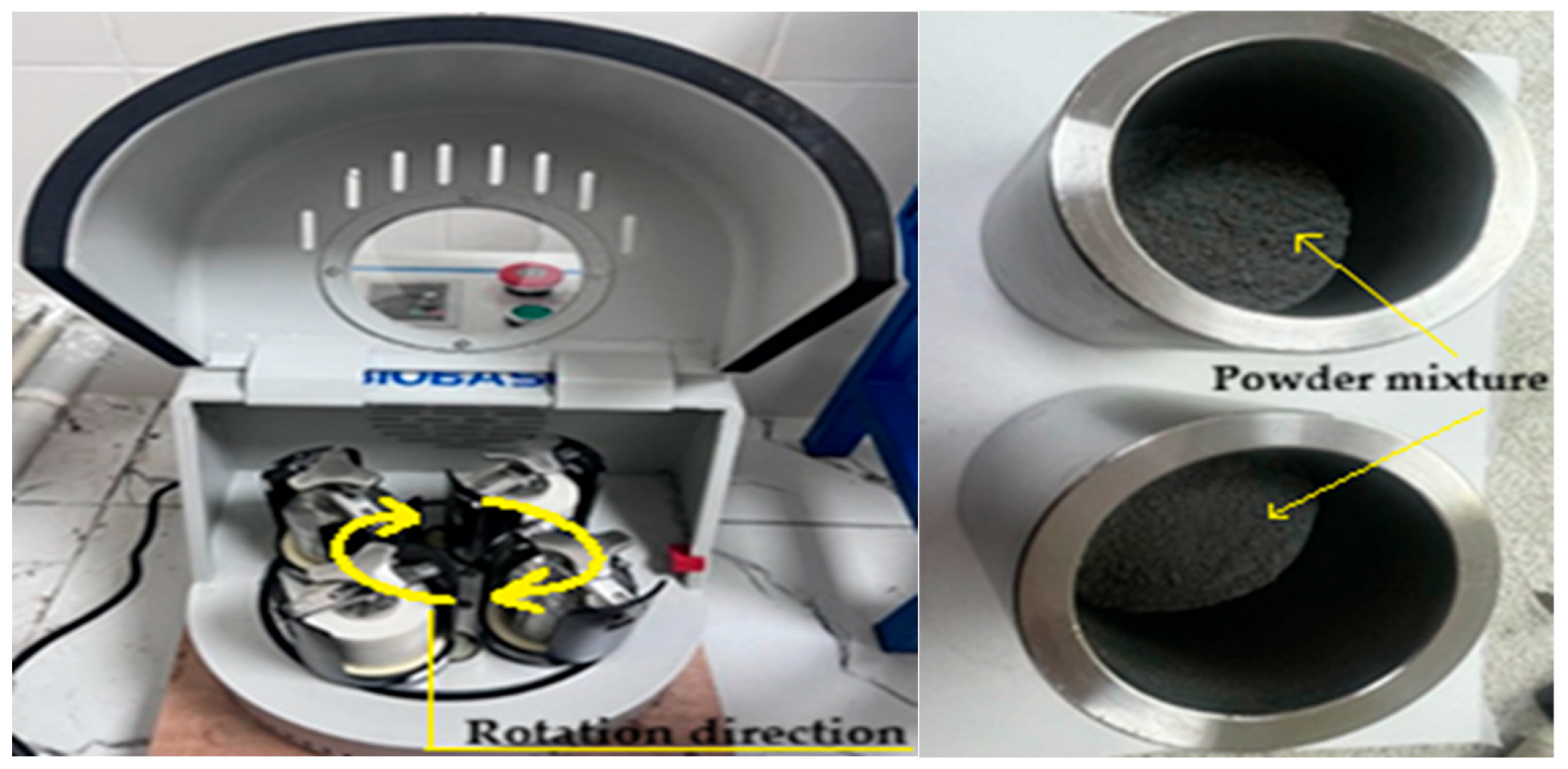
Mechanical activation was carried out (
Figure 1) using a planetary ball mill (PM 100, RETSCH GmbH, Haan, Germany) at a rotation speed of 400 rpm. The powder-to-ball ratio was 1:2. The treatment was performed for 10, 20, 30, 60, 90, and 120 min, ensuring intensive mechanical activation of the powder mixture.
Silica sol was used as a binder to obtain mechanically stable samples. The mixtures were compacted under a pressure of 100 MPa into cylindrical pellets with a diameter of 20 mm using a hydraulic press (PLG-20, LabTools LLC, Saint Petersburg, Russia).
The initiation of SHS occurred upon reaching the ignition temperature, after which the reaction propagated through the sample due to the heat release from exothermic reduction reactions of oxides. The propagation velocity of the combustion front is governed by heat and mass transfer as well as the reactivity of the charge. The synthesis was carried out in a muffle furnace (SNOL 7.2/1100, AB Umega Group, Utena, Lithuania) at 950 °C in air with a holding time of 10–15 min. Under these conditions, the process can be described as thermally assisted SHS, where external heating provides the initiation energy, while subsequent reaction propagation is governed by exothermic processes within the sample. The heating rate prior to ignition corresponds to the standard heating profile of the muffle furnace. Ignition was defined as the moment at which a visible self-propagating combustion front appeared. Combustion temperature values reported in
Table 2 and
Table 3 were obtained experimentally, while combustion front velocity was determined by tracking the propagation of the reaction zone along the sample length. Each experiment was repeated at least three times, and the reported values represent averaged results. Heating led to the initiation of a self-propagating reaction.
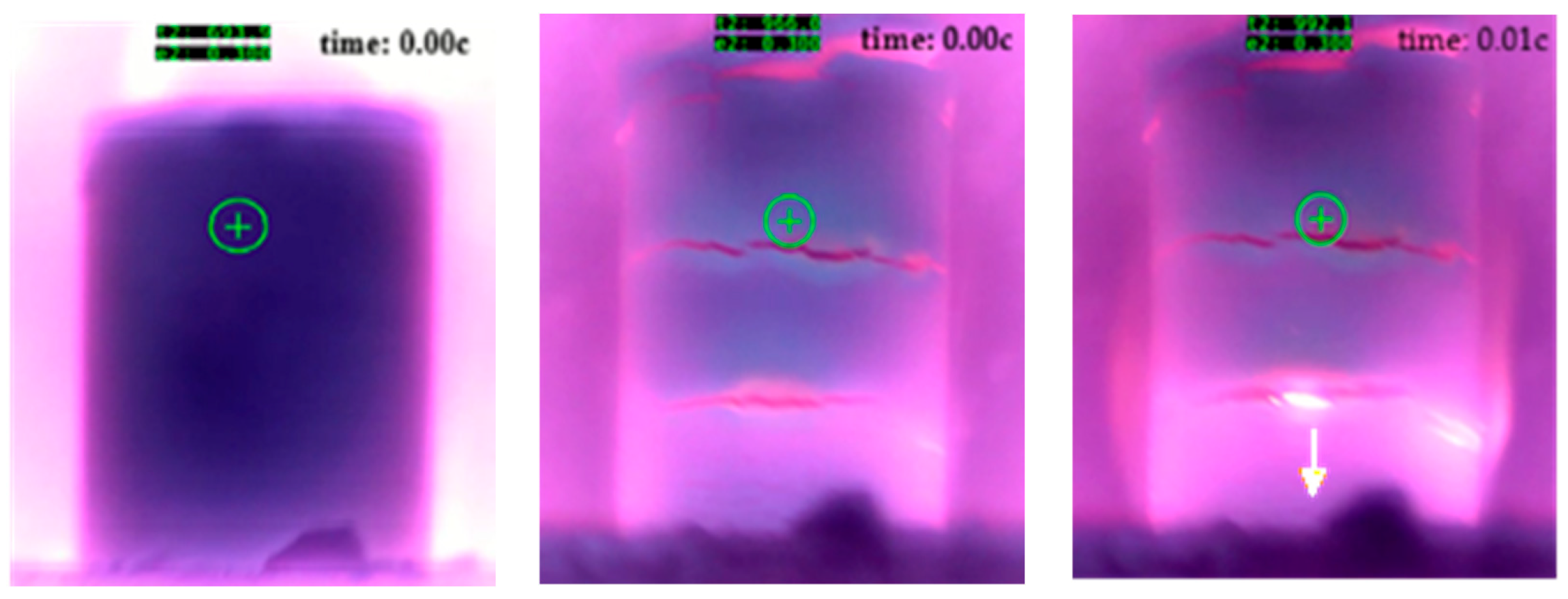
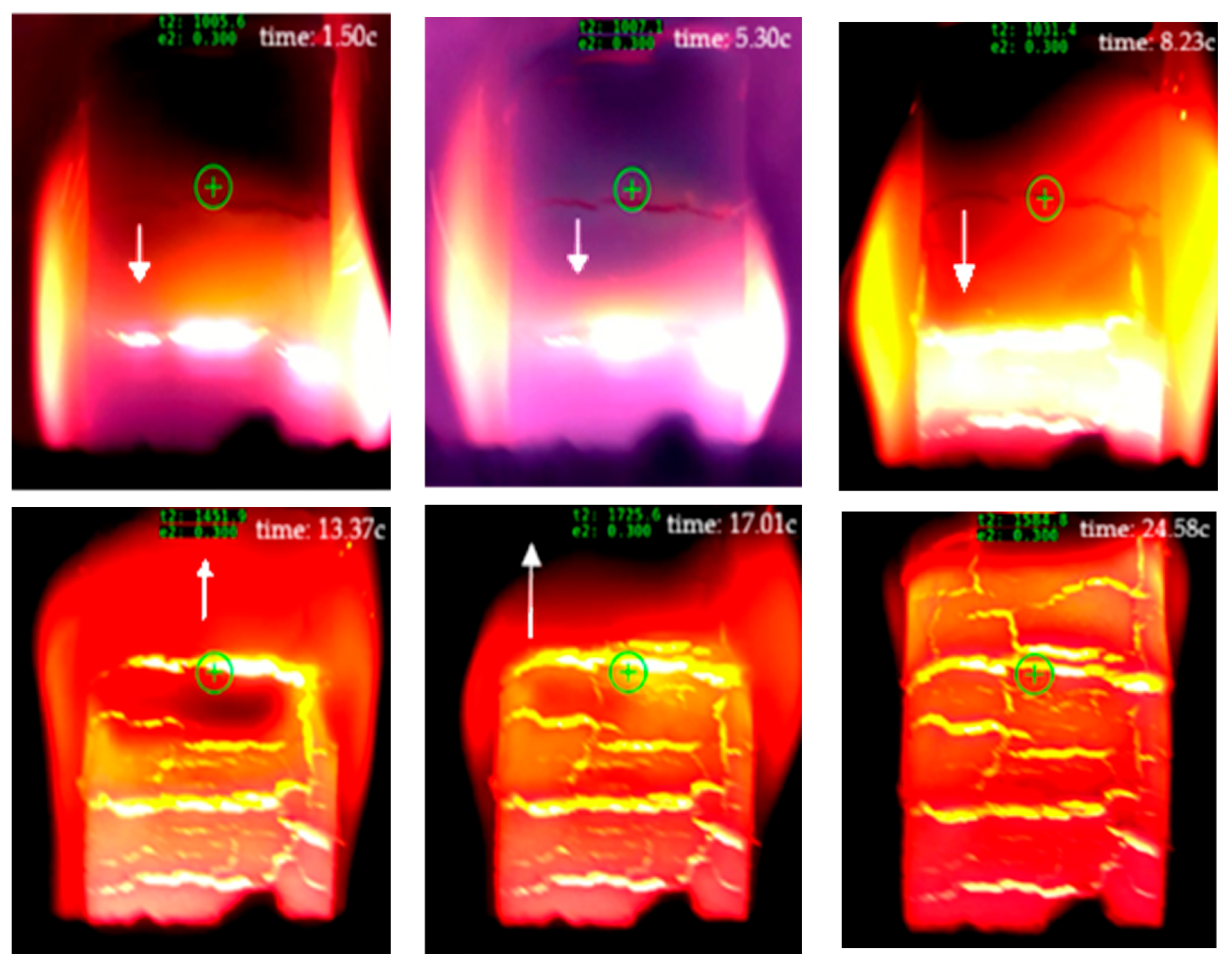
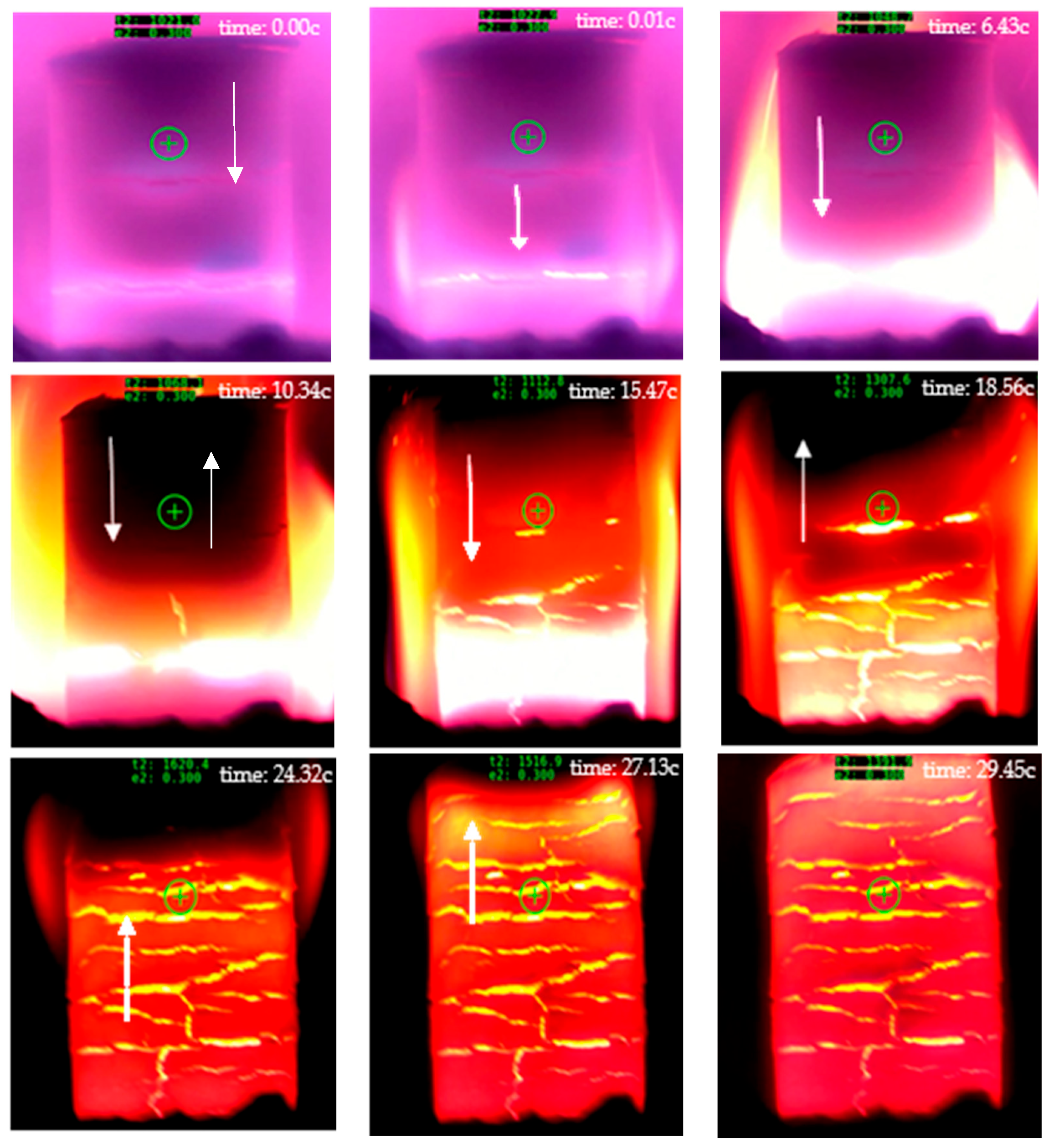
Figure 2 and
Figure 3 illustrate the evolution of the reaction front during the SHS process. As seen from the images, the combustion front propagates uniformly throughout the sample volume, indicating stable SHS behavior and sufficient reactivity of the initial charge. The reaction proceeds in the form of a well-defined combustion zone, confirming that the process occurs in the SHS mode. Arrows indicate the direction of combustion wave propagation during the self-propagating high-temperature synthesis (SHS) process.
The observed propagation of a distinct combustion front and the measured velocities (up to ~1.1 mm/s) confirm that the reaction proceeds in a self-propagating mode rather than purely diffusion-controlled furnace reaction.
After synthesis, the samples were characterized using the following techniques:
- -
X-ray diffraction (XRD),
- -
scanning electron microscopy (SEM),
- -
energy-dispersive spectroscopy (EDS).
XRD patterns were obtained using a mini diffractometer (DW-XRD-27, Drawell Scientific Instrument Co., Ltd., Shanghai, China) with Cu Kα radiation. The operating conditions were as follows: tube voltage of 35 kV, tube current of 15 mA, goniometer step size of 0.02° (2θ), and a counting time of 3 s per step.
Morphological features and elemental composition of the samples were analyzed using a desktop scanning electron microscope (Thermo Scientific Phenom XL G2, Thermo Fisher Scientific, Eindhoven, The Netherlands), which enabled high-resolution imaging and local elemental analysis.
Estimation of Chromium Reduction Degree
The relative metallic chromium fraction (R_Cr^metal) was estimated using a semi-quantitative approach based on the relative content of metallic chromium phases identified by XRD analysis and supported by EDS measurements:
It should be emphasized that this parameter does not represent the absolute chromium recovery yield. Instead, it reflects the relative fraction of chromium present in the metallic state within crystalline phases detectable by XRD. Chromium redistribution into amorphous phases, nanoscale clusters below detection limits, or solid solutions such as Mg(Al,Cr)2O4 is not captured by this approach. This study should be considered as a semi-quantitative comparative indicator based on XRD phase analysis, rather than an absolute extraction efficiency, due to the absence of a complete material balance.
All experiments were performed under identical conditions to ensure comparability of results. The reported values represent averaged data from at least three independent experiments. The reproducibility of combustion parameters and phase composition was confirmed within experimental uncertainty. In the present study, emphasis is placed on comparative phase analysis under different activation conditions. Therefore, a full material balance or direct chemical quantification of chromium (e.g., ICP-OES or AAS) was not performed.
Such analytical methods are widely used for precise determination of chromium recovery and will be considered in future studies to complement the present results [
2].
5. Conclusions
This study demonstrates the influence of mechanical activation on the reduction of chromium from complex ferroalloy wastes under SHS conditions, particularly highlighting the critical role of activation-induced changes in phase composition. First, the conducted experiments demonstrated that preliminary mechanical activation has a decisive influence on the solid-state reduction of chromium under SHS conditions.
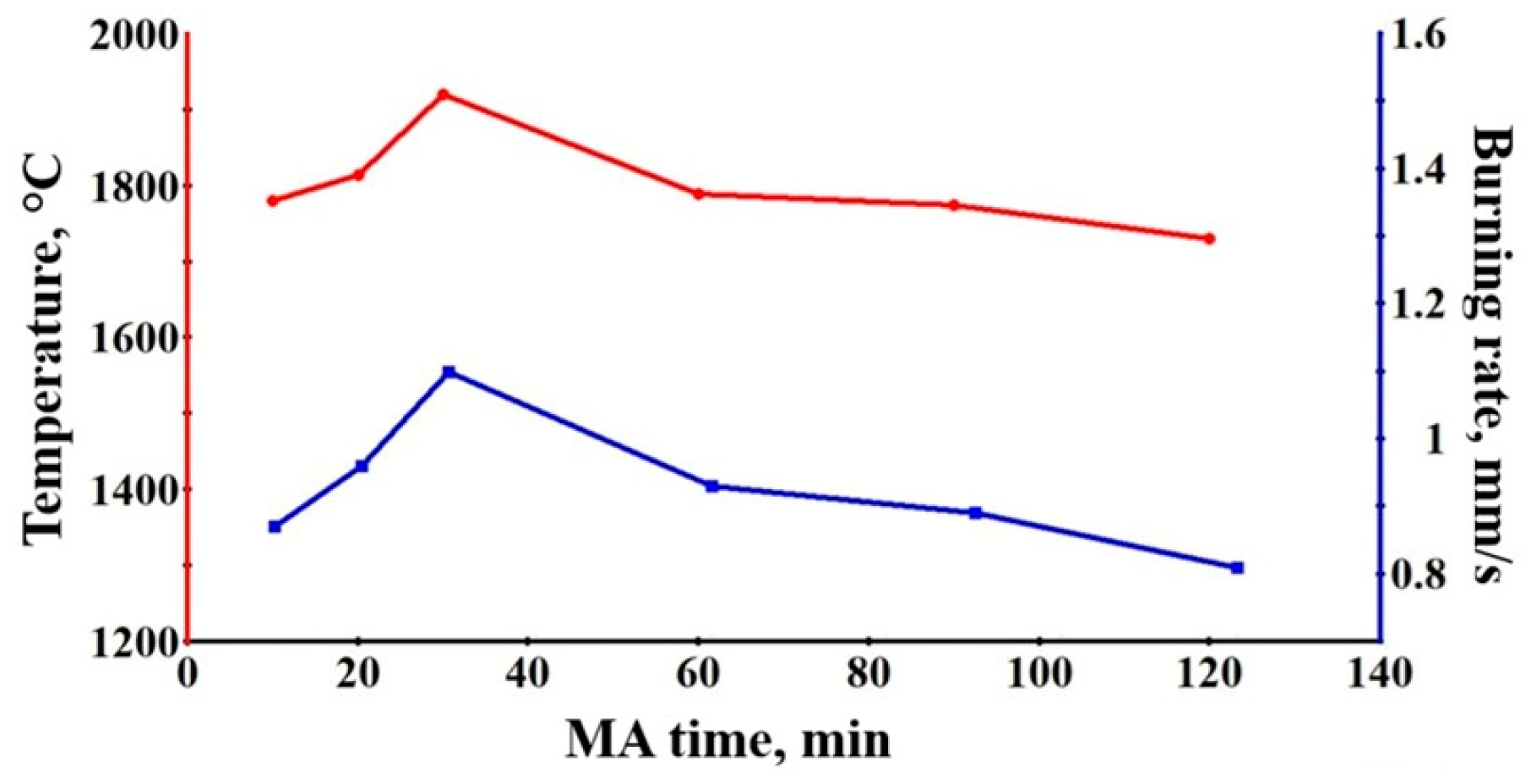
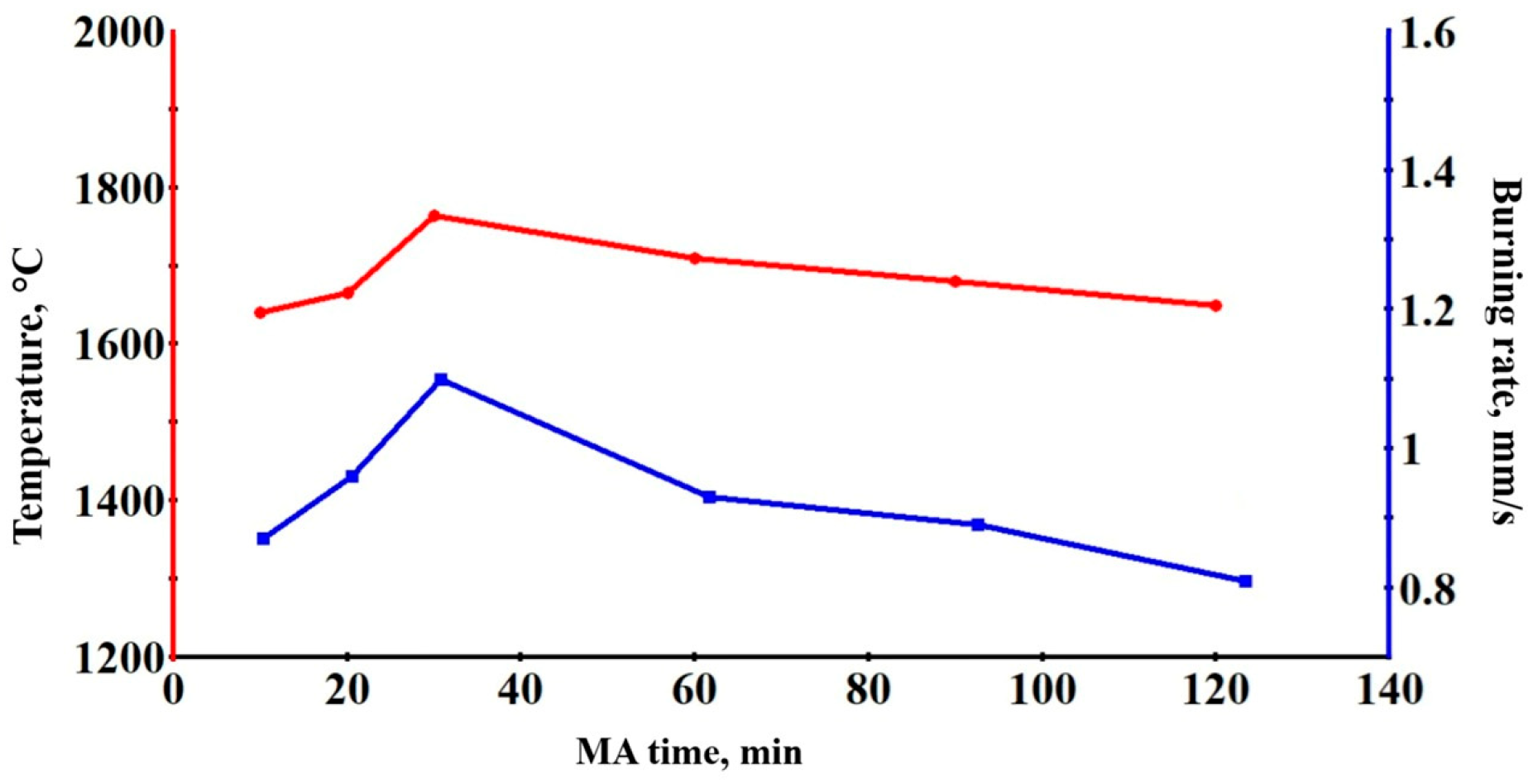
It was established that the dependence of combustion temperature and reaction front propagation velocity on mechanical activation time exhibits a pronounced non-monotonic behavior. For both systems—HShP- and KEK-based—the maximum values are achieved at a mechanical activation time of approximately 30 min. Under these conditions, the combustion temperature reaches ~1920 °C for HShP and ~1765 °C for KEK, while the front propagation velocity is 1.10 and 0.98 mm/s, respectively.
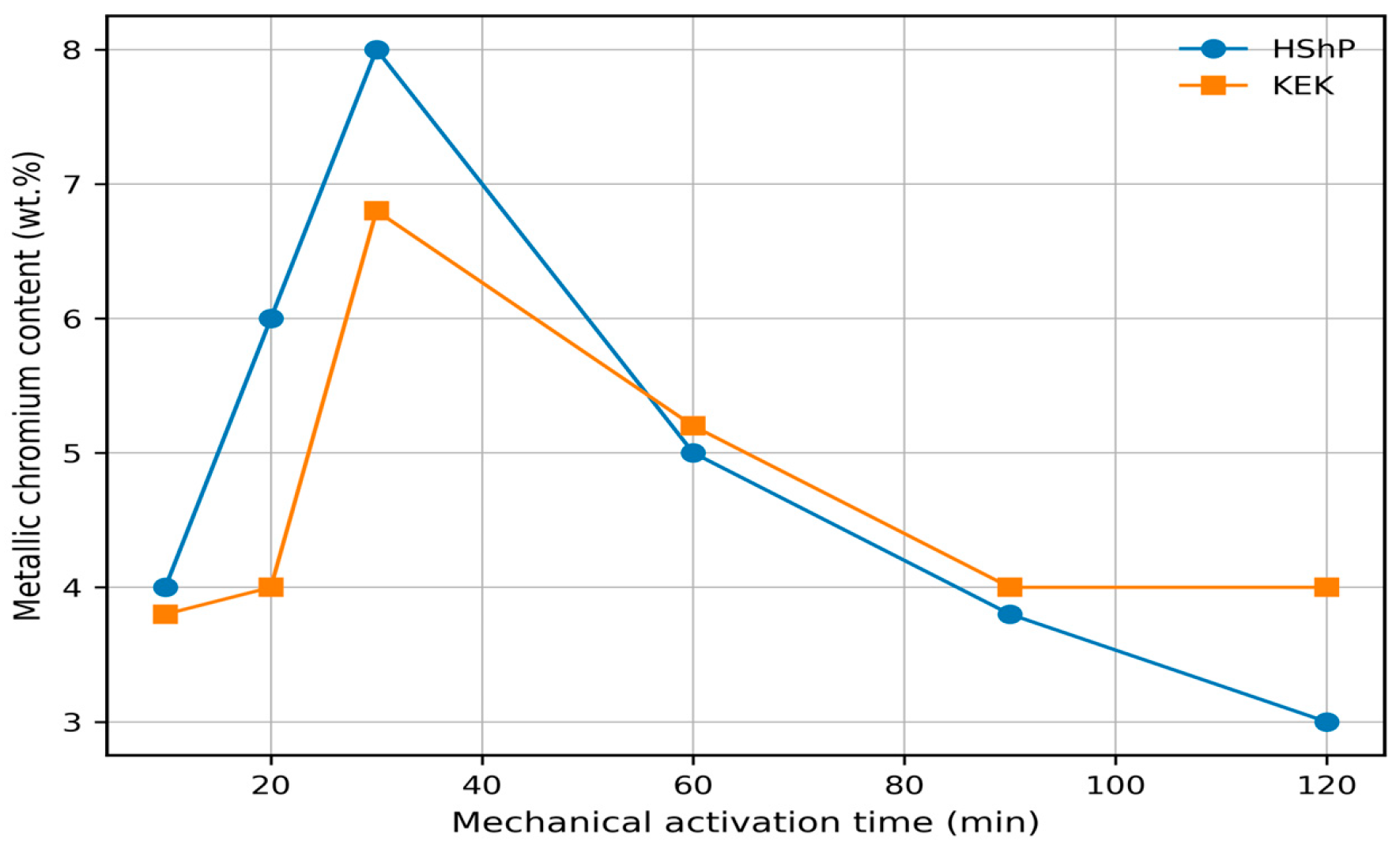
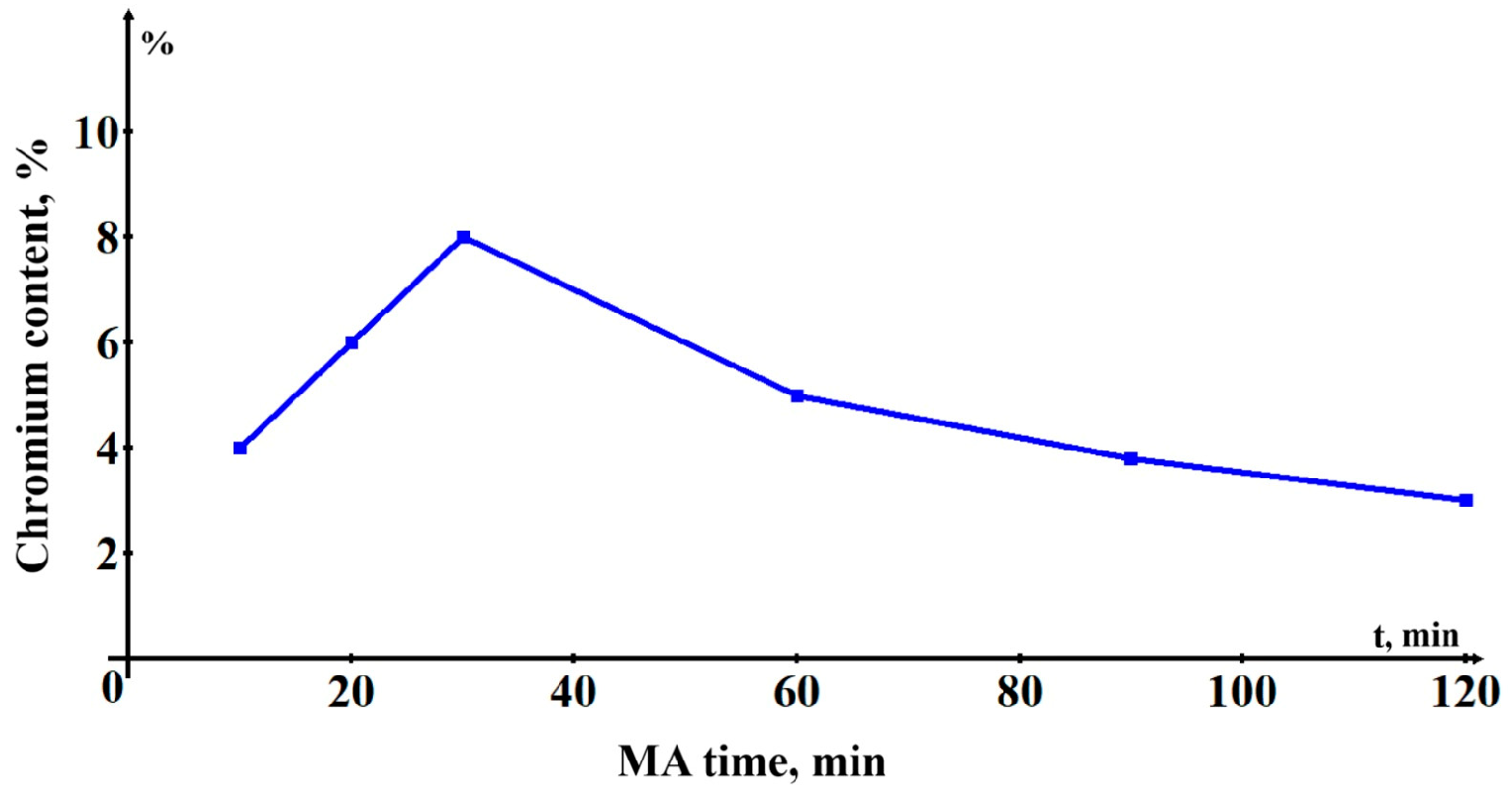
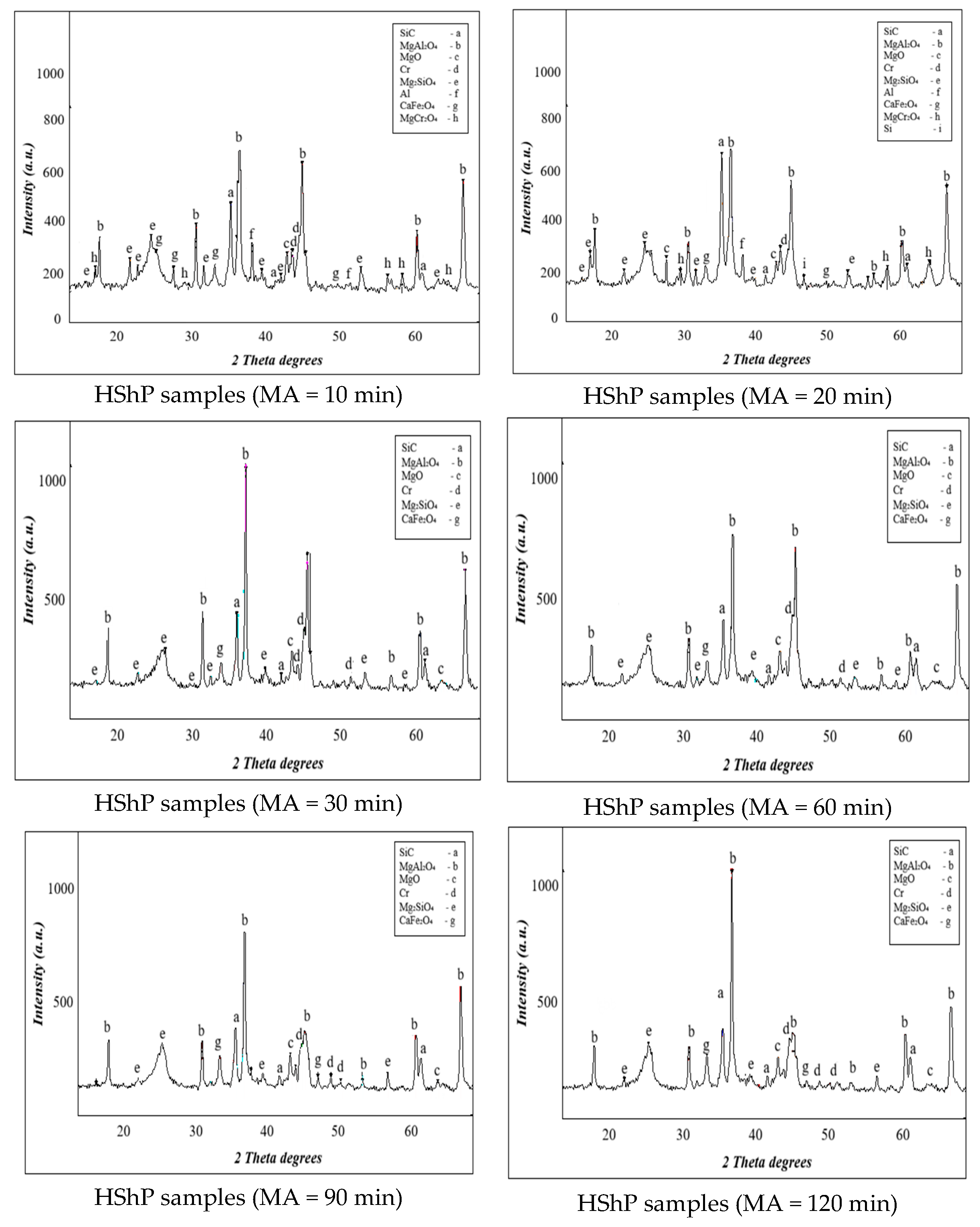
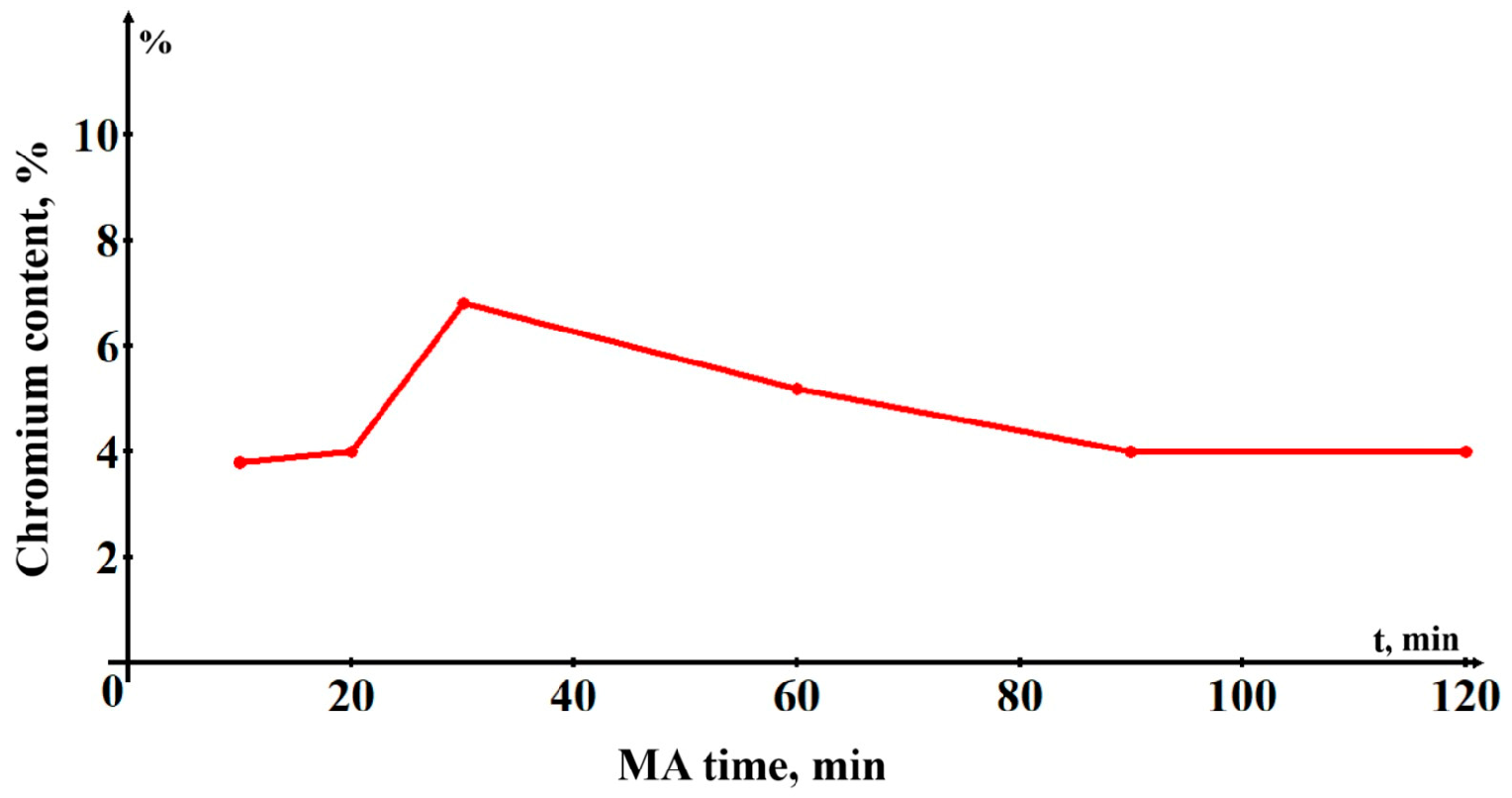
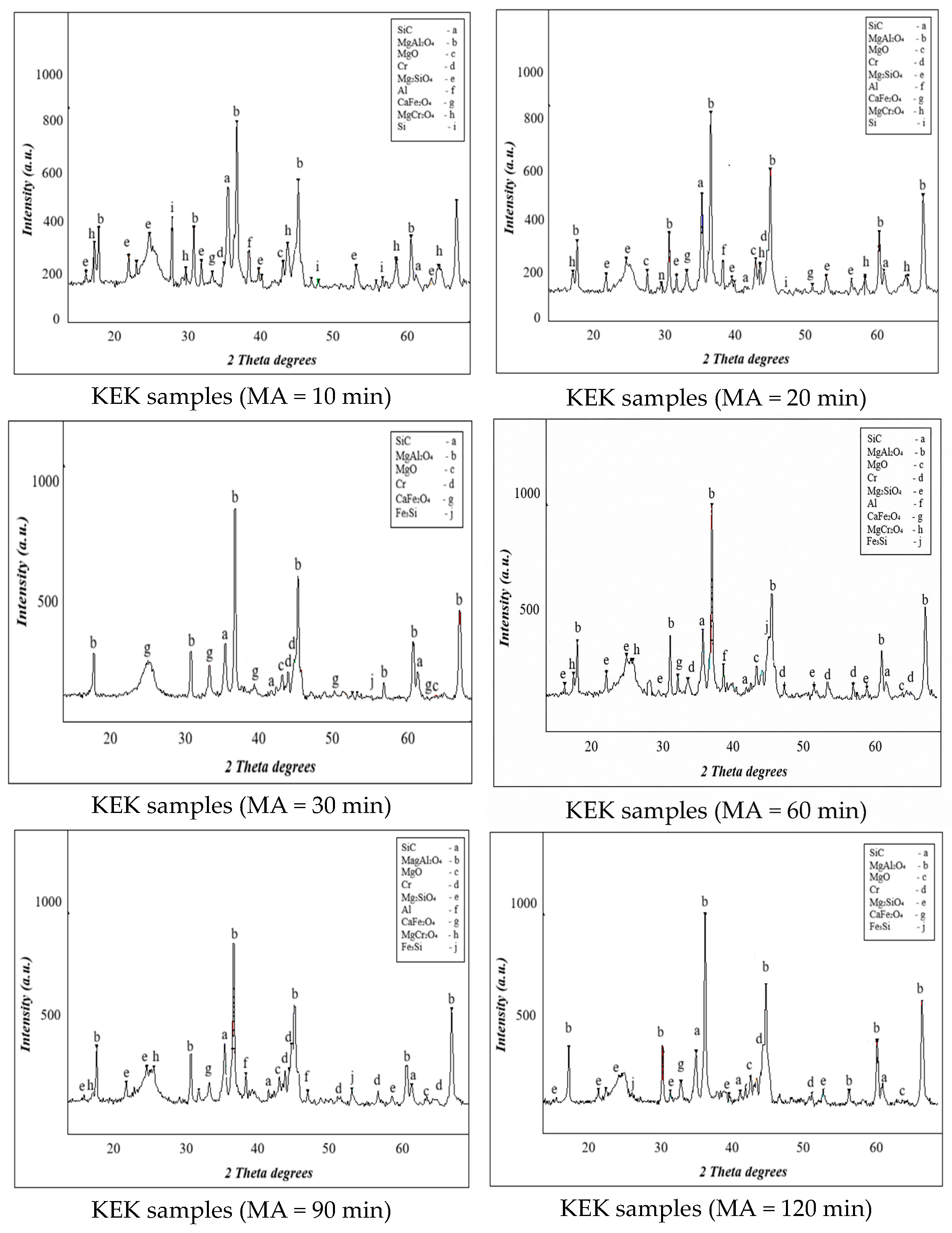
XRD results showed that the highest chromium reduction efficiency is achieved at this activation time. For HShP-based samples, this is evidenced by the absence of detectable MgCr2O4 reflections within the XRD detection limits and the maximum content of metallic chromium (~8%). For KEK, the maximum Cr content (~6.8%) is also observed; however, the values are lower due to the lower initial chromium content and the predominance of silicate phases.
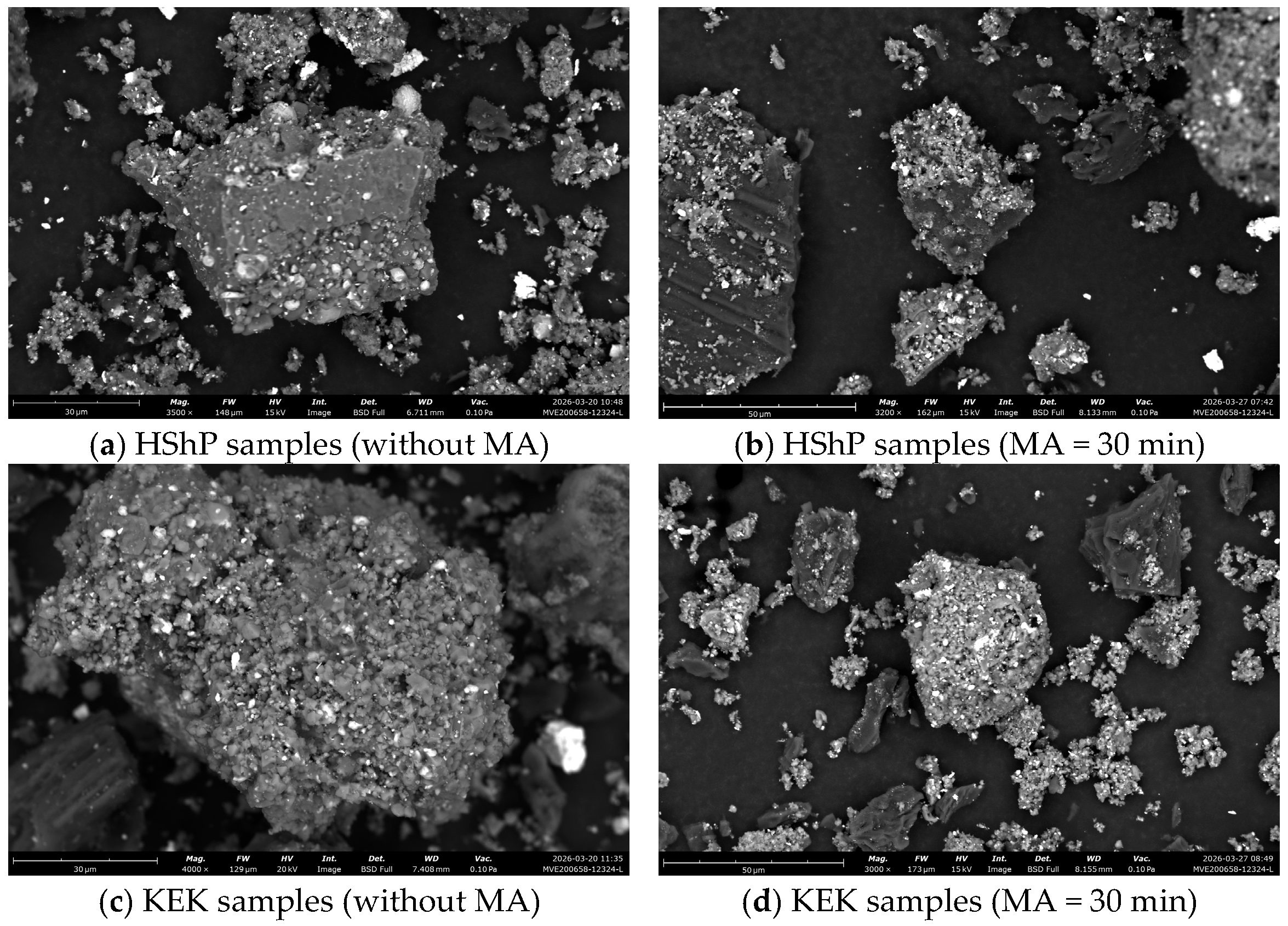
At the optimal activation time, a more dispersed and porous structure is formed, with an increased interfacial contact area, which promotes enhanced reactivity of the system.
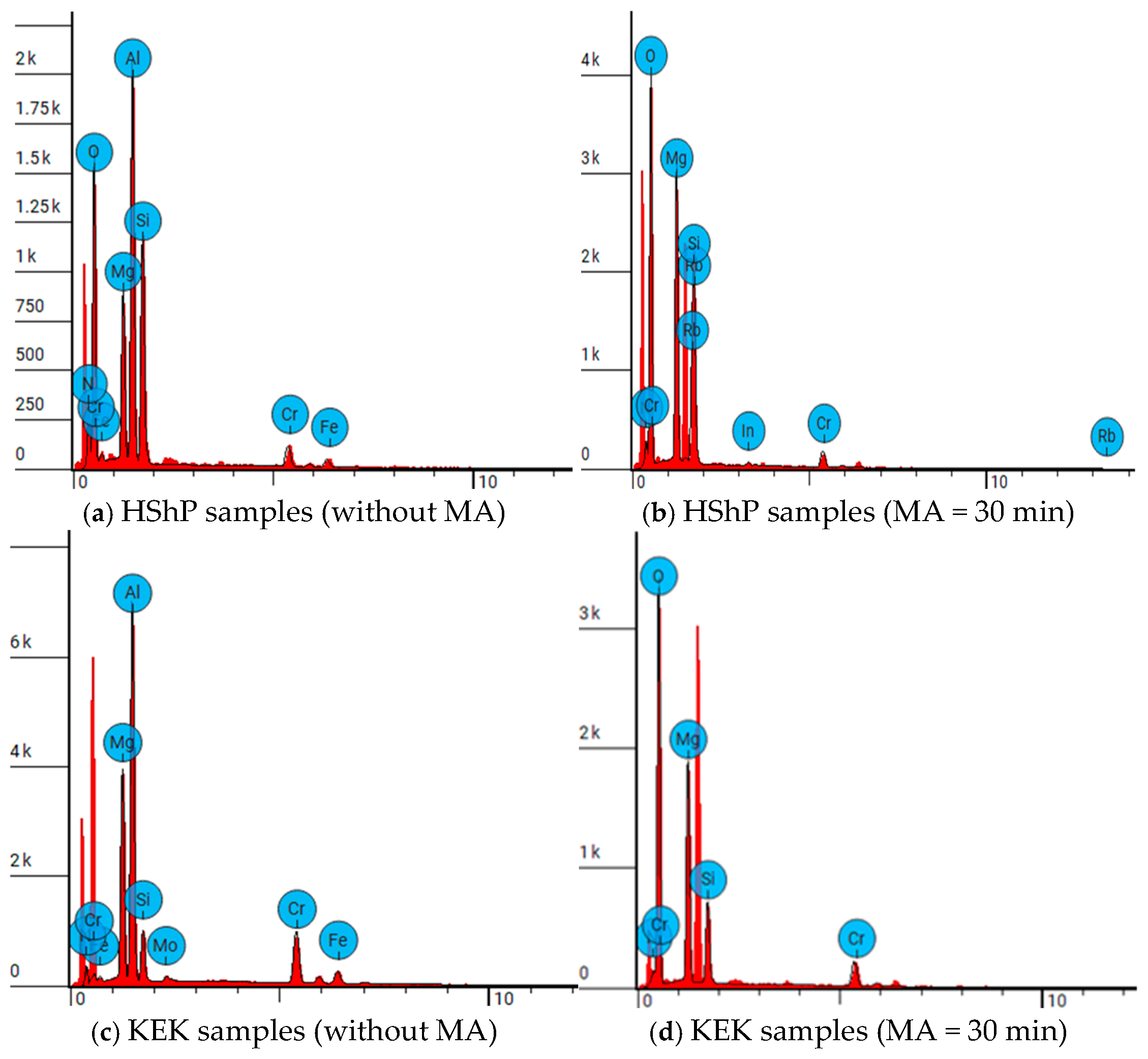
EDS analysis revealed an increase in chromium content in the analyzed regions after mechanical activation. For HShP-based samples, the Cr content increases from ~6.3 to ~15.1 wt.%, while for KEK-based samples it reaches ~15.5 wt.% at an activation time of 30 min. This supports the enhanced chromium reduction behavior observed after mechanical activation.
It is shown that with an increase in mechanical activation time beyond 30 min, the process efficiency decreases. This is associated with overgrinding and particle agglomeration, which deteriorate heat and mass transfer conditions and lead to a decrease in the chromium reduction efficiency.
A comparative analysis of the two types of raw materials showed that HShP is a more promising material for chromium extraction under SHS conditions, as it is characterized by a higher initial content of spinel phases and, consequently, provides a higher yield of metallic chromium.
The results indicate that the optimal mechanical activation time for the studied system is approximately 30 min, at which the best combination of combustion parameters, phase composition, and microstructure of the synthesis products is achieved.
Mechanical activation was shown to significantly influence SHS combustion behavior and the relative chromium reduction efficiency.
Author Contributions
Conceptualization, S.T. (Sanat Tolendiuly); methodology, S.T. (Sanat Tolendiuly), S.T. (Sandugash Tanirbergenova) and L.M.; validation, L.M. and S.A.; formal analysis, S.T. (Sanat Tolendiuly), L.M. and S.A.; investigation, S.A. and N.R.; resources, K.K.; data curation, S.A.; writing—original draft preparation, S.T. (Sanat Tolendiuly) and N.R.; writing—review and editing, S.T. (Sanat Tolendiuly), N.R., S.T. (Sandugash Tanirbergenova), L.M. and K.K.; visualization, S.T. (Sanat Tolendiuly), S.T. (Sandugash Tanirbergenova) and L.M.; supervision, K.K.; project administration, S.T. (Sandugash Tanirbergenova); funding acquisition, S.T. (Sandugash Tanirbergenova). All authors have read and agreed to the published version of the manuscript.
Funding
This research was funded by the Science Committee of The Ministry of Science and Higher Education of the Republic of Kazakhstan (Grant No. BR28713557).
Data Availability Statement
The original contributions presented in this study are included in the article. Further inquiries can be directed to the corresponding author.
Conflicts of Interest
The authors declare no conflicts of interest.
Abbreviations
The following abbreviations are used in this manuscript:
| SHS | Self-propagating high-temperature synthesis |
| MA | Mechanical activation |
| XRD | X-ray diffraction |
| SEM | Scanning electron microscopy |
| EDS | Energy-dispersive spectroscopy |
| HShP | Dry gas-cleaning dust |
| KEK | Wet scrubber sludge |
References
- Xu, J.; Liu, M.; Ma, G.; Zheng, D.; Zhang, X.; Hou, Y. Valuable Recovery Technology and Resource Utilization of Chromium-Containing Metallurgical Dust and Slag: A Review. Metals 2023, 13, 1768. [Google Scholar] [CrossRef]
- Gu, F.; Zhang, Y.; Su, Z.; Tu, Y.; Liu, S.; Jiang, T. Recovery of Chromium from Chromium-Bearing Slags Produced in the Stainless-Steel Smelting: A Review. J. Clean. Prod. 2021, 296, 126467. [Google Scholar] [CrossRef]
- Sariyev, O.; Tolymbekova, L.; Dossekenov, M.; Kelamanov, B.; Yessengaliyev, D.; Davletova, A.; Abdirashit, A. Analysis and Chromium Recovery from Ferrochrome Waste (Stockpiled Refined Ferrochrome Slags). Metals 2025, 15, 740. [Google Scholar] [CrossRef]
- Fomenko, S.M.; Akishev, A.; Tolendiuly, S. Thermal Flows Influence on the Change of Temperature Stresses in Surface and Inner Layers of Refractories. Mater. Today Proc. 2020, 33, 1853–1858. [Google Scholar] [CrossRef]
- Fomenko, S.M.; Tolendiuly, S.; Akishev, A.K.; Almagambetov, M.; Yeskendirov, R. The Technology for Producing Refractory Products Based on Metallurgical Production Waste. AIP Conf. Proc. 2021, 2380, 040003. [Google Scholar] [CrossRef]
- Mori, T.; Yang, J.; Kuwabara, M. Mechanism of Carbothermic Reduction of Chromium Oxide. ISIJ Int. 2007, 47, 1387–1393. [Google Scholar] [CrossRef]
- Chakraborty, D.; Ranganathan, S.; Sinha, S.N. Carbothermic Reduction of Chromite Ore under Different Flow Rates of Inert Gas. Metall. Mater. Trans. B 2010, 41, 10–18. [Google Scholar] [CrossRef]
- Hu, X.; Teng, L.; Wang, H.; Ökvist, L.S.; Yang, Q.; Björkman, B.; Seetharaman, S. Carbothermic Reduction of Synthetic Chromite with/without the Addition of Iron Powder. ISIJ Int. 2016, 56, 2147–2155. [Google Scholar] [CrossRef]
- Varma, A.; Lebrat, J.-P. Combustion Synthesis of Advanced Materials. Chem. Eng. Sci. 1992, 47, 2179–2194. [Google Scholar] [CrossRef]
- Munir, Z.A.; Anselmi-Tamburini, U. Self-Propagating Exothermic Reactions: The Synthesis of High-Temperature Materials by Combustion. Mater. Sci. Rep. 1989, 3, 277–365. [Google Scholar] [CrossRef]
- Cao, G.; Orrù, R. Self-Propagating Reactions for Environmental Protection: State of the Art and Future Directions. Chem. Eng. J. 2002, 87, 239–249. [Google Scholar] [CrossRef]
- Xanthopoulou, G.; Vekinis, G. An Overview of Some Environmental Applications of Self-Propagating High-Temperature Synthesis. Adv. Environ. Res. 2001, 5, 117–128. [Google Scholar] [CrossRef]
- Suryanarayana, C. Mechanical Alloying and Milling. Prog. Mater. Sci. 2001, 46, 1–184. [Google Scholar] [CrossRef]
- Baláž, P. Mechanochemistry in Nanoscience and Minerals Engineering; Springer: Berlin/Heidelberg, Germany, 2008. [Google Scholar] [CrossRef]
- Apaydin, F.; Atasoy, A.; Yildiz, K. Effect of Mechanical Activation on Carbothermal Reduction of Chromite with Graphite. Can. Metall. Q. 2011, 50, 113–118. [Google Scholar] [CrossRef]
- Davies, J.; Tangstad, M.; Ringdalen, E.; Beukes, J.P.; Bessarabov, D.; du Preez, S.P. The Effect of Pre-Oxidation on the Reducibility of Chromite Using Hydrogen: A Preliminary Study. Minerals 2022, 12, 911. [Google Scholar] [CrossRef]
- Varma, A.; Rogachev, A.S.; Mukasyan, A.S.; Hwang, S. Combustion Synthesis of Advanced Materials: Principles and Applications. Adv. Chem. Eng. 1998, 24, 79–226. [Google Scholar] [CrossRef]
- Mukasyan, A.S.; Rogachev, A.S. Discrete reaction waves: Gasless combustion of solid powder mixtures. Prog. Energy Combust. Sci. 2008, 34, 377–416. [Google Scholar] [CrossRef]
- Boldyrev, V.V. Mechanochemistry and mechanical activation of solids. Russ. Chem. Rev. 2006, 75, 177–189. [Google Scholar] [CrossRef]
- Merzhanov, A.G. Self-Propagating High-Temperature Synthesis: Twenty Years of Search and Findings. In Combustion Science and Technology; ISMAN: Chernogolovka, Russia, 1989; 91p. [Google Scholar]
- Young, R.A. (Ed.) The Rietveld Method; Oxford University Press: Oxford, UK, 1993; 298p. [Google Scholar]
- Goldstein, J.I.; Newbury, D.E.; Joy, D.C.; Lyman, C.E.; Echlin, P.; Lifshin, E.; Sawyer, L.; Michael, J.R. Scanning Electron Microscopy and X-Ray Microanalysis, 3rd ed.; Springer: New York, NY, USA, 2003. [Google Scholar] [CrossRef]
Figure 1.
Planetary ball mill (PM 100) used for mechanical activation of powder mixtures prior to SHS processing.
Figure 2.
Development of the SHS combustion front in an HShP-based sample.
Figure 3.
Development of the SHS combustion front in a KEK-based sample.
Figure 4.
Effect of mechanical activation time on combustion temperature and burning rate (HShP).
Figure 5.
Effect of mechanical activation time on combustion temperature and burning rate (KEK).
Figure 6.
Dependence of relative metallic chromium phase content on mechanical activation time for HShP and KEK-based systems.
Figure 7.
Effect of mechanical activation time on the phase composition of SHS products for HShP-based samples.
Figure 8.
XRD patterns of HShP-based samples at different mechanical activation times.
Figure 9.
Effect of mechanical activation time on the phase composition of SHS products for KEK-based samples.
Figure 10.
XRD patterns of KEK-based samples at different mechanical activation times.
Figure 11.
Microstructure of samples without mechanical activation and after 30 min of treatment.
Figure 12.
EDS spectra of the SHS synthesis products.
Table 1.
Phase composition of chromium-containing wastes.
| Type | MgCr2O4 | Mg2SiO4 | MgO | CaCO3 | SiO2 | Fe |
|---|
| HShP | 59.5% | 30.5% | 2.5% | 3.5% | 2.5% | 1.5% |
| KEK | 28.5% | 66.2% | – | – | 2.3% | 3.0% |
Table 2.
SHS parameters for HShP.
| Mechanical Activation Time, min | Maximum Combustion Temperature, °C | Linear Combustion Velocity, mm/s |
|---|
| 10 | 1780 | 0.87 |
| 20 | 1815 | 0.96 |
| 30 | 1920 | 1.10 |
| 60 | 1790 | 0.93 |
| 90 | 1775 | 0.89 |
| 120 | 1730 | 0.81 |
Table 3.
SHS parameters for KEK.
| Mechanical Activation Time, min | Maximum Combustion Temperature, °C | Linear Combustion Velocity,
mm/s |
|---|
| 10 | 1640 | 0.82 |
| 20 | 1665 | 0.88 |
| 30 | 1765 | 0.98 |
| 60 | 1710 | 0.90 |
| 90 | 1680 | 0.82 |
| 120 | 1650 | 0.78 |
Table 4.
Phase composition of SHS products for HShP-based samples.
| MA Time, min | MgAl2O4 | Mg2SiO4 | MgCr2O4 | MgO | SiC | CaFe2O4 | Al | Si | Cr |
|---|
| 10 | 48.0 | 19.0 | 8.0 | 4.0 | 6.0 | 5.0 | 6.0 | – | 4.0 |
| 20 | 43.0 | 10.0 | 15.0 | 4.0 | 9.0 | 5.0 | 6.0 | 2.0 | 6.0 |
| 30 | 53.0 | 14.0 | – | 7.0 | 10.0 | 8.0 | – | – | 8.0 |
| 60 | 58.0 | 13.0 | – | 7.0 | 10.0 | 7.0 | – | – | 5.0 |
| 90 | 60.0 | 9.0 | – | 5.2 | 11.0 | 11.0 | – | – | 3.8 |
| 120 | 68.0 | 4.0 | – | 5.0 | 11.0 | 9.0 | – | – | 3.0 |
Table 5.
Phase composition of SHS products for KEK-based samples.
| MA Time, min | MgAl2O4 | Mg2SiO4 | MgCr2O4 | MgO | SiC | CaFe2O4 | Al | Si | Fe3Si | Cr |
|---|
| 10 | 40.0 | 22.0 | 14.2 | 3.0 | 5.0 | 3.0 | 6.0 | 3.0 | – | 3.8 |
| 20 | 44.0 | 17.0 | 10.0 | 5.0 | 8.0 | 5.0 | 5.0 | 2.0 | – | 4.0 |
| 30 | 68.2 | – | – | 3.0 | 10.0 | 9.0 | – | – | 3.0 | 6.8 |
| 60 | 52.8 | 16.0 | 3.0 | 4.0 | 8.0 | 4.0 | 3.0 | – | 4.0 | 5.2 |
| 90 | 60.0 | 10.0 | 2.0 | 3.0 | 8.0 | 6.0 | 3.0 | – | 4.0 | 4.0 |
| 120 | 64.0 | 11.0 | – | 3.0 | 8.0 | 5.0 | – | – | 5.0 | 4.0 |
Table 6.
(A) Elemental composition of SHS products based on EDS data (HShP samples without mechanical activation). (B) Elemental composition of SHS products based on EDS data (HShP samples after 30 min of mechanical activation). (C) Elemental composition of SHS products based on EDS data (KEK samples without mechanical activation). (D) Elemental composition of SHS products based on EDS data (KEK samples after 30 min of mechanical activation).
| (A) |
Atomic
Number | Element Symbol | Element Name | Atomic
Concentration, % | Weight
Concentration, % |
| 7 | N | Nitrogen | 10.37 | 6.60 |
| 8 | O | Oxygen | 43.08 | 31.30 |
| 12 | Mg | Magnesium | 7.33 | 8.10 |
| 13 | Al | Aluminum | 20.82 | 25.50 |
| 14 | Si | Silicon | 14.03 | 17.90 |
| 24 | Cr | Chromium | 2.67 | 6.30 |
| 26 | Fe | Iron | 1.70 | 4.30 |
| (B) |
Atomic
Number | Element Symbol | Element Name | Atomic
Concentration, % | Weight
Concentration, % |
| 7 | N | Nitrogen | 14.63 | 7.31 |
| 12 | Mg | Magnesium | 18.47 | 16.02 |
| 13 | Al | Aluminum | 46.02 | 44.24 |
| 14 | Si | Silicon | 9.10 | 9.11 |
| 24 | Cr | Chromium | 8.15 | 15.12 |
| 26 | Fe | Iron | 2.92 | 5.81 |
| (C) |
Atomic
Number | Element Symbol | Element Name | Atomic
Concentration, % | Weight
Concentration, % |
| 7 | N | Nitrogen | 4.56 | 2.80 |
| 8 | O | Oxygen | 62.73 | 44.00 |
| 12 | Mg | Magnesium | 16.69 | 17.80 |
| 14 | Si | Silicon | 8.28 | 10.20 |
| 24 | Cr | Chromium | 2.76 | 6.30 |
| (D) |
Atomic
Number | Element Symbol | Element Name | Atomic
Concentration, % | Weight
Concentration, % |
| 7 | N | Nitrogen | 1.64 | 1.10 |
| 8 | O | Oxygen | 63.73 | 48.80 |
| 12 | Mg | Magnesium | 19.85 | 23.10 |
| 14 | Si | Silicon | 8.55 | 11.50 |
| 24 | Cr | Chromium | 6.23 | 15.50 |
| Disclaimer/Publisher’s Note: The statements, opinions and data contained in all publications are solely those of the individual author(s) and contributor(s) and not of MDPI and/or the editor(s). MDPI and/or the editor(s) disclaim responsibility for any injury to people or property resulting from any ideas, methods, instructions or products referred to in the content. |




 ,
,