Article

Study on the Modification of TiC/440C Composite Coatings Fabricated by Plasma Surfacing

1
Key Lab of New Processing Technology for Nonferrous Metals and Materials, Ministry of Education, Guilin University of Technology, Guilin 541004, China
2
College of Materials Science and Engineering, Guilin University of Technology, Guilin 541004, China
*
Author to whom correspondence should be addressed.
Metals 2026, 16(5), 505; https://doi.org/10.3390/met16050505
Submission received: 10 April 2026 / Revised: 3 May 2026 / Accepted: 6 May 2026 / Published: 7 May 2026

Abstract

S136 mold steel is widely used in the injection molding industry due to its excellent properties. However, during actual production, the mold is inevitably exposed to harsh service conditions involving high temperature, high pressure, chemical corrosion, and mechanical wear, leading to risks of failure caused by pitting corrosion, intergranular corrosion, electrochemical corrosion, selective dissolution, and surface fatigue wear. To enhance the surface protection performance of the mold, a TiC-reinforced 440C stainless steel composite coating was fabricated on the S136 substrate using plasma spray welding technology. Composite powders with different TiC contents (wt.%) were prepared via mechanical mixing. The phase composition, microstructure, microhardness, corrosion resistance, and wear resistance of the coatings were characterized by XRD, SEM, Vickers microhardness tester, electrochemical workstation, and vertical universal friction and wear tester. Furthermore, the corresponding strengthening mechanisms were elucidated. The results show that the incorporation of TiC refines the microstructure and synergistically enhances both corrosion and wear resistance. Among the tested coatings, the one with 1.0 wt.% TiC exhibits the best overall performance, with a significantly increased microhardness of 858.85 HV (approximately 1.5 times that of the substrate), an Ecorr of –0.286 ± 0.002 V, an Icorr of 4.51 × 10⁻⁷ A·cm−2, and a friction coefficient of 0.591. This study provides important theoretical and technological insights for the surface strengthening of S136 mold steel using plasma spray welding of TiC/440C composite coatings to improve corrosion and wear resistance and extend service life.

1. Introduction

S136 mold steel, as a high-chromium martensitic stainless steel, is widely used in precision mold manufacturing, particularly in the plastic injection molding industry, due to its excellent combination of corrosion resistance and high hardness [1,2,3]. However, with the rapid advancement of technology and industry, the working environment for injection molds has become increasingly harsh. Under prolonged exposure to high temperatures, high pressure, and corrosive conditions, the mold surface tends to adhere to plastic materials, which may further decompose into acidic substances under specific circumstances, ultimately leading to self-corrosion [4]. This not only compromises the quality of injection-molded products but also shortens the service life of the molds and significantly increases production costs. To address these challenges, it is imperative to enhance the overall performance of injection molds. Preparing surface weld layers with high hardness, strong wear resistance, and superior corrosion resistance has become a widely adopted and effective approach to improve material strength, reduce costs, and conserve resources [5,6,7]. In the pursuit of high-performance metal matrix composite weld layers to meet increasingly complex production demands, commonly employed techniques include laser cladding [8], magnetron sputtering [9], TIG/MIG hybrid welding [10], and plasma spray welding [11]. Among these, plasma spray welding is a technology that utilizes a compressed plasma arc as a heat source to melt alloy powder and project it at high velocity onto the substrate surface, forming a metallurgically bonded high-quality weld layer. Due to its unique process characteristics and significant advantages—difficult or impossible to achieve simultaneously with other techniques—it has garnered growing attention in practical applications and holds a prominent position in high-end manufacturing and repair fields. This method offers benefits such as low heat input (minimizing substrate damage), high thermal efficiency, rapid deposition rates, and dense weld layers with strong bonding strength, ensuring effective metallurgical bonding between the weld layer and the substrate. Moreover, plasma spray welding is relatively cost-effective, highly adaptable to materials, and allows flexible process adjustments to meet diverse requirements [11,12,13]. It is particularly suitable for preparing metal matrix weld layers reinforced with high-melting-point ceramics.
In recent years, steel-based and ceramic particle-reinforced metal matrix composites (MMCs) have demonstrated significant application potential due to their excellent performance [14,15,16,17]. The existing literature reports various steel matrix composites incorporating different ceramic reinforcing phases, with common reinforcements such as WC, TiC, SiC, ZrC, and TiB2 being introduced into the steel matrix as needed [18,19,20,21]. Among these, TiC stands out as an ideal reinforcing phase for steel matrix composites due to its exceptional corrosion resistance and superior mechanical properties in molten steel. Consequently, research on TiC particle-reinforced iron matrix composites has garnered considerable attention in recent years. Mo et al. fabricated a 420 martensitic stainless steel/TiC composite coating using laser cladding technology and systematically analyzed its phase composition. The results indicated that the addition of TiC transformed the microstructure of the composite coating into equiaxed grains, refining the grain structure and enhancing both hardness and wear resistance. The coating exhibited the highest microhardness at a TiC mass fraction of 6%, while the sample with 4 wt.% TiC demonstrated the best wear resistance, with wear loss being only 25% of that of the 420 MSS coating [22]. Morshed-Behbahani et al. incorporated TiC powder when preparing maraging stainless steel via laser powder bed fusion. Their findings revealed that TiC effectively refined the grain structure and promoted the formation of a dual-phase martensite–austenite microstructure in the alloy. In this case, the charge transfer resistance reached 2.8 × 10⁶ Ω·cm2, increasing by 18% and 71% in samples containing 1 wt.% and 2 wt.% TiC, respectively. Similarly, the corrosion current density of samples with 1 wt.% and 2 wt.% TiC was one and two orders of magnitude lower, respectively, than that of the TiC-free counterpart. This grain refinement significantly reduced corrosion susceptibility and improved the overall corrosion resistance of the alloy [23]. Gao et al. prepared CoCrFeNiTiₓCₓ (x = 0.1, 0.2, 0.3) coatings using laser cladding. The results showed that in situ TiC existed as fine particles in the matrix, and as the Ti and C content increased, the distribution of in situ TiC became more uniform and dispersed. The CoCrFeNiTi0.2C0.2 coating exhibited favorable electrochemical corrosion resistance in a 3.5 wt.% NaCl solution, with corrosion primarily manifesting as intergranular and pitting corrosion [24].
To the best of the authors’ knowledge, existing studies on ceramic particle-reinforced metal matrix composite coatings have primarily focused on iron-based and nickel-based self-fluxing alloy systems, with laser cladding being the dominant fabrication method. In contrast, few studies have investigated ceramic particle-modified martensitic stainless steel composite coatings prepared by plasma transfer arc (PTA) welding, and most of the existing work has concentrated on improving mechanical properties such as wear resistance, with almost no reports on corrosion resistance. This deficiency makes it difficult to meet the effective repair requirements of injection molds after failure due to corrosion and wear—especially given that such repairs demand both wear resistance and corrosion resistance. Traditional repair materials and methods cannot simultaneously satisfy the comprehensive requirements of low cost and high-performance coatings under injection mold service conditions. To address this research gap and to extend the service life of repaired S136 mold steel, this study selects 440C martensitic stainless steel as the coating matrix material and TiC as the reinforcing ceramic particle phase. PTA welding is employed to fabricate 440C martensitic stainless steel matrix composite coatings reinforced with varying TiC content.
The core novelty of this work lies in the use of PTA welding to overcome, for the first time in TiC-reinforced martensitic stainless steel systems, the longstanding trade-off between wear resistance and corrosion resistance. In existing studies on ceramic particle-reinforced iron- and nickel-based self-fluxing alloys, TiC’s high melting point is conventionally regarded as an obstacle, and efforts are directed toward retaining TiC as unmelted original particles within the coating, which results in random spatial distribution, weak interfacial bonding, and limited tunability. By contrast, this study innovatively exploits the ultra-high arc column temperature (10,000–24,000 °C) of PTA welding to actively induce surface activation and controlled pre-dissolution of TiC particles as they traverse the arc column. Through precise control of the molten pool temperature window (1600–2000 °C), a dynamic process involving simultaneous dissolution, deposition, and in situ reprecipitation is achieved. Leveraging the precise matching between heat source characteristics and process parameters, this approach opens a new pathway for regulating the spatial distribution and interfacial behavior of the ceramic phase within the metal matrix. The effects of varying TiC content on the reinforced composite coatings and the underlying mechanisms are investigated through analysis of microstructure, phase composition, microhardness, corrosion resistance, and wear resistance. This research aims to develop a low-cost, high-performance iron-based coating suitable for injection mold repair, thereby filling a technological gap in this field and addressing the current market demand for effective repair solutions for failed injection molds.

2. Experiments and Materials

2.1. Materials

The substrate material used in this study was S136 mold steel, with dimensions of 100 × 50 × 10 mm3. Its chemical composition is presented in Table 1.
Prior to the experiment, the substrate underwent sequential surface pretreatment steps including rust removal, degreasing, and mechanical polishing. Subsequently, it was ultrasonically cleaned with anhydrous ethanol and placed in a drying oven at 100 °C for over 12 h to ensure complete dryness and a clean surface free of residual impurities. The spray welding material consisted of a mixture of 440C martensitic stainless steel powder and TiC powder. The chemical composition of 440C is presented in Table 2.
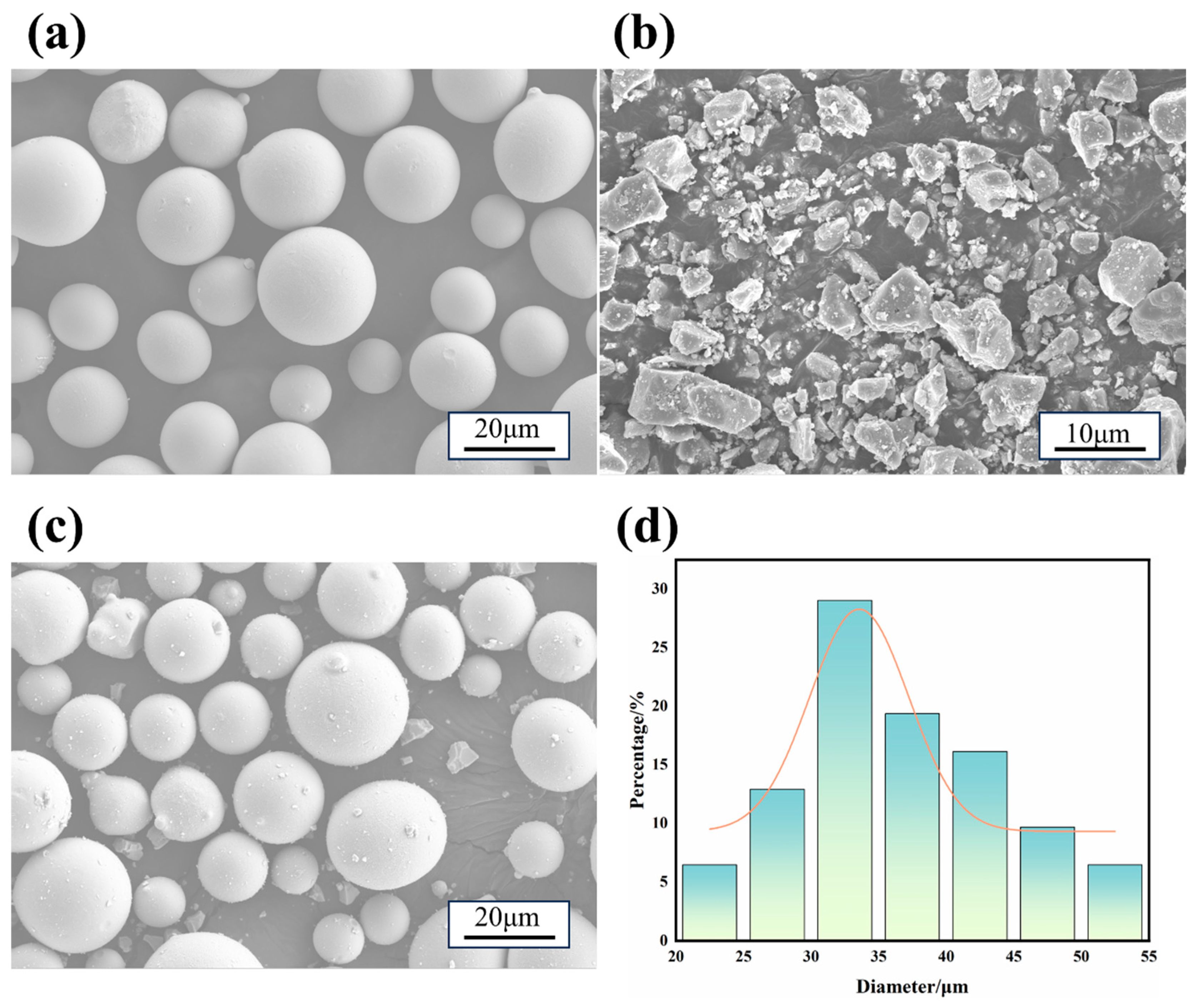
The morphologies of various powders are shown in Figure 1. The 440C powder exhibits a spherical shape, while the TiC powder appears as fine fragmented particles. To investigate the influence of TiC on the composite materials, Table 3 presents the compositional ratios of each experimental group, where L0 represents commercially pure S136 mold steel.
The as-prepared powder was placed in an XQM-6 planetary ball mill (Changsha Miqi Instrument Equipment Co., Ltd., Hunan, China). Zirconia grinding jars and zirconia balls were used, with a ball-to-powder mass ratio of 8:1, and the mass ratio of large balls (Φ10 mm) to small balls (Φ6 mm) was set at 3:2. Prior to milling, the grinding jar was evacuated and then filled with high-purity argon as a protective atmosphere. An appropriate amount of anhydrous ethanol was added as a wet milling medium to prevent agglomeration. The milling process was conducted at a rotation speed of 360 r/min, with alternating forward and reverse rotation (direction reversed every 30 min), and a total milling time of 3 h, ensuring the homogeneity and purity of the mixed powder.

2.2. Experimental Equipment

The experiments were conducted using a PDA-400D1-ST plasma spray welding machine(Shanghai Duomu Industry Co., Ltd., Shanghai, China). The system primarily consists of core components such as a powder feeding system, a plasma spray gun, and an intelligent robotic arm. During the spraying process, the CNC computer interacts with the robotic arm to achieve three-dimensional precision control over the deposition of the weld layer. By optimizing key process parameters, including welding current, scanning speed, and powder feed rate, weld layer defects can be effectively reduced, while the bonding strength between the weld layer and the substrate is significantly enhanced. The experimental parameters were set as follows: welding current of 110 A, shielding gas flow rate of 15 L/min, ion gas flow rate of 3.6 L/min, and powder feed gas flow rate of 5 L/min. Industrial-grade pure argon was employed as the ion gas, powder feed gas, and shielding gas. The spraying speed was 75 mm/s, with a spraying width of 33 mm and a spraying length of 85 mm. The spray gun was positioned 8 mm from the substrate, and the average thickness of the prepared weld layer was 3.2 mm.

2.3. Material Analysis and Performance Testing

After completing the experiments, the samples were cooled under insulation and then sectioned along the cross-section to prepare metallographic specimens. Following mechanical grinding and polishing, a mixed acid etching solution (VHCl:MFeCl3·6H2O:VH2O = 3 mL:1 g:12 mL) was used to reveal the microstructure, where hydrochloric acid was analytical-grade concentrated HCl (36–38 wt.%), and FeCl3 was added in the form of ferric chloride hexahydrate. All reagents met analytical reagent standards, and ultrapure water was used as the solvent. The etching process was conducted at room temperature (23 ± 2 °C), with an immersion time of 10–15 s, after which the reaction was immediately quenched using anhydrous ethanol. The microstructure of the weld layer was analyzed using a BMM-420 optical microscope(Shanghai Batuo Instrument Co., Ltd., Shanghai, China) and a GeminiSEM 300 scanning electron microscope(Carl Zeiss AG, Jena, Germany). The chemical composition of the plasma-sprayed weld layer was determined via energy-dispersive spectroscopy (EDS). Phase composition was analyzed using an X-ray diffractometer(Malvern Panalytical B.V., Almelo, Netherlands) under the following conditions: Cu-Kα radiation, 25 °C, and a scanning rate of 10°/min. To investigate the effect of TiC content on the weld layer properties, a digital Vickers microhardness tester(Changzhou Sanfeng Instrument Technology Co., Ltd., Jiangsu, China) was employed, with test parameters set at a load of 4.903 N and a dwell time of 10 s. Fifteen measurement points (spaced 200 μm apart) were uniformly selected on the cross-section to statistically analyze the hardness distribution. For electrochemical testing, specimens were machined into 10 × 10 × 5 mm3 cubes, with a reserved 1 cm2 effective working area. Prior to testing, a copper wire was soldered to the back of each sample to establish electrical contact. The specimens were then vacuum-embedded in epoxy resin (curing conditions: 25 °C for 24 h), followed by sequential wet grinding using SiC sandpaper (180 to 5000 grit) and mirror polishing with 1 μm diamond paste. After cleaning with anhydrous ethanol, the samples were stored in a desiccator for subsequent use. The dried samples were subjected to electrochemical polarization curve and electrochemical impedance spectroscopy (EIS) measurements using a CHI-760f workstation(Shanghai Chenhua Instrument Co., Ltd., Shanghai, China). A three-electrode system was adopted, with the sample as the working electrode, a platinum sheet as the counter electrode, and a saturated calomel electrode (SCE) as the reference electrode. The electrolyte was a 3.5 wt.% NaCl solution. Before testing, the three-electrode system was stabilized in the electrolyte for 10 min. The open-circuit potential (OCP) was then measured over 400 s. Once the OCP stabilized, potentiodynamic polarization curves were recorded within a potential range of ±0.6 V relative to the OCP, at a scan rate of 0.001 V/s. For EIS measurements, the frequency range was set from 10−2 to 105 Hz with an amplitude of 0.01 V. Data were fitted using ZView 3.3 software. All tests were conducted at approximately 25 °C. Friction and wear tests were conducted on specimens with varying TiC contents using an MMW-05 vertical universal friction and wear tester (Jinan Qingke Testing Instrument Co., Ltd., Shandong, China). The tests were performed under a load of 20 N, with a rotational radius of 6 mm, a rotational speed of 360 r/min, and a testing duration of 0.5 h. Al2O3 balls with a diameter of 6 mm were used as the counterpart friction pairs. Three specimens were selected from each group for testing, and the average values were calculated to eliminate the influence of random errors. After the wear tests, the worn morphologies of the coatings were observed using scanning electron microscopy (SEM).

3. Results and Discussion

3.1. Microstructure

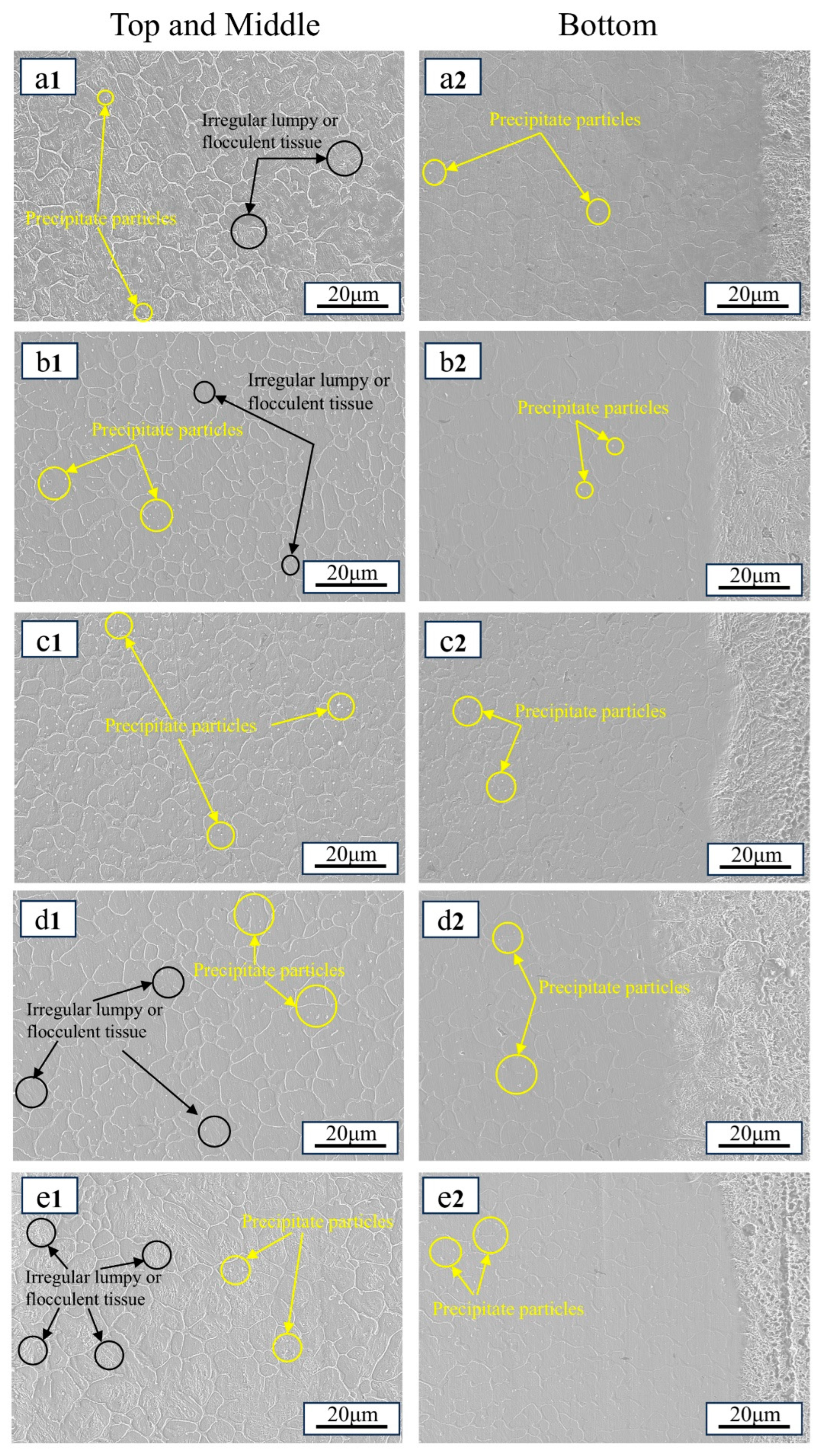
Figure 2 illustrates the microstructural differences in various regions of the coatings with different TiC contents. It can be observed that for the same coating, significant distinctions exist between the lower region in contact with the substrate and the middle and upper regions. It should be particularly noted that the disordered microstructure at the bottom of the samples arises from insufficient corrosion resistance of the substrate material, leading to over-etching under the action of the etchant. This phenomenon also indicates, to some extent, that under identical corrosion conditions, the coatings with different TiC contents fabricated by plasma surfacing exhibit superior corrosion resistance compared to the S136 substrate.
The introduction of TiC significantly promotes the grain refinement mechanism, leading to the gradual evolution of the microstructure into fine dendrites and equiaxed grains. The lamellar morphology (fish scale-like structure) observed in the cladding layers originates from the local remelting effect during the plasma spray welding process, which forms an alternately stacked layered structure under rapid solidification conditions. As shown in Figure 2(a1–e2), a pronounced distribution gradient of precipitates exists in the cladding layers with different TiC contents: in the middle and top regions of the cladding layers, intergranular precipitates are relatively dense, whereas, in the bottom region adjacent to the substrate, the number of precipitates is significantly reduced or even nearly absent. This gradient distribution can be rationalized by solute redistribution and differences in cooling rate during solidification: the bottom region, being close to the substrate, experiences a higher cooling rate and shorter solidification time, limiting solute diffusion; in contrast, the middle and top regions undergo relatively slower cooling, providing more favorable kinetic conditions for the formation and growth of precipitates. The abundance of precipitates exhibits a gradient-increasing trend from the bottom to the top along the deposition direction and reaches a nearly homogeneous distribution in the middle-to-top regions of the cladding layers. It is noteworthy that, in the middle-to-top regions of the L1 and L5 cladding layers, a high density of irregular blocky/flocculent structures is observed (Figure 2(a1,e1)). The density of such structures is significantly reduced in L2 and L4 (Figure 2(b1,d1)) and nearly disappears in L3 (Figure 2(c1)). This distribution characteristic indicates a non-monotonic dependence between the formation rate of irregular structures and the TiC content: in the low TiC content range, they exhibit a negative correlation; when the TiC content increases beyond a certain threshold, the correlation becomes positive. This phenomenon may be associated with a transition in the dominant nucleation mechanism within the molten pool at different TiC contents. At low TiC contents, TiC primarily acts as heterogeneous nucleation sites, suppressing the formation of irregular structures. At high TiC contents, the increase in unmelted TiC particles or intensified local segregation instead promotes the precipitation of irregular structures. The above-described microstructural evolution and intergranular precipitation behavior are closely related to the elemental segregation behavior induced by variations in the TiC volume fraction. As the TiC content increases, the enrichment of Ti and C ahead of the solid–liquid interface changes, thereby affecting the segregation kinetics during non-equilibrium solidification. Despite the microstructural differences among different regions, Figure 2 demonstrates good consistency in the longitudinal section microstructures of samples within the same group, confirming that TiC particles are relatively uniformly dispersed in the composite cladding layers, thereby providing microstructural assurance for the overall performance stability of the cladding layers.
A comparison across the middle-to-top regions of all cladding layers reveals that the grain sizes of L3–L5 are significantly smaller than those of L1–L2 (dL3–L5 < dL1–L2). This phenomenon can be correlatively analyzed by considering the ratio of temperature gradient (G) to solidification rate (R) (i.e., G/R) during the plasma spray welding solidification process. Previous studies have shown that a high G/R value tends to promote columnar dendrite formation, whereas a low G/R value favors the formation of equiaxed dendrites [25]. In the present work, the addition of TiC enhances the energy absorption efficiency of the material with respect to the heat source during plasma spray welding, leading to an increase in the cooling rate R and consequently a reduction in the G/R value, which promotes the formation of equiaxed grains to a certain extent. Furthermore, the grain refinement effect of TiC can be understood in a quantitative or semi-quantitative manner from the following aspects. First, TiC exhibits a high lattice compatibility with the Fe matrix. According to heterogeneous nucleation theory, its nucleation energy barrier is significantly lower than that of homogeneous nucleation, which is beneficial for increasing the nucleation rate. Second, during the high-temperature stage of plasma spray welding, a portion of TiC dissolves and releases Ti and C atoms. Upon cooling, supersaturated solid solutions precipitate in situ to form fine TiC particles. Microstructural analysis indicates that as the TiC content increases, the number of grains per unit area in the cladding layers also increases. Subsequent SEM image statistics further reveal the presence of precipitates with sizes on the order of tens to hundreds of nanometers at grain boundaries. These secondarily precipitated TiC particles can exert a pinning effect on grain boundaries, thereby inhibiting grain growth. The synergistic effect of the above mechanisms drives the columnar-to-equiaxed transition, achieving overall grain refinement. With increasing TiC content, the role of unmelted particles as heterogeneous nucleation sites and efficient heat transfer carriers is further enhanced, ultimately resulting in a more uniform and finer grain structure within the cladding layers [26]. According to the Hall–Petch strengthening mechanism, a more uniform and finer grain structure enhances the ability to impede dislocation motion, thereby contributing to improved mechanical performance of the cladding layers.
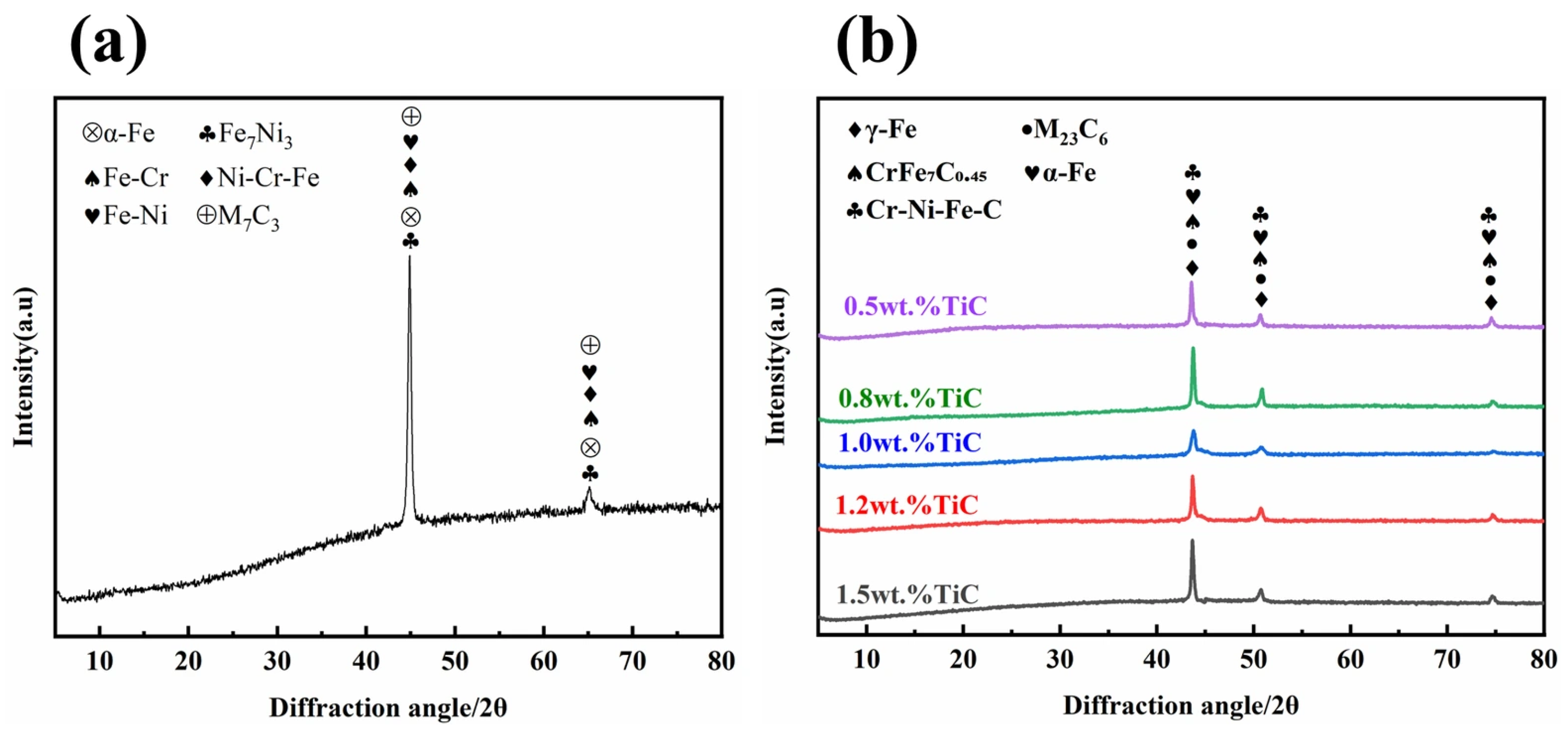
To thoroughly investigate the influence of varying TiC content on the phase composition of iron-based composite weld layers, this study employed X-ray diffraction (XRD) for systematic characterization. Figure 3a presents the XRD pattern of commercial S136 mold steel, revealing α-Fe as the primary phase alongside secondary phases such as Fe7Ni3, Fe-Cr solid solution, Ni-Cr-Fe intermetallic compounds, Fe-Ni solid solution, and M7C3-type carbides. The diffraction patterns of the modified weld layers detected a γ-Fe matrix phase, along with M23C6, metastable carbide CrFe7C0.45, α-Fe, and Cr-Ni-Fe-C composite carbides. Compared to the S136 substrate, the formation of γ-Fe phase, CrFe7C0.45, and other carbon-rich phases in the modified weld layers can be attributed to the synergistic effect of TiC/440C composite powder addition and the plasma spray welding process. In the composite weld layers, CrFe7C0.45 acts as a reinforcing phase distributed within the γ-Fe matrix, forming a typical “hard phase–ductile matrix” composite structure that significantly enhances weld layer performance. During the high-temperature stage of plasma spray welding, partial TiC dissolution releases Ti and C atoms into the iron matrix. Ti induces lattice distortion in γ-Fe, while C atoms form interstitial solid solutions, markedly increasing matrix hardness. During cooling, the supersaturated solid solution precipitates TiC again, achieving secondary strengthening. With increasing TiC content, the main diffraction peaks exhibit a systematic left-shift trend, consistent with the pattern reported by Zhu et al. [27], resulting from the larger atomic radius of Ti in solid solution compared to the Fe matrix. Meanwhile, the diffraction peak intensities of modified weld layers are significantly lower than those of the S136 substrate, indicating grain refinement in the weld layers. The mechanism lies in the partial decomposition of TiC/440C composites in the high-temperature molten pool, where TiC serves as nucleation sites for α-Fe and carbides, while released carbon atoms diffuse into the matrix to form M23C6 and CrFe7C0.45 carbides. These precipitates inhibit grain growth through two pathways: (1) acting as pinning particles to increase liquid–solid interface energy, and (2) forming solute-enriched zones ahead of the solid–liquid interface, creating constitutional supercooling and raising nucleation barriers. These effects collectively retard the dissolution–precipitation kinetics of austenite grain boundaries, ultimately achieving grain refinement. This microstructural evolution constitutes the key factor in enhancing the hardness, wear resistance, and corrosion resistance of the weld layers.
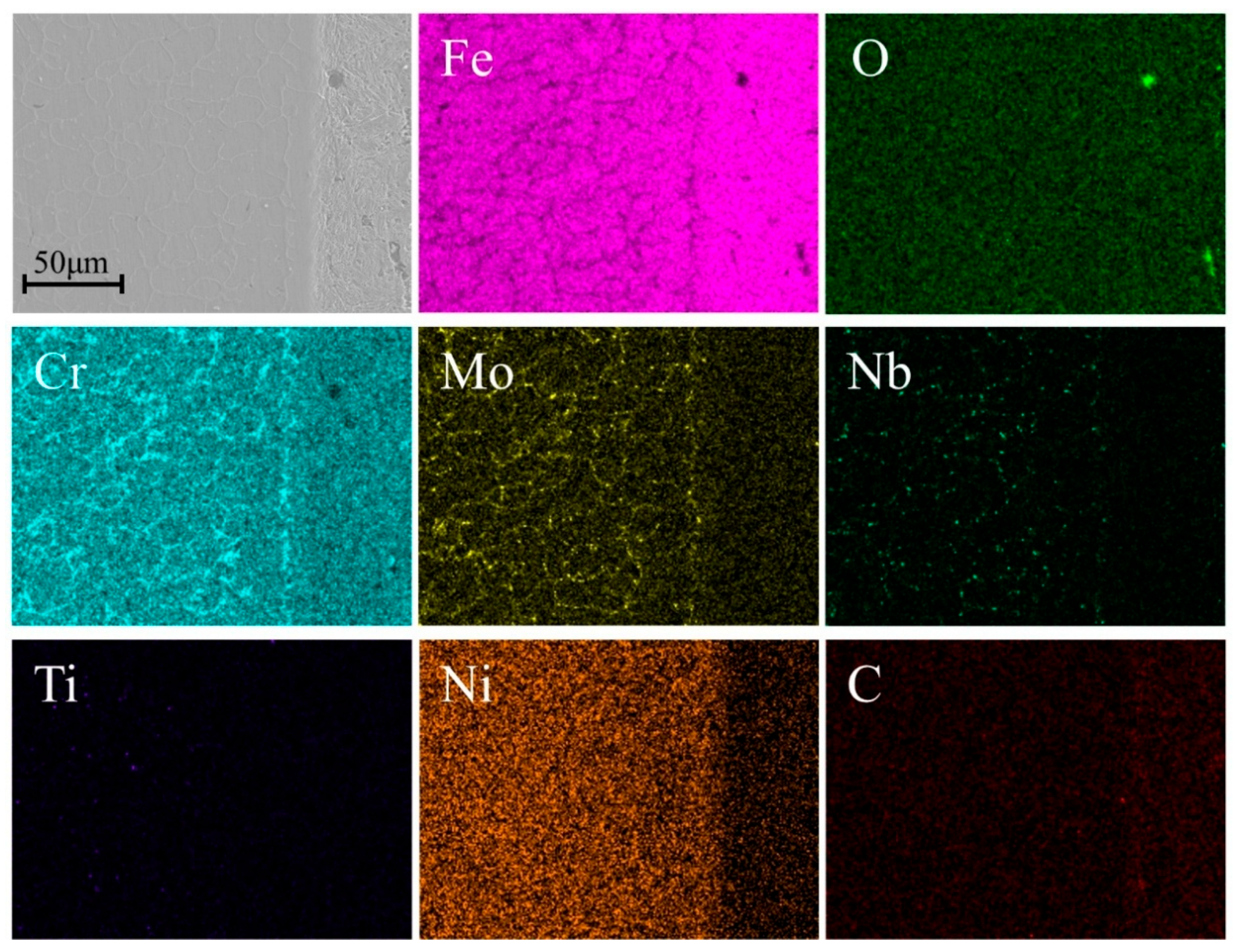
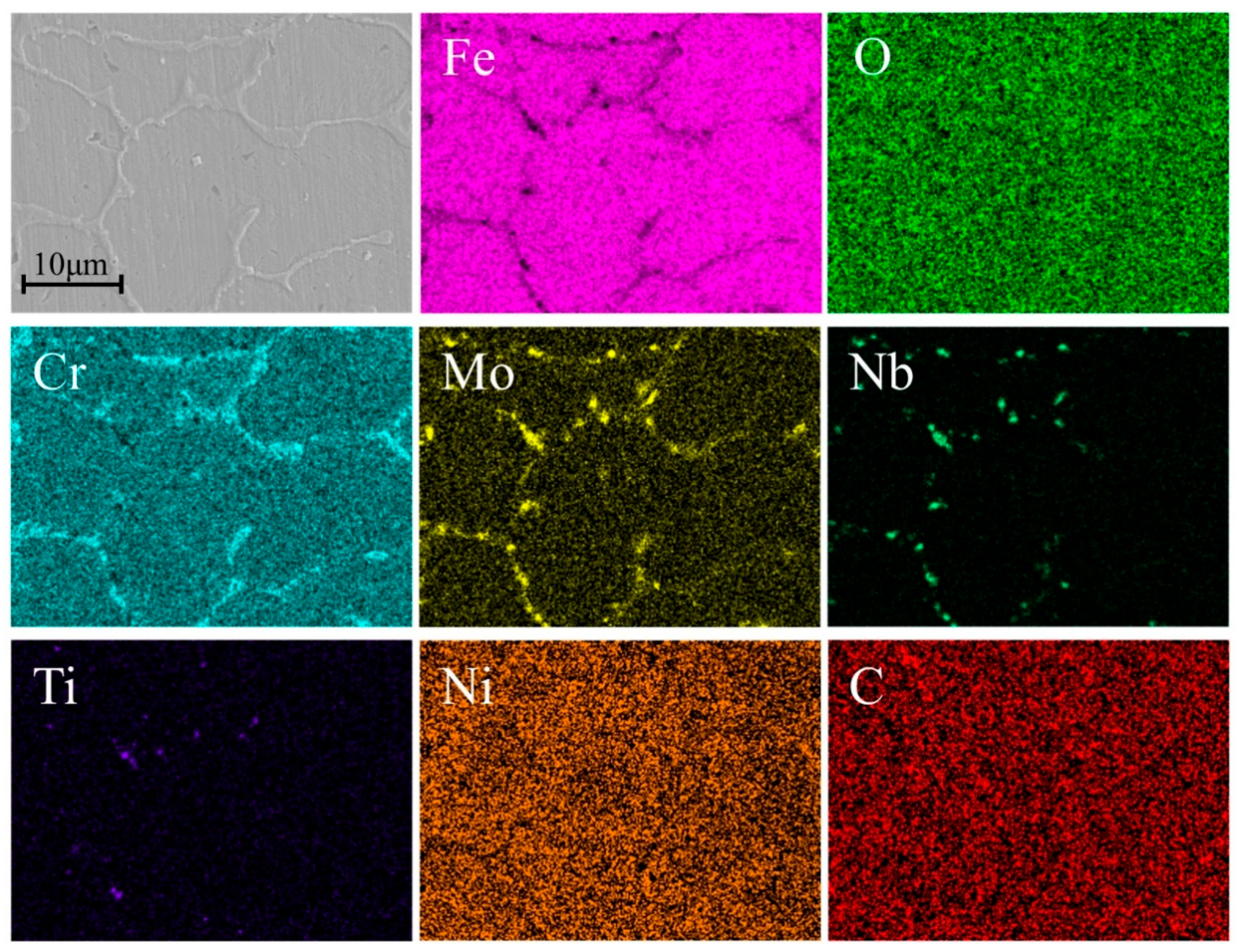
To gain an in-depth understanding of the microstructural evolution in the weld layer, EDS area scanning was performed on the weld cross-section, as shown in Figure 4. The results reveal that Fe and Ni elements are uniformly distributed within the weld layer, while Cr, Mo, Nb, Ti, and C elements exhibit significant enrichment at grain boundary regions, which coincides with the distribution of precipitates. To verify the universality of this phenomenon, typical grain boundary precipitation zones were randomly selected for localized EDS scanning (Figure 5), demonstrating consistent elemental distribution characteristics with the cross-sectional scanning results. The EDS analysis further indicates that the concentrations of C and Ti at grain boundaries are substantially higher than those within the grains. This elemental distribution suggests that TiC particles preferentially segregate to grain boundaries during solidification with a relatively uniform distribution, thereby inhibiting grain growth and enhancing the overall performance of the weld layer. During plasma spray welding, the high temperature generated by the plasma arc leads to severe superheating of the molten pool, significantly reducing the thermodynamic stability of TiC and greatly increasing its solubility in the iron-based melt. This promotes the dissociation of TiC particles, releasing Ti and C atoms, which rapidly diffuse under the influence of molten pool convection and concentration gradients, thoroughly mixing with alloying elements such as Fe, Cr, Ni, and Mo in the matrix. Notably, strong carbide-forming elements like Cr and Mo in the melt preferentially bind with C, reducing its activity and indirectly suppressing further dissociation of TiC, as higher Ti concentrations are required to maintain equilibrium. However, these elements also compete with Ti for C. Even under argon shielding, trace oxygen at the molten pool surface or entrapped in bubbles reacts with highly active Ti, forming titanium oxides, which consume available Ti and weaken its subsequent carbide-forming ability. During the subsequent rapid non-equilibrium solidification process, solute elements—particularly C and Ti—are rejected by the advancing solidification front due to insufficient diffusion time, leading to significant enrichment in the residual liquid phase between dendrites or cellular grains. This creates highly supersaturated and undercooled conditions favorable for secondary phase precipitation. Within these Ti- and C-rich micro-regions, Ti and C directly combine to form fine, dispersed TiC particles with coherent/semi-coherent interfaces with the matrix, achieving an excellent synergistic effect of dispersion strengthening and grain refinement. Additionally, solid-solution reactions facilitate the formation of (Ti, Mo, Cr, Nb) multicomponent solid solutions. These solid solutions not only enhance the hardness of the weld layer by inducing lattice distortion but also improve wear resistance through the formation of high-hardness (Mo, Nb) phases that inhibit abrasive wear. Furthermore, Cr enrichment promotes the formation of a continuous passive film, ultimately enhancing the corrosion resistance of the weld layer. The introduction of TiC reduces the activation energy for elemental diffusion, accelerating the nucleation and growth of strengthening phases during solidification. This promotes the uniform distribution of (Ti, M) solid solutions (M = Mo/Cr/Nb) within the weld layer, further improving its overall performance. It is worth noting that despite the low addition level of TiC, its localized concentration at grain boundaries remains effectively detectable via EDS, confirming significant segregation effects.

3.2. Microhardness

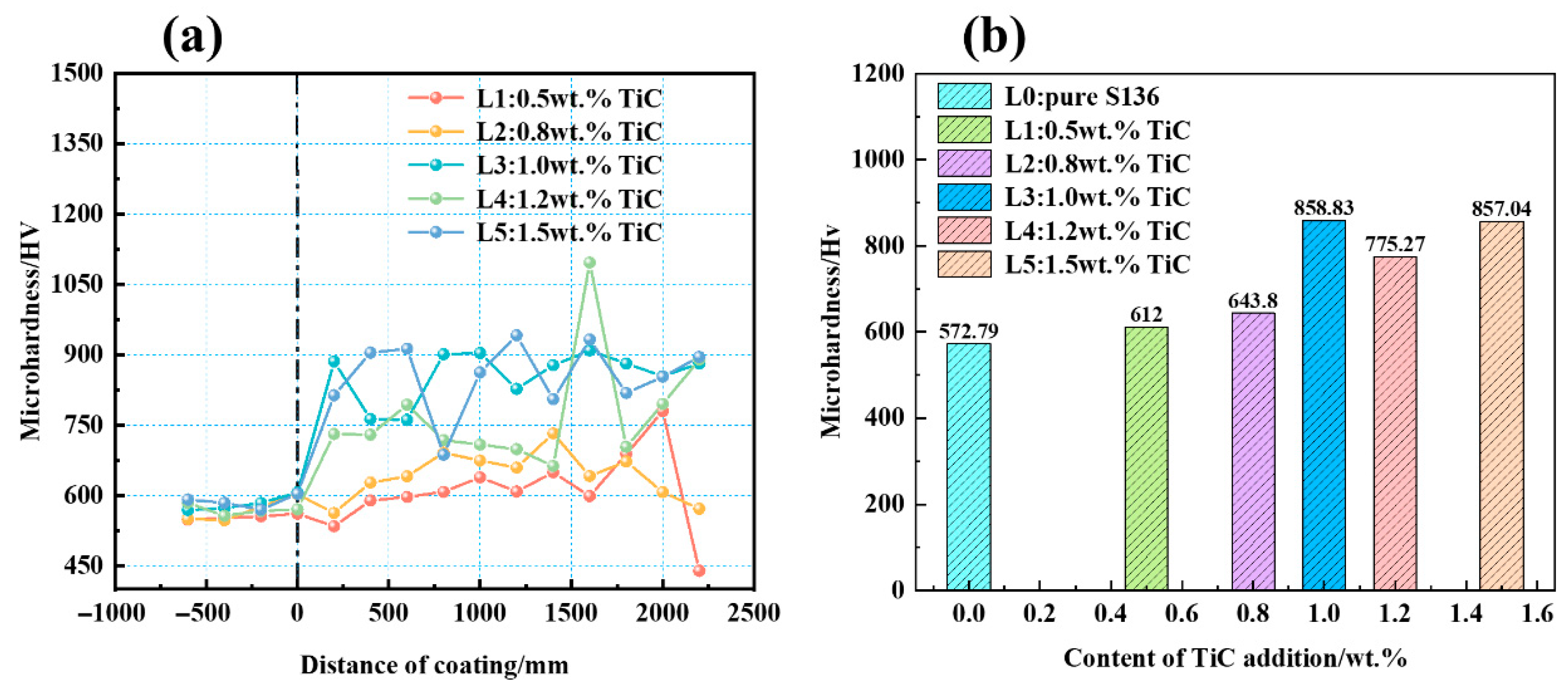
As a critical indicator for evaluating the mechanical properties of the weld layer, microhardness can intuitively characterize the hardness distribution and variation patterns within the weld layer. As shown in Figure 6a, the microhardness distribution curves of weld layers with different TiC additions reveal a distinct difference in microhardness between the weld layer and the substrate. This trend becomes increasingly pronounced with higher TiC content. The substrate region exhibits a relatively low average microhardness of 572.79 HV, while the weld layer demonstrates a significant hardness enhancement, reaching an average value of 749.39 HV, approximately 1.31 times that of the substrate. To better understand the differences in average hardness among different weld layers, an average microhardness plot is generated, as illustrated in Figure 6b. Further analysis indicates that the average microhardness of the weld layer gradually increases with higher TiC additions. The notable improvement in the microhardness of the composite weld layer can be attributed to the synergistic strengthening mechanisms induced by the introduction of TiC. On one hand, the unmelted TiC particles, characterized by high hardness, are dispersed within the weld layer, effectively pinning dislocations and hindering grain movement through a dispersion strengthening mechanism, directly contributing to the hardness enhancement. On the other hand, the addition of TiC refines the microstructure of the weld layer, reducing grain size and increasing grain boundary density. These high-density grain boundaries act as barriers, further impeding dislocation motion and promoting dislocation pile-ups near the boundaries, thereby suppressing dislocation slip and enhancing the overall microhardness of the weld layer. Although Figure 6a shows an overall upward trend in the microhardness of the weld layer with increasing TiC content, some noticeable hardness fluctuations can still be observed within the weld layer. These microscale hardness variations primarily originate from localized differences in cooling rates within the plasma-sprayed weld pool [28], leading to fluctuations in grain size, phase composition, and precipitation states across different regions. Additionally, the non-uniform distribution of unmelted TiC particles and the diffusion dilution of substrate elements into the weld layer further exacerbate the microstructural heterogeneity. These factors collectively result in regional differences in strengthening effects (e.g., grain boundary strengthening, dispersion strengthening), ultimately manifesting as fluctuations in the microhardness distribution. It is worth noting that even though higher TiC content elevates the overall hardness level, this microscale heterogeneity, dictated by process characteristics, remains present.

3.3. Electrochemical Corrosion Resistance

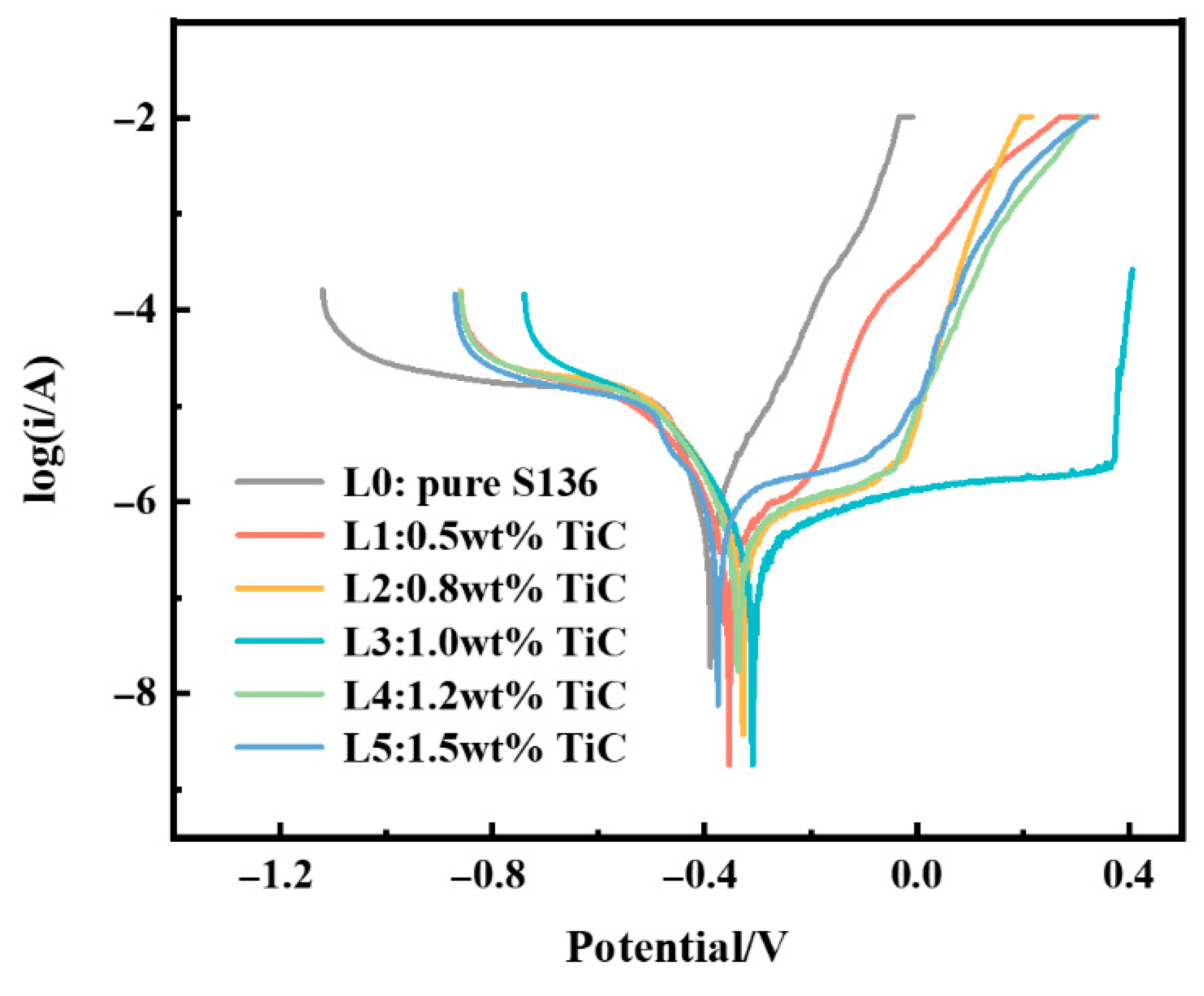
The potentiodynamic polarization curves of S136 L0 and weld layers L1 to L5 were measured in a 3.5 wt.% NaCl solution, and the corresponding corrosion potential (Ecorr) and corrosion current density (Icorr) of each sample were determined using the Tafel extrapolation method, as summarized in Table 4. These parameters directly reflect the corrosion resistance of the materials. Generally, a higher corrosion potential and a lower corrosion current density indicate better corrosion resistance. Based on the data in Figure 7 and Table 4, the following trends can be observed: In the 3.5 wt.% NaCl solution, the corrosion resistance of the spray-welded layers initially increases and then decreases with the increasing Ti and C content. The appropriate addition of Ti and C elements can enhance the corrosion resistance of the spray-welded layers. Compared to the other samples, L3 exhibits a wider anodic passivation region, indicating a significant difference in pitting behavior between this sample and the others. The Ecorr (L3) value is the highest at −0.286 ± 0.002 V, while the Icorr (L3) value is the lowest at 4.51 × 10⁻⁷ A·cm−2. The corrosion current density (Icorr) of all TiC/440C composite-modified weld layers (L1–L5) is one order of magnitude lower than that of the unmodified S136 substrate (L0), clearly demonstrating that the composite-modified weld layers exhibit significantly better corrosion resistance than the S136 substrate. In particular, the weld layer with a TiC content of 1 wt.% shows a remarkable improvement in corrosion resistance.
The improvement in corrosion resistance can be attributed to a dual mechanism induced by TiC. On the one hand, during anodic polarization, Ti4+ ions are generated from the weld layer sample. In the corrosive electrolyte environment rich in Cl, these Ti4+ ions undergo local complexation reactions to form [TiCl6]2− complexes. When the concentration of these complexes reaches a critical threshold, the continuously generated [TiCl6]2− further hydrolyzes and transforms in situ into a TiO2 passive film, thereby producing a passive barrier effect. This effect helps stabilize the passivation behavior on the material surface, effectively inhibits the diffusion and erosion of Cl toward the weld layer and even the substrate, and consequently reduces the overall corrosion tendency of the weld layer (Equation (1)) [29].
T i 6 c l [ T i c l 6 ] 2 2 H 2 O T i O 2 + 6 c l + 4 H +
On the other hand, the grain-refining effect of TiC reduces the grain size, increases the number of grains, and decreases their individual areas, thereby minimizing the opportunity for corrosive media to penetrate grain boundaries. This substantially mitigates grain boundary corrosion susceptibility and reduces the density of electrochemical active sites. Studies have confirmed that grain refinement can markedly enhance the corrosion resistance of metal matrix composites [30,31], and ultrafine-grained microstructures stabilize passive films by reducing local integrity fluctuations [32,33]. As a result, the corrosion resistance of the material progressively improves with increasing TiC content. However, when the TiC content exceeds 1.0 wt.% (L4: 1.2 wt.%, L5: 1.5 wt.%), the corrosion resistance gradually deteriorates. This phenomenon suggests that characteristic microstructural features and defects (Figure 2(d1,e1)) may adversely affect the corrosion behavior of the samples. The decline in corrosion resistance may also be associated with the excessive segregation of TiC at grain boundaries. Such segregation not only diminishes the grain-refining effect but, more critically, introduces a significant electrode potential difference between TiC and the matrix phase due to TiC’s higher chemical stability and more positive electrode potential. In corrosive environments, this potential difference drives electron transfer, forming micro-galvanic corrosion cells. Within these micro-couples, the chemically stable and more noble TiC acts as the cathode, while the relatively active matrix phase serves as the anode. The anode (matrix phase) undergoes oxidation, losing electrons and corroding preferentially at grain boundary regions. As the TiC content increases, the total effective cathode area of TiC expands accordingly. The increased cathode/anode area ratio reduces cathodic polarization resistance (or lowers cathodic overpotential), accelerating the corrosion dissolution rate of the anode. Furthermore, the inhomogeneous distribution of TiC in the matrix becomes more pronounced with higher volume fractions, leading to localized regions with distinct cathode (TiC-rich zones) and anode (matrix-rich zones) separation. This intensifies the driving force and severity of localized micro-galvanic corrosion. The combined effects of these mechanisms ultimately contribute to the gradual decline in the corrosion resistance of the weld layer.
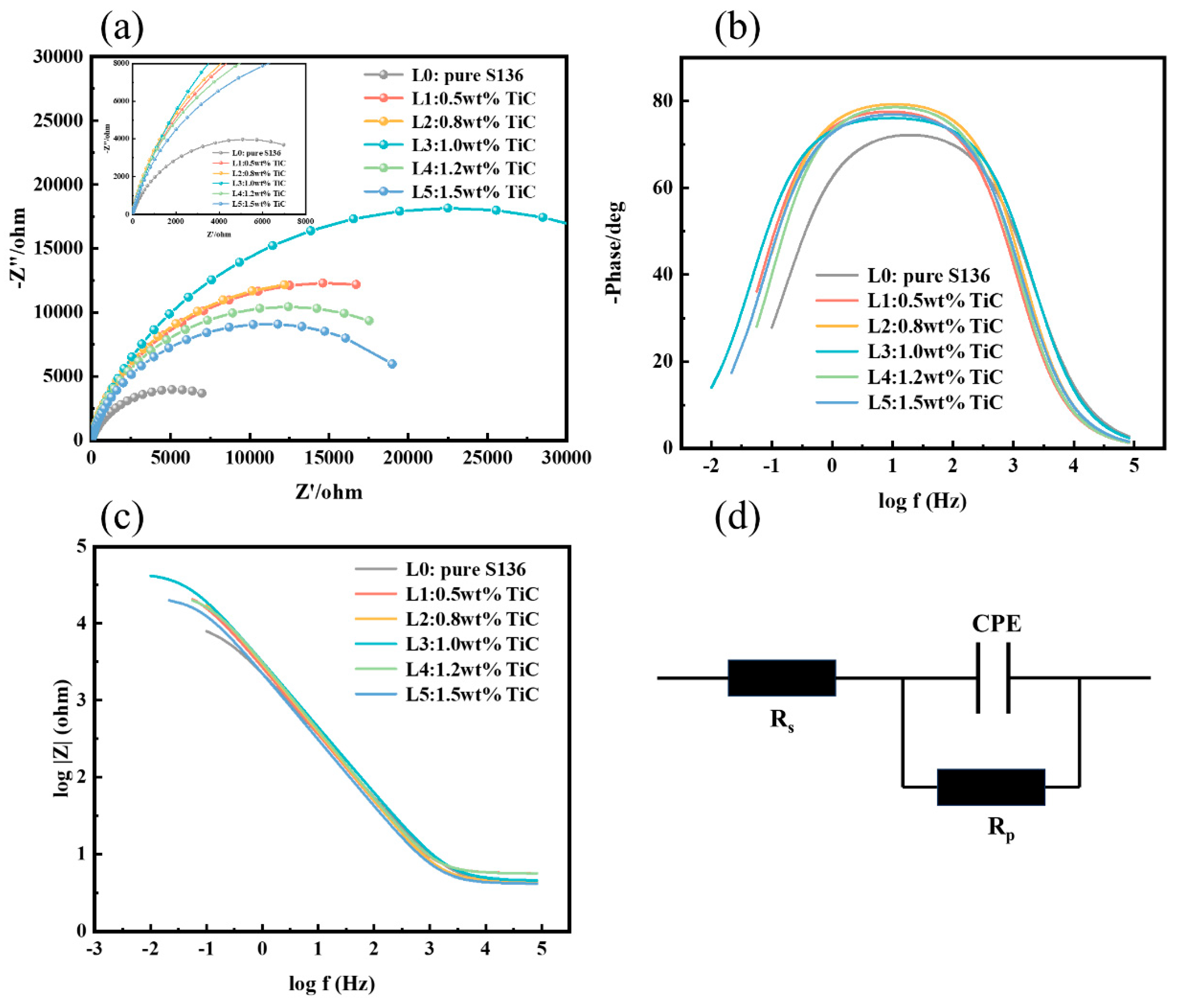
To further quantitatively evaluate the corrosion resistance of the weld layer, electrochemical impedance spectroscopy (EIS) tests were conducted in a 3.5 wt.% NaCl solution. EIS applies a series of small-amplitude sinusoidal alternating voltage (or current) perturbation signals to the electrochemical system near a stable open-circuit potential and measures the system’s impedance response across a broad frequency range. The advantage of this minor perturbation lies in its ability to effectively preserve the integrity of the passive film on the alloy surface without causing significant damage, thereby enabling in situ probing of interfacial processes during the passive state or early corrosion stages. Compared to other electrochemical testing methods, the broad frequency-domain information provided by EIS allows for more effective separation and analysis of different interfacial processes involved in corrosion, thus offering a more comprehensive understanding of key corrosion kinetics and interfacial state information. Figure 8 presents the equivalent circuit fitting results of the experimentally obtained EIS data using ZView 3.3 software. It should be noted that the actual electrode surface typically involves complex factors such as microscopic roughness, chemical/electrochemical heterogeneity, and non-uniformity of passive films. These factors cause the interfacial capacitance behavior to significantly deviate from the response of an ideal parallel-plate capacitor, known as the “capacitance dispersion effect.” To more accurately describe this non-ideal capacitive behavior, a Constant Phase Element (CPE) was introduced in the equivalent circuit model to replace the ideal capacitor for fitting calculations. The use of CPE significantly improves the fitting accuracy of EIS data and the reliability of physical interpretation for actual electrode systems. In the Nyquist plot of Figure 8a, all weld layers exhibit capacitive arc characteristics, with their radii positively correlated with corrosion resistance. The capacitive arc radii of all TiC/440C composite-modified weld layers (L1-L5) are significantly larger than that of the S136 substrate L0. Among them, the L3 weld layer with 1 wt.% TiC addition shows the largest radius, indicating the optimal charge transfer resistance. Observing the Bode plots in Figure 8b,c, it can be seen that peak width, peak height, and modulus values also serve as evaluation indicators for corrosion resistance. The peak widths of L1-L5 weld layers are generally consistent and wider than that of L0, while higher peak values and modulus values correspond to superior corrosion resistance. Both plots consistently demonstrate that the TiC/440C composite-modified weld layers exhibit higher corrosion resistance, with the L3 weld layer performing particularly well. Based on the simplified equivalent circuit shown in Figure 8d (comprising solution resistance Rs, passive film resistance Rp, and CPE), the EIS results were fitted to effectively simulate the corrosion behavior of the weld layers. In the fitting results listed in Table 5, the Rp value, as a key parameter directly reflecting the corrosion resistance of the weld layers, shows that L0 has a significantly lower Rp value compared to L1-L5 weld layers, with the L3 weld layer exhibiting the highest Rp value. These results further confirm that the TiC/440C composite-modified weld layers effectively enhance corrosion resistance compared to the original S136 substrate, with the optimal improvement achieved at a TiC addition of 1 wt.%.
The improvement in corrosion resistance of the modified weld layer is attributed not only to the formation of a dense passive film on the surface due to the incorporation of TiC but also to the effective optimization of the weld layer’s microstructure. Specifically, an appropriate increase in TiC content refines the grains and increases the number of grain boundaries, resulting in a more uniform and compact structure that reduces the diffusion pathways for corrosive media and enhances overall stability. Simultaneously, the increased grain boundary density strengthens the deformation resistance of the weld layer, enabling it to better maintain structural integrity under external stress or corrosive environments.

3.4. Wear Resistance

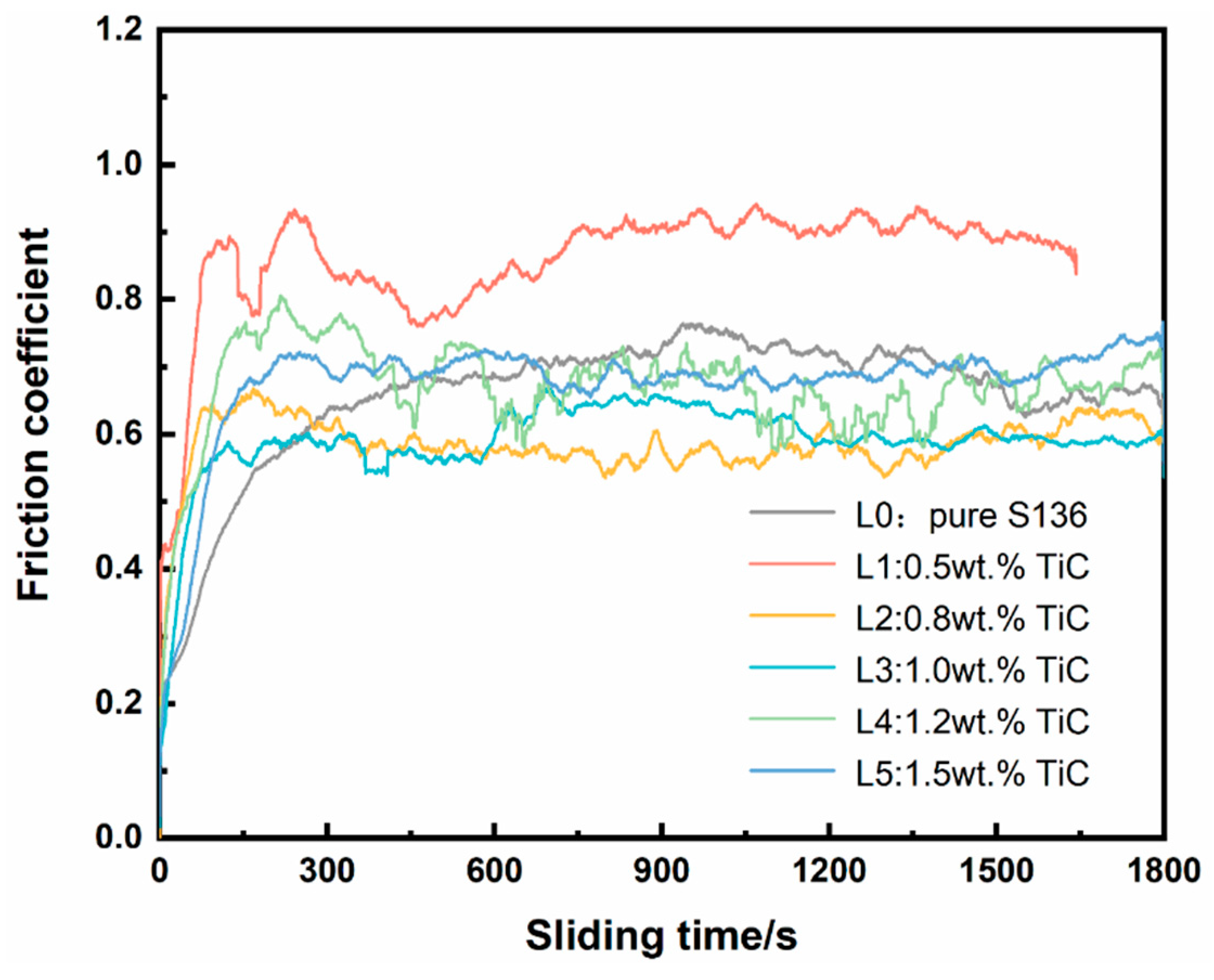
Figure 9 presents the friction coefficient curves of different weld layers. The results indicate that the friction coefficient curves of all samples exhibit certain fluctuations during the initial stage of the tests (approximately 0–150 s). This is attributed to the continuously varying actual contact area between the friction pair and the sample surface at the onset of the friction experiment, which leads to fluctuations in the friction coefficient. As the wear process proceeds, the contact between the friction pair and the weld layer becomes fully established, and the contact area gradually stabilizes. Consequently, the friction coefficient of each sample tends to remain relatively steady within a certain range. Subsequent minor fluctuations within this range are primarily associated with the uneven distribution of TiC particles in the weld layer. Non-uniform TiC distribution induces localized variations in the contact area and contact pressure between the particles and the counterface material during friction, thereby causing fluctuations in the friction coefficient.
The average friction coefficients of the tested samples are as follows: S136 mold steel: 0.658; L1 weld layer: 0.862; L2 weld layer: 0.585; L3 weld layer: 0.591; L4 weld layer: 0.670; L5 weld layer: 0.676. Compared with the S136 mold steel substrate, the friction coefficients of the different weld layers exhibit notable variations. Specifically, the L1 weld layer shows a significant increase in friction coefficient, the L2 and L3 weld layers display a marked decrease, and the L4 and L5 weld layers exhibit a slight increase, yielding values marginally higher than that of the substrate material. Generally, an increase in friction coefficient implies a degradation in wear resistance. However, this conclusion is preliminary and based solely on the present friction coefficient results. To further elucidate the effect of TiC addition on the wear resistance of the weld layers, in-depth analysis and validation integrating wear morphology, compositional characterization, and other relevant metrics are required.
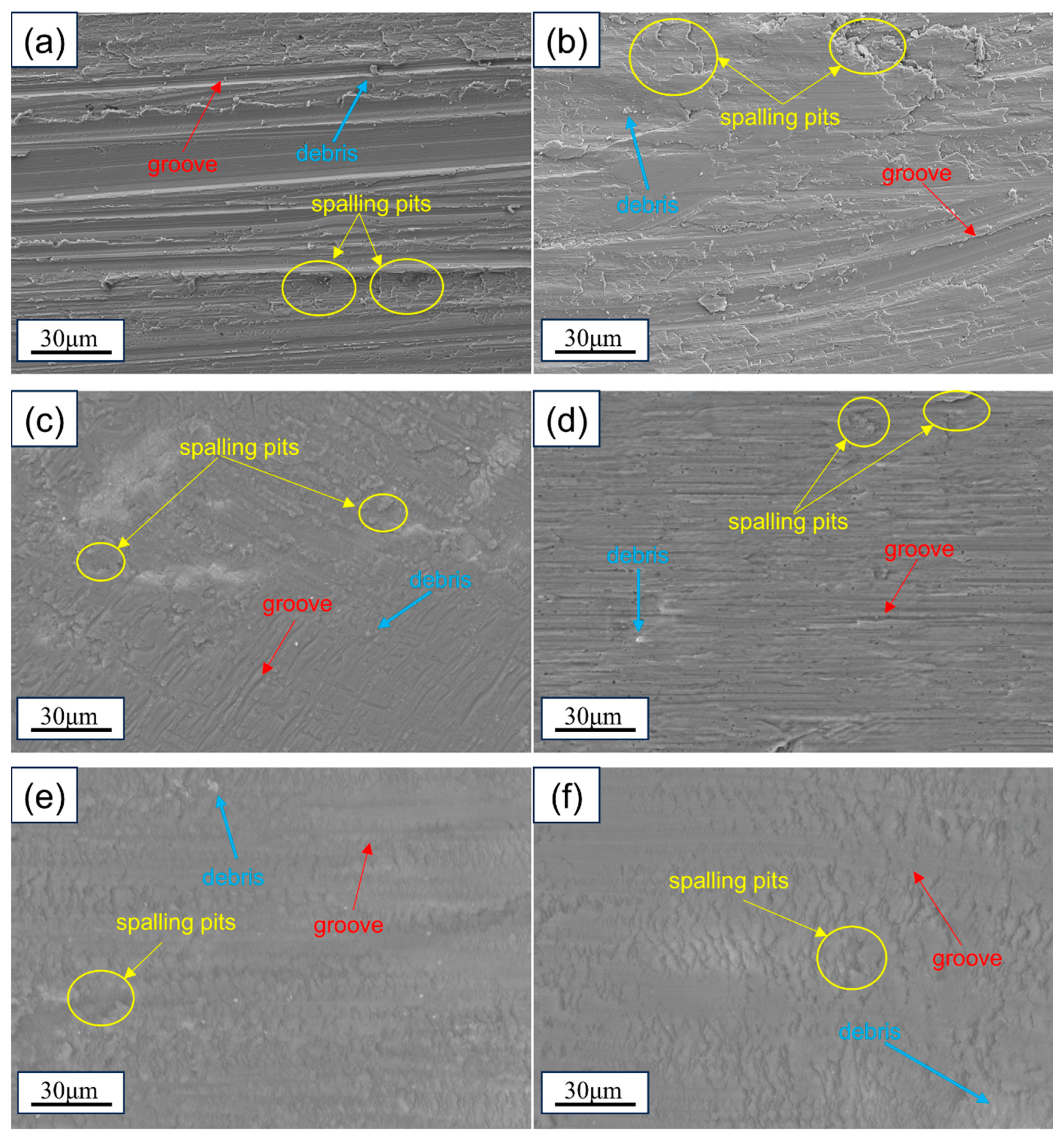
The surface wear morphologies and microstructures of the samples are presented in Figure 10, where (a) to (f) correspond to samples L0 to L5, respectively. It can be observed from Figure 10 that under identical wear conditions, distinct wear mechanisms and morphological characteristics are exhibited across different samples. Figure 10a shows the wear morphology of L0 (S136 substrate). Except for L1, the L0 sample exhibits the most severe wear among all samples, characterized by densely distributed furrows and deep wear tracks. During friction, wear debris generation promotes the transition from adhesive to abrasive wear, accompanied by a shift from sliding to rolling friction, thereby influencing the friction coefficient. Owing to the relatively low hardness of the S136 substrate, the detached debris causes secondary wear, exacerbating damage and ultimately resulting in narrow, deep wear grooves after testing.
Figure 10b presents the wear morphology of the L1 weld layer. Compared with other samples, L1 shows the narrowest yet deepest wear tracks, the largest amount of retained debris, and the most severe material spalling. Spalling craters of varying sizes are densely distributed on the worn surface. Continuous debris detachment induces a transition from adhesive to abrasive wear and from sliding to rolling friction, collectively leading to an increased friction coefficient. This is likely attributable to the relatively low TiC addition, which provides limited improvement in wear resistance. Moreover, both 440C and S136 are martensitic stainless steels with inherently comparable wear performance. Hardness tests further indicate no significant advantage of the L1 weld layer over the S136 substrate. The persistent generation of debris during friction introduces abrasive particles at the contact interface, causing secondary wear and exacerbating material damage, ultimately resulting in severe surface wear of the L1 weld layer.
Figure 10c and Figure 10d present the microscopic wear morphologies of the L2 and L3 deposited layers, respectively. Compared with the S136 substrate and the L1 layer shown in Figure 10a,b, the wear damage on L2 and L3 is considerably less severe, primarily due to differences in the prevailing wear mechanisms. Specifically, the L2 and L3 surfaces exhibit a higher density of wear grooves, but these grooves are shorter and shallower. Moreover, the wear tracks are wider with reduced depth, indicating that these layers can accommodate broader contact pressures and frictional forces during sliding, thereby suppressing the formation of deep wear marks. Although wear debris residues are still observable on both L2 and L3, their quantity is markedly lower than that on L0 and L1. The corresponding spallation craters, while still present, are notably smaller and far less densely distributed compared to those on L0 and L1. This trend is consistent with the lower friction coefficients exhibited by L2 and L3 relative to L0. A further comparison between L2 and L3 reveals that the L3 surface has even fewer and smaller spallation craters. This improvement is mainly attributed to the enhanced modification effect of TiC on the 440C stainless steel with increasing TiC content, which improves the interfacial bonding quality of the TiC/440C composite, thereby reducing debris detachment during friction. Concurrently, the higher TiC content effectively increases the hardness of the deposited layer, endowing it with superior wear resistance under frictional conditions.
Figure 10e and Figure 10f illustrate the microscopic wear morphologies of the L4 and L5 cladding layers, respectively. Compared with the aforementioned L0 to L3 samples, the number of wear grooves on the surfaces of the L4 and L5 cladding layers is significantly reduced, and the grooves are shallower. Although spalling pits can still be observed, they are extremely small in size, and the wear debris remaining on the surface is very limited, with no substantial detachment of the cladding layer material evident. These observations are consistent with the preceding analysis: as the TiC content increases, the interfacial bonding quality of the TiC/440C composite material is enhanced, effectively reducing the generation and detachment of wear debris during the friction process. Notably, although the friction coefficients of the L4 and L5 cladding layers are slightly higher than that of the S136 substrate, their microscopic wear morphologies indicate that the cladding layer surfaces have not suffered severe damage due to the friction process.
Based on the experimental results, except for the L1 cladding layer, which exhibits poor wear resistance, the remaining TiC-modified 440C cladding layers do not show significant differences in wear resistance. This indicates that the wear resistance of a material is neither simply positively correlated with its hardness nor simply negatively correlated with its friction coefficient.


4. Conclusions

(1)
The TiC/440C composite coating fabricated by plasma spray welding primarily consists of γ-Fe, M23C6, CrFe7C0.45, α-Fe, and Cr-Ni-Fe-C complex carbides as reinforcing phases. The synergistic effect of TiC/440C composite powder addition and the plasma spray welding process promotes the formation of γ-Fe phase, CrFe7C0.45, and other carbon-rich phases in the modified coating. The CrFe7C0.45 phase, acting as a reinforcing phase, is distributed within the γ-Fe matrix, forming a typical “hard phase–ductile matrix” composite structure, thereby enhancing the coating’s performance.
(2)
The TiC/440C composite coating prepared by plasma spray welding exhibits enhanced microhardness compared to the substrate, with an average hardness of 749.39 HV, which is 1.31 times that of the base material. When 1.0 wt.% TiC is added, the coating demonstrates superior microhardness, increasing by approximately 14.6% compared to the average value and reaching 858.85 HV. The dispersed distribution of TiC particles within the coating, along with the refinement of the microstructure, leads to reduced grain size and improved strength. The synergistic effect of multiple strengthening mechanisms ultimately enhances the hardness of the coating.
(3)
The TiC/440C composite coating prepared by plasma spray welding demonstrates superior corrosion resistance compared to the S136 substrate, with the 1.0 wt.% TiC-modified coating exhibiting the most outstanding performance. This improvement primarily stems from the formation of a protective passive film on the coating surface, which effectively inhibits the penetration and corrosive attack of Cl ions. Additionally, the incorporation of TiC refines the microstructure, further enhancing the coating’s corrosion protection capability.
(4)
In the TiC/440C composite coating prepared by plasma spray welding, all composite layers except for the one containing 0.5 wt.% TiC exhibited superior wear resistance to that of the S136 substrate. However, varying the TiC content did not lead to significant differences in the improvement of wear resistance among the modified layers, nor was there a simple linear correlation with the experimentally measured friction coefficient. Therefore, the evaluation of the wear resistance of modified cladding layers should not be based solely on the friction coefficient. Instead, a comprehensive analysis integrating multiple indicators—such as wear morphology, mass loss, and surface damage characteristics under actual service conditions—is necessary to identify the cladding layer composition that best meets specific application requirements.
(5)
The TiC/440C composite coating fabricated by plasma spray welding represents an innovative, cost-effective, and high-performance repair technology for addressing corrosion-wear failures in injection molds. This technology fills a critical gap in current market demands for practical solutions to restore failed injection molds while providing valuable theoretical guidance for subsequent research and development of high-performance composite coatings prepared via plasma spray welding.

Author Contributions

Conceptualization, J.D.; methodology, J.D. and D.F.; validation, M.W., J.D. and D.F.; formal analysis, R.L.; investigation, M.W., J.D. and D.F.; resources, R.L.; data curation, R.L., M.W. and D.F.; writing—original draft preparation, R.L., Z.M.; supervision, Z.M.; funding acquisition, Z.M. All authors have read and agreed to the published version of the manuscript.

Funding

This research received no external funding.

Data Availability Statement

The original contributions presented in this study are included in the article. Further inquiries can be directed to the corresponding author.

Conflicts of Interest

The authors declare no conflict of interest.

References

  1. Hu, H.; Wen, S.; Duan, L.; Wang, C.; Chen, K.; Wei, Q.; Zhou, Y.; Shi, Y. Enhanced corrosion behavior of selective laser melting S136 mould steel reinforced with nano-TiB2. Opt. Laser Technol. 2019, 119, 105588. [Google Scholar] [CrossRef]
  2. Wen, S.; Hu, H.; Zhou, Y.; Chen, Z.; Wei, Q.; Shi, Y. Enhanced hardness and wear property of S136 mould steel with nano-TiB2 composites fabricated by selective laser melting method. Appl. Surf. Sci. 2018, 457, 11–20. [Google Scholar] [CrossRef]
  3. Zhou, Y.; Duan, L.; Ji, X.; Wen, S.; Wei, Q.; Ye, F.; Shi, Y. Comparisons on microstructure, mechanical and corrosion resistant property of S136 mold steel processed by selective laser melting from two pre-alloy powders with trace element differences. Opt. Laser Technol. 2018, 108, 81–89. [Google Scholar] [CrossRef]
  4. Han, L.-L.; Lin, C.-M.; Shih, Y.-S. Corrosion Resistance of ASSAB Stavax ESR Stainless Steel by Heat and Cold Treatment. Mater. Trans. 2013, 54, 833–838. [Google Scholar] [CrossRef][Green Version]
  5. Zhang, E.; Jiang, J.; Liang, D.; Chen, Q.; Zhou, Q.; Ke, H.; Ying, S. Improved cavitation erosion resistance of TiSiN/TiN multilayer coating with Al addition. Thin Solid Film. 2025, 823, 140707. [Google Scholar] [CrossRef]
  6. Verdi, D.; Cortés, R.; Chia, G.Y.; Tay, G. Erosion behaviour of laser cladded Inconel 625—Vanadium carbide metal matrix composites coatings manufactured with different reinforcement contents. Surf. Coat. Technol. 2024, 476, 130282. [Google Scholar] [CrossRef]
  7. Li, S.; Zhou, C.; Li, B.; Dong, X.; Xiang, H.; Qin, S.; Tong, X.; Cao, H. Effect of plasma transferred arc current on the carbide formation and mechanical properties in additively manufactured metal matrix composite coating. Mater. Lett. 2024, 363, 136302. [Google Scholar] [CrossRef]
  8. Xie, X.-M.; Zhao, H.-L.; Zhu, J.-P.; Li, X.-G.; Wang, K.-M.; Liu, X.-B. Laser cladding Ni3Si/CrNi3 reinforced metal matrix composite coatings: Microstructure evolution, tribological behavior and oxidation resistance. Surf. Coat. Technol. 2025, 498, 131840. [Google Scholar] [CrossRef]
  9. Sun, T.; Shen, Y.; Niu, Y.; Chen, Y.; Qi, Z.; Zheng, X.; Chen, G. Long-term oxidation behavior of sputtered double-layer TiAlCrY/TiAlCrNb coatings on TiAl alloys at 1000 ℃. J. Alloys Compd. 2025, 1032, 181174. [Google Scholar] [CrossRef]
  10. Zhang, Y.; Li, Y.; Zhang, Y.; Zong, R. Numerical analysis of the behavior of molten pool and the suppression mechanism of undercut defect in TIG-MIG hybrid welding. Int. J. Heat. Mass. Transf. 2024, 218, 124757. [Google Scholar] [CrossRef]
  11. Sun, X.; Zhang, W.; Shang, X.; Chen, S.; Song, C.; Zhang, L. Microstructure, reaction mechanism, and properties of in-situ submicron TiC and nano-TixO particle-reinforced Cu-based composite coatings prepared through simultaneous solid-solid and solid-gas reactive plasma spraying. Surf. Interfaces 2025, 72, 107138. [Google Scholar] [CrossRef]
  12. Li, Y.; Meng, Z.; Chen, Y.; Shen, J.; Li, Y.; Zhou, Y.; Zhang, X. Effect of La2O3 on hardness, wear resistance and corrosion resistance of WC/Fe90 iron-based composite coatings. J. Alloys Compd. 2024, 992, 174584. [Google Scholar] [CrossRef]
  13. Ma, D.-D.; Xue, Y.-P.; Gao, J.; Ma, Y.; Yu, S.-W.; Wang, Y.-S.; Xue, C.; Hei, H.-J.; Tang, B. Effect of Ta diffusion layer on the adhesion properties of diamond coating on WC-Co substrate. Appl. Surf. Sci. 2020, 527, 146727. [Google Scholar] [CrossRef]
  14. Tiwari, V.; Mandal, V.; Sarkar, M.; Kumar, A.; Bhagyaraj, J.; Singh, M.K.; Mukherjee, S.; Mondal, K.; Ramkumar, J.; Jain, J.; et al. Enhanced mechanical properties and microstructure of TiC reinforced Stellite 6 metal matrix composites (MMCs) via laser cladding additive manufacturing. J. Alloys Compd. 2025, 1010, 178001. [Google Scholar] [CrossRef]
  15. Hu, Y.; Cong, W. A review on laser deposition-additive manufacturing of ceramics and ceramic reinforced metal matrix composites. Ceram. Int. 2018, 44, 20599–20612. [Google Scholar] [CrossRef]
  16. García, C.; Martín, F.; Herranz, G.; Berges, C.; Romero, A. Effect of adding carbides on dry sliding wear behaviour of steel matrix composites processed by metal injection moulding. Wear 2018, 414–415, 182–193. [Google Scholar] [CrossRef]
  17. Peng, J.; Yuan, S.; Wang, W.; Gan, P.; Ji, J.; Zeng, J. Enhancing grain refinement and mechanical properties of Al-Zn-Mg-Cu alloys via TiC particle reinforcement. Mater. Today Commun. 2025, 46, 112858. [Google Scholar] [CrossRef]
  18. Wang, Z.; Lin, T.; He, X.; Shao, H.; Tang, B.; Qu, X. Fabrication and properties of the TiC reinforced high-strength steel matrix composite. Int. J. Refract. Met. Hard Mater. 2016, 58, 14–21. [Google Scholar] [CrossRef]
  19. Moon, A.; Suh, C.Y.; Kim, J.; Kwon, H. Fabrication of TiC–ZrC–Co composites with refined microstructure using ultrafine TiC–ZrC mixture powders. J. Alloys Compd. 2018, 740, 82–87. [Google Scholar] [CrossRef]
  20. Rocha, A.M.F.; Bastos, A.C.; Cardoso, J.P.; Rodrigues, F.; Fernandes, C.M.; Soares, E.; Sacramento, J.; Senos, A.M.R.; Ferreira, M.G.S. Corrosion behaviour of WC hardmetals with nickel-based binders. Corros. Sci. 2019, 147, 384–393. [Google Scholar] [CrossRef]
  21. Zhan, J.; Ma, C.; Liu, J.; Zhao, H.; He, J. Improved dynamic impact behavior of TC4 alloy coated with Ti-SiC. Mater. Lett. 2025, 395, 138727. [Google Scholar] [CrossRef]
  22. Mo, K.; Cao, L.; Zhao, D.; Long, Y.; Zhong, J.; Zhong, J.; Bi, G. Study on the microstructure and wear resistance of laser clad martensitic stainless steel 420 with different content of TiC. Mater. Today Commun. 2025, 46, 112615. [Google Scholar] [CrossRef]
  23. Morshed-Behbahani, K.; Zakerin, N.; Afshari, E.; Bishop, D.P.; Plucknett, K.P.; Nasiri, A. Enhancing passivity and corrosion resistance of laser-powder bed fused maraging stainless steel CX through TiC-induced microstructure tailoring. Colloids Surf. A Physicochem. Eng. Asp. 2025, 717, 136800. [Google Scholar] [CrossRef]
  24. Gao, Z.-T.; Wang, R.-Q.; Ke, L.-C.; Liu, Y.; Gao, Z.-M.; Zhang, C.-W.; Yu, Y. Morphology distribution and corrosion resistance of in-situ TiC/CoCrFeNi high-entropy alloy coating. Mater. Charact. 2025, 224, 115078. [Google Scholar] [CrossRef]
  25. Huang, J.; Luo, F.; Zhao, Y.; Shi, W. Preparation of AlCoCrFeNi/W-TiC HEA composite coating by laser cladding. Mater. Today Commun. 2024, 39, 108677. [Google Scholar] [CrossRef]
  26. Saeedi, R.; Shoja Razavi, R.; Bakhshi, S.R.; Erfanmanesh, M.; Ahmadi Bani, A. Optimization and characterization of laser cladding of NiCr and NiCr–TiC composite coatings on AISI 420 stainless steel. Ceram. Int. 2021, 47, 4097–4110. [Google Scholar] [CrossRef]
  27. Zhu, H.; Ouyang, M.; Hu, J.; Zhang, J.; Qiu, C. Design and development of TiC-reinforced 410 martensitic stainless steel coatings fabricated by laser cladding. Ceram. Int. 2021, 47, 12505–12513. [Google Scholar] [CrossRef]
  28. Xi, W.; Song, B.; Sun, Z.; Ma, Z.; Yu, T.; Wang, J. Effect of remelting power and remelting time on the morphological characteristics and mechanical properties of Fe-based clad layer. Opt. Lasers Eng. 2023, 161, 107330. [Google Scholar] [CrossRef]
  29. Chen, Y.; Zhang, J.; Dai, N.; Qin, P.; Attar, H.; Zhang, L.-C. Corrosion Behaviour of Selective Laser Melted Ti-TiB Biocomposite in Simulated Body Fluid. Electrochim. Acta 2017, 232, 89–97. [Google Scholar] [CrossRef]
  30. Wang, Y.L.; Wang, Q.; Liu, H.J.; Zeng, C.L. Effect of grain refinement on the corrosion of Ni-Cr alloys in molten (Li,Na,K)F. Corros. Sci. 2016, 109, 43–49. [Google Scholar] [CrossRef]
  31. Liu, Y.J.; Li, S.J.; Wang, H.L.; Hou, W.T.; Hao, Y.L.; Yang, R.; Sercombe, T.B.; Zhang, L.C. Microstructure, defects and mechanical behavior of beta-type titanium porous structures manufactured by electron beam melting and selective laser melting. Acta Mater. 2016, 113, 56–67. [Google Scholar] [CrossRef]
  32. Dai, N.; Zhang, L.-C.; Zhang, J.; Chen, Q.; Wu, M. Corrosion behavior of selective laser melted Ti-6Al-4 V alloy in NaCl solution. Corros. Sci. 2016, 102, 484–489. [Google Scholar] [CrossRef]
  33. Wang, Z.B.; Hu, H.X.; Zheng, Y.G.; Ke, W.; Qiao, Y.X. Comparison of the corrosion behavior of pure titanium and its alloys in fluoride-containing sulfuric acid. Corros. Sci. 2016, 103, 50–65. [Google Scholar] [CrossRef]
Figure 1. Powder morphologies under SEM: (a) 440C; (b) TiC; (c) 99% 440C + 1% TiC; (d) size distribution of the 440C powder.
Metals 16 00505 g001
Figure 2. Microstructures of different regions in weld layers with varying TiC contents: (a1,a2) L1: 0.5 wt.% TiC; (b1,b2) L2: 0.8 wt.% TiC; (c1,c2) L3: 1.0 wt.% TiC; (d1,d2) L4: 1.2 wt.% TiC; and (e1,e2) L5: 1.5 wt.% TiC.
Metals 16 00505 g002
Figure 3. Phase identification of different samples: (a) S136; (b) weld layers with varying TiC contents.
Metals 16 00505 g003
Figure 4. EDS maps of the L2 weld layer with 0.8 wt.% TiC addition.
Metals 16 00505 g004
Figure 5. EDS maps of precipitates in the weld layer.
Metals 16 00505 g005
Figure 6. Microhardness of different samples: (a) microhardness distribution; (b) average microhardness.
Metals 16 00505 g006
Figure 7. Potentiodynamic polarization curves of different samples in 3.5 wt.% NaCl solution.
Metals 16 00505 g007
Figure 8. Impedance spectra of the samples in 3.5 wt.% NaCl solution: (a) Nyquist plot, (b,c) Bode plots, and (d) the equivalent circuit diagram.
Metals 16 00505 g008
Figure 9. Curves of friction coefficient versus time for each sample.
Metals 16 00505 g009
Figure 10. Microstructural morphology diagrams of the worn surface of each sample (a) L0:S136; (b) L1: 0.5 wt.% TiC; (c) L2: 0.8 wt.% TiC; (d) L3: 1.0 wt.% TiC; (e) L4: 1.2 wt.% TiC; (f) L5: 1.5 wt.% TiC.
Metals 16 00505 g010
Table 1. Chemical composition of the substrate material (wt.%).
Substrate MaterialChemical Composition (wt.%)
CCrFeNiMoVSiMn
S1360.38~0.4212.5~13.5Bal.0.30~0.500.80~1.200.20~0.40≤0.80≤0.60
Table 2. Chemical composition of 440C powder (wt.%).
PowerChemical Composition (wt.%)
CCrFeP, SMoNbSiMn
440C0.95~1.2016.00~18.00Bal.≤0.030.40~0.80≤0.10≤1.00≤1.00
Table 3. Compositional design of different composite coatings (wt.%).
No.Commercial 440C PowderTiC Powder
L0
L1
0
99.5
0
0.5
L299.20.8
L399.01.0
L498.81.2
L598.51.5
Table 4. Electrochemical data of different samples.
SamplesOCPCorrosion Potential Ecorr (V)Corrosion Current Density Icorr (A·cm−2)
L0−0.295 ± 0.002 V−0.391 ± 0.0031.23 × 10−6
L1−0.250 ± 0.005 V−0.346 ± 0.0026.74 × 10−7
L2−0.234 ± 0.003 V−0.318 ± 0.0016.90 × 10−7
L3−0.246 ± 0.003 V−0.286 ± 0.0024.51 × 10−7
L4−0.253 ± 0.003 V−0.327 ± 0.0037.08 × 10−7
L5−0.274 ± 0.003 V−0.394 ± 0.0021.11 × 10−6
Table 5. Fitting results of electrochemical impedance.
SamplesRs
(Ω⋅cm2)
CPE-T
−1⋅sn⋅cm−2)
CPE-P
−1⋅s−n⋅cm−2)
Rp
(Ω⋅cm2)
L04.1549.0314 × 10−50.8266810,471
L15.5997.2434 × 10−50.8790029,791
L24.4416.3126 × 10−50.8964229,133
L34.5586.4121 × 10−50.8578045,500
L45.5916.0837 × 10−50.8921824,785
L54.1588.7923 × 10−50.8716422,302
Disclaimer/Publisher’s Note: The statements, opinions and data contained in all publications are solely those of the individual author(s) and contributor(s) and not of MDPI and/or the editor(s). MDPI and/or the editor(s) disclaim responsibility for any injury to people or property resulting from any ideas, methods, instructions or products referred to in the content.