Article

Utilization of Secondary Copper Smelting Slags for Proppant Production
by
Galymzhan Adilov
,
Bagdagul Uakhitova
*,
Assylbek Abdirashit
* and
Aldiyar Bazarbay
Department of Metallurgy and Mining, K. Zhubanov Aktobe Regional University, Aktobe 030000, Kazakhstan
*
Authors to whom correspondence should be addressed.
Metals 2026, 16(3), 328; https://doi.org/10.3390/met16030328
Submission received: 2 February 2026 / Revised: 5 March 2026 / Accepted: 13 March 2026 / Published: 15 March 2026

Abstract

The accumulation of copper smelting slags generated by non-ferrous metallurgy represents both an environmental challenge and a potential source of technogenic raw materials for value-added products. In this study, the feasibility of producing magnesia–quartz proppants from secondary copper smelting slag formed after the pyrometallurgical extraction of iron and zinc was investigated. The slag, primarily composed of oxides of the SiO2–CaO–Al2O3–MgO system, was processed by centrifugal melt granulation to obtain spherical granules suitable for proppant applications. The initial granules exhibited an amorphous glassy structure and insufficient mechanical strength, with up to 70% of particles destroyed under a pressure of 34.5 MPa. Controlled heat treatment within the temperature range of 300–1000 °C induced crystallization of silicate and aluminosilicate phases, leading to a significant improvement in mechanical performance. Optimal properties were achieved after holding at 800 °C for 60 min, where the fraction of crushed granules decreased to 10%, meeting the requirements of GOST R 54571-2011. The influence of MgO content on microstructure and strength was also examined. Increasing the MgO concentration from 5 to 16 wt.% resulted in grain refinement and improved crushing resistance, reducing the fraction of destroyed granules to 3%. To enhance chemical durability, a phenol–formaldehyde protective coating was applied, decreasing proppant solubility in a hydrochloric–hydrofluoric acid mixture from 19% to 2%. These results demonstrate that secondary copper smelting slag can serve as a promising raw material for producing standard-compliant proppants while contributing to the efficient utilization of metallurgical waste.

1. Introduction

In countries with developed non-ferrous metallurgy, significant volumes of technogenic waste have accumulated as a result of non-ferrous metal ore processing. One of the most widespread types of such waste is copper smelting slags—by-products of sulfide matte smelting [1,2]. Long-term stockpiling and storage of copper smelting slags require substantial land resources and exert a negative impact on the environmental condition of industrial regions [3].
At the same time, copper smelting slags are characterized by a complex chemical composition and contain a number of valuable components, including iron, zinc, copper, cobalt, and other elements. This makes it possible to consider them not only as waste from metallurgical production but also as promising technogenic raw materials [4,5]. With a rational selection of processing flowsheets, copper smelting slags can be incorporated into economic circulation to produce in-demand industrial products, which is consistent with current trends in resource conservation and sustainable development [5,6].
In the practical implementation of copper smelting slag processing schemes, primary attention is usually focused on the recovery of the most economically significant components, primarily iron and zinc. The extraction of these elements makes it possible to obtain metallurgical products and partially reduce the technogenic burden. However, after the pyrometallurgical recovery of iron and associated components, a secondary slag residue is formed, the basis of which consists of oxide compounds of silicon, calcium, aluminum, and magnesium [7,8]. Despite the reduced metal content, this slag residue still exists in significant quantities and continues to pose environmental and technological challenges. In this regard, achieving the complete utilization of copper smelting slags requires the development of integrated processing schemes for secondary slags aimed at producing marketable industrial products [9,10].
One of the promising directions for processing the secondary slag residue of copper smelting slags is the production of proppants for the oil and gas industry. A proppant (from the English term “propping agent”) is a ceramic material in the form of fine granules that prevents fracture closure and is used to enhance well productivity during hydraulic fracturing operations in the petroleum industry [11,12]. According to analytical reviews [13,14,15], the proppant market in the CIS countries demonstrates a steady growth trend driven by the expanding application of hydraulic fracturing technologies in oil production. The increasing number of hydraulic fracturing operations, as well as the implementation of multistage and re-fracturing treatments, is accompanied by a growing demand for proppants, which in turn stimulates the development and expansion of production capacities for this product. The effectiveness of proppant application is determined by its ability to ensure stable fracture opening and maintain high reservoir permeability, which directly affects the efficiency of hydrocarbon fluid production during hydraulic fracturing operations [16]. This performance is governed by a combination of physico-mechanical properties of proppants, including compressive strength, density, sphericity, and acid resistance. The silicate–oxide composition of secondary copper smelting slags, containing SiO2, CaO, Al2O3, and MgO compounds, creates favorable prerequisites for the formation of glass-ceramic materials potentially suitable for use as proppants after appropriate technological processing [17,18].
The aim of this work is to assess the feasibility of producing proppants from secondary copper smelting slag.

2. Materials and Methods

As the starting material for proppant production, a secondary slag obtained after the pyrometallurgical recovery of iron and zinc at the Karabash Copper Smelting Plant was used. The chemical composition of the slag is presented in Table 1.
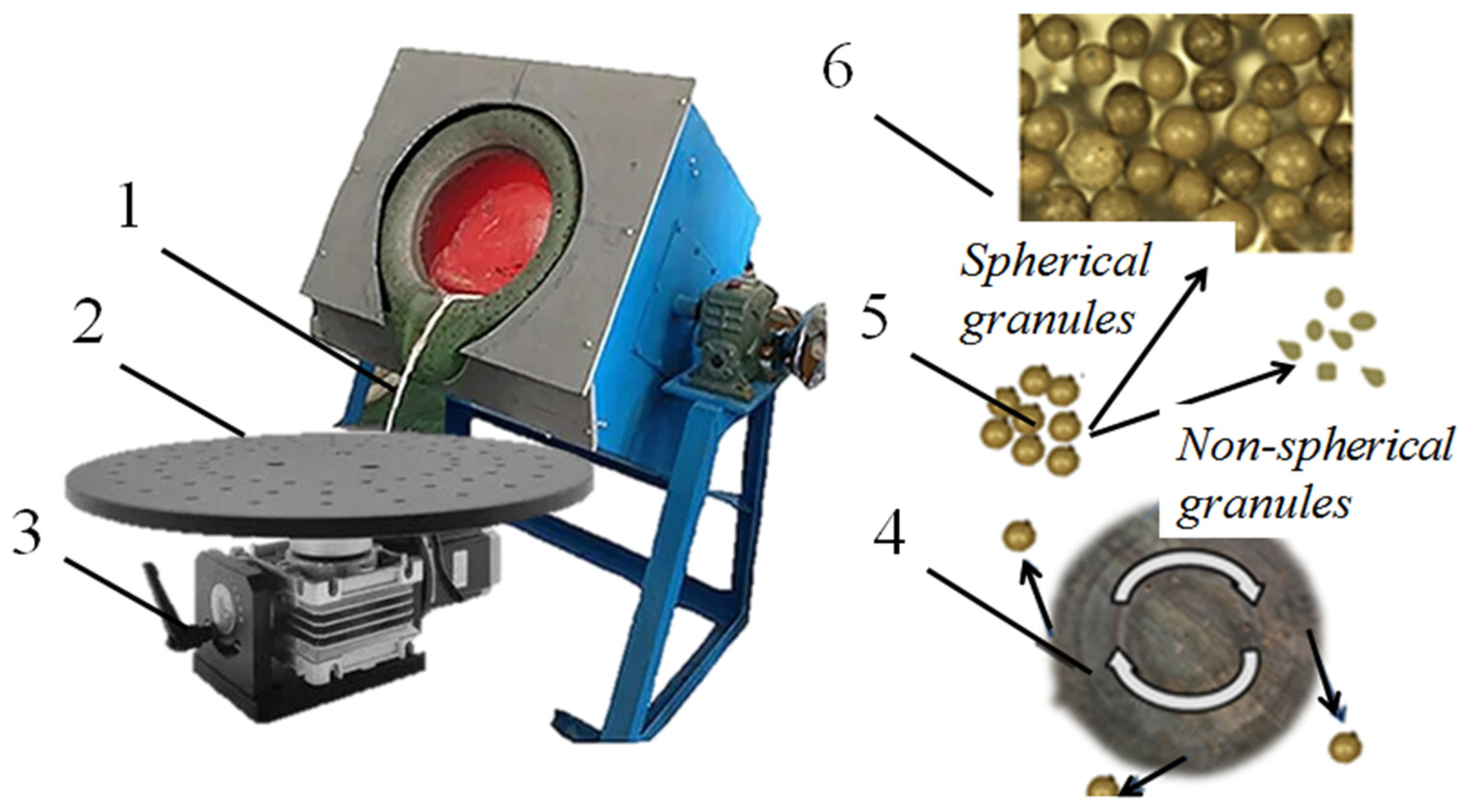
The batch for proppant production consisted of slag obtained after the pyrometallurgical extraction of iron, to which MgO was added in some cases. Prior to melting, the batch materials were ground, and the resulting mixture was dried to remove moisture. The prepared batch was then melted in an induction furnace using a graphite crucible, and the melt was subsequently granulated using a specially designed and fabricated centrifuge (Figure 1).
Spherical granules were selected from the obtained material. The remaining granules were subjected to re-melting, while the spherical granules were classified into size fractions of 0.63–1.0 mm, 1.0–1.6 mm, 1.6–2.5 mm, and 2.5–4.0 mm. Each fraction was tested in accordance with the requirements of GOST R 54571-2011 “Magnesia–quartz proppants” [19]. The physico-chemical and geometric properties were evaluated based on the criteria presented in Table 2, whereas the crushing resistance was assessed according to the limits specified in Table 3.

3. Results

The results of proppant testing in accordance with GOST R 54571-2011 “Magnesia–quartz proppants” are presented. Proppant testing was carried out in collaboration with the Gubkin Russian State University of Oil and Gas and included the evaluation of roundness and sphericity, density, crushing resistance, and acid resistance in a mixture of hydrochloric and hydrofluoric acids.

3.1. Crushing Resistance Test Results of the Obtained Proppants

Crushing resistance was determined by the mass fraction of destroyed granules under compressive loading applied using a hydraulic testing machine. Proppants of the 0.63–1.0 mm size fraction exhibited unsatisfactory performance at a pressure of 34.5 MPa, with the proportion of crushed granules reaching 70%.
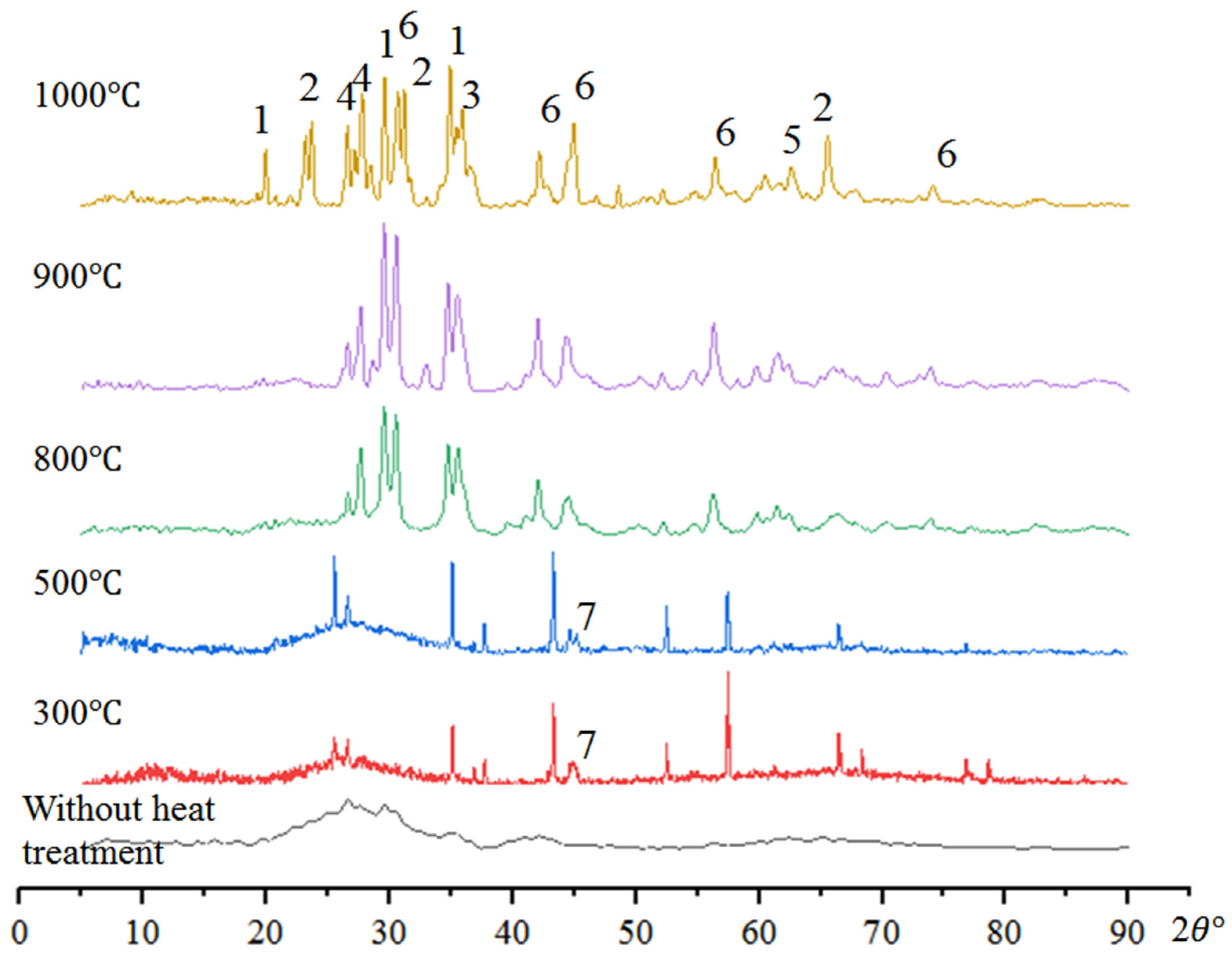
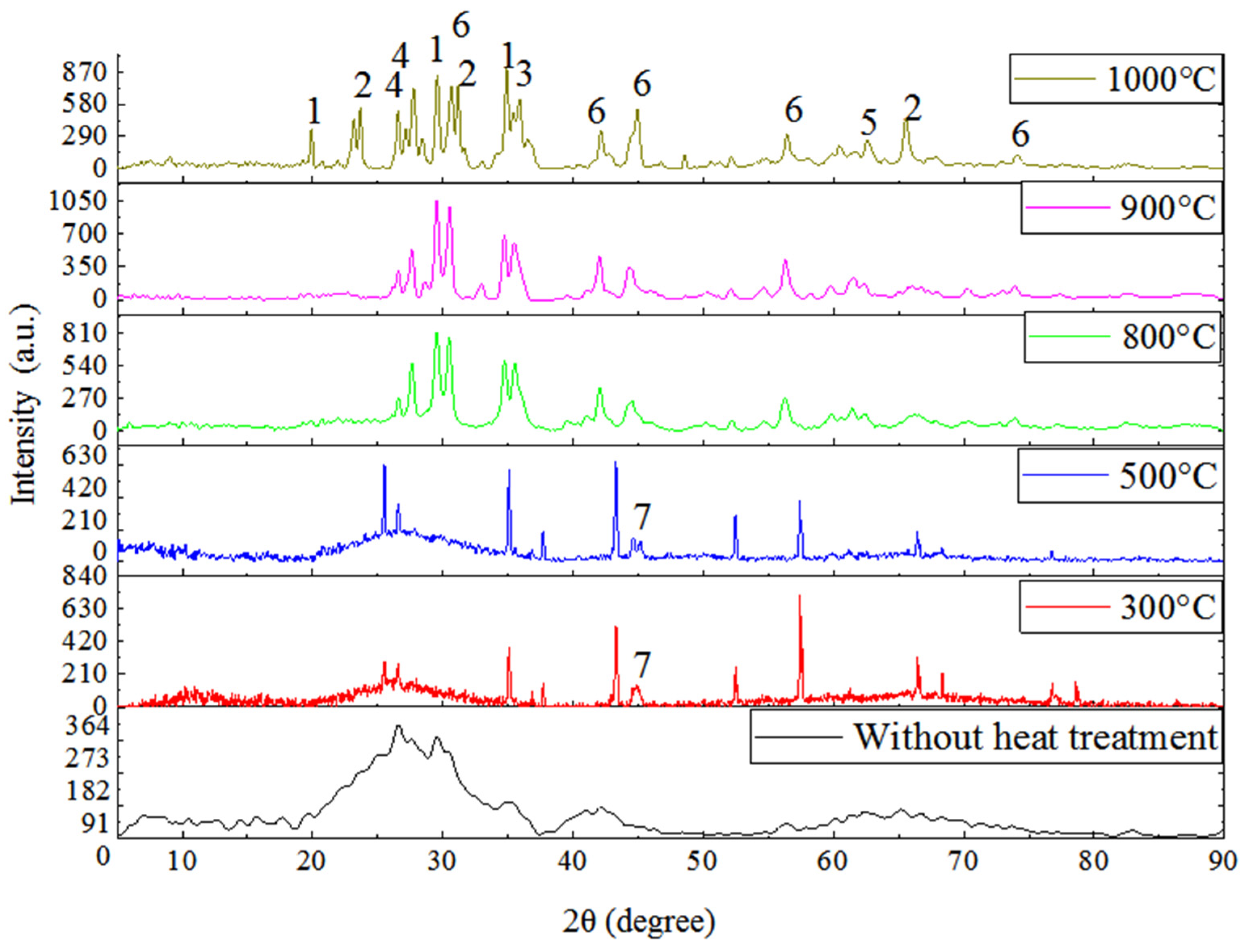
To identify the reasons for the insufficient mechanical strength, the proppant structure was examined using a Rigaku Ultima IV diffractometer (Rigaku Corporation, Tokyo, Japan) with the Match! 3 software. The results showed that the proppants produced using the tested technology possess an amorphous structure (Figure 2). It is known [16] that the mechanical strength of glassy proppants can be significantly enhanced through heat treatment. Therefore, to improve proppant strength by promoting the formation of crystalline phases, thermal treatment was carried out.
For crystallization, the proppants were heated at a rate of 1 °C/min and held in a muffle furnace for 10 min within the temperature range of 300 to 1100 °C. Further temperature increase led to slag melting. The heating rate of 1 °C/min was selected to ensure controlled nucleation and crystallization of silicate phases and to avoid thermal stresses and deformation of the granules
It was established that proppant crystallization begins at a temperature of 300 °C with the formation of SiO2, 2CaO·SiO2, and 2MgO·SiO2 phases. With a further increase in temperature, the growth of crystals of these phases occurs. At 800 °C, a pronounced crystal growth is observed along with the formation of new phases, including Al2O3, Al2O3·SiO2, and MgO. Complete crystallization is achieved only at 1000 °C, whereas a further temperature increase to 1100 °C results in partial melting and agglomeration of particles (Figure 2).
The crushing resistance of the proppants, expressed as the proportion of destroyed granules at a pressure of 34.5 MPa, improved to 30% destruction at a heat-treatment temperature of 800 °C; further temperature increase did not lead to additional strength enhancement. For this reason, it was decided to increase the holding time of the proppants at 300 °C and 800 °C, since nucleation of new phases occurs at 300 °C, while crystallization is completed at 800 °C. As a result of a 60 min holding time at 800 °C, crystallization was fully completed, and the crushing resistance of proppants in the 0.63–1.0 mm fraction improved to 10% of destroyed granules at a pressure of 34.5 MPa.
The obtained crushing resistance results of the proppants meet the requirements of GOST R 54571-2011 with respect to mechanical strength; however, the proppants did not satisfy the chemical composition requirements, specifically the minimum MgO content of 8 wt.%, as the produced material contained only about 5 wt.% MgO. In this regard, the effect of MgO concentration on proppant strength was investigated.
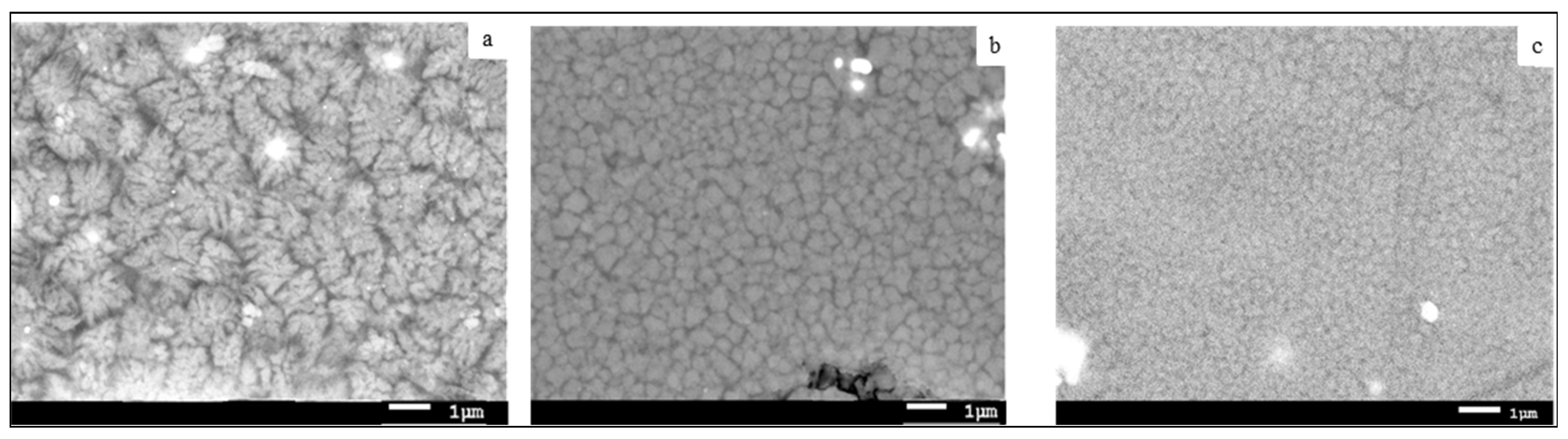
It was established that increasing the MgO content from 5 to 16 wt.% enhances the crushing resistance of proppants in the 0.63–1.0 mm fraction at a pressure of 34.5 MPa, reducing the proportion of crushed granules to 3% in the crushing test (Table 4). The improvement in proppant strength was found to be associated with refinement of the proppant microstructure: as the MgO concentration increased from 5 to 11 wt.%, the average grain size decreased from 1 μm to 0.5 μm, while a further increase to 16 wt.% resulted in a grain size reduction to 0.2 μm. The average grain size was estimated from SEM micrographs using digital image analysis by measuring multiple grains from representative areas of the samples (Figure 3).

3.2. Evaluation of the Acid Resistance of Proppants

Acid resistance was evaluated based on the mass change of proppants in the 0.63–1.0 mm and 1.0–1.6 mm size fractions after exposure to a mixture of hydrochloric and hydrofluoric acids with a concentration ratio of 4:1, in accordance with the procedure specified in GOST R 54571-2011. The mass loss of the samples amounted to 14.8% and 19.4%, respectively, which exceeds the maximum permissible value (not more than 10%) for magnesia–quartz proppants. Thus, the acid resistance results were also considered unsatisfactory.
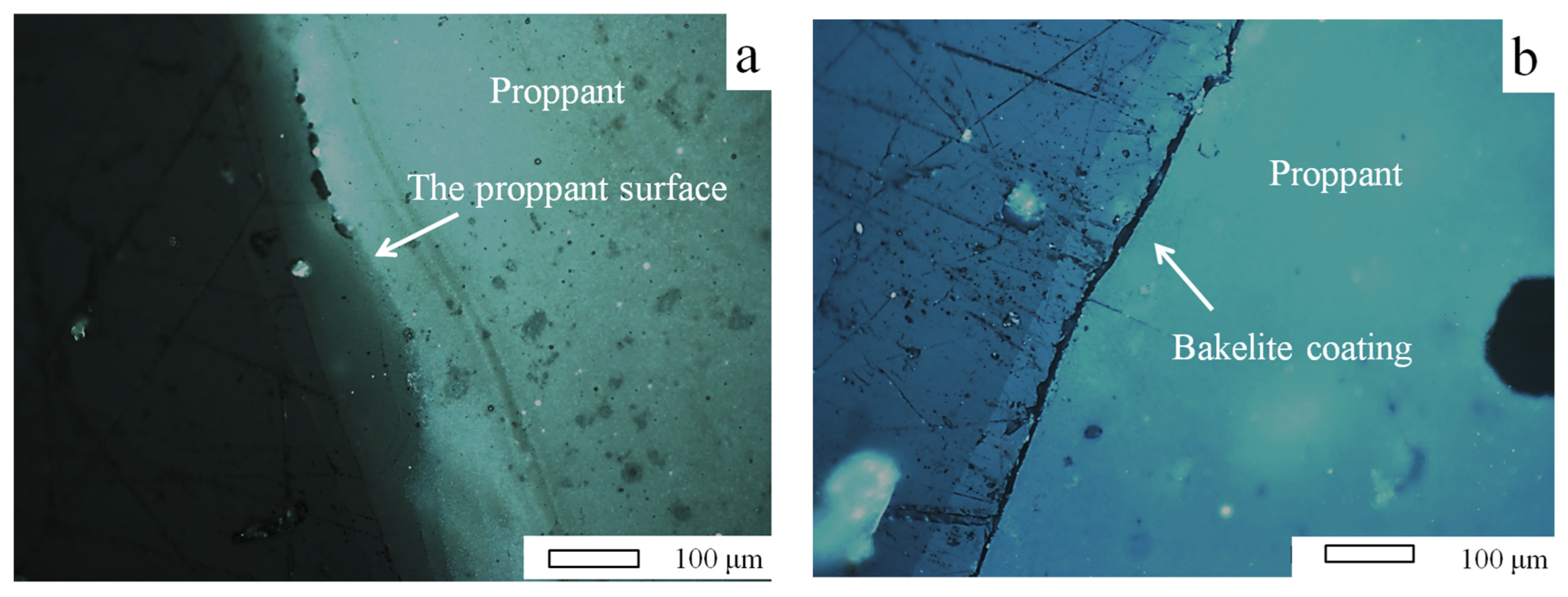
To improve the acid resistance of the proppants, it was decided to apply a protective layer of phenol–formaldehyde resin (bakelite) onto their surface [20,21]. To increase the fluidity of the bakelite and enhance wetting of the proppants, the resin was dissolved in technical ethanol at a ratio of 1:6. The resulting solution was placed in a container and heated using a high-temperature hot-air blower at 200 °C. To prevent particle agglomeration, the proppants were continuously stirred with the solution until the process was fully completed. During heating, the ethanol evaporated, and the bakelite formed a coating on the surface of the proppants (Figure 4). As a result of applying the bakelite coating, the solubility of the proppants decreased significantly (Table 5).
Based on the obtained results, the best performance was observed for samples No. 3 and No. 4, whereas unsatisfactory properties were recorded for sample No. 1. The solubility values of samples No. 2, No. 5, and No. 6 differ only slightly, since the application of a single protective coating layer does not result in a monolithic structure of the proppants. This leads to increased solubility due to the presence of defects in the coating. Higher resistance to dissolution in an acidic environment was demonstrated by samples with two and three coating layers.

3.3. Results of Bulk and Absolute (True) Density Measurements

The bulk density was determined by weighing the proppants in a calibrated cylinder after determining its capacity using a dedicated device. The measured bulk density was 1.70 g/cm3, which meets the requirements specified in GOST R 54571-2011 “Magnesia–quartz proppants” [19].
The absolute (true) density was determined by measuring the volume of the proppant sample, taking into account both open and closed porosity, using a helium pycnometer. The obtained value was 2.9 g/cm3, which also complies with the requirements of GOST R 54571-2011 “Magnesia–quartz proppants” [19].

3.4. Results of Sphericity and Roundness Evaluation of Proppants

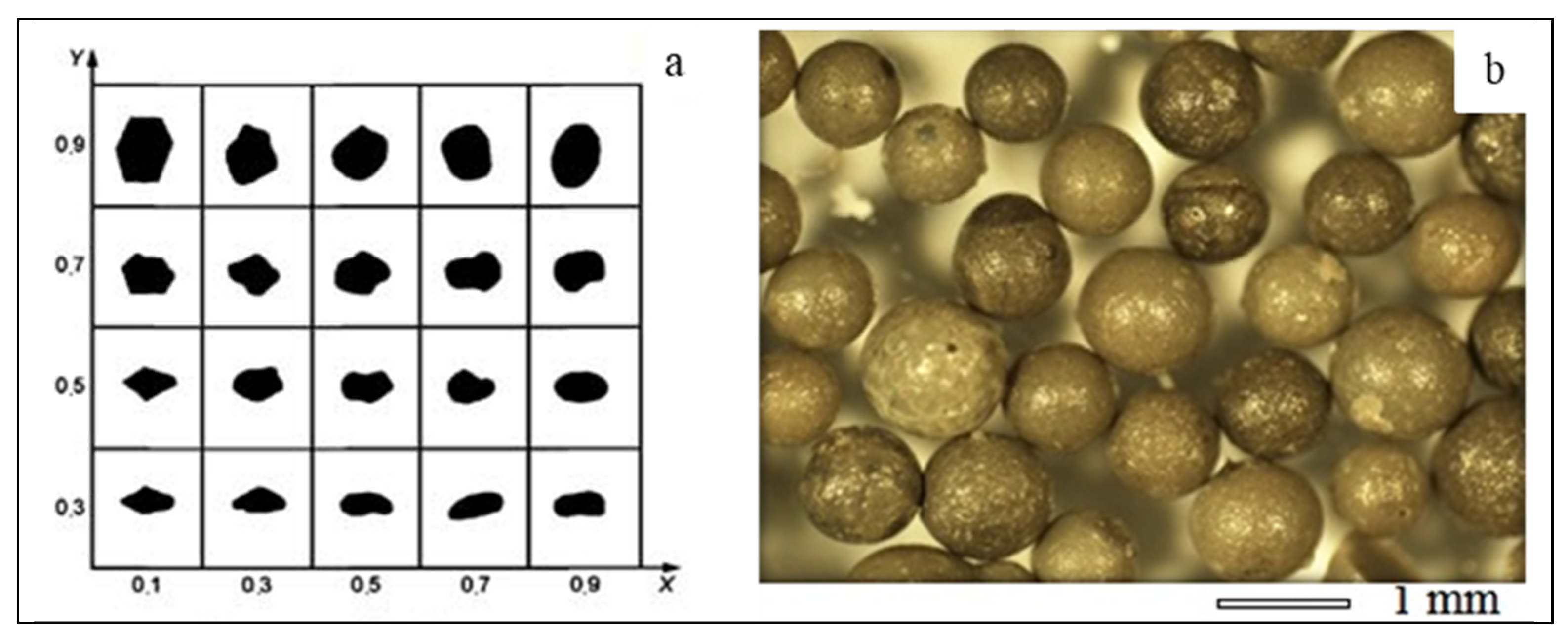
Sphericity and roundness are among the key quality indicators of proppants in accordance with GOST R 54571-2011 “Magnesia–quartz proppants” [19]. The sphericity and roundness of the granules were determined by visual assessment using the Krumbein–Sloss chart. As a result of the visual evaluation, the sphericity and roundness values of the proppants were both assessed as 0.9, which represents the maximum rating for this type of product (Figure 5).

4. Discussion

The results obtained in this study demonstrate the fundamental feasibility of utilizing secondary slag residues from copper smelting production, formed after the pyrometallurgical extraction of iron, for the manufacture of magnesia–quartz proppants. The key factors governing the performance properties of the proppants were found to be the phase composition, the degree of material crystallization, and the chemical composition, particularly the magnesium oxide content.
It was established that proppants produced by centrifugal granulation without subsequent heat treatment exhibit an amorphous, glassy structure, which leads to low mechanical strength under compressive loading. The high proportion of crushed granules observed at a pressure of 34.5 MPa confirms that the glassy state of the material does not provide the strength characteristics required by GOST R 54571-2011. Similar trends have been reported in other studies on glass–ceramic proppants, where an amorphous structure was identified as the main factor responsible for reduced crushing resistance.
The conducted investigation of the effect of heat treatment showed that increasing the temperature leads to crystallization of the glassy matrix with the formation of silicate and aluminosilicate phases. The onset of crystallization is observed already at temperatures of approximately 300 °C; however, the development of a well-defined crystalline structure occurs only in the temperature range of 800–1000 °C. The maximum improvement in the mechanical strength of the proppants was achieved after holding at 800 °C, which is associated with the completion of crystallization processes without transition of the material into a viscous-flow state. A further increase in temperature to 1100 °C results in partial melting and agglomeration of granules, which is undesirable in terms of preserving the shape and particle size distribution of the proppants.
An additional factor contributing to the enhancement of proppant strength is the adjustment of their chemical composition. Increasing the MgO content in the batch leads to a significant improvement in crushing resistance. This effect is associated with microstructural refinement and the formation of more uniformly distributed crystalline phases, as confirmed by microstructural analysis. The reduction in average grain size with increasing MgO concentration improves the fracture resistance of the proppants and reduces the proportion of crushed granules under high-pressure conditions.
The strengthening effect of MgO can be explained by its role as a structural modifier of the silicate melt. An increase in MgO content reduces the viscosity of the melt and facilitates more uniform nucleation during heat treatment, which promotes the formation of a finer crystalline structure. As a result, the microstructure becomes more homogeneous, which contributes to improved mechanical stability and increased resistance of the proppants to crushing under compressive loading.
At the same time, it was established that proppants meeting the requirements for mechanical strength and density do not satisfy the regulatory criteria for acid resistance. The high solubility in a mixture of hydrochloric and hydrofluoric acids is attributed to the silicate nature of the material and the presence of defects on the surface of the granules. To address this issue, the application of a protective phenol–formaldehyde coating was proposed, which significantly reduces the contact between the aggressive medium and the proppant core material.
The test results demonstrated that the application of two or more layers of bakelite coating leads to a substantial reduction in proppant mass loss during acid resistance testing, reaching values that comply with the requirements of GOST R 54571-2011. An increase in the number of coating layers provides a more uniform and monolithic protective shell, thereby reducing the likelihood of localized degradation and dissolution of the material through coating defects.
Thus, the overall results indicate that an optimal combination of heat treatment, adjustment of chemical composition, and surface modification makes it possible to produce proppants from secondary copper smelting slags that meet the current standard requirements for strength, density, sphericity, and acid resistance. This confirms the promise of the proposed approach both from the standpoint of resource conservation and in terms of producing competitive products for the oil and gas industry.

5. Conclusions

  • The feasibility of producing magnesia–quartz proppants from secondary copper smelting slag generated after the pyrometallurgical extraction of iron and zinc has been demonstrated. The slag, mainly composed of SiO2–CaO–Al2O3–MgO oxides, can be effectively utilized as a technogenic raw material for the production of spherical proppant granules by centrifugal granulation.
  • Proppants obtained directly after granulation exhibit an amorphous glassy structure and insufficient mechanical strength, with up to 70% of granules destroyed at a pressure of 34.5 MPa. Controlled heat treatment promotes crystallization of silicate and material.
  • Optimal heat-treatment conditions were determined to be holding at 800 °C for 60 min, resulting in a reduction in the crushed fraction to 10% at 34.5 MPa, which satisfies the requirements of GOST R 54571-2011 for magnesia–quartz proppants.
  • Increasing the MgO content from 5 to 16 wt.% leads to significant microstructural refinement, reducing the average grain size from approximately 1 μm to 0.2 μm and improving crushing resistance to 3% destroyed granules at 34.5 MPa.
  • The application of a phenol–formaldehyde protective coating significantly enhances the chemical durability of the proppants, reducing their solubility in a hydrochloric–hydrofluoric acid mixture from 19% to 2%, thereby ensuring compliance with the requirements for acid resistance.
  • The proposed approach enables the integrated utilization of secondary copper smelting slags and demonstrates the potential for producing industrially competitive proppants while simultaneously reducing the environmental impact of metallurgical waste aluminosilicate phases, which significantly improves the mechanical performance.

Author Contributions

Conceptualization, G.A. and B.U.; methodology, G.A. and A.A.; validation, G.A., B.U. and A.A.; formal analysis, G.A.; investigation, G.A. and A.A.; resources, B.U.; data curation, A.B.; writing—original draft preparation, G.A. and A.A.; writing—review and editing, G.A. and B.U.; visualization, A.B.; supervision, G.A.; project administration, G.A.; funding acquisition, B.U. All authors have read and agreed to the published version of the manuscript.

Funding

This research is funded by the Science Committee of the Ministry of Science and Higher Education of the Republic of Kazakhstan (Grant No. AP23488066).

Data Availability Statement

The original contributions presented in this study are included in the article. Further inquiries can be directed to the corresponding authors.

Conflicts of Interest

The authors declare no conflicts of interest. The funders had no role in the design of the study; in the collection, analyses, or interpretation of data; in the writing of the manuscript; or in the decision to publish the results.

References

  1. Kundu, T.; Das, S.K.; Angadi, S.I.; Rath, S.S. A comprehensive review on the recovery of copper values from copper slag. Powder Technol. 2023, 426, 118693. [Google Scholar] [CrossRef]
  2. Liu, J.; Xie, H.; Han, B. The utilization of the copper smelting slag: A critical review. Minerals 2025, 15, 926. [Google Scholar] [CrossRef]
  3. Gabasiane, T.S.; Danha, G.; Mamvura, T.A.; Mashifana, T.; Dzinomwa, G. Environmental and socioeconomic impact of copper slag—A review. Crystals 2021, 11, 1504. [Google Scholar] [CrossRef]
  4. Adilov, G.; Suleimen, B.; Kosdauletov, N. Challenges and opportunities in the recycling of copper slags. J. Sustain. Metall. 2025, 11, 2064–2074. [Google Scholar] [CrossRef]
  5. Phiri, T.C.; Singh, P.; Nikoloski, A.N. The potential for copper slag waste as a resource for a circular economy: A review—Part I. Miner. Eng. 2022, 180, 107474. [Google Scholar] [CrossRef]
  6. Mansourkiyaei, S.; Golzary, A. Innovative approaches to circular economy in copper slag management: Maximizing resource efficiency and sustainability. Results Eng. 2025, 17, 100924. [Google Scholar] [CrossRef]
  7. Adilov, G.; Kareva, N.T.; Roshchin, V.E. Influence of copper and silicon on phase transformations in the iron–carbon system. Izv. Ferr. Metall. 2024, 67, 73–75. [Google Scholar] [CrossRef]
  8. Morsy, A.; Rahman, H.H.A.; Kamel, H.M.; Ewais, H.A.; Ahmed, A.E.M.M.; Morsy, A.; Fadl, E.A.; Blall, E.G. Sustainable recovery of copper from wastewater via zinc cementation enhanced by natural chalcone-based accelerators. Sci. Rep. 2025, 15, 31304. [Google Scholar] [CrossRef] [PubMed]
  9. Kuang, B.; Yu, Y.; Hu, J.; Dou, Z.; Wang, H.; Yang, S.; Liu, H. Recovery of heavy metals from copper slag by slow cooling: Mechanism of matte growth and transformation behaviors of heavy metals. Sep. Purif. Technol. 2025, 361, 131327. [Google Scholar] [CrossRef]
  10. Wang, L.; Xu, Y.; Tian, L.; Chen, Y.; Yang, A.; Gan, G.; Ma, Y.; Du, Y. Two-stage method recovery of metals from copper slag: Realizing the resource utilization of all components. Miner. Eng. 2024, 206, 108490. [Google Scholar] [CrossRef]
  11. Sun, J.; Xie, Z.; Jiang, T.; Shen, P.; Liu, D. Experimental and mechanistic study on the recovery of copper, iron, zinc and cobalt from copper slag by low-temperature roasting with sulfuric acid–ammonium persulfate combined with water leaching. Chem. Eng. J. 2025, 521, 166710. [Google Scholar] [CrossRef]
  12. Toniolo, N.; Romero, A.R.; Marangoni, M.; Binhussain, M.; Boccaccini, A.R.; Bernardo, E. Glass-ceramic proppants from sinter-crystallisation of waste-derived glasses. Adv. Appl. Ceram. 2018, 117, 127–132. [Google Scholar] [CrossRef]
  13. Biryukova, A.A.; Dzhienalyev, T.D.; Panichkin, A.V. Ceramic proppants for hydraulic fracturing. IOP Conf. Ser. Mater. Sci. Eng. 2021, 1040, 012008. [Google Scholar] [CrossRef]
  14. Krishnan, M.R.; Li, W.; Alharbi, B.; Alsharaeh, E. Recent developments on in situ generated proppants for hydraulic fracturing operations: A critical review. Geoenergy Sci. Eng. 2024, 242, 213265. [Google Scholar] [CrossRef]
  15. Ramazanov, V.; Matovu, S.; Al Shafloot, T.; Alarifi, S.A. Enhancing fracturing proppant performance: Methods and assessment. Arab. J. Sci. Eng. 2025, 50, 4477–4503. [Google Scholar] [CrossRef]
  16. Muhsan, A.S.; Al-Jothery, H.K.M.; Hamdi, S.S.; Alakbari, F.S. Recent progress in proppant technology for improving the fracture conductivity in hydraulic fracturing. J. Adv. Res. Des. 2025, 127, 96–119. [Google Scholar] [CrossRef]
  17. Zhang, X.; Wang, Z.; Deng, J.; Zhao, H.; Zhuang, Y.; Zhang, Z.; Sun, X.; Lian, H.; Han, M.; Tian, Y. High-temperature- and salt-resistant self-suspending proppant for hydraulic fracturing. Energy Fuels 2024, 38, 8620–8630. [Google Scholar] [CrossRef]
  18. Li, N.; Zhou, T.; Zhao, M.; Wang, H.; Hu, X.; Zou, Y.; Zhang, Z. Thermal-shock-induced surface softening and conductivity evolution of hydraulic fracture in enhanced geothermal systems. Geothermics 2022, 102, 102405. [Google Scholar] [CrossRef]
  19. GOST R 54571–2011; Magnesia–Quartz Proppants. Specifications. Federal Agency on Technical Regulating and Metrology: Moscow, Russia, 2011.
  20. Zhang, W.M.; Li, Z.T.; Li, Q.S.; Chen, W.J.; Meng, C.Y.; Cui, Y.L. Study on high-strength and low-density resin-coated ceramic proppants. Oilfield Chem. 2013, 30, 189–192. [Google Scholar]
  21. Pangilinan, K.D.; Al Christopher, C.; Advincula, R.C. Polymers for proppants used in hydraulic fracturing. J. Pet. Sci. Eng. 2016, 145, 154–160. [Google Scholar] [CrossRef]
Figure 1. Scheme for obtaining proppant production: (1) molten slag, (2) rotating disk, (3) motor, (4) rotating disk (top view), (5) granulation products, (6) proppants.
Metals 16 00328 g001
Figure 2. XRD patterns of the samples and phase composition before and after heat treatment: (1) SiO2, (2) 2CaO·SiO2, (3) Al2O3, (4) Al2O3·SiO2, (5) MgO, (6) 2MgO·SiO2, (7) Fe.
Metals 16 00328 g002aMetals 16 00328 g002b
Figure 3. Microstructural evolution of crystallized proppants with different MgO contents: (a) 6 wt.%; (b) 11 wt.%; (c) 16 wt.%.
Metals 16 00328 g003
Figure 4. Cross-sectional view of the proppant surface: (a) without a protective coating; (b) with a three-layer protective coating.
Metals 16 00328 g004
Figure 5. Krumbein–Sloss chart (a) and appearance of the obtained proppants (b).
Metals 16 00328 g005
Table 1. Chemical composition of the slag (wt.%).
ComponentOMgAlSiSCaFe
Content, wt.%503.18.024.70.113.40.8
Table 2. Physico-chemical and geometric requirements for proppants according to GOST R 54571-2011 “Magnesia–quartz proppants”.
IndicatorRequirement
MgO content, wt.%8
SiO2 content, wt.%50
Mass fraction of the main size fraction, %.90.0
Sphericity, dimensionless0.7
Roundness, dimensionless0.7
Solubility in acid mixture, % mass loss10.0
Solubility in HCl, % mass loss1.0
Bulk density, g/cm31.75
Apparent density, g/cm33.10
True density, g/cm33.10
Loss on ignition, %4.0
Table 3. Crushing resistance requirements for proppants as a function of size fraction and applied pressure according to GOST R 54571-2011.
Applied Pressure, MPaFraction 0.6–1.0 mm, % CrushedFraction 1.0–1.6 mm, % Crushed
34.51015
51.71520
68.92025
Table 4. Results of proppant crushing resistance tests.
Pressure, MPaFraction Size, mmAllowable Fraction of Crushed Granules According to GOST, %Fraction of Crushed Granules After Heat Treatment, %
34.50.63–1.0103
1.0–1.6154
51.70.63–1.0159
1.0–1.62011
68.90.63–1.02010
1.0–1.62519
86.10.63–1.0-20
Table 5. Results of proppant acid resistance testing.
No.Mass of Proppants Before Coating, gAmount of Added Bakelite, mLNumber of Protective Coating LayersMass of Proppants After Coating, gSolubility (Mass Loss, %)
150005019
25011519
35022524
45033532
55021528
65031537
Disclaimer/Publisher’s Note: The statements, opinions and data contained in all publications are solely those of the individual author(s) and contributor(s) and not of MDPI and/or the editor(s). MDPI and/or the editor(s) disclaim responsibility for any injury to people or property resulting from any ideas, methods, instructions or products referred to in the content.