Article

Corrosion Behavior of Al–Cu Alloy by Room-Temperature Random Vibration

1
School of Mechanical Engineering and Automation, College of Science and Technology, Ningbo University, Ningbo 315300, China
2
Bull Group, Ningbo 315000, China
3
Light Alloy Research Institute, Central South University, Changsha 410083, China
4
College of Digital Technology and Engineering, Ningbo University of Finance & Economics, Ningbo 315175, China
*
Authors to whom correspondence should be addressed.
Metals 2026, 16(3), 282; https://doi.org/10.3390/met16030282
Submission received: 8 January 2026 / Revised: 13 February 2026 / Accepted: 27 February 2026 / Published: 3 March 2026
(This article belongs to the Section Corrosion and Protection)

Abstract

Intergranular corrosion (IGC) and exfoliation corrosion (EXCO) limit the durability of 2219 Al–Cu in chloride-rich, cyclic-humidity aerospace environments, and conventional thermal stress relief can worsen grain boundary precipitates and grain boundary non-precipitation zones (PFZs), motivating evaluation of low-temperature resonant vibration stress relief. Using polarization tests and microstructural analysis, we show that RRV lowers corrosion current, strengthens passivation, and reduces IGC and EXCO susceptibility. Alternating tensile–compressive stresses build dislocation networks that convert continuous or semi-continuous grain boundary precipitates into discrete distributions, increasing corrosion path tortuosity and slowing intergranular attack. A more discrete cathodic phase, a narrowed solute-enriched anodic band, and reduced PFZs disrupt corrosion channel continuity, weaken microgalvanic driving forces via a more uniform θ′ distribution, and limit corrosion product wedging, while homogenized precipitates suppress local galvanic coupling in EXCO-like media. Overall, RRV synergistically optimizes dislocation configuration and precipitate redistribution to intrinsically enhance corrosion resistance and offers a practical, low-temperature, scalable route to improve the durability of high-strength aluminum alloy structures in aerospace service.

1. Introduction

Aluminum alloy is a highly sought-after material in the aerospace industry due to its favorable combination of light weight and superior performance, making it an ideal choice for the construction of aircraft structures such as wing skins and machined fuselage bulkheads [1]. The 2xxx series of aluminum alloys are commonly utilized in aerospace applications due to their remarkable characteristics, such as excellent high- and low-temperature performance, strong welding ability, high specific strength, and fracture toughness [2]. Al–Cu alloy, has a temperature range of −250 °C to 300 °C, making it an exceptional structural material for use in supersonic-aircraft skin and other structural components, among other potential applications [3]. However, intergranular and exfoliation corrosion remain critical durability limiters for 2219 Al–Cu in welded and aged states exposed to chloride-rich and cyclic-humidity aerospace environments, and conventional thermal stress relief can coarsen grain boundary precipitates and widen precipitate-free zones, exacerbating corrosion, so a low-temperature alternative such as resonant vibration stress relief requires rigorous evaluation of its corrosion impact and mechanism to enable confident industrial adoption.
Among the traditional material-processing processes, the thermomechanical treatment (TMT) process is the most common and can be the most important means of improving the organization and mechanical properties of aluminum alloys [4]. However, the conditions of use for TMT processes are complex and demanding, and aluminum alloys are usually treated thermomechanically to meet extremely high combined mechanical property requirements. Typically, the heat treatment is performed by heating the sample with a resistance wire in a resistance furnace, which is a long and rather energy-intensive process and can involve a significant amount of energy lost in extended heating and cooling procedures [5]. Recently, in order to reduce energy consumption and simultaneously improve the forming efficiency of heat-treated alloys and the properties of the resulting aluminum alloy parts, researchers have proposed many different methods to replace the role of resistance furnaces [6]. Wang et al. [7] have achieved high-temperature stretching experiments on aluminum alloys by applying pulsed currents to the alloys on a common stretching machine, which can also result in a substantial increase in elongation without the use of a high-temperature stretching machine with a resistance furnace. Yu et al. [8] also found that high-density currents can be used to reduce springback during electrically assisted forming, shorten the forming time, and reduce the energy consumption of the forming equipment. Kai et al. [9] have observed that continuous current reduces flow stresses in metals, decreases deformation resistance stresses in metals, and improves formability in various metal alloys during compression. Thus, the applied electric field can reduce the energy consumption of the material-processing process and also improve the overall performance of the heat-treated metal [10]. It is desirable that a new process can be proposed that can improve the microstructure and properties of the alloy while reducing the energy efficiency.
Generally speaking, the internal stress of the metal will increase after the material-processing process [11]. Using vibration to directly treat the metal with high internal stress can reduce the internal stress of the material before use, thus obtaining good dimensional stability [12]. Jiang et al. [13] introduced mechanical vibration into the vanishing-pattern shell-casting process for the first time to produce an Al-Si-Cu alloy in order to improve the organization and mechanical properties of the Al-Si-Cu alloy. Nabil et al. [14] performed thermal vibration aging, thermal aging and vibration aging on seven 7075 aluminum alloy specimens; established a finite element model considering stress relaxation effects and transient cyclic vibration loading; simulated the thermal vibration aging, thermal aging and vibration aging processes; measured and compared the residual stresses before and after the process to verify the validity of the finite element model; and found that the thermal vibration aging process could increase the dislocation density. Cong et al. [12,15] investigated the effect of mechanical vibration at different times and frequencies on the grain refinement and densities of the α-Al phase of Al–Cu alloy. It was found that the maximum grain refinement was obtained at 50 Hz and 15 min vibration conditions [16]. Recently, some researchers have used vibration in combination with traditional processing processes, which can further improve the comprehensive performance of the material. Attarilar et al. [17] investigated the plastic deformation behavior of industrial Mg-Al alloy using an ultrasonic-vibration-enhanced equal-channel corner extrusion method, and developed a finite element model, including the constitutive equations describing the effect of acoustic softening, to investigate the effect of applying high-intensity vibration, and found that the introduction of ultrasonic vibration can refine grain size and increase the maximum and average equivalent plastic strain ratio. It is evident from the results of other researchers mentioned above that the introduction of vibration into conventional processes has improved the mechanical and corrosion properties of metallic materials [18]. Most of the above studies have focused on the combination of vibration and conventional processes to improve the properties of metallic materials, but the introduction of vibration into conventional processes increases the energy consumption and the service requirements of the equipment [15]. Therefore, it is urgent and necessary to propose a new process that can improve the comprehensive performance of the material and reduce the energy consumption and service requirements of the equipment.
The effect of room-temperature random vibration (RRV) on the organization and mechanical properties of 2219 Al–Cu alloy in the T75-state has been investigated, and the corresponding finite element models have been developed to study the dynamic stress response. It was found that the mechanical properties of the RRV-treated material were improved, and the energy consumption was reduced [19]. This is a new processing process that can save energy and reduce energy consumption. Unlike traditional Vibratory Stress Relief (VSR), which typically relies on identifying and tracking specific resonant frequencies—a process often complicated by frequency drift—room-temperature random vibration (RRV) utilizes a broadband excitation spectrum. This approach simultaneously excites multiple natural modes of the workpiece, ensuring comprehensive energy absorption and microstructural activation across the entire component without the need to isolate specific frequencies. Consequently, this study evaluates the cumulative effect of this broadband treatment rather than conducting a parametric study of individual frequencies. This paper further investigates the effects of mechanical vibration on the organization and corrosion properties of T75-state 2219 Al–Cu alloy at room temperature, and characterizes its microstructure and dislocations using scanning electron microscopy (SEM) and transmission electron microscopy (TEM), respectively. Finally, the effects of random vibration on the corrosion performance, microstructure and crystal dislocations of the material were analyzed, and the corrosion mechanism of RRV was summarized. The results of the study provide an important reference for the development of a rapid improvement of the material corrosion performance method.

2. Material and Methodology

2.1. Experiment Materials and Samples

For this study, the 5 mm thick 2219-T75 aluminum alloy sheet was supplied by Southwest Aluminum (Group) Co., Ltd., Chongqing, China. Table 1 displays the alloy’s chemical makeup (mass fraction). The heat treatment state of 2219-T75 aluminum was as follows: the solid solution temperature was kept at 535 °C for two hours, the water was quenched for more than 30 min, and then 5% prestretching was applied. The alloy was then air-cooled after being intentionally overaged for 25 h at 165 °C. The specimen was created using the vibration device clamping technique provided in GB/T 2039-2012 [20]. Clamping and corrosion specimen areas are included in the aforementioned specimen.

2.2. Experimental Procedure

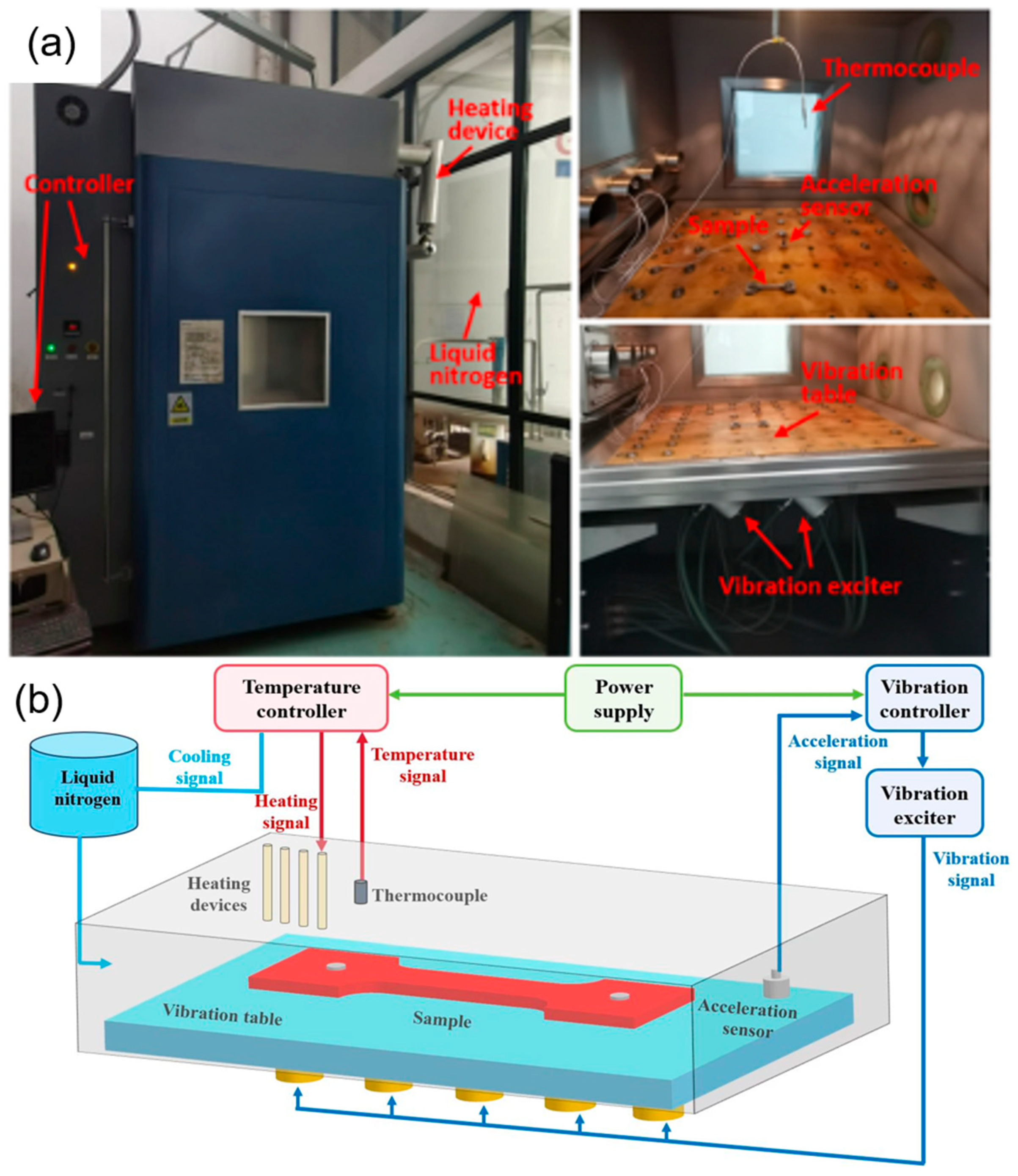
Figure 1 shows a schematic diagram of the experimental system of RRV. The vibration device comprises an accelerometer, shaker, fixture, and vibration controller, capable of operating within a frequency range of 10 to 5000 Hz. The samples were processed at room temperature, secured to the shaker table by a fastening plate. Unlike traditional harmonic excitation at a fixed frequency, the RRV process employed in this study utilized a continuous broadband spectrum. The vibration controller drove the shaker to apply a super-Gaussian random vibration with a root mean square (RMS) acceleration of 70 g for a duration of two hours. This broadband input ensures that the first several natural frequencies of the specimen are excited simultaneously, facilitating multi-modal resonance and uniform stress relief without the need to isolate specific frequencies. A closed-loop control system was established where the vibration signal was gathered by the acceleration sensor and fed back to the vibration controller to maintain testing precision. To prevent adiabatic heating from affecting the material properties, a type-K thermocouple was used to monitor the environment, maintaining the real-time temperature at 26 °C. The peak acceleration of the sinusoidal stimulation simulating this random vibration was calculated to be 630 g, given the system’s 70 g RMS acceleration. Prior to the experiment, the specimen vibration system underwent a modal analysis in Abaqus/CAE to determine its intrinsic frequencies. As analyzed by Peng et al. [19] using finite element analysis based on the peak stress equivalence principle, the maximum equivalent stress under this vibration condition was 91.7 MPa. This value is well below the yield strength of the alloy, ensuring that no macroscopic plastic deformation or shape change occurred during the treatment.

2.3. Corrosion Testing

The Standard GB/T 22639 [21] was employed to evaluate the intergranular corrosion (IGC) susceptibility of aluminum alloy samples before and after vibration via an accelerated corrosion test. A corrosion specimen measuring 20 mm in length, 10 mm in width, and 5 mm in thickness was obtained from each aluminum alloy sheet, both oriented longitudinally and parallel to the rolling direction. Following degreasing in acetone and etching in 7.5% NaOH at approximately 60 °C for 3 min, the samples were degreased in 65% concentrated HNO3 for 1 min and then immersed in a solution containing 30 g/L NaCl and 10 mL/L concentrated HCl for 24 h. Each etched sample was subsequently divided into six small sections, 10 mm apart, along the longitudinal direction along the dotted line in Figure 1. The resulting eight cross-sections (S-T sections) were then mechanically polished using a series of SiC papers and finished with an alumina paste. The corrosion morphology of the 10 polished sections was analyzed using an XJG-05 optical microscope (Shanghai Precision Instrumentation Company, Nanjing, China), and the maximum corrosion depth was determined as the section exhibiting the deepest corrosion among the 10 sections examined under different aging conditions.
To investigate the electrochemical behavior of differently treated samples, measurements were performed on a CHI660E electrochemical workstation. Potentiodynamic polarization curves were obtained using a three-electrode setup with a calomel reference electrode, a platinum counter electrode, and the sample as the working electrode. Specimens were prepared by masking all non-exposed surfaces with epoxy, leaving a 10 × 10 mm working area, and electrical contact was established by attaching a copper wire to the back of the sample. Tests were conducted in 3.5 wt% NaCl at a scan rate of 2 mV/s.

2.4. Microstructural Observation

To elucidate the underlying mechanisms, the evolution of both mechanical properties and microstructure was investigated. Dislocation configurations and precipitate phases were characterized using a Titan G2 60–300 transmission electron microscope (TEM) (Thermo Fisher Scientific, Waltham, MA, USA) operated at 300 kV. Sample preparation involved mechanical grinding to a thickness of 80–100 µm, followed by punching into Φ3 mm disks. Final thinning was conducted with an MIT II twin-jet electropolisher (South Bay Technology, Inc., San Clemente, CA, USA) employing a HNO3:CH3OH (1:3) electrolyte at −45 to −35 °C and a current of 50–60 mA. Phase analysis was performed via X-ray diffraction (XRD) on an Advance D8 Diffractometer (Bruker Corporation, Billerica, MA, USA) with a 20–90° scanning range at 2°/min. For TEM, SEM, and XRD analyses, sampling was conducted at a depth corresponding to 0.2 times the sample thickness (mid-thickness region).

3. Result

3.1. Corrosion Test

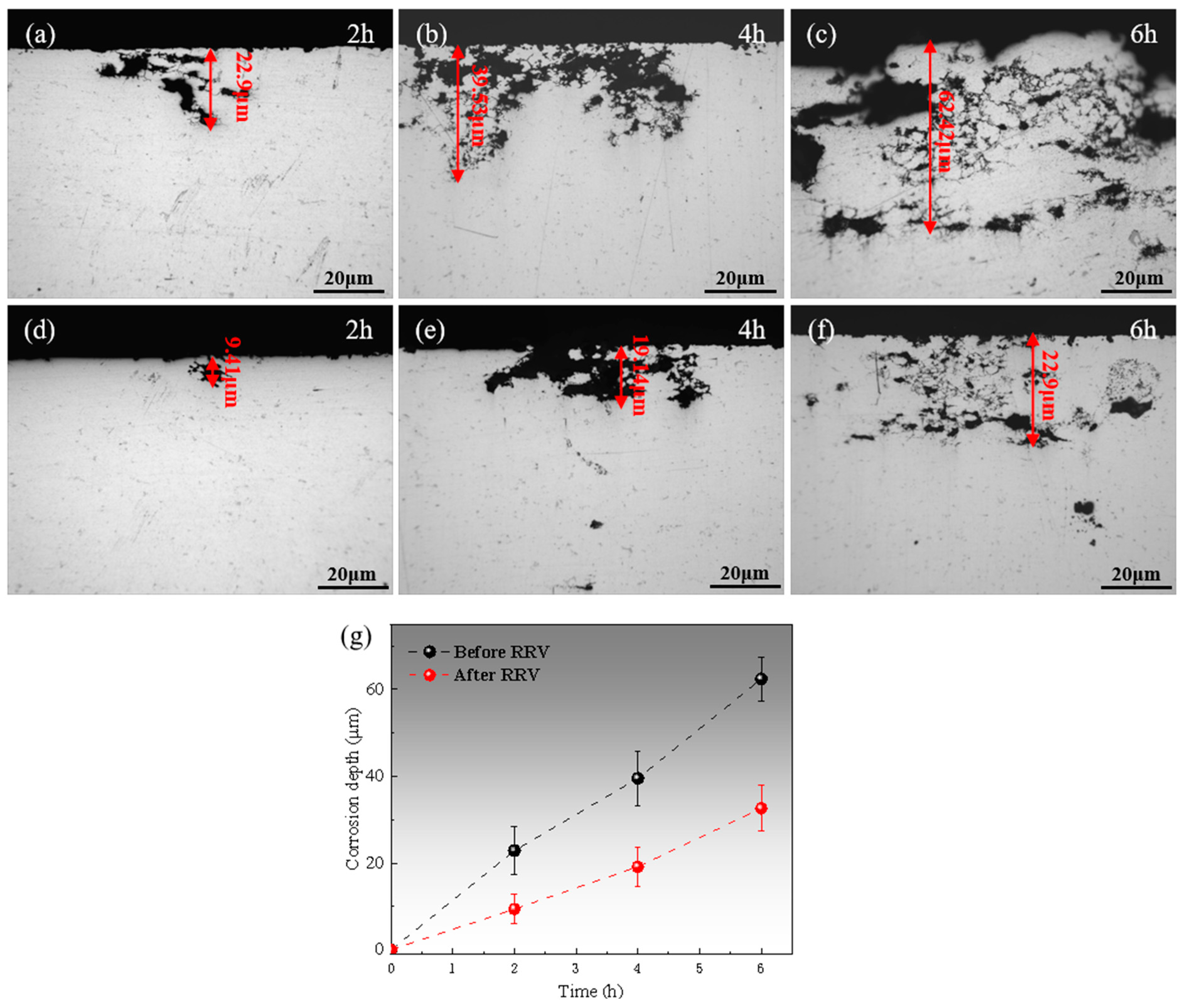
Based on Figure 2, which displays the corrosion depth under intergranular corrosion at different exposure times for samples before and after vibratory aging treatment, both untreated and treated Al–Cu samples exhibited typical intergranular corrosion morphology, with corrosion cracks propagating along grain boundaries. At the initial stage (2 h) of intergranular corrosion, the maximum corrosion depth for the untreated Al–Cu alloy was 22.9 ± 4.6 μm, compared to 9.41 ± 2.3 μm for the vibration-aged sample (Figure 2a,d). During the intermediate stage, the maximum depths before and after RRV treatment were 39.53 ± 4.8 μm and 19.14 ± 2.7 μm, as shown in Figure 2b,e. At the later stage, these values increased to 62.43 ± 4.5 μm for the untreated alloy and 22.94 ± 5.2 μm for the aged sample, as shown in Figure 2c,f. As summarized in Figure 2g, the corrosion rate accelerated significantly with prolonged exposure time in both groups. However, the vibration-aged samples consistently demonstrated a lower corrosion rate than untreated samples. These results indicate that vibratory ageing reduces the intergranular corrosion depth and decelerates the corrosion rate in Al–Cu alloy, thereby enhancing its resistance to intergranular corrosion.
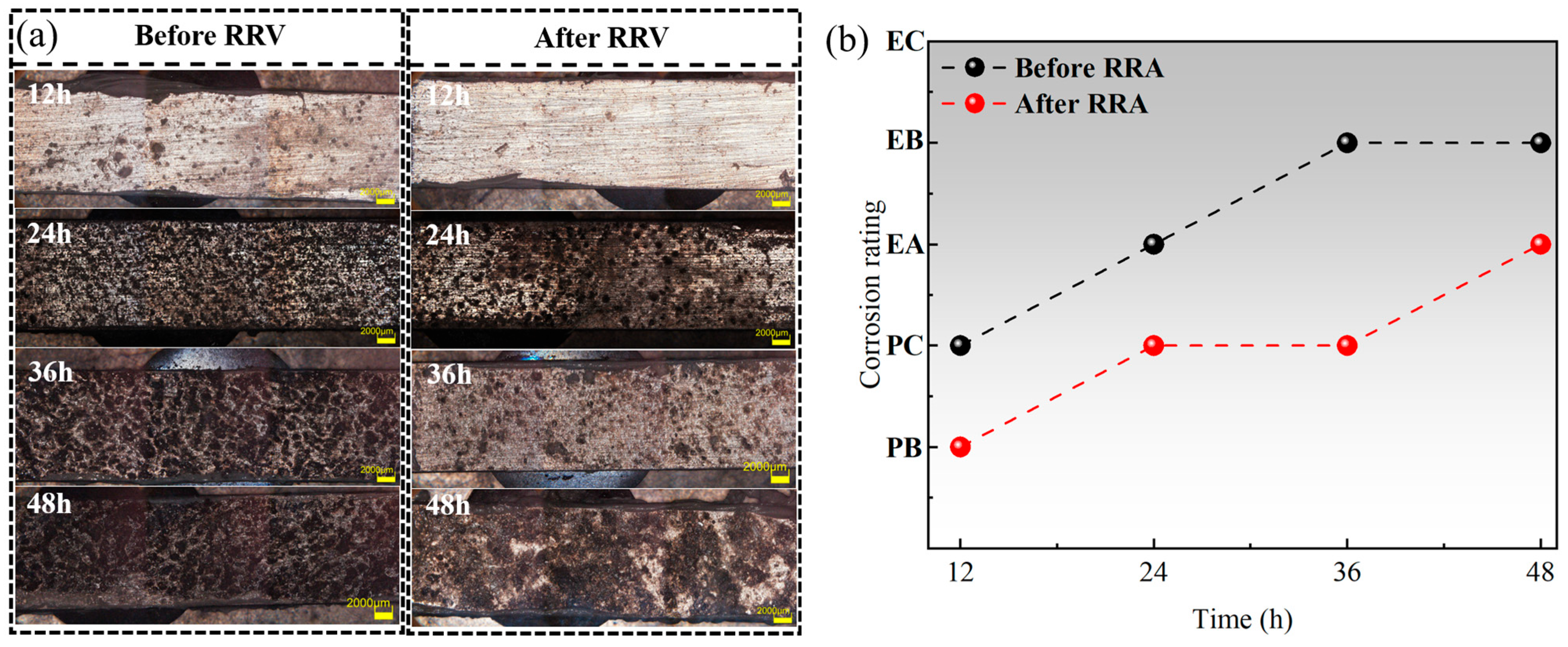
Figure 3 depicts exfoliation corrosion depth profiles of non-RRV and RRV samples at different exposure times. Both sample groups exhibited typical exfoliation corrosion morphology, with surface corrosion evolving from black-speckled products to larger pits. After 12 h, the maximum corrosion rating reached PC for the non-RRV alloy, while the vibration-aged sample maintained a PC rating. During the 24–36 h period, the corrosion rating of non-RRV samples was changed from EA to EB, whereas a PC rating was consistently maintained by RRV samples. At later stages, an EB rating was stabilized for non-RRV samples, while a progression from PC to EA was observed in RRV specimens. These results demonstrated that the final exfoliation corrosion rating of the Al–Cu alloy was improved by vibratory aging from EB to EA, thereby enhancing its resistance to exfoliation corrosion.
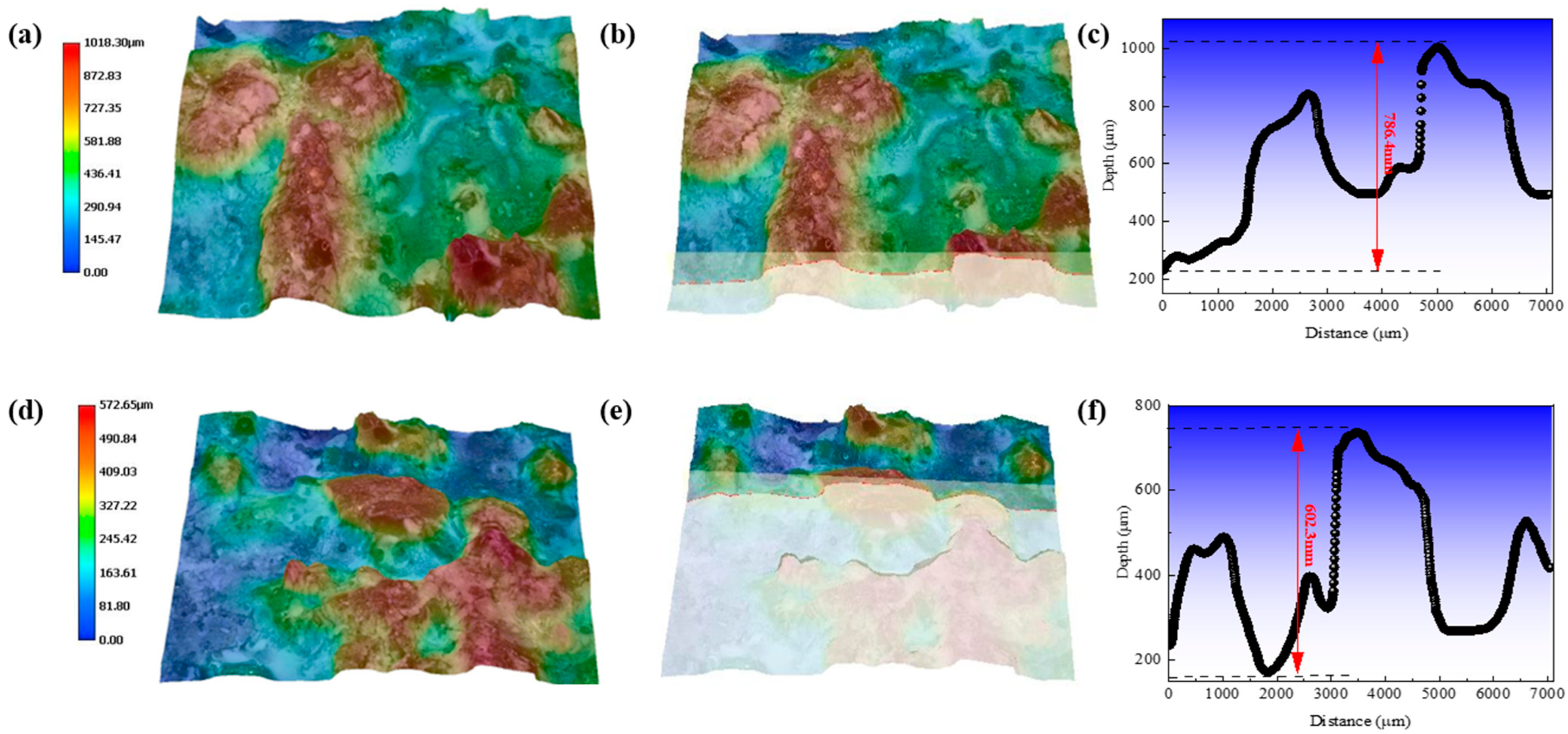
Figure 4 presents three-dimensional topographies of exfoliation corrosion depths in non-RRV and RRV samples. Both sample types exhibit characteristic intergranular corrosion features, with corrosion progression predominantly along grain boundaries. As corrosion time extends, corrosion propagates deeper into the material interior along these boundaries, while surface corrosion products exfoliate in layered patterns. Grain morphology becomes accentuated due to preferential boundary attack. Following corrosion exposure, non-RRV Al–Cu alloy sheets develop numerous intergranular microcracks and corrosion notches, likely stemming from reduced grain boundary cohesion.

3.2. Microstructure After the Solution Treatment

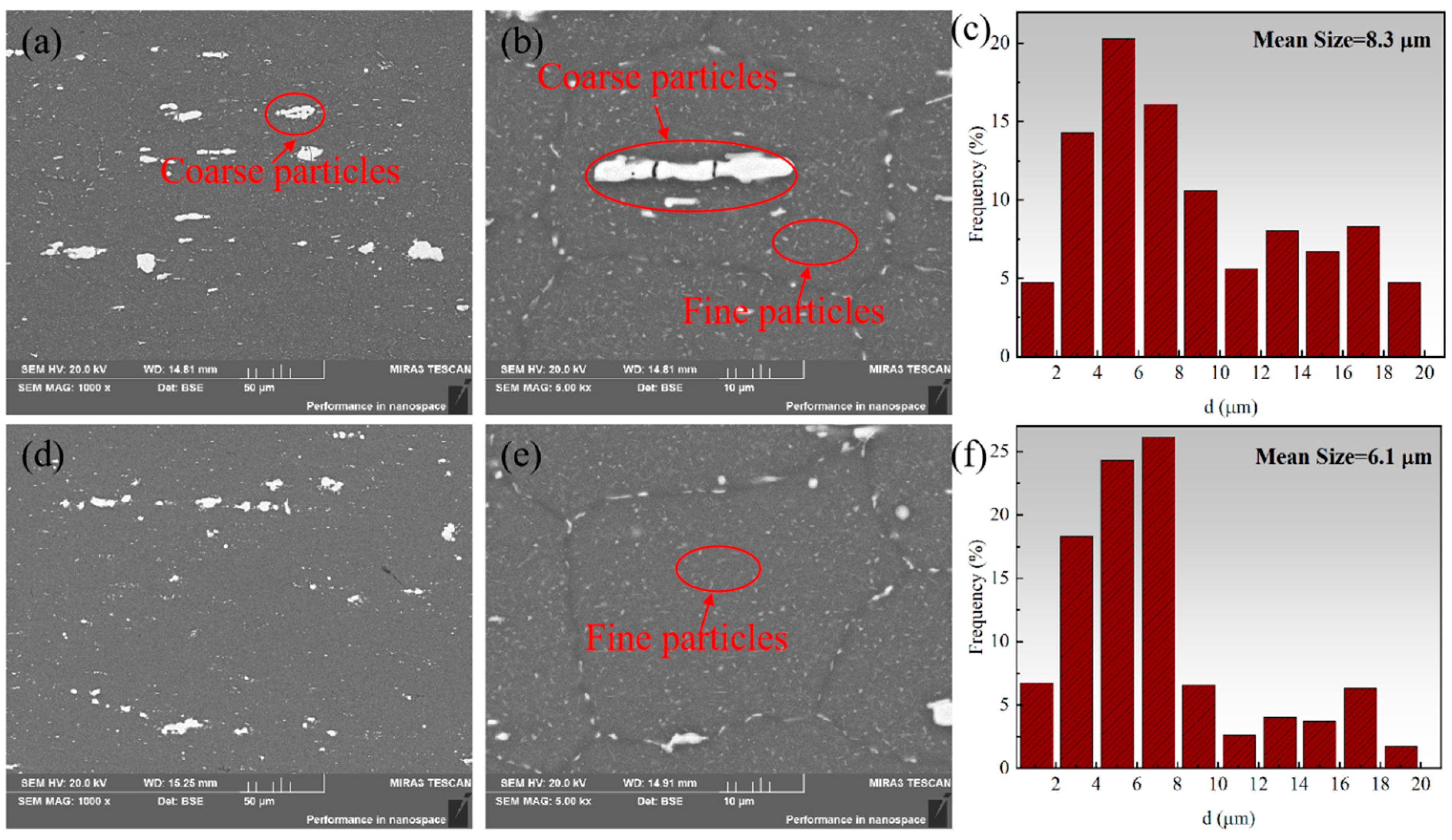
First, Figure 5 shows the distribution characteristics of the intermetallic compounds of the two samples before and after RRV. It is obvious from the figure that a large number of intermetallic compounds with different shapes and morphologies are distributed in the grain boundaries and crystals, marked by red arrows. The coarse intermetallic compounds (CICs) are mainly distributed within the crystals, and many fine intermetallic compounds (FICs) are present around the coarse metal compounds. Many fine second-phase particles are also distributed at the grain boundaries, and few CICs are found at the grain boundaries. Five SEM images of both samples before and after RRV were statistically estimated by the software Image-Pro Plus 6.0 to obtain the area fraction and average size of coarse particles (Figure 5c,f). As can be seen in Figure 3, the area fraction of CSPP before RRV treatment was 1.53%, and after RRV treatment, the area fraction of CSPP was 1.04%, which was reduced by 16.8%. The average particle size before RRV was 7.4 µm, and after RRV, it was 6.8 µm, a decrease of 8.1%. It is speculated that the biaxial stress during random vibration exerted a constant force on the 2219 aluminum alloy sample, resulting in weakening the tendency of coarse intermetallic compounds to aggregate.
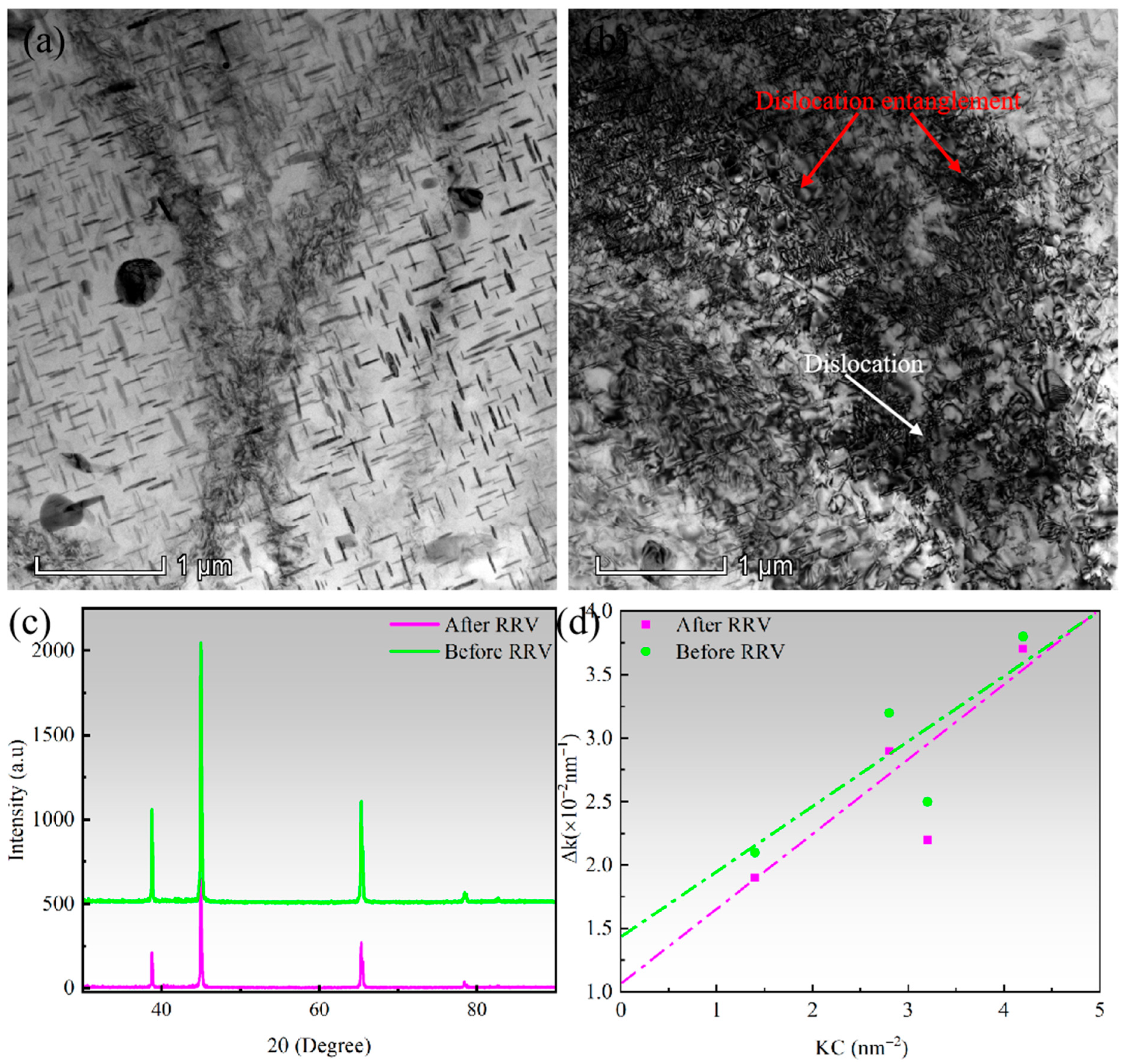
Figure 6a,b illustrate the dislocation morphologies of the 2219 aluminum alloy before and after RRV treatment. A significant increase in dislocation density is observed following RRV. This increase is primarily attributed to vacancy aggregation induced by the alternating microplastic deformation inherent to cyclic tension–compression loading. Furthermore, the room-temperature processing environment effectively suppresses dynamic recovery [22,23]. As mobile dislocations encounter obstacles—such as forest dislocations, grain boundaries, or solute atoms—they become pinned and form pile-ups. Under vibrational excitation, dislocations interact via coalescence, rearrangement, and recombination. This process promotes the formation of dislocation bundles and high-density networks, which subsequently enhance deformation resistance through pinning mechanisms.
To further confirm the TEM-revealed increase in high-density dislocations and demonstrate their impact on mechanical properties, we determined the dislocation density ρ using the modified Williamson–Hall method, which separates size and strain contributions to X-ray peak broadening by plotting the reciprocal-space integral breadth ΔK against the diffraction vector K scaled by an hkl-specific dislocation contrast factor, where ΔK is defined as β cosθ divided by λ and K as 2sinθ divided by λ after removing instrumental broadening with a Si standard and fitting peaks with pseudo-Voigt profiles, and in this dislocation-based framework the intercept reflects the volume-weighted domain size while the slope is proportional to the product of the Burgers vector and the square root of ρ, so ρ was extracted from the optimal linear fit of ΔK in the modified Williamson–Hall plots shown in Figure 6c,d, with statistically isotropic microstrain assumed and contrast factors calculated for fcc Al with {111}<110> slip using elastic constants from the literature to ensure consistency across samples. Here, C denotes the average contrast coefficient, and ΔK represents the full width at half maximum (FWHM) broadening in reciprocal space, defined as follows:
Δ k = cos θ ( Δ 2 θ ) λ
where θ′ is the diffraction angle, β is the FWHM of the diffraction peak at 2θ (Figure 6c), and λ is the X-ray wavelength. K is the diffraction vector, defined as follows:
k = 2 sin θ λ
The dislocation densities prior to and after RRV treatment were calculated to be 1.41 × 10¹⁴ m−2 and 1.52 × 10¹⁴ m−2, respectively. The increases in ρ following random vibration substantiate the premise that vibrational energy facilitates the multiplication and entanglement of dislocations within the crystals.
Simultaneously, the high number density of these crystalline defects induces rapid-transport pathways that accelerate atomic diffusion. Solute atoms generate localized stress fields within the lattice, causing dislocations to be repelled by particles via solute-dislocation image forces [24]. Consequently, solute atoms become segregated around dislocations, establishing the foundation for subsequent atomic cluster formation. Compared to high-temperature deformation, room-temperature vibratory energy induces higher dislocation densities in energetically activated states, facilitating enhanced atomic mobility.
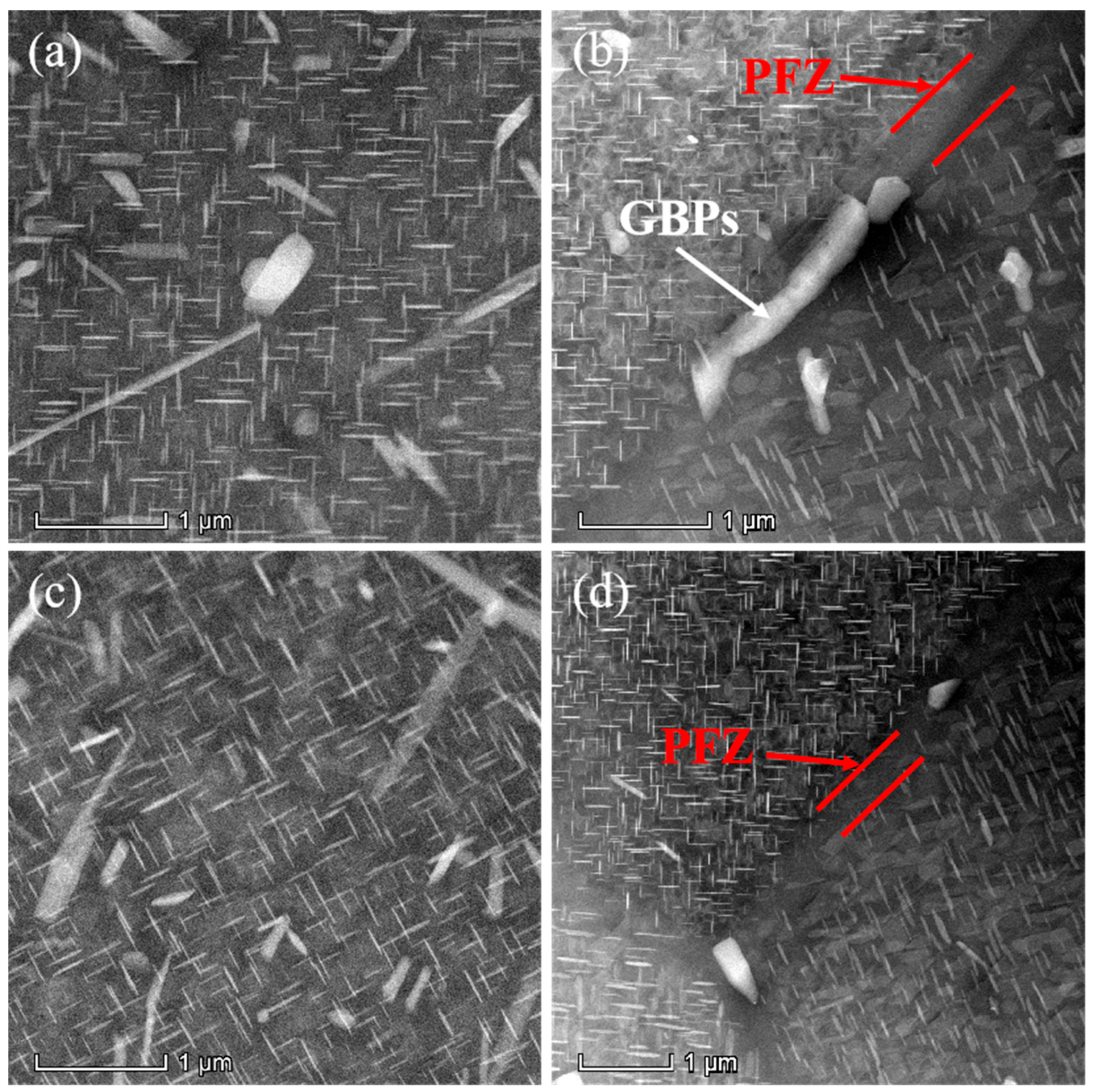
The θ′ phase constitutes the primary strengthening precipitate in Al–Cu alloy. Higher resistance of precipitates to dislocation motion directly enhances alloy strength. Transmission electron microscopy characterization reveals θ′ as the dominant precipitate, maintaining semi-coherent interfaces with the Al matrix. θ′ particles along grain boundaries are marginally smaller than intragranular ones. For both non-RRV and RRV samples, precipitate statistics confirm microstructurally significant differences: average θ′ size measures 77.61 nm in non-RRV samples versus 80.72 nm in RRV samples. Copper depletion from semi-coherent θ′ precipitates occurred due to absorption by coarse needle-shaped θ′ particles. Although RRV induces a marginal increase in average θ′ dimensions, the absolute size remains sufficiently small.
Notably, precipitate-free zones (PFZs) exist along grain boundaries, with PFZ width decreasing from 156.49 nm in non-RRV samples to 127.16 nm in RRV samples during RRV processing; slip bands and stress concentrations at PFZs associated with stress–relaxation interfaces undergo preferential release during deformation, whereby a moderate PFZ width decelerates fracture propagation and enhances alloy plasticity, whereas excessive PFZ width promotes microcrack concentration at these zones, detrimentally impacting mechanical performance. Additionally, T-phase particles near grain boundaries (Figure 7) exhibit synergistic effects of pronounced stress concentration and low-strength PFZs, which enhance corrosion resistance.
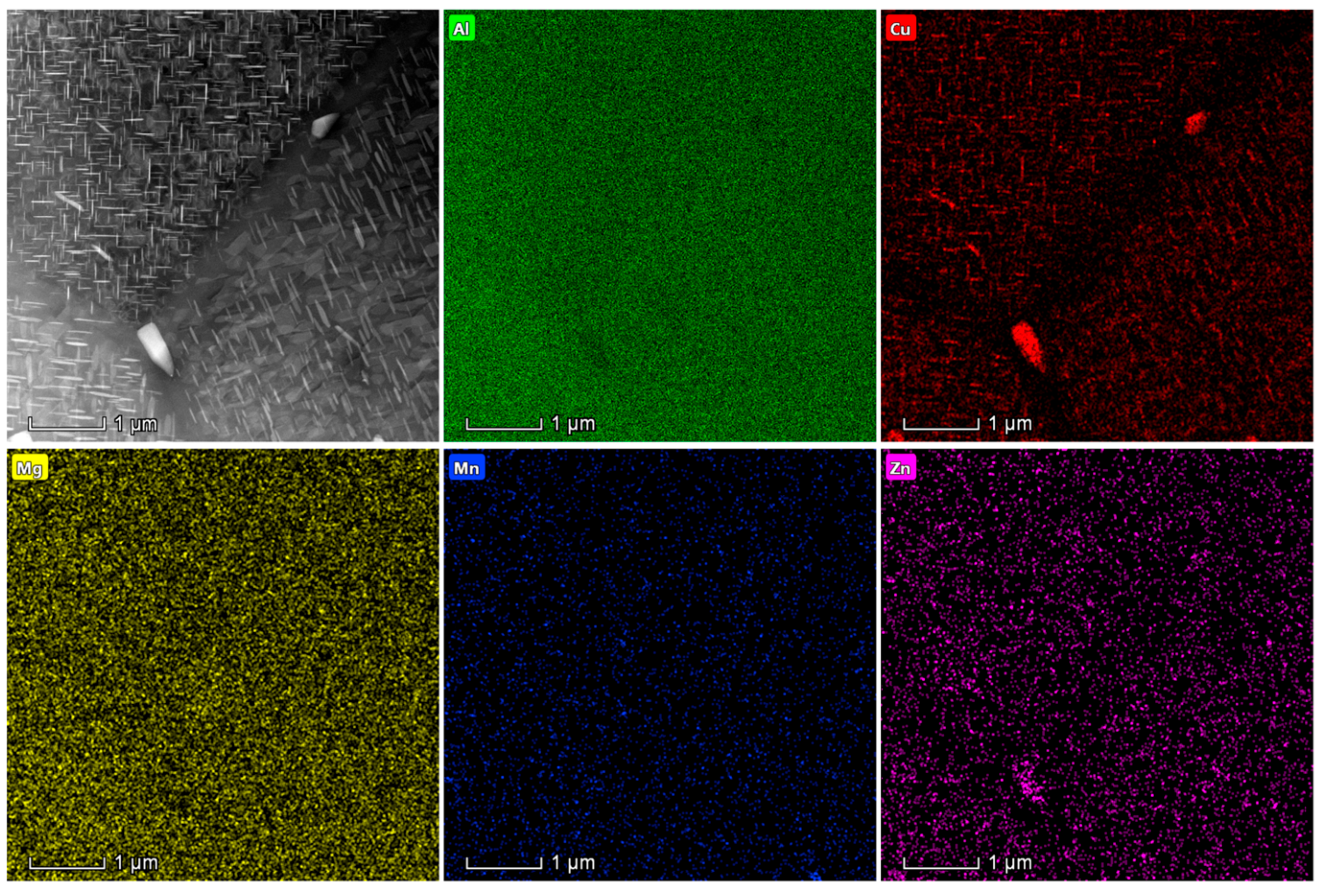
Figure 8 showcases HAADF imaging along the <110>Al zone axis and corresponding STEM-EDXS mapping of post-vibratory aged Al–Cu alloys. The STEM-EDXS analysis results confirm grain boundary precipitates comprise discrete Al2Cu intermetallics and elemental Zn particles. Within RRV samples, intragranular precipitates consist predominantly of θ′ phase (Figure 6a). Conversely, non-RRV samples exhibit atomic aggregation into elemental clusters, depleting solute atoms available for θ′ formation (Figure 7b). Grain boundary precipitates in RRV samples adopt a discontinuous distribution (Figure 7d).

4. Discussion

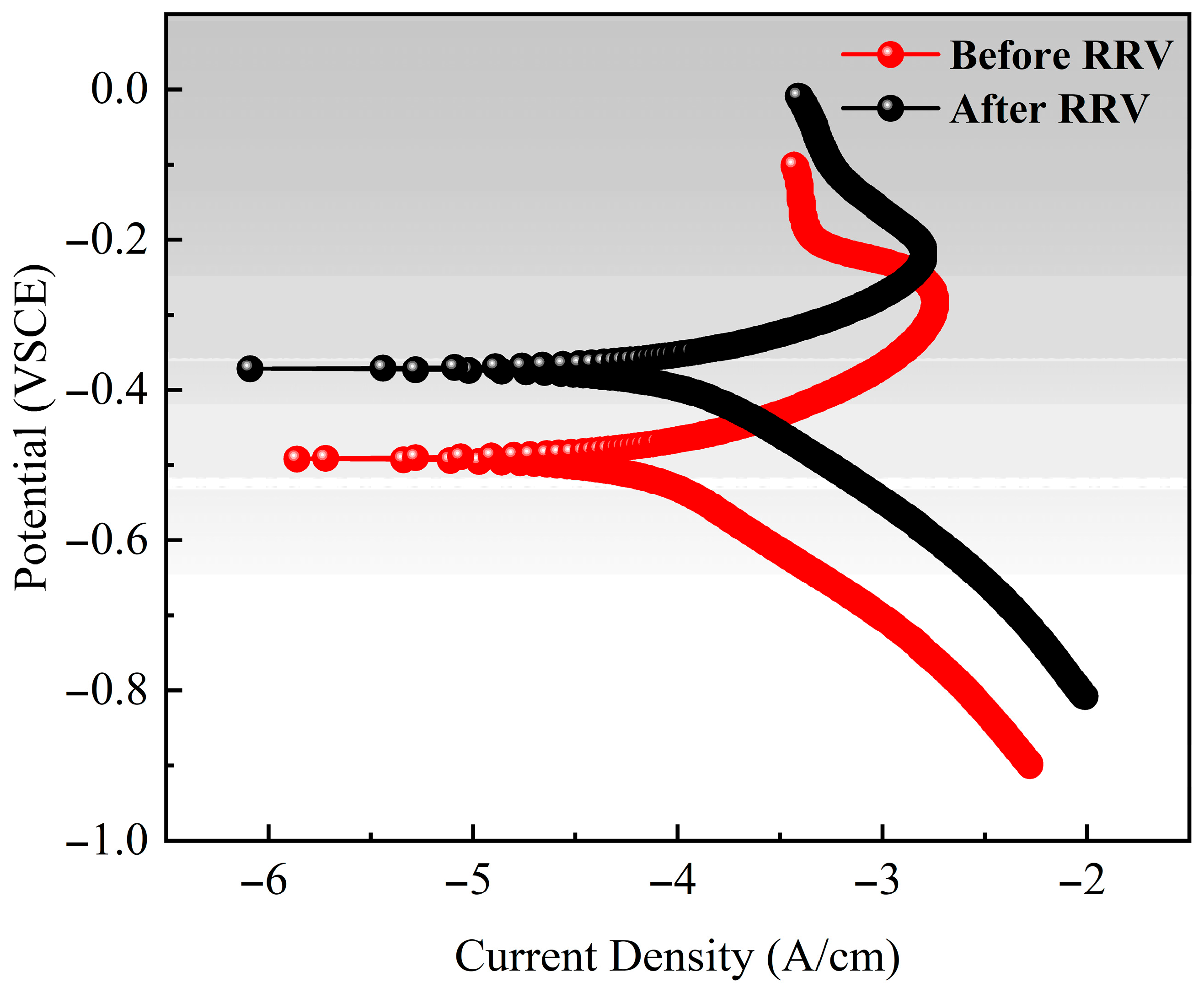
Figure 9 presents dynamic polarization curves of Al–Cu alloys in pre- and post-RRA treatment in a 3.5 wt% NaCl solution. The corrosion potential (Ecorr) of the RRV samples was −0.42 V, while that of the non-RRV samples was −0.49. Both non-RRV and RRV samples exhibit near-identical polarization characteristics and corrosion evolution trends. Protective passive films form on all electrodes during initial exposure, suppressing dissolution with low corrosion rates, yet prolonged exposure induces film dissolution via inherent defects and microstructural heterogeneity, establishing matrix/second-phase potential differences [25]. Chloride ions diffuse through film micropores, initiating pitting at precipitates and grain boundaries [26]. Soluble metal compounds form in these regions, significantly lowering the Ecorr while increasing the icorr and accelerating the corrosion rate [22]. Critically, early-stage pitting-induced rupture outpaces self-repair, accelerating dissolution, though accumulated corrosion products later partially inhibit anodic dissolution [23]. Parameters from Figure 9 reveal RRV samples exhibit elevated Ecorr and diminished icorr versus non-RRV counterparts, confirming slower anodic dissolution and decelerated Al2O3 passive film degradation. Notably, RRA vibration extends stable passive film formation time in NaCl, while the systematically increased Ecorr unequivocally validates enhanced corrosion resistance.
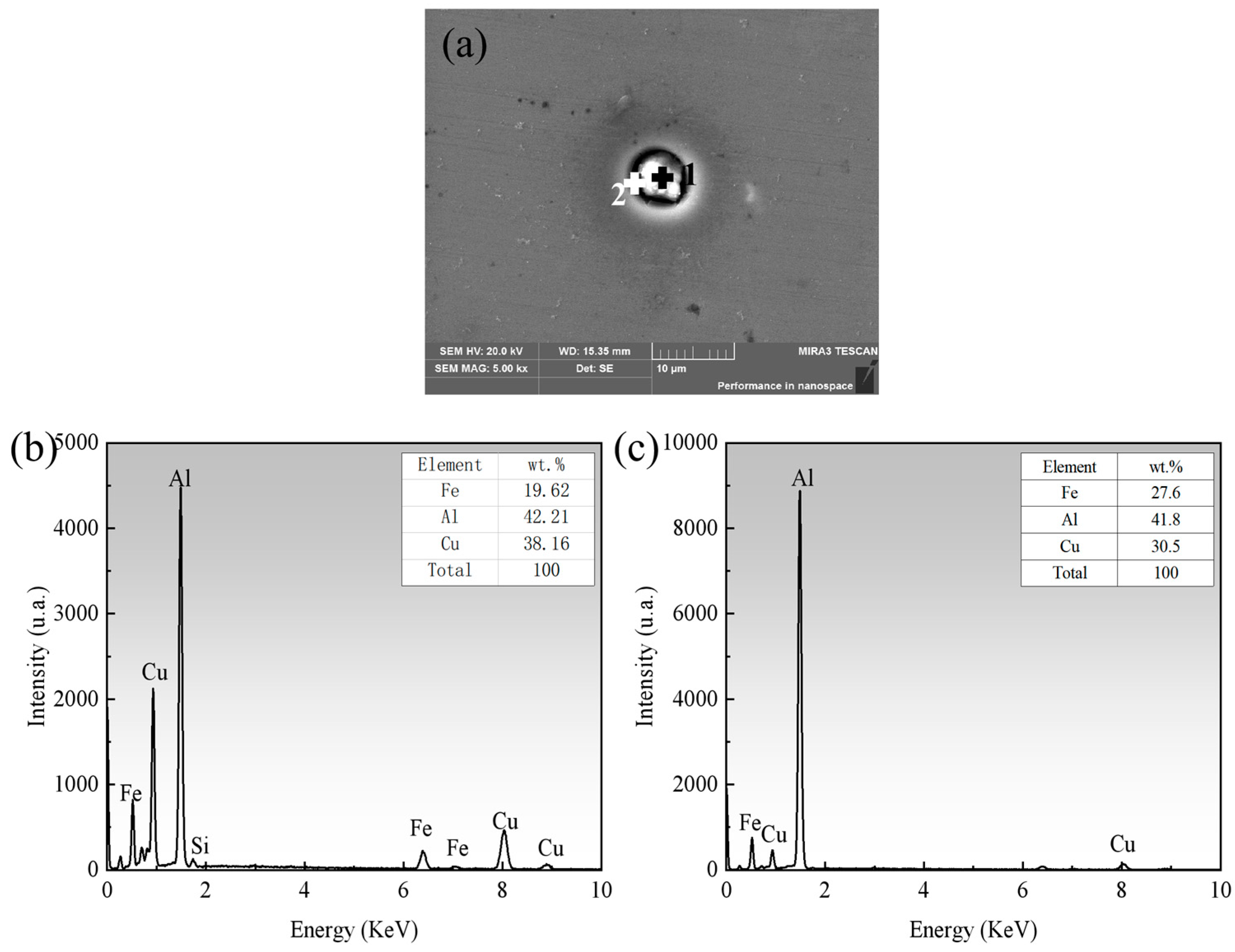
The critical pitting potential (Epit), defined as the minimum potential required for passive film perforation and dissolution initiation, provides a more precise measure of a pit’s growth capability than its nucleation threshold [27]. While embryonic pits may form below Epit, steady pit expansion requires achieving a critical metal dissolution rate. In Al–Cu alloys containing Al2CuFe intermetallics (Figure 10), pitting proceeds via an autocatalytic acidification mechanism: once initiated, the pit interior (active state, more negative potential) and external surface (passive state, more positive potential) establish a membrane-pore microcell. Anodic dissolution within the pit releases metal cations (Al3+); to maintain charge neutrality, chloride ions (Cl) migrate into the pit, accumulating and acidifying the local environment through Al3+ hydrolysis [28]. This acidic chloride-rich solution accelerates further metal dissolution, creating a self-sustaining corrosion front [29]:
Anodic dissolution: 2Al → 2Al3+ + 6e
Cation hydrolysis: 3/2O2 + 3H2O + 6e → 6OH
6H + 6e → 3H2
Cathodic reaction: 2Al3+ + 6OH → 2Al(OH)3
Corrosion products precipitate at pit orifices, forming porous mushroom-shaped caps that restrict mass exchange between the pit interior and bulk solution [30]. The concentrated hydrochloric acid solution within the pit establishes low electrical resistance and stagnant conditions, severely inhibiting diffusion and convection [31]. Consequently, pitting rates increase. Depleted dissolved oxygen inside the pit versus oxygen-rich external conditions establishes an oxygen concentration cell, accelerating continuous ionization within the pit. This process elevates Al3+ concentration while driving further Cl migration into the pit. Chloride concentration and hydrolysis within the pit perpetuate self-perpetuating pH reduction [32]. In acidic environments, the primary cathodic reaction is hydrogen evolution, accelerating the oxidation–reduction rate and, thus, the dissolution of aluminum alloy electrodes compared to neutral media. Strongly acidic solutions dissolve the Al2O3 passive film across the entire electrode, while the higher diffusivity/mobility of H+ versus O2 molecules sustains autocatalytic pitting propagation [24]. The combined effects of acidification within pits, hydrogen evolution at pit bottoms, and oxygen reduction externally accelerate pit-bottom metal dissolution, driving rapid pit deepening and increasing corrosion rates in early stages [33]. However, excessive corrosion product accumulation on electrode surfaces increases alloy resistance, hindering further corrosion progression.
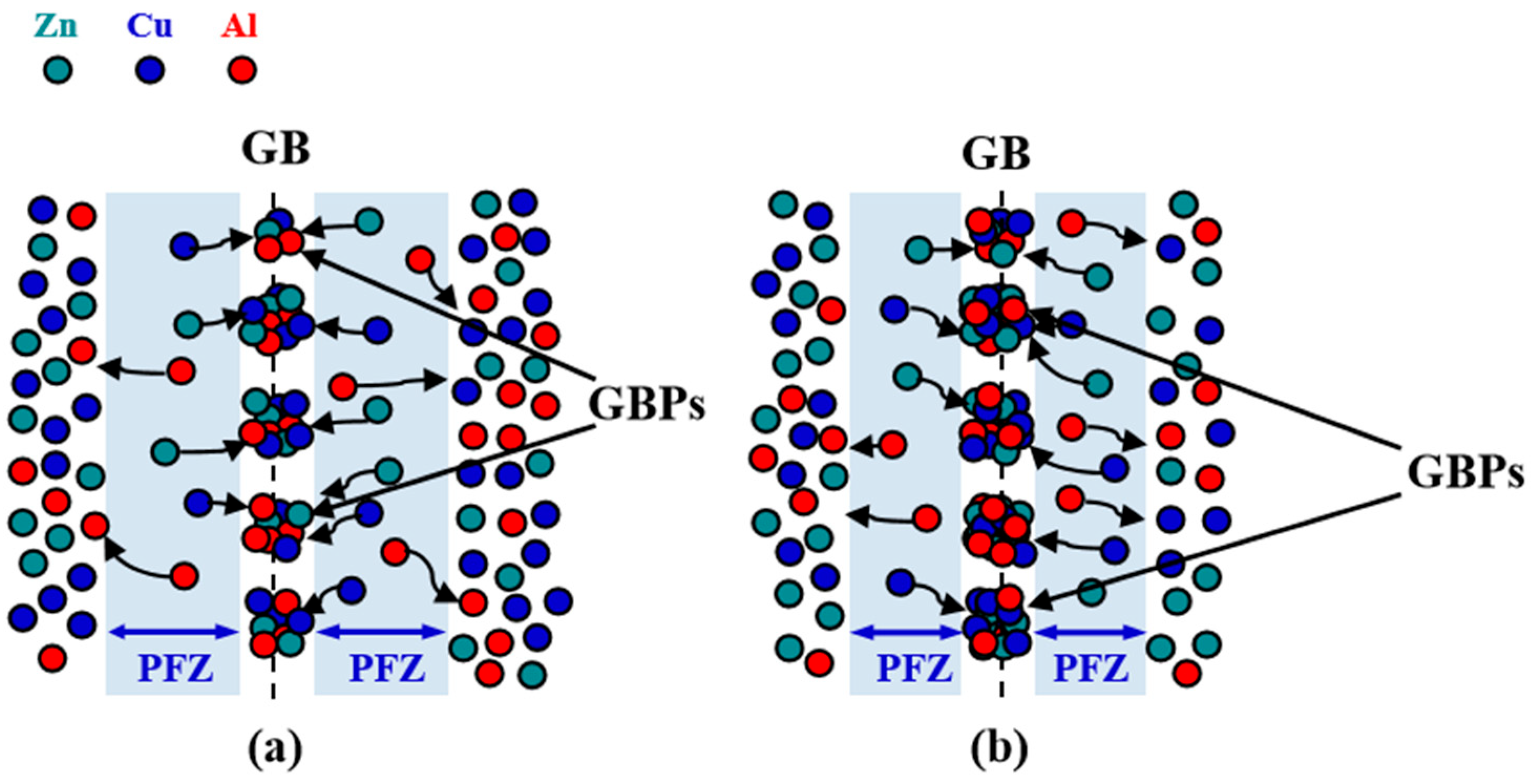
Vibration aging induces significant restructuring of the θ′ phase and PFZs at grain boundaries in Al–Cu alloys via cyclic stress application that drives dislocation slip and atomic diffusion, thereby modulating susceptibility to IGC and EXCO, as shown in Figure 11. During conventional aging, Cu segregation forms continuous θ′ networks at grain boundaries that act as cathodic phases electrochemically coupled with adjacent Cu-depleted anodic PFZs [34]. So intergranular corrosion propagates along continuous anodic PFZ channels while exfoliation corrosion initiates from wedging stress induced by corrosion products at boundaries [31]. Under cyclic stress, accelerated dislocation climb and cross-slip fragment and spheroidize coarse θ′ phases, and post-vibration aging reduces θ′ size and increases interparticle spacing [3], which disperses the cathodic phases and disrupts corrosion path continuity so propagation tortuosity rises and IGC is impeded [35]. Enhanced vacancy mobility can promote Cu diffusion toward grain boundaries and narrow PFZs, which reduces the anodic area, and dynamic recrystallization can lower Cu content gradients in PFZs, weakening the potential difference with θ′ and reducing anodic dissolution [36]. Continuous θ′ coupled with wide PFZ lamellae concentrates corrosion products along a single boundary and generates critical wedging stress for multilayer exfoliation [37]. Dispersed θ′ phases force corrosion products to migrate across multiple grains, dissipating energy and preventing sufficient stress accumulation [38]. RRV samples show enhanced repassivation capability and higher oxide film resistance, which suppresses pit stabilization and the initiation sites for IGC and exfoliation. And these linked microstructural and electrochemical effects manifest as improved corrosion performance in chloride media, including delayed pit initiation, lower pit density and depth, reduced IGC penetration rate, lower exfoliation ratings, and more stable passive film behavior. Redistribution of θ′ precipitates from continuous grain boundary films to a discrete and more homogeneous arrangement reduces cathodic continuity and weakens microgalvanic coupling, lowering the driving force for intergranular attack. Concurrent PFZ narrowing suppresses localized anodic dissolution and disrupts the continuity of corrosion channels, increasing corrosion path tortuosity, limiting corrosion product wedging, and enhancing passivation, which collectively improve resistance to IGC and EXCO. Vibration aging operates through a synergistic mechanism of cathodic phase dispersion and anodic band narrowing and enrichment to block corrosion paths, weaken the electrochemical driving force, mitigate wedging effects, relieve residual stresses, and ultimately enhance the durability of Al–Cu components in marine and aerospace service.

5. Conclusions

This study investigated the effects of RRA treatment on the intergranular corrosion (IGC), exfoliation corrosion (EFC), and polarization curve behavior of Al–Cu alloys, elucidating the underlying corrosion mechanisms. The main conclusions are as follows:
(1) RRV samples exhibited enhanced resistance to both EFC and IGC compared to non-RRV samples, demonstrating the treatment’s efficacy in optimizing precipitate and dislocation microstructures for corrosion resistance
(2) Cyclic tensile–compressive stresses during vibration promoted dislocation network formation, which homogenized θ′ phase distribution along grain boundaries, transforming continuous cathode networks into isolated particles, thereby increasing the tortuosity of corrosion paths and impeding IGC propagation.
(3) The synergistic mechanism of “cathodic phase discretization + narrowed yet enriched anode band” disrupted corrosion pathway continuity, reduced electrochemical driving force, and suppressed wedge stress from corrosion products, collectively improving IGC and EFC resistance in Al–Cu alloys.

Author Contributions

X.Y.: Conceptualization, Data curation, Formal analysis, Methodology, Investigation, Validation, Writing—original draft. J.G., T.H. and H.S.: Data curation, Formal analysis, Methodology. Q.Z. and Y.D.: Data curation, Funding acquisition, Validation, Writing—review and editing. All authors have read and agreed to the published version of the manuscript.

Funding

This work was financially supported by the Research Project on Thermal Exchange Technology for Charging Piles (HX2025076) and Zhejiang Provincial Natural Science Foundation (No. ZCLMS25E0401).

Data Availability Statement

The data presented in this study are available on request from the corresponding authors. Since the data from this study pertain to an ongoing research project, the data cannot be publicly shared until the research project is concluded.

Conflicts of Interest

Author Xinlu Yu was employed by Bull Group. The remaining authors declare that the research was conducted in the absence of any commercial or financial relationships that could be construed as a potential conflict of interest.

References

  1. Bo, G.; Wang, Y.; Liu, M.; Tang, J.; Jiang, F.; Teng, J.; Xiao, G.; Fu, D.; Zhang, H. Experimental and modeling investigations of the non-isothermal and isothermal precipitations in an Al-Cu-Mg-Zr alloy with various pre-precipitation microstructures. Mater. Des. 2022, 217, 110640. [Google Scholar] [CrossRef]
  2. Guo, X.; Zhang, J.; Deng, Y.; Zhang, X.; Zhang, Y. Effect of grain boundaries on the preferential orientation distribution of θ′ precipitates in stress-aged Al–2Cu alloy bicrystals. J. Alloys Compd. 2019, 794, 501–508. [Google Scholar] [CrossRef]
  3. Lin, Y.; Jiang, Y.-Q.; Xia, Y.-C.; Zhang, X.-C.; Zhou, H.-M.; Deng, J. Effects of creep-aging processing on the corrosion resistance and mechanical properties of an Al–Cu–Mg alloy. Mater. Sci. Eng. A 2014, 605, 192–202. [Google Scholar] [CrossRef]
  4. Liu, G.; Lin, Y.; Zhang, X.-C.; Jiang, Y.-Q. Effects of two-stage creep-aging on precipitates of an Al–Cu–Mg alloy. Mater. Sci. Eng. A 2014, 614, 45–53. [Google Scholar] [CrossRef]
  5. Chen, L.; Liu, C.; Ma, P.; Yang, J.; Zhan, L.; Huang, M. Strong in-plane anisotropy of creep ageing behavior in largely pre-deformed Al–Cu alloy: Experiments and constitutive modeling. Int. J. Plast. 2022, 152, 103245. [Google Scholar] [CrossRef]
  6. Ma, P.; Zhan, L.; Liu, C.; Yang, J.; Chen, K.; Huang, Z. Strong stress-level dependence of creep-ageing behavior in Al–Cu–Li alloy. Mater. Sci. Eng. A 2021, 802, 140381. [Google Scholar] [CrossRef]
  7. Wang, L.; Qiu, F.; Zhao, Q.; Zha, M.; Jiang, Q. Superior high creep resistance of in situ nano-sized TiCx/Al-Cu-Mg composite. Sci. Rep. 2017, 7, 4540. [Google Scholar] [CrossRef] [PubMed]
  8. Yu, S.; Xu, K.; Wang, T.; Xu, Y.; Luo, S.; Zhan, L.; Hui, S.; Zhou, C.; Yang, X. Effect of pulse current density on creep ageing behavior of 2195 Al-Li alloy. Mater. Sci. Eng. A 2024, 909, 146814. [Google Scholar] [CrossRef]
  9. Chen, K.; Zhan, L.; Xu, Y.; Liu, Y. Effect of pulsed current density on creep-aging behavior and microstructure of AA7150 aluminum alloy. J. Mater. Res. Technol. 2020, 9, 15433–15441. [Google Scholar] [CrossRef]
  10. Miao, J.; Zhang, C.; Klarner, A.D.; Zhang, J.; Cinkilic, E.; Zhang, F.; Luo, A.A. Characterization and modeling of concurrent precipitation in Mg-Al-Sn alloys using an improved Kampmann-Wagner numerical (KWN) model. Materialia 2022, 21, 101348. [Google Scholar] [CrossRef]
  11. Lin, Y.; Xia, Y.-C.; Jiang, Y.-Q.; Zhou, H.-M.; Li, L.-T. Precipitation hardening of 2024-T3 aluminum alloy during creep aging. Mater. Sci. Eng. A 2013, 565, 420–429. [Google Scholar] [CrossRef]
  12. Bi, J.; Wu, L.; Liu, Z.; Wang, H.; Li, Q.; Yang, Z. Coupling effect of ultrasonic vibration and beam oscillation on FQZ soften inhibition of laser welded Al-Mg alloy joints. Mater. Lett. X 2023, 18, 100197. [Google Scholar] [CrossRef]
  13. Puga, H.; Barbosa, J.; Costa, S.; Ribeiro, S.; Pinto, A.; Prokic, M. Influence of indirect ultrasonic vibration on the microstructure and mechanical behavior of Al–Si–Cu alloy. Mater. Sci. Eng. A 2013, 560, 589–595. [Google Scholar] [CrossRef]
  14. Ali, M.N.; Khalil, H.; El-Hofy, H. Analytical modeling of cutting force in vibration-assisted helical milling of Al 7075 alloy. J. Manuf. Process. 2024, 119, 372–384. [Google Scholar] [CrossRef]
  15. Shao, C.; Wang, Z.; Li, J.; Zhai, Y.; Lin, J.; Bai, R.; Guan, Y.; Zhao, G. Investigation of microstructure evolution and mechanical properties of 2A10 aluminum alloy during ultrasonic vibration plastic forming. J. Mater. Res. Technol. 2023, 23, 2467–2478. [Google Scholar] [CrossRef]
  16. Sun, H.; Zhang, W.; Li, Q.; Zhuang, X.; Zhao, Z. Deformation behavior and microstructure evolution of Al-Zn-Mg-Cu alloy under low-frequency vibration-assisted compression: Considering the relative amplitude. J. Mech. Work. Technol. 2024, 330, 118487. [Google Scholar] [CrossRef]
  17. Yi, H.; Wang, Q.; Zhang, W.; Cao, H. Wire-arc directed energy deposited Mg-Al alloy assisted by ultrasonic vibration: Improving properties via controlling grain structures. J. Mater. Process. Technol. 2023, 321, 118134. [Google Scholar] [CrossRef]
  18. Lei, J.; Lei, B.; Zhang, K.; Liu, G.; Liu, Y. Refining Al–20Si Alloy by Appending Trace Sr–Sc–Ce Nanoparticles and Ultrasonic Vibration Processing. Phys. Status Solidi 2023, 221, 2300617. [Google Scholar] [CrossRef]
  19. Peng, N.; Zhan, L.; Song, Z.; Zhu, W.; Xu, Y.; Ma, B.; Zeng, Q.; Chen, K.; Lao, S.; Zheng, Q. Strengthening mechanism of 2219 Al–Cu alloy by room-temperature random vibration. J. Alloys Compd. 2022, 934, 167878. [Google Scholar] [CrossRef]
  20. GB/T 2039-2012; Metallic Materials--Uniaxial Creep Testing Method in Tension. SAC (Standardization Administration of China): Beijing, China, 2012.
  21. GB/T 22639-2022; Test Method of Exfoliation Corrosion for Aluminium Alloy Products. SAC (Standardization Administration of China): Beijing, China, 2022.
  22. Tang, Z.; Du, H.; Tao, K.; Chen, J.; Zhang, J. Effect of electropulsing on edge stretchability and corrosion resistance near the punched edge of a 2024T4 aluminum alloy sheet. J. Mater. Process. Technol. 2019, 263, 343–355. [Google Scholar] [CrossRef]
  23. Liu, L.; Jia, Y.-Y.; Jiang, J.-T.; Zhang, B.; Li, G.-A.; Shao, W.-Z.; Zhen, L. The effect of Cu and Sc on the localized corrosion resistance of Al-Zn-Mg-X alloys. J. Alloys Compd. 2019, 799, 1–14. [Google Scholar] [CrossRef]
  24. Jiang, B.; Wang, C.; Song, R.; Li, S.; Cao, F.; Yi, D. Effect of creep ageing on the corrosion behaviour of an Al–Cu–Li alloy. Corros. Sci. 2022, 202, 110314. [Google Scholar] [CrossRef]
  25. Liu, S.; Chen, B.; Li, C.; Dai, Y.; Deng, Y.; Zhang, X. Mechanism of low exfoliation corrosion resistance due to slow quenching in high strength aluminium alloy. Corros. Sci. 2015, 91, 203–212. [Google Scholar] [CrossRef]
  26. Reyna-Montoya, J.; García-Rentería, M.; Cruz-Hernández, V.; Curiel-López, F.; Dzib-Pérez, L.; Falcón-Franco, L. Effect of electromagnetic interaction on microstructure and corrosion resistance of 7075 aluminium alloy during modified indirect electric arc welding process. Trans. Nonferrous Met. Soc. China 2019, 29, 473–484. [Google Scholar] [CrossRef]
  27. Song, R.; Dietzel, W.; Zhang, B.; Liu, W.; Tseng, M.; Atrens, A. Stress corrosion cracking and hydrogen embrittlement of an Al–Zn–Mg–Cu alloy. Acta Mater. 2004, 52, 4727–4743. [Google Scholar] [CrossRef]
  28. Sun, Y.; Pan, Q.; Sun, Y.; Wang, W.; Huang, Z.; Wang, X.; Hu, Q. Localized corrosion behavior associated with Al7Cu2Fe intermetallic in Al-Zn-Mg-Cu-Zr alloy. J. Alloys Compd. 2019, 783, 329–340. [Google Scholar] [CrossRef]
  29. Xie, P.; Chen, S.; Chen, K.; Jiao, H.; Huang, L.; Zhang, Z.; Yang, Z. Enhancing the stress corrosion cracking resistance of a low-Cu containing Al-Zn-Mg-Cu aluminum alloy by step-quench and aging heat treatment. Corros. Sci. 2019, 161, 108184. [Google Scholar] [CrossRef]
  30. Yan, A.; Chen, L.; Liu, H.S.; Li, X.Q. Fatigue crack propagation behaviour and corrosion resistance of Al–Zn–Mg–Cu–Ti(–Sn) alloys. Mater. Sci. Technol. 2013, 29, 319–325. [Google Scholar] [CrossRef]
  31. Fang, H.; Chen, K.; Chen, X.; Chao, H.; Peng, G. Effect of Cr, Yb and Zr additions on localized corrosion of Al–Zn–Mg–Cu alloy. Corros. Sci. 2009, 51, 2872–2877. [Google Scholar] [CrossRef]
  32. Fang, H.; Luo, F.; Chen, K. Effect of intermetallic phases and recrystallization on the corrosion and fracture behavior of an Al-Zn-Mg-Cu-Zr-Yb-Cr alloy. Mater. Sci. Eng. A 2017, 684, 480–490. [Google Scholar] [CrossRef]
  33. Xu, G.; Liu, M.; Liu, S.; Tang, L.; Li, Y.; Li, H.; Li, J. Achieving high mechanical and corrosion properties of AA2050 Al-Li alloy: The creep aging under plastic loading. Eng. Fract. Mech. 2024, 310, 110475. [Google Scholar] [CrossRef]
  34. Jeshvaghani, R.A.; Zohdi, H.; Shahverdi, H.; Bozorg, M.; Hadavi, S. Influence of multi-step heat treatments in creep age forming of 7075 aluminum alloy: Optimization for springback, strength and exfoliation corrosion. Mater. Charact. 2012, 73, 8–15. [Google Scholar] [CrossRef]
  35. Oliveira, M.P.; Silva, R.M.; Yasakau, K.A.; Bastos, A.; Kallip, S.; Zheludkevich, M.L.; Silva, R.F.; Ferreira, M.G. Atomic layer deposition of nanometric alumina for corrosion protection of heterogeneous metallic surfaces—The case of aeronautical grade aluminium alloy 2024-T3. Corros. Sci. 2022, 209, 110773. [Google Scholar] [CrossRef]
  36. Zhan, X.; Tang, J.; Li, H.; Liang, X.; Lu, Y.; Che, Y.; Tu, W.; Zhang, Y. Effects of non-isothermal aging on mechanical properties, corrosion behavior and microstructures of Al-Cu-Mg-Si alloy. J. Alloys Compd. 2020, 819, 152960. [Google Scholar] [CrossRef]
  37. Zhang, Z.; Deng, Y.; Ye, L.; Zhu, W.; Wang, F.; Jiang, K.; Guo, X. Influence of aging treatments on the strength and localized corrosion resistance of aged Al–Zn–Mg–Cu alloy. J. Alloys Compd. 2020, 846, 156223. [Google Scholar] [CrossRef]
  38. Zhang, J.; Wang, B.; Yi, D. Stress corrosion cracking behavior in 2297 Al–Cu–Li alloy at different grain orientations. Mater. Sci. Eng. A 2019, 764, 138252. [Google Scholar] [CrossRef]
Figure 1. Experiment procedure: (a) Experiment equipment and (b) working-principle diagram of RRV.
Metals 16 00282 g001
Figure 2. Cross-section corrosion morphologies of Al–Cu alloy before and after RRV treatment: (a) 2 h of intergranular corrosion time, (b) 4 h of intergranular corrosion time, (c) 6 h of intergranular corrosion time in the Al–Cu alloy before RRV treatment; (d) 2 h of intergranular corrosion time, (e) 4 h of intergranular corrosion time, (f) 6 h of intergranular corrosion time in the Al–Cu alloy after RRV treatment; (g) Corrosion depth in the Al–Cu alloy before and after RRV treatment.
Metals 16 00282 g002
Figure 3. Exfoliation corrosion of Al–Cu alloy before and after RRV treatment: (a) Corrosion surface morphology; (b) scaling corrosion rating.
Metals 16 00282 g003
Figure 4. Three-dimensional surface topography images of Al–Cu alloy: (ac) Before and (df) after RRV treatment.
Metals 16 00282 g004
Figure 5. SEM images of 2219 Al–Cu alloy (ac) before and (df) after RRV treatment.
Metals 16 00282 g005
Figure 6. Dislocation morphology of AA2219 aluminum alloy (a) before and (b) after RRV treatment; (c) XRD patterns and (d) Modified Williamson–Hall plot of the 2219 Al alloy before and after RRV treatment.
Metals 16 00282 g006
Figure 7. TEM images of the precipitated phase characteristics of 2219 Al–Cu alloy (a,b) before and (c,d) after RRV treatment.
Metals 16 00282 g007
Figure 8. Typical HAAD-STEM images and their corresponding Al, Mg, Mn, Zn and Cu element maps of the intragranular phase and grain boundary precipitates in the RRV samples.
Metals 16 00282 g008
Figure 9. Taffel graph of Al–Cu alloy before and after RRV treatment.
Metals 16 00282 g009
Figure 10. Corrosion products of Al–Cu alloy: (a) SEM image; (b) EDS of local 1; (c) EDS of local 2.
Metals 16 00282 g010
Figure 11. PFZs of Al–Cu alloy (a) before and (b) after RRV treatment.
Metals 16 00282 g011
Table 1. Chemical composition (wt%) of the 2219 aluminum alloy.
CuMgZnSiFeMnZrVTiAl
5.8–6.80.020.10.20.30.2–0.40.1–0.150.05–0.150.05–0.15Bal.
Disclaimer/Publisher’s Note: The statements, opinions and data contained in all publications are solely those of the individual author(s) and contributor(s) and not of MDPI and/or the editor(s). MDPI and/or the editor(s) disclaim responsibility for any injury to people or property resulting from any ideas, methods, instructions or products referred to in the content.