Article

Thermodynamic Modeling and Development of Technology for Smelting a Complex Alloy Fe-Cr-Mn from Technogenic Wastes by Carbothermic Reduction


1
Chemical-Metallurgical Institute Named After Zh. Abishev, Karaganda 100030, Kazakhstan
2
Department of Metallurgy, Toraighyrov University, Pavlodar 140008, Kazakhstan
3
Department of Metallurgical and Materials Engineering, Istanbul Technical University, Istanbul 34469, Turkey
*
Authors to whom correspondence should be addressed.
Metals 2026, 16(3), 283; https://doi.org/10.3390/met16030283
Submission received: 14 January 2026 / Revised: 19 February 2026 / Accepted: 27 February 2026 / Published: 3 March 2026

Abstract

This study investigates the feasibility of producing an Fe-Cr-Mn complex alloy through the recycling of technogenic wastes from metallurgical operations. The feed materials comprised chromium-bearing dust collected from the gas-cleaning system of high-carbon ferrochrome production, iron–manganese ore fines (<10 mm) from the Tur deposit (Kazakhstan), and coal sludge used as a carbonaceous reducing agent. Thermodynamic modeling of the carbothermic reduction of Cr and Mn oxides and the predicted distribution of components among the metal, slag, and gas phases were performed using the HSC Chemistry 10 software package over a high-temperature range. At 1800 °C, the calculated chemical composition of the target alloy was as follows (wt.%): Cr-35.84, Mn-24.47, Si-16.25, Fe-22.63, and C-0.82. To validate the modeling results, experimental smelting trials were carried out in a 100 kVA electric arc furnace, producing both metallic and slag phases. The average composition of the metal phase was (wt.%): Cr-37.17, Mn-14.46, Si-11.48, Fe-33.23, C-3.48, P-0.15, and S-0.021. The experimental results indicate the formation of a Cr-Mn alloy with elevated Cr and Fe contents and a noticeable C level, confirming the carbothermic nature of the reduction reactions. The composition and microstructural features of the smelting products were examined by scanning electron microscopy coupled with energy-dispersive spectroscopy (SEM/EDS). The findings demonstrate that the combined use of technogenic raw materials and a carbonaceous reductant enables the production of a Cr- and Mn-enriched metallic phase under satisfactory slag-forming conditions. Overall, the results confirm the potential of a resource-saving approach for valorizing fine technogenic wastes in the production of complex ferroalloys and for improving the recovery of target elements through optimization of the charge composition and smelting parameters.

1. Introduction

The global steel industry remains one of the key sectors of the economy, underpinning the development of infrastructure, mechanical engineering, energy, transportation, and construction. Over the past five years (2021–2025), worldwide crude steel production has remained consistently high at approximately 1.8–1.9 billion tonnes per year, reflecting its sensitivity to fluctuations in global demand, energy constraints, and the availability of raw materials for metallurgical enterprises [1]. Despite macroeconomic challenges, global output has been maintained at a stable level, confirming sustained demand for metallurgical raw materials and alloying additives.
The growth of steel production is inevitably accompanied by increased ferroalloy consumption, since ferroalloys are required to achieve the target chemical composition and properties of steel. Manganese-bearing alloys (Fe and SiMn) play a major role in alloying and refining practice, while ferrochrome remains the primary source of chromium for producing corrosion-resistant and heat-resistant steels. Thus, improving the efficiency of ferroalloy production and expanding the raw material base, including the utilization of technogenic wastes, is a pressing task aimed at enhancing resource efficiency and reducing environmental impacts [2,3,4].
According to industry statistics, global ferroalloy output remains high due to stable demand from the steelmaking sector. In recent years, worldwide production has amounted to approximately 14–16 Mt/year for FeCr, 6–8 Mt/year for FeMn, and 16–19 Mt/year for SiMn [5,6,7]. In modern metallurgy, complex Fe-Cr-Mn alloys and ligatures are of considerable interest as effective alloying materials for producing structural, wear-resistant, and corrosion-resistant steels [8,9]. Chromium improves hardness, hardenability, and resistance to oxidative and corrosive media, while manganese acts as an active deoxidizer and desulfurizer, enhances strength and impact toughness, and contributes to microstructural stabilization [10]. The introduction of alloying elements is most efficient when performed in the form of ferroalloys or ligatures, ensuring compositional stability and high recovery of alloying components.
Industrial ferrochrome and manganese ferroalloys are traditionally produced by submerged arc furnace (SAF) smelting of high-grade chromite and manganese ores using carbothermic reduction. Process performance is largely determined by ore quality, charge composition, and slag formation parameters [11,12,13,14,15]. Numerous studies have reported the production of Cr- and Mn-containing ferroalloys and ligatures. Most technological approaches are based on rich ores and metallothermic or combined reduction routes employing complex reductants, including Si-Al-containing alloys and ligatures [16]. At the same time, several works indicate that coal-based carbothermic reduction can be applied to chromium- and manganese-bearing raw materials, enabling the production of Fe-Cr-Mn alloys [17]. However, the use of complex reductants is associated with high reagent costs and increased requirements for charge preparation, while the processing of fine technogenic materials remains insufficiently developed.
Along with increasing ferroalloy production, resource and environmental constraints are becoming more stringent. The ferroalloy industry faces depletion of high-grade ore reserves, rising costs of quality raw materials, a growing share of fine and low-grade ores, and tightening requirements for waste minimization. Under decarbonization trends and the transition toward a circular economy, the valorization of technogenic wastes from ferroalloy and mining operations into marketable products has become particularly relevant [18].
During ferroalloy smelting, substantial volumes of solid by-products are generated, including slags, gas-cleaning dust and sludges, and fine ore residues. The accumulation of these materials in dumps represents an environmental challenge due to dust emissions and losses of valuable metals. This issue is particularly relevant for Kazakhstan: the total volume of accumulated industrial waste exceeds 6.2 billion tonnes, while the recycling rate in 2024 remained at about 7.6% [19]. Among these wastes, fine technogenic materials containing significant amounts of Cr- and Mn-bearing oxides represent promising secondary resources. Chromium-bearing dust captured by baghouse and cyclone filters during high-carbon ferrochrome production typically contains 20–40% Cr2O3 [20,21], but its direct return to conventional smelting routes is limited due to high fineness and processing constraints. Similarly, the fine fraction (<10 mm) generated during crushing and classification of iron–manganese ores is commonly stockpiled despite its considerable Mn and Fe contents and recycling potential [22,23,24]. Coal sludge, a by-product of coal beneficiation, is another technogenic resource that can serve as a carbonaceous reductant and energy-bearing component; in Kazakhstan, large amounts have accumulated, typically characterized by ash contents above 35% and fixed carbon around 40–45% [25,26,27].
However, despite the relevance of technogenic waste utilization, there is still a lack of integrated studies combining thermodynamic justification and experimental validation for producing Fe-Cr-Mn alloys from fine chromium-bearing dust, iron–manganese ore fines (<10 mm), and coal sludge.
Therefore, this study aims to develop and scientifically substantiate a resource-efficient route for producing a Cr-Mn alloy via coal-based carbothermic reduction of chromium-bearing dust and iron–manganese ore fines (<10 mm). The research combines thermodynamic equilibrium modeling (prediction of the compositions of metal, slag, and gas phases and assessment of process feasibility) with experimental smelting trials followed by comprehensive characterization of the obtained products.

2. Materials and Methods

2.1. Raw Materials

This study was carried out using chromium-bearing dust collected from gas-cleaning systems, as well as a fine fraction (<10 mm) of iron–manganese ores from the Tur deposit. Coal sludge was used as the reducing agent.
The chemical and technical characteristics of the raw materials are summarized in Table 1. The chemical composition of the charge components was determined by conventional wet chemical analysis (acid digestion). The proximate analysis of coal sludge (ash content, moisture, volatile matter yield, and fixed carbon content) was performed in accordance with GOST 11014-2001 [28], GOST 11022-95 [29], and GOST 6382-2001 [30]. In Table 1, A denotes ash content, Wg refers to moisture content, and VM represents volatile matter content.
As shown in Table 1, the chromium-bearing dust is characterized by elevated contents of Cr and Fe oxides, indicating its potential as a secondary raw material for producing Cr-Mn alloys. The iron–manganese ore fines (<10 mm) from the Tur deposit contains a significant amount of manganese-bearing components and can serve as a source of manganese. Coal sludge, containing more than 40 wt.% of fixed carbon, was used as the reducing agent to ensure the carbothermic reduction of metal oxides and the formation of a metallic phase during smelting.
The obtained data on the chemical and technical characteristics of the raw materials (Table 1) were used as input for thermodynamic analysis of the carbothermic reduction of Cr, Mn, and Fe oxides and for determining the conditions for metallic phase formation. Based on the results of this analysis, calculations were also performed and charge mixtures were designed for experimental smelting trials aimed at producing a Cr-Mn alloys under high-temperature furnace conditions.

2.2. Thermodynamic Modeling

Thermodynamic modeling was performed using the HSC Chemistry 10 software package (Outotec Research, Pori, Finland) [31]. To conduct a comprehensive thermodynamic analysis, the main principles for modeling the multicomponent Cr-Mn-Fe-Si-Al-Ca-Mg-C-O system, which is representative of Cr-Mn alloy production from technogenic raw materials, were formulated. The calculations were carried out assuming thermodynamic equilibrium and were aimed at determining the formation behavior of the metallic, slag, and gas phases as a function of temperature and charge composition.
The calculations were performed over a temperature range of 500–2000 °C. The lower limit (500 °C) corresponds to a region close to the standard state of the system, where changes in thermodynamic functions are relatively small. The upper limit (2000 °C) was selected considering the melting temperatures and high-temperature transformations of the components, which makes it possible to track the formation of the final reaction products and to evaluate the initial and final equilibrium states of the system.
In all calculations, the pressure was assumed to be constant at 0.1 MPa, which corresponds to the conditions of most metallurgical processes (approximately one physical atmosphere) and reflects the interaction behavior of the components in the presence of solid carbon. The system volume was determined by its thermodynamic state. In the modeling, the system was treated as closed, i.e., no mass exchange with the surrounding environment was considered.
The calculations were performed using the Equilibrium Compositions (Gibbs) module, which determines the equilibrium composition of reaction products by minimizing the Gibbs free energy. For thermodynamic modeling, the integral chemical composition of the charge mixture was calculated. The mixture was composed of three components: chromium-bearing dust, a fine fraction of manganese ore (<10 mm), and coal sludge used as a reducing agent. The mass ratio of the components in the calculated charge was 30:30:40, respectively. The 30:30:40 ratio was selected based on preliminary thermodynamic modeling, which demonstrated that this composition provides a sufficient carbon potential for effective Cr and Mn oxide reduction while maintaining the target alloy composition and stable slag chemistry. The resulting overall composition of the charge mixture used for thermodynamic equilibrium calculations is presented in Table 2.
The O/C ratio = 3.56 represents the ratio of oxygen bound in the oxides of the charge to the content of reducing carbon and was used as an integral parameter characterizing the reductant supply during carbothermic reduction modeling. Thus, the reported values describe the averaged (integral) composition of the charge at the selected component ratio and serve as the initial input for thermodynamic calculations.
The results of the thermodynamic modeling were used to substantiate the conditions for the carbothermic reduction of Cr and Mn oxides, to predict the phase composition of the products, and to select rational temperature regimes for the experimental smelting of the Cr-Mn alloy in an electric arc furnace.
Following thermodynamic modeling of carbothermic reduction processes in the Cr-Mn-Fe-Si-Al-Ca-Mg-C-O system using HSC Chemistry, and prior to conducting experimental smelting trials, an additional computational assessment of the technological properties of the slag phase was performed using FactSage 8.4 software [32].
In the present study, slag basicity and equilibrium phase relations were determined using HSC Chemistry. FactSage was applied specifically for viscosity modeling of the slag system. The slag viscosity was evaluated using the FactSage Viscosity module, which enabled determination of the relationships between viscosity, temperature, and slag chemical composition, as well as identification of compositions ensuring effective metal–slag separation during smelting. Viscosity values were considered as one of the key criteria for assessing the process stability during smelting and for selecting optimal slag compositions for subsequent experimental investigations.

2.3. Agglomeration of Raw Materials

Since all charge materials were in a fine-grained state (0–10 mm), their direct pyrometallurgical processing could be accompanied by intensive dust formation and lead to instability of the furnace thermal regime. During charging, such materials are prone to convective entrainment, and therefore direct smelting without preliminary preparation may result in a reduced ferroalloy yield, non-uniform reduction degree, and an increased load on gas-cleaning systems. For this reason, preliminary agglomeration of all components prior to smelting was required.
To perform agglomeration, a briquetting method was employed, which converts fine-grained materials into mechanically compacted briquettes characterized by increased strength and good dimensional stability. Due to their inherently high fineness, the materials used in this study (chromium-bearing dust, iron–manganese ore fines (<10 mm), and coal sludge) did not require additional grinding, screening, or other pre-treatment operations.
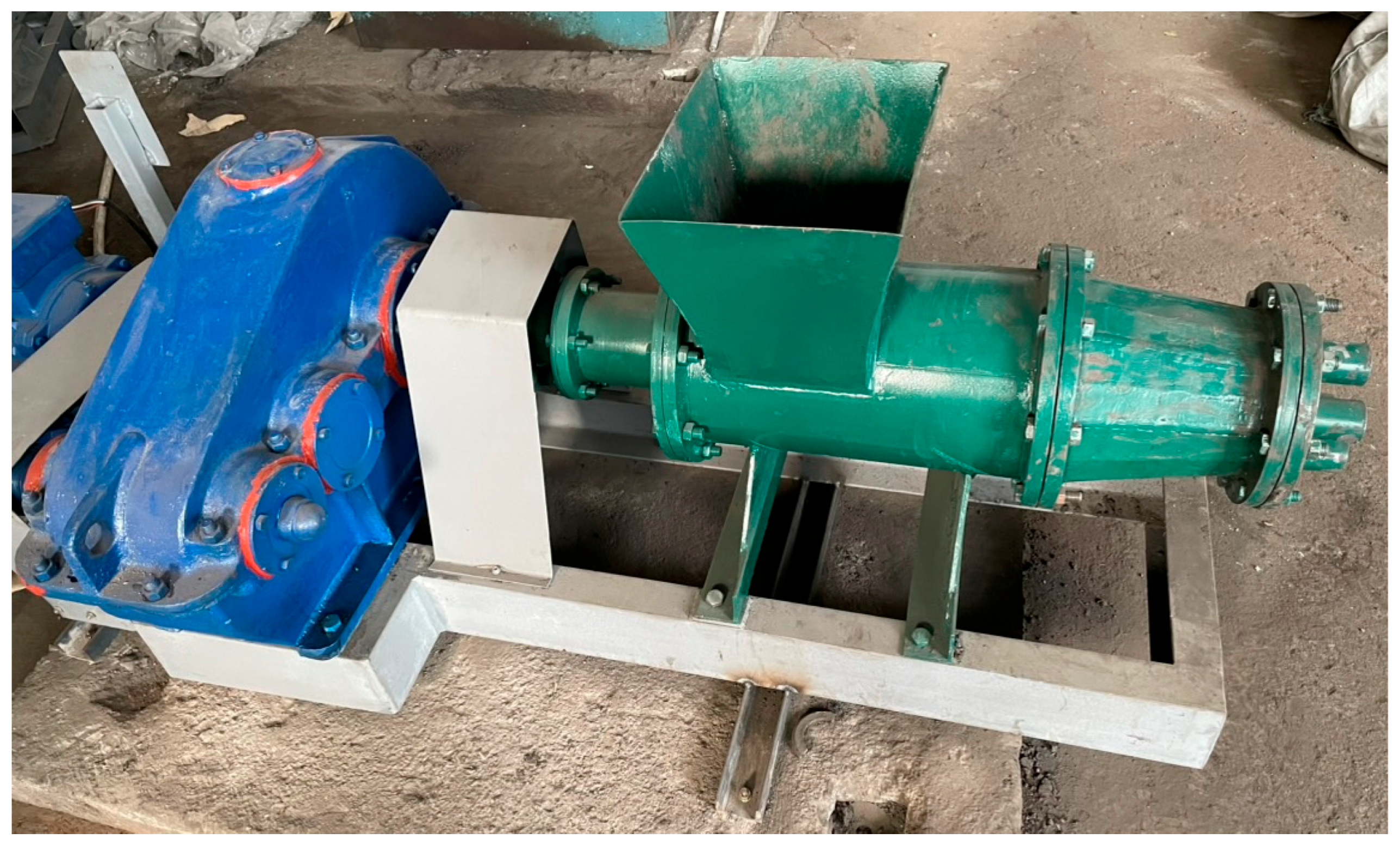
The required batch of briquettes for the smelting experiments was produced at the experimental production facility of the Z. Abishev Institute of Chemistry and Metallurgy using an EB-500 press-extruder (IP Popov, Pavlodar, Kazakhstan) (Figure 1). Briquetting in the extruder was carried out without an external heat source: the heating of the processed material occurred due to the conversion of mechanical energy into heat as a result of internal friction and plastic deformation during compaction.
This equipment enables briquette shaping both without binders and with binder additions. The products were obtained in the form of cylindrical rods with a diameter of 30–40 mm and a length of 50–200 mm. If required, the briquette shape can be changed to square, hexagonal (with or without an internal hole), and other configurations, thereby expanding the technological capabilities of the process.
The main technical specifications of the press-extruder ensure stable operation and sufficient productivity. The unit has a production capacity of up to 500 kg/h, enabling continuous high-throughput processing of fine-grained raw materials. The installed power of the equipment is 15 kW, and it is supplied from a standard industrial power network (380 V, 50 Hz). The total mass of the unit is 650 kg, which provides operational stability. The diameter of the outlet channel for the formed product is 30–40 mm, allowing briquettes of various sizes to be produced.
The main working element of the unit is a hardened screw (auger) made of wear-resistant steel, which ensures uniform compaction of the material, generation of the required pressure, and stable briquetting performance. The compact overall dimensions allow the equipment to be installed at various locations within the production site. The reported technical parameters confirm that the EB-500 press-extruder is an efficient and reliable unit for the agglomeration of fine technogenic materials.
The charge materials were used in the following proportions: chromium-bearing dust −30%, iron–manganese ore fines (<10 mm)—30%, and coal sludge—40%. A binder system consisting of 9.5% water and 0.5% sodium silicate (liquid glass) was applied. All charge components were thoroughly mixed in a laboratory mixer to obtain a homogeneous charge blend. The mixed materials were then fed into the press-extruder, where, after adjusting the moisture content and dosing the binder, a uniform briquette mixture was formed.
The produced briquettes met one of the key requirements for charge materials used in electric arc furnaces, namely sufficient mechanical strength, they were subjected to a drop-strength test after drying in a drying oven (SNOL, Utena, Lithuania) at 200 °C for 1 h. The tests were performed in accordance with GOST 21289-75 «Coal briquettes. Methods for determining mechanical strength» [33].
Each briquette was dropped three times from a height of 2 m onto a metal plate. After each drop, the remaining material was sieved through screens with mesh sizes of 10 mm and 5 mm, followed by weighing. This method enabled a quantitative assessment of briquette degradation and their resistance to mechanical impact. The results of the mechanical strength (drop) tests are presented in Table 3.
The drop-strength tests demonstrated that after three consecutive drops from a height of 2 m, the yield of the retained (+10 mm) fraction was 91.74%. The (+10 mm) fraction represents the material remaining on a 10 mm sieve and characterizes the structural integrity of the briquettes, whereas the (−10 mm) fraction corresponds to the degraded fine material formed during impact loading.
According to industrial practice for agglomerated feedstock used in ferroalloy production, preservation of more than 85–90% of the +10 mm fraction after drop testing is considered sufficient to ensure mechanical stability during transportation, handling, and furnace charging. Therefore, the obtained value of 91.74% confirms that the produced briquettes meet technological requirements and are suitable for smelting in a 100 kVA submerged arc furnace.

2.4. Experimental Smelting in an Electric Arc Furnace

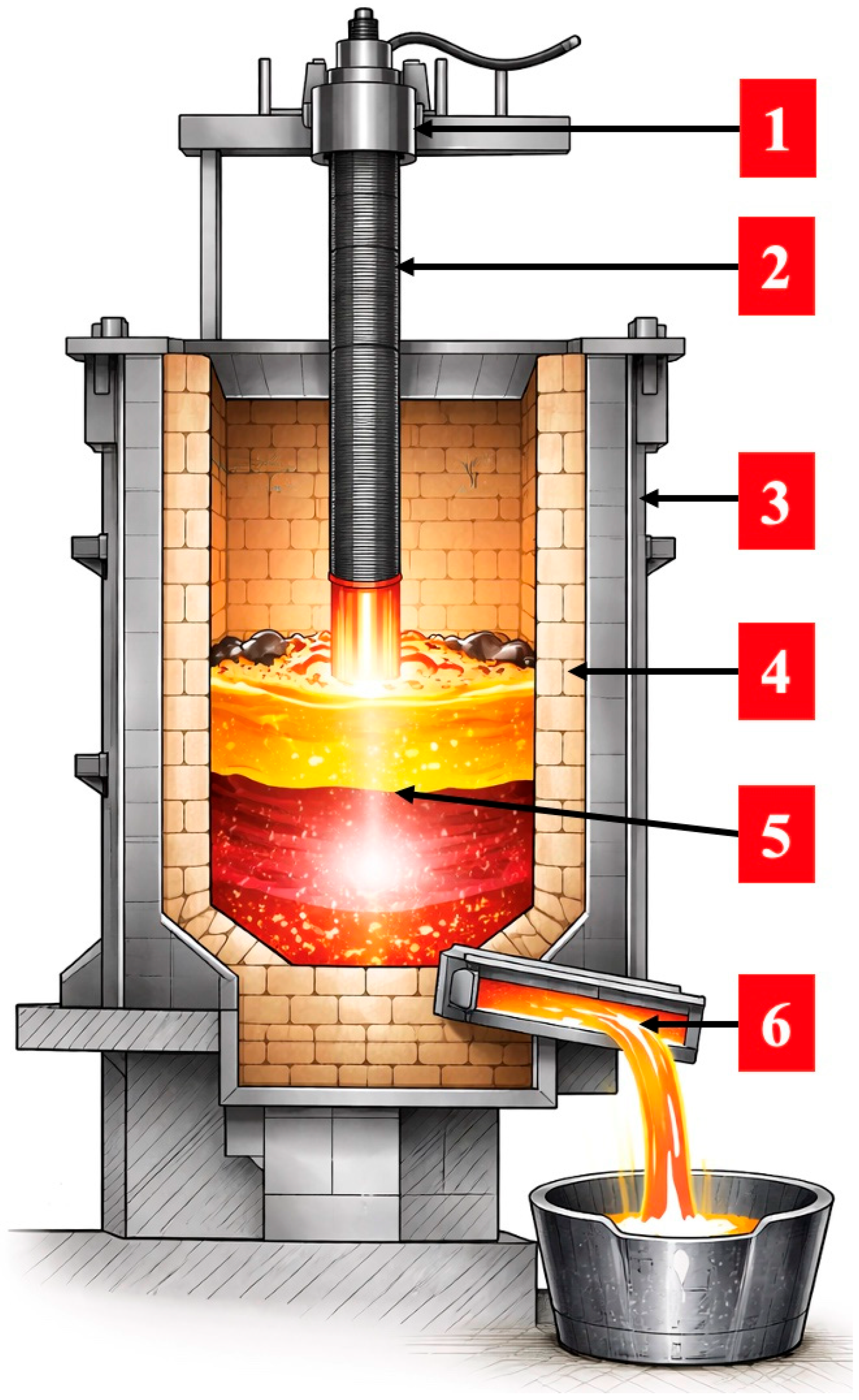
The experimental smelting was carried out in a 100 kVA single-electrode electric arc furnace (Chemical and Metallurgical Institute Named After Zh. Abishev, Karaganda, Kazakhstan) operating on alternating current (AC) under atmospheric conditions (in air), without the use of an inert atmosphere [34]. The temperature in the arc zone reached up to 4500 °C and was maintained using a graphite electrode with a diameter of 100 mm (specific consumption 0.09–0.10 mm/(kW·h)). The estimated carbon transfer from electrode consumption to the metallic phase was approximately 0.1 kg. The furnace was lined with fireclay refractory; the working bath was square-shaped (50 cm × 50 cm) with a depth of 35–40 cm. The furnace cover had a diameter of 100 cm and a height of 120 cm. The hearth, made of rammed carbonaceous mass, was baked for 12 h and had a slope toward the tap hole (Figure 2). Smelting was performed at a voltage of 18–24 V (secondary taps 12/18/24 V), a current of 80–100 A on the high-voltage side, and a line voltage of 380 V. The process was operated in a continuous mode with stepwise charge feeding. Metal was tapped every 2 h into cast-iron molds; the metal and slag from each tap were weighed, and samples were taken for chemical analysis.
After preheating and baking (coking) of the furnace bath, the first portion of the prepared charge mixture was fed into the furnace. Charging was carried out gradually, with uniform distribution of the material around the electrode and simultaneous lifting of the charge bed. This procedure ensured uniform filling of the bath and prevented abrupt fluctuations in electrical load during smelting.
After completion of the experimental smelting trials, the obtained products were subjected to comprehensive characterization. The morphology, microstructure, and phase distribution were examined using a ZepTools ZEM-20 scanning electron microscope (SEM) (Anhui Zeyou Technology Co., Ltd., Tongling, China) equipped with an Oxford energy-dispersive X-ray spectroscopy (EDS) attachment (Abingdon, Oxfordshire, UK).

3. Results and Discussion

3.1. Thermodynamic Calculation Results

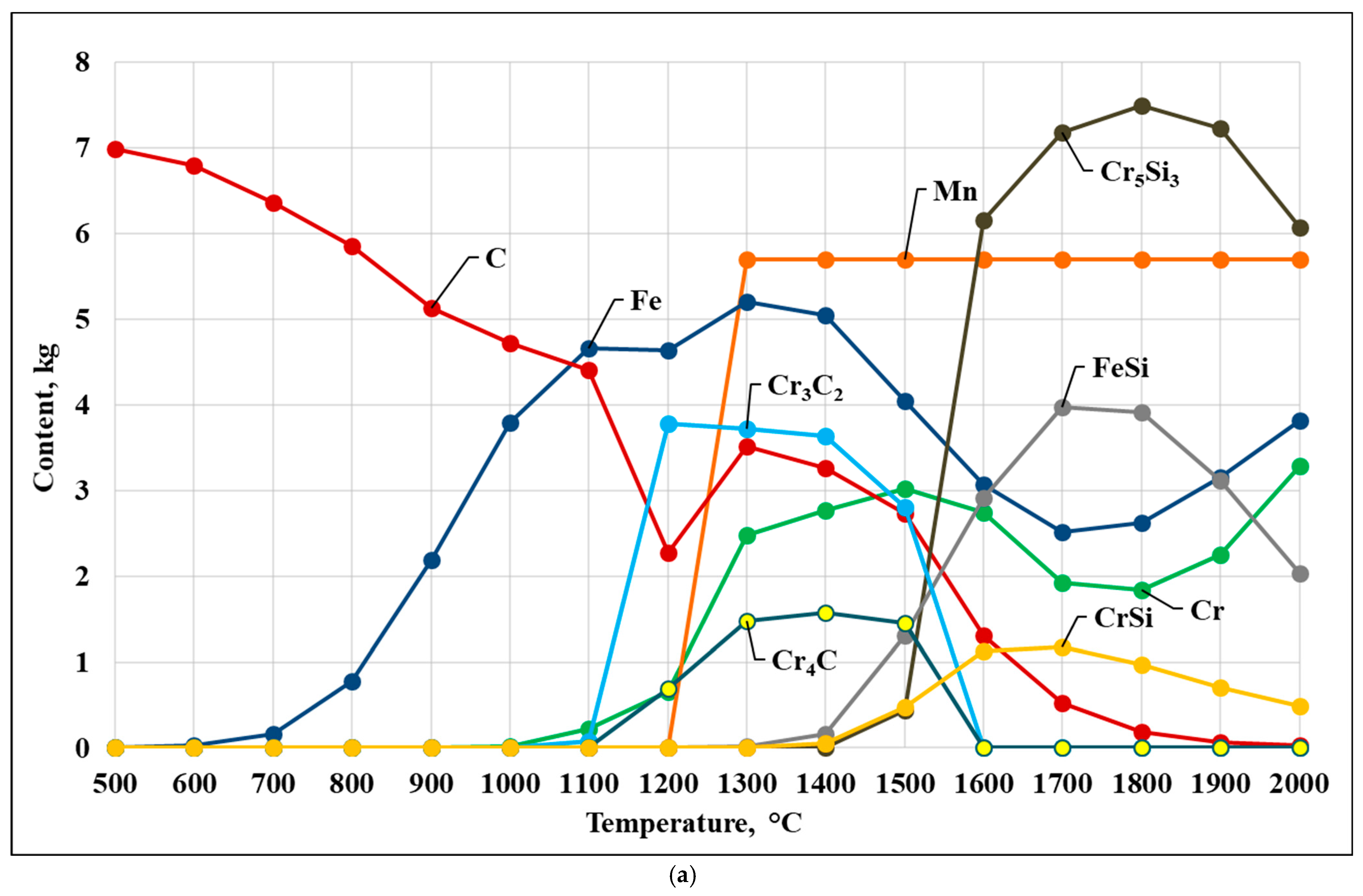
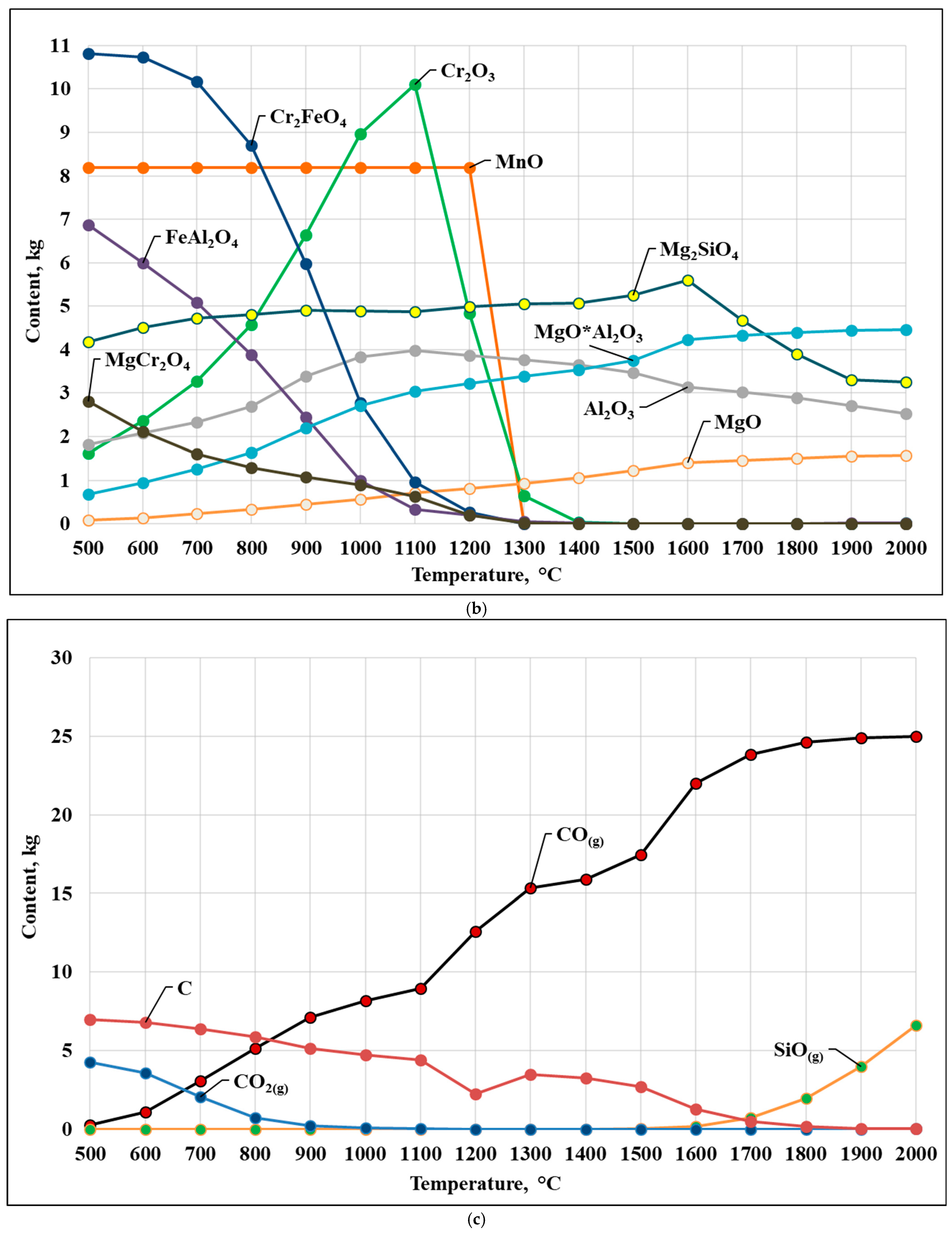
The thermodynamic modeling results obtained using the Equilibrium Compositions module of HSC Chemistry indicate that during carbothermic production of the Cr-Mn alloy over the temperature range up to 2000 °C, a series of phase transformations occur in the system (Figure 3). In particular, the formation of individual elements and changes in their equilibrium amounts are observed, and these changes are accompanied by the transfer of components into condensed phases (metallic and slag). This phenomenon is one of the key factors governing the chemical composition of the alloy and enables comprehensive characterization of the thermodynamic behavior of the smelting process.
Figure 3 illustrates the results of thermodynamic modeling, showing the predicted phase distribution and evolution of the equilibrium composition of smelting products as a function of temperature. In the temperature range of 500–900 °C, the slag phase is dominated by compounds such as FeAl2O4 and Cr2FeO4. With increasing temperature, their amounts gradually decrease. Specifically, the mass of the Cr2FeO4 phase decreases from 10.81 kg at 500 °C to 0.96 kg at 1100 °C. At the same time, Cr2FeO4 decomposes with the formation of Cr2O3, the amount of which reaches 10.10 kg at 1100 °C. Within the 1100–1300 °C range, the amount of Cr2O3 in the slag mixture decreases, whereas the Cr content in the metallic phase increases and reaches 2.75 kg at 1600 °C.
The amount of the MnO phase remains constant at 8.18 kg in the temperature range of 500–1200 °C, after which it starts to decrease, accompanied by an increase in Mn content in the metallic phase up to 5.69 kg. In the 900–1200 °C interval, a sharp increase in the amount of Cr2O3 is observed, while spinel phases such as FeAl2O4 and MgCr2O4 decompose almost completely.
Starting from 1100 °C, a decrease in the amount of solid carbon and oxidized compounds is observed, reaching minimum values at around 1700 °C. As the amount of solid carbon decreases, the yield of CO increases, confirming the intensification of carbothermic reduction reactions. In the temperature range of 1200–1400 °C, chromium carbides (Cr3C2 and Cr4C) are formed, indicating the interaction of carbon with chromium.
In the temperature range of 1400–1700 °C, the phases Cr, FeSi, CrSi, and Cr5Si3 are actively formed in the ferroalloy. At temperatures above 1600 °C, the major alloy constituents stabilize as Cr, Fe, Mn, and chromium silicide compounds (CrSi and Cr5Si3). The transfer of Si into the metallic phase occurs predominantly in the form of Cr5Si3, FeSi, and CrSi compounds.
Based on the thermodynamic data for the charge mixture, changes in the compositions of the metallic and slag phases were calculated over the temperature range of 1100–2000 °C (Table 4).
For comparative analysis, a temperature of 1800 °C was selected, corresponding to the tapping temperature of the melt from the electric arc furnace. Under these conditions, the Mn content in the charge mixture remained relatively stable and amounted to 24.78–26.24%.
It was established that metallic phase formation proceeds intensively in the temperature range of 1500–1800 °C. At 1800 °C, the predicted chemical composition of the Cr-Mn alloy is (wt.%): Cr-35.84, Mn-24.47, Si-16.25, Fe-22.63, and C-0.82.
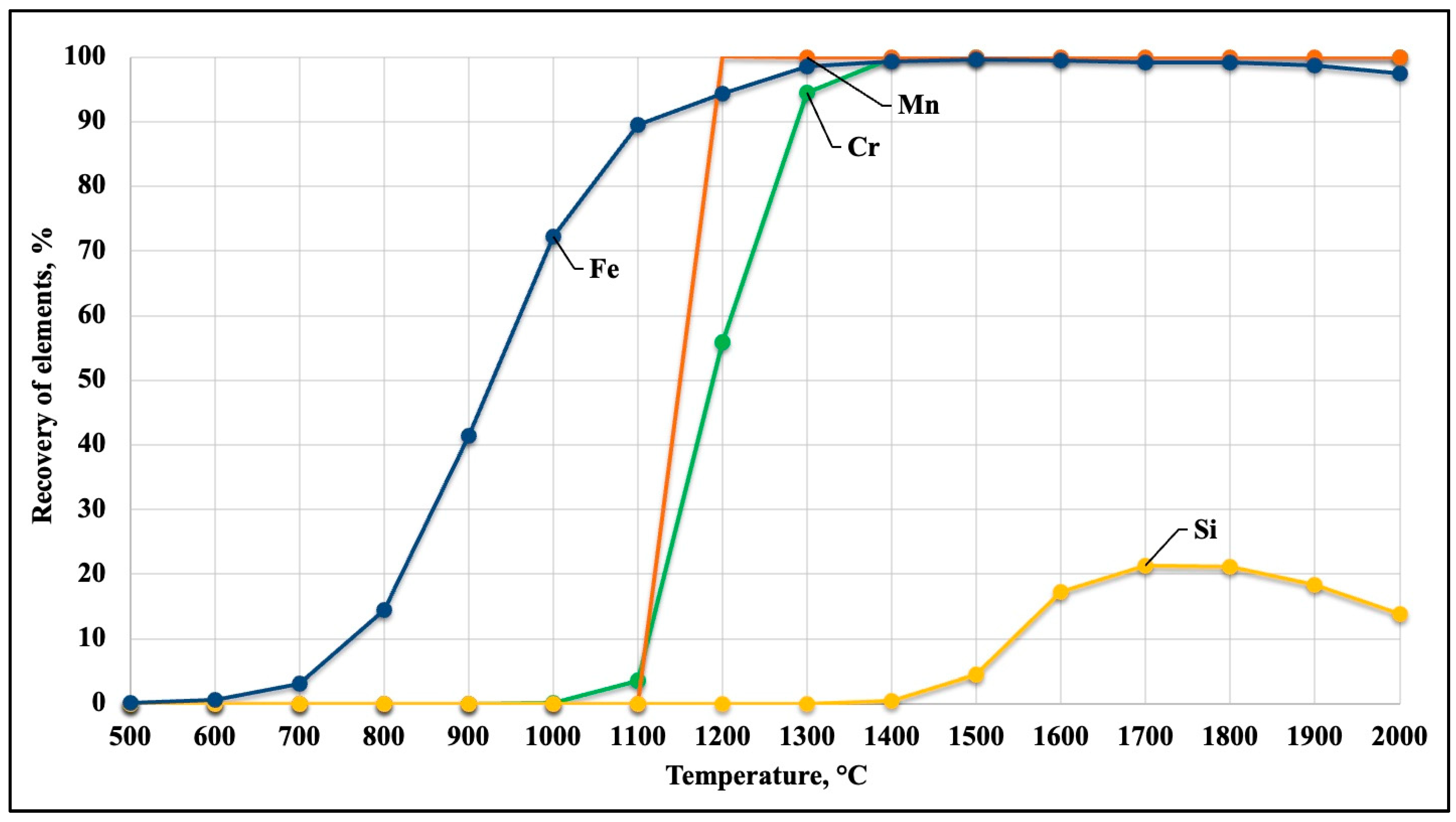
Figure 4 shows the temperature dependence of the recovery degree of the main elements (Fe, Cr, Mn, and Si) according to thermodynamic modeling. It was established that iron is reduced at the lowest temperatures. Already at 800–900 °C, the Fe recovery increases noticeably, and in the range of 1000–1100 °C it reaches approximately ≈90%. With a further temperature increase to 1200–1300 °C, iron recovery approaches 100%, indicating a high thermodynamic feasibility of FeO reduction and an almost complete transfer of iron into the metallic phase at relatively moderate temperatures.
Cr and Mn are characterized by a higher reduction temperature threshold. At temperatures up to ≈1050–1100 °C, their recovery remains close to zero, which indicates insufficient thermodynamic driving force for the reduction of the corresponding oxides. A sharp increase in recovery is observed at 1100–1300 °C: Cr recovery rises to ≈95–98%, while Mn recovery reaches ≈100%. In the range of 1300–2000 °C, both elements maintain high recovery values (nearly complete reduction), confirming the necessity of a high-temperature regime for efficient reduction of Cr and Mn oxides under carbothermic conditions.
A distinct behavior is observed for Si. The Si content of the complex ferroalloy is of particular importance because, through the formation of chromium and manganese silicides, Si enhances the recovery of the major elements into the metallic phase and facilitates alloy tapping from the furnace. Accordingly, the thermodynamic modeling results indicate that the selected charge composition is the most favorable for producing a complex ferroalloy with the desired composition. At temperatures below ≈1400–1500 °C, Si recovery is practically negligible; however, with further temperature increase, its recovery rises, reaching maximum values of ≈20–22% at 1700–1800 °C. At temperatures above 1800–1900 °C, a decreasing trend in Si recovery is observed, which may be associated with Si redistribution between phases and increased stability of silicate compounds in the slag depending on the system composition and oxygen activity.
Thus, thermodynamic modeling indicates that at temperatures of ≥1300 °C, conditions are achieved for almost complete reduction and recovery of Fe, Cr, and Mn into the metallic phase, whereas Si, even at elevated temperatures, transfers into the metal only to a limited extent. The obtained dependencies provide a basis for selecting the optimal temperature range for experimental smelting and confirm the feasibility of operating in the high-temperature region to produce a complex Cr–Mn alloy. It should be emphasized that the process is aimed not at minimizing silicon completely, but at preventing its uncontrolled enrichment in the metal phase.
The Si content of the complex ferroalloy is of particular importance, since moderate silicon levels promote the formation of chromium and manganese silicides, thereby enhancing the recovery of the major elements into the metallic phase and improving melt fluidity, which facilitates alloy tapping from the furnace. However, excessive silicon transfer into the metal may lead to deviations from the target composition.
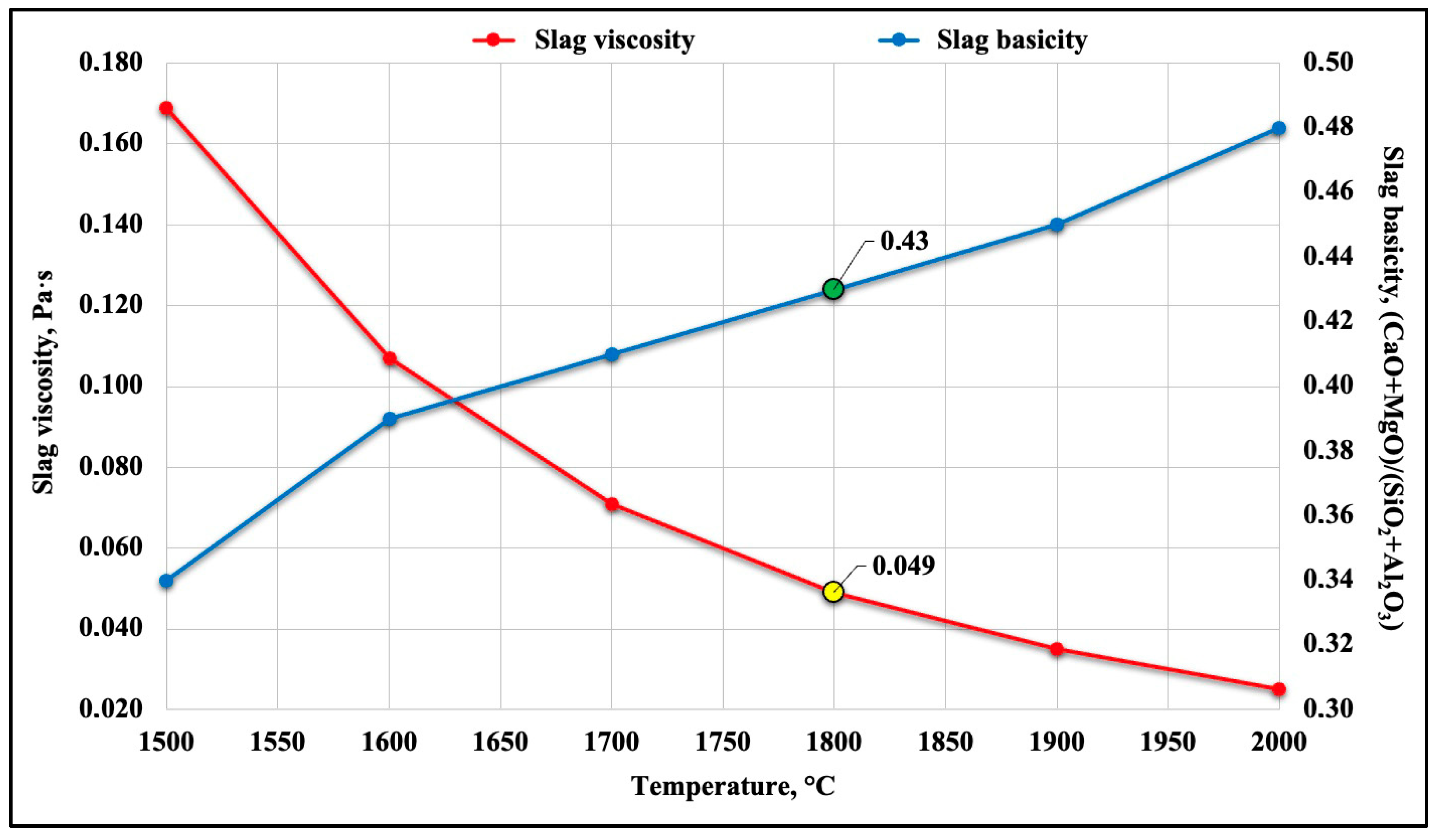
Based on FactSage 8.4 calculations, the temperature dependence of slag viscosity was established. Slag basicity was evaluated independently using HSC Chemistry, and the combined results were used to determine the compositional range corresponding to stable smelting conditions (Figure 5).
As shown in Figure 5, increasing the temperature from 1500 to 2000 °C results in a substantial decrease in slag viscosity—from 0.17 Pa·s at 1500 °C to 0.025 Pa·s at 2000 °C—indicating improved fluidity of the slag phase and favorable conditions for metal-slag separation. At the same time, slag basicity increases from 0.33 to 0.48, which is associated with changes in the equilibrium phase composition of the system at elevated temperatures.
Within the working smelting temperature range (≈1800 °C), the calculated values are η ≈ 0.049 Pa·s and basicity B ≈ 0.43, which correspond to technologically stable process conditions and ensure effective separation of the metallic phase from the slag. These data were used to justify the temperature regime and to select the optimal slag composition for the experimental smelting trials.

3.2. Experimental Smelting

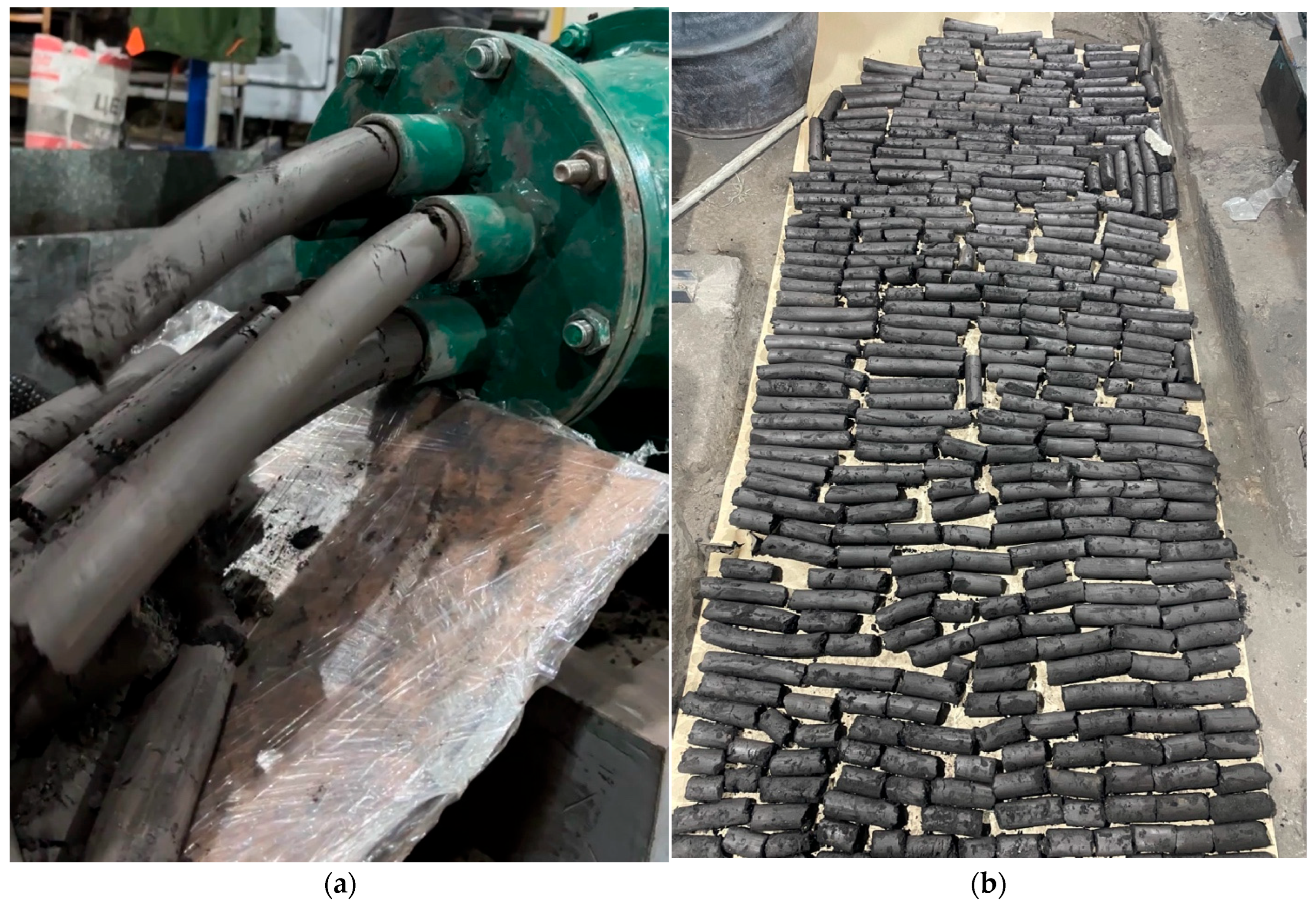
A pilot batch of briquettes with a total mass of 0.5 t was produced (Figure 6).
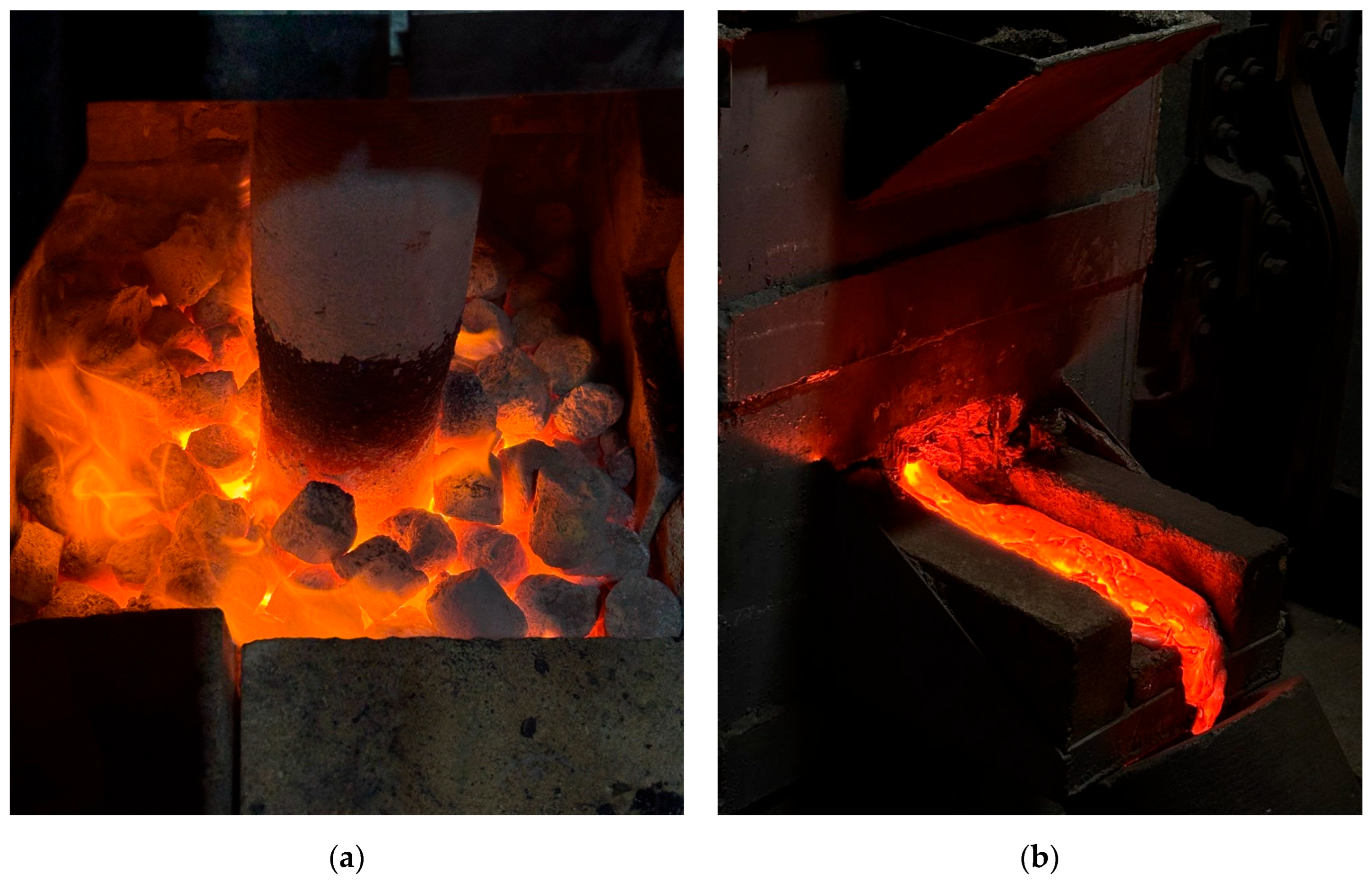
Smelting was carried out in a continuous mode with stepwise charging of the burden in small portions as the charge bed subsided. For each charge addition, 15 kg of briquettes were fed into the furnace. In total, 10 smelting runs were performed using the briquettes. The general view of the furnace bath and the metal tapping process are shown in Figure 7.
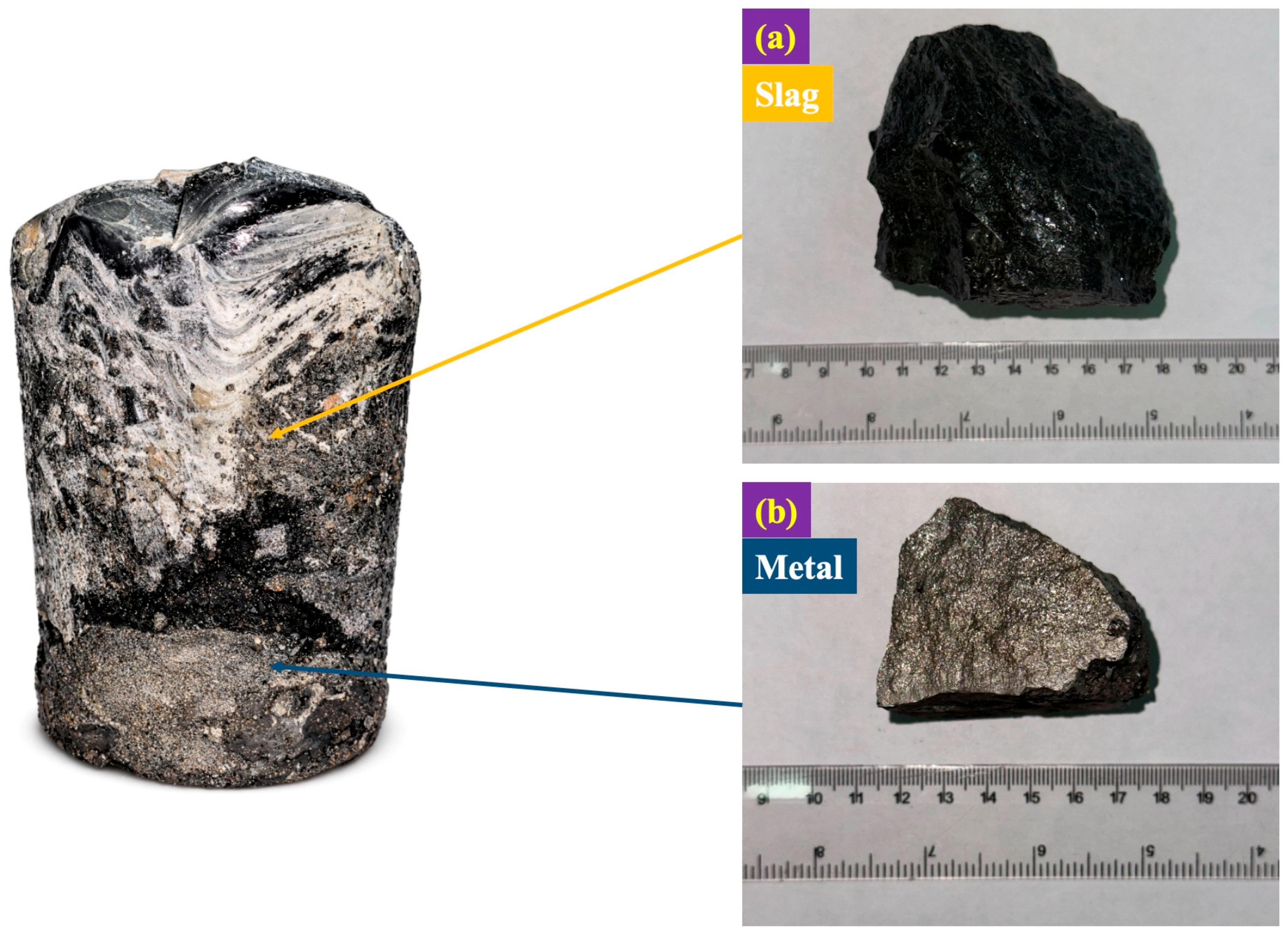
Under large-scale laboratory conditions at the Z. Abishev Institute of Chemistry and Metallurgy, more than 80 kg of metallic alloy and slag were produced as a result of smelting in a 100 kVA submerged arc furnace. The products obtained during the smelting trials are shown in Figure 8.
Smelting performed with stepwise charge feeding demonstrated satisfactory process performance: the current load was stably maintained within 80–100 A. During operation, the hearth surface was gradually covered with molten metal. Within the study, 10 smelting runs were carried out in the submerged arc furnace with periodic tapping of metal and slag. The process was characterized by stable yields of both metallic and slag phases, steady furnace operation, and elevated Cr and Mn contents in the produced alloy (Table 5).
Based on the chemical analysis of the smelting products, the average chemical compositions of the metal and slag were determined for all tapping operations. The average metal composition was (wt.%): Cr-37.17, Mn-14.46, Si-11.48, Fe-33.23, C-3.48, P-0.15, and S-0.021. The obtained results indicate the formation of a Cr-Mn alloys with increased Cr and Fe contents and a noticeable carbon level, which confirms the carbothermic nature of the reduction process. In addition, the calculated recovery of the main elements into the metal phase was relatively high: Cr recovery exceeded 87%, Mn recovery was above 78%, iron recovery exceeded 90%, and Si recovery was higher than 35%. These recovery values confirm the sufficient completeness of reduction reactions and the technological feasibility of producing a complex Cr–Mn alloy from the investigated raw materials.
The average chemical composition of the slag was (wt.%): Cr2O3-2.51, MnO-2.23, SiO2-47.19, MgO-25.59, CaO-4.46, and Al2O3-17.66. The slag basicity was 0.46, indicating an acidic slag system due to the high contents of silica and alumina. The low Cr2O3 and MnO levels in the slag suggest a relatively high degree of Cr and Mn reduction and their transfer to the metallic phase.
To evaluate the agreement between experimental results and thermodynamic predictions, the average compositions of the metal and slag were compared with equilibrium modeling data at 1800 °C.
The chromium content in the produced alloy shows good agreement with the calculated value (37.17% vs. 35.84%), confirming the adequacy of the selected temperature regime and modeling approach. However, significant deviations were observed for Fe, C, Mn, and Si.
The higher experimental carbon content (3.48% vs. 0.82%) reflects the carbothermic nature of the process and indicates the establishment of a high carbon potential in the metal–slag–gas system. Increased carbon activity promotes oxide reduction and enhances chromium recovery into the metallic phase, as widely reported for carbothermic systems [35,36]. In addition, dissolved carbon contributes to maintaining reducing conditions during high-temperature smelting, supporting reaction intensity and process stability.
In contrast, the experimentally measured Mn and Si contents (Mn 14.46% vs. 24.47%; Si 11.48% vs. 16.25%) are lower than equilibrium predictions. This difference is expected, since thermodynamic modeling assumes ideal equilibrium and complete phase interaction. Under real smelting conditions, reduction reactions are influenced by kinetic factors, including diffusion through the slag, interfacial mass transfer, and finite reaction time.
The reduction of MnO and especially SiO2 is highly sensitive to oxide activity in the slag phase, slag basicity, viscosity, and phase contact time [37,38,39]. Increased slag viscosity and reduced oxide activity can limit mass transport and slow reduction reactions, resulting in incomplete reduction and lower metal recovery compared with equilibrium calculations. Therefore, the reduced Mn and Si contents observed experimentally are consistent with well-established kinetic limitations of carbothermic processes.
Thermodynamic modeling predicts zero Cr2O3 and MnO contents in the slag at 1800 °C, corresponding to complete oxide reduction under equilibrium conditions. In contrast, the experimental slag contains residual Cr2O3 (2.51%) and MnO (2.23%), confirming that full equilibrium was not attained. These residual oxides are attributed to kinetic constraints, limited phase interaction time, and non-ideal mixing during smelting.
Differences in CaO and Al2O3 contents between calculated and experimental slags are explained by the real chemical-mineralogical complexity of the charge materials and the dynamic nature of slag formation, which cannot be fully represented by equilibrium modeling.
Overall, the discrepancies between thermodynamic predictions and experimental results are governed by non-equilibrium behavior and kinetic limitations rather than by inaccuracies in the modeling approach. The good agreement in chromium content and the consistent trends in element distribution confirm the validity of the selected smelting parameters and support the reliability of the thermodynamic framework applied in this study.
The thermodynamic modeling performed in this study does not merely describe phase evolution but provides a predictive framework for understanding the reduction sequence and element distribution in multicomponent technogenic systems. Unlike conventional ferroalloy modeling based on natural ores, the present charge composition contains complex oxide assemblages typical for industrial wastes, which significantly affect phase stability and reduction pathways.
The obtained phase transformation trends demonstrate that chromium reduction is thermodynamically favored in a narrower temperature window compared with iron, while manganese and silicon exhibit stronger dependence on slag chemistry and oxygen potential. This confirms that temperature control alone is insufficient; optimization of carbon potential and slag composition is equally critical.
Importantly, the modeling results define a technological operating window (1500–1800 °C) where
  • Fe, Cr, and Mn reduction is nearly complete;
  • Silicon transfer remains controlled;
  • Slag viscosity reaches values favorable for metal–slag separation.
Thus, the thermodynamic approach applied in this work serves not only as a theoretical analysis tool but as a decision-making instrument for designing a stable smelting regime for complex technogenic raw materials.
The chromium recovery (>87%) and the relatively low Cr2O3 content in slag (2.51 wt.%) obtained in this study are consistent with results reported by [40] for the remelting of briquetted high-carbon ferrochrome dust. In their work, efficient chromium transfer to the metallic phase was achieved after agglomeration and remelting, confirming that technogenic Cr-bearing materials can serve as viable secondary raw materials. Similar to the present study, residual chromium oxide in slag was attributed to kinetic limitations rather than thermodynamic constraints.
However, in the work [40] where the primary objective was dust recycling with minimal compositional modification of the alloy, the present work involves the formation of a complex Cr-Mn-Fe-Si alloy through simultaneous carbothermic reduction of multi-component technogenic raw materials. This results in a significantly more complex metal–slag–gas interaction system and a broader redistribution of alloying elements.
The slag basicity in the present study (B = 0.46) indicates an acidic slag regime dominated by SiO2 and Al2O3, which differs from typical ferrochrome remelting slags by [40], where slag chemistry is more controlled and often adjusted to improve chromium recovery. The higher silica content in the present system increases slag viscosity and reduces MnO and SiO2 reduction efficiency, explaining the lower experimental Mn and Si contents compared with equilibrium predictions.
The experimentally observed manganese recovery (>78%) is somewhat lower than typical values reported for conventional FeMn and SiMn smelting systems but remains within the range characteristic of acidic slag regimes. Literature data indicate that Mn reduction is highly sensitive to slag viscosity and MnO activity, which is strongly influenced by silica-rich slag systems. Therefore, the deviation from thermodynamic equilibrium predictions observed in this work is consistent with established kinetic constraints [41,42].
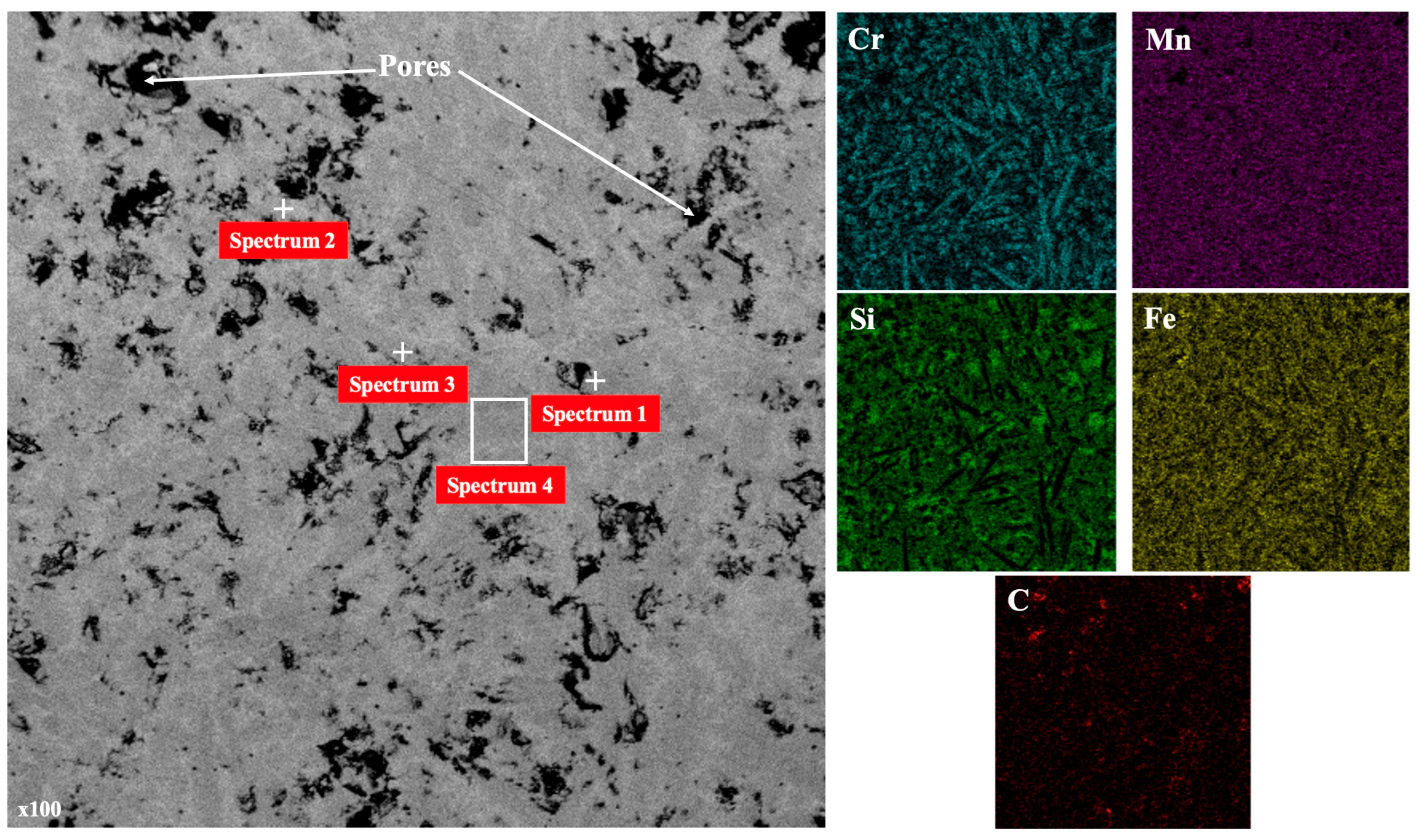
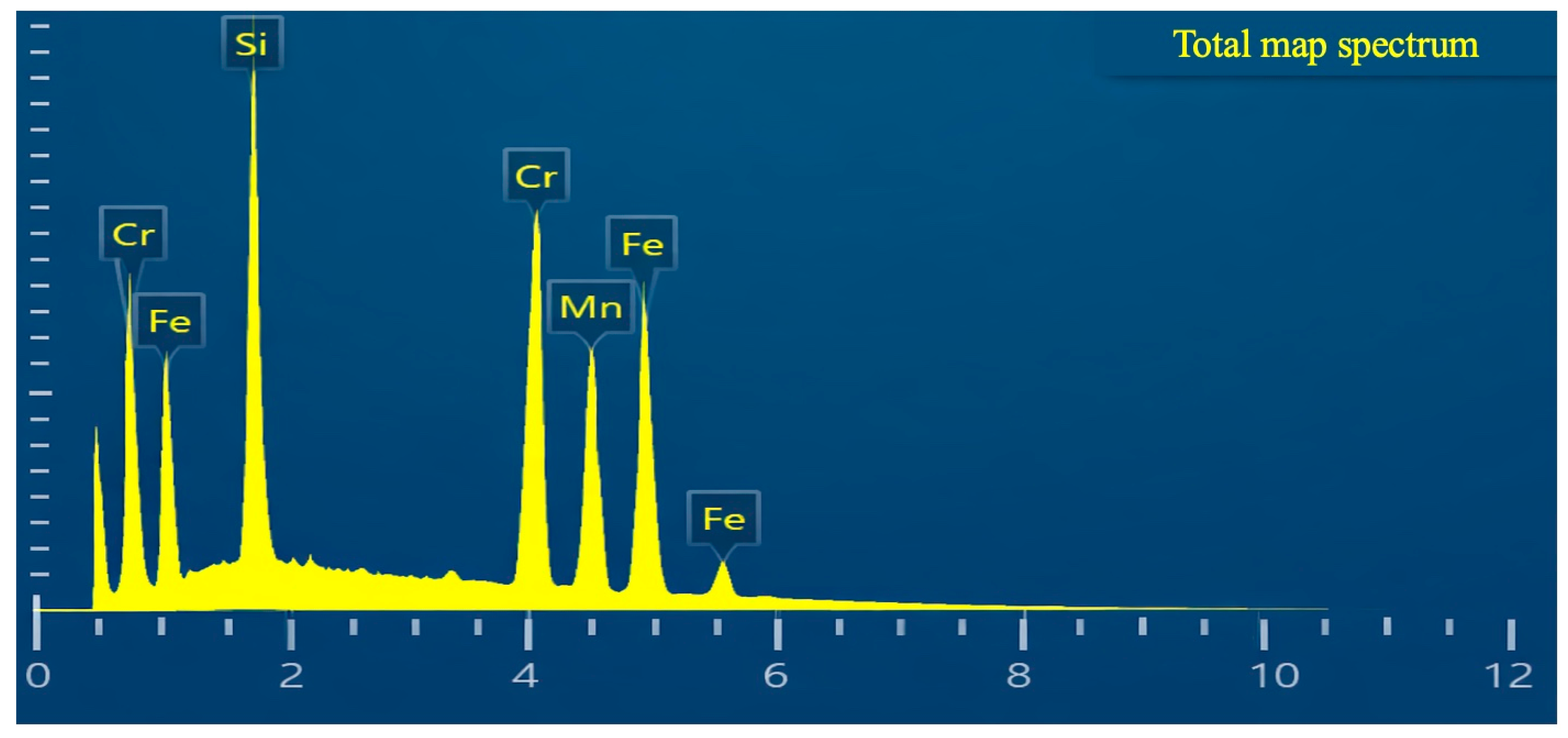
To confirm the phase composition and the distribution behavior of the major elements in the products of the experimental smelting, the samples were examined using scanning electron microscopy (SEM) coupled with energy-dispersive X-ray spectroscopy (EDS). The morphology and microstructural features of the metallic phases are shown in Figure 9, where clear phase differentiation can be distinctly observed. The EDS microanalysis results, which are semi-quantitative and intended primarily for phase identification and comparative analysis rather than for determining absolute chemical composition, are summarized in Table 6. These data were used to evaluate the phase composition and the distribution characteristics of Cr, Mn, and Fe in the smelting products.
The microstructural and phase analysis of the metallic phase performed by SEM-EDS revealed the formation of a multicomponent metallic matrix characterized by pronounced microstructural heterogeneity, which is typical for highly alloyed systems produced under reductive smelting conditions. Within the metallic phase, regions locally enriched in individual alloying elements (Cr, Mn, Si, and Fe) were identified, indicating a complex solidification behavior and redistribution of elements during melt cooling. Such microstructural heterogeneity is characteristic of complex Cr-Mn-Si ferroalloys, in which stable carbide and intermetallic phases form under specified melting and cooling conditions. This behavior reflects non-equilibrium solidification and diffusion-controlled redistribution typical of multicomponent high-temperature alloy systems [43,44,45,46].
The substantial variation in Cr content (15.28–53.71 mass.%) indicates intensive chromium microsegregation and limited diffusion-driven compositional homogenization during solidification, which is typical for multicomponent ferroalloys and composite products obtained from technogenic materials. Local changes in Fe content are associated with element redistribution between regions enriched in Cr and Si, reflecting competitive phase formation in the Fe-Cr-Mn-Si system. Overall, the absence of pronounced Fe zonality suggests that the melt remained sufficiently homogeneous in the metallurgical sense prior to the onset of intensive crystallization.
Si was detected in all analyzed areas of the metallic phase; however, its distribution was less uniform compared with Fe. Local zones with increased Si content (up to ~22.16 mass.%) may be attributed to its participation in the formation of silicide and intermetallic regions occurring at the final stages of solidification as the melt temperature decreases. This behavior is consistent with the role of Si under reductive smelting conditions, where Si can be strongly redistributed during crystallization and stabilize phases formed at lower temperatures.
According to EDS, carbon was detected in minor amounts (~3.43–6.05 mass.%). Its distribution is localized; however, interpretation of the measured C content should be treated with caution due to well-known limitations of EDS for quantitative determination of light elements and the possible influence of carbon substrates and surface contamination. Nevertheless, the observed values may indicate the presence of a carbon-containing constituent potentially associated with residual reductant or the formation of carbide micro-regions in zones enriched in Cr and Fe. Importantly, the detected carbon concentrations were not accompanied by evidence of large carbonaceous inclusions or macroscopically segregated phases.
From a microstructural standpoint, the pronounced chromium microsegregation (15–54 wt.%) revealed by SEM-EDS analysis reflects non-equilibrium solidification behavior typical of multicomponent Cr-containing alloys. In the work [47], significant elemental redistribution and phase heterogeneity were demonstrated in Al-Si-Fe-Cr-Mn systems produced by mechanical alloying and spark plasma sintering. Although the processing route differs substantially from high-temperature reductive smelting, their results confirm that multicomponent Cr-Mn-containing systems inherently exhibit diffusion-controlled phase separation and competitive formation of intermetallic and carbide phases.
Unlike the powder-metallurgy-derived alloys reported in [47], where microstructure evolution is governed primarily by rapid consolidation and solid-state diffusion, the alloy obtained in the present study was formed via high-temperature carbothermic smelting followed by liquid-phase solidification. Consequently, the observed microsegregation is mainly controlled by element redistribution in the liquid state and by solidification kinetics rather than by mechanical alloying mechanisms.
Overall, the agreement in chromium recovery with literature data [40], the kinetically justified deviations in Mn and Si contents from equilibrium predictions, and the microstructural features consistent with multicomponent Cr-Mn alloy systems [47] collectively confirm the adequacy of the selected smelting regime and support the reliability of the applied thermodynamic modeling framework.
The SEM-EDS analysis demonstrates the formation of a structurally stable multicomponent metallic system. The absence of coarse segregation and large isolated phases indicates that the reductive smelting parameters were properly selected and that the reduction reactions proceeded with sufficient intensity. The results obtained are consistent with thermodynamic modeling data and further validate the experimental smelting conditions.

4. Conclusions

Using technogenic wastes as raw materials, the thermodynamic modeling of reduction processes and experimental smelting of a complex ferroalloy in an electric arc furnace were performed, which made it possible to assess the feasibility of producing a Cr-Mn alloy with the required composition.
Thermodynamic modeling was performed using the HSC Chemistry 10 software package. For the analysis, a multicomponent Cr-Mn-Fe-Si-Al-Ca-Mg-C-O system was constructed, representative of Cr-Mn alloy production from technogenic raw materials. At 1800 °C, the calculated (equilibrium) composition of the Cr-Mn alloy was (wt.%): Cr-35.84, Mn-24.47, Si-16.25, Fe-22.63, and C-0.82.
Prior to smelting, the charge components were preliminarily agglomerated by briquetting using an EB-500 press-extruder. A pilot batch of briquettes with a total mass of 0.5 t was produced.
Experimental smelting was carried out in an electric arc furnace equipped with a 100 kVA transformer. Based on the chemical analysis of the smelting products, the average chemical composition of the metal phase over all tapping operations was determined as follows (wt.%): Cr-37.17, Mn-14.46, Si-11.48, Fe-33.23, C-3.48, P-0.15, and S-0.021. The obtained data confirm the formation of a Cr-Mn alloy with elevated Cr and Fe contents and a noticeable carbon concentration, which is consistent with the carbothermic nature of the reduction process. The calculated recovery of the main elements into the metal phase was relatively high: Cr recovery exceeded 87%, Mn recovery was above 78%, Fe recovery exceeded 90%, and Si recovery was higher than 35%.
The experimental values of the metal chemical composition are generally consistent with the thermodynamic modeling results and confirm the feasibility of producing a Cr-Mn-containing alloy by the carbothermic route. The observed deviations from the calculated equilibrium values are attributed to the characteristics of the real smelting process, including non-equilibrium solidification, kinetic limitations of reduction reactions, mass transfer conditions, and slag regime parameters. The increased carbon content in the metal indicates a high carbon potential of the system and sufficient reducing capacity, ensuring effective oxide reduction and enhanced Cr recovery. The lower Mn and Si contents compared with the calculated values suggest the presence of a technological margin and the need to optimize process conditions, particularly slag basicity and viscosity, as well as the phase interaction time. Overall, the experimental smelting results confirm the validity of the selected technological parameters and the potential for further process optimization.
To clarify the phase state and the distribution behavior of the major elements, the samples were examined using scanning electron microscopy (SEM) coupled with energy-dispersive X-ray spectroscopy (EDS). SEM-EDS analysis of the metallic phase revealed the formation of a multicomponent metallic matrix with pronounced microstructural heterogeneity, which is typical of highly alloyed systems produced under reductive smelting conditions. Micro-regions locally enriched in individual components (Cr, Mn, Si, and Fe) were identified, reflecting element redistribution during crystallization and cooling of the melt. No evidence of coarse segregation, distinct macroscopic phases, or large inclusions was observed, indicating sufficient intensity of the reduction reactions and stable operation under the selected smelting regime. The obtained results are consistent with the thermodynamic modeling data and confirm the validity of the experimental smelting parameters.

Author Contributions

Conceptualization, Y.M. and A.Z. (Armat Zhakan); methodology, Y.M., A.Z. (Armat Zhakan) and A.A.; software, S.K., A.B. and Z.S.; validation, A.Z. (Ablay Zhunusov) and O.Y.; formal analysis, A.Z. (Ablay Zhunusov) and O.Y.; investigation, A.Z. (Ablay Zhunusov), S.K., A.B., Z.S. and A.A.; resources, A.A.; data curation, O.Y.; writing—original draft preparation, Y.M. and A.Z. (Armat Zhakan); writing—review and editing, A.Z. (Armat Zhakan), S.K., A.B. and Z.S.; visualization, A.A.; supervision, Y.M. and A.Z. (Armat Zhakan). All authors have read and agreed to the published version of the manuscript.

Funding

This research was funded by the Science Committee of the Ministry of Science and Higher Education of the Republic of Kazakhstan (Grant No. AP23488918).

Data Availability Statement

The original contributions presented in this study are included in the article. Further inquiries can be directed to the corresponding authors.

Acknowledgments

The authors thank the Laboratory of Ferroalloys and Reduction Processes, Chemical-Metallurgical Institute named after Zh. Abishev (Karaganda), for their assistance and technical support.

Conflicts of Interest

The authors declare no conflicts of interest.

References

  1. World Steel Association. World Steel in Figures 2025; World Steel Association: Brussels, Belgium, 2025. [Google Scholar]
  2. Gasik, M.I.; Lyakishev, N.P.; Emlin, B.I. Theory and Technology of Ferroalloy Production; Metallurgy Publisher: Moscow, Russia, 1988; p. 784. (In Russian) [Google Scholar]
  3. Gasik, M.I.; Lyakishev, N.P. Teoriya I Tekhnologiya Elektrometallurgii Ferrosplavov (Theory and Technology of Ferroalloys Electrometallurgy); Intermet Inzhiniring: Moscow, Russia, 1999. [Google Scholar]
  4. Druinsky, M.I.; Zhuchkov, V.I. Production of Complex Ferroalloys from Mineral Raw Materials of Kazakhstan; Nauka: Alma-Ata, Kazakhstan, 1988; p. 208. (In Russian) [Google Scholar]
  5. International Chromium Development Association (ICDA). Statistical Bulletin/Chrome & Ferrochrome Market Statistics; ICDA: Paris, France, 2024. [Google Scholar]
  6. International Manganese Institute (IMnI). Manganese Alloys Statistics (FeMn, SiMn); ImnI: Paris, France, 2024. [Google Scholar]
  7. U.S. Geological Survey (USGS). Mineral Commodity Summaries 2024: Chromium; USGS: Reston, VA, USA, 2024. [Google Scholar]
  8. Makhambetov, Y.N.; Abdirashit, A.M.; Myngzhassar, Y.A.; Burumbayev, A.G.; Zhakan, A.M.; Onuralp, Y. Research on the Possibility of Obtaining Medium-Carbon Ferromanganese from the Djezdinskoe Deposit. Kompleks. Ispolz. Miner. Syra (Complex Use Miner. Resour.) 2024, 331, 101–108. [Google Scholar] [CrossRef]
  9. du Preez, S.P.; van Kaam, T.P.M.; Ringdalen, E.; Tangstad, M.; Morita, K.; Bessarabov, D.G.; van Zyl, P.G.; Beukes, J.P. An overview of currently applied ferrochrome production processes and their waste management practices. Minerals 2023, 13, 809. [Google Scholar]
  10. Gasik, M. Handbook of Ferroalloys: Theory and Technology; Butterworth-Heinemann (Elsevier): Oxford, UK, 2013; 536p. [Google Scholar]
  11. Ringdalen, E.; Tangstad, M. Reaction mechanisms of chromium ore reduction in submerged arc furnace ferrochrome production. Trans. Inst. Min. Metall. Sect. C Miner. Process. Extr. Metall. 2013, 122, 197–207. [Google Scholar]
  12. Tathavadkar, V.; Antony, M.P.; Jha, A. Chromium ore reduction in submerged arc furnace ferrochrome process: Reaction mechanism and kinetics. Ironmak. Steelmak. 2005, 32, 463–470. [Google Scholar]
  13. Olsen, S.E.; Tangstad, M.; Lindstad, T. Production of Manganese Ferroalloys; SINTEF/NTNU: Trondheim, Norway, 2007; 247p. [Google Scholar]
  14. Tangstad, M.; Ichihara, K.; Ringdalen, E. Manganese ferroalloy production in submerged arc furnaces: Process fundamentals. In INFACON (International Ferro-Alloys Congress Proceedings); Outotec Oyj: Helsinki, Finland, 2010; pp. 1–10. [Google Scholar]
  15. Sundqvist, O.; Aune, R.E.; Ringdalen, E. Carbothermic reduction of manganese oxide in high-temperature processes. Metall. Mater. Trans. B 2016, 47, 202–214. [Google Scholar]
  16. Makhambetov, Y.; Abdulina, S.; Kabylkanov, S.; Burumbayev, A.; Zhakan, A.; Sadyk, Z.; Akhmetov, A. Production of Chromium–Manganese Ligature from Low-Grade Chromium and Iron-Manganese Ores Using Silicon–Aluminum Alloys as Reductants. Processes 2025, 13, 3158. [Google Scholar] [CrossRef]
  17. Makhambetov, Y.; Gabdullin, S.; Zhakan, A.; Saulebek, Z.; Akhmetov, A.; Zulhan, Z.; Mukanov, S. Production of Complex Fe-Si-Mn-Cr Ferroalloy Using High-Ash Coal: A Sustainable Metallurgical Approach. Mater. Res. Express 2024, 11, 056523. [Google Scholar] [CrossRef]
  18. Makhambetov, Y.; Zhakan, A.; Zhunusov, A.; Kabylkanov, S.; Burumbayev, A.; Sadyk, Z.; Akhmetov, A.; Uakhitova, B. Resource-Efficient Smelting Technology for FeCrMnSi Ferroalloy Production from Technogenic Wastes in an Ore-Thermal Furnace. Metals 2025, 15, 1318. [Google Scholar] [CrossRef]
  19. Bureau of National Statistics of the Agency for Strategic Planning and Reforms of the Republic of Kazakhstan. Environmental Statistics: Industrial Waste Generation and Recycling Indicators; Bureau of National Statistics of the Agency for Strategic Planning and Reforms of the Republic of Kazakhstan: Astana, Kazakhstan, 2024.
  20. Salkynbaev, B.Z.; Dosekenov, M.S.; Manashev, I.R. Utilization of High-Carbon Ferrochrome Metal Powder by Self-Propagating High-Temperature Synthesis (SHS) Method. Bull. K. Zhubanov Aktobe Reg. Univ. 2024, 77, 124–129. [Google Scholar]
  21. Alimbaev, S.A.; Almagambetov, M.S.; Nurgali, N.Z.; Pavlov, A.V. The use of extrusion briquettes for smelting carbon ferrochrome. Chernye Met. 2020, 5, 4–8. [Google Scholar]
  22. Tolymbekova, L.B. Development of a Smelting Technology for Ferrosilicomanganese from Pelletized High-Silica Manganese Raw Materials. Ph.D. Thesis, Ural Federal University, Yekaterinburg, Russia, 2014; 114p. (In Russian) [Google Scholar]
  23. Samuratov, Y.; Baisanov, A.; Tolymbekov, M. Complex processing of iron–manganese ore of Central Kazakhstan. In Proceedings of the Twelfth International Ferroalloys Congress, Helsinki, Finland, 6–9 June 2010; pp. 517–520. [Google Scholar]
  24. Samuratov, E.K.; Baysanov, A.; Tolymbekov, M. Development of efficient technological processes for processing ferromanganese ores. Proc. Univ. 2007, 4, 33–35. [Google Scholar]
  25. Tseshkovskaya, Y.; Tsoy, N.; Oralova, A.; Tseshkovskiy, V.; Ibrayev, M.K.; Zakharov, A. Research Progress of Coal Stacks Reducing Dust Emissions: Ecological Technology in the Example of the Karaganda Region. Resources 2025, 14, 142. [Google Scholar] [CrossRef]
  26. Pak, Y.; Pak, D.; Ibragimova, D.; Matonin, V.; Tebayeva, A. Assessment of Natural Radioactivity and Trace Element Composition of Coals and Ash and Slag Waste in Kazakhstan. Atmosphere 2025, 16, 125. [Google Scholar] [CrossRef]
  27. Junussov, M.; Zholtayev, G.Z.; Moghazi, A.H.; Nurmakanov, Y.; Oraby, M.A.; Umarbekova, Z.T.; Mashrapova, M.A.; Togizov, K. Evaluating Coal Quality and Trace Elements of the Karagandy Coal Formation (Kazakhstan): Implications for Resource Utilization and Industry. Resources 2026, 15, 5. [Google Scholar] [CrossRef]
  28. GOST 11014-2001; Coal. Methods for Determination of Moisture, Ash, Volatile Matter and Fixed Carbon. Gosstandart: Moscow, Russia, 2001.
  29. GOST 11022-95; Coal and Coal Products. General Technical Requirements. Gosstandart: Moscow, Russia, 1995.
  30. GOST 6382-2001; Coal. Methods of Proximate Analysis. Gosstandart: Moscow, Russia, 2001.
  31. HSC Chemistry. Database Applications-HSC Chemistry. chemIT Services. Available online: https://www.chemits.com/en/software/database-applications/hsc-chemistry.html (accessed on 15 December 2025).
  32. GTT-Technologies; Thermfact/CRCT. Factsage 8.4-Thermochemical Software and Databases. Available online: https://www.factsage.com (accessed on 17 December 2025).
  33. GOST 21289-75; Coal Briquettes. Methods for Determining Mechanical Strength. Gosstandart: Moscow, Russia, 1975.
  34. Makhambetov, Y.; Sadyk, Z.; Zhakan, A.; Burumbayev, A.; Kabylkanov, S.; Myrzagaliyev, A.; Aubakirov, D.; Lu, N.; Akhmetov, A. Electric Arc Metallothermic Smelting of FeCr Using FeAlSiCa as a Reductant. Materials 2025, 18, 4221. [Google Scholar] [CrossRef] [PubMed]
  35. Antony, M.P.; Vidhya, R.; Mathews, C.K.; Varada Raju, U.V. Studies on the kinetics of the carbothermic reduction of chromium oxide using the evolved gas analysis technique. Thermochim. Acta 1995, 262, 145–155. [Google Scholar] [CrossRef]
  36. Shabanov, Y.; Makhambetov, Y.; Saulebek, Z.; Toleukadyr, R.; Baisanov, S.; Nurgali, N.; Shotanov, A.; Dossekenov, M.; Zhumagaliyev, Y. Pilot Tests of Pre-Reduction in Chromium Raw Materials from Donskoy Ore Mining and Processing Plant and Melting of High-Carbon Ferrochromium. Metals 2024, 14, 202. [Google Scholar] [CrossRef]
  37. Kim, P.; Larssen, T.; Tangstad, M. Reduction rates of MnO and SiO2 in SiMn slags between 1500 and 1650 °C. J. S. Afr. Inst. Min. Metall. 2019, 119, 494–501. [Google Scholar] [CrossRef]
  38. Daines, W.L.; Pehlke, R.D. Kinetics of manganese oxide reduction from basic slags by carbon dissolved in liquid iron. Metall. Trans. 1971, 2, 1203–1211. [Google Scholar] [CrossRef]
  39. Rimal, V.; Tangstad, M. Kinetics of Manganese Reduction Comparing Synthetic Slags and Ores for Ferromanganese Production. Metall. Mater. Trans. B 2025, 56, 2731–2747. [Google Scholar] [CrossRef]
  40. Sariyev, O.; Almagambetov, M.; Nurgali, N.; Abikenova, G.; Kelamanov, B.; Yessengaliyev, D.; Abdirashit, A. Development of a Briquetting Method for Dust from High-Carbon Ferrochrome (HC FeCr) Crushing Using Vibropressing on an Industrial Scale and Its Subsequent Remelting. Materials 2025, 18, 2608. [Google Scholar] [CrossRef] [PubMed]
  41. Gaal, S.; Tangstad, M.; Ravary, B. Recycling of waste materials from the production of FeMn and SiMn. In Proceedings of the INFACON XII-Sustainable Future Symposium; SAIMM: Johannesburg, South Africa, 2010. [Google Scholar]
  42. Jipnang, E.; Monheim, P.; Oterdoom, H. Process optimisation model for FeMn and SiMn production. In Proceedings of the INFACON XIII: Efficient Technologies in Ferroalloy Industry Conference Proceedings; Kazakhstan Ministry of Industry and New Technologies: Almaty, Kazakhstan, 2013; pp. 9–12. [Google Scholar]
  43. Zhang, X.; Wang, D.; Li, X.; Zhang, H.; Nagaumi, H. Understanding crystal structure and morphology evolution of Fe, Mn, Cr-containing phases in Al-Si cast alloy. Intermetallics 2021, 131, 107103. [Google Scholar]
  44. Fabrizi, A.; Ferraro, S.; Timelli, G. The Influence of Fe, Mn and Cr Additions on the Formation of Iron-Rich Intermetallic Phases in an Al-Si Die-Casting Alloy. In Proceedings of the Shape Casting: 5th International Symposium 2014, San Diego, CA, USA, 16–20 February 2014; Tiryakioğlu, M., Campbell, J., Byczynski, G., Eds.; Springer: Cham, Switzerland, 2014. [Google Scholar]
  45. Warmuzek, M.; Sieniawski, J.; Wicher, K.; Mrówka, G. The study of the distribution of the transition metals and Si during primary precipitation of the intermetallic phases in Al–Mn–Si alloys. J. Mater. Process. Technol. 2006, 175, 421–426. [Google Scholar] [CrossRef]
  46. Makhambetov, Y.; Zhakan, A.; Gabdullin, S.; Akhmetov, A.; Burumbayev, A.; Zhunusov, A. Study on the synthesis of FeCrMnSi ferroalloy using technogenic raw materials. Acta Metall. Slovaca 2025, 31, 113–118. [Google Scholar] [CrossRef]
  47. Průša, F.; Bláhová, M.; Vojtěch, D.; Kučera, V.; Bernatiková, A.; Kubatík, T.F.; Michalcová, A. High-Strength Ultra-Fine-Grained Hypereutectic Al-Si-Fe-X (X = Cr, Mn) Alloys Prepared by Short-Term Mechanical Alloying and Spark Plasma Sintering. Materials 2016, 9, 973. [Google Scholar] [CrossRef] [PubMed]
Figure 1. EB-500 press-extruder.
Metals 16 00283 g001
Figure 2. Schematic diagram of the electric arc furnace (100 kVA transformer): 1—electrode holder; 2—graphite electrode; 3—furnace wall; 4—refractory lining (fireclay bricks); 5—molten products (metal and slag); 6—tap hole (tapping channel).
Metals 16 00283 g002
Figure 3. Effect of temperature on the phase composition of the charge mixture: (a) metal phase; (b) slag phase; (c) gas phase.
Metals 16 00283 g003aMetals 16 00283 g003b
Figure 4. Element recovery versus temperature (thermodynamic modeling).
Metals 16 00283 g004
Figure 5. Dependence of slag viscosity and basicity on temperature.
Metals 16 00283 g005
Figure 6. Fragment of the produced briquette batch: (a) briquette output; (b) finished briquettes.
Metals 16 00283 g006
Figure 7. General view of the furnace bath (a) and metal tapping (b).
Metals 16 00283 g007
Figure 8. Products of the experimental smelting. (a) slag; (b) metal.
Metals 16 00283 g008
Figure 9. SEM image of the sample microstructure and EDS results: elemental distribution maps and the integrated spectrum of the mapped area.
Metals 16 00283 g009aMetals 16 00283 g009b
Table 1. Chemical and technical composition of charge materials (wt.%).
Chromium-Bearing Dust
CrtotFetotSiO2CaOMgOAl2O3StotPtot
20.837.8919.821.8232.707.391.100.03
Iron–manganese ore fines (<10 mm)
MntotFetotSiO2CaOMgOAl2O3StotPtot
17.8912.5741.613.130.987.350.020.06
Coal sludge
AWgVMSCfixSiO2CaOMgOFe2O3Al2O3Ptot
38.991.1115.640.3243.8457.331.111.893.6134.320.05
Table 2. Composition of the charge mixture (wt.%).
Cr2O3Fe2O3Mn2O3SiO2Al2O3CaOMgOCO/C
12.187.598.1838.166.461.3514.8110.753.56
Table 3. Results of the briquette mechanical strength tests (drop test).
Ratio of Charge Mixture Components, %Experiment, №Fraction Yield, %Total, %
−10 mm+10 mm
Chromium-bearing dust3012.1897.82100
25.8394.17100
Iron–manganese ore fines (−10 mm)30
38.2691.74100
Coal sludge40
Table 4. Predicted chemical composition of the metal and slag phases for the charge mixture (wt.%).
T, °CMetal CompositionSlag Composition
CrMnSiFeCCr2O3MnOFeOSiO2Al2O3CaOMgO
11002.460.000.0039.7657.7814.7010.240.7047.808.090.0018.47
120031.060.000.0033.4035.537.3311.170.3552.168.830.0020.15
130034.2624.780.0322.7918.141.130.000.0963.5010.750.0024.54
140035.6924.440.3922.6316.850.050.000.0464.1110.900.0024.90
150035.6224.343.4822.6213.940.000.000.0263.1511.210.0025.62
160035.1924.0312.9722.305.520.000.000.0259.6812.250.0028.05
170035.3024.1016.0622.322.220.000.000.0257.8812.770.0029.32
180035.8424.4716.2522.630.820.000.000.0356.5713.150.0030.25
190036.8725.1814.4923.180.300.010.000.0755.2313.520.0031.18
200038.4026.2411.3923.860.110.030.000.1553.5713.970.0032.28
Table 5. Composition of the obtained metal and slag (wt.%).
Metal
CrMnSiFeCPS
131.7715.1510.0740.133.000.100.020
236.0114.1311.0934.224.330.200.020
335.6613.8914.8632.922.460.180.023
437.5013.1311.4334.113.660.140.021
538.1113.1810.0234.254.250.150.020
639.1715.0411.0131.113.480.170.019
738.5514.9511.2332.102.980.160.022
838.4514.5011.1332.013.720.160.025
937.4215.0412.1531.184.020.150.023
1039.1515.5911.8830.292.930.140.020
Average composition37.1714.4611.4833.233.480.150.021
Slag
Cr2O3MnOSiO2MgOCaOAl2O3Slag basicity
CaO + MgO/
SiO2 + Al2O3
12.012.4447.8723.057.2217.180.47
22.112.1547.5122.157.1118.390.44
32.172.0147.1124.984.6819.020.45
43.182.1746.6528.062.7616.940.48
52.881.9947.1526.552.7917.990.45
62.332.5748.1325.554.3416.050.47
72.612.6645.5526.064.6118.310.48
82.602.1247.3425.814.6517.370.47
92.591.9947.5626.553.4317.740.46
102.622.2347.0527.152.9717.580.47
Average composition2.512.2347.1925.594.4617.660.46
Table 6. EDS quantitative analysis of selected regions (Spectrum 1–4), mass %.
Spectrum №CrMnFeSiC
115.2821.0535.5322.165,40
223.0523.3334.5712.156,05
353.7118.1219.745.003,43
431.1420.0331.4912.025.21
Detection limit, ±0.110.120.130.060.06
Disclaimer/Publisher’s Note: The statements, opinions and data contained in all publications are solely those of the individual author(s) and contributor(s) and not of MDPI and/or the editor(s). MDPI and/or the editor(s) disclaim responsibility for any injury to people or property resulting from any ideas, methods, instructions or products referred to in the content.