Article

Microstructure and Toughness of CGHAZ in Low-Carbon Nb-Ti-La Steel Under High Heat Input Welding Thermal Cycles

State Key Laboratory of Metastable Materials Science and Technology, Yanshan University, Qinhuangdao 066004, China
*
Author to whom correspondence should be addressed.
Metals 2026, 16(2), 195; https://doi.org/10.3390/met16020195
Submission received: 31 December 2025 / Revised: 27 January 2026 / Accepted: 2 February 2026 / Published: 6 February 2026
(This article belongs to the Special Issue Recent Advances in High-Performance Steel (2nd Edition))

Abstract

This study employed a Gleeble-3800TM thermal simulator to conduct thermal cycle experiments on the coarse-grained heat-affected zone (CGHAZ) of Nb-Ti-La microalloyed steel under welding heat inputs of 50, 80, 100, and 120 kJ/cm. A systematic analysis was carried out to investigate the influence of heat input on the microstructure and impact toughness of the CGHAZ. The results indicate that the microstructure of the CGHAZ across different heat inputs consists of acicular ferrite (AF), granular bainite ferrite (GBF), polygonal ferrite (PF), as well as hard phases such as M/A constituents and degenerated pearlite (DP). With increasing heat input, the content of GBF decreases monotonically, while the content of PF increases monotonically, and the amount of hard phases rises continuously. In contrast, the content of AF initially increases and then decreases, reaching its peak at 100 kJ/cm. The microstructural changes induced by higher heat input lead to increased inhomogeneity in the local microstrain, thereby causing a monotonic reduction in crack initiation energy. Regarding crack propagation energy, the optimal performance is achieved at 100 kJ/cm due to the formation of a high proportion of AF, which heterogeneously nucleates on La-rich inclusions. This structure provides a high density of high-angle grain boundaries that effectively hinder crack propagation. Consequently, under the combined influence of crack initiation and propagation behaviors, the CGHAZ exhibits the best impact toughness at a heat input of 100 kJ/cm.

1. Introduction

Low-carbon Nb-Ti microalloyed steel is a widely used welding structural material for medium-thickness plates in fields such as shipbuilding, pipeline construction, and bridge construction [1,2,3]. Its key advantage lies in the formation of nano-scale (Nb,Ti)(C,N) carbonitrides during welding, which pin prior austenite grain boundaries, effectively inhibit grain coarsening in the coarse-grained heat-affected zone (CGHAZ), and thus help maintain good impact toughness of the weld joint [4,5]. However, the limited thermal stability of these precipitates becomes a critical constraint under high heat input (≥50 kJ/cm). Under such conditions, coarsening and dissolution of carbonitrides reduce their pinning effect, leading to excessive austenite grain growth and consequent toughness deterioration. This inherent limitation not only challenges the application of efficient high heat input welding processes but also motivates the development of enhanced microalloyed steels with improved high-temperature microstructural stability.
The addition of rare earth (RE) elements has been identified as a feasible solution to enhance the adaptability of low-carbon Nb-Ti steels to high heat input welding [6,7,8,9]. RE alloying not only improves the impact toughness of welded joints but also promotes the formation of thermally stable, finely dispersed RE-containing inclusions within the CGHAZ. These inclusions act as potent heterogeneous nucleation sites for acicular ferrite (AF), thereby refining the microstructure and mitigating toughness degradation [10,11,12]. This beneficial role is supported by several key studies. Cheng et al. [7] demonstrated that RE addition refines and spheroidizes primary inclusions into (Al, Ca, RE) Ox· CaS · TiN complexes and promotes the precipitation of nano-scale carbides. Geng et al. [13], employing thermodynamic simulation and TEM analysis, highlighted the synergistic pinning effect of TiN and Nb (C, N) precipitates on austenite grain boundaries, which is further enhanced by the presence of cerium (Ce). Furthermore, Wang et al. [14] observed that lanthanum (La) addition transforms coarse Al2O3·MnS inclusions into finer, spherical La-Ti-Al-O·MnS complexes within the CGHAZ, contributing to microstructural refinement.
Therefore, the incorporation of rare earth La into low-carbon Nb-Ti steel primarily serves three key metallurgical purposes [9,15,16]: (1) to enhance the microalloying effects of Nb and Ti, promoting the precipitation of carbonitrides and strengthening their pinning effect on prior austenite grain boundaries; (2) to combine with free oxygen and sulfur in the steel, forming thermally stable La-containing non-metallic inclusions that act as effective sites for the heterogeneous nucleation of acicular ferrite (AF); and (3) to modify irregular inclusions such as Al2O3 and MnS into more spherical morphologies, thereby reducing stress concentration risks and improving the continuity of the matrix.
Owing to these beneficial effects, low-carbon Nb-Ti-La steel exhibits superior adaptability to high heat input welding compared with its La-free counterpart. However, it must be emphasized that a higher heat input does not invariably yield better mechanical properties. In fact, excessive heat input can often lead to the deterioration of impact toughness [17,18,19]. Therefore, identifying a reasonable heat input range is critical to achieve an optimal microstructure in the CGHAZ and, consequently, to maximize the impact toughness of the welded joint.
Extensive studies have confirmed that variations in welding heat input critically alter the microstructure and mechanical properties of the CGHAZ [20,21,22]. For instance, Zhou et al. [23] investigated grain boundary evolution in X90 pipeline steel under heat inputs from 10 to 50 kJ/cm. They reported that the fraction of high-angle grain boundaries (HAGBs) first increased and then decreased with rising heat input, while the fraction of low-angle grain boundaries (LAGBs) showed the opposite trend. The optimum combination of lath bainite (LB) and granular bainite (GB), along with peak toughness, was achieved at 25 kJ/cm, beyond which toughness deteriorated significantly. Similarly, Zhang et al. [24] studied high-nitrogen vanadium-alloyed steel and observed a microstructural transition from LB to GB and finally to intragranular ferrite (IGF) as the cooling time (t8/5) increased from 30 to 180 s. Although microhardness decreased with higher heat input, the precipitation of V (C, N) and the formation of IGF (particularly intragranular acicular ferrite, IAF) were found to enhance toughness at the longest cooling interval. In another study on V-microalloyed steel, Liu et al. [25] reported that impact energy peaked at 20.2 kJ/cm, corresponding to a microstructure dominated by intragranular acicular ferrite (IGAF) with minimal hardness difference between the martensite–austenite (M/A) constituent and the matrix, thereby reducing stress concentration.
Collectively, these studies underscore that an optimal heat input exists—often at intermediate levels—which balances microstructural refinement, precipitation behavior, and toughness in the CGHAZ. However, systematic research focusing on low-carbon Nb-Ti-La steel under high heat input conditions (50 kJ/cm) remains limited, particularly regarding the interactive effects of La-modified inclusions, precipitate evolution, and low-temperature impact toughness.
In summary, the ultimate goal of this study is to maximize the improvement of low-temperature impact toughness in order to obtain the CGHAZ with the most reasonable microstructure composition. There are two methods for regulating the microstructure of CGHAZ mentioned in this article: firstly, by adjusting the welding heat input (which is the most important), the grain size and microstructure will change accordingly [26,27,28]; and secondly, adding rare earth element La and utilizing the heterogeneous nucleation effect of La inclusions to promote the extensive formation of AF in CGHAZ [29,30,31,32]. The toughening effect of AF itself can significantly improve the low-temperature toughness of simulated welded joints [33,34,35]. The second point has been reflected in previous studies, so this article focuses more on the influence of series of heat inputs on the microstructure evolution and low-temperature toughness changes of CGHAZ. However, the second point still needs a small amount of consideration. Overall, the uniqueness of this article lies in revealing the evolution of the CGHAZ microstructure and the changes in low-temperature impact toughness of simulated welded joints in low-carbon Nb-Ti-La steel after undergoing a series of high heat input welding thermal cycles. The application value of this study lies in verifying the feasibility of applying rare earth elements to low-alloy steels for high heat input welding, laying a new foundation for the development of rare earth steels; this study belongs to the field of high heat input welding, which is in line with actual production and more in line with the development of high heat input welding technology. The research scope directly refers to the key area of HAZ—CGHAZ—and the microstructure and low-temperature toughness obtained from experiments are more representative. A temperature of −40 °C is an extreme condition, and performance testing completed under this condition can more intuitively determine whether the produced steel plate meets the standards, which is more in line with actual production needs.
This study systematically examines the effect of high heat input welding on the CGHAZ of a low-carbon Nb-Ti-La microalloyed steel. Welding thermal cycles with four heat inputs (50, 80, 100, and 120 kJ/cm) were simulated using a Gleeble-3800 thermomechanical simulator. The resulting CGHAZ microstructures were characterized multi-scale via optical microscopy (OM), scanning electron microscopy (SEM) with energy-dispersive spectroscopy (EDS), electron backscatter diffraction (EBSD), and transmission electron microscopy (TEM). To evaluate mechanical performance, low-temperature Charpy impact tests were conducted at −40 °C, and the corresponding fracture surfaces and secondary cracks were analyzed in detail to elucidate the micromechanisms governing toughness variation.

2. Materials and Methods

2.1. Smelting, Composition, and Key Parameters of Experimental Steel

A piece of ingot with a mass of 80 kg was smelted in a 100 kg vacuum induction furnace in Anshan Iron and Steel (Anshan City, Liaoning Province, China)’s pilot plant, and the ingot was subjected to multiple passes of rolling using a controlled rolling and cooling process, resulting in a steel plate thickness of 18 mm.
The specific composition of the experimental steel is as follows (Table 1):

2.2. Welding Thermal Simulation Experiment

Welding thermal simulation experiments with four different heat inputs of 50, 80, 100, and 120 kJ/cm were conducted on a Gleeble-3800 thermal simulation testing machine (Dynamic Systems Inc., Albany, NY, USA). The thermal cycles were generated using the Rykalin-2D model from the HAZ software (Gleeble HAZ V2 6.0) package. During the experiments, all samples were heated rapidly at a rate of 100 °C/s to the peak temperature (Tp = 1350 °C). The corresponding cooling times t8/5 were 103, 237, 425, and 644 s, respectively. To investigate the effect of welding heat input on the prior austenite grain size, one set of specimens under each heat input condition was quenched at 800 °C.
It should be clarified that the main focus of this study is the application of high heat input welding in practical production. Therefore, the welding heat input (HI) cannot be lower than 50 kJ/cm. The design of 50, 80, 100, and 120 kJ/cm as representative HIs is mainly based on the consideration of representative microstructure and low-temperature impact performance. In addition, the material itself belongs to low-carbon microalloyed steel, and the influence of microalloying elements such as Nb, Ti, and La needs to be considered.
Two primary specimen dimensions are employed for the welding thermal simulation: square bars measuring 10.5 mm × 10.5 mm × 80 mm and cylindrical bars of 6 mm diameter × 80 mm. The specific sampling method for these specimens is illustrated in Figure 1a. A schematic diagram of the two specimen types during the thermal simulation process is presented in Figure 1b. The square bars are primarily used for testing impact toughness and for characterizing the microstructure and inclusions after simulation. Among these, the schematic illustrating the square bar being machined into standard impact specimen dimensions after thermal simulation is presented in Figure 1e. And impact performance testing is carried out using an instrumented impact testing machine (NCS Testing Technology Co., Ltd., Beijing, China). The calibration of the experimental instruments referred to the JJG 145-2007 [36] Verification Regulation of Pendulum Impact Testing Machines. The experiment strictly followed the ASTM E23-24 [37] Standard Test Methods For Notched Bar Impact Testing of Metallic Materials and ISO 148-2:2016 [38] Metallic Materials—Charpy Pendulum Impact Test. The impact specimens used were standard V-mouth Charpy impact specimens with dimensions of 10 × 10 × 55 mm3 obtained after mechanical processing. The experiment was conducted at −40 °C, and each group was completed at least three times to reduce errors. In contrast, the cylindrical bars are mainly utilized to investigate the influence of heat input on phase transformation temperatures. Additionally, extra cylindrical bars are prepared for quenching experiments to examine the effect of heat input on the prior austenite grain size. The specific observation locations for these analyses are indicated in Figure 1c. Furthermore, the thermal cycle curves and quenching process curves applied throughout the entire experimental procedure are shown in Figure 1d.

2.3. Preparation of Microstructure and Inclusion Characterization Samples

Microstructural characterization of the thermally simulated CGHAZ was performed. It should be noted that the microstructural analysis of the simulated specimens was conducted on the cross-sectional plane where the thermocouple was positioned, with the specific sampling location being illustrated in Figure 1c. An optical microscope (OM, model: Axiover-200MAT, ZEISS, Oberkochen, Germany) was utilized to examine both the quenched specimens and those subjected to the complete CGHAZ thermal cycle. The specimen preparation procedure involved initial grinding of the metallic samples with water-resistant sandpaper from 150# to 2000# grit, followed by polishing using W2.5 diamond paste. The quenched specimens were etched with a saturated picric acid solution to reveal the prior austenite grain boundaries (PAGBs). Specimens that had undergone the full thermal cycle were etched with a 4% Nital solution for microstructural observation.
Selected samples underwent more detailed microstructural and inclusion analysis using a scanning electron microscope (SEM, model: SU-5000, Hitachi, Tokyo, Japan) equipped with an energy-dispersive X-ray spectroscopy (EDS, Oxford Instruments plc, Abingdon, UK) system for compositional assessment of the inclusions. Quantitative analysis of the prior austenite grain size, hard phase size, and their area fractions was carried out using Image-Pro Plus (IPP) software (version 6.0, Media Cybernetics, Silver Spring, MD, USA), with statistical validation based on a minimum of 10 fields of view per parameter set.
For the examination of fine-scale structures within the thermally simulated CGHAZ, transmission electron microscopy (TEM, model: Talos-F200x, FEI, Hillsboro, Oregon, USA) characterization was performed using thin-foil specimens. The preparation of these thin foils included mechanical grinding to a final thickness of 30–50 μm (using 400# to 2000# grit papers), followed by electropolishing with a solution of 5% perchloric acid in ethanol on a TenuPol-5 twin-jet polishing unit (Struers, Ballerup, Denmark). Crystallographic orientation and microstrain analysis of the CGHAZ was conducted using an Oxford electron backscatter diffraction (EBSD, Oxford Instruments plc, Abingdon, UK) system integrated with an SEM. Specimens for EBSD were prepared via electropolishing with 10% perchloric acid in methanol solution. During EBSD data acquisition, an acceleration voltage of 30 kV and a probe current of 70 nA were applied. The Kikuchi patterns within the scanned areas were clearly discernible, with the mean angular deviation (MAD) values ranging from 0.2 to 1. For EBSD data post-processing, AZtecCrystal software (version 2.0, Oxford, UK) was used. Operations involved the removal of wild spikes corresponding to one-pixel grains and the cleanup of zero solutions. In the zero solution cleanup process, a correction level of 4 was selected, which requires five neighboring pixels to be correctly indexed to replace a zero solution.

2.4. Preparation of Samples for Characterizing Impact Fracture Behavior

The sample required for SEM characterization of the morphology of the impact fracture surface was directly used after completing the low-temperature impact experiment. The area division on the impact fracture surface is roughly shown in Figure 1f, and the entire section includes a V-shaped notch, fiber zone, radial zone, and shear lip. To ensure the cleanliness of the impact fracture surface, ultrasonic oscillation equipment (Zhangjiagang Gangwei Ultrasonic Electronic Co., Ltd., Zhangjiagang City, China) and anhydrous ethanol can be used for cleaning, followed by characterization experiments using an SU3400 scanning electron microscope (Hitachi, Tokyo, Japan).
The microcrack characterization experiment requires the use of small specimens, as shown in Figure 1f. The preparation methods for microcrack SEM, EBSD characterization specimens, and CGHAZ microstructure characterization specimens are the same, and the experimental methods are also consistent.

2.5. Statistics and Analysis of Experimental Data

The statistical order of experimental data is as follows: PAG size, CGHAZ microstructure area percentage, instrumental impact test results, and the proportion of HAGBs in the CGHAZ microstructure.
The PAG size and CGHAZ microstructure area percentage were both statistically analyzed using IPP 6.0 software. The former was based on a single PAG that could collect complete grain boundaries, while the latter required distinguishing the morphology of each microstructure. The errors of both were limited to a range of 5% above and below the average value.
The results of the instrument-based impact test were measured by a series of instruments equipped with the NI300C pendulum-type instrument-based impact testing machine (NCS Testing Technology Co., Ltd., Beijing, China). Each experiment was repeated three times to reduce errors, with an error range within 5% of the effective value.
The proportion of HAGBs in the microstructure of the CGHAZ was directly calculated by AZtecCrystal (EBSD analysis software), and three different regions were selected for the analysis of each EBSD sample, with errors fluctuating within a range of 5%.

3. Results

3.1. Characterization of Microstructure

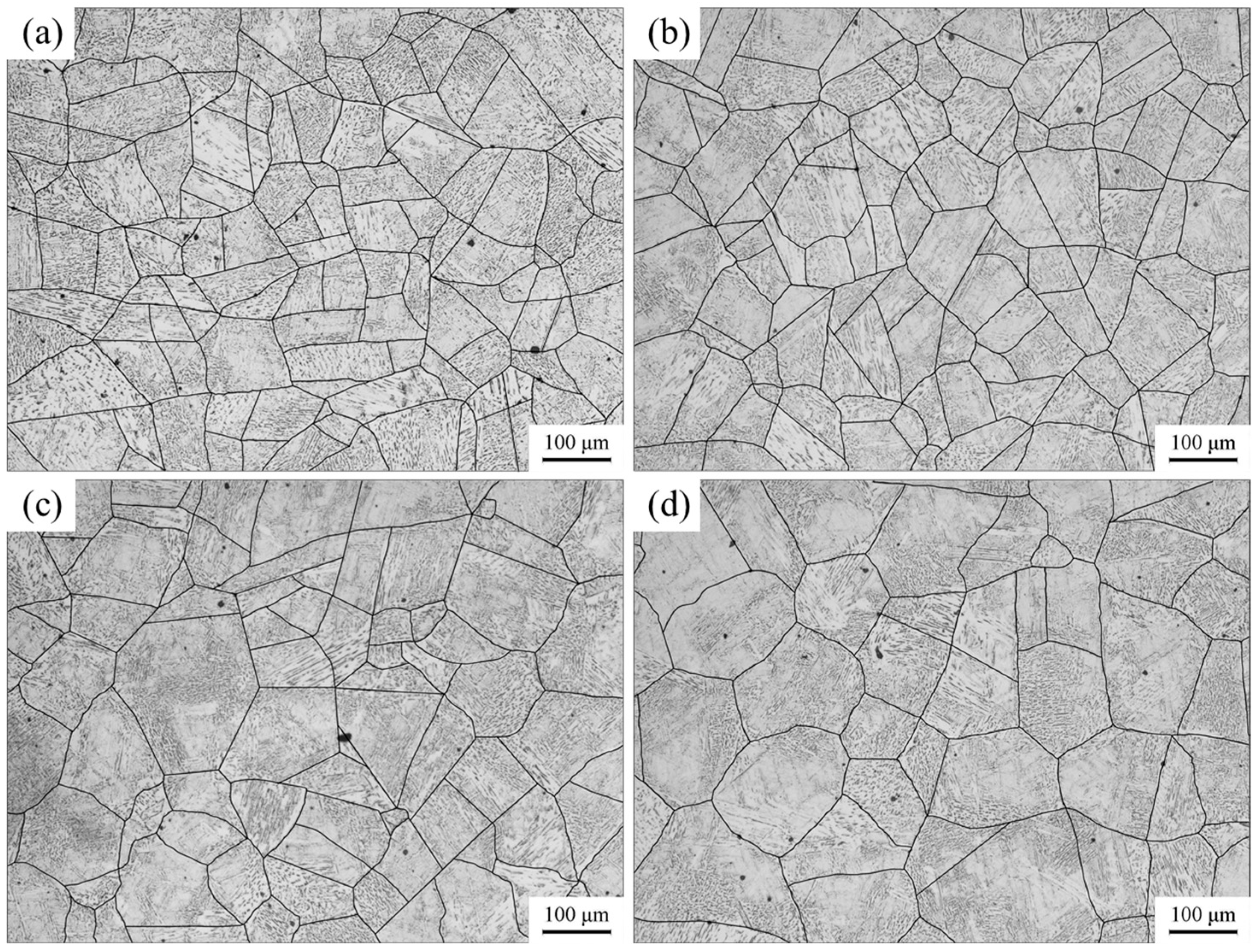
The observation results of prior austenite grains (PAGs) quenched at 800 °C during the cooling stage of welding thermal cycles under different heat inputs are shown in Figure 2. The black line in the figure represents the thickening of the original austenite grain boundary, and appropriately bolding the boundary of PAG is beneficial for analyzing the size changes of the PAGs. The results indicated that the size of the PAGs gradually increased with the rise in heat input.
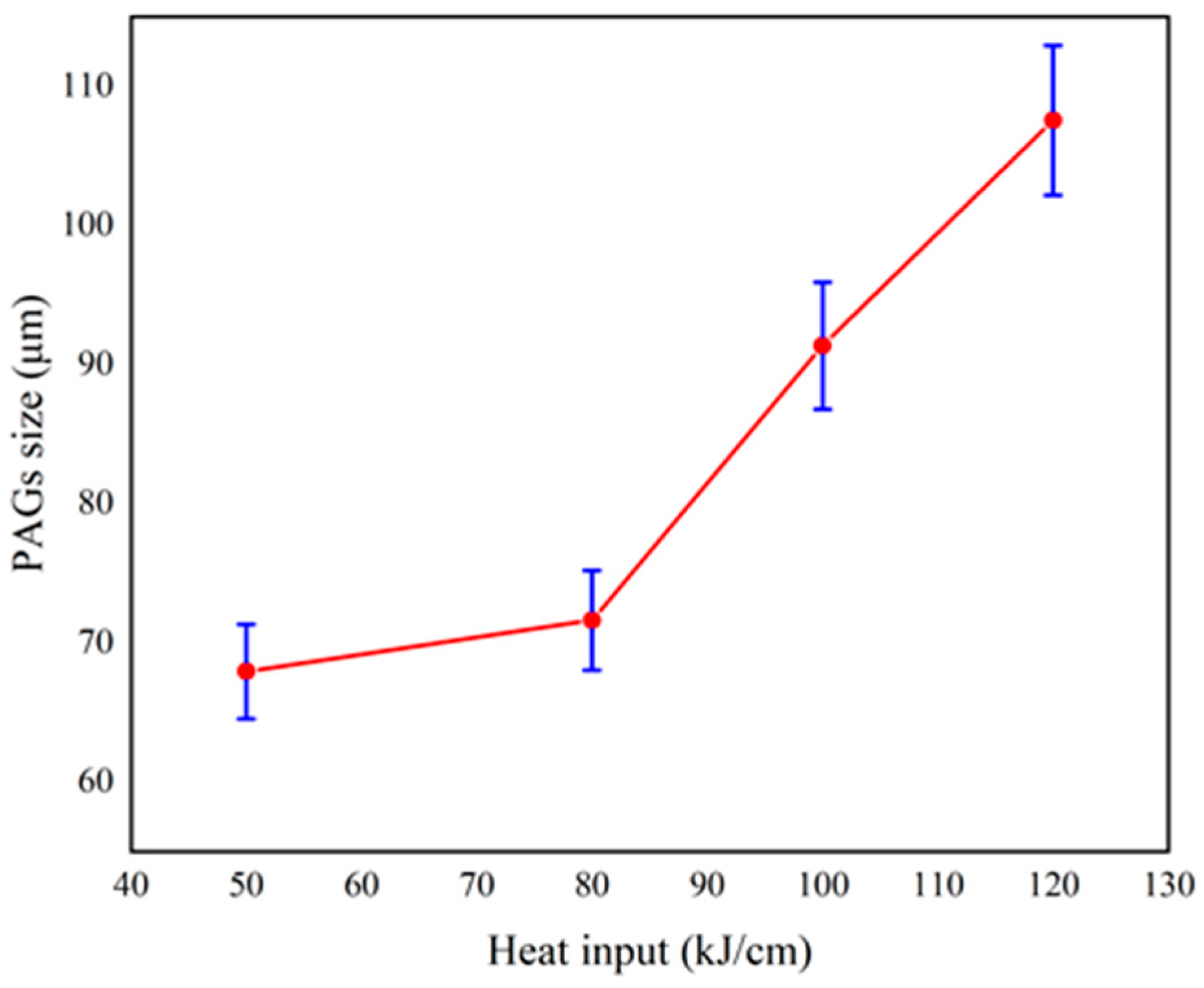
The statistical results of the average prior austenite grain size, measured using the linear intercept method in IPP 6.0 software, are presented in Figure 3. In the figure, the PAGs sizes corresponding to different heat inputs are connected by red lines, and the blue vertical lines represent error bars. When the heat input is 50 kJ/cm, the average size of austenite grains in CGHAZ is 67.9 ± 3.4 μm; when the heat input is 80 kJ/cm, the austenite grains slightly grow, and their size is 71.6 ± 3.6 μm; and when the heat input increased to 100 and 120 kJ/cm, the original austenite grains grow rapidly, with sizes reaching 91.4 ± 4.6 and 107.5 ± 5.4 μm.
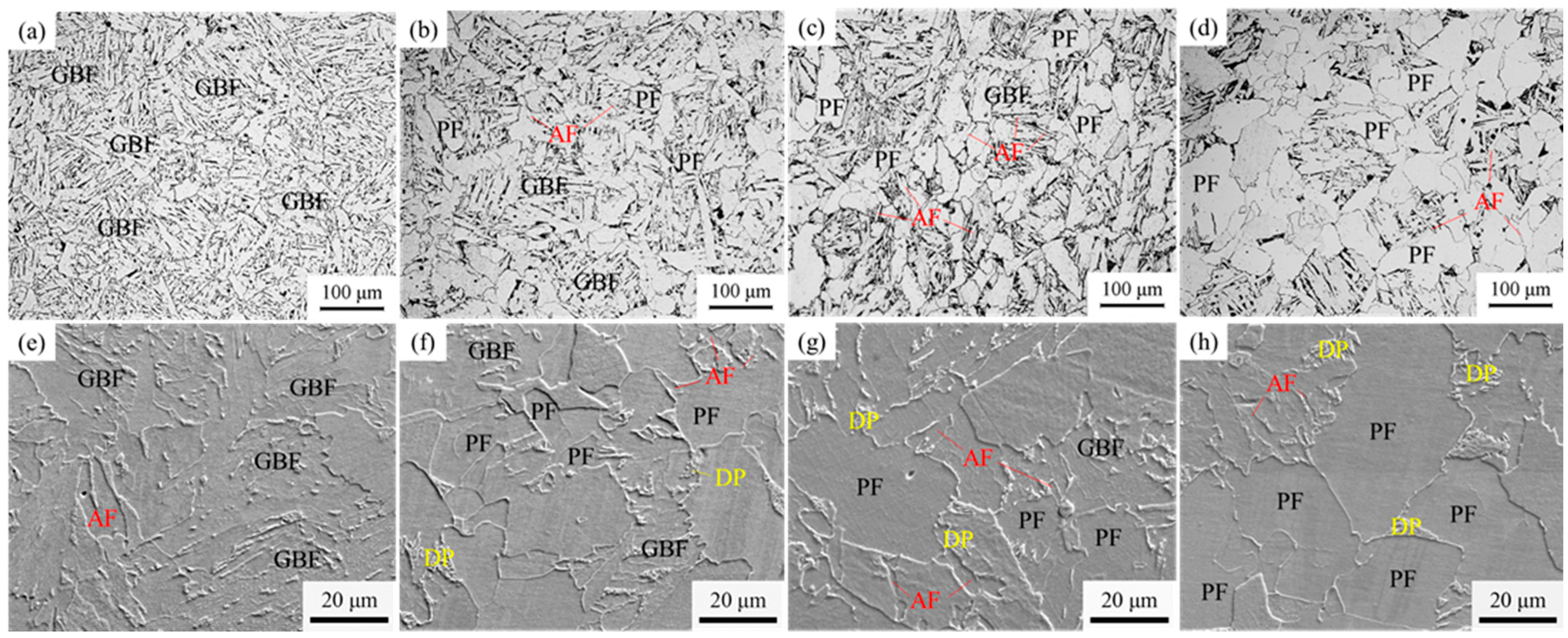
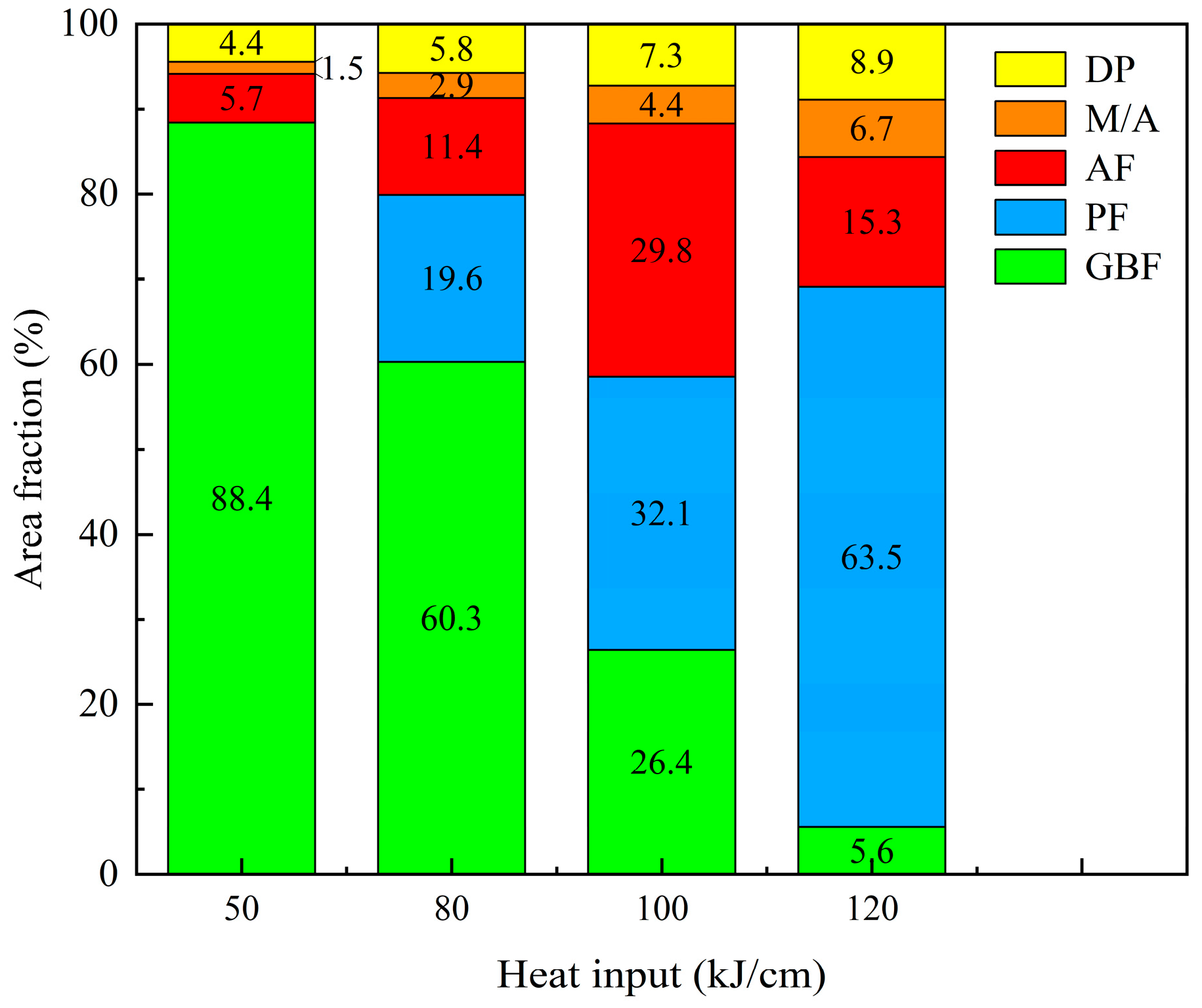
As shown in Figure 4, the microstructure OM and SEM characterization images of CGHAZ are included, and each microstructure structure is labeled in the figure. The field of view of OM images is 200X, and the field of view of SEM images is 1000X. In order to facilitate the statistical analysis of the microstructure composition in CGHAZ, 20 OM images and 10 SEM images were taken for each characterization sample, and the statistical results are plotted as a bar chart (Figure 5).
Combining the microstructural characterization and statistical data, it was found that with increasing heat input, the content of granular bainite decreased monotonically from 88.4 ± 4.4% to 5.6 ± 0.3%, while the content of polygonal ferrite increased monotonically from 19.6 ± 1.0% to 63.5 ± 3.2%. The contents of the hard phases, M/A and degenerated pearlite, showed a continuous upward trend. In contrast, the content of acicular ferrite exhibited an initial increase followed by a decrease, reaching its highest proportion of 29.8 ± 1.5% at a heat input of 100 kJ/cm.
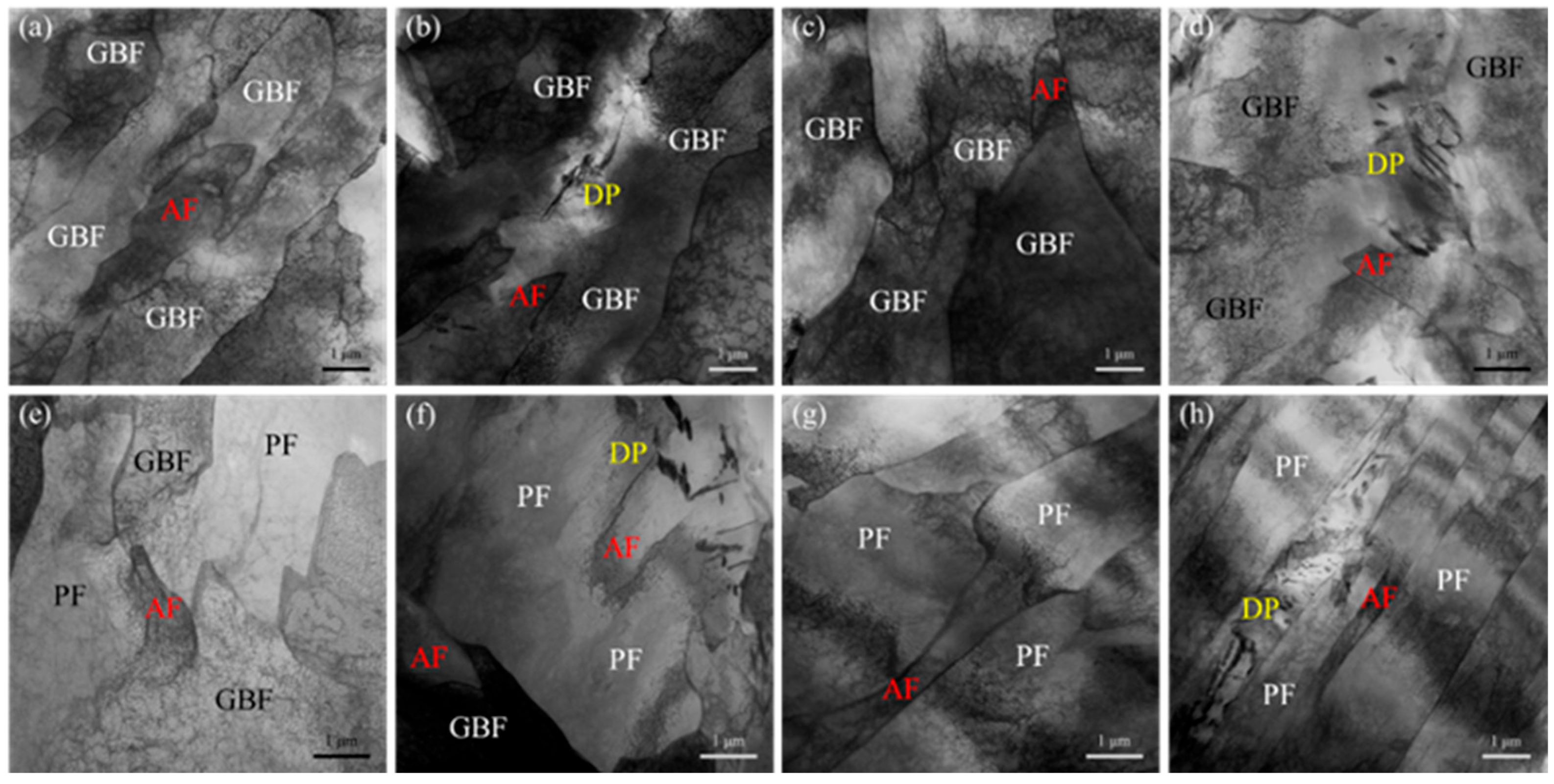
Figure 6 is a microstructure characterization image obtained by further observation and analysis of the microstructure of CGHAZ subjected to a series of thermal inputs using TEM. The microstructure composition presented in the TEM image is consistent with the OM and SEM images in Figure 4. As the heat input increases, the proportion of GB in CGHAZ decreases, and the number of AF and PF increases.
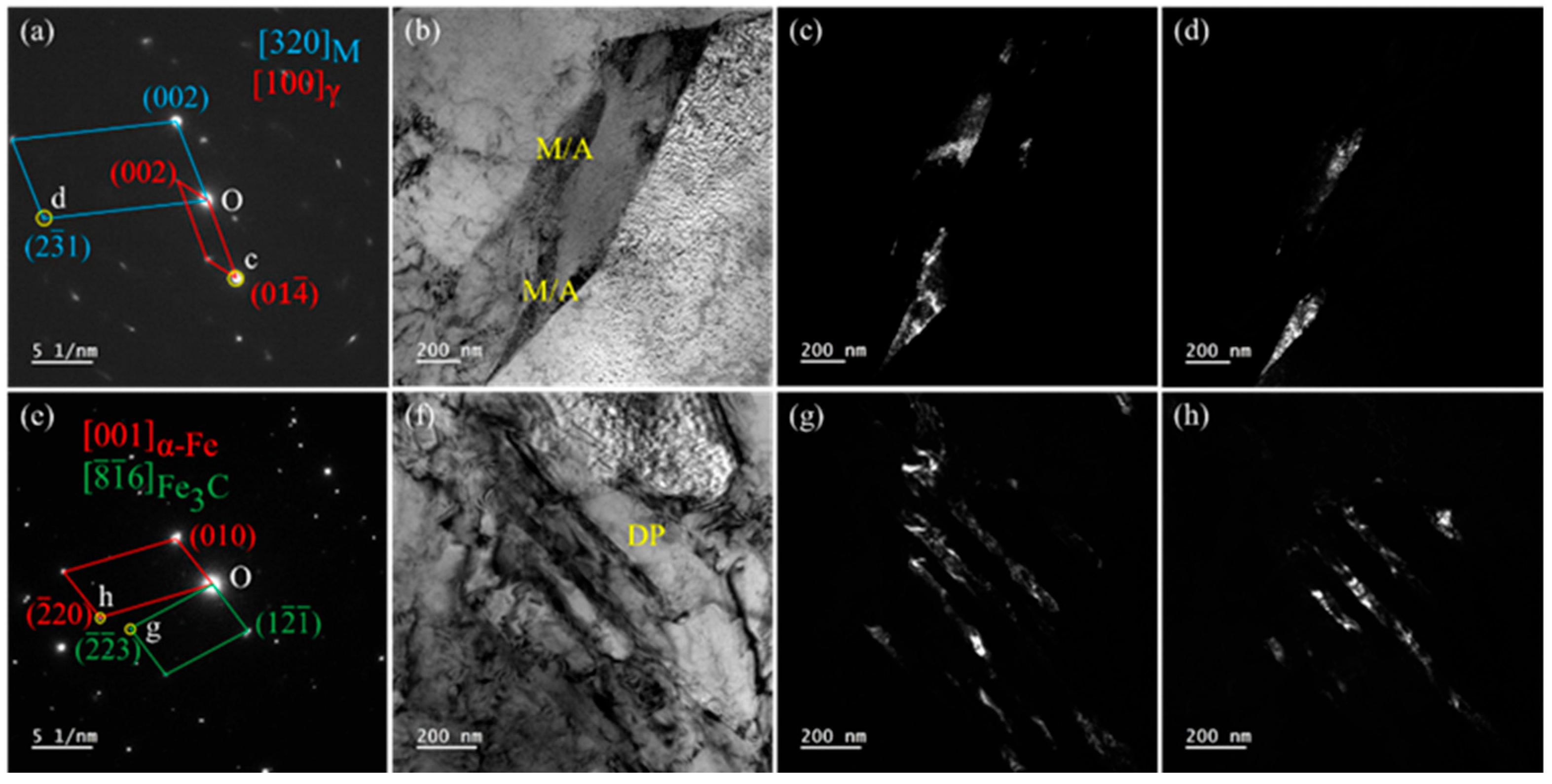
Island-shaped black structures and discontinuous lamellar structures distributed within the matrix were observed under TEM. Selected-area electron diffraction (SAED) analysis was performed on each of them, with the results being shown in Figure 7. Through indexing of the diffraction patterns and combined with their morphology, the island-shaped structures were identified as M/A constituents, while the discontinuous lamellar structures were determined to be DP composed of ferrite and cementite.
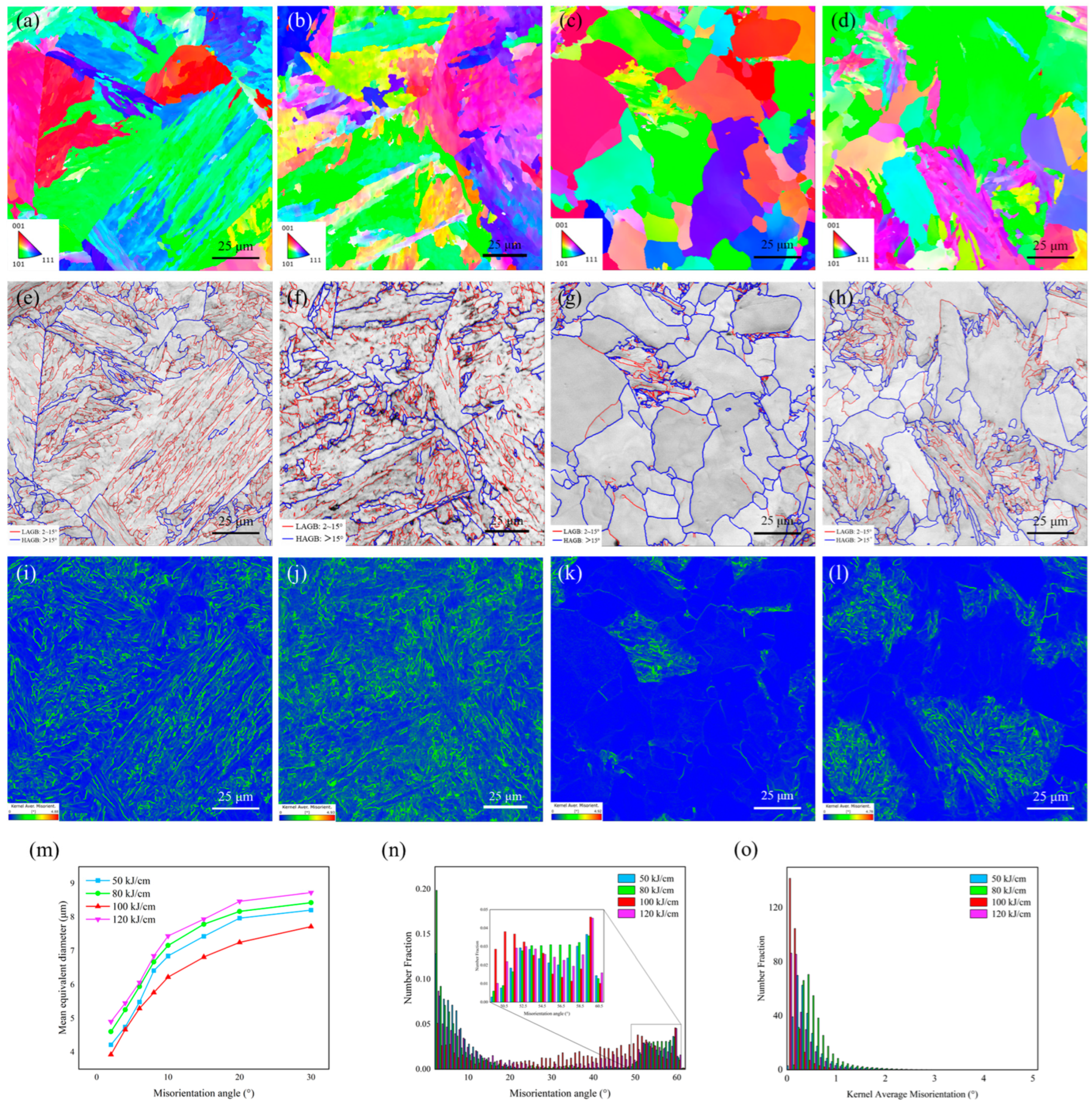
Figure 8a–i show three types of images obtained from EBSD analysis of the microstructure of CGHAZ subjected to a series of heat inputs, namely IPF images (Figure 8a–d), BC + GB images (Figure 8e–h), and KAM images (Figure 8i–l). It can be seen that the IPF diagram is composed of many color blocks of different colors. According to the legend, the orientation change between grains is the fundamental reason for the color change; The BC + GB plot reflects the distribution of grain boundaries at different angles in the CGHAZ, with the red line representing low-angle grain boundaries (LAGBs, with a misorientation tolerance angles ranging from 2° to 15°) and the blue line representing high-angle grain boundaries (HAGBs, with a misorientation tolerance angles > 15°). The function of the KAM diagram is to reflect the variation of microstrain in the CGHAZ through color changes.
The relationship between misorientation tolerance angle and mean equivalent diameter (MED) of grain size, as well as the distribution of misorientation tolerance angle (MTA) and microstrain in the CGHAZ microstructure subjected to a series of thermal inputs, were statistically analyzed, as shown in Figure 8m–o. Figure 8m shows the relationship between MTA and MED. The MED of the four samples corresponding to different heat inputs first increases rapidly with the increase in MTA, and then the growth rate gradually slows down. The MED of grains with boundaries at MTAs higher than 15° shows different trends of change, and the resulting outcomes are 7.63 μm (50 kJ/cm), 7.94 μm (80 kJ/cm), 6.82 μm (100 kJ/cm), and 7.23 μm (120 kJ/cm). Under a heat input of 100 kJ/cm, the grain refinement at the CGHAZ is maximized. On this basis, increasing or decreasing the heat input will weaken the grain refinement effect. Figure 8n shows the distribution of MTAs in CGHAZ under different heat inputs. Combining the results from Figure 8e–h, it can be observed that under the heat input condition of 100 kJ/cm, grain boundaries with misorientation tolerance angles higher than 15° accounted for the highest proportion. On the other hand, the average values of KAM shown in Figure 8o are in the following order: 0.58 ± 0.029° (50 kJ/cm) → 0.69 ± 0.035° (80 kJ/cm) → 0.79 ± 0.040° (100 kJ/cm) → 0.73 ± 0.037° (120 kJ/cm). At the same time, it was observed that the heterogeneity of local microscopic strain increased with the heat input.
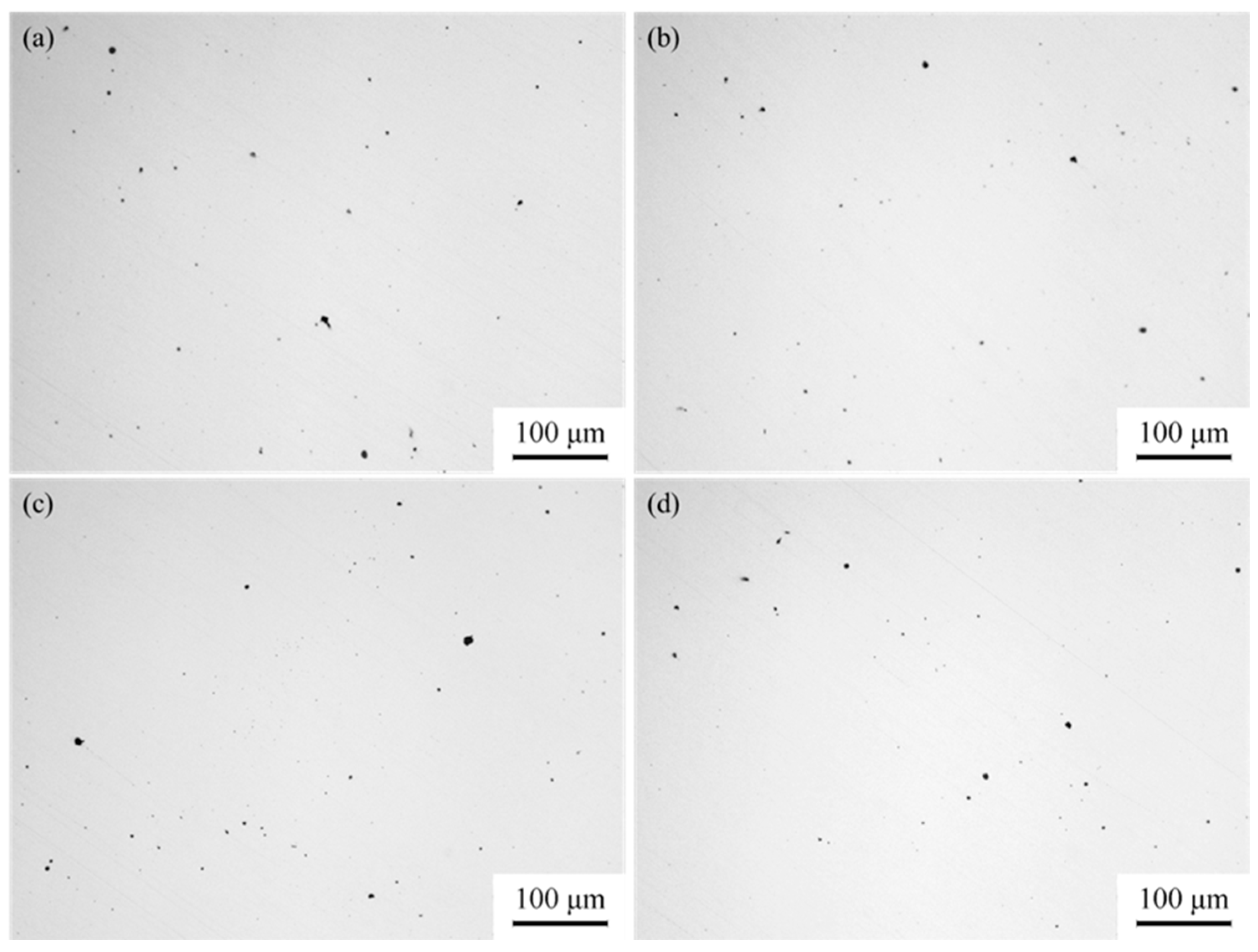
Meanwhile, OM was also employed to observe the inclusions in the CGHAZ under different heat inputs. The results, as shown in Figure 9, indicate that the inclusions were all dispersed within the matrix of the microstructure, with no significant differences observed.
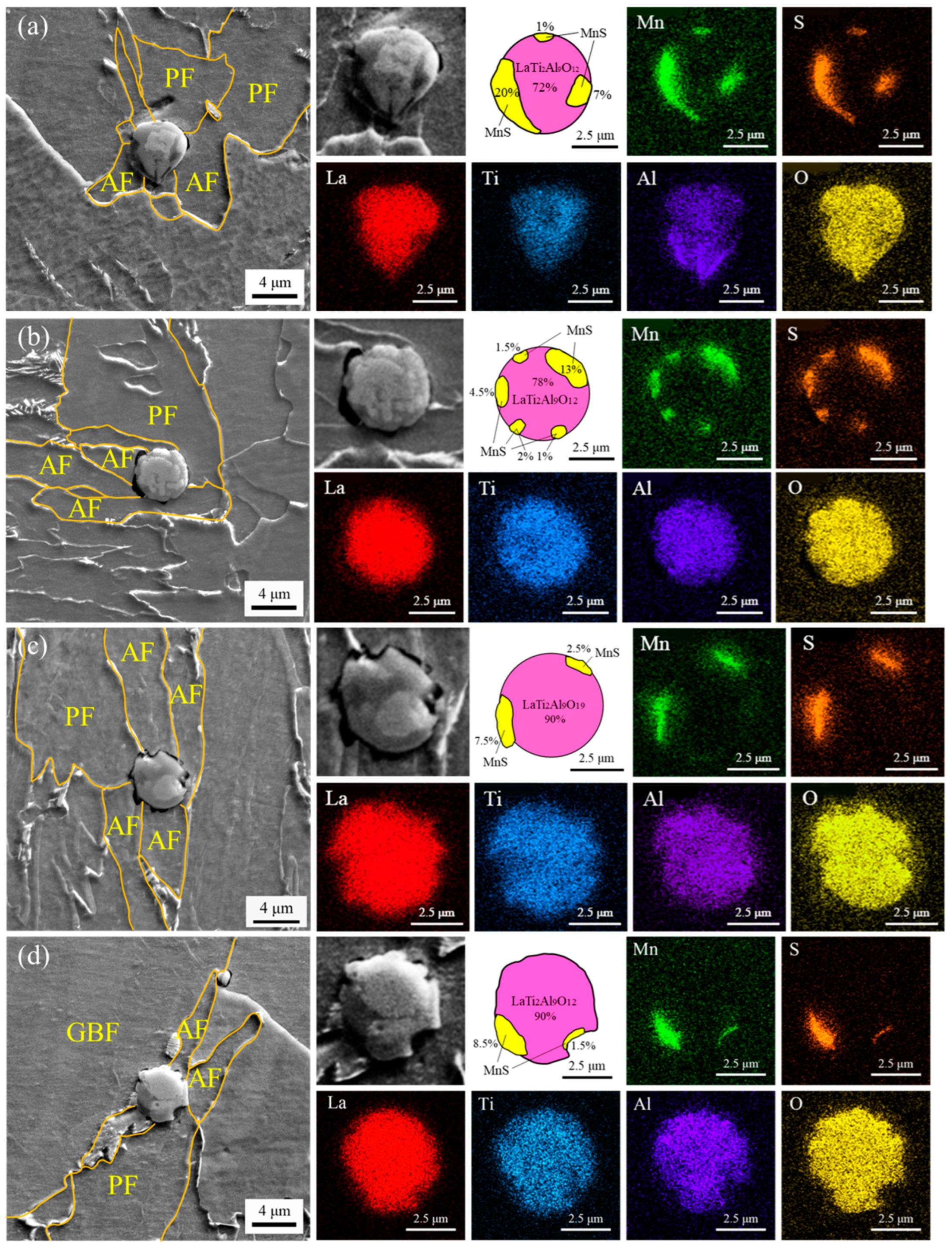
Furthermore, SEM-EDS was conducted to analyze the composition of inclusions in the CGHAZ under different heat inputs, with the results being presented in Figure 10. The yellow line and yellow font in the figure indicate the microstructure formed under the induction of inclusions. It can be concluded that the heat input had almost no effect on the composition of the inclusions. All types of inclusions were complex compounds consisting of Mn, S, Ti, Al, O, and La. Furthermore, it can be observed that this type of inclusion can play a role in inducing heterogeneous nucleation of ferrite.

3.2. Impact Property and Fracture Characterization

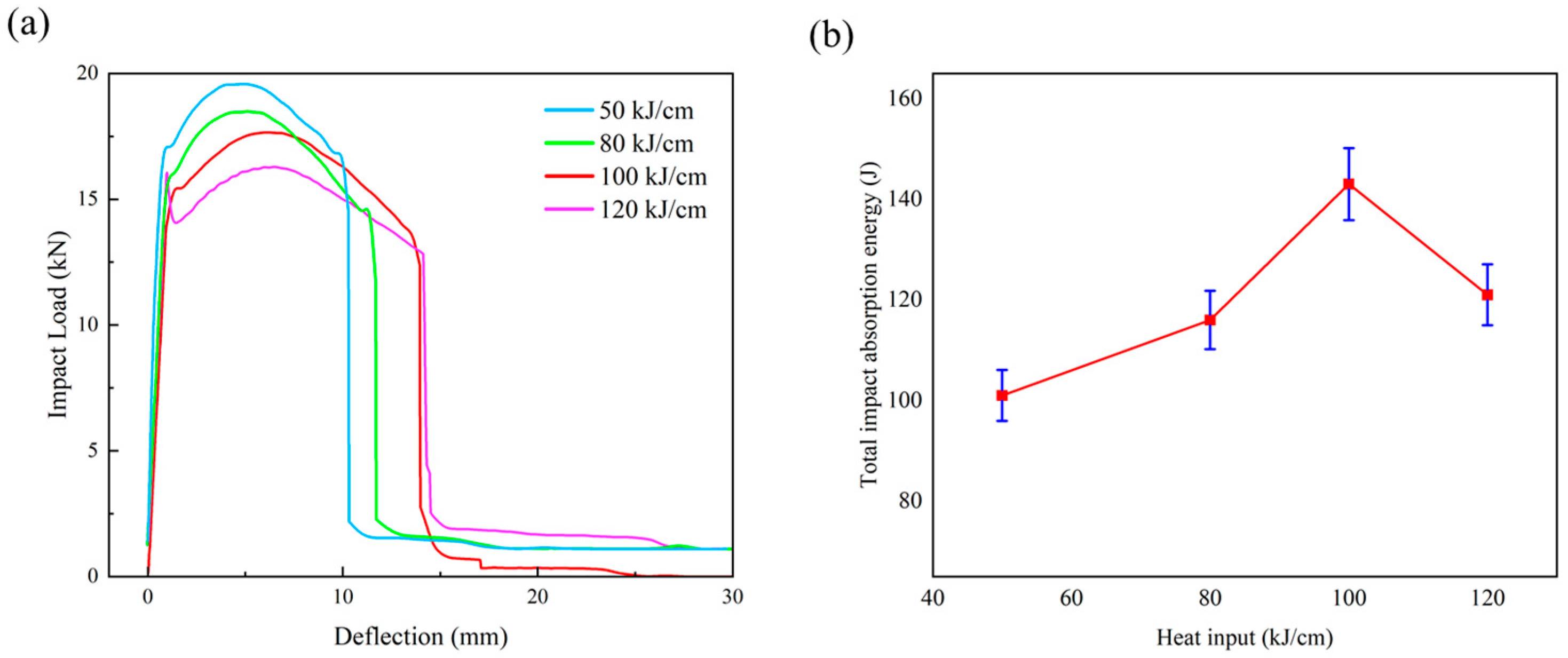
Figure 11a presents the typical load–deflection curves for the CGHAZ under different heat inputs. The area enclosed on the left side of the peak load is generally considered to represent the crack initiation energy (Ei), while the area on the right side represents the crack propagation energy (Ep). Figure 11b and Table 2 show the effect of heat input on the CGHAZ and the typical results from instrumented impact tests, respectively. The results indicate that as the heat input increased from 50 kJ/cm to 120 kJ/cm, the total impact energy (Et) first increased and then decreased. However, based on the results in Table 2, it can be observed that the Ei decreased monotonically with increasing heat input, whereas the Ep first increased and then decreased. The combined effect of the crack initiation energy and crack propagation energy resulted in the best impact toughness being achieved at a heat input of 100 kJ/cm.
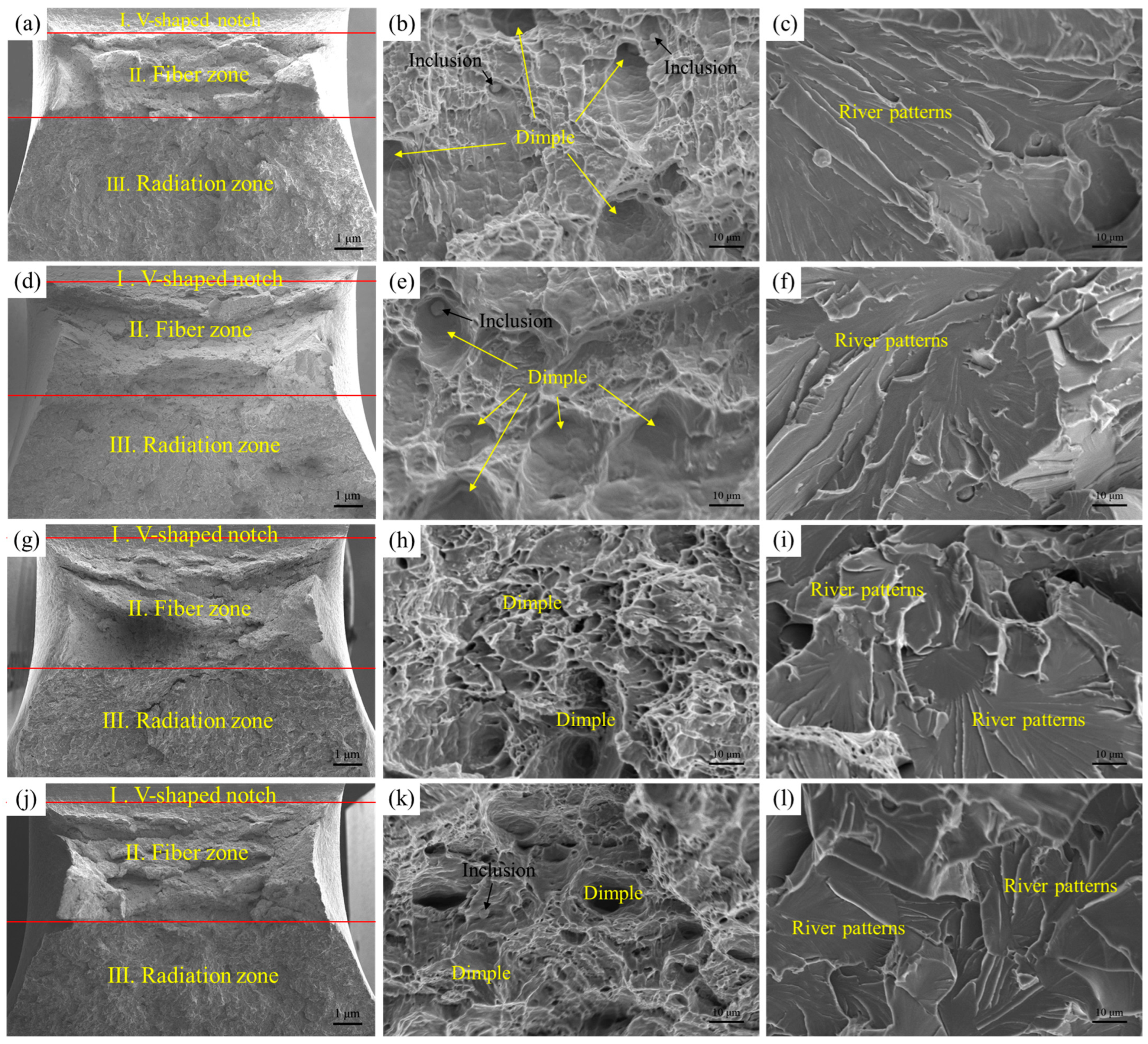
SEM characterization images of the impact fracture morphology corresponding to different welding heat inputs are presented in Figure 12. The surface of the entire main fracture is roughly composed of three parts: I. V-shaped notch; II. fiber zone; III. radiation zone.
The images in Figure 12b,e,h,k display the characteristics of the fiber region. This area exhibits a large number of ductile dimples, varying in size and shape, which correspond to some extent with the level of impact toughness. On fracture surfaces with poor impact toughness, the ductile dimples tend to appear as elongated parabolic shapes, as seen in Figure 12b. The impact specimen corresponding to a heat input of 50 kJ/cm shows the lowest impact energy and the poorest toughness. As illustrated in Figure 12e, the impact energy improves slightly at 80 kJ/cm heat input, where the dimples become smaller and more rounded compared with those in Figure 12b. Figure 12h demonstrates the most significant improvement in impact energy at 100 kJ/cm: the fiber region occupies the largest area and contains numerous small, well-rounded dimples. When the heat input is increased to 120 kJ/cm, as shown in Figure 12k, the impact energy decreases slightly, and the size distribution of the ductile dimples becomes more varied.
The radiating zone is primarily characterized by river patterns, accompanied by a small number of micro-tearing edges, micro-dimples, and cleavage steps. At lower heat inputs, large river patterns dominate, with fewer micro-tearing edges and cleavage steps present. As the heat input increases to 80 kJ/cm, the impact toughness improves, and the number of cleavage steps begins to rise. When the heat input reaches 100 kJ/cm, cleavage steps are most abundant, and a small number of micro-dimples appear at distinct fault locations. With a further increase in welding heat input to 120 kJ/cm, the micro-dimples gradually disappear as the faults diminish; no micro-dimples remain, and a considerable number of cleavage steps are still observed in the radiating zone.

4. Discussion

4.1. The CGHAZ Microstructure Evolution Mechanism Under Different Heat Inputs

4.1.1. Explanation of Microstructure Evolution of the CGHAZ from the Perspective of Phase Transition

According to Figure 2 and Figure 4 and their corresponding statistical results, it can be found that the increase in heat input raises the average size of the PAGs. On the other hand, the increase in heat input also leads to a monotonic decrease in the content of GBF, a monotonic increase in the content of PF, and a monotonic increase in the hard phases such as M/A constituents and DP. Meanwhile, the content of AF first increases and then decreases. This microstructure indicates that there is a significant difference in the transformation from austenite to ferrite during the cooling process of the welding thermal cycle [39,40,41,42]. The reasons for the differences in microstructure are explained as follows.
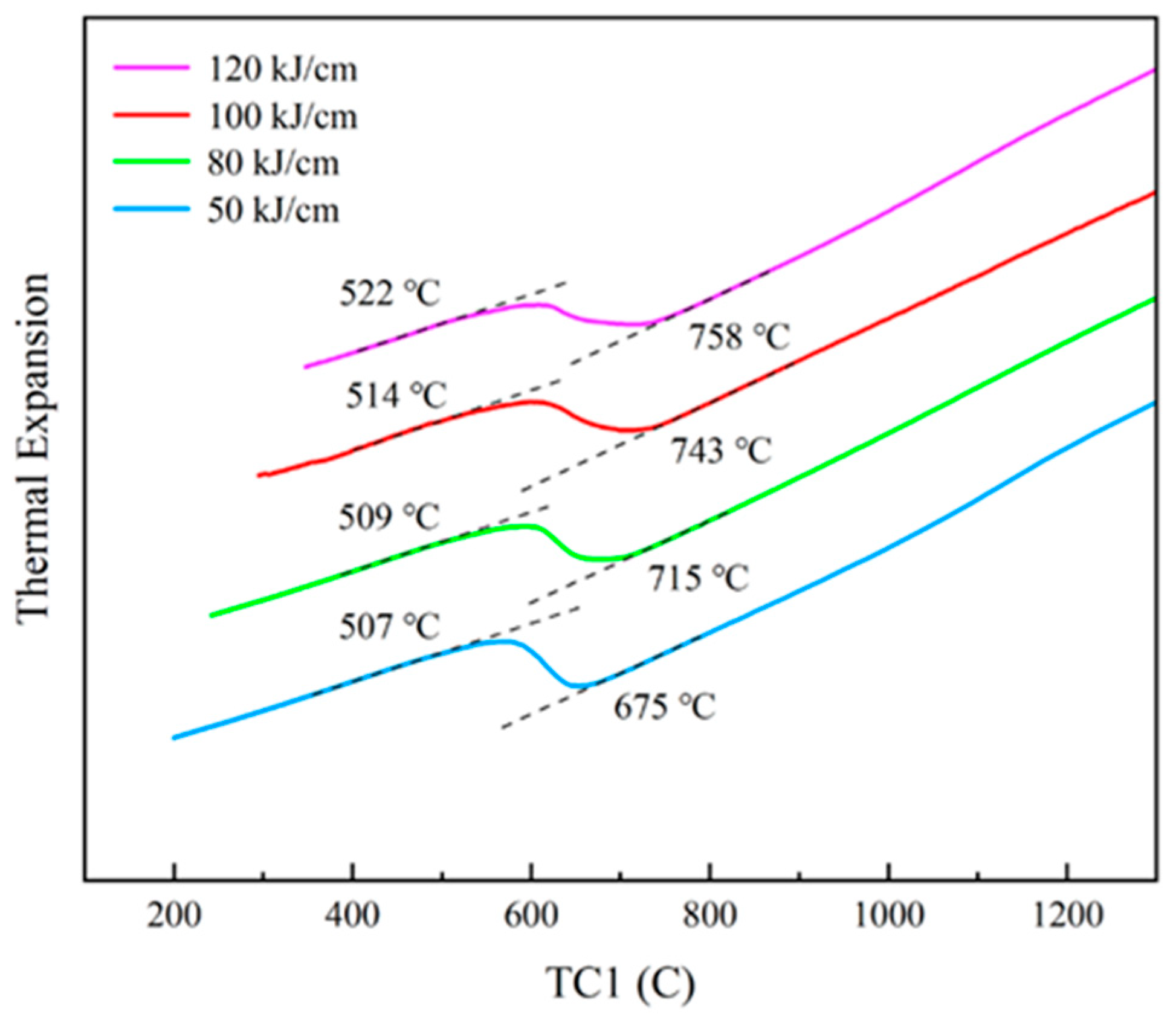
Under different heat input conditions, the measured dilatometric curves of the CGHAZ are shown in Figure 13. With the increase in heat input, the phase transformation starting temperature rises from 675 °C to 758 °C, and the phase transformation ending temperature increases from 507 °C to 522 °C. These results indicate that at a relatively low heat input of 50 kJ/cm, the phase transformation temperature is lower and the undercooling is greater, which is more conducive to the nucleation of bainitic ferrites such as GBF and AF. Compared with the heterogeneous nucleation of AF, GBF nucleates at grain boundaries. Under this heat input condition, the PAG size is fine (Figure 2a), providing a larger specific surface area with more regions of irregular atomic arrangement and lattice distortion, which offers excellent nucleation conditions for GBF. Although La-rich inclusions can reduce the misfit with ferrite and act as heterogeneous nucleation sites for ferrite (Figure 10), under this heat input, nucleation at grain boundaries dominates. Therefore, the matrix microstructure is mainly GBF. As the heat input increases to 80–100 kJ/cm, the PAGs coarsen, reducing nucleation sites at grain boundaries. La-rich inclusions fully exert their role in the heterogeneous nucleation of AF, leading to a decrease in GBF and an increase in AF. Simultaneously, the increase in heat input reduces the undercooling, promoting the nucleation of PF at grain boundaries or inclusions under low undercooling conditions, resulting in an increase in its content. When the heat input further increases to 120 kJ/cm, the undercooling further decreases, which promotes the nucleation of PF. Meanwhile, the nucleated bainitic ferrite undergoes significant coarsening due to the slower cooling rate. At a heat input of 100 kJ/cm, the proportion of AF reaches its highest level. This is because this condition simultaneously possesses two key factors: on the one hand, the PAGs have moderately coarsened, weakening grain boundary nucleation and reducing the formation of GBF; on the other hand, La-rich inclusions serve as effective heterogeneous nucleation cores, fully exerting their role under a relatively high cooling rate, promoting the formation of a large amount of AF. The combination of these two factors achieves an optimal balance in the nucleation quantity of AF.
Usually, there is a very close relationship between the size of PAGs and AF nucleation. LEE [43] established an empirical model to evaluate the nucleation ability of AF by observing the nucleation phenomenon of AF and the growth of PAGs. This empirical model mainly considers the size of PAGs and the volume fraction of AF. Yang et al. [44] found through heating (from 1100 to 1350 °C) that as the PAG size continued to increase, the volume fraction and relative nucleation ability of AF first increased and then decreased and reached the optimal ratio of PAG size to AF volume fraction at 1200 °C. Capdevila et al.’s study [45] showed that there are two methods to achieve large-scale nucleation of AF: one is to increase the size of PAGs, which will reduce the nucleation ability of GBF; the second is to optimize the composition type of inclusions, and composite non-metallic inclusions are more conducive to the nucleation of AF. Based on the above three studies, a larger PAG is more favorable for AF nucleation, but PAG is not necessarily better. It is also necessary to consider the competitive relationship between PF and AF, as well as whether the type of inclusions is beneficial for nucleation, which is consistent with the findings in this study.
Under different heat input conditions, the changes in the hard phases, M/A constituents and DP, in the CGHAZ are essentially closely related to the diffusion behavior of carbon (C) [46,47,48]. DP primarily forms through an interphase precipitation mechanism: During the γ→α phase transformation, C atoms undergo redistribution, creating carbon-depleted and carbon-enriched zones at the austenite grain boundaries. The carbon-depleted zones transform into α phase, while the carbon-enriched zones precipitate cementite, which then grows and extends along the γ/α interface into the austenite grain interior. Subsequently, the faster-growing α phase envelops the cementite, ultimately forming the DP structure.
The formation of M/A constituents is related to the redistribution of carbon between the γ and α phases during continuous cooling [46,49]. Since the solubility of C in the γ phase is much higher than in the α phase, C atoms diffuse from the α phase to the γ phase during transformation, forming metastable austenite (γ′). As the γ→α transformation proceeds, the carbon content in γ′ continuously enriches, gradually enhancing its thermodynamic stability. When cooled below the martensite transformation starting temperature, part of the γ′ transforms into martensite, while the remainder is retained as residual austenite; together they constitute the M/A constituent. Under lower heat input (50 kJ/cm) conditions, the microstructure is dominated by bainitic ferrite, which has a relatively high carbon content. This is not conducive to sufficient diffusion of carbon atoms and their enrichment at the γ′ interface to reach the critical concentration required for cementite nucleation. Therefore, the hard phase is predominantly M/A constituents, with a low DP content. As the heat input increases, bainitic ferrite decreases and PF increases. PF has a lower carbon content, which favors sufficient diffusion of carbon atoms and their enrichment at the γ′ interface to meet the nucleation conditions for the cementite phase, thereby promoting the nucleation and growth of DP. Overall, the increase in heat input promotes sufficient carbon diffusion. Consequently, the proportions of both DP and M/A constituents within the hard phases increase with rising heat input (Figure 4 and Figure 5).

4.1.2. Explanation of Microstructure Evolution of the CGHAZ from the Change in Misorientation Angle

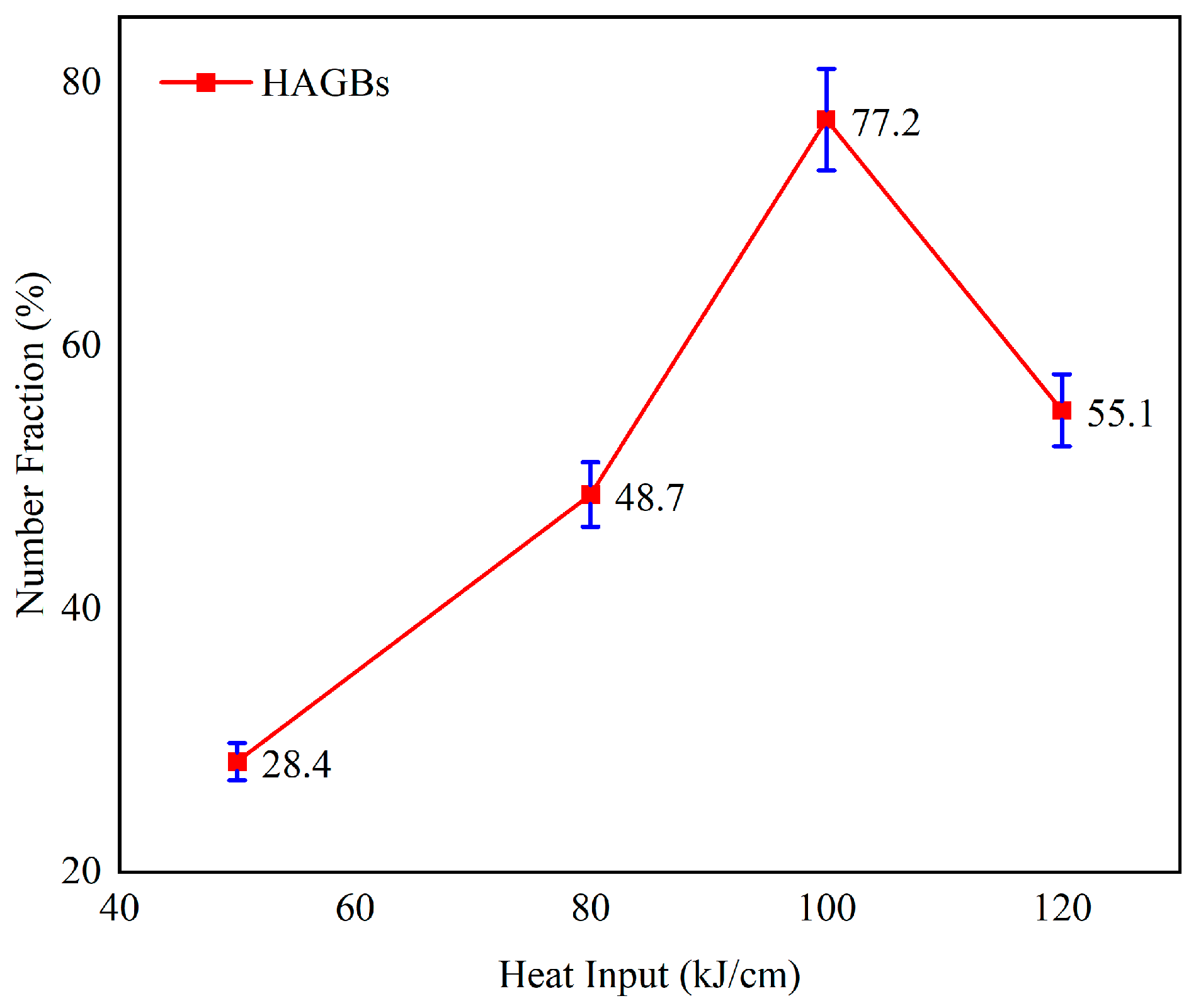
As shown in Figure 14, the data was obtained simultaneously with Figure 8 during EBSD analysis of the microstructure of the CGHAZ. The line graph reflects the trend of HAGBs changing with the increase in simulated welding heat input. When the heat input is less than 100 kJ/cm, HAGBs overall increase, and they reach the maximum value (77.2% ± 3.9%) when the heat input is 100 kJ/cm. There is a certain decline as the heat input increases to 120 kJ/cm.
The experimental results are consistent with the changes in HAGBs observed by Zhang et al. [24] with increasing heat input. Four heat inputs of 50/100/150/200 kJ/cm were designed in the literature, and the corresponding HAGBs first increased and then decreased with increasing heat input, with the highest number fraction (0.607) at 100 kJ/cm. In theory, when the heat input is less than 100 kJ/cm, the extensive formation of AF is the main factor leading to an increase in the number fraction of HAGBs; when the heat input is greater than 100 kJ/cm, the grain size continues to grow, the number of grain boundaries per unit area decreases, and the microstructure continues to coarsen, and this ultimately leads to a continuous decrease in the number fraction of HAGBs. Meanwhile, the improvement effect of HAGBs on impact toughness is significant, mainly due to their inhibitory effect on microcrack propagation, which can absorb residual stress caused by impact to the greatest extent possible.
Figure 14 shows a sharp increase in the number fraction of HAGBs when the heat input increases from 50 to 100 kJ/cm, which can be attributed to the heterogeneous nucleation effect of La inclusions. The number of HAGBs is proportional to the number of AFs, and the number of non-metallic inclusions in low-alloy steel is also proportional to the number of AFs. The design concept of low-carbon Nb-Ti-La steel is to utilize the modification effect of La and its great affinity with S/O to form a large number of non-metallic inclusions containing La inside the simulated welding joint, thereby promoting the nucleation of AF and rapidly increasing the number of HAGBs while improving the impact toughness of the simulated welding joint [14].

4.2. The Toughening Mechanism of the CGHAZ

In this study, as the heat input increased from 50 kJ/cm to 120 kJ/cm, the impact energy of the CGHAZ exhibited an initial increase followed by a decrease, with the optimal impact toughness achieved at a heat input of 100 kJ/cm. The total impact energy can be divided into Ei and Ep. Therefore, this paper reveals the underlying mechanism through which heat input influences impact toughness from these two aspects.
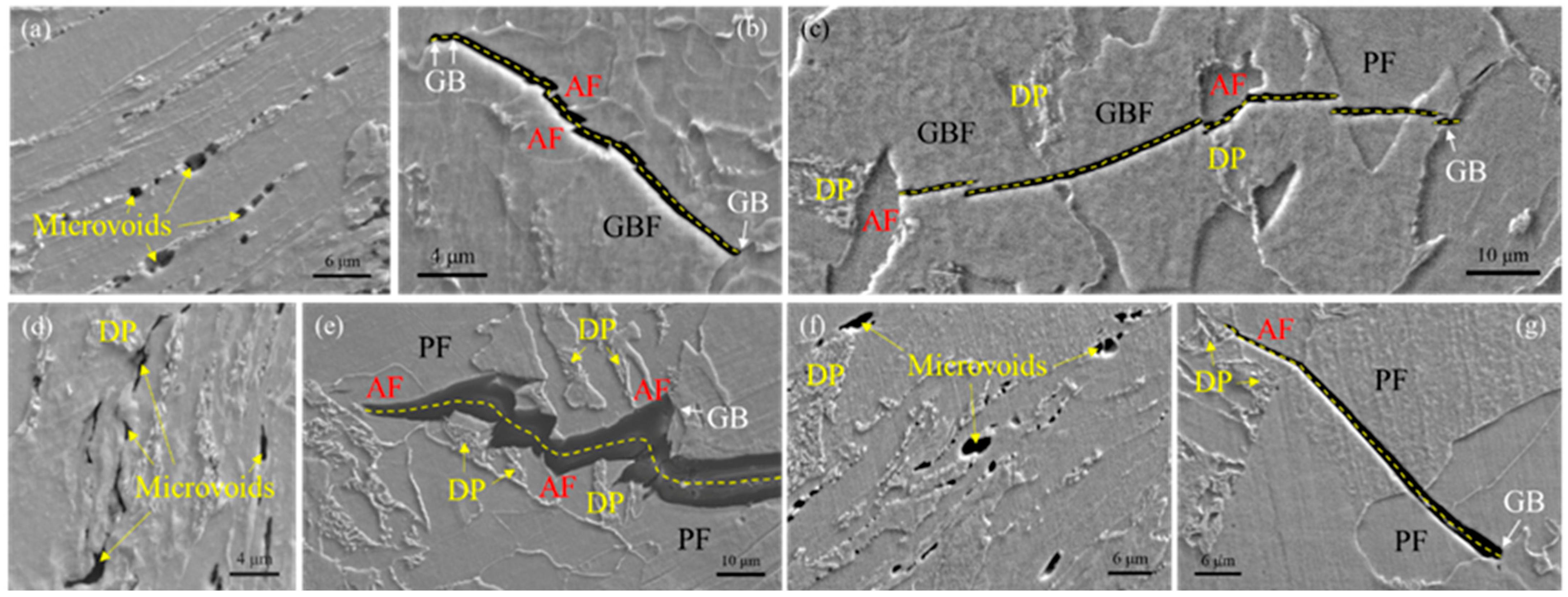
In the heat-affected zone of low-alloy steel, crack initiation is primarily associated with local embrittlement induced by hard and brittle phases within the microstructure [50,51,52]. Under impact loading, inhomogeneous plastic deformation occurs between the hard and brittle phases and the surrounding ferrite, leading to strain concentration around these phases. When the local strain accumulates to a certain extent, this inhomogeneous strain distribution can cause the initiation of microcracks or microcleavage around the hard and brittle phases. The KAM distribution in the CGHAZ under different heat input conditions is shown in Figure 8i–l. With increasing heat input, the inhomogeneity of microstrain distribution gradually intensifies. In this study, the hard and brittle phases mainly include DP, M/A constituents, and inclusions. Their behavior in promoting crack initiation is illustrated in Figure 15d,f. Although the influence of heat input on inclusions is limited, its increase significantly raises the content of DP and M/A constituents, thereby enhancing the sensitivity to local crack initiation. Consequently, as the heat input increases, the Ei gradually decreases (Figure 11 and Table 1).
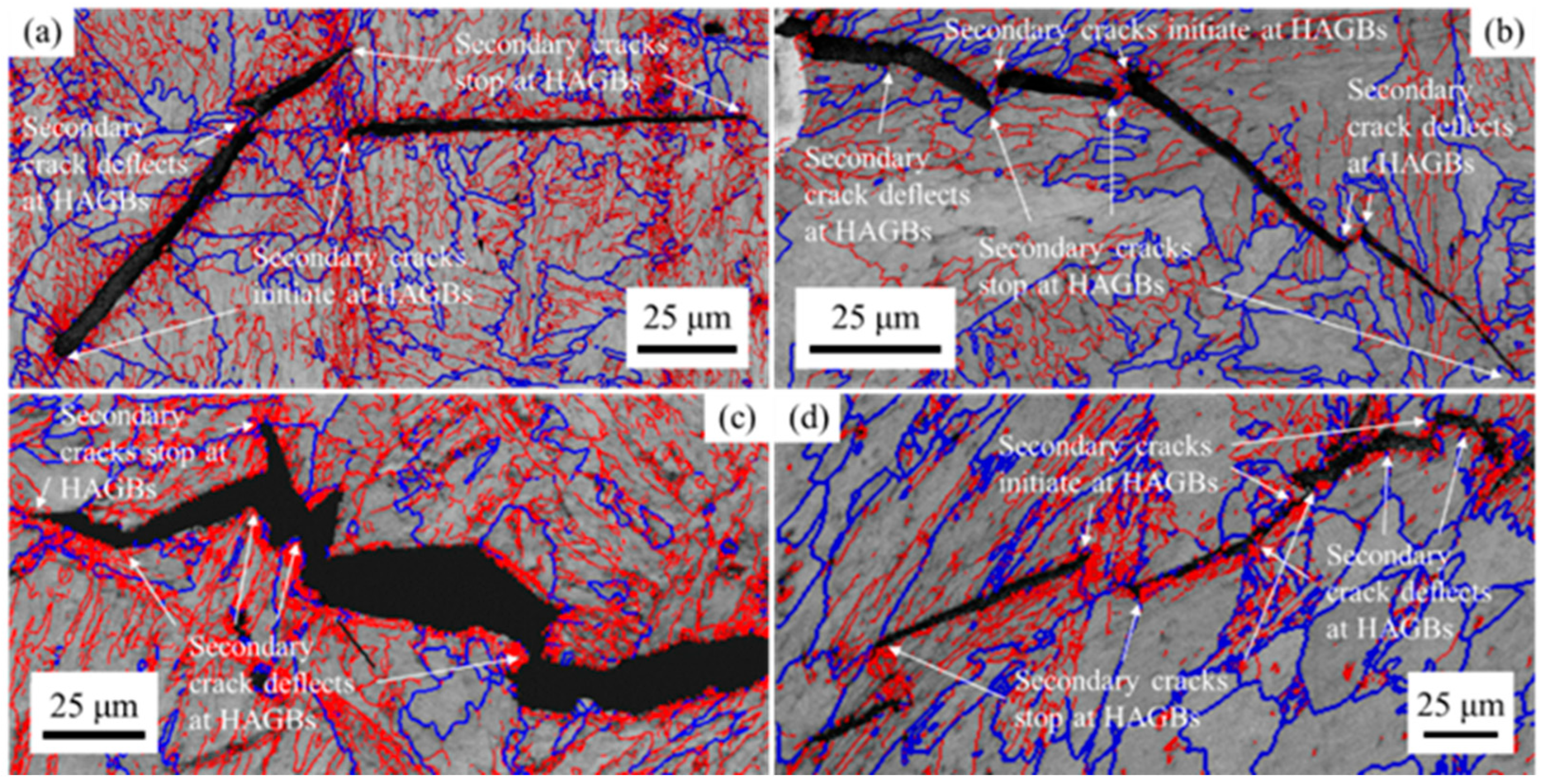
To clarify the crack propagation mechanism, the main fracture surface was sectioned perpendicular to the V-notch, and the propagation behavior of secondary cracks in the radial zone was observed (results shown in Figure 15). Analysis revealed that under different heat input conditions, GBF exhibits almost no hindrance to crack propagation, whereas the grain boundaries of AF and PF significantly impede crack propagation. As the grain size increases, the crack propagation length also markedly increases. Through EBSD characterization of the secondary crack regions (Figure 16), where low-angle grain boundaries are marked with red lines and high-angle grain boundaries with blue lines, the results demonstrate that high-angle grain boundaries (HAGBs) play a clear role in hindering crack propagation.
Thus, the magnitude of Ep is primarily determined by the density of HAGBs. When the heat input ranges from 50 to 80 kJ/cm, the CGHAZ is dominated by GBF, resulting in a lower proportion of HAGBs and consequently lower Ep. In contrast, as the heat input increases to 100–120 kJ/cm, AF and PF become the predominant phases, providing a high proportion of HAGBs that effectively hinder crack propagation, leading to a significant increase in Ep. Notably, compared with the condition of 120 kJ/cm, the CGHAZ at 100 kJ/cm exhibits a higher density of HAGBs per unit area, which offers stronger crack deflection and obstruction effects, thereby yielding the optimal Ep.
Thus, the combined effects of Ei and Ep result in the CGHAZ exhibiting the optimal impact toughness at a heat input of 100 kJ/cm.

5. Conclusions

This study investigated the influence of different welding heat inputs on the microstructure and impact toughness of the CGHAZ in low-carbon Nb-Ti-La steel, elucidating the relationship between the CGHAZ microstructure and impact performance. The following conclusions are drawn:
(1)
With increasing heat input (from 50 to 120 kJ/cm), the microstructure of the CGHAZ transitions from predominantly GBF to PF, accompanied by a continuous increase in the proportion of hard phases (M/A constituents, DP). The content of AF first increased and then decreased, reaching its peak at HI = 100 kJ/cm (29.8 ± 1.5%).
(2)
The optimal impact toughness (Et = 143 ± 7.2 J) is achieved at a heat input of 100 kJ/cm. This corresponds to the condition yielding the maximum volume fraction of AF and the highest density of HAGBs.
(3)
The overall toughness is governed by the competing effects of crack initiation energy and crack propagation energy. Higher heat input generally reduces crack initiation energy due to increased hard phases, while the peak in crack propagation energy at 100 kJ/cm is attributed to the unique AF-dominated microstructure.

Author Contributions

Conceptualization, Q.W. (Qiuming Wang) and Q.W. (Qingfeng Wang); methodology, Q.W. (Qiuming Wang); software, Q.W. (Qiuming Wang); validation, S.W. and Q.W. (Qingfeng Wang); formal analysis, R.L.; investigation, Q.W. (Qiuming Wang); resources, R.L.; data curation, Q.W. (Qiuming Wang); writing—original draft preparation, Q.W. (Qiuming Wang); writing—review and editing, Q.W. (Qiuming Wang) and Q.W. (Qingfeng Wang); visualization, S.W.; supervision, Q.W. (Qingfeng Wang) and R.L.; project administration, Q.W. (Qingfeng Wang) and R.L. All authors have read and agreed to the published version of the manuscript.

Funding

This research received no external funding.

Data Availability Statement

The original contributions presented in this study are included in the article; further inquiries can be directed to the corresponding author.

Conflicts of Interest

The authors declare no conflicts of interest.

References

  1. Wang, B.; Lian, J. Effect of Microstructure on Low-Temperature Toughness of a Low Carbon Nb–V–Ti Microalloyed Pipeline Steel. Mater. Sci. Eng. A 2014, 592, 50–56. [Google Scholar] [CrossRef]
  2. Yang, Y.; Jia, X.; Ma, Y.; Wang, P.; Zhu, F. Effect of Nb on Inclusions and Phase Transformation in Simulated High Heat Input Coarse-Grain HAZ of Nb/Ti Low Carbon Microalloyed Steel. Mater. Charact. 2022, 189, 111966. [Google Scholar] [CrossRef]
  3. Liu, J.; Wang, J.; Hu, F.; Fu, K.; Zhang, Z.; Wu, Y. Effects of Ti/N Ratio on Coarse-Grain Heat-Affected Zone Microstructure Evolution and Low-Temperature Impact Toughness of High Heat Input Welding Steel. Coatings 2023, 13, 1347. [Google Scholar] [CrossRef]
  4. Ma, X.; Li, X.; Langelier, B.; Gault, B.; Subramanian, S.; Collins, L. Effects of Carbon Variation on Microstructure Evolution in Weld Heat-Affected Zone of Nb-Ti Microalloyed Steels. Metall. Mater. Trans. A 2018, 49, 4824–4837. [Google Scholar] [CrossRef]
  5. Wang, X.; Song, R.; Chen, H.; Chen, X.; Huo, W.; Zhao, S. Mechanical Properties and Nanoparticle Precipitation Behavior of Nb-Ti and Nb-V Ultra-High-Strength Microalloyed Steels. J. Mater. Eng. Perform. 2025, 34, 27768–27784. [Google Scholar] [CrossRef]
  6. Torkamani, H.; Raygan, S.; Garcia Mateo, C.; Rassizadehghani, J.; Palizdar, Y.; San-Martin, D. Contributions of Rare Earth Element (La,Ce) Addition to the Impact Toughness of Low Carbon Cast Niobium Microalloyed Steels. Met. Mater. Int. 2018, 24, 773–788. [Google Scholar] [CrossRef]
  7. Cheng, S.; Hou, T.; Zheng, Y.; Yin, C.; Wu, K. Effect of Rare Earth Elements on Microstructure and Tensile Behavior of Nb-Containing Microalloyed Steels. Materials 2024, 17, 1701. [Google Scholar] [CrossRef]
  8. Luo, D.; Liu, M.; Jiang, X.; Yu, Y.; Zhang, Z.; Feng, X.; Lai, C. Effect of Yttrium-Based Rare Earth on Inclusions and Cryogenic Temperature Impact Properties of Offshore Engineering Steel. Crystals 2022, 12, 305. [Google Scholar] [CrossRef]
  9. Liang, W.; Geng, R.; Zhi, J.; Li, J.; Huang, F. Oxide Metallurgy Technology in High Strength Steel: A Review. Materials 2022, 15, 1350. [Google Scholar] [CrossRef]
  10. Song, M.; Song, B.; Yang, Z.; Zhang, S.; Hu, C. Effects of Mn and Al on the Intragranular Acicular Ferrite Formation in Rare Earth Treated C–Mn Steel. High Temp. Mater. Processes 2017, 36, 683–691. [Google Scholar] [CrossRef]
  11. Zhang, T.; Wang, W.; Ma, Y.; Fang, N.; Lin, S.; Li, Z.; Kou, S. In Situ Observation of Microstructural and Inclusions Evolution in High-Strength Steel Deposited Metals with Various Rare Earth Pr Contents. Materials 2022, 15, 1257. [Google Scholar] [CrossRef]
  12. Song, M.; Song, B.; Zhang, S.; Xue, Z.; Yang, Z.; Xu, R. Role of Lanthanum Addition on Acicular Ferrite Transformation in C–Mn Steel. ISIJ Int. 2017, 57, 1261–1267. [Google Scholar] [CrossRef]
  13. Geng, R.; Li, J.; Shi, C.; Zhi, J.; Lu, B. Effect of Ce on Microstructures, Carbides and Mechanical Properties in Simulated Coarse-Grained Heat-Affected Zone of 800-MPa High-Strength Low-Alloy Steel. Mater. Sci. Eng. A 2022, 840, 142919. [Google Scholar] [CrossRef]
  14. Wang, Q.; He, J.; Wang, Q.; Liu, R. The Role of La–Ti–Al–O Complex Inclusions in Microstructure Refinement and Toughness Enhancement of the Coarse-Grained Heat-Affected Zone in High-Heat-Input Welding. Metals 2025, 15, 1105. [Google Scholar] [CrossRef]
  15. Jia, J.; Hou, L.; Wang, H.; Du, H.; Wang, Y. Effect of La and La2O3 on Microstructural Evolution and Enhanced Mechanical Properties in Low-Alloy Cast Steel. Mater. Charact. 2025, 229, 115489. [Google Scholar] [CrossRef]
  16. Wang, Y.; Zhu, R.; Ma, H.; Ding, G.; Liang, L.; Sun, W.; Wang, Y. Effect of Rare Earth Element Ce on Nanoscale (Ti, Nb) C Precipitates and Mechanical Properties of High-Strength Low-Alloy Weathering Steel. Materials 2025, 18, 3033. [Google Scholar] [CrossRef] [PubMed]
  17. Park, M.; Kim, J.; Pyo, C. A Study on Heat Input Control and a Quality Evaluation Algorithm to Prevent Toughness Deterioration of the Heat-Affected Zone in the Fiber Laser Welding Process of ASTM A553-1 (9% Nickel Steel) Material. Metals 2022, 12, 1195. [Google Scholar] [CrossRef]
  18. Zhang, J.; Xin, W.; Luo, G.; Wang, R.; Meng, Q.; Xian, S. Effect of Welding Heat Input on Microstructural Evolution, Precipitation Behavior and Resultant Properties of the Simulated CGHAZ in High-N V-Alloyed Steel. Mater. Charact. 2020, 162, 110201. [Google Scholar] [CrossRef]
  19. Amer, A.E.; Koo, M.Y.; Lee, K.H.; Kim, S.H.; Hong, S.H. Effect of Welding Heat Input on Microstructure and Mechanical Properties of Simulated HAZ in Cu Containing Microalloyed Steel. J. Mater. Sci. 2010, 45, 1248–1254. [Google Scholar] [CrossRef]
  20. Deng, H.; Liu, Z.; Wang, X.; Ma, J.; Han, F.; Wang, Z. Effect of Heat Input on the Microstructure and Mechanical Properties of the Simulated Coarse-Grained Heat-Affected Zone (CGHAZ) of Novel Twining-Induced Plasticity (TWIP) Steel. Mater. Today Commun. 2022, 33, 104407. [Google Scholar] [CrossRef]
  21. Yang, X.; Di, X.; Liu, X.; Wang, D.; Li, C. Effects of Heat Input on Microstructure and Fracture Toughness of Simulated Coarse-Grained Heat Affected Zone for HSLA Steels. Mater. Charact. 2019, 155, 109818. [Google Scholar] [CrossRef]
  22. Hao, J.; Wang, C.; Duan, H.; Yan, Z.; Yuan, G.; Wang, G. Synergistic Effects of Ti–N–B Additions on Microstructure Refinement and Toughness Enhancement in High-Heat-Input Welded CGHAZ. J. Mater. Res. Technol. 2025, 38, 692–701. [Google Scholar] [CrossRef]
  23. Zhou, P.; Wang, B.; Wang, L.; Hu, Y.; Zhou, L. Effect of Welding Heat Input on Grain Boundary Evolution and Toughness Properties in CGHAZ of X90 Pipeline Steel. Mater. Sci. Eng. A 2018, 722, 112–121. [Google Scholar] [CrossRef]
  24. Zhang, J.; Xin, W.; Ge, Z.; Luo, G.; Peng, J. Effect of High Heat Input Welding on the Microstructures, Precipitates and Mechanical Properties in the Simulated Coarse Grained Heat Affected Zone of a Low Carbon Nb-V-Ti-N Microalloyed Steel. Mater. Charact. 2023, 199, 112849. [Google Scholar] [CrossRef]
  25. Liu, Y.; Ma, H.; Wang, Z.; Chen, X.; Huo, X.; Wu, H.; Du, L. Effect of Heat Input on Microstructural Evolution and Impact Toughness of the Simulated CGHAZ for a Novel Q690 MPa V-N Medium and Heavy Plate. Materials 2025, 18, 1148. [Google Scholar] [CrossRef] [PubMed]
  26. Yang, F.; Zhang, S.; Niu, Z.; Gao, F.; Chen, C.; Gao, F.; Zhang, Z. Effect of Heat Input on Microstructure and Impact Toughness of X80 FCAW-S Weld Joint. J. Mater. Res. Technol. 2026, 41, 1727–1739. [Google Scholar] [CrossRef]
  27. Tong, Z.; Wen, Q.; Wang, H.; Zhou, H.; Zheng, W. Effect of Heat Input on the Microstructure and Hydrogen Embrittlement Susceptibility of the Coarse-Grain Heat-Affected Zone of CrMo Steels Generated Using a Gleeble 3500 Welding Simulator. Eng. Fail. Anal. 2024, 166, 108868. [Google Scholar] [CrossRef]
  28. Li, L.C.; Chai, M.Y.; Li, Y.Q.; Bai, W.J.; Duan, Q. Effect of Welding Heat Input on Grain Size and Microstructure of 316L Stainless Steel Welded Joint. Appl. Mech. Mater. 2013, 331, 578–582. [Google Scholar] [CrossRef]
  29. Deng, X.-X.; Wang, X.-H.; Jiang, M.; Hu, Z.-Y.; Shao, X.-J.; Wang, W.-J. Effect of inclusions on the formation of intra-granular acicular ferrite in steels containing rare earth elements. Chin. J. Eng. 2012, 34, 535–540. [Google Scholar] [CrossRef]
  30. Wang, L.; Song, B.; Liu, Z.; Cui, X.; Li, L. Effect of La Content on Inclusions and Microstructure of C–Mn Steel Treated by Ti–Mg–Ca. In Proceedings of the 11th International Symposium on High-Temperature Metallurgical Processing; Peng, Z., Hwang, J.-Y., Downey, J.P., Gregurek, D., Zhao, B., Yücel, O., Keskinkilic, E., Jiang, T., White, J.F., Mahmoud, M.M., Eds.; Springer International Publishing: Cham, Switzerland, 2020; pp. 455–464. [Google Scholar]
  31. Xie, Y.; Song, M.; Zhu, H.; Li, J.; Ma, G.; Xue, Z. Effect of Lanthanum Content on the Formation of Acicular Ferrite. Metall. Mater. Trans. B 2022, 53, 1484–1494. [Google Scholar] [CrossRef]
  32. Wang, L.; Song, B.; Yang, Z.; Cui, X.; Liu, Z.; Cheng, W.; Mao, J. Effects of Mg and La on the Evolution of Inclusions and Microstructure in Ca-Ti Treated Steel. Int. J. Miner. Metall. Mater. 2021, 28, 1940–1948. [Google Scholar] [CrossRef]
  33. Cao, Z.; Bao, Y.; Xia, Z.; Luo, D.; Guo, A.; Wu, K. Toughening Mechanisms of a High-Strength Acicular Ferrite Steel Heavy Plate. Int. J. Miner. Metall. Mater. 2010, 17, 567–572. [Google Scholar] [CrossRef]
  34. Hu, J.; Du, L.X.; Zang, M.; Yin, S.J.; Wang, Y.G.; Qi, X.Y.; Gao, X.H.; Misra, R.D.K. On the Determining Role of Acicular Ferrite in V-N Microalloyed Steel in Increasing Strength-Toughness Combination. Mater. Charact. 2016, 118, 446–453. [Google Scholar] [CrossRef]
  35. Costin, W.L.; Lavigne, O.; Kotousov, A. A Study on the Relationship between Microstructure and Mechanical Properties of Acicular Ferrite and Upper Bainite. Mater. Sci. Eng. A 2016, 663, 193–203. [Google Scholar] [CrossRef]
  36. JJG 145-2007; Verification Regulation of Pendulum Impact Testing Machines. China Quality Inspection Press: Beijing, China, 2007.
  37. ASTM E23-24; Standard Test Methods for Notched Bar Impact Testing of Metallic Materials. ASTM: West Conshohocken, PA, USA, 2024.
  38. ISO 148-2:2016; Metallic Materials—Charpy Pendulum Impact Test—Part2: Verification of Testing Machines. ISO: Geneva, Switzerland, 2016.
  39. Lan, L.; Kong, X.; Qiu, C. Characterization of Coarse Bainite Transformation in Low Carbon Steel during Simulated Welding Thermal Cycles. Mater. Charact. 2015, 105, 95–103. [Google Scholar] [CrossRef]
  40. Olasolo, M.; Uranga, P.; Rodriguez-Ibabe, J.M.; López, B. Effect of Austenite Microstructure and Cooling Rate on Transformation Characteristics in a Low Carbon Nb–V Microalloyed Steel. Mater. Sci. Eng. A 2011, 528, 2559–2569. [Google Scholar] [CrossRef]
  41. Shi, Y.; Han, Z. Effect of Weld Thermal Cycle on Microstructure and Fracture Toughness of Simulated Heat-Affected Zone for a 800 MPa Grade High Strength Low Alloy Steel. J. Mater. Process. Technol. 2008, 207, 30–39. [Google Scholar] [CrossRef]
  42. Esmailian, M. The Effect of Cooling Rate and Austenite Grain Size on the Austenite to Ferrite Transformation Temperature and Different Ferrite Morphologies in Microalloyed Steels. Iran. J. Mater. Sci. Eng. 2010, 7, 7–14. [Google Scholar]
  43. LEE, J.-L. Evaluation of the Nucleation Potential of Intragranular Acicular Ferrite in Steel Weldments. Acta Metall. Mater. 1994, 42, 3291–3298. [Google Scholar] [CrossRef]
  44. Yang, Y.; Zhan, D.; Lei, H.; Li, Y.; Qiu, G.; Wang, R.; Jiang, Z.; Zhang, H. Coupling Effect of Prior Austenite Grain Size and Inclusion Characteristics on Acicular Ferrite Formation in Ti-Zr Deoxidized Low Carbon Steel. Metall. Mater. Trans. B 2020, 51, 480–491. [Google Scholar] [CrossRef]
  45. Capdevila, C.; Caballero, F.G.; García-Mateo, C.; de Andrés, C.G. The Role of Inclusions and Austenite Grain Size on Intragranular Nucleation of Ferrite in Medium Carbon Microalloyed Steels. Mater. Trans. 2004, 45, 2678–2685. [Google Scholar] [CrossRef][Green Version]
  46. He, J.; Wang, Q.; Zhao, L.; Hu, B.; Wang, Q. Competitive Growth of Martensite/Austenite Constituent and Degenerated Pearlite and the Impact Toughness in the Coarse-Grained Heat-Affected Zone of a Low Carbon Microalloying Steel. J. Mater. Res. Technol. 2025, 36, 789–805. [Google Scholar] [CrossRef]
  47. Qiao, M.; Fan, H.; Wang, S.; Huang, Y.; Wang, Q.; Liu, R. Effect of Mo and B on Microstructure and Impact Toughness of Coarse Grain Heat-Affected Zone in Low-Carbon V-Ti-N Micro-Alloyed Steel. Materials 2025, 18, 1667. [Google Scholar] [CrossRef] [PubMed]
  48. Qiao, M.; Fan, H.; Shi, G.; Wang, L.; Wang, Q.; Wang, Q.; Liu, R. Effect of Welding Heat Input on Microstructure and Impact Toughness in the Simulated CGHAZ of Low Carbon Mo-V-Ti-N-B Steel. Metals 2021, 11, 1997. [Google Scholar] [CrossRef]
  49. Reichert, J.M.; Garcin, T.; Militzer, M.; Poole, W.J. Formation of Martensite/Austenite (M/A) in X80 Linepipe Steel. In Proceedings of the 2012 9th International Pipeline Conference, Calgary, AB, Canada, 24–28 September 2012; American Society of Mechanical Engineers Digital Collection: New York, NY, USA, 2013; pp. 483–489. [Google Scholar]
  50. Yokoyama, K.; Nagumo, M. Brittle Fracture Initiation Associated with the Strain Localization in a Heat-Affected Zone of a Low Carbon Steel. Metall. Mater. Trans. A 1998, 29, 551–558. [Google Scholar] [CrossRef]
  51. Zhao, Y.; Ma, Q.; Song, S. Hardening Embrittlement and Non-Hardening Embrittlement of Welding-Heat-Affected Zones in a Cr-Mo Low Alloy Steel. Metals 2018, 8, 405. [Google Scholar] [CrossRef]
  52. Kim, B.C.; Lee, S.; Kim, N.J.; Lee, D.Y. Microstructure and Local Brittle Zone Phenomena in High-Strength Low-Alloy Steel Welds. Metall. Trans. A 1991, 22, 139–149. [Google Scholar] [CrossRef]
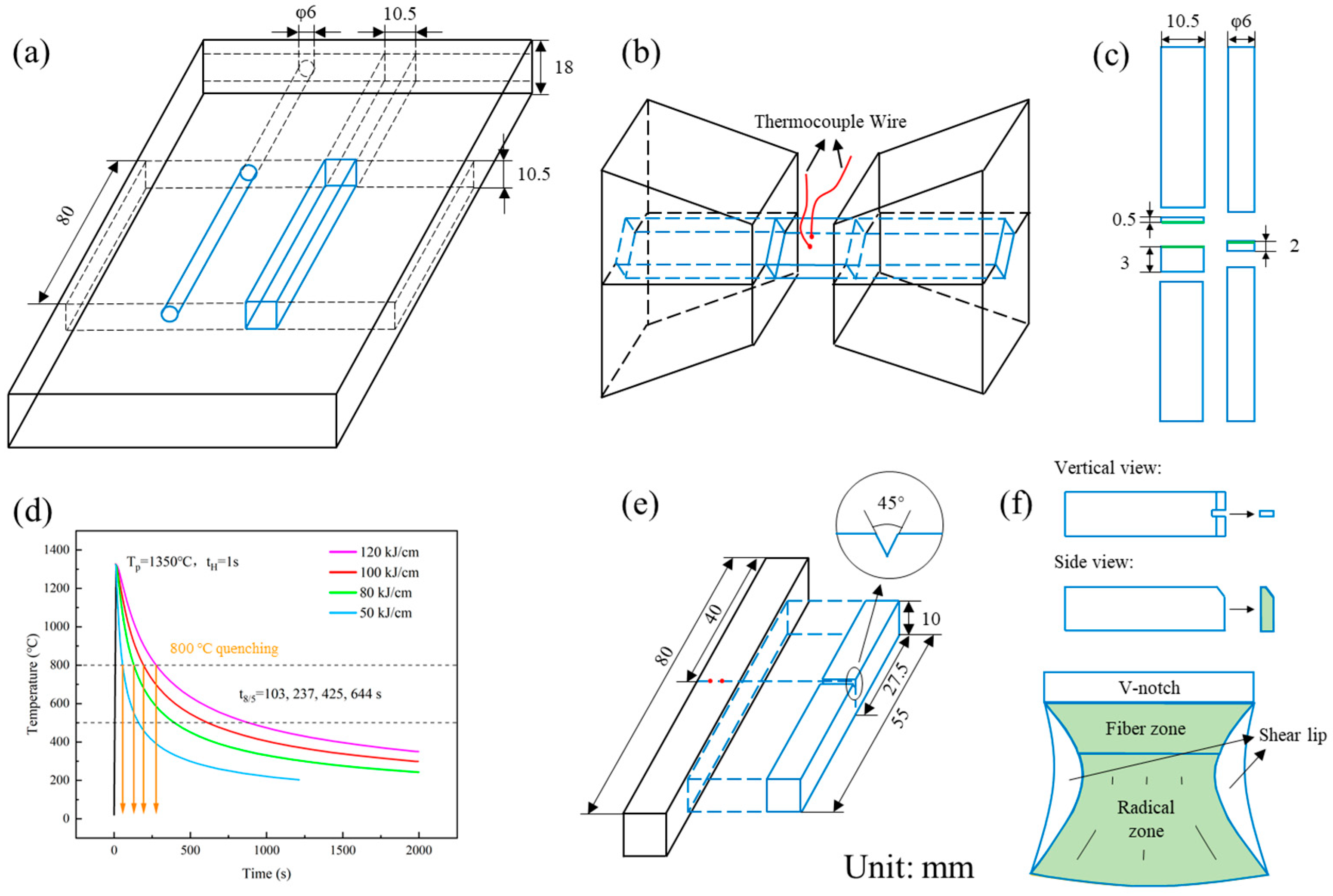
Figure 1. Schematic diagrams of the welding thermal simulation and subsequent analysis: (a) sampling position of the base metal for thermal simulation; (b) clamping scheme of the specimen on the Gleeble-3800 simulator; (c) CGHAZ samples sectioned for multi-scale characterization (0.5 mm thick for TEM, 2 mm thick for prior austenite grain observation, and 3 mm thick for microstructure and inclusion analysis); (d) applied welding thermal cycle with quenching; (e) preparation of standard Charpy V-notch impact specimens; (f) sampling of the impact fracture for secondary crack analysis, with a schematic partition of the main fracture surface being shown in the inset.
Metals 16 00195 g001
Figure 2. Series heat input simulation welding joint CGHAZ original austenite grain. (a) 50 kJ/cm; (b) 80 kJ/cm; (c) 100 kJ/cm; (d) 120 kJ/cm.
Metals 16 00195 g002
Figure 3. Statistics of PAGs size in the series of heat inputs.
Metals 16 00195 g003
Figure 4. Experimental results of OM (ad) and SEM (eh) characterization of microstructure of CGHAZ welded joints simulated by series heat input. (a,e) 50 kJ/cm; (b,f) 80 kJ/cm; (c,g) 100 kJ/cm; (d,h) 120 kJ/cm (AF—Acicular Ferrite; PF—Polygonal Ferrite; GBF—Granular Bainitic Ferrite; DP—Degenerated Pearlite).
Metals 16 00195 g004
Figure 5. Statistical results of microstructure area percentage of CGHAZ in simulated welding joints with series heat input.
Metals 16 00195 g005
Figure 6. Experimental results of TEM characterization of microstructure of CGHAZ welded joints simulated by series heat input. (a,b) 50 kJ/cm; (c,d) 80 kJ/cm; (e,f) 100 kJ/cm; (g,h) 120 kJ/cm.
Metals 16 00195 g006
Figure 7. M/A components and DP in the microstructure of CGHAZ welded joints simulated by thermal input: selected-area electron diffraction (SAED) (a,e), bright field images (b,f), and dark field images (c,d,g,h). M—Martensite; γ—γ-Fe, austenite; α – Fe—ferrite; Fe3C—cementite.
Metals 16 00195 g007
Figure 8. EBSD analysis of the microstructure of CGHAZ welded joints simulated by series heat input. IPF: (a) 50 kJ/cm, (b) 80 kJ/cm, (c) 100 kJ/cm, (d) 120 kJ/cm; BC + GB: (e) 50 kJ/cm, (f) 80 kJ/cm, (g) 100 kJ/cm, (h) 120 kJ/cm; KAM: (i) 50 kJ/cm, (j) 80 kJ/cm, (k) 100 kJ/cm, (l) 120 kJ/cm. Data processing: (m) mean equivalent diameter of grains defined by misorientation tolerance angles of 2–30°, (n) grain boundary fractions at different misorientation tolerance angles, (o) and the distribution of statistical KAM values.
Metals 16 00195 g008
Figure 9. Distribution of quantity and size of inclusions in the CGHAZ of simulated welding joints with series heat input: (a) 50 kJ/cm; (b) 80 kJ/cm; (c) 100 kJ/cm; (d) 120 kJ/cm.
Metals 16 00195 g009
Figure 10. Analysis results of inclusion composition in CGHAZ of the simulated CGHAZ with series heat input: (a) 50 kJ/cm; (b) 80 kJ/cm; (c) 100 kJ/cm; (d) 120 kJ/cm.
Metals 16 00195 g010
Figure 11. Low-temperature impact performance test results of the CGHAZ simulated welded joints with series heat input: (a) load–deflection curve; (b) change in total impact absorption energy. The red line connects the impact absorption energy corresponding to different heat inputs, and the blue line is the error bar.
Metals 16 00195 g011
Figure 12. SEM morphology observation of the impact fracture surface of the simulated welding joint with series heat input: (ac) 50 kJ/cm; (df) 80 kJ/cm; (gi) 100 kJ/cm; (jl) 120 kJ/cm.
Metals 16 00195 g012
Figure 13. Thermal expansion curve and phase transformation point during the cooling process of the series heat input welding thermal simulation experiment.
Metals 16 00195 g013
Figure 14. Percentage statistics of HAGBs in the microstructure of the CGHAZ under series heat input.
Metals 16 00195 g014
Figure 15. Experimental results of characterizing the fracture behavior of CGHAZ low-temperature impact specimens for simulated welding joints with series heat input (GB—Grain Boundary). (a,b) 50 kJ/cm; (c) 80 kJ/cm; (d,e) 100 kJ/cm; (f,g) 120 kJ/cm.
Metals 16 00195 g015
Figure 16. EBSD analysis of secondary cracks in CGHAZ low-temperature impact specimens of simulated welded joints with series heat input. The blue line represents HAGBs, and the red line represents LAGBs. (a) 50 kJ/cm; (b) 80 kJ/cm; (c) 100 kJ/cm; (d) 120 kJ/cm.
Metals 16 00195 g016
Table 1. Basic Composition of Low Carbon Nb-Ti-La Steel (wt.%).
CSiMnPSNbTiLaAlON
0.0680.191.570.0050.0020.0240.0100.01350.02329 ppm27 ppm
Table 2. Statistics of instrumented impact test results at −40 °C.
Heat Input (kJ/cm)Total Impact Absorption Energy (Et/J)Crack Initiation Energy (Ei/J)Crack Propagation Energy (Ep/J)
50101 ± 5.155 ± 2.846 ± 2.3
80116 ± 5.848 ± 2.468 ± 3.4
100143 ± 7.243 ± 2.2100 ± 5.0
120121 ± 6.139 ± 1.982 ± 4.1
Disclaimer/Publisher’s Note: The statements, opinions and data contained in all publications are solely those of the individual author(s) and contributor(s) and not of MDPI and/or the editor(s). MDPI and/or the editor(s) disclaim responsibility for any injury to people or property resulting from any ideas, methods, instructions or products referred to in the content.