Transformer-Based Dynamic Flame Image Analysis for Real-Time Carbon Content Prediction in BOF Steelmaking

 ,
,  , ,
, ,  , , and
Abstract
1. Introduction
- This study innovatively employs a classification-based approach for carbon content prediction by discretizing the carbon content into multiple distinct categories. Compared to conventional regression-based methods, the proposed classification strategy not only reduces prediction difficulty but also better aligns with industrial requirements.
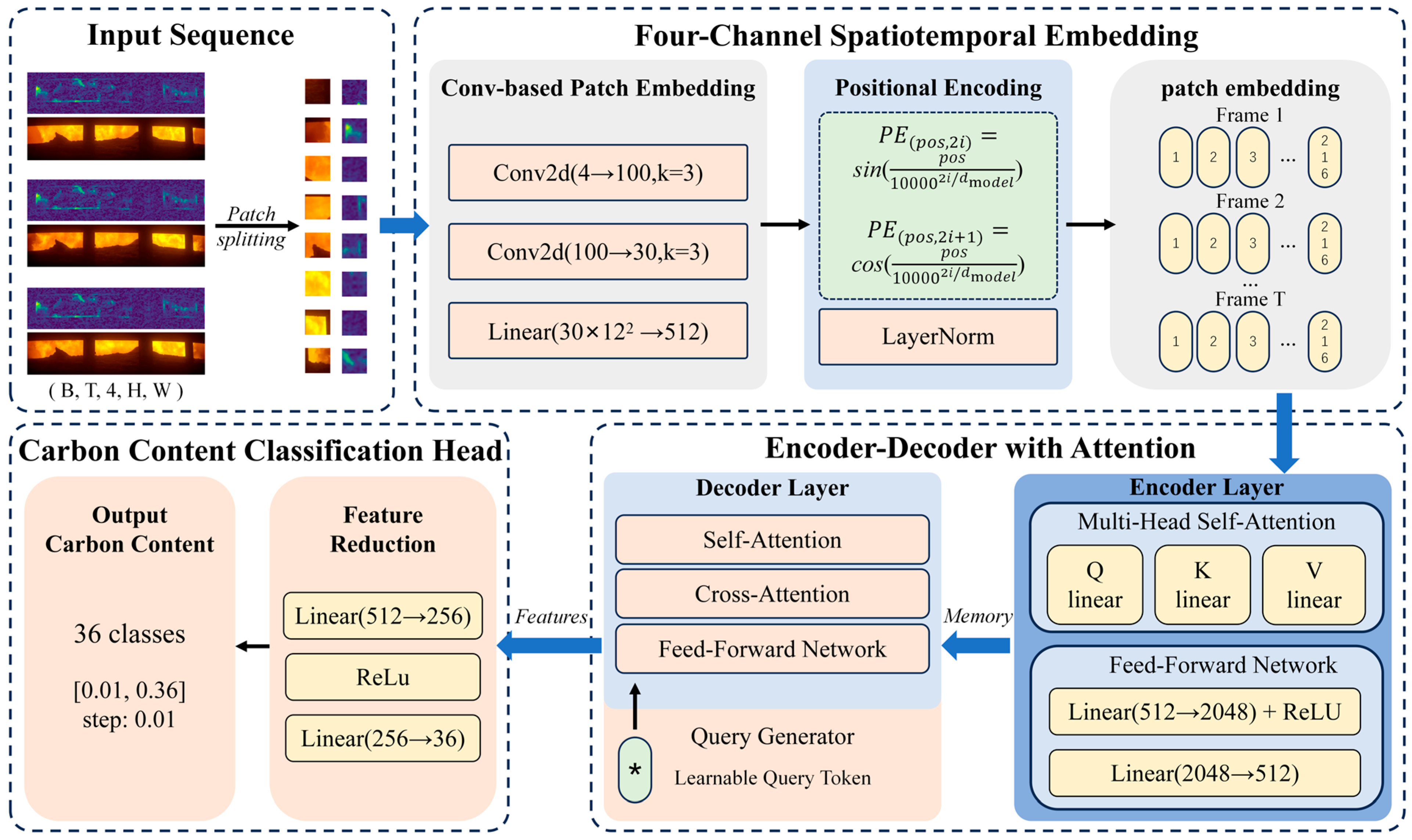
- This study introduces a Transformer-based architecture for the task of full-process carbon content prediction during the later stage of the BOF steelmaking process. Unlike previous works focused solely on endpoint prediction, the proposed model targets continuous, real-time, and long-duration forecasting throughout the steelmaking process.
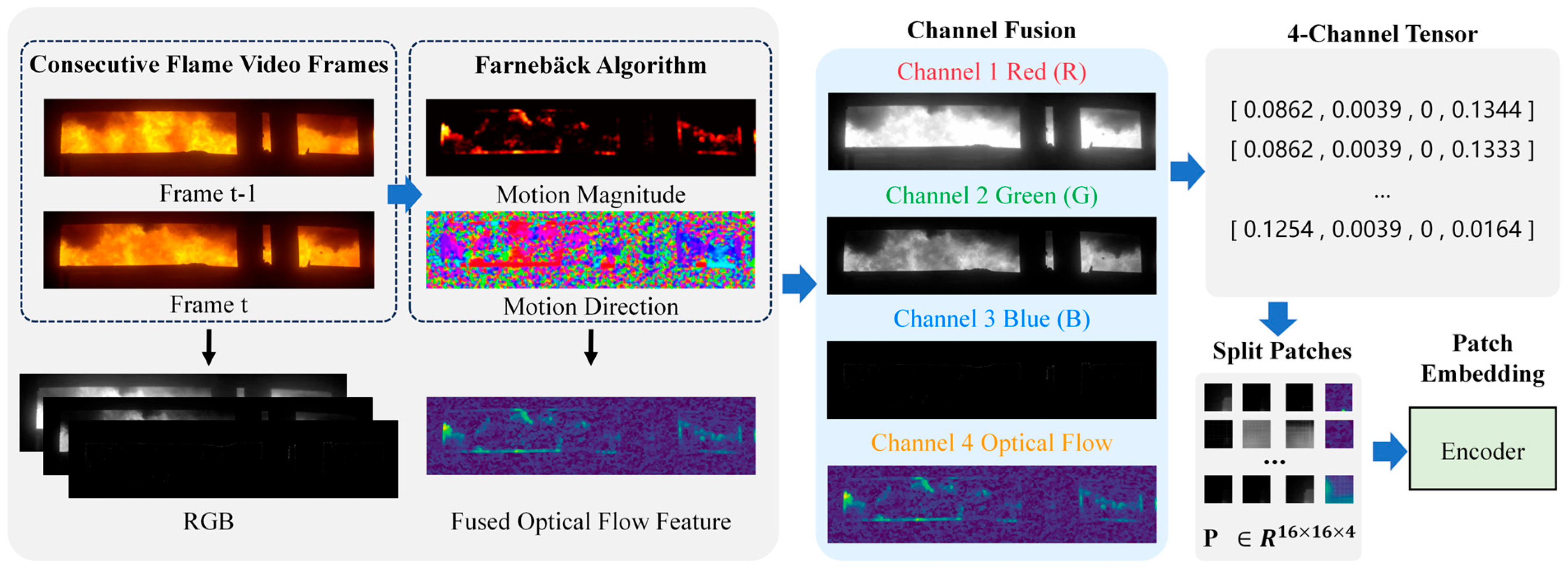
- This study proposes a data augmentation strategy by constructing four-channel input tensors combining RGB information with optical flow features. Incorporating optical flow characteristics enhances the model’s capability to capture dynamic flame motion patterns in steelmaking.
2. Related Work
3. Methodology
3.1. Theoretical Foundation: Transformer Architecture
3.2. Model Architecture Design
3.2.1. Four-Channel Input Embedding and Patch Processing
3.2.2. Dynamic Query Mechanism and Classification Output
3.3. Evaluation Methods
4. Experiment
4.1. Dataset Construction and Preprocessing
4.2. Model Configuration and Training Strategy
4.3. Experimental Result
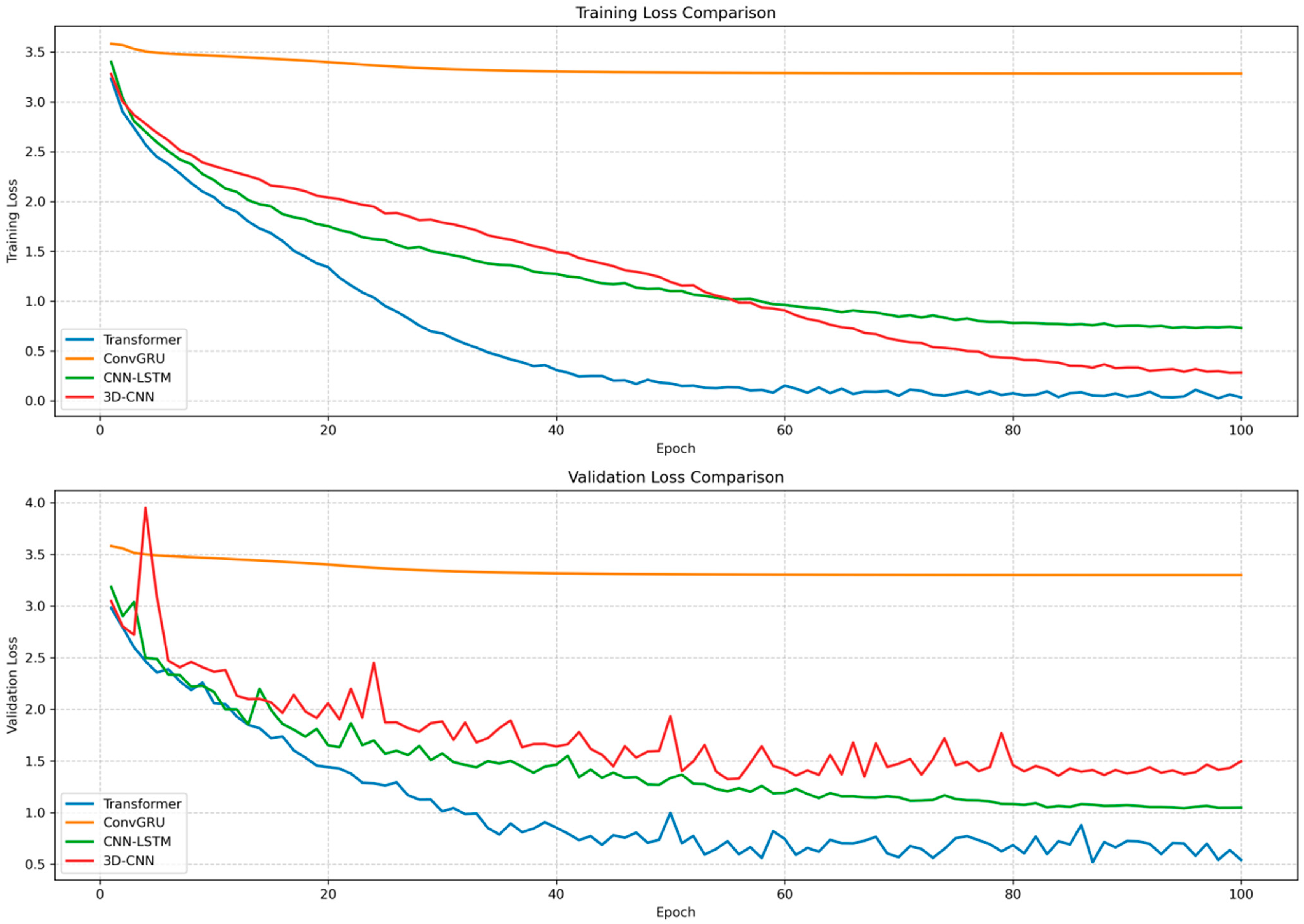
4.3.1. Comparative Experiments
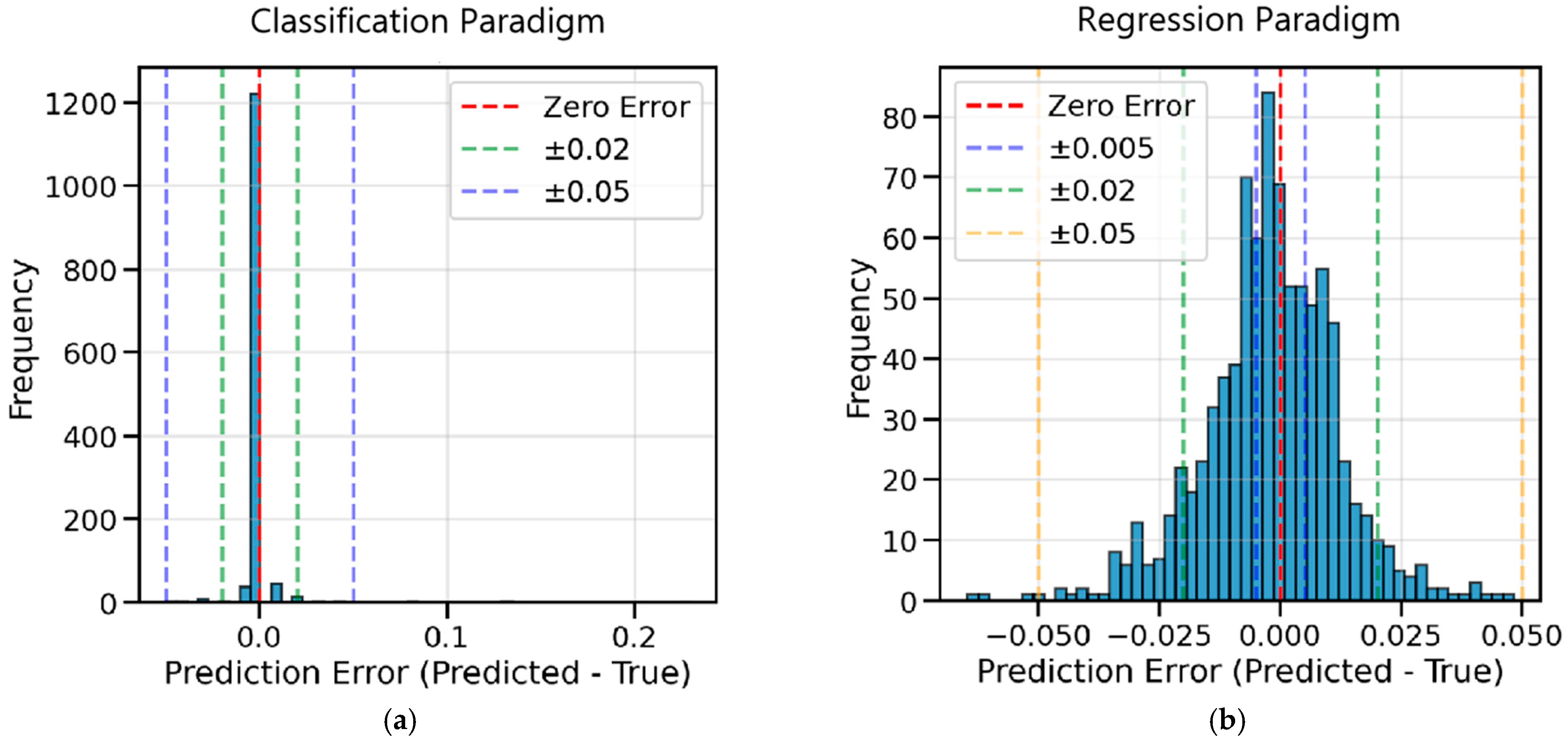
4.3.2. Classification Versus Regression Paradigm Comparison
4.3.3. Evaluation of Four-Channel Input Effectiveness
4.3.4. Ablation Studies
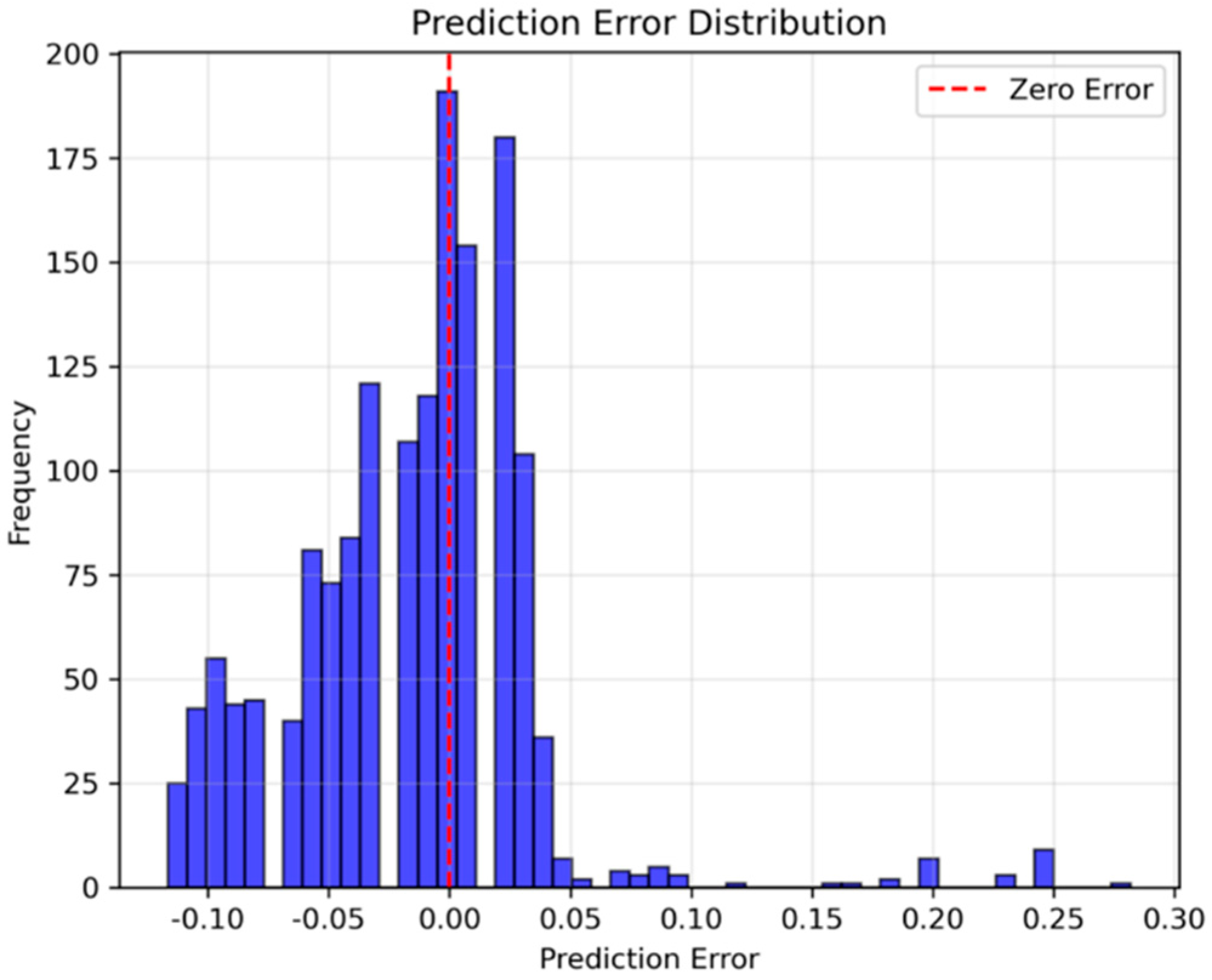
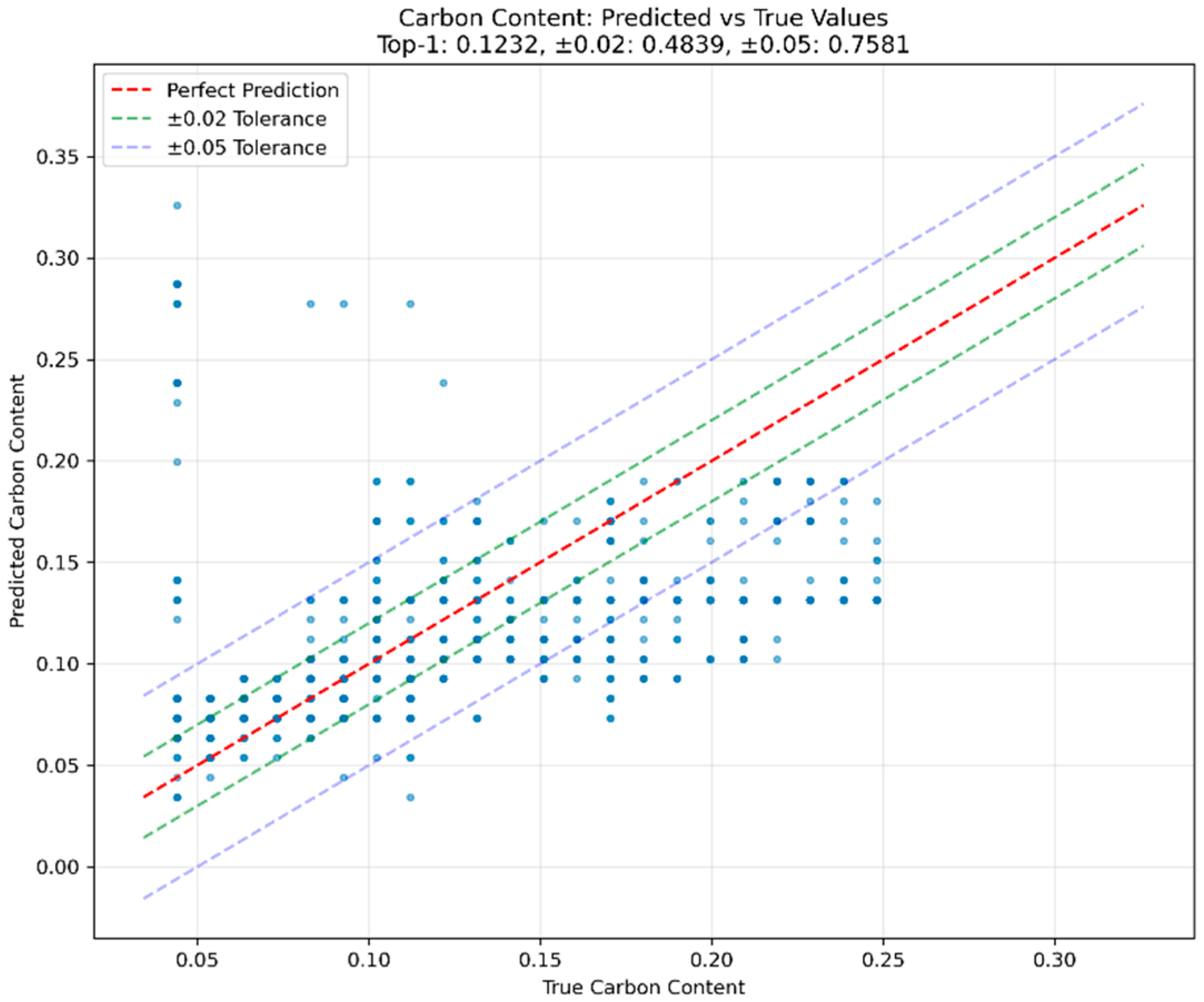
4.4. Overall Performance Analysis and Visualization on Test Set
5. Conclusions
Author Contributions
Funding
Data Availability Statement
Conflicts of Interest
References
- Liu, H.; Wang, B.; Xiong, X. Basic oxygen furnace steelmaking end-point prediction based on computer vision and general regression neural network. Optik 2014, 125, 5241–5248. [Google Scholar] [CrossRef]
- Wang, Z.; Liu, Q.; Liu, H.; Wei, S. A review of end-point carbon prediction for BOF steelmaking process. High Temp. Mater. Process. 2020, 39, 653–662. [Google Scholar] [CrossRef]
- Li, G.H.; Liu, Q. Present status and prospect of BOF steelmaking process control. J. Iron Steel Res. Int. 2013, 25, 1–4. [Google Scholar]
- Feng, S.C.; Wang, Y.H.; Ding, R.F. Application status of end-point control technologies in converter steelmaking. Metall. Ind. Autom. 2016, 40, 1–6. [Google Scholar]
- Huang, J.X.; Jin, N.D. Static control predictive model for converter refining end-point. Steelmaking 2006, 22, 45–48. [Google Scholar]
- Tang, B.; Wang, X. Static model for converter steelmaking with limestone. J. Northeast. Univ. Nat. Sci. 2014, 35, 534–538. [Google Scholar]
- Xu, G.; Li, M.; Xu, J.; Jia, C.; Chen, Z. Control technology of end-point carbon in converter steelmaking based on functional digital twin model. Chin. J. Eng. 2019, 41, 521–527. [Google Scholar]
- Rout, B.K.; Brooks, G.; Rhamdhani, M.A.; Li, Z.; Schrama, F.N.H.; Overbosch, A. Dynamic model of basic oxygen steelmaking process based on multi-zone reaction kinetics: Model derivation and validation. Metall. Mater. Trans. B 2018, 49B, 537–557. [Google Scholar] [CrossRef]
- Dering, D.; Swartz, C.; Dogan, N. Dynamic modeling and simulation of basic oxygen furnace (BOF) operation. Processes 2020, 8, 483. [Google Scholar] [CrossRef]
- Kang, Y.; Zhao, J.X.; Li, B.; Ren, M.M.; Cao, G.; Yue, S.; An, B.Q. End-Point Prediction of Converter Steelmaking Based on Main Process Data. Steel Res. Int. 2024, 95, 2400151. [Google Scholar]
- Vortrefflich, W.; Vries, J. Maximizing BOF production capacity and producing cost efficient by using sublance based process control. Iron Steel Rev. 2010, 10, 94–100. [Google Scholar]
- Zhao, B.; Zhao, J.; Wu, W.; Zhang, F.; Yao, T. Research on prediction model of converter temperature and carbon content based on spectral feature extraction. Sci. Rep. 2023, 13, 14409. [Google Scholar] [CrossRef]
- Zhou, M.; Zhao, Q.; Chen, Y. Endpoint prediction of BOF by flame spectrum and furnace mouth image based on fuzzy support vector machine. Optik 2019, 178, 575–581. [Google Scholar] [CrossRef]
- Liu, K.; Liu, L.; He, P.; Liu, W. A new algorithm of endpoint carbon content of BOF based on off-gas analysis. Steelmaking 2009, 25, 33. [Google Scholar]
- Schlueter, J.; Odenthal, H.J.; Uebber, N.; Blom, H.; Morik, K. A novel data-driven prediction model for BOF endpoint. In Proceedings of the Iron & Steel Technology Conference, Pittsburgh, PA, USA, 6–9 May 2013; pp. 923–928. [Google Scholar]
- Liu, L.M.; Li, P.; Chu, M.; Gao, C. End-point prediction of 260 tons basic oxygen furnace (BOF) steelmaking based on WNPSVR and WOA. J. Intell. Fuzzy Syst. 2021, 41, 2923–2937. [Google Scholar] [CrossRef]
- Gao, C.; Shen, M.G. End-point prediction of basic oxygen furnace (BOF) steelmaking based on improved twin support vector regression. Metalurgija 2019, 58, 29–32. [Google Scholar]
- Bae, J.; Li, Y.; Ståhl, N.; Mathiason, G.; Kojola, N. Using Machine Learning for Robust Target Prediction in a Basic Oxygen Furnace System. Metall. Mater. Trans. B 2020, 51B, 1632–1645. [Google Scholar] [CrossRef]
- Laha, D.; Ren, Y.; Suganthan, P.N. Modeling of steelmaking process with effective machine learning techniques. Expert Syst. Appl. 2015, 42, 4687–4696. [Google Scholar] [CrossRef]
- Zhang, R.; Yang, J.; Wu, S.; Sun, H.; Yang, W. Comparison of the Prediction of BOF End-Point Phosphorus Content Among Machine Learning Models and Metallurgical Mechanism Model. Steel Res. Int. 2023, 94, 2200682. [Google Scholar] [CrossRef]
- Zhu, M.; Li, C.; Zhang, X.; Yang, Z. A New Method to Predict Endpoint Phosphorus Content During Converter Steelmaking Process via Industrial Data and Mechanism Analysis. Metall. Mater. Trans. B 2024, 55B, 4660–4675. [Google Scholar] [CrossRef]
- Ghalati, M.K.; Zhang, J.; El-Fallah, G.M.A.M.; Nenchev, B.; Dong, H. Toward learning steelmaking—A review on machine learning for basic oxygen furnace process. Mater. Genome Eng. Adv. 2023, 1, e6. [Google Scholar] [CrossRef]
- Wang, M.; Li, S.; Gao, C.; Yang, Y.; Ai, X. A static prediction model of end-point carbon content and temperature of BOF steelmaking based on automatic optimization. Ironmak. Steelmak. 2024, in press. [Google Scholar]
- Liu, Z.; Cheng, S.; Liu, P. Prediction model of BOF end-point P and O contents based on PCA–GA–BP neural network. High Temp. Mater. Process. 2022, 41, 505–513. [Google Scholar]
- Hubbeling, P.D.; Oostermeijer, G.A. Sublance and dynamic control in converter steelmaking. Iron Steel 2007, 42, 83–86. [Google Scholar]
- Yue, F.; Bao, Y.P.; Cui, H.; Gao, S.Y.; Li, B.H.; Zhang, J. Sub-lance control-based predication model for BOF end-point. Steelmaking 2009, 25, 38–40. [Google Scholar]
- Sun, S.; Dongsheng, L.; Pyke, N.; Boylan, K.; Wallace, G. Development of an offgas/model technology to replace sublance operation for KOBM endpoint carbon control at ArcelorMittal Dofasco. Iron Steel Technol. 2008, 5, 36–42. [Google Scholar]
- Chen, Z.X.; Liu, H.; Qi, L. Feature selection of BOF steelmaking process data by using an improved grey wolf optimizer. J. Iron Steel Res. Int. 2022, 29, 1205–1223. [Google Scholar] [CrossRef]
- Wang, H.B.; Xu, A.J.; Ai, L.X.; Tian, N.Y. Prediction of endpoint phosphorus content of molten steel in BOF using weighted K-means and GMDH neural network. J. Iron Steel Res. Int. 2012, 19, 11–16. [Google Scholar] [CrossRef]
- Feng, K.; Yang, L.; Su, B.; Feng, W.; Wang, L. An integration model for converter molten steel end temperature prediction based on Bayesian formula. Steel Res. Int. 2022, 93, 2100433. [Google Scholar]
- Jiang, S.L.; Shen, X.; Zheng, Z. Gaussian process-based hybrid model for predicting oxygen consumption in the converter steelmaking process. Processes 2019, 7, 352. [Google Scholar] [CrossRef]
- Wang, Z.L.; Bao, Y.P.; Gu, C. Convolutional Neural Network-Based Method for Predicting Oxygen Content at the End Point of Converter. Steel Res. Int. 2023, 94, 2200342. [Google Scholar]
- Gu, M.Q.; Xu, A.; Wang, H.; Wang, Z. Real-time dynamic carbon content prediction model for second blowing stage in BOF based on CBR and LSTM. Processes 2021, 9, 1987. [Google Scholar] [CrossRef]
- Liang, B.; Wang, K.; Li, X. A Deep Learning Method for the Endpoint Carbon Prediction in BOF Steelmaking Process. In Proceedings of the 2024 IEEE 13th Data Driven Control and Learning Systems Conference (DDCLS), Kaifeng, China, 17–19 May 2024; pp. 666–671. [Google Scholar]
- Khaksar Ghalati, M.; Hao, Z.D.; Zhang, J.; Dong, H. Deep Transformers for Analyzing BOF Steelmaking Data. Metall. Mater. Trans. B 2025, 56, 4201–4217. [Google Scholar]
- Lu, H.; Zhu, H.; Jiang, Z.; Li, H.; Yang, C. Assessment of Multiple Hybrid Modeling Approaches Combining Mechanistic and Machine Learning Methods for Endpoint Temperature Prediction in Electric Arc Furnace. Metall. Mater. Trans. B 2026, 1–16. [Google Scholar] [CrossRef]
- Yang, L.; Liu, H.; Chen, F. Just-in-time updating soft sensor model of endpoint carbon content and temperature in BOF steelmaking based on deep residual supervised autoencoder. Chemom. Intell. Lab. Syst. 2022, 231, 104679. [Google Scholar] [CrossRef]
- Chang, S.C.; Zhao, C.; Li, Y.; Zhou, M.; Fu, C.; Qiao, H. Multi-channel graph convolutional network based end-point element composition prediction of converter steelmaking. IFAC-PapersOnLine 2021, 54, 152–157. [Google Scholar] [CrossRef]
- Liu, C.; Tang, L.X.; Liu, J.Y. A stacked autoencoder with sparse Bayesian regression for end-point prediction problems in steelmaking process. IEEE Trans. Autom. Sci. Eng. 2019, 17, 550–561. [Google Scholar] [CrossRef]
- Vaswani, A.; Shazeer, N.; Parmar, N.; Uszkoreit, J.; Jones, L.; Gomez, A.N.; Kaiser, Ł.; Polosukhin, I. Attention is all you need. Adv. Neural Inf. Process. Syst. 2017, 30, 5998–6008. [Google Scholar]
- Sun, F.; Su, C.; Xiong, B.; Wang, Y. DCR-EFlow: Dynamic Correlation Recurrent Architecture for Optical Flow Estimation Based on Event Cameras. Intell. Comput. 2025, 4, 0243. [Google Scholar] [CrossRef]
- Farnebäck, G. Two-frame motion estimation based on polynomial expansion. In Proceedings of the Scandinavian Conference on Image Analysis; Halmstad, Sweden, 29 June–2 July 2003, Springer: Berlin/Heidelberg, Germany, 2003; pp. 363–370. [Google Scholar]
- Krizhevsky, A.; Sutskever, I.; Hinton, G.E. Imagenet classification with deep convolutional neural networks. Adv. Neural Inf. Process. Syst. 2012, 25, 1097–1105. [Google Scholar]
- Davis, J.; Goadrich, M. The relationship between Precision-Recall and ROC curves. In Proceedings of the 23rd International Conference on Machine Learning, Pittsburgh, PA, USA, 25–29 June 2006; pp. 233–240. [Google Scholar]
- Powers, D.M.W. Evaluation: From precision, recall and F-measure to ROC, informedness, markedness and correlation. arXiv 2020, arXiv:2010.16061. [Google Scholar] [CrossRef]
- Bishop, C.M.; Nasrabadi, N.M. Pattern Recognition and Machine Learning; Springer: New York, NY, USA, 2006. [Google Scholar]
- PyTorch. PyTorch 2.0 (Version 2.0), [Computer Software]; Meta AI, 2023. Available online: https://pytorch.org/ (accessed on 2 January 2026).
- Python Software Foundation. Python 3.10.9 (Version 3.10.9), [Computer Software]; Python Software Foundation, 2023. Available online: https://www.python.org/ (accessed on 2 January 2026).
- NVIDIA; Vingelmann, P.; Fitzek, F.H.P. CUDA, Release: 12.6 [Computer Software]. NVIDIA Corporation. 2023. Available online: https://developer.nvidia.com/cuda-toolkit (accessed on 2 January 2026).
- Loshchilov, I.; Hutter, F. Decoupled weight decay regularization. arXiv 2017, arXiv:1711.05101. [Google Scholar]
- Ballas, N.; Yao, L.; Pal, C.; Courville, A. Delving deeper into convolutional networks for learning video representations. arXiv 2015, arXiv:1511.06432. [Google Scholar]
- Donahue, J.; Anne Hendricks, L.; Guadarrama, S.; Rohrbach, M.; Venugopalan, S.; Saenko, K.; Darrell, T. Long-term recurrent convolutional networks for visual recognition and description. In Proceedings of the IEEE Conference on Computer Vision and Pattern Recognition, Boston, MA, USA, 7–12 June 2015; pp. 2625–2634. [Google Scholar]
- Tran, D.; Bourdev, L.; Fergus, R.; Torresani, L.; Paluri, M. Learning spatiotemporal features with 3d convolutional networks. In Proceedings of the IEEE International Conference on Computer Vision, Santiago, Chile, 7–13 December 2015; pp. 4489–4497. [Google Scholar]



| Component | Parameter/Configuration | Value |
|---|---|---|
| Image Embedding | Patch Size | 16 × 16 |
| Conv Layers | [4 → 100 → 30] | |
| Transformer | dmodel | 512 |
| Layers (N) | 6 | |
| Attention Heads (h) | 8 | |
| FFN Dimension | 2048 | |
| Classifier | Hidden Units | 256 |
| Output Classes | 36 | |
| Training | Dropout | 0.1 |
| Loss Function | CrossEntropy | |
| Optimizer | AdamW | |
| Learning Rate | 2 × 10⁻⁵ | |
| Batch Size | 16 | |
| Epochs | 100 |
| Model | Top-1 Classification Accuracy | ±0.02 Tolerance Accuracy | Weighted F1 Score | Cross-Entropy Loss |
|---|---|---|---|---|
| ConvGRU | 6.360% | 17.23% | 0.0250 | 3.2999 |
| CNN-LSTM | 66.79% | 93.64% | 0.6404 | 1.0486 |
| 3D-CNN | 66.35% | 87.28% | 0.6521 | 1.4959 |
| Transformer | 90.31% | 96.82% | 0.9035 | 0.4597 |
| Paradigm | ±0.005 Tolerance Accuracy | ±0.02 Tolerance Accuracy | ±0.05 Tolerance Accuracy | Mean Error | Std. Error |
|---|---|---|---|---|---|
| Regression | 32.11% | 85.55% | 99.54% | −0.0020 | 0.0139 |
| Classification | 90.31% | 96.82% | 99.26% | 0.0007 | 0.0117 |
| Input Modality | Top-1 Accuracy | ±0.02 Tolerance Accuracy | Weighted F1 Score | Cross-Entropy Loss |
|---|---|---|---|---|
| RGB (3 Channels) | 85.42% | 93.56% | 0.8512 | 0.6124 |
| RGB + Optical Flow (4 Channels) | 90.31% | 96.82% | 0.9035 | 0.4597 |
| Model | Top-1 Classification Accuracy | ±0.02 Tolerance Accuracy | Weighted F1 Score | Cross-Entropy Loss |
|---|---|---|---|---|
| Proposed model | 90.31% | 96.82% | 0.9035 | 0.4597 |
| w/o position code | 88.17% | 95.93% | 0.8821 | 0.5447 |
| w/o attention | 18.27% | 33.36% | 0.2028 | 6.0076 |
| w/o decoder | 87.13% | 96.15% | 0.8717 | 0.5503 |
| Carbon Content Range | Precision | Recall | F1 Score | Samples |
|---|---|---|---|---|
| 0.0440–0.0829 | 0.84 | 0.57 | 0.68 | 477 |
| 0.0829–0.1510 | 0.43 | 0.36 | 0.40 | 532 |
| 0.1510–0.2482 | 0.59 | 0.85 | 0.69 | 541 |
Disclaimer/Publisher’s Note: The statements, opinions and data contained in all publications are solely those of the individual author(s) and contributor(s) and not of MDPI and/or the editor(s). MDPI and/or the editor(s) disclaim responsibility for any injury to people or property resulting from any ideas, methods, instructions or products referred to in the content. |
© 2026 by the authors. Licensee MDPI, Basel, Switzerland. This article is an open access article distributed under the terms and conditions of the Creative Commons Attribution (CC BY) license.
Share and Cite
Yang, H.; Fu, M.; Li, W.; Sun, L.; Wang, Q.; Chen, N.; Zhang, R.; Wang, Z.; Lu, Y.; Ma, Z.; et al. Transformer-Based Dynamic Flame Image Analysis for Real-Time Carbon Content Prediction in BOF Steelmaking. Metals 2026, 16, 185. https://doi.org/10.3390/met16020185
Yang H, Fu M, Li W, Sun L, Wang Q, Chen N, Zhang R, Wang Z, Lu Y, Ma Z, et al. Transformer-Based Dynamic Flame Image Analysis for Real-Time Carbon Content Prediction in BOF Steelmaking. Metals. 2026; 16(2):185. https://doi.org/10.3390/met16020185
Chicago/Turabian StyleYang, Hao, Meixia Fu, Wei Li, Lei Sun, Qu Wang, Na Chen, Ronghui Zhang, Zhenqian Wang, Yifan Lu, Zhangchao Ma, and et al. 2026. "Transformer-Based Dynamic Flame Image Analysis for Real-Time Carbon Content Prediction in BOF Steelmaking" Metals 16, no. 2: 185. https://doi.org/10.3390/met16020185
APA StyleYang, H., Fu, M., Li, W., Sun, L., Wang, Q., Chen, N., Zhang, R., Wang, Z., Lu, Y., Ma, Z., & Wang, J. (2026). Transformer-Based Dynamic Flame Image Analysis for Real-Time Carbon Content Prediction in BOF Steelmaking. Metals, 16(2), 185. https://doi.org/10.3390/met16020185