Article

Research on a High-Quality Welding Method for Multi-Layer Aluminum Foil Current Collectors Based on Laser Power Control


1
School of Optoelectronic Science and Engineering, South China Normal University, Guangzhou 510006, China
2
Shenzhen JPT Opto-Electronics Co., Ltd., Shenzhen 518110, China
*
Author to whom correspondence should be addressed.
Metals 2026, 16(2), 150; https://doi.org/10.3390/met16020150
Submission received: 15 December 2025 / Revised: 7 January 2026 / Accepted: 8 January 2026 / Published: 26 January 2026
(This article belongs to the Special Issue Advanced Laser Welding Technology of Alloys)

Abstract

Reliable joining of multi-layer aluminum foil current collectors is crucial for enhancing the performance and safety of high-capacity lithium-ion batteries. However, laser welding of such thin-thick aluminum combinations is often hindered by porosity, cracks and unstable weld-pool behavior. In this study, a ring-mode fiber laser combined with sinusoidal oscillation and linearly gradient power modulation was employed to achieve high-quality lap welding between 80 layers of 1060 aluminum foil (1 mm in total thickness) and a 1.5 mm thick aluminum plate. Welding experiments and thermo-mechanical simulations were conducted to investigate the effects of welding speed (15–45 mm/s) and central-power modulation parameters (−2, 0, +2, +4) on weld morphology, defect formation, and mechanical properties. The results indicate that increasing the welding speed can effectively suppress cracks and improve the shear strength from 249.8 N to 403.9 N, but it also leads to an increase in porosity from 5.78% to 12.26% and deterioration of the weld reinforcement. Higher central-power modulation (+2, +4) transformed the weld-pool geometry from an ω shape to U shape, effectively suppressing fusion-line cracks but leading to increased porosity (up to 8.41%) and deteriorated surface morphology. Overall, a low welding speed of 15 mm/s combined with an optimized power modulation strategy achieves effective crack suppression while maintaining controlled porosity, resulting in a welded joint with superior comprehensive performance. This research provides a robust process solution for high-quality laser welding of multi-layer aluminum foil current collectors in power battery manufacturing.

1. Introduction

Energy conservation and carbon reduction are critical global priorities, as reflected in major international agreements such as the Kyoto Protocol, the Paris Agreement, and the outcomes of COP29 [1]. In response, China has implemented a series of national policies, including the “2024–2025 Action Plan for Energy Conservation and Carbon Reduction,” which aims to support the rapid development of new energy technologies. The strong growth of new energy vehicles—reaching 12.866 million units in 2024—has further highlighted the importance of high-performance lithium-ion batteries as a key technology for reducing petroleum consumption and emissions [2,3].
In lithium-ion batteries, the current collectors play a crucial role by conducting the current generated at the electrodes to the external circuit. Commercial systems typically employ aluminum foil for the cathode and copper foil for the anode, with thicknesses ranging from 6 to 12 μm for copper and 10–16 um for aluminum [4,5]. The manufacturing process often integrates multiple foil layers that are first ultrasonically pre-welded and subsequently laser-welded to terminal plates [6,7,8]. However, the laser welding of multi-layer aluminum foils remains challenging due to aluminum’s high thermal conductivity, low high-temperature plasticity, and susceptibility to porosity and cracking [9,10,11].
Recent studies have explored a variety of laser sources and process strategies to improve foil–foil or foil–plate weld quality. Fiber lasers have been used to weld 5–35 layers, revealing increasing porosity with increasing layer count and strong dependence on welding speed [12,13]. Pulsed green lasers and nanosecond lasers have been shown to stabilize weld formation for up to 40 layers, though issues such as foil detachment and weld-seam collapse remain [14,15]. More recently, ring-mode lasers and oscillation-based welding strategies have demonstrated improved stability when joining 50-layer stacks, although challenges persist in balancing porosity, fusion quality, and mechanical performance [16,17]. Laser wobble welding and power modulation techniques have also shown promise in suppressing porosity and cracks by regulating heat input and molten pool dynamics [18,19,20].
Despite these advances, research on continuous-wave (CW) fiber laser welding for extremely high layer counts (≥80 layers) remains limited. Moreover, the synergistic effects of ring-mode beam shaping, laser–beam oscillation, and gradient power modulation on weld formation and mechanical integrity are not yet fully understood.
To address these gaps, this study proposes a gradient-power-controlled sinusoidal oscillation welding method using a ring-mode CW fiber laser to join 80 layers of 1060 aluminum foil to a 1.5 mm aluminum plate. By integrating experimental analysis with finite-element-based thermal–stress simulations, the mechanisms governing porosity formation, crack behavior, weld morphology, and mechanical performance are systematically investigated. The results aim to establish a robust and practical welding strategy for high-layer-count aluminum current collectors in next-generation high-capacity lithium-ion batteries.

2. Experiment and Simulation

2.1. Materials and Welding Systems

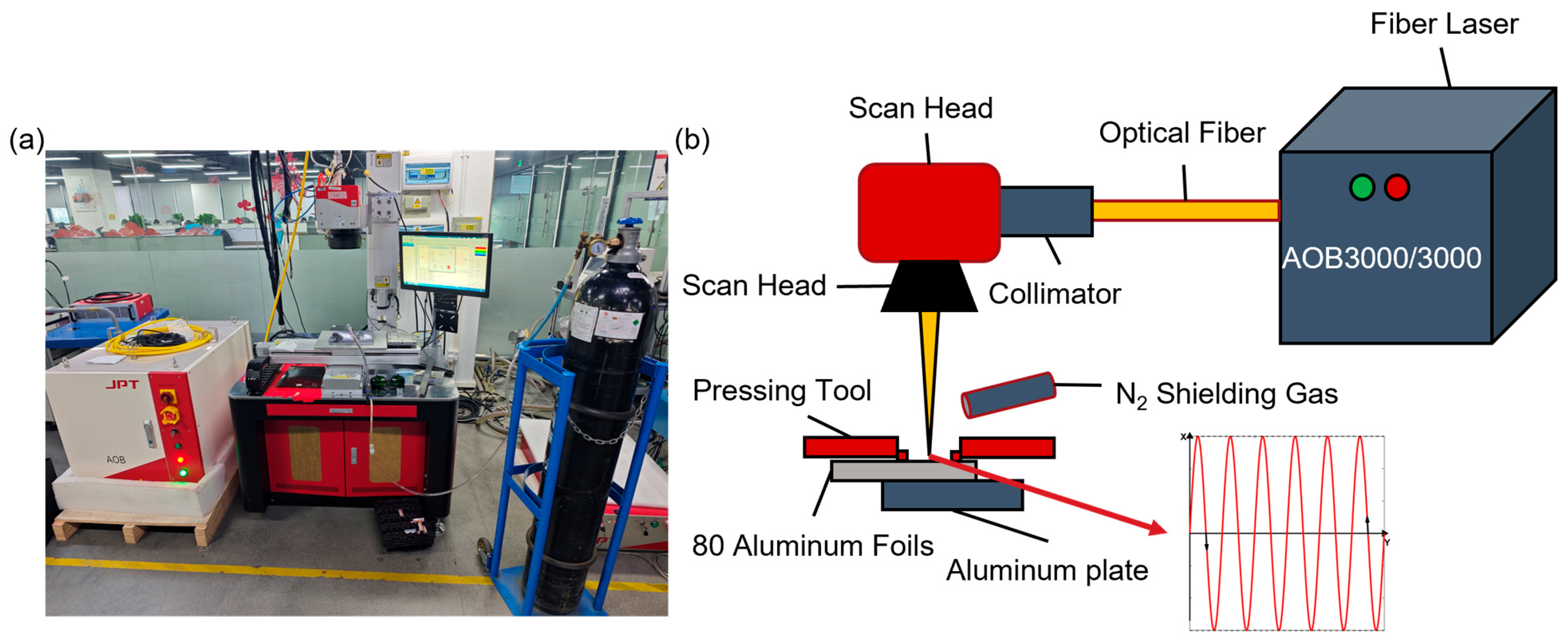
The welding material used in this study is 1060 aluminum alloy, which is widely employed in power batteries due to its excellent plasticity, high thermal conductivity, and electrical conductivity. The 80 layers of aluminum foil, pre-welded via ultrasonic welding, measure 30 × 20 × 1 mm, while the aluminum plate dimensions are 30 × 25 × 1.5 mm. The chemical composition of the materials is provided in Table 1. A ring-mode fiber laser (AOB3000/3000, JPT Opto-electronics Co., Ltd., Shenzhen, China) with a wavelength of 1080 nm was used. Both the inner and outer rings deliver a power of 3000 W, resulting in a total output of 6000 W. The spot core diameters are 34 μm for the inner ring and 100 μm for the outer ring. The use of a ring-mode fiber laser effectively suppresses spatter and porosity, thereby improving weld quality [21,22]. The optical system consists of a Raylase SS-IV-30 [1060–1080] galvanometer scanner (Wessling, Germany) with an F-θ lens having a collimation length of 150 mm and a focal length of 330 mm. The experimental site is shown in Figure 1a.

2.2. Experimental Plan

The experiment employed a lap welding configuration with multiple aluminum foil layers positioned above the aluminum plate. The weld length was set at 10 mm. To reduce porosity and achieve improved weld surface morphology, a reciprocating sinusoidal oscillating welding pattern was adopted. A clamping fixture was used to minimize the influence of the gap between the multi-layer foils and the bottom plate. The specific experimental setup is illustrated in Figure 1b.
Prior to welding, laser cleaning was performed on the welding surfaces to remove oil contaminants and aluminum oxide films, followed by wiping with anhydrous ethanol. During welding, nitrogen was used as the shielding gas at a constant flow rate of 25 L/min. The welding oscillation followed a sinusoidal trajectory with a consistent defocus amount of +1 mm. The specific variations in process parameters are listed in Table 2, where welding speed and power modulation parameters were altered to investigate their effects on weld characteristics (including reinforcement height, porosity, and mechanical properties).
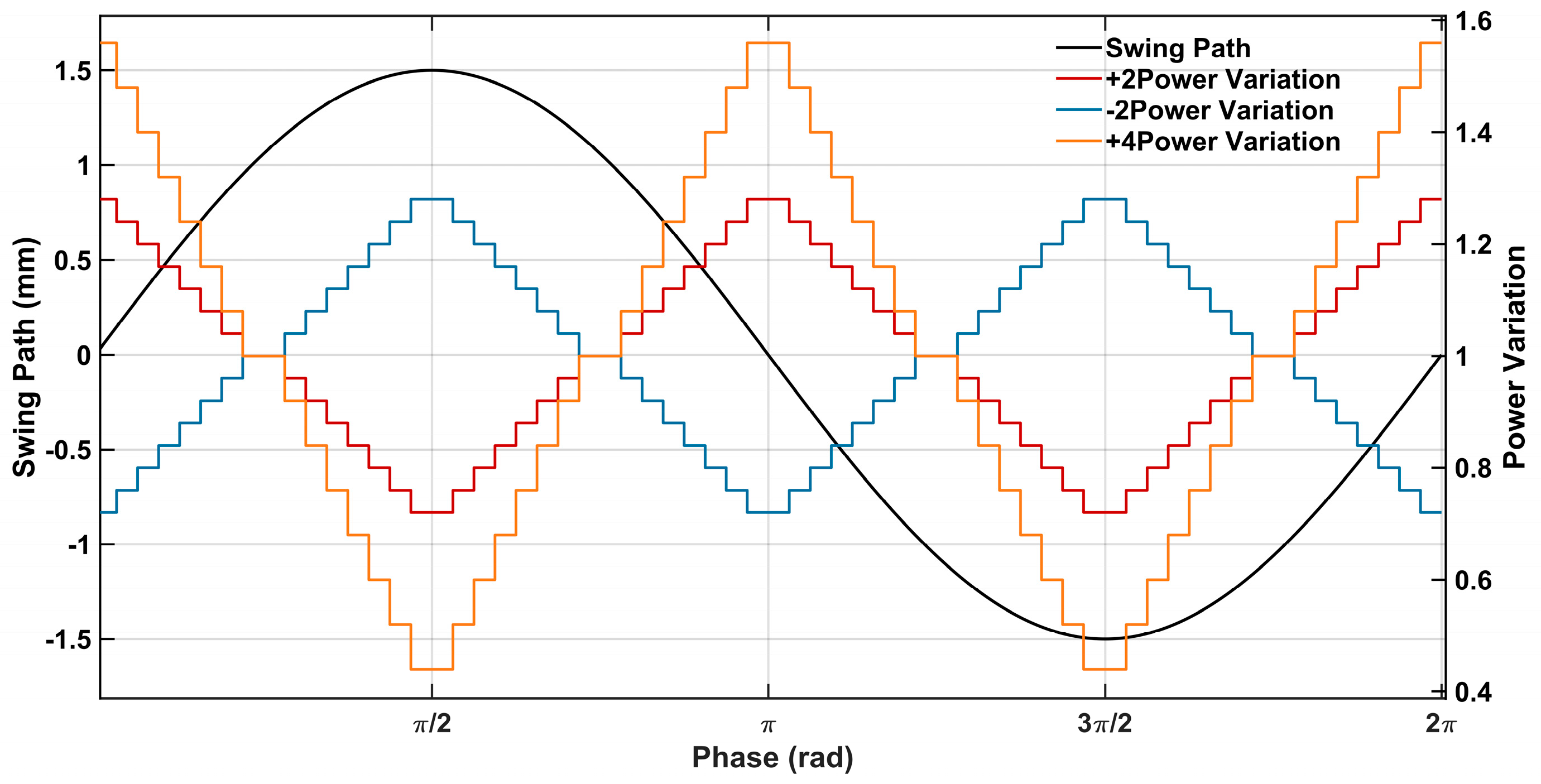
The power modulation strategy is explained as follows: one complete sinusoidal oscillation cycle was divided into four segments, with each segment further subdivided into 16 steps. Power adjustment was applied to these 16 steps, thereby achieving dynamic power modulation during oscillation, as illustrated in Figure 2. A “+” symbol indicates that the laser power increases from the oscillation path edge toward the center, while a “–” symbol denotes a decrease. For example, +2 represents a 4% power increase per step from the edge to the center relative to the baseline power. By modulating the power at different positions along the oscillation path, the influence on welding performance was systematically investigated.
Using a welding speed of 15 mm/s as the baseline parameter, experiments were conducted with different power variation rates: +2, +4, 00, and −2. The −4 parameter was excluded because excessive energy at the edges would cause full penetration of the material, thereby compromising the experimental results.
To further analyze weld performance, the weld surface was examined using a Keyence digital microscope (VHX-7000, Osaka, Japan) to assess surface profile and observe weld pool morphology. Both transverse and longitudinal cross-sections of the weld were prepared: the transverse cross-section was used to examine fusion zone geometry, while the longitudinal cross-section was utilized for porosity measurement. Porosity in the longitudinal section was quantified using ImageJ software (V1.54r). Tensile tests were conducted using a universal testing machine (Shandong JianLi Testing Technology Co. Ltd., Jinan, China) in accordance with the GB/T 228.1-2010 standard [23], at a displacement rate of 2 mm/s. Repeat tests were performed, and average values were calculated. Finally, fracture surfaces were analyzed using a ZEISS Gemini 500 field emission scanning electron microscope (SEM) (ZEISS, Oberkochen, Germany) equipped with energy-dispersive X-ray spectroscopy (EDS).

2.3. Numerical Simulation

2.3.1. Modeling and Basic Assumptions

The modeling approach was implemented as follows: A finite element model consisting of a 1 mm multi-layer aluminum foil stack and a 1.5 mm aluminum plate was established. The thermal-stress behavior during the welding process was analyzed by coupling the Solid Heat Transfer and Solid Mechanics modules, with a focus on evaluating the influence of different power modulation parameters on the temperature and stress fields. To reduce computational time, the following assumptions were adopted: the ultrasonically welded multi-layer foil assembly was simplified as a solid aluminum plate of equivalent thickness; the gap between the foil pack and the aluminum plate was assumed to be zero; fluid flow in the molten pool and recoil pressure induced by metal vaporization were neglected; Fresnel absorption and inverse bremsstrahlung absorption effects were not considered; the material follows the Von Mises yield criterion; viscous and creep effects are neglected; the material is considered isotropic.

2.3.2. Solid Heat Transfer Analysis

Heat transfer occurs through three fundamental mechanisms: thermal conduction, convection, and radiation. In the welding process, both surface heat convection and radiation are considered [24]. The governing heat conduction equation accounting for these mechanisms can be expressed as:
ρ C P φ T φ t = ( k T ) h Δ T ε σ ( T 4 T 0 4 ) + Q ( x , y , z , t )
In the equation, ρ represents the material density, C P denotes the specific heat capacity, Q stands for the laser heat source, h is the surface heat transfer coefficient, A refers to the heat transfer area, ΔT indicates the temperature difference, ε is the surface emissivity, and σ represents the Stefan–Boltzmann constant (also known as the blackbody radiation constant), which has a value of 5.67 × 10 8 W / ( m 2 · K 4 ) .
In this study, a rotating Gaussian body heat source model [25] is adopted for the heat source modeling. To account for the ring-mode fiber laser used in the experiment, the heat source model for the inner ring is described by the following equation:
Q 1 = 3 P 1 π R 1 2 exp ( 3 r 2 R 1 2 )
where P 1   denotes the inner ring power, and R1 represents the inner ring radius. Since the laser spot size varies with the incident depth, R1 is expressed as a function of the depth z.
The outer ring laser spot is focused within the annular region, with its radius defined relative to the ring width. The heat source formula for the outer ring is given as follows [26]:
Q 2 = 3 P 2 π ω 2 exp ( 3 ( r R 2 ) 2 ω 2 )
where ω denotes half the ring width, R2 represents the radius of maximum energy density for the outer ring spot, and P2 is the outer ring laser power.
Q = Q 1 + Q 2 , t < 2 t 0 0 , t 2 t 0
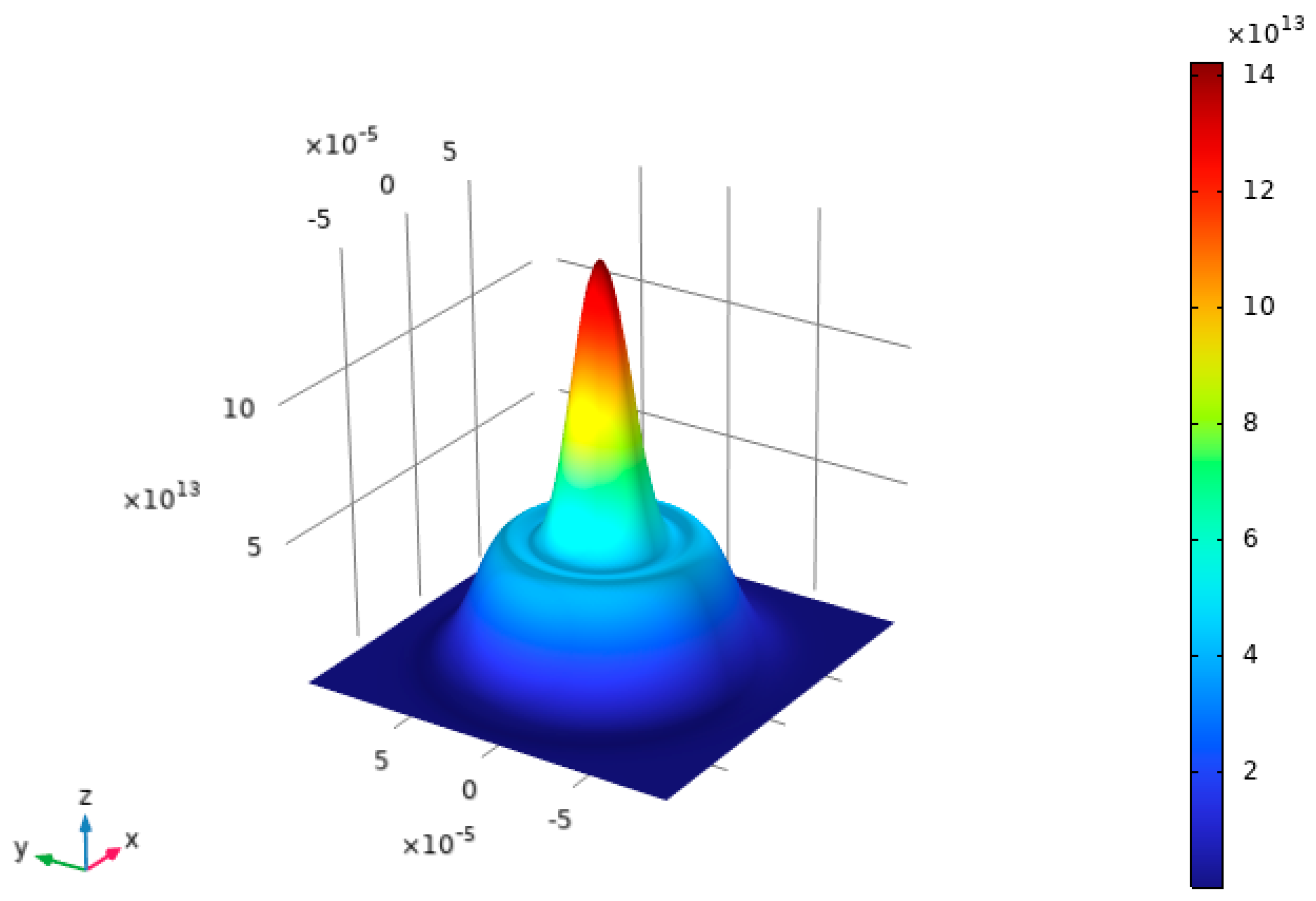
where t0 represents the time it takes for the laser to move 10 mm in a straight line. The energy density distribution of the heat source is illustrated in Figure 3.
The laser heat source acts on the upper surface of the material and moves in a reciprocating manner following a sinusoidal oscillation path, with its motion described by the following equation:
x = A s i n ( 2 π f t )
y = v t ,     t < t 0 2 v t 0 v t ,     t t 0
where A is the oscillation amplitude, f is the frequency, and v is the welding speed.

2.3.3. Solid Mechanics Analysis

The laser irradiation generates heat on the material surface, leading to thermal stress due to thermal expansion. Based on Newton’s second law and Cauchy’s law, the momentum balance equation can be expressed as:
ρ 2 μ t 2 = · σ + F v
where ρ is the density of the material, σ represents the Cauchy stress tensor, which describes the forces in the current configuration relative to the actual deformed area, and F v denotes the volumetric force.
σ = C ( E , ν ) : ε e l
ε e l = ε ε t h
ε = 1 2 [ ( μ ) T + μ ]
ε t h = α ( T ) ( T T 0 )
where E is Young’s modulus, ν is Poisson’s ratio, ε e l is the elastic strain tensor, ε is the total strain tensor, ε t h is the thermal strain, α(T) is the coefficient of thermal expansion, and T 0 is the ambient temperature.

2.3.4. Mesh Setup

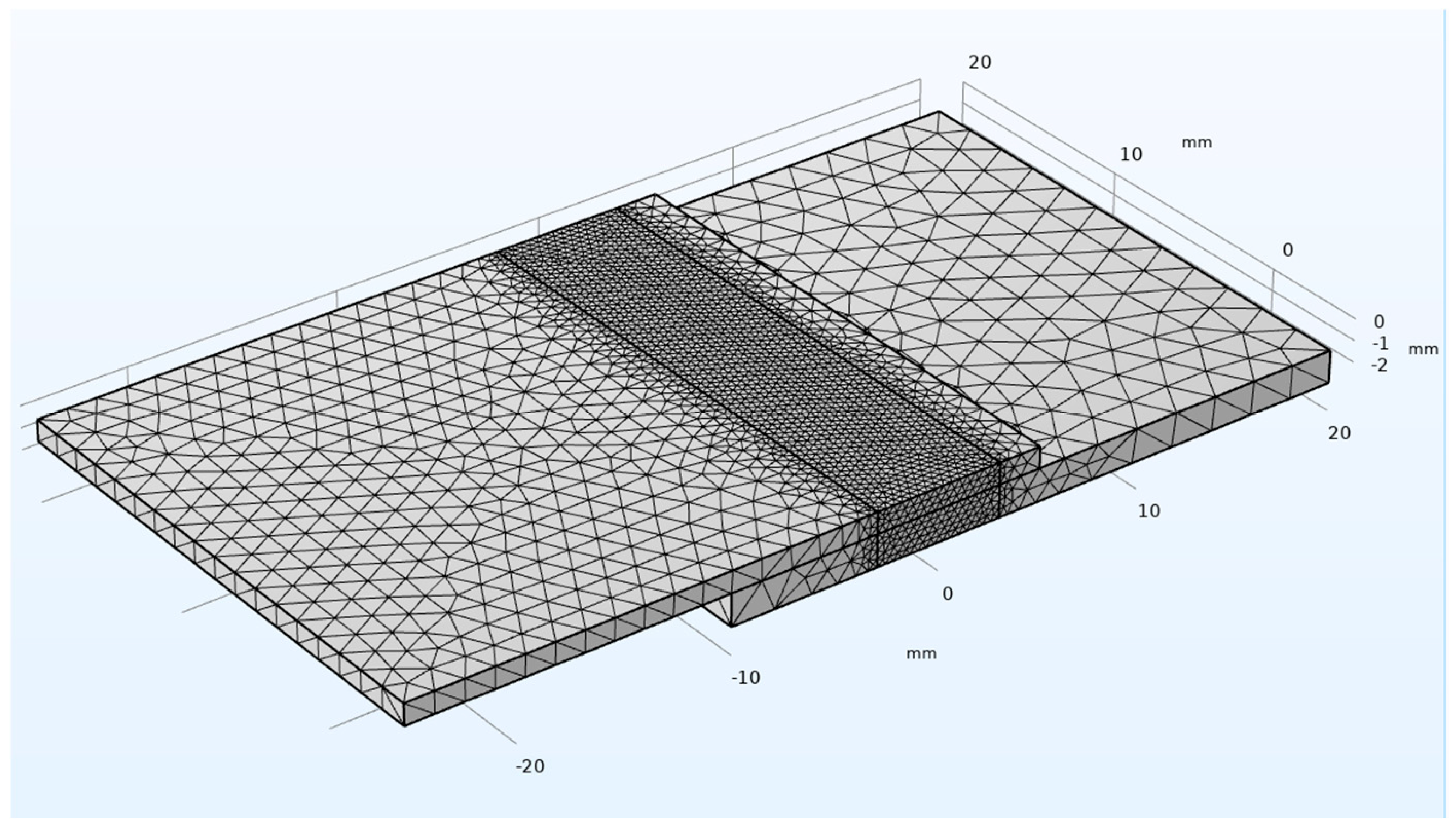
The geometric dimensions of the model were configured to match the experimental materials. To optimize computational efficiency, the mesh was refined in the laser welding zone while a coarser mesh was applied to the base material region. The entire model was discretized using standard tetrahedral elements. In the dense region, the maximum element size was set to 0.4 mm, whereas in the non-dense regions, the maximum element size was 3.6 mm. The model contained a total of 91,697 elements with 586,764 degrees of freedom. The resulting mesh configuration is shown in Figure 4.

3. Results and Discussion

3.1. Influence of Welding Parameters on Weld Surface Morphology

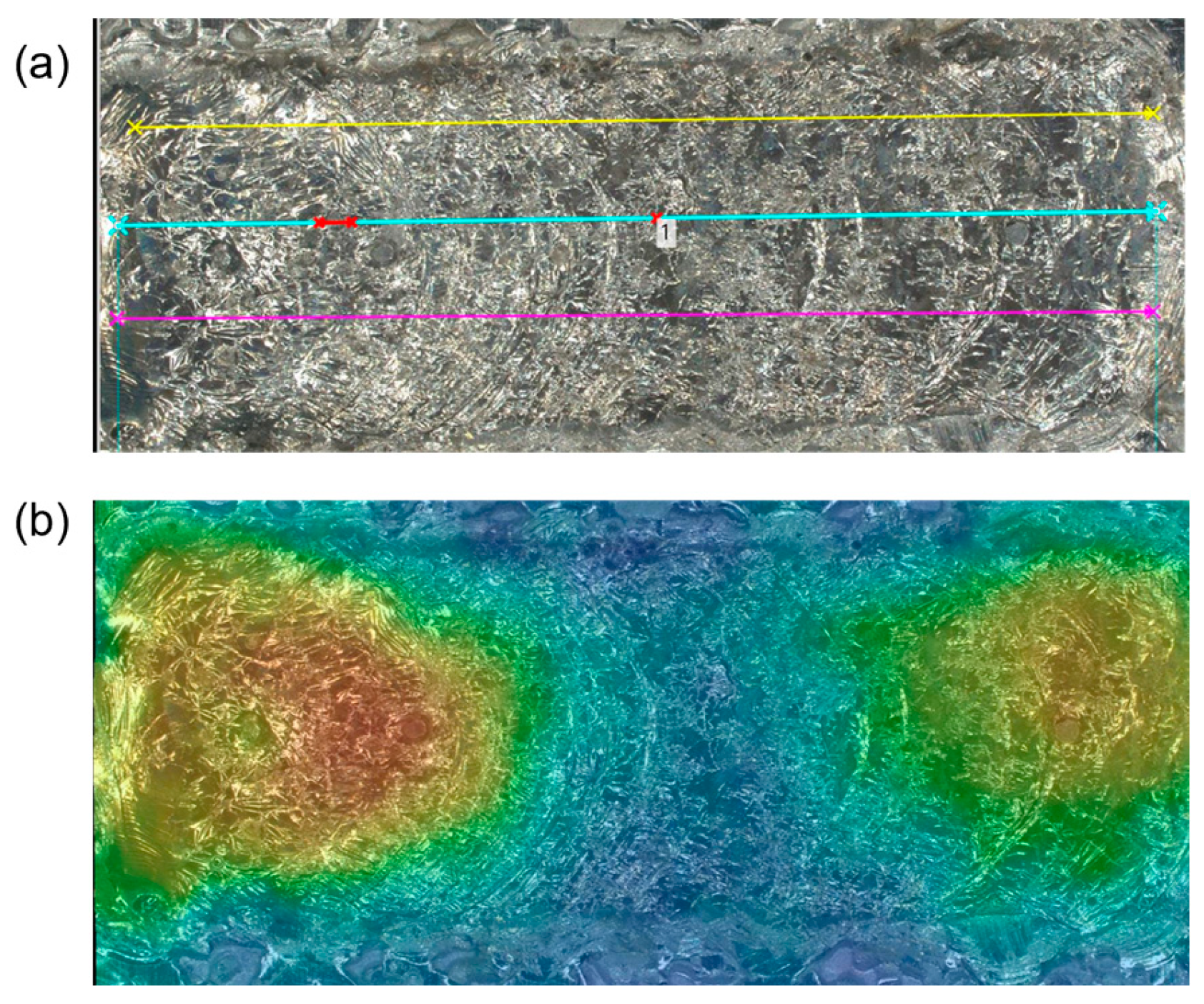
The weld reinforcement can reflect the welding quality to a certain extent. Excessive reinforcement may lead to stress concentration at the weld toe during loading, adversely affecting the joint performance [27,28]. In this study, a digital microscope was employed to observe the microtopography of the welded specimens, and profile measurement techniques were applied to accurately quantify the surface height distribution. As shown in Figure 5a, to characterize the reinforcement features, three equally spaced measurement lines were set parallel to the welding direction. The height distribution along the weld centerline and the average weld reinforcement were used as key evaluation indicators for analysis.
As shown in Figure 5b, the weld reinforcement exhibits a characteristic distribution of being higher at both ends and lower in the middle. This can be attributed to the following reasons: at the start stage, the delayed speed ramp-up leads to relatively higher heat input; at the corner stage, the reversal of the molten pool travel direction and more concentrated heat accumulation in the corner region collectively result in increased reinforcement at both the start and end of the weld. To mitigate this phenomenon, power ramp-up and ramp-down strategies can be applied at the start and end segments, respectively.
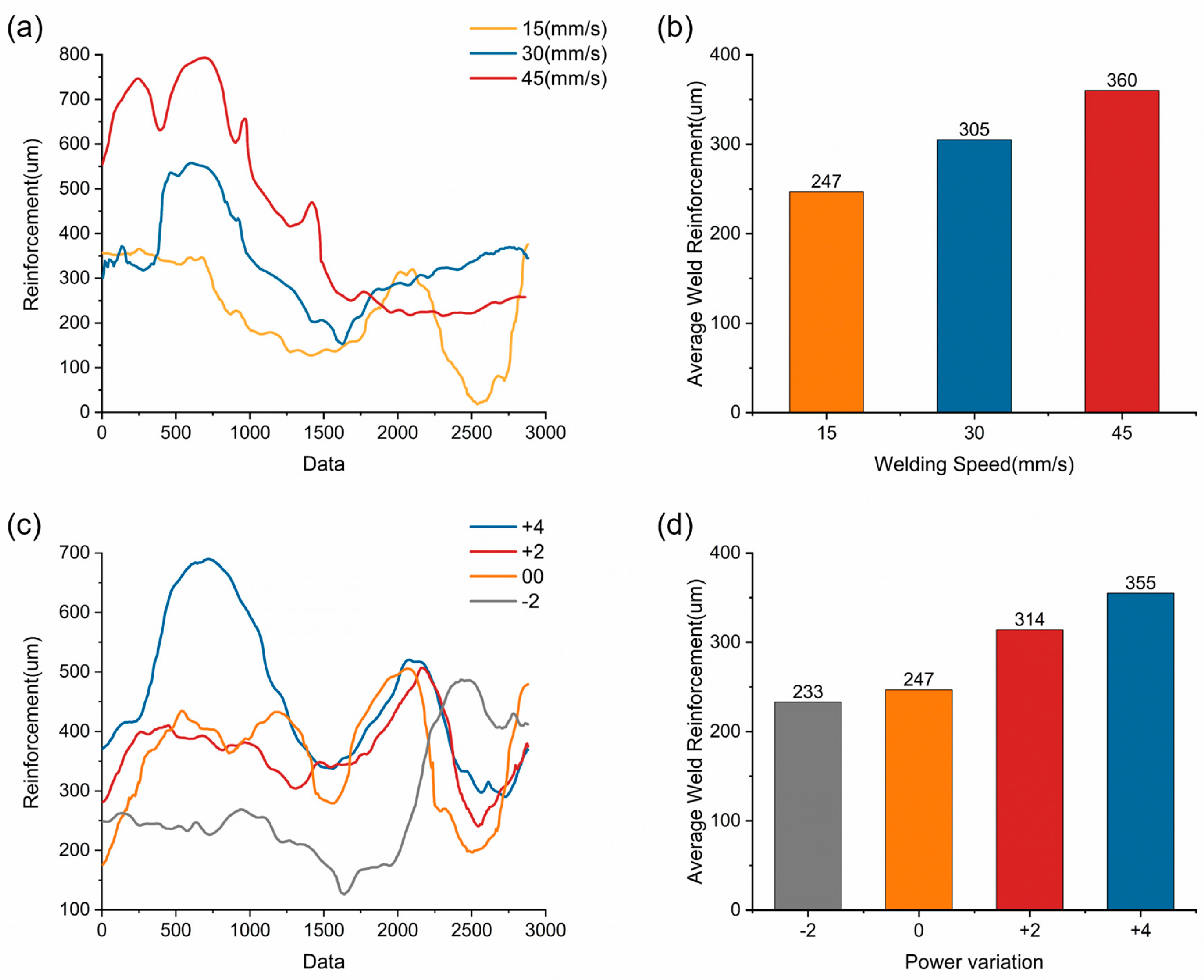
Welding speed has a significant influence on the weld reinforcement (Figure 6a,b). The primary reasons include an increase in the reverse melt flow velocity and a larger keyhole inclination angle, which intensify the fluctuation of the molten pool surface. As molten metal accumulates, the reinforcement height increases accordingly [29].
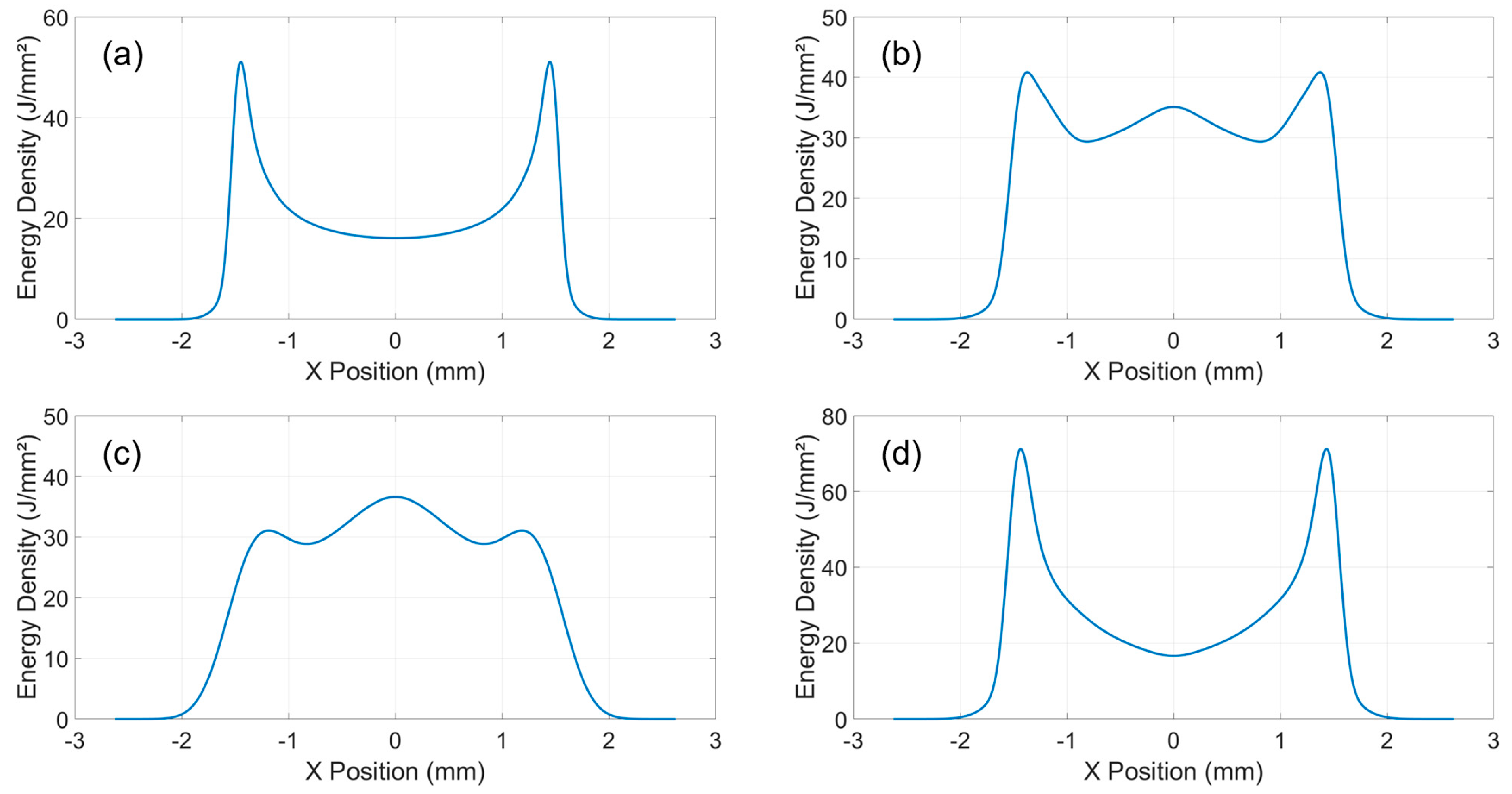
As the power modulation parameter changes from −2 to +4, the weld reinforcement shows a significant rising trend (Figure 6c,d). This phenomenon is closely related to recoil pressure, surface tension, and fluid flow behavior within the molten pool. Simulation results of the energy density distribution under different power modulation parameters, as shown in Figure 7, reveal a laser energy concentration effect at the inflection points of the sinusoidal oscillation path, leading to elevated energy density at the weld edge regions. This effect becomes particularly pronounced when the edge power is increased. When a “+” power parameter is applied, the laser energy distribution can be effectively optimized. However, as the molten pool flows from the weld edge toward the center, the change in the surface tension gradient combined with increased recoil pressure from keyhole vapor intensifies the flow of liquid from the central region toward the trailing edge of the molten pool, thereby promoting the formation of weld reinforcement [30,31].

3.2. Analysis of Weld Pool Morphology and Porosity

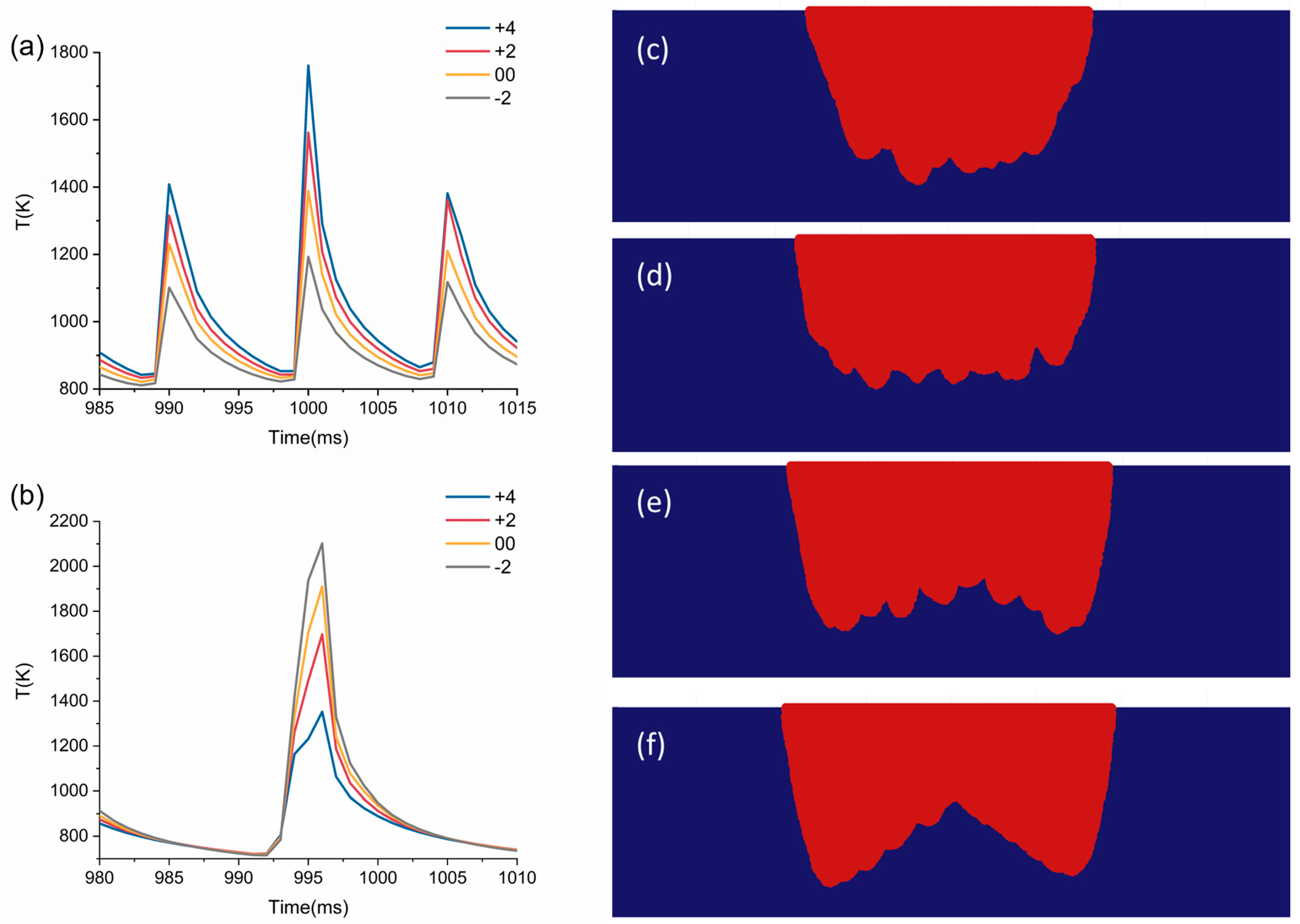
To analyze the influence mechanism of different power modulation parameters on the mechanical properties of the welded joint, a corresponding thermal stress simulation was conducted. Figure 8 compares the thermal cycles and simulated weld pool morphology under different power modulation parameters. The thermal cycles indicate that as the power modulation parameter changes from +4 to −2, the peak temperature at the weld center gradually decreases, while the peak temperature at the weld edge progressively increases. This trend is also reflected in the weld pool morphology: with decreasing power modulation parameter, the weld width gradually increases, while the penetration depth shows a characteristic of first decreasing and then increasing. Furthermore, the comparison between the simulated cross-sections in Figure 8 and the experimental weld pool profiles in Figure 9 demonstrates good agreement, validating the accuracy of the established simulation model.
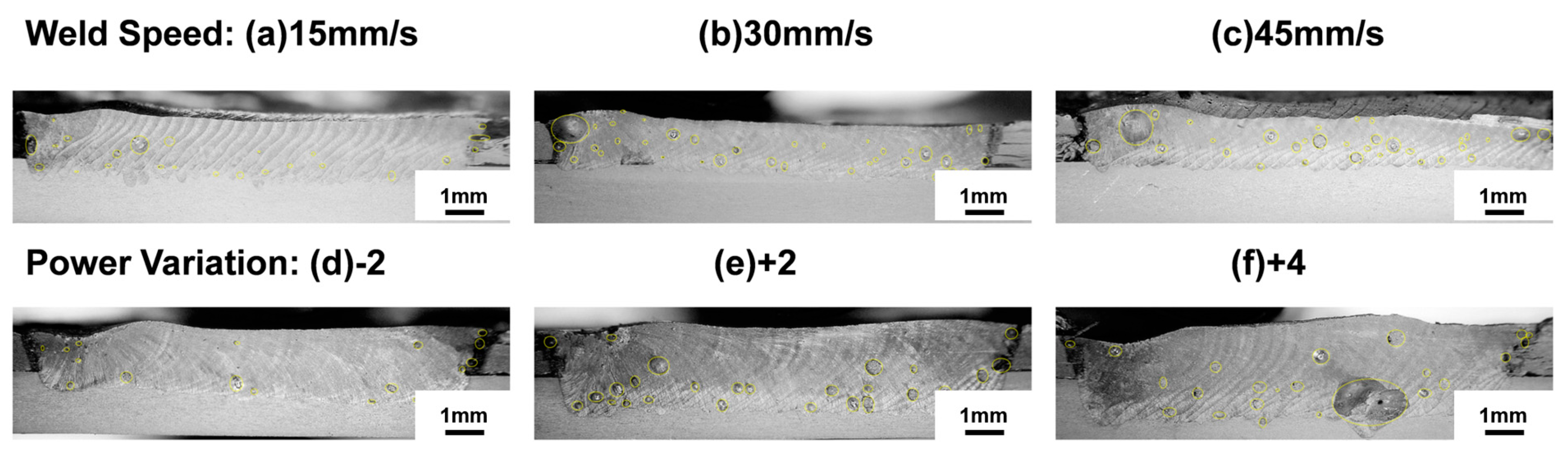
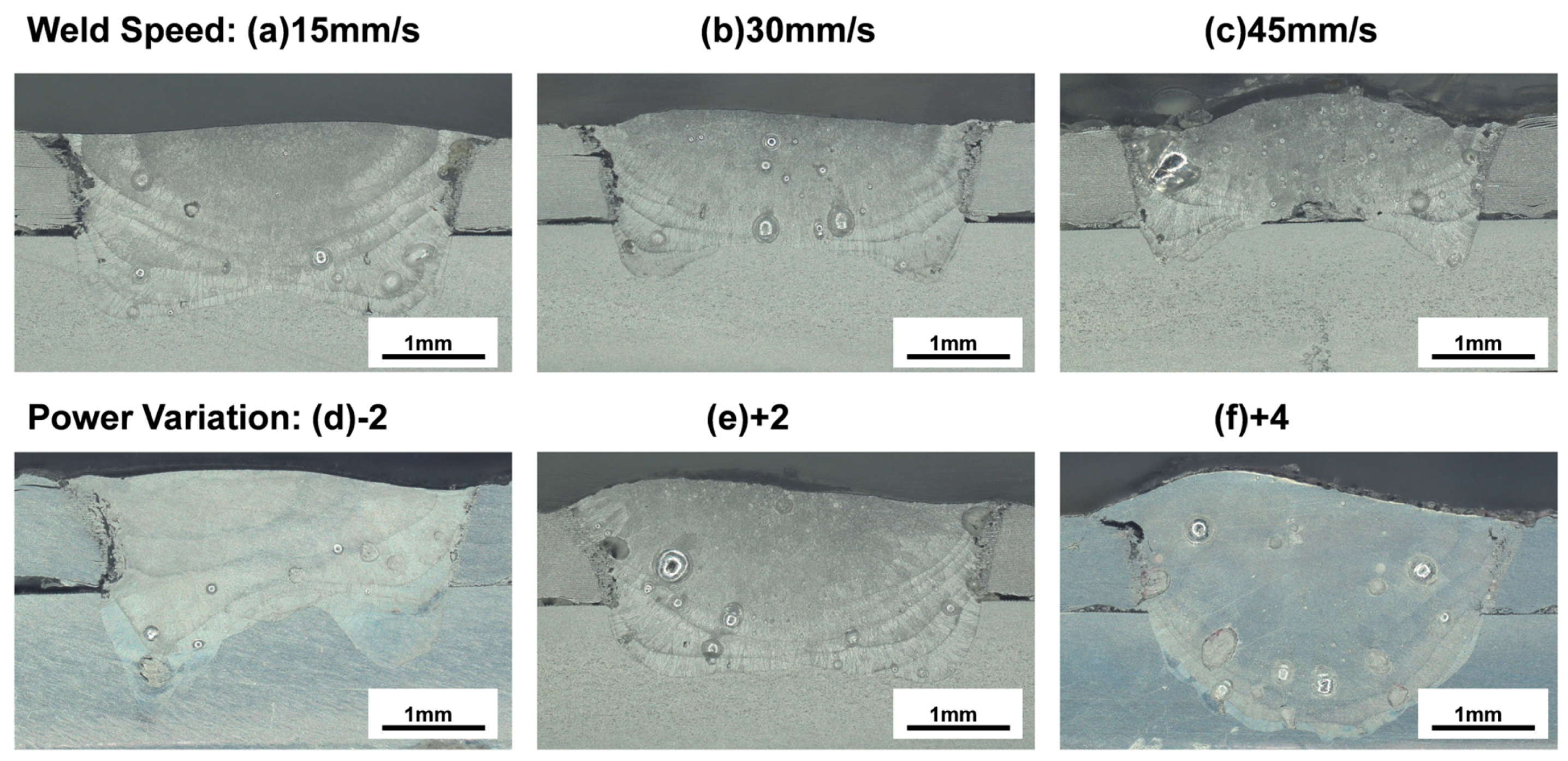
The weld pool morphology reveals that the cross-section of the laser sinusoidal oscillating weld exhibits an ω-shape profile (Figure 9a–c). As the welding speed increases, the total heat input decreases. Therefore, at 45 mm/s, a lack-of-fusion defect appears at the weld center. Furthermore, observation of the fusion line in the weld cross-section shows that cracks occur at both 15 mm/s and 30 mm/s, with more pronounced cracking at 15 mm/s. In contrast, no significant cracking is observed at 45 mm/s. This is primarily attributed to the high specific heat capacity and thermal conductivity of the aluminum foil. When the laser beam moves away, a substantial temperature gradient develops at the weld edge, causing thermal expansion of the foil material and inducing tensile stress [14]. At lower welding speeds, the higher heat input results in a more pronounced temperature gradient and consequently greater tensile stress, leading to more severe damage along the fusion line of the aluminum foil weld.
Regarding the weld cross-sections under different power modulation parameters, the weld obtained with parameter −2 (Figure 9d) exhibits a more prominent ω-shape profile. Upon examining the edge of the weld seam, distinct cracks can be observed. This is attributed to the enhanced power at the weld edges, which intensifies the temperature gradient in these regions, generating higher tensile stresses. The crack initiates from the material lap interface, as this location is prone to significant stress concentration [32]. In contrast, with power modulation parameters +2 and +4, the cross-sectional morphology of the weld pool transitions from an ω-shape to a U-shape (Figure 9e,f). Generally, a U-shaped weld pool profile is preferred during welding, as it ensures a more uniform energy distribution across the weld width and helps prevent lack-of-fusion defects at the center of the sinusoidal oscillation path. Under the +4 power parameter, the weld pool exhibits greater penetration depth and a narrower effective width. Notably, cracking along the fusion line is significantly mitigated, owing to the reduced temperature gradient at the weld edges, which avoids the tensile stress-induced cracking. However, derivative cracks associated with porosity are still observed.
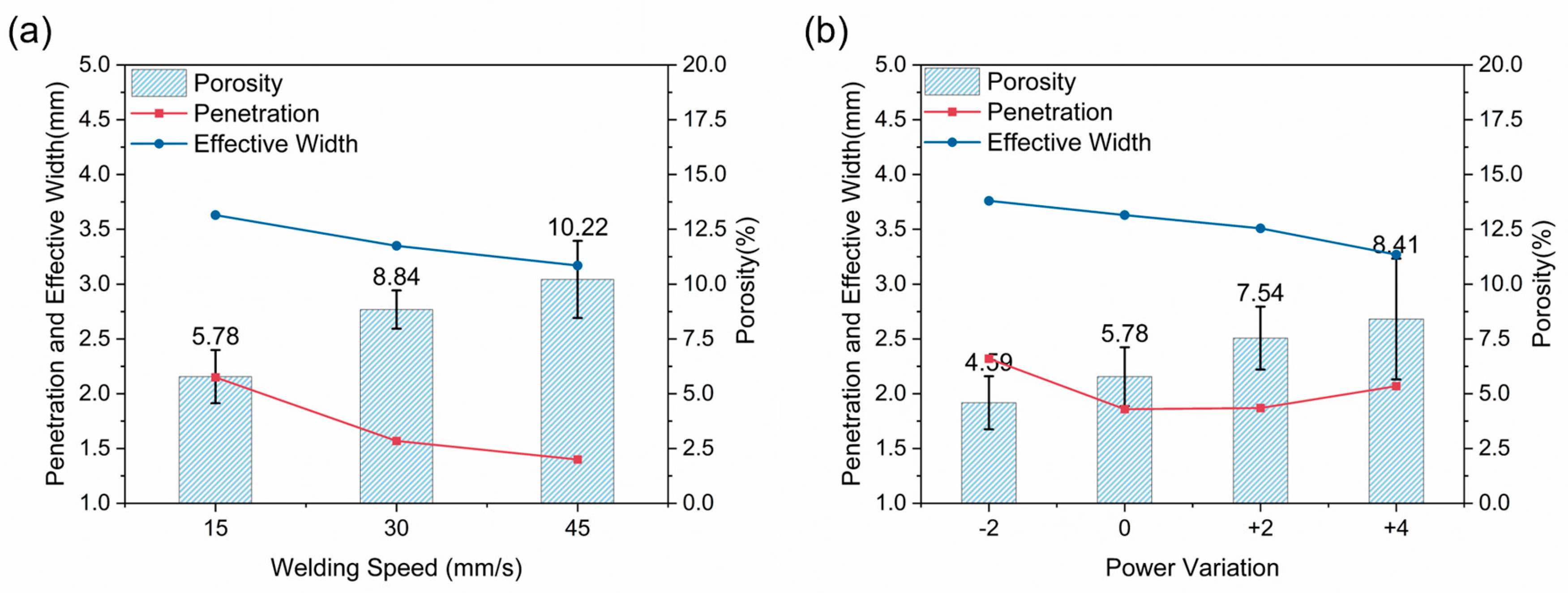
For welds produced with different parameters, the specimens were divided into five segments parallel to the welding direction. The average porosity of the cross-sections from these five segments was taken as the final porosity result [33], with the representative cross-section used for comparative analysis, as shown in Figure 10. Welding speed significantly influences both the weld pool morphology and porosity. As the speed increases from 15 mm/s to 45 mm/s, the porosity rises from 5.78% to 10.22% (Figure 11a). The analysis of welding porosity primarily focuses on three aspects: solidification rate of the molten pool, bubble rise velocity, and keyhole stability [34]. During low-speed welding, the weld width increases, the solidification rate of the molten pool slows down, and keyhole stability is enhanced, resulting in better control of the porosity rate.
As the power modulation parameter changes from −2 to +4, the porosity demonstrates a linearly increasing trend, rising from 4.59% to 8.41% (Figure 11b), while the effective weld width continuously decreases. This variation in porosity can be attributed to the following mechanism: under the −2-parameter condition, the higher heat input at the weld edges promotes an increase in keyhole width, whereas the relatively lower heat input in the central region restricts the melt pool depth and keyhole depth. This specific heat input distribution enhances keyhole stability, effectively suppressing pore formation caused by keyhole collapse [18]. In contrast, under the +2 and +4 parameter conditions, keyhole stability decreases, making localized regions prone to keyhole instability, which in turn induces the formation of larger pores. Furthermore, the increased penetration depth and reduced weld width make it more difficult for these pores to escape from the molten pool, consequently leading to higher porosity.

3.3. Analysis of Mechanical Properties

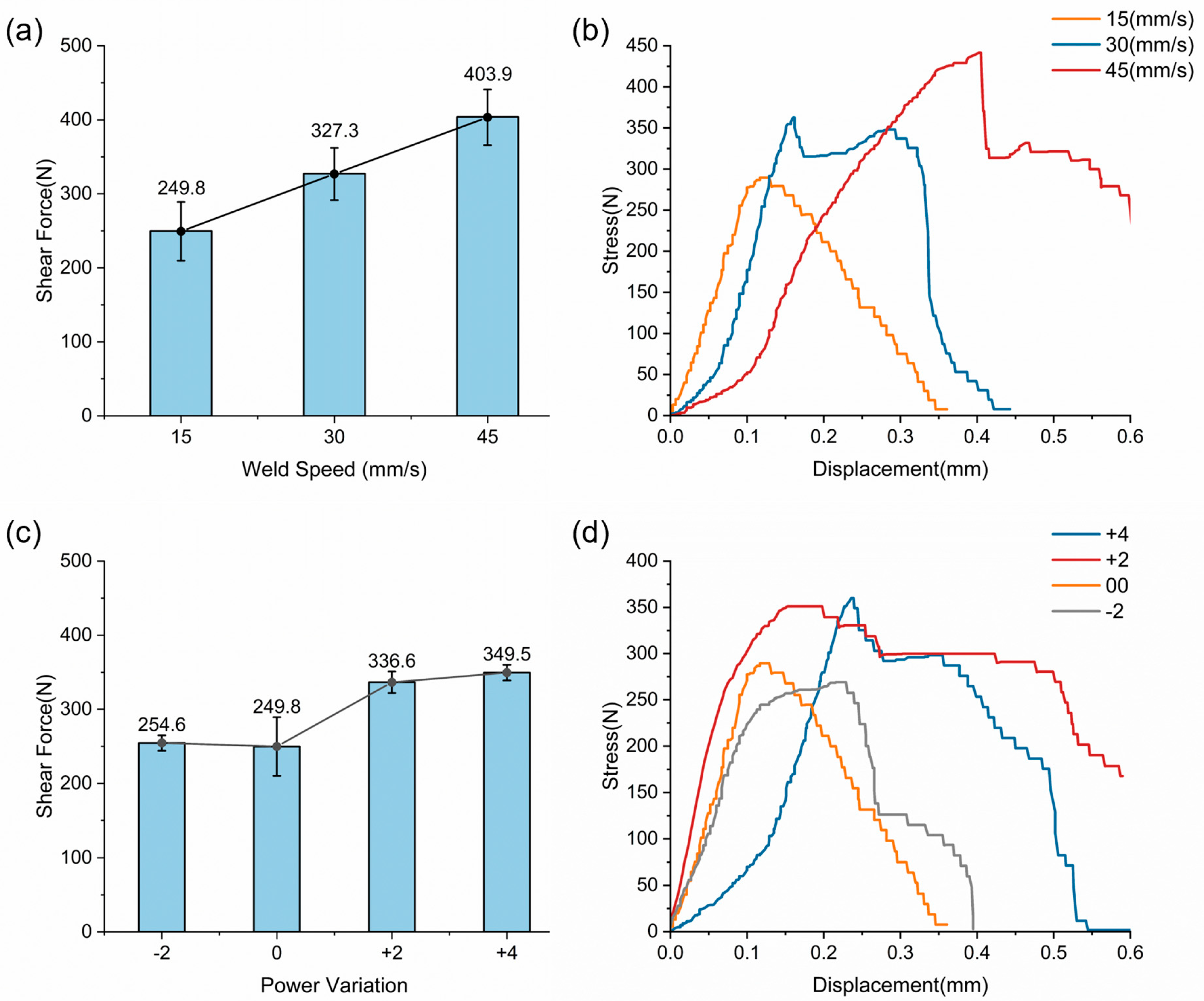
Tensile tests were conducted to determine the shear force under different welding speeds and power modulation parameters. All specimens fractured near the fusion line. As shown in Figure 12a, as the welding speed increased from 15 mm/s to 30 mm/s and then to 45 mm/s, the shear force correspondingly rose from 249.8 N to 327.3 N, and further to 403.9 N, exhibiting an approximately linear growth trend. A comparison of shear forces under different power modulation parameters (Figure 12c) reveals that the +2 and +4 parameters result in a significant increase in shear force—by 34.9% and 39.9%, respectively—compared to the unmodulated condition (parameter 00), while the −2 parameter shows no notable change. Figure 12b,d more intuitively presents the tensile behavior of the welded joints in the form of stress-displacement curves.
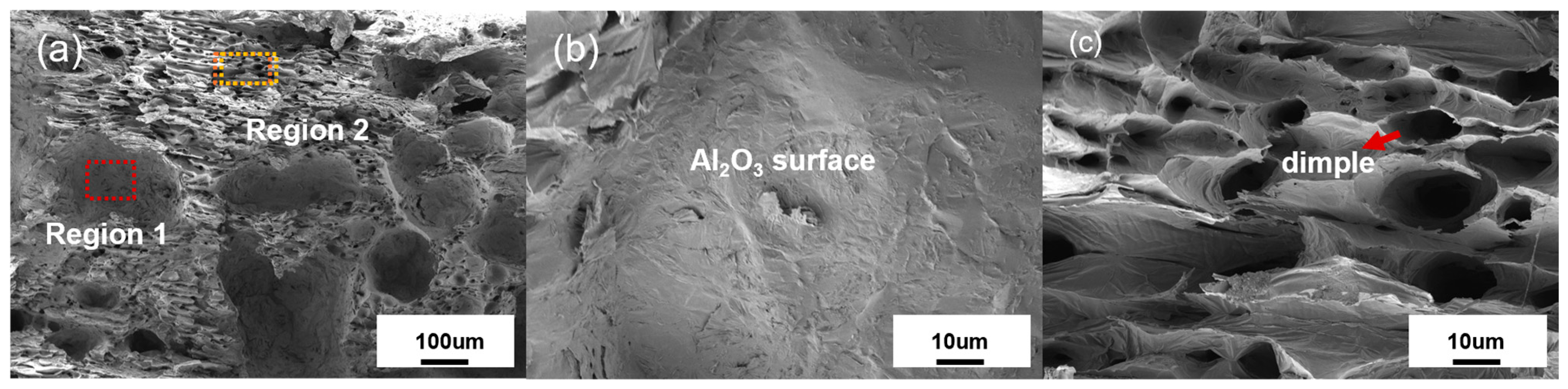
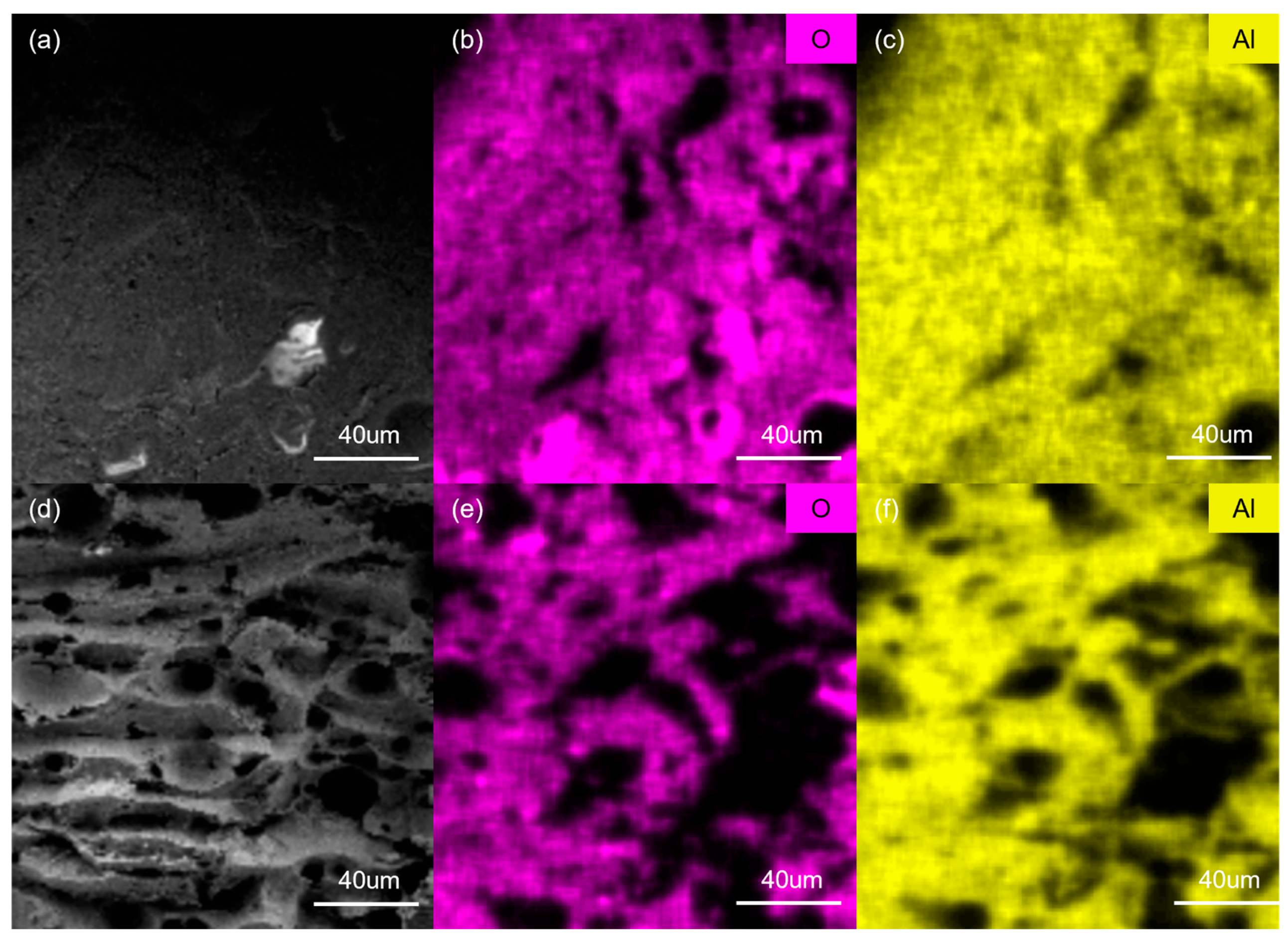
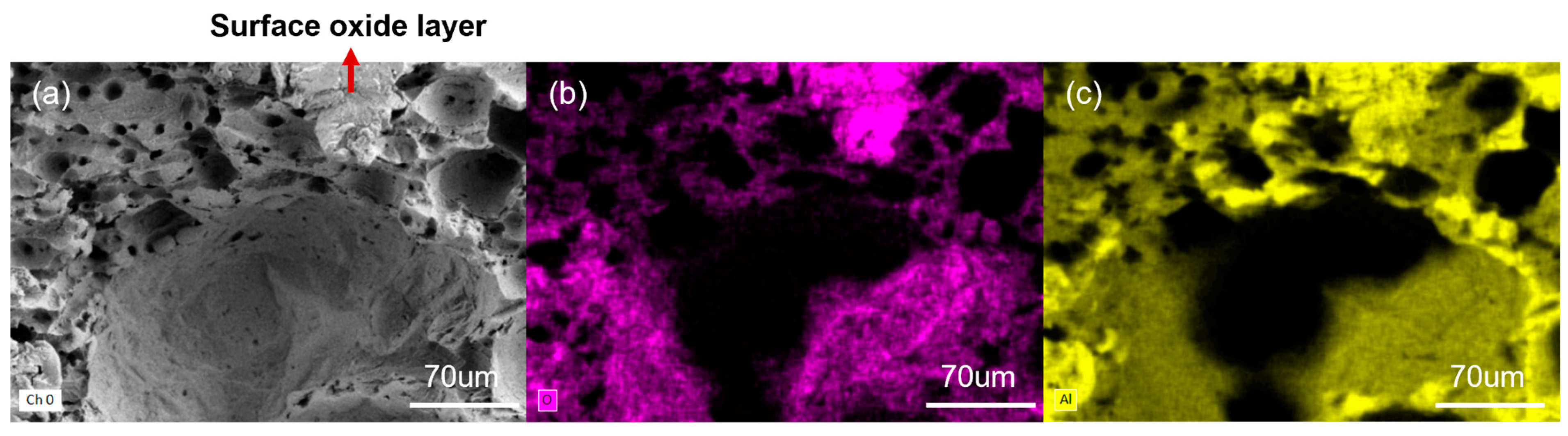
To further analyze the changes in material mechanical properties, we performed SEM observation and EDS scanning on the tensile fracture surfaces. Figure 13 shows the fracture morphology at different magnifications for the specimen welded at 15 mm/s. The results reveal the presence of numerous blocky substances and interlayer dimple structures. Separate EDS mapping was performed on these two regions, and the results are shown in Figure 14. The oxygen content in the bulk material region (33.06%) is three times that in the dimple region (11.94%), indicating the enrichment of aluminum oxide in this region (Table 3). Due to the limited spatial resolution and depth sensitivity of EDS, to ensure the reliability of the results, we conducted EDS mapping on an area encompassing both the bulk material and the dimple region. The results are presented in Figure 15. The dark areas in the map correspond to regions that were not detected due to the inherent limitations of EDS. However, within the detected areas, it can be observed that oxygen element is primarily distributed around the bulk material. Its concentration is similar to that of the oxide layer on the weld surface, further confirming the enrichment of aluminum oxide in this region.
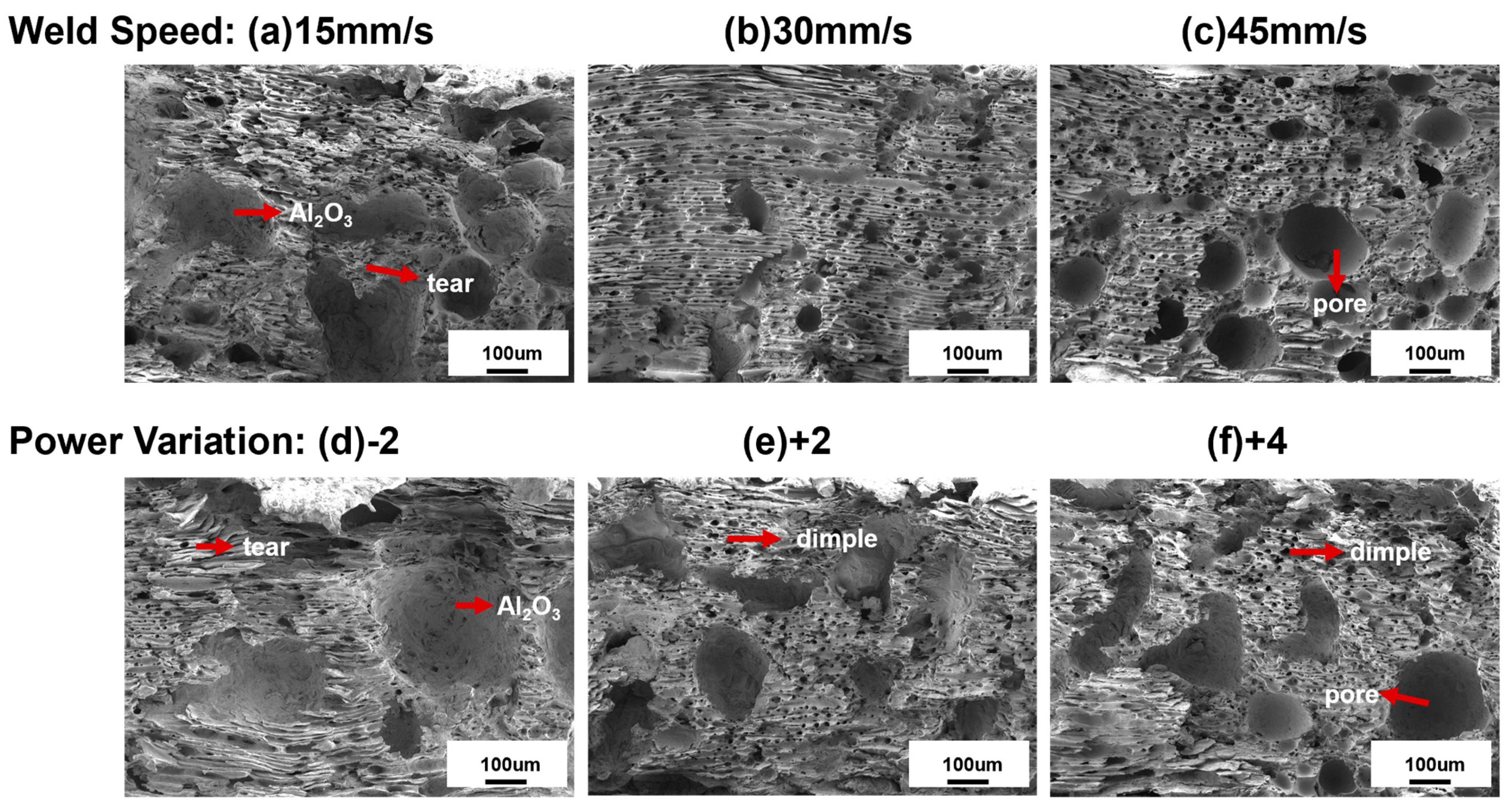
Analysis of the fracture surface at different welding speeds (Figure 16a–c) reveals that at lower speeds, there is a greater aggregation of oxides on the fracture surface. And the lower welding speed results in higher heat input, which generates greater thermal stress, making the weld edges more prone to cracking and leading to foil tearing. As the welding speed increases, the oxides continuously decrease, but the number of pores and dimples increases. Additionally, the reduction in heat input lowers the probability of tearing occurrence.
The current hypothesis regarding the formation of aluminum oxide is as follows: During low-speed welding, the prolonged existence of the molten pool allows more time for interaction with ambient air, leading to the formation of an oxide layer. Although laser cleaning was applied to the surface of the multi-layer aluminum foil to remove the pre-existing aluminum oxide film, the extremely rapid oxidation rate of 1060 aluminum alloy likely resulted in the reformation of some aluminum oxide prior to welding [35]. Additionally, while ultrasonic pre-welding disrupts the oxide films between the foil layers, it may not completely remove them, leaving residual oxide layers trapped at the interfaces [36]. These aluminum oxide inclusions tend to accumulate at the weld edges during welding. At higher welding speeds, the shorter duration of the molten pool reduces both the interaction time with air and the extent of aluminum oxide accumulation.
Under the −2 parameter, the fracture surface exhibits fewer interlayer dimples in the foil region, with the aluminum foil showing ribbon-like tearing (Figure 16d). This is attributed to increased thermal stress at edge of weld, which stretches and fractures the foil, initiating crack formation. Additionally, large blocky substances remain on the fracture surface, all of which contribute to the degradation of the mechanical properties of the welded joint. Figure 16e,f presents the fracture surface for the +2 and +4 power modulation parameters. It can be observed that by reducing the power at the weld edges, the thermal impact induced by welding is suppressed. The aluminum oxide content at the weld edges decreases, and the temperature gradient in these regions is reduced, thereby lowering the thermal stress during welding and contributing to some extent to crack suppression. Moreover, the number of interlayer dimples increases. However, compared with the unmodulated parameter, the fracture surfaces also show a corresponding increase in the number of pores, which is consistent with the porosity analysis presented earlier.
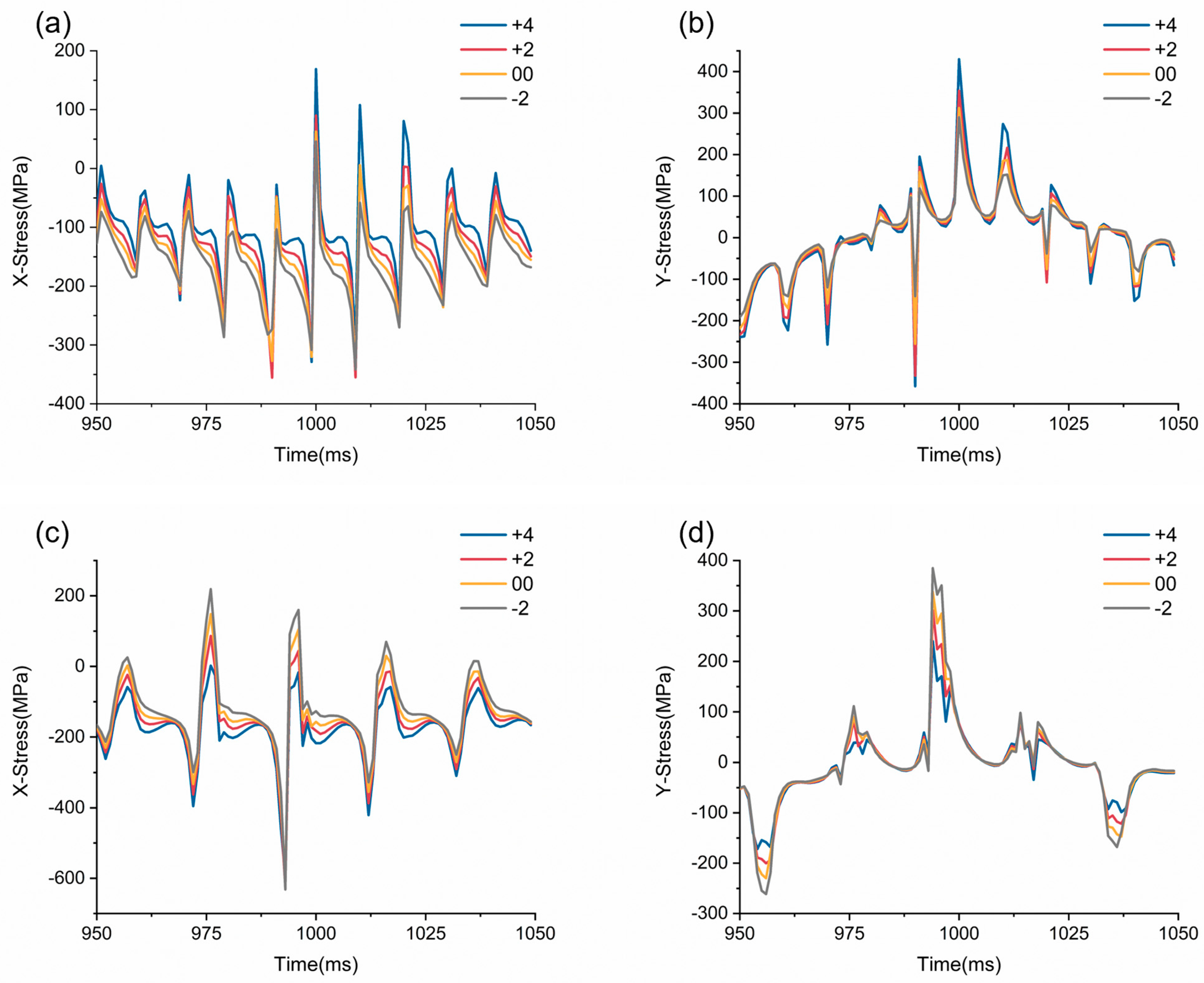
The transverse and longitudinal residual stress distributions in the welded joint clearly reveal the mechanisms of thermal cycling and constraint effects (Figure 17). In low-temperature regions not yet reached by the heat source, the material experiences compressive stress due to thermal expansion from adjacent high-temperature zones. When these areas are subsequently melted by the direct action of the heat source and then cool and contract, the stress state transitions to tensile stress. Meanwhile, the power modulation parameters of the oscillating laser significantly influence the stress distribution. As the parameter changes from +4 to −2, the laser power distribution shifts toward the weld edges, causing residual stresses to decrease at the center and increase at the edges.
For lap joints, fracture failure typically originates from stress concentration zones such as the weld edges or the material lap interface. Therefore, proactively reducing the transient stress in these critical regions through the parameter optimization described above demonstrates clear benefits for enhancing the overall mechanical performance of the joint.

4. Conclusions

In this study, a hybrid welding strategy integrating a ring-mode fiber laser, sinusoidal oscillation, and linearly gradient power modulation was developed to enable high-quality joining of an 80-layer 1060 aluminum foil to a 1.5 mm aluminum plate. Through combined experimental analysis and thermal–stress simulation, the effects of welding speed and power distribution on weld formation, defect evolution, and mechanical properties were comprehensively elucidated.
The results reveal that increasing the welding speed reduces heat input, suppresses fusion-line cracking, and improves joint shear strength, although excessively high-speed leads to increased porosity and degraded weld reinforcement. Enhancing the central power promotes a transition in molten pool morphology from an ω-shape to a U-shape, effectively mitigating crack formation but introducing higher porosity and more pronounced reinforcement. Conversely, enhancing edge power reduces porosity but increases transient stress at the weld edges, resulting in crack susceptibility. Overall, the study demonstrates that a low welding speed of 15 mm/s, combined with a tailored power-modulation strategy, achieves an optimal balance between crack suppression and porosity control, yielding joints with superior mechanical integrity. These findings provide a validated and practical process route for high-layer-count foil welding, offering technical support for the reliable manufacturing of high-capacity lithium-ion battery current collectors.

Author Contributions

Conceptualization, J.L.; methodology, L.G. and Y.C.; software, J.L.; validation, L.G. and Y.C.; formal analysis, J.L.; investigation, J.L.; resources, L.G. and Y.C.; data curation, J.L.; writing—original draft preparation, J.L.; writing—review and editing, L.G. and Y.C.; visualization, J.L.; supervision, L.G.; project administration, Y.C. All authors have read and agreed to the published version of the manuscript.

Funding

This research was funded by Guangdong Province Key Field R&D Plan, grant number 2023B0909030003; National Excellent Engineers Innovation Institute of Guangdong-Hong Kong-Macao Greater Bay Area (Foshan) Advanced Manufacturing Industry, grant number JBGS2024001; and Key Field Research Projects in Foshan City, grant number 2120001009232.

Data Availability Statement

The original contributions presented in this study are included in the article. Further inquiries can be directed to the corresponding author.

Conflicts of Interest

Author Yun Chen was employed by Shenzhen JPT Opto-Electronics Co., Ltd. The remaining authors declare that the research was conducted in the absence of any commercial or financial relationships that could be construed as a potential conflict of interest.

References

  1. Kitada, A. Electrodeposition of Metal Foils for Battery Current Collectors: Status and Challenges. Energy Storage Mater. 2025, 75, 104073. [Google Scholar] [CrossRef]
  2. Chen, H.; Yang, R.K. Lithium-Ion Battery Manufacturing Technology and Equipment; Chemical Industry Press: Beijing, China, 2024. (In Chinese) [Google Scholar]
  3. Feng, J.; Zhang, P.; Yan, H.; Shi, H.; Lu, Q.; Liu, Z.; Wu, D.; Sun, T.; Li, R.; Wang, Q. Application of Laser Welding in Electric Vehicle Battery Manufacturing: A Review. Coatings 2023, 13, 1313. [Google Scholar] [CrossRef]
  4. Warner, J.T. The Handbook of Lithium-Ion Battery Pack Design: Chemistry, Components, Types and Terminology; Elsevier: Amsterdam, The Netherlands, 2015. [Google Scholar]
  5. Hille, L.; Kick, M.; Zäh, M. Das Laserstrahlschweißen—Wegbereiter in der Batterieproduktion. ATZ Prod. 2020, 7, 20–23. [Google Scholar] [CrossRef]
  6. Yang, S.B.; Liang, Z. Principles and Applications of Lithium-ion Battery Manufacturing Processes; Chemical Industry Press: Beijing, China, 2020. (In Chinese) [Google Scholar]
  7. Das, A.; Barai, A.; Masters, I.; Williams, D. Comparison of Tab-To-Busbar Ultrasonic Joints for Electric Vehicle Li-Ion Battery Applications. WEVJ 2019, 10, 55. [Google Scholar] [CrossRef]
  8. Lassila, A.A.; Lönn, D.; Andersson, T.; Wang, W.; Ghasemi, R. Effects of Different Laser Welding Parameters on the Joint Quality for Dissimilar Material Joints for Battery Applications. Opt. Laser Technol. 2024, 177, 111155. [Google Scholar] [CrossRef]
  9. Gruhn, H.; Krüger, T.; Mund, M.; Kandula, M.W.; Dilger, K. Challenges in Contacting Metal–Polymer Current Collectors in Pouch Cells. JMMP 2023, 7, 219. [Google Scholar] [CrossRef]
  10. Kwon, H.; Shah, U.; Liu, X.; Rinker, T.J.; Cai, W. Ultrasonic-Assisted Resistance Spot Welding of Multilayered Al Foil Stacks for Li-Ion Battery Applications. J. Mater. Process. Technol. 2023, 317, 117990. [Google Scholar] [CrossRef]
  11. Harati, E.; Kah, P. Laser Welding of Aluminum Battery Tab to Variable Al/Cu Busbars in Li-Ion Battery Joint. AIMS Mater. Sci. 2022, 9, 884–918. [Google Scholar] [CrossRef]
  12. Schedewy, R.; Beyer, E.; Brenner, B.; Standfuss, J. Prospects of Welding Foils with Solid State Laser for Lithium-Ion Batteries. In Proceedings of the ICALEO 2011: 30th International Congress on Laser Materials Processing, Laser Microprocessing and Nanomanufacturing, Orlando, FL, USA, 23–27 October 2011; Laser Institute of America (LIA): Orlando, FL, USA, 2011; pp. 817–824. [Google Scholar]
  13. Li, M.; Li, Z.; Zhao, Y.; Li, H.; Wang, Y.; Huang, J. Influence of Welding Parameters on Weld Formation and Microstructure of Dual-Laser Beams Welded T-Joint of Aluminum Alloy. Adv. Mater. Sci. Eng. 2011, 2011, 767260. [Google Scholar] [CrossRef]
  14. Grabmann, S.; Kriegler, J.; Harst, F.; Günter, F.J.; Zaeh, M.F. Laser Welding of Current Collector Foil Stacks in Battery Production–Mechanical Properties of Joints Welded with a Green High-Power Disk Laser. Int. J. Adv. Manuf. Technol. 2022, 118, 2571–2586. [Google Scholar] [CrossRef]
  15. Grabmann, S.; Mayr, L.; Kick, M.K.; Zaeh, M.F. Enhancing Laser-Based Contacting of Aluminum Current Collector Foils for the Production of Lithium-Ion Batteries Using a Nanosecond Pulsed Fiber Laser. Procedia CIRP 2022, 111, 778–783. [Google Scholar] [CrossRef]
  16. Dou, C.; Ma, J.; Wang, H.; Carlson, B.; Rinker, T.; Pour, M.; Lu, F. Combined Fusion and Solid-State Joining for Strong Battery Al Foils Joints. Opt. Laser Technol. 2025, 191, 113359. [Google Scholar] [CrossRef]
  17. Olowinsky, A.; Spurk, C.; Helm, J.; Gillner, A. Laser-Based Joining of Electrode Stacks for Automated Large-Scale Production of Li-Ion Battery Cells. Energy Technol. 2023, 11, 2200770. [Google Scholar] [CrossRef]
  18. Tan, Z.; Pang, B.; Oliveira, J.P.; Chen, L.; Bu, X.; Wang, Z.; Cong, B.; Zeng, Z. Effect of S-Curve Laser Power for Power Distribution Control on Laser Oscillating Welding of 5A06 Aluminum Alloy. Opt. Laser Technol. 2022, 149, 107909. [Google Scholar] [CrossRef]
  19. Han, J.; Shi, Y.; Zhang, G.; Volodymyr, K.; Le, W. Minimizing Defects and Controlling the Morphology of Laser Welded Aluminum Alloys Using Power Modulation-Based Laser Beam Oscillation. J. Manuf. Process. 2022, 83, 49–59. [Google Scholar] [CrossRef]
  20. Han, J.; Shi, Y.; Zhang, G.; Xu, Y.; Korzhyk, V.; Le, W.; Dai, F. Solidification Cracking Restraining Mechanism of Laser-Welded Aluminum Alloy Joints Using Power Modulation Technique. Trans. Nonferrous Met. Soc. China 2025, 35, 2521–2535. [Google Scholar] [CrossRef]
  21. Xie, W.; Wang, J.; Lyu, F.; Li, X.; Xu, B.; Zhang, P.; Zhan, X. Investigation on Keyhole Stability and Surface Quality in Laser Welding of TC4 Titanium Alloy with Adjustable Ring-Mode (ARM) Laser. Int. J. Adv. Manuf. Technol. 2024, 130, 1307–1320. [Google Scholar] [CrossRef]
  22. Wang, Z.; Jiang, M.; Chen, X.; Du, Y.; Lei, Z.; Zhao, S.; Chen, Y. Mitigating Spatters in Keyhole-Mode Laser Welding by Superimposing Additional Ring-Shaped Beam. Opt. Laser Technol. 2024, 168, 109869. [Google Scholar] [CrossRef]
  23. GB/T 228.1-2010; Metallic Materials—Tensile Testing—Part 1: Method of Test at Room Temperature. Standardization Administration of China (SAC): Beijing, China, 2010.
  24. Dal, M.; Fabbro, R. [INVITED] An Overview of the State of Art in Laser Welding Simulation. Opt. Laser Technol. 2016, 78, 2–14. [Google Scholar] [CrossRef]
  25. Li, Q.; Luo, M.; Mu, Z.; Huang, A.; Pang, S. Improving Laser Welding via Decreasing Central Beam Density with a Hollow Beam. J. Manuf. Process. 2022, 73, 939–947. [Google Scholar] [CrossRef]
  26. Yang, L.; Geng, S.; Jiang, P.; Wang, Y.; Xiong, J. Investigation on the Keyhole/Molten Pool Dynamic Behavior during Adjustable Ring-Mode Laser Welding of Medium-Thick Aluminum Alloy. Int. J. Therm. Sci. 2024, 196, 108723. [Google Scholar] [CrossRef]
  27. Lai, Z.-H.; Xu, S.; Clark, S.J.; Fezzaa, K.; Li, J. Unveiling Mechanisms and Onset Threshold of Humping in High-Speed Laser Welding. Nat. Commun. 2024, 15, 9546. [Google Scholar] [CrossRef] [PubMed]
  28. Gu, H.; Shulkin, B. A Practical Use of Humping Effect in Laser Beam Welding. J. Laser Appl. 2011, 23, 012001. [Google Scholar] [CrossRef]
  29. Ai, Y.; Jiang, P.; Wang, C.; Mi, G.; Geng, S.; Liu, W.; Han, C. Investigation of the Humping Formation in the High Power and High Speed Laser Welding. Opt. Lasers Eng. 2018, 107, 102–111. [Google Scholar] [CrossRef]
  30. Zhu, B.; Zhang, G.; Zou, J.; Ha, N.; Wu, Q.; Xiao, R. Melt Flow Regularity and Hump Formation Process during Laser Deep Penetration Welding. Opt. Laser Technol. 2021, 139, 106950. [Google Scholar] [CrossRef]
  31. Yan, T.; Zhan, X.; Gao, Q.; Wang, F.; Ling, W. Influence of Laser Power on Molten Pool Flow Field of Laser-MIG Hybrid Welded Invar Alloy. Opt. Laser Technol. 2021, 133, 106539. [Google Scholar] [CrossRef]
  32. Pellone, L.; Inamke, G.; Hong, K.-M.; Shin, Y.C. Effects of Interface Gap and Shielding Gas on the Quality of Alloy AA6061 Fiber Laser Lap Weldings. J. Mater. Process. Technol. 2019, 268, 201–212. [Google Scholar] [CrossRef]
  33. Li, J.; Geng, S.; Wang, Y.; Wang, C.; Jiang, P. Mitigation of Porosity in Adjustable-Ring-Mode Laser Welding of Medium-Thick Aluminum Alloy. Int. J. Heat Mass Transf. 2024, 227, 125514. [Google Scholar] [CrossRef]
  34. Li, S.; Mi, G.; Wang, C. A Study on Laser Beam Oscillating Welding Characteristics for the 5083 Aluminum Alloy: Morphology, Microstructure and Mechanical Properties. J. Manuf. Process. 2020, 53, 12–20. [Google Scholar] [CrossRef]
  35. Wang, W.; Jiang, Q.; Liu, W.; Ji, X.; Xing, F.; Zhang, K.; Wang, J. Effect of Laser Cleaning the Anodized Surface of 5083 Aluminum Alloy on Weld Quality. Weld. World 2024, 68, 1281–1295. [Google Scholar] [CrossRef]
  36. Liu, G.; Hu, X.; Fu, Y.; Li, Y. Microstructure and Mechanical Properties of Ultrasonic Welded Joint of 1060 Aluminum Alloy and T2 Pure Copper. Metals 2017, 7, 361. [Google Scholar] [CrossRef]
Figure 1. Experimental setup: (a) actual site; (b) schematic diagram.
Metals 16 00150 g001
Figure 2. Power modulation strategy.
Metals 16 00150 g002
Figure 3. Energy density distribution of the inner and outer ring heat sources.
Metals 16 00150 g003
Figure 4. Mesh setup diagram.
Metals 16 00150 g004
Figure 5. (a) Weld reinforcement measurement method; (b) Schematic diagram of the weld surface profile.
Metals 16 00150 g005
Figure 6. Weld reinforcement data analysis: (a,b) Weld reinforcement curves and average value bar charts under different welding speeds; (c,d) Weld reinforcement curves and average value bar charts under different power modulation parameters.
Metals 16 00150 g006
Figure 7. Energy density distribution under different power modulation parameters: (a) parameter 0; (b) parameter +2; (c) parameter +4; (d) parameter −2.
Metals 16 00150 g007
Figure 8. Thermal cycles at (a) weld center and (b) weld edge; simulated weld pool morphology under different power modulation parameters: (c) +4, (d) +2, (e) 00, (f) −2.
Metals 16 00150 g008
Figure 9. Cross-sections of welded joints under different welding speeds and power modulation parameters: (a) 15 mm/s; (b) 30 mm/s; (c) 45 mm/s; (d) −2; (e) +2; (f) +4.
Metals 16 00150 g009
Figure 10. Longitudinal sections of weld seams under different welding speeds and power modulation parameters: (a) 15 mm/s; (b) 30 mm/s; (c) 45 mm/s; (d) −2; (e) +2; (f) +4.
Metals 16 00150 g010
Figure 11. Data on penetration depth, effective weld width, and porosity: (a) different welding speeds; (b) different power modulation parameters.
Metals 16 00150 g011
Figure 12. (a,b) Shear force and stress-displacement curves under different welding speeds.; (c,d) Shear force and stress-displacement curves under different power modulation parameters.
Metals 16 00150 g012
Figure 13. Fracture surfaces: (a) fracture surface at 100× magnification; (b) 1000× magnified view of region 1; (c) 1000× magnified view of region 2.
Metals 16 00150 g013
Figure 14. (ac) EDS mapping of the bulk material region; (df) EDS mapping of the dimple region.
Metals 16 00150 g014
Figure 15. (a) SEM image of the mixed zone; (b) EDS mapping of O; (c) EDS mapping of Al.
Metals 16 00150 g015
Figure 16. Fracture surface under different parameters: (a) 15 mm/s; (b) 30 mm/s; (c) 45 mm/s; (d) −2; (e) +2; (f) +4.
Metals 16 00150 g016
Figure 17. Transverse and longitudinal residual stresses at different locations: (a,b) weld center; (c,d) weld edge.
Metals 16 00150 g017
Table 1. Chemical composition of 1060 aluminum alloy.
CompositionSiFeCuMnMgZnVAl
wt%0.250.350.050.030.030.050.05Bal.
Table 2. Parameter variation table.
NumberInner/Ring Power/(W)Oscillation Amplitude/(mm)Oscillation Spacing/(mm)Welding Speed/(mm/s)
00780/6001.50.315
01780/6001.50.330
02780/6001.50.345
−2998/768 (Edge)−780/600–561/432 (Center)1.50.315
+2561/432 (Edge)−780/600–998/768 (Center)1.50.315
+4343/264 (Edge)−780/600–1217/936 (Center)1.50.315
Table 3. EDS elemental composition table.
Element
Region
12
O Atom/%33.0611.94
Al Atom/%66.9488.06
Disclaimer/Publisher’s Note: The statements, opinions and data contained in all publications are solely those of the individual author(s) and contributor(s) and not of MDPI and/or the editor(s). MDPI and/or the editor(s) disclaim responsibility for any injury to people or property resulting from any ideas, methods, instructions or products referred to in the content.