Article

Fiber-Diode Hybrid Laser Welding of IGBT Copper Terminals

1
School of Materials, Shanghai Dianji University, No. 300, Shuihua Road, Pudong New Area, Shanghai 200245, China
2
Heilongjiang Construction & Installation Group Co., Ltd., Harbin 150036, China
*
Author to whom correspondence should be addressed.
Metals 2026, 16(2), 139; https://doi.org/10.3390/met16020139
Submission received: 19 December 2025 / Revised: 19 January 2026 / Accepted: 21 January 2026 / Published: 23 January 2026
(This article belongs to the Special Issue Advanced Laser Welding and Joining of Metallic Materials)

Abstract

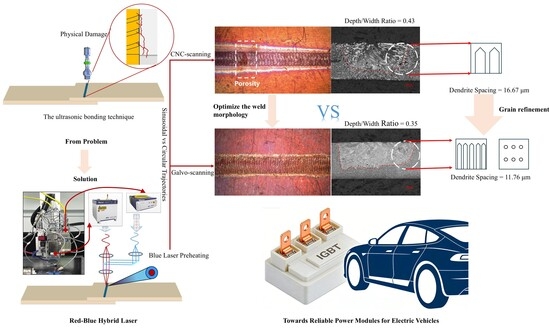
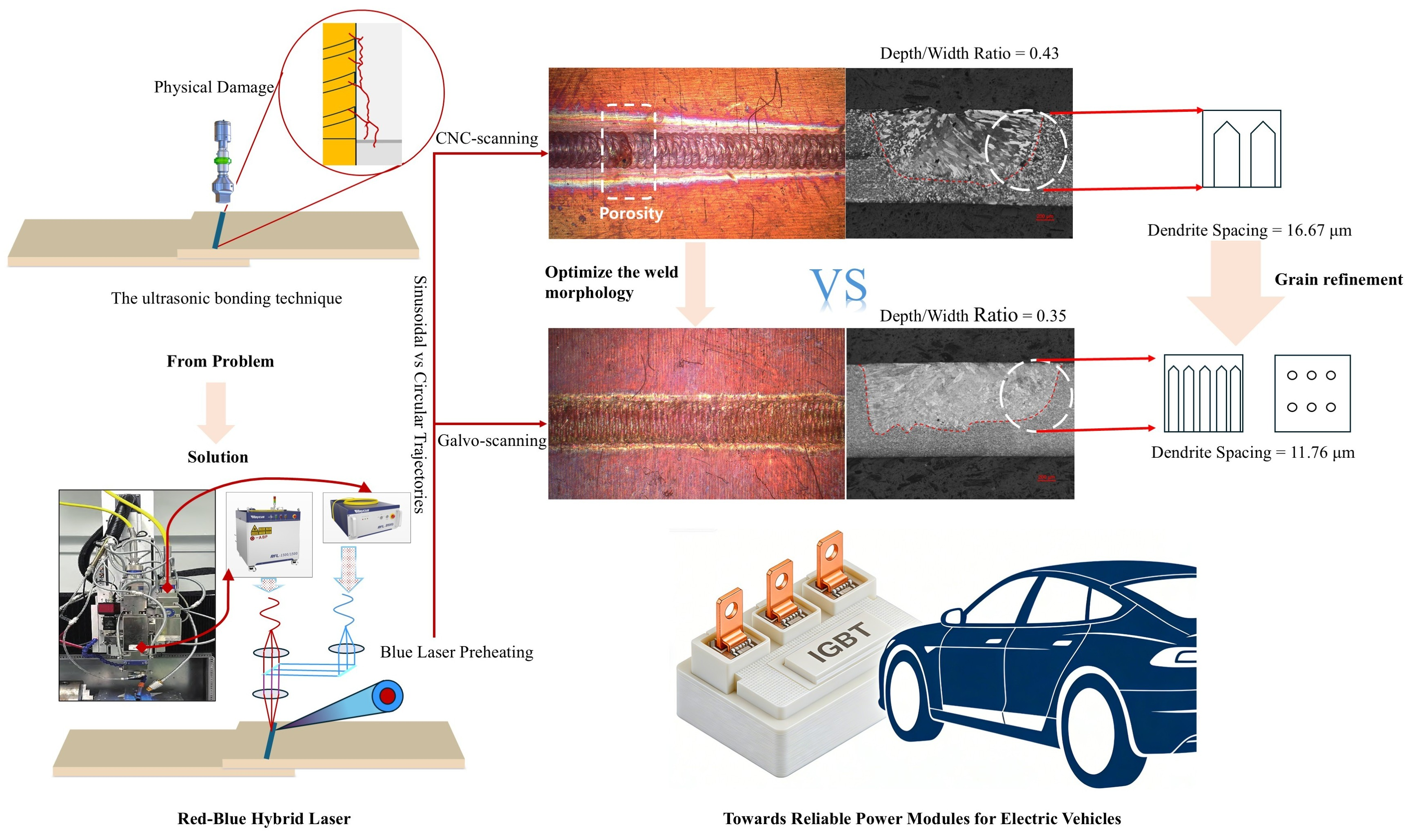
The traditional ultrasonic bonding technique for IGBT T2 copper terminals often causes physical damage to ceramic substrates, severely compromising the reliability of power modules. Meanwhile, T2 copper laser welding faces inherent challenges including low laser absorption efficiency and unstable molten pool dynamics. To address these issues, this study targets the high-quality connection of IGBT T2 copper terminals and proposes a welding solution integrating a Fiber-Diode Hybrid Laser system with galvo-scanning technology. Comparative experiments between galvo-scanning and traditional oscillation methods CNC scanning were conducted under sinusoidal and circular trajectories to explore the regulation mechanism of welding quality. The results demonstrate that CNC scanning lacks precision in thermal input control, resulting in inconsistent welding quality. Galvo-scanning enables precise modulation of laser energy distribution and molten pool behavior, effectively reducing spatter and porosity defects. It also promotes the transition from columnar grains to equiaxed grains, significantly refining the weld microstructure. Under the sinusoidal trajectory with a welding speed of 20 mm/s, the Lap-shear strength of the galvo-scanned joint reaches 277 N/mm2, outperforming all CNC-scanned joints. This research proposes a non-contact welding strategy targeted at eliminating the mechanical failure mechanism associated with conventional ultrasonic bonding of ceramic substrates. It establishes the superiority of galvo-scanning for precision welding of high-reflectivity materials and lays a foundation for its potential application in new energy vehicle power modules and microelectronic packaging.

Graphical Abstract

1. Introduction

For the new generation of high-performance Insulated Gate Bipolar Transistor (IGBT) modules, stringent requirements for ultra-high interconnection accuracy (at the micrometer level) and extremely low weld joint failure rates have been imposed, similar to those for automotive battery tab interconnections [1,2] and copper foil welding in power electronics [3]. Insulated Gate Bipolar Transistors (IGBTs) are critical power semiconductor devices that are widely used in high-power applications, including electric vehicle (EV) inverters and industrial drives. An IGBT module typically consists of multiple functional layers, including silicon chips, a ceramic substrate (e.g., Al2O3 or AlN), copper terminals, and a baseplate. Among these components, the copper terminals (typically fabricated from high-purity T2 copper, Cu ≥ 99.9%) serve as the primary electrical and thermal interface between the chip and external circuits. Even minor defects (e.g., spatter or uneven penetration) can induce localized overheating, thereby triggering premature failure of the entire power module [4].
Currently, ultrasonic bonding is widely employed for the interconnection of copper terminals. However, this method relies on mechanical vibration and applied pressure, which frequently induce microcracks and delamination in the underlying brittle ceramic substrate, thereby severely compromising the long-term reliability of the module. To overcome these limitations, laser welding has been proposed as a promising non-contact alternative. Nevertheless, copper, as the primary conductive material, poses significant challenges for conventional infrared laser welding owing to its high reflectivity and high thermal conductivity [5,6], leading to low energy absorption efficiency and unstable molten pool dynamics [7].
Recent advances in blue laser technology (wavelength ~450 nm) have increased the absorption rate of copper to approximately 45%, thereby providing a viable pathway for enhancing laser–material energy coupling. For instance, Ishige et al. [8] developed a blue-laser-assisted kW-class continuous-wave fiber-diode hybrid laser system, in which the blue laser (465 nm) provided high-absorption preheating and significantly stabilized the molten pool during copper welding. Their experiments demonstrated that this hybrid approach effectively suppressed spatter and enhanced weld uniformity, thereby confirming the practical viability of blue laser assistance for high-quality copper processing. Furthermore, laser beam oscillation (e.g., sinusoidal or circular trajectories) has been shown to refine grain structure by intensifying molten pool stirring, thereby optimizing joint mechanical properties. For example, Yang et al. [9] demonstrated that the application of circular beam oscillation during selective laser melting of Inconel 718 significantly enhanced formability and microstructural characteristics. The oscillating laser’s stirring effect reduced microporosity and suppressed elemental micro segregation, leading to a more uniform solidification structure and an increased proportion of equiaxed grains. Similarly, Xia et al. [10] applied circular oscillating laser melting deposition to fabricate WC-reinforced nickel-based superalloy composites. Their work confirmed that laser oscillation effectively promoted a more uniform temperature distribution and intensified molten pool convection. This effect not only facilitated homogeneous distribution of reinforcing phases but also contributed to equiaxed crystal formation in the deposit center, thereby collectively enhancing microhardness, wear resistance, and electrochemical properties of the joint [11,12]. However, most existing studies on laser oscillation welding have relied on traditional computer numerical control (CNC) scanning systems. The mechanical motion units of these systems are inherently constrained by inertia and response speed, making it difficult to achieve precise trajectory control and uniform heat input under high-frequency oscillation, particularly in the high-speed welding scenarios required for precision components such as IGBT power terminals [13,14,15]. This core bottleneck directly undermines molten pool stability, readily inducing defects such as uneven penetration, spatter, or even burn-through of fragile IGBT substrates, thereby failing to meet the ultra-high reliability requirements of precision electronic device welding.
Notably, galvo-scanning technology, with its advantages of high-frequency response and precise trajectory control, enables accurate modulation of laser energy distribution even under high-frequency oscillation. It thus becomes the only targeted solution to overcome the limitations of CNC scanning in precision welding of high-reflectivity materials like copper. Yet, systematic research on the intrinsic correlation between laser energy distribution, molten pool dynamics, and weld microstructure under galvo-oscillation remains scarce. Notably, molten pool solidification behavior dominates weld performance [16,17,18], and the mechanism by which galvo-scanning regulates solidification to optimize grains is still unclear.
To address these dual challenges—the physical damage caused by ultrasonic bonding to ceramic substrates and the poor energy coupling of infrared lasers on high-reflectivity copper—the core objective of this study is to elucidate the regulation mechanism of galvo-scanning on molten pool dynamics and solidification microstructure during hybrid laser welding of T2 copper, and to quantitatively evaluate its superiority over traditional CNC scanning in achieving high-quality, reliable joints. To this end, we developed an integrated fiber-diode hybrid laser system coupled with galvo-scanning technology. Through a systematic comparative investigation between galvo- and CNC-scanning under sinusoidal and circular trajectories, this work quantitatively assesses the differences in weld morphology, defect formation, grain structure, and mechanical properties. By correlating scanning precision with energy distribution, molten pool stability, and solidification behavior, we establish a clear cause-effect relationship that explains how high-frequency beam oscillation enhances weld integrity. This research not only provides a robust, substrate-friendly welding solution for IGBT terminals but also delivers fundamental insights into the precision welding of high-reflectivity materials, offering both theoretical guidance and practical methodology for advanced power electronics manufacturing.

2. Materials and Methods

Commercial T2 copper plates (Cu ≥ 99.9%) with dimensions 100 mm × 50 mm × 0.5 mm were used as the base material. The material exhibits high electrical and thermal conductivity, good corrosion resistance, and excellent plasticity, making it suitable for applications such as electric vehicle (EV) power terminals. The chemical composition is provided in Table 1. Prior to welding, the protective surface layer was removed using a milling machine, followed by cleaning with acetone to eliminate contaminants.
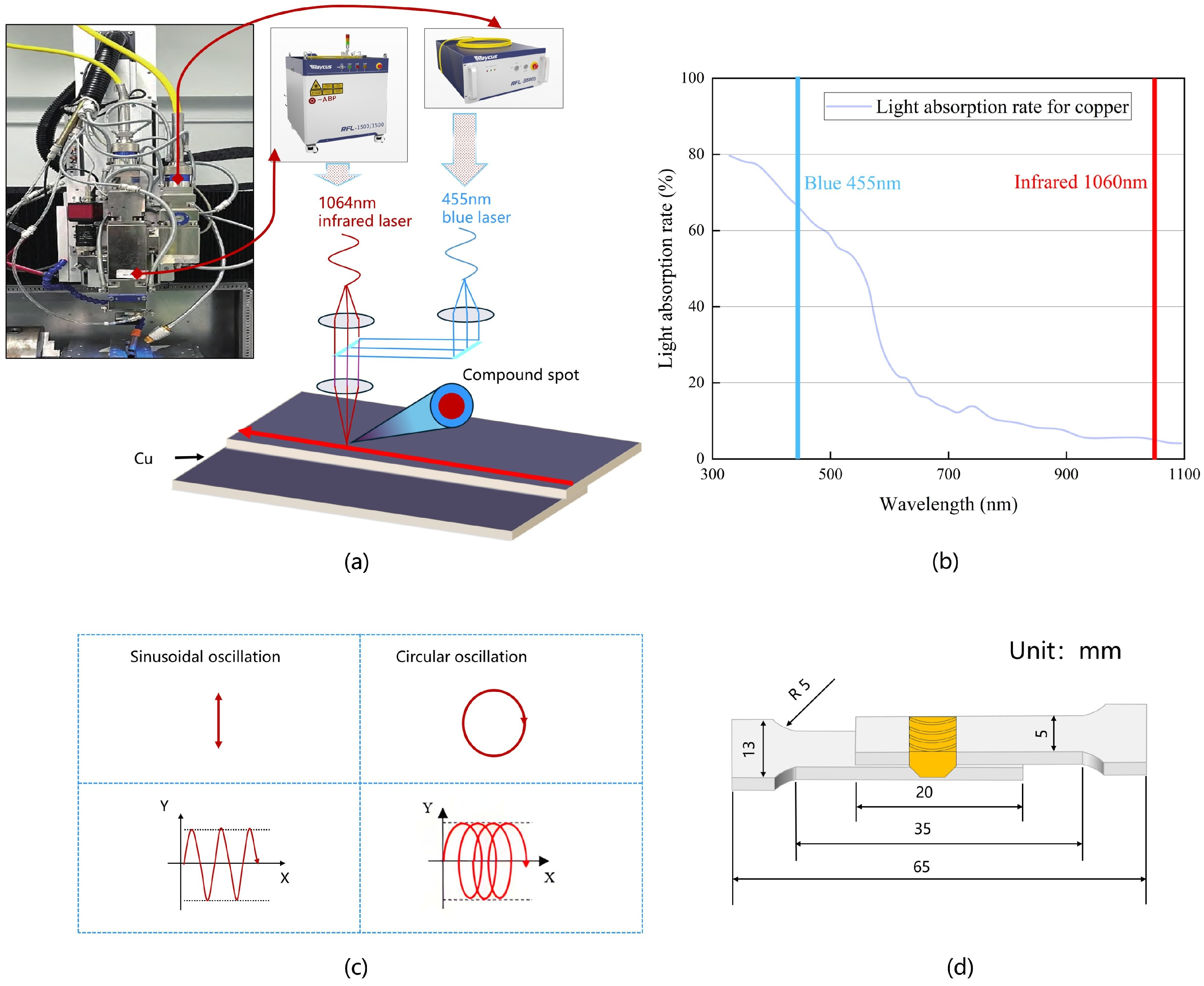
Welding was carried out using a fiber-diode hybrid laser system to overcome the limitations of traditional infrared lasers in processing high-reflectivity, high-thermal-conductivity metals such as copper. The absorption rate of copper at a wavelength of 450 nm is approximately 45% [19], providing a distinct advantage for the use of blue laser (Figure 1b). The system schematic diagram is shown in Figure 1a, Blue laser: RFL-B500D (from Wuhan Raycus Fiber Laser Technologies Co., Ltd. (Wuhan, China)), producing an annular spot with a diameter of 1000 μm. Fiber laser: RFL-1500 from Wuhan Raycus Fiber Laser Technologies Co., Ltd. (Wuhan, China), with a central spot diameter of 50 μm. Welding head: ND36 laser from Wuhan Raycus Fiber Laser Technologies Co., Ltd. (Wuhan, China) composite welding head, water-cooled. Control system: C6L optical fiber control system operating in continuous wave mode. The entire hybrid laser system (including the C6L controller) was sourced from Wuhan Raycus Fiber Laser Technologies Co., Ltd. (Wuhan, China). The annular blue laser preheats the surface of the molten pool, enhancing fiber laser absorption and stabilizing the molten pool, thus reducing spatter [20].
Two scanning methods were employed: CNC scanning and galvo-scanning. In both methods, the moving path of the laser beam during the welding process is shown in Figure 1c. The welding parameters were as follows: blue laser power 300 W, fiber laser power 600 W, welding speed principally ranging from 15 to 25 mm/s, with additional trials at 18 and 30 mm/s, and spot diameter 1 mm. For galvo-scanning, the beam oscillation frequency was 65 Hz with an oscillation amplitude of 0.5 mm, the defocus was set to 0 mm, and both the blue and infrared laser beams oscillated simultaneously under the hybrid configuration. The pitch (spacing) between adjacent oscillation passes was 0.3 mm. The experimental naming convention is designed to specify key parameters of the welding process. The letter “C” represents a circular trajectory, while “S” indicates a sinusoidal trajectory. The subscript “G” denotes galvo-scanning, and when no subscript is present, it refers to CNC scanning. The number in the naming convention corresponds to the welding speed in mm/s. For example, “SG20” refers to sinusoidal galvo-scanning at a welding speed of 20 mm/s. A complete list of experimental parameters is provided in Table 2.
After welding, specimens (20 mm × 10 mm × 1 mm) were sectioned, inlaid, ground, polished, and etched for metallographic analysis. Macroscopic and microscopic structures of the welds were observed using a Keyence VHX-7000 ultra-depth-of-field 3D microscope and a Leica DM4000 M LED microscope. The Keyence and Leica microscopes were sourced from Keyence Corporation (Osaka City, Japan) and Leica Microsystems GmbH (Wetzlar, Germany), respectively. Weld bead width and penetration depth were measured from polished cross-sections of the welds. Quantitative measurements were carried out using Image-Pro Plus 6.0 image analysis software. Tensile tests were performed on the weld specimens using an MTS Landmark Electronic Universal Testing System at a tensile speed of 1.0 mm/min. The testing system was sourced from MTS Systems Corporation (Eden Prairie, MN, USA). Microhardness was measured across the weld region with a 100 g load and a 10 s dwell time to obtain hardness profiles.
The grain morphology of the welded joint was quantitatively analyzed by the number of equiaxed dendrites and the spacing of columnar dendrites [21]. The calculation formula for equiaxed crystal density is:
Z s = S n
where Zs denotes the characteristic size of equiaxed crystals, n is the number of equiaxed dendrites counted within the selected region, and S is the area of the selected region (0.04 mm2).
Z l = L n
Among them, Zl is the main dendrite spacing of the columnar dendrites, L is the selected length, and n is the number of columnar dendrites. The refined grains usually appear as smaller Zs and smaller Zl.

3. Results

3.1. Effects of Process Conditions on Weld Bead Formation

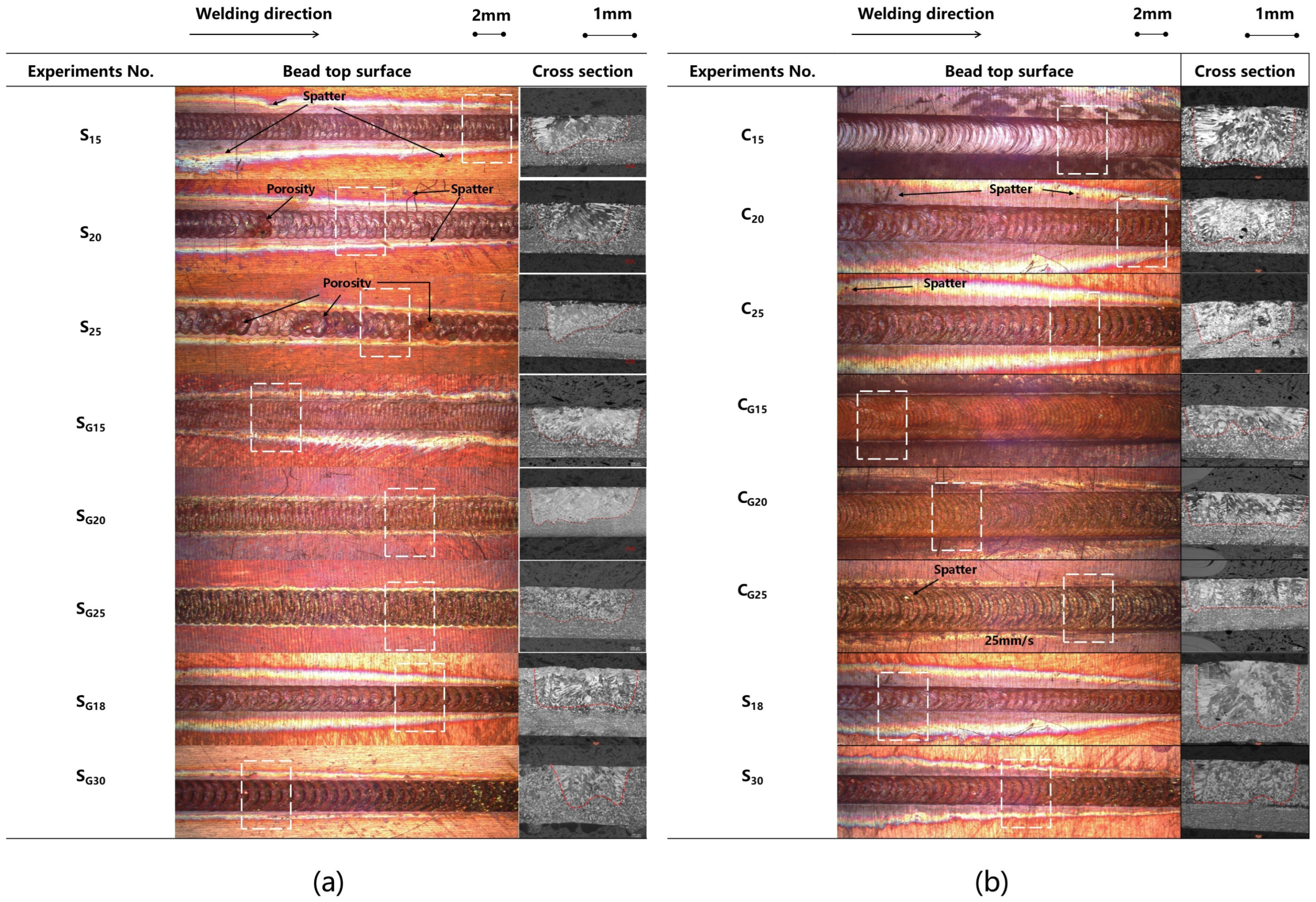
Laser galvanometer scanning was found to have a significant influence on the geometry and surface quality of the resulting weld seams. Figure 2 illustrates a comparative analysis of the weld surface morphology and metallographic cross-sections obtained under circular and sinusoidal scanning trajectories using CNC scanning and galvanometer-based scanning methods.
Figure 2a illustrates various surface defects observed in welds produced under sinusoidal and circular scanning trajectories using CNC and galvanometer-based scanning methods. The weld surface produced by CNC scanning was characterized by pronounced spatter and porosity, whereas the surface obtained through galvanometer-based scanning was comparatively smoother and exhibited fewer surface defects. The cross-sectional images indicate that the weld joint between the substrates was broader in the galvanometer-based scanning mode than in the CNC scanning mode. Additionally, a uniform U-shaped profile was formed at the bottom of the molten pool. In particular, the cross-section of sample S25, which was welded at a relatively high speed with low heat input, exhibited unstable porosity, resulting in asymmetric weld penetration on both sides of the seam.
Figure 2b presents a comparison of weld seams formed using circular-trajectory galvanometer-based scanning and CNC scanning methods. The weld seam formed under circular-trajectory galvanometer-based scanning was characterized by a smooth surface with minimal spatter. The metallographic cross-sections revealed the presence of W-shaped and U-shaped weld profiles. It should be noted that the molten pool formed during circular-trajectory galvanometer-based scanning was relatively shallow and did not fully penetrate to the bottom of the lower substrate, reaching only the upper surface. This incomplete penetration may adversely affect the mechanical properties of the weld.
Different scanning trajectories were found to significantly influence the macroscopic characteristics of the weld seam. A comparison between the sinusoidal and circular trajectories revealed distinct heat-affected zones (HAZs) on either side of the weld seam. As welding progressed, the HAZ was observed to expand along the welding direction. Specifically, a wider HAZ was obtained when the circular trajectory was employed, whereas a narrower HAZ was observed with the sinusoidal trajectory. This difference was attributed to the higher path overlap associated with circular trajectories, resulting in increased heat input and enhanced heat accumulation.
Under galvanometer-based scanning conditions, whether circular or sinusoidal trajectories were employed, the weld surface was observed to maintain a relatively uniform profile with significantly reduced defects. Surface defects such as spatter and porosity were effectively minimized. Galvanometer-based scanning was also found to improve welding quality by suppressing the formation of pronounced heat-affected zones, which are commonly observed in CNC scanning. In contrast to CNC scanning, in which large spatter particles and pores frequently appeared on the weld surface, the galvanometer-based scanning process produced a flatter weld surface with minimal spatter, leading to a more stable welding process.
The circular laser beam scanned by the galvanometer was found to enhance the molten area on the material surface, thereby providing both preheating and post-heating effects. It should be noted that, under the present hybrid laser parameters (combined power of approximately 900 W), the welding process was likely dominated by a heat conduction regime rather than a stable keyhole mode, as previous studies on thin-sheet welding have indicated that power levels around 900 W typically correspond to heat conduction laser welding (HCLW) [22]. Within this regime, galvanometer-driven beam oscillation was found to effectively reduce the lateral temperature gradient across the molten pool and promote a more uniform thermal distribution. This stabilization of the molten pool dynamics was found to suppress turbulent flow and vapor recoil, which are recognized as key mechanisms responsible for defect formation, such as spatter. Consequently, the overall weld quality was improved.
In conclusion, sinusoidal-trajectory galvanometer-based scanning was demonstrated to offer distinct advantages in improving welding quality, reducing defects, and ensuring weld consistency, particularly for highly reflective and thermally conductive materials. The use of galvanometer-based scanning technology was shown to be essential for achieving high-quality welds with minimal surface imperfections and optimized mechanical properties.
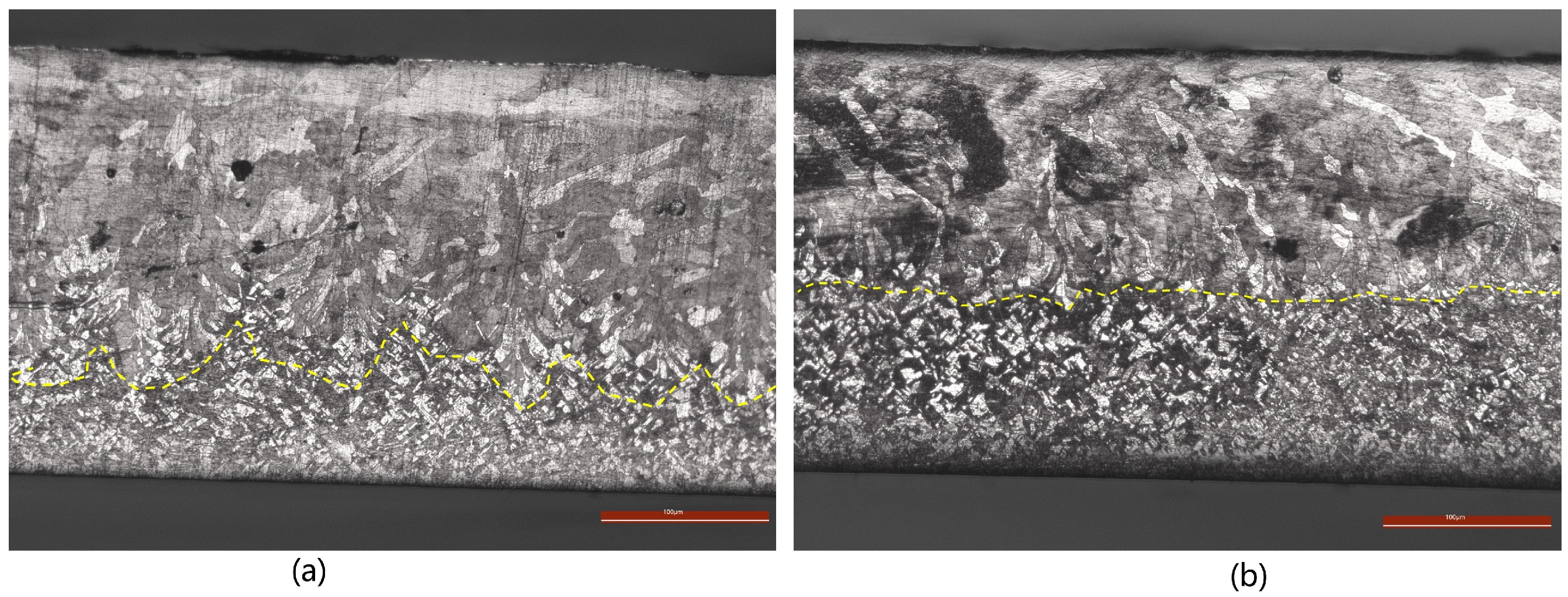
To evaluate the stability of penetration along the welding direction, additional longitudinal microsections were prepared and examined (see the newly added images in Figure 3). The longitudinal views confirmed that the fusion profile remained continuous along the weld length, while the penetration depth exhibited only minor fluctuations. This evidence supports the conclusion that the penetration under the present conditions was sufficiently consistent, rather than being dominated by intermittent or unstable penetration behavior.

3.2. The Influence of Process Conditions on the Microstructure of Joints

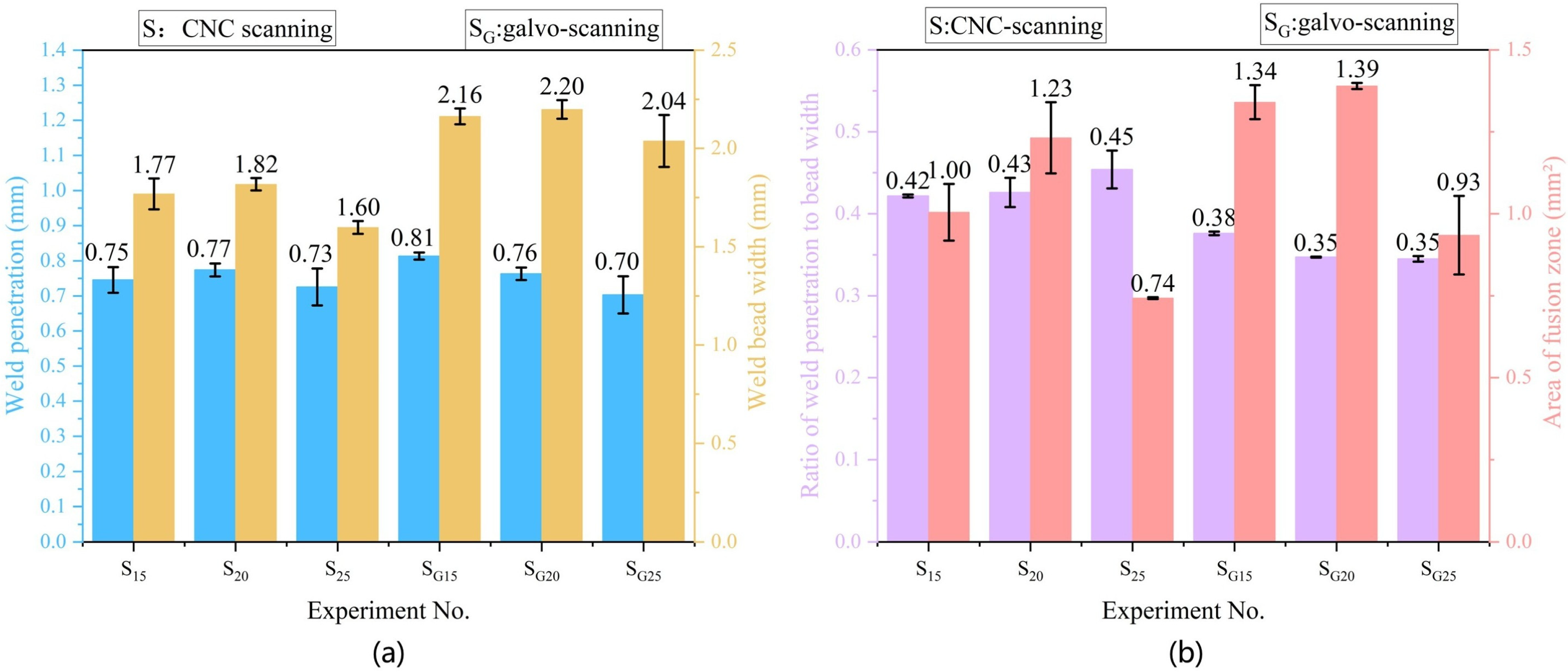
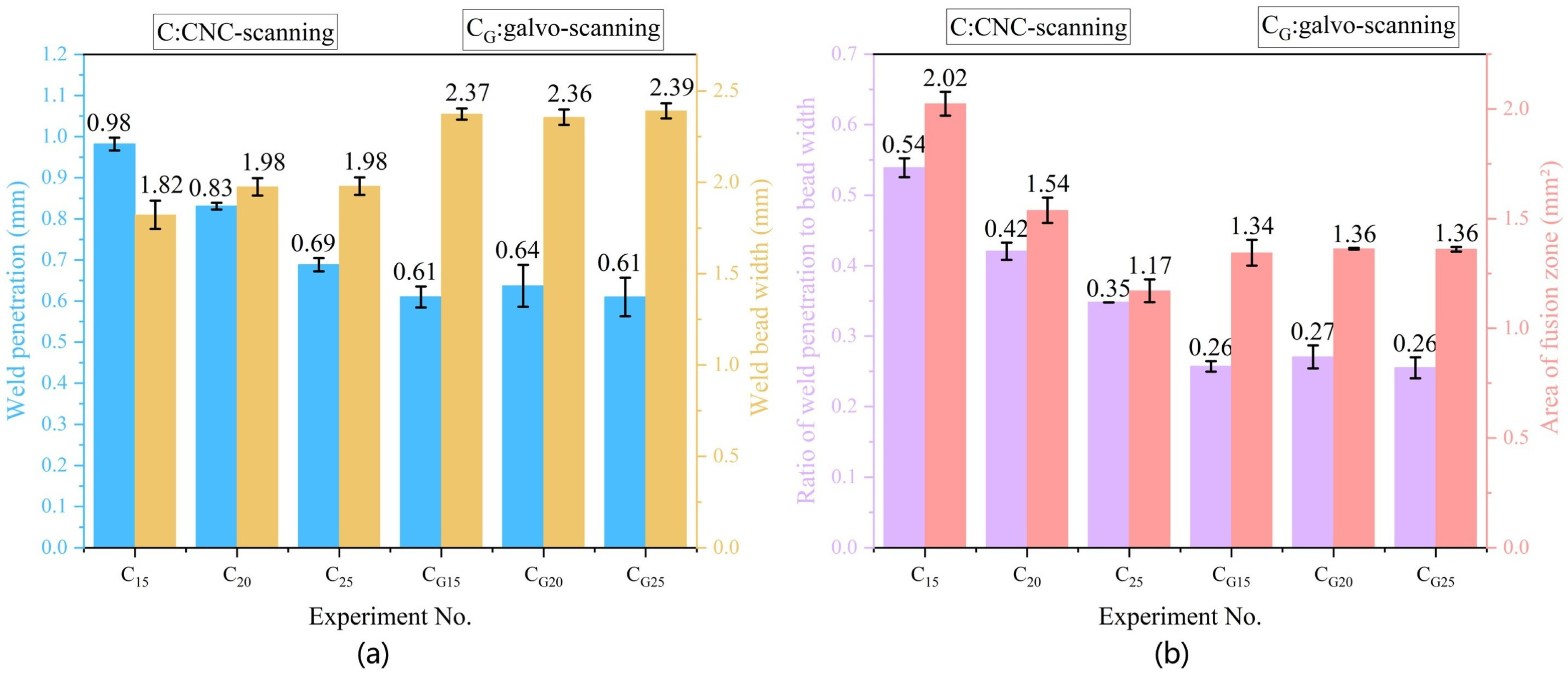
No obvious welding defects were observed in the cross-sections of any specimens. Figure 4 and Figure 5 present the quantitative characteristics of weld seam geometry under different scanning methods, including melt width (D), melt depth (H), depth-to-width ratio (H/D), and molten pool area (evaluated based on a melt depth of 0.75 mm, a melt width of 2 mm, and a depth-to-width ratio of 0.375). Under circular-trajectory galvanometer-based scanning, the molten pool width was found to reach a maximum value of 2.39 mm, while the width fluctuation induced by oscillation at different welding speeds remained relatively small. In contrast, the molten pool width exhibited more pronounced variations under CNC scanning. For example, in the C15 mode, the molten pool width was measured to be 0.98 mm, with fluctuations of up to 0.29 mm under comparable conditions. This difference highlights the limitations of CNC laser scanning in terms of control precision, whereas galvanometer-based scanning was found to effectively minimize deviations between the programmed and actual trajectories, thereby enabling more precise heat input control.
Figure 4a presents a comparison of the molten pool sizes obtained using a sinusoidal welding trajectory under CNC scanning (S15, S20, S25) and galvanometer-based scanning (SG15, SG20, SG25). During CNC scanning, as the welding speed increased from 15 mm/s to 25 mm/s, the penetration depth remained approximately ~0.70 mm, while the weld bead width de-creased slightly from 1.70 mm to 1.60 mm. In contrast, galvanometer-based scanning was found to maintain a stable molten pool width of approximately 2.20 mm with minimal fluctuation. This stability was attributed to the high precision and uniform energy input of galvanometer-based scanning, which reduced molten pool oscillation and suppressed surface spatter and pore formation. To further clarify the effect of galvanometer control on molten pool stability, Figure 4b illustrates the variations in molten pool area under different scanning strategies. Both scanning modes exhibited a similar trend, in which the molten pool area increased from a minimum at 15 mm/s to a peak at 20 mm/s and then decreased at 25 mm/s. However, across all welding speeds, galvanometer-based scanning produced a significantly larger molten pool area. This advantage was attributed to precise energy modulation, which ensured uniform energy distribution, reduced vapor recoil pressure, and enhanced laser–material energy coupling. In contrast, CNC scanning, owing to its lower modulation frequency and positioning accuracy, was more prone to heat loss and spatter formation, thereby limiting molten pool growth. Notably, under galvanometer-based scanning, the depth-to-width ratio remained constant at approximately 0.35, meeting the evaluation criteria, whereas under CNC scanning it reached approximately 0.40 and was influenced primarily by welding speed.
Figure 5a presents a comparison of the molten pool sizes for circular-trajectory welding under CNC scanning (C15, C20, C25) and galvanometer-based scanning (CG15, CG20, CG25). Under CNC scanning, penetration depth fluctuated significantly, with a difference of 0.29 mm between C15 and C20/C25. In contrast, galvanometer-based scanning maintained a stable melt depth (0.6 mm) and width (2.3 mm), indicating that galvo control significantly broadened the molten pool and produced a more uniform energy distribution. However, the melt depth of 0.6 mm did not meet the 0.75 mm standard requirement. Figure 5b further illustrates the depth-to-width ratio and molten pool area under circular-trajectory galvanometer-based scanning, confirming that the molten pool dimensions were more stable compared to CNC scanning.
Additionally, the depth-to-width ratio (0.35) of the sinusoidal trajectory under galvanometer-based scanning was generally higher than that of the circular trajectory under galvanometer-based scanning (0.26). From an energy absorption perspective, the laser swing welding path length is relatively long, and the linear velocity of circular scanning is higher than that of the sinusoidal trajectory. According to the linear energy formula [21], at constant power, a higher linear velocity reduces the energy per unit length along the laser path, thereby decreasing energy absorption by the material and resulting in a shallower penetration depth. By contrast, the sinusoidal trajectory in galvanometer-based scanning provides higher energy density per unit time, which promotes deeper penetration. Additionally, the depth-to-width ratio (0.35) of the sinusoidal trajectory under galvo-scanning was generally higher than that of the circular trajectory under galvo-scanning (0.26). From an energy absorption perspective, the laser swing welding path length is relatively long, and the linear velocity of circular scanning is greater than that of the sinusoidal trajectory. According to the linear energy formula [23], at constant power, a higher linear velocity reduces the energy per unit length along the laser path, decreasing energy absorption by the material and resulting in shallower penetration depth. By contrast, the sinusoidal trajectory in galvo-scanning provides higher energy density per unit time, which favors deeper penetration.
In summary, galvanometer-based scanning was demonstrated to exhibit superior weld formation capability in sinusoidal-trajectory welding, particularly under SG20 conditions, where a desirable weld appearance and a balanced penetration depth and width were achieved, thereby providing a solid foundation for optimizing mechanical properties. Overall, the scanning strategy was found to strongly influence weld morphology: CNC scanning produced deeper but narrower weld seams that were more sensitive to welding speed variations, whereas galvanometer-based scanning provided greater geometric consistency and wider weld beads. The introduction of a galvanometer control system was shown to significantly improve the precision of heat input regulation in thin-plate laser welding applications.

3.3. Components Microstructure Evolution

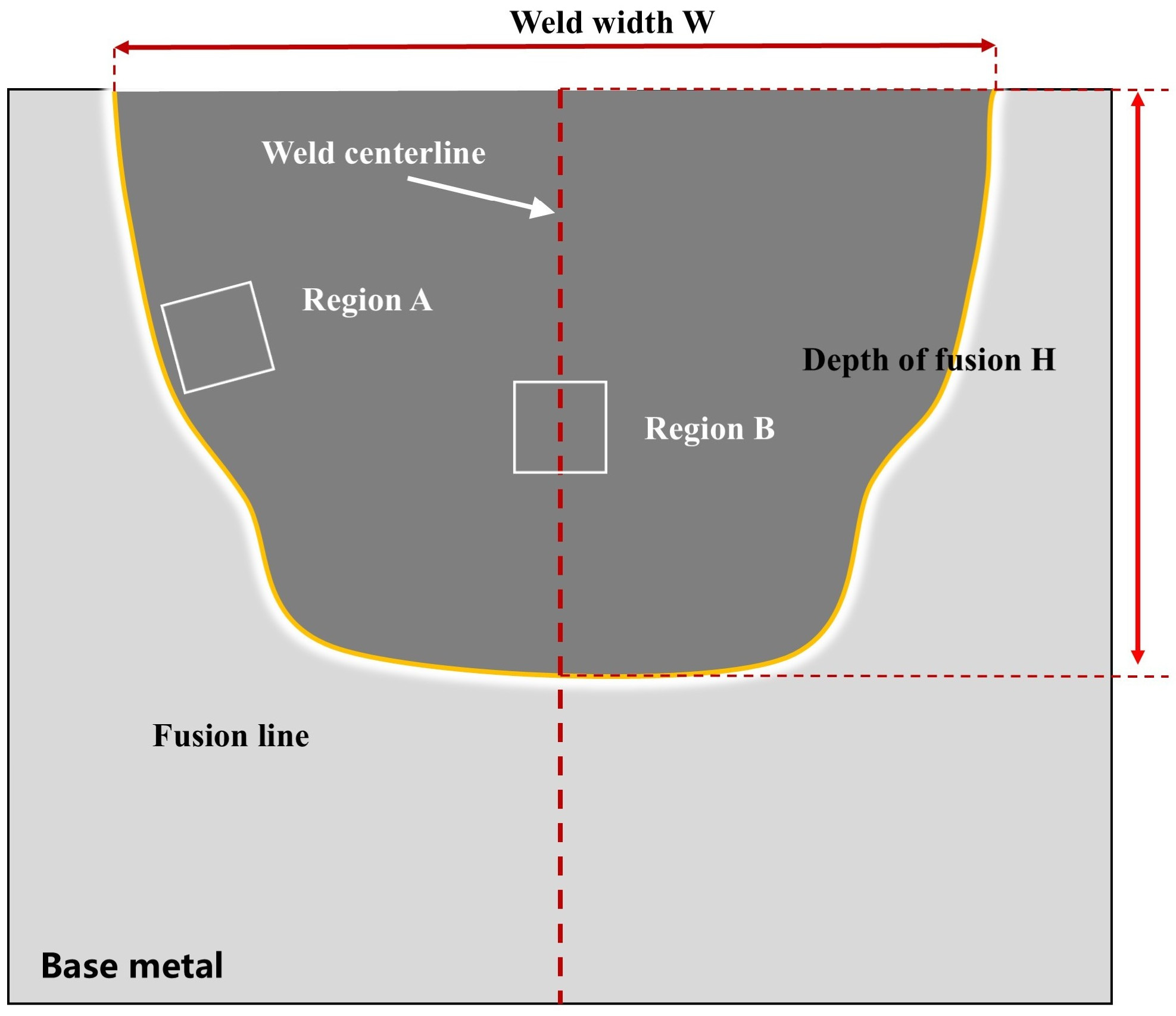
In laser welding, the solidification conditions of the molten pool, primarily governed by the cooling rate and temperature gradient, directly dictate the resulting grain morphology and microstructure evolution [24,25]. To clearly illustrate the influence of galvo-scanning laser on the microstructure of the welded area, quantitative analyses were performed on columnar and equiaxed crystals. Figure 6 presents two regions of the weld seam—columnar crystal region A and equiaxed crystal region B—on which quantitative analysis was performed.
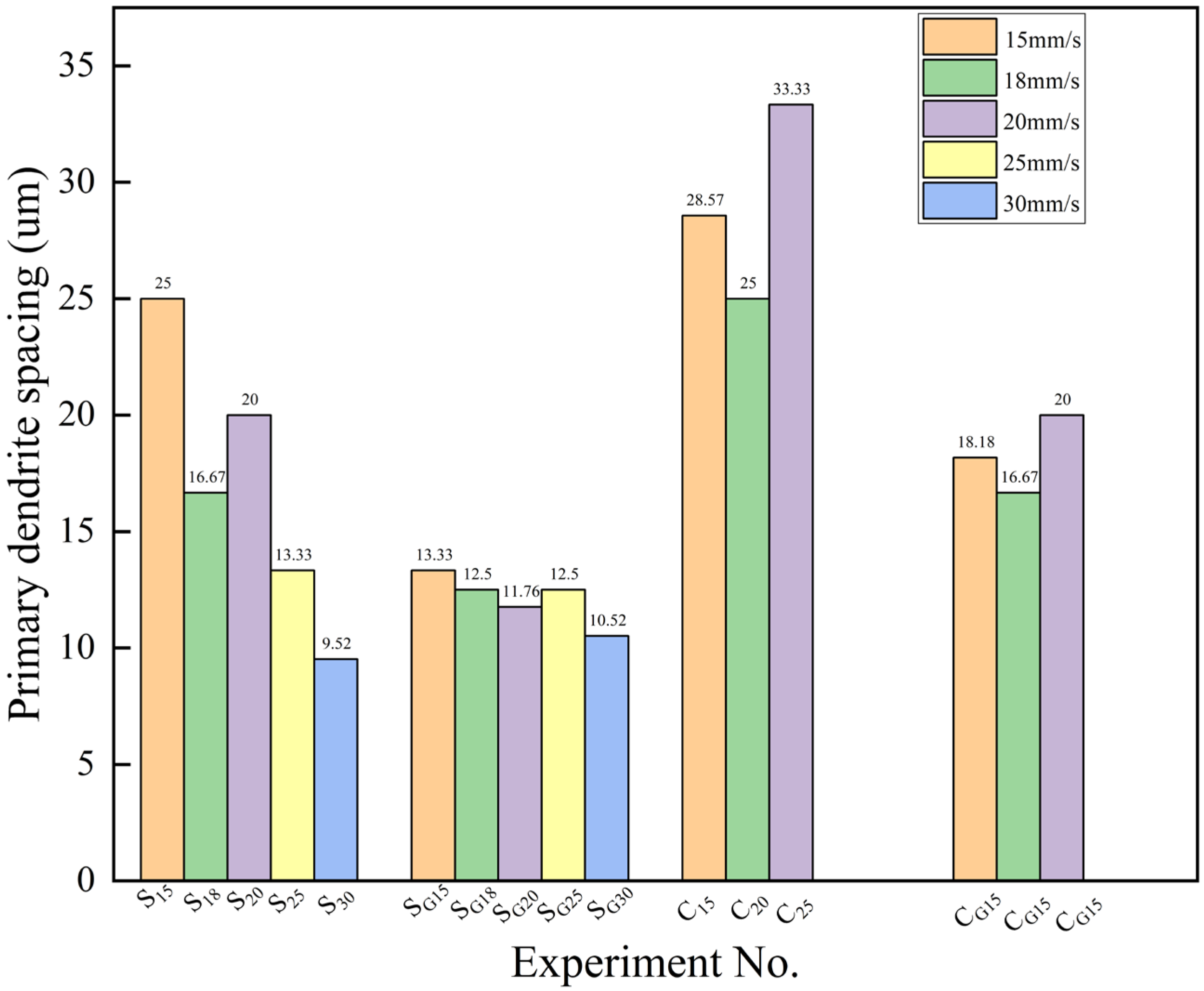
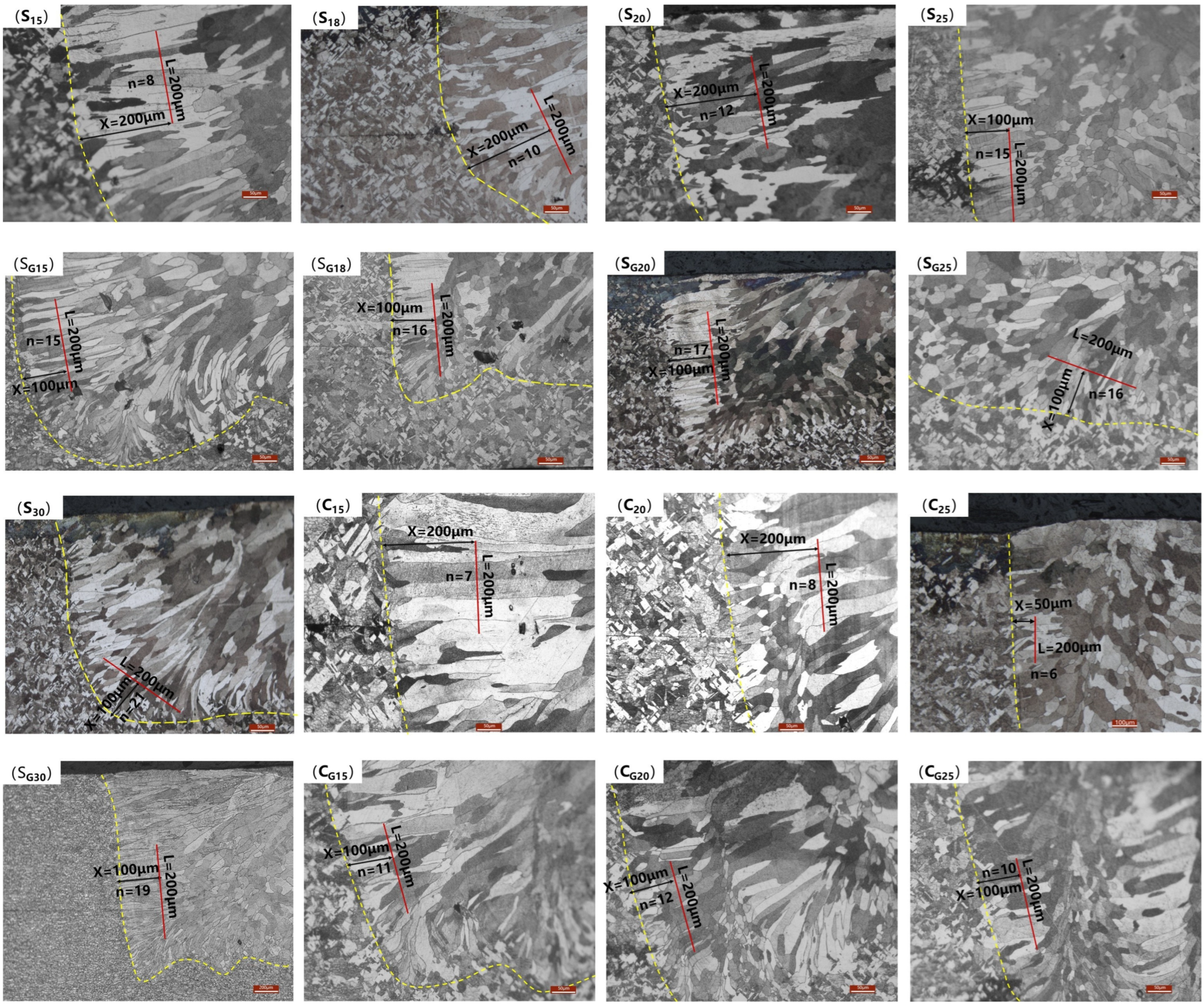
Using Equation (1), Figure 7 presents the number of dendrites under different modes. Figure 8 compares dendrite spacing (Zl) between galvo-scanning and CNC scanning.
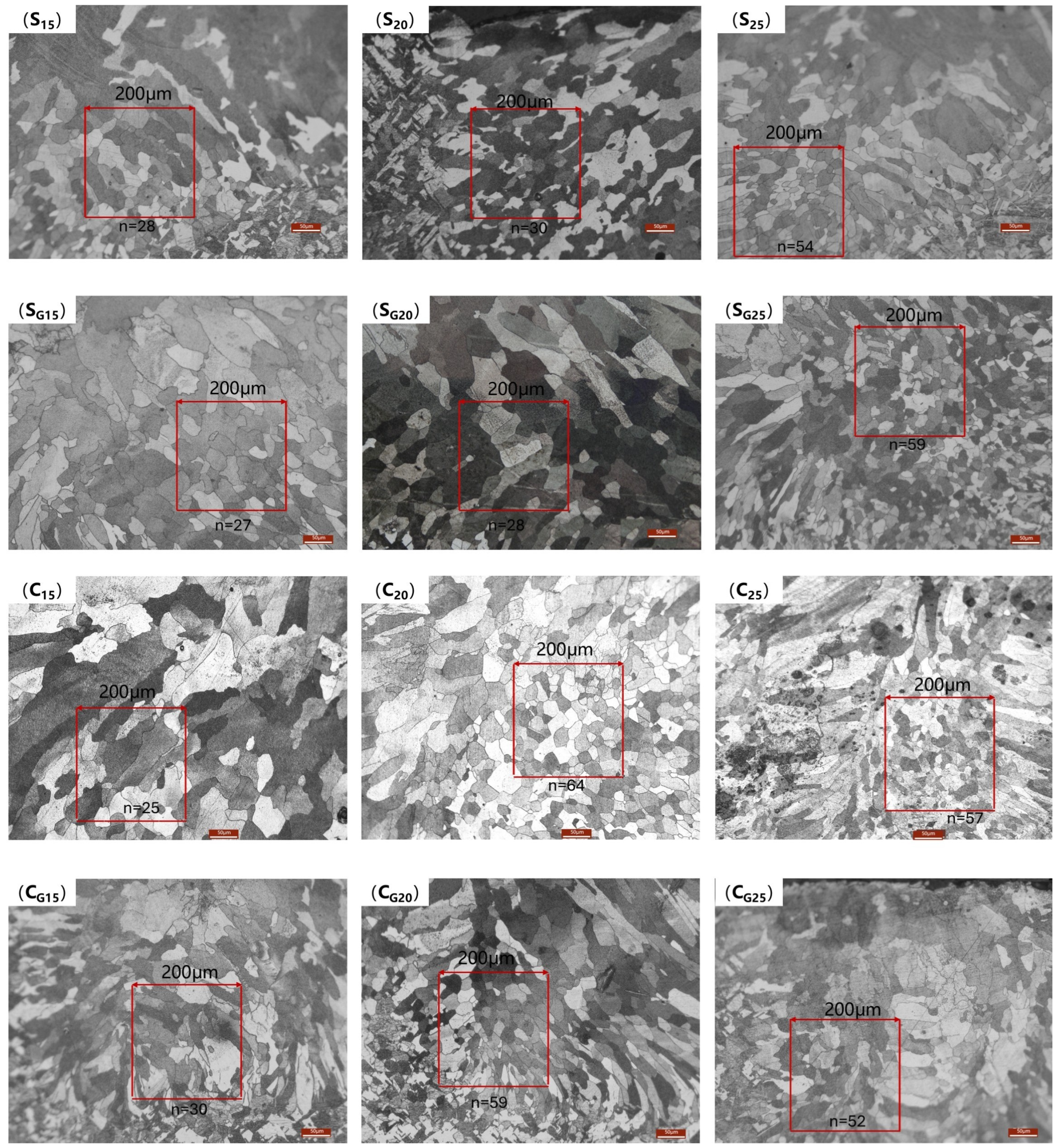
Zs was calculated using Equation (2), and Figure 9 and Figure 10 were used to determine the number and average size of equiaxed crystals.
Figure 7 and Figure 8 presents a systematic comparison of the primary dendrite spacing (Zl) of columnar grains under different welding modes. Quantitative analysis revealed that galvanometer-based scanning significantly refined columnar dendrites at the same welding speed. Notably, under the sinusoidal trajectory at 20 mm/s, galvanometer-based scanning (SG20) was found to achieve the smallest Zl value of 11.76 μm among all specimens, highlighting the exceptional grain refinement capability of this parameter set. Under the circular trajectory at 15 mm/s, the Zl value in galvanometer-based mode (CG15) was measured to be 18.18 μm, which was 36.36% lower than that obtained in CNC mode (C15: 28.57 μm). Under the sinusoidal trajectory at the same welding speed, the Zl value in galvanometer-based mode (SG15) was reduced to 13.33 μm, representing a 46.68% reduction compared to the CNC mode (S15: 25 μm). As the welding speed increased, the inhibitory effect of galvanometer-based scanning on columnar dendrite growth became more pronounced. For instance, at 25 mm/s, the Zl value of CG25 (20.00 μm) was 40% lower than that of C25 (33.33 μm). These results provide strong evidence that galvanometer-based scanning effectively promotes columnar grain refinement through high-frequency oscillation, with the SG20 parameter set achieving the smallest dendrite spacing, consistent with its superior microstructural characteristics and tensile properties.
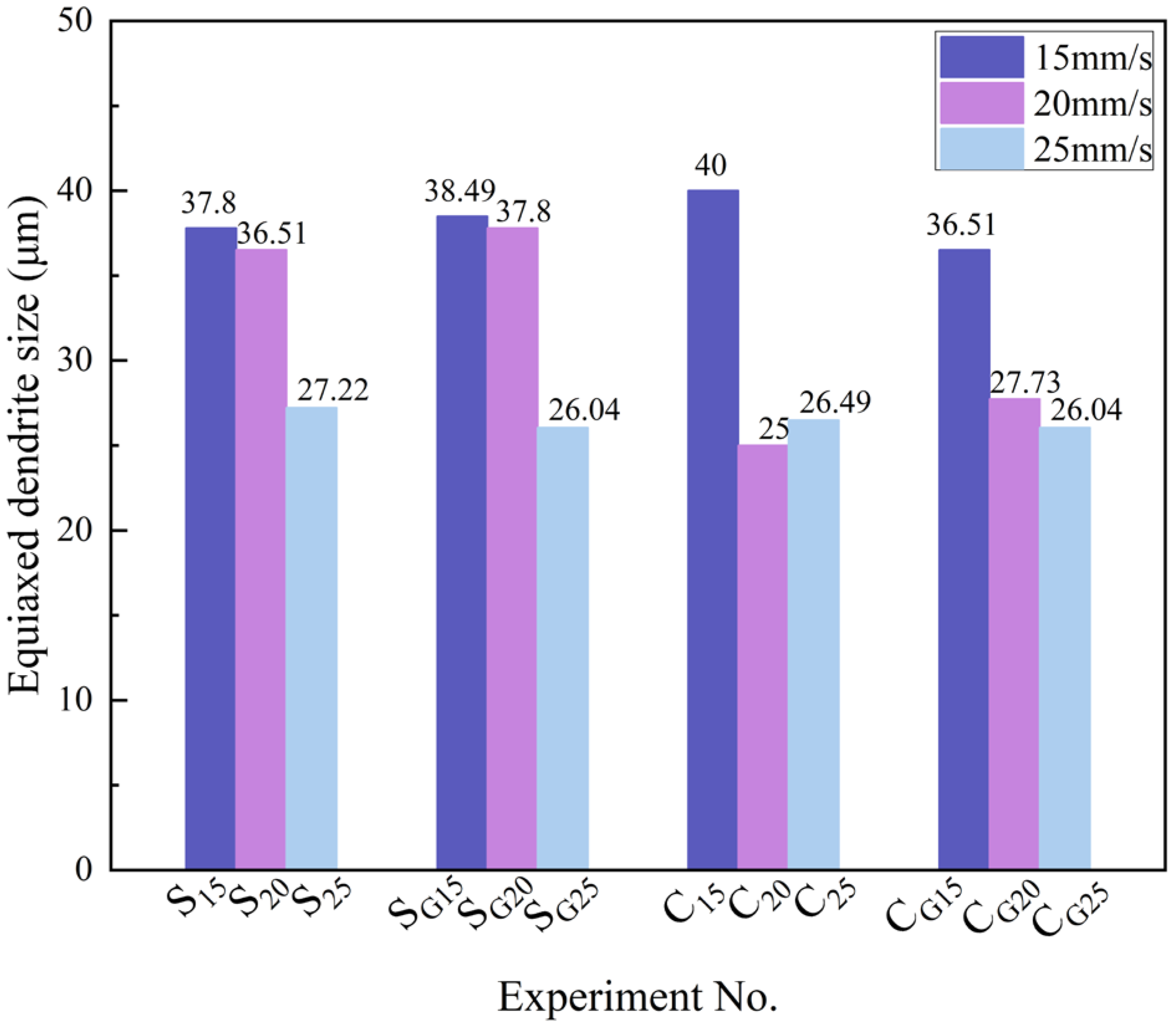
Figure 9 and Figure 10 presents a systematic comparison of the variation in the average equiaxed grain size (Zs) under different welding modes, revealing that the coupled effect of scanning path and welding speed predominantly governed grain refinement, whereas the scanning control method played only a secondary optimizing role. The equiaxed grain size in all specimens was observed to decrease significantly with increasing welding speed. At a low welding speed (15 mm/s), the circular trajectory exhibited the highest path overlap ratio, and the equiaxed grain size in galvanometer-based mode (CG15: 36.51 µm) was approximately 9% smaller than that obtained in CNC mode (C15: 40 µm). As the welding speed increased to 25 mm/s, the difference between the two modes became negligible, confirming that the combined effect of welding speed and overlap ratio was the determining factor. Under the sinusoidal trajectory, the Zs values obtained using different control strategies nearly overlapped, further indicating that the control method itself was not the primary factor governing equiaxed grain refinement. Galvanometer-based scanning was found to promote nucleation through high-frequency molten pool stirring only under low welding speed and high overlap conditions, thereby providing additional equiaxed grain refinement, whereas its influence was limited under other parameter ranges. This figure quantitatively elucidates the dominant influence of the “path–speed–overlap ratio” on equiaxed grain size and defines the effective scope of galvanometer-based control optimization.
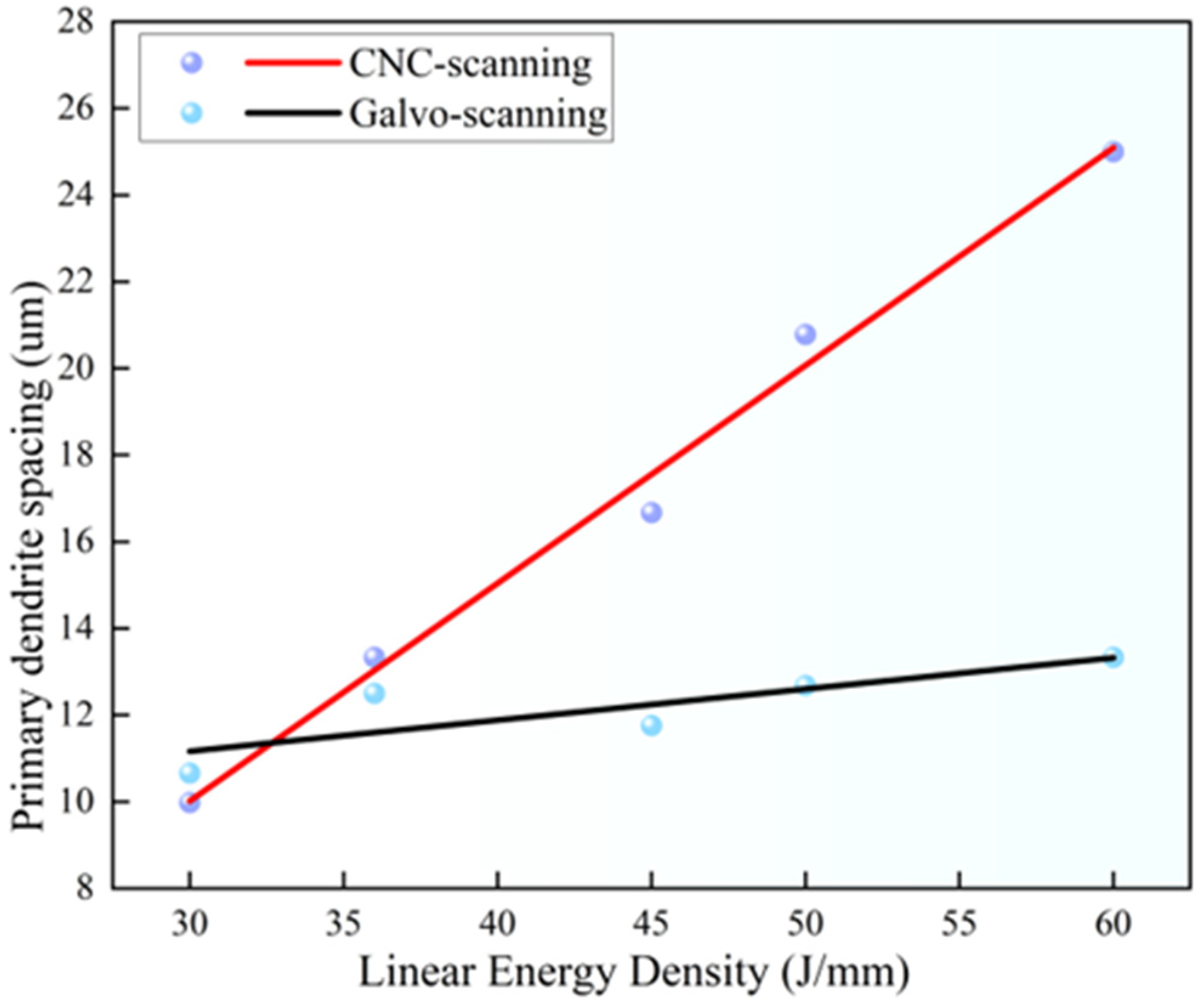
Based on the analysis of grain size, a quantitative relationship between the primary dendrite spacing and the linear energy under a sinusoidal trajectory was established to clarify the regulatory mechanism of the scanning mode on dendrite structure. In the sinusoidal trajectory scanning mode, the relationship between linear energy (E) and primary dendrite arm spacing (PDAS) for CNC scanning and galvanometer-based scanning was independently fitted using linear regression. The fitting results are presented in Figure 11. The fitting model corresponding to CNC scanning is given in Equation (3). Its relatively high slope (0.503) indicates that the primary dendrite spacing increased significantly with increasing linear energy, reflecting insufficient heat input control accuracy in this mode, whereby energy fluctuations readily caused pronounced variations in dendrite size. In contrast, the fitting model for galvanometer-based scanning, given in Equation (4), exhibited an extremely small slope (0.072), indicating that the primary dendrite spacing was highly insensitive to variations in linear energy. This further confirmed that galvanometer-based scanning exhibited excellent consistency and controllability with respect to energy input.
Z L c = 0.503 × E 5.063
Z L G = 0.072 × E + 9.012
It should be noted that this formula is applicable to lap welding of 0.5 mm-thick T2 copper within a linear energy range of 30–60 J/mm. Notably, higher prediction accuracy was achieved at lower linear energy levels. This quantitative relationship provides a theoretical basis for optimizing weld microstructure through energy regulation.
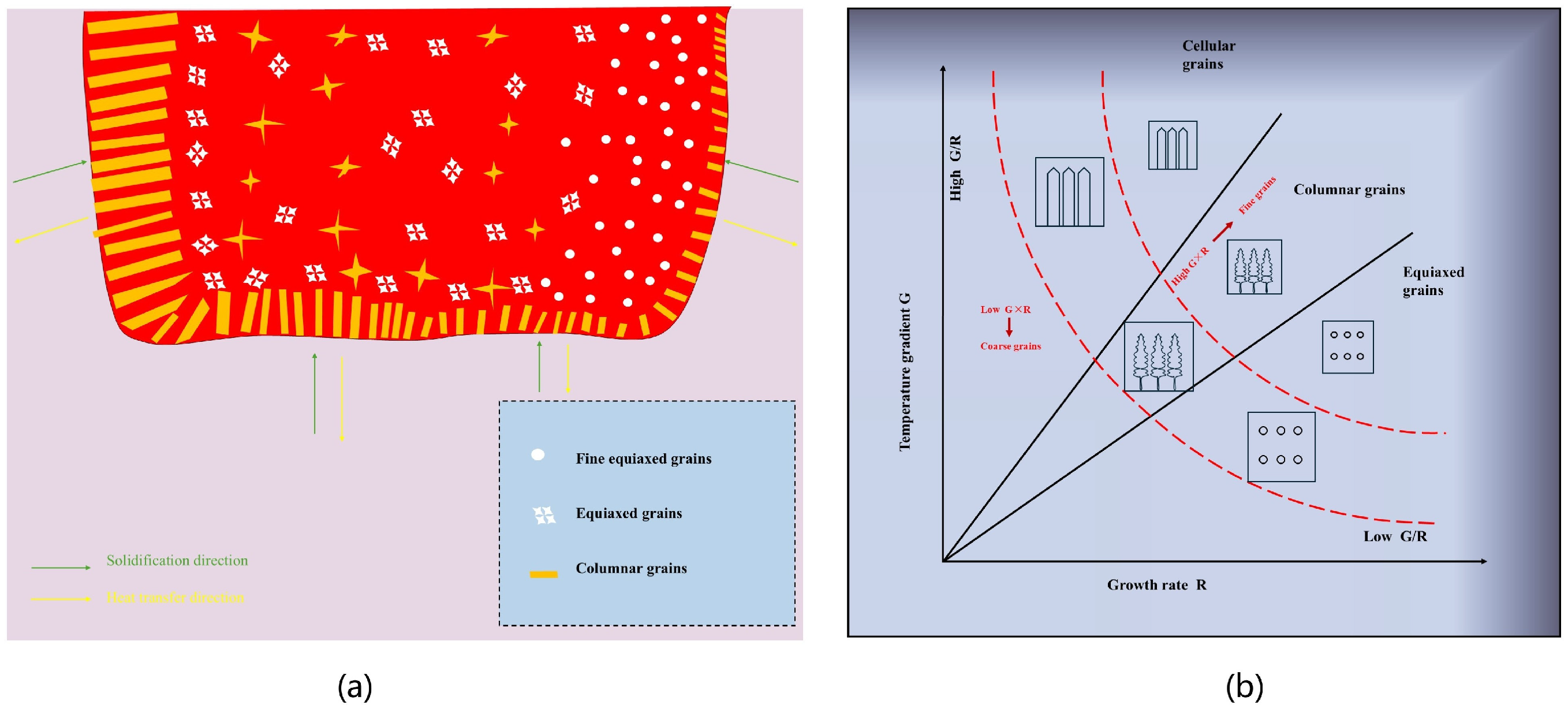
The quantitative analysis above demonstrated that galvanometer-based scanning simultaneously refined both columnar dendrites and equiaxed grains in the weld zone at identical welding speeds. It is particularly noteworthy that under sinusoidal galvanometer-based scanning at 20 mm/s (SG20), the smallest primary dendrite spacing (11.76 μm) for columnar grains was achieved while maintaining a moderate equiaxed grain size, representing an optimal grain refinement condition. This remarkable microstructural optimization was closely associated with the unique molten pool dynamics and solidification conditions induced by galvanometer-based scanning. To further elucidate the underlying mechanisms, the following section, together with Figure 12, examines how the scanning mode regulates the cooling rate (R) and temperature gradient (G) during solidification.
Figure 12a illustrates a schematic representation of the microstructure formed under the fiber-diode hybrid laser beam mode. From the fusion line to the weld center, the dendritic morphology was predominantly columnar and equiaxed [26], which was attributed to an increased cooling rate and a decreased temperature gradient during welding. Figure 12b demonstrates that the microstructure of the weld seam was closely governed by the combined effects of cooling rate (R) and temperature gradient (G), resulting in distinct crystal morphologies in different regions of the weld seam [27,28,29]. This phenomenon was attributed to the intense stirring effect induced by galvanometer-based scanning on the molten pool through high-frequency oscillation. The periodic movement of the laser beam along a preset trajectory (sinusoidal or circular) was found to enhance Marangoni convection within the molten pool. Consequently, the temperature gradient (G) at the solid–liquid interface was reduced, while the degree of solidification undercooling was increased, thereby inhibiting the growth of columnar crystals.
It is noteworthy that the effect of scanning trajectory on dendrite refinement varied [30,31,32], with the sinusoidal trajectory under galvanometer-based scanning exhibiting a slightly superior refinement effect compared to the circular trajectory; the minimum Zl value of the SG20 sample was measured to be 11.76 μm. This suggests that the gentler heat input distribution and lower path overlap rate associated with the sinusoidal trajectory had a significant influence on dendrite refinement. These findings provide crucial experimental evidence for optimizing welding processes in high-thermal-conductivity materials and for enhancing joint mechanical properties through microstructural regulation.
This occurred because, under the CNC scanning strategy, the heat source lacked sufficient scanning accuracy to achieve precise and uniform energy transfer to the metal. This imprecision led to an uneven heat distribution, which in turn induced more intense thermal convection. Under such intense convection, columnar structures were subjected to severe thermal shock. Columnar crystals were remelted because of rapid local heat accumulation and subsequently recrystallized, during which their original growth direction and morphology were significantly altered. Meanwhile, the growth environment of equiaxed crystals was severely disrupted. Due to excessively intense thermal convection, it became difficult for equiaxed crystals to establish stable temperature and solute concentration fields during the early stages of formation. The necessary material supply and thermal balance required for their growth were disrupted, ultimately inhibiting equiaxed crystal growth and hindering normal development. This, in turn, had a profound and complex impact on the overall microstructure and properties of the material.
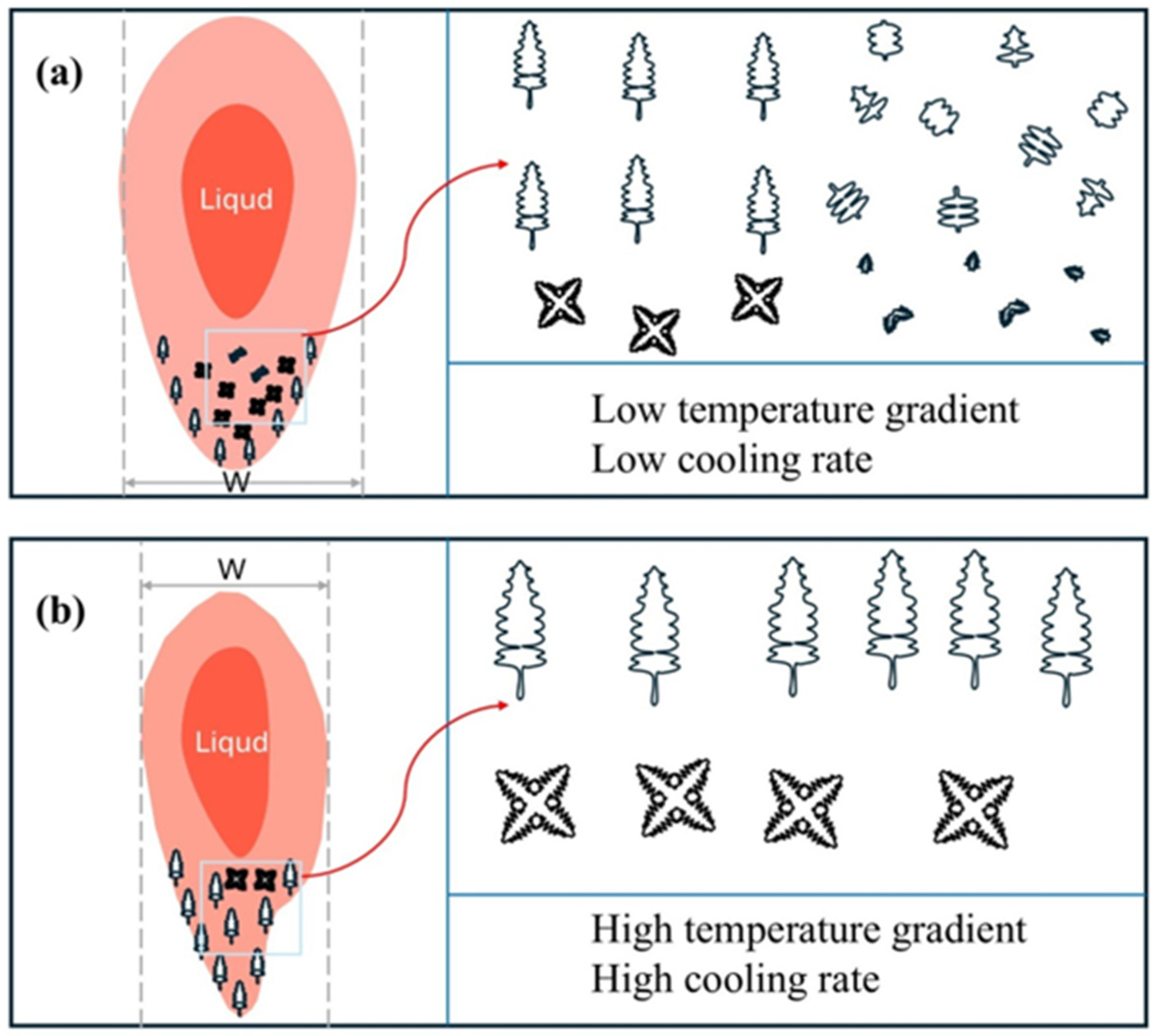
Figure 13 schematically illustrates the grain refinement mechanisms under galvanometer-based scanning and CNC scanning. (a) Under galvanometer-based scanning with precise trajectory control and a wider weld bead (Figure 4a), the heat input was more uniformly distributed, resulting in a lower temperature gradient (G) at the solid–liquid interface. This condition suppressed the directional growth of columnar crystals and promoted the columnar-to-equiaxed transition. Concurrently, enhanced molten pool convection induced by high-frequency oscillation improved heat extraction, potentially increasing the local cooling rate (R) and thereby refining the dendrite arm spacing (reducing Z1). (b) In contrast, the inertia-limited dynamic response of the CNC scanning system resulted in more concentrated and less uniform heat deposition. This created a steeper spatial temperature gradient (G) at the solidification front. Furthermore, the comparatively weaker molten pool stirring under this mode was likely to restrict heat extraction efficiency, resulting in a lower effective cooling rate (R) than that theoretically achievable with a perfectly controlled point heat source. Consequently, the resulting high G/R ratio provided a dominant driving force for the sustained growth of coarse columnar dendrites, leading to the larger primary dendrite arm spacing (Z1) quantitatively documented in Figure 8.

3.4. The Hardness Distribution and Tensile Properties of the Joint

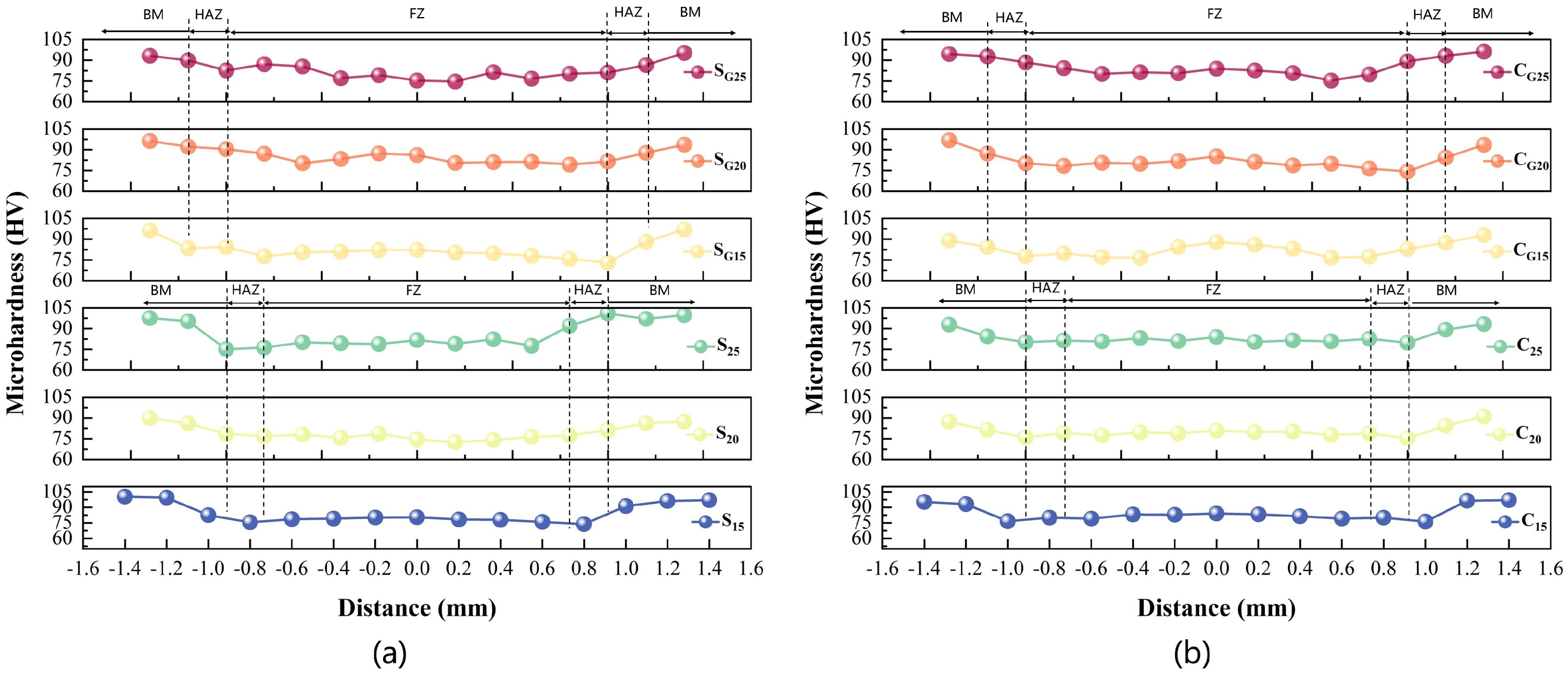
The weld width was measured to be 2 mm. A total of 15 hardness test points were spaced 200 μm apart, extending from the center of the molten pool to both the left and right, to evaluate the Vickers hardness distribution [33]. The average Vickers hardness of the base material was 83.46 HV. Figure 14 presents the microhardness variation curves of the joints under different process conditions.
There were significant differences in mechanical performance between equiaxed and columnar grains [34]. Due to their isotropic nature, equiaxed grains exhibited more balanced mechanical properties in terms of strength and toughness. In contrast, columnar grains, owing to their directional growth, exhibited pronounced anisotropy. The hardness profile for the sinusoidal trajectory exhibited relatively stable hardness values with a small fluctuation amplitude. Conversely, the hardness profile for the circular trajectory exhibited larger fluctuations, particularly at a welding speed of 15 mm/s, where hardness variations became more pronounced. Grain size analysis in Figure 8 and Figure 10 revealed pronounced growth of columnar grains, resulting in directional hardness variations and a relatively low fraction of equiaxed grains. Notably, under the sinusoidal trajectory at 20 mm/s, the hardness profile exhibited the smallest fluctuation amplitude, with an average hardness of 85.87 HV. This suggested that hardness variations at different positions within the molten pool were minimal, indicating a relatively uniform microstructure, which was consistent with the smallest dendritic spacing (11.76 μm) of the columnar grains shown in Figure 8.
The comprehensive hardness curve analysis further highlighted the uniformity of the microstructure. Compared with circular trajectories, sinusoidal trajectories were found to more effectively optimize grain morphology, particularly by promoting the formation and distribution of equiaxed grains. Among the various sinusoidal trajectory conditions, the 20 mm/s sinusoidal galvanometer-based scanning condition was found to yield the most uniform hardness distribution and the most effective grain morphology optimization.
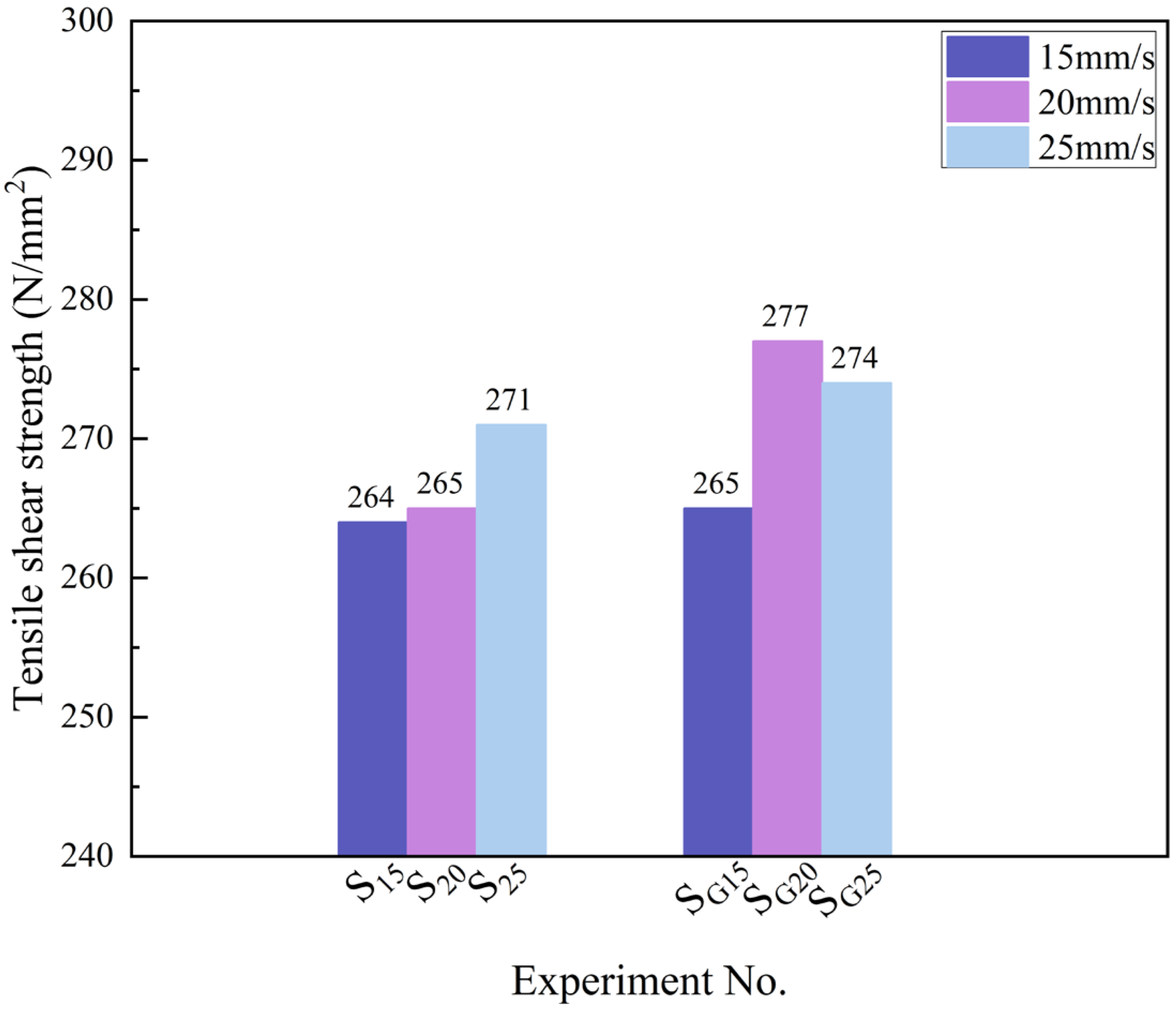
As per the sampling method shown in Figure 1d, one lap-shear specimen was extracted from each welded joint produced under different processing parameters for mechanical testing. Due to the circular galvanometer-based scanning condition exhibiting a penetration depth of only 0.6 mm, which did not meet the required criterion for penetration depth assessment, the lap-shear performance comparison was limited to CNC scanning and galvanometer-based scanning under the sinusoidal trajectory. The corresponding test results, shown in Figure 14, illustrate the lap-shear strength of the joints under the sinusoidal scanning mode.
The lap-shear strength of the joints, as evaluated by tensile testing of lap-shear specimens, was summarized in Figure 15. For joints fabricated using sinusoidal-trajectory CNC scanning, the lap-shear strength was measured to be 264, 265, and 271 N/mm2 at welding speeds of 15, 20, and 25 mm/s (S15, S20, and S25), respectively. In comparison, the joints produced by sinusoidal galvanometer-based scanning exhibited lap-shear strengths of 265, 277, and 274 N/mm2 at the corresponding welding speeds (SG15, SG20, and SG25).
Analysis of the lap-shear strength data yielded two salient findings. First, the galvanometer-based scanned joints were found to generally attain higher strength values, with the SG20 parameter set achieving a maximum lap-shear strength of 277 N/mm2. This optimal mechanical performance was concomitant with the most refined dendritic structure (i.e., the smallest primary dendrite arm spacing, Z1) identified under identical welding conditions in Section 3.3, indicating a direct contribution of microstructural refinement to the load-bearing capacity of the joint. Second, while the strength of CNC-scanned joints increased monotonically with welding speed, the galvanometer-based scanned joints maintained high strength levels (exceeding 274 N/mm2) across the intermediate-to-high welding speed range (20–25 mm/s). This pattern suggests that galvanometer-based scanning provides a more robust process window, within which consistent mechanical performance is less sensitive to variations in welding speed.
Fracture of all specimens was observed to occur near the weld fusion line, indicating that the interfacial microstructure—dominated by the columnar grain zone—constituted the critical region governing failure. This finding further underscores the importance of controlling solidification structure, as achieved through galvanometer-based scanning, to ensure optimal joint performance.


4. Conclusions

This study investigated laser welding of 0.5 mm T2 copper using galvo-scanning and CNC scanning, comparing their effects on weld morphology, microstructure, and mechanical properties. The main findings are as follows:
  • Galvanometer-based scanning significantly improved weld stability and geometry control in T2 copper laser welding compared with conventional CNC scanning. More uniform molten pool width and area, together with a superior depth-to-width ratio, were consistently achieved, indicating enhanced heat input precision and reduced susceptibility to weld defects.
  • Substantial microstructural refinement was realized under galvanometer-based scanning, primarily through effective suppression of excessive columnar crystal growth. At identical welding speeds, dendrite size and primary dendrite arm spacing were markedly reduced relative to CNC scanning, with the optimal refinement obtained under the sinusoidal trajectory at 20 mm/s.
  • A quantitative energy–structure relationship revealed the mechanistic superiority of galvanometer-based scanning, where dendrite spacing exhibited extremely low sensitivity to linear energy variations (slope = 0.072), in sharp contrast to CNC scanning (slope = 0.503). This confirmed that high-frequency beam oscillation enables stable energy input, controlled solidification behavior, and robust grain refinement in high-reflectivity copper welding.

Author Contributions

Conceptualization, M.Y.; methodology, M.Y. and S.C.; software, M.Y.; validation, Q.L., S.L. and X.W.; formal analysis, M.Y., Q.F. and F.Y.; investigation, Q.L. and S.C.; resources, S.L. and X.W.; data curation, Q.L., S.L. and X.X.; writing—original draft preparation, M.Y.; writing—review and editing, Y.K., X.X. and Z.D.; visualization, Q.L. and Q.F.; supervision, Y.K., Z.D. and F.Y.; project administration, Y.K.; funding acquisition, Y.K. All authors have read and agreed to the published version of the manuscript.

Funding

This research was funded by the National College Students’ Innovation and Entrepreneurship Training Program.

Data Availability Statement

The original contributions presented in this study are included in the article. Further inquiries can be directed to the corresponding author.

Conflicts of Interest

Author Shengxiang Liu was employed by the company Heilongjiang Construction & Installation Group Co., Ltd. The remaining authors declare that the research was conducted in the absence of any commercial or financial relationships that could be construed as a potential conflict of interest.

References

  1. Richardeau, F.; Barazi, Y. Predictive Gate Ageing-Laws of SiC MOSFET under Repetitive Short-Circuit Stress. Microelectron. Reliab. 2022, 138, 114706. [Google Scholar] [CrossRef]
  2. Kumar, N.; Pamarthi, V.V.; Harris, C.; Burbidge, E.; Masters, I. Dual-Mode Laser Beam Welding of Similar and Dissimilar Material Tab-to-Busbar for Electric Vehicle Battery Pack. J. Adv. Join. Process. 2024, 10, 100250. [Google Scholar] [CrossRef]
  3. Das, A.; Li, D.; Williams, D.; Greenwood, D. Weldability and Shear Strength Feasibility Study for Automotive Electric Vehicle Battery Tab Interconnects. J. Braz. Soc. Mech. Sci. Eng. 2019, 41, 54. [Google Scholar] [CrossRef]
  4. Pasang, T.; Fujio, S.; Lin, P.-C.; Tao, Y.; Sudo, M.; Kuendig, T.; Sato, Y.; Tsukamoto, M. Weldability and Mechanical Properties of Pure Copper Foils Welded by Blue Diode Laser. Materials 2024, 17, 2140. [Google Scholar] [CrossRef]
  5. Ma, B.; Gao, X.; Huang, Y.; Gao, P.P.; Zhang, Y. A Review of Laser Welding for Aluminium and Copper Dissimilar Metals. Opt. Laser Technol. 2023, 167, 109721. [Google Scholar] [CrossRef]
  6. Peng, J.; Xie, S.; Chen, T.; Wang, X.; Yu, X.; Yang, L.; Ni, Z.; Ling, Z.; Yuan, Z.; Shi, J.; et al. Numerical Simulation and Process Optimization of Laser Welding in 6056 Aluminum Alloy T-Joints. Crystals 2024, 15, 35. [Google Scholar] [CrossRef]
  7. Kaierle, S.; Overmeyer, L.; Hoff, C.; Herzog, P.; Hermsdorf, J. Conditioning of Copper Material Surfaces Increasing the Efficiency of Continuous Wave Laser Microwelding. CIRP J. Manuf. Sci. Technol. 2016, 14, 66–70. [Google Scholar] [CrossRef]
  8. Ishige, Y.; Hashimoto, H.; Hayamizu, N.; Matsumoto, N.; Nishino, F.; Kaneko, M.; Nasu, H.; Gajdátsy, G.; Cserteg, A.; Jahn, K.; et al. Blue Laser-Assisted kW-Class CW NIR Fiber Laser System for High-Quality Copper Welding. In Proceedings of the High-Power Diode Laser Technology XIX, SPIE, Online, 5 March 2021; Volume 11668, pp. 81–90. [Google Scholar]
  9. Yang, H.; Jing, G.; Gao, P.; Wang, Z.; Li, X. Effects of Circular Beam Oscillation Technique on Formability and Solidification Behaviour of Selective Laser Melted Inconel 718: From Single Tracks to Cuboid Samples. J. Mater. Sci. Technol. 2020, 51, 137–150. [Google Scholar] [CrossRef]
  10. Xia, Y.; Chen, H.; Liang, X.; Lei, J. Circular Oscillating Laser Melting Deposition of Nickel-Based Superalloy Reinforced by WC: Microstructure, Wear Resistance and Electrochemical Properties. J. Manuf. Process. 2021, 68, 1694–1704. [Google Scholar] [CrossRef]
  11. Liu, Y.; Li, Y.; Zhou, X.; Ma, C.; Zhao, Y.; Wang, J.; Zhan, X. Determination of Beam Oscillating Pattern for Tailoring Melt Flow and Microstructural Characteristics of Laser Welded Ti–6Al–4V Alloy. Int. J. Therm. Sci. 2024, 203, 109156. [Google Scholar] [CrossRef]
  12. Horník, P.; Šebestová, H.; Novotný, J.; Mrňa, L. Laser Beam Oscillation Strategy for Weld Geometry Variation. J. Manuf. Process. 2022, 84, 216–222. [Google Scholar] [CrossRef]
  13. Zhao, J.; Wang, J.; Kang, X.; Wang, X.; Zhan, X. Effect of Beam Oscillation and Oscillating Frequency Induced Heat Accumulation on Microstructure and Mechanical Property in Laser Welding of Invar Alloy. Opt. Laser Technol. 2023, 158, 108831. [Google Scholar] [CrossRef]
  14. Girerd, T.; Madrigal, A.G.; Clare, A.; Norton, A. Lissajous Curve Oscillations in Laser Welding. Procedia CIRP 2022, 111, 562–565. [Google Scholar] [CrossRef]
  15. Kraetzsch, M.; Standfuss, J.; Klotzbach, A.; Kaspar, J.; Brenner, B.; Beyer, E. Laser Beam Welding with High-Frequency Beam Oscillation: Welding of Dissimilar Materials with Brilliant Fiber Lasers. In Proceedings of the ICALEO 2011: 30th International Congress on Laser Materials Processing, Laser Microprocessing and Nanomanufacturing, Orlando, FL, USA, 1 October 2011; AIP Publishing: Melville, NY, USA; pp. 169–178. [Google Scholar]
  16. Cai, J.; Wei, Y.; Ouyang, Z.; Liu, X.; Jin, H.; Chen, J. Investigation on Clockwise Circular Oscillating Laser Welding for the 5A06-H112 Aluminum Alloy: Energy Distribution, Seam Appearance, Microstructure, and Mechanical Properties. Opt. Laser Technol. 2024, 176, 111026. [Google Scholar] [CrossRef]
  17. Chen, L.; Mi, G.; Zhang, X.; Wang, C. Effects of Sinusoidal Oscillating Laser Beam on Weld Formation, Melt Flow and Grain Structure during Aluminum Alloys Lap Welding. J. Mater. Process. Technol. 2021, 298, 117314. [Google Scholar] [CrossRef]
  18. Hagenlocher, C.; Sommer, M.; Fetzer, F.; Weber, R.; Graf, T. Optimization of the Solidification Conditions by Means of Beam Oscillation during Laser Beam Welding of Aluminum. Mater. Des. 2018, 160, 1178–1185. [Google Scholar] [CrossRef]
  19. Fujio, S.; Sato, Y.; Takenaka, K.; Ito, R.; Ito, M.; Harada, M.; Nishikawa, T.; Suga, T.; Tsukamoto, M. Welding of Pure Copper Wires Using a Hybrid Laser System with a Blue Diode Laser and a Single-Mode Fiber Laser. J. Laser Appl. 2021, 33, 042056. [Google Scholar] [CrossRef]
  20. Chen, C.; Jia, J.; Xu, Q.; Zhang, J.; Long, Y. Study on Laser Welding of Cu/Ti Dissimilar Materials Using a Hybrid Light Source with Wavelengths of 455/1080 Nm. J. Manuf. Process. 2024, 115, 94–107. [Google Scholar] [CrossRef]
  21. Zhan, X.; Liu, X.; Li, Y.; Zhao, Y.; Wang, J. Molten Pool Behavior and Solidification Characterization in Steady Magnetic Field Assisted Laser-MIG Hybrid Welding of Aluminum Alloy. J. Manuf. Process. 2022, 84, 622–638. [Google Scholar] [CrossRef]
  22. Kuryntsev, S.V. The Influence of Pre-Heat Treatment on Laser Welding of T-Joints of Workpieces Made of Selective Laser Melting Steel and Cold Rolled Stainless Steel. Opt. Laser Technol. 2018, 107, 59–66. [Google Scholar] [CrossRef]
  23. Chen, C.; Zhou, H.; Wang, C.; Liu, L.; Zhang, Y.; Zhang, K. Laser Welding of Ultra-High Strength Steel with Different Oscillating Modes. J. Manuf. Process. 2021, 68, 761–769. [Google Scholar] [CrossRef]
  24. Dai, G.; Sun, Z.; Li, Y.; Jain, J.; Bhowmik, A.; Shinjo, J.; Lu, J.; Panwisawas, C. Grain Refinement and Columnar-to-Equiaxed Transition of Ti6Al4V during Additive Manufacturing via Different Laser Oscillations. Int. J. Mach. Tools Manuf. 2023, 189, 104031. [Google Scholar] [CrossRef]
  25. Fotovvati, B.; Wayne, S.F.; Lewis, G.; Asadi, E. A Review on Melt-Pool Characteristics in Laser Welding of Metals. Adv. Mater. Sci. Eng. 2018, 2018, 4920718. [Google Scholar] [CrossRef]
  26. Zhu, Z.; Liu, Z.; Xia, L.; Zhan, X. Study on Microstructure and Composition Segregation of Laser Welded Joints of 2A14 Aluminum Alloy. Mater. Res. Express 2018, 6, 026563. [Google Scholar] [CrossRef]
  27. Li, S.; Mi, G.; Wang, C. A Study on Laser Beam Oscillating Welding Characteristics for the 5083 Aluminum Alloy: Morphology, Microstructure and Mechanical Properties. J. Manuf. Process. 2020, 53, 12–20. [Google Scholar] [CrossRef]
  28. Jiang, Z.; Chen, X.; Li, H.; Lei, Z.; Chen, Y.; Wu, S.; Wang, Y. Grain Refinement and Laser Energy Distribution during Laser Oscillating Welding of Invar Alloy. Mater. Des. 2020, 186, 108195. [Google Scholar] [CrossRef]
  29. Ai, Y.; Han, S.; Zhang, Y. Numerical Investigation of the Effect of Laser Beam Oscillation Mode on the Grain Growth Process during Laser Welding of Aluminum Alloy. Opt. Laser Technol. 2024, 179, 111344. [Google Scholar] [CrossRef]
  30. Lehto, P.; Remes, H.; Saukkonen, T.; Hänninen, H.; Romanoff, J. Influence of Grain Size Distribution on the Hall–Petch Relationship of Welded Structural Steel. Mater. Sci. Eng. A 2014, 592, 28–39. [Google Scholar] [CrossRef]
  31. Zhou, Y.; Cheng, L.; Li, Y.; Wang, J.; Zhan, X. Interfacial Microstructure Evolution and Mechanical Properties in Laser Welded Invar Alloy/TC4 Dissimilar Joints. Intermetallics 2024, 166, 108171. [Google Scholar] [CrossRef]
  32. Yan, S.; Meng, Z.; Chen, B.; Tan, C.; Song, X.; Wang, G. Experimental Study on the Grain Evolution Induced by Thermal Characteristics during Oscillation Laser Welding of IN718. Mater. Lett. 2022, 323, 132581. [Google Scholar] [CrossRef]
  33. Kuryntsev, S.V.; Morushkin, A.E.; Gilmutdinov, A.K. Fiber Laser Welding of Austenitic Steel and Commercially Pure Copper Butt Joint. Opt. Lasers Eng. 2017, 90, 101–109. [Google Scholar] [CrossRef]
  34. Sun, S.; Meng, X.; Xie, Y.; Wang, J.; Ma, X.; Wang, N.; Li, X.; Huang, Y. Wire-Based Friction Stir Additive Manufacturing Enables Enhanced Interlayer Bonding in Aluminum-Matrix Composites. J. Manuf. Process. 2025, 153, 1–15. [Google Scholar] [CrossRef]
Figure 1. (a) Schematic diagram of the hybrid laser system. (b) Light absorption rate for copper. (c) Moving path. (d) Dimensions of tensile test specimen.
Metals 16 00139 g001
Figure 2. Weld appearance and cross-section under different processes: (a) CNC scanning and galvo-scanning under sinusoidal trajectory (b) CNC scanning and galvo-scanning under circular trajectory.
Metals 16 00139 g002
Figure 3. The longitudinal macroscopic cross-section under different processes: (a) CNC scanning under sinusoidal trajectory (b) galvo-scanning under sinusoidal trajectory.
Metals 16 00139 g003
Figure 4. Measurement results of the molten pool size by galvo-scanning and CNC scanning under sinusoidal trajectory: (a) Depth and width of the molten pool; (b) depth-to-width ratio and molten pool area.
Metals 16 00139 g004
Figure 5. Measurement results of the molten pool size by galvo-scanning and CNC scanning under circular trajectory: (a) Depth and width of the molten pool; (b) depth-to-width ratio and molten pool area.
Metals 16 00139 g005
Figure 6. Schematic diagram of the microstructure selection area.
Metals 16 00139 g006
Figure 7. Typical microstructures of columnar dendrites in various modes.
Metals 16 00139 g007
Figure 8. The dendrite spacing of columnar dendrites in region A.
Metals 16 00139 g008
Figure 9. Typical microstructures of equiaxed crystals in various modes.
Metals 16 00139 g009
Figure 10. Equiaxed crystal size in region B.
Metals 16 00139 g010
Figure 11. Linear relationship between primary dendrite arm spacing (PDAS) and linear energy density.
Metals 16 00139 g011
Figure 12. (a) Schematic diagram of microstructure in beam mode; (b) curve of grain morphology varying with cooling rate and temperature gradient.
Metals 16 00139 g012
Figure 13. Grain refinement schematic diagram: (a) Galvo scanning; (b) CNC scanning.
Metals 16 00139 g013
Figure 14. Vickers hardness distribution in welded joints: (a) sinusoidal trajectory; (b) circular trajectory.
Metals 16 00139 g014
Figure 15. Lap-shear strength of welded joints under different welding processes.
Metals 16 00139 g015
Table 1. Alloying element composition of T2 copper (wt%).
CuBiSbAsFePbS
>99.90<0.001<0.002<0.002<0.005<0.005<0.005
Table 2. Summary of welding experimental parameters.
Experiment NoMoving PathWelding Speed (mm/s)Control Mode
S15 15CNC
S18 18
S20 20
S25Sinusoidal oscillation25
S30 30
SG15 15galvo-scanning
SG18 18
SG20 20
SG25 25
SG30 30
C15 15CNC
C20 20
C25Circular oscillation25
CG15 15galvo-scanning
CG20 20
CG25 25
Disclaimer/Publisher’s Note: The statements, opinions and data contained in all publications are solely those of the individual author(s) and contributor(s) and not of MDPI and/or the editor(s). MDPI and/or the editor(s) disclaim responsibility for any injury to people or property resulting from any ideas, methods, instructions or products referred to in the content.