1. Introduction
Antimony is a critical strategic metal widely used in flame retardants, high-performance alloys, and semiconductor devices—applications that demand strict control of heavy-metal impurities [
1,
2,
3,
4]. Antimony and lead resources face declining reserves, lower grades, and complex occurrence states; the two metals frequently coexist (e.g., jamesonite contains ca. 28–32 wt.% Pb and 24–28 wt.% Sb [
5]). This association, together with secondary Pb–Sb alloys generated during industrial applications, inevitably produces substantial amounts of Pb–Sb alloys in smelting and recycling. Without further processing, these alloys both waste strategic resources and pose environmental risks due to heavy-metal leakage, making their efficient treatment an urgent metallurgical need.
Among these Pb–Sb-containing intermediates, crude antimony is a typical feed where Pb removal is particularly challenging. During the mining and smelting of antimony ores, lead is inevitably introduced into crude antimony (typically 5–15 wt.% [
6]), and its separation remains a bottleneck for high-value utilization of antimony resources. This difficulty arises from the similar physicochemical properties of Pb and Sb, e.g., comparable melting points and mutual solubility in melts [
6], which hinder efficient purification.
To address this challenge, various approaches have been explored for Pb removal from crude antimony. Although vacuum distillation is effective for processing complex metallurgical feeds and recovering secondary resources [
7,
8,
9,
10,
11,
12,
13,
14,
15], its application to the Pb–Sb system is constrained by azeotropic behavior, which limits separation based on volatility differences [
16]. Consequently, chemical refining is often required, making the choice of an appropriate lead removal agent critical.
Among the various lead removal agents used in chemical refining, phosphate-based reagents have been widely investigated in both industrial and laboratory settings. Conventional agents such as orthophosphoric acid often suffer from long reaction times and considerable antimony losses [
17,
18]. To improve performance, Liu et al. [
19] developed a liquid reagent based on phosphoric acid derivatives and sodium phosphate; however, the process relied on nitrogen atomization and auxiliary equipment, complicating simplification and industrial implementation. Ye et al. [
20,
21] employed NaPO
3 as a lead removal agent and effectively decreased the lead content in crude antimony; however, their thermodynamic analysis assumed an ideal solution, neglecting the non-ideal behavior of Pb–Sb melts and causing deviations in equilibrium predictions. Zhang et al. [
22] prepared a composite reagent consisting of phosphoric acid derivatives and sodium polyphosphate, achieving satisfactory lead removal but without systematic optimization of key operating parameters. More recently, Zhang et al. [
23] proposed a molten-salt route using Sb
2O
3, P
2O
5, H
2O, Sb
2S
3, and K/Na salts, reducing the lead content to 0.03% without harmful gas emissions; however, the resulting slag contained pungent and unstable metabisulfites that may decompose to SO
2 at high temperatures, posing potential environmental risks.
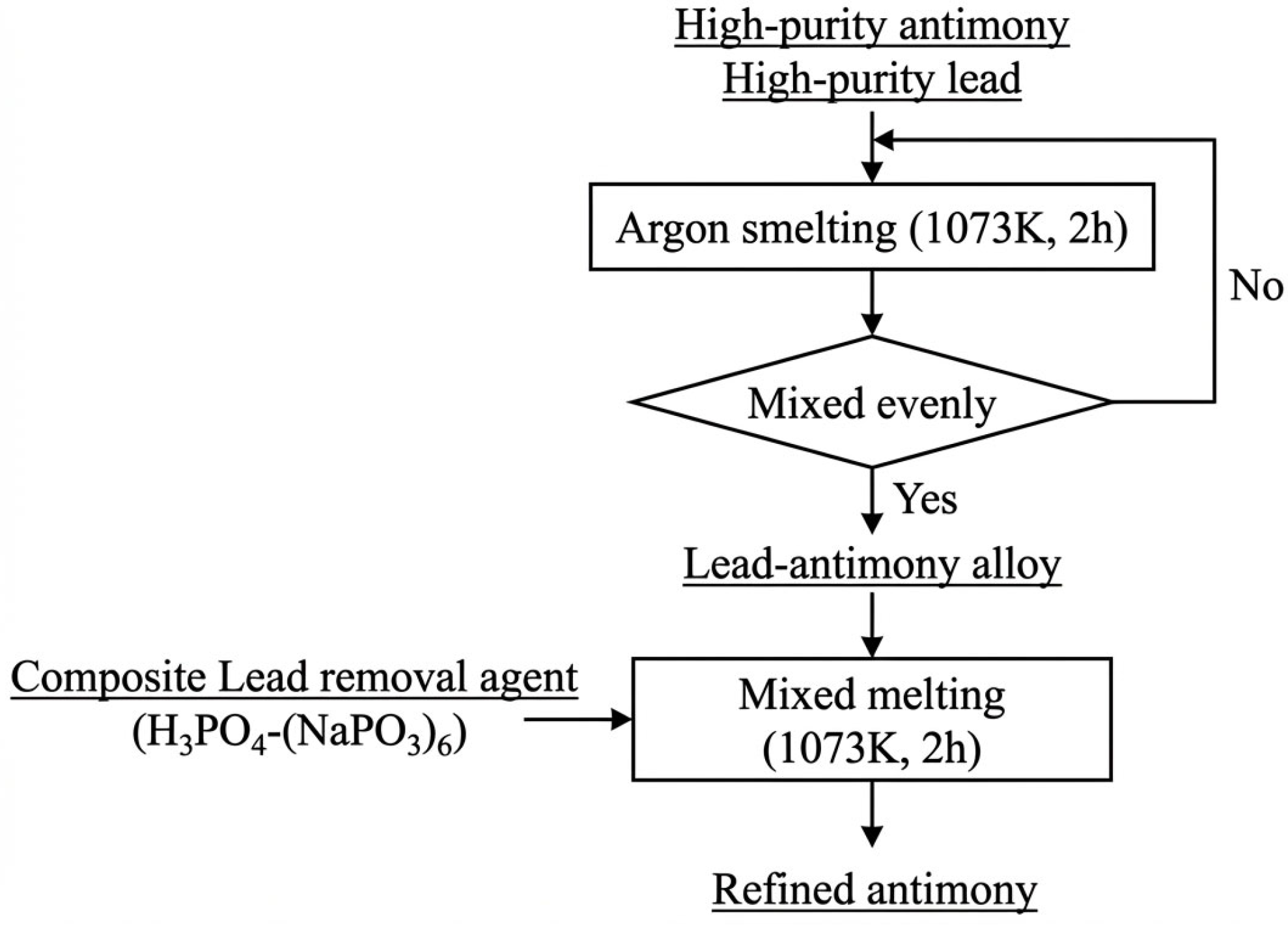
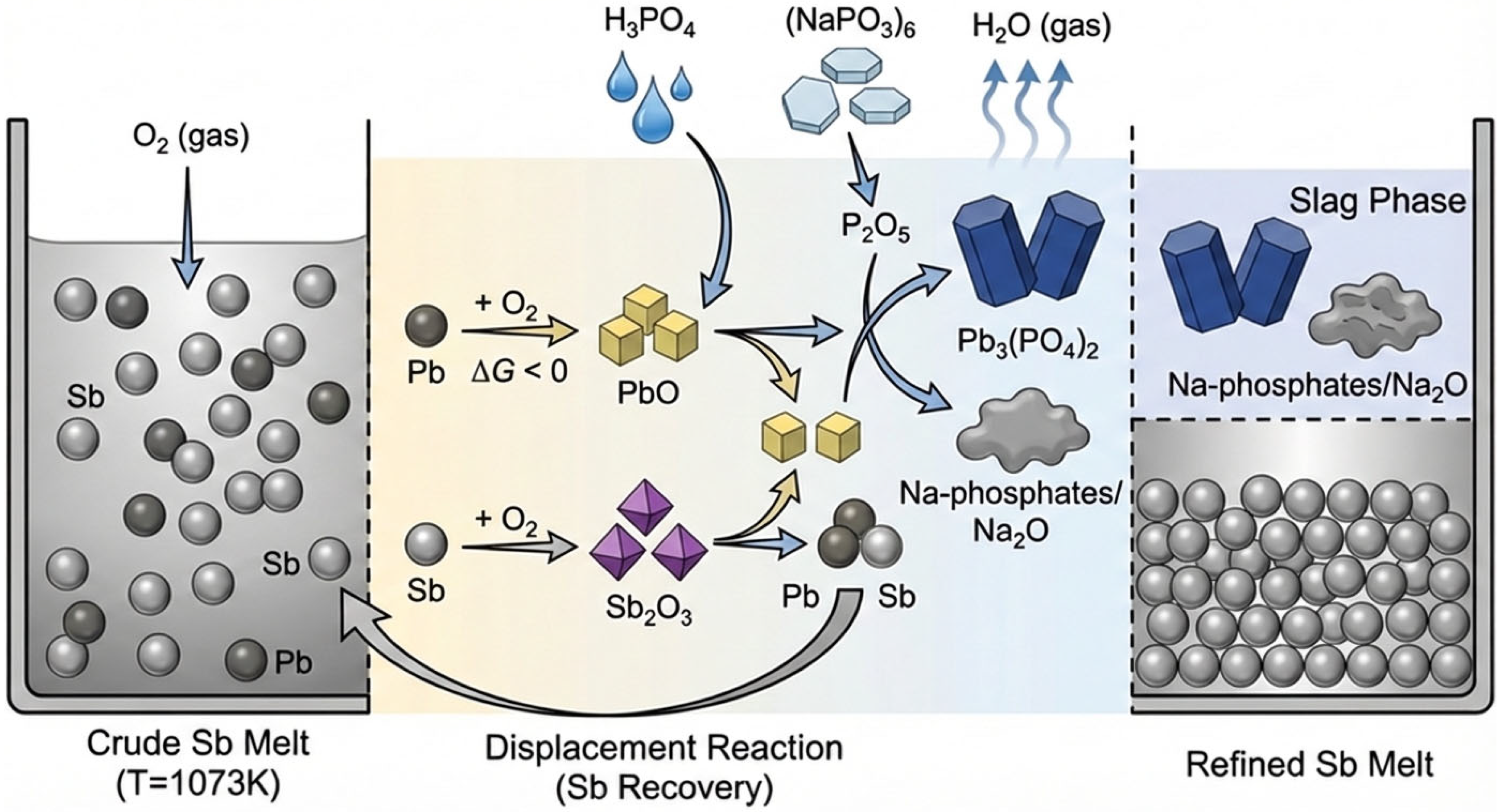
Therefore, this study proposes a chemical refining method using an H
3PO
4-(NaPO
3)
6 composite reagent. Phosphate reagents can react with lead to form chemically stabilized Pb-containing species [
12,
13,
14], while polyphosphates (e.g., (NaPO
3)
6) may promote interfacial reactions and mass transfer in the molten phase. This work aims to investigate a rapid and low-emission laboratory-scale lead removal process for crude antimony (a Pb–Sb alloy) and to clarify the role of thermodynamic analysis in interpreting lead removal behavior, rather than to establish optimized industrial operating conditions.
4. Results and Discussion
4.6. Kinetics Analysis
To gain insight into the temperature-dependent behavior and the rate-controlling characteristics of lead removal, a kinetic-related analysis was performed based on the core reaction (Equation (6)). The equilibrium constant at different temperatures was calculated from the thermodynamic relationship .
It should be emphasized that the equilibrium constant
can qualitatively reflect the temperature sensitivity of the forward lead fixation process. Consequently,
is employed here as an apparent kinetic descriptor, rather than a rigorous rate constant, to analyze the temperature dependence of the process using an Arrhenius-type formalism:
(1) Apparent activation energy determination
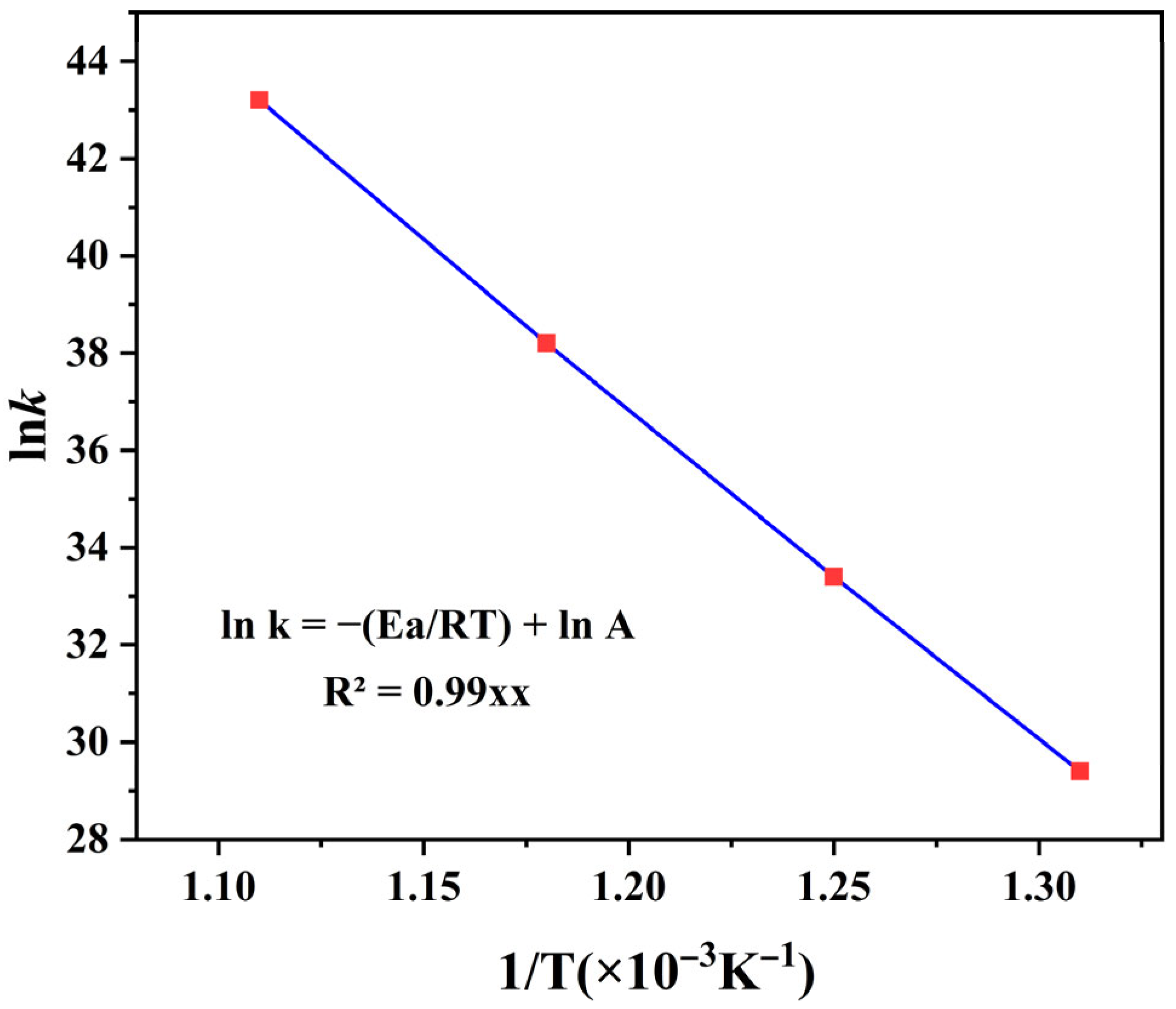
Linear fitting of
versus
yields a straight line with a high correlation coefficient (R
2 > 0.99) (
Figure 9), indicating a clear Arrhenius-type relationship within the investigated temperature range. The slope of the fitted line is approximately
. Based on
, the apparent activation energy is calculated to be 105 kJ/mol.
This value falls within the typical range reported for chemically controlled interfacial reactions (80–150 kJ/mol), suggesting that interfacial chemical reactions play a dominant role under the present experimental conditions rather than by pure diffusion control, which typically exhibits much lower activation energies.
(2) Temperature-dependent reaction tendency
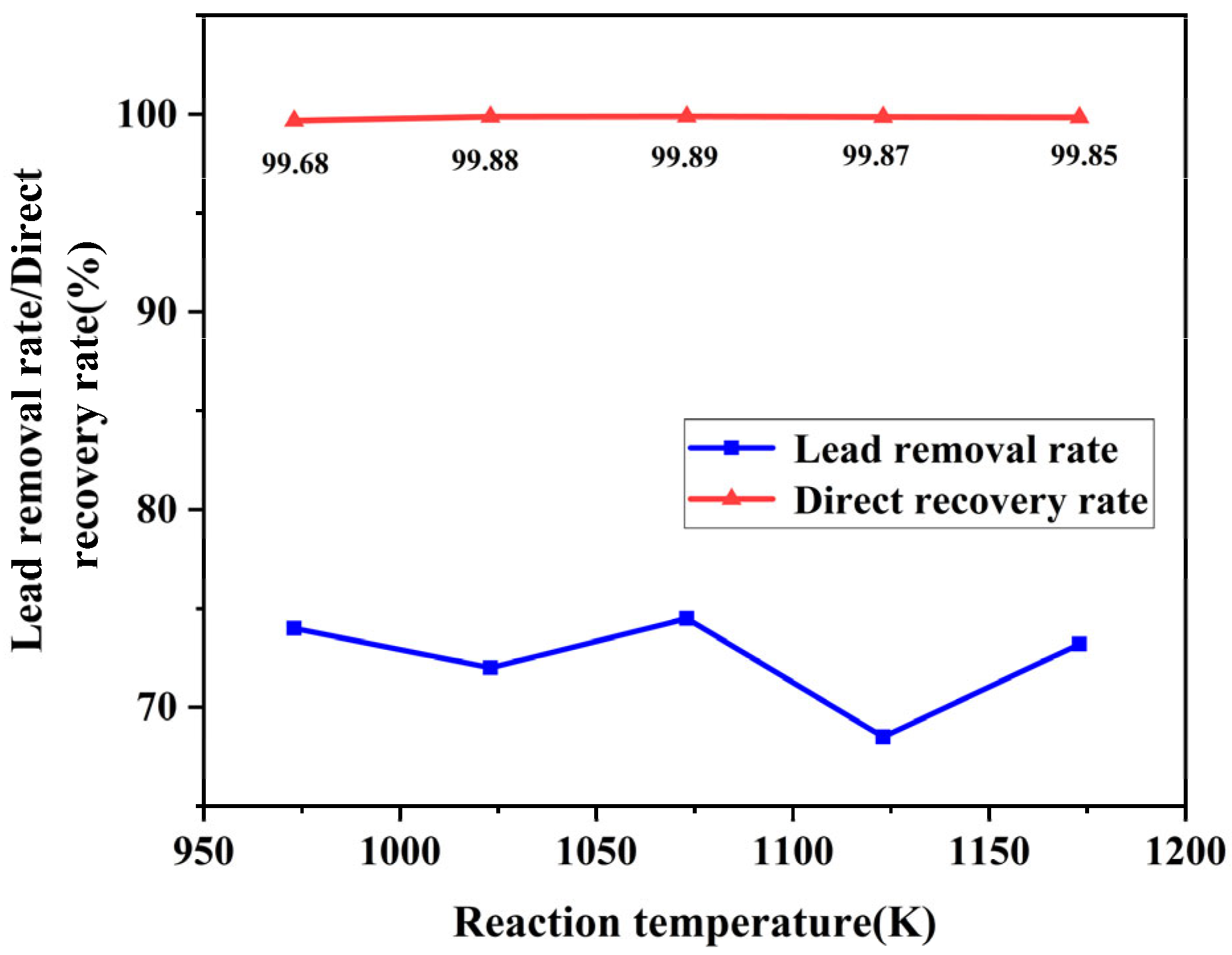
Within the temperature range of 973–1073 K, the Arrhenius term increases significantly from 2.5 × 10⁻⁶ to 8.3 × 10⁻⁶, indicating an enhanced apparent tendency for lead fixation with increasing temperature. This trend is consistent with the experimentally observed improvement in lead removal efficiency.
When the temperature exceeds 1073 K, the absolute value of the negative Gibbs free energy change decreases, and the system gradually approaches thermodynamic equilibrium. As a result, further increases in temperature provide diminishing driving force, leading to a plateau in lead removal efficiency.
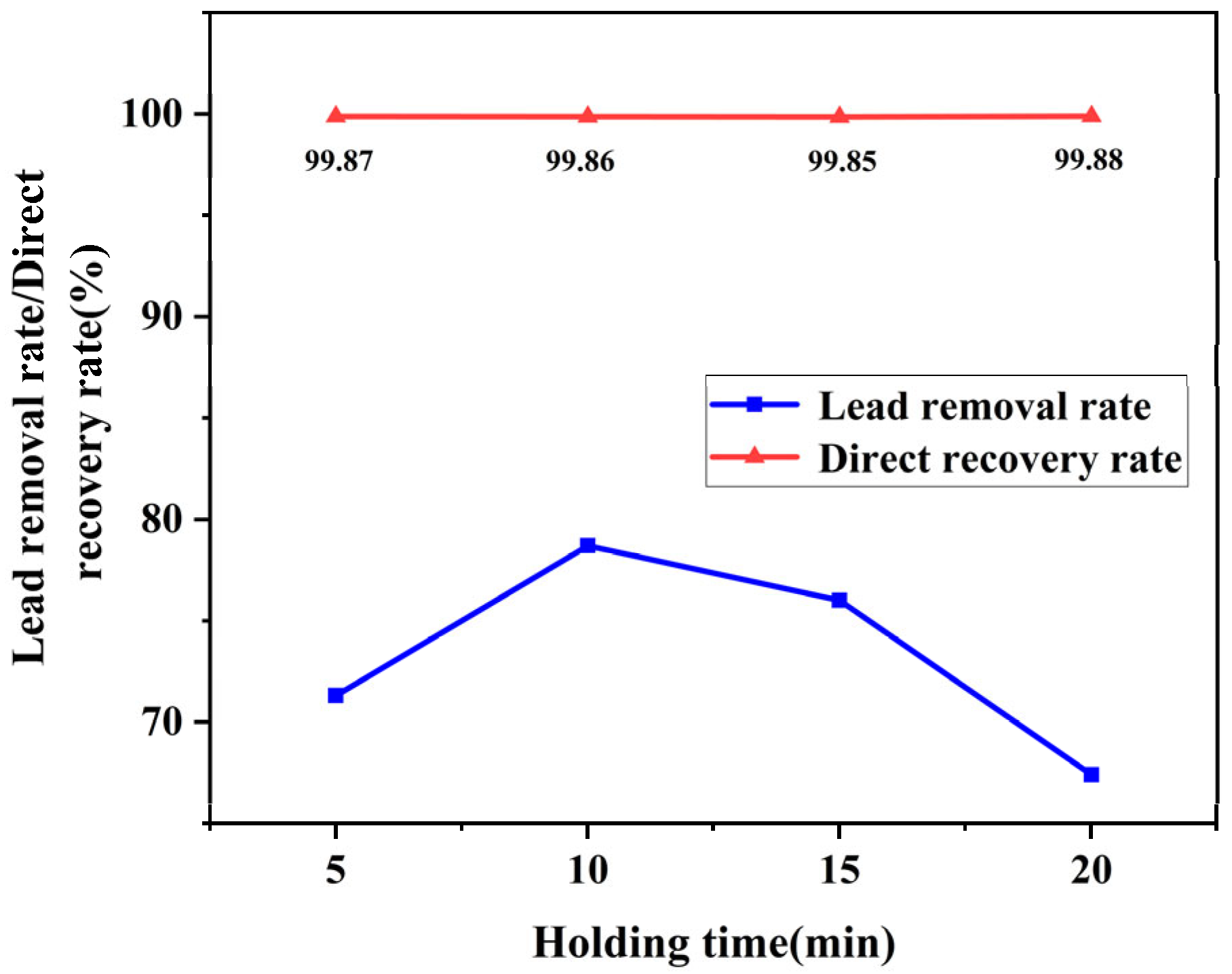
Regarding the holding-time effect (
Figure 8), effective contact between active phosphate species (originating from P
2O
5-related species in the slag/melt) and the molten phase promotes rapid lead fixation at the early stage. With prolonged holding at elevated temperatures, phase re-equilibration becomes more pronounced, which may cause a slight rebound in the residual lead content.
Although a rigorous kinetic model is limited by the batch nature of the experiments, the rapid attainment of low residual lead levels suggests that the process is likely controlled by a mix of interfacial chemical reaction and mass transfer through the slag layer. The slight fluctuation in residual Pb content at longer times suggests the system approaches a quasi-equilibrium state, where minor redistribution or mechanical effects may occur.
5. Conclusions
This study developed an efficient and environmentally friendly process for removing lead from crude antimony using an H3PO4–(NaPO3)6 composite agent. The main conclusions are:
Synergistic action is evident: H3PO4 decomposes at low temperature to release reactive phosphate species and rapidly immobilize Pb, while (NaPO3)6 sustains phosphate supply at higher temperatures and improves melt handling, helping to reduce antimony loss.
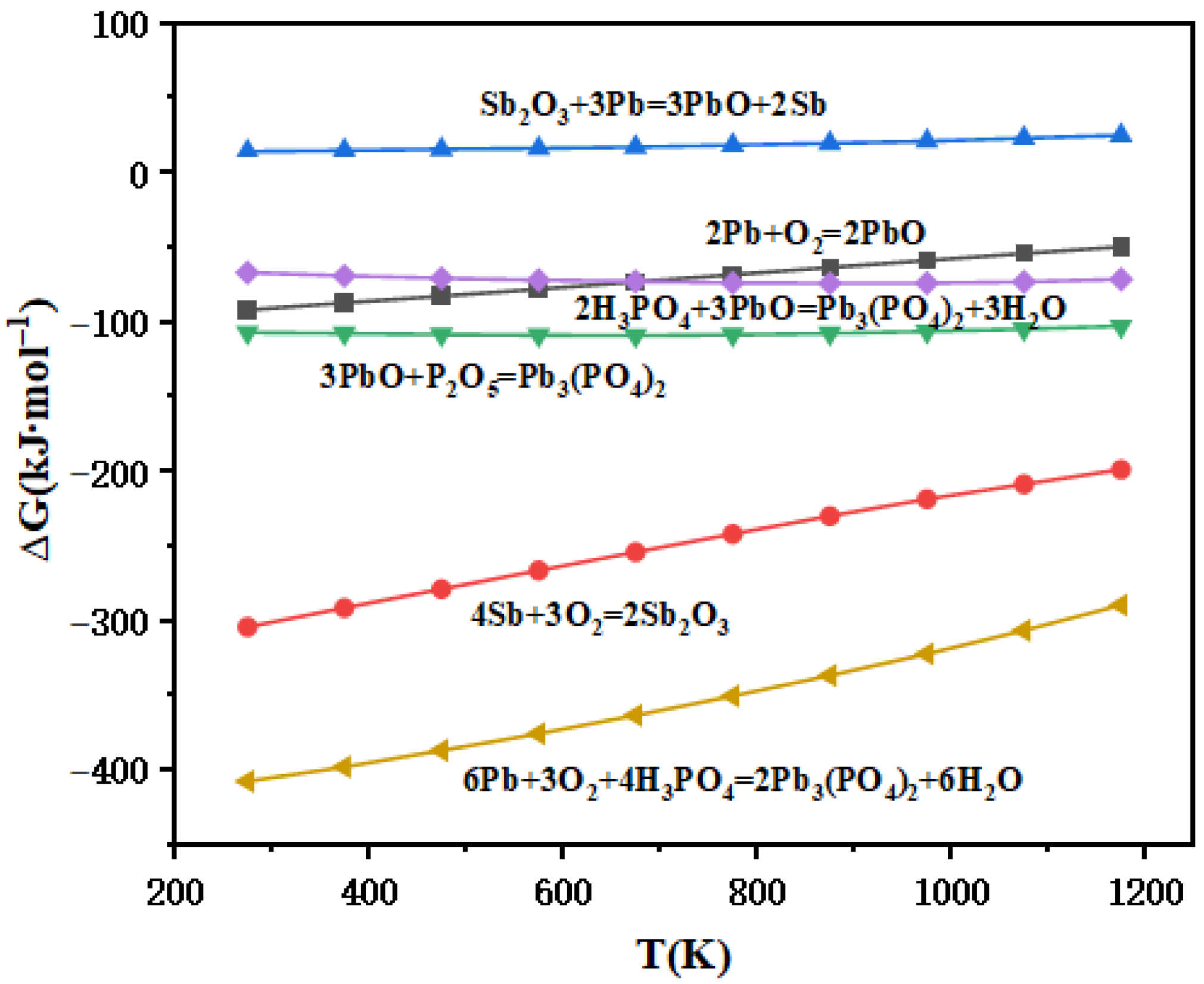
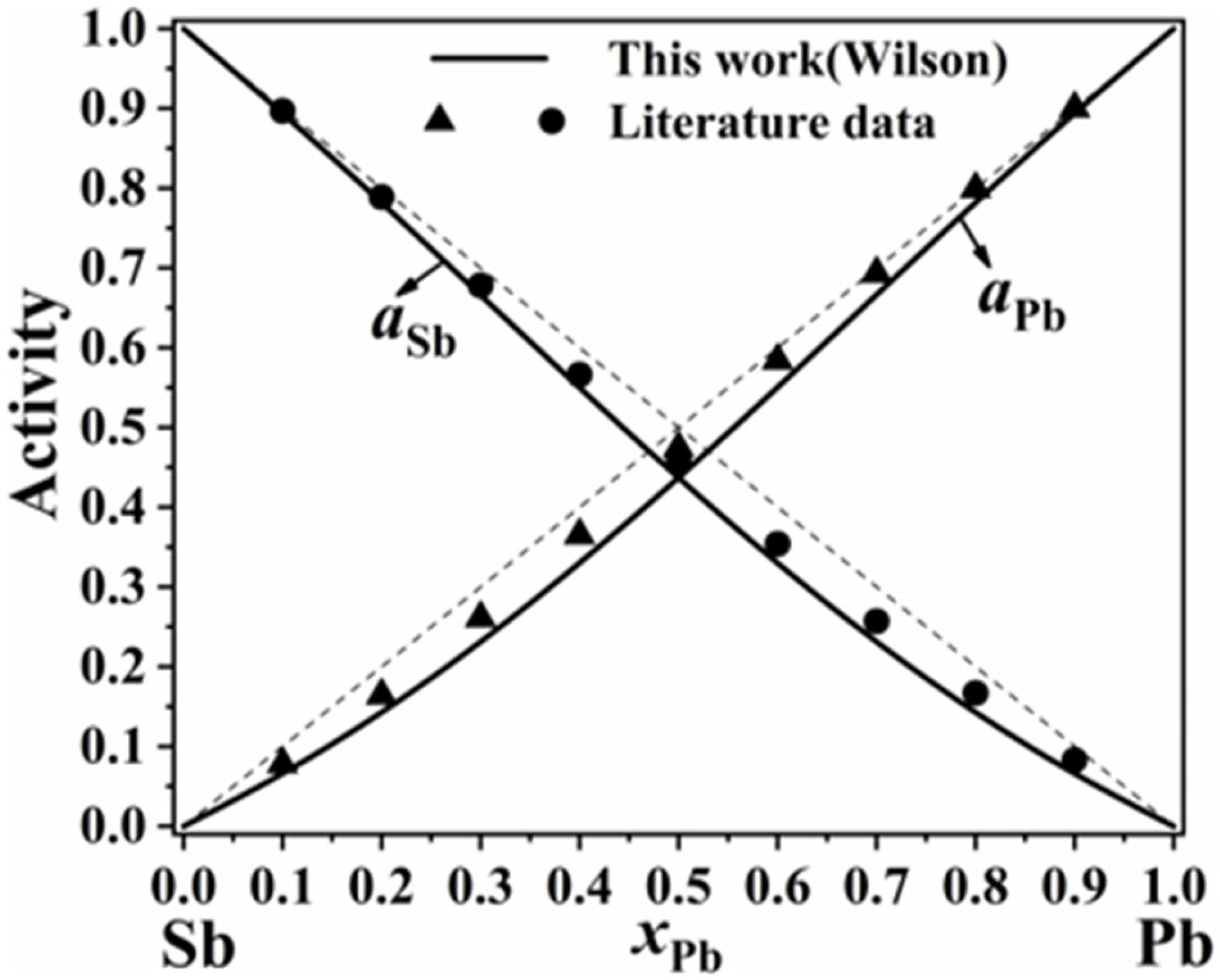
Thermodynamic calculations confirmed the spontaneity of all key reactions within the 873–1073 K range. Notably, the Wilson equation successfully corrected for the non-ideal behavior of the Pb-Sb melt (), providing more accurate predictions of equilibrium residual lead content, which are consistent with the experimentally observed increase in residual lead with temperature.
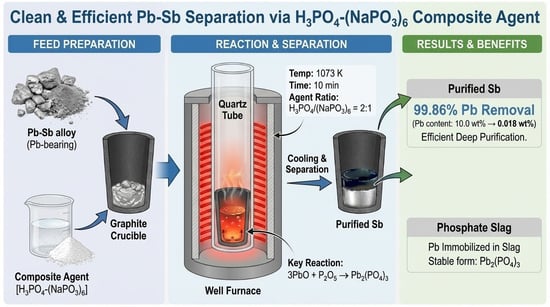
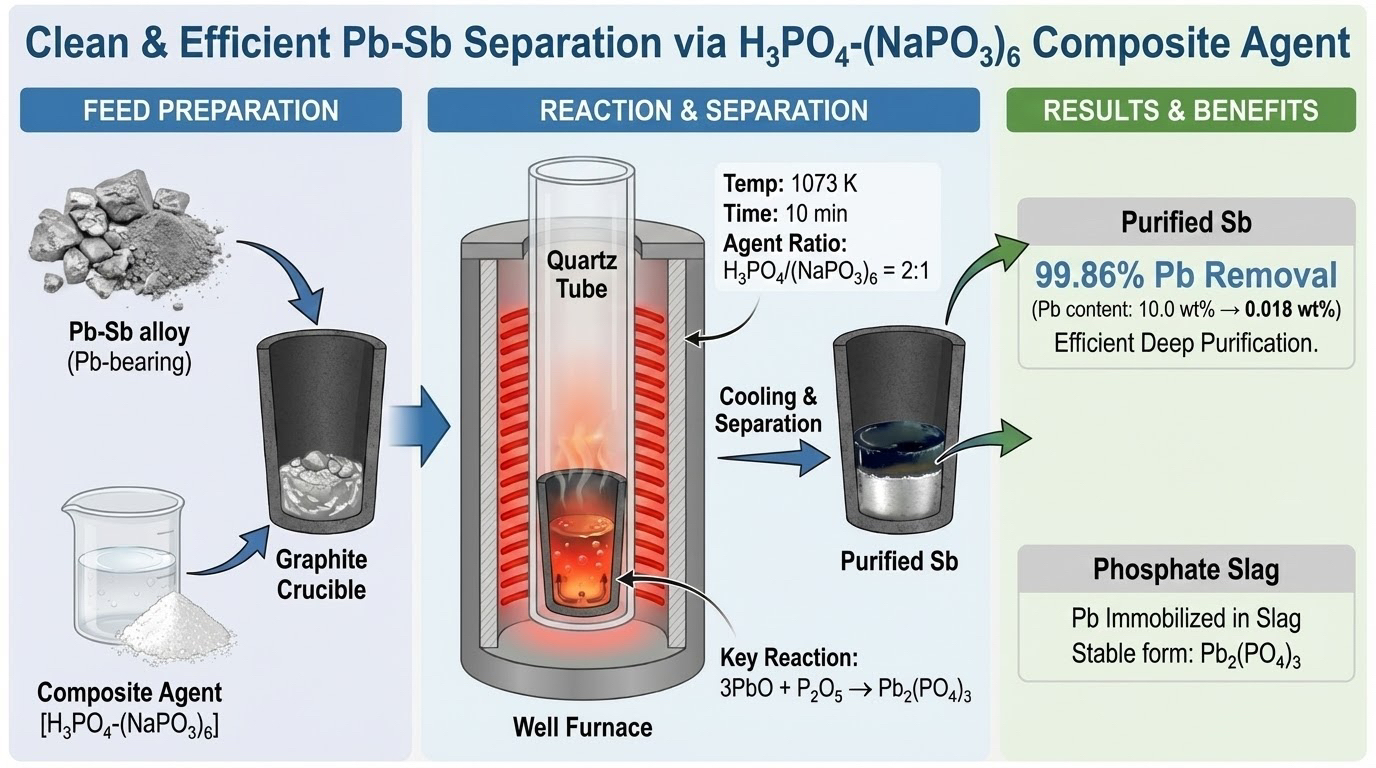
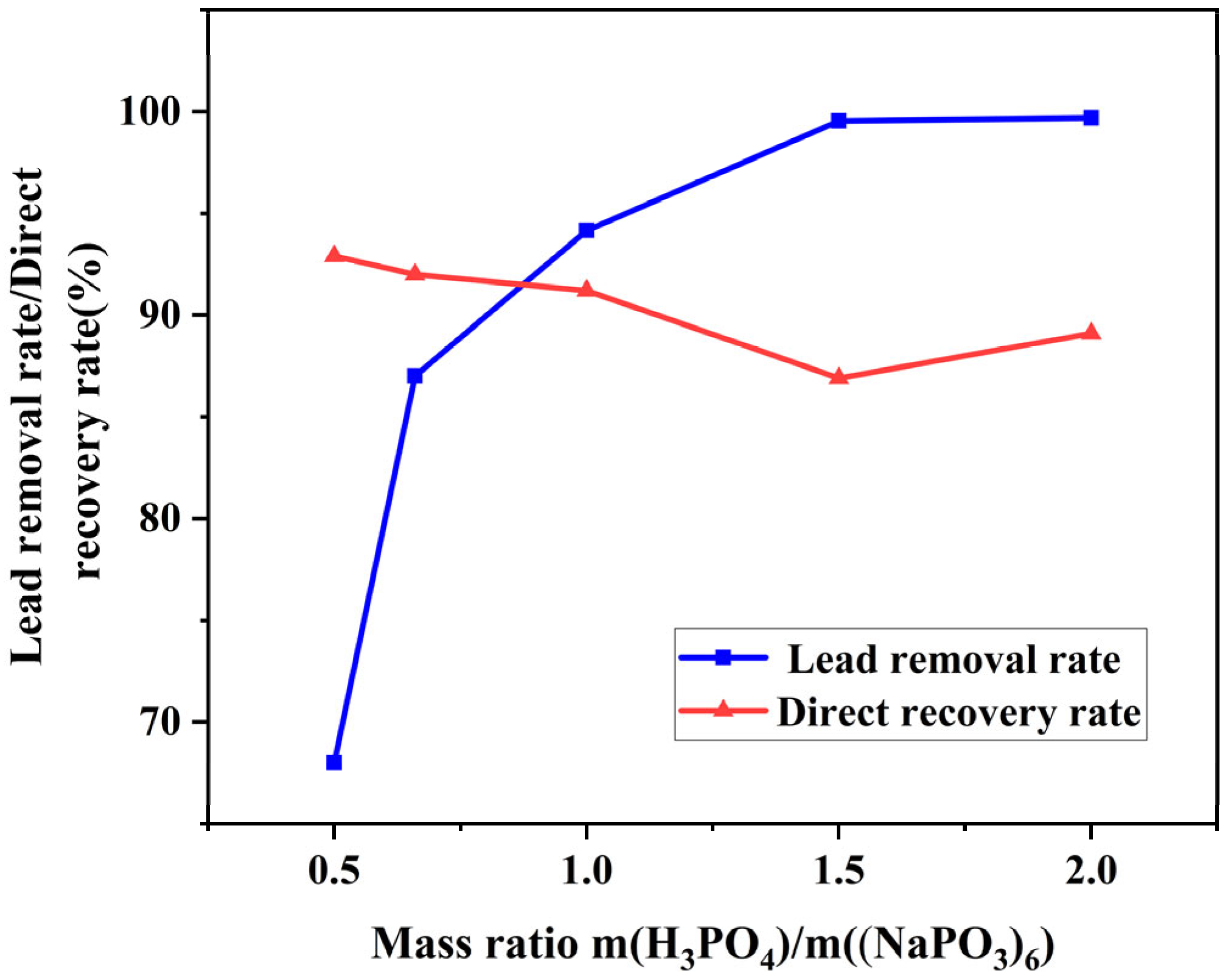
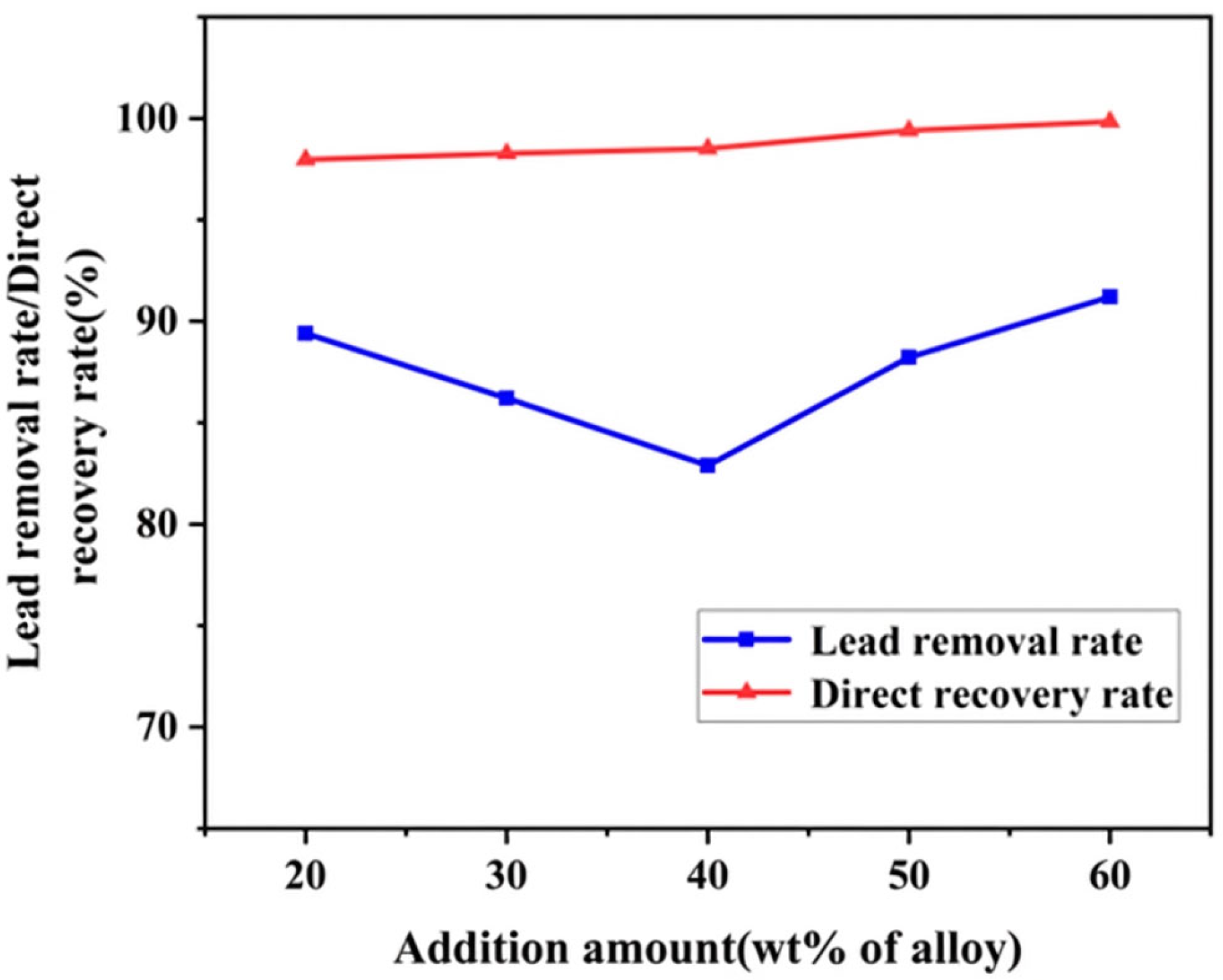
Under representative laboratory conditions (1073 K, H3PO4/(NaPO3)6 mass ratio 2:1, composite addition 60 wt.% relative to alloy mass, and a holding time of 10 min), the lead content decreased from 10.00 wt.% to 0.018 wt.%, corresponding to a lead removal efficiency of 99.86%, while maintaining an Sb recovery of 78.7%.
Kinetic analysis indicates that lead removal is primarily controlled by interfacial chemical reactions, with an apparent activation energy of approximately 105 kJ/mol. This is consistent with the experimentally observed temperature dependence of lead removal performance, suggesting that the overall rate in the investigated range is governed mainly by chemical reaction kinetics rather than mass transfer limitations.
The moderate direct Sb recovery (~78.7%) observed under laboratory conditions is mainly associated with Sb volatilization, oxidation, and mechanical entrainment into the phosphate-rich slag. Future improvements may be achieved through enhanced control of the gas atmosphere, optimization of slag composition to reduce viscosity, and shortened high-temperature residence time.
Although the present study is conducted at laboratory scale, the proposed phosphate-based refining route exhibits several features favorable for further scale-up, including a short reaction time and the avoidance of chlorine-based gaseous reagents. From an industrial perspective, key considerations for potential scale-up include reagent consumption, energy input required to maintain the molten state, slag handling, and efficient phase separation. These aspects require systematic evaluation and process optimization in future pilot-scale studies.
Compared with traditional methods, the proposed process achieves a short reaction time (10 min), avoids chlorine-based off-gas and substantially reduces hazardous emissions, and demonstrates potential applicability for further scale-up with appropriate process control. With appropriate gas/slag handling and enhanced interfacial mixing, the approach offers a clean and efficient route for crude antimony refining and may inform impurity removal in other non-ideal alloy systems.