Article

Improving Printability and Strength–Ductility Synergy in Additively Manufactured IN738 Alloy via Co Addition

1
National Key Laboratory of Ni&Co Associated Minerals Resources Development and Comprehensive Utilization, Jinchuan Group Co., Ltd., Jinchang 737100, China
2
School of Materials and Energy, Lanzhou University, Lanzhou 730000, China
3
School of Materials Science and Engineering, Lanzhou University of Technology, Lanzhou 730050, China
4
State Key Laboratory of Advanced Processing and Recycling of Non-Ferrous Metals, Lanzhou University of Technology, Lanzhou 730050, China
5
Wenzhou Pump Valve Engineering Research Institute, Lanzhou University of Technology, Wenzhou 325102, China
*
Authors to whom correspondence should be addressed.
Metals 2026, 16(1), 27; https://doi.org/10.3390/met16010027
Submission received: 20 November 2025 / Revised: 20 December 2025 / Accepted: 23 December 2025 / Published: 26 December 2025

Abstract

An IN738 alloy with a high Al and Ti contents induces a significant cracking tendency during laser powder bed fusion (LPBF) processing, leading to a mismatch between printability and mechanical properties. Modification of alloy compositions is an effective strategy to enhance the printability and mechanical properties of nickel-based superalloys via LPBF. In this study, the effects of adding 5 wt.%Co on the printability and mechanical properties of LPBF-fabricated IN738 were investigated by using three-dimensional high-resolution micro-computed tomography (micro-CT), electron backscatter diffraction (EBSD), and quasi-static room-temperature tensile tests. The results show that adding 5 wt.%Co can significantly reduce the defect rate and defect size of the LPBF-fabricated IN738 alloy, remarkably improve alloy densification, and optimize printability. Meanwhile, compared with the LPBF-fabricated IN738 alloy, the 5 wt.%Co-IN738 alloy exhibits an excellent balance of strength and ductility in horizontal and vertical directions, both LPBF-fabricated and heat-treated. These results are anticipated to offer valuable guidance for the development of LPBF-fabricated Ni-based superalloys that achieve a favorable balance between printability and mechanical properties.

1. Introduction

The Inconel 738 (IN738) superalloy exhibits outstanding high-temperature strength, creep resistance, and corrosion resistance derived from the γ′-Ni3(Al,Ti) phase precipitation strengthening, making it a widely used material for critical components in aero-engines and gas turbines [1,2,3]. As the structural complexity of key aero-engine and gas turbine equipment increases, additive manufacturing (AM) technology—especially LPBF—provides an effective method for its fabrication. Unlike traditional casting methods, LPBF enables the direct near-net-shape production of complex IN738 components while reducing manufacturing cycles and material loss [4,5]. However, IN738’s high Al and Ti contents (>7 wt.%) exhibit a significant cracking tendency during LPBF, causing a mismatch between printability and mechanical properties that severely limits the industrial application of LPBF-fabricated IN738 alloy components [5,6]. Thus, achieving the synergistic matching of printability and mechanical properties constitutes a core prerequisite for the widespread application of LPBF technology in nickel-based superalloy components with high Al and Ti contents.
To mitigate the cracking sensitivity and enhance the printability and mechanical properties of the LPBF-fabricated IN738 alloy, numerous strategies have been proposed, including optimizing the LPBF process parameters (e.g., energy density, scanning strategy, hatching distance, laser power and scanning speed, and substrate preheating) [7,8,9,10,11,12,13], designing post-heat-treatment schemes (e.g., hot isostatic pressing, heat treatment) [14,15,16,17], and modifying alloy compositions [18,19,20,21,22,23,24,25,26]. Among these approaches, modifying alloy compositions—especially adjusting the contents of grain boundary (GB)-strengthening elements (e.g., C, B, Zr, and Hf) and impurity elements (e.g., Mn and Si)—is recognized as a cost-effective and fundamental method to tailor the alloy’s solidification behavior and microstructure, thereby enhancing its comprehensive performance. However, it is worth noting that all the above-mentioned alloying element modifications are confined to the standard chemical composition range of the IN738 alloy, and few studies have explored the regulation of these elements outside of this range. Notably, Wu et al. [27] demonstrated that adjusting the contents of C, B, and Zr within the standard chemical composition range of the IN738 alloy, while increasing those of Co and Hf beyond this range, achieved the synergistic improvement of the alloy’s printability and mechanical properties. Furthermore, Tang et al. [28] and Ouyang et al. [29] investigated the effects of Co on the microstructure and mechanical properties of additively manufactured Ni-based superalloys, and their results indicated that the increasing Co content enables the alloy to exhibit higher yield strength and ductility at elevated temperatures. Additionally, Murray et al. [30] achieved the successful fabrication of a crack-free Co-Ni-based superalloy via additive manufacturing by increasing the Co content to 39 wt.%, which exhibits a high ultimate tensile strength of 1.1 GPa and an elongation exceeding 13% at room temperature. Collectively, these studies indicate that increasing the content of Co—a solid solution-strengthening element—exerts a significant influence on the printability and strength–ductility synergy of LPBF-fabricated nickel-based superalloys.
In the present study, our primary objective is to elucidate the effects of Co content on the printability and mechanical properties of the LPBF-fabricated IN738 alloy, which is achieved through three-dimensional high-resolution micro-computed tomography (micro-CT), electron backscatter diffraction (EBSD), and quasi-static tensile testing at room temperature.

2. Experimental Methods

2.1. Materials and Processing

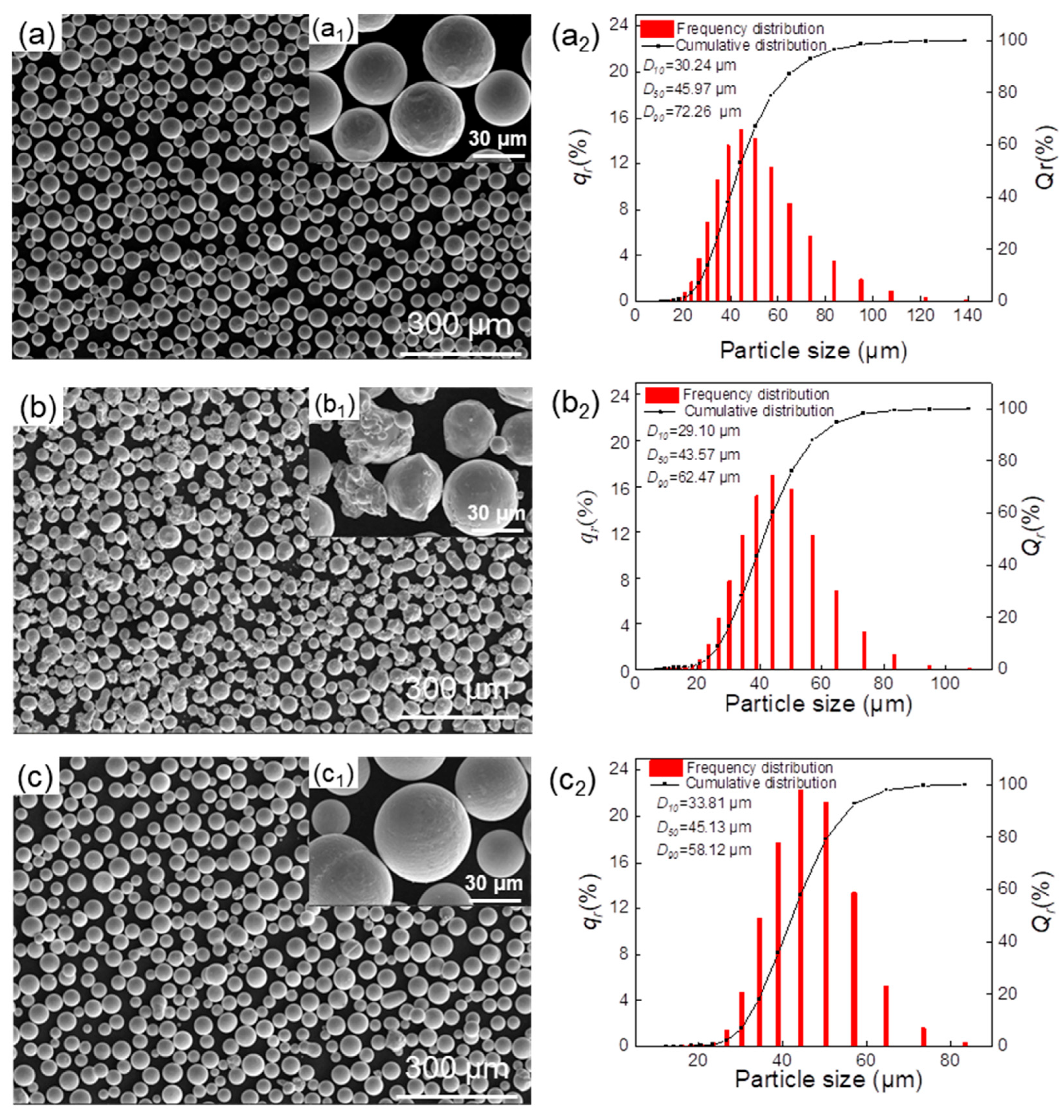
In this study, the IN738 alloy powder was prepared using an SLPA-D desktop plasma rotating electrode processing (PREP) system (Xi’an Sailong Metal Materials Co., Ltd., Xi’an, China), while pure Co powder was fabricated via gas atomization (GA). The 5 wt.%Co-IN738 composite powder was prepared through the following process: with IN738 alloy powder as the matrix, 5 wt.% pure Co powder was added, and mechanical mixing was conducted using a KE-2L planetary ball mill (Qidong Honghong Instrument Equipment Factory, Qidong, China) at a rotational speed of 200 r/min for a mixing duration of 2 h. The chemical compositions of the corresponding IN738 and 5 wt.%Co-IN738 alloy samples that were fabricated by LPBF are presented in Table 1. The increased Co content was clearly observed to reduce the concentrations of other alloying elements and the γ′ phase volume fraction in the alloy. Figure 1 presents the morphologies and particle-size distributions of the IN738, pure Co, and 5 wt.%Co-IN738 powders. The IN738 alloy powder prepared by PREP is characterized by the absence of satellite particles and excellent sphericity (Figure 1a,a1). In contrast, the pure Co powder fabricated via GA has poor sphericity, containing a large number of satellite particles and irregularly shaped particles of other morphologies (Figure 1b,b1). After adding 5 wt.% pure Co powder to the IN738 alloy powder, the mixed powder still maintains good sphericity and is dominated by spherical particles (Figure 1c,c1), indicating that mechanical ball milling did not impair the sphericity of the powder particles. The IN738 alloy powder has a particle size range of 30.24–72.26 μm with a D50 of 45.97 μm (Figure 1a2), while the pure Co powder has a particle size range of 29.10–62.47 μm with a D50 of 43.57 μm (Figure 1b2). This demonstrates that the particle size of the PREP-prepared IN738 alloy powder is slightly larger than that of the GA-fabricated pure Co powder. The 5 wt.% Co-Inconel 738 mixed powder has a particle size range of 33.81~58.12 μm, with a D50 of 45.13 μm (Figure 1c2).

2.2. LPBF Process and Post-Treatment

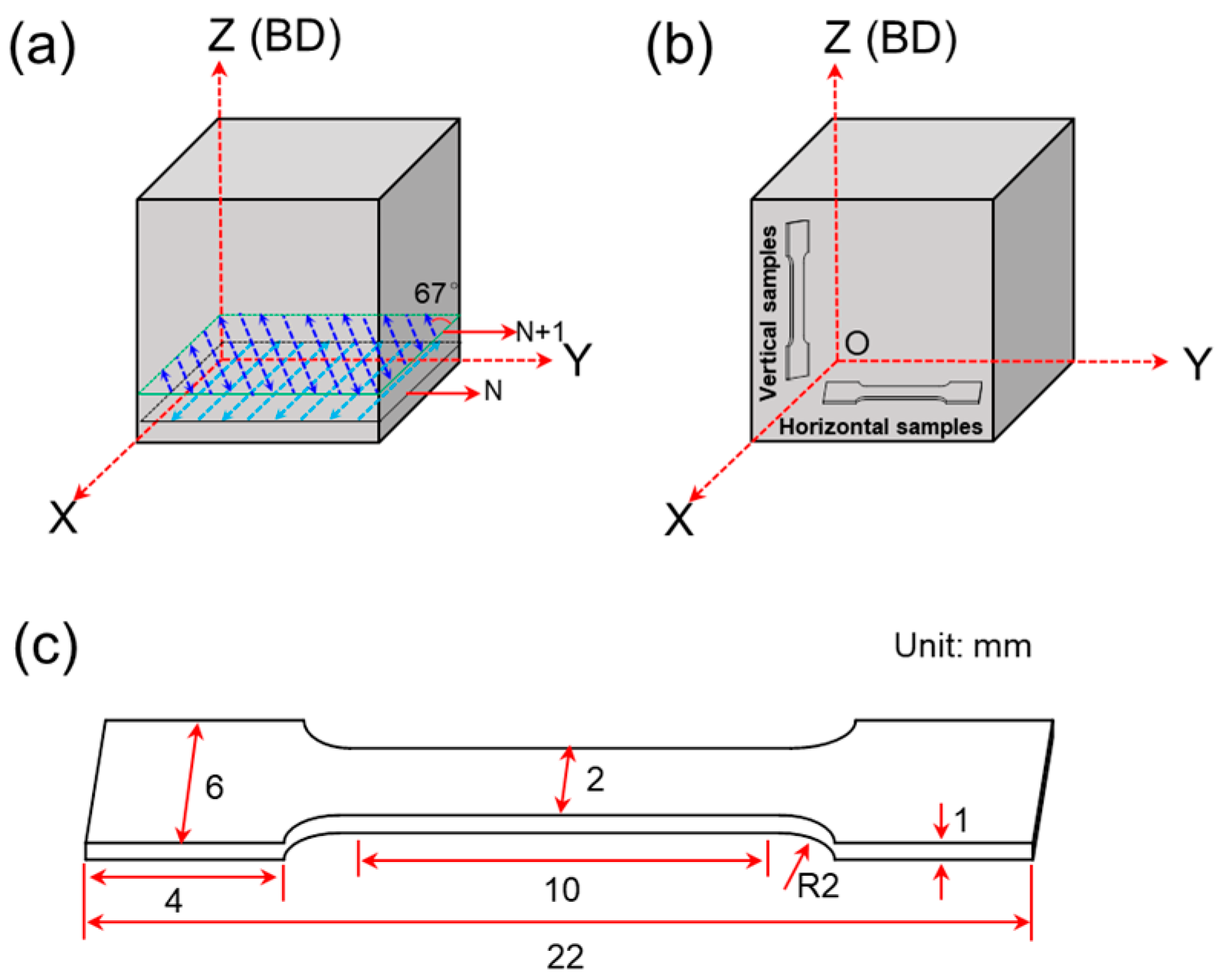
All samples were prepared using a HANS-M-100 LPBF system (Han’s Laser, Shenzhen, China) under an argon atmosphere. The scanning strategy employed during the LPBF process is illustrated in Figure 2a, with a 67° rotation applied between consecutive layers. Prior to processing, the 316 L stainless steel substrate underwent preheating at 100 °C. The laser spot diameter (25 μm) and wavelength (1070 nm)—fixed parameters of the LPBF equipment—were combined with the following key process parameters: laser power of 50 W, scanning speed of 200 mm/s, layer thickness of 15 μm, and hatch spacing of 60 μm. Cubic samples (5 mm × 5 mm × 5 mm) were fabricated for both alloys to characterize their microstructures and defects, while rectangular samples (50 mm × 10 mm × 5 mm) were prepared to evaluate the vertical and horizontal tensile properties at room temperature (RT), respectively. Half of the samples were subjected to heat treatment, with their microstructures and mechanical properties subsequently being compared against those of the fabricated LPBF samples. For both the IN738 and 5 wt.%Co-IN738 alloys, the heat treatment regimen comprised two stages: solution treatment at 1200 °C for 2 h, followed by air cooling (AC), and subsequent aging treatment at 850 °C for 24 h (also cooled in air).

2.3. Material Characterization and Tensile Testing

Differential scanning calorimetry (DSC) tests were carried out using a NETZSCH STA 449F3 simultaneous thermal analyzer (NETZSCH-Gerätebau GmbH, Selb, Germany). For both the IN738 and 5 wt.%Co-IN738 alloys, DSC samples were extracted from identical positions of the cubic samples, with dimensions of Φ5 mm × 2 mm. Prior to testing, all samples were subjected to polishing and cleaning procedures. Both alloys were heated from an ambient temperature to 1400 °C at a rate of 10 °C/min, maintained at 1400 °C for 30 s, and subsequently cooled down to 600 °C at 10 °C/min. The entire experimental process was performed under the protection of continuously flowing 99.99% high-purity argon gas, with a flow rate set at 30 mL/min. Three-dimensional high-resolution micro-CT (nonoVoxel-3000, Sanying Precision Instruments Co., Ltd., Tianjin, China) was utilized to characterize the distribution and density of defects within the samples. Cylindrical micro-CT samples (1.4 mm in diameter and 10 mm in height) were extracted from the central region of the cubic samples. A pixel size of 500 nm was chosen for the scans, determined by the dimensions of both the micro-CT samples and the defects being investigated. Defect-related data were analyzed using Avizo software (FEI Avizo v9.0.1). X-ray diffraction (XRD) measurements were performed on the LPBF-fabricated IN738 and 5 wt.% Co-IN738 alloys, using a Bruker D8 Advance diffractometer (Bruker, Karlsruhe, Germany) with CuKα radiation (λ = 1.5406 A°). All samples were scanned over a 2θ range of 10° to 80° at a scanning rate of 1 °/min. Electron backscatter diffraction (EBSD) was employed to obtain information on the grain structure. The EBSD tests were conducted over areas measuring 800 × 800 μm2, with a step size of 1 μm set for data acquisition. HKL Channel 5.0 software was used to analyze the EBSD data.
RT tensile samples of IN738 and 5 wt.%Co-IN738 alloys were machined from the rectangular samples via wire electrical discharge machining. The schematic diagrams of the horizontal and vertical tensile samples are illustrated in Figure 2b, while their detailed dimensional parameters are provided in Figure 2c. The RT tensiles were carried out on a ZwickLine Z2.5TH testing machine (Zwick-Roell, Ulm, Germany) fitted with a LaserXtens compact laser extensometer, with the tests conducted at a crosshead speed of 0.2 mm/min. To guarantee the repeatability of the test results, the tensile properties for each alloy group were evaluated based on a minimum of three replicate tests performed at RT.

3. Results and Discussion

3.1. Solidification Behavior

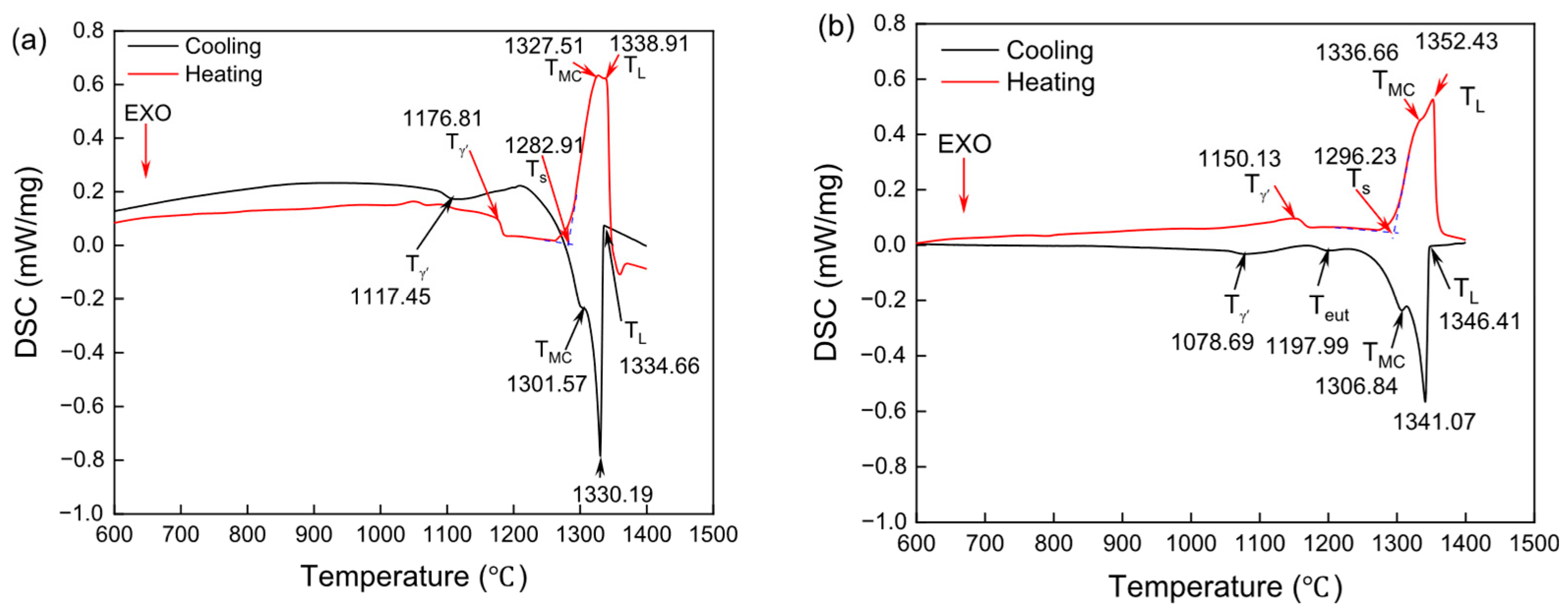
Figure 3 shows the DSC curves of the LPBF-fabricated IN738 and 5 wt.%Co-IN738 alloys under heating and cooling processes. Combined with Table 2, it can be seen from the heating curves that the IN738 and 5 wt.%Co-IN738 alloys had a solidus temperature (TS) of 1282.91 °C and 1296.23 °C, and liquidus temperature (TL) of 1338.91 °C and 1352.43 °C, respectively. The solidification temperature range of the alloy expands from 56 °C to 56.2 °C as the Co content is increased. Meanwhile, the dissolution temperatures of MC-type carbides in the IN738 and 5 wt.% Co-IN738 alloys are 1327.51 °C and 1336.66 °C, respectively. Additionally, the dissolution temperatures of the γ′ phase in these two alloys are 1176.81 °C and 1150.13 °C, respectively. These results indicate that an increasing Co content raises the dissolution temperature of MC-type carbides while lowering that of the γ′ phase. Notably, during the cooling process, the γ + γ′ eutectic phase appears in the 5 wt.% Co-IN738 alloy with a transformation temperature of 1197.99 °C, whereas no such γ + γ′ eutectic phase is observed in the IN738 alloy. This indicates that the γ + γ′ eutectic phase structure may form in the 5 wt.% Co-IN738 alloy during the LPBF forming process.
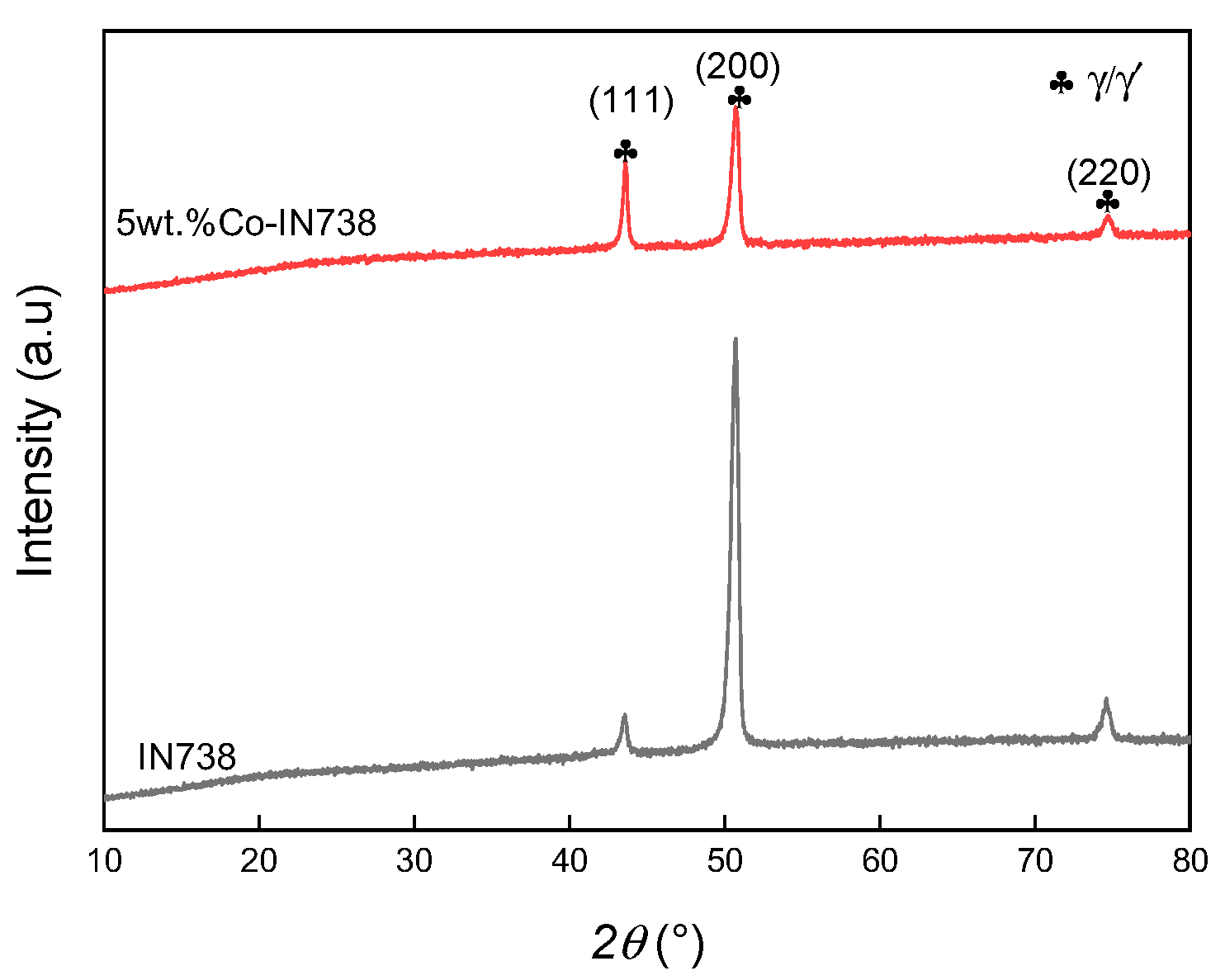
To illustrate the effect of Co addition on the lattice parameters of the IN738 alloy, the XRD spectra of the LPBF-fabricated IN738 and 5 wt.% Co-IN738 alloys are presented in Figure 4. It can be seen that both alloys exhibited an identical phase composition, indicating that the introduction of 5 wt.% Co did not induce any phase transformation in the IN738 matrix. Meanwhile, all diffraction peaks of the 5 wt.% Co-IN738 alloy showed a slight rightward shift, which is primarily attributed to the substitute solid solution of Co atoms in the Ni-based lattice. This substitution effect reduces the lattice parameters of both the γ matrix and γ′ phases.

3.2. Defects

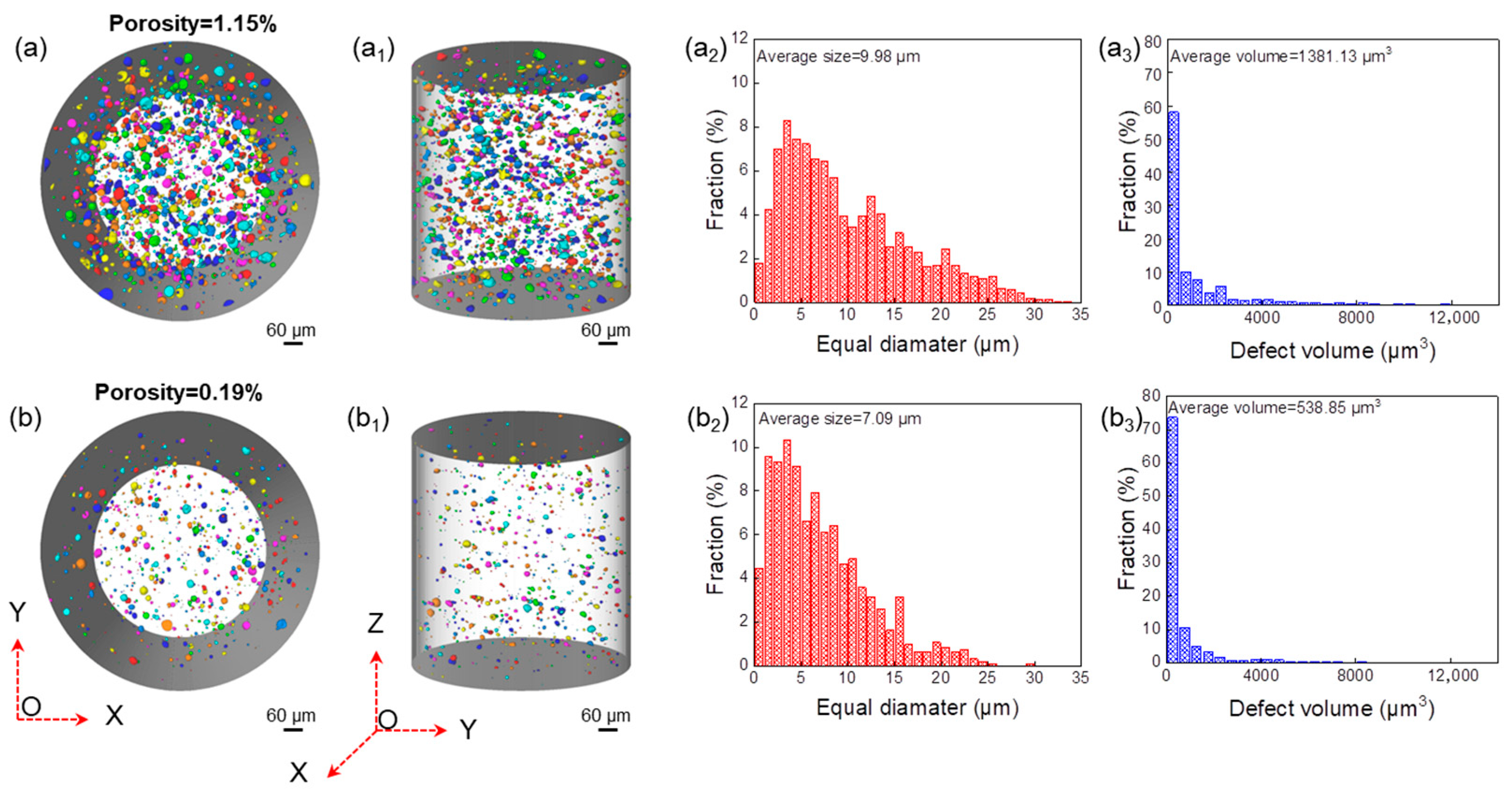
Figure 5 shows micro-CT images of defect distribution in the LPBF-fabricated IN738 and 5 wt.% Co-IN738 alloys. It can be clearly seen that the LPBF-fabricated IN738 alloy has a defect rate of 1.15% (Figure 5a,a1), an average defect size of 9.98 μm (Figure 5a2), and an average defect volume of 1381.13 μm3 (Figure 5a3). In contrast, the LPBF-fabricated 5 wt.% Co-IN738 alloy exhibits a significantly lower defect rate (0.19%, Figure 5b,b1), a notably finer average defect size (7.09 μm, Figure 5b2), a markedly reduced average defect volume (538.85 μm3, Figure 5b3), and a remarkably higher densification (99.81%). Thus, the addition of Co improves the printability of the LPBF-fabricated IN738 alloy. The improved printability of the LPBF-fabricated 5 wt.%Co-IN738 alloy is presumably associated with the modulated content of other critical alloying elements induced by Co addition. Specifically, the collective reduction in the concentrations of γ′ phase-forming elements (Al, Ti, Ta, Nb), GB-strengthening elements (B + Zr), and the impurity element (Si) effectively diminishes the alloy’s crack susceptibility [16,17,18,19,20], thereby substantially enhancing its printability during LPBF processing.

3.3. Grain Structure

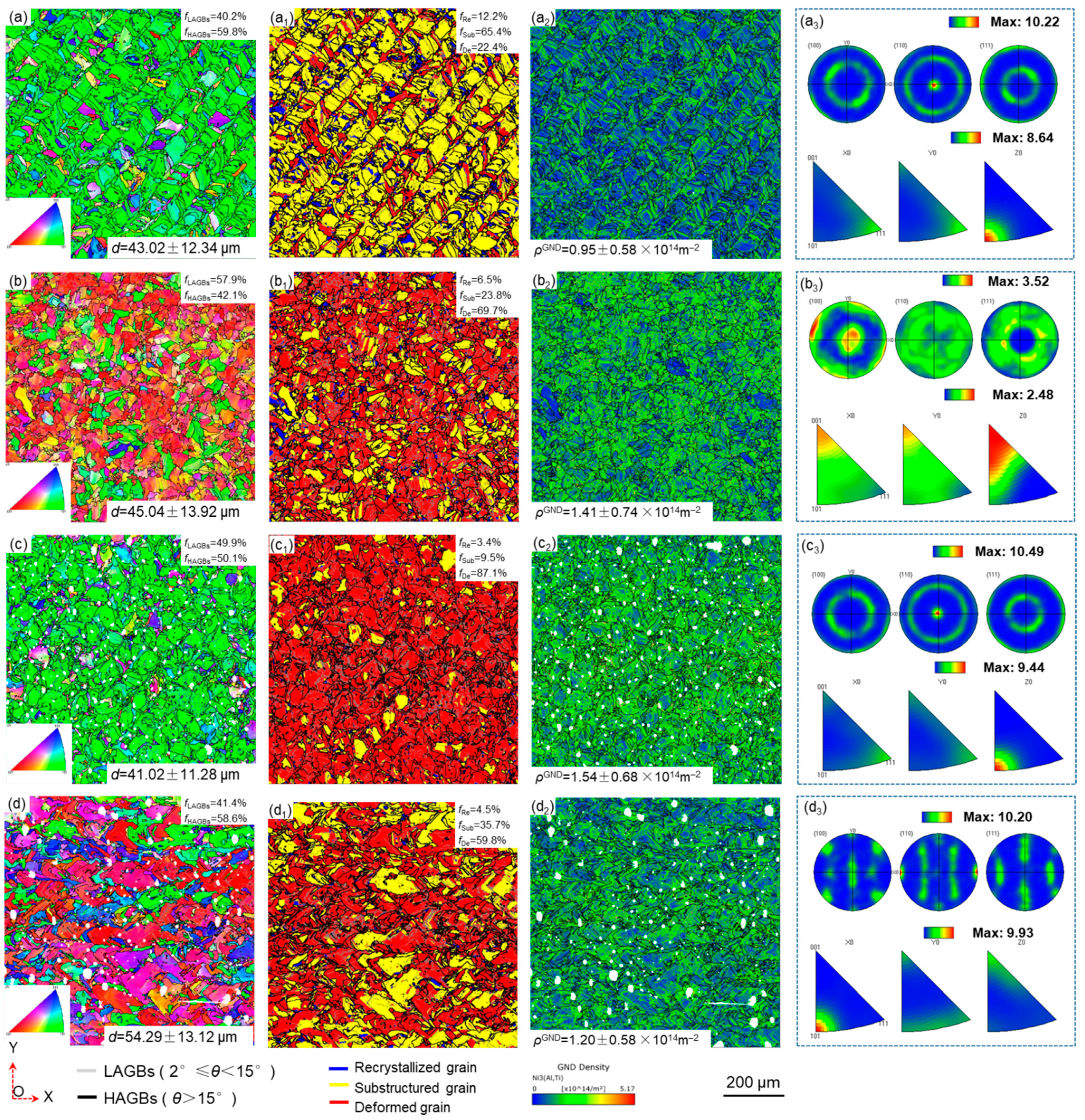
Figure 6 shows the EBSD maps and the corresponding recrystallization distribution maps, geometrically necessary dislocation (GND) distribution maps, and pole figure (PF) and inverse pole figure (IPF) maps of the IN738 and 5 wt.%Co-IN738 alloys at different conditions. It can be clearly observed that the LPBF-fabricated IN738 alloys both before and after heat treatment exhibit a chessboard-like grain structure in the XOY plane, with grains oriented along <011>//BD (Figure 6a,c). Additionally, a few fine recrystallized grains are distributed at the boundaries of the chessboard-like structure (Figure 6a1,c1). Meanwhile, the grains exhibit a strong Brass orientation {110}<112>. The grain orientation types of the LPBF-fabricated IN738 alloy remain unchanged before and after heat treatment, while their intensities vary (Figure 6a3,c3). In addition, the fraction of low-angle grain boundaries (LAGBs) and the GND density of the LPBF-fabricated IN738 alloy increase after heat treatment (Figure 6a,c,a2,c2), while the average grain size slightly decreases (Figure 6a,c). This phenomenon may be related to the precipitation of the γ′ phase during the alloy’s heat treatment. For the LPBF-fabricated 5 wt.%Co-IN738 alloy, the grains exhibit an orientation along the <001>//BD direction both before and after heat treatment (Figure 6b,d). Nevertheless, notable changes occurred in the types and intensities of the grain orientations after heat treatment. Prior to heat treatment, the alloy showed a strong Cube orientation {001}<100> (Figure 6b3). In contrast, after heat treatment, it displayed a prominent Rotated-Cube orientation of {001}<110> (Figure 6d3). Additionally, the overall intensity of the grain orientations in the heat-treated alloy was higher than that in the LPBF-fabricated alloy. In addition, the fraction of high-angle grain boundaries (HAGBs) and the average grain size of the LPBF-fabricated IN738 alloy increase after heat treatment (Figure 6b,d), while the recrystallized grains fraction and GND density slightly decreases (Figure 6b1,d1,b2,d2).

3.4. Mechanical Properties

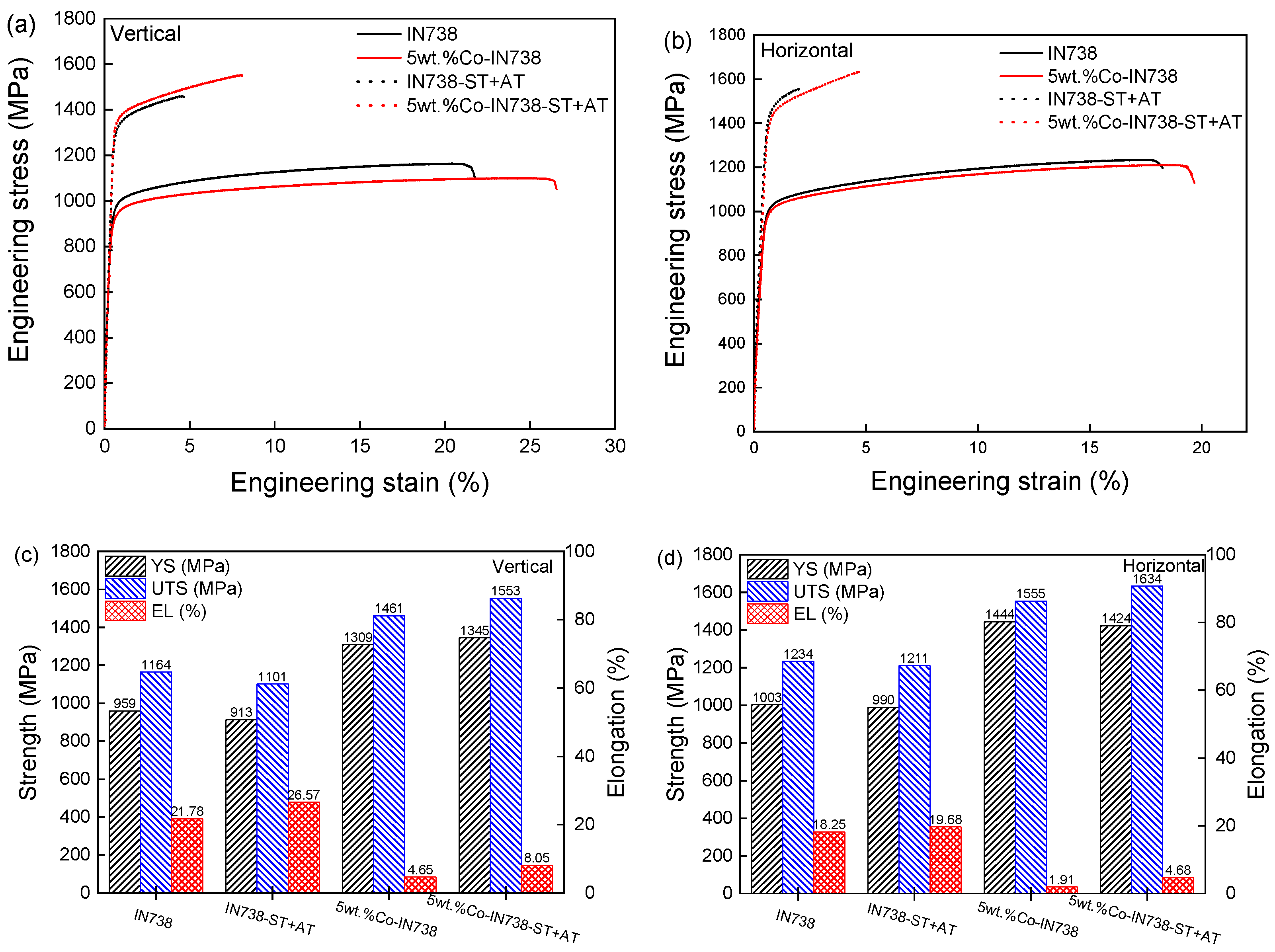
Figure 7 presents the RT tensile properties of LPBF-fabricated IN738 and 5 wt.%Co-IN738 alloys in different directions, both in the LPBF-fabricated and heat-treated conditions. Heat treatment is clearly observed to significantly boost the yield strength (YS) and ultimate tensile strength (UTS) of the alloys, yet it causes a notable decline in their fracture elongation (EL). This phenomenon is attributed to the γ′ phase precipitation strengthening effect generated during the alloy’s aging heat treatment of the alloy. Meanwhile, under the same state (either LPBF-fabricated or heart-treated), the YS and UTS of the alloy samples in the horizontal direction are higher than those in the vertical direction, while the EL of the alloy samples in the vertical direction is higher than that in the horizontal direction. This phenomenon is closely related to the anisotropy of grains. When the vertical direction sample undergoes tensile deformation, the elongated columnar grains are parallel to the tensile direction, and fewer grain boundaries participate in the deformation, resulting in lower strength but higher elongation of the sample. In contrast, when the horizontal-direction sample is subjected to tensile loading, the columnar grains are perpendicular to the tensile direction, and a greater number of grains participate in the deformation, thus leading to higher strength and lower elongation [31,32,33,34,35]. In addition, before heat treatment, adding Co content reduces the YS and UTS of the alloys while increasing their EL. After heat treatment, adding Co content enhances the EL and UTS of the alloy, with a slight decrease in the YS of the horizontal-direction samples. The above results indicate that the 5 wt.%Co-IN738 alloy exhibits an outstanding balance of strength and ductility in different directions in both the LPBF-fabricated and heat-treated conditions.
Based on the aforementioned experimental results, the addition of 5 wt.% Co enables the LPBF-fabricated IN738 alloy to achieve a favorable balance between printability and mechanical properties. Firstly, Co addition exerts its influence through two aspects: it not only contributes to solid solution strengthening but also leads to a decrease in the contents of γ′ phase-forming elements (Al, Ti, Nb), GB-strengthening elements (C, B, Zr), and the impurity element (Si). For example, Ouyang et al. [29] reported that an increasing Co content enhanced the contribution of solid solution strengthening to the yield strength of LPBF-fabricated Ni-Co alloys. Specifically, when the Co content increased from 13 wt.% to 35 wt.%, the yield strength of the alloy increased significantly from 220.85 MPa to 259.88 MPa. Early studies [20,21,22,23,27] demonstrated that B and Zr exert a significant detrimental effect on the cracking susceptibility of IN738 during LPBF processing. Consequently, lowering the levels of B and Zr effectively suppresses the cracking tendency of the alloy. Zhou et al. [18] and Zhang et al. [19] reported that the increasing C content contributes to the simultaneous and remarkable improvement of printability and mechanical properties for the LPBF-fabricated IN738 alloy. As reported by Engeli et al. [24] and Zhang et al. [25], decreasing or removing the impurity element, Si, is an effective approach to suppress cracking in the LPBF-fabricated IN738 alloy. In addition, increasing the Co content can reduce the stacking fault energy of Ni-based superalloys, thereby altering the deformation mechanism and consequently improving the elongation of the alloys. Tang et al. [28] and Ouyang et al. [29] demonstrated that an increase in Co content reduces the stacking fault energy and facilitates the initiation of twinning, thereby enhancing the elongation of additively manufactured Ni-based superalloys at both room and elevated temperatures.

4. Conclusions

(1)
Compared with the LPBF-fabricated IN738 alloy (defect rate: 1.15%, defect size: 9.98 μm, defect volume: 1381.13 μm3, densification is 98.85%), the LPBF-fabricated 5 wt.% Co-IN738 alloy exhibits a significantly lower defect rate (0.19%), notably finer defect size (7.09 μm), markedly reduced defect volume (538.85 μm3), and remarkably higher densification (99.81%). The elevated Co content lowers the concentrations of other alloying elements within the alloy as well as the volume fraction of the γ′ phase, thereby decreasing the alloy’s crack susceptibility and improving printability during LPBF processing.
(2)
In contrast to the LPBF-fabricated IN738 alloy, the 5 wt.%Co-IN738 alloy achieves an excellent balance between strength and ductility in both the horizontal and vertical directions—whether in the LPBF-fabricated or heat-treated condition. Meanwhile, samples of both alloys (both LPBF-fabricated and heat-treated) display higher strength but lower ductility in the horizontal direction compared to the vertical direction. Additionally, heat treatment boosts the strength of both alloys while compromising their ductility.
(3)
These results are anticipated to offer valuable guidance for the development of LPBF-fabricated Ni-based superalloys that achieve a favorable balance between printability and mechanical properties.

Author Contributions

Investigation, S.L. and H.W.; data curation, S.L., Y.G., H.W. and J.X.; writing—original draft preparation, S.L.; writing—review and editing, Y.G. and J.X.; formal analysis, Y.G. and J.X.; methodology, J.D. and Y.D.; conceptualization, Y.D.; supervision, Y.D.; funding acquisition, S.L. and Y.D. All authors have read and agreed to the published version of the manuscript.

Funding

This work was financially supported by the Major Science and Technology Project of Gansu Province (No. 23ZDGC002, 23ZDGA010, 22ZD6GA008), the Planning Program for Industry Support of University in Gansu Province (No. 2023CYZC-28) of the Education Department of Gansu province, the program for Hong Liu Excellent Young Scholars by Lanzhou University of Technology in 2023, the Young PhD Support Program of Gansu Provincial Department of Education (2025QB-022), the Basic Public Welfare Research Projects in Wenzhou city (No. G2023017), the Science Foundation for Youths in Gansu Province (No. 24JRRA971), the Youth Science and Technology Talent Innovation Project in Lanzhou City (2024-QN-97), and the Basic Public Welfare Research Projects in Wenzhou city (No. G2023017) of the Wenzhou Science and Technology Bureau.

Data Availability Statement

The original contributions presented in this study are included in the article. Further inquiries can be directed to the corresponding authors.

Conflicts of Interest

Authors Sujun Lu, Huanhuan Wang and Junling Duan were employed by the company Jinchuan Group Co., Ltd. The remaining authors declare that the research was conducted in the absence of any commercial or financial relationships that could be construed as a potential conflict of interest.

References

  1. Kunze, K.; Etter, T.; Grässlin, J.; Shklover, V. Texture, anisotropy in microstructure and mechanical properties of IN738LC alloy processed by selective laser melting (SLM). Mater. Sci. Eng. A 2015, 620, 213–222. [Google Scholar] [CrossRef]
  2. Zhang, X.; Chen, H.; Xu, L.; Xu, J.; Ren, X.; Chen, X. Cracking mechanism and susceptibility of laser melting deposited Inconel 738 superalloy. Mater. Des. 2019, 183, 108105. [Google Scholar] [CrossRef]
  3. Sotov, A.V.; Agapovichev, A.V.; Smelov, V.G.; Kokareva, V.V.; Dmitrieva, M.O.; Melnikov, A.A.; Golanov, S.P.; Anurov, Y.M. Investigation of the IN-738 superalloy microstructure and mechanical properties for the manufacturing of gas turbine engine nozzle guide vane by selective laser melting. Int. J. Adv. Manuf. Technol. 2020, 107, 2525–2535. [Google Scholar] [CrossRef]
  4. Guo, Q.L.; Zhao, C.; Escano, L.I.; Young, Z.; Xiong, L.H.; Fezzaa, K.; Everhart, W.; Brown, B.; Sun, T.; Chen, L.Y. Transient dynamics of powder spattering in laser powder bed fusion additive manufacturing process revealed by in-situ high-speed high-energy X-ray imaging. Acta Mater. 2018, 151, 169–180. [Google Scholar] [CrossRef]
  5. Guo, C.; Li, S.; Shi, S.; Li, X.; Ward, R.M.; Zhu, Q. Effect of processing parameters on surface roughness, porosity and cracking of as-built IN738LC parts fabricated by laser powder bed fusion. J. Mater. Process. Technol. 2020, 285, 116788. [Google Scholar] [CrossRef]
  6. Wang, H.; Zhang, X.; Wang, G.B.; Shen, J.; Zhang, G.Q.; Li, Y.P.; Yan, M. Selective laser melting of the hard-to-weld IN738LC superalloy: Efforts to mitigate defects and the resultant microstructural and mechanical properties. J. Alloys Compd. 2019, 807, 151662. [Google Scholar] [CrossRef]
  7. Perevoshchikova, N.; Rigaud, J.; Sha, Y.; Heilmaier, M.; Finnin, B.; Labelle, E.; Wu, X.H. Optimisation of selective laser melting parameters for the Ni-based superalloy IN-738 LC using Doehlert’s design. Rapid Prototyp. J. 2017, 23, 881–892. [Google Scholar] [CrossRef]
  8. Xu, J.X.; Ding, Y.T.; Gao, Y.B.; Wang, H.; Hu, Y.; Zhang, D. Grain refinement and crack inhibition of hard-to-weld Inconel 738 alloy by altering the scanning strategy during selective laser melting. Mater. Des. 2021, 209, 109940. [Google Scholar] [CrossRef]
  9. Zhang, H.; Han, Q.Q.; Liu, Z.Y.; Zhang, Z.H.; Sui, Z.Y.; Wang, L.Q. Microstructure and mechanical properties of IN738C superalloy fabricated by laser powder bed fusion. In Sustainable Design and Manufacturing 2023; Smart Innovation, Systems and Technologies; Springer: Singapore, 2024; pp. 203–213. [Google Scholar]
  10. Yang, C.Y.; Hu, R.; Liu, X.X.; Wang, Y.J.; Bai, J.; Ma, R. Microstructural evolution and high-temperature strengthening mechanisms of the IN 738LC superalloy prepared by selective laser melting. J. Mater. Res. Technol. 2024, 29, 5304–5316. [Google Scholar] [CrossRef]
  11. Li, M.C.; Ma, R.; Li, L.; Ding, J.; Chang, S. Controlling texture and anisotropy in IN738LC alloy fabricated via laser powder bed fusion. Mater. Charact. 2024, 218, 114570. [Google Scholar] [CrossRef]
  12. Zhang, Y.Q.; Li, B.H.; Duan, G.S.; Zhang, Y.W. Effect of processing parameters on densification and mechanical properties of additively manufactured Inconel 738 alloy. Chin. J. Lasers 2025, 52, 232–242. [Google Scholar]
  13. Zhang, F.X.; Zhou, L.P.; Xie, X.L.; Zhang, Z.B.; Chao, Q.; Fan, G.H. Crack inhibition and crystallographic texture control in an additively manufactured IN738LC Ni-based superalloy. J. Mater. Res. Technol. 2024, 33, 652–666. [Google Scholar] [CrossRef]
  14. Zhou, W.Z.; Tian, Y.S.; Wei, D.Y.; Tan, Q.B.; Kong, D.C.; Luo, H.; Huang, W.M.; Zhu, G.L.; Shu, D.; Mi, J.W.; et al. Effects of heat treatments on the microstructure and tensile properties of IN738 superalloy with high carbon content fabricated via laser powder bed fusion. J. Alloys Compd. 2023, 953, 170110. [Google Scholar]
  15. Rickenbacher, L.; Etter, T.; Hövel, S.; Wegener, K. High temperature material properties of IN738LC processed by selective laser melting (SLM) technology. Rapid Prototyp. J. 2013, 19, 282–290. [Google Scholar] [CrossRef]
  16. Xu, J.Y.; Ding, Y.T.; Gao, Y.B.; Liu, B.; Xue, S.B.; Hu, Y.; Zhang, D.; Song, X. Improving high-temperature mechanical properties of laser powder bed-fused Inconel 738 alloy by hot isostatic pressing: Tailoring precipitates and healing defects. Mater. Sci. Eng. A 2023, 862, 144285. [Google Scholar] [CrossRef]
  17. Zhang, H.; Song, W.; Zhang, X.; Liang, J.J.; Yang, Y.H.; Xie, J.; Lu, N.N.; Zhou, L.; Chen, R.Z.; Zhou, Y.Z.; et al. Stress rupture behavior of SLM deposited IN738 superalloy via hot isostatic pressing and heat treatment. Mater. Sci. Eng. A 2025, 946, 149172. [Google Scholar] [CrossRef]
  18. Zhou, W.Z.; Tian, Y.S.; Tan, Q.B.; Qiao, S.; Luo, H.; Zhu, G.L.; Shu, D.; Sun, B.D. Effect of carbon content on the microstructure, tensile properties and cracking susceptibility of IN738 superalloy processed by laser powder bed fusion. Addit. Manuf. 2022, 58, 103016. [Google Scholar] [CrossRef]
  19. Zhang, H.; Han, Q.Q.; Zhang, Z.H.; Liang, Y.Z.; Wang, L.Q.; Wan, H.Y.; Lu, K.J.; Gao, Z.J. Combined effects of carbon content and heat treatment on the high-temperature tensile performance of modified IN738 alloy processed by laser powder bed fusion. Mater. Sci. Eng. A 2025, 920, 147538. [Google Scholar]
  20. Hu, Y.; Yang, X.K.; Kang, W.J.; Ding, Y.T.; Xu, J.Y.; Zhang, H.Y. Effect of Zr content on crack formation and mechanical properties of IN738LC processed by selective laser melting. Trans. Nonferrous Met. Soc. China 2021, 31, 1350–1362. [Google Scholar] [CrossRef]
  21. Guo, C.; Li, G.; Zhou, F.; Li, X.G.; Xu, Z.; Liu, C.; Hu, X.G.; Lu, H.X.; Li, Z.; Zhu, Q. Understanding the significant effect of boron content on the printability of IN738LC superalloy fabricated using laser powder bed fusion. Opt. Laser Technol. 2025, 159, 108954. [Google Scholar] [CrossRef]
  22. Gruber, H.; Hryha, E.; Lindgren, K.; Cao, Y.; Rashidi, M.; Nyborg, L. The effect of boron and zirconium on the microcracking susceptibility of IN-738LC derivatives in laser powder bed fusion. Appl. Surf. Sci. 2022, 573, 151541. [Google Scholar] [CrossRef]
  23. Xu, J.Y.; Gao, Y.B.; Li, B.; Xue, S.B.; Hu, Y.; Ding, Y.T.; Zhang, D.; Lu, S.J.; Song, X. Improving printability of LPBF-built Inconel 738 superalloy via B-modification and high-quality powder. Mater. Today Commun. 2025, 47, 113058. [Google Scholar] [CrossRef]
  24. Engeli, R.; Etter, T.; Hövel, S.; Wegener, K. Processability of different IN738LC powder batches by selective laser melting. J. Mater. Process. Technol. 2016, 229, 484–491. [Google Scholar] [CrossRef]
  25. Zhang, L.; Li, Y.T.; Zhang, S.; Zhang, Q.D. Selective laser melting of IN738 superalloy with a low Mn + Si content: Effect of energy input on characteristics of molten pool, metallurgical defects, microstructures and mechanical properties. Mater. Sci. Eng. A 2021, 826, 141985. [Google Scholar] [CrossRef]
  26. Yu, Z.R.; Guo, C.; Han, S.; Hu, X.G.; Cao, L.J.; Xu, Z.; Ding, H.; Zhu, Q. The effect of Hf on solidification cracking inhibition of IN738LC processed by selective laser melting. Mater. Sci. Eng. A 2021, 804, 140733. [Google Scholar] [CrossRef]
  27. Wu, D.F.; Han, Q.Q.; Wu, M.; Zhang, H.; Wang, Y.; Lu, K.J.; Fan, H.Y.; Setchi, R. Laser powder bed fusion of a composition-modified IN738 alloy based on thermodynamic calculations. Mater. Sci. Eng. A 2025, 922, 147605. [Google Scholar] [CrossRef]
  28. Tang, L.; Liang, J.J.; Cui, C.Y.; Li, J.G.; Zhou, Y.Z.; Sun, X.F.; Ding, Y.T. Influence of Co content on the microstructures and mechanical properties of a Ni–Co base superalloy made by specific additive manufacturing process. Mater. Sci. Eng. A 2020, 786, 139438. [Google Scholar] [CrossRef]
  29. Ouyang, X.Q.; Liu, F.; Huang, L.; Ye, L.; Dong, H.; Tan, L.M.; Wang, L.; Jin, X.C.; Liu, Y. The effects of Co on the microstructure and mechanical properties of Ni-Based superalloys prepared via selective laser melting. Materials 2023, 16, 2926. [Google Scholar] [CrossRef]
  30. Murray, S.P.; Pusch, K.M.; Polonsky, A.T.; Torbet, C.J.; Seward, G.G.E.; Zhou, N.; Forsik, S.A.J.; Nandwana, P.; Kirka, M.M.; Dehoff, R.R.; et al. A defect-resistant Co–Ni superalloy for 3D printing. Nat. Commun. 2020, 11, 4975–4986. [Google Scholar] [CrossRef]
  31. Yu, C.H.; Peng, R.L.; Lee, T.L.; Luzin, V.; Lundgren, J.E.; Moverare, J. Anisotropic behaviours of LPBF Hastelloy X under slow strain rate tensile testing at elevated temperature. Mater. Sci. Eng. A 2022, 844, 143174. [Google Scholar] [CrossRef]
  32. Huang, Z.L.; Zhai, Z.R.; Lin, W.H.; Chang, H.; Wu, Y.N.; Yang, R.; Zhang, Z.B. On the orientation dependent microstructure and mechanical behavior of Hastelloy X superalloy fabricated by laser powder bed fusion. Mater. Sci. Eng. A 2022, 844, 143208. [Google Scholar] [CrossRef]
  33. Zhang, X.Y.; Liang, Y.F.; Yi, F.; Liu, H.; Zhou, Q.J.; Yan, Z.Y.; Lin, J.P. Anisotropy in microstructure and mechanical properties of additively manufactured Ni-based GH4099 alloy. J. Mater. Res. Technol. 2023, 26, 6552–6564. [Google Scholar] [CrossRef]
  34. Cui, L.Q.; Wang, Y.Y.; Deng, D.Y.; Peng, R.L.; Jiang, S.; Xin, T.Z.; Hegedüs, Z.; Lienert, U.; Hou, K.L.; He, W.F.; et al. Strengthening and anisotropy induced by cell structures and grain triaxial stress in additive manufactured Inconel 718 superalloy. J. Alloys Compd. 2025, 1048, 185266. [Google Scholar] [CrossRef]
  35. Xu, S.W.; Pan, S.N.; Li, Z.Y.; Li, S.X.; He, X.L.; Pan, X.N. Anisotropic tensile behavior and fracture characteristics of an additively manufactured nickel alloy without and with a heat treatment of solution aging. Mater. Sci. Eng. A 2025, 927, 148015. [Google Scholar] [CrossRef]
Figure 1. Powder morphologies and corresponding particle size distributions of different powder samples: (a,a1) SEM micrographs of IN738 alloy powder and (a2) its particle size distribution; (b,b1) SEM micrographs of pure Co powder and (b2) its particle size distribution; and (c,c1) SEM micrographs of 5 wt.%Co-IN738 alloy powder and (c2) its particle size distribution.
Metals 16 00027 g001
Figure 2. Schematic diagram scanning strategy of LPBF (a), horizontal and vertical tensile samples (b), and dimensions of the tensile samples (c).
Metals 16 00027 g002
Figure 3. DSC curve of LPBF-fabricated IN738 and 5 wt.%Co-IN738 alloys: (a) IN738 alloy and (b) 5 wt.%Co-IN738 alloy.
Metals 16 00027 g003
Figure 4. XRD spectra of the LPBF-fabricated IN 738 and 5 wt.% Co-IN738 alloys.
Metals 16 00027 g004
Figure 5. Micro-CT images and defect distribution maps of the (aa3) LPBF-fabricated IN738 and (bb3) 5 wt.%Co-IN738 alloys: (a,a1,b,b1) defect distribution maps, (a2,b2) equivalent diameter distribution map of defects, and (a3,b3) defect volume distribution maps.
Metals 16 00027 g005
Figure 6. EBSD maps (ad), recrystallization distribution maps (a1d1), GND distribution maps (a2d2), and PF and IPF maps (a3d3) of IN738 and 5 wt.%Co-IN738 alloys at different conditions: (aa3) LPBF-fabricated IN738 alloy, (bb3) LPBF-fabricated 5 wt.%Co-IN738 alloy, (cc3) LPBF-fabricated IN738 alloy at 1200 °C/2 h + 850 °C/24 h, and (dd3) LPBF-fabricated 5 wt.%Co-IN738 alloy at 1200 °C/2 h + 850 °C/24 h.
Metals 16 00027 g006
Figure 7. The tensile properties of IN738 and 5 wt.%Co-IN738 alloys in different directions both before and after heat treatment at RT: (a) engineering stress–strain curve of vertical sample, (b) engineering stress–strain curve of horizontal sample, (c) tensile properties of vertical sample, and (d) tensile properties of horizontal sample.
Metals 16 00027 g007
Table 1. The chemical compositions and γ′ phase volume fraction of the IN738 and 5 wt.%Co-IN738 alloys were fabricated by LPBF (wt.%).
NiCoCrWMoAlTiNb
IN738Bal.8.515.22.71.883.63.61.02
5 wt.%Co-IN738Bal.13.214.42.61.783.43.40.97
CBZrSiONiγ′
IN7380.1010.00690.0210.0340.0024Bal.54.73
5 wt.%Co-IN7380.0970.00660.0190.0320.0045Bal.54.17
Table 2. Phase transition temperatures in the alloys measured using DCS.
DSC(10 K/min)
Heating (°C)Cooling (°C)
IN7385 wt.%Co-IN738IN7385 wt.%Co-IN738
γ + γ′---1197.99
γ′1176.811150.131117.451078.69
TS (Solidus)1282.911296.23--
MC carbide1327.511336.661301.571306.84
TL (Liquidus)1338.911352.431334.661346.41
Disclaimer/Publisher’s Note: The statements, opinions and data contained in all publications are solely those of the individual author(s) and contributor(s) and not of MDPI and/or the editor(s). MDPI and/or the editor(s) disclaim responsibility for any injury to people or property resulting from any ideas, methods, instructions or products referred to in the content.