Article

Mechanical Wear and Friction Behavior of 30CrMnSiNi2A Steel Rocket Sled Sliders Under High-Speed and Heavy-Load Conditions: A Finite Element Analysis

1
College of Materials Science and Engineering, Taiyuan University of Technology, Taiyuan 030024, China
2
Aviation Key Laboratory of Science and Technology on Life-Support Technology, AVIC Aerospace Life-Support Industries, Ltd., Xiangyang 441003, China
3
State Key Laboratory of Solid Lubrication, Lanzhou Institute of Chemical Physics, Chinese Academy of Sciences, Lanzhou 730000, China
4
State Key Laboratory of Solidification Processing, Center of Advanced Lubrication and Seal Materials, Northwestern Polytechnical University, Xi’an 710072, China
5
School of Mechanical Engineering, Taiyuan University of Science and Technology, Taiyuan 030024, China
6
School of Mechanical Engineering, Xi’an Jiaotong University, Xi’an 710049, China
7
Department of Chemical and Materials Engineering, University of Alberta, Edmonton, AB T6G 2H5, Canada
8
National-Local Joint Engineering Research Center of Nonferrous Metals and Processing Technology, Hefei University of Technology, Hefei 230009, China
*
Authors to whom correspondence should be addressed.
Metals 2026, 16(1), 122; https://doi.org/10.3390/met16010122
Submission received: 8 December 2025 / Revised: 5 January 2026 / Accepted: 8 January 2026 / Published: 20 January 2026

Abstract

The rocket sled slider is a key connection component between the rocket sled and the track for support, guidance and load-bearing, ensuring the system’s safe and reliable operation. Wear of sliders under high—velocity and heavy—load conditions is crucial for equipment reliability. This study establishes a wear prediction model for sled rails using ANSYS, incorporating a dimensionless acceleration factor into the simulation. By analyzing dynamic characteristics of contact friction stress, wear volume, depth, and stress over time, the tribological characteristics of 30CrMnSiNi2A steel sliders were studied. The simulation results showed that during dry—friction sliding, slider wear is highly related to speed and load, increasing significantly as they increase. The slider’s contact surface has non-uniform stress distribution with stress concentration and gradient changes. Quantitative analysis has revealed that friction stress is positively correlated with load, and its sensitivity to speed changes is high at low speeds and relatively low at high speeds.

1. Introduction

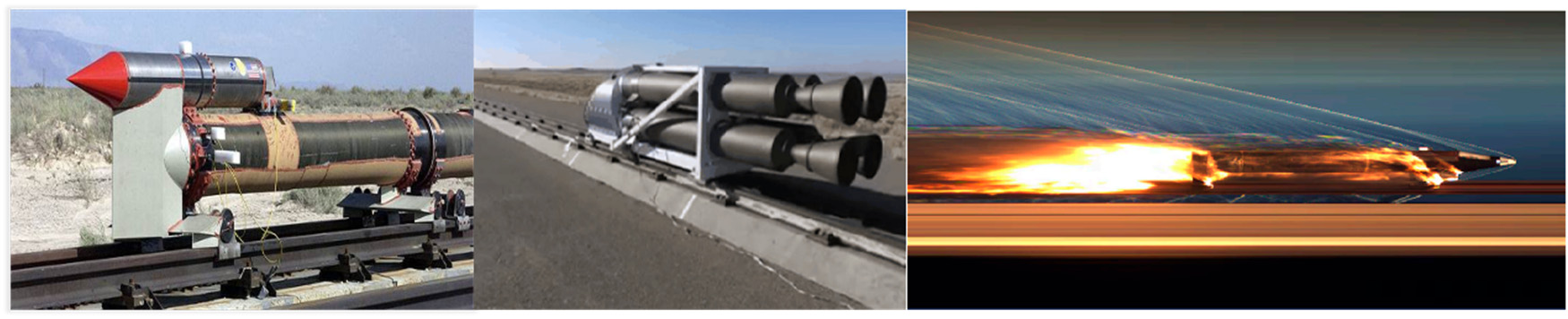
In the context of modern warfare, many new theories, materials, and technologies are widely applied to various weapon systems. Terrestrial ultra-high-speed setups like high-velocity rocket skids and ultra-fast railways have emerged as research frontiers [1]. As a ground simulation testing approach, the rocket sled test utilizes a dedicated rocket sled as its carrier and a specialized rocket engine as its power provider. It propels the rocket sled to high-speed sliding along the ground’s high-precision track to obtain experimental test data [2,3,4,5]. Figure 1 illustrates the test equipment associated with the rocket sled.
Since the late 20th century [6], rocket sled technology has played a significant role in the development and progress of various fields such as aerospace, conventional weapons and equipment, ships, civilian high-tech products and aerodynamics [7,8,9,10,11], mainly to solve a series of technical problems brought about by high speed, high acceleration and high deceleration [12,13].
The United States was the first country to start rocket sled experiments [14], and its Holloman high-speed test track (HH-STT) is currently the longest rocket sled test system in the world, comprising a cumulative length of 15.546 km [15]. In 2003, the test speed at Holloman Air Force Base achieved a velocity of 8.4 M [15], and currently, the United States is developing an advanced rocket sled test system that can simulate high-speed propulsion flights, reaching a maximum test speed of 12 M [16].
Research on rocket sled experiments in China began relatively late, with research on rocket sled sliders dating back to 1992, as Yang Xingbang [12] pointed out in his study, the importance of material selection for rocket sled sliders. At the same time, Wang Yun [17] indicated in his research that the slider and the track, as important components of the rocket sled system, addressing the issue of slider wear, is the future direction of rocket sleds. In 1993, China successfully constructed the country’s first and Asia’s only dynamic test track for high accuracy rocket sleds in Xiangyang, Hubei [18]; its maximum speed is 2.8 M [19,20]. Subsequently, a 9 km slide rail was constructed in Inner Mongolia by China, capable of reaching speeds of up to 4 M. China made another breakthrough in rocket sled system research in 2022, successfully achieving a double-track recoverable rocket sled test with a maximum speed of nearly 2.3 M [21].
Currently, China’s rocket sled test speeds fall within the low-speed to low Mach number range, and breaking this speed bottleneck is urgent. As a critical component of the rocket sled system, the slider is instrumental in bearing loads, offering support, and ensuring precise guidance of the sled’s movement [22]. It is an important hub connecting the rocket sled and the track, and it directly determines the safe and stable operation of the entire system [23]. Consequently, in high-velocity, heavy-load scenarios, the issue of friction and wear characteristics of the slider material is particularly crucial.
30CrMnSiNi2A steel, as an aviation structural material with excellent comprehensive performance, has good plasticity, toughness, strength, and wear resistance [24,25]. Due to these properties, 30CrMnSiNi2A steel is widely used in manufacturing high-performance components such as rocket sled sliders [26,27]. In studies on the performance of 30CrMnSiNi2A steel rocket sled sliders, Xia Hongli [28] et al. simulated and verified the hypersonic rocket sled slicing effect based on real data from in-orbit rocket sled experiments. Yan Huadong et al. [29] studied the mechanical behavior of 30CrMnSiNi2A steel under extreme conditions and established a Johnson–Cook constitutive model including strain rate and temperature effect. These studies serve as a crucial theoretical foundation and experimental cornerstone for the exploration of engineering applications of 30CrMnSiNi2A steel under hypersonic conditions.
It is particularly worth noting that under extreme conditions of elevated velocity and heavy-duty loading, the friction process at the rocket sled slide–rail interface presents complex dynamic characteristics involving the coupling of multiple wear mechanisms [30,31,32].
However, existing research predominantly focuses on low-speed wear or isolated high-speed phenomena, leaving a significant gap in the systematic investigation of wear behavior across the entire velocity spectrum from subsonic to hypersonic (up to 4 M), particularly regarding the dynamic evolution of wear mechanisms and their sensitivity to stress. A comprehensive understanding of the load–velocity coupling mechanisms in this process holds substantial theoretical and engineering value. To address this, the present study focuses on sliders made of 30CrMnSiNi2A steel and guide rails made of U71Mn steel, establishing a contact pair finite element model using ANSYS Workbench 19.0. Departing from traditional cumulative wear analyses, this research innovatively employs spatiotemporal evolution analysis to systematically reveal non-uniform wear mechanisms across multi-scale operating conditions, quantitatively elucidates the interactive effects of load and velocity on wear rate and frictional stress, and identifies the critical velocity threshold as a key phenomenon.
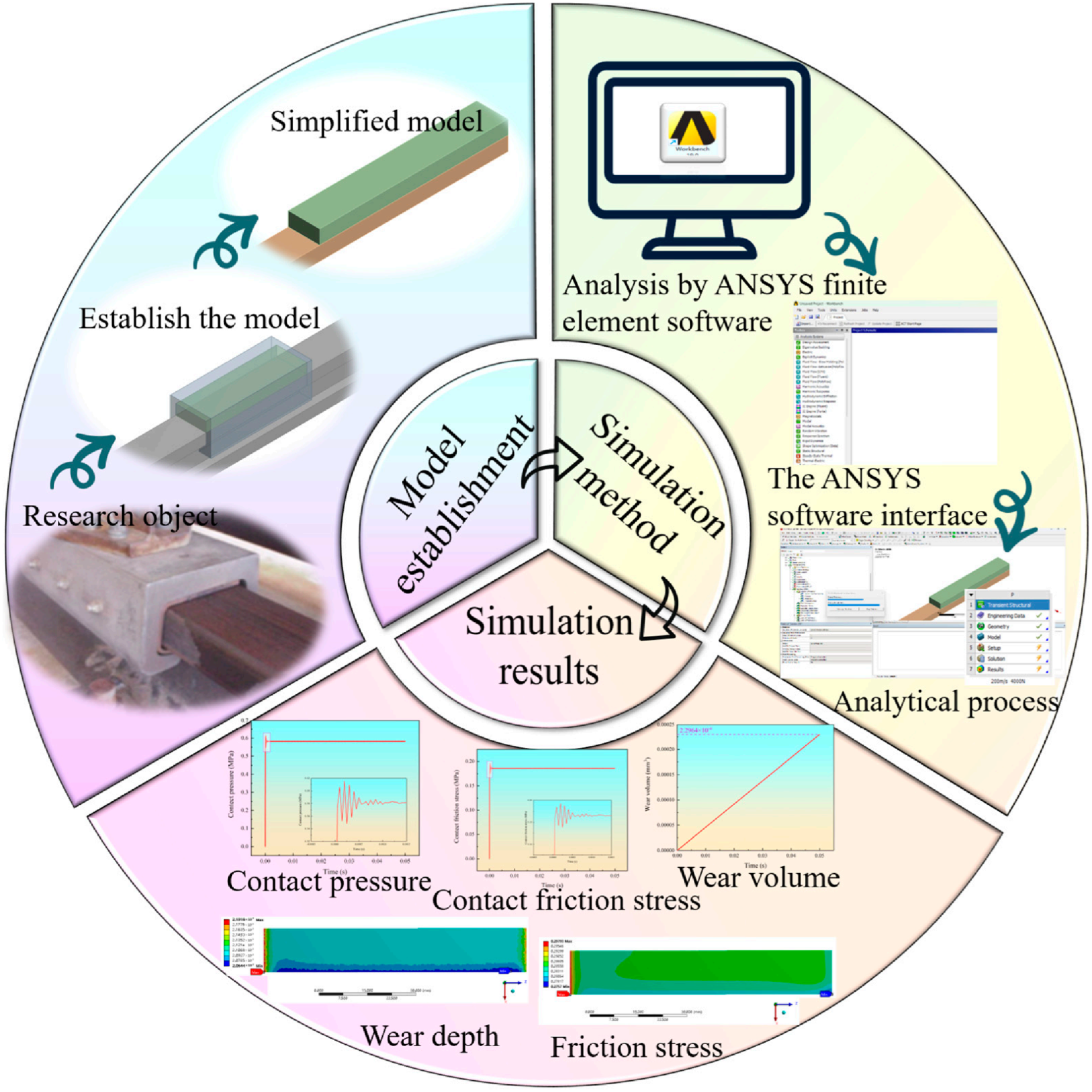
The experimentally validated finite element model developed in this study can be further advanced as a predictive tool for evaluating the performance of novel slider materials and optimized geometric designs under extreme conditions, thereby significantly reducing reliance on costly and time-consuming full-scale rail tests [33]. Furthermore, the wear patterns and quantitative relationships between operational parameters and wear rate uncovered in this research can directly inform maintenance planning, component replacement protocols, and service life prediction models for existing systems. Additionally, the fundamental insights into velocity-dependent frictional behavior and wear mechanism transitions offer theoretical references and design implications for other high-speed, heavy-load tribological applications, including hyperloop systems, electromagnetic rail launchers, and high-speed railway sliding contacts. It is noted that while 30CrMnSiNi2A requires protection for long-term service, the present analysis focuses exclusively on its short-duration, extreme-condition tribological performance where mechanical and thermal wear mechanisms dominate [34]. The analysis process is presented in Figure 2.
The key novelties of this work include: (1) identification of a critical velocity threshold beyond which frictional stress becomes load-dominated; (2) spatial migration of maximum wear depth from trailing to front-central region at ≥4 M; (3) integration of a dimensionless acceleration factor for efficient long-duration wear simulation.

2. Computational Theory and a Simulation Model

2.1. Archard Wear Model

In 1953, British scientist J.F. Archard proposed a model for calculating adhesive wear [35,36,37]. After years of development and refinement, this model has been shown applicable to various basic wear forms such as abrasive wear, fatigue wear, and corrosion wear [38,39,40]. Results of using the model have shown good accuracy in most engineering applications [41,42]. Especially in high-speed, heavy-load scenarios, the Archard wear model can basically describe the wear behavior characteristics of the rocket sled’s slider-rail system. The model is described as follows [42]:
V S = k F N H
where V denotes wear volume, S is sliding distance, FN stands for the normal load, H represents the hardness of the softer contacting material, and k denotes the coefficient of wear.
When on an infinitesimal contact area dA, the depth of wear can be expressed as dh after the time increment dt, where dV = dA·dh. Equation (1) can also be changed to:
d h · d A d s = k d F N H
Dividing both sides by dA yields Equation (3):
d h d s = k d P H
In the process of simulation calculation, to precisely simulate the dynamic changes in the wear process, the entire simulation process can be represented by multiple sub-processes, among which the wear depth of one sub-step (i) can be expressed as:
hi = hi−1 + kpivΔti
At substep i, the cumulative depth of wear can be solved by the calculus method, expressed by Equation (5):
h i   =   h i 1   +   k 0 i p i v t i d t

2.2. Wear Coefficient k and Experimental Material Parameters

The formula for calculating the wear coefficient k in Equation (6) is as follows:
k = ( Δ m / p ) d S F N
In the formula: ∆m represents mass loss due to wear, ρ denotes the density of the disk sample, ds is the distance of slip, and FN is the applied contact force.
To determine the coefficient of wear k, in this study, the HT-1000 High-Temperature Ball-on-Disk Tribometer (manufactured by Lanzhou Zhongke Kaihua Technology Development Co., Ltd., Lanzhou, China) was employed for relevant tests. The ball-on-disk test was conducted under a single set of mild conditions to determine a baseline wear coefficient k for the Archard model. The experimental parameters were configured as follows: load = 10 N, rotational speed = 200 r/min, wear time = 30 min, and friction radius = 3 mm. In the experiment, for the upper specimens, Si3N4 ceramic balls were opted for, and 30CrMnSiNi2A steel discs as the lower specimens. Triplicate repetitions were performed for each group of experiments to secure the reliability of the results. The use of a Si3N4 ceramic ball minimizes adhesive material transfer, providing a stable wear coefficient for simulation input. While this may differ from absolute steel-on-steel wear rates, the relative trends and spatial wear patterns from the simulation remain valid for parametric analysis. The subsequent finite element simulation is employed to investigate the influence of extreme speed and load variations on wear behavior, which cannot be directly replicated on standard laboratory equipment.
The mass of the specimens before and after testing was measured using an AUW120D electronic balance (Shimadzu Corporation, Kyoto, Japan), with each specimen measured three times to obtain an average value. The results are presented in Table 1. The wear coefficient k reported is the mean of three replicates, with a relative standard deviation of 9.90%, indicating acceptable experimental repeatability. The material composition of the slider and rail is shown in Table 2 [43,44].
By measuring the wear weight loss of 30CrMnSiNi2A steel, the wear coefficient of 30CrMnSiNi2A steel was calculated according to Equation (6) to be 1.0576 × 10⁻⁶, which is within the general range of 1 × 10⁻⁵ to 1 × 10⁻⁷ [45], indicating that the results of the experiment are reasonable and reliable.
The key performance parameters of the slider and rail are provided in Table 3. Among them, the hardness of 30CrMnSiNi2A steel was measured using an HV-100A Vickers microhardness tester (Laizhou Huayin Test Instrument Co., Ltd., Laizhou, China), while the remaining parameters were obtained from the literature [43,46,47].

2.3. Establishment of the Finite Element Model

In finite element analysis, geometric modeling is a fundamental step in numerical simulation. In this study, based on the ANSYS Workbench 19.0 (Ansys, Inc., Canonsburg, PA, USA) platform, a dry friction sliding model of rocket sled sliders and rails was established using the Design Modeler module.
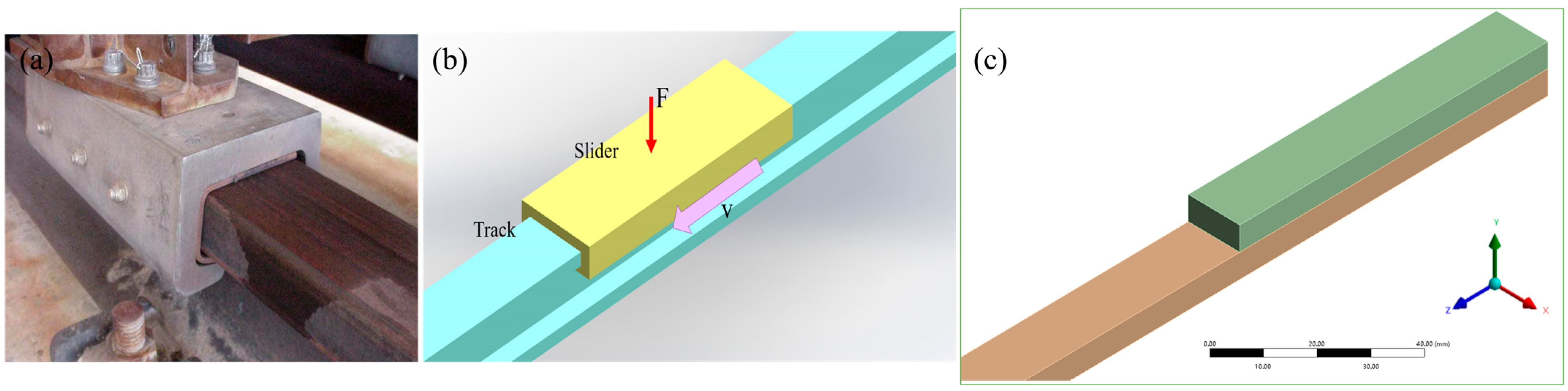
In the process of building the model, considering the working conditions where the simulation speed is lower than 1500 m/s, referring to the study by Rodolfo G et al. [48], the structures on both sides of the rocket sled were simplified when building the model. Meanwhile, the experiments showed that the friction and wear of the sliders were mainly concentrated within a range of 6 mm from the contact surface [49]. To ensure that the simplified model conforms to reality while reducing the computational load of the simulation, the size of the slider was determined through simulation symmetry analysis and proportional reduction of the size. In this model, the assumption of applying a concentrated force on the slider is adopted. This simplification is reasonable and effective: on one hand, the key mechanical states at the interface primarily depend on the properties of the contact pair itself and are insensitive to the load distribution on the back of the slider; on the other hand, this assumption significantly improves computational efficiency. Upon sliding at a velocity of 34.56 m/s for 0.05 s, calculations were used to determine the dimensional parameters of the sliding rail. Table 4 provides the size parameters for both the slider and the track. Figure 3 shows the simplified modeling flow of rocket sled slides in our study.

2.4. Constraint Settings

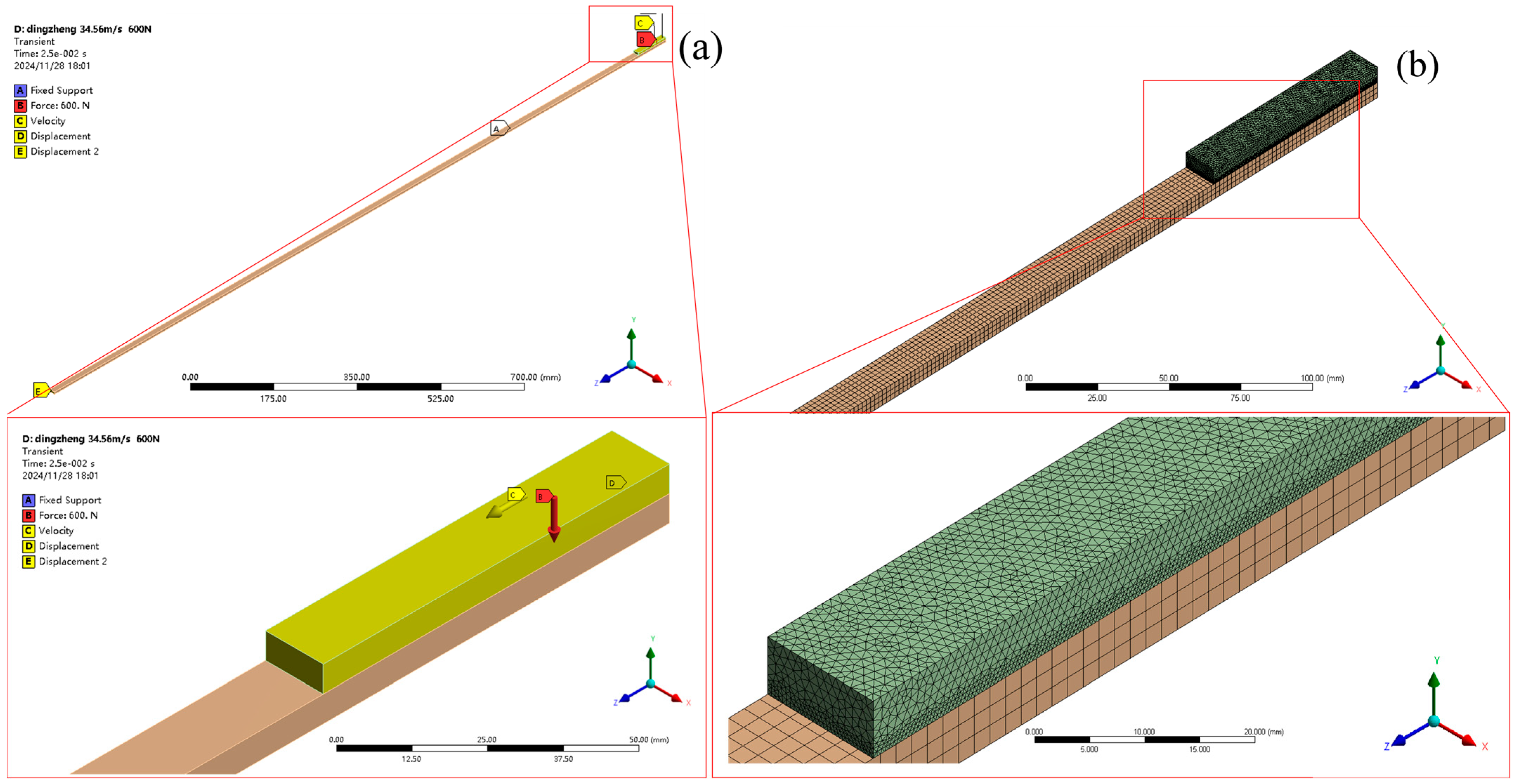
To establish an effective numerical simulation model, the following boundary conditions and constraint settings were imposed on the 3D geometric simplification model in this study (Figure 4a):
(1)
Motion parameter Settings: sliding speed = 34.56 m/s, load = 600 N, sliding time = 0.05 s.
(2)
Slide rail constraint conditions: The bottom is completely fixed, simulating the stable state of the slide rail in actual experiments; constrain the degrees of freedom at both ends to prevent the slide rail from moving during the friction process.
(3)
Slide rail motion constraints: Retain only translational degrees of freedom along the direction of the slide rail
(4)
Contact parameter setting: At 34.56 m/s and 600 N, the coefficient of friction measures 0.32 [43].

2.5. Mesh Division and Mesh Independence Verification

After completing the geometric modeling, an important preprocessing step in finite element analysis is the meshing. In this study, the meshing work of the system was carried out using the Mesh module of ANSYS Workbench. Based on the mesh sensitivity analysis, the following meshing schemes were finally determined:
(1)
Basic mesh setup: Slider element size: 1 mm; Slide rail unit size: 3 mm.
For the contact definition between the slider and the rail, a surface-to-surface contact formulation with an Augmented Lagrangian algorithm was used. The solver automatically manages the definition of unique contact normals at shared nodes through an internal averaging scheme, and contact conditions are enforced at Gauss points on the element faces to ensure accuracy.
(2)
Contact area mesh treatment: Apply local mesh densification technology to the slider-slide rail contact surface, so as to refine the mesh size in this area. Taking the conditions of a velocity of 34.56 m/s, a load of 600 N, and a sliding duration of 0.05 s as a case study, the grid division results can be seen in Figure 4b.
(3)
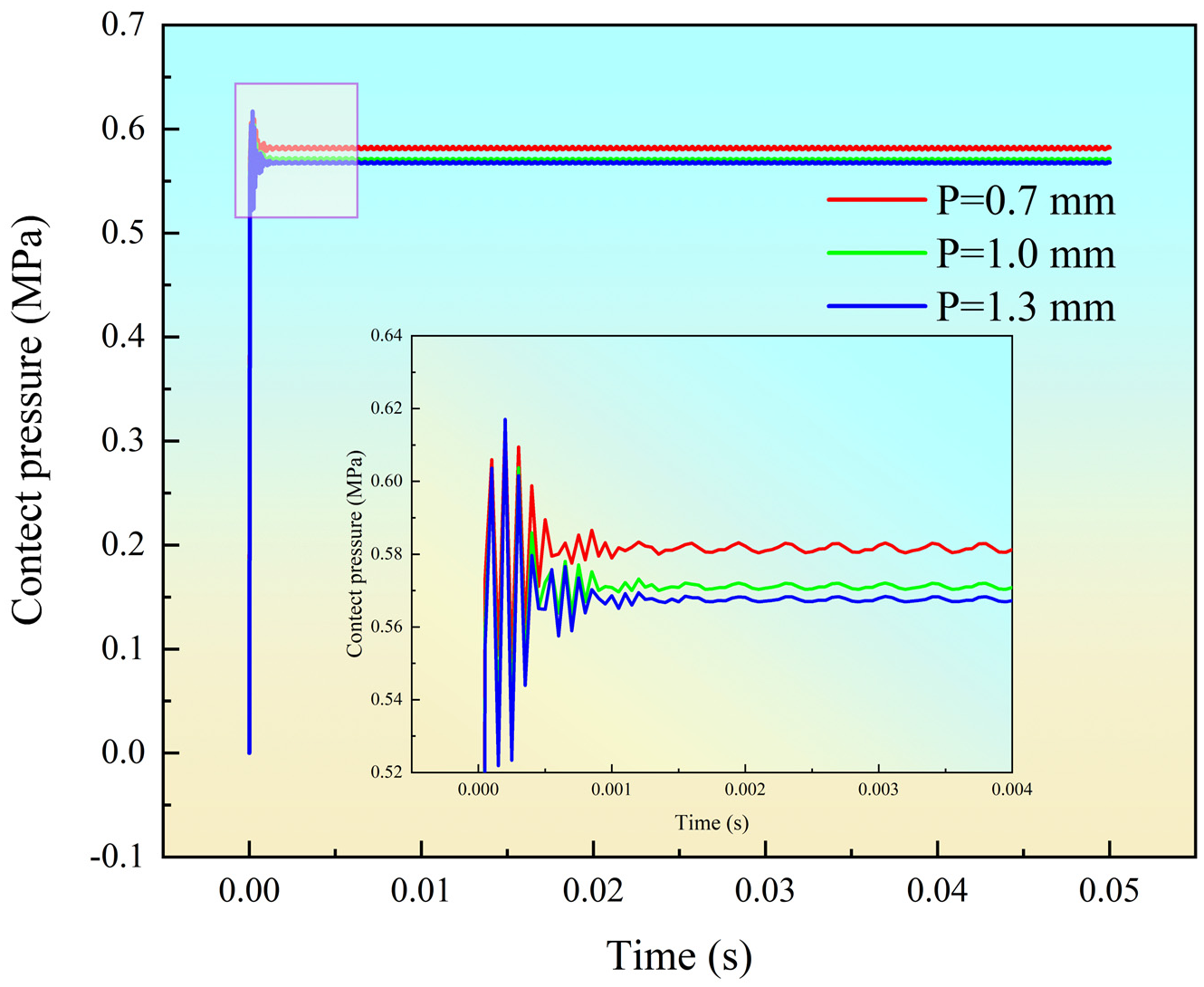
Validation of grid independence: By comparing and analyzing the simulation results of wear volume (Table 5) and contact pressure (Figure 5) under different grid sizes (0.7 mm and 1.3 mm), it reflects that the grid division has no decisive effect on the wear of the slider, and confirms that the selected 1 mm size has sufficient calculation accuracy.
(4)
Adaptive mesh update: Set the wear depth threshold to 20% of the surface thickness and automatically update the mesh when the threshold is reached, balancing calculation accuracy and efficiency by adjusting the mesh structure.

3. Analysis of Simulation Results

Speed and load are two important influencing factors in the tribological performance study of rocket sled slider-rail systems. Understanding the impacts of velocity and load on the tribological performance of rocket sleds is of importance. This study, by referring to the literature [43,46], is conducted with simulation experiments based on the following speeds and loads:
(1)
Applied loads include 150 N, 300 N, 450 N, and 600 N, with sliding speeds of 34.56 m/s, 69.12 m/s, and 101 m/s, respectively;
(2)
For a load of 600 N, the sliding speeds used are 200 m/s, 340 m/s, and 480 m/s;
(3)
For a load of 4000 N, the sliding speeds used are 200 m/s, 340 m/s, 480 m/s, 2 M, 3 M, and 4 M, respectively.

3.1. Pre Simulation

The experiment set the slider slip velocity at 34.56 m/s, load at 600 N, and slip time at 0.05 s. The contact pressure time relation curve, contact friction stress time relation curve, wear volume time relation curve, and wear volume were obtained from ANSYS Workbench.
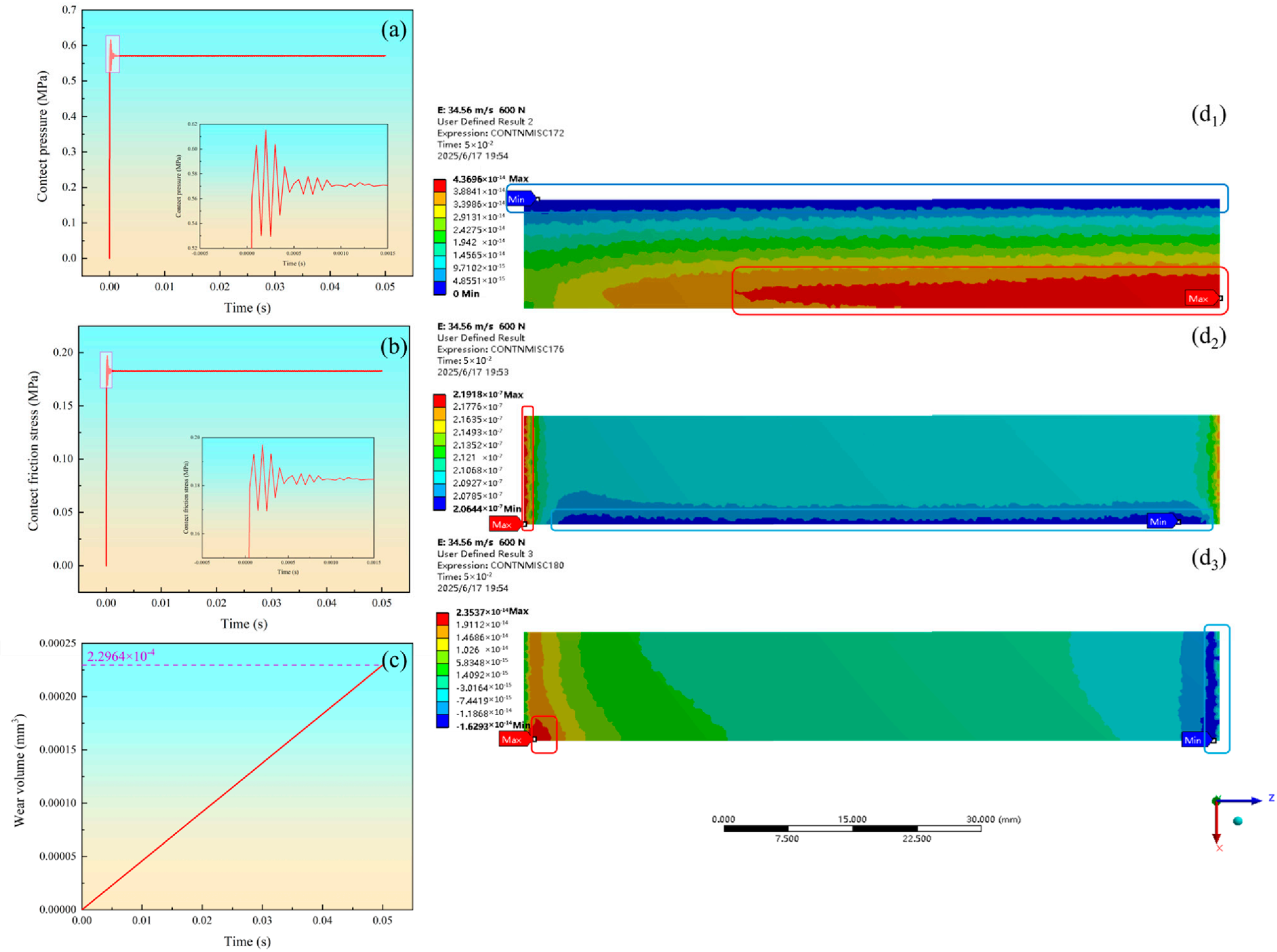
Figure 6 presents the pre-simulation results obtained at 600 N and 34.56 m/s, illustrating the dynamic evolution of contact pressure, frictional stress, wear volume and depth. The contact pressure and frictional stress curves exhibit significant initial fluctuations, reaching peak values of 0.61553 MPa and 0.19697 MPa, respectively, at 0.0002 s (Figure 6a,b). This transient behavior is attributed to the initially small real contact area compared to the nominal one. As the simulation progresses, both parameters stabilize—contact pressure converges to approximately 0.581 MPa and frictional stress to around 0.182 MPa—as the contact area expands and the system reaches a steady state. Correspondingly, the wear volume increases linearly with sliding time (Figure 6c), stabilizing at 2.2964 × 10⁻⁴ mm3 by 0.05 s. The wear rate, herein defined as the volumetric wear rate of the slider ( V · = ΔV/Δt, in mm3/s), is calculated from the slope of the wear volume–time curve obtained from the simulation. The wear rate remains largely consistent throughout the process, decreasing only marginally from 4.5934 × 10⁻³ mm3/s in the initial stage (0~0.001 s) to 4.5928 × 10⁻³ mm3/s during the stable sliding phase (0.001~0.05 s). This negligible reduction of 0.013% indicates that initial contact fluctuations have minimal influence on overall wear behavior.
The spatial distribution of wear depth across the slider surface is further analyzed in Figure 6(d1–d3). Quantitative results reveal that the wear depth along the Y-axis is substantially greater than that along the X- and Z-axes, dominating the overall wear profile. This pronounced anisotropy in wear distribution suggests that the mechanical loading and material response are highly directional under the given sliding conditions. Therefore, based on this finding, subsequent analysis will focus specifically on the evolution of wear depth in the Y-direction.
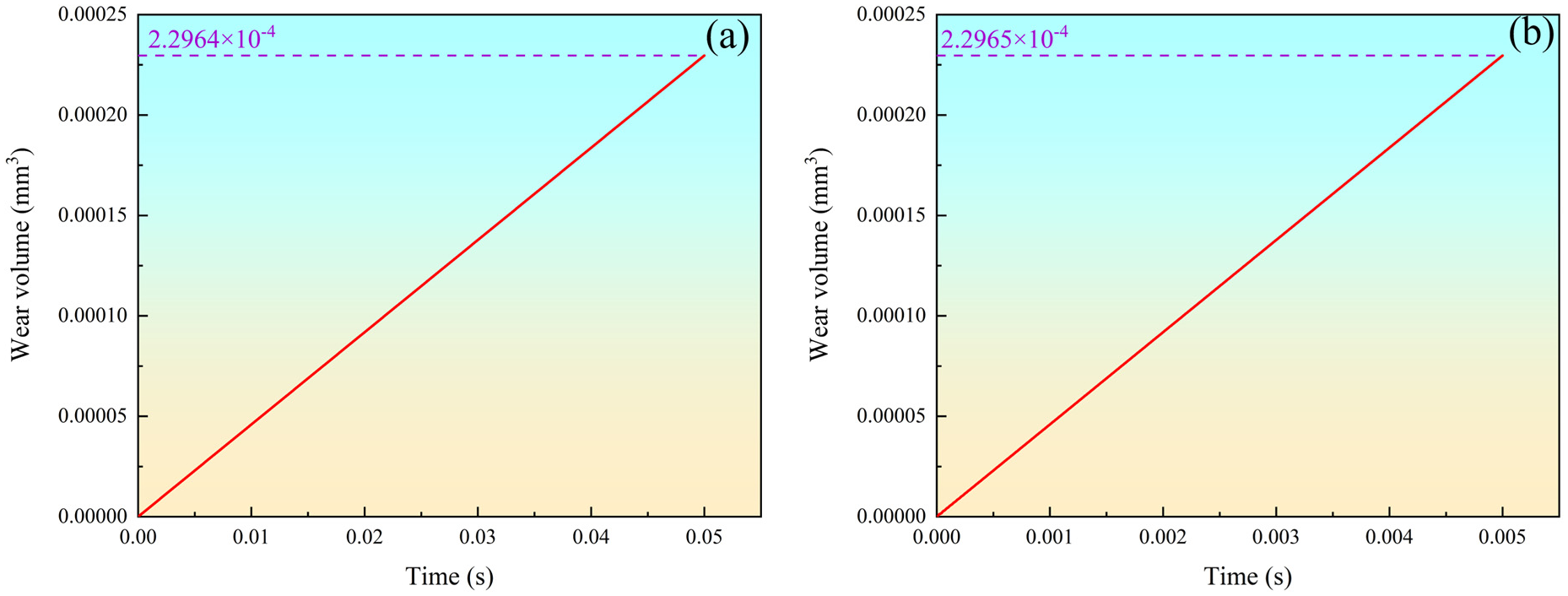
In wear simulation predictions, applying an acceleration factor is a widely used numerical technique intended to shorten computational time without compromising the validity of the outcomes [50]. In this study, the actual total wear duration was T = 0.05 s. By incorporating a dimensionless acceleration factor ξ set to 10, the simulated total wear time was effectively reduced to T/ξ = 0.005 s. The simulation outcomes after implementing this dimensionless acceleration factor are illustrated in Figure 7 and Table 6. The results show that the wear volume deviated by only 0.0044% compared to pre-experiment data, while the simulation time was reduced by 32.83%, and the number of mesh elements decreased by 12.70%. It can be concluded that the introduction of acceleration factor in ANSYS wear simulation can adjust the simulation time reasonably without changing the simulation results and can significantly enhance computational efficiency.
The results of the pre-simulation guided mesh optimization and model correction validate the rationality of model simplification. During the meshing process, the SOLID186 solid element, a higher-order hexahedral element with 20 nodes, was selected. In this model, the contact surface of the slider is a critical area for wear, so the mesh size of the slider is smaller, and the contact surface is refined. Other settings are consistent with the pre-simulation.
In the subsequent simulation experiments, a dimensionless acceleration factor was introduced. The acceleration factor was selected by balancing computational efficiency with simulation stability considerations: For speeds in the range from 34.56 m/s to 101 m/s, the acceleration factor was assigned with a value of 10, and the slider sliding for a period of 0.05 s was simulated with a simulation duration of 0.005 s. After the speed reaches 200 m/s, to further shorten the simulation duration, the acceleration factor is set as 50, and the result of the slider sliding for 0.05 s is simulated with a simulation duration of 0.001 s.

3.2. Wear Volume Analysis

The wear volume is a key parameter for analyzing the tribological behavior of sliders, and its evolution directly reflects the material loss characteristics of the slider under dry friction conditions [51]. This study established the relationship between velocity, load, and wear rate by quantitatively analyzing the variation of wear volume with working condition parameters, providing a scientific basis for evaluating the tribological performance of 30CrMnSiNi2A steel sliders.
Based on the ANSYS Workbench platform, the time-varying curve of wear volume and the cloud map of the slider’s wear depth distribution were obtained using the user-defined results module. The results are described as follows:
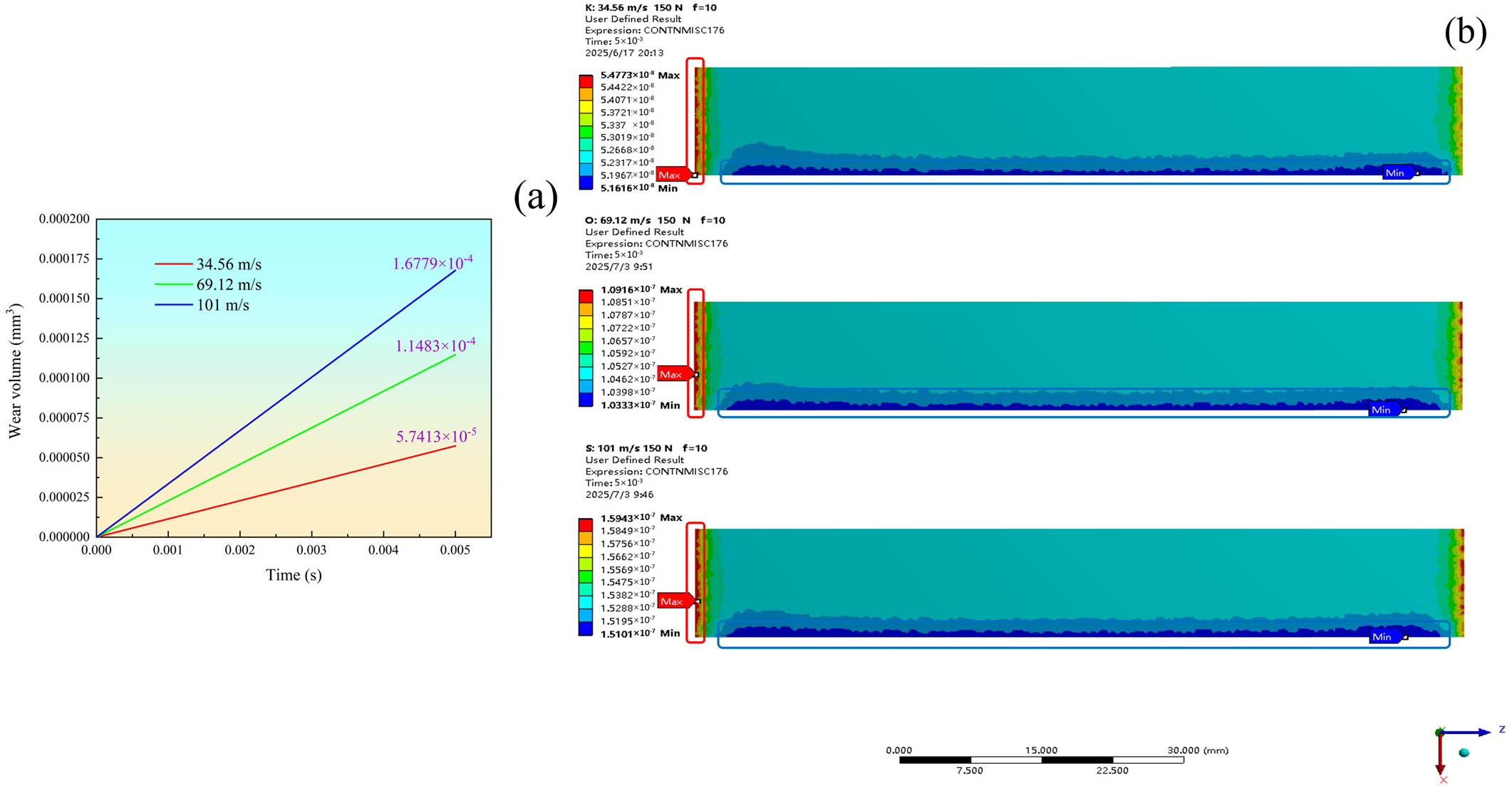
Figure 8 presents the simulation results of wear behavior under three distinct sliding speeds while maintaining a constant load of 150 N. The findings indicate that wear severity escalates with increasing speed under identical loading conditions. As depicted in the wear volume versus time curves, the wear volume exhibits a near-linear growth over time across all tested speeds. Specifically, after sliding for 0.005 s at 34.56 m/s, the wear volume of the slider reaches 5.7413 × 10⁻⁵ mm3, corresponding to a volumetric wear rate of 1.14826 × 10⁻³ mm3/s. At 69.12 m/s under the same duration, these values increase to 1.1483 × 10⁻⁴ mm3 and 2.2966 × 10⁻³ mm3/s, respectively. Further elevation of the speed to 101 m/s results in a wear volume of 1.6779 × 10⁻⁴ mm3 and a wear rate of 3.3558 × 10⁻³ mm3/s. Notably, the volumetric wear rate rises by approximately 50% as the speed increases from 34.56 m/s to 69.12 m/s, and by an additional 31.56% from 69.12 m/s to 101 m/s. Analysis of the wear depth distribution nephogram reveals that severe wear regions (highlighted in red) are predominantly localized at the slider’s trailing edge, whereas minimal wear areas (dark blue) occur along both side edges. The central region demonstrates relatively uniform, shallow wear characteristics. Moreover, with increasing sliding speed, the depth of wear marks progressively intensifies, particularly under high-speed conditions where the overall wear depth becomes more pronounced, following an essentially linear trend.
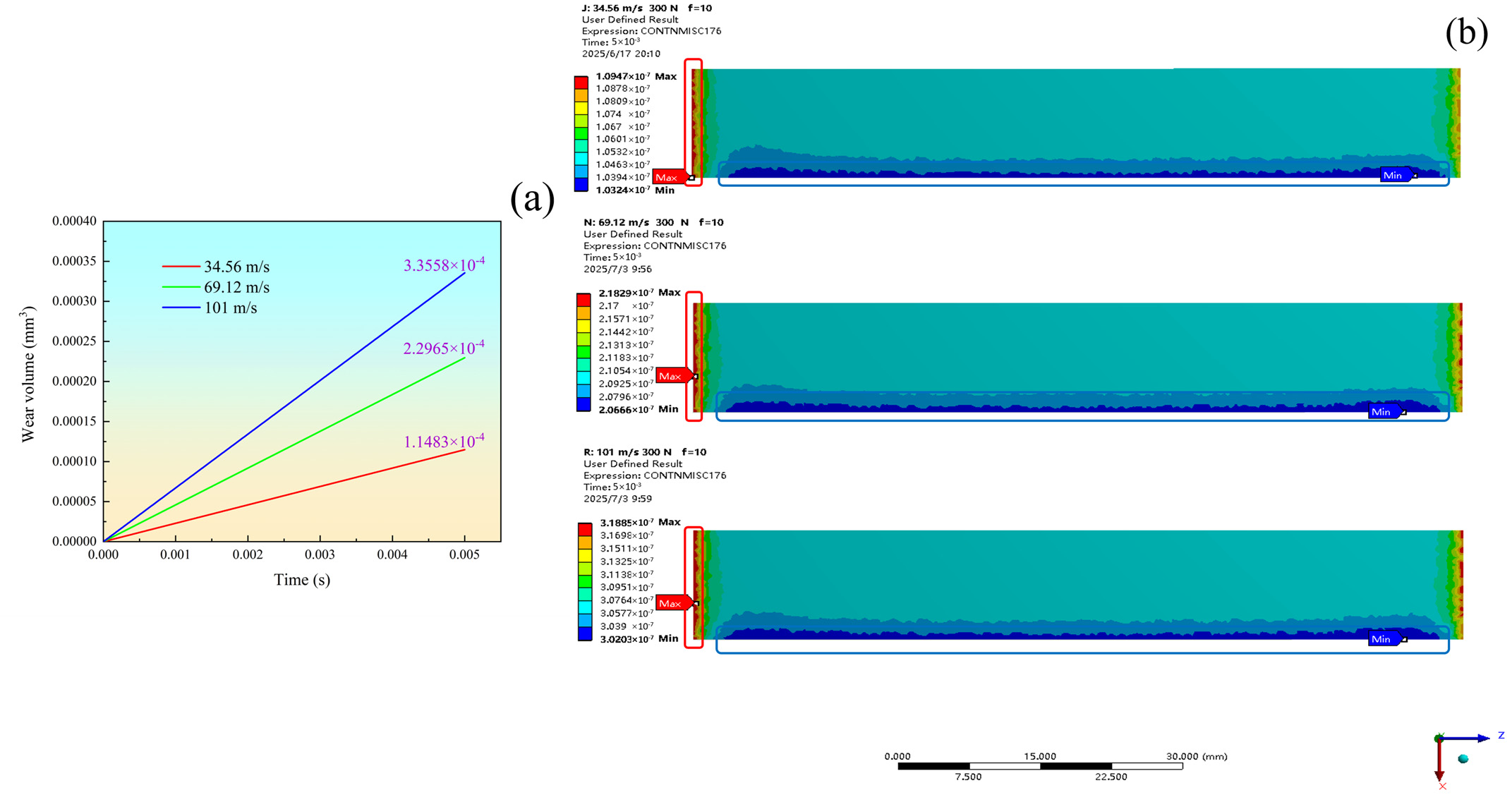
Figure 9 depicts the wear evolution under a 300 N load across various sliding speeds, revealing trends consistent with the 150 N condition. Simulation results after a 0.005 s sliding duration show that the wear volumes at 34.56, 69.12, and 101 m/s are 1.1483 × 10⁻⁴, 2.2965 × 10⁻⁴, and 3.3558 × 10⁻⁴ mm3, corresponding to volumetric wear rates of 2.2966 × 10⁻³, 4.5930 × 10⁻³, and 6.7116 × 10⁻³ mm3/s, respectively. The wear depth analysis further reveals a distinct spatial distribution: severe wear (red) is localized at the slider’s trailing edge, transitioning to uniform, mild wear in the central region, with minimal wear (dark blue) along both side edges. As the sliding speed increases, the wear depth increases uniformly across all regions, a progression that aligns with the wear volume trends and unequivocally confirms the pronounced influence of sliding speed on wear behavior under constant load.
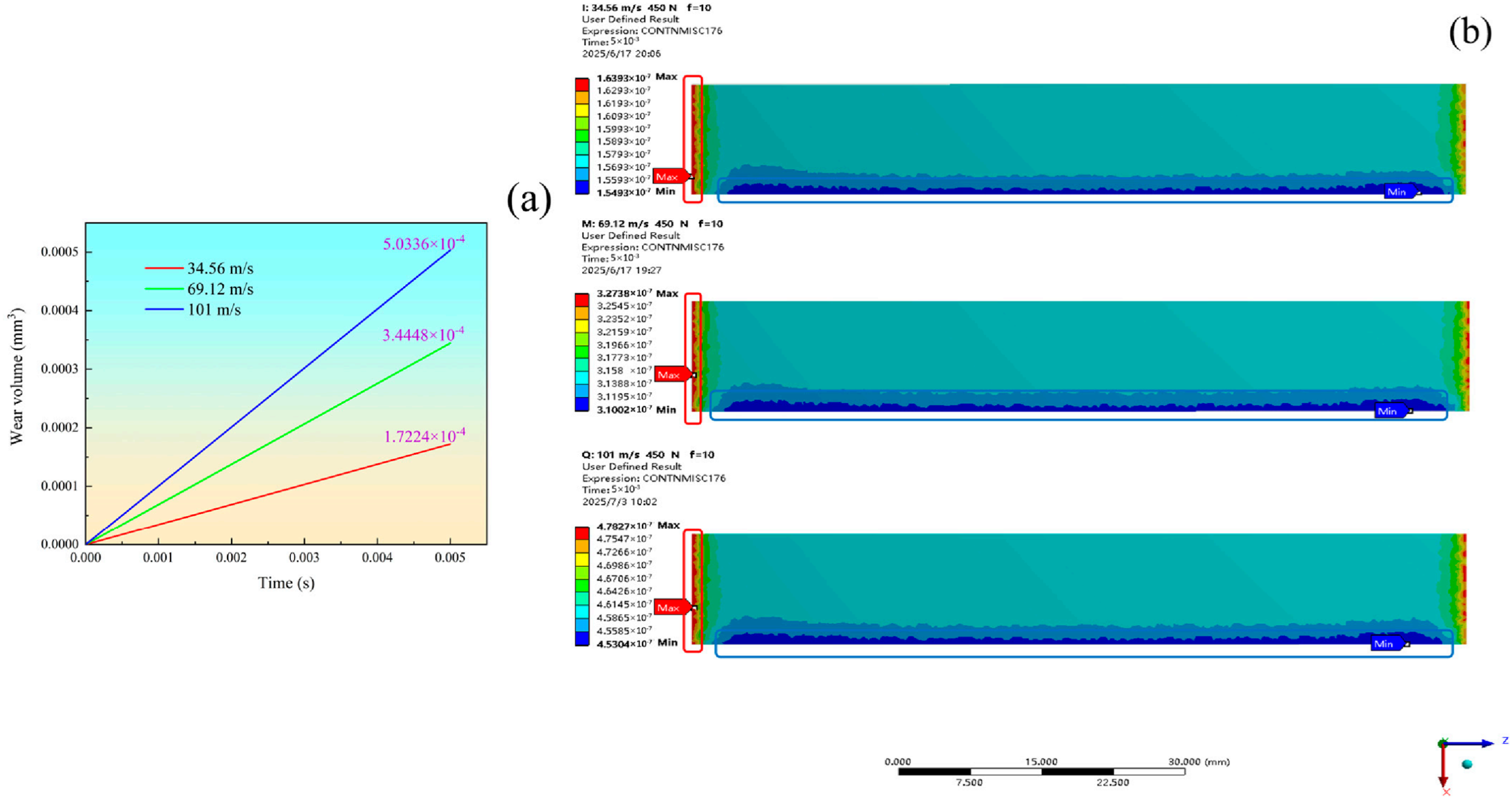
The wear behavior of the slider under a 450 N load was further investigated across a range of sliding speeds (Figure 10). Consistent with observations at lower loads, the wear volume increases linearly with time under all speed conditions. After a sliding duration of 0.005 s, the wear volume reaches 1.7224 × 10⁻⁴ mm3 at 34.56 m/s, corresponding to a volumetric wear rate of 3.4448 × 10⁻³ mm3/s. These values increase to 3.4448 × 10⁻⁴ mm3 and 6.8896 × 10⁻³ mm3/s at 69.12 m/s, and further to 5.0336 × 10⁻⁴ mm3 and 1.0067 × 10⁻² mm3/s at 101 m/s. Spatial analysis of wear depth reveals a consistent distribution pattern across all tested conditions: the most severe wear (shown in red) is consistently localized at the slider’s trailing edge, while the minimal wear regions (dark blue) remain confined to both side edges. A substantial increase in wear depth is observed as the sliding speed escalates from 34.56 m/s to 101 m/s under this constant 450 N load. This coordinated enhancement in both wear depth and volume provides definitive evidence that sliding speed serves as a predominant factor influencing wear severity, demonstrating a strong positive correlation between speed elevation and material loss.
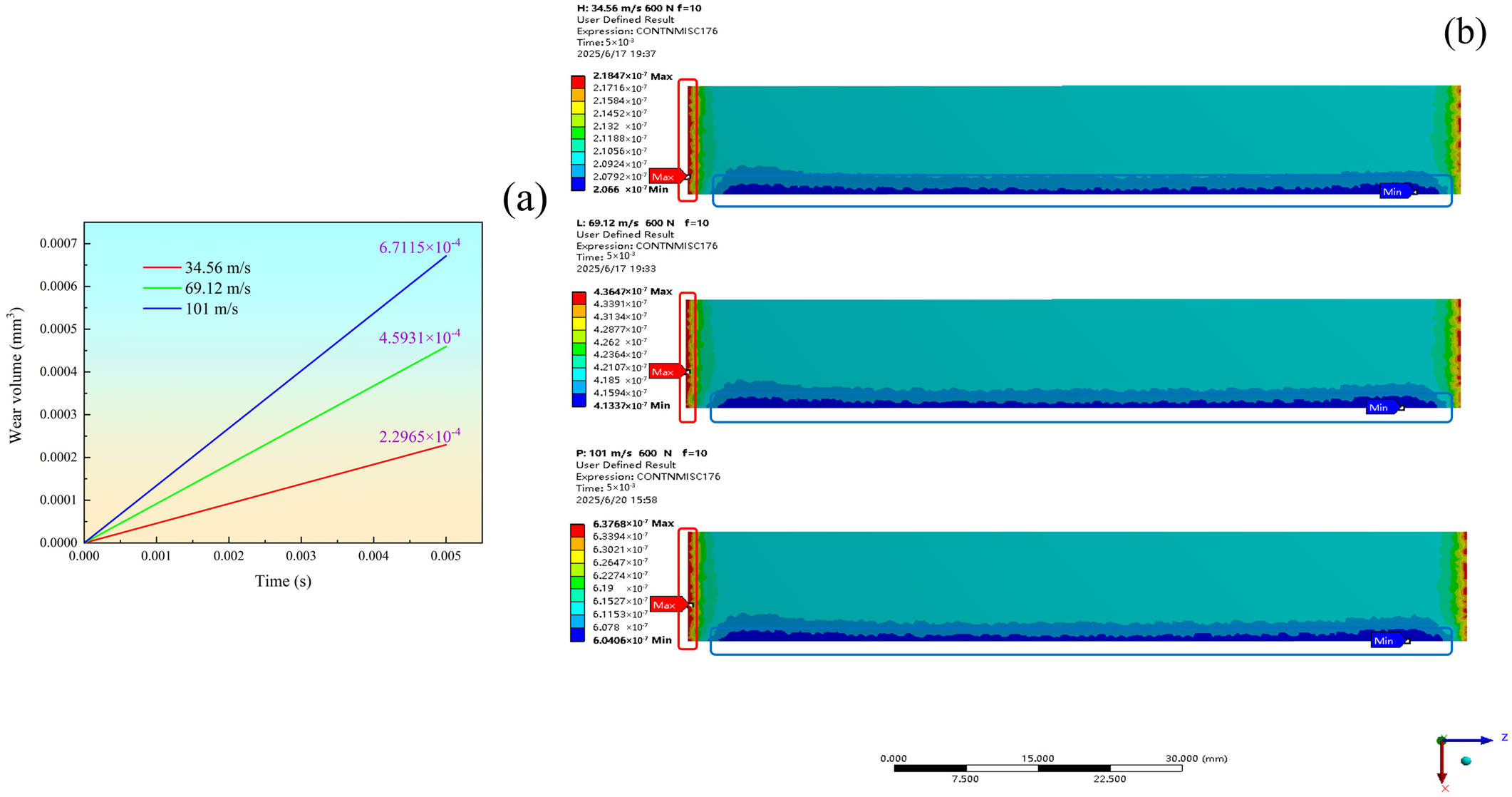
Figure 11 illustrates the wear behavior of the slider subjected to a 600 N load at three different sliding speeds. The wear volume exhibits a strong linear growth relationship with time under all speed conditions, with the growth rate escalating markedly as the speed increases. Quantitative results after a 0.005 s sliding duration show cumulative wear volumes of 2.2965 × 10⁻⁴ mm3, 4.5931 × 10⁻⁴ mm3, and 6.7115 × 10⁻⁴ mm3 at 34.56 m/s, 69.12 m/s, and 101 m/s, respectively. The corresponding volumetric wear rates are calculated as 4.5930 × 10⁻³ mm3/s, 9.1862 × 10⁻³ mm3/s, and 1.3423 × 10⁻² mm3/s. Notably, the wear volume at 101 m/s is approximately three times that measured at 34.56 m/s. The wear depth distribution nephogram reveals characteristically non-uniform wear across the slider surface. Severe wear, indicated by the red zones, is predominantly observed at both ends of the slider, while minimal wear (dark blue areas) is localized along one side. As the sliding speed increases under this constant load condition, not only does the wear depth intensify progressively, but the extent of the severely worn area also expands, collectively indicating a pronounced aggravation of wear with increasing speed.
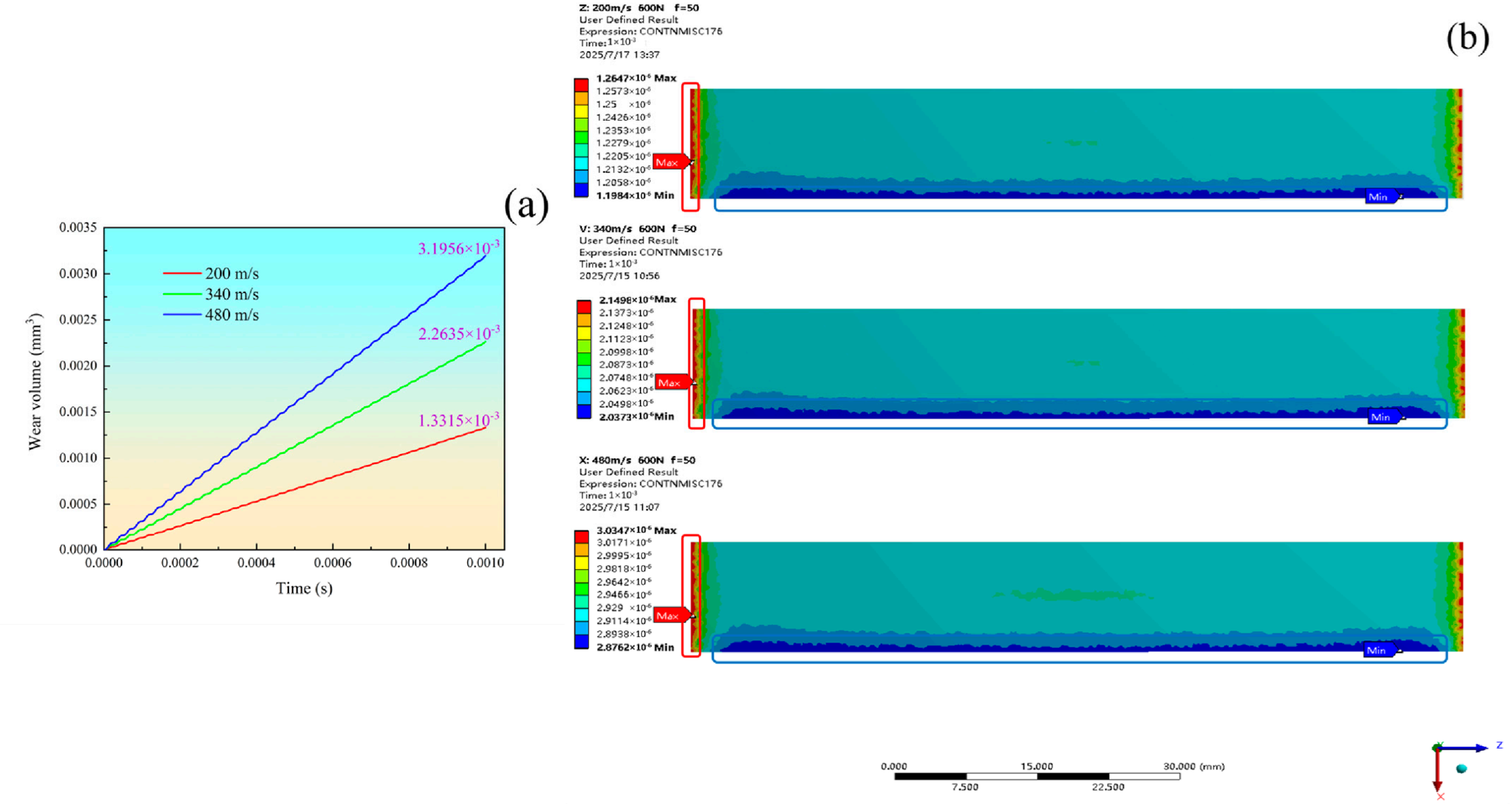
Figure 12 presents the wear behavior of the slider under a 600 N load at ultra-high sliding speeds ranging from 200 m/s to 480 m/s. As the sliding velocity increases within this range, the wear rate exhibits a rapid and nonlinear escalation. After a sliding duration of 0.001 s, the wear volume and corresponding volumetric wear rate are measured as 1.3315 × 10⁻³ mm3 and 2.6630 × 10⁻² mm3/s at 200 m/s, increasing to 2.2635 × 10⁻³ mm3 and 4.5270 × 10⁻² mm3/s at 340 m/s, and further reaching 3.1956 × 10⁻³ mm3 and 6.3912 × 10⁻² mm3/s at 480 m/s. Notably, the growth rate of the volumetric wear rate is nonlinear: a sharp increase of 41.18% occurs as the speed rises from 200 m/s to 340 m/s, followed by a moderated growth of 29.17% when the speed further increases to 480 m/s. The wear depth distribution nephogram reveals that wear depth intensifies with increasing sliding velocity under constant load. A distinctly non-uniform wear pattern is observed: severe wear is concentrated at the slider’s rear end (highlighted in red), while minimal wear occurs along both sides (shown in dark blue). A green-colored area, indicative of moderate and relatively uniform wear, emerges in the central region and expands progressively with increasing speed, though the wear severity in this zone remains lower than that at the rear.
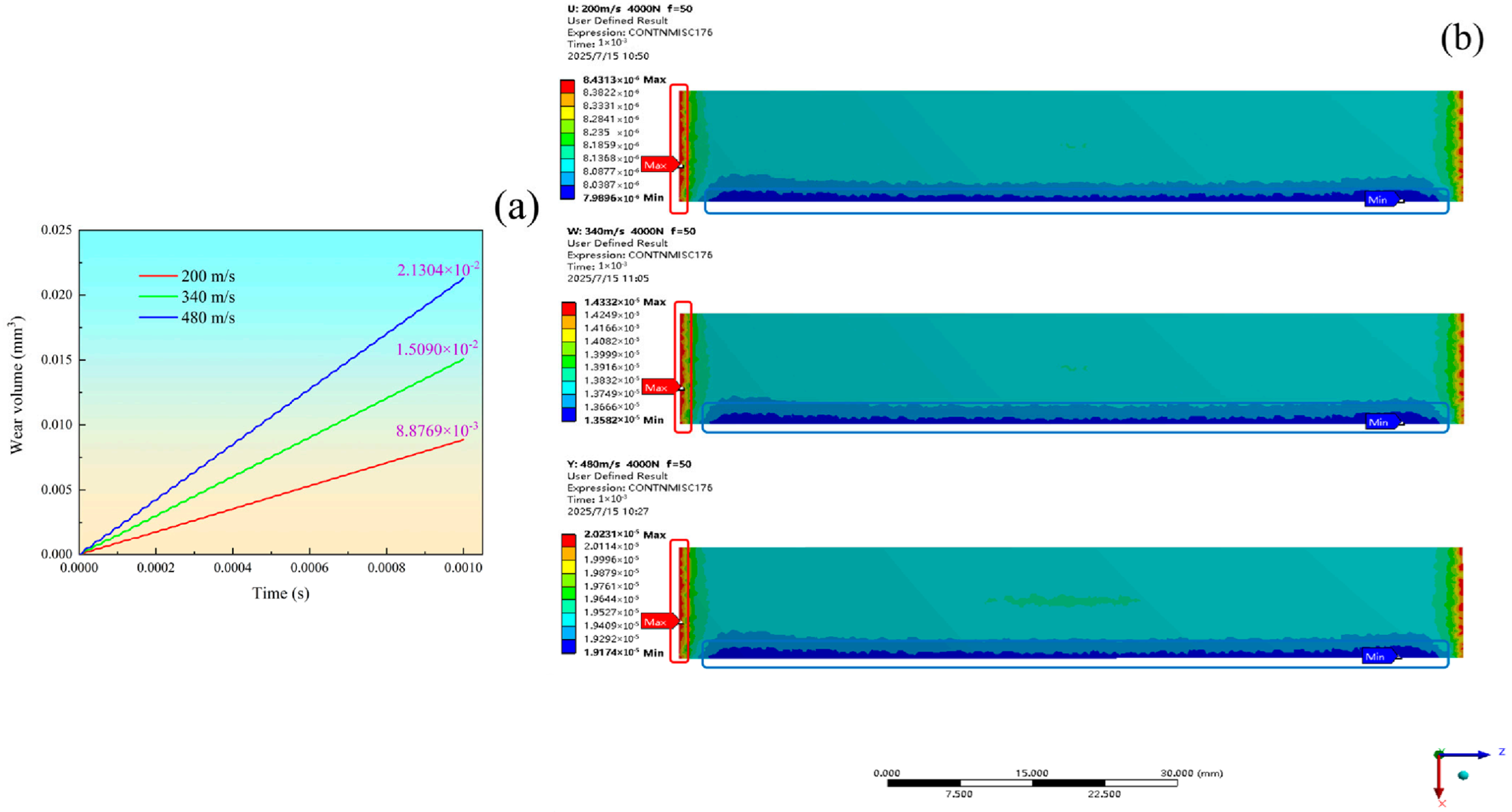
The wear behavior of the slider under a 4000 N load is depicted in Figure 13 across sliding speeds of 200, 340, and 480 m/s. Following a 0.001 s sliding interval, the wear volume reaches 8.8769 × 10⁻³ mm3 at 200 m/s, with a corresponding volumetric wear rate of 1.7754 × 10⁻¹ mm3/s. These values increase to 1.5090 × 10⁻² mm3 and 3.0180 × 10⁻¹ mm3/s at 340 m/s, and further to 2.1304 × 10⁻² mm3 and 4.2608 × 10⁻¹ mm3/s at 480 m/s, demonstrating a significant speed-dependent augmentation. The wear depth distribution mirrors the pattern identified under 600 N load: severe wear (red) concentrates at the rear, whereas minimal wear (dark blue) remains at the edges. As sliding velocity rises, the central green zone expands, and the overall wear depth intensifies uniformly, reinforcing the critical role of sliding speed in governing wear severity under high-load conditions.
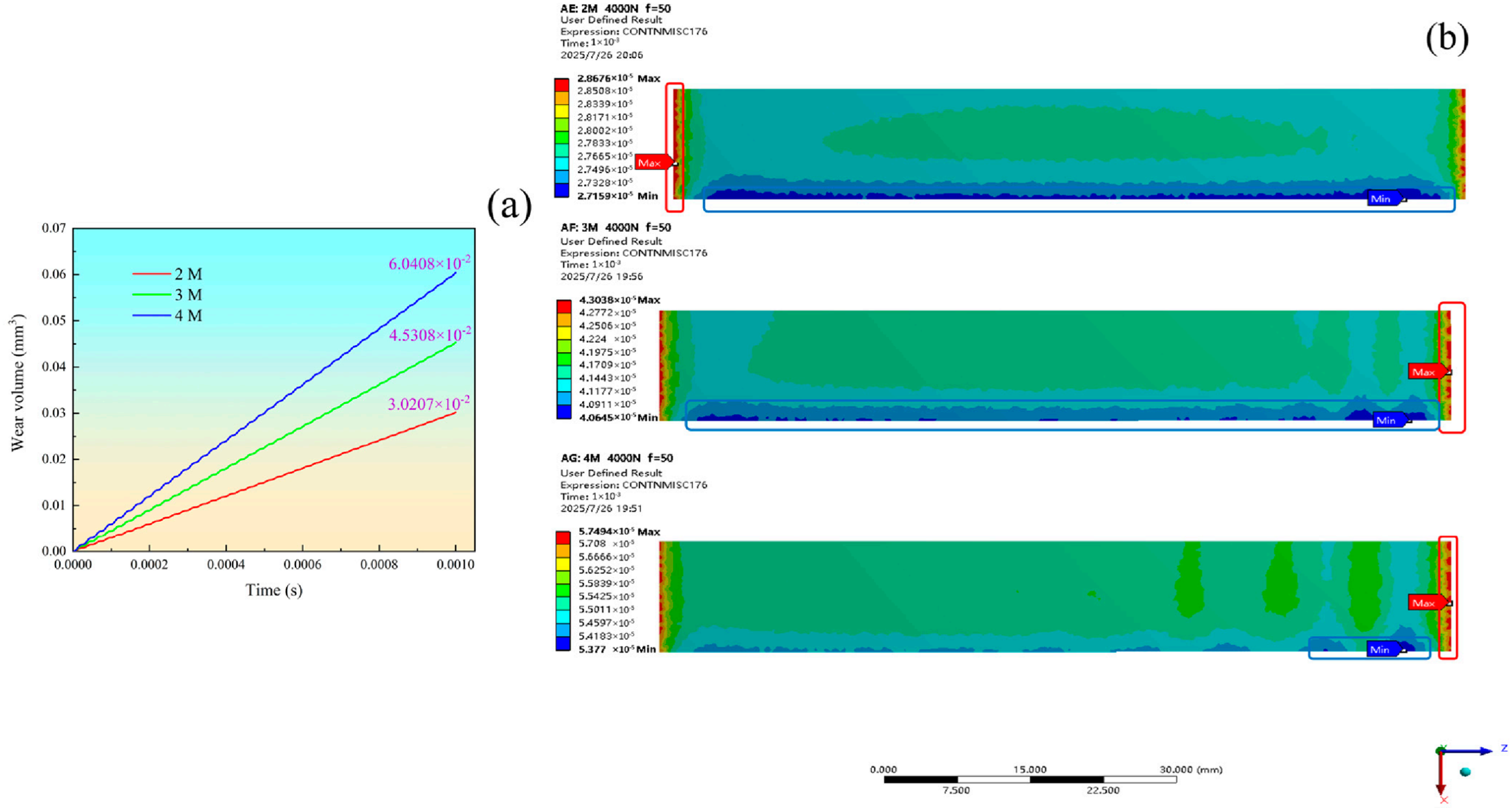
Figure 14 characterizes the supersonic wear performance of the slider under a 4000 N load at speeds of 2 M, 3 M, and 4 M. Quantitative analysis after a 0.001 s sliding interval reveals a wear volume of 3.0207 × 10⁻² mm3 and a corresponding volumetric wear rate of 6.0414 × 10⁻¹ mm3/s at 2 M. These values increase to 4.5308 × 10⁻² mm3 and 9.0616 × 10⁻¹ mm3/s at 3 M, and further rise to 6.0408 × 10⁻² mm3 and 1.2082 mm3/s at 4 M. The volumetric wear rate exhibits a discernible nonlinear growth trend: a sharp increase of 33.33% occurs as the velocity escalates from 2 M to 3 M, followed by a moderated growth of 25.00% from 3 M to 4 M. The corresponding wear depth distributions, presented in Figure 14b, reveal a progressive evolution of the wear pattern with increasing speed. At 2 M, the distribution is qualitatively similar to that under other conditions, with the most severe wear localized at the rear end (red zone), significant wear on both side edges, and minimal wear in dark blue areas. However, a notable expansion of the central green zone is observed, accompanied by a sharp rise in overall wear depth. At 3 M, while severe wear persists at the rear, the zone of maximum wear depth shifts toward the front end. The dark blue areas diminish further, and the green region continues to expand, indicating intensified wear. At the highest speed of 4 M, surface wear becomes even more pronounced, with the most severe wear now dominating the front end. The area of minimal wear is substantially reduced, and the green, moderately worn zone extends toward the front-center region. Collectively, these results demonstrate that increasing the sliding speed under high load significantly aggravates both the magnitude and spatial extent of wear.
In summary, the wear characteristics of the slider under different speed and load conditions show a trend of being more severe at both ends and less severe in the middle. The experimental data clearly show that under constant speed conditions, a rise in load directly results in a higher degree of wear. Similarly, in the case of a fixed load, an increase in sliding speed also increases the wear of the slider. This regularity shows that both the load and the speed are significantly positively correlated with the wear rate.

3.3. Analysis of Contact Friction Stress

Frictional stress is an important factor affecting friction and wear. It is of great significance to analyze the frictional stress when evaluating the tribology properties of sliders. Under ideal conditions, the contact surface is in complete contact and maintains a stable contact state. However, in the actual simulation process, the area would change [52]. Through the analysis of the slider contact friction stress cloud diagram, it is found that the force distribution on the contact surface shows obvious non-uniform characteristics. This local contact stress concentration phenomenon will cause local fatigue and spalling on the material surface, thereby significantly increasing the slider’s wear extent [53].
The experiment defines the contact surface friction stress using the Contact Tool command in ANSYS Workbench, obtaining the contact friction stress nephogram of 3CrMnSiNi2A steel. The simulation results are as follows:
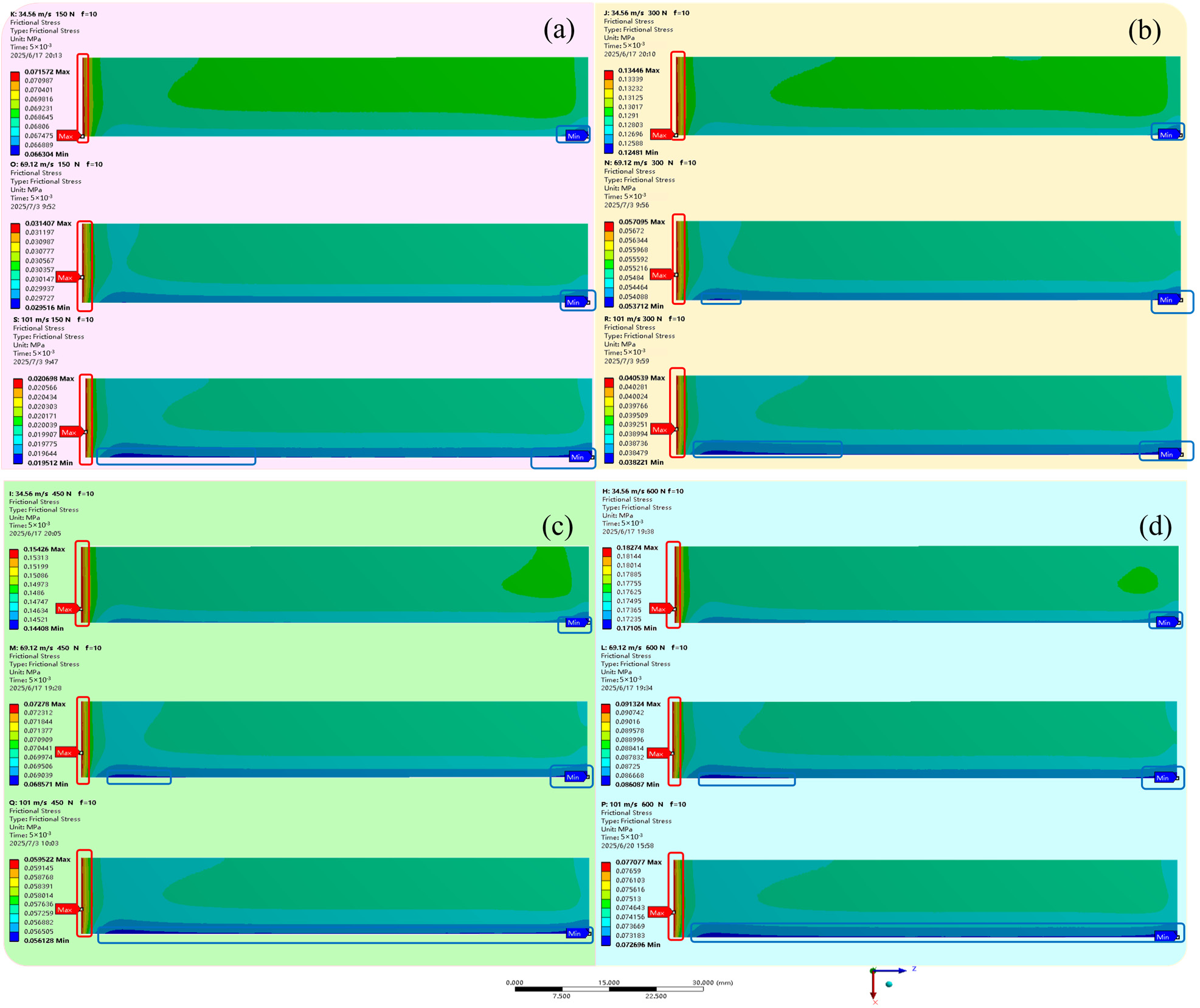
Figure 15 systematically illustrates the surface contact friction stress distribution of the slider under different load levels (150, 300, 450, and 600 N) and sliding speeds (34.56, 69.12, and 101 m/s). A similar stress distribution pattern is observed across all test conditions: the overall stress level is relatively low and uniformly distributed, with highly localized stress concentration primarily at the slider’s trailing edge (red region), while the leading edge (dark blue region) exhibits the lowest stress level. As either the speed or load increases, the intermediate-stress zone (green) gradually contracts, while the medium- to low-stress region (blue-green) expands accordingly.
With increasing sliding speed, the contact friction stress under each load condition decreases significantly, and the rate of this decrease gradually slows as speed continues to rise. Taking the 150 N condition as an example, the friction stress declines from 0.066~0.072 MPa at 34.56 m/s to 0.029~0.032 MPa at 69.12 m/s, and further drops to 0.019~0.021 MPa at 101 m/s. In contrast, under the same speed conditions, as the normal load increases from 150 N to 600 N, the overall friction stress level shows a systematic elevation.
The results clearly delineate the distinct roles of load and speed: increasing the load systematically raises the overall stress value, whereas increasing the speed, while reducing the stress value, exhibits a gradually weakening attenuating effect as the speed continues to rise.
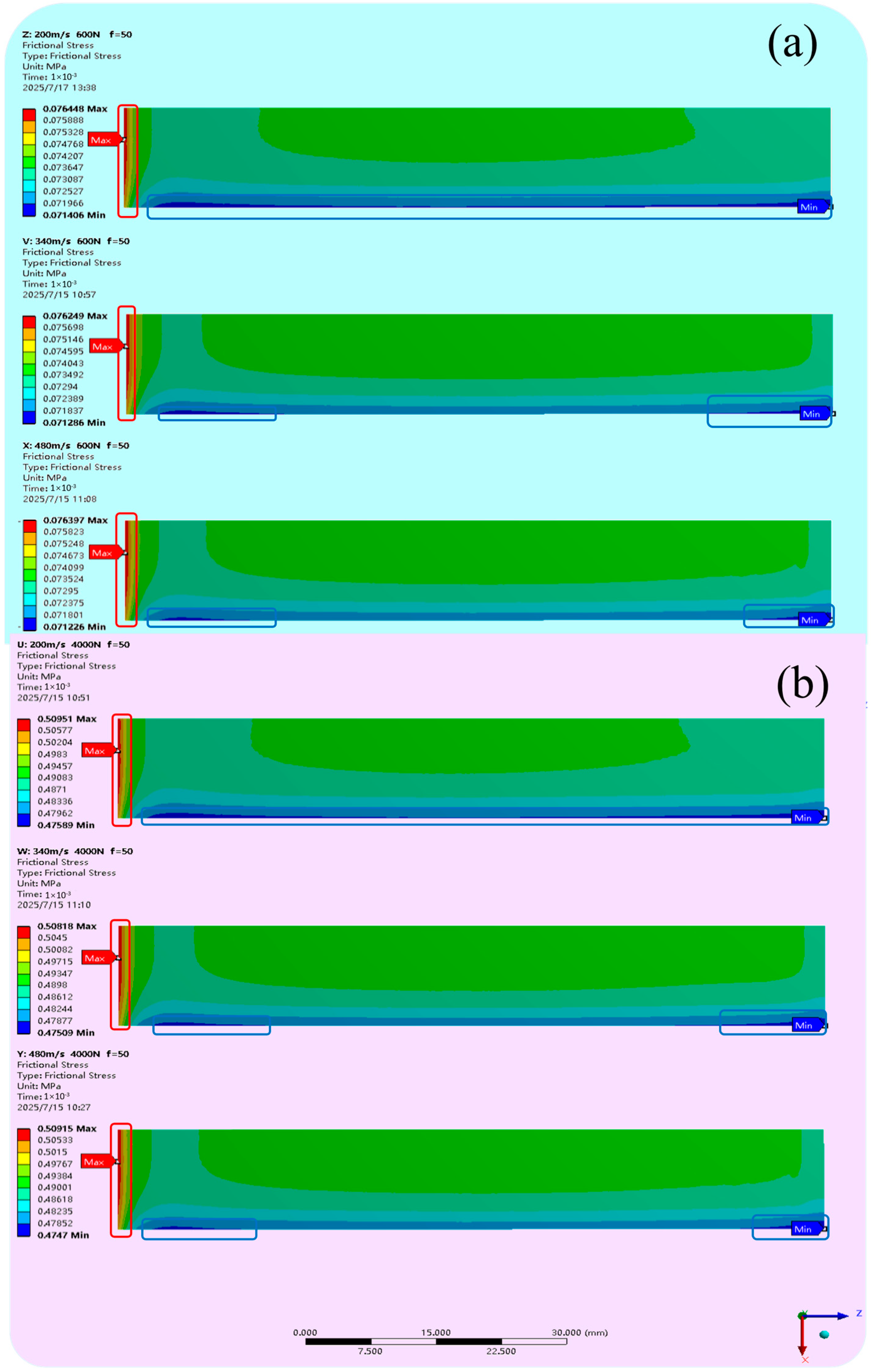
Figure 16 compares the contact friction stress distribution of the slider under two distinct load conditions (600 N and 4000 N) across ultra-high sliding speeds of 200 m/s, 340 m/s, and 480 m/s. Under both load levels, the spatial morphology of the stress field remains highly consistent: the maximum stress consistently occurs in the red region at the slider’s trailing edge, while the dark blue areas at the leading edge and one side maintain the lowest stress levels. The stress magnitude demonstrates a gradual increase from one side of the slider toward the other. As the sliding speed increases, the intermediate-stress region (green) progressively expands, while the medium–low stress area (bluish-green) correspondingly contracts.
Quantitative analysis reveals that speed variation within the 200~480 m/s range exerts minimal influence on stress magnitude. At 600 N, the contact friction stress remains stable between 0.071~0.077 MPa, while at 4000 N, it varies marginally within 0.475~0.510 MPa across the speed spectrum. These results demonstrate that under ultra-high-speed sliding conditions, once a critical velocity threshold is surpassed, the contact friction stress becomes largely insensitive to further speed increases, with load serving as the dominant factor governing stress magnitude.
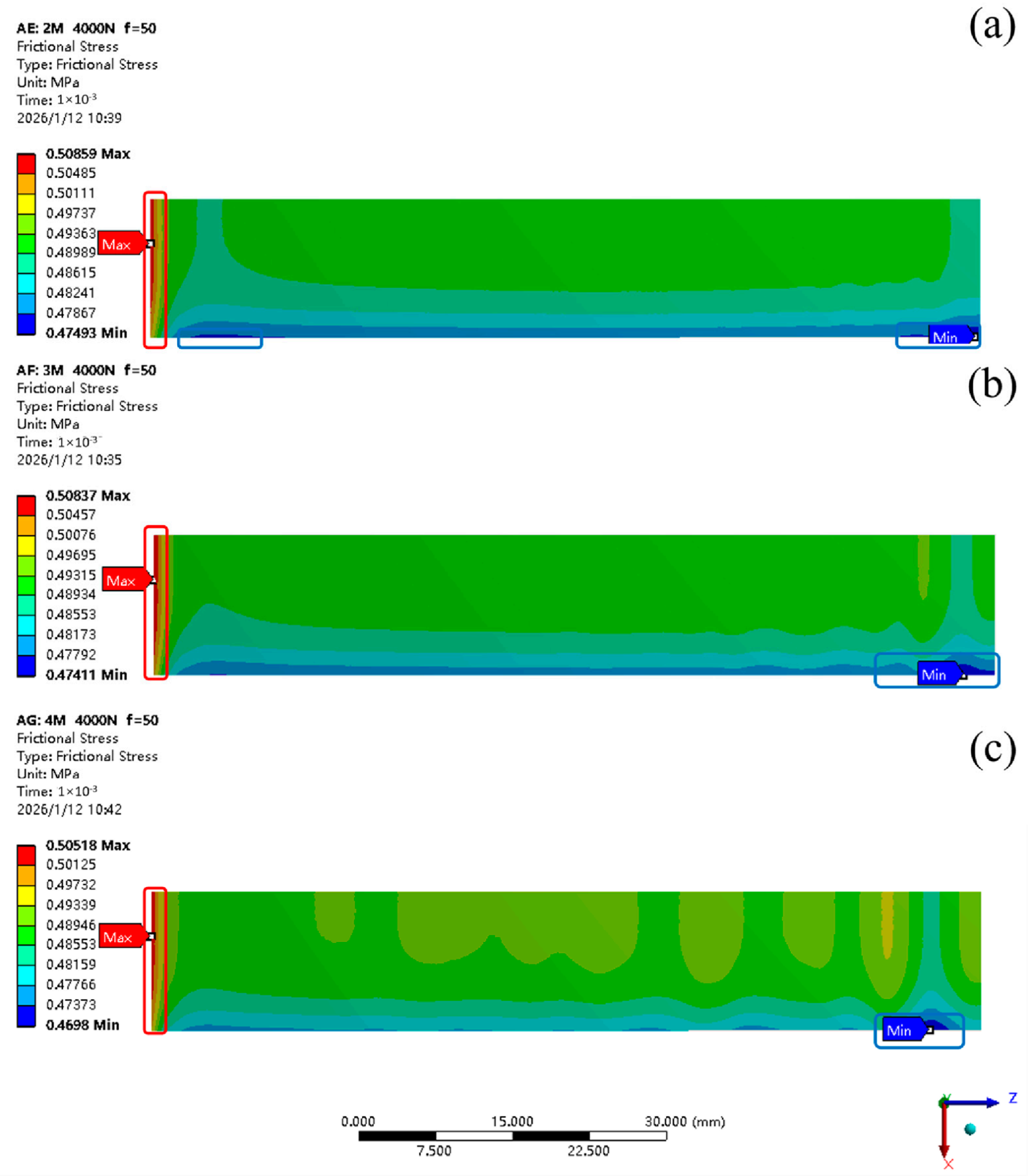
Figure 17 shows the contact friction stress cloud diagrams under 4000 N, 2 M, 3 M, and 4 M, respectively. The data show that under the condition of constant load, the stress level slightly decreases with increasing speed, but the value changes little, ranging from 0.469 MPa to 0.509 MPa. From the perspective of stress distribution, similar to conditions at other velocities, a high-stress zone is observed at the trailing end of the slider. The low-stress zone gradually decreases and becomes discontinuous as the speed increases. At 2 M, the overall distribution resembles that at 480 m/s, with the green zone further expanding and the central region showing relatively uniform stress distribution. With increasing velocity, a relatively high-pressure yellow region emerges near the leading edge of the slider. When the speed reaches 4 M, the frictional stress distribution on the slider surface becomes more heterogeneous, with the yellow area expanding notably and extending toward the trailing end. When the load is constant, the range of friction stress values under this speed condition remains close to that observed between 200 m/s and 480 m/s. This once again verifies the basic rule that the sensitivity of contact friction stress to speed changes is relatively low under ultra-high-speed working conditions.
A comprehensive analysis of the results under different loads and at different speeds revealed that the contact friction stress distribution of the slider had a stable spatial characteristic, mainly characterized by stress concentration at the rear end and lower stress at the front end. The change in load level significantly affects the stress amplitude. Under the same load, at the low-speed stage, the frictional stress value shows significant sensitivity to speed changes. However, as the speed continues to increase, this speed dependence gradually weakens. When the speed exceeds the critical threshold, the value of friction stress tends to stabilize and is almost unaffected by the change in speed. This behavior can be attributed to the decrease in the friction coefficient between the slider and the track with increasing speed. Under ultra-high-speed conditions, the friction coefficient remained nearly constant at approximately 0.1 [54]. A higher friction coefficient corresponds to greater contact friction stress [55].

4. Conclusions

ANSYS finite element software was used to simulate a slider-rail system for rocket sleds, where the slider is made of 30CrMnSiNi2A steel and the rail of U71Mn. The wear behavior of the rocket skid slider under different speeds and loads was analyzed. The conclusions can be drawn as follows:
(1)
In this study, the wear behavior of the rocket sled slider–track system was systematically analyzed by constructing a refined finite model. The simulation results successfully revealed the dynamic evolution process of contact pressure, friction stress, and wear volume, and intuitively presented the distribution cloud map of friction stress and wear depth on the contact surface, thus providing a solid data foundation for in-depth analysis of the wear evolution law of the slider. It should be noted that, as the simulation results are deterministic, statistical variance between runs is zero.
(2)
The wear behavior of the slider is governed by a complex coupling of sliding speed and external load, with distinct regimes identified. Quantitatively, the volumetric wear rate exhibits a non-linear, accelerating increase with speed, particularly pronounced in the supersonic regime (e.g., a 2.4-fold increase from 200 to 480 m/s under 600 N). Spatially, the most severe wear consistently initiates at the slider’s trailing edge. Under ultra-high speeds (≥4 M), where the zone of maximum wear depth migrates towards the front-central region.
(3)
During the sliding process, the contact surface of the slider sustains a highly uneven mechanical load, presenting obvious stress concentration phenomena and drastic stress changes. Quantitative analysis further reveals that the friction stress level is positively correlated with the applied load. It is worth noting that the friction stress is more sensitive to load changes in the lower speed range; while under high-speed conditions, this sensitivity is relatively weakened.
(4)
Limitations and Future Research Directions: It should be noted that to improve computational efficiency, this study adopts reasonable simplifications to the slider structure, including the use of a concentrated load instead of distributed pressure, and does not systematically account for the influence of complex factors such as surface roughness, surface topography effects on wear progression, form error, or thermal effects. Additionally, the use of Si3N4 as the counter ball also influences the wear coefficient to some extent. Material property parameters such as thermomechanical properties and strain-rate-dependent characteristics are not comprehensively incorporated. Therefore, the model has certain limitations in fully reproducing the entire actual wear process. Nevertheless, this simulation approach demonstrates good reliability in predicting wear trends and analyzing the influence patterns of key parameters, thereby providing an efficient and practical research tool for further investigation into the wear behavior of rocket sled slider systems. In future research, efforts could focus on integrating this macroscopic model with wear models that incorporate explicit micro-physical mechanisms and developing multi-scale modeling approaches to investigate the underlying wear mechanisms. Additionally, further simulation studies would benefit from determining the wear coefficient of the steel ball, while the speed and temperature dependence of the wear coefficient, k should be experimentally characterized using high-speed linear tribometers to refine the model. Finally, systematically incorporating surface topography, thermal effects, and distributed contact pressure into the simulation framework is essential to enhance predictive accuracy under realistic service conditions.

Author Contributions

Conceptualization, Y.H., N.L., L.W., K.Y., W.W., Q.Z. (Qunfeng Zeng) and D.L.; methodology, Y.H., N.L., L.W., K.Y., W.W., Q.Z. (Qunfeng Zeng), D.L. and Y.W.; software, Z.L.; validation, Y.H. and N.L.; formal analysis, Y.H., N.L., L.W., K.Y., W.W., Y.Y., Q.Z. (Qing Zhou), Z.L., Q.Z. (Qunfeng Zeng), D.L. and Y.W.; investigation, Y.H., L.W. and K.Y.; data curation, Y.H., N.L., L.W. and K.Y.; writing—original draft preparation, Y.H.; writing—review and editing, N.L., D.L. and Y.W.; visualization, Y.H. and N.L.; supervision, N.L., W.W., Y.Y., Q.Z. (Qing Zhou), Z.L., Q.Z. (Qunfeng Zeng), D.L. and Y.W.; project administration, N.L.; funding acquisition, N.L. All authors have read and agreed to the published version of the manuscript.

Funding

This work was supported by the National Natural Science Foundation of China (No. 52571091), the Aeronautical Science Foundation of China (No. 20200029029001), the Special Project of Science and Technology Cooperation and Exchange of Shanxi Province (No. 202204041101021), and the Central Government Guides Local Funds Project for Science and Technology Development of Shanxi Province (No. YDZJSX20231A018).

Data Availability Statement

The original contributions presented in this study are included in the article. Further inquiries can be directed to the corresponding authors.

Conflicts of Interest

Author Weihua Wang was employed by the AVIC Aerospace Life-Support Industries, Ltd. The remaining authors declare that the research was conducted in the absence of any commercial or financial relationships that could be construed as a potential conflict of interest.

References

  1. Fu, L.; Zeng, Y.; Yang, Y.; Han, G.B. Application of the damping bag on supersonic rocket sled tests. J. Phys. Conf. Ser. 2024, 2891, 122018. [Google Scholar] [CrossRef]
  2. Zhou, X.W.; Zhao, X.W.; Yang, Z.; Fan, K. Numerical analysis of dynamic characteristics of monorail rocket sled on rail. J. Aerosp. Power 2022, 37, 1327–1335. [Google Scholar] [CrossRef]
  3. Yang, Z.; Yang, Y.; Fan, K. Dynamic response analysis of missile-sled separation in warhead rocket sled test. J. Phys. Conf. Ser. 2024, 2891, 042005. [Google Scholar] [CrossRef]
  4. Zhang, H.; Jiang, S. Definition of boundary conditions and dynamic analysis of rocket sled and turntable. Appl. Mech. Mater. 2011, 1229, 261–266. [Google Scholar] [CrossRef]
  5. Liu, J.; Wang, W.H.; Zhao, F.; Gong, M.S. Comparison of two rocket sled slipper materials for resistance to wear. AIP Conf. Proc. 2017, 1890, 040119. [Google Scholar] [CrossRef]
  6. Zhao, X.W.; Yang, Z.; Yang, Y. Rocket ski boots rail contact characteristics of numerical analysis. J. Vib. Shock 2022, 9, 238–243. [Google Scholar] [CrossRef]
  7. Zhan, Z.; Wen, T. The development of the protective helmet and oxygen mask against the wind blast at a velocity of 1000km/h. Acta Aeronaut. Astronaut. Sin. 1995, 1, 19–23. [Google Scholar]
  8. Shi, H.; Xiao, Y.; Xu, W. The technology of CZ-2F escape vehicle’s maximum velocity head simulated flight test. J. Astronaut. 2004, 25, 484–487. [Google Scholar] [CrossRef]
  9. Yan, P.Z.; Zhang, L.S.; Wang, W.J.; Jiang, Y.; Pu, P.Y. Numerical simulation of aerodynamic and aeroacoustic characteristics of subsonic rocket sled. Appl. Acoust. 2021, 182, 108208. [Google Scholar] [CrossRef]
  10. Zheng, Z.W.; Shang, F. A study on the method of obtaining field dynamic characteristic parameters of a rocket sled. J. Phys. Conf. Ser. 2024, 282, 012082. [Google Scholar] [CrossRef]
  11. Meacham, M.B.; Kennett, A.; Townsend, D.J. Rocket sled propelled testing of a supersonic inflatable aerodynamic decelerator. In Proceedings of the AIAA Aerodynamic Decelerator Systems Technology Conference, Daytona Beach, FL, USA, 25–28 March 2013; p. 1351. [Google Scholar] [CrossRef]
  12. Yang, X.B. Rocket sled test track. Aviat. Precis. Manuf. Technol. 1992, 4, 35–37. [Google Scholar]
  13. Mcspadden, H.J.; Higgins, R.R. The history of hurricane mesa test facility. Safe J. 2005, 33, 46–57. [Google Scholar] [CrossRef]
  14. Nakata, D.; Kozu, A.; Yajima, J.; Nishine, K.; Higashino, K.; Tanatsugu, N. Predicted and experimented acceleration profile of the rocket sled. Trans. Japan Soc. Aeronaut. Space Sci. Aerosp. Technol. Jpn. 2012, 10, Ta_1–Ta_5. [Google Scholar] [CrossRef]
  15. Cameron, G.; Palazotto, A. An evaluation of high velocity wear. Wear 2008, 265, 1066–1075. [Google Scholar] [CrossRef]
  16. Xia, Y.C.; Xu, J.X.; Geng, Q. Research status and trend of rocket sled test system. In Proceedings of the 40th Technical Exchange Meeting of the China Aerospace Third Professional Information Network and the 4th Joint Meeting of Aerospace, Kunming, China, 14 August 2019; pp. 92–96. [Google Scholar] [CrossRef]
  17. Wang, Y. Status and Prospect for Rocket Sled Track Development in China. Aeronaut. Sci. Technol. 2010, 1, 30–32. [Google Scholar] [CrossRef]
  18. Wu, G.Q. Rocket Orbit Test Site in China. Int. Aviat. 1996, 1, 49–50. [Google Scholar]
  19. Zhao, F.; Shen, W.B.; Wang, W.H. Development Status and Prospect of Slide Test Technology; BUAA Press: Beijing, China, 2013; pp. 191–196. [Google Scholar]
  20. Liu, J.; Wang, W.H.; Zhao, F. Analysis of wear for a rocket sled slipper. IOP Conf. Ser. Mater. Sci. Eng. 2018, 398, 012017. [Google Scholar] [CrossRef]
  21. He, L.; Liu, C.P. Aerospace sets a new speed record for dual-track rocket sled tests. China Aviation News, 6 May 2022. [Google Scholar] [CrossRef]
  22. Hao, F.F.; Zhou, X.W.; Cheng, M.C.; Yang, Y.; Pang, C. Numerical investigation on design and aerodynamic parameters of rocket sled sabot backing ring. J. Aerosp. Power 2025, 40, 348–356. [Google Scholar] [CrossRef]
  23. Yan, K.; Lin, N.M.; Wang, Z.X.; Wang, W.H.; Zeng, Q.F.; Wu, Y.C. Finite Element Simulation of Wear Behavior of Groove-textured Rocket Sled Slider. Chin. Surf. Eng. 2023, 36, 190–202. [Google Scholar] [CrossRef]
  24. Long, J.; Zhang, L.J.; Xie, M.X.; Suck, J.N. Influences of Welding Techniques on Fatigue Behaviors of Thick-Walled Cylinders of 30uCrMnSiNi2A Steel. Fatigue Fract. Eng. Mater. Struct. 2025, 48, 2121–2131. [Google Scholar] [CrossRef]
  25. Xiao, X.K.; Wang, Y.G.; Wu, S.T.; Zhou, C.W. Experimental and Numerical Investigation on Dynamic Shear Behavior of 30CrMnSiNi2A Steel Using Flat-Hat Specimens. Metals 2025, 15, 563. [Google Scholar] [CrossRef]
  26. Xue, J.J.; Sun, K.; Fang, L.; Wang, Y.P.; Li, M. Friction and Wear Characteristics of 30CrMnSiNi2A Steel at Dry Sliding Condition. J. Tribol. 2016, 36, 614–621. [Google Scholar] [CrossRef]
  27. Zhao, L.H.; He, W.P.; Wang, Y.Q.; Li, H.; Cui, Z.Y. A Comparative Study of the Corrosion Behavior of 30CrMnSiNi2A in Artificial Seawater and Salt Spray Environments. Metals 2022, 12, 1443. [Google Scholar] [CrossRef]
  28. Xia, H.L.; Liu, Z.; Yan, H.D.; Zhao, X.W.; Meng, X. Simulation and Verification Study on Gouging Effect of Hypersonic Rocket Sled. J. Xi’an Jiaotong Univ. 2023, 57, 71–79. [Google Scholar] [CrossRef]
  29. Yan, H.D.; Zhao, X.W.; Shi, P.S.; Zhang, Q.D. Static and dynamic mechanical behavior of 30CrMnSiNi2A steel for rocket sled slipper. Trans. Mater. Heat Treat. 2024, 45, 164–173. [Google Scholar]
  30. Siopis, M.; Neu, R. Wear at high sliding speeds and high contact pressures. Wear 2015, 342–343, 356–363. [Google Scholar] [CrossRef]
  31. Siopis, M.; Neu, R. The effect of tribomaterial pairings on wear of an aluminum slider under high sliding speeds and high contact pressure. Wear 2016, 352–353, 180–187. [Google Scholar] [CrossRef]
  32. Qi, B.; Qi, L.; Wang, M.S.; Zhang, F.; Sun, K.; Wang, Y.S. High-speed friction-induced microstructural evolution and phase transformation in 30CrMnSiNi2A under extreme conditions. Surf. Coat. Technol. 2025, 504, 132043. [Google Scholar] [CrossRef]
  33. Qi, B.; Qi, L.; Tian, P.Y.; Wang, M.S.; Zhang, F.; Zhuang, W.B.; Sun, K. Numerical and experimental analysis of temperature-dependent wear in rocket sled shoe materials. Results Eng. 2025, 26, 105542. [Google Scholar] [CrossRef]
  34. Qi, B.; Wang, M.; Sun, K. Temperature-driven evolution of oxide films on MAX300 steel and corresponding wear behavior under high-speed friction. Tribol. Int. 2025, 211, 110898. [Google Scholar] [CrossRef]
  35. Gui, C.L. The Archard design calculation model and its application methods. Lubr. Eng. 1990, 1, 12–21. [Google Scholar]
  36. Peng, Z.S.; Ji, H.C.; Huang, X.M.; Wang, B.Y.; Xiao, W.C.; Wang, S.F. Numerical Analysis and Parameter Optimization of Wear Characteristics of Titanium Alloy Cross Wedge Rolling Die. Metals 2021, 11, 1998. [Google Scholar] [CrossRef]
  37. Zhang, P.; Zhang, X.; Hu, X.; Zhang, L.; Shi, X.; Li, Z. Simulation and experimental study on frictional wear of plough blades in soil cultivation process based on the Archard model. Biosyst. Eng. 2024, 248, 190–205. [Google Scholar] [CrossRef]
  38. Ragnar, H. Electric Contacts; Springer: Berlin/Heidelberg, Germany, 1967. [Google Scholar] [CrossRef]
  39. Liu, M.T.; Lei, L.; Zheng, J.; Zhao, Z.H.; Cao, Q. Research progress on numerical simulations of ceramic friction and wear. J. Tsinghua Univ. (Sci. Technol.) 2025, 5, 233–248. [Google Scholar] [CrossRef]
  40. Fuerstner, I. Advanced Knowledge Application in Practice; INTECH Open Access Publishing: Rijeka, Croatia, 2010. [Google Scholar] [CrossRef]
  41. Hui, Y.X.; Liu, Y.; Wang, Y.C.; Huang, W.F.; Li, Y.J. Contact End Face Seals Considering Wear: Modelling and Experiments. J. Tribol. 2021, 41, 316–324. [Google Scholar] [CrossRef]
  42. Mo, S.; Hu, Q.; Liu, M.; Wang, L.; Bao, H. Research on time-varying meshing stiffness of wind turbine gearbox considering tooth surface wear. Proc. Inst. Mech. Eng. 2023, 237, 1583–1602. [Google Scholar] [CrossRef]
  43. Qi, B.; Wang, M.; Chu, Z.; Zhuang, W.; Zhou, X. Wear mechanism study of rocket sled shoe material 30CrMnSiNi2A. Tribol. Int. 2024, 199, 110003. [Google Scholar] [CrossRef]
  44. Liu, J.P.; Li, P.; Quan, Y.M. Experimental investigation on the surface integrity ofU71Mn rail via form-milling. J. Manuf. Technol. Mach. Tool. 2025, 8, 15–21. [Google Scholar] [CrossRef]
  45. Bhushan, B. Introduction to Tribology; John Wiley & Sons: New York, NY, USA, 2013. [Google Scholar] [CrossRef]
  46. Wu, L.; Lin, N.M.; Yan, K.; Wang, W.H.; Yu, Y.; Zeng, Q.F.; Li, D.Y.; Wu, Y.C. Numerical simulation on high-speed and heavy-load wear behavior of CoCrNi and CoCrFeMnNi alloys. Tribol. Int. 2024, 192, 109277. [Google Scholar] [CrossRef]
  47. Liu, J.P.; Ji, C.C.; Liu, Y.; Pi, S.; Shi, T.; Yu, Z. Comparison of Wheel Burn Resistance of In-Service Rails and Analysis of Key Influencing Factors. Chin. Railw. Sci. 2025, 46, 52–61. [Google Scholar]
  48. Rodolfo, G.; Anthony, N.; Kathleen, H. 3D Finite Element Modeling of High-Speed Sliding Wear. In Proceedings of the 54th AIAA/ASME/ASCE/AHS/ASC Structures, Structural Dynamics, and Materials Conference, Boston, MA, USA, 8–11 April 2013. [Google Scholar] [CrossRef]
  49. Wang, B.Y.; Wu, X.Q.; Xie, F.Q. Friction Thermal Structure Coupling Field Analysis of rocket sled. Lub. Eng. 2014, 39, 80–83. [Google Scholar] [CrossRef]
  50. Jiang, X.C.; Lu, C.; Mo, J.L.; Chen, X.T.; Zhang, Q.H.; Zhao, J. Simulation of High-temperature Wear Degradation of Train Brake Pad Friction Block Considering Temperature-dependent Wear Rate. J. Mech. Eng. 2024, 60, 195–202. [Google Scholar] [CrossRef]
  51. Yan, K.; Wang, H.H.; Lin, N.M.; Wang, Z.X.; Wang, W.H.; Zeng, Q.F. Numerical Simulation on Wear Behavior of 0Cr18Ni9Ti-U71Mn Friction Pairs under High-Speed and Heavy-Load Conditions. J. Tribol. 2023, 43, 666–681. [Google Scholar] [CrossRef]
  52. Huang, Z.B.; Zhou, Q.; Luo, D.W.; Li, Q.K.; Wang, H.F. Review on preparation, microstructure and tribological properties of high entropy alloy thin films. Surf. Technol. 2022, 51, 30–42. [Google Scholar] [CrossRef]
  53. Huang, W.Q.; Li, W.; Mao, F.Y.; Huang, P. Analysis of stress distribution and wear in surface contact. J. South China Univ. Technol. (Nat. Sci. Ed.) 2020, 48, 91–101. [Google Scholar] [CrossRef]
  54. Fang, M.; Sun, J.H.; Yu, Y.Y.; Wang, C.L.; Zhou, F.; Hou, B. Friction analyses of the rocket sled system. J. Aerosp. Power 2017, 32, 2769–2776. [Google Scholar] [CrossRef]
  55. Yang, G.X.; Wei, Y.X.; Yuan, Q.W.; Cheng, D.H. Analysis of Friction Stresses during Gears Contact. Constr. Mach. Equip. 2017, 48, 33–36+8. [Google Scholar]
Figure 1. Rocket sled test equipment.
Metals 16 00122 g001
Figure 2. Flow chart of the finite element simulation study on the wear behavior of rocket skid sliders.
Metals 16 00122 g002
Figure 3. Flow chart of simplified model establishment of rocket skid slide–rail: (a) Research object, (b) Establish the model, (c) Simplified model.
Metals 16 00122 g003
Figure 4. Model configuration details: constraints and mesh generation: (a) Constraint settings, (b) Meshing.
Metals 16 00122 g004
Figure 5. Contact friction stress—time relation curve at 34.56 m/s and 600 N, with different grid sizes.
Metals 16 00122 g005
Figure 6. Comprehensive wear analysis under a condition of 600 N and 34.56 m/s: (a,b) Temporal evolution of contact pressure and friction stress; (c) Accumulation of wear volume over time; (d1d3) Three-dimensional wear depth distribution presented along the (d1) X-, (d2) Y-, and (d3) Z-axes.
Metals 16 00122 g006
Figure 7. Comparison of wear volume–time relationship curves, grid numbers, and simulation time (a) before and (b) after introducing the acceleration factor.
Metals 16 00122 g007
Figure 8. Wear behavior at 150 N, 34.56 m/s, 69.12 m/s, and 101 m/s: (a) Wear volume–time relationship curves, (b) Wear depth.
Metals 16 00122 g008
Figure 9. Wear behavior at 300 N, 34.56 m/s, 69.12 m/s, and 101 m/s: (a) Wear volume–time relationship curves, (b) Wear depth.
Metals 16 00122 g009
Figure 10. Wear behavior at 450 N, 34.56 m/s, 69.12 m/s, and 101 m/s: (a) Wear volume–time relationship curves, (b) Wear depth.
Metals 16 00122 g010
Figure 11. Wear behavior at 600 N, 34.56 m/s, 69.12 m/s, and 101 m/s: (a) Wear volume–time relationship curves, (b) Wear depth.
Metals 16 00122 g011
Figure 12. Wear behavior at 600 N, 200 m/s, 340 m/s, and 480 m/s: (a) Wear volume–time relationship curves, (b) Wear depth.
Metals 16 00122 g012
Figure 13. Wear behavior at 4000 N, 200 m/s, 340 m/s, and 480 m/s: (a) Wear volume–time relationship curves, (b) Wear depth.
Metals 16 00122 g013
Figure 14. Wear behavior at 4000 N, 2 M, 3 M, and 4 M: (a) Wear volume–time relationship curves, (b) Wear depth.
Metals 16 00122 g014
Figure 15. Contact friction stress of the slider at 34.56 m/s, 69.12 m/s, and 101 m/s: (a) 150 N, (b) 300 N, (c) 450 N, (d) 600 N.
Metals 16 00122 g015
Figure 16. Contact friction stress of the slider at 200 m/s, 340 m/s, and 480 m/s: (a) 600 N, (b) 4000 N.
Metals 16 00122 g016
Figure 17. Contact friction stress of the slider at 4000 N: (a) 2 M, (b) 3 M, (c) 4 M.
Metals 16 00122 g017
Table 1. Mass loss and wear coefficient k.
Initial Mass (g)Final Mass (g)Mass Loss (g)Wear Coefficient kMeanStandard DeviationRelative Standard Deviation
111.6793711.668940.010431.1748 × 10−61.0576 × 10−61.0473 × 10−79.90%
212.0967712.087670.009101.0250 × 10−6
311.8029311.794290.008649.731 × 10−7
Table 2. Chemical composition of 30CrMnSiNi2A and U71Mn.
MaterialsCMnSiSPVCrNiFeOthers
30CrMnSiNi2A0.311---1.21.594.10.9
U71Mn0.65~0.761.10~1.400.15~0.35≤0.025≤0.030≤0.030--Balance-
Table 3. Mechanical properties of material.
MaterialsSlider: 30CrMnSiNi2A SteelRail: U71Mn
Elastic modulus (GPa)211210.4
Poisson’s ratio0.270.30
Density (g/cm3)7.857.92
Hardness (HV)486.96282
Table 4. Slider and rail geometric dimensions.
SliderRail
Materials30CrMnSiNi2A SteelU71Mn
Dimensions (mm)81 × 13.5 × 61089 × 13.5 × 6
Table 5. Wear volume of slide block.
Mesh size (mm)0.71.01.3
Wear volume (mm3)2.2964 × 10−42.2964 × 10−42.2964 × 10⁻⁴
Table 6. Comparison of grid numbers and simulation time.
Before Introducing the Acceleration FactorAfter Introducing the Acceleration Factor
Nodes266,977176,845
Elements128,464112,147
MAPDL Elapsed time107 h 31 m72 h 13 m
MAPDL Memory used18.059 GB10.013 GB
MAPDL Result file size126.49 GB101.45 GB
Disclaimer/Publisher’s Note: The statements, opinions and data contained in all publications are solely those of the individual author(s) and contributor(s) and not of MDPI and/or the editor(s). MDPI and/or the editor(s) disclaim responsibility for any injury to people or property resulting from any ideas, methods, instructions or products referred to in the content.