Article

Effect of Calcination of Manganese Ore on Reducing Hydrogen and Energy Consumptions in Hydrogen-Based Direct Reduction Process


Department of Material Science and Engineering, Faculty of Natural Sciences, Norwegian University of Science and Technology (NTNU), Alfred Getz Vei 2, NO-7034 Trondheim, Norway
Metals 2026, 16(1), 117; https://doi.org/10.3390/met16010117
Submission received: 10 December 2025 / Revised: 13 January 2026 / Accepted: 16 January 2026 / Published: 19 January 2026
(This article belongs to the Section Extractive Metallurgy)

Abstract

Manganese is a critical raw material and there is currently a great interest in decarbonization in the metallurgical sector for its production. Hydrogen use in manganese and its alloys’ production is in principle possible for sustainable production; however, this requires a technological shift from traditional carbothermic processes to completely new processes; like the HAlMan process. To design a process, it is crucially important to optimize the process conditions (such as temperature) and minimize the quantity of hydrogen gas and the related energy consumptions. In the present work, energy and mass balances for a hydrogen-based reduction reactor were carried out employing thermodynamics software and analytical approaches from room temperatures to 900 °C. It was found that the quantity of hydrogen gas required for the pre-reduction of manganese ore can be significantly reduced via coupling the reduction reactor with a calciner and the hot charge of the calcined ore into the reduction reactor. Moreover, hot H2-H2O gas mixture from the reduction reactor outlet can be used for preheating the hydrogen feed of the reactor, and the calcination of the ore, while a portion or all its hydrogen can be recovered and looped. The integrated coupled calcination-reduction process was found to be operated with no external energy supply, or insignificant fuel use.

1. Background and Theoretical Bases

Manganese metal is mostly produced in the form of manganese ferroalloys through a pyrometallurgical carbothermic reduction-smelting process in Submerged Arc Furnace, SAF [1]. The production of high-carbon ferromanganese (HCFeMn) and silicomanganese (SiMn) in SAF is a well-known technology with over a century’s history. To produce one metric ton (hereafter metric ton is presented as t in this work) of HCFeMn and SiMn, a power consumption of 2700 kWh/t and 4500 kWh/t is required, respectively [2]. In addition, CO2 emissions to produce HCFeMn and SiMn are about 2–4.6 t CO2 and 2.1–6.5 t CO2 per one ton metal, respectively [2]. In a newly introduced process, called HAlMan process, hydrogen gas is used to reduce oxides of Mn and Fe in the ore and obtain a pre-reduced ore that contains manganese monoxide (MnO) and metallic iron [3]. Further reduction of MnO to metallic Mn is performed through smelting-reduction by using metallic Al sources such as Al dross or scrap as reductant. It is worth noting that MnO reduction to metallic Mn is not thermodynamically possible by gases (CO or H2), while it is possible using solid carbon or Al metal. Hence, the promising way to prevent CO2 emission in Mn production is using Al for the last stage of reduction after pre-reduction by hydrogen. Other approaches, such as pre-reduction by hydrogen and charge into SAF for further MnO reduction by carbon, do not reduce CO2 emission, as they do not affect significantly the total carbon use and the corresponding CO2 gas generated.
Manganese ores contain one or more manganese minerals such as pyrolusite (MnO2), Romanechite ((Ba,H2O)2(Mn4+,Mn3+)5O10), Manganite (MnO(OH)), Hausmannite (Mn3O4), Rhodochrosite (MnCO3), Rhodonite ((Mn, Fe, Mg, Ca)SiO3), and Braunite (Mn2+Mn3+6[O8|SiO4]) [4]. In addition, iron in different quantities may appear in manganese ores, usually in the form of hematite (Fe2O3) and goethite (FeO(OH)) minerals. When manganese ores are calcined at elevated temperatures, phase changes occur in the ore and Mn and Fe oxides are converted to more thermodynamically stable oxides, depending on the adjacent gas composition and the applied temperature. For instance, if manganese ore contains pyrolusite and hematite, and calcite (CaCO3), they are converted to bixbyite ((Mn,Fe)2O3) and CaO upon heating alongside many other phase transformations as studied previously [5]. In the reduction of manganese ores by hydrogen, the reducible oxides of Mn and Fe are reduced and in a completely reduced ore we obtain MnO and metallic Fe, while many other reactions may occur such as decomposition of calcite, dolomite, etc. From a thermodynamics point of view, the reducibility of manganese oxides to MnO, which occurs with the sequence of MnO2 to Mn2O3, Mn3O4, and MnO, is more favorable than the reduction of iron oxides for a given atmosphere and gas composition. Figure 1a shows the changes of the Gibbs energy of Mn and Fe oxides reduction by hydrogen in a wide temperature range at standard conditions, and as we see at these conditions MnO is formed, while the reduction of Fe2O3 to Fe3O4 is possible up to 700 °C, and at higher temperatures to 1000 °C reduction proceeds to the FeO phase. Under non-standard conditions and significantly higher concentrations of H2 than H2O, the reduction to FeO is possible, as shown in Figure 1b for a typical molar ratio of H2/H2O = 10. Obviously, introducing a gas mixture with this composition to a manganese ore at temperatures above 400 °C yields a reduced ore that contains MnO and Fe.
The kinetics of reduction of Mn ores or pure Mn oxides by hydrogen have been studied through several studies. In pioneer works on reduction by H2 gas, Barner and Mantell studied the reduction of pellets of MnO2 [6], and De Bruijn et al. studied the reduction of Mn ore fine particles [7], both studies at 275–400 °C. They observed MnO formation in all temperature ranges, with higher rates for higher temperatures and smaller particle sizes. Experimental studies on MnO2 particle reduction at higher temperatures of 400–1000 °C yielded MnO formation by a higher rate [8,9]. Hydrogen reduction of low-grade Mn briquets by H2 at 750 °C to 950 °C indicated the reduction to MnO phase [10,11]. The hydrogen reduction of manganese ores has been studied in the current HAlMan EU project, an Innovation Action project in Horizon Europe [12]. In this project, significant experimental work on Nchwaning manganese ore reduction by H2 gas has been carried out [13]. Nchwaning ore is an oxide-type ore that contains Mn in the form of bixbyite, and it contains some calcite. The reduction of lumpy ore particles with or without prior calcination has shown that reduction at temperature ranges of 500 °C to 900 °C yields MnO and Fe, and the rate of these products’ formation is increased with increasing temperature [13]. On the other hand, the increase of the reduction temperature above 700 °C does not increase the reduction rate significantly, possibly due to simultaneous sintering phenomena and porosity loss in the ore particle. The pre-reduction of lumpy Mn ore in a shaft furnace has been recently modeled by the Computational Fluid Dynamics (CFD) approach, and it has been demonstrated that longer bed heights require higher H2 gas flow rate to facilitate faster reduction rates [14]. In a recent study on the reduction of Nchwaning Mn ore fines in fluidized bed reactor, it has been shown that the pre-reduction of the ore fine particles is fast and with higher rate at higher temperatures, and it has been proposed that the process is time-dependent; diffusion process and solid-state reactions are both important [15].
The pre-reduction of manganese ore in the HAlMan process can be carried out in different ways regarding the feed of the pre-reduction reactor characteristics. The manganese ore can be charged into pre-reduction reactor untreated at room temperature, or it can be charged after a prior calcination step (in cold form or hot form). The quantity of hydrogen feed of the pre-reduction reactor, and the characteristics of the reactor solid and gas products, are dependent on the reactor solid charge. Hence, in the present work mass and energy balances of the HAlMan pre-reduction reactor are studied, and the effect of an adjacent calciner to the reduction unit is evaluated. This work provides insights into the main part of the HAlMan process for further commercialization, suitable life cycle assessment, and the adjacent energy recovery and gas processing design.

2. Materials and Methods

2.1. Manganese Ore

In this study Nchwaning commercial manganese ore is considered as the raw material for the process. This ore is from South Africa, and it is one of the largest manganese reserves in the world. The thermochemical behavior of this ore such as phase changes during calcination and reduction by hydrogen, and the kinetics of calcination and reduction, are well known regarding the previous studies [13,15]. The ore was characterized previously by different analysis techniques with overall measure composition by X-Ray Fluorescence (XRF), given in Table 1.
X-Ray Diffraction (XRD) analysis indicated that the ore contains Mn mostly in the form of braunite and manganite, Fe mostly in the form of hematite, Ca in the form of calcite and dolomite, and Si mostly in braunite [13]. Considering the quantities of C, CO2, and H2O, and the form of oxides and mass balances for different species, the quantities of the main minerals were calculated as presented in Table 2. It is worth noting that SiO2 is not in quartz form, and it is associated to Mn2O3 in braunite, and the mineralogy of CaO, Al2O3, BaO, TiO2, and K2O, P, and S compounds in Table 2 could not be found due to their small quantities and no detection of phases in their X-Ray Diffraction (XRD) phase analysis. Hence, they are considered hereafter in these forms presented in Table 2.

2.2. Mass and Energy Balances

Mass balances for a pre-reduction reactor (PRR) and a calciner can be done regarding the characteristics of solid feeds and products, and the quantity and compositions of inlet and outlets gases. The present work considers industrial ore (not a pure oxide), its behavior upon calcination and reduction as observed in lab [13]. Obviously, there may be some unknown behavior of minor components which may slightly deviate from reality. Moreover, to make reliable calculations some assumptions will be made for the reduction reactor as follows. As there is no accumulation of matter in these processes, for a component i, mass balance for these unit operations can be done as follows:
m i f e e d + m i g a s   i n   = m i p r o d u c t + m i g a s   o u t
where m i f e e d , m i g a s   i n , m i p r o d u c t , and m i g a s   o u t are the masses of i in the solid charge, feed gas, solid product, and gas product. In this study, mass balances for the PRR and calciner are carried out considering the characteristics of Nchwaning ore, and fully calcined and fully pre-reduced ore. Correspondingly, the quantity of required gases as fuel and reducing agents are determined regarding the thermochemistry of the processes and typical operational conditions.
Energy balances of PRR and calciner can be calculated based on the mass balances results, the phase changes of solid materials in process, and considering reliable temperatures for the solid and gaseous products. In principle, the enthalpies for the inputs and outputs of a unit operation can be calculated regarding their quantities and conditions (temperature and pressure). As the energy loss from the body of PRR and calciner (heat loss) is technology-dependent and it is insignificant compared to the energies at input and output, in the present study heat losses are neglected. Hence, considering no heat accumulation in these operations, the heat balance can be overall presented as energy balance between the input and outputs:
E i n = E o u t
Or
E f e e d + E g a s   i n = E p r o d u c t + E g a s   o u t  
where E i denotes the heat content of i stream (solid feed, gas input stream, solid product, and gas output stream). HSC Chemistry version 9 and FactSage software version 8.3, and Excel spreadsheet modeling were applied for both mass and energy balances. In addition, as reliable calculations depend on the mechanisms of reactions and thermochemistry of the processes, the enthalpy changes for the main chemical reactions were studied using these methods.

3. Results and Discussions

The reduction of raw ore by hydrogen in PRR was first studied, and then the reduction of calcined ore was evaluated. The results led to optimization via coupling of a calciner with PRR in two scenarios. It is worth noting that in this study a shaft calciner and a shaft PRR are considered; however, the results are valid for other types of reactors such as rotary furnace, fluidized bed, etc.

3.1. Pre-Reduction of Raw Ore by Hot Hydrogen

The PRR operation conditions are very dependent on the process thermochemistry and the manganese ore characteristics. Hence, in this part the reduction behavior of Nchwaning ore in dry form in the process is studied as follows. The surface moisture of the ore particles is quite low, such as 0.1 wt%, and hence excluding it does not have significant effect on the energy balances calculations.

3.1.1. Thermochemistry of Pre-Reduction Process

  • Reduction reactions
The direct reduction of raw ore by hydrogen in PRR is accompanied with several phase changes in the solid charge material and it yields a pre-reduced ore that in complete reduced form contains MnO, metallic Fe, and CaO, MgO, Al2O3, SiO2, TiO2, BaO, K2O, and P2O5 oxides [12]. The rate of hydrogen reduction of Nchwaning ore is fast, and full reduction is achieved at temperatures higher than 600 °C. Considering the composition of the ore (Table 2), the following overall reduction reactions occur in PRR for Mn and Fe minerals:
2MnO(OH) + H2 (g) → 2MnO + 2H2O (g)         ΔH°25°C = 21.9 kJ/mol
Mn2O3 + H2 (g) → 2MnO + H2O (g)              ΔH°25°C = −53.3 kJ/mol
Fe2O3 + 3H2 (g) → 2Fe + 3H2O (g)                ΔH°25°C = 99.3 kJ/mol
The above enthalpies of reactions, and the later reactions, were obtained using HSC Chemistry version 9. From a thermodynamics point of view, the proceeding of chemical reaction (4) and conversion of MnO(OH) to MnO is more favorable than its primary decomposition and conversion to Mn2O3 via 2MnO(OH) → Mn2O3 + H2O (g) reaction, and further reduction of Mn2O3 via reaction (5). This is evidenced regarding the changes of the Gibbs energy of these reactions, ΔG°, as shown in Figure 1c. Hence, in ore particles MnO(OH) conversion to MnO via chemical reaction (4) occurs, and Mn2O3 is reduced further via the overall chemical reaction (5), which is through conversion to Mn3O4 and then MnO (reactions given in Figure 1a,b).
2.
Carbonates decomposition
As seen in Table 2, the manganese ore contains calcite and dolomite, and these carbonates are decomposed in the PRR under suitable temperature and gas compositions via the following chemical reactions.
CaCO3 → CaO + CO2 (g)                           ΔH°25°C = 178.2 kJ
CaMg(CO3)2 → CaO + MgO + 2 CO2 (g)            ΔH°25°C = 302.2 kJ
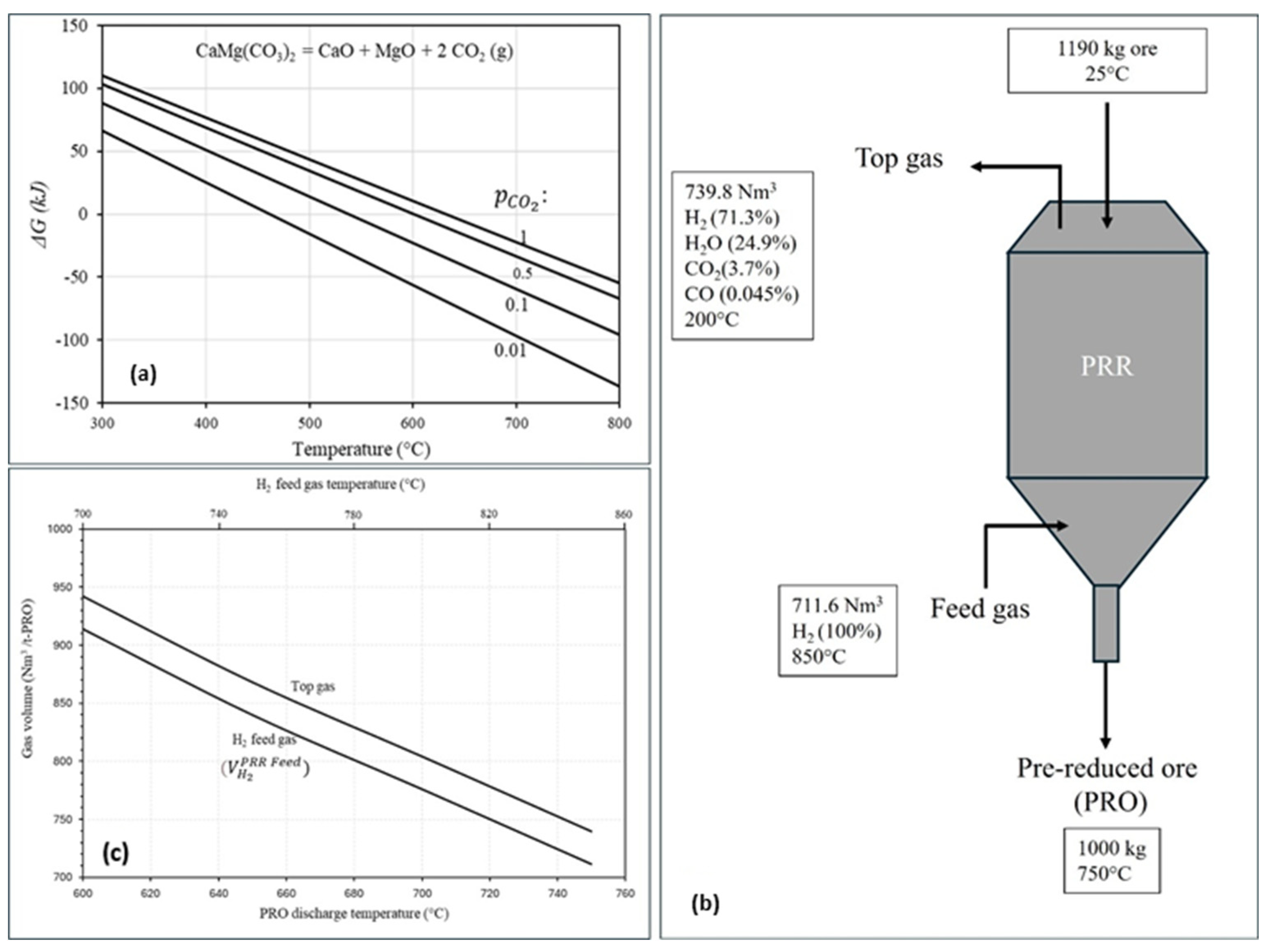
At the standard conditions ( p C O 2 = 1 atm), the decomposition of calcite and dolomite occur at 885 °C and 630 °C, respectively. In the PRR, however, the partial pressure of CO2 gas is much lower than unity as the carbonate content in the ore is not high and a significant amount of H2 gas is used in the reactor, and hence there will be low partial pressure of CO2 gas in a dominant H2-H2O gas mixture. The relationship between the equilibrium partial pressure of CO2 gas with CaO and CaCO3 solids ( P C O 2 e ) was calculated as illustrated in Figure 1d. The calculations were carried out considering different CaO chemical activities (aCaO). It is worth noting that the formed CaO from calcite decomposition can react with the adjacent oxides such as MnO, SiO2, and Al2O3 at elevated temperatures, which yield aCaO < 1. Hence, regarding low CO2 partial pressure and lower CaO activity than unity, it is expected that at lower temperatures than 885 °C the decomposition of calcite occurs, as experimentally observed above 600 °C under H2 gas purging [13].
The calculated Gibbs energy changes (ΔG) for chemical reaction (8) in Figure 2a show that under nonstandard conditions (lower equilibrium atrial pressure of CO2 than 1 atm) the decomposition of dolomite occurs at lower temperatures than 630 °C.
3.
Solid-state reactions
The previous hydrogen reduction experiments on Nchwaning ore indicated that when the ore is reduced crystalline MnO and Fe phases appeared in XRD patterns, while the other oxides of the ore do not yield crystalline phases [13]. This indicates that CaO, SiO2, Al2O3, MgO, … are mostly portioned in complex slag phases such as silicates, and hence they yield amorphous phases. The formation of silicates may be accompanied with porosity loss at higher reduction temperatures. As the composition of these oxide phases and their quantity are unknown and very dependent on the ore composition, and the enthalpy changes due to their formation are insignificant, their contribution in heat exchange with the reactor gas is negligible. For instance, the SiO2, CaO, and Al2O3 in the ore can partially react upon heating, and complex amorphous phases, such as Ca2Al2SiO7 phase, may be formed. As the minor quantity of Ca2Al2SiO7 phase is now known and difficult to determine, and moreover depends on the process conditions, in the calculations the single oxides of SiO2, CaO, and Al2O3 are more reliable to consider. Hence, in the later heat balances, the enthalpy changes will be mostly related to the heat capacity of the present oxides in the ore and not their interactions and formation of complex oxides.
4.
Gaseous reactions
For the reduction process, H2 gas is used, and according to the above reduction reactions, significant H2O gas is formed. In addition, some CO2 is generated due to the decomposition of carbonates as discussed above. Hence, the interaction of these gases may occur depending on reactor conditions, and this will be evaluated later for the case of Nchwaning ore.

3.1.2. Hydrogen Feed Gas Quantity

One metric ton of fully pre-reduced ore in which all Mn oxides/hydroxides get the form of MnO, all iron becomes metallic Fe, and all carbonates are decomposed is considered hereafter as a reference for calculation. Hence, the reduction of Nchwaning Mn ore in fully reduced form has the composition given in Table 3, which is aligned with earlier observations [13]. It was assumed that there is no mass loss of the ore components in PRR, except oxygen, carbon, and hydrogen according to the above chemical reactions.
Using the chemical compositions of the raw and pre-reduced ore and assuming no dust formation in PRR, the relationship between the mass of the ore ( m o r e ) and the mass of the pre-reduced ore product ( m p r e r e d ) can be determined. For a fully reduced Nchwaning ore, this yields m o r e = 1.190   m p r e r e d , which indicates about 15.9% mass loss from the charged ore in PRR. The mass losses previously observed in lab scale experiments within two-hour reduction up to 900 °C were slightly lower than this theoretical mass loss [13]. The slightly lower experimentally observed mass loss (15.1 wt%) is related to little inhomogeneity of the ore (minerals such as Mn2O3, CaCO3, …), which is expected for a small sample in lab scale trials, while the considered ore composition in this study (Table 1) is an average chemical composition from a large sample analyzed.
The hydrogen required to reduce ore components (Mn2O3, MnO(OH), Fe2O3) can be determined considering the irreversible chemical reactions (4) to (6) in PRR, which yields the following stoichiometric quantity for one ton of the pre-reduced ore (PRO) product:
V H 2 S t o i c h . = 0.112 C M n O P r e r e d M M n O + 3 C F e P r e r e d M F e                   N m 3 t   P R O
where C M n O P r e r e d and C F e P r e r e d   are the MnO and Fe contents of the pre-reduced ore (in mass percentage), and Mi denotes the molecular mass of i. Hence, for one ton of the PRO at least 182.2 m3 H2 gas is needed. However, this amount of hydrogen is not enough to operate the reactor regarding two main facts: First, the complete reduction of the ore requires suitable H2/H2O ratio (from the thermodynamics point of view discussed in Section 1) in the reactor, and hence extra hydrogen than the stoichiometric amount is needed to maintain this condition. Secondly, the required energy for the reactor operation is supplied by the hot hydrogen feed, and therefore extra hot hydrogen may be needed. Hence, the total hot hydrogen feed for the reactor is
V H 2   F e e d = V H 2 S t o i c h . + V H 2 E x c .
where V H 2 E x c . is the excess quantity of hot H2 gas that remains unreacted and maintains suitable thermodynamic conditions for the full reduction of the ore and in addition supplies the energy needed for the process. Obviously, depending on the ore characteristics and the operation conditions, the V H 2 E x c . quantity may be smaller or larger than V H 2 S t o i c h . . This is evaluated for Nchwaning ore as follows.

3.1.3. Reactor Energy and Mass Balances

To do energy and mass balances for the PRR, it is needed to consider reasonable typical process conditions. For referable calculations, it is assumed that dry Nchwaning ore is used at room temperature (25 °C) and the PRO is discharged from PRR at 750 °C. Moreover, the hot hydrogen is fed to PRR at 850 °C and the process top gas leaves the reactor at 200 °C, and there is no heat loss from the reactor body. Energy balance calculations give the results presented on the schematic of PRR in Figure 2b. As seen, the process at these conditions requires 711.6 Nm3 hot H2 gas per t-PRO, and this yields 748.3 Nm3/t-PRO process top gas. The slightly higher top gas than the H2 feed volume is due to the generation of CO2 and H2O gases in the reactor from carbonates and hydroxide of the ore, as described above.
The presented mass and energy balances in Figure 2b show that there is a significant amount of unreacted hydrogen in the top gas, meaning a high quantity of V H 2 E x c . . Having a fair approximation of 100 °C temperature difference between the hot hydrogen feed and the discharged PRO, the volume of needed hydrogen ( V H 2 P R R   F e e d ) and the corresponding top gas quantities were calculated for different PRO discharging temperatures, with the illustrated results in Figure 2c. It is seen that under considered conditions, feeding the required quantity of H2 feed gas is decreased by increasing the PRO discharge temperature, indicating higher rate of enthalpy change for hydrogen gas than PRO with temperature changes.
The composition of the PRR top gas in Figure 2b was calculated regarding the main dominant gaseous species in the reactor. A high quantity of H2 gas is fed, and as the concentration of H2 gas is high inside the reactor, it reacts with CO2 gas (released from carbonates decomposition) through the following reaction:
H2 (g) + CO2 (g) → CO (g) + H2O (g)               ΔH°25°C = 41.14 kJ/mol
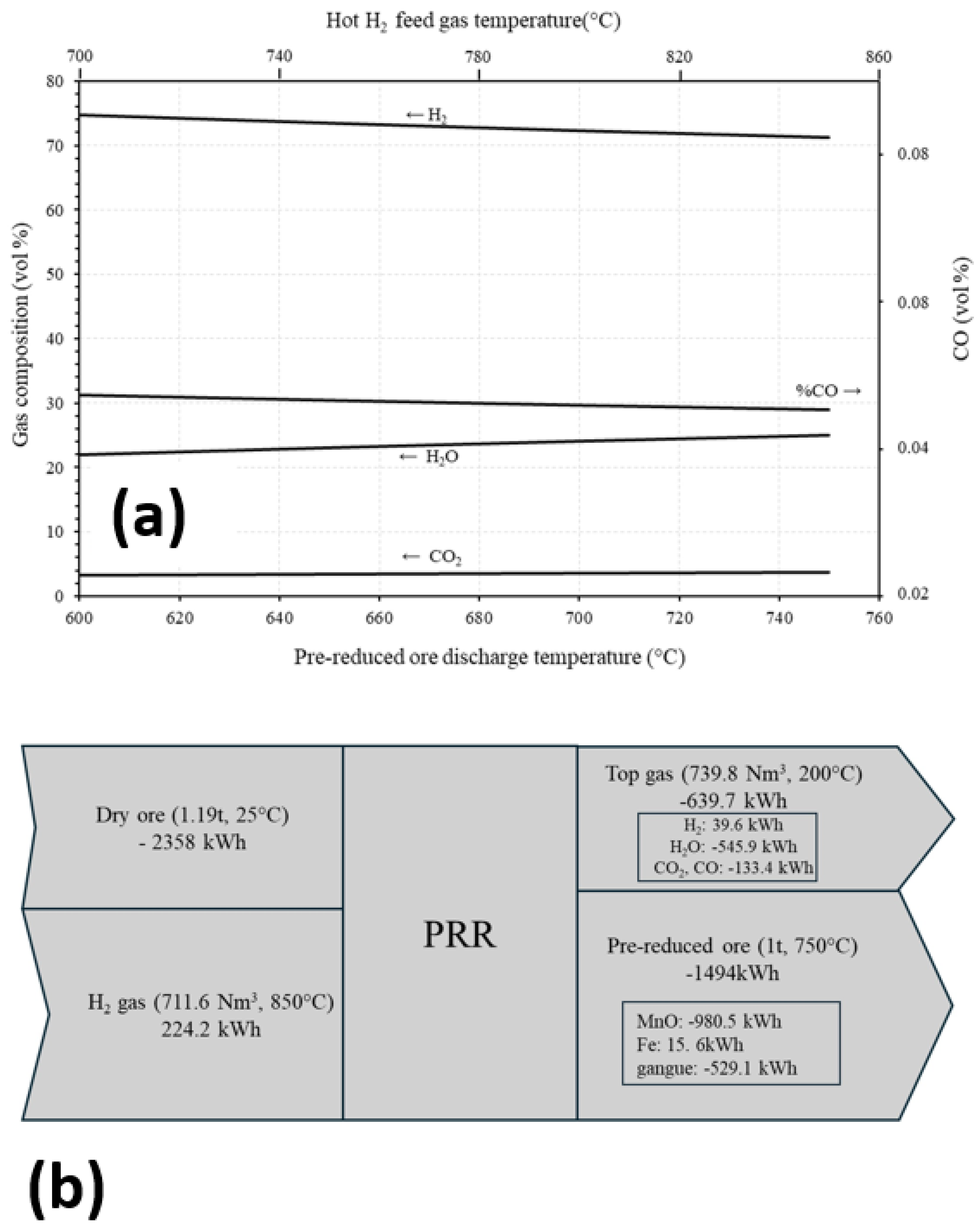
This reaction is the reverse of water–gas shift reaction, and it is a homogeneous reaction that proceeds with high rate [16]. Hence, the gas composition in PRR, and at the top of the reactor can be estimated via considering thermodynamic equilibrium for this reaction. Obviously, the composition of the top gas depends on the feed H2 gas quantity, and hence the calculations were done considering different temperatures for PRO discharge, and assuming the same top gas temperature of 200 °C. The results illustrated in Figure 3a indicate that the top gas mostly consisted of H2 and H2O gases, and the CO2 and CO gases are in low concentrations.
As the quantity and chemical compositions of input and output of the PRR are known for the considered operation conditions, the total enthalpy balance of the reactor can be done as illustrated in Figure 3b for typical case of Figure 2b. Obviously, the heat content of the hot hydrogen feed gas is mostly consumed for heating the solid charge and supplying the heat for the endothermic chemical reactions in the reactor.
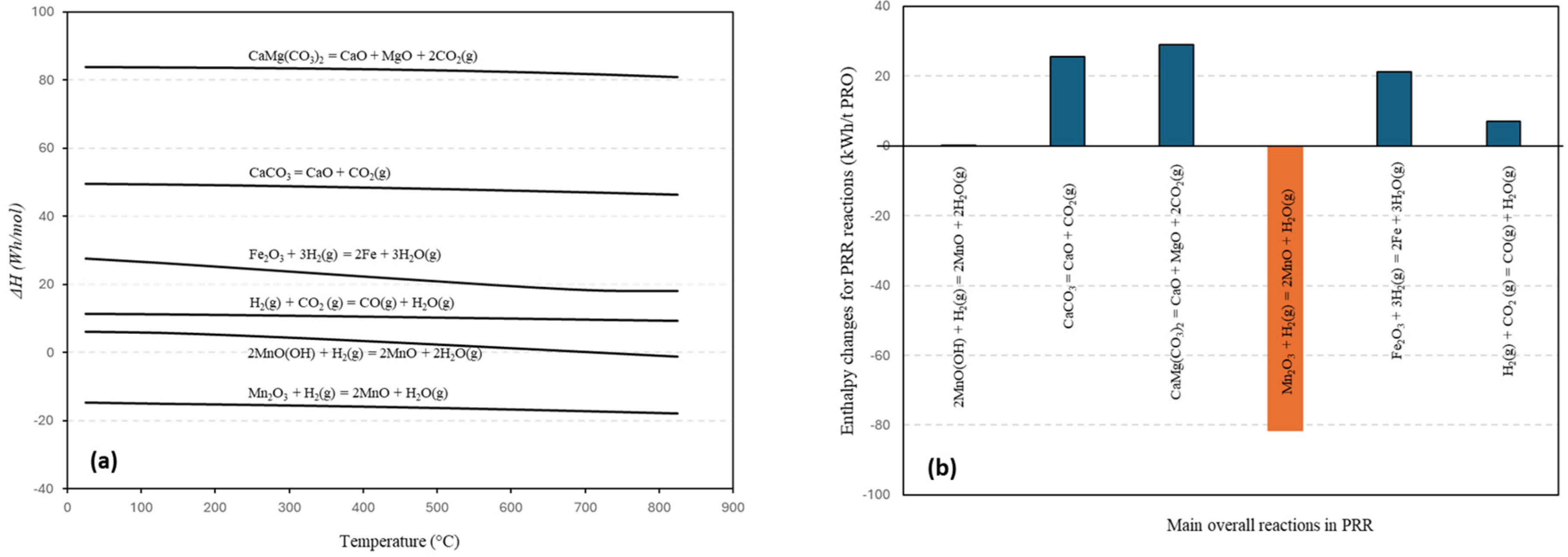
To evaluate more precisely, the enthalpy changes due to the main chemical reactions in PRR were calculated. Figure 4a illustrates the calculated enthalpy changes (ΔH) of the reactions with temperature, and it shows that except the Mn2O3 conversion to MnO, the other reactions are endothermic. Considering the above-described thermochemistry of reactions and the quantity of species in the ore charge, the total enthalpy changes dedicated to these reactions were calculated per ton PRO, as illustrated in Figure 4b.
Based on data in Figure 4b, the overall enthalpy changes due to the chemical reactions in PRR are insignificant and about 1.8 kWh/t-PRO. However, the main energy-consuming reactions are the decomposition of carbonates (calcite and dolomite) with a total of about 54.7 kWh/t-PRO. It is worth noting that the energy release due to the exothermic reduction reaction of Mn2O3 is significant (−81.53 kWh/t-PRO) and contributes to preheating the charge. The enthalpy changes for heating the solid charge to 750 °C are significant and were calculated to be about 149.7 kWh/t-PRO. This means that the enthalpy of excess hot hydrogen gas is consumed for the calcination reactions and heating the solid charge in PRR. Based on this conclusion, using a calcined ore may be beneficial to decrease hydrogen feed gas volume. Hence, the effect of charging a calcined ore into PRR is evaluated as follows.

3.2. Pre-Reduction of Cold Calcined Ore

To do mass and energy balances for the PRR with charging calcined ore, chemical composition of fully calcined ore was determined by mass balance as shown in Table 4. Experimental work on calcination of Nchwaning ore in air converts all Mn oxides to Mn2O3 as observed previously [13], and this was considered for mass balances.
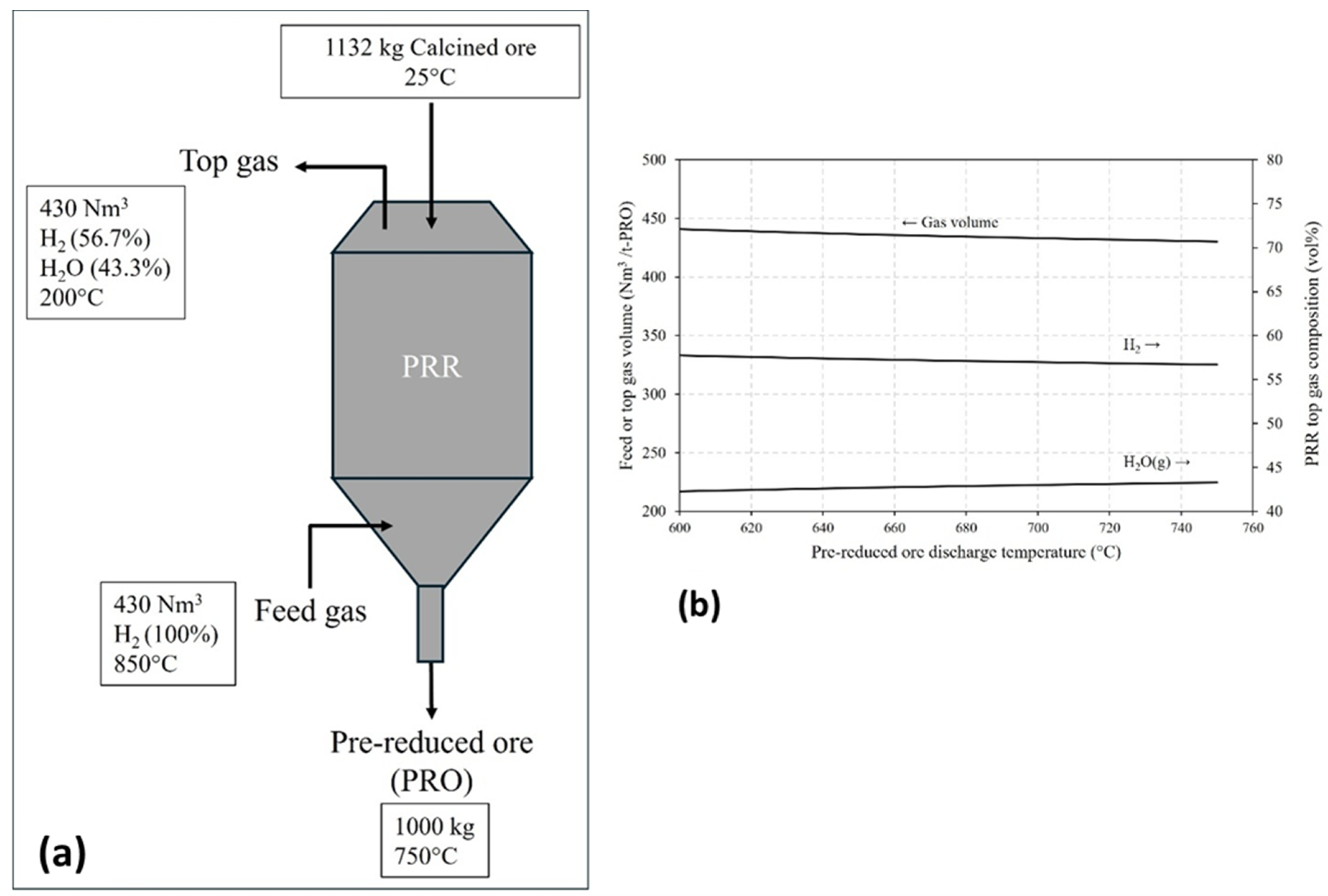
The mass and energy balances of PRR were carried out for the fully calcined ore via the same procedure described in Section 3.1.3 for the raw ore. Calcination of 1190 kg of ore yields 1132 kg fully calcined ore. Figure 5a shows that when the calcined ore is charged into PRR and reduced under the same conditions of the raw ore, the required hydrogen gas is significantly lower than when raw ore is reduced (Figure 2b). This is due to less excess heat need via using more hot hydrogen to supply the heat for the calcination reactions in the ore particles. The use of calcined Nchwaning ore (CNO hereafter) in the PRR requires 430 Nm3 H2 gas/t-PRO, which is about 40% lower volume than when the raw ore is processed (711.6 Nm3 H2 gas/t-PRO). When calcined ore is used, there is no CO2 generation in PRR, and as for any mole of H2 consumed in reduction reactions (4) to (6), the same number of moles of H2O is produced; the quantity of the PRR top gas is the same as the H2 feed gas. Comparing Figure 2c and Figure 5b, a significant difference between using raw and calcined ores is the relationship between the quantity of PRR feed gas with the temperature of PRO. The quantity of required H2 gas and the composition of PRR top gas is not affected significantly with the PRO temperature (Figure 5b), as there is no CO and CO2 species and no reaction (11) in reactor. Another advantage of charging calcined ore to PRR is obtaining a reactor top gas that contains H2 and H2O components. However, there will be some minor gaseous components and some dust in a real commercial process, such as minor CO, CO2, and N2 gases and minor manganese ore dust. Obviously, the top H2-H2O gas mixture can be simply processed to recover energy, remove H2O, and recirculate H2 gas to PRR as discussed previously [3]. This hydrogen looping benefits the process from an economic point of view, and therefore the consumed hydrogen in the process would be only for the direct reduction reactions in PRR.
When the calcined ore is reduced, there is no heat consumption to decompose calcite, dolomite, and MnO(OH). Moreover, there is no heat consumption via chemical reaction (11) as there is no CO2 gas in PRR. Hence, heat is only generated in PRR by Mn2O3 reduction to MnO, which was calculated as −82.7 kWh/t-PRO. In contrast, about 21.2 kWh/t-PRO is consumed for the reduction of Fe2O3 to Fe. This means that there is significant net heat generation in PRR when CNO is used (−61.5 kWh/t-PRO), and hence compared to the reduction of the raw ore, a lower quantity of hot hydrogen feed gas is needed. This result indicates a more suitable PRR process operation to achieve less hydrogen consumption is charging calcined ore in hot form into PRR. As in CNO production, the material must be heated to elevated temperatures to decompose hydroxides and carbonates; it is possible to discharge it in hot form from the calciner and feed it into PRR. The scenario of hot CNO use in PRR is evaluated as follows.

3.3. Pre-Reduction of Hot Calcined Ore

When calciner and PRR are coupled, and the hot calcined ore is charged into PRR, there is a net heat generation in PRR from the chemical reduction reactions. Therefore, it is possible to feed hydrogen with lower temperature than when cold calcined ore is used. In PRR, hydrogen gas is fed and moves in opposite direction of the solid charge, for example, in vertically opposite direction in moving bed shaft reactor, and hence the H2O content of gas is increased as it moves upwards due to the reduction reactions. Regarding the above thermodynamic discussion, the reduction of Mn2O3 to MnO and Fe2O3 to FeO occur prior FeO reduction to Fe. Considering the calcined ore composition (Table 4) and above mass calculations, the H2O generated from FeO reduction in burden is about 26% of total H2O produced via the reduction reactions, and leaves the reactor in the top gas. The reduction of FeO occurs mainly after the other oxides’ reduction and in exposure to H2-rich gas, and the gas reduces further the higher oxides (to MnO and FeO) in a counter-current direction with the solid charge moving bed. To do mass and energy balances, two assumptions were made, and it will be shown later that they are reliable. First, it is assumed that the PRR top gas composition has the equilibrium concentration (H2/H2O ratio) for Fe3O4 reduction to FeO, which is dependent on the gas temperature. Second, the net heat generated due to the exothermic reduction reactions will increase the temperature of both solid and gas products, and for simplicity it is assumed that they both leave the reactor of 100 °C higher than the charged hot calcined ore.
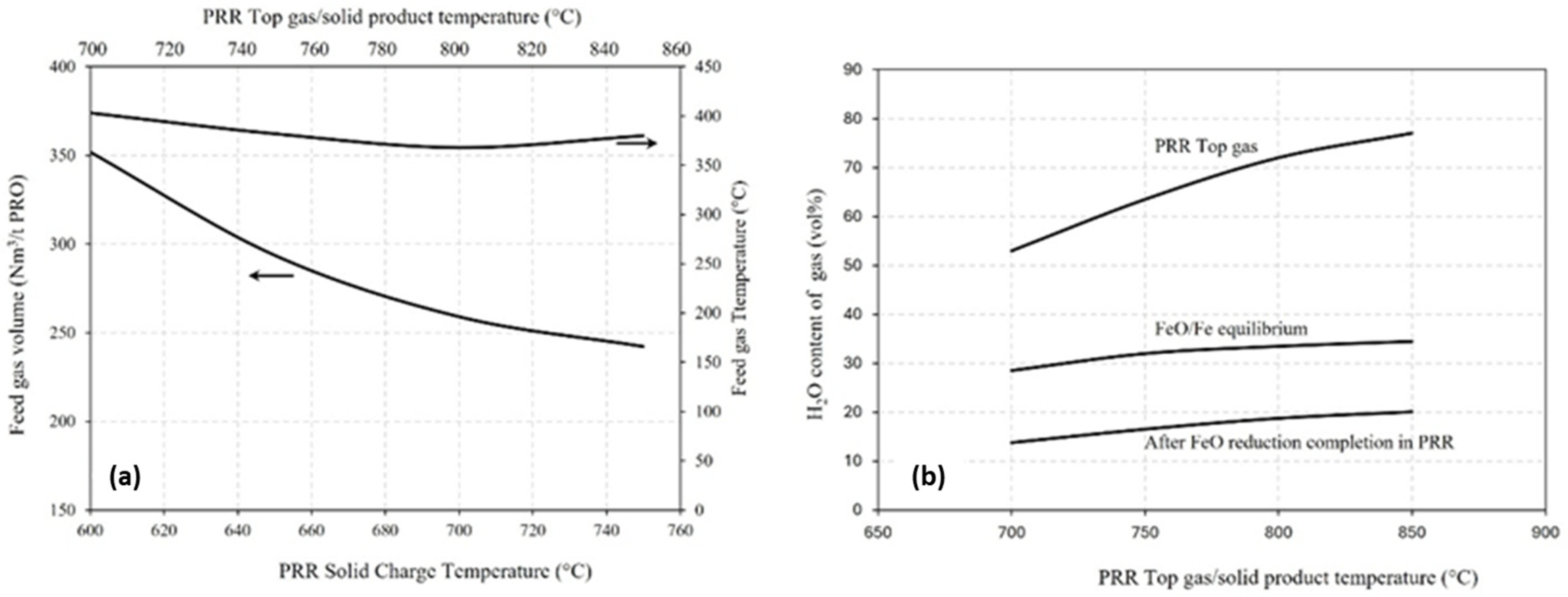
Figure 6a shows the obtained mass and energy balances for the PRR, and it indicates that the quantity of hot hydrogen feed gas is decreased with increasing the temperature of hot solid charge, while the temperature of feed gas varies in a small range of 368–403 °C. Figure 6b shows the calculated concentrations of the gas in PRR at the point of complete FeO reduction, and in comparison with the equilibrium gas composition for FeO to Fe conversion (Fe-O-H system). Obviously, the H2 content of the gas is higher than the equilibrium concentration for FeO reduction to Fe, and hence reduction of iron and manganese oxides occur from a thermodynamics point of view, confirming that the above assumption was appropriate.
Figure 6a shows that if the PRO is discharged at 750 °C, the required hydrogen for the reactor is about 294 Nm3/t PRO, which is significantly lower than 430 Nm3/t PRO when cold calcined ore was charged into PRR (Figure 5a). The quantity of hydrogen use in processing CNO is about 59.2% and 31.6% lower than the required volumes for the cases of raw ore use and cold CNO use, respectively. In addition, the temperature of the hydrogen feed is about 382 °C, which is significantly lower than 850 °C for the scenario of cold CNO. Obviously, the hot CNO charge into PRR is quite advantageous in comparison to the cold charge from both an operational and economic point of view. To hot-charge calcined Mn ore into the PRR, it is necessary to have a calciner close or next to the PRR, and the overall mass and energy balances for the two units must be evaluated to outline the best operation condition. This is studied in detail in the following section.

3.4. Pre-Reduction Reactor Coupled with Calciner

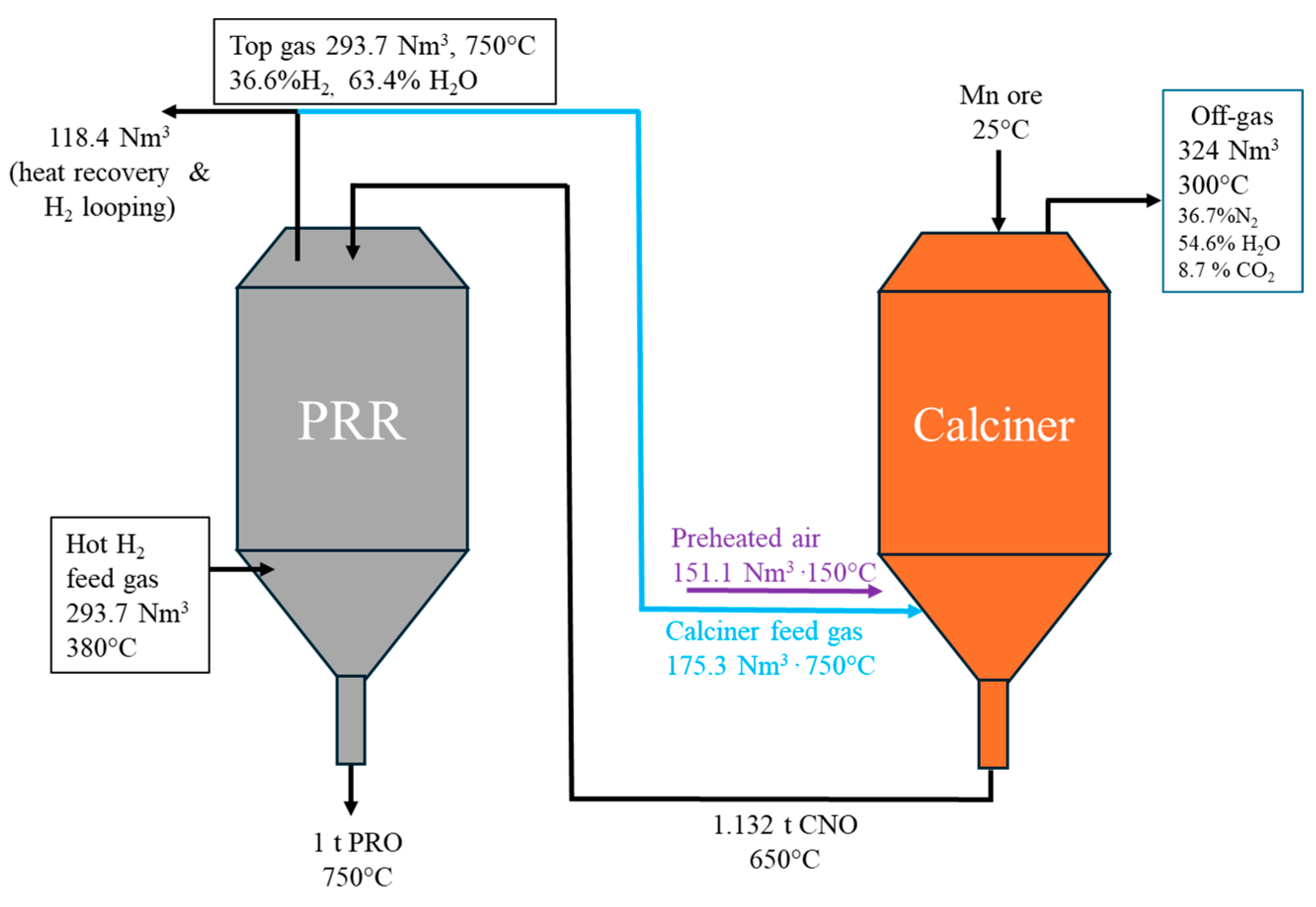
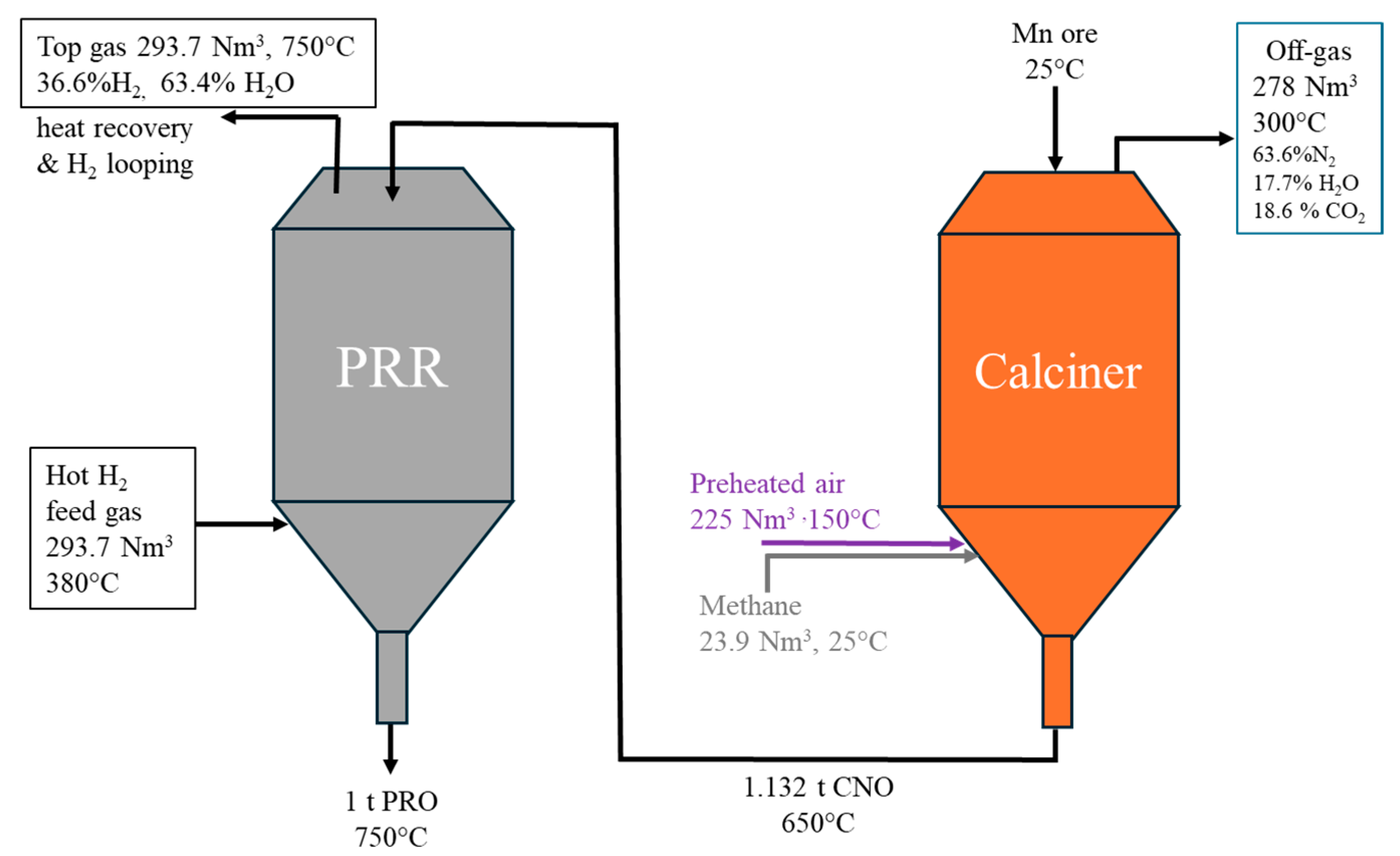
Coupling the PRR with a calciner and using hot CNO in PRR decreases the quantity of hydrogen feed gas of PRR. In this thermodynamical study, two scenarios for operating the calciner regarding the fuel type were evaluated. In scenario I, a portion of the PRR top gas is used as fuel for the calciner and is burned using preheated air by the calciner off-gas; this may be advantageous regarding the high enthalpy of the PRR top gas. In scenario II, methane is used as fuel for the calciner, which is cheaper than hydrogen. In both scenarios the calciner off-gas has thermal energy and it can be used to pre-heat the air needed for the calciner burner. Obviously, the calciner off-gas contains some CO2 in both scenarios, which is higher when methane is used. Regarding sustainable trends, the calciner off-gas can be further processed to capture CO2, which is typically slightly over 8% for the case of Nchwaning ore. To compare the two scenarios precisely and in relation to the PRR reactor process described above, the same temperatures for the discharged CNO (650 °C) and the calciner off-gas (300 °C) were considered for the calculations for the two scenarios.
Figure 7 shows the results of mass and energy balances for scenario I, and it shows that the chemical and thermal energy of about 60% of the PRR top gas (175 Nm3) is sufficient to calcine Nchwaning Mn ore and reach 650 °C for the hot CNO feed of the PRR. The calciner off-gas contains about 8.7% CO2, which is generated due to the calcination of CaCO3 and CaMg(CO2)3 components of the ore. This gas has insignificant CO gas, since the main components are N2 and H2O, and obviously has a low carbon footprint. Moreover, the heating of this gas to 300 °C can be used to preheat the required air for the burner of the calciner to 150 °C.
The results of mass and energy balances for scenario II are shown in Figure 8, and they indicate that a much smaller volume of methane (23.9 Nm3) is needed to burn in the calciner compared to the use of PRR top gas in scenario I (175.3 Nm3 PPR top gas). However, in scenario II more air is needed than scenario I (with the same temperature), which is due to the formation of more gaseous products (CO2 and H2O) for methane burning, compared to hydrogen burning with only H2O formation. Considering the volume and composition of PRR top gas use in calciner, about 64.2 Nm3/t-PRO with 750 °C is burned in the calciner in scenario I, which is about three times higher than methane use (at 25 °C) in scenario II. This difference is due to the higher heat generation in methane burning, which is about three times higher than heat generation via burning hydrogen. It is worth noting that there is no significant difference between the total enthalpies of the burning gases in the two scenarios, which is about 0.017 kWh for 64.2 Nm3 hot hydrogen at 750 °C, and about −0.02 kWh for 23.9 Nm3 methane at 25 °C.
Considering the quantities and compositions of the calciner off-gases in Figure 7 and Figure 8, it is found that in scenario I about 28.2 Nm3 CO2/t-PRO leaves the calciner, while in scenario II it is about 51.7 Nm3 CO2/t-PRO, and in the latter 45.5% originated from methane. From a technical and economic point of view, the use of methane in scenario II may be more beneficial than scenario I, and as the PRR top gas can be processed to separate H2, and recycle, it would be logical and more economic that it is looped as reductant to the PRR.

3.5. Hydrogen Looping and Overall Hydrogen Consumption

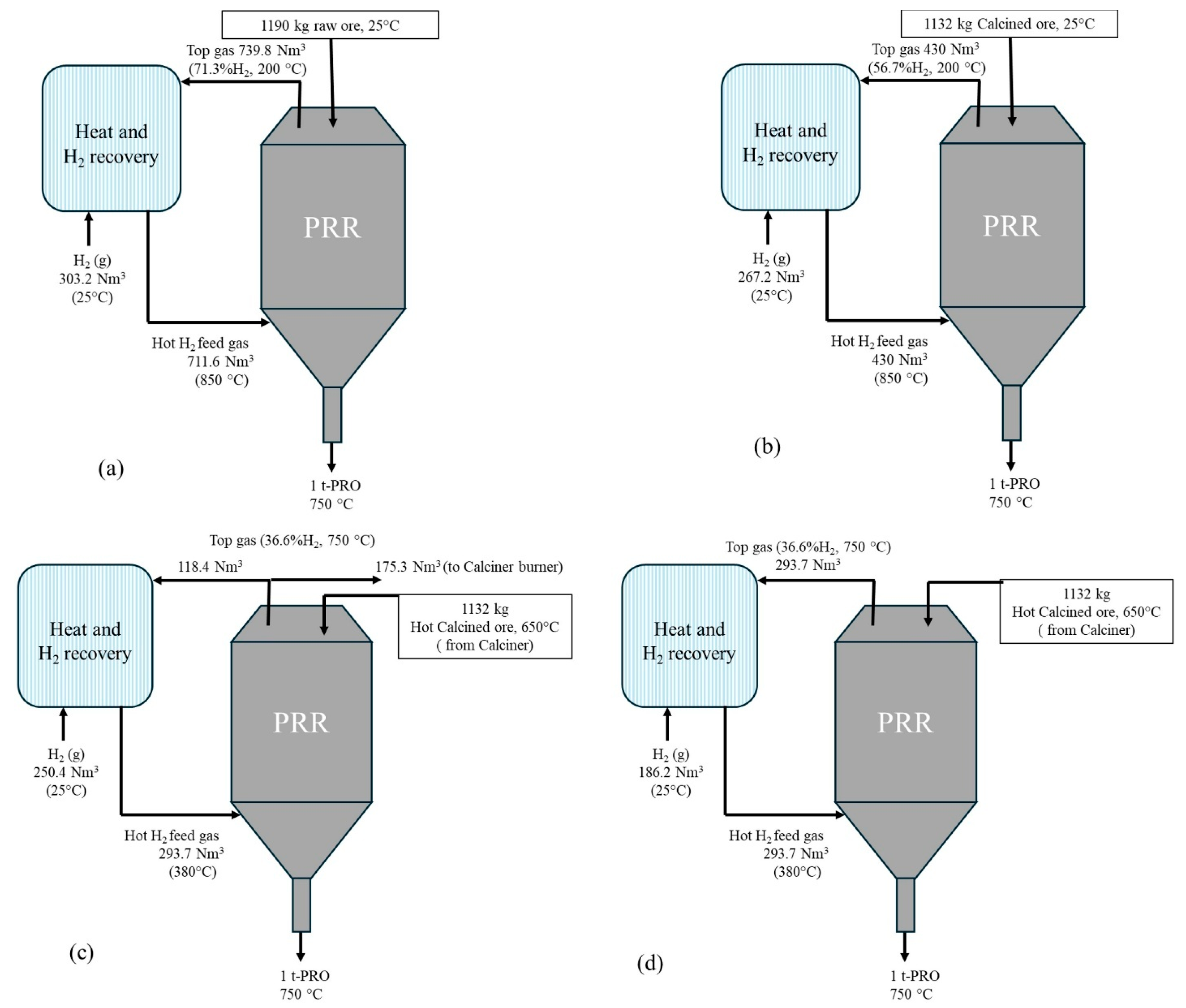
The hydrogen recovery from the PRR top gas and its looping in the process as a portion of the PRR feed gas benefits the process economy as described previously [3]. The PRR top gas contains H2 and has high temperature, and hence depending on its enthalpy it can be used to preheat the fresh cold H2 feed, or a portion of it can be burned to provide this heat. The mechanism and technology for hydrogen recovery and looping can be performed with different methods such as using membranes [17], which is beyond the present study and not discussed in detail here. To obtain a comparative overview, four different cases of using raw ore in standalone PRR, using cold calcined ore in standalone PRR, and using hot calcined ore via coupling PRR with the calciner for the two scenarios I and II are evaluated. Figure 9 shows these cases in which the fresh cold H2 gas is heated to the target temperature via heat exchange with a hot gas formed from burning a portion of the hot top gas of PRR, or via only heat exchange with the hot PRR top gas. Burning a portion of the PRR top gas is necessary for the case of standalone reactors with the cold solid charges, as the top gas temperature is low (200 °C), while for the PRR with hot CNO charge the enthalpy of the PRR top gas with high temperature (750 °C) is sufficient to heat fresh H2 gas feed.
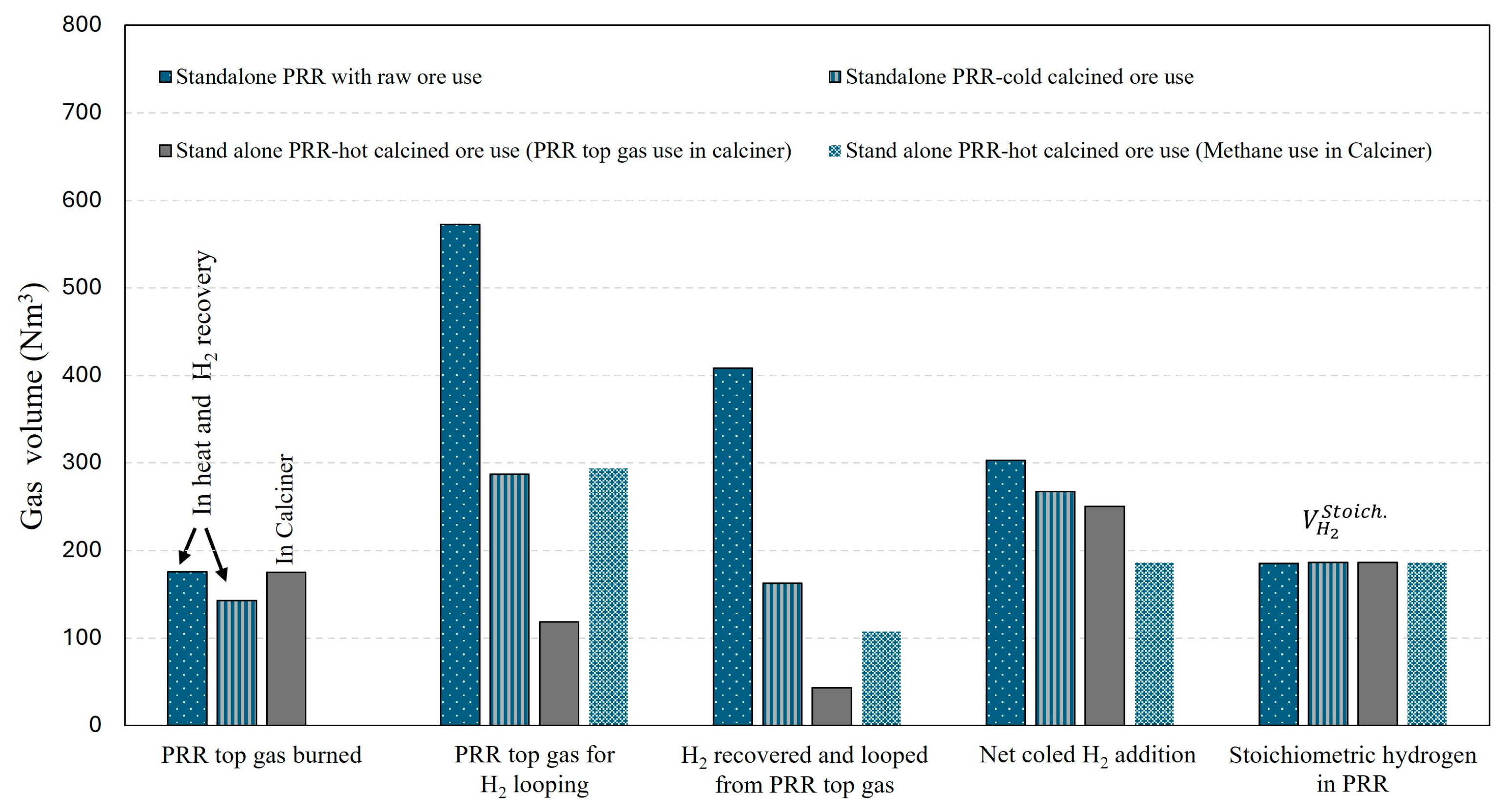
To obtain reliable numbers, it was assumed that heat exchange for the standalone reactor cases occurs with 90% efficiency heat exchanger, and the portion of the PRR top gas to be burned was determined. For the case of PRR with hot CNO charge, the enthalpy of the PRR top gas was significantly high and enough to exchange heat, with no burning. However, for the scenario I case described above a portion of the PRR top gas is nevertheless burned in calciner, and it is close to the same quantity of top gas for the case of standalone PRR with raw ore charge, as illustrated in Figure 10. The presented mass and energy balance results in Figure 10 indicate that the volume of PRR top gas to be processed in the “heat and H2 recovery” unit is the highest for standalone PRR with cold charge and lowest for the case of PRR coupled with calciner in which the PRR top gas in burned in calciner. The same trend is seen for the total volume of H2 gas that is looped and re-fed into PRR. However, the overall quantity of H2 gas use (net cold H2 gas use per t-PRO) is the lowest for the case of coupled PRR with the calciner and using methane in the calciner. In this case, the quantity of H2 gas that is used per ton PRO product is actually the same as the stoichiometric H2 gas for the reduction reactions in PRR ( V H 2 S t o i c h . ), and the looped H2 gas is supplying V H 2 E x c . . For the other three cases, however, the fresh cold H2 gas use is higher than V H 2 E x c   S t o i c h .   of PRR. The results presented in Figure 10 show that PRR coupling with calciner, using methane fuel in calciner, and H2 recovery and looping provide minimum overall hydrogen use (as theoretical quantity) for the process. As seen in Figure 10, the net H2 gas feed is 186.2 Nm3/t-PRO, which is in mass about 16.6 kg/t-PRO, and hence indicates a feasible process regarding the low quantity of hydrogen use and related costs.

4. Conclusions

The thermochemistry of pre-reduction and calcination of a commercial manganese ore to establish a hydrogen-based reduction unit in HAlMan process was studied from room temperatures to 900 °C through mass and energy balances and based on previous experimental results. The main conclusions can be summarized as follows:
  • The pre-reduction of raw manganese ore by hydrogen gas in a standalone reduction reactor requires high quantity of hot hydrogen to supply energy for heating the ore components and calcine the carbonates.
  • The use of calcined form of the ore in the reduction reactor instead of the raw ore reduces significantly the quantity of the hot hydrogen feed (about 40% for the examined Nchwaning ore), while all other process conditions are fixed.
  • The use of hot calcined manganese ore in the reduction reactor is quite beneficial compared to raw and cold calcined ore uses: lower volume of hot hydrogen at significantly lower temperatures can be used.
  • Calciner coupled with the pre-reduction reactor can be operated via using methane or a portion of pre-reduction reactor H2-H2O gas mixture as the fuel. However, methane use is beneficial in terms of operation and economy for calcination.
  • The overall hydrogen consumption for the pre-reduction of manganese ore was found to be achievable as the theoretical quantity for reduction reactions when the pre-reduction reactor is coupled with the calciner, and the top gas of PRR is processed and its hydrogen is looped back into PRR.

Funding

This research was funded by European Commission through HAlMan project in Horizon Europe program, grant number “101091936”.

Data Availability Statement

The original contributions presented in this study are included in the article. Further inquiries can be directed to the corresponding author.

Conflicts of Interest

The authors declare no conflict of interest.

References

  1. Olsen, S.E.; Tangstad, M.; Lindstad, T. Production of Manganese Ferroalloys; Tapir Academic Press: Trondheim, Norway, 2007. [Google Scholar]
  2. Linstad, T. CO2-Emissions and the Ferroalloys Industry. In Proceedings of the 8th International Ferroalloys Congress (INFACON 8), Beijing, China, 7–10 June 1998; pp. 87–92. [Google Scholar]
  3. Safarian, J. A sustainable process to produce manganese and its alloys through hydrogen and aluminothermic reduction. Processes 2022, 10, 27. [Google Scholar] [CrossRef]
  4. Curtis, A.H. Manganese Ores; J. Murray: London, UK, 1919. [Google Scholar]
  5. Cheraghi, A.; Becker, H.; Eftekhari, H.; Yoozbashizadeh, H.; Safarian, J. Characterization and calcination behavior of a low-grade manganese ore. Mater. Today Commun. 2020, 25, 101382. [Google Scholar] [CrossRef]
  6. Barner, H.E.; Mantell, C.L. Kinetics of hydrogen reduction of manganese dioxide. Ind. Eng. Chem. Process Des. Dev. 1968, 7, 285–294. [Google Scholar] [CrossRef]
  7. De Bruijn, T.; Soerawidjaja, T.; De Jongt, W.; Van Den Berg, P. Modelling of the reduction of manganese oxides with hydrogen. Chem. Eng. Sci. 1980, 35, 1591–1599. [Google Scholar] [CrossRef]
  8. Zaki, M.; Hasan, M.; Pasupulety, L.; Kumari, K. Thermochemistry of manganese oxides in reactive gas atmospheres: Probing redox compositions in the decomposition course MnO2 → MnO. Thermochim. Acta 1997, 303, 171–181. [Google Scholar] [CrossRef]
  9. Terayama, K.; Shimazaki, T. Effect of hydrogen on the reduction kinetics of manganese oxide at high temperatures by new EGA method. Netsu Sokutei 2000, 27, 13–18. [Google Scholar]
  10. El-Gawad, H.H.A.; Ahmed, M.; El-Hussiny, N.; Shalabi, M. Reduction of low grade Egyptian manganese ore via hydrogen at 800°C–950°C. Open Access Libr. J. 2014, 1, e427. [Google Scholar] [CrossRef]
  11. El-Hussiny, N.; El-Gawad, H.H.A.; Mohamed, F.; Shalabi, M. Pelletization and reduction of Egyptian low grade manganese ore pellets via hydrogen at 750–950°C. Int. J. Sci. Eng. Res. 2015, 6, 339–346. [Google Scholar]
  12. Sustainable Hydrogen and Aluminothermic Reduction Process for Manganese, Its Alloys and Critical Raw Material Production. 2025. Available online: https://halman-project.eu/ (accessed on 24 August 2025).
  13. Sarkar, A.; Schanche, T.L.; Safarian, J. Isothermal pre-reduction behavior of Nchwaning manganese ore in H2 atmosphere. Mater. Proc. 2023, 15, 58. [Google Scholar] [CrossRef]
  14. Khama, M.I.; Reynolds, Q.G.; Xakalashe, B.S. A macro-scale approach to computational fluid dynamics modelling of the reduction of manganese ore by hydrogen. J. S. Afr. Inst. Min. Metall. 2025, 125, 151–160. [Google Scholar] [CrossRef]
  15. Mchabe, D.; Tsebe, S.; Matinde, E. Evaluation of the effects of fluidization conditions on hydrogen reduction in manganese ore fines. Minerals 2025, 15, 386. [Google Scholar] [CrossRef]
  16. Ghanekar, P.; Kubal, J.; Cui, Y.; Mitchell, G.; Delgass, W.N.; Ribeiro, F.; Greeley, J. Catalysis at Metal/Oxide Interfaces: Density Functional Theory and Microkinetic Modeling of Water Gas Shift at Pt/MgO Boundaries. Top. Catal. 2020, 63, 673–687. [Google Scholar] [CrossRef]
  17. Moral, G.; Ortiz, A.; Gorri, D.; Ortiz, I. Hydrogen recovery from industrial waste streams using Matrimid®/ZIF mixed matrix membranas. Int. J. Hydrogen Energy 2024, 51, 210–224. [Google Scholar] [CrossRef]
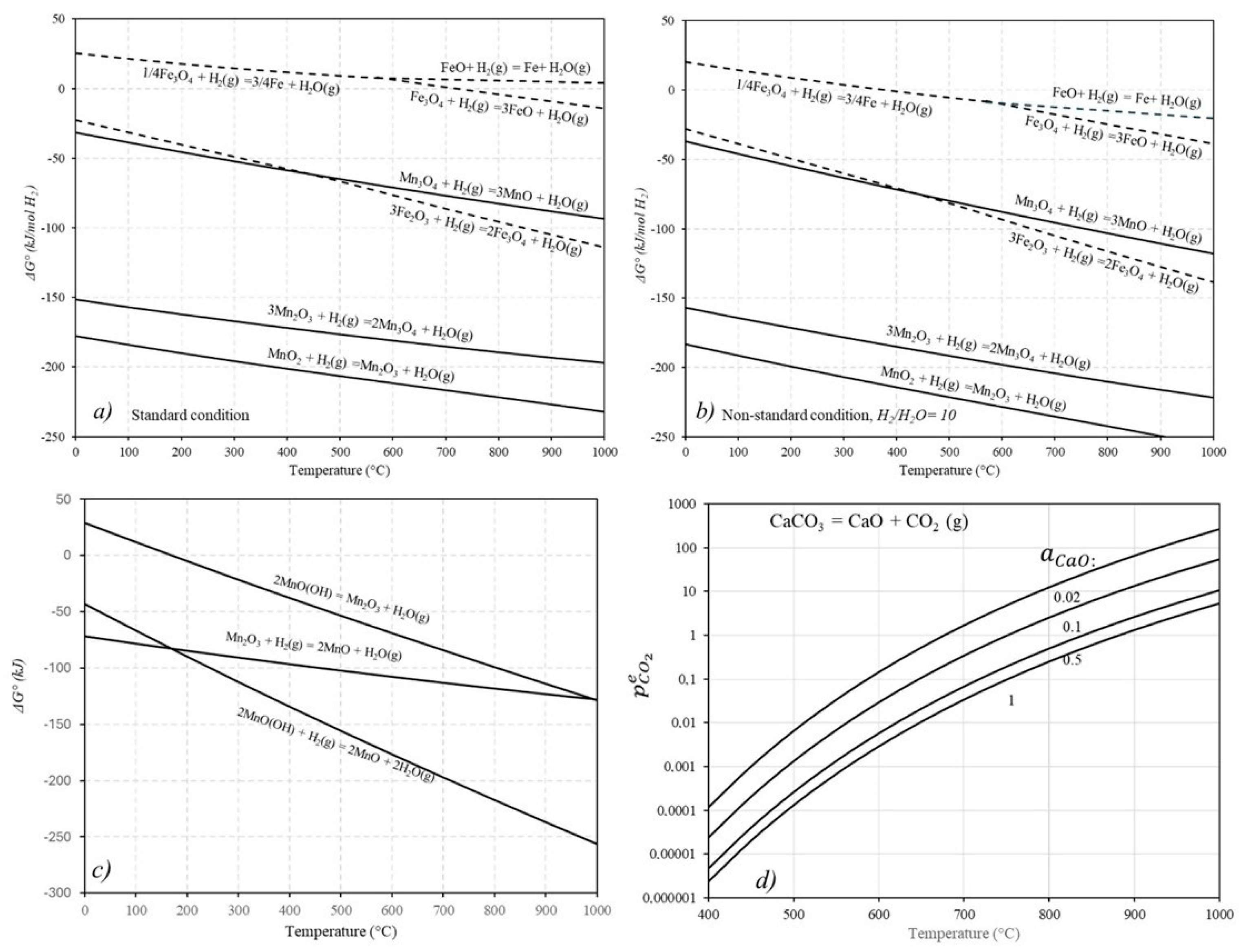
Figure 1. The changes of the Gibbs energies for Mn and Fe oxide reduction by hydrogen with temperature at standard (a), and a typical non-standard condition (b). The changes of the Gibbs energies for the decomposition and hydrogen reduction of MnO(OH) at standard conditions in comparison with Mn2O3 reduction by hydrogen (c), and the relationship between the equilibrium partial pressure of CO2 for calcite decomposition with temperature and typical chemical activities of CaO (d).
Metals 16 00117 g001
Figure 2. (a) The changes of the Gibbs energy for the decomposition of dolomite with temperature at selected CO2 partial pressures. (b) Materials flow and energy balances for PRR using dry manganese ore. (c) The relationship between the volume of PRR feed and top gases and PRO discharge temperature.
Metals 16 00117 g002
Figure 3. (a) The composition of the PRR top gas for different pre-reduced ore discharge temperatures. (b) The energy balance for the PRR and the total enthalpies in the input and output of the reactor.
Metals 16 00117 g003
Figure 4. (a) The enthalpy changes due to the main chemical reactions in PRR with temperature. (b) The quantified enthalpy changes for the main chemical reactions in PRR.
Metals 16 00117 g004
Figure 5. (a) Materials flow and energy balances for PRR using cold calcined manganese ore. (b) The volume of PRR feed and top gas, and composition of top gas using calcined ore charge.
Metals 16 00117 g005
Figure 6. (a) Feed gas volume and top gas temperature of PRR using hot calcined Nchwaning ore. (b) The relationship between the H2O content of top gas, and in gas after FeO reduction in PRR with top gas temperature variation.
Metals 16 00117 g006
Figure 7. Mass and energy balances for coupled PRR with a calciner for scenario I (a portion of PRR top gas use as fuel in the calciner).
Metals 16 00117 g007
Figure 8. Mass and energy balances for coupled PRR with a calciner for scenario II (methane use as fuel in the calciner).
Metals 16 00117 g008
Figure 9. A comparative illustration of quantity of gases in hydrogen looping for (a) standalone PRR with raw ore use, (b) standalone PRR with cold calcined ore use, (c) hot CNO use in PRR from a calciner with PRR top gas burning, and (d) hot CNO use in PRR from a calciner with methane burning.
Metals 16 00117 g009
Figure 10. Different volumes of gases for PRR including heat and hydrogen recovery unit for different case studies.
Metals 16 00117 g010
Table 1. Composition of the Nchwaning manganese ore, measured by X-Ray Fluorescence (XRF). Adapted from Ref. [13].
ComponentMnFeSiO2Al2O3CaOMgOBaOTiO2K2OPSCCO2H2OLOI
Wt%46.8310.203.900.367.481.190.310.030.040.040.061.234.50.096.57
Table 2. Composition of the Nchwaning manganese ore, mineral bases.
MineralMn2O3MnO(OH)Fe2O3SiO2Al2O3CaCO3CaMg(CO3)2CaO *BaO *TiO2 *K2O *P *S *
Wt%66.301.0714.573.900.364.625.463.220.310.030.040.040.06
* Associated with complex oxides.
Table 3. Chemical composition of fully pre-reduced Nchwaning Mn ore (wt%).
ComponentMnOFeSiO2Al2O3CaOMgOBaOTiO2K2OPS
Wt%71.9112.144.640.438.891.410.370.040.050.040.07
Table 4. Chemical composition of fully calcined Nchwaning ore.
MineralMn2O3Fe2O3SiO2Al2O3CaOMgOBaOTiO2K2OPS
Wt%70.6215.34.10.387.851.250.330.030.040.040.07
Disclaimer/Publisher’s Note: The statements, opinions and data contained in all publications are solely those of the individual author(s) and contributor(s) and not of MDPI and/or the editor(s). MDPI and/or the editor(s) disclaim responsibility for any injury to people or property resulting from any ideas, methods, instructions or products referred to in the content.