Article

A Study of Effect of Bidirectional Drawing on the Mechanical Properties of 30MnSi6 Non-Heat-Treated Steel


1
Hyundai Steel R&D Center, Dangjin 31719, Republic of Korea
2
Department of Materials Science and Engineering, Inha University, Incheon 22212, Republic of Korea
3
Department of Advanced Materials Processing and Engineering, Inha Manufacturing School, Incheon 21999, Republic of Korea
*
Author to whom correspondence should be addressed.
Metals 2026, 16(1), 118; https://doi.org/10.3390/met16010118
Submission received: 3 December 2025 / Revised: 14 January 2026 / Accepted: 15 January 2026 / Published: 20 January 2026

Abstract

As the work hardening rate increases during the cold drawing of non-heat-treated steel (NHT steel), a significant loss in ductility and toughness can occur, leading to reduced formability and part quality. In this study, a bidirectional drawing process consisting of alternating forward and reverse passes is proposed to mitigate these issues and enhance the mechanical performance of the steel. Mechanical property evaluations, including tensile testing and three-point bending tests, were conducted to assess the effects of bidirectional drawing compared to conventional unidirectional drawing. The results showed that the bidirectionally drawn wire maintained a similar tensile strength to that of the unidirectionally drawn wire at a 70% area reduction, while exhibiting a 12% improvement in elongation. Microstructural analysis revealed grain refinement and reduced texture anisotropy in the bidirectionally drawn specimens, contributing to the observed enhancement in ductility. These findings indicate that bidirectional drawing is a promising approach for improving the formability and overall quality of high-strength, NHT steel components.

1. Introduction

With the reinforcement of environmental regulations worldwide, the development of technologies aimed at reducing CO2 emissions and improving energy efficiency has become increasingly active across various industries. In the automotive sector, the demand for NHT steels, which can eliminate conventional heat treatment processes, has been steadily increasing [1,2,3,4].
NHT steels can provide excellent mechanical properties without additional heat treatment, making them suitable for components such as automotive steering parts and fasteners. Moreover, the omission of heat treatment reduces both energy consumption and manufacturing costs. In general, NHT steels achieve the required strength by maximizing work hardening through severe cold drawing with high area reductions [5,6,7,8,9].
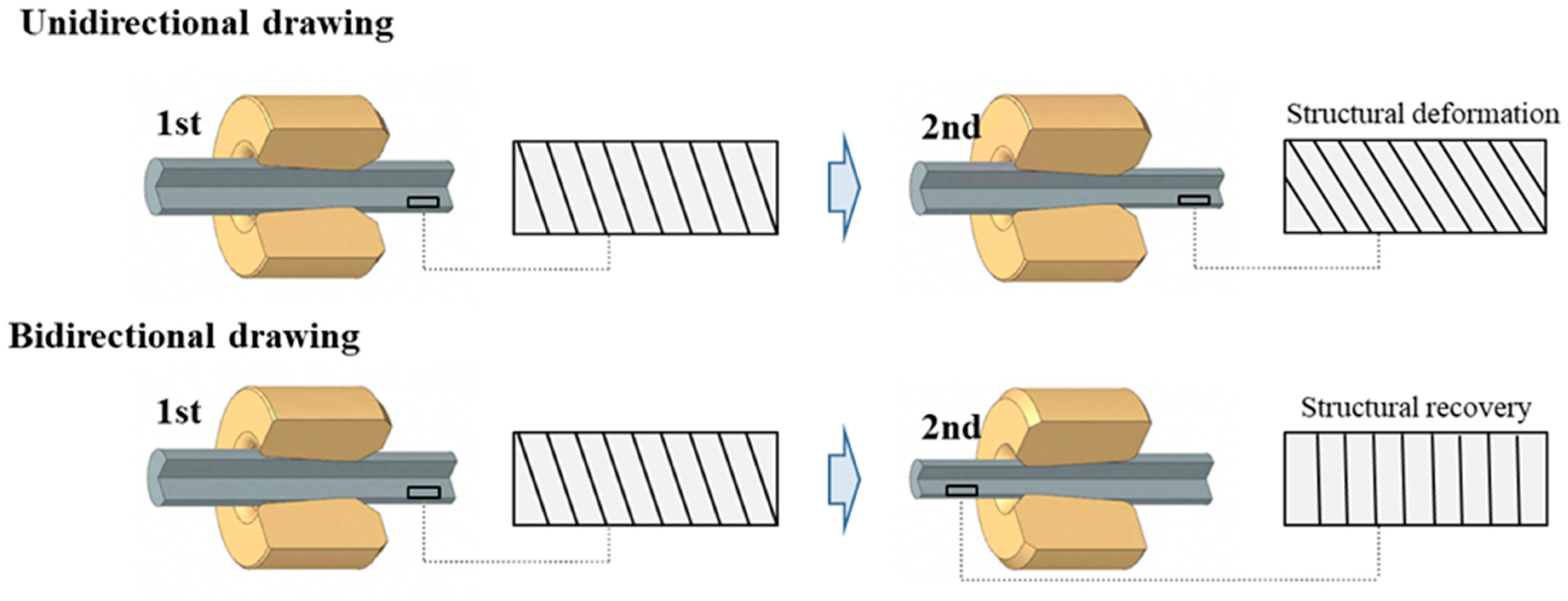
However, as the demand for higher strength has increased, the work hardening rate of NHT steels has also risen, which often results in a loss of ductility and toughness. To overcome this limitation, bidirectional drawing has been proposed as an alternative process, and its schematic illustration is shown in Figure 1. In this method, the material is first drawn in one direction and then reversed for further drawing, thereby redistributing the surface shear stress and suppressing the deterioration of ductility and toughness.
Indeed, bidirectional drawing has been successfully applied in the production of bonding wires for ductile FCC metals such as Au, Al, and Cu, where improvements in ductility and microstructural stability have been widely reported [10,11,12,13,14].
However, these studies have been largely confined to FCC metals, and the application of bidirectional drawing to Fe-based alloys with a BCC crystal structure—particularly non-heat-treated (NHT) steels—remains very limited. Although several studies on BCC steels have addressed strain-path-dependent deformation behavior, most of them have focused on macroscopic mechanical responses under simplified loading conditions, such as tension–compression or cyclic deformation. Consequently, systematic investigations targeting practical wire drawing processes—where severe plastic deformation, crystallographic texture development, and surface-dominated dislocation accumulation occur simultaneously—are still scarce, especially for high-strength Fe–Mn-based NHT steels. Moreover, the combined effects of bidirectional drawing on microstructural characteristics (grain size, crystallographic texture, and dislocation distribution) and mechanical properties (ductility, bending formability, and residual stress relaxation) have not yet been comprehensively reported.
In this study, bidirectional drawing was applied to a 30MnSi6 bainitic NHT steel to evaluate the effects of area reduction and drawing path change on its microstructure and mechanical properties. Special attention was given to EBSD-based analysis of crystallographic texture and geometrically necessary dislocations (GNDs) to quantitatively characterize dislocation behavior. Furthermore, the influence of drawing direction changes on the strength–ductility balance was examined. This study not only extends the application of bidirectional drawing from precious-metal wires and FCC metals to Fe-based NHT steels, but also provides insights into its potential for improving the formability and industrial applicability of high-strength NHT steels.

2. Materials and Methods

2.1. Drawing Process

The experimental alloy used in this study is NHT steel, with its chemical composition listed in Table 1. To investigate the effects of drawing reduction ratio and drawing direction on the microstructure and mechanical properties, Fe-Mn wires with an initial diameter of 11 mm were first drawn with a 30% reduction in one pass, followed by a change in drawing direction to achieve a total reduction of 70%. The corresponding drawing conditions are provided in Table 2.
The cross-sectional reduction ratio of the experimental alloy was calculated using Equation (1), where RA represents the reduction in area, Ai is the initial cross-sectional area, and Af is the cross-sectional area after drawing. Tungsten carbide dies were used for the drawing process, with a die angle of 24°, a drawing speed of 400 mm/min, and BW wire 515A used as the lubricant.
R a = A i A f A i · 100

2.2. Microsturcture

To analyze the microstructure of the experimental alloys before and after drawing, the longitudinal section (L-section) of the drawn wires was mechanically polished using silicon carbide papers and a 1 µm diamond suspension, followed by etching with a 3% Nital (3% HNO3 + 97% C2H5OH) solution.
Microstructure analysis was performed using an optical microscope (OM, Olympus, Center Valley, PA, USA, GX51) and a scanning electron microscope equipped with energy-dispersive X-ray spectroscopy (SEM-EDS, JEOL, Tokyo, Japan, 7100F).
Electron backscatter diffraction (EBSD, Oxford Symmetry, Oxford, UK) analysis was conducted on the longitudinal section parallel to the drawing direction. The step size was set to 0.2 μm to ensure stable indexing and reliable KAM evaluation in the heavily deformed microstructures. The accelerating voltage was 20 kV, and the specimen was tilted by 70°. The kernel average misorientation (KAM) values were calculated by averaging the misorientation between each measurement point and its first and second nearest neighbors, with a cutoff angle of 5°. Data points with a confidence index lower than 0.1 were excluded from the analysis.
The geometrically necessary dislocation (GND) density was estimated from the local orientation gradients obtained from the KAM maps. The local misorientation θ (in radians) was calculated by dividing the average misorientation by the step size (l), and the Burgers vector of body-centered cubic (BCC) iron (b = 0.248 nm) was applied. The GND density was then calculated using Equation (2), as follows.
pGND = θ l · b
It should be noted that GND densities derived from EBSD-based KAM analysis are inherently semi-quantitative, as they depend on measurement parameters such as step size and noise filtering. In the present study, identical EBSD acquisition conditions were applied to all specimens, and the GND density was therefore used as a comparative microstructural metric to evaluate relative changes in lattice distortion induced by different drawing paths. The validity of this comparative approach is further supported by consistent trends observed in the KAM and image quality (IQ) maps.
IQ maps were used to visualize the degree of local lattice distortion, where lower IQ values indicate higher dislocation densities. Grain boundaries with misorientations of 2–15° were defined as dislocation structures or subgrain boundaries, whereas those above 15° were classified as high-angle grain boundaries.

2.3. Mechanical Properties

Hardness measurements were conducted using a Vickers hardness tester (Mitutoyo, Kawasaki, Japan HV-100) under a load of 100 g. The hardness was measured from the surface to the center of the specimen. Tensile tests of the experimental alloys were performed in the wire form using a universal testing machine (Zwick/Roell, Ulm, Germany Z250) in accordance with ASTM E8/E8M [15]. The testing was conducted at a strain rate of 0.00025 s−1 up to the yield point and 0.0067 s−1 during the plastic deformation region.

2.4. 3-Point Bending Test and Residual Stress

To evaluate the formability of the experimental alloys according to drawing direction, a three-point bending test was conducted based on the ISO 178 standard [16] using a universal testing machine (Instron, Norwood, MA, USA, Model 3369). The test was performed at a speed of 100 mm/min, with a support span of 50 mm and a punch diameter of 10 mm. Bending load was applied up to a displacement of 25 mm.
Residual stress was determined using X-ray diffraction (Rigaku, Tokyo, Japan, Ultima IV) with Cr Kα radiation (λ = 2.29 Å) at 40 kV and 40 mA. Measurements were conducted on the {211} diffraction peak over a 2θ range of 146.3–166.4° using the sin2ψ method with iso-inclination geometry. The elastic constants of ferrite steel (E = 220 GPa, ν = 0.28) and a stress constant of −313.34 MPa/deg were applied for stress calculation. Residual stress values were obtained from the slope of the d–sin2ψ plot, and depth profiles were evaluated by repeated measurements after successive surface polishing.

3. Results and Discussion

3.1. Microstructure

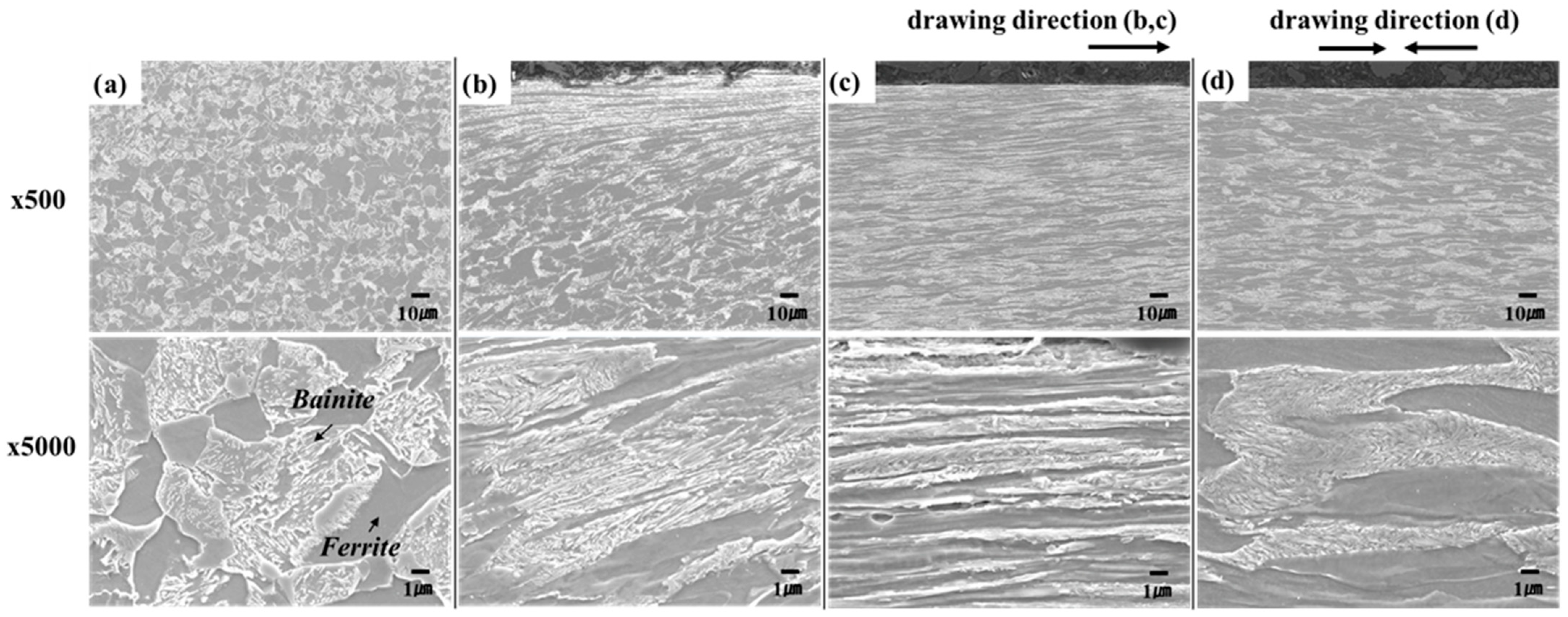
The microstructural observations and grain size measurements of the experimental alloys, according to drawing reduction ratio and direction, are presented in Figure 2 and Table 3. Figure 2a shows the microstructure of the surface in the as-rolled condition prior to drawing, revealing a mixed microstructure of ferrite and bainite. In the case of D30 (Figure 2b), the microstructure appears elongated along the drawing direction, and the average grain length in the transverse direction on the ferrite surface decreased by 34% compared to D0.
In particular, as the cross-sectional reduction ratio increased to 70%, the average grain size at the surface decreased to below 1 μm. In the case of D70 (Figure 2c), the microstructure was significantly elongated along the drawing direction, indicating a structurally unstable condition. In contrast, as shown in Table 3, in RD70 (Figure 2d), where bidirectional drawing was applied, the surface microstructure showed an 18% decrease in grain length along the horizontal direction and a 31% increase in the vertical direction. As a result, the grain aspect ratio between the horizontal and vertical directions approached a level comparable to that of D30, indicating improved structural stability.
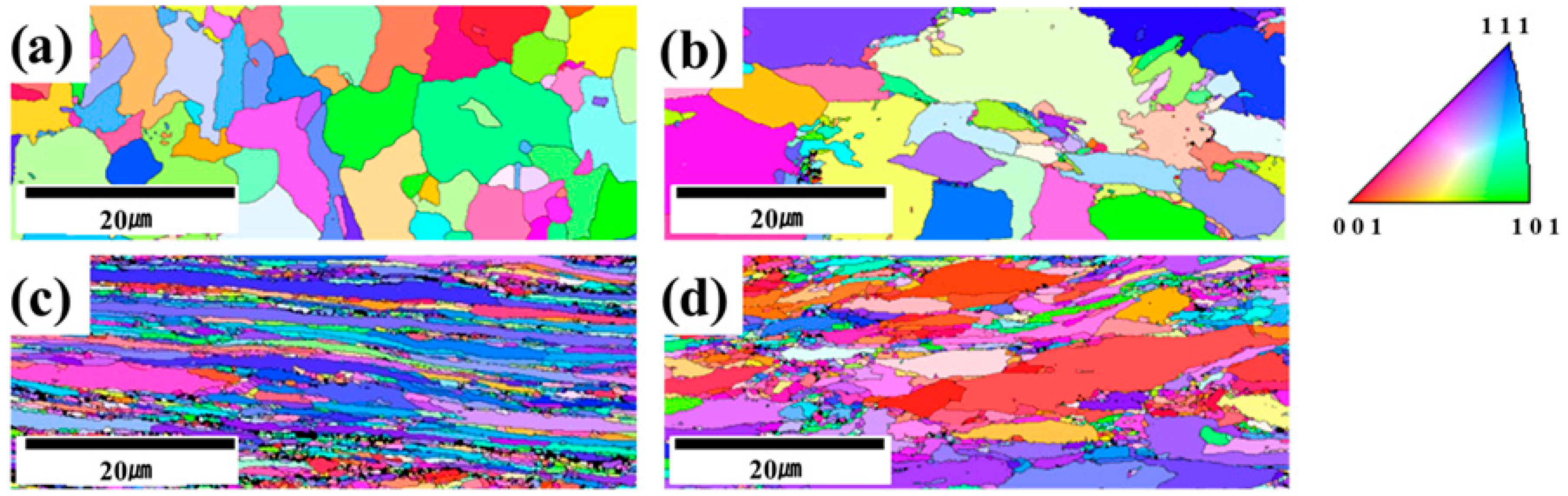
To examine the differences in grain size of the surface microstructure, EBSD inverse pole figure (IPF) analysis was performed, and the results are shown in Figure 3.
In the case of RD70 (Figure 3d), which underwent bidirectional drawing, the elongation of grains was significantly mitigated compared to that of D70 (Figure 3c), resulting in a grain morphology closer to that observed in D30. In contrast, in the unidirectionally drawn specimens D30 and D70, the fraction of the {111} plane increased by 55% and 98%, respectively, with increasing drawing reduction, indicating the progressive development of a strong crystallographic texture. In contrast, the RD70 specimen subjected to bidirectional drawing maintained a {111} fraction close to that of the initial state (D0), as shown in Table 4. This indicates that the excessive development of the {111} texture was effectively mitigated, leading to enhanced structural stability.

3.2. Mechanical Properties and 3-Point Bending Test

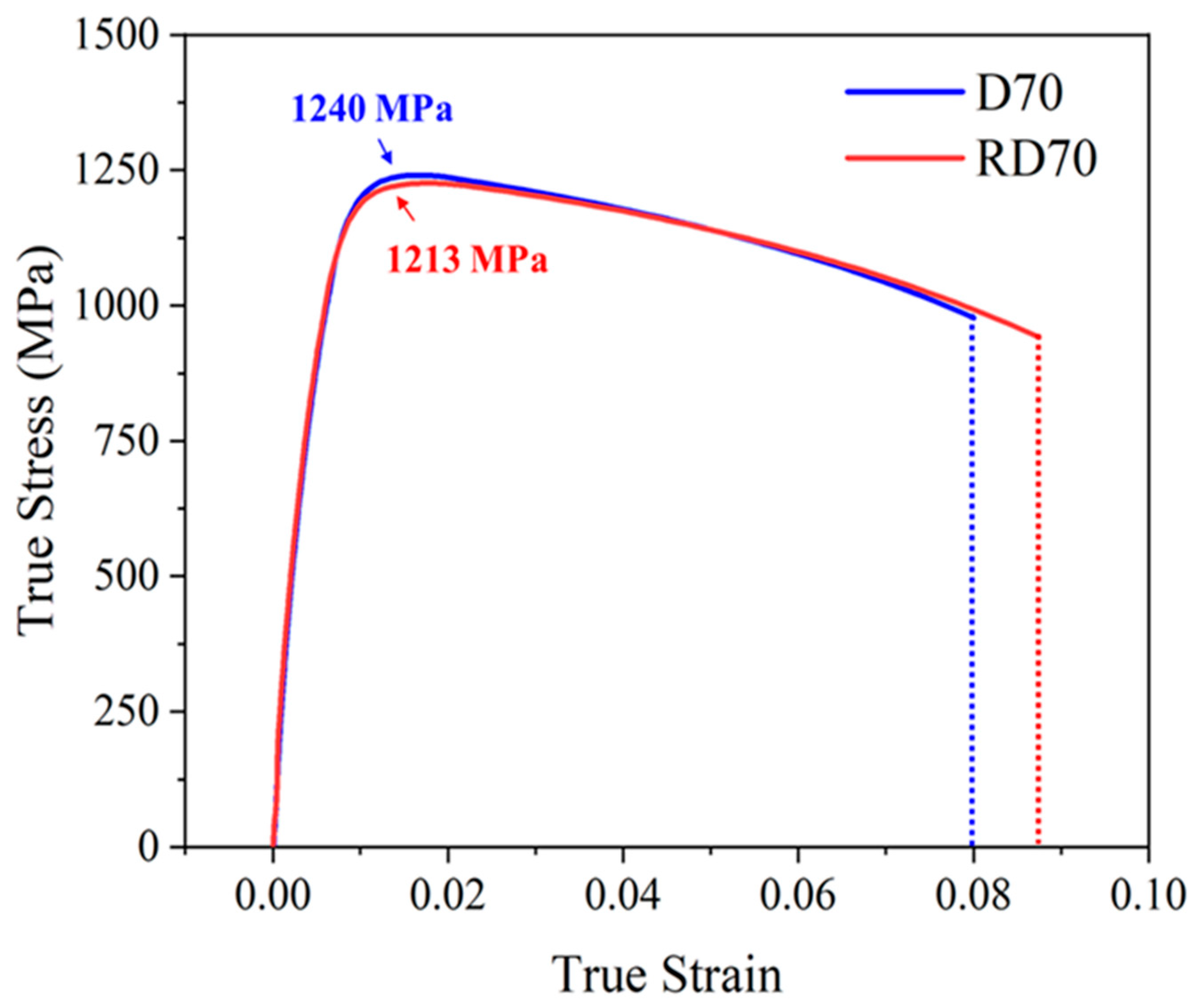
To evaluate the effect of drawing direction on mechanical properties, tensile tests were conducted, and the results are shown in Figure 4 and Table 5. The tensile strength of the unidirectionally drawn D70 specimen was 1240 MPa, while that of the bidirectionally drawn RD70 specimen was 1213 MPa under the same reduction, indicating only a 2.2% difference and essentially comparable strength levels. However, a clear difference was observed in elongation: D70 exhibited 8.5%, whereas RD70 showed 9.8%, corresponding to an increase of about 12%. This enhancement in ductility is consistent with the previous findings of Cho et al. on Au alloys subjected to bidirectional deformation [10]. These results suggest that changes in the strain path can influence dislocation structures and texture development, leading to improved ductility and toughness at similar strength levels.
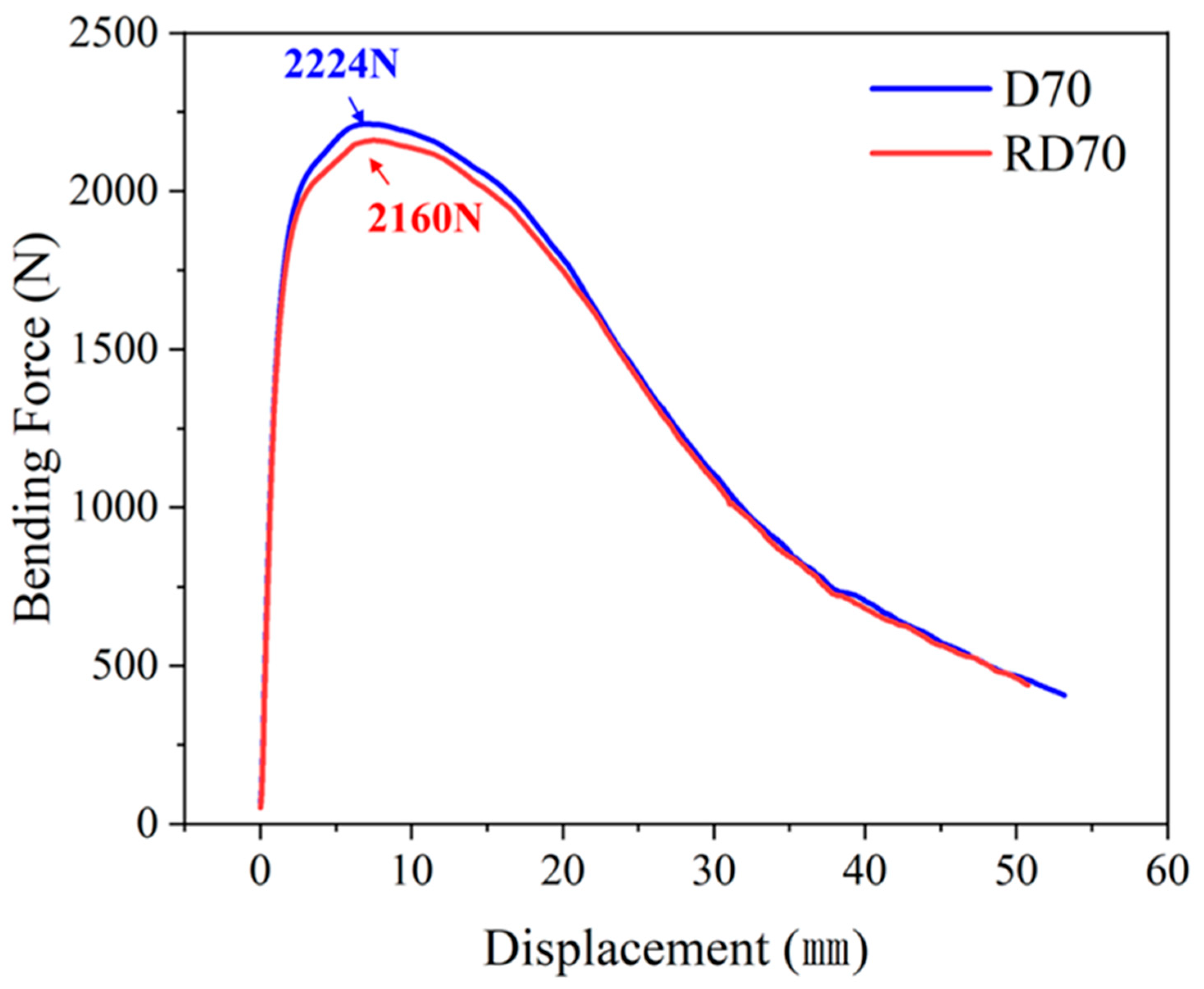
The bending behavior was examined by a three-point bending test following ISO 178, as shown in Figure 5. No specimen fractured during bending. The maximum bending load was 2224 N for D70 and 2160 N for RD70, about 3% lower. Since a lower bending load indicates easier plastic deformation, this result demonstrates that bidirectional drawing contributes to improved bendability.
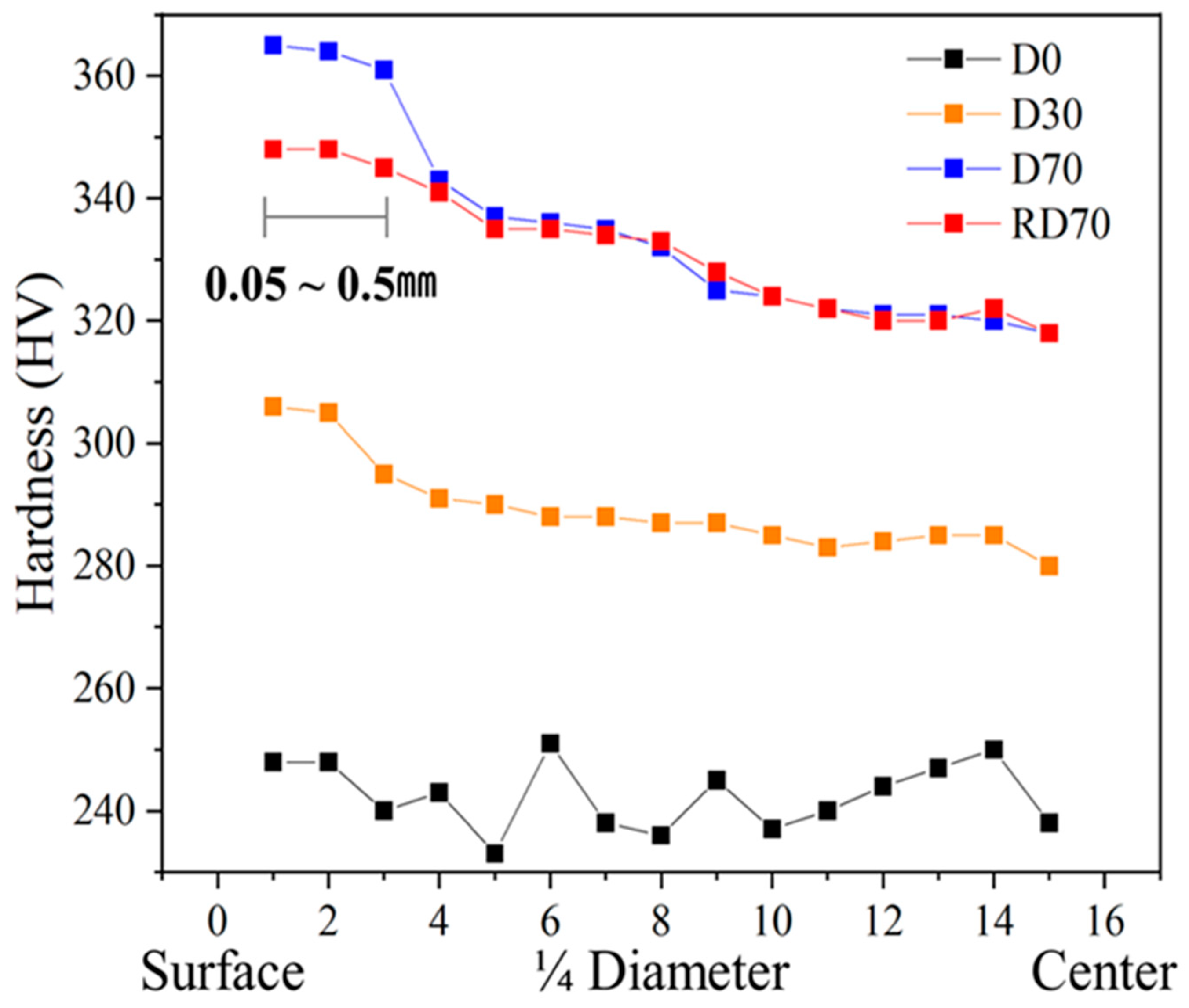
Figure 6 presents the hardness profiles from the surface to the center according to reduction and drawing direction. No significant difference was observed at the 1/4D and center positions between D70 and RD70. However, in the near-surface region (0.05–0.5 mm from the surface), RD70 exhibited an average decrease of about 17 HV, corresponding to a 5% reduction.
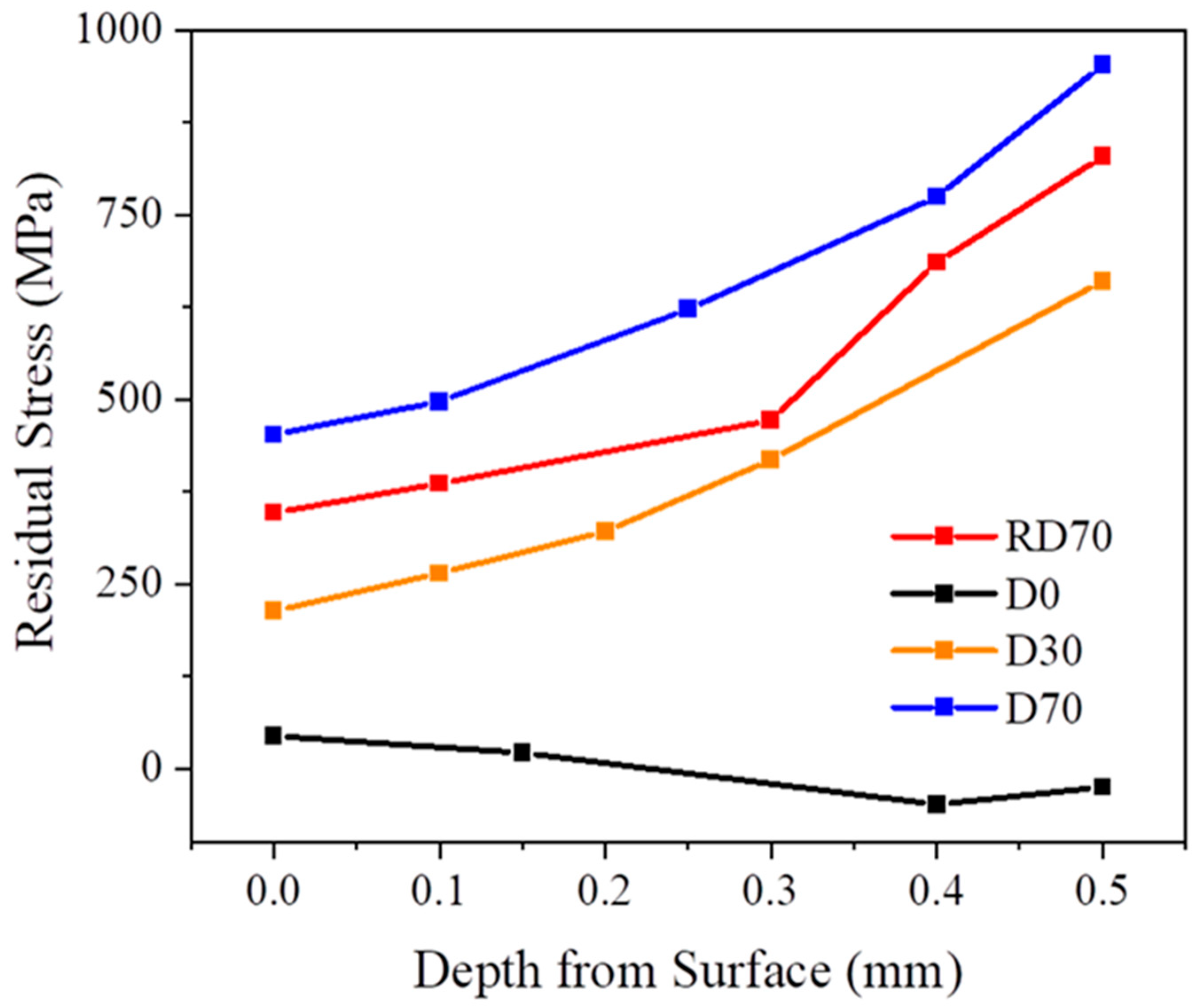
A similar trend was confirmed by residual stress measurements. The surface residual stress of RD70 was approximately 15% lower than that of D70, indicating that the change in strain path during bidirectional drawing alleviated excessive surface dislocation accumulation and mitigated grain structure distortion compared with unidirectional drawing. The results are shown in Figure 7.
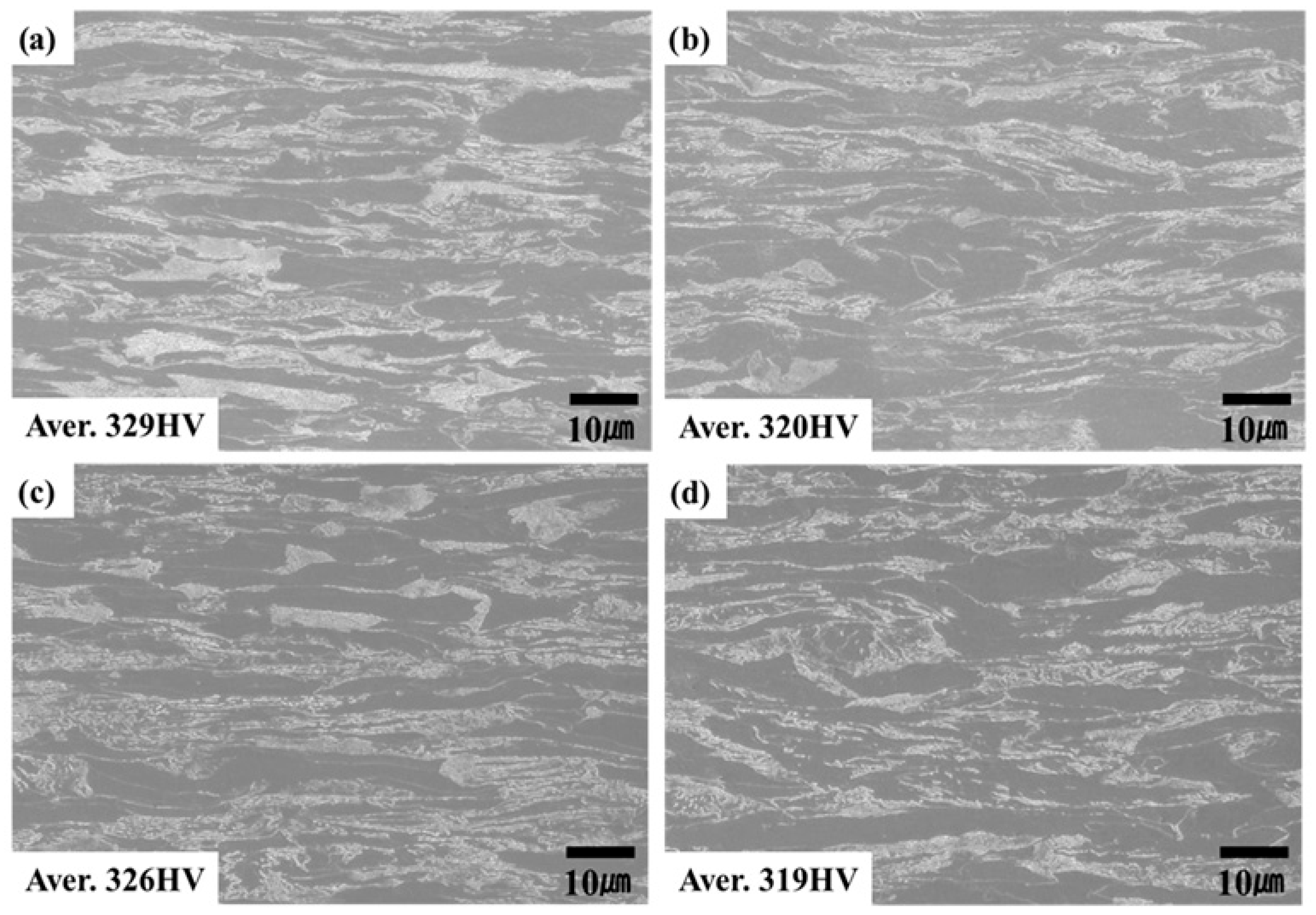
Figure 8 shows the microstructures observed at the 1/4D and center regions of the D70 and RD70 specimens. No significant differences in microstructure were observed at the 1/4D positions ((a) and (c)) or at the center positions ((b) and (d)) with respect to drawing direction. Although the overall hardness of RD70 was slightly lower than that of D70, the difference was minimal approximately 1 to 3 HV indicating that the internal properties were essentially comparable, excluding the surface characteristics. Therefore, the improvement in ductility and bending properties with respect to the drawing direction is presumed to be due to the reduction in surface hardness and residual stress.

3.3. Mechanism of Mechanical Properties

The strength of Fe-based metals is generally explained by the combined contributions of various strengthening mechanisms such as grain refinement and dislocation density [17]. Accordingly, the differences in surface hardness and strength depending on the drawing direction can be interpreted by changes in these two factors.
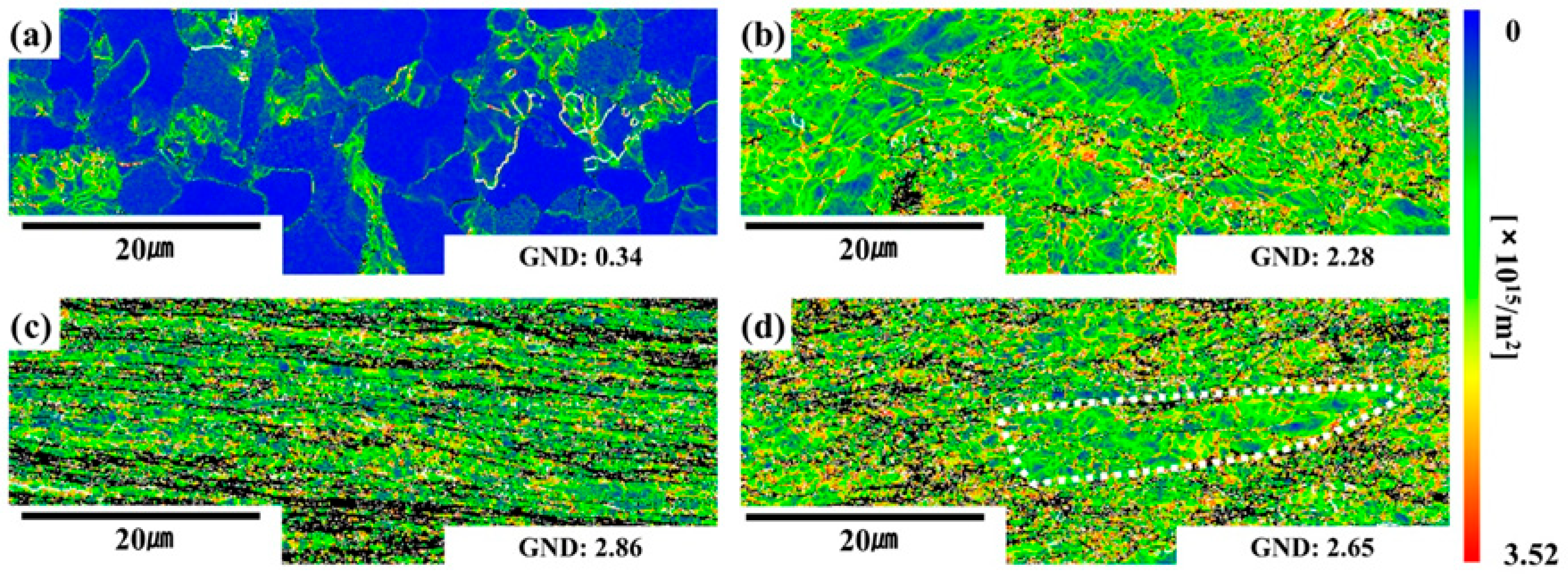
First, the reduction in dislocation density is attributed to the change in drawing direction. As shown in Figure 9, EBSD-based surface GND measurements revealed that the average dislocation density of RD70 was 2.65 × 10¹⁵ m−2, which is about 7% lower than that of D70 2.86 × 10¹⁵ m−2). In particular, the white-line regions observed in Figure 9d correspond to grains with relatively low dislocation density and are interpreted as grains that were retained during the transition from D30 to RD70 due to the change in strain path. These regions exhibit locally alleviated dislocation accumulation.
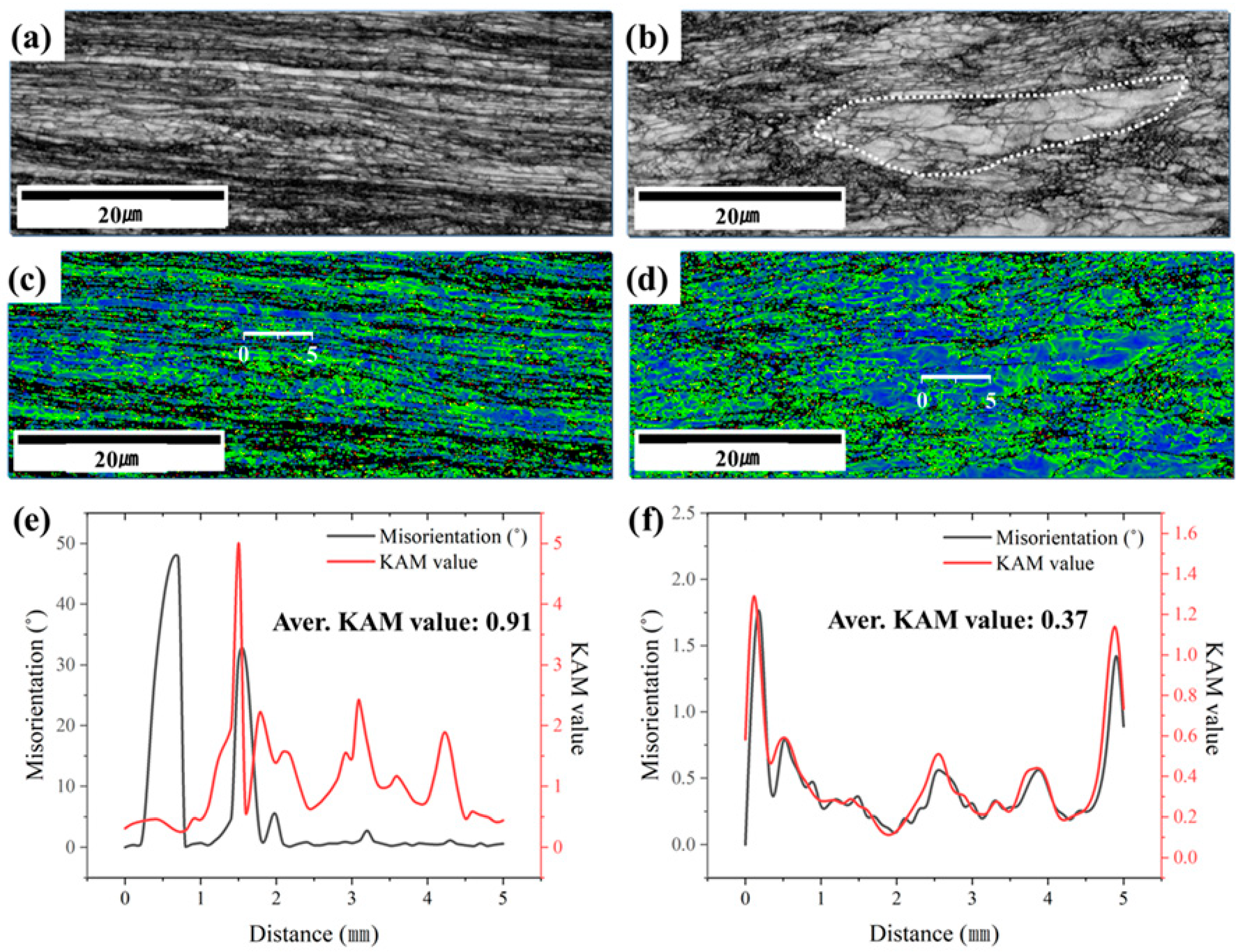
To quantitatively analyze this behavior, EBSD-based IQ mapping and KAM analysis were conducted for a representative region of D70 and a retained grain region of RD70, as presented in Figure 10.
Figure 10a,d show the IQ maps of D70 and RD70, respectively, where brighter images and broader high-quality regions were observed in RD70. Since dislocations induce local lattice distortion and reduce the IQ value, brighter regions indicate grains characterized by locally reduced dislocation density. These findings confirm that the change in drawing direction contributed to the relaxation of localized dislocation accumulation. In particular, the grains exhibiting lower KAM values in Figure 10d exhibited a remarkable reduction in dislocation density. Line analysis was performed along the positions indicated in Figure 10b,e, representing a typical region in D70 and a region with locally reduced dislocation density in RD70, respectively. The average KAM value in the retained grains of RD70 was 0.37, corresponding to a reduction of about 60% compared with 0.91 in D70, indicating a significant decrease in dislocation density.
The observed reduction in dislocation density can be explained by a Bauschinger-type mechanism induced by the change in strain path. During unidirectional drawing, dislocations preferentially accumulate at grain boundaries and within elongated grains, generating internal back stresses that oppose further deformation. When the drawing direction is reversed, these pre-existing dislocation structures are subjected to reverse loading, which promotes dislocation rearrangement and partial annihilation between dislocations of opposite Burgers vectors. As a result, internal back stresses are relaxed, and the density of geometrically necessary dislocations is reduced, particularly in regions where dislocation pile-ups were previously concentrated.
This interpretation is consistent with the EBSD observations in RD70, where regions characterized by lower KAM values and reduced GND density were clearly identified in the IQ and KAM maps. These results indicate that the reverse strain path facilitates dislocation annihilation and redistribution rather than further dislocation accumulation. Such behavior is in good agreement with classical descriptions of the Bauschinger effect, in which reverse loading reduces the effective dislocation density and lowers the local flow stress, as reported in previous studies [18,19,20,21,22].
Second, there was a change in surface grain structure and texture. As shown in Figure 2 and Table 4 of Section 3.1, the average grain size in the drawing (vertical) direction of D70 was approximately 20% smaller than that of RD70. This indicates that grains were excessively elongated and refined along the drawing axis during unidirectional drawing, leading to localized deformation concentrated in a specific direction. Grain refinement increases strength according to the Hall–Petch relationship, but at the same time, the dominant activation of specific slip systems limits ductility [23].
In cold drawing, BCC metals generally deform through the {110}<111> and {112}<111> slip systems, and the corresponding {111} texture components are known to develop. According to previous studies by Dillamore et al., the enhancement of {111} texture promotes dislocation activity along specific directions, facilitates localized plastic deformation, and consequently reduces ductility and formability. In the present study, the {111} fraction in the unidirectionally drawn specimen (D70) increased by nearly 98% compared with the initial state, resulting in the formation of a strong texture. This promoted localized deformation, an increase in surface hardness, and a reduction in ductility [24,25]. In contrast, in the bidirectionally drawn specimen (RD70), the intersecting strain paths mitigated the directional elongation of grains and suppressed the excessive development of the {111} texture. As a result, the {111} fraction was maintained at a level comparable to that of the undeformed specimen (D0), thereby alleviating strain concentration associated with the preferential activation of specific slip systems. This stabilization of texture, together with dislocation redistribution, enhanced the spatial uniformity of plastic deformation, enabling more homogeneous deformation during tensile loading.
Such homogeneous plastic deformation delays localized strain concentration and premature necking, ultimately leading to an improvement in elongation. Consequently, bidirectional drawing does not simply increase the intensity of the {111} texture but regulates its development and reduces strain-path dependence, which suppresses strain localization. These microstructural modifications, in combination with reduced dislocation density and deformation dispersion, account for the observed increase in ductility despite a slight reduction in strength.

4. Conclusions

In this study, a bidirectional drawing process was proposed to improve the ductility and formability of strain-hardened NHT steel. The effect of drawing direction on the microstructure and mechanical properties was systematically investigated, and the following conclusions were obtained based on the Hall–Petch relationship:
(1)
In unidirectional drawing, the fraction of {111} orientation, which corresponds to the slip direction in the BCC crystal structure, increased up to about 98% with increasing reduction, resulting in the formation of a strong texture. In contrast, the bidirectionally drawn specimen maintained a {111} fraction comparable to the initial state, indicating structural stabilization through bidirectional drawing.
(2)
Under a 70% reduction, the bidirectionally drawn alloy exhibited a tensile strength about 2.2% lower than that of the unidirectionally drawn alloy, while the elongation increased by approximately 12%. In addition, the bending load decreased by about 3% in the three-point bending test, confirming the improvement in bendability.
(3)
At 70% reduction, no significant difference in microstructure or hardness was observed at the 1/4D and center regions between the two alloys. However, the average surface hardness of RD70 was about 5% lower, and the residual stress decreased by approximately 15%.
(4)
The reduction in surface hardness and residual stress under bidirectional drawing is attributed to the decreased dislocation density and stabilized grain structure induced by the change in drawing direction. This relaxation of surface characteristics led to improved ductility and formability.
(5)
Therefore, the application of bidirectional drawing to NHT steel can contribute to securing ductility and formability even under high reduction conditions, confirming its potential as a process applicable to the design of high-strength steels without heat treatment.

5. Future Work

The reduction in surface hardness and residual stress observed in the bidirectionally drawn specimen may have important implications for in-service performance. In particular, lower residual stress and moderated surface hardness are generally associated with improved fatigue resistance and reduced susceptibility to crack initiation under cyclic loading. In addition, stabilized surface microstructures may contribute to enhanced bending durability and wear performance in forming-intensive applications.
Although these aspects were not directly evaluated in the present study, future work will focus on systematically investigating the effects of bidirectional drawing on fatigue life, wear resistance, and corrosion behavior to further assess its applicability to automotive and structural components.

Author Contributions

Conceptualization, J.L. (Jaehan Lim) and B.J.; methodology, J.L. (Jaehan Lim); software, J.L. (Jonghyeok Lee); formal analysis, J.L. (Jonghyeok Lee); investigation, J.L. (Jaehan Lim) and J.L. (Jonghyeok Lee); data curation, J.L. (Jonghyeok Lee); writing—original draft preparation, J.L. (Jaehan Lim); writing—review and editing, J.L. (Jaehan Lim) and B.J. All authors have read and agreed to the published version of the manuscript.

Funding

This research received no external funding.

Data Availability Statement

The original contributions presented in this study are included in the article. Further inquiries can be directed to the corresponding author.

Conflicts of Interest

Author Jaehan Lim was employed by the company Hyundai Steel R&D Center. The remaining authors declare that the research was conducted in the absence of any commercial or financial relationships that could be construed as a potential conflict of interest.

References

  1. Supriya; Chaudhury, R.; Sharma, U.; Thapliyal, P.C.; Singh, L.P. Low-CO2 emission strategies to achieve net zero target in cement sector. J. Clean. Prod. 2023, 417, 137466. [Google Scholar] [CrossRef]
  2. Ghosh, M.; Ghosh, A.; Roy, A. Recycling of polymer waste for sustainable construction materials. Encycl. Renew. Sustain. Mater. 2020, 1, 162–179. [Google Scholar]
  3. Han, Z.Y.; Zhang, M.D.; Xu, H.F.; Dong, H.; Cao, W.Q. Research and application of high performance automobile steel. Iron Steel 2016, 51, 1–9. [Google Scholar]
  4. Wang, C.Y.; Yang, J.; Chang, Y.; Cao, W.Q.; Dong, H. Development trend and challenge of advanced high strength automobile steels. Iron Steel 2019, 54, 1–6. [Google Scholar]
  5. Kim, H.; Kang, M.; Jung, H.J.; Kim, H.S.; Bae, C.M.; Lee, S. Mechanisms of toughness improvement in Charpy impact and fracture toughness tests of non-heat-treating cold-drawn steel bar. Mater. Sci. Eng. A 2013, 571, 38–48. [Google Scholar] [CrossRef]
  6. Hashimoto, H.; Serino, Y.; Aoyama, Y.; Hashimoto, K. Non-heat-treated vanadium-alloyed steel crankshaft. SAE Tech. Pap. 1982, 820125. [Google Scholar]
  7. Gunnarson, S.; Ravenshorst, H.; Bergstrom, C.M. Structure and properties of vanadium-microalloyed steels. Metall. Soc. AIME 1987, 198, 325–338. [Google Scholar]
  8. Li, Z.; Wu, D. Grain refinement and precipitation in microalloyed medium carbon steels. Mater. Sci. Eng. A 2007, 452–453, 142–148. [Google Scholar] [CrossRef]
  9. Karadeniz, E. The effect of heat treatment parameters on the mechanical properties of medium carbon steel. Mater. Des. 2008, 29, 251–256. [Google Scholar] [CrossRef]
  10. Cho, J.H.; Rollett, A.D.; Cho, J.S.; Park, Y.J.; Park, S.H.; Oh, K.H. Investigation on cold-drawn gold bonding wire with serial and reverse-direction drawing. Mater. Sci. Eng. A 2006, 432, 202–215. [Google Scholar] [CrossRef]
  11. Thuillier, S.; Manach, P.Y.; Menezes, L.F.; Oliveira, M.C. Experimental and numerical study of reverse re-drawing of anisotropic sheet metals. J. Mater. Process. Technol. 2002, 125, 764–771. [Google Scholar] [CrossRef]
  12. Hanazaki, M.; Shigeiri, N.; Tsuji, N. Change in microstructures and mechanical properties during deep wire drawing of copper. Mater. Sci. Eng. A 2010, 527, 5699–5707. [Google Scholar] [CrossRef]
  13. Ha, G.X.; Oliveira, M.G.; Andrade-Campos, A.; Manach, P.Y.; Thuillier, S. Prediction of coupled 2D and 3D effects in springback of copper alloys after deep drawing. Int. J. Mater. Form. 2021, 14, 1171–1187. [Google Scholar] [CrossRef]
  14. Fujiwara, T. Studies on deformation of polycrystalline iron. Mem. Coll. Sci. Kyoto Imp. Univ. Ser. A 1932, 15, 35–42. [Google Scholar]
  15. ASTM E8/E8M-25; Standard Test Methods for Tension Testing of Metallic Materials. ASTM International: West Conshohocken, PA, USA, 2025.
  16. ISO 178:2019; Plastics—Determination of Flexural Properties. International Organization for Standardization: Geneva, Switzerland, 2019.
  17. Lim, J.; Hwang, S.; Lee, S.; Jang, B. Effect of bidirectional drawing on microstructure and mechanical properties of Fe–Mn steels. Metals 2025, 15, 336. [Google Scholar] [CrossRef]
  18. Hering, O.; Kolpak, F.; Tekkaya, A. Analysis of the Bauschinger effect in sheet metals. Int. J. Mater. Form. 2019, 12, 955–972. [Google Scholar] [CrossRef]
  19. Vincze, G.; Butuc, M.C.; Wen, W.; Yanez, J.; Lopes, D. Investigation of strain reversal effects on ductility in steels. Mater. Res. Proc. 2023, 28, 847–854. [Google Scholar]
  20. Kolpak, F.; Hering, O.; Tekkaya, A.E. Reverse loading effects on microstructure evolution in cold-worked steels. Int. J. Mater. Form. 2021, 14, 1463–1481. [Google Scholar] [CrossRef]
  21. Toribio, J.; Kharin, V.; Ayaso, F.J.; Lorenzo, M.; González, B.; Matos, J.C.; Aguado, L. Fatigue crack growth in high strength steels under variable amplitude loading. Metals 2020, 10, 114. [Google Scholar] [CrossRef]
  22. Joun, M.; Ahn, S.; Jin, H.; Son, Y.; Yoon, D. Quantitative study of the Bauschinger effect in high-strength low-strain-hardening materials for metal forming applications. Int. J. Mater. Prod. Technol. 2017, 54, 20–31. [Google Scholar] [CrossRef]
  23. Hall, E.O. The deformation and ageing of mild steel: III discussion of results. Proc. Phys. Soc. B 1951, 64, 747. [Google Scholar] [CrossRef]
  24. Dillamore, I.L.; Roberts, W.T. Rolling textures in f.c.c. and b.c.c. metals. Acta Metall. 1964, 12, 281–293. [Google Scholar] [CrossRef]
  25. Hutchinson, W.B. Development and control of annealing textures in low-carbon steels. Int. Met. Rev. 1984, 29, 25–42. [Google Scholar] [CrossRef]
Figure 1. Schematic diagram of unidirectional and bidirectional drawing.
Metals 16 00118 g001
Figure 2. Microstructure of the experimental alloys as drawing reduction ratio and drawing direction by SEM (a) D0, (b) D30, (c) D70, (d) RD70.
Metals 16 00118 g002
Figure 3. EBSD IPF maps: (a) D0, (b) D30, (c) D70, (d) RD70.
Metals 16 00118 g003
Figure 4. Results of the mechanical properties at room temperature.
Metals 16 00118 g004
Figure 5. Results of the 3-point bending test.
Metals 16 00118 g005
Figure 6. Results of vickers hardness measurements across the cross-section (surface to center).
Metals 16 00118 g006
Figure 7. Measured surface residual stresses by X-ray diffraction.
Metals 16 00118 g007
Figure 8. Microstructure of experimental alloys by SEM at 1/4D (a) D70, (c) RD70, at center (b) D70, (d) RD70.
Metals 16 00118 g008
Figure 9. EBSD GND maps: (a) D0, (b) D30, (c) D70, (d) RD70.
Metals 16 00118 g009
Figure 10. EBSD analysis results including (a,b) IQ maps of D70 and RD70 showing image quality distribution, (c,d) KAM maps indicating local misorientation, and (e,f) line scan results of KAM values along selected regions in D70 and RD70.
Metals 16 00118 g010
Table 1. Chemical composition of the Fe-Mn alloy (wt.%).
AlloyFeCSiMnCrCu
Fe-MnBal.0.250.201.400.150.08
Table 2. Drawing parameters for the experimental Alloys.
AlloysR.ADrawnSize
D00%As-rolledΦ11
D3030%One way (0 → 30%)Φ11 → Φ9.2
D7070%Unidirectional (0 → 30 → 70%)Φ9.2 → Φ6
RD7070%Bidirectional (0 → 30 (reverse) → 70%)Φ9.2 → Φ6
Table 3. Measurement results of grain boundary dimensions in the experimental alloys.
Grain BoundaryD0D30D70RD70
Horizontal Length (µm)2.771.820.720.59
Vertical Length (µm)2.771.440.340.42
Ratio (Verticial/Horizontal)1.000.790.470.71
Table 4. Analysis results of the {111} texture component in the experimental alloys.
{111} DirectionD0D30D70RD70
11.1%17.2%22.0%12.4%
Table 5. Tensile properties of alloys with different drawing conditions.
AlloysY.S. (MPa)U.T.S. (MPa)Elongation (%)
D0558 ± 12.2769 ± 14.825.0 ± 0.6
D30825 ± 4.5933 ± 2.111.8 ± 0.4
D701025 ± 3.21240 ± 2.68.5 ± 0.2
RD701013 ± 5.21213 ± 8.19.8 ± 0.2
Y.S.: yield stress; U.T.S.: ultimate tensile stress.
Disclaimer/Publisher’s Note: The statements, opinions and data contained in all publications are solely those of the individual author(s) and contributor(s) and not of MDPI and/or the editor(s). MDPI and/or the editor(s) disclaim responsibility for any injury to people or property resulting from any ideas, methods, instructions or products referred to in the content.