Reducing Maximum Punching Force in Sheet Cold Forming: A Numerical Study of a New Punch Design (Part II)


Abstract
1. Introduction
2. Materials and Methods
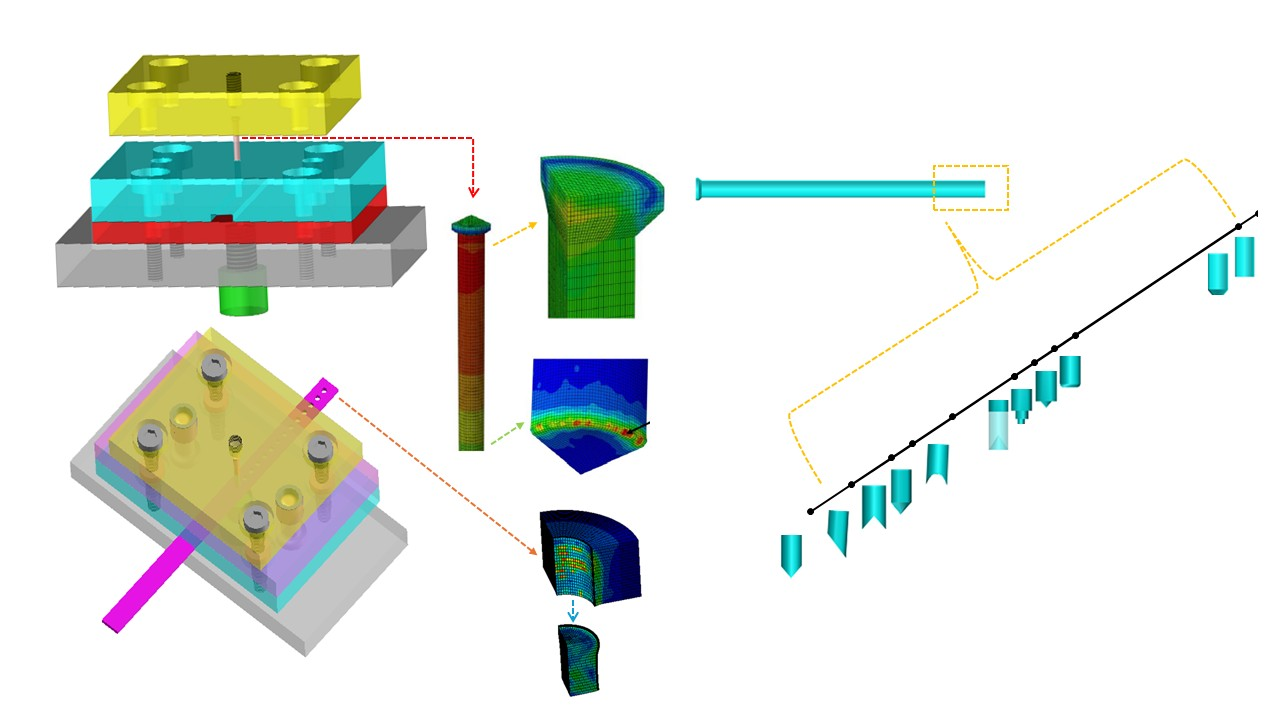
2.1. Numerical Model
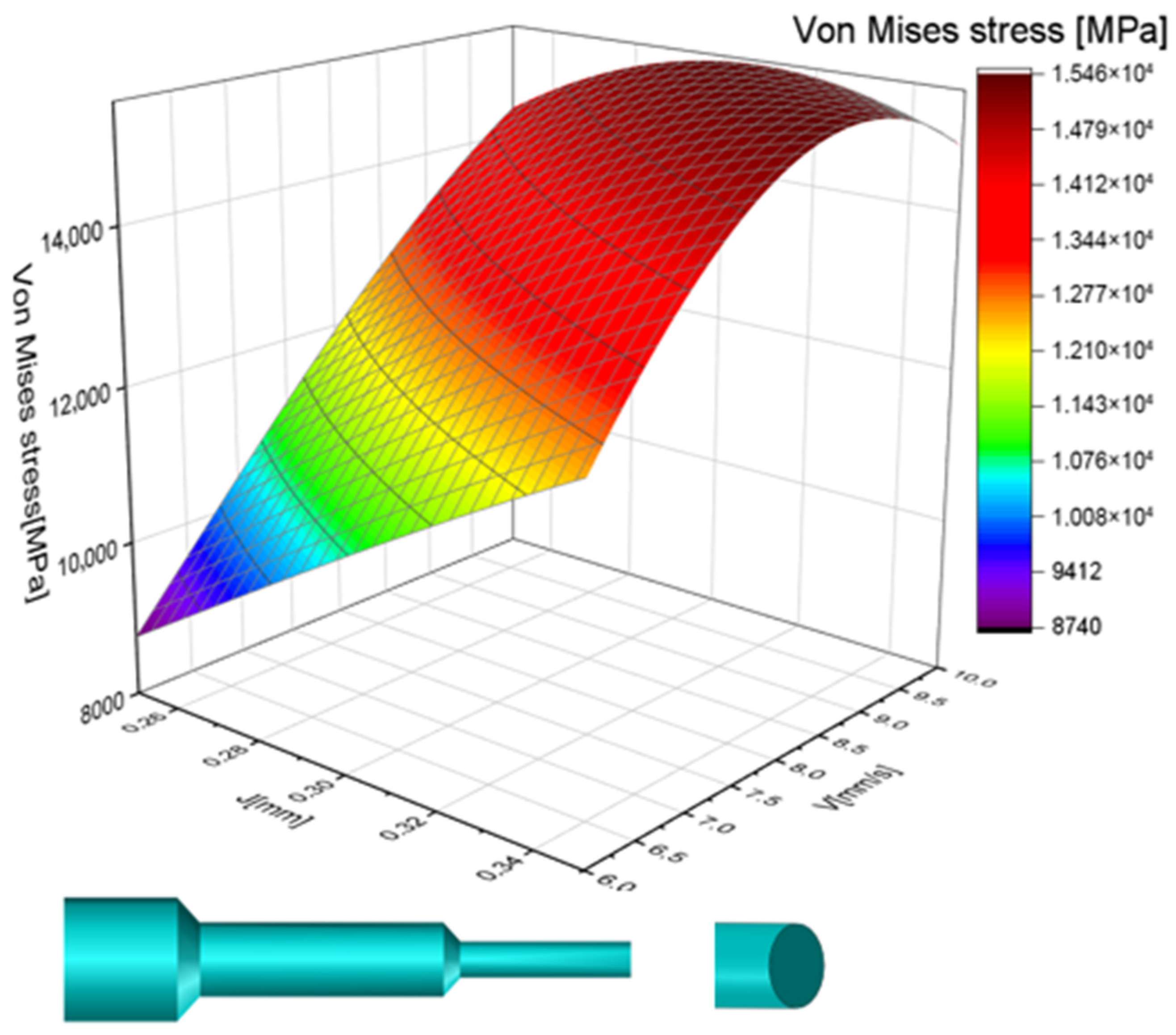
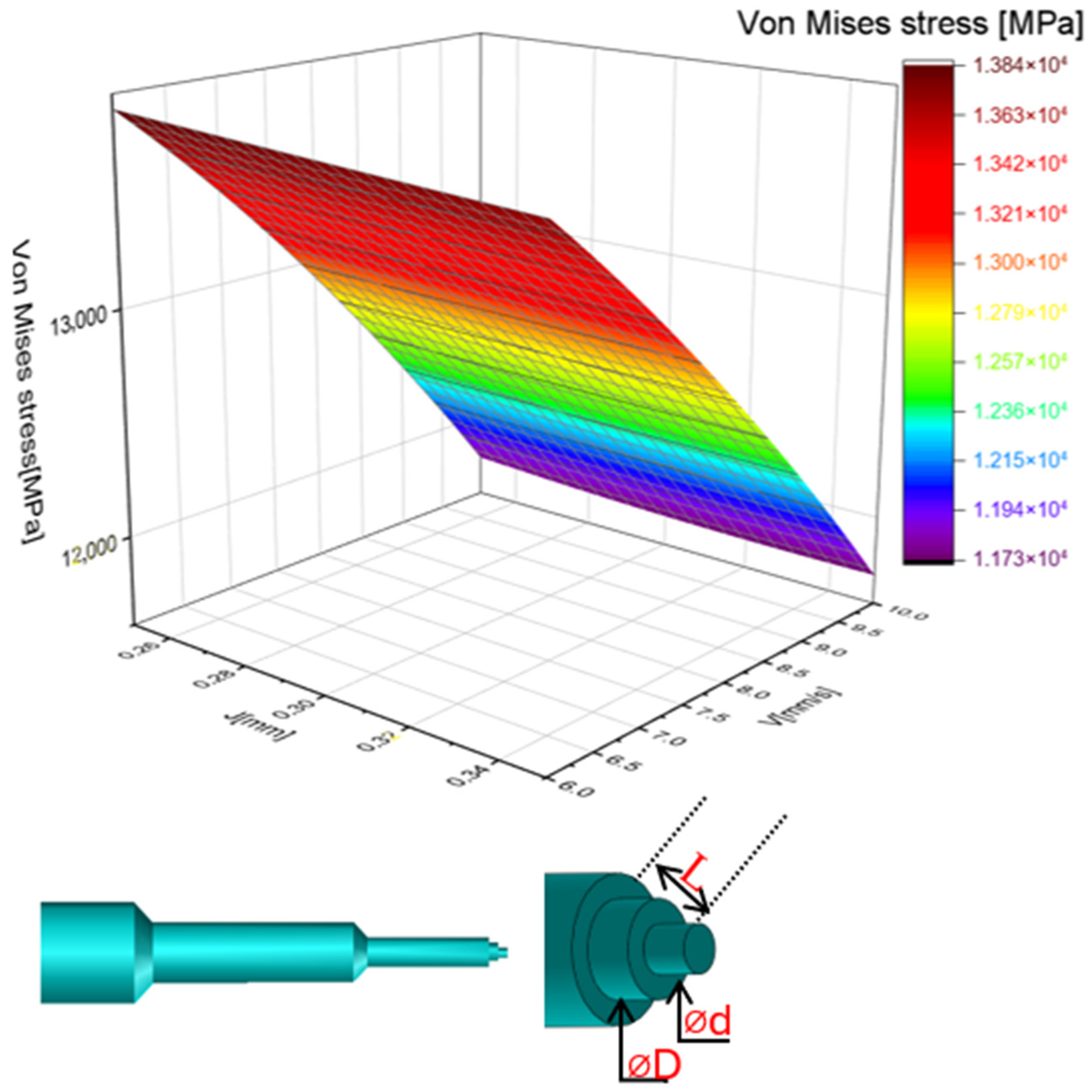
2.2. RSM Method
- ➢
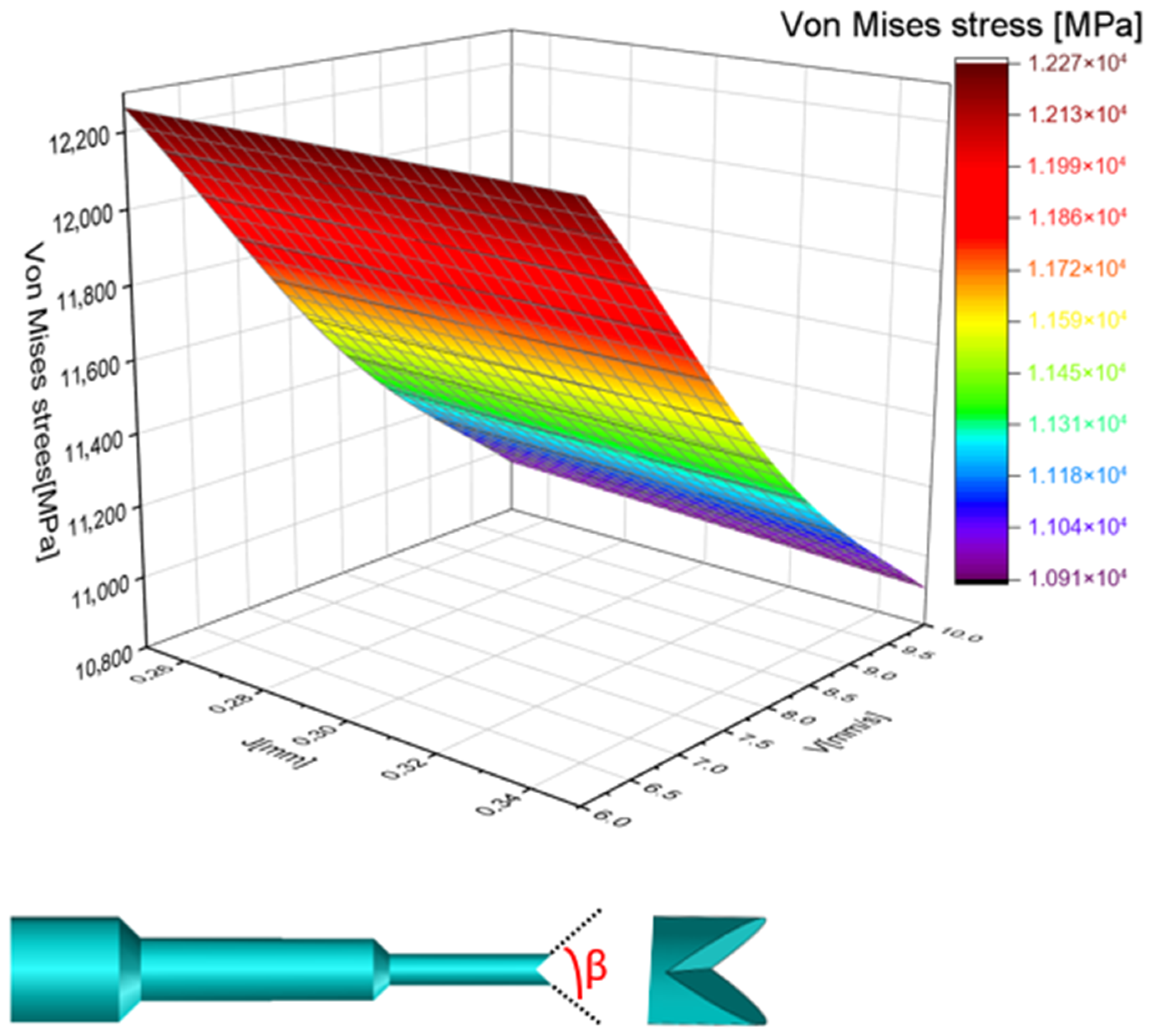
- Double Sharp Design: This configuration is characterized by its enhanced precision, making it particularly suitable for applications requiring high-dimensional accuracy and minimal material deformation. The sharp geometry facilitates cleaner cuts and reduces the likelihood of burr formation, which is critical for maintaining the quality of the punched components.
- ➢
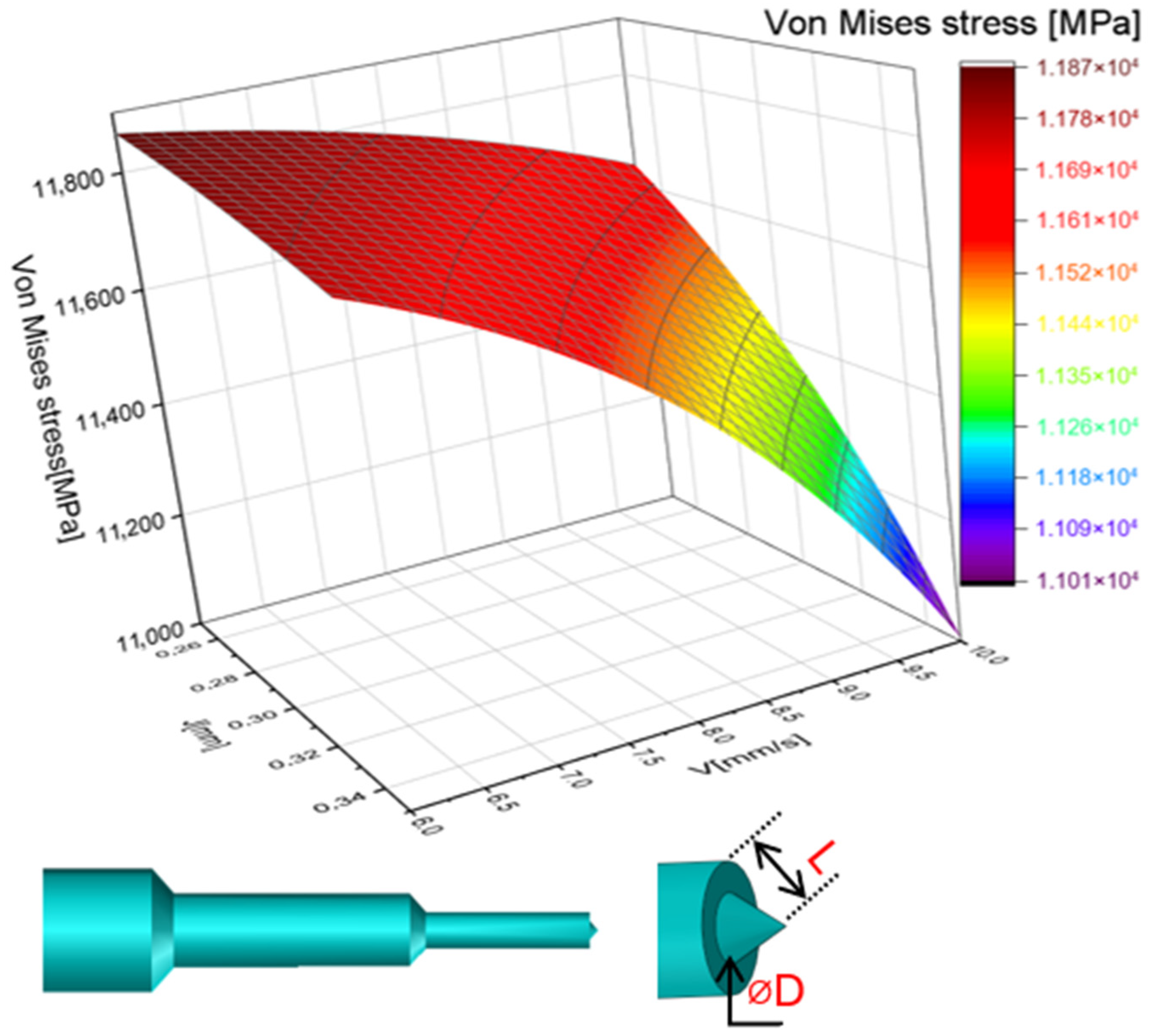
- Tenon Shape: The tenon design prioritizes operational stability, providing a robust structure that minimizes lateral deflection during the punching process. This stability is essential for maintaining consistent performance, particularly under high-load conditions, and helps to prevent misalignment or premature failure of the punch.
- ➢
- Staircase Shaft: The staircase design is engineered to reduce stress concentration along the shaft, thereby extending the tool’s operational life. By distributing the applied loads more evenly, this design mitigates the risk of fatigue failure and localized wear, making it ideal for high-volume production environments where tool longevity is a priority.
3. Results and Discussion
3.1. New Design of AISI D2 Punching Tool
3.1.1. Punch with New Head and Cylinder Shaft Shape
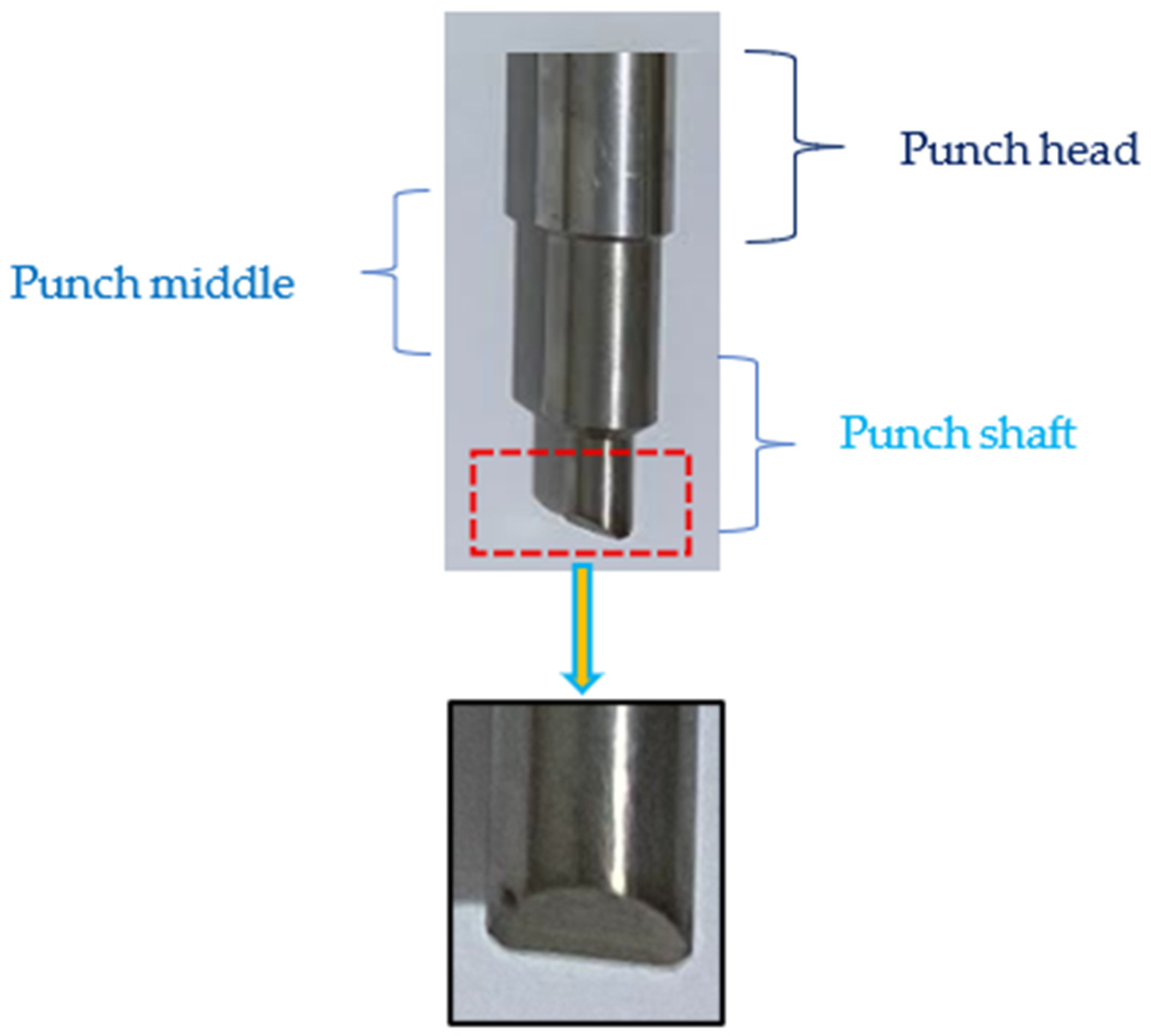
3.1.2. Punch with New Head and Staircase Shaft Shape
3.1.3. Punch with New Head and Double Shear Angle
3.1.4. Punch with New Head and a Corner Radius Shaft Shape
3.1.5. Punch with New Head and Fish Mouth Shaft Shape
3.1.6. Punch with New Head and Tenon Shaft Shape
3.1.7. Punch with New Head and Circle Shaft Shape
3.2. Numerical Model Validation
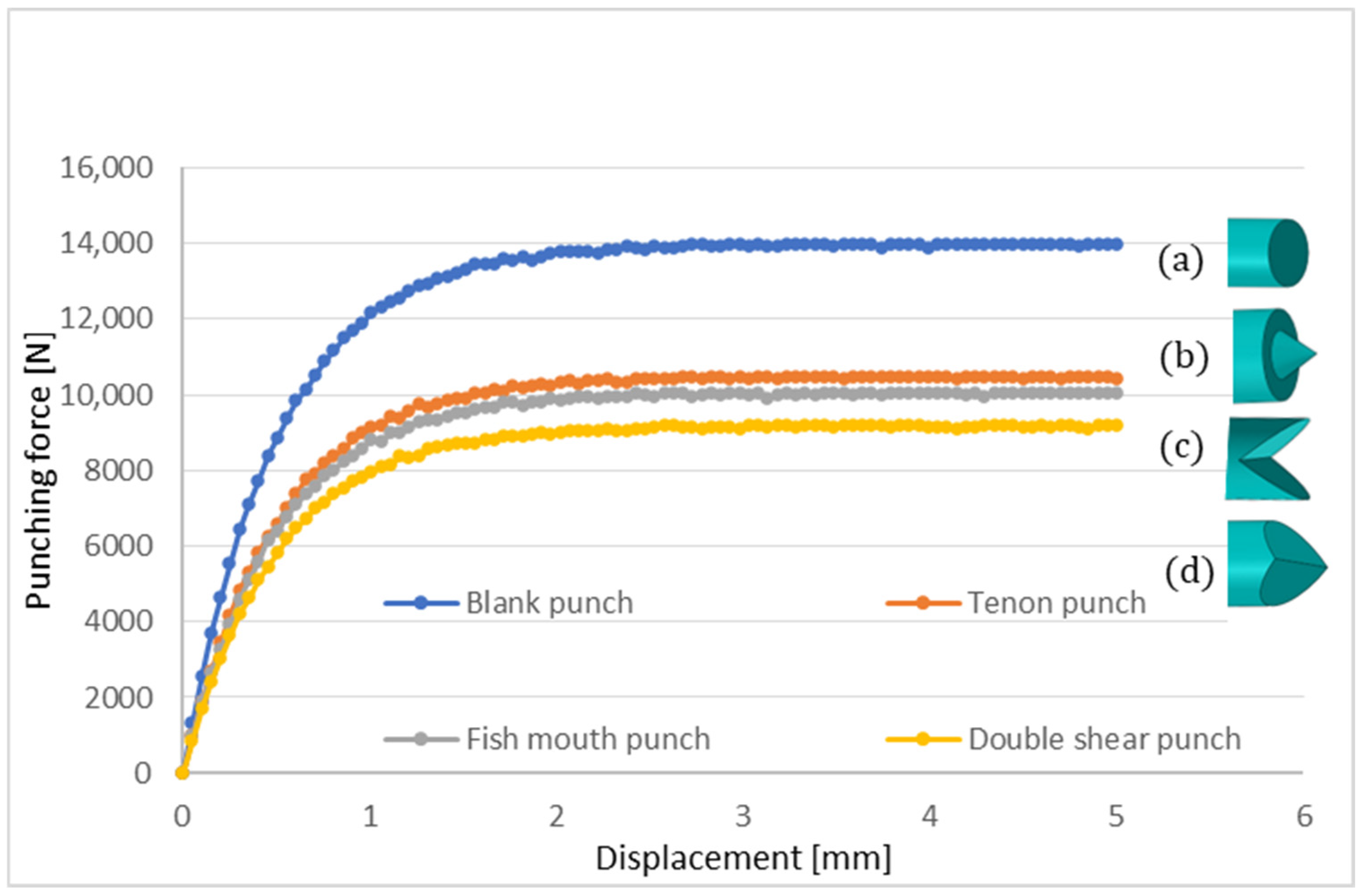
3.3. Evaluation of the New Design and Optimal Solution Selection
4. Conclusions
- ➢
- Enhanced Punch Head Design: The modification of the punch head geometry increased the contact area with the backup plate, significantly reducing the risk of premature failure. This improvement is critical for extending tool life and maintaining consistent performance under high-stress conditions.
- ➢
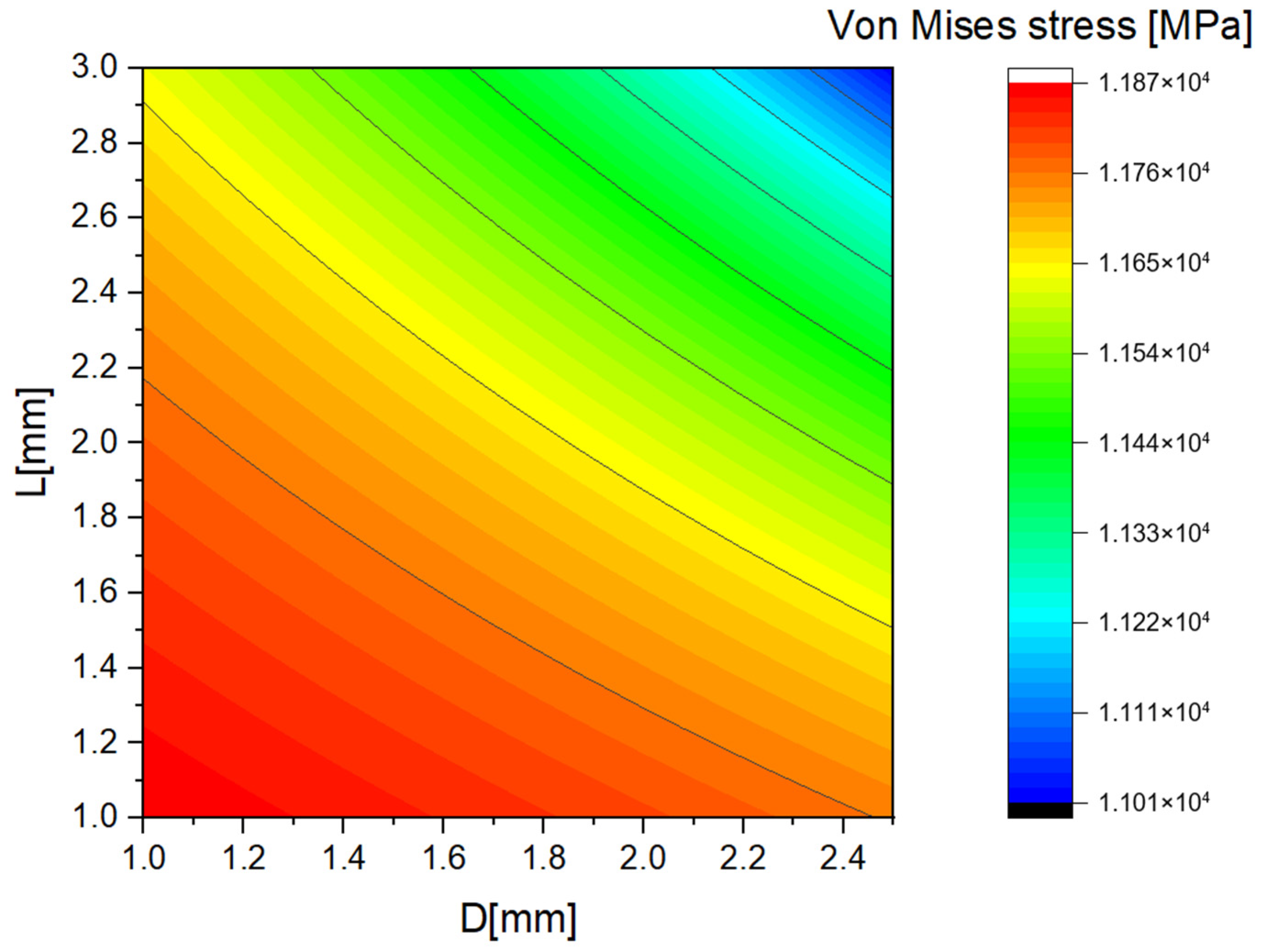
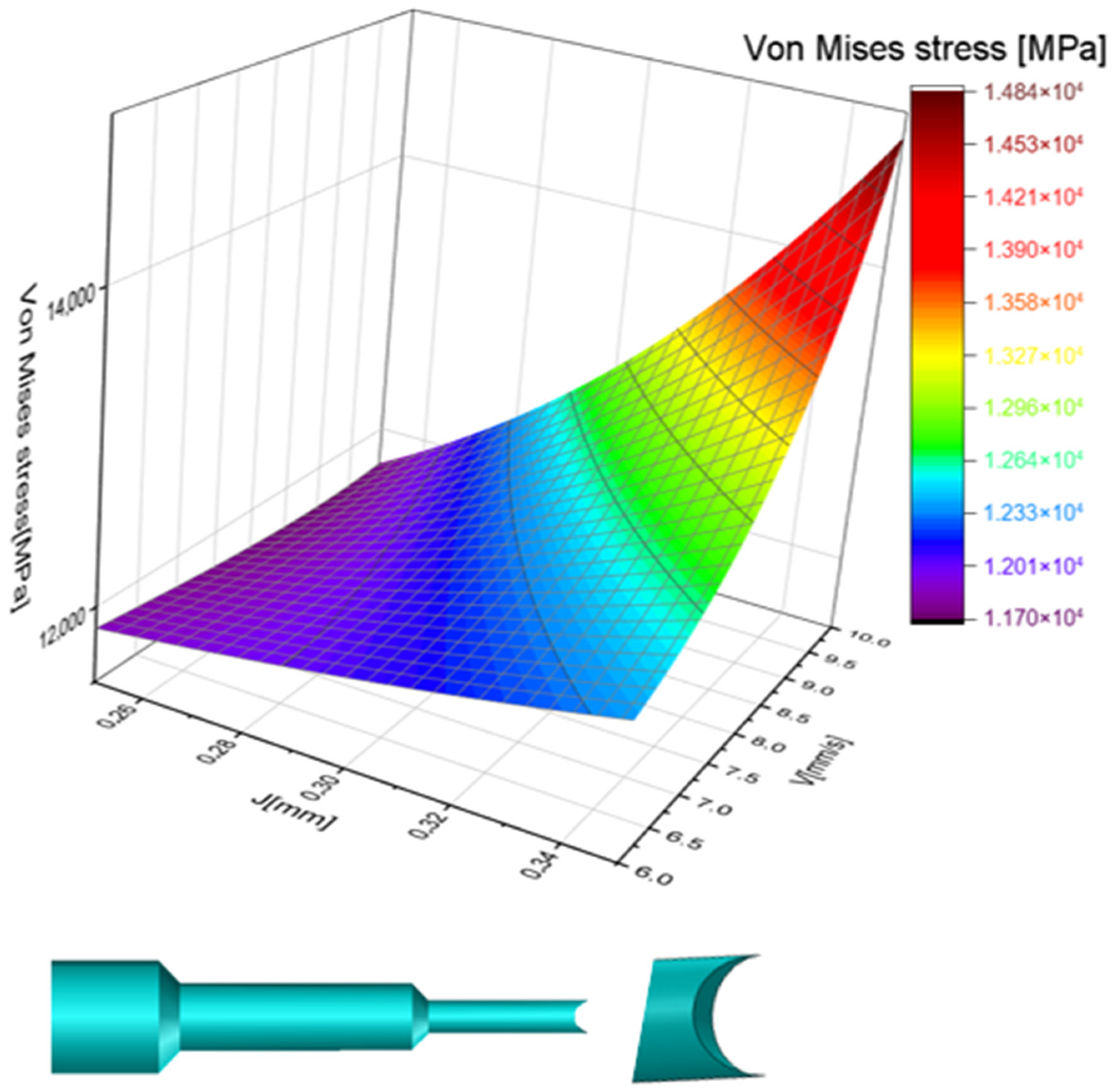
- Effective Stress Analysis: The combined use of FEM and RSM enabled a rigorous comparison of Von Mises stress distribution across multiple punch geometries. This methodology provided a robust framework for identifying the most effective design configurations, ensuring that stress concentrations were minimized.
- ➢
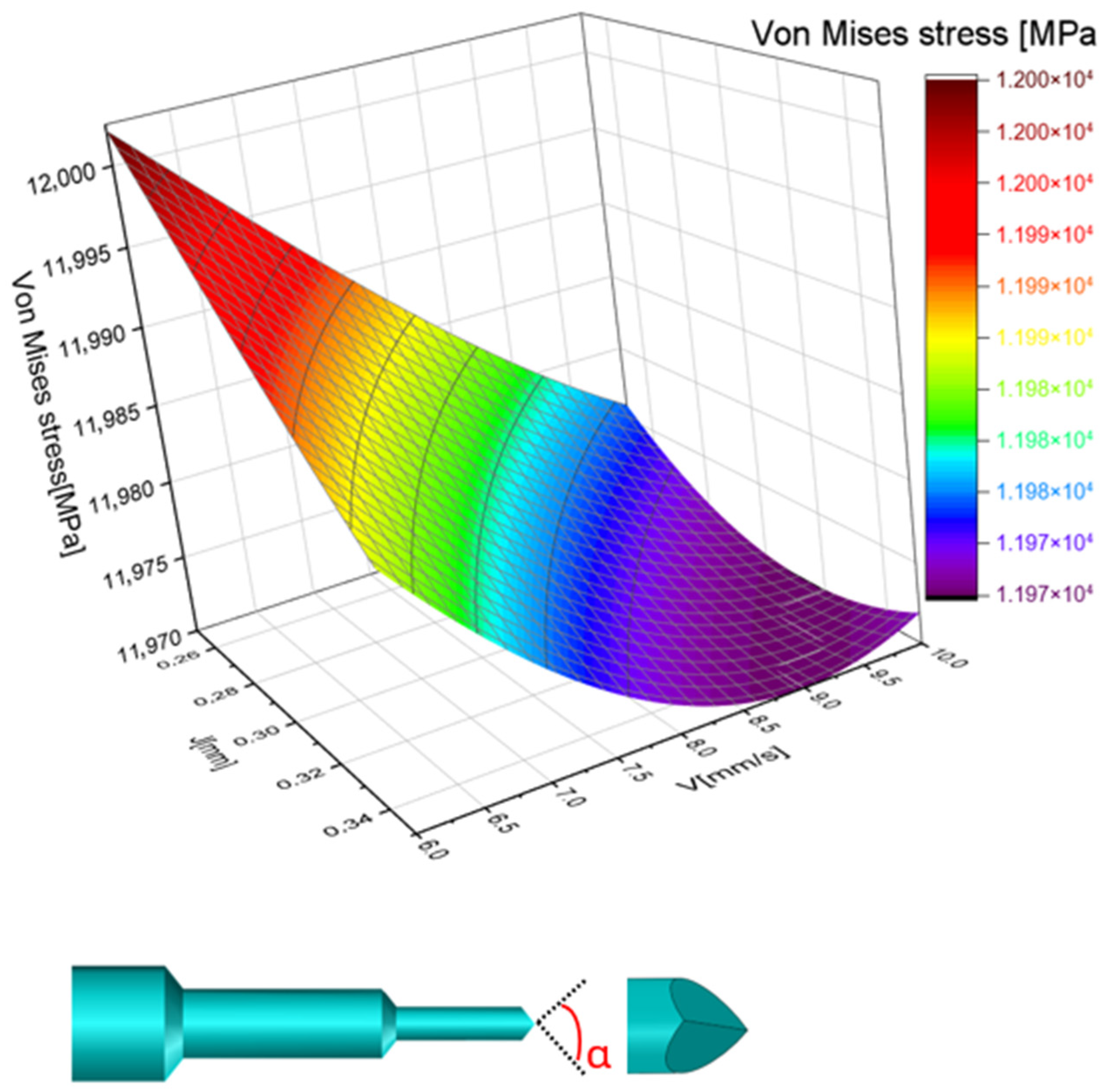
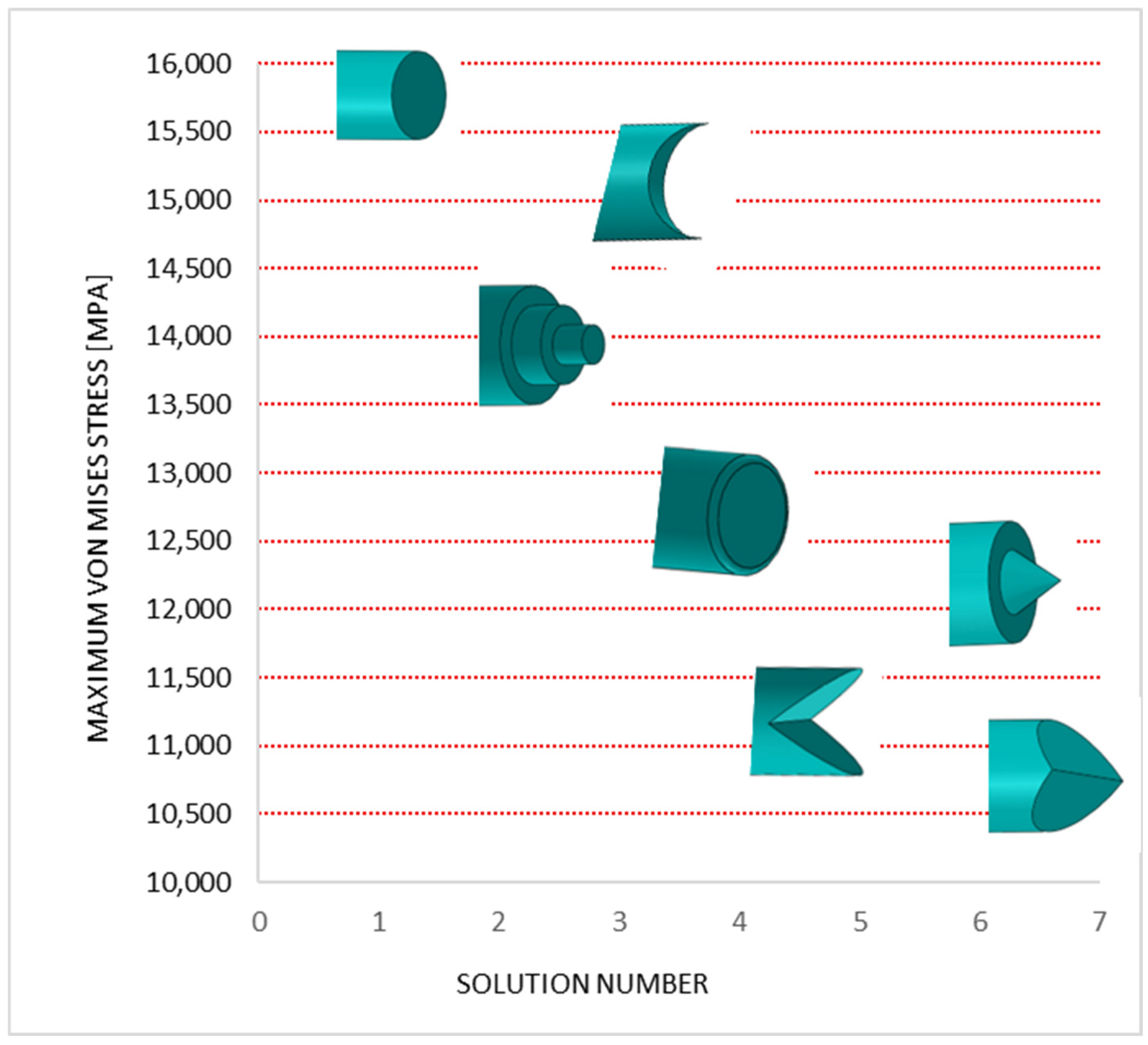
- Optimal Double Shear Shaft Design: Among the proposed designs, the double shear shaft punch demonstrated the most significant reduction in Von Mises stress, achieving a 30% decrease in peak stress compared to the baseline blank punch. This result confirms its superiority in stress mitigation and validates its selection as the optimal design for industrial applications.
- ➢
- Material and Lubrication Optimization: The implementation of HSS steel, combined with appropriate lubrication, effectively prevented phase transformation and reduced residual stress. The use of a suitable lubricant, applied in optimal quantities and at strategic intervals, minimized friction between the punch and sheet metal. This approach not only reduced heat generation and tool wear but also enhanced the quality of the punched surface by preventing defects.
- ➢
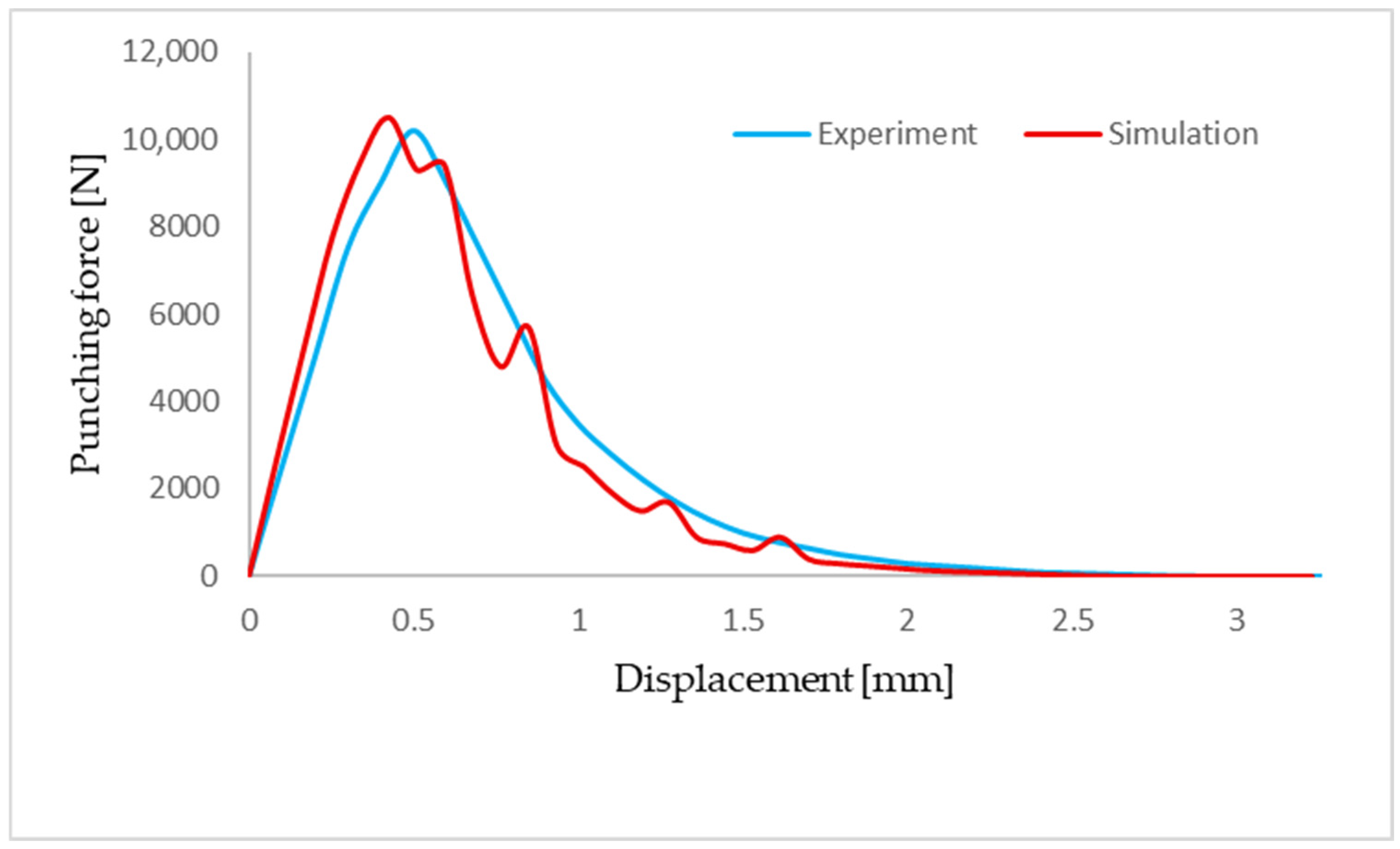
- Experimental Validation: The numerical model was experimentally validated, ensuring the reliability and credibility of the research findings. This validation step strengthens the practical applicability of the proposed solutions and confirms their effectiveness in real-world conditions.
Author Contributions
Funding
Data Availability Statement
Acknowledgments
Conflicts of Interest
References
- Shaheen, W.; Kanapathipillai, S.; Mathew, P.; Prusty, B.G. Optimization of compound die piercing punches and double cutting process parameters using finite element analysis. Proc. Inst. Mech. Eng. Part B J. Eng. Manuf. 2020, 234, 3–13. [Google Scholar] [CrossRef]
- Damir, A.; Shahabeddin, T.; Benjamin, W.S. High-strength cold-formed steel stiffened channel section: Axial compressive strength and initial geometric imperfections. Thin-Walled Struct. 2025, 206, 112604. [Google Scholar]
- Hung, Y.C. Applying punching without die to micro-hole array processing. J. Manuf. Process 2024, 116, 284–292. [Google Scholar]
- Ran, X.; Chen, C.; Zhang, H.; Ouyang, Y. Investigation of the clinching process with rectangle punch. Thin-Walled Struct. 2021, 166, 108034. [Google Scholar] [CrossRef]
- Wang, X.Z.; Masood, S.H. Influence of control parameters on tool wear for sheet metal stamping die with various die radius arc profiles. In Reference Module in Materials Science and Materials Engineering; Elsevier: Amsterdam, The Netherlands, 2016. [Google Scholar] [CrossRef]
- Ravikumar, N.; Sharmila, P.; Premnath, S.P.; Rai, R.S.; Khan, J.M.F.; Subbiah, R. Performance and optimization of parameters on rubber punching process. Mater. Today Proc. 2021, 45, 2581–2583. [Google Scholar] [CrossRef]
- Lubis, D.Z.; Puspitasari, S.T.; Awang, M.; Yulianto, F.T.; Alfiansyah, L. Simulation and experimental study of punching process on Ti-6Al-4V plate. AIP Conf. Proc. 2025, 3120, 020017. [Google Scholar]
- Sandin, O.; Rodríguez, J.M.; Larour, P.; Parareda, S.; Frómeta, D.; Hammarberg, S.; Casellas, D. A particle finite element method approach to model shear cutting of high-strength steel sheets. Comput. Part. Mech. 2024, 11, 1863–1886. [Google Scholar] [CrossRef]
- Chantzis, D.; Liu, X.; Politis, D.J.; El Fakir, O.; Chua, T.Y.; Shi, Z.; Wang, L. Review on additive manufacturing of tooling for hot stamping. Int. J. Adv. Manuf. Technol. 2020, 109, 87–107. [Google Scholar] [CrossRef]
- Kadarno, P.; Mori, K.I.; Abe, Y.; Abe, T. Flanging using step die for improving fatigue strength of punched high strength steel sheet. Procedia Eng. 2014, 81, 1133–1138. [Google Scholar] [CrossRef]
- Asad, M.; Ijaz, H.; Khan, M.A.A.; Khan, M.; Mabrouki, T.; Rashid, M.U. Comparative analyses and investigations of chamfered and honed-edge tool geometries on tool wear, chip morphology, residual stresses and end-burr formation. J. Manuf. Process. 2022, 80, 196–209. [Google Scholar] [CrossRef]
- Hattalli, V.L.; Srivatsa, S.R. Sheet metal forming processes—Recent technological advances. Mater. Today Proc. 2018, 5, 2564–2574. [Google Scholar] [CrossRef]
- Zeidi, A.; Saada, F.B.; Elleuch, K.; Atapek, H. An Experimental Work of Punch-Die Clearance Effect on Punching Force in the Event of Punching S500 MC Sheet Metal. In Advances in Mechanical Engineering, Materials and Mechanics II. ICAMEM; Elleuch, R., Ben Difallah, B., Mnif, R., Baklouti, M., Abdelkefi, A., Kharrat, M., Eds.; Lecture Notes in Mechanical Engineering; Springer: Cham, Switzerland, 2024. [Google Scholar] [CrossRef]
- Tekiner, Z. An experimental study for the effect of different clearances on the punching process. J. Mater. Process Technol. 2006, 175, 82–89. [Google Scholar]
- Sedyono, J. Analysis on the effect of diameter punch to the hole quality. AIP Conf. Proc. 2024, 2838, 060023. [Google Scholar]
- Golovashchenko, S.F.; Wang, N.; Nasheralahkami, S.; Reinberg, N.A.; Zhou, W. Mechanism of fracture in sheet metal cutting processes and its effect on sheared edge stretchability. IOP Conf. Ser. Mater. Sci. Eng. 2018, 418, 012057. [Google Scholar]
- Jaafar, N.A.; Abdullah, A.B.; SAMAD, Z. Effect of punching die angular clearance on punched hole quality of S275 mild steel sheet metal. Int. J. Adv. Manuf. Technol. 2019, 101, 1553–1563. [Google Scholar] [CrossRef]
- Gutknecht, F.; Gerstein, G.; Isik, K.; Tekkaya, A.E.; Maier, H.J.; Clausmeyer, T.; Nürnberger, F. Analysis of Path-Dependent Damage and Microstructure Evolution for Numerical Analysis of Sheet-Bulk Metal Forming Processes. In Industrial Colloquium of the Transregional Collaborative Research Centre 73; Springer International Publishing: Cham, Switzerland, 2020; pp. 378–411. [Google Scholar]
- Soares, J.A.; Gipiela, M.L.; Lajarin, S.F.; Marcondes, P.V.P. Study of the punch–die clearance influence on the sheared edge quality of thick sheets. Int. J. Adv. Manuf. Technol. 2013, 65, 451–457. [Google Scholar] [CrossRef]
- Singh, G.; Teli, M.; Samanta, A.; Singh, R. Finite element modeling of laser-assisted machining of AISI D2 tool steel. Mater. Manuf. Process 2013, 28, 443–448. [Google Scholar] [CrossRef]
- Abbasi-Bani, A.; Zarei-Hanzaki, A.; Pishbin, M.H.; Haghdadi, N. A comparative study on the capability of Johnson-Cook and Arrhenius-type constitutive equations to describe the flow behavior of Mg–6Al–1Zn alloy. Mech. Mater. 2014, 71, 52–61. [Google Scholar] [CrossRef]
- Akbari, Z.; Mirzadeh, H.; Cabrera, J.M. A simple constitutive model for predicting flow stress of medium carbon microalloyed steel during hot deformation. Mater. Des. 2015, 77, 126–131. [Google Scholar] [CrossRef]
- Zhan, H.; Wang, G.; Kent, D.; Dargusch, M. Constitutive modelling of the flow behaviour of a beta titanium alloy at high strain rates and elevated temperatures using the Johnson-Cook and modified Zerilli–Armstrong models. Mater. Sci. Eng. A 2014, 612, 71–79. [Google Scholar] [CrossRef]
- Zeidi, A.; Akrout, M.; Elleuch, K.; Pereira, A. Reducing Maximum Punching Force in Sheet Cold Forming: A Numerical Study of a New Punch Design (Part I). Metals 2025, 15, 1338. [Google Scholar] [CrossRef]
- Johnson, G.R.; Cook, W.H. Fracture characteristics of three metals subjected to various strains, strain rates, temperatures and pressures. Eng. Fract. Mech. 1985, 21, 31–48. [Google Scholar] [CrossRef]
- Zeidi, A.; Saada, F.B.; Elleuch, K.; Atapek, H. AISI D2 punch head damage: Fatigue and wear mechanism. Eng. Fail. Anal. 2021, 129, 105676. [Google Scholar] [CrossRef]
- Zeidi, A.; Saada, F.B.; Elleuch, K.; Atapek, H. Numerical prediction of AISI D2 punch damage. Int. J. Adv. Manuf. Technol. 2023, 129, 5671–5677. [Google Scholar] [CrossRef]
- Yildirim, B.; Yang, H.; Gouldstone, A.; Müftü, S. Rebound mechanics of micrometre-scale spherical particles in high-velocity impacts. Proc. R. Soc. A Math. Phys. Eng. Sci. 2017, 473, 20160936. [Google Scholar] [CrossRef]
- Muthuveerappan, A.L.; Sivarajan, S. Finite element analysis of process parameters influences on deformation and von Mises stress in drilling. Mater. Today Proc. 2023. [Google Scholar] [CrossRef]
- Lo, S.P.; Chang, D.Y.; Lin, Y.Y. Relationship between the punch–die clearance and shearing quality of progressive shearing die. Mater. Manuf. Process 2010, 25, 786–792. [Google Scholar] [CrossRef]
- Ugla, A.A.; Ikal, A.T. Effect of wall corner radius of punch on the features of the hexagonal cup fabricated by the deep drawing process. Int. J. Mech. Prod. 2019, 9, 241–252. [Google Scholar]
- Wang, K.; Wierzbicki, T. Experimental and numerical study on the plane-strain blanking process on an AHSS sheet. Int. J. Fract. 2015, 194, 19–36. [Google Scholar] [CrossRef]
- Subramonian, S.; Altan, T.; Ciocirlan, B.; Campbell, C. Optimum selection of variable punch–die clearance to improve tool life in blanking non-symmetric shapes. Int. J. Mach. Tools Manuf. 2013, 75, 63–71. [Google Scholar] [CrossRef]
- Félix-Martínez, C.; García-Salas, L.D.; González-Carmona, J.M.; Ruiz-Luna, H.; García-Moreno, Á.I.; Alvarado-Orozco, J.M. Microstructure, hardness, and tribological performance of D2 tool steel fabricated by laser cladding using pulsed wave and substrate heating. Opt. Laser Technol. 2024, 175, 110862. [Google Scholar] [CrossRef]
- Jundi, A.; Alaiwi, Y. Design and analysis of compound die to produce L-shape product with 3 holes. Math. Model. Eng. Probl. 2024, 11, 1245–1256. [Google Scholar] [CrossRef]
- Francy, K.A.; Rao, C.S. Multi-response optimization of cold extrusion parameters on AA2024 alloy using TOPSIS. J. Inst. Eng. 2024, 106, 1061–1075. [Google Scholar]
- Claver, A.; Hernández Acosta, A.; Barba, E.; Fuertes, J.P.; Torres, A.; García, J.A.; Luri, R.; Salcedo, D. Study and optimization of the punching process of steel using the Johnson-Cook damage model. Metals 2024, 14, 616. [Google Scholar] [CrossRef]
- Aminzadeh, A.; Sattarpanah Karganroudi, S.; Goldak, J. Insight into the key process parameters on residual stress distribution in deep drawing of laser-welded blanks: Response surface modeling. J. Mater. Eng. Perform. 2024, 33, 4136–4148. [Google Scholar] [CrossRef]
- Wang, N.; Golovashchenko, S.F. Mechanism of fracture of aluminum blanks subjected to stretching along the sheared edge. J. Mater. Process. Technol. 2016, 233, 142–160. [Google Scholar] [CrossRef]
- Kuo, C.C.; Liu, K.W.; Li, T.C.; Wu, D.Y.; Lin, B.T. Numerical simulation and optimization of fine-blanking process for copper alloy sheet. Int. J. Adv. Manuf. Technol. 2022, 119, 1283–1300. [Google Scholar] [CrossRef]
- Liu, R.; Sun, L.; Wang, X.; Lin, L.; Zhang, L.; Lin, J. Strain rate effect on forming limit diagram for advanced high strength steels. SAE Int. J. Mater. Manuf. 2014, 7, 583–587. [Google Scholar] [CrossRef]
- Çavuşoğlu, O. An investigation of punch radius and clearance effects on the sheet metal blanking process. Int. J. Automot. Sci. Technol. 2022, 6, 309–316. [Google Scholar] [CrossRef]
- Mucha, J.; Tutak, J. Analysis of the influence of blanking clearance on the wear of the punch, the change of the burr size and the geometry of the hook blanked in the hardened steel sheet. Metals 2019, 12, 1261. [Google Scholar] [CrossRef]
- Zeidi, A.; Saada, F.B.; Elleuch, K.; Atapek, H. On the failure of punching process. Eng. Fail. Anal. 2021, 120, 105035. [Google Scholar] [CrossRef]
- Kim, J.H.; Kim, D.; Han, H.N.; Barlat, F.; Lee, M.G. Strain rate dependent tensile behavior of advanced high strength steels: Experiment and constitutive modeling. Mater. Sci. Eng. A 2013, 559, 222–231. [Google Scholar] [CrossRef]
- Wang, W.; Ma, Y.; Yang, M.; Jiang, P.; Yuan, F.; Wu, X. Strain Rate Effect on Tensile Behavior for a High Specific Strength Steel: From Quasi-Static to Intermediate Strain Rates. Metals 2018, 8, 11. [Google Scholar] [CrossRef]



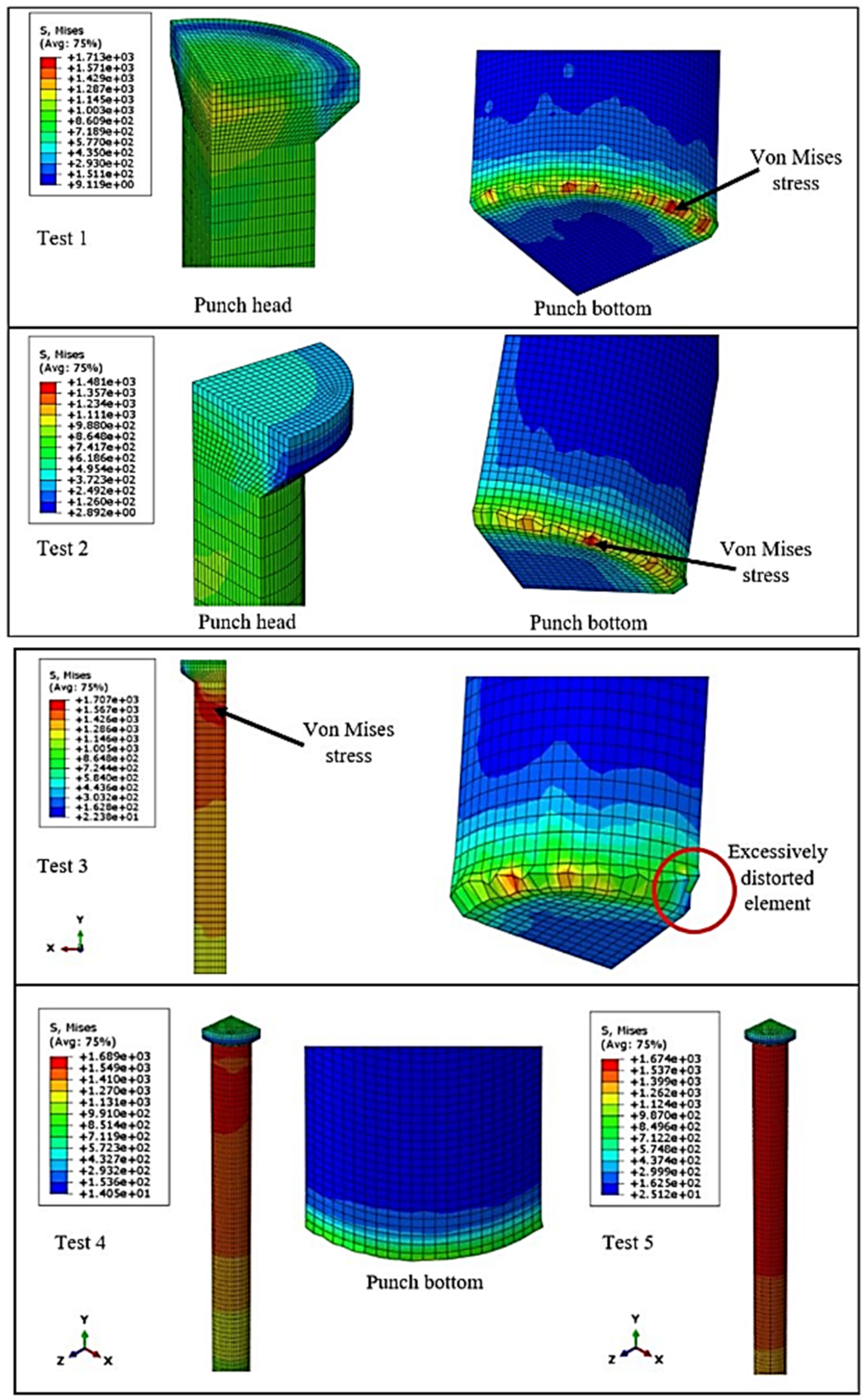
| Test Number | Mesh Size | Von Mises Stress (MPa) | Tresca Stress (MPa) | Max Principal (MPa) | Nodes Number | Elements Number | CPU Time |
|---|---|---|---|---|---|---|---|
| 1 | Head: 0.2 Middle: 0.5 Shaft: 0.1 Plettac: 0.1 | 1713 | 1934 | 1853 | 312,088 | 291,760 | 19,232.7 |
| 2 | Head:0.25 Middle: 0.55 Shaft: 0.15 Plettac: 0.15 | 1481 | 1642 | 1424 | 115,544 | 104,655 | 1950 |
| 3 | Head: 0.3 Middle: 0.6 Shaft: 0.2 Plettac: 0.2 | 1707 | 1829 | 2019 | 54,929 | 48,128 | 633.8 |
| 4 | Head: 0.3 Middle: 0.6 Shaft: 0.2 Plettac: 0.1 | 1689 | 1812 | 1048 | 141,089 | 129,818 | 3522.1 |
| 5 | Head: 0.35 Middle: 0.65 Shaft: 0.25 Plettac: 0.1 | 1674 | 1780 | 935.2 | 123,842 | 114,015 | 3488.2 |
| Geometry | Clearance (mm) | Velocity mm/s | Minimum Von Mises Stress (MPa) | |
|---|---|---|---|---|
| Blank solution |  | 0.25 | 6 | 11,000 |
| Staircase punch |  | 0.35 | 10 | 11,000 |
| Double shear punch shaft |  | 0.35 | 9 | 10,000 |
| Corner radius punch |  | 0.25 | 10 | 11,000 |
| Fish mouth punch |  | 0.35 | 10 | 10,900 |
| Tenon punch |  | 0.35 | 10 | 11,000 |
| Circle punch |  | 0.25 | 6 | 11,800 |
Disclaimer/Publisher’s Note: The statements, opinions and data contained in all publications are solely those of the individual author(s) and contributor(s) and not of MDPI and/or the editor(s). MDPI and/or the editor(s) disclaim responsibility for any injury to people or property resulting from any ideas, methods, instructions or products referred to in the content. |
© 2025 by the authors. Licensee MDPI, Basel, Switzerland. This article is an open access article distributed under the terms and conditions of the Creative Commons Attribution (CC BY) license (https://creativecommons.org/licenses/by/4.0/).
Share and Cite
Zeidi, A.; Akrout, M.; Elleuch, K.; Pereira, A. Reducing Maximum Punching Force in Sheet Cold Forming: A Numerical Study of a New Punch Design (Part II). Metals 2025, 15, 1353. https://doi.org/10.3390/met15121353
Zeidi A, Akrout M, Elleuch K, Pereira A. Reducing Maximum Punching Force in Sheet Cold Forming: A Numerical Study of a New Punch Design (Part II). Metals. 2025; 15(12):1353. https://doi.org/10.3390/met15121353
Chicago/Turabian StyleZeidi, Abdelwaheb, Mabrouka Akrout, Khaled Elleuch, and António Pereira. 2025. "Reducing Maximum Punching Force in Sheet Cold Forming: A Numerical Study of a New Punch Design (Part II)" Metals 15, no. 12: 1353. https://doi.org/10.3390/met15121353
APA StyleZeidi, A., Akrout, M., Elleuch, K., & Pereira, A. (2025). Reducing Maximum Punching Force in Sheet Cold Forming: A Numerical Study of a New Punch Design (Part II). Metals, 15(12), 1353. https://doi.org/10.3390/met15121353