Article

Selection of Processing Parameters in Laser Powder Bed Fusion for the Production of Iron Cellular Structures


1
IDMEC, Institute of Mechanical Engineering, Instituto Superior Técnico, Universidade de Lisboa, 1049-001 Lisboa, Portugal
2
CeFEMA, Center of Physics and Engineering of Advanced Materials, Instituto Superior Técnico, Universidade de Lisboa, 1049-001 Lisboa, Portugal
3
ISQ—Instituto de Soldadura e Qualidade, Avenida Professor Dr. Cavaco Silva 33 Taguspark, 2740-120 Porto Salvo, Portugal
4
Instituto Politécnico de Setúbal, ESTSetúbal, Campus IPS, 2910-761 Setúbal, Portugal
5
ENIDH—Escola Náutica Infante D. Henrique, 2770-058 Paço de Arcos, Portugal
6
CQE, IMS, Instituto Superior Técnico, Universidade de Lisboa, 1049-001 Lisboa, Portugal
*
Author to whom correspondence should be addressed.
Metals 2025, 15(12), 1355; https://doi.org/10.3390/met15121355
Submission received: 7 November 2025 / Revised: 4 December 2025 / Accepted: 5 December 2025 / Published: 9 December 2025

Abstract

Metal additive manufacturing (AM) offers promising advancements in producing implants with complex geometry for biomedical applications, where accuracy and near-net-shape production are essential. Metal AM by laser powder bed fusion (PBF-LB) is a promising route to produce biodegradable iron implants made of complex lattice structures. However, processing windows for pure iron remain poorly defined. This work focuses on optimizing PBF-LB parameters for pure iron using a design of experiments (DoE) approach on bulk samples of different geometries to evaluate different parameters. Hatch laser power, scanning speed, hatch distance and point distance were varied and their effect on porosity, surface roughness and dimensional accuracy was evaluated. This was followed by the fabrication of rhombitruncated cuboctahedron (RTCO) lattice structures with the best parameters previously defined for the bulk samples. The best parameter set (hatch laser power 180 W, scanning speed 600 mm/s, hatch distance 110 µm and point distance 12 µm, corresponding to a volumetric energy density of 90.9 J/mm3) produced bulk samples with a porosity as low as 0.07% (99.93% density) measured in polished sections. Using these parameters, RTCO lattices with designed relative densities of 10.28%, 35.29% and 65.16% were successfully manufactured with small geometric deviations and good control of strut thickness and relative density. The results of this study define a robust PBF-LB processing window for pure iron and demonstrate the feasibility of producing geometrically controlled, biodegradable iron lattice structures suitable for future load-bearing biomedical applications.

1. Introduction

Metallic additive manufacturing (AM) has had a considerable impact in the biomedical field. This is largely due to its versatility in producing highly complex and thin-walled parts, some impossible by conventional processes, at the same time reducing costs and minimising waste in near-net-shape production [1,2].
Among several AM alternatives, laser powder bed fusion (PBF-LB) is an emergent technology for the production of metallic parts [3]. PBF-LB is one of the powder bed fusion methods, where a high-intensity laser beam melts a powder spread into a bed, which then solidifies, leading to successive layers of metal being produced according to a CAD design [3,4].
The demand for processing reliability requires a well-established procedure [5]. One of the major challenges of AM is to understand how the processing conditions: (a) influence the final part properties, and (b) lead to the production of parts with minimal defects [6,7]. Several works cover the effect of process parameters, namely laser power, scan speed, hatch spacing, laser spot size, or energy density on mechanical properties, surface roughness, porosity or crack density [4,8]. Optimal processing should lead to the elimination or minimisation of common defects in PBF-LB, such as pores, lack of fusion, balling, and cracks induced by residual stress due to high cooling rates and temperature gradients [1,9].
The processing parameters depend on the metal used [1,7]. Metals most commonly fabricated by PBF-LB are maraging and stainless steels [2,8,10,11,12,13], titanium [14], aluminium [15], and nickel-based alloys [6,16,17]. Although the printing conditions of those materials are well established, that is not yet the case of biodegradable metals such as pure iron. In fact, the research on biodegradable metals (zinc, magnesium and iron) has been expanding as the successful printing of these metals is continuously being showcased [18,19]. Still, few works are dedicated to the manufacturing of iron-based parts with PBF-LB [20,21,22].
The importance of manufacturing iron by PBF-LB lies in its potential applications, as is the case of temporary bone implants [23]. Iron lattices are particularly appealing because they can mimic the structure of bone [9,24]. Lattice structures are a kind of cellular material formed by repeating unit cells, which combine lightweight with high strength, and these are well established in medical applications and aerospace, among other fields [25]. In medical implants in particular, lattice structures are currently being investigated for a variety of different implant solutions, like interbody fusion cages, and bone plates [26,27]. Due to their complex shape, the conventional manufacturing processes are inadequate, so the printing of cellular structures takes advantage of the design freedom of AM. Metallic lattice cellular structures have been manufactured with additive manufacturing methods in several metals, such as stainless steel 316L [28,29], zinc [19], titanium alloys [30,31], among others. However, the literature is limited on the processing of pure iron lattice structures [32,33], particularly with the PBF-LB procedure [34].
In the present work, the optimal parameters for the printing of iron cellular structures were sought and the quality of the iron lattice samples was evaluated through relative density measurements. In parallel, the quality of bulk iron samples was ascertained through porosity, roughness, and dimensional evaluation. To achieve the optimal parameters, a design of experiments (DoE) approach was used. A DoE was done for 5 different sets of parameters that evaluated the bulk, the border and the thin wall regions, as well as the skins and the beam compensation. A different geometry was used for each DoE, and different parameters were changed depending on the type of geometry tested. The DoE procedures had the objective of evaluating, among other parameters, the effect of the laser power, point distance and scanning speed on the properties. Finally, several iron cellular lattice specimens with a rhombitruncated cuboctahedron (RTCO) structure and different relative densities were fabricated with the optimal parameters, so as to confirm that indeed such set leads to high quality lattice structures.

2. Materials and Methods

This study utilized commercial iron (Fe) feedstock particles for PBF-LB with 99.0% purity that were supplied by Goodfellow Cambridge Ltd. (Huntingdon, UK). The particle size distribution and morphology were characterized using a sieve shaker BA200N Compact (CISA, Barcelona, Spain), a Dynamic Image Analysis (DIA) with a Camsizer® X2 analyzer (Retsch GmbH, Haan, Germany), and by scanning electron microscopy (SEM) using a SEM ThermoScientific Phenom ProX G6 apparatus (Thermo Fisher Scientific, Walthan, MA, USA). For the EDS analyses, the corresponding light element detector was used.

2.1. Design of Experiments (DoE) and Process Optimization

The samples for the experimental tests were produced by a PBF-LB system using a Renishaw RenAM 500S Flex device (Renishaw Inc., Wotton-under-Edge, UK), with a 500 W ytterbium fiber laser (λ = 1070 nm) and spot size of 80 μm in continuous or modulated laser modes. Software QuantAM 6.0.15.1 was used to parametrize the print job and generate the build files from the CAD model in STL format. The PBF-LB process was performed under an argon atmosphere with a 0.0001% of residual content of oxygen.
The fabrication process of the iron samples was confined to the reduced build volume (RBV), a feature of the machine that has a building envelope with dimensions of 78 × 78 × 50 mm3. All samples were fabricated on a hot-rolled structural steel EN10025 build plate with a thickness of 9 mm and a width of 77.4 mm.
Before initiating the PBF-LB process, the theoretical Volumetric Energy Density (VED) was estimated using Equation (1), following the methodology outlined by Bassoli et al. [5],
V E D = c Δ T + l f ρ 1 R p o w d e r 1 k r e l η *
where c corresponds to the specific heat capacity, Δ T is the difference between the melting temperature of the feedstock metal and room temperature, l f the specific latent heat of fusion, ρ the density of the material, R p o w d e r and k r e l correspond to the reflectivity and the relative thermal conductivity of the feedstock particles, respectively, and η *   the additional efficiency factor.
The values of the parameters for iron (Fe) are summarized in Table 1, from which a theoretical VED of 74 J/mm3 was obtained from Equation (1).
The process parameters for producing the iron (Fe) samples using PBF-LB were optimized through a Design of Experiments (DoE) approach, specifically employing a screening design.
The fixed parameters included the layer thickness of 30 µm, the bidirectional stripe scanning strategy with a 67° rotation between layers, the laser focus position of 0 mm (which resulted in a spot size of 80 µm), and continuous laser mode. For the PBF-LB system used, the scanning speed in continuous laser mode was calculated by dividing the laser point distance (µm) by an exposure time of 20 µs.
The 2D cross-section of a sliced 3D sample can be classified into different regions, hatch volume, upskin, downskin, and borders or contours, as depicted in Figure 1.
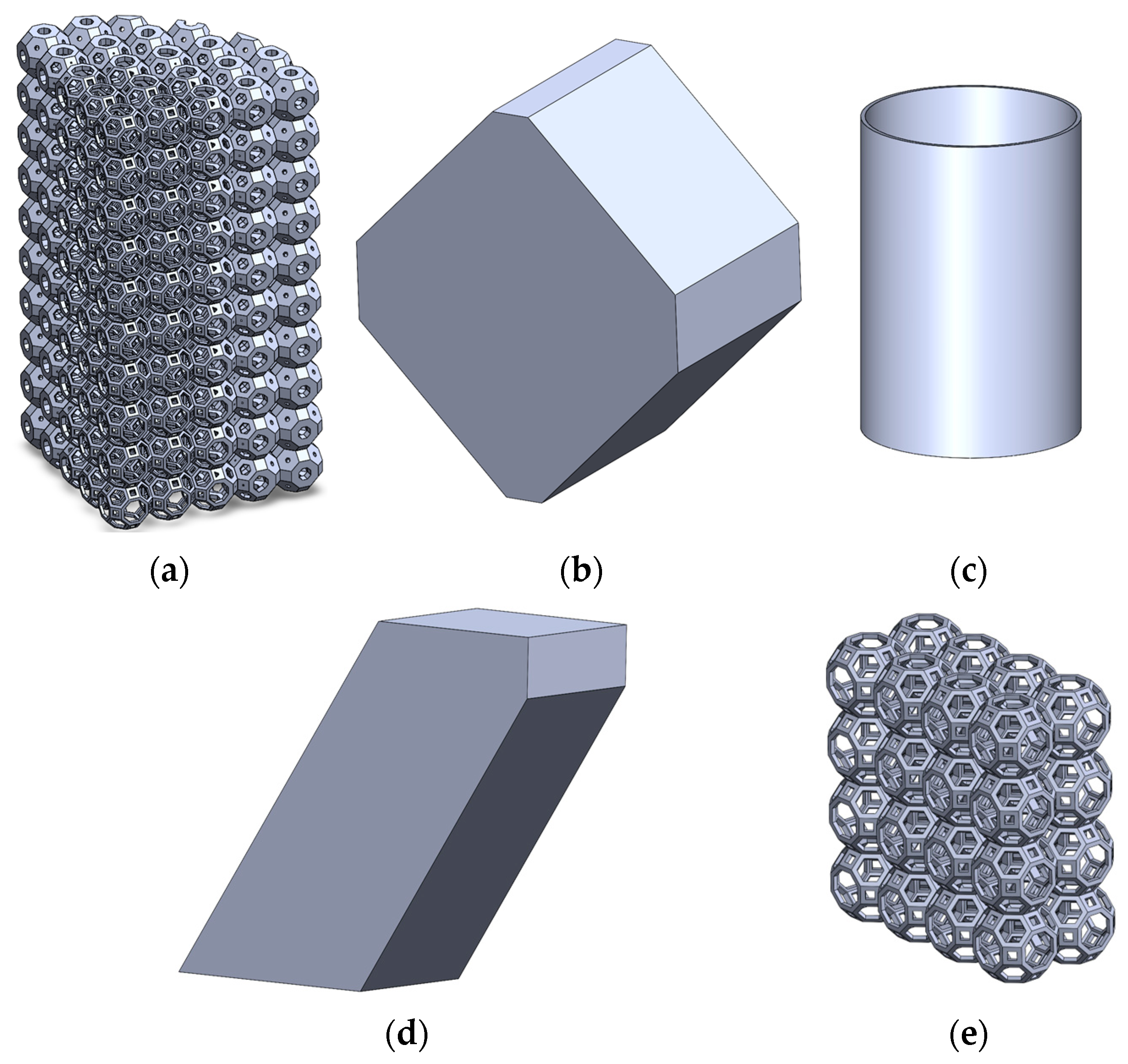
A DoE with a specific set of process parameters was employed for each region. Several geometries were used for developing the specific parameters set for each of those regions (Figure 2). These geometries were designed to present features of hatch volume, borders, skins, and thin walls.
The hatch region (Figure 2a) was considered in one quarter of a cylindrical graded lattice structure made of RTCO unit cells with a relative density that varies from 10% in the center to 45% in the outer region. This geometry was chosen because it has hatch regions with variable sizes, closely matching the final parts that were printed. The geometries for the border and skins (Figure 2b,c) were inspired by the methodology proposed by Bassoli et al. [5].
The geometry used to study the skins (Figure 2d) consists of a cylindrical shape with a low thickness that requires only two laser passes to manufacture. Finally, the lattice structure for beam compensation (Figure 2e) consists of a lattice structure made with RTCO unit cells with a reduced relative density of 10.28%, which leads to low thickness struts that are the most difficult to manufacture, and a reduced number of unit cells to increase the manufacturing speed.
Each of the geometries in Figure 2 was used in its respective DoE. The idea was that as the optimal parameters for each region were defined, they are used for that region in the next DoE. Firstly, the process parameters were determined for a bulk volume, corresponding to the solid, load-bearing regions (Figure 2a).
The energy input for the volume hatch is calculated from Equation (2) as the volumetric energy density (VED, J/mm3),
V E D = P L t   h d   v s
where P corresponds to the laser power (W), L t to the layer thickness (mm), h d to the hatching distance (mm) and v s to the scanning speed (mm/s).
Considering the calculated energy required to melt iron (Fe) based on its thermophysical properties (Table 1), the first DoE considered three parameters, and three values as follows: laser power 140–160–180 W, scanning speed 600–900–1200 mm/s, and hatching distance 0.09–0.10–0.11 mm, resulting in a VED ranging from 35.4 to 111.1 J/mm3. The scanning speed in laser continuous mode is calculated by dividing the laser point distance (µm) over a laser exposure time of 20 µs. Therefore, the aforementioned scanning speed was obtained by considering 12, 18, 24 µm of point distance in the DoE.
A total of 13 iron samples were produced, and the measurement of mass, relative density and porosity were considered for the bulk parameters optimization and will be presented in the Results section (Table 2).
Then, a second DoE for the border parameters was performed (Figure 2b). Considering that 2 contours were set, the border and contour (also called additional border), these are the outlines of the 2D cross sections of the part, which are scanned to enhance the quality of the surface finish. At the border, the surface energy density (SED, J/mm2) is calculated from Equation (3) since there is no hatching,
S E D = P L t   v s
where P corresponds to the laser power (W), L t to the layer thickness (mm), and v s to the scanning speed (mm/s).
A higher laser power and lower scanning speed, in comparison with the bulk DoE case, are used to fully melt sintered particles adhered to the surface. The border and contour are scanned by the laser and a DoE for six parameters and three factors were considered as follows: laser power 180, 250, 300 W; scanning speed 200, 400, 600 mm/s, given by point distances of 4, 8, 12 µm; border distance; hatch offset; additional border power 180, 250, 300 W; and additional scanning speed 200, 400, 600 mm/s (Table 3), given by point distances of 12, 18, 24 µm.
A total of 13 samples were produced to optimize the border parameters, using the geometry shown in Figure 2b. The measurement of porosity was considered for the border parameters optimization, which will be featured in the Results and discussion section.
A third DoE was conducted to optimize the process parameters for thin walls. To produce geometries with thin walls, the laser scan must be restricted to a dual scan. Therefore, thin-walled tubes with a 10 mm outer diameter and 15 mm height were produced (Figure 2c).
These types of structures are particularly relevant in the manufacturing of lattice structures due to their inherently low thickness. In thin walls, the linear energy density (LED, J/mm) is the most suitable parameter for energy input characterization, where energy deposition is primarily influenced by the laser moving along a single path. The LED is calculated using Equation (4),
L E D = P   v s
where P corresponds to the laser power (W) and v s to the scanning speed (mm/s).
The thin walls were scanned by the laser and a DoE for two parameters and three factors was considered as follows: laser power 140, 160, 180 W; and scanning speed of 600, 900, 1200 mm/s. As before, the selected scanning speeds corresponded to point distances of 12, 18, 24 µm in the DoE. A total of 9 samples were fabricated to refine the selection of process parameters. The geometry used, shown in Figure 2d, features a constant target thickness of 160 µm. The final thickness of the produced thin walls was measured through micrographic analysis to assess process accuracy and optimization (Table 4).
Then, a fourth DoE was conducted to optimize the skin parameters. The skins are scanned by the laser, and a DoE for four parameters and three factors was considered as follows: laser power 140, 160, 180 W; scanning speed 600, 900, 1200 mm/s; hatch distance 90, 100, 110 µm; and hatch offset −50, −30, −10 µm. The aforementioned scanning speed was obtained by considering 12, 18, 24 µm of point distance in the DoE.
A total of 13 samples were fabricated to optimize the skin parameters (Table 5). The geometry used is shown in Figure 2c. To assess the surface quality, surface roughness measurements were conducted on both down-skin and up-skin regions.
Finally, a fifth DoE was conducted to optimize the beam compensation parameter. Beam compensation is a correction factor applied during the slicing and scanning strategy in PBF-LB to account for the laser beam diameter and ensure dimensional accuracy. Since the laser melts a region that extends beyond the intended scan path due to the heat diffusion and the beam spot size, an offset is introduced to adjust the scan vectors accordingly. This compensation helps prevent deviations between the CAD model dimensions and the produced part.
In this study, beam compensation is implemented by offsetting the scan paths to correct for over- or under-melting effects. The applied compensation values are adjusted based on experimental measurements to minimize dimensional discrepancies. Proper beam compensation is particularly critical for lattice structures (Figure 2e), which incorporate thin-walls and fine geometrical features, to ensure high accuracy and reproducibility of the final parts. Relative density measurements were performed to optimize the beam compensation parameters.
Finally, prototypes of lattice structures designed for biomedical applications were fabricated using the optimized process parameters. These lattices featured varying relative densities, tailored to meet specific mechanical and biological requirements, such as the porosity for bone ingrowth and load-bearing capabilities. The optimized parameters ensured precise geometrical accuracy, consistent thin-wall formation, and high structural integrity, which are crucial for biomedical implants.

2.2. Characterization of Iron Samples

To evaluate the quality of the PBF-LB processed iron samples and lattice structures, comprehensive experimental characterization was carried out. This included the determination of density and porosity, the assessment of surface roughness and geometrical accuracy, as well as morphological, compositional and crystallographic analyses. In addition, the three-dimensional micro-architectural morphology of the optimized lattice structures was investigated.
The densities of the iron graded lattice samples were determined by measuring the mass and considering the volume from the 3D CAD model. For the remaining (bulk) samples, density was measured according to the Archimedes principle with a precision balance (Kern EG 420-3NM, Kern & Sohn GmbH, Balingen, Germany) equipped with a density determination kit.
The porosities were calculated by image analysis with ImageJ 1.53a (NIH, Madison, WI, USA) and AxioVision V 4.8.2.0 (Zeiss Group, Oberkochen, Germany). The produced iron samples were metallographically prepared by grinding with SiC paper up to 1200 grit, followed by polishing with diamond slurry of 6 and 1 µm. Polished cross-sections were then imaged with a ZEISS Axiotech 100 optical microscope (Zeiss Group, Oberkochen, Germany).
Surface roughness was measured using a Mitutoyo SJ-210 portable surface roughness tester (Mitutoyo Corporation, Kawasaki, Japan) via contact-based profilometry. For each sample several measurements were taken and the average value is reported. The primary roughness parameter considered in this work was the arithmetic mean roughness, Ra.
The morphological characterization of the iron samples was performed using a benchtop SEM (Phenom ProX G6, Thermo Fisher Scientific, Walthan, MA, USA) equipped with a CsB6 filament. Elemental composition was analysed via the integrated energy-dispersive X-ray spectroscopy (EDS) system, which was used to compare the chemical composition of different particle types (e.g., spherical vs. irregular particles) and to confirm the presence of minor alloying elements or impurities associated with the powder and its processing.
The crystallographic structure of the lattice structures was characterized by X-ray diffraction (XRD) using a D8 Advance Bruker AXS powder diffractometer (Bruker, Billerica, MA, USA), equipped with a SSD160 detector and a Cu Kα radiation source (λ = 1.5406 Å), operating at 30 kV and 30 mA. Diffraction data were collected over a 2θ range of 5–110°, with a step size of 0.05°. The measurements were performed on the outer surface of the lattice structures to obtain a representative diffraction signal from the additively manufactured material. Phase identification was performed by matching the obtained diffraction patterns against reference data from the Joint Committee on Powder Diffraction Standards (JCPDS) database.
The 3D micro-architectural morphology of the lattice structures was further assessed by X-ray micro-computed tomography (micro-CT) using a Phoenix V|TOME|X system (Waygate Technologies, Hürth, Germany). Scanning parameters included an accelerating voltage of 80 kV, a current of 80 μA, an angular step of 0.15°, and a spatial resolution of 6.7 μm. Image acquisition data was processed and analysed qualitatively using Volume Graphics 3.04 software. The micro-CT data was qualitatively analysed to verify the irregularities of struts, detect internal defects such as large pores or lack-of-fusion regions, and assess the conformity of the printed lattice geometry to the CAD model.

3. Results and Discussion

3.1. Feedstock Iron Particles

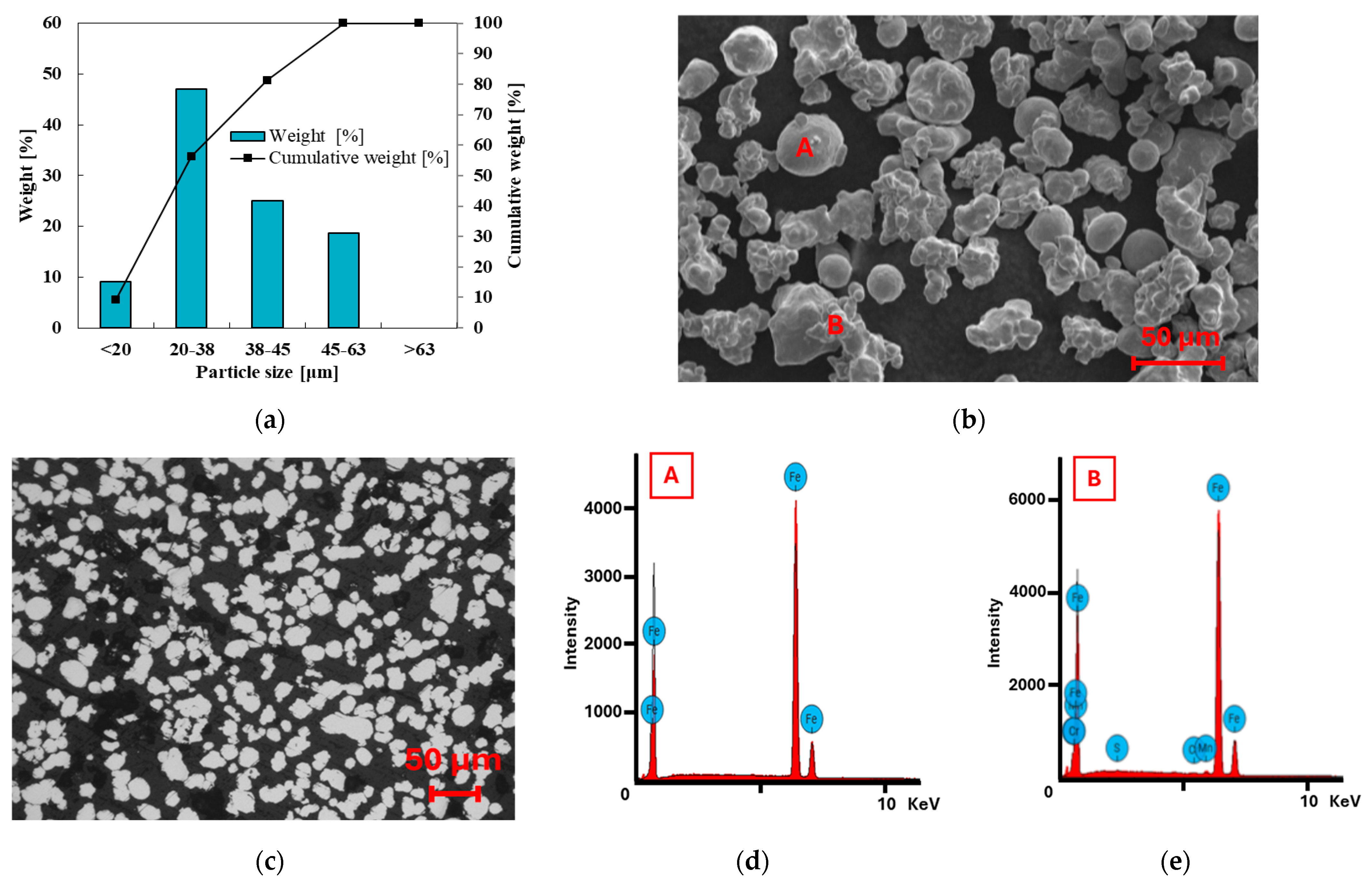
Figure 3 provides a detailed analysis of the particle size distribution of the as-received iron particles. Figure 3a features the relationship between particle size and relative fraction, measured in weight percentage (%), along with the corresponding cumulative weight percentage (%). As can be noted, the particle size follows a normal (Gaussian-like) distribution, with most of the particles falling within the 20 to 38 µm range. This indicates a relatively uniform particle size, which is beneficial for ensuring consistent material properties.
Moreover, the absence of particles exceeding 63 µm confirms the effectiveness of the iron particle selection and sieving process, ensuring that no oversized particles are present. The predominance of fine iron particles (<63 µm) was confirmed by the SEM analysis of both free particles and cross-section images, as shown in Figure 3b and Figure 3c, respectively. Moreover, two distinct morphologies can be observed among the iron particles in SEM analysis: a spherical shape, indicated in Figure 3b as ‘A’, and an irregular shape, labelled as ‘B’ in Figure 3b. Numerous particles exhibiting irregular morphology, consisting of agglomerates of smaller particles and satellite structures, were identified. This suggests that the degree of sphericity of the feedstock iron particles is low.
SEM-EDS analysis of the free iron particles revealed compositional differences between the spherical (Figure 3d) and irregular particles (Figure 3e). The spherical particles were composed exclusively of iron (Fe), whereas the irregular particles contained iron (Fe) along with trace amounts of manganese (Mn), sulphur (S) and chromium (Cr). The presence of these elements in the irregular particles likely originates from the manufacturing process and is consistent with the expected purity of the iron powder (99.0%).

3.2. PBF-LB Process Optimization

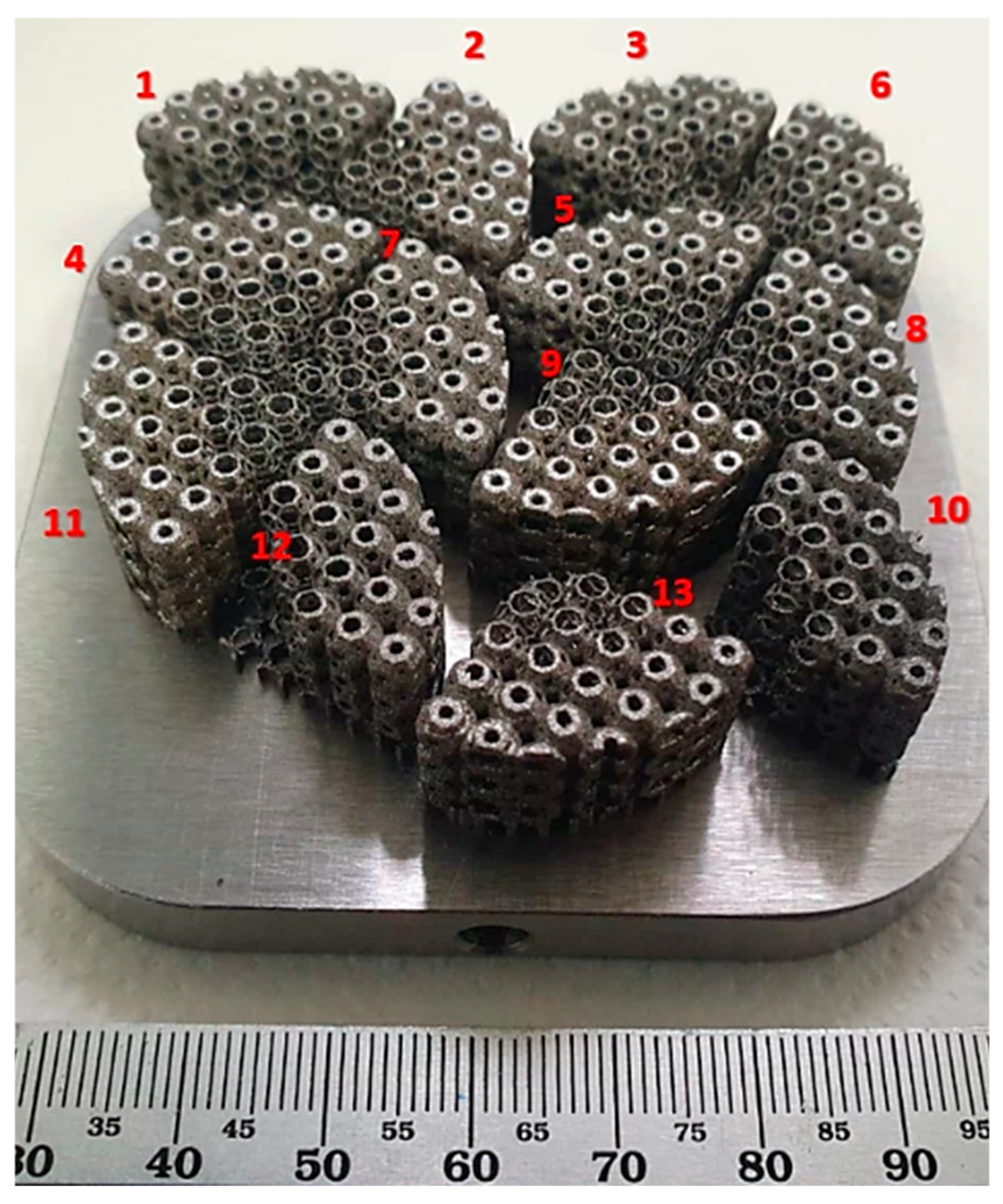
Figure 4 presents the test samples printed for the bulk parameter evaluation. Since the primary goal is to fabricate lattice structures, test geometries that incorporate lattice features should be used, as they better represent the manufacturability of the final parts.
This approach is crucial because achieving consistent material properties in thin lattice struts, particularly in iron that has not been extensively studied, is significantly more challenging than in standard bulk test samples with larger dimensions [36,37]. It is also more challenging than for other materials like 316L stainless steel, for which the authors have already been able to manufacture various lattice structures [38,39].
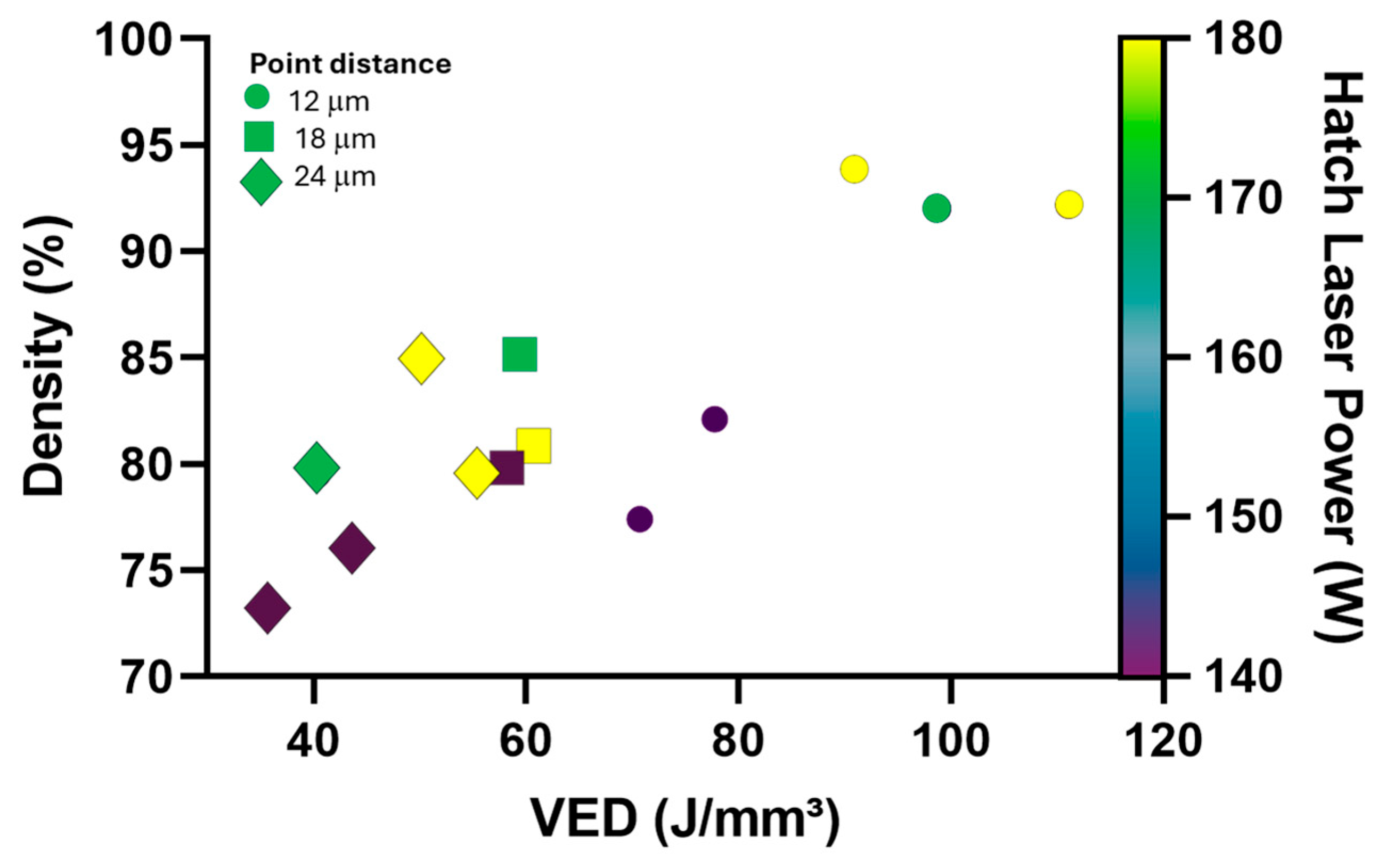
Table 2 presents the density of the iron samples, the corresponding volumetric energy density (VED, J/mm3), and the porosity values used to evaluate the influence of hatch volume parameters. Figure 5 illustrates the relationship between volumetric energy density (VED) and the relative density of 3D-printed iron structures fabricated by PBF-LB, where each point corresponds to a specific combination of processing parameters. A clear positive correlation is observed between VED and the resulting part density, confirming that higher energy input promotes increased material consolidation. The primary goal of process optimization was to maximize the material density. Among the tested conditions, the optimal parameter set, highlighted in gray in Table 2, with a hatch laser power of 180 W, scanning speed of 600 mm/s, hatch distance of 110 µm, and point distance of 12 µm, achieved the highest relative density of 93.87% with a VED of 90.9 J/mm3.
Notably, VED values above ~90 J/mm3 tended to yield consistently high densities, suggesting effective fusion and reduced porosity. The influence of laser power is evident in the color gradient, with higher powers generally leading to denser structures. Marker shape indicates point distance, where smaller distances (e.g., 12 µm) enhanced energy overlap and fusion quality, whereas larger ones (e.g., 24 µm) often led to incomplete fusion. Scanning speed, represented by marker size, also played a key role: slower speeds allowed for better energy absorption and material densification. Collectively, the plot underscores the need for a balanced parameter configuration to optimize energy efficiency and part quality in PBF-LB iron processing.
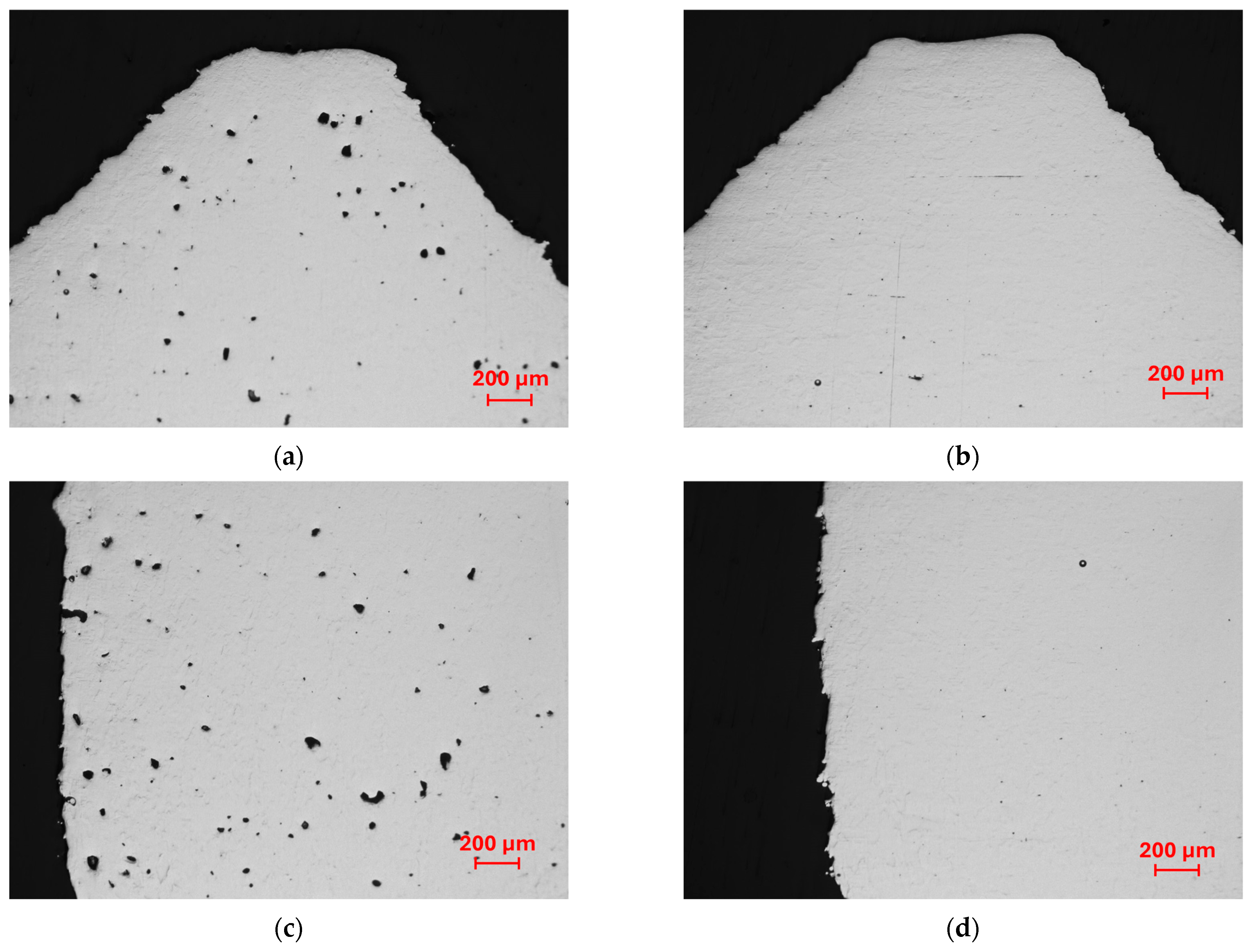
The optimal hatch parameters identified in this DoE were applied throughout the development of the remaining parameters. Microscope images, presented in Figure 6, suggest that the material’s actual density was higher (99.93% for sample 11) than the density reported in Table 2. This discrepancy arises from the method used to determine the base material’s density, which involved dividing the sample’s mass by the theoretical volume of the lattice taken from the CAD model. To account for this, porosity was further analyzed in selected samples by mounting the samples in resin, using the microscope to obtain high-resolution images and the program ImageJ to analyze the results. The chosen iron samples included the two with the highest density (identified in Table 2 as Samples 9 and 11) and the one with the lowest (Sample 10).
Table 2. PBF-LB parameters used to fabricate 3D iron structures, with the corresponding density, volumetric energy density (VED) and porosity.
SampleHatch Laser Power
(W)
Hatch Distance
(μm)
Point Distance
(µm)
Scanning Speed
(mm/s)
VED
(J/mm3)
Mass
(g)
Archimedes Density
(%)
Porosity
(%)
116011024120040.44.07579.50%-
2160901260098.84.71692.00%-
318010024120050.04.35684.98%-
41401001260077.84.21082.12%0.25%
51801101890060.64.13980.75%-
6140901890057.64.09179.80%-
71809024120055.64.08379.66%-
81401101260070.73.96977.42%-
91809012600111.14.72492.16%0.14%
1014011024120035.43.75873.30%7.59%
111801101260090.94.81293.87%0.07%
121409024120043.23.89976.06%-
131601001890059.34.37185.28%-

3.3. Design of Experiments

3.3.1. Border

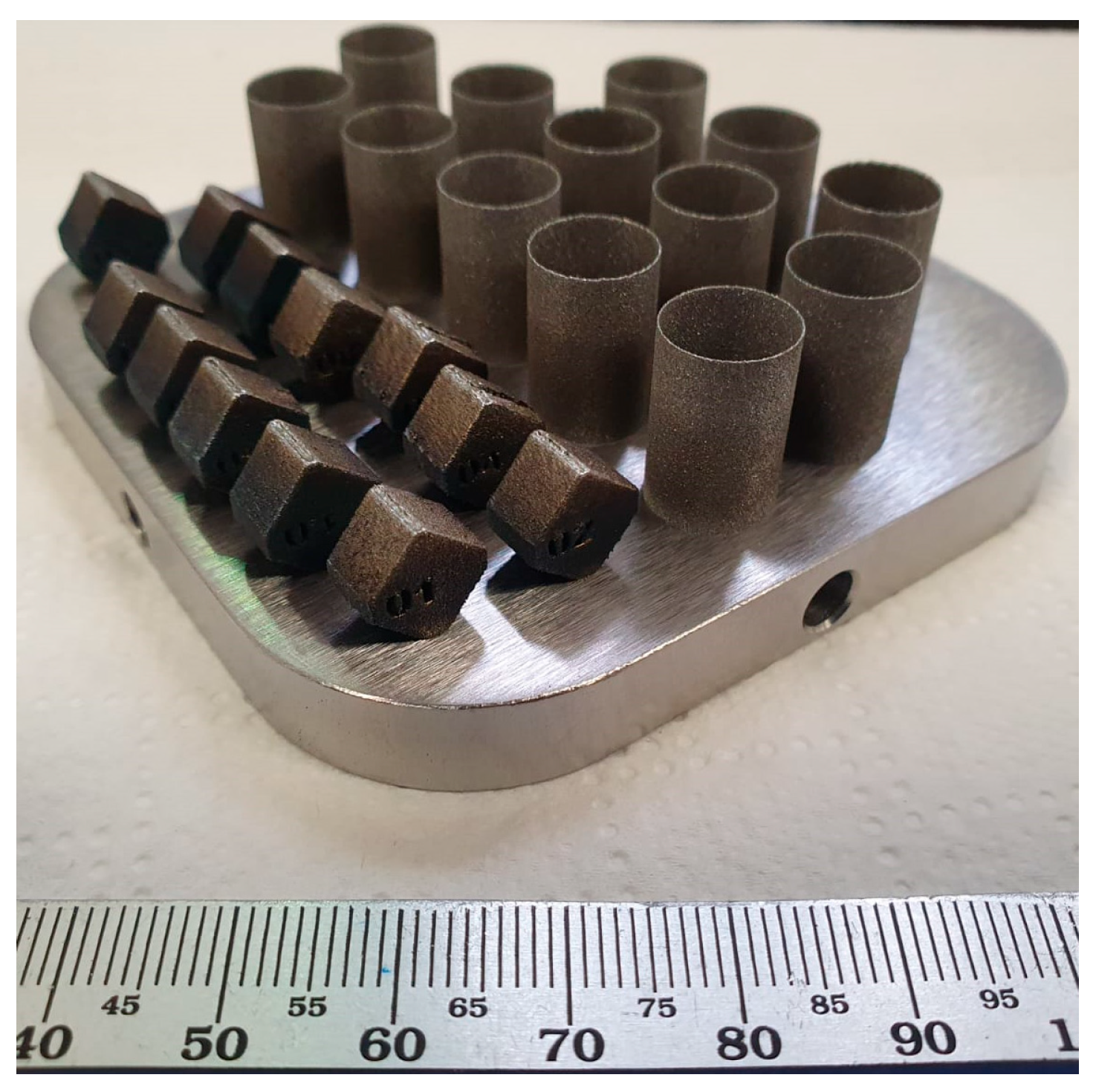
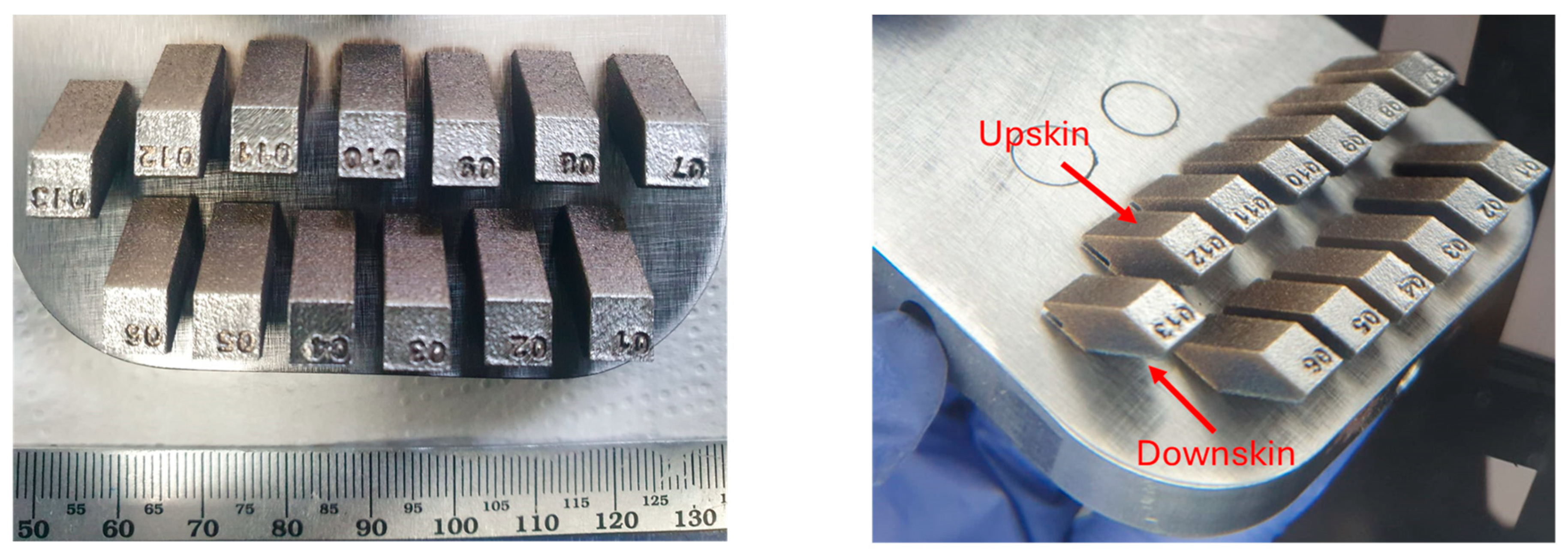
In the border DoE study, the primary objective is to minimize porosity to ensure that the borders achieve the maximum hardness while also aiming for a smooth surface finish, i.e., low roughness. Optimizing these parameters is crucial, as the borders play a significant role in the structural integrity, corrosion resistance and mechanical performance of the final component. The samples used in this DoE can be seen on the left side of Figure 7.
Since the hatch parameters remained unchanged from the previous section, porosity was evaluated not only on the border surface, the primary focus of this DoE, but also in the hatch region to further assess the effectiveness of the hatch parameters. Table 3 presents the processing parameters alongside with the measured porosity values for both the hatch and border regions, including standard deviations for each sample set. The parameters that resulted in the lowest border porosity are highlighted in light grey.
By analysing hatch porosity in these iron samples, the bulk parameters were further validated, confirming their effectiveness in producing geometries with minimal porosity. It is also important to highlight that these bulk geometries are easier to print compared to lattice structures. Despite this, the observed porosity levels remain consistent with those recorded in the DoE for lattice structures, reinforcing their reliability.
Table 3. Parameters, hatch porosity and border porosity of the border samples.
SampleBorder
Laser Power (W)
Border Point
Distance
(μm)
Additional Border Power
(W)
Additional Border
Point
Distance
(μm)
Hatch
Offset
(μm)
Border
Distance
(μm)
SED
(J/mm2)
Optical
Porosity
(%)
Optical
Border
Porosity
(%)
11801218012−5070100.074 ± 0.0370.530 ± 0.654
2180424012−1050300.182 ± 0.1380.104 ± 0.107
324041804−5050400.079 ± 0.0590.668 ± 0.296
4300121808−1050170.123 ± 0.2240.113 ± 0.181
5300122404−5090170.033 ± 0.0370.024 ± 0.041
624082408−3070200.072 ± 0.0870.264 ± 0.379
718043008−5090300.745 ± 0.1851.853 ± 1.039
82401230012−1090130.042 ± 0.0300.003 ± 0.005
918081804−1090150.179 ± 0.1460.309 ± 0.202
1030043004−1070500.200 ± 0.2710.147 ± 0.209
11300830012−505025Not possible to manufacture
12180123004−3050100.337 ± 0.4820.063 ± 0.054
13300418012−3090500.160 ± 0.0620.071 ± 0.106
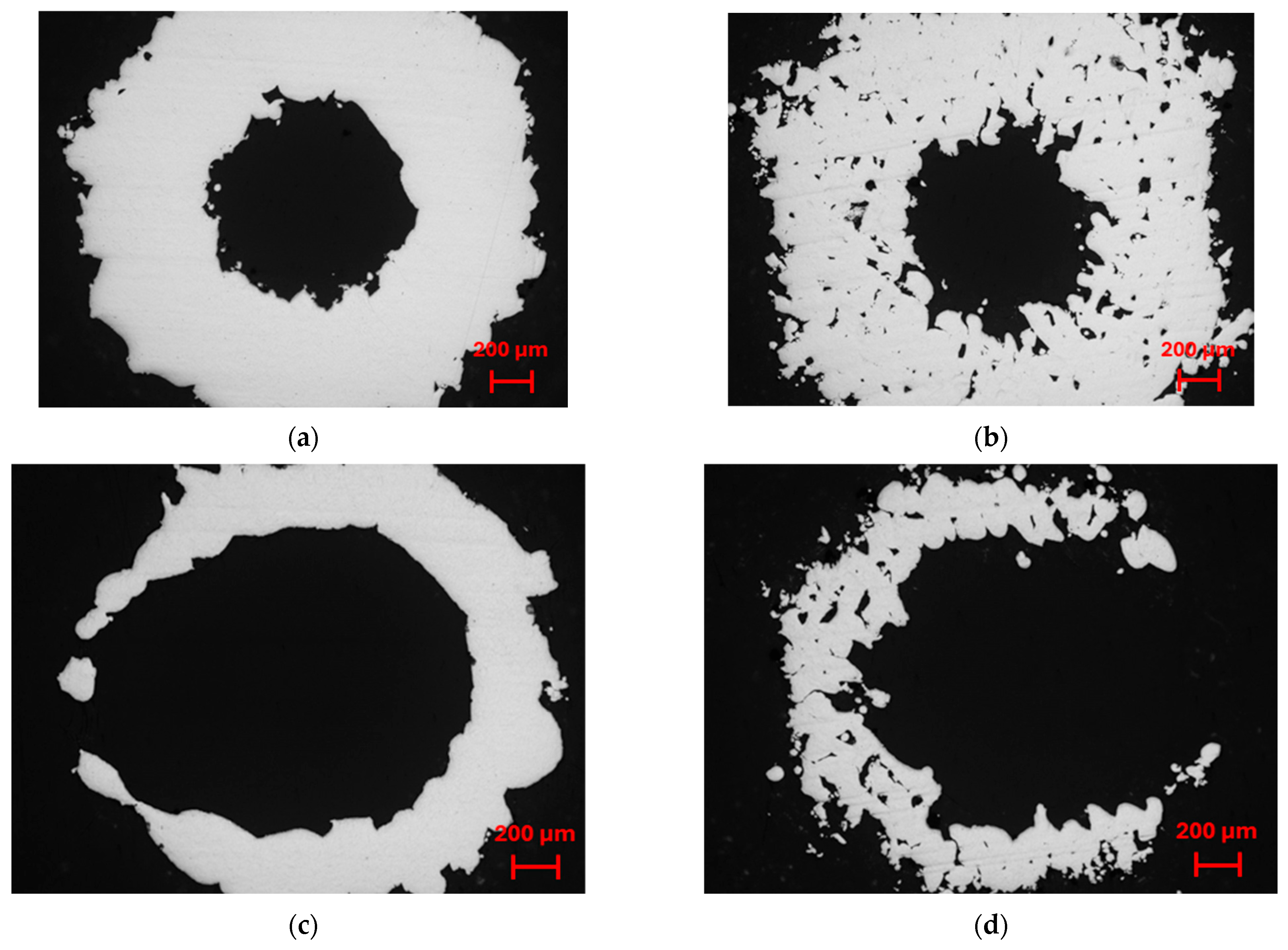
Figure 8 provides micrography images of the border regions for two selected samples, offering a visual comparison of the porosity distribution. On the left, sample 7, identified as the one with the highest border porosity, exhibits a significant presence of voids, which could compromise mechanical performance and act as pitting initiation sites for corrosion, for example. Several studies on materials such as 316L stainless steel, aluminium and titanium alloys [40,41] have suggested this effect, and it may be even more critical for iron given its higher susceptibility to corrosion. In contrast, Sample 8, shown on the right, demonstrates the lowest border porosity, with a more uniform and dense structure, which confirms the results of Table 3.

3.3.2. Thin Wall

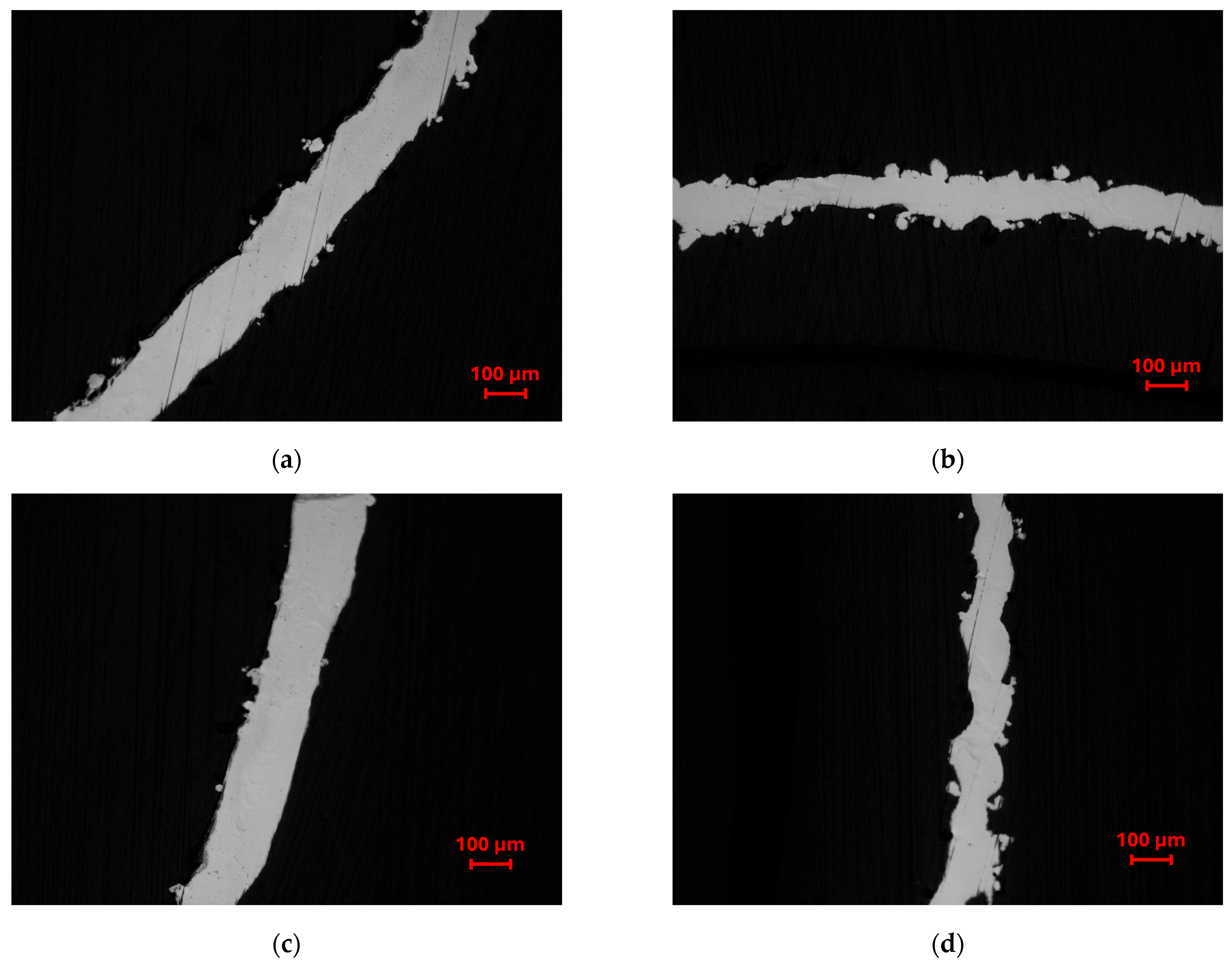
The samples for the thin wall DoE are shown on the right side of the photograph in Figure 7. Table 4 presents the processing parameters used for each iron sample, along with the thickness measurements taken from various regions. The thickness t was measured from high-resolution optical microscope images obtained from polished cross-sections of the lattice samples, Figure 9. For each sample, eight measurements were taken along each cross-section using ImageJ. The target thickness for these samples was 160 µm, and Table 4 also includes the thickness error, highlighting the extent to which the measured thickness differs from the designed specification. The thickness error is calculated according to Equation (5).
T h i c k n e s s   e r r o r   % = t m e a s u r e d t n o m i n a l t n o m i n a l × 100
It should be noted that negative values of this variable indicate that the measured thickness is lower than the nominal CAD value, whereas positive values, which are not observed in this set, would indicate a thicker strut than designed.
It is possible to see that sample 7 was the best, with the least deviation from the target thickness, and sample 1 was the second best. It is relevant to highlight that the parameters for sample 7 are the same as the ones considered the best ones from the bulk DoE.
Table 4. Parameters, average thickness and thickness error of the thin wall samples.
SampleBlock Path Hatch Laser Power (W)Block Path Point Distance
(μm)
Block Path
Scanning Speed
(mm/s)
LED
(J/mm)
Thickness
Average (μm)Standard Deviation (μm)Error
(%)
11602412000.133133.19.4−16.8
21601206000.267109.720.8−31.4
31802412000.150109.918.1−31.3
4140126000.233122.819.4−23.3
5180189000.200124.814.3−22.0
6140189000.156102.820.1−35.8
7180126000.300145.312.9−9.2
81402412000.11790.030.1−43.8
9160189000.178111.714.0−30.2
Micrographs such as those shown in Figure 9 were used to evaluate the wall thick-ness. For each sample, 12 measurements were taken from different regions. While Sample 7 exhibits an average thickness closer to the target value and maintains a consistent and uniform cross-section (Figure 9a), Sample 8 shows a significant variation (Figure 9b).

3.3.3. Skin

Such inconsistencies in thin wall features can result in a reduced load-bearing cross-section, potentially leading to structural failure. This highlights the critical role of proper selection of process parameters, particularly when pushing the limits of manufacturability at such low thicknesses.
The samples produced for the skins DoE are shown in Figure 10. These samples are designed to simultaneously evaluate the upskin and downskin parameters within a single part, as previously shown in Figure 2d. Their fabrication incorporates the optimized parameters from the hatch, border, and thin wall DoEs. However, since the geometry considered does not have thin features, the machine will not activate the thin wall parameters during the manufacturing process.
Table 5 presents the parameters used for each sample, along with the measured surface roughness of both the upskin and downskin surfaces. Additionally, the density of the base metal is included to further validate that the bulk parameters yield high-density, high-quality parts.
Table 5. Parameters for skins DoE.
SampleHatch
Laser Power (W)
Hatch
Distance (μm)
Hatch Offset (μm)Point
Distance (µm)
Scanning Speed (m/s)Relative Density (%)Border Roughness
(Ra) (µm)
Downskin Surface Roughness (Ra) (µm)Upskin
Surface
Roughness (Ra) (µm)
1160100−30180.998.73%9.82131.21710.968
2140110−30120.698.94%13.21637.38713.240
314090−10241.298.58%11.67428.75616.454
418090−10120.698.77%11.83638.14214.165
5160110−10241.298.97%12.93933.32112.301
618090−30241.299.09%10.50631.10414.860
7140100−10120.698.96%11.62135.92315.910
8180100−50241.298.47%11.75129.34818.374
9140110−50241.299.22%10.23629.77214.701
1014090−50180.998.55%11.52327.19414.109
1116090−50120.699.25%11.96422.36313.249
12180110−10180.999.34%12.26835.77010.184
13180110−50120.698.66%12.44826.79514.283
As an additional analysis, the roughness of the border was also measured to assess the consistency of the border parameters in producing smooth surfaces. It was found that the average roughness (Ra) of the border was lower than the downskin values, ranging between 9.8 and 13.2 µm, but had similar values to the upskin regions. The upskin surfaces generally exhibited significantly lower roughness than the downskin surfaces, which is consistent with the literature [42].
The best-performing parameters for the downskin and the upskin are highlighted in bold and grey, respectively. To the authors’ knowledge, the literature regarding pure iron parts obtained with PBF-LB is very limited. However, the roughness values achieved with the optimal parameters of this study are either comparable to or significantly lower than those reported for similar processes using other materials like titanium, stainless steel, nickel alloys, or iron-copper-molybdenum alloys [42,43,44].

3.3.4. Beam Compensation

Despite the extensive parameter optimization carried out in this study to ensure high-quality part production, the precise dimensions of the lattice struts were not yet fully guaranteed upon the fourth DoE. To address this, a final DoE was conducted focusing on beam compensation, a parameter that adjusts the heat-affected zone, which extends beyond the nominal laser diameter. Without this adjustment, the strut dimensions in lattice structures may exceed the intended size by approximately 100 µm [45,46]. This value serves as a reasonable starting point for the beam compensation evaluation.
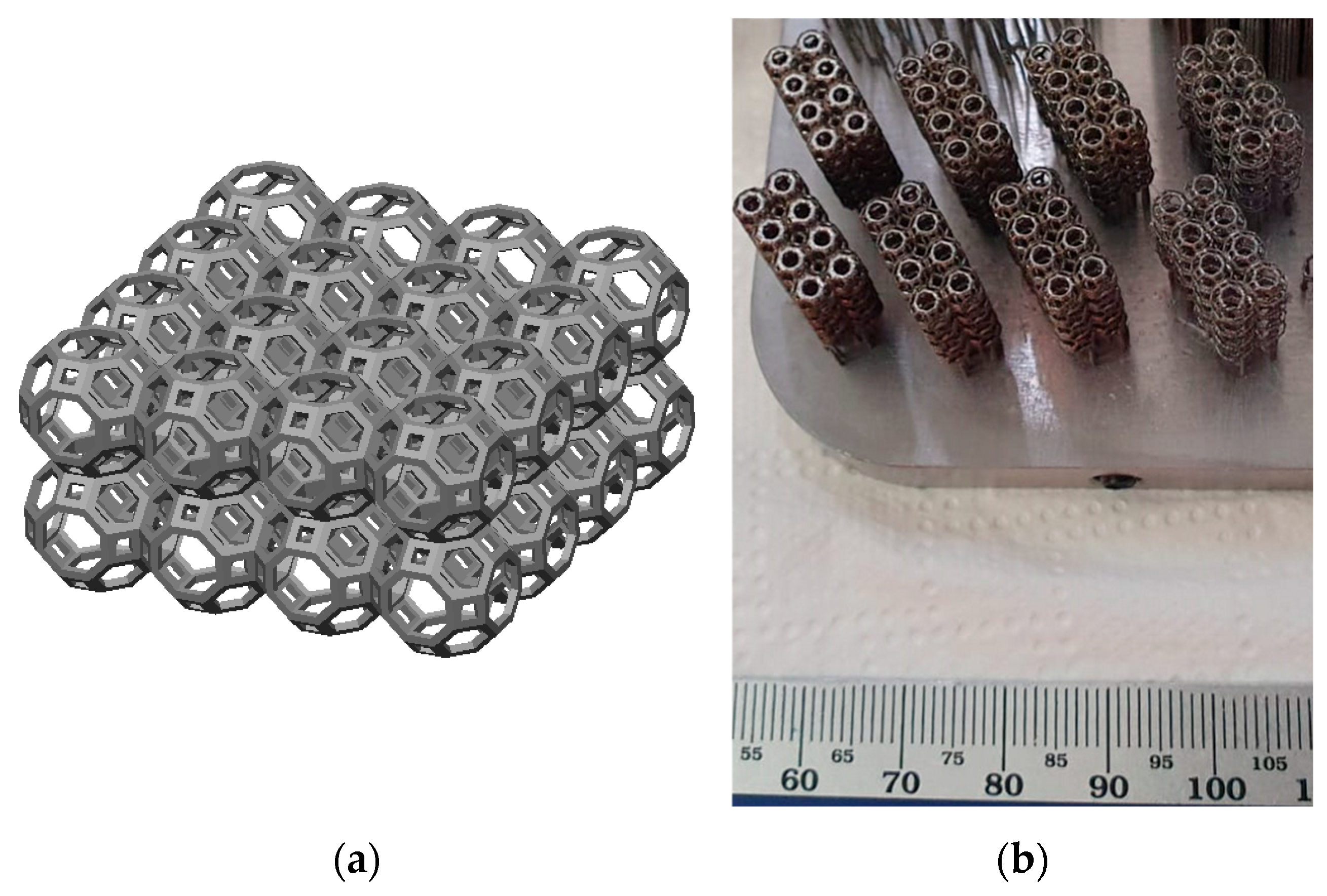
For this analysis, lattice samples with RTCO unit cells and a fixed relative density of 10.28%, as designed in Figure 11a, were manufactured, Figure 11b, with different values of beam compensation.
Table 6 presents the beam compensation values alongside the relative density of the CAD geometry and the relative density of the fabricated lattice samples. The results indicate that increasing the beam compensation parameter effectively reduces the strut thickness in proportion to the applied compensation. This demonstrates that an optimal beam compensation value can be identified to achieve the desired lattice density with high accuracy. The results show that between 120 µm and 135 µm, the geometry can be produced with an error in the relative density below 10%. This means that the size of the melt pool that is not accounted for is around these values [46], and it is possible to correct it with the beam compensation parameter. The parameters that most accurately replicate the target geometry’s relative density are highlighted in gray.

3.4. Lattice Geometries

After finding the optimal parameters for the hatch, border, thin wall, skins and beam compensation, three different lattices were evaluated to see if they could be obtained with the desired relative density. Table 7 summarizes the parameters used to manufacture the samples, which were the best for each of the previous DoEs.
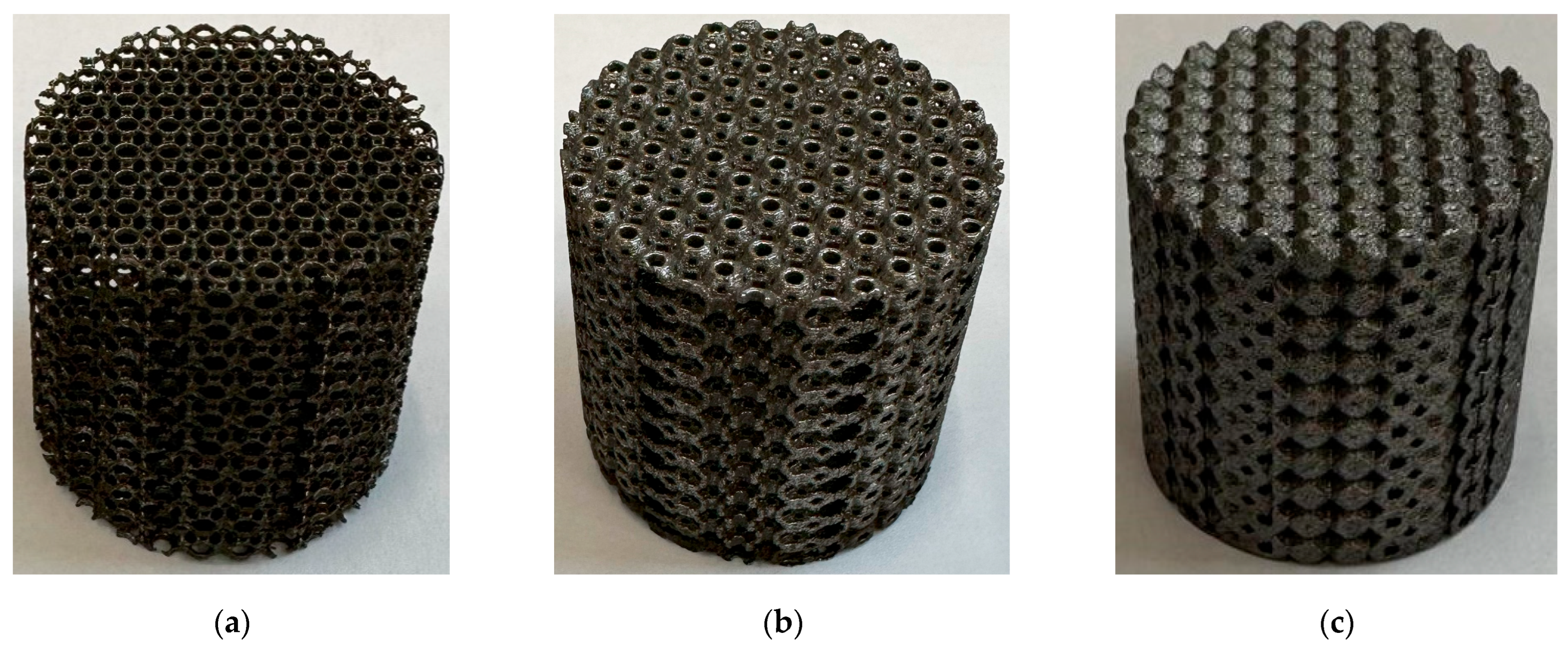
The samples manufactured can be seen in Figure 12. They consist of lattices made of the RTCO unit cell type with different relative densities, a low relative density of 10.28%, (Figure 12a), a medium relative density of 35.29% (Figure 12b), and a high relative density of 65.16% (Figure 12c).
After manufacturing, the relative densities of the lattices were measured, and the results can be seen in Table 8. The results suggest that the parameters were adequate to produce the lattice structures and that they could be obtained with a small error in their relative density.
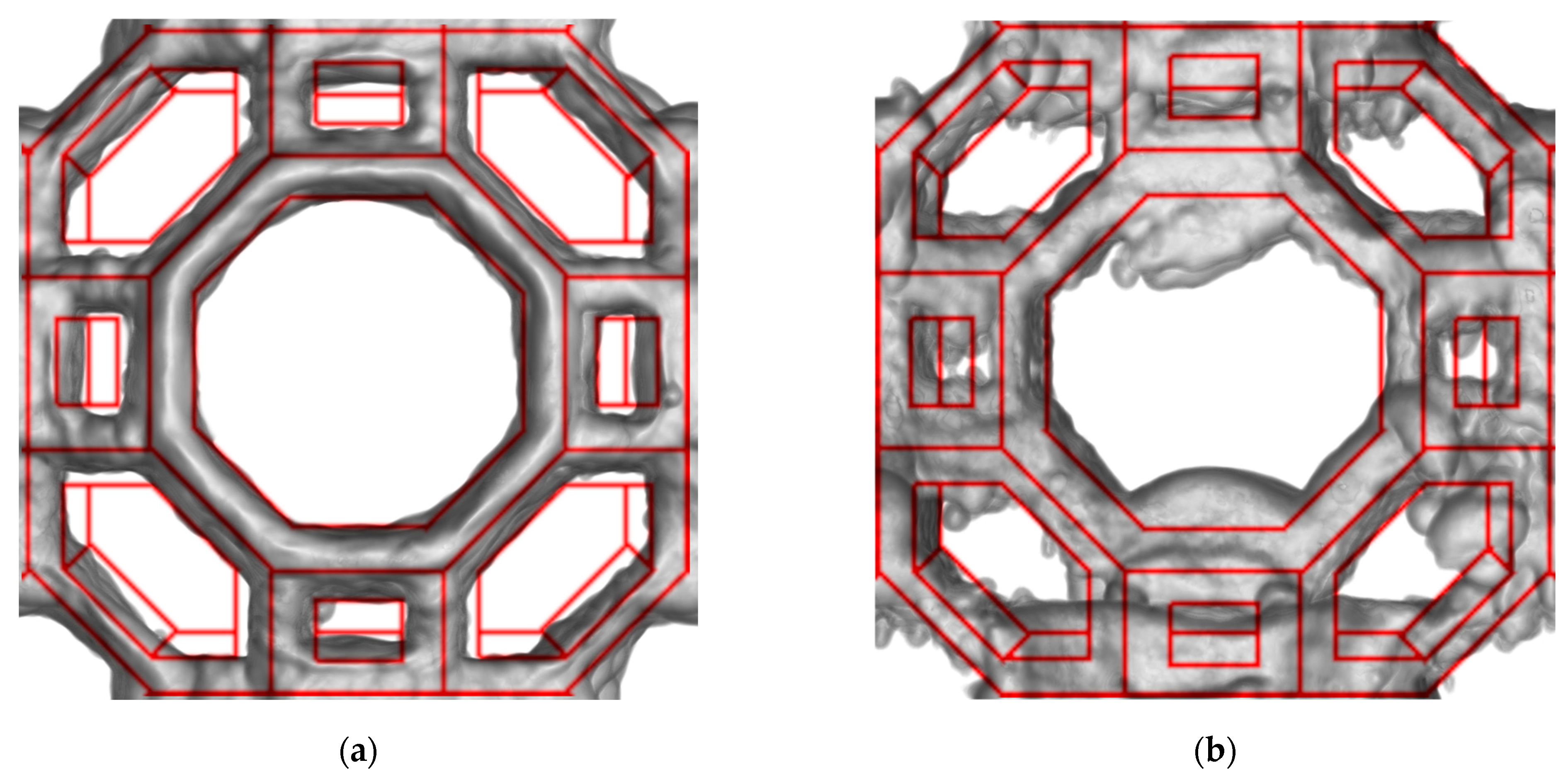
Additionally, the RTCO lattice sample with a theoretical density of 10.28%, produced with parameters presented in Table 7, was analyzed by micro-CT and compared to its corresponding CAD model. Figure 13 presents this comparison, showing in detail a unit cell with 3.5 × 3.5 mm. From the top view, Figure 13a, it can be observed that the produced geometry closely replicates the CAD design, with well-defined features and dimensions that aligned with the intended specifications. In the side view, Figure 13b, some defects are visible, particularly in horizontal downskin surfaces, which is the most challenging orientation for printing. These areas exhibit some excess of over melted material, a common and difficult-to-avoid defect in such geometries. Overall, the produced structure demonstrates good agreement with the designed geometry, confirming that the selected process parameters are appropriate for this material.
It is also important to recognize that after extensive parameter optimization, the manufacturing internal defects inherent to the process were reduced. These defects include porosity, geometric deviations, lack of fusion, keyhole defects, balling and overhanging, among others [36,37]. Even though not all these defects were directly evaluated in this study as a primary objective, the various microscope images and micro-CT suggest that they were reduced significantly with the increase in part quality that was achieved with this methodology. The accumulation of these defects would mean that even if the produced lattices achieve the intended relative density, the individual struts could still exhibit compromised mechanical performance due to their dimensions pushing the limits of the PBF-LB process. However, this study demonstrates that certain defects can be minimized, making it possible to manufacture complex geometries, such as lattice structures, with a high degree of accuracy. Notably, to the authors’ best knowledge, the present work is the first known study to explore PBF-LB processing of pure iron lattices. Indeed, it seems that no prior work has investigated the fabrication parameters of pure iron through PBF-LB, whether for lattice structures or other components [23].

4. Conclusions

This study successfully addressed the issue of optimization of PBF-LB processing parameters for the fabrication of pure iron lattice structures with varying relative densities. Through a systematic DoE approach, key parameters such as hatch power, scanning speed, hatch distance, and beam compensation were refined to enhance part quality. This was ascertained by minimizing porosity, improving dimensional accuracy, and reducing surface roughness. The findings confirm that PBF-LB can be effectively applied to pure iron, which is an underexplored material in additive manufacturing.
The production of rhombitruncated cuboctahedron (RTCO) lattice structures with relative densities of 10.28%, 35.29%, and 65.16% demonstrated the feasibility of manufacturing complex iron-based cellular structures with high accuracy. The optimized process ensured minimal geometric deviations, enabling precise control over the relative density of the printed lattices and consequently on the mechanical properties. Such advancements are particularly relevant for biomedical applications, where porous architectures must balance mechanical strength and support with pore size and interconnectivity, so as to promote tissue ingrowth and vascularisation. In this context, the RTCO geometry and the as-built surface roughness generated by PBF-LB are expected to favor bone-implant integration by providing bone apposition sites and pathways for cell migration and nutrient transport.
From a biomedical perspective, the use of pure iron offers a complementary alternative to established biodegradable metals such as magnesium or zinc and to permanent materials such as titanium or stainless steel. The latter exhibit excellent biocompatibility and corrosion resistance, but their long-term permanence and relatively high elastic modulus can lead to stress shielding and eventual revision surgery. Magnesium-based alloys, in contrast, show very good biocompatibility but often degrade too rapidly, which may compromise mechanical integrity during healing if degradation is not carefully controlled. Pure iron degrades more slowly than magnesium and zinc, with corrosion products based on iron oxides and hydroxides that can be incorporated into normal iron metabolism. This offers the potential for sustained mechanical support over longer time scales while still avoiding a permanent implant solution. The lattice design used in this work provides an additional route to tune the effective stiffness and degradation rate of iron structures through porosity and surface area control.
The present research work expands the potential of additive manufacturing for biodegradable iron structures, offering a pathway for further innovations in medical implants and structural applications. The results provide a foundation for future studies on the mechanical and biological behavior of iron lattice structures, ensuring their suitability for next-generation biomedical devices.

Author Contributions

Conceptualization, R.L.B.; Funding acquisition, M.B.S. and M.F.V.; Investigation, P.N., R.L.B., C.S., M.J.C. and R.C.; Methodology, P.N., J.P.G.M., R.L.B., A.M.d.D., M.B.S. and M.F.V.; Project administration, M.F.V.; Resources, M.J.R., A.C. and P.M.; Supervision, A.M.d.D., M.B.S. and M.F.V.; Validation, P.N., J.P.G.M., L.R., C.S., M.J.C. and R.C.; Visualization, P.N., J.P.G.M., M.J.R., A.C., P.M. and L.R.; Writing—original draft, P.N. and J.P.G.M.; Writing—review & editing, J.P.G.M., R.L.B., M.J.R., A.C., P.M., L.R., C.S., M.J.C., R.C., A.M.d.D., M.B.S. and M.F.V. All authors have read and agreed to the published version of the manuscript.

Funding

The authors acknowledge Fundação para a Ciência e a Tecnologia (FCT) for its financial support via LAETA (project https://doi.org/10.54499/UID/50022/2025). The authors acknowledge the GRADIMP Project, Biodegradable implants in porous iron obtained by additive manufacturing PTDC/CTM-CTM/3354/2021, DOI 10.54499/PTDC/CTM-CTM/3354/2021, funded by FCT. ISQ acknowledges the funding through the base funding component of the Center for Technology and Innovation—ISQ, under the terms defined in AAC No. 03/C05-i02/2022. Pedro Nogueira acknowledges FCT for its financial support through the PhD grant 2024.01800.BD. Pedro Nogueira and Augusto Moita de Deus acknowledge support by FCT under project UID/04540, CeFEMA, Centre of Physics, Engineering and Advanced Materials. The funders were not involved in the study design, collection, analysis, interpretation of data, the writing of this article or the decision to submit it for publication.

Data Availability Statement

The raw data supporting the conclusions of this article will be made available by the authors on request.

Conflicts of Interest

The authors declare no conflicts of interest.

References

  1. DebRoy, T.; Wei, H.L.; Zuback, J.S.; Mukherjee, T.; Elmer, J.W.; Milewski, J.O.; Beese, A.M.; Wilson-Heid, A.; De, A.; Zhang, W. Additive manufacturing of metallic components—Process, structure and properties. Prog. Mater. Sci. 2018, 92, 112–224. [Google Scholar] [CrossRef]
  2. Narasimharaju, S.R.; Zeng, W.; See, T.L.; Zhu, Z.; Scott, P.; Jiang, X.; Lou, S. A comprehensive review on laser powder bed fusion of steels: Processing, microstructure, defects and control methods, mechanical properties, current challenges and future trends. J. Manuf. Process. 2022, 75, 375–414. [Google Scholar] [CrossRef]
  3. Chowdhury, S.; Yadaiah, N.; Prakash, C.; Ramakrishna, S.; Dixit, S.; Gupta, L.R.; Buddhi, D. Laser powder bed fusion: A state-of-the-art review of the technology, materials, properties & defects, and numerical modelling. J. Mater. Technol. 2022, 20, 2109–2172. [Google Scholar] [CrossRef]
  4. Bobel, A.; Anam, M.d.A.; Lorenzo-Martin, C.; Gould, B.; Hector, L.G.; Greco, A. Additive manufacturing process parameter determination for a new Fe-C-Cu alloy. J. Manuf. Process. 2023, 101, 311–321. [Google Scholar] [CrossRef]
  5. Bassoli, E.; Sola, A.; Celesti, M.; Calcagnile, S.; Cavallini, C. Development of Laser-Based Powder Bed Fusion Process Parameters and Scanning Strategy for New Metal Alloy Grades: A Holistic Method Formulation. Materials 2018, 11, 2356. [Google Scholar] [CrossRef]
  6. Guo, C.; Li, S.; Shi, S.; Li, X.; Hu, X.; Zhu, Q.; Ward, R.M. Effect of processing parameters on surface roughness, porosity and cracking of as-built IN738LC parts fabricated by laser powder bed fusion. J. Mater. Process. Technol. 2020, 285, 116788. [Google Scholar] [CrossRef]
  7. Damon, J.; Koch, R.; Kaiser, D.; Graf, G.; Dietrich, S.; Schulze, V. Process development and impact of intrinsic heat treatment on the mechanical performance of selective laser melted AISI 4140. Addit. Manuf. 2019, 28, 275–284. [Google Scholar] [CrossRef]
  8. Cao, L.; Li, J.; Hu, J.; Liu, H.; Wu, Y.; Zhou, Q. Optimization of surface roughness and dimensional accuracy in LPBF additive manufacturing. Opt. Laser Technol. 2021, 142, 107246. [Google Scholar] [CrossRef]
  9. Nogueira, P.; Magrinho, J.P.G.; Silva, M.B.; Moita de Deus, A.; Vaz, M.F. Compression properties of cellular iron lattice structures used to mimic bone characteristics. Proc. Inst. Mech. Eng. L J. Mater. Des. Appl. 2024, 238, 2217–2232. [Google Scholar] [CrossRef]
  10. Krakhmalev, P.; Fredriksson, G.; Svensson, K.; Yadroitsev, I.; Yadroitsava, I.; Thuvander, M.; Peng, R. Microstructure, Solidification Texture, and Thermal Stability of 316 L Stainless Steel Manufactured by Laser Powder Bed Fusion. Metals 2018, 8, 643. [Google Scholar] [CrossRef]
  11. Fayazfar, H.; Salarian, M.; Rogalsky, A.; Sarker, D.; Russo, P.; Paserin, V.; Toyserkani, E. A critical review of powder-based additive manufacturing of ferrous alloys: Process parameters, microstructure and mechanical properties. Mater. Des. 2018, 144, 98–128. [Google Scholar] [CrossRef]
  12. Bajaj, P.; Hariharan, A.; Kini, A.; Kürnsteiner, P.; Raabe, D.; Jägle, E.A. Steels in additive manufacturing: A review of their microstructure and properties. Mater. Sci. Eng. A 2020, 772, 138633. [Google Scholar] [CrossRef]
  13. Qu, S.; Ding, J.; Song, X. Achieving triply periodic minimal surface thin-walled structures by micro laser powder bed fusion process. Micromachines 2021, 12, 705. [Google Scholar] [CrossRef] [PubMed]
  14. Liu, J.; Li, G.; Sun, Q.; Li, H.; Sun, J.; Wang, X. Understanding the effect of scanning strategies on the microstructure and crystallographic texture of Ti-6Al-4V alloy manufactured by laser powder bed fusion. J. Mater. Process. Technol. 2022, 299, 117366. [Google Scholar] [CrossRef]
  15. Rometsch, P.; Zhu, Y.; Wu, X.; Huang, A. Review of high-strength aluminium alloys for additive manufacturing by laser powder bed fusion. Mater. Des. 2022, 219, 110779. [Google Scholar] [CrossRef]
  16. Guo, W.; Feng, B.; Yang, Y.; Ren, Y.; Liu, Y.; Yang, H.; Yang, Q.; Cui, L.; Tong, X.; Hao, S. Effect of laser scanning speed on the microstructure, phase transformation and mechanical property of NiTi alloys fabricated by LPBF. Mater. Des. 2022, 215, 110460. [Google Scholar] [CrossRef]
  17. Martin, N.; Hor, A.; Copin, E.; Lours, P.; Ratsifandrihana, L. Correlation between microstructure heterogeneity and multi-scale mechanical behavior of hybrid LPBF-DED Inconel 625. J. Mater. Process. Technol. 2022, 303, 117542. [Google Scholar] [CrossRef]
  18. Takagi, H.; Sasahara, H.; Abe, T.; Sannomiya, H.; Nishiyama, S.; Ohta, S.; Nakamura, K. Material-property evaluation of magnesium alloys fabricated using wire-and-arc-based additive manufacturing. Addit. Manuf. 2018, 24, 498–507. [Google Scholar] [CrossRef]
  19. Li, Y.; Pavanram, P.; Zhou, J.; Lietaert, K.; Taheri, P.; Li, W.; San, H.; Leeflang, M.A.; Mol, J.M.C.; Jahr, H.; et al. Additively manufactured biodegradable porous zinc. Acta Biomater. 2020, 101, 609–623. [Google Scholar] [CrossRef]
  20. Song, B.; Dong, S.; Deng, S.; Liao, H.; Coddet, C. Microstructure and tensile properties of iron parts fabricated by selective laser melting. Opt. Laser Technol. 2014, 56, 451–460. [Google Scholar] [CrossRef]
  21. Kruth, J.P.; Froyen, L.; Van Vaerenbergh, J.; Mercelis, P.; Rombouts, M.; Lauwers, B. Selective laser melting of iron-based powder. J. Mater. Process. Technol. 2004, 149, 616–622. [Google Scholar] [CrossRef]
  22. Im, T.; Gurung, K.; Meyers, S.; Cutolo, A.; Oh, H.; Lee, J.-S.; Van Hooreweder, B.; Lee, C.S. A new strategy for metal additive manufacturing using an economical water-atomized iron powder for laser powder bed fusion. J. Mater. Process. Technol. 2022, 308, 117705. [Google Scholar] [CrossRef]
  23. Rabeeh, V.P.M.; Hanas, T. Biodegradable Iron Implants: Development, Processing, and Applications; Springer Nature: Cham, Switzerland, 2025. [Google Scholar] [CrossRef]
  24. Salama, M.; Vaz, M.F.; Colaço, R.; Santos, C.; Carmezim, M. Biodegradable iron and porous iron: Mechanical properties, degradation behaviour, manufacturing routes and biomedical applications. J. Funct. Biomater. 2022, 13, 72. [Google Scholar] [CrossRef] [PubMed]
  25. Gibson, L.J.; Ashby, M.F. Cellular Solids: Structure and Properties, 2nd ed.; Cambridge University Press: Cambridge, UK, 1997. [Google Scholar] [CrossRef]
  26. Zhang, G.; Li, J.; Shangguan, C.; Zhou, X.; Zhou, Y.; Huang, A. A metamaterial bone plate for biofixation based on 3D printing technology. Int. J. Bioprinting 2024, 10, 2388. [Google Scholar] [CrossRef]
  27. Zhu, H.; Liu, K.; Han, W.; Wu, Y.; Chang, H.; Kong, L. Design and biomechanical evaluation of laser powder bed fusion manufactured Ti6Al4V fusion cages with tunable lattice-induced stress distribution. Mater. Today Commun. 2025, 49, 113789. [Google Scholar] [CrossRef]
  28. Huang, R.; Wu, Y.; Huang, L.; Pan, C.; Sun, Y.; Tian, S.; Wang, D.; Yang, Y. Scanning strategies for the 316L part with lattice structures fabricated by selective laser melting. Int. J. Adv. Manuf. Technol. 2024, 133, 3165–3178. [Google Scholar] [CrossRef]
  29. Chen, L.-Y.; Liang, S.-X.; Liu, Y.; Zhang, L.C. Additive manufacturing of metallic lattice structures: Unconstrained design, accurate fabrication, fascinated performances, and challenges. Mater. Sci. Eng. R Rep. 2021, 146, 100648. [Google Scholar] [CrossRef]
  30. Distefano, F.; Mineo, R.; Epasto, G. Mechanical behaviour of a novel biomimetic lattice structure for bone scaffold. J. Mech. Behav. Biomed. Mater. 2022, 138, 105656. [Google Scholar] [CrossRef]
  31. Pape, F.; Noelke, C.; Kaierle, S.; Haferkamp, H.; Gesing, T.M. Influence of Foaming Agents on Laser Based Manufacturing of Closed-cell Ti Foam. Procedia Mater. Sci. 2014, 4, 97–102. [Google Scholar] [CrossRef]
  32. Li, Y.; Jahr, H.; Lietaert, K.; Pavanram, P.; Yilmaz, A.; Fockaert, L.I.; Leeflang, M.A.; Pouran, B.; Gonzalez-Garcia, Y.; Weinans, H.; et al. Additively manufactured biodegradable porous iron. Acta Biomater. 2018, 77, 380–393. [Google Scholar] [CrossRef]
  33. Zadpoor, A.A. Additively manufactured porous metallic biomaterials. J. Mater. Chem. B 2019, 7, 4088–4117. [Google Scholar] [CrossRef]
  34. Carluccio, D.; Xu, C.; Venezuela, J.; Cao, Y.; Kent, D.; Bermingham, M.; Demir, A.G.; Previtali, B.; Ye, Q.; Dargusch, M. Additively manufactured iron-manganese for biodegradable porous load-bearing bone scaffold applications. Acta Biomater. 2020, 103, 346–360. [Google Scholar] [CrossRef]
  35. ASM Handbook Committee. Volume 1: Properties and Selection: Irons, Steels, and High-Performance Alloys; American Society for Metals, ASM International: Russell Township, OH, USA, 1990. [Google Scholar] [CrossRef]
  36. Jost, E.W.; Pegues, J.; Moore, D.; Saldaña, C. Process-Structure-Property Relationships of Laser Powder Bed Fusion Lattice Structures. J. Manuf. Sci. Eng. 2023, 145, 091007. [Google Scholar] [CrossRef]
  37. Zhang, L.; Lifton, J.; Hu, Z.; Hong, R.; Feih, S. Influence of geometric defects on the compression behaviour of thin shell lattices fabricated by micro laser powder bed fusion. Addit. Manuf. 2022, 58, 103038. [Google Scholar] [CrossRef]
  38. Nogueira, P.; Lopes, P.; Oliveira, L.; Alves, J.L.; Magrinho, J.P.G.; Deus, A.M.; De Vaz, M.F.; Silva, M.B. Evaluation of Lattice Structures for Medical Implants: A Study on the Mechanical Properties of Various Unit Cell Types. Metals 2024, 14, 780. [Google Scholar] [CrossRef]
  39. Nogueira, P.; Silva, M.B.; Moita de Deus, A.; Cláudio, R.; Carmezim, M.; Santos, C.; Magrinho, J.; Reis, L.; Lino, J.; Oliveira, L.; et al. Evaluation of the roughness of lattice structures of AISI 316 stainless steel produced by laser powder bed fusion. Eng. Manuf. Lett. 2024, 2, 39–44. [Google Scholar] [CrossRef]
  40. Vukkum, V.B.; Sanborn, T.; Shepherd, J.; Saptarshi, S.; Basu, R.; Horn, T.; Gupta, R.K. Influence of Spatter on Porosity, Microstructure, and Corrosion of Additively Manufactured Stainless Steel Printed Using Different Island Size. Crystals 2024, 14, 328. [Google Scholar] [CrossRef]
  41. Kan, W.H.; Chiu, L.N.S.; Lim, C.V.S.; Zhu, Y.; Tian, Y.; Jiang, D.; Huang, A. A critical review on the effects of process-induced porosity on the mechanical properties of alloys fabricated by laser powder bed fusion. J. Mater. Sci. 2022, 57, 9818–9865. [Google Scholar] [CrossRef]
  42. Snyder, J.C.; Thole, K.A. Understanding Laser Powder Bed Fusion Surface Roughness. J. Manuf. Sci. Eng. 2020, 142, 071003. [Google Scholar] [CrossRef]
  43. Wang, W.; Garmestani, H.; Liang, S.Y. Prediction of Upper Surface Roughness in Laser Powder Bed Fusion. Metals 2021, 12, 11. [Google Scholar] [CrossRef]
  44. Im, T.; Kim, J.-Y.; Gurung, K.; Meyers, S.; Van Hooreweder, B.; Lee, J.-S.; Kim, J.-K.; Lee, C.S. Impact of laser scanning strategies on microstructure in laser powder bed fusion (LPBF) of nanoparticle-infused pre-alloyed water-atomized iron powder. Mater. Sci. Eng. A 2024, 891, 145989. [Google Scholar] [CrossRef]
  45. Ran, Q.; Yang, W.; Hu, Y.; Shen, X.; Yu, Y.; Xiang, Y.; Cai, K. Osteogenesis of 3D printed porous Ti6Al4V implants with different pore sizes. J. Mech. Behav. Biomed. Mater. 2018, 84, 1–11. [Google Scholar] [CrossRef] [PubMed]
  46. Bartolomeu, F.; Costa, M.M.; Alves, N.; Miranda, G.; Silva, F.S. Selective Laser Melting of Ti6Al4V sub-millimetric cellular structures: Prediction of dimensional deviations and mechanical performance. J. Mech. Behav. Biomed. Mater. 2021, 113, 104123. [Google Scholar] [CrossRef] [PubMed]
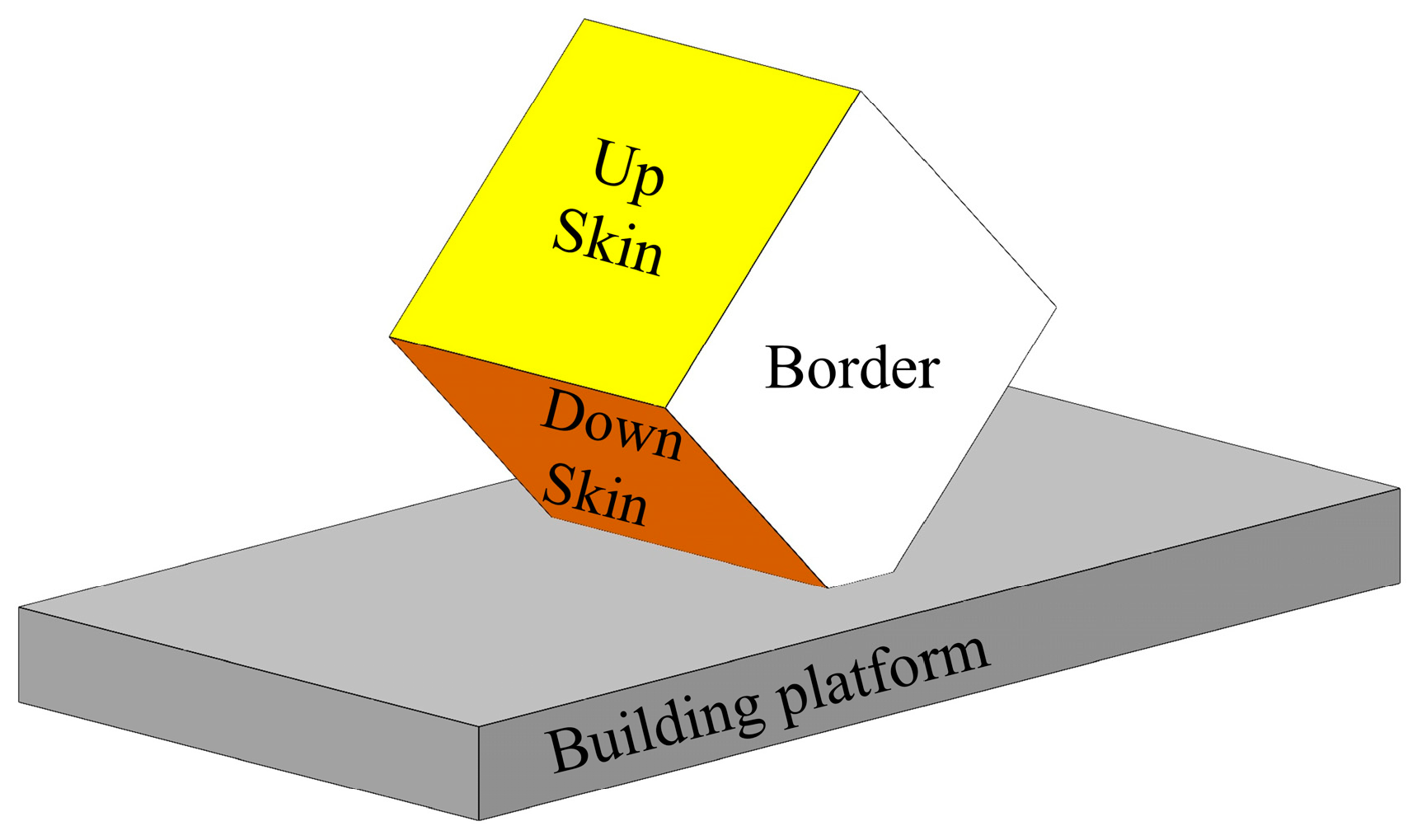
Figure 1. Schematic representation of a 3D part with identification of the different regions.
Metals 15 01355 g001
Figure 2. Geometries used for the DoE: (a) lattice structure used for volume hatch (bounding box: L: 17.5 mm, W: 35 mm, H: 17.5 mm), (b) diamond geometry for border parameters, (c) thin-wall tubes for single scanning parameters, (d) angled samples for skins’ parameters, (e) lattice structure for beam compensation.
Metals 15 01355 g002
Figure 3. Characterization of iron particles: (a) Particle size distribution showing weight percentage and cumulative weight percentage as a function of particle size; (b) optical microscopy image of particles embedded in resin; and (c) scanning electron microscopy (SEM) images illustrating free particle morphology; chemical composition for (d) particle A and (e) particle B evaluated by EDS.
Metals 15 01355 g003
Figure 4. Samples for hatch DOE as printed (see Table 2).
Metals 15 01355 g004
Figure 5. Relationship between volumetric energy density (VED) and density of iron samples. Point color represents hatch laser power (W), point size corresponds to scanning speed (m/s), and marker shape indicates point distance (µm): circles (12 µm), squares (18 µm), and diamonds (24 µm).
Metals 15 01355 g005
Figure 6. Micrography images of hatch DoE: (a) sample 11 cross-section 1, (b) sample 10 cross-section 1, (c) sample 11 cross-section 2, and (d) sample 10 cross-section 2.
Metals 15 01355 g006
Figure 7. Samples for border DoE (diamond shape on the left side) corresponding to the geometry of Figure 2b; and thin-wall DoE (circular tubes on the right side) corresponding to the geometry of Figure 2c, as printed.
Metals 15 01355 g007
Figure 8. Micrography images of border DoE: (a) sample 7 cross-section 1, (b) sample 8 cross-section 1, (c) sample 7 cross-section 2, and (d) sample 8 cross-section 2.
Metals 15 01355 g008
Figure 9. Micrography images of thin wall DoE: (a,c) details of cross-section of Sample 7 and (b,d) details of cross-section of Sample 8.
Metals 15 01355 g009
Figure 10. Samples produced for skins DoE.
Metals 15 01355 g010
Figure 11. Geometry of lattice samples for beam compensation DoE: (a) CAD model, (b) as printed.
Metals 15 01355 g011
Figure 12. RTCO lattice samples with a relative density of (a) 10.28%, (b) 35.29%, and (c) 65.16%. Unit cell size = 3.5 mm, diameter = 35 mm and length = 35 mm.
Metals 15 01355 g012
Figure 13. Geometry of unit cell of lattice samples. Micro-CT vs. CAD model (a) top view, (b) side view. Unit cell size = 3.5 mm.
Metals 15 01355 g013
Table 1. Thermophysical properties of iron (Fe), adapted from Ref. [35].
c (J kg−1 K−1) Δ T (K) l f (J kg−1) ρ (kg mm−3) R p o w d e r k r e l η *
4401510272,0007.87 × 10−60.4550.0900.2
Table 6. Beam compensation and relative density.
SampleBeam Compensation (µm)Theoretical Relative Density (%)Relative Density (%)Relative Density Error (%)
1010.2823.5128.6
29010.2814.642.0
310010.2813.228.4
411010.2812.622.6
512010.2811.18.0
613010.2810.1−1.8
713510.289.7−5.6
815010.287.1−30.9
Table 7. Parameters for lattice samples manufacturing.
Hatch Laser Power
(W)
Hatch Distance
(μm)
Point Distance
(µm)
Scanning Speed
(m/s)
VED
(J/mm3)
180110120.690.9
Volume Border Laser Power
(W)
Volume Border Point Distance
(μm)
Additional
Border Laser Power
(W)
Additional Border Point Distance
(μm)
Hatch
Offset
(μm)
Border
Distance
(mm)
SED
(J/mm2)
2401230012−100.0913
Downskin Hatch
Laser Power
(W)
Downskin Hatch
Distance
(μm)
Downskin Hatch Offset
(μm)
Downskin Point Distance
(µm)
Downskin Scanning Speed
(m/s)
16090−50120.6
Upskin Hatch Laser Power
(W)
Upskin Hatch Distance
(μm)
Upskin Hatch Offset
(μm)
Upskin Point Distance
(µm)
Upskin Scanning Speed
(m/s)
180110−10180.9
Block Path Hatch
Laser Power
(W)
Block Path Point
Distance
(µm)
Block Path Scanning Speed
(m/s)
LED
(J/mm3)
18012 0.60.300
Beam Compensation
(µm)
Hatch Compensation
130No
Table 8. Relative density of the manufactured lattice samples.
SampleTheoretical Relative Density (%)Relative Density (%)Relative Density Error (%)
RTCO—low density10.2810.986.81
RTCO—medium density35.2935.340.14
RTCO—high density65.1667.273.24
Disclaimer/Publisher’s Note: The statements, opinions and data contained in all publications are solely those of the individual author(s) and contributor(s) and not of MDPI and/or the editor(s). MDPI and/or the editor(s) disclaim responsibility for any injury to people or property resulting from any ideas, methods, instructions or products referred to in the content.