
Article

Reducing Maximum Punching Force in Sheet Cold Forming: A Numerical Study of a New Punch Design (Part I)

1
LGME, Ecole Nationale d’Ingénieurs de Sfax, Sfax University, Route Soukra Km 3.5 B.P., P.O. Box 1173, Sfax 3038, Tunisia
2
Laboratory of Electromechanical Systems, National School of Engineers of Sfax, University of Sfax, Soukra Road, Km 3.5, P.O. Box 1173, Sfax 3038, Tunisia
3
Department of Mechanical Engineering, Centre for Mechanical Technology and Automation (TEMA), University of Aveiro, 3810-193 Aveiro, Portugal
4
LASI—Intelligent Systems Associate Laboratory, 4800-058 Guimarães, Portugal
*
Author to whom correspondence should be addressed.
Metals 2025, 15(12), 1338; https://doi.org/10.3390/met15121338
Submission received: 20 September 2025 / Revised: 27 November 2025 / Accepted: 1 December 2025 / Published: 5 December 2025

Abstract

The present research investigates the optimization of the punching process in cold forming manufacturing, focusing on enhancing tool life, reducing damage, and improving product quality. Punching, a shearing process widely used in sheet metal forming, requires careful management of process parameters to prevent tool damage, especially to the punch and die. The research explores various design modifications to the punching tool, including conical, pointed, and stepped shafts, aimed at reducing punching force and minimizing wear, fatigue, and crack formation. Using numerical simulations (ABAQUS/Explicit), the study evaluates the impact of shear angle, punch geometry, and other key parameters on the maximum punching force and stress distribution. The results show that adjusting the punch shaft shape and optimizing the shear angle can significantly decrease stress concentrations, extend tool lifespan, and improve process efficiency. This work provides valuable insights for improving punching tool designs and ensuring longer, more efficient service lives in industrial applications.

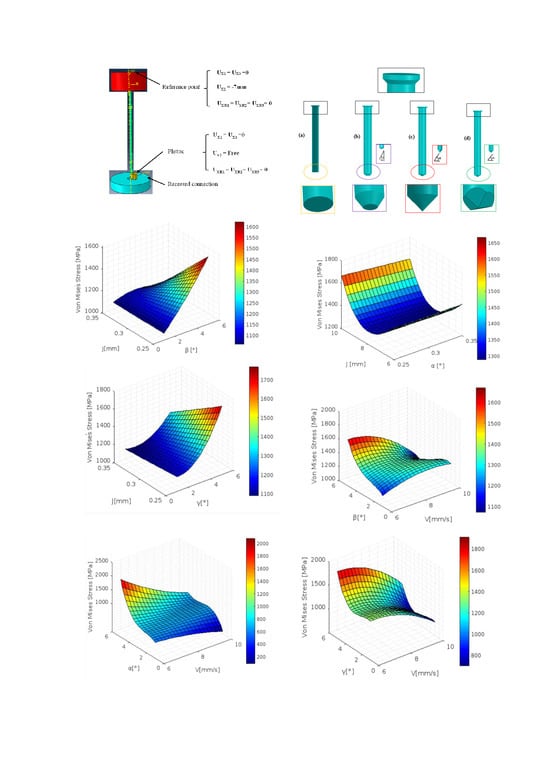
Graphical Abstract

1. Introduction

In modern manufacturing, cost-effective production methods are critical, particularly in industries relying on cold forming processes. Among these, punched sheet metal forming is a cornerstone technique, valued for its efficiency, precision, and adaptability in mass production. However, the punching process faces persistent challenges, particularly when the punch diameter equals the sheet thickness, a demanding condition that exacerbates tool wear, stress concentrations, and fracture risks. While previous research has advanced understanding in specific areas of punching optimization, each study has focused on distinct aspects. Achouri et al. [1] examined micromechanical damage mechanisms, highlighting crack initiation near the die’s cutting edge. Numerical techniques such as inverse analysis (IA) combined with finite element (FE) modeling [2,3] have been widely employed to optimize material constitutive parameters. Studies on punch velocity and clearance [4,5] demonstrated that increased velocity raises burnish height and punching force while reducing surface roughness (Ra). Research on hole diameter and attack angle [6] identified optimal parameters (e.g., 4.59 mm diameter and 43.8° angle) to enhance punching performance. However, none of these works directly compared conical, sharp, and stepped punch geometries under identical conditions, particularly in the challenging scenario where punch diameter equals sheet thickness. Previous investigations have demonstrated that punch tip and shaft geometry significantly influence punching force and tool life. For instance, Subramonian et al. [7] compared punch geometries under extreme clearance conditions, identifying how clearance variations impact punching force, tool wear, and edge quality. Their findings likely highlighted optimal geometries for minimizing defects and stress under challenging conditions. In addition, Kim et al. [8] reported a 20% reduction in punching force using a conical punch with a 15° shear angle, attributed to improved material flow and reduced friction. Similarly, Li and Wang [9] found that pointed punches with optimized clearance reduced stress concentrations by 12–15% compared to conventional designs. More recently, Chen et al. [10] introduced a multi-tiered punch design (similar to the stepped geometry in this study) and observed a 28% decrease in localized strain due to progressive deformation control. However, these studies did not explore the direct comparison of multiple geometries under the extreme condition of equal punch diameter and sheet thickness, nor did they quantify the stress reduction potential as comprehensively as the present work. Our findings reveal a 500 MPa reduction in Von Mises stress for the stepped punch, a quantitative improvement that seems to surpass prior reports and underscores its superiority in high-stress applications.
To address these gaps, this study introduces a novel comparative analysis of cone, sharp, and stepped punch designs, focusing on their performance under the critical condition of equal punch diameter and sheet thickness. The investigation is structured into three key areas: (1) the implementation of the Johnson–Cook model and damage parameters for AISI D2 and S500 MC steels; (2) the development and evaluation of new punch shaft designs; (3) the application of Response Surface Methodology (RSM) to optimize clearance, velocity, and shear angle while analyzing their effects on Von Mises stress distribution and maximum punching force. Additionally, finite element analysis (FEA) and experimental validation are employed to ensure robustness. By directly comparing these geometries under identical, industrially relevant conditions, this work provides actionable insights for manufacturers seeking to enhance tool life, reduce defects, and improve process efficiency.

2. Materials and Methods

2.1. Context and Scope of Research

The sheet metal punching process is a critical manufacturing operation widely used in the automotive, aerospace, and appliance production industries. However, one of the persistent challenges in this process is the premature damage of punching tools, particularly those made from high-strength tool steels such as AISI D2. This damage often results from excessive stress concentrations, wear, and deformation, which can lead to reduced tool life, increased maintenance costs, and production downtime.
The purpose of this research is to investigate the root causes of premature failure in AISI D2 punches and to propose innovative solutions through the design and optimization of new punch shapes. By analyzing the mechanical interactions between the punch, die, sheet metal, and supporting components, this study aims to enhance the durability and efficiency of punching tools, thereby improving overall process reliability and cost-effectiveness.
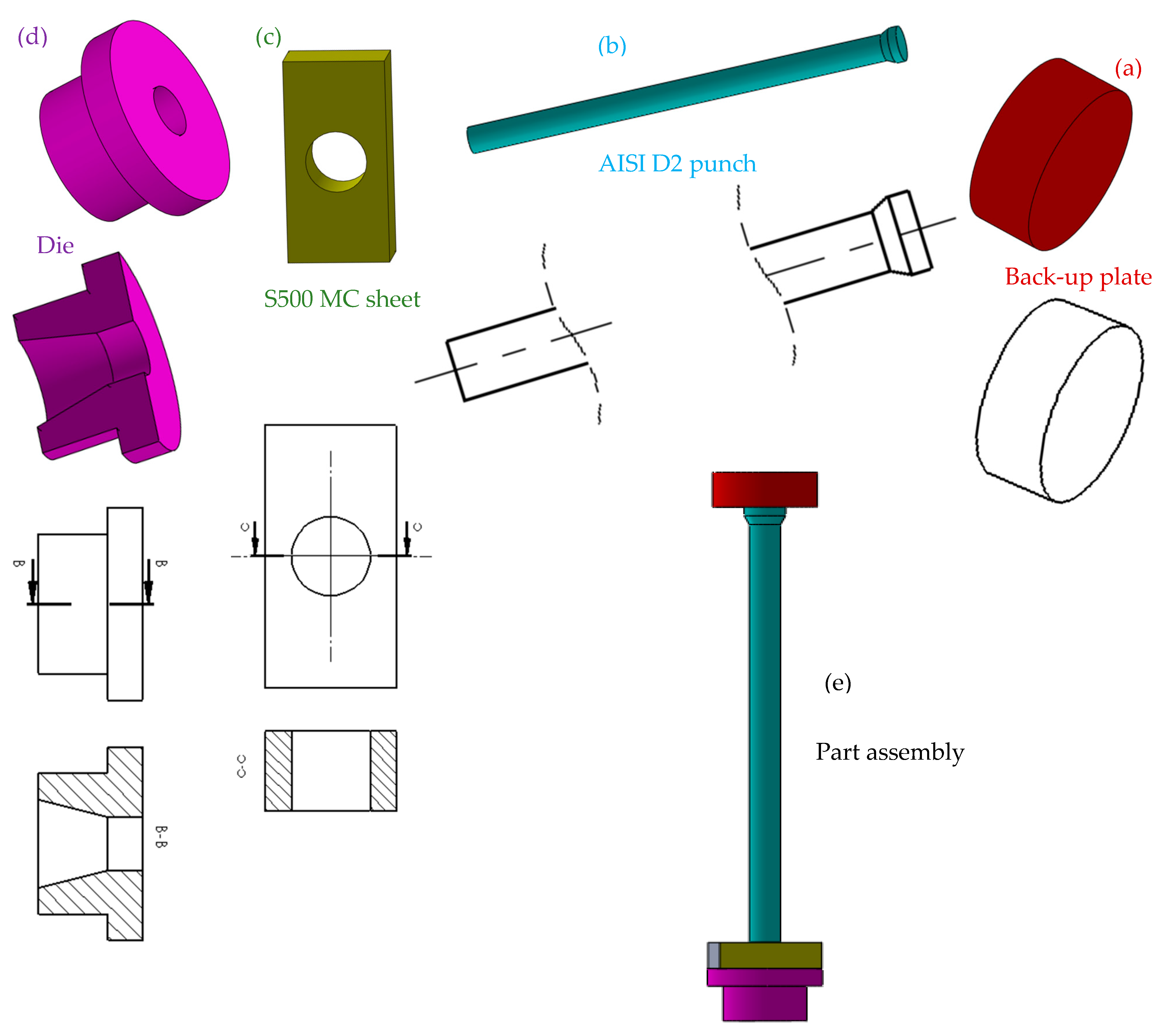
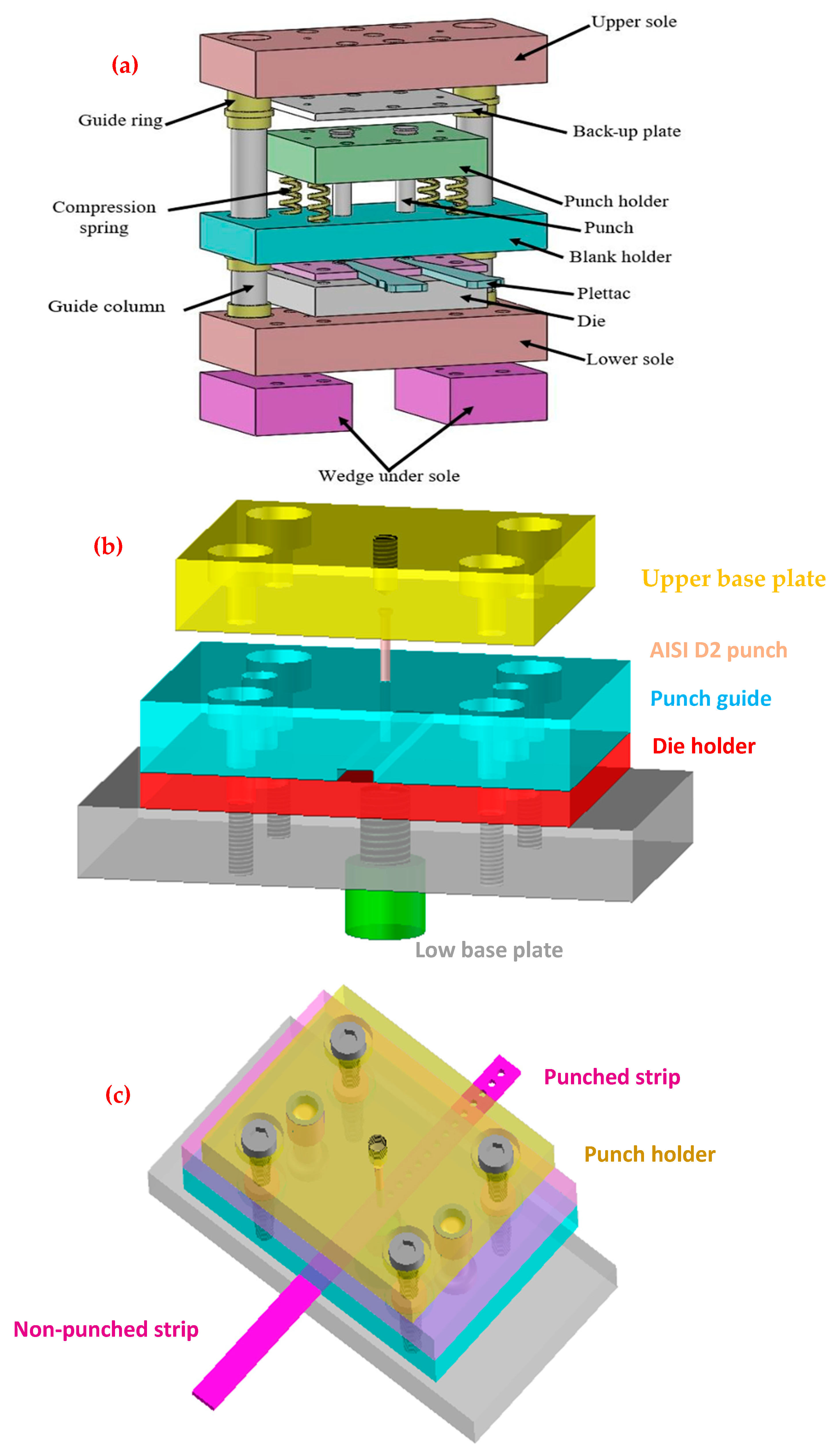
Figure 1 illustrates the primary components involved in the sheet metal punching process, specifically the back-up plate, punch, sheet metal (S500 MC), die, and complete parts assembly, which are also the main elements associated with premature damage in AISI D2 punches. The back-up plate, in direct contact with the punch head, provides structural support and absorbs a portion of the impact forces during the punching operation, while the punch shaft interacts with the upper surface of the sheet metal, applying the necessary force to shear the material, with its design and material properties being critical for the efficiency and longevity of the process. The sheet metal, as the workpiece, influences stress distribution and wear on the punch and die due to its mechanical properties and thickness. Positioned beneath the sheet metal, the die supports the material and collaborates with the punch to achieve a clean shear, maintaining contact with the lower surface of the sheet. The part assembly schematic highlights the spatial relationships and interactions among these components. Understanding the roles and interactions of these elements is essential for diagnosing the causes of premature tool failure and for developing optimized punch designs that mitigate stress concentrations and extend tool life.

2.2. Numerical Approach

The modified Johnson–Cook model can clearly describe the stress–strain relationship of metallic materials. In fact, this model is used under the conditions of high strain rate, large deformation, and high temperatures. Due to the simplicity and findability of material constants, the modified Johnson–Cook model is widely used by many researchers to predict the flow behavior of materials. The flow stress model expression [11,12,13,14,15,16,17] is given in Equation (1):
σ = ( A + B ε n ) 1 + C ln ε ˙ ε ˙ r 1 T T r T m T r m ( 1 + λ ε n )
where σ is the equivalent stress and ε is the equivalent plastic strain. A, B, n, C, m, λ′, and p are the material constants. A is the material yield stress under reference conditions, B is the strain hardening constant, n is the strain hardening coefficient, C is the strengthening coefficient of strain rate, m is the thermal softening coefficient, λ′ is a constant that describes the variation in strength with strain, and p is an exponent related to strain.
Tm is the melting temperature of the material and T is the deformation temperature. ε ˙ r and Tr are the reference strain rate and the reference deformation temperature, respectively.
In Equation (1), from left to right, the first term characterizes the elastoplastic behavior of Ludwick’s law (the strain hardening effect), the second term considers the visco-plasticity (strain rate strengthening), the third term quantifies the temperature effect on the behavior of the material, and finally, the last one represents the strain-dependent term for progressive hardening at high plastic strains.
In the present work, with respect to the experimental conditions, the reference strain rate, ε ˙ r, and the reference temperature, Tr, were taken as 1298 K and 1.0 s−1, respectively. The strength–strain constant, λ′, was fixed at 0.2, and the strain exponent, p, was taken as 1.0. Johnson and Cook established that fracture strain mostly depends on stress triaxiality ratio, strain rate, and temperature. A failure criterion, coupled with the above formula, is needed to assess premature damage in an AISI D2 punch. That is why a failure model was adopted for the ductile failure criterion whereby the equivalent plastic strain at the damage onset depends on stress triaxiality, strain rate, and temperature. The Johnson–Cook fracture model can be written as follows in Equation (2) [18]:
ε f   =   [ D 1   +   D 2   exp   ( D 3   ( ε ˙ ε ˙ r ) ) ] [ 1 +   D 4   ln   ε ˙ ε ˙ r ]   [ 1   +   D 5 T T r T m T r ]
where D1, D2, D3, D4, and D5 are the damage model constants—respectively, initial failure strain, exponential factor, triaxiality factor, strain rate factor, and temperature factor—σm is the mean stress, and σeq is the equivalent stress [19].
The damage of an element is defined based on a cumulative damage law, and it can be represented in a linear way, as shown below in Equation (3) [20,21]:
D = Δ ε ε f
where Δε is the equivalent plastic strain increment and εf is the equivalent strain to fracture under the present conditions of stress, strain rate, and temperature. Due to fracture occurrence, the material’s strength reduces during deformation, and the constitutive relation of stress for the damage evolution can be expressed as follows in Equation (4) [22]:
σ D = 1 D σ eq
In Equation (4), σD is the damaged stress state and D is the damage parameter, 0 ≤ D < 1. The accumulated equivalent plastic strain dependably predicts the impact on ductile metal. Johnson–Cook failure based on plastic strain was used, which occurs when the parameter D defined in Equation (5) reaches a value of 1.
D = 1 ε f d ε p
To conduct a numerical study of AISI D2 punch damage, we started by creating four parts namely, the punch (Figure 2 green color), ‘plettac’ (industrial noun; Figure 2 yellow color), die (Figure 2 blue color), and back-up plate (Figure 2 red color) using ABAQUS software 6.17. A 3D model was created for the back-up plate with a characteristic analytical rigid revolved shell. A reference point was added to it, enabling us to move the punching tool in loading module, and the same procedure was followed for the die. For the punch and ‘plettac’ a 3D deformable revolved solid was created, with 90° revolution to minimize element nodes and increment numbers. For the punch and the ‘plettac’, AISI D2 and S500 MC material characteristics were defined, respectively, in the property module. It is in this module that the behavior law coefficients of the Johnson–Cook damage parameters, specific to each material, were introduced. In the damage law, the option ‘damage evolution’ is defined with a displacement at failure (0.1 in our case). It is also necessary to note material density, Young’s modulus, and Poisson’s ratio. Johnson–Cook parameter identification was possible using the results of previous research [23,24,25,26,27]. Coefficient values, material properties, and Johnson–Cook damage parameters for AISI D2 and S500 MC steels are shown in Table 1 and Table 2.
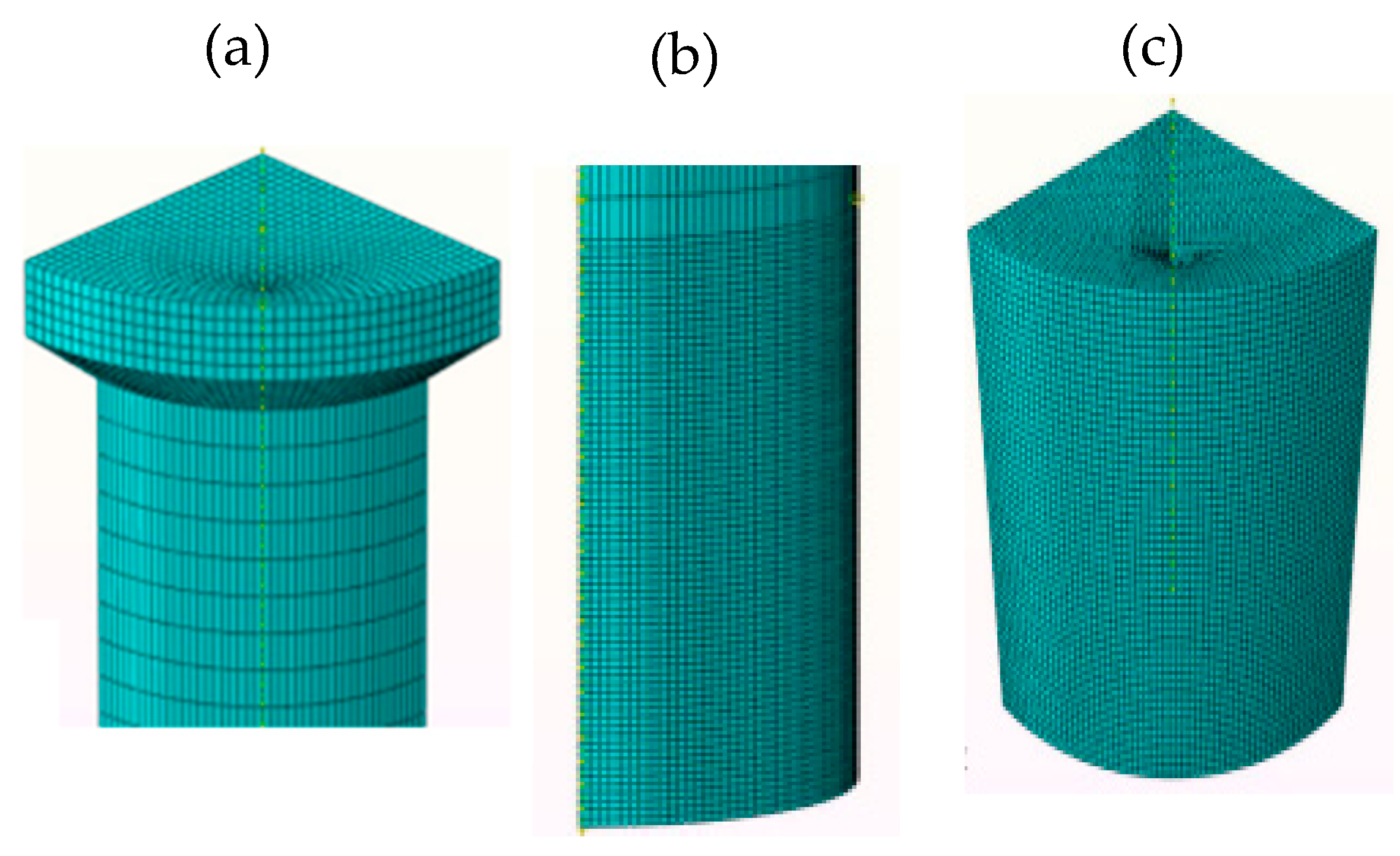
In the ‘mesh’ module, the elements were defined as a quadrilateral mesh to simplify the calculation with the ‘mesh controls’ tool. For 3D strain, the part needed to be discretized into elements at 8 linear nodes with reduced integration (C3D8R). It is important to enable the ‘element deletion’ option and specify the maximum degradation value to remove the element from the geometry. In general, max degradation Dmax is equal to 1 for the cohesive elements (0.99 in the present work). Mesh sensitivity is essential for acquiring the optimum mesh size in order to obtain decent computations and results during numerical simulation. To be effective, the results should vary only slightly when refining the mesh. Therefore, successive tests were carried out with an increasingly refined mesh to check for the presence of any differences in obtained results. Mesh density effects were considered in three key areas of this model: the punch head/middle (Figure 2a), the punch shaft (Figure 2b), and the ‘plettac’ (Figure 2c).
Simulation results for the simplified punching tool with different mesh sizes were investigated. It could be clearly seen that finite element model simulation results could not be more appropriate when mesh size was greater than 0.15 mm. Although CPU time in this case was the lowest, Von Mises’ stress decreased, the stress concentration at the punch shaft was well distributed, and there was no distorted element. However, the CPU time increased greatly when mesh size was less than 0.15 mm. Usually, a smaller mesh gives clearer results; however, computing time becomes important too. The increases in ‘plettac’ mesh size showed lower CPU times but greater stress concentrations in punch areas than mesh size decreases. In the rest of the experiments, the mesh size of 0.15 mm was used, as it showed appropriate results for this model.
In the ‘assembly’ module, instances were created from parts; the ‘plettac’ and punch were positioned in relation to the die. No space was left between all parts to measure the correct penetration value of the punching tool (punch) into the die.
In the ‘step’ module, a dynamic explicit procedure was created. An important point for this simulation is to clearly define the calculation time as well as the increment. For the present work, a simulation time of 1 ms with an automatic increment timescale factor of 1 was specified. These two parameters were essential for simulation resolution, as they minimized element distortion and ensured accurate computation.
In the ‘interaction’ module, an explicit general contact was chosen between parts with a tangential behavior with a friction coefficient of 0.1. Also, a tie constraint between the punch upper surface and back-up plate’s lower surface was created to prevent the two from moving apart.
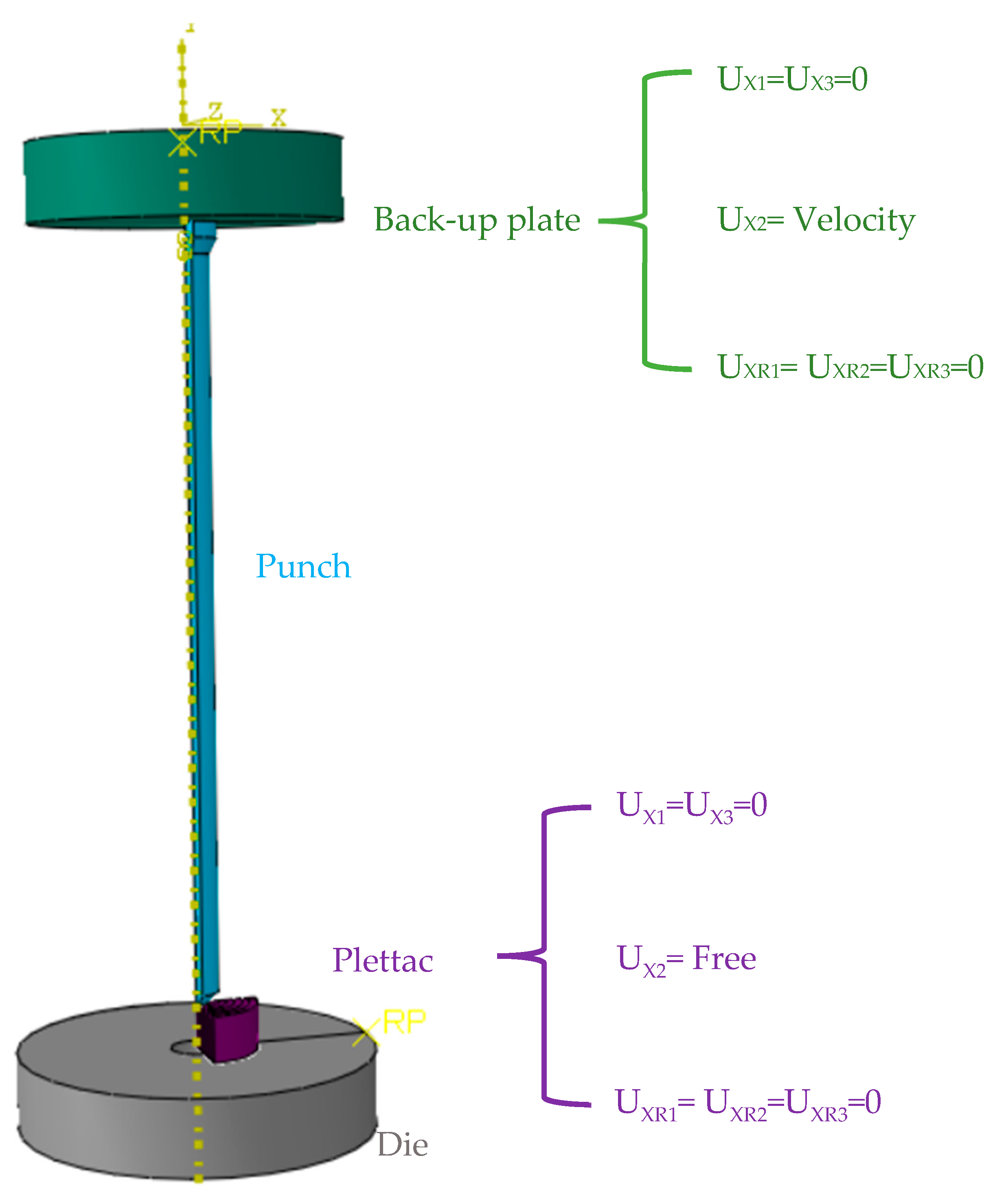
In the ‘load’ module, loads necessary for simulation were defined. Initially, the motion of the tool was halted by introducing a recessed link at the die’s reference point. Second, a displacement on the lateral face of the ‘plettac’ and a displacement speed of −7 mm/s in the vertical direction at the reference point of the back-up plate was imposed, and finally, two conditions of symmetry at the level of the axes (ox) and (oz) on the punching tool and ‘plettac’ were implied (Figure 3).
As presented in Table 1, Johnson–Cook parameters and material properties of AISI D2 as well as S500 MC steels were noted, appealing to some data found in the literature.
Table 2 summarizes the Johnson–Cook damage parameters identified for both AISI D2 and S500 MC steels. These parameters, obtained from experimental calibration and literature data, define the materials’ responses to stress triaxiality, strain rate, and temperature under punching conditions. In this study, the damage model parameters D2, D3, and D5 for AISI D2 tool steel were set to zero to simplify the model and focus on the dominant damage mechanisms under the studied conditions. D2 was neglected because the punching process is primarily governed by shear-dominated loading, where stress triaxiality effects are minimal. D3 was excluded due to the negligible thermal influence at room temperature, where thermal softening does not significantly affect damage evolution. Finally, D5 was omitted as the study emphasizes early-stage damage initiation rather than full fracture or saturation. While this simplification enhances computational efficiency and aligns with the experimental conditions, it may limit the model’s accuracy under high strain rates, elevated temperatures, or highly triaxial stress states, which are beyond the scope of this work.
Improving the experimental numerical model always remains a goal to be completed since it gives credibility to the work. A scale of 1/2 was used to move from the industrial mold to prototype one, checking that this passage was linear. The mold used by industrialists was replaced with a simpler version, which was then fixed to the tensile machine. After making necessary calculations, we made a prototype mold. Indeed, it was possible to mount the latter on the tensile machine to reproduce the same movement as a press machine. The ‘plettac’ was replaced by a strip 3 mm thick to maintain a punch diameter equal to sheet thickness. The work was performed manually, and S500 MC tape was advanced after each cycle to avoid edge effects. The immobile part of the mold was mounted to a fixed section of the tensile machine using flanges and profiles. It was possible to manipulate punching speed and to plot a punching force–punch displacement curve using an acquisition station.

2.3. Experimental Approach

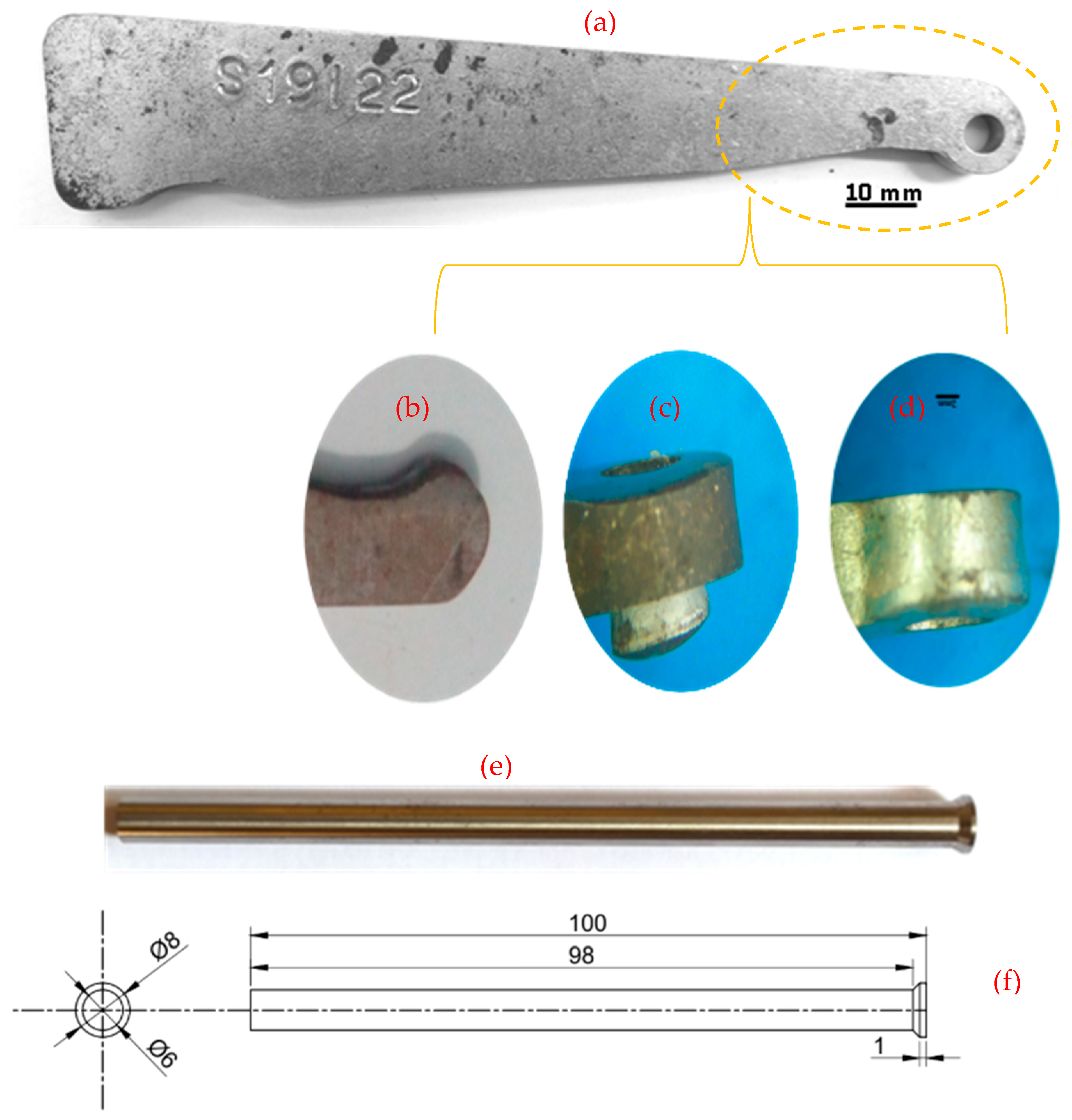
The plettac, illustrated in Figure 4a, is a punch sheet designed for industrial shearing processes. Its initial state, shown in Figure 4b, represents an unpunched plettac with a circular diameter of 12 mm. During the punching phase (Figure 4c), the material undergoes deformation as the industrial punch (Figure 4e) applies force, creating a precise shear. The final state, depicted in Figure 4d, is the plettac after shearing, where the material is cleanly separated. Figure 4f provides detailed dimensions of the punch, highlighting the critical specifications that ensure accuracy and consistency in the punching operation. This process is essential for achieving high-quality, repeatable results in industrial applications.

2.3.1. Mold Design

To replicate the forming (punching) conditions of the ‘plettac’ on a laboratory scale, a mold similar to the one used at the Chafik Loukil facility was developed. Several simplifications were made to adapt it to the laboratory scale, including the elimination of the blank holder, springs, and guidance barrel.
This mold was designed to be used on a tensile testing machine to reproduce the same punching conditions as those with the press used in industry. The fixation method and experimental protocol will be described later. The design of the laboratory mold is a crucial step that must be completed before proceeding to its fabrication. Topsolid software 2005 was chosen to design the mold components. The laboratory mold primarily consists of the following components:
Upper Base Plate: This component is in contact with the movable part of the press and allows the mold to be fixed to the press. In this study, the upper base plate has a thickness of 20 mm. This thickness is intended to prevent any deformation and replace the support plate.
Lower Base Plate: This component is in contact with the fixed part of the press. It has a thickness of 20 mm to withstand the intense pressure of the press. The lower base plate is longer than the die holder to allow for easy fixation to the tensile testing machine.
Punch Holder: The main role of this component is to locate and hold the punch during the punching operation. It is in flat contact with the support plate, which protects the upper base plate from rapid wear. This setup helps avoid rapid marking of the punch head and distributes the force exerted by the punch over its entire surface. In our case, to simplify the mold, the return (support) plate was eliminated.
Punch Guide: While in the industrial mold, a barrel ensures the guidance of the punch during its movement to punch the plettac; the punch guide replaces it in the laboratory mold. Proper guidance of the punch is essential to ensure a significant lifespan of the punching tool. Moreover, the guidance barrel is often responsible for most punch damage issues. Therefore, a punch–punch guide clearance of 0.2 mm is implemented to ensure continuous production. This guide component also features a U-shaped groove where the S500 MC strip to be punched is positioned. The groove has a width of 12 mm, a height of 3 mm, and spans the entire width of the punch guide. The punch guide has a thickness of 20 mm, providing resistance against any deformation. Additionally, this component is embedded in the die holder and the lower base plate using four fixing screws.
Die Holder: This component serves as the die. The die is directly integrated into this component with a clearance of 0.2 mm. It represents the fixed part that is in flat contact with the lower base plate. Its essential task is to participate in the shearing operation of the material using a sharp edge.
Two Guidance Columns: The mold is restricted to two guidance columns due to its small size. Achieving coaxiality with four guidance columns is more challenging compared to a mold with only two columns. Lubrication is highly recommended for these standard components to reduce the risk of seizing.
Two Guidance Bushings: Precise guidance of the punch in the die requires the presence of guidance bushings. To ensure coaxiality of the punch and the die, these standard components are necessary. The functional clearance between the columns and the guidance bushings is crucial for proper guidance. Additionally, lubricating the guidance columns is a vital step to reduce friction between the two contacting surfaces. Wear of the guidance system is not a concern since the contacting surfaces have undergone surface treatment (chromium plating).
Punch: This is the master component of the mold as it is the punching tool. During its movement, it ensures, if necessary, the forming and shearing of the sheet metal. The punch has the same diameter along its entire length, except for its head, which has a diameter of 4 mm. This tool no longer exits the support plate during the return movement. A hardness of 62 HRC was given to the AISI D2 tool. The punching tool is fixed to the movable part of the mold. It is embedded in the punch holder and in contact with the upper base plate through its head. The total length of the laboratory punch is 50 mm, whereas the industrial punch has a length of 100 mm. The guidance barrel in the industrial mold is replaced by the punch holder, which ensures its guidance during punching. To obtain a high-quality part, the punch must be well-sharpened and free from wear. Additionally, the tool must resist compression and buckling.
Figure 5 presents the 3D model of the industrial and laboratory molds designed using 3D software (Topsolid 2005). The laboratory mold, intended for sheet metal punching, is mounted on a tensile testing machine. The mold comprises the components previously described.
The movable part consists of the upper base plate and the punch. This section also includes four hex socket screws to secure the base plate to the punch holder and prevent any movement of the punch during the punching process. The head of the punching tool is embedded in the die holder, allowing the upper base plate to function as a support or return plate. The flat contact between the upper base plate and the punch holder ensures that the punch does not vibrate due to intense contact with the sheet metal.
Two guidance bushings are inserted into the movable part, specifically within the punch holder, to ensure alignment and coaxiality between the movable and fixed parts during the sheet metal forming process.
The fixed part of the mold, from top to bottom, consists of the punch guide, die holder, lower base plate, and centering pin. The prismatic components in this list are secured using four hex socket screws. A U-shaped groove for inserting the strip to be punched, along with a drilled hole for tool guidance, is incorporated into the punch guide.
Two guidance columns, extending from the die holder and passing through the punch guide, are present in the mold to ensure coaxiality and parallelism between the fixed and movable parts. The centering pin, attached to the lower base plate via threading, serves, as its name suggests, to position the fixed part on the tensile testing machine. This cylindrical component prevents any translation or slippage of the fixed part during the sheet metal forming process.
The laboratory mold enabled us not only to replicate punching conditions but also to simplify the problem.

2.3.2. Mold Manufacturing Process

To manufacture the requested mold, we utilized both a conventional milling machine and a CNC machine tool. Surface finishing, the U-shaped groove, and drilling operations were performed using the milling machine, while shapes requiring precise adjustments were achieved with the CNC machine. During the machining of the mold components, continuous lubrication was applied to prevent any deformation or thermal treatment.
Centering the components during their fabrication was crucial, as achieving alignment and parallelism of the guidance elements was a primary objective. The thicknesses of the base plates, punch holder, and die holder were carefully selected to ensure they could withstand compressive forces. These components were also designed to endure the intense pressure exerted by the press over prolonged use.
The mold components were secured using hex socket screws. To prevent slippage of the fixed part on the tensile testing machine, a tapped hole was created at the center of the lower base plate. A cylindrical centering pin with threading was assembled onto this part. This pin was embedded into an existing hole in the tensile testing machine.
A U-shaped groove was machined into the die holder to manually insert the S500MC strip for punching. Alignment marks were created on both the fixed and movable parts of the mold to facilitate proper closure.
The laboratory mold effectively replicates the punching conditions used at the Chafik Loukil facility. Essentially, we transitioned from an industrial mold weighing tens of kilograms to a laboratory-scale mold weighing just a few kilograms. This allowed us to simplify the industrial problem while maintaining the same conditions and constraints.

2.3.3. Mold Setup and Experimental Procedure

The experimental tests were performed using a universal testing machine (UTM) with a maximum load capacity of 50 kN. Although primarily designed for tensile testing, the machine was operated in compression mode to replicate the motion of a hydraulic press.
At the Chafik Loukil facility, the punching process is semi-manual: the operator manually positions the specimen (plettac) and initiates the loading cycle. The punching operation terminates automatically once the movable crosshead reaches its preset stroke limit. A similar control procedure was reproduced in the laboratory, where the downward motion was activated using the “Down” command. The operator stopped the descent as soon as an audible signal indicated the completion of the punching event.
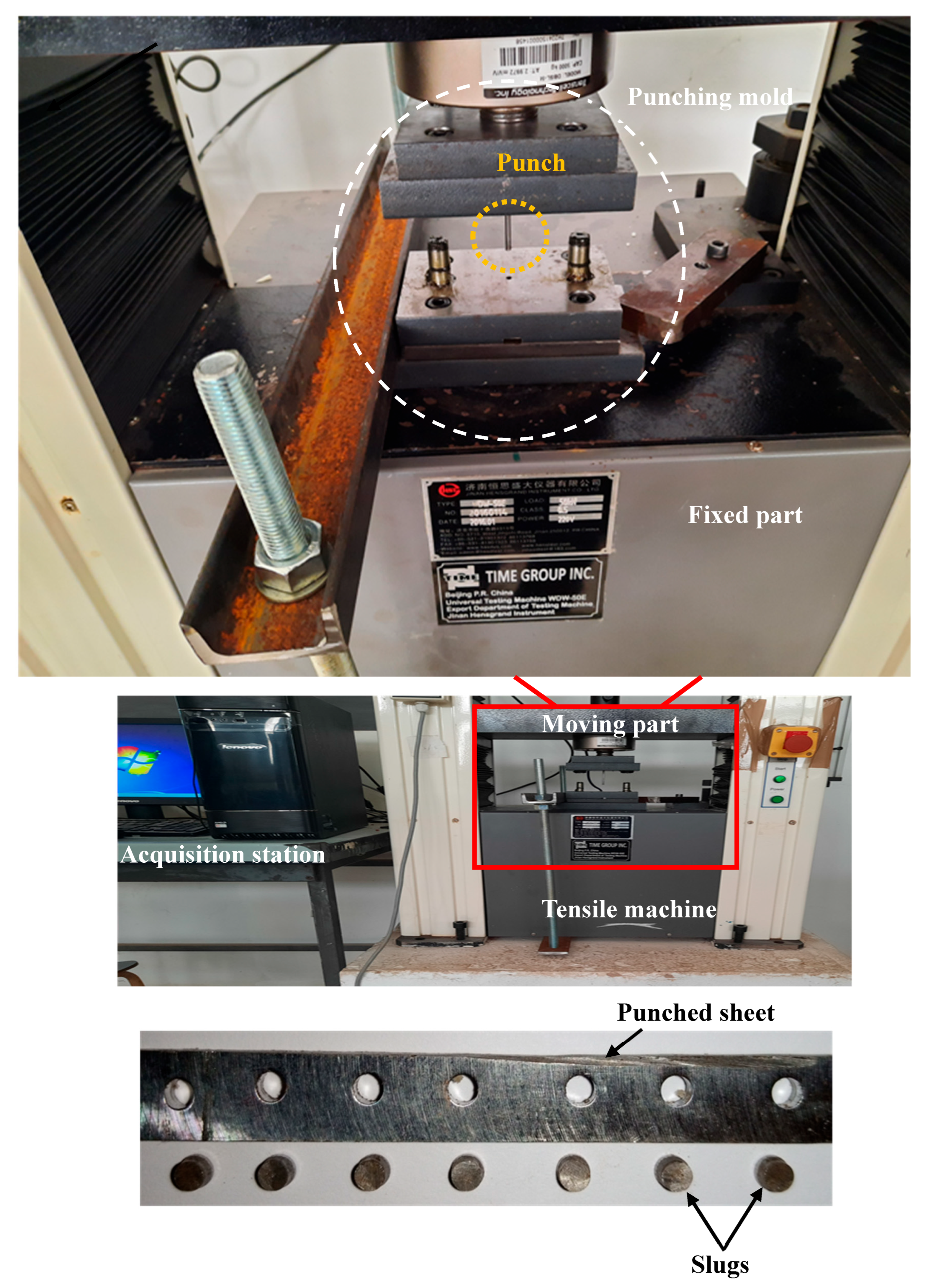
To preserve a constant punch-to-sheet thickness ratio, the sheet thickness was reduced from 6 mm to 3 mm using a milling machine. As illustrated in Figure 6, the mold was mounted on the UTM according to the machine’s existing fixture configuration. The movable crosshead contained an M22 threaded rod with an effective length of 40 mm. Since this was incompatible with the 20 mm thick upper plate, the plate was tapped with an M22 thread and a washer was inserted to minimize the free length of the rod.
The stationary portion of the mold was rigidly attached to the lower part of the machine using a clamping bracket. This method was adopted to take advantage of an existing threaded connection on the fixed crosshead. To ensure proper constraint of the lower plate, a centering pin was introduced, restricting two translational and two rotational degrees of freedom along the fixed axis of the testing machine. The remaining degrees of freedom were constrained by the clamping bracket. However, during mold opening, the lower plate tended to move with the upper crosshead.
This issue was resolved by implementing two threaded rods and two steel strips, each containing dual threaded holes, to fix the free end of the lower plate. The opposite end remained firmly clamped by the bracket. Through this configuration, a stable and reliable mold fixation was achieved, ensuring accurate replication of the punching conditions within the tensile testing system.

3. Results and Discussion

Several steps were suggested in previous works to avoid premature AISI D2 punch damage. First, the existing state of the punching tool used in industry was assessed [28]. Secondly, the causes leading to punching failure were investigated [29]. Understanding punching force evolution and cutting parameters’ effects on this is a step that has been made. A numerical method generated by ABAQUS/Explicit is presented above. Geometric modification of the punch shaft remains a path to follow. Currently, each shape modification’s impact on punching force has been tested. Numerical analysis using ABAQUS/Explicit software made it possible to select a punch as an optimal solution to be realized.
Solutions proposed to reduce punching force and give more balance to the AISI D2 punch were found by changing the punch geometry. The latter must retain shaft punch diameter so that it can easily make ‘plettac’ holes (3 mm diameter). Shaft punch shape changes decreased the contact area between the tip of the tool and upper sheet metal surface. This modification also aims to gradually push the punching tool into the material. Changes made to the punch can decrease the maximum punching force, giving the punching mold a longer life. Problems like mating, cracking, and contact surface wear on the punch head/back-up plate prompted us to look for improvements in tool-head design. The contact surface between the punching tool head and the back-up plate must be robust for two reasons: firstly, to absorb contact shocks from the punch shaft and the S500MC sheet metal.The second one is to ensure punch head/back-up plate contact without degradation and wear during the punching operation.

3.1. Punch Design Solutions

3.1.1. Blank Punch

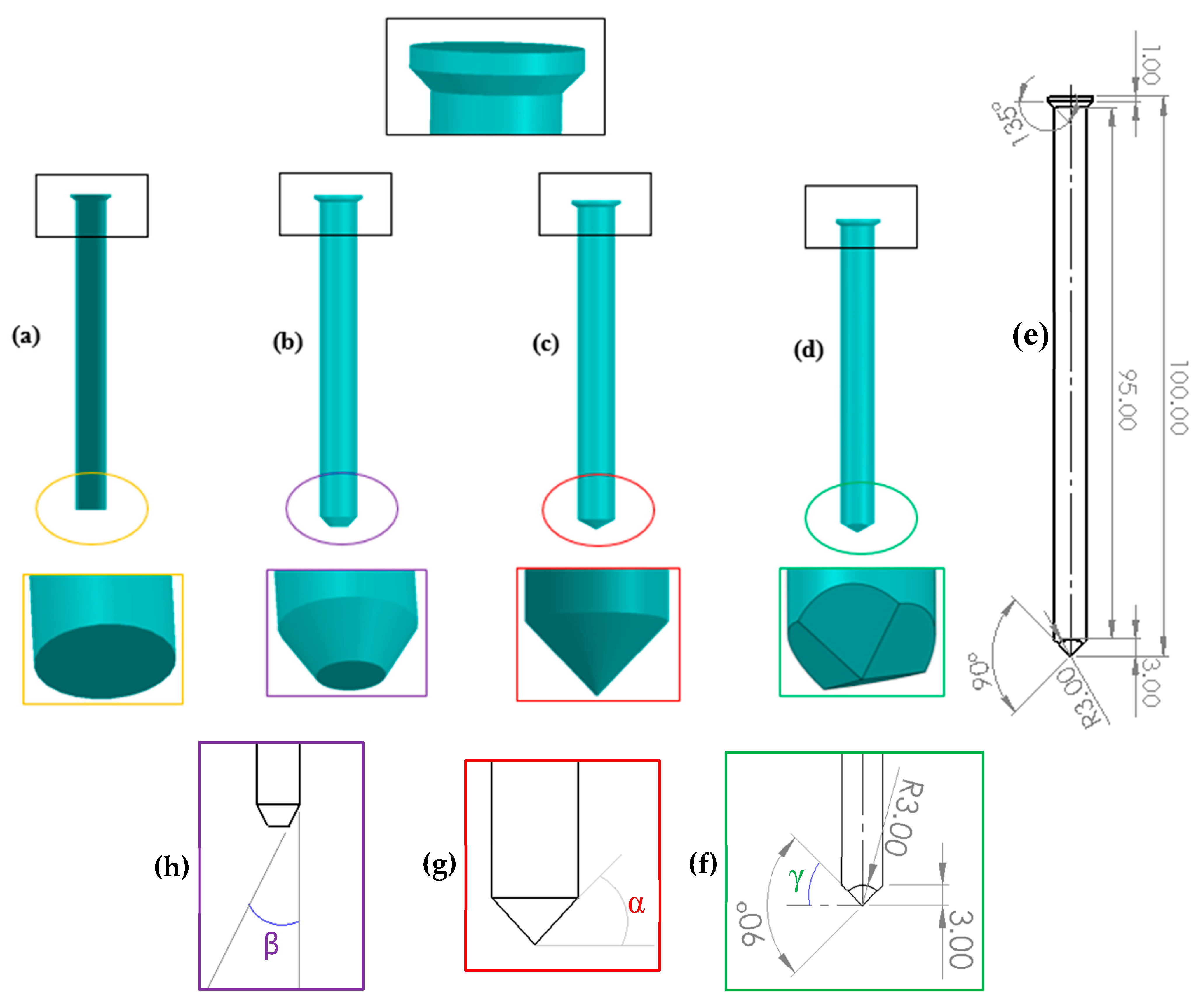
The blank punch, illustrated in Figure 7a, used in sheet metal punching, has a shaft of 3 mm diameter with a tapered head of 4 mm diameter. The punch form submerges the tool head inside the guiding gun drill in the industrial mold. There are various problems with the punch head and shaft; indeed, wear, chipping, and mechanical fatigue from cracks, described previously in [30,31,32], are the main premature damage signs. Other damage phenomena appear on the tool head, such as mating and fragmentation into small pieces. Premature punching tool damage results in production being stopped and time wasted since we are forced to align mold components after demolding. Punch shape redesigning can increase service life and slow down degradation and damage. Punching tools should have high rigidity, considerable toughness, and high hardness. Punches without modification (blank punch) are used for sheet metal punching in industry.

3.1.2. Punch with Same Head and Cone Shaft

Shaft shape change was explored, measuring punching effort variation during tool penetration into the material. Blank punch force was high, which may have generated wear, fatigue, and cracks. Therefore, a cold forming tool with a conical shaft, shown in Figure 7b, was considered as a solution. A process of elastic deformation is started at the first contact of the punch shaft with the ‘plettac’. When the material’s elastic threshold is reached, plastic deformation begins at critical penetration. Cracks are generated and propagated until steel separation takes place. Thus, this shape works to gradually push the punching tool into the S500 MC material. Indeed, shear angle β at punch shaft, defined in Figure 7h, may decrease maximum punching force. The parametric angle was measured using the measurement tools available in the Abaqus software. This angle represents the draft angle between the vertical line along the punch periphery and the inclined line of the conical section, as illustrated in Figure 7h. Based on research established by [33,34], shear angle does not exceed 5° in case of punching stress between 1500 and 2000 MPa. A parametric study of shearing angles was undertaken in the present work using numerical simulation in an ABAQUS/Explicit environment. Punching force is significantly affected by shear angle change. The literature [35] has shown that for a punch diameter of 20 mm, punching force can be reduced by 80% with a shear angle of 16°. This latter value of the studied parameter (β) was decreased in this study, since a tool with a diameter of 3 mm was used. A shear-angle punching tool shaft can be very effective for reducing punching effort and extending tool service life.

3.1.3. Punch with Same Head and Sharp Shaft

For this solution, the same punch head shape was kept, but its shaft was changed. In fact, a pointed shaft was considered (Figure 7c). This new geometric design was intended to reduce maximum punching effort. Compared to the blank punch, this solution clearly decreases the first contact between the punch shaft and ‘plettac’ upper surface. Tool penetration into S500 MC steel gradually increases, which should increase punch service life. Thus, to achieve this goal, a shear angle, α, as shown in Figure 7g, was designed for the punching tool. In this study, the parametric angle was determined using Abaqus measurement tools. It represents the draft angle, defined as the angle between the punch’s horizontal periphery and the inclined edge of the sharp zone, as shown in Figure 7g. A critical punching force is obtained at a penetration of 1 mm [35], which gives an angle of 3°. Thus, a parametric shaft angle for the pointed shape was established using then ABAQUS/Explicit method.

3.1.4. Punch with Same Head and Stepped Shaft

Punch shaft shape has a very important role in both the quality of the finished product and maximum punching yield. This parameter, which is related to the punching tool, also has an important influence on punching strength evolution. Indeed, sudden contact between the punch shaft and S500 MC sheet metal has the effect of degradation, excessive wear, and stress concentration in the punching tool (active part). A thorough understanding of compression and stress concentration areas can lead to improved finished product quality and a longer punch service life. A stepped shape is one solution among those presented in this work. This solution includes a new punch tip shape that allows the gradual sinking of punch shaft into the material. For a sheet thickness of 3 mm, equal to punching tool diameter, the punch is under critical conditions and high stress concentration. Various research has been carried out in the field of cold work forming, especially punching [36,37], but the importance of this study is due to the case studied (diameter of the punch equal to the thickness of the sheet). The current punch shape was simulated in an ABAQUS CAE explicit environment to determine punch shear angle’s effect on punching force. Indeed, a parametric study was conducted on shear angle (γ), defined in Figure 7f, showing stress distribution during ‘plettac’ cold forming. Figure 7e illustrates the geometric design of the stepped punch shaft. The head dimensions of this punch are identical to those of the sharp and conical punches, ensuring a consistent comparison across designs. The radius of the shaft is 3 mm when the draft angle is 90°. However, this radius is not constant and varies as the γ angle, defined as the angle between the horizontal line and the draft, is adjusted. This variability in the radius allows for optimization of punch geometry based on the desired draft angle.

3.2. Optimization Results

3.2.1. Design Optimization Methods

The Von Mises criterion is known for its simplicity and accuracy. It simplifies the assessment of complex stress states and provides accurate predictions of yielding for ductile materials. This criterion is widely accepted and used in engineering design and analysis to predict yielding and to avoid premature damage. Von Mises stress is particularly useful for predicting yielding onset in cases of ductile materials under complex loading conditions. It combines the effects of all three principal stresses into a single equivalent value which can be compared directly to the material’s yield strength.
By restoring Von Mises stress, it is possible for researchers to ensure structures’ reliability and safety. This stress criterion should be used for designing components that can withstand operational loads without undergoing permanent deformation.
Many engineers use the Von Mises stress criterion to evaluate material failure and damage. Indeed, the criterion provides a common basis to compare performance and safety of different materials and designs, especially in cold forming. Von Mises stress is calculated from principal stresses using the following formula, shown in Equation (6):
σ = ( σ 1 σ 2 ) 2 +   ( σ 2 - σ 3 ) 2 + ( σ 3 - σ 1 ) 2 2
Based on previous studies [38,39,40], punch velocity and die–punch clearance are the main parameters which mostly affect Von Mises distribution and punching force. Since this work is interested mainly in new punch shaft design, a third factor, shear angle, is studied in the present paper. Given that maximum velocity of the tensile machine with which punching tests were conducted does not exceed 10 mm/s, this input parameter (V) ranges from 6 to 10 mm/s. Punch shear angle can be valued between 1 and 5°. In addition, since punch–die clearance is fixed at 0.3 mm (1/10 sheet thickness) in previous work [41], it can be ranged from 0.25 to 0.35 mm. In the present work, the three input parameters related to AISI D2 punching were chosen to be varied at three levels, as shown in Table 3.
The maximum Von Mises stress was set as the output variable to evaluate geometric (punch shear angle) and punching parameters (velocity ‘V’ and punch–die clearance ‘J’) effects. An optimization procedure using RSM (Response Surface Methodology) is proposed in this work to find optimal geometric and punching parameters which achieve the lowest punching force (low Von Mises stress), which was determined by [42]. Finite element simulations are conducted for the response surface construction using ABAQUS/Explicit, as reported in Table 4.

3.2.2. Response Surface Construction

The main purpose of RSM (Response Surface Methodology) is to establish an empirical formula by optimizing process parameters and measure the level of interaction among different parameters.
RSM combines mathematical statistical techniques used in different fields and applications. In the present work, it allows us to achieve a relationship between input factors (shear punch angle, punching velocity, and punch–die clearance) and maximum Von Mises stress.
With reference to the set of numerically simulated tests reported in Table 4, and to connect responses to input variables, mathematical models were developed. Quadratic response surfaces were constructed using second-order polynomial models, and unknown coefficients were obtained using least squares approximation, defined in Equation (7) [43,44]:
Y ij   = β 0 + i = 1 k β ii x i 2 + i j β ij x i x j
In the previous equation, Yij = f(x1, x2, …, xk) is the response variable, xk is the input variable, and bij is the unknown coefficient.
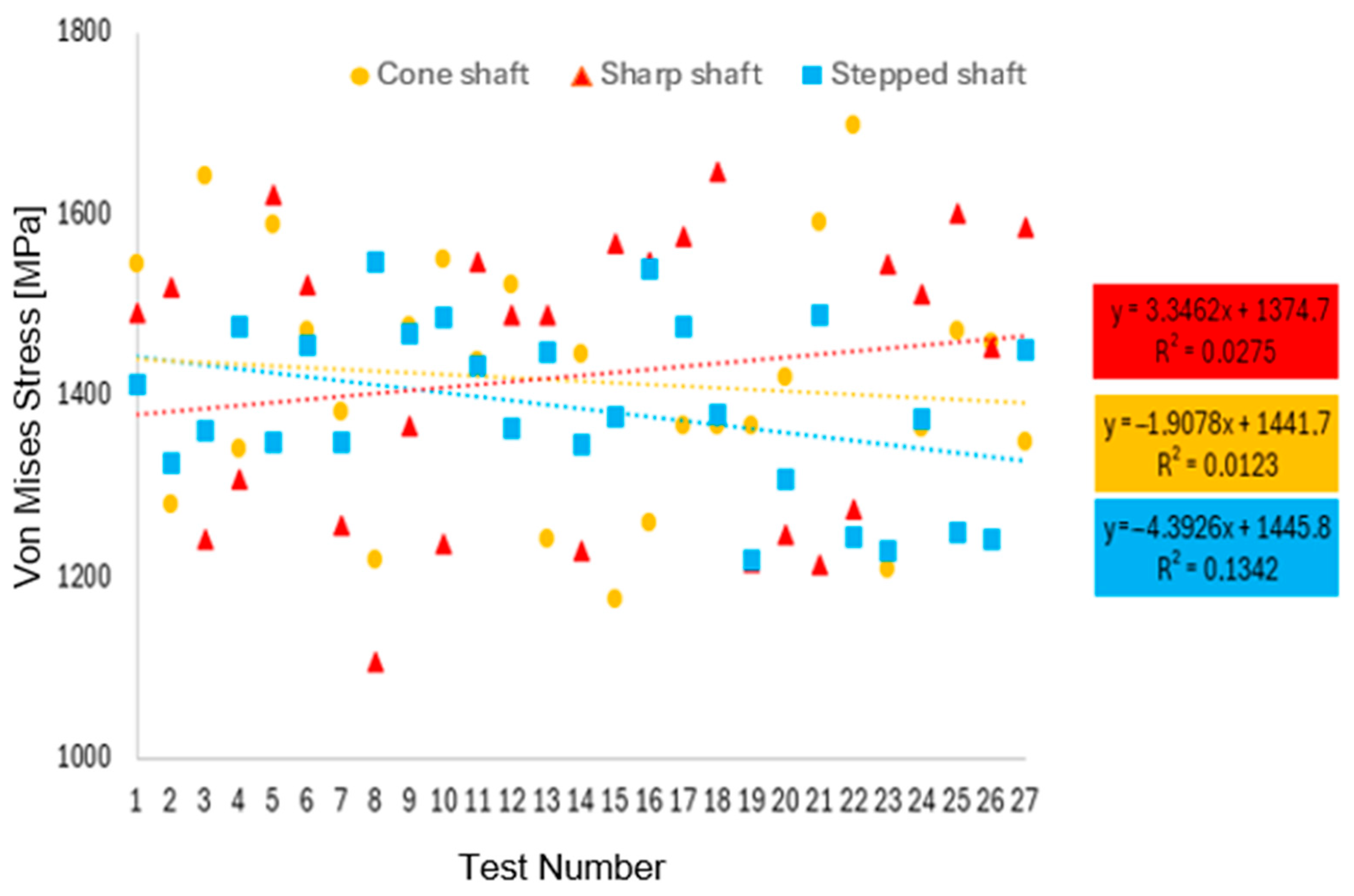
The punch with a stepped shaft seems to be the best solution if we are interested in Von Mises stress distribution. Indeed, Figure 8 indicates that there is a correlation, despite its weakness, with values higher for the punch with the stepped shaft than the two other proposed solutions (sharp and cone shafts). As a result, the punching tool with a stepped shaft is under less severe stress than the other solutions. In addition, punch edges in the case of the stepped solution do not risk chipping or intense wear during ‘plettac’ punching. Relative to other solutions in this study, the sharp punch shaft demonstrates an isotropic stress distribution across all components. Tools with sharp shapes have the advantage of high-quality punching and stability during cold work forming operations (punching).
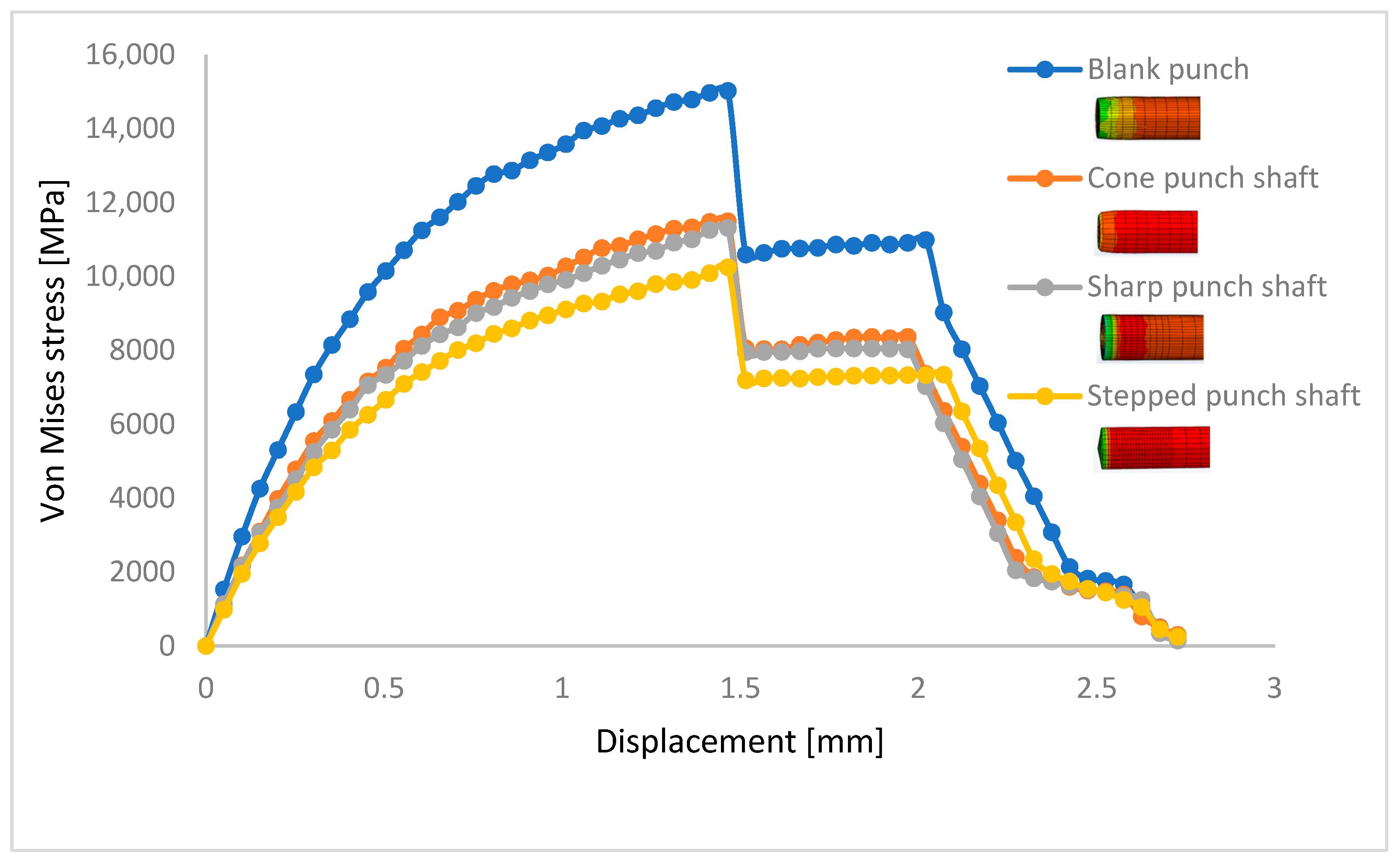
Figure 9 shows the stress–displacement curves of four punches, namely blank, stepped, sharp, and cone, when a velocity of 10 mm/s, shear angle of 5° and punch–die clearance of 0.3 mm are used. All stress measurements were conducted along the punch axis to ensure consistent and comparable results given the varying geometries of the punch shafts. The maximum stress nearly about 1700 MPa, and it does not exceed 1500 MPa for the punching tools with new shapes. The least stress is noticed in the case of the punch with a cone shaft, which does not surpass 1200 MPa. Based on Figure 9, the maximum stress is about 1300 MPa for the sharp punch, and it is not far from 1500 MPa with the stepped shape. Punching stress was reduced by almost 500 MPa by moving from blank punch to a punching tool with a conical shape. This last result is of major importance, since the punching force weakens; therefore, a reduction in punch wear and service life increase are expected [45]. The stepped punch represents a practical and optimized compromise, combining significant stress reduction, outperforming the sharp punch, with avoiding the structural fragility inherent in highly pointed or small-angle conical designs. Its multi-level geometry not only enhances durability by promoting a more even stress distribution and reducing localized strain concentrations, but also improves manufacturability, as the stepped profile is inherently less susceptible to chipping compared to sharp or fine conical tips. These advantages collectively ensure greater reliability and performance in demanding industrial applications.
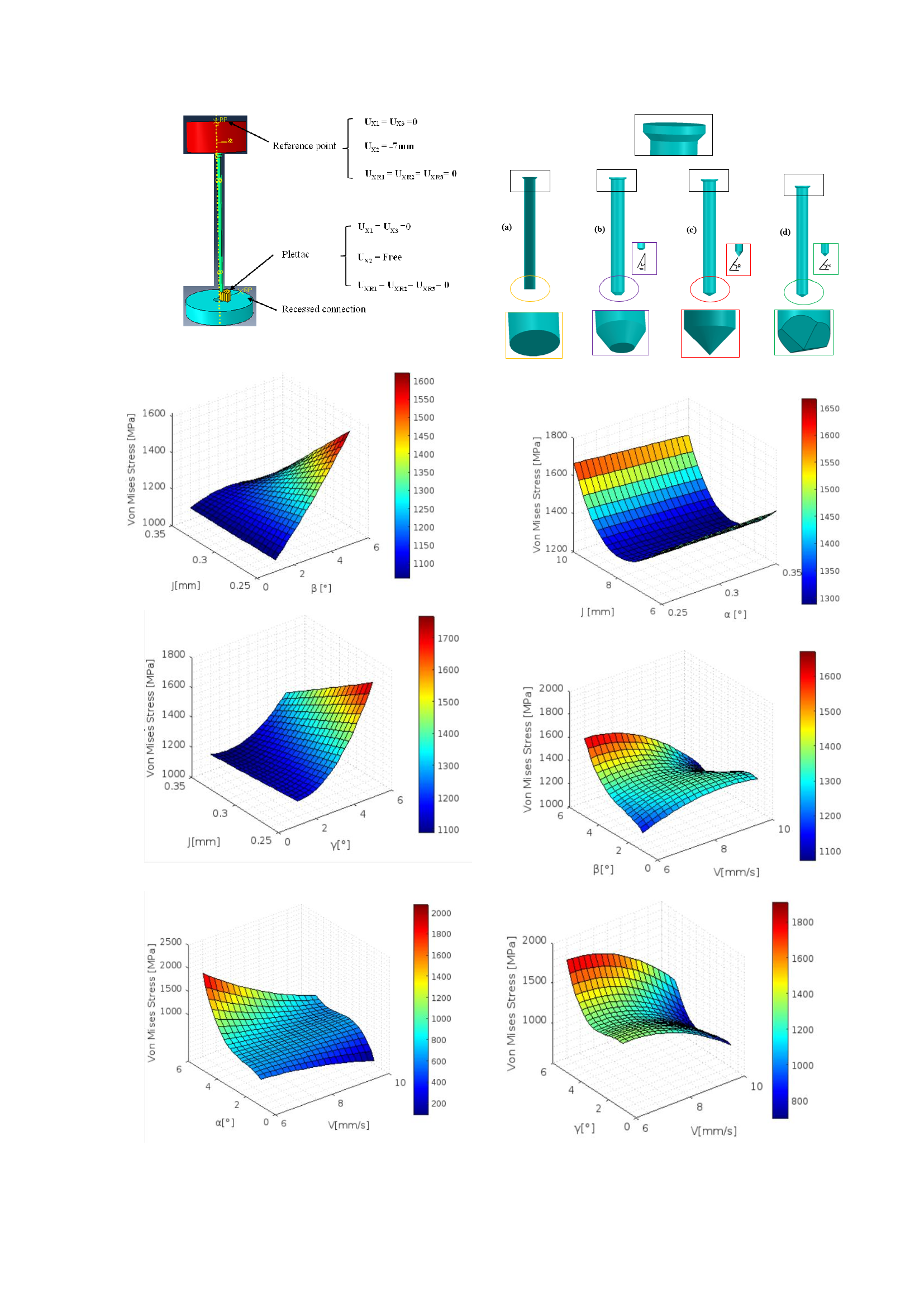
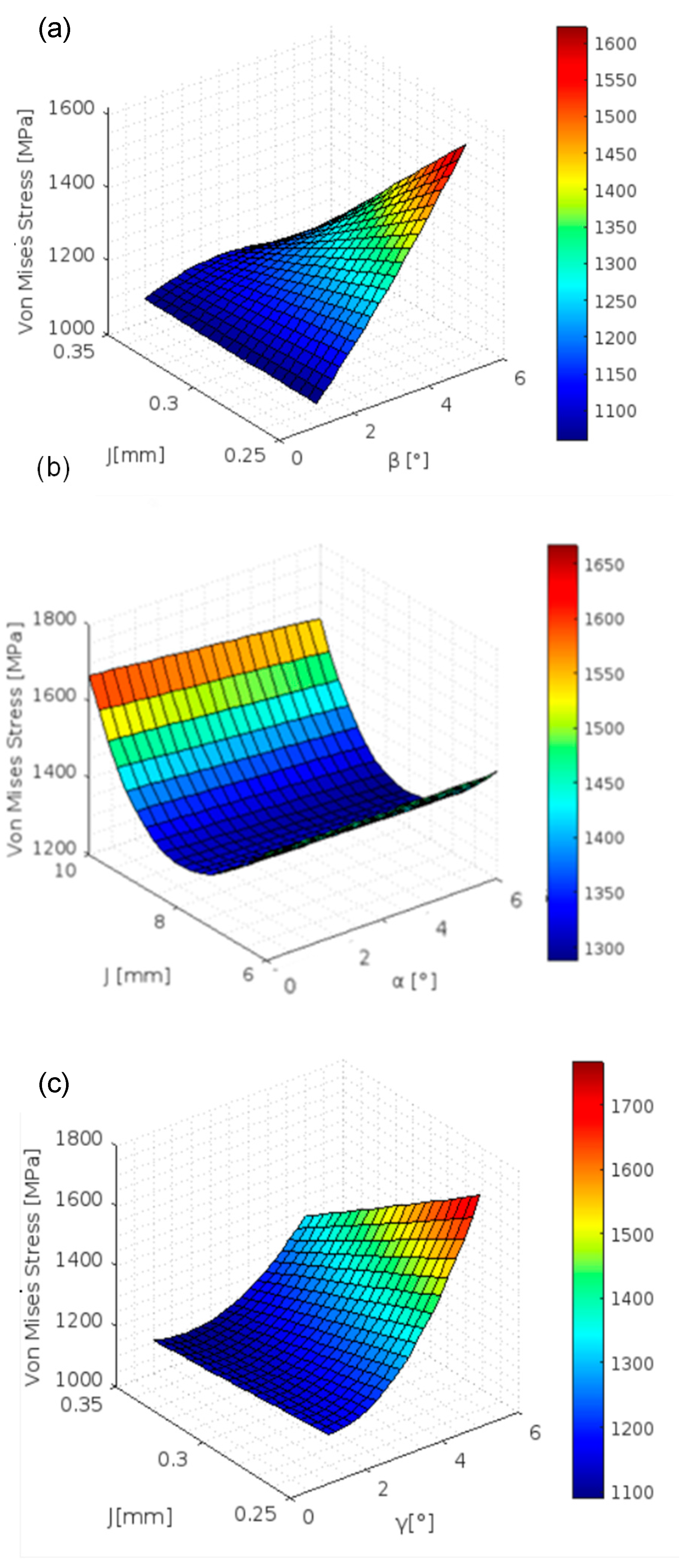
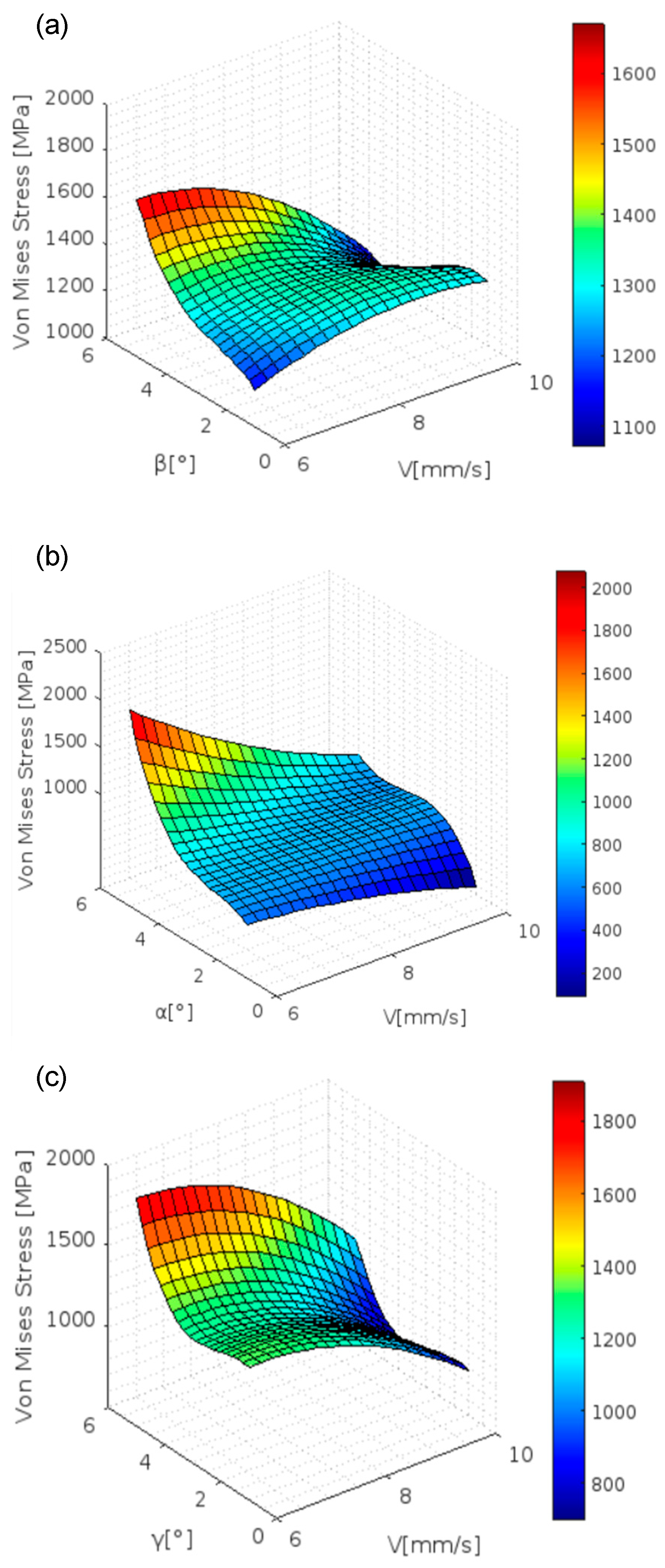
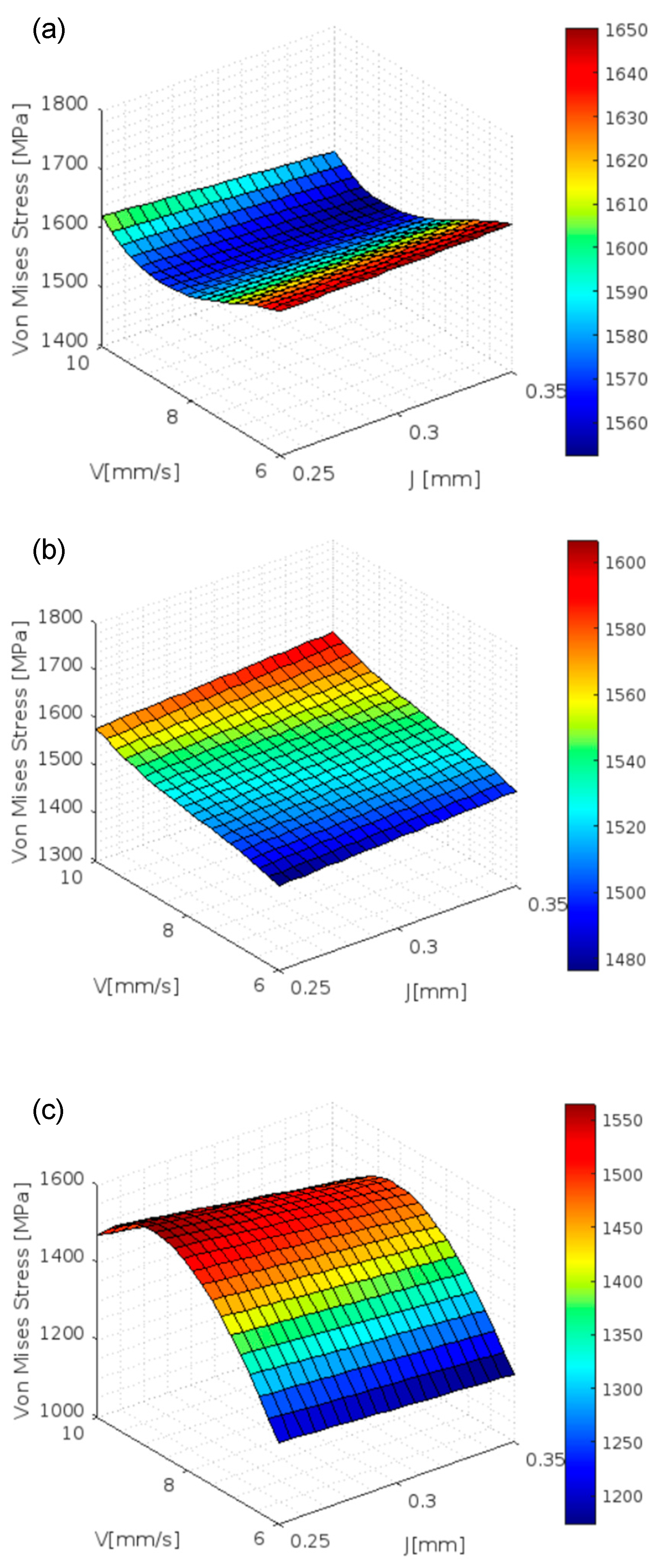
Second-order RSM, dealing with the relationship between the response (Von Mises stress of three punch shafts) and the input parameters (shear angle, punching velocity, and punch–die clearance), is based on correlation analysis. The results, shown in Figure 10, Figure 11 and Figure 12, are presented in three-dimensional surface form. Indeed, MATLAB 8.2 R 2013b software was used to obtain example effects of shear angle, punch velocity, and punch–die clearance on maximum Von Mises stress. It can be emphasized, from Table 4 and Figure 10, Figure 11 and Figure 12, that the maximum Von Mises stress of the punching tool with a stepped shaft is less than those of the punches with sharp and cone shafts. Indeed, the maximum equivalent stress (Von Mises stress) for the sharp shape ranged from 1107 to 1645 MPa; the cone shear solution ranged from 1174 to 1696 MPa; and the range was 1219 to 1540 MPa for the stepped shaft. The last result can be explained by shaft punch shape, which had the least contact area, compared to other solutions, with the sheet metal upper surface, which was confirmed by [46]. In addition, high stress concentration in punch shaft edges, especially with the sharp and stepped punches, was noticed.
Figure 10, Figure 11 and Figure 12 are three-dimensional representations of maximum Von Mises stress in cases with varied input parameters, given in the form of response surfaces approximated by second-order mathematical models. These figures highlight that punch–die clearance or shear angle increase can mostly expand the Von Mises stress distribution, particularly for the cone-shaft punch. Figure 11 plots the equivalent stress, which seems to be higher when punching velocity is fixed at 6 mm/s (low level) and shear angle at the maximum level (5°). The last result stipulates that a low shear angle (1°) and high punching velocity (10 mm/s) should be picked. A sharp punch shaft can be considered if we are looking for both Von Mises distribution and high punching quality as an optimal solution. As shown in Figure 12, punching velocity and punch–die clearance, when combined, have nearly no effect on Von Mises stress evolution in three punch shaft types. However, when punch–die clearance and shear angle are considered as input parameters (Figure 10), Von Mises stress moves from 1100 to 1600 MPa (Cone shaft) and from 1300 to 1650 MPa in the case of the sharp tool shaft. Thus, the conical punch shaft is the best solution, clearly decreasing Von Mises stress when shear angle is increased (α = 5°) and a clearance of 0.3 mm is used.
Table 5 shows the optimal values of clearance (J), velocity (V), and shear angle that minimize Von Mises stress for the cone, sharp and stepped punches. Indeed, for the sharp punch, the optimal conditions that minimize Von Mises stress are characterized by a clearance of 0.3 mm, which ensures sufficient material flow while minimizing excessive deformation. The velocity of 8 mm/s is optimized to balance dynamic loading effects, avoiding both excessive strain rates and inefficient processing speeds. The shear angle of 6° is selected to promote effective shear deformation, reducing localized stress concentrations and enhancing the overall punching efficiency.
Similarly, the cone punch achieves minimal Von Mises stress at a clearance of 0.25 mm, which facilitates controlled material separation and reduces the likelihood of defect formation. The velocity of 10 mm/s is determined to maintain a stable punching process, minimizing vibrations and ensuring consistent performance. The shear angle of 2° is optimized to distribute the applied load evenly, thereby reducing peak stress values and improving tool longevity.
The stepped punch, which demonstrated superior performance among the designs, attains its optimal stress reduction with a clearance of 0.35 mm. This clearance is critical for accommodating the multi-level geometry of the punch, ensuring smooth interaction with the sheet material. The velocity of 8 mm/s is fine-tuned to leverage the progressive deformation characteristics of the stepped design, reducing abrupt stress spikes. Finally, the shear angle of 4° is optimized to exploit the unique geometry of the stepped punch, promoting gradual material separation and minimizing stress concentrations.
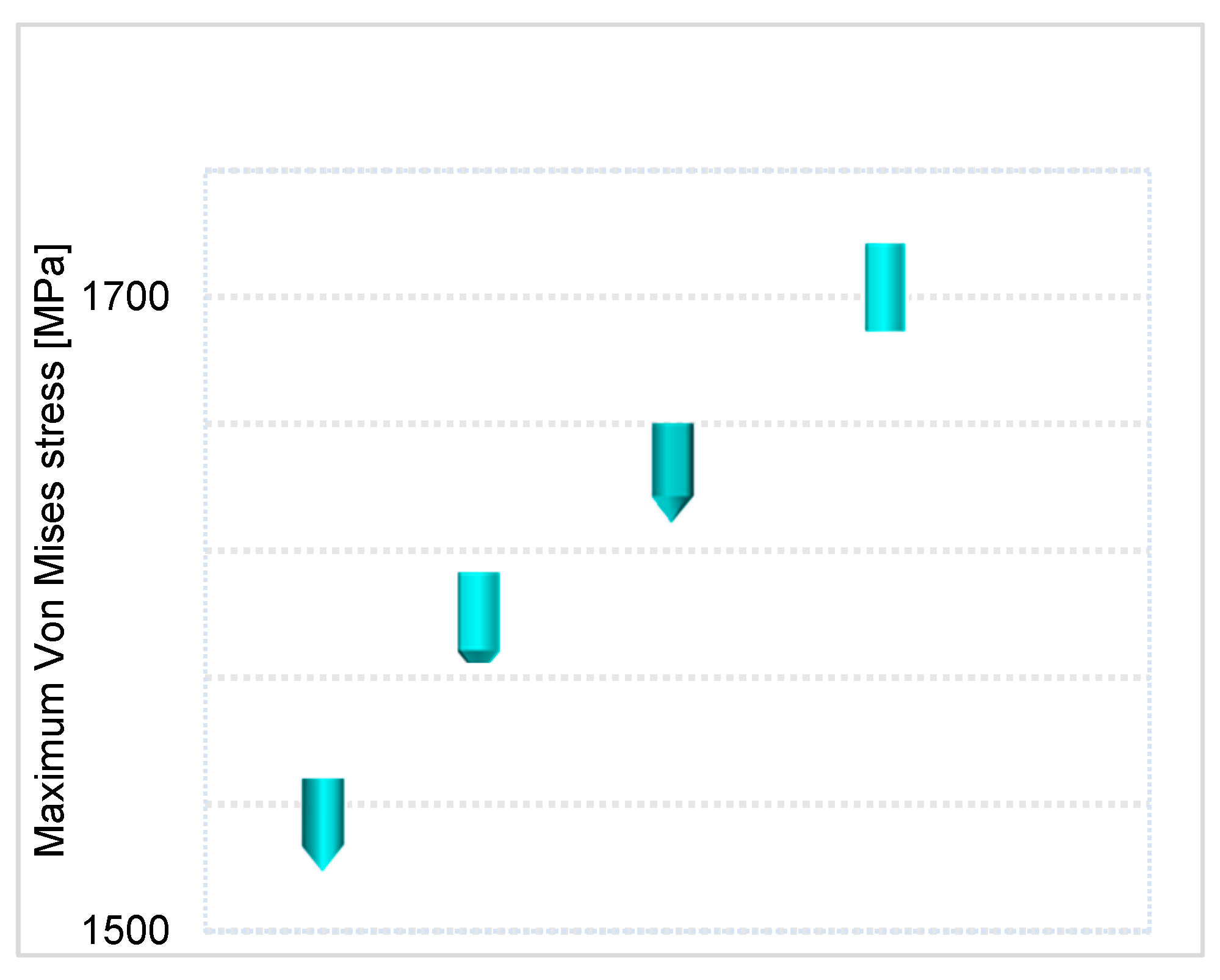
Figure 13 shows Von Mises stress for the three solutions proposed in the present work and the blank punch. Certainly, a reduction in this property (Von Mises stress) of almost 200 MPa was observed. In fact, Von Mises stress decreased from 1700 MPa for the punch without modification to less than 1500 MPa for the pointed tool. Figure 13 shows Von Mises stress superposition of three proposed solutions. The high maximum punching force is one of the obstacles that manufacturers always seek to reduce. In fact, chipping, wear, and crack appearance and propagation have direct relationships with high punching forces [47]. Therefore, the new punch shaft designs allowed maximum punching force reduction while maintaining very good quality of punched holes (no burrs).
Response Surface Methodology (RSM) was employed, with the primary objective of minimizing Von Mises stress, which directly correlates with reducing the required punching force. The optimal solution identified was the punch with the stepped shaft, which effectively minimized the Von Mises stress by up to 200 MPa.
This reduction in stress has a significant impact on the quality of the final punched part. Lower Von Mises stress indicates reduced risk of material deformation and cracking, leading to improved dimensional accuracy and surface finish of the punched parts. Additionally, minimizing stress concentrations enhances tool life and process stability, resulting in more consistent and reliable production outcomes. The stepped-shaft punch configuration thus not only optimizes the punching process but also contributes to the overall quality and durability of the final product.

3.2.3. Punching Process Simulation Results

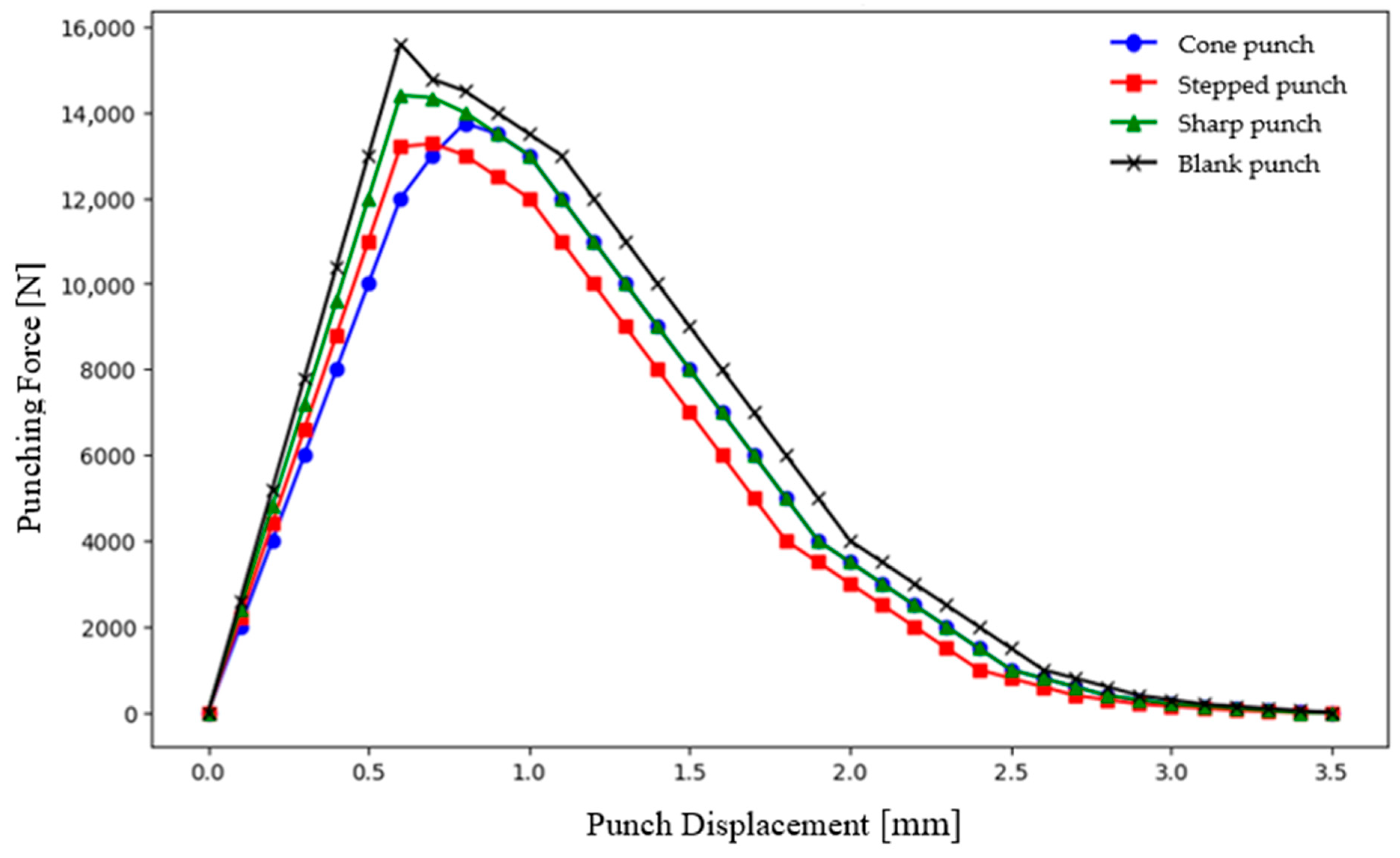
The punching simulation was conducted using Abaqus explicit environment. Figure 14 shows the relationship between punching force and displacement for the blank, cone, sharp, and stepped punches, revealing distinct deformation behaviors and force requirements for each punch type. Initially, all punches exhibit a rapid increase in force as displacement begins, with the blank punch reaching the highest peak force of approximately 15,800 N around 0.7 mm of displacement, indicating that it encounters the greatest resistance during the punching process. The sharp punch follows, peaking at around 14,100 N, while the cone punch and stepped punch achieve slightly lower peak forces of about 13,600 N and 12,800 N, respectively. Post-peak, all curves demonstrate a steady decline in force as displacement continues, reflecting a reduction in material resistance once the punch penetrates through. Notably, the blank punch consistently requires more force throughout the displacement range, suggesting that it is the most aggressive in terms of material deformation. In contrast, the stepped punch demands the least force, indicating a more efficient punching process. This comparison underscores the blank punch’s higher force requirements and the stepped punch’s relative efficiency, with the cone and sharp punches offering intermediate performance.
Table 6 presents a comparative performance analysis of the four punch designs, blank punch, cone punch, sharp punch, and stepped punch, focusing on their maximum punching force and Von Mises stress, as well as the corresponding percentage reductions relative to the blank punch. The results reveal that the stepped punch outperforms the other designs, achieving a 19% reduction in maximum punching force (from 15,800 N to 12,800 N) and an 11% reduction in Von Mises stress (from 17,000 MPa to 15,200 MPa). The cone punch also demonstrates notable improvements, with a 13% reduction in punching force and a 7% reduction in Von Mises stress, while the sharp punch shows slightly lower reductions of 11% and 5%, respectively.
A clear correlation is observed between the punching force and Von Mises stress results: designs that reduce punching force effectively also lower Von Mises stress, indicating consistent mechanical performance improvements. The stepped punch, in particular, strikes an optimal balance between force efficiency and stress distribution, making it the most effective design for minimizing both punching force and material stress. These findings highlight the superiority of the stepped punch in enhancing tool performance and durability under the studied conditions.
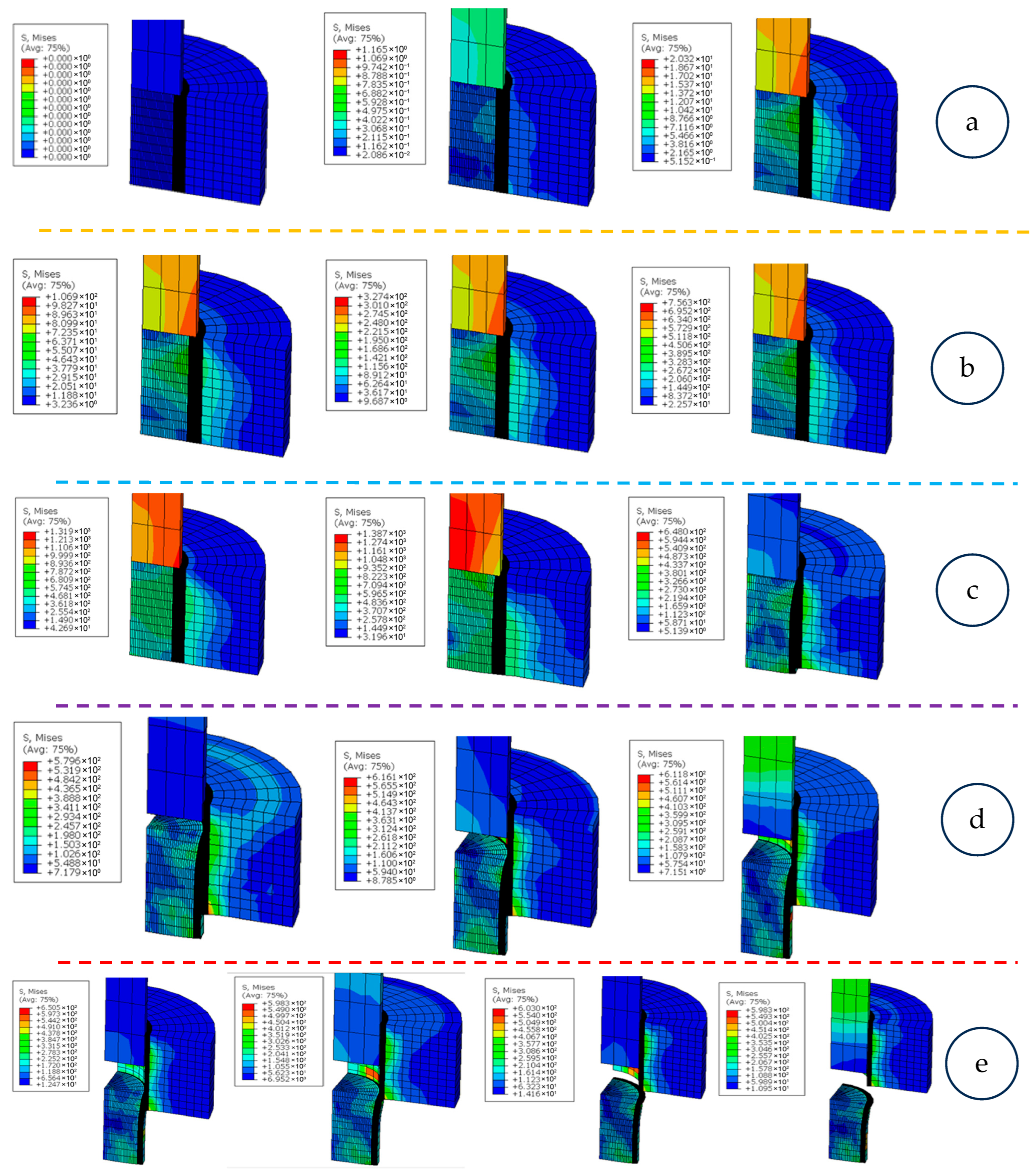
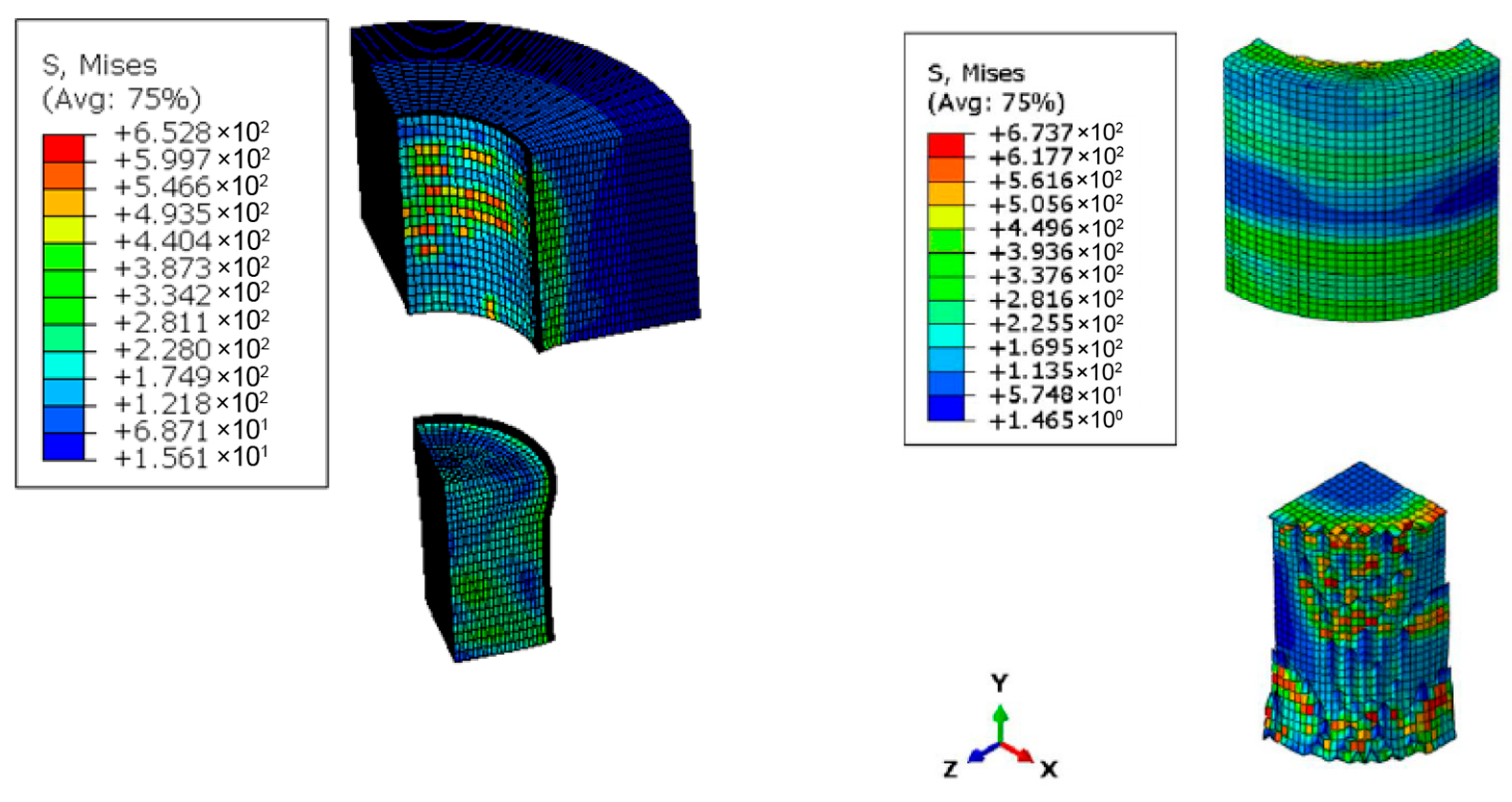
The numerical simulation of the plettac punching process on an AISI D2 punch, visualized through ABAQUS software, meticulously captures the evolution of Von Mises stress across five distinct stages, from initial contact to final ejection. Figure 15 shows that in stage (a), the punch first contacts the sheet metal, generating Von Mises stress values ranging from 0 to 20.3 MPa, marking the onset of force application without significant deformation. As the process progresses to stage (b), the stress escalates to between 106 and 756 MPa, reflecting the elastic phase where deformation remains reversible, and the punch begins to penetrate the material. Stage (c) is critical, as the Von Mises stress peaks at 1350 MPa, indicating the maximum load before material failure; cracks initiate on both the punch and die sides, leading to a subsequent stress reduction as these cracks propagate. In stage (d), the stress decreases to around 500 MPa as the punching nears completion, but it slightly rebounds to 600 MPa due to frictional forces between the punch, sheet metal, and die. Finally, in stage (e), the stress does not fully dissipate as the punch continues to push the slug, which remains incontact with the die, highlighting the persistent friction during ejection. This progression underscores the transition from elastic deformation to material failure and final separation, encapsulating the dynamic interplay of stress, deformation, and friction throughout the punching process.
Figure 16 presents a comparative analysis of the formed slugs generated from a punching operation using a blank punch, illustrating the Von Mises stress distribution for two distinct punch–die clearances, 0.25 mm on the left and 0.35 mm on the right, with the same velocity (10 mm/s). The slug produced with a punch–die clearance of 0.25 mm demonstrates a markedly more uniform and well-defined geometric shape. This is evidenced by its smoother edges and a more consistent distribution of Von Mises stress, which indicates a cleaner and more precise shearing process. The uniformity in stress distribution and the smoothness of the edges suggest that the material undergoes minimal deformation and bending, leading to a higher-quality cut.
On the other hand, the slug formed with a punch–die clearance of 0.35 mm exhibits noticeable irregularities and rougher edges. This indicates a less clean cut and a higher degree of material deformation during the punching process. The increased roughness and irregularities can be attributed to the larger clearance, which allows for more material bending and deformation before the final separation. This results in a less precise slug shape and a higher likelihood of burrs and surface imperfections. The observed differences in slug quality between the two clearances can be explained by the mechanics of the punching process. A smaller clearance of 0.25 mm ensures a more effective shearing action, which minimizes material deformation and bending. This tighter clearance facilitates a more uniform stress distribution during the punching process, reducing the likelihood of cracks and irregularities on the slug surface. Consequently, the 0.25 mm clearance yields a superior-quality hole and slug compared to the 0.35 mm clearance. This underscores the critical role of tighter punch–die clearances in achieving precise, clean, and high-quality punching results, which are essential for applications requiring high accuracy and smooth finishes.
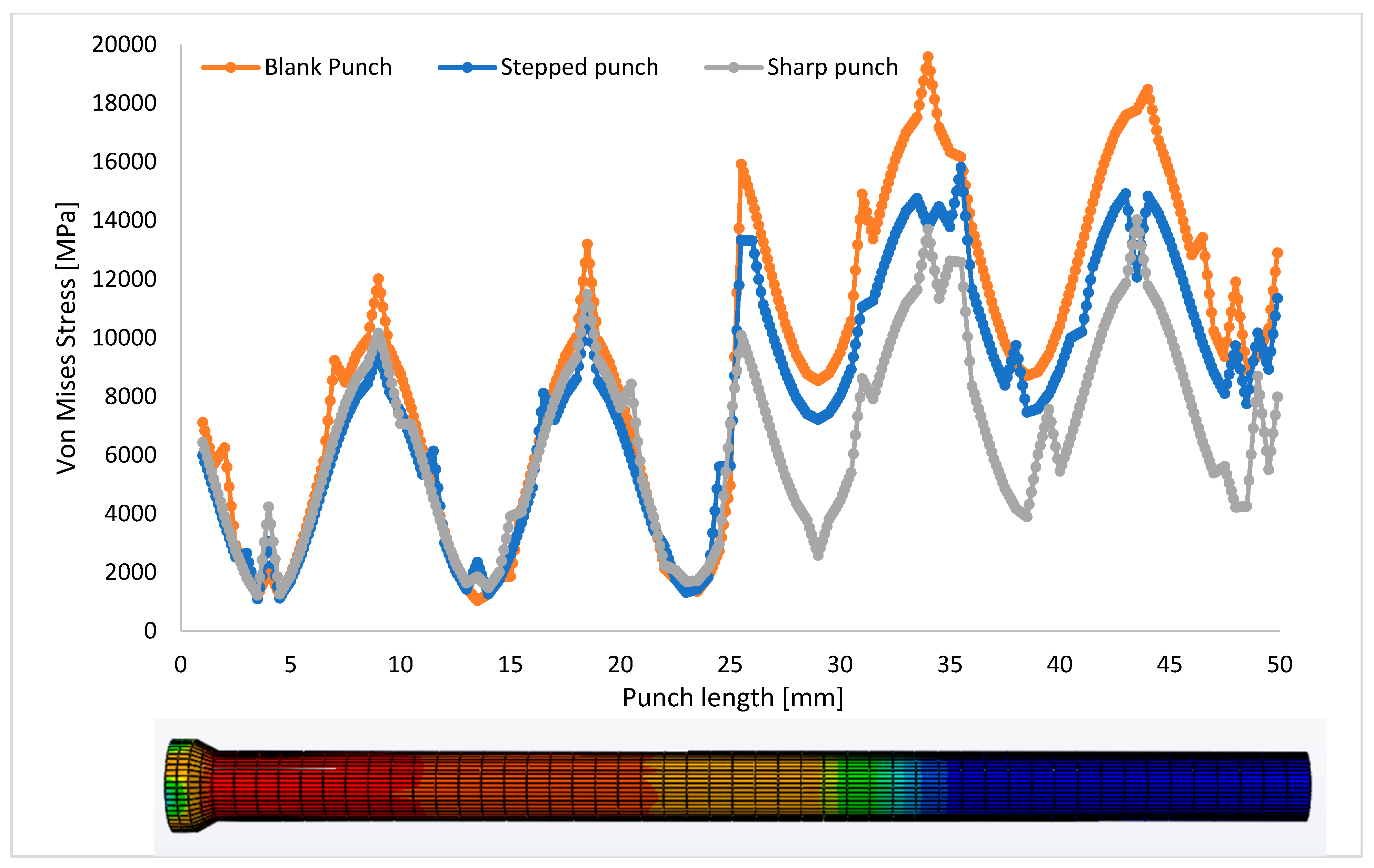
Figure 17 illustrates the evolution of Von Mises stress along the punch length for three different punch types: the blank punch, stepped punch, and sharp punch. Among these, the blank punch consistently exhibits the highest Von Mises stress values across the punch length, reaching peaks significantly above those of the other punches. In contrast, the sharp punch demonstrates the lowest Von Mises stress, followed by the stepped punch, which shows intermediate stress levels between the blank and sharp punches.
The variation in Von Mises stress can be attributed to the differences in the contact area between the punch shaft and the sheet metal. The blank punch has a planar contact with the sheet metal, meaning it interacts with a larger surface area. This extensive contact area results in higher stress concentrations and greater resistance during the punching process, leading to elevated Von Mises stress values.
On the other hand, the sharp punch and stepped punch have point contacts with the sheet metal. The reduced contact area minimizes the stress concentration, resulting in lower Von Mises stress levels. The sharp punch, with its more focused and narrower contact point, experiences the least stress, while the stepped punch, with a slightly broader contact area compared to the sharp punch, exhibits moderately higher stress values.
In summary, the blank punch’s planar contact leads to the highest Von Mises stress due to its larger interaction area, whereas the point contacts of the sharp and stepped punches result in lower stress concentrations, with the sharp punch having the least Von Mises stress.
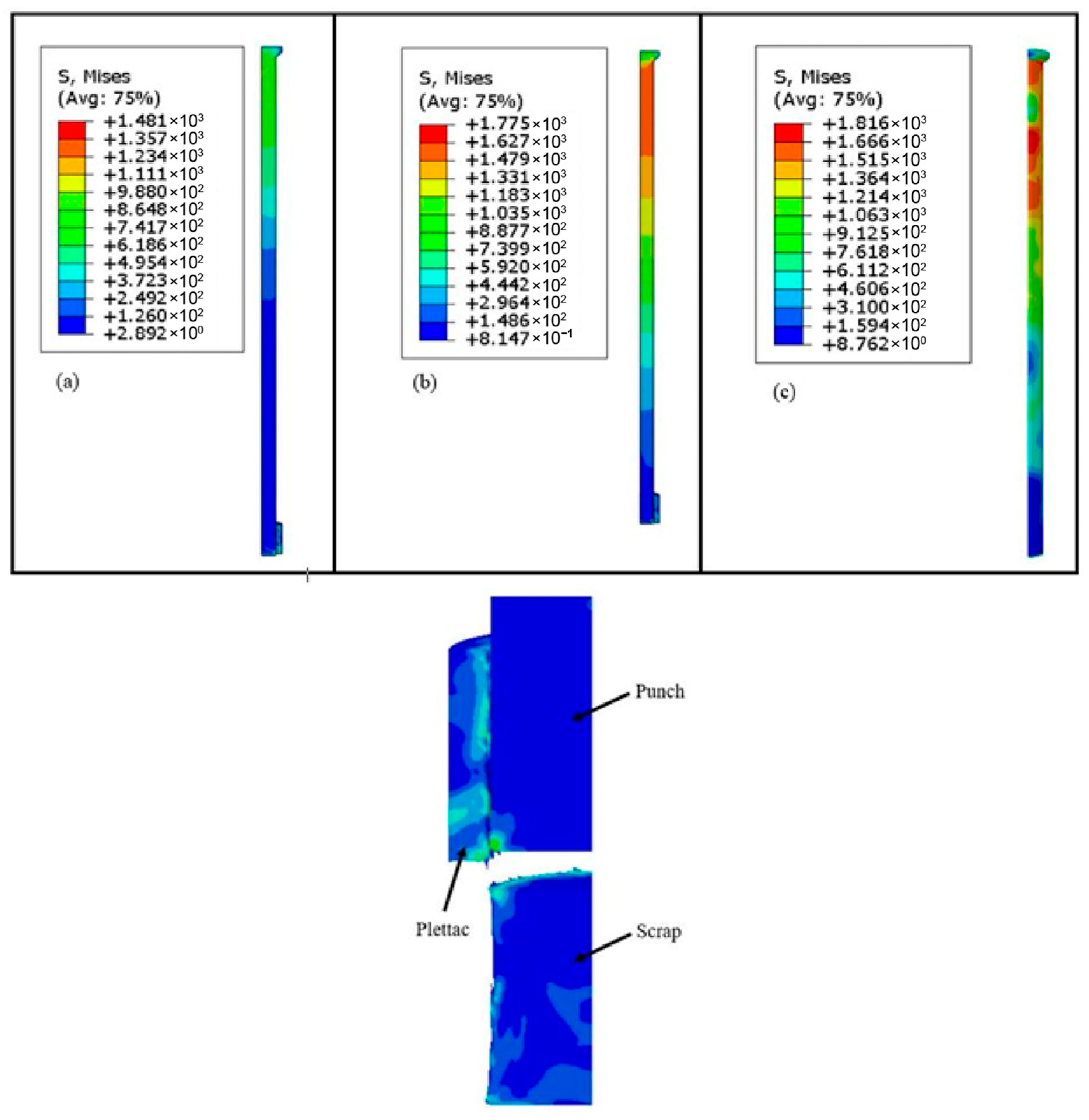
Figure 18 illustrates the distribution of Von Mises stress on a punch during a punching operation, highlighting the areas of stress concentration and potential stiffness degradation when the punch is subjected to its highest stress values. The images labeled (a), (b), and (c) depict the punch at different stages and conditions, with the color gradient indicating the magnitude of Von Mises stress, ranging from low (blue) to high (red).
At the punch head, where the highest stress concentrations are observed, the red and orange regions indicate areas experiencing the maximum Von Mises stress. These zones of high stress are critical as they can lead to stiffness degradation of the punch over time. The elevated stress levels at the punch head suggest that this area is under significant mechanical load, which can cause localized plastic deformation and potential initiation of cracks. The high-stress regions at the punch head propagate towards the shaft of the punch. This propagation of stress can compromise the structural integrity of the punch, leading to a reduction in its stiffness and overall performance. The stress distribution pattern shows that the highest stress concentrations are initially located at the punch head and gradually extend along the shaft, indicating that the shaft also experiences notable stress, albeit to a lesser extent than the head.
The bottom image provides a detailed view of the punch in relation to the plettac and scrap (slug), further illustrating the areas of stress concentration. The punch head, being in direct contact with back-up plate, bears the brunt of the mechanical forces, leading to the highest stress concentrations. This stress propagation from the head to the shaft underscores the importance of material selection and design considerations to mitigate stiffness degradation and prolong the punch’s operational life. Proper design and material properties are essential to ensuring that the punch can withstand high-stress concentrations without failing, thereby maintaining its stiffness and functionality throughout its service life.
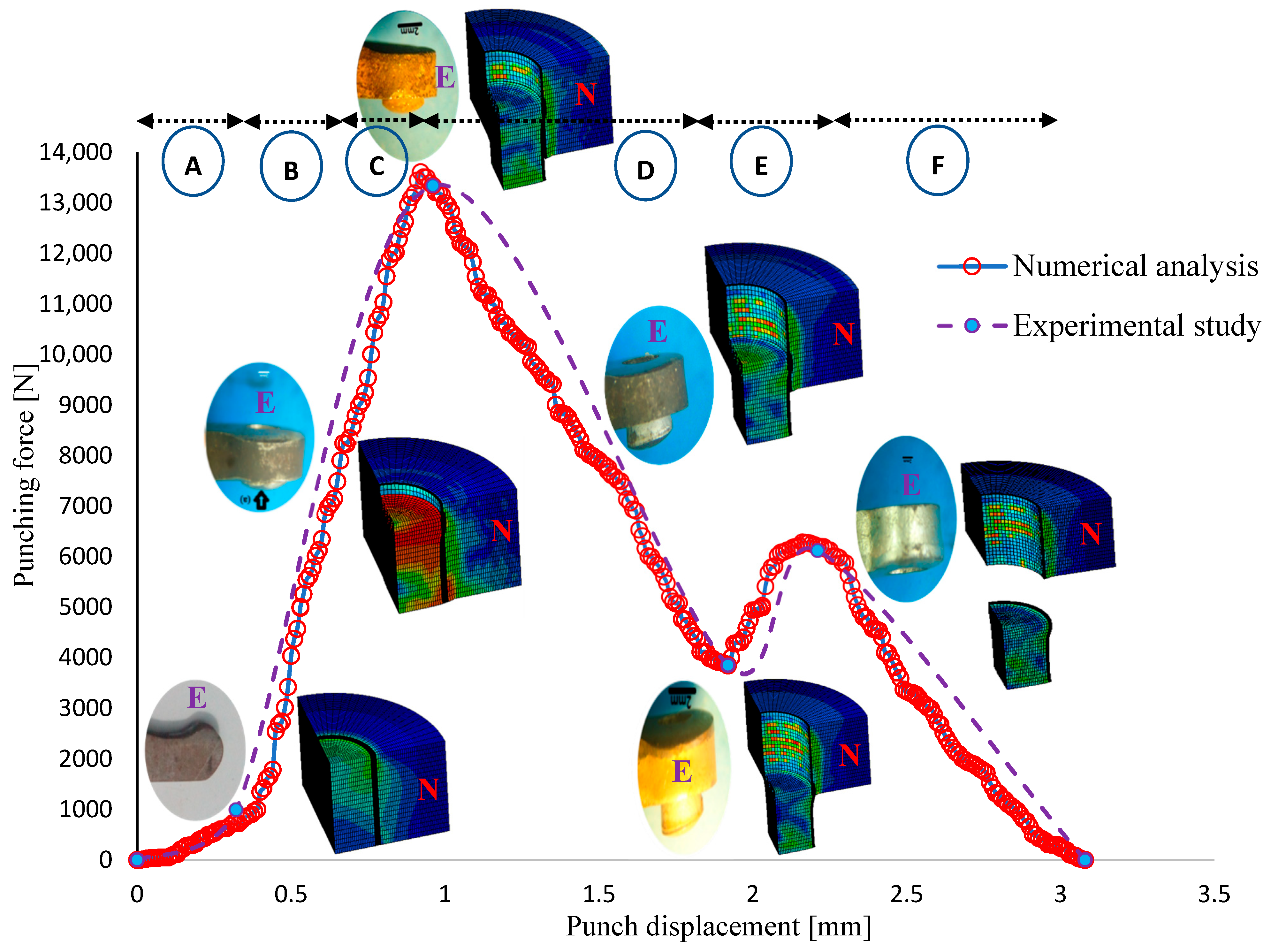
Figure 19 depicts the relationship between punch force and blank punch displacement under dry conditions, segmented into six distinct regions labeled A through F. The sequence begins with Region A, where the punch first contacts the shaft, followed by Region B, which characterizes the elastic deformation phase. Region C marks the transition into plastic deformation, while Region D captures the onset of material damage. The process continues in Region E, illustrating the extraction of the slug, and concludes in Region F, where frictional forces between the punch, slug, and die are observed.
  • Part A: Initial Contact and Centering
This phase marks the initial contact between the punch and the ‘plettac’ surface. During this stage, the press’s mobile component completes its full stroke, and the punch lightly touches the upper surface of the ‘plettac’ without penetrating the material. The gradual, slight increase in punching force results from the sheet metal’s reaction against the punch. This phase is critical for two reasons: it prevents the punch from sliding across the sheet material and ensures proper punch alignment. The contact established here facilitates punch centering, which ultimately influences the quality of the punched hole.
  • Part B: Elastic Deformation
In this region, the material undergoes elastic deformation, meaning it can return to its original shape if the force is removed. The punching force increases steadily as the punch sinks slowly into the material, though not enough to detach any metal particles. The punch remains in contact with the sheet metal’s upper surface. The elastic behavior of the ‘plettac’ material at this stage significantly impacts the quality of the punched hole, as the punch’s support on the material guides it during the cold forming process.
  • Part C: Plastic Deformation and Shearing
This phase is characterized by the plastic behavior of the sheet material, typical of ductile materials. Here, the punching force reaches its peak, the shearing force, where metallic particles separate and accelerate. The punch is subjected to high compression between the back-up plate (a plate in contact with punch head in the industrial mold) and the S500 MC sheet metal. The maximum force, recorded at 13,620 N for a punch displacement of 0.9 mm, corresponds to the moment when the die and punch shoulder radii are fully formed in the sheet metal. The sheet exerts a strong reaction on the lower part of the punch, placing the tool under severe stress. As a result, the punch begins to push the ‘plettac’ steel, forming a bulging zone near the die. This confirms the material’s plastic response to the applied force.
  • Part D: Damage Initiation and Force Drop
During this stage, a gradual decrease in the punching force is observed, signaling the onset of material damage. Micro-cracks appear on the sheet metal’s upper surface, and scratches form at the punch–sheet contact edges. A sudden drop in force occurs at a nearly constant penetration depth, attributed to the formation of burns near the cutting edges of the punch and die. The applied force is now sufficient to push the S500 MC sheet material definitively, reducing its mechanical resistance and breaking material bonds. This phenomenon is driven by the initiation and propagation of cracks within the sheet.
  • Part E: Slug Extraction and Friction
Punching is a complex cold forming operation influenced by multiple parameters. In this study, stripping, whether in numerical simulations or experimental tests, was not considered in order to simplify the model’s geometry and avoid precision constraints. Punching force decreases from the previous phase (D) to 4000 N, indicating that the ‘plettac’ has been punched. At this point, the slug detaches from the material but continues to rub against the die’s inner surface, causing the punching force to rise again. The force–displacement curve reveals that the force reaches 6000 N to overcome the friction between the die and the slug. The slug’s actual thickness is less than 3 mm due to compressive stress, explaining the peak force at a punch displacement of 2.2 mm.
  • Part F: Slug Ejection and Operation Completion
In the final phase, the punching force abruptly drops to zero, marking the ejection of the slug from the die. The 6 mm diameter hole in the ‘plettac’ is now fully formed. The operation concludes as the punch extends beyond the S500 MC sheet and enters the die. The force diminishes after penetrating the 3 mm thickness of the sheet, indicating that the punch continues to apply the necessary force to fully extract the slug from the die mold.

3.2.4. Numerical Model Validation

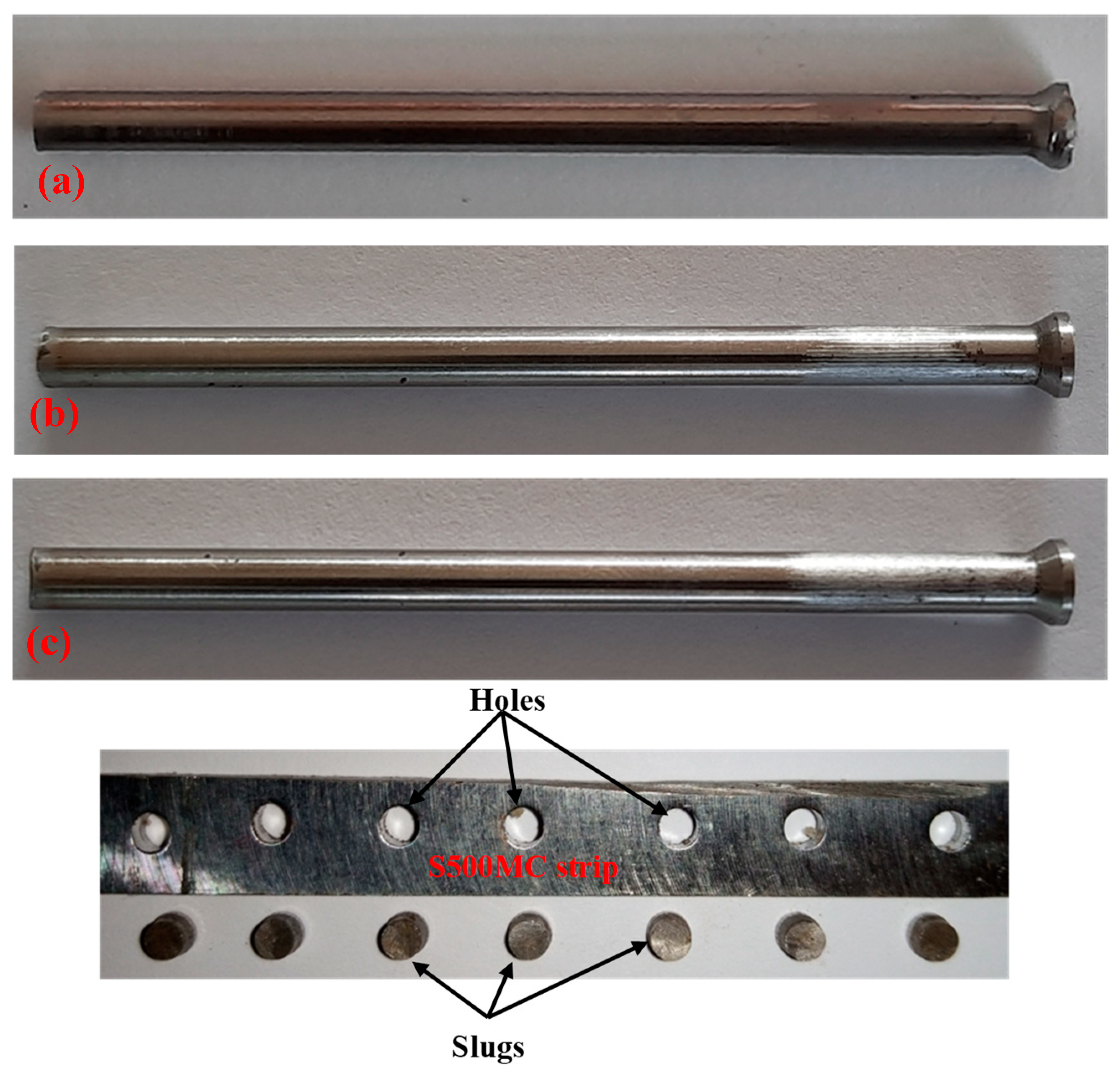
The evolution of the punch’s surface condition after 50 (a), 100 (b), and 150 (c) punching cycles, shown in Figure 20, reveals significant wear localized near the conical zone of the punch head. This progressive degradation highlights the mechanical stresses endured during repetitive operations, particularly at the interface between the punch and the workpiece. Observations indicate that the wear pattern intensifies with the number of cycles, suggesting material fatigue and potential microstructural changes. The tensile machine utilized for the punching process demonstrated remarkable efficiency, ensuring consistent and precise execution of each cycle. Its robust performance allowed for reliable replication of industrial conditions, which is critical for assessing tool longevity and operational integrity. The controlled environment minimized external variables, enabling accurate measurement of wear progression. These findings underscore the importance of material selection and surface treatments in extending tool life. Overall, the experimental setup effectively captured the dynamic interactions influencing punch durability under cyclic loading. The lack of burrs on the punched strips and slugs demonstrates the precision and efficiency of the punching process applied to S500 MC steel sheets using the tensile testing machine. This impeccable result highlights the machine’s capability to produce clean, high-quality cuts under controlled conditions, confirming the suitability of both the equipment and the material for rigorous industrial applications.
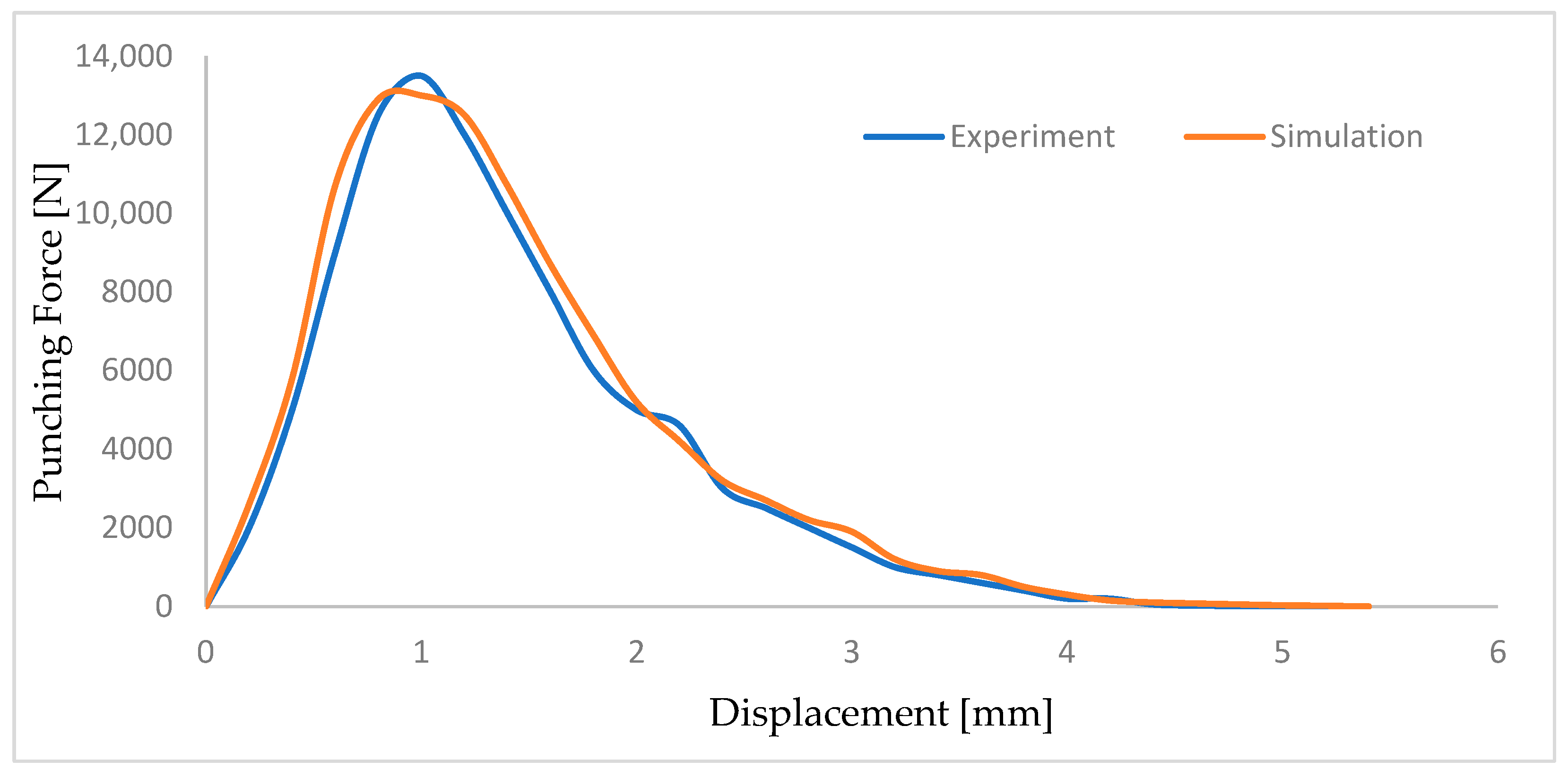
The superposition of the experimental curve and the numerical simulation, shown in Figure 21, for a punching speed of 7 mm/s after 100 cycles exhibits excellent reproducibility, with both curves displaying a high degree of harmony throughout the loading and unloading phases. Notably, the maximum punching force reached approximately 13,500 N at a displacement of 1 mm in both the experimental and simulated results, further underscoring the consistency between the two datasets. The close alignment between experimental data and simulation results validates the numerical model’s ability to predict mechanical behavior under specified conditions. Key parameters, such as force–displacement relationships, were faithfully replicated, confirming the model’s accuracy in representing physical phenomena. This correlation not only reinforces confidence in the simulation’s predictive capabilities but also highlights its utility in optimizing process parameters. The minimal deviation observed between the curves, including the peak force values, attests to the model’s robustness. Consequently, the numerical model was successfully validated, offering a reliable framework for future analyses. Such validation is essential for advancing predictive maintenance strategies and enhancing tool design, while the results pave the way for more efficient and cost-effective industrial applications.

4. Conclusions

Three punch shaft configurations, namely, a cone shaft, sharp shaft, and stepped shaft, were analyzed using Response Surface Methodology (RSM) and the finite element method (FEM). Under the studied conditions, this research identifies the stepped punch shaft as the optimal design, achieving a maximum Von Mises stress reduction of 11% compared to the blank punch. Specifically, the stepped punch with a shear angle of 4°, a clearance of 0.35 mm, and a velocity of 8 mm/s demonstrated superior performance, minimizing stress concentrations while maintaining structural integrity. This configuration not only enhances tool durability but also reduces material deformation, offering a practical and reliable solution for industrial punching applications.
For industrial practitioners, these findings provide optimized punch shaft parameters that can extend tool life, improve product quality, and reduce maintenance costs. Future work will focus on experimental validation of these designs and further optimization of the punch head geometry to enhance efficiency. This study establishes a clear, evidence-based foundation for advancing punch design optimization in industrial settings.

Author Contributions

A.Z.: Conceptualization, Methodology, Validation; M.A.: Conceptualization, Validation, Writing—Original Draft Preparation; K.E.: Validation, Writing—Review and Editing, Supervision, Project Administration; A.P.: Writing—Review and Editing, Supervision, Writing—Original Draft Preparation. All authors have read and agreed to the published version of the manuscript.

Funding

This work was developed in the scope of the Project “ATE—Aliança para a Transição Energética” [C644914747-00000023|Project n° 56], financed by PRR—Plano de Recuperação e Resiliência under the Next Generation EU from the European Union, and had laboratory support of the project UID 00481/2025—Centre for Mechanical Technology and Automation, https://doi.org/10.54499/UID/00481/2025 funded by FCT—Fundação para a Ciência e a Tecnologia.

Data Availability Statement

The data that support the findings of this study are available on request from the corresponding author. The data are not publicly available due to privacy or ethical restrictions.

Acknowledgments

The authors would like to thank Chafik Loukil for supplying the material.

Conflicts of Interest

The authors declare no conflicts of interest.

References

  1. Achouri, M.; Germain, G.; Dal Santo, P.; Saidane, D. Experimental and numerical analysis of micromechanical damage in the punching process for High-Strength Low-Alloy steels. Mater. Des. 2014, 56, 657–670. [Google Scholar] [CrossRef]
  2. Li, K.; Peng, J.; Zhou, C. Construction of whole stress–strain curve by small punch test and inverse finite element. Results Phys. 2018, 11, 440–448. [Google Scholar] [CrossRef]
  3. Abendroth, M. FEM analysis of small punch tests. Key Eng. Mater. 2017, 734, 23–36. [Google Scholar] [CrossRef]
  4. Maiti, S.K.; Ambekar, A.A.; Singh, U.P.; Date, P.P.; Narasimhan, K. Assessment of influence of some process parameters on sheet metal blanking. J. Mater. Process. Technol. 2000, 102, 30–36. [Google Scholar] [CrossRef]
  5. Xu, J.; Guo, B.; Shan, D.; Wang, C.; Li, J.; Liu, Y.; Qu, D. Development of a micro-forming system for micro-punching process of micro-hole arrays in brass foil. J. Mater. Process. Technol. 2012, 212, 2238–2246. [Google Scholar] [CrossRef]
  6. Zhang, Y.; Zhang, P.; Wang, X.; Gong, B.; Zhang, L. Performance enhancement of punched holes streamlined winglet pair vortex generator for fin-and-tube heat exchanger. J. Mech. Sci. Technol. 2024, 38, 2613–2625. [Google Scholar] [CrossRef]
  7. Subramonian, S.; Altan, T.; Ciocirlan, B.; Campbell, C. Optimum selection of variable punch-die clearance to improve tool life in blanking non-symmetric shapes. Int. J. Mach. Tools Manuf. 2013, 75, 63–71. [Google Scholar]
  8. Kuo, C.-C.; Lin, B.-T.; Wang, W.-T. Optimization of microridge punch design for deep drawing process by using the fuzzy Taguchi method. Int. J. Adv. Manuf. Technol. 2019, 103, 177–186. [Google Scholar] [CrossRef]
  9. Li, H.; Wang, T. Effect of Punch Tip Geometry on Stress Distribution and Tool Wear. Int. J. Mach. Tools Manuf. 2020, 153, 103567. [Google Scholar]
  10. Hajiahmadi, S.; Naeini, H.M.; Talebi-Ghadikolaee, H.; Safdarian, R.; Zeinolabedin-Beygi, A. Effect of anisotropy on spring-back of pre-punched profiles in cold roll forming process: An experimental and numerical investigation. Int. J. Adv. Manuf. Technol. 2023, 129, 3965–3978. [Google Scholar] [CrossRef]
  11. Singh, G.; Teli, M.; Samanta, A.; Singh, R. Finite element modeling of laser-assisted machining of AISI D2 tool steel. Mater. Manuf. Process. 2013, 28, 443–448. [Google Scholar] [CrossRef]
  12. Abbasi-Bani, A.; Zarei-Hanzaki, A.; Pishbin, M.H.; Haghdadi, N. A comparative study on the capability of Johnson–Cook and Arrhenius-type constitutive equations to describe the flow behavior of Mg–6Al–1Zn alloy. Mech. Mater. 2014, 71, 52–61. [Google Scholar] [CrossRef]
  13. Akbari, Z.; Mirzadeh, H.; Cabrera, J.M. A simple constitutive model for predicting flow stress of medium carbon microalloyed steel during hot deformation. Mater. Des. 2015, 77, 126–131. [Google Scholar] [CrossRef]
  14. Zhan, H.; Wang, G.; Kent, D.; Dargusch, M. Constitutive modelling of the flow behaviour of a beta titanium alloy at high strain rates and elevated temperatures using the Johnson–Cook and modified Zerilli–Armstrong models. Mater. Sci. Eng. A 2014, 612, 71–79. [Google Scholar] [CrossRef]
  15. Li, X.; Zhang, Y.; Wang, G.; Zhou, J. Modified Johnson–Cook constitutive model and its application in predicting flow behavior of high-strength steel under hot deformation. Metals 2021, 11, 1089. [Google Scholar] [CrossRef]
  16. Kumar, A.; Singh, S.K.; Verma, M. Development of a modified Johnson–Cook model for predicting flow behavior of high-strength low-alloy steel. Mater. Today Proc. 2020, 28, 1253–1260. [Google Scholar] [CrossRef]
  17. Cao, Y.; Di, H.S.; Misra, R.D.K.; Zhang, J. Hot deformation behavior of Alloy 800H at intermediate temperatures: Constitutive models and microstructure analysis. J. Mater. Eng. Perform. 2014, 23, 4298–4308. [Google Scholar] [CrossRef]
  18. Murugesan, M.; Lee, S.; Kim, D.; Kang, Y.H.; Kim, N. A comparative study of ductile damage model approaches for joint strength prediction in hot shear joining process. Procedia Eng. 2017, 207, 1689–1694. [Google Scholar] [CrossRef]
  19. Marroquín, L.G.; Hernández-Gómez, L.H.; Urriolagoitia-Calderón, G.; Urriolagoitia-Sosa, G.; Merchán-Cruz, E. Cumulative damage evaluation under fatigue loading. Appl. Mech. Mater. 2008, 13, 141–150. [Google Scholar] [CrossRef]
  20. Banerjee, A.; Dhar, S.; Acharyya, S.; Datta, D.; Nayak, N. Determination of Johnson–Cook material and failure model constants and numerical modelling of Charpy impact test of armour steel. Mater. Sci. Eng. A 2015, 640, 200–209. [Google Scholar] [CrossRef]
  21. Buzyurkina, A.E.; Gladky, I.L.; Kraus, E.I. Determination and verification of Johnson–Cook model parameters at high-speed deformation of titanium alloys. Aerosp. Sci. Technol. 2015, 45, 121–127. [Google Scholar] [CrossRef]
  22. Gildemyn, E. Caractérisation des Procédés de Fabrication de pièces de Sécurité Automobile: Optimisation Multiobjectifs de la Mise en Forme. Ph.D. Thesis, Arts et Métiers ParisTech, Paris, France, November 2008. [Google Scholar]
  23. Opoz, T.T.; Chen, X. Chip formation mechanism using finite element simulation. Stroj. Vestn. J. Mech. Eng. 2016, 62, 659–667. Available online: https://researchonline.ljmu.ac.uk/id/eprint/4059 (accessed on 30 November 2025).
  24. Touache, A. Contribution à la Caractérisation et à la Modélisation de L’influence de la Vitesse et de la Température Sur le comportement en Découpage de Tôles Minces. Ph.D. Thesis, Université de Franche-Comté, Besancon, France, December 2006. [Google Scholar]
  25. Lestriez, P.; Saanouni, K.; Cherouat, A. Simulation numérique de la coupe orthogonale par couplage thermique–comportement–endommagement en transformations finies. Mécanique Ind. 2005, 6, 297–307. [Google Scholar] [CrossRef]
  26. Coer, J.; Laurent, H.; Oliveira, M.C.; Manach, P.Y.; Menezes, L.F. Detailed experimental and numerical analysis of a cylindrical cup deep drawing: Pros and cons of using solid-shell elements. Int. J. Mater. Form. 2018, 11, 357–373. [Google Scholar] [CrossRef]
  27. Zeidi, A.; Saada, F.B.; Elleuch, K.; Atapek, H. On the failure of punching process. Eng. Fail. Anal. 2021, 120, 105035. [Google Scholar] [CrossRef]
  28. Zeidi, A.; Saada, F.B.; Elleuch, K.; Atapek, H. AISI D2 punch head damage: Fatigue and wear mechanism. Eng. Fail. Anal. 2021, 129, 105676. [Google Scholar] [CrossRef]
  29. Krutz, P.; Leonhardt, A.; Graf, A.; Winter, S.; Galiev, E.; Rehm, M.; Kräusel, V.; Dix, M. Design, numerical and experimental testing of a flexible test bench for high-speed impact shear-cutting with linear motors. J. Manuf. Mater. Process. 2023, 7, 173. [Google Scholar] [CrossRef]
  30. Tang, H.; Wen, T.; Hong, J. Analysis of shear stress wrinkling of asymmetric sheet specimen under offset loading. J. Mech. Sci. Technol. 2022, 36, 1451–1457. [Google Scholar] [CrossRef]
  31. Bahri, A.; Guermazi, N.; Elleuch, K.; Ürgen, M. On the erosive wear of 304L stainless steel caused by olive seed particle impact: Modeling and experiments. Tribol. Int. 2016, 102, 608–619. [Google Scholar] [CrossRef]
  32. Ma, W.; Shen, H.; Xu, G. Study on cracks and process improvement for case hardened gear shaft straightening. J. Mech. Sci. Technol. 2022, 36, 2861–2870. [Google Scholar] [CrossRef]
  33. Haddouch, I.; Mouallif, I.; Zhouri, O.; Benhamou, M.; Hindi, Z. Numerical study of the impact of shear angle, yarn spacing and yarn fiber volume fraction on effective elastic properties of plain-woven composite. Mater. Today Commun. 2024, 39, 109171. [Google Scholar] [CrossRef]
  34. Gürün, H.; Göktaş, M.; Güldaş, A. Experimental examination of effects of punch angle and clearance on shearing force and estimation of shearing force using fuzzy logic. Trans. FAMENA 2016, 40, 19–28. [Google Scholar] [CrossRef]
  35. Zeidi, A.; Saada, F.B.; Elleuch, K.; Atapek, H. AISI D2 punch head and shaft failure in case of S500 MC punching. In International Tunisian Congress of Mechanics; Springer Nature: Cham, Switzerland, 2023; pp. 226–236. [Google Scholar] [CrossRef]
  36. Peng, S.; Ouyang, G.; Cao, X. Investigation on the forming quality and hardness of hollow filter rods using water vapor forming method. J. Mech. Sci. Technol. 2023, 37, 3095–3101. [Google Scholar] [CrossRef]
  37. Kim, K.M.; Ji, S.M.; Lee, S.W. Flow behavior dependence of rod shearing phenomena of various materials in automatic multi-stage cold forging. J. Mech. Sci. Technol. 2023, 37, 139–148. [Google Scholar] [CrossRef]
  38. Thipprakmas, S.; Sontamino, A. Fabrication of clean-cut surface on high strength steel using a new shaving die design. J. Mech. Sci. Technol. 2020, 34, 301–317. [Google Scholar] [CrossRef]
  39. Choubey, A.K.; Agnihotri, G.; Sasikumar, C. Experimental and mathematical analysis of simulation results for sheet metal parts in deep drawing. J. Mech. Sci. Technol. 2017, 31, 4215–4220. [Google Scholar] [CrossRef]
  40. Wang, K.; Luo, M.; Wierzbicki, T. Experiments and modeling of edge fracture for an AHSS sheet. Int. J. Fract. 2014, 187, 245–268. [Google Scholar] [CrossRef]
  41. Tejyan, S.; Kumar, N.; Ravi, R.K. Analysis of spring-back effect for AA6061 alloy sheet using finite element analysis. Mater. Today Proc. 2024, in press. [Google Scholar] [CrossRef]
  42. Dureja, J.S.; Singh, R.; Bhatti, M.S. Optimizing flank wear and surface roughness during hard turning of AISI D3 steel by Taguchi and RSM methods. Prod. Manuf. Res. 2014, 2, 767–783. [Google Scholar] [CrossRef]
  43. Li, T.; Hu, K.; Cheng, L.; Ding, Y.; Shao, J.; Kong, L. Optimum selection of dental implant diameter and length in the posterior mandible with poor bone quality—A 3D finite element analysis. Appl. Math. Model. 2011, 35, 446–456. [Google Scholar] [CrossRef]
  44. Manohar, M.; Joseph, J.; Selvaraj, T.; Sivakumar, D. Application of desirability-function and RSM to optimize multiple objectives while turning Inconel 718 using coated carbide tools. Int. J. Manuf. Technol. Manag. 2013, 27, 218–237. [Google Scholar] [CrossRef]
  45. Wen, J.; He, L.; Zhou, T. Modeling of the polycrystalline cutting of austenitic stainless steel based on dislocation density theory and study of burr formation mechanism. J. Mech. Sci. Technol. 2023, 37, 2855–2870. [Google Scholar] [CrossRef]
  46. Loturco, I.; Artioli, G.G.; Kobal, R.; Gil, S.; Franchini, E. Predicting punching acceleration from selected strength and power variables in elite karate athletes: A multiple regression analysis. J. Strength Cond. Res. 2014, 28, 1826–1832. [Google Scholar] [CrossRef] [PubMed]
  47. Wang, F.; Tao, Q.; Xiao, L. Simulation and analysis of serrated chip formation in cutting process of hardened steel considering ploughing-effect. J. Mech. Sci. Technol. 2018, 32, 2029–2037. [Google Scholar] [CrossRef]
Figure 1. Components involved in the sheet metal punching process, namely the (a) back-up plate, (b) punch, (c) sheet metal, (d) die, (e) part assembly.
Metals 15 01338 g001
Figure 2. Mesh sensitivity in punch parts, namely (a) punch head/middle, (b) punch shaft, (c) ‘plettac’.
Metals 15 01338 g002
Figure 3. Instance assembly and loads used in finite element (FE) study.
Metals 15 01338 g003
Figure 4. Mold component details, namely the (a) ‘plettac’, (b) plettac before punching, (c) plettac during punching, (d) plettac after punching, (e) punch, (f) punch dimensions.
Metals 15 01338 g004
Figure 5. Three-dimensional model of industrial mold (a) and laboratory mold (prototype) (b,c).
Metals 15 01338 g005
Figure 6. Mold mounting in universal testing machine.
Metals 15 01338 g006
Figure 7. Punching tools: (a) Blank punch. (b) Conical punch shaft. (c) Sharp punch shaft. (d) Stepped punch shaft. (e) Stepped punch dimensions. (f) γ angle illustration. (g) α angle illustration. (h) β angle illustration.
Metals 15 01338 g007
Figure 8. Von Mises stress distribution in cases of punches with cone shaft (yellow), sharp shaft (red), and stepped shaft (Blue).
Metals 15 01338 g008
Figure 9. Von Mises stress vs. displacement curves of blank punch, stepped punch shaft, sharp punch shaft, and cone punch shaft.
Metals 15 01338 g009
Figure 10. Effect of shear punch angle ‘α, β, γ’ and punch–die clearance ‘J’ on Von Mises stress in (a) cone punch shaft, (b) sharp punch shaft, (c) Stepped punch shaft.
Metals 15 01338 g010
Figure 11. Effect of shear punch angle ‘α, β, γ’ and punch velocity ‘V’ on Von Mises stress in (a) cone punch shaft, (b) sharp punch shaft, (c) stepped punch shaft.
Metals 15 01338 g011
Figure 12. Effect of punch–die clearance ‘j’ and punch velocity ‘V’ on Von Mises stress in (a) cone punch shaft, (b) sharp punch shaft, (c) stepped punch shaft.
Metals 15 01338 g012
Figure 13. Maximum Von Mises stress comparison between blank punch, cone-shaft punch, sharp-shaft punch, and stepped-shaft punch.
Metals 15 01338 g013
Figure 14. Punching force vs. punch displacement.
Metals 15 01338 g014
Figure 15. Analysis of Von Mises stress distribution in AISI D2 punch during the plettac-punching process, namely (a) stage a, (b) stage b, (c) stage c, (d) stage d and (e) stage e.
Metals 15 01338 g015
Figure 16. Von Mises stress distribution in plettac punching of AISI D2 for different punch–die clearances.
Metals 15 01338 g016
Figure 17. Von Mises stress distribution along punch length for different punch geometries.
Metals 15 01338 g017
Figure 18. Von Mises stress distribution in punching simulation: comparison of stress evolution and component interaction.
Metals 15 01338 g018
Figure 19. Experimental and numerical punching force versus punch displacement curves (E: experimental; N: numerical) for a punch velocity 10 mm/s and punch–die clearance of 0.3 mm, Namely (A) Initial contact and centering (B) Elastic deformation (C) Plastic deformation and shearing (D) Damage initiation and force drop (E) Slug extraction and friction (F) Slug ejection and operation completion.
Metals 15 01338 g019
Figure 20. Evolution of punch surface condition after 50 (a), 100 (b), and 150 (c) punching cycles, and punched strip with slugs.
Metals 15 01338 g020
Figure 21. Evolution of punching force regarding tool displacement.
Metals 15 01338 g021
Table 1. Johnson–Cook parameters and material properties of AISI D2 and S500 MC steels.
ParametersAISI D2S 500 MC
Density (kg/m3)79007900
Young’s modulus (GPa)210209
Poisson’s ratio0.30.28
Room temperature (K)298298
A (MPa)1490510
B (MPa)660220
n0.040.28
m0.381
C0.290.0019
ε ˙ ¯ 01.001.00
Table 2. Johnson–Cook coefficients for both AISI D2 and S500 MC steels.
CoefficientAISI D2S 500 MC
D10.691030.53467
D200
D300
D4−0.03524−0.01913
D500
Table 3. Factors levels of punch–die clearance, punch velocity, and shear angle.
FactorsLow LevelMiddle LevelHigh Level
Punch–die clearance, J (mm)0.250.30.35
Punch velocity, V (mm/s)6810
Shear angle, α; β; γ (°)135
Table 4. Numerical data using finite element simulations.
No.J
(mm)
V
(mm/s)
Shear Angle
(°)
Von Mises Stress (Cone Shaft)Von Mises Stress (Sharp Shaft)Von Mises Stress
(Stepped Shaft)
10.2561154514901411
20.2563128015181326
30.2565164212411360
40.2581134013061475
50.2583158716201247
60.2585146915201454
70.25101138212561347
80.25103121711071546
90.25105147513651468
100.361154912361485
110.363143615471432
120.365152014891364
130.381124114891447
140.383144512271345
150.385117415661375
160.3101125815461540
170.3103136515741475
180.3105136516451378
190.3561136512151219
200.3563142012451308
210.3565158912141487
220.3581169612741244
230.3583120815431229
240.3585136215121373
250.35101146916011249
260.35103145714521241
270.35105134915841451
Table 5. Optimal values of clearance (J), velocity (V), and shear angle minimizing Von Mises stress for cone, sharp, and stepped punches.
Cone Punch ShaftSharp Punch ShaftStepped Punch Shaft
Punch–die clearance ‘j’ (mm)0.250.30.35
Punch velocity (mm/s)1088
shear angle (°)(α) 2(β) 6(γ) 4
Table 6. Performance comparison of punch designs (cone, sharp, and stepped): Maximum punching force, Von Mises stress, and reduction relative to blank punch.
Blank PunchCone PunchSharp PunchStepped Punch
Maximum punching force (N)15,80013,80014,10012,800
Punching force reduction (%)-131119
Von Mises stress (MPa) 17,00015,90016,30015,200
Von Mises stress reduction (%)-7511
Disclaimer/Publisher’s Note: The statements, opinions and data contained in all publications are solely those of the individual author(s) and contributor(s) and not of MDPI and/or the editor(s). MDPI and/or the editor(s) disclaim responsibility for any injury to people or property resulting from any ideas, methods, instructions or products referred to in the content.