The Influence of Mo and Y on the Microstructure and Properties of TiZrHfNb Series Refractory High-Entropy Alloys

Abstract
1. Introduction
2. Experimental Materials and Methods
2.1. Material Preparation
2.2. Microstructure Analysis
2.3. Mechanical Property Tests and Room-Temperature Friction and Wear Experiments
3. Results and Discussion
3.1. The Microstructure and Properties of Mox
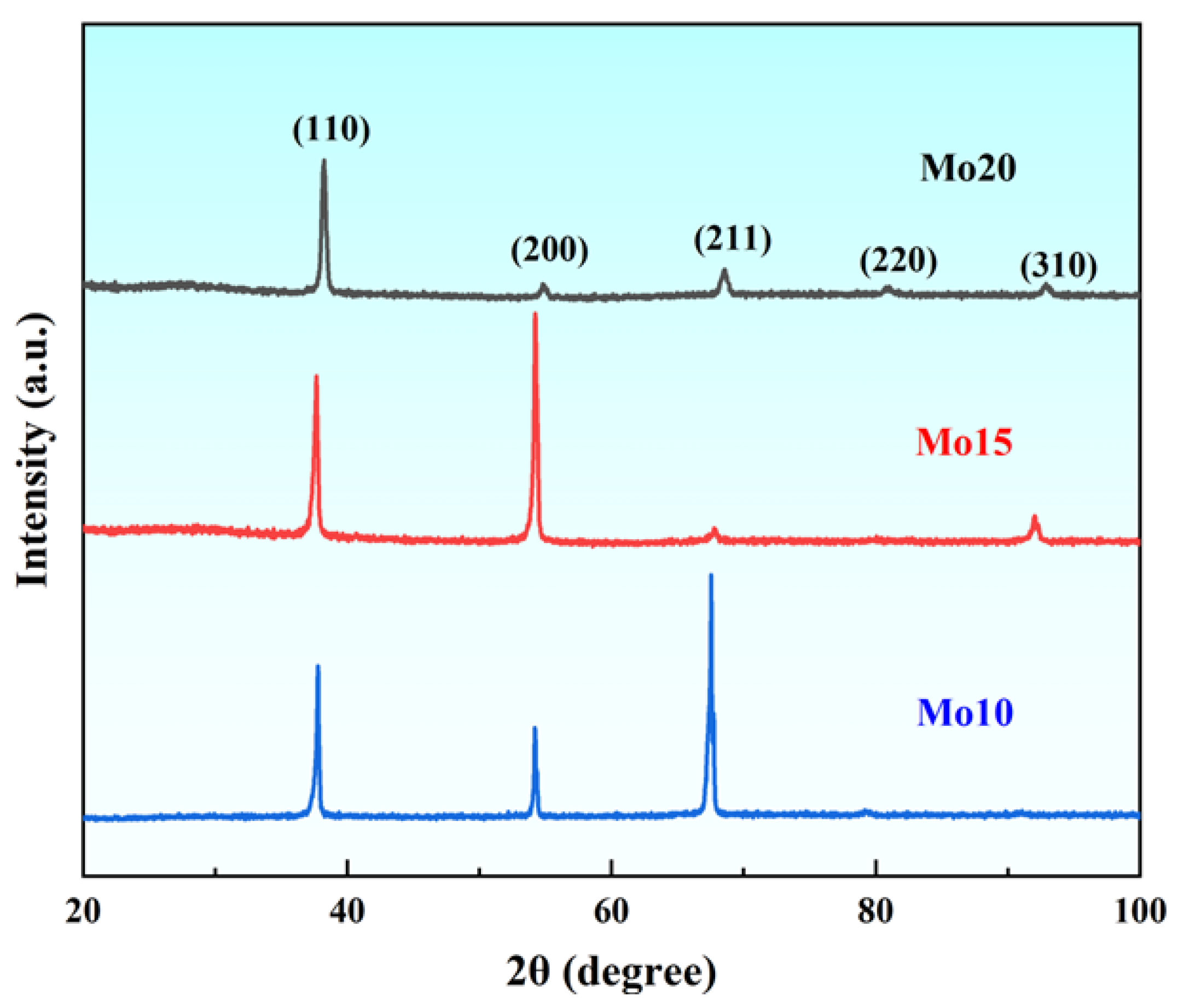
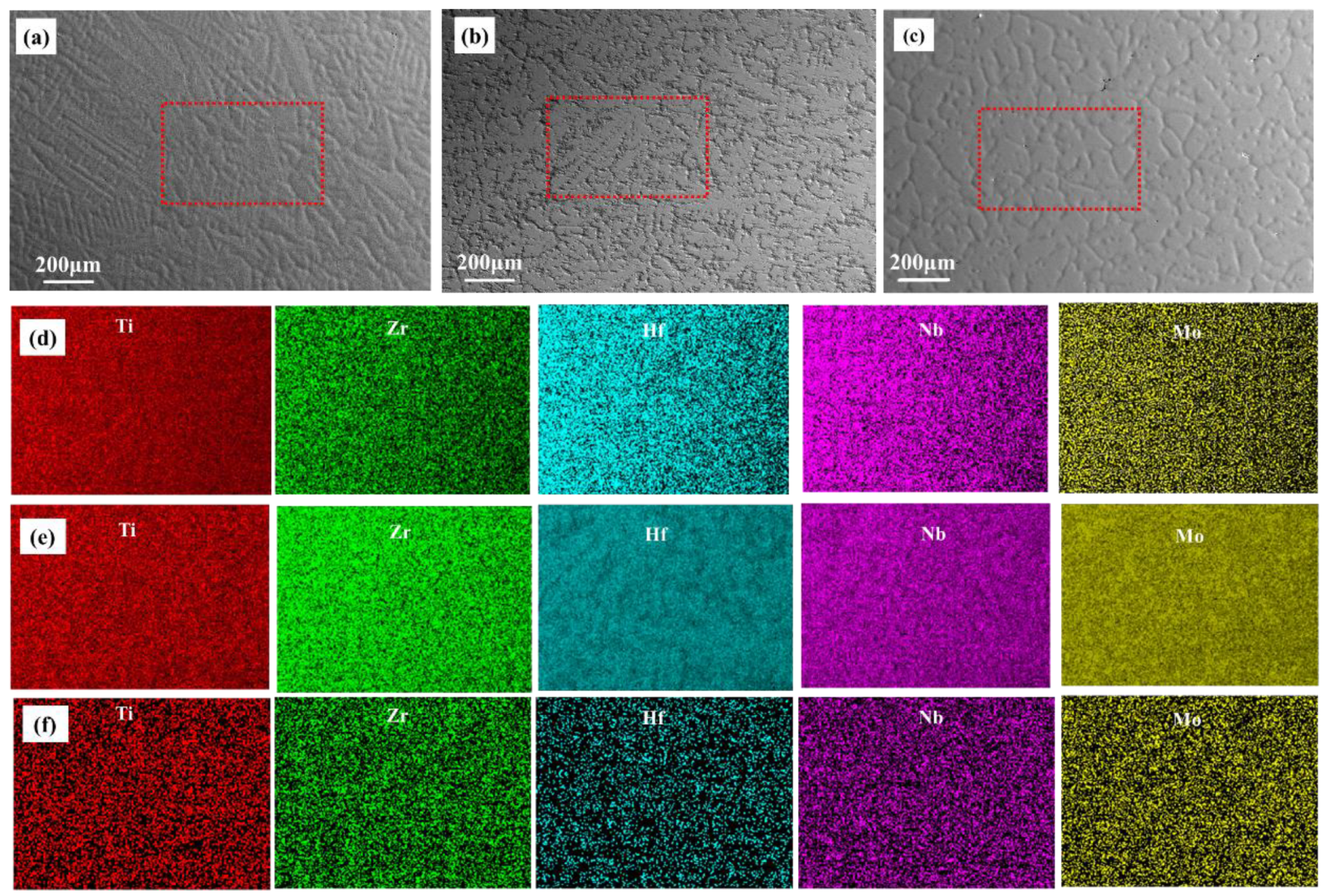
3.1.1. Phase and Microstructure Analysis of Mox
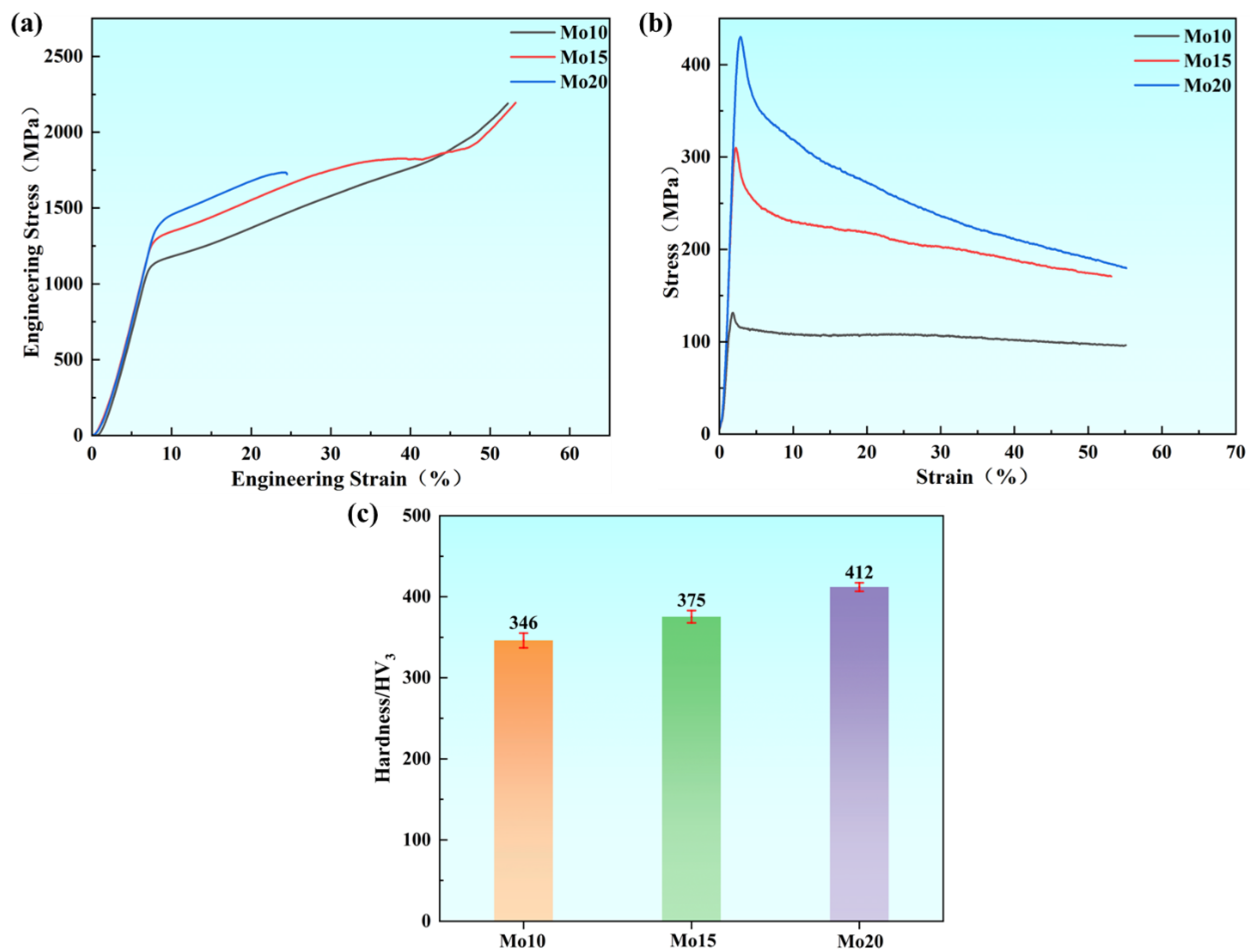
3.1.2. Mechanical Performance of Mox
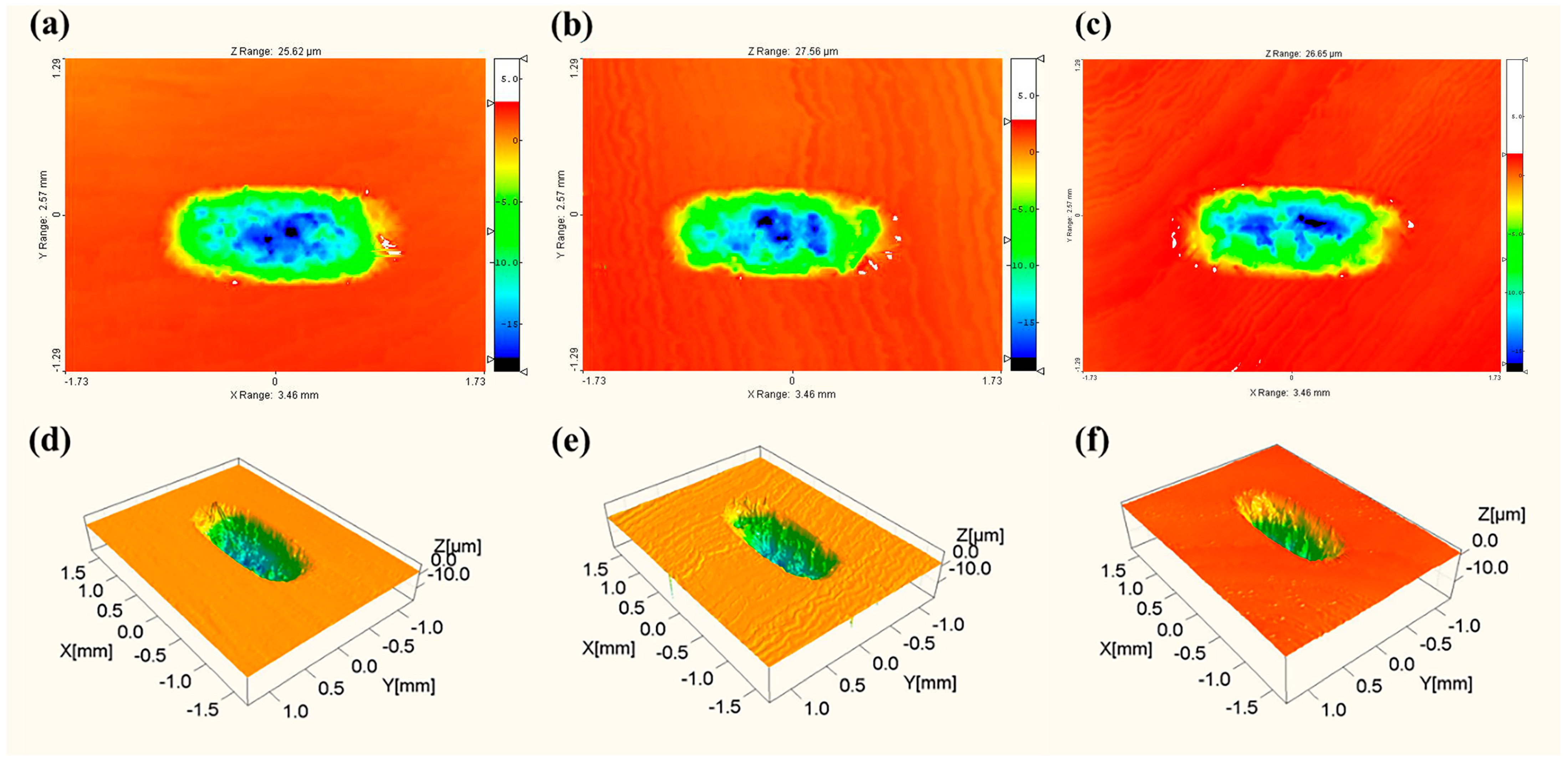
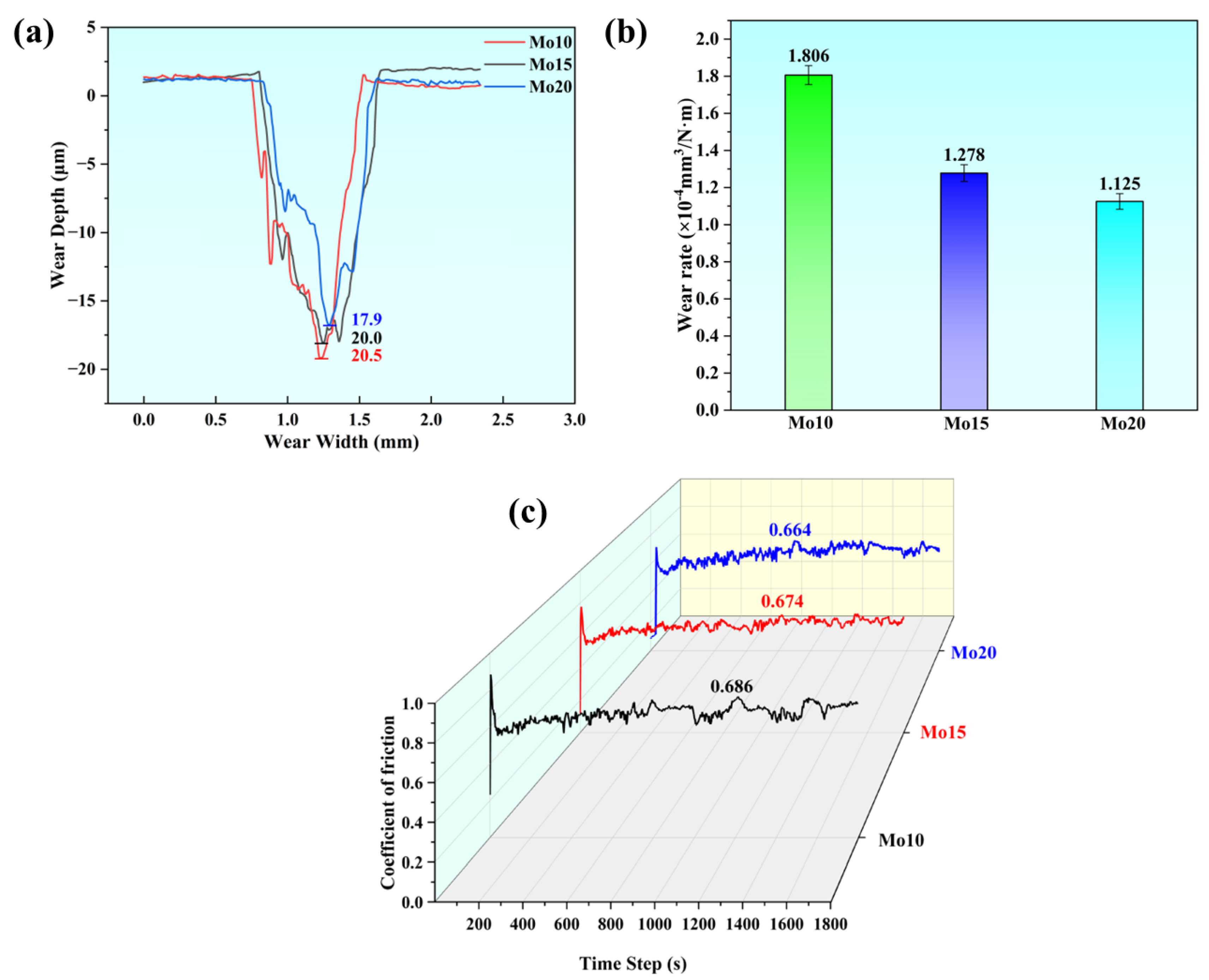
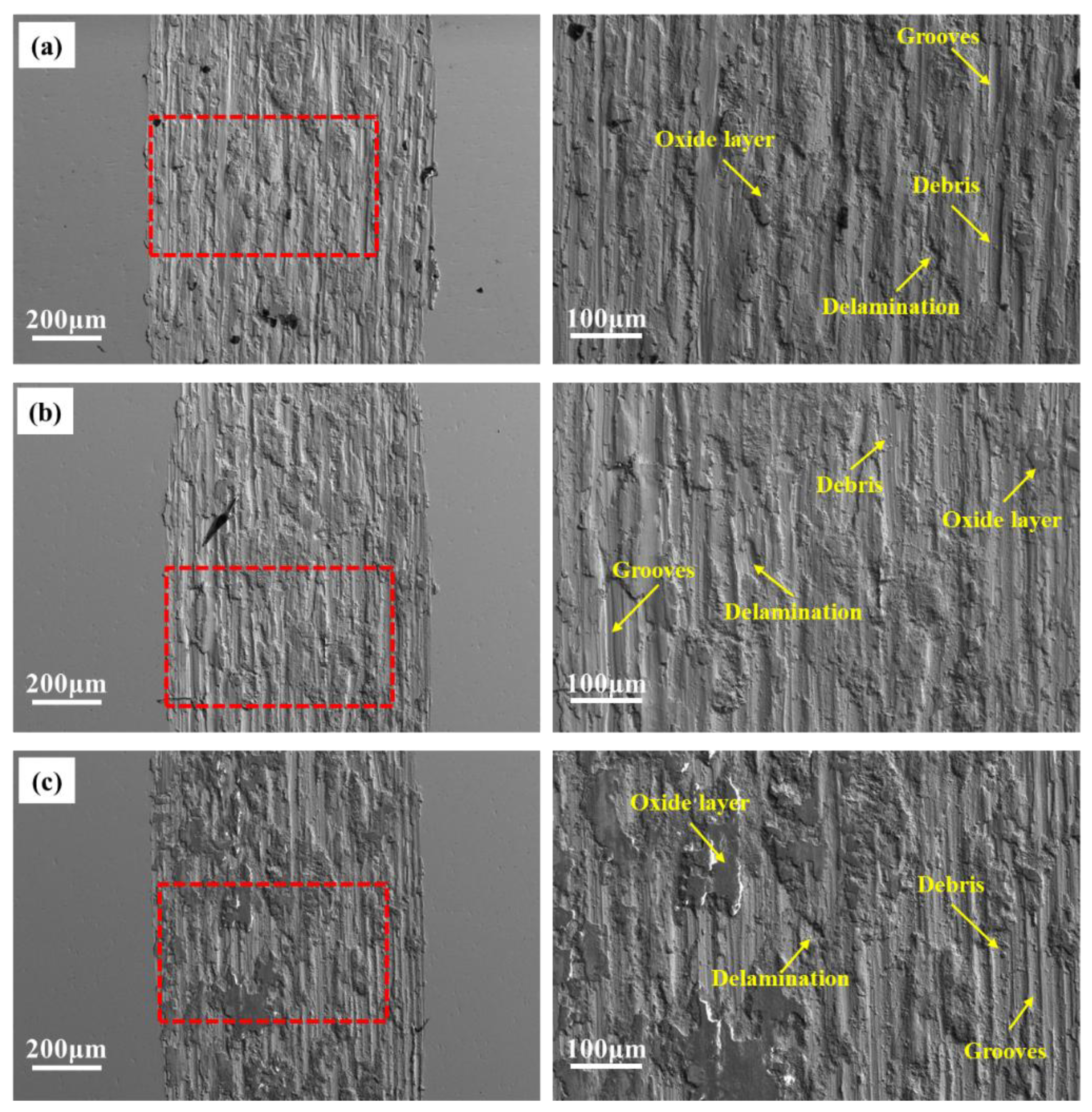
3.1.3. Room-Temperature Friction Performance of Mox

3.2. The Microstructure and Properties of Mo20 (0.1Y/0.2Y)
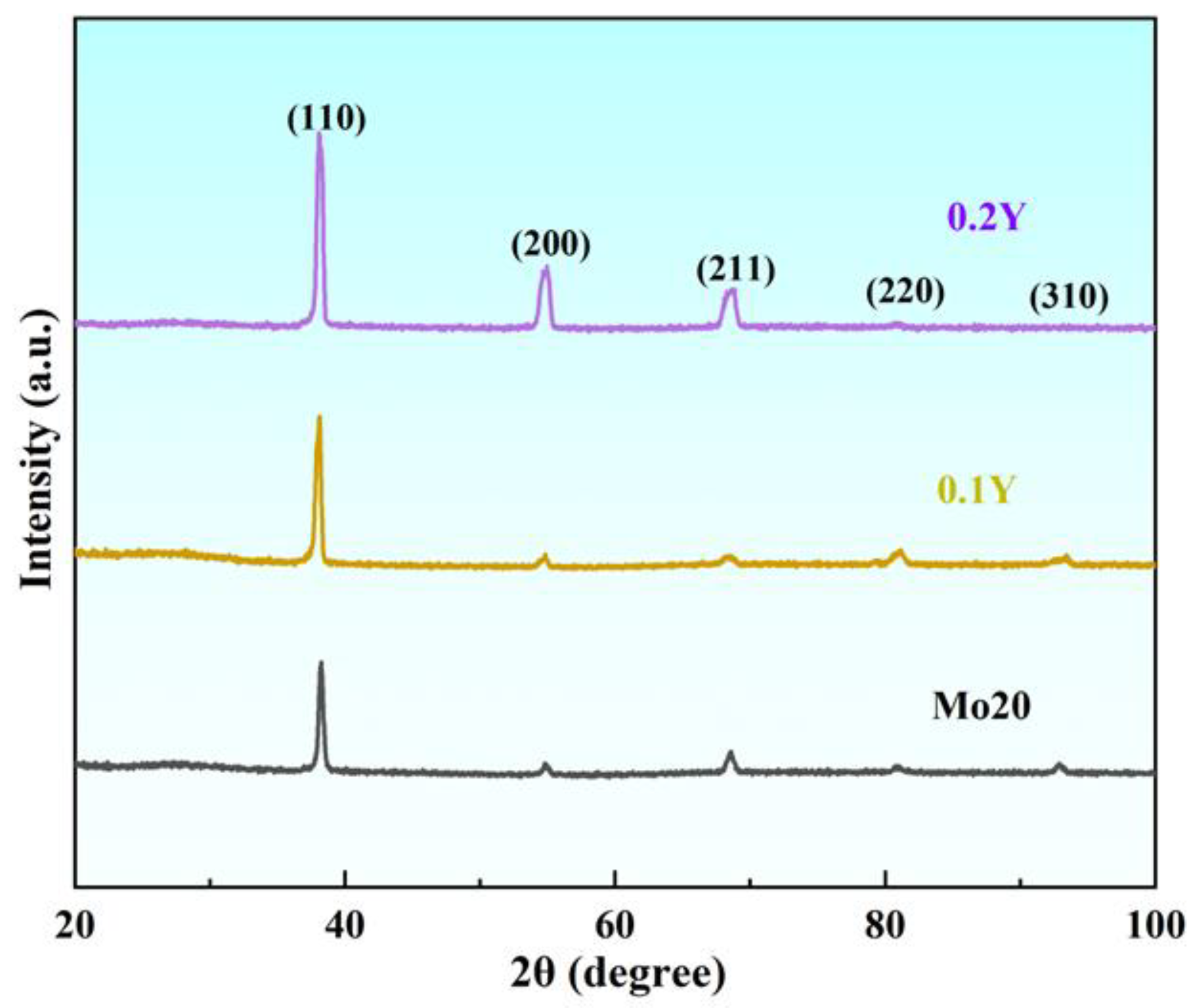
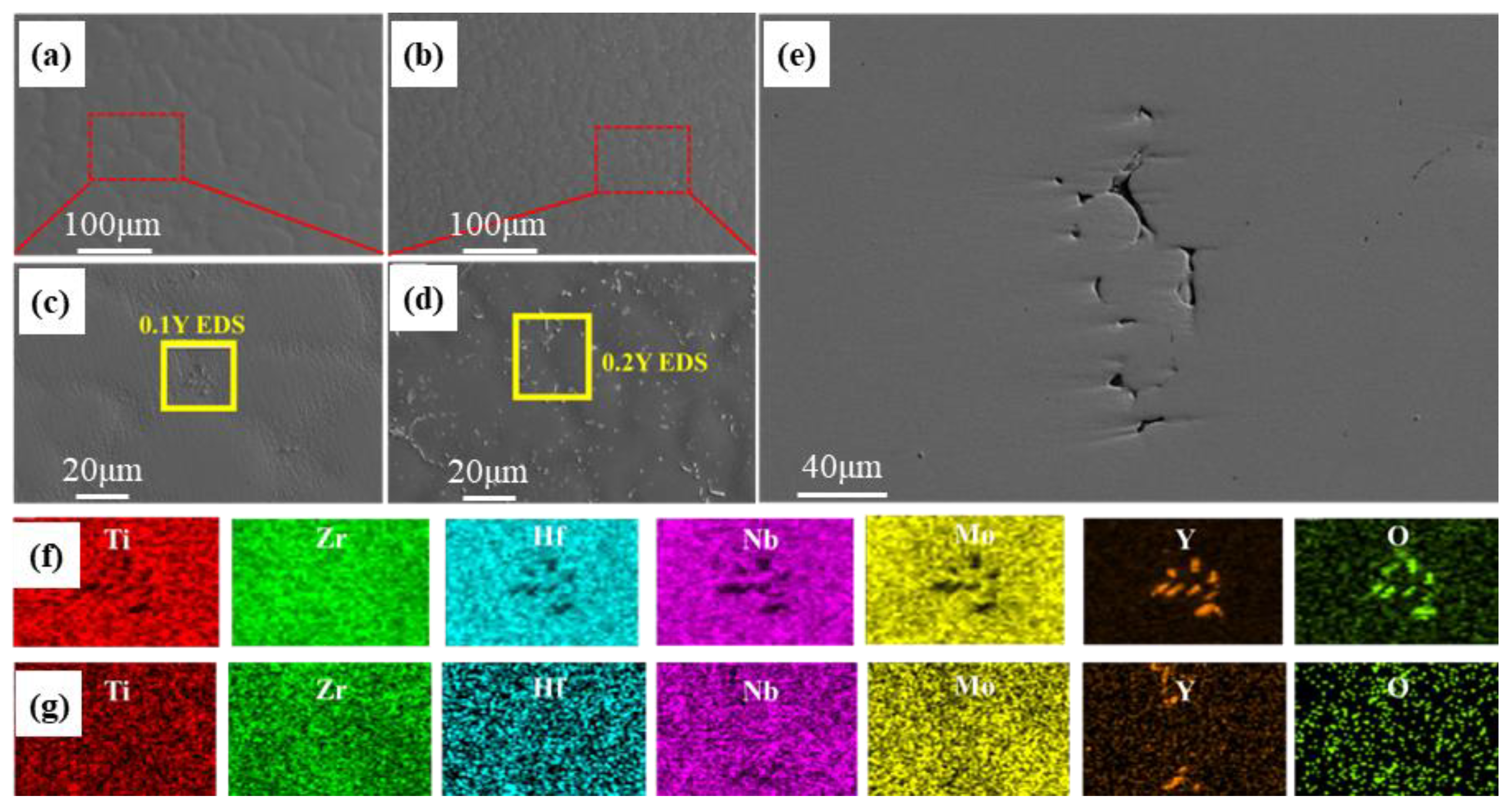
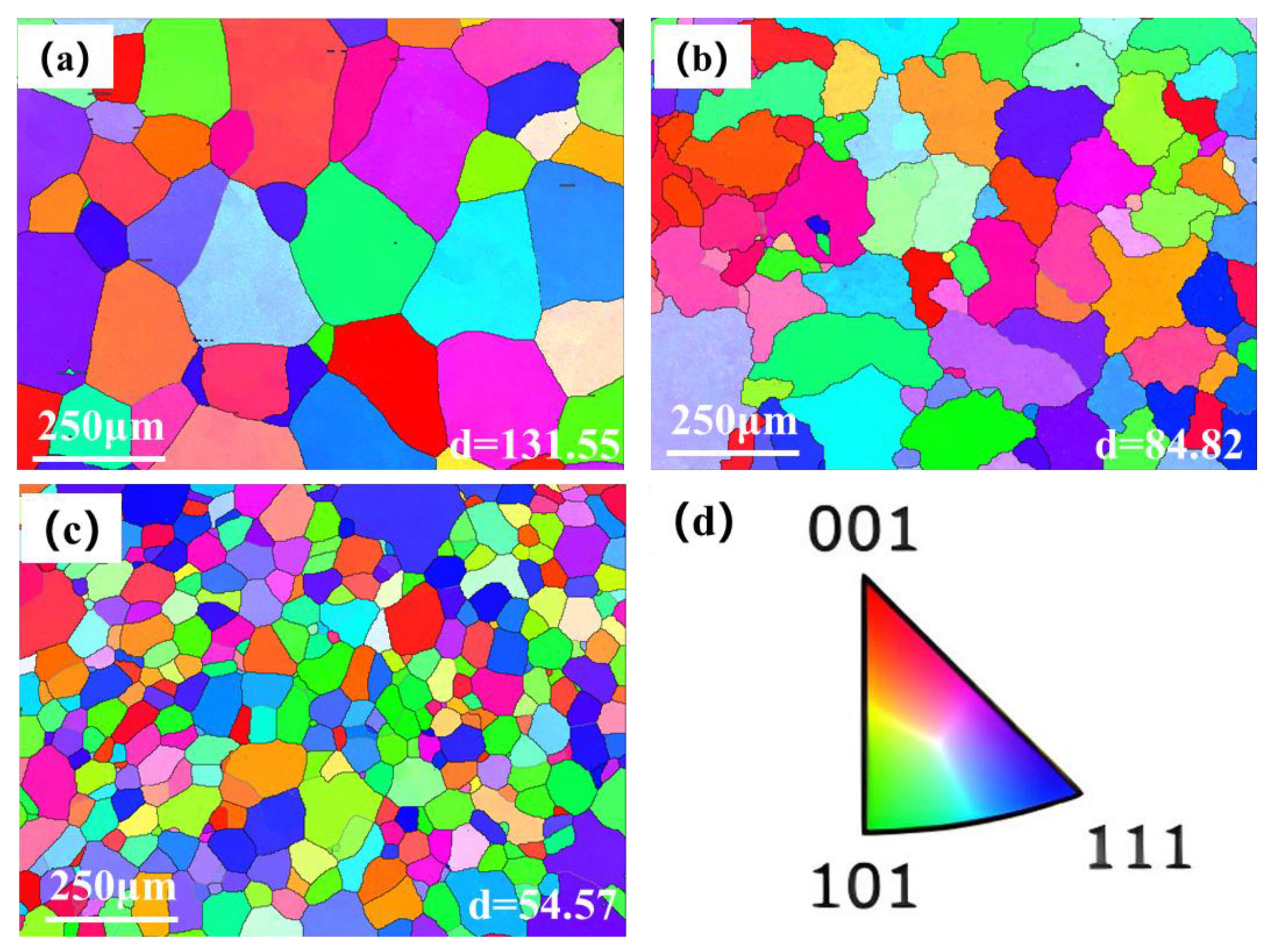
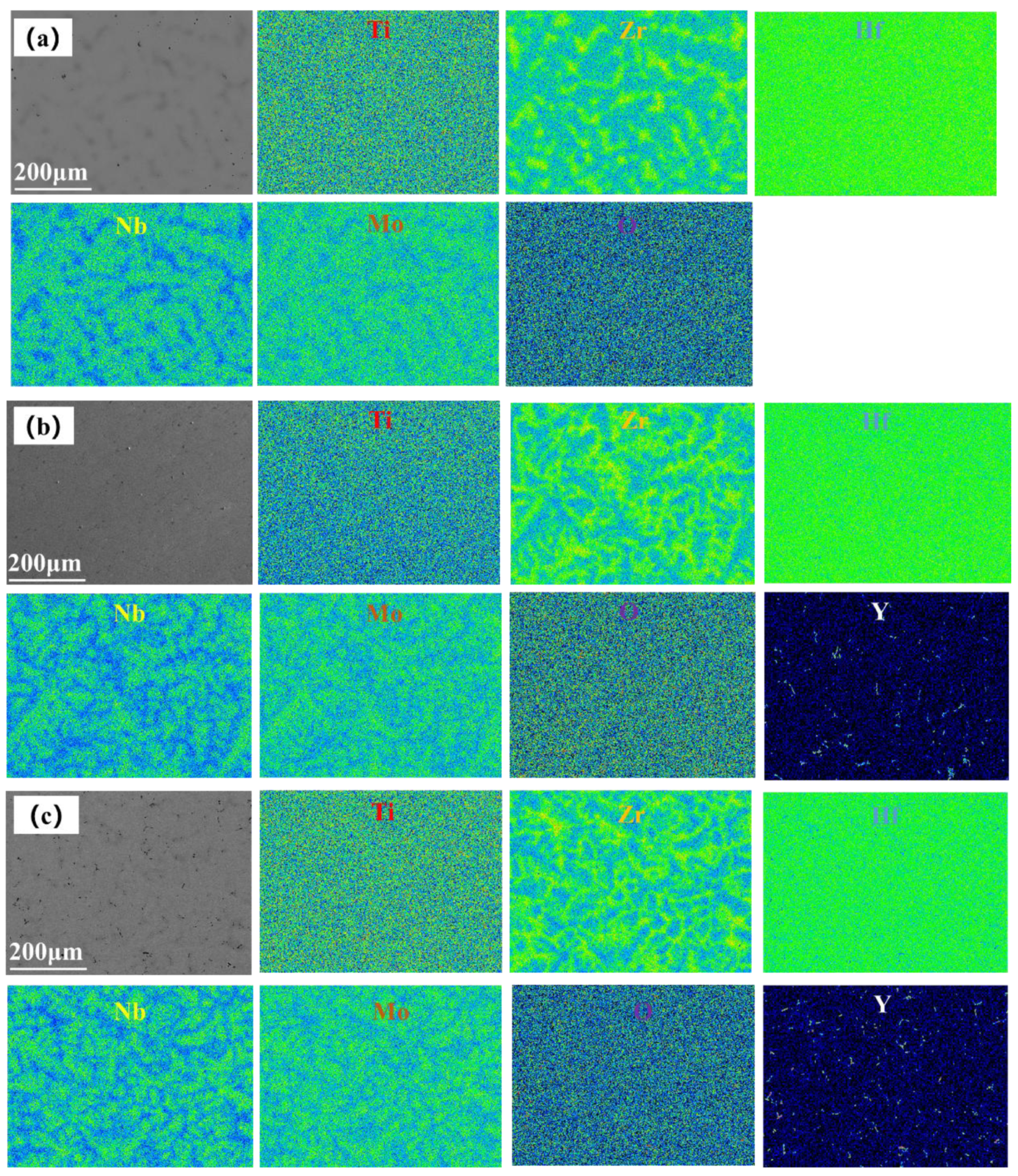
3.2.1. Phase and Microstructure Analysis of Mo20 (0.1Y/0.2Y)
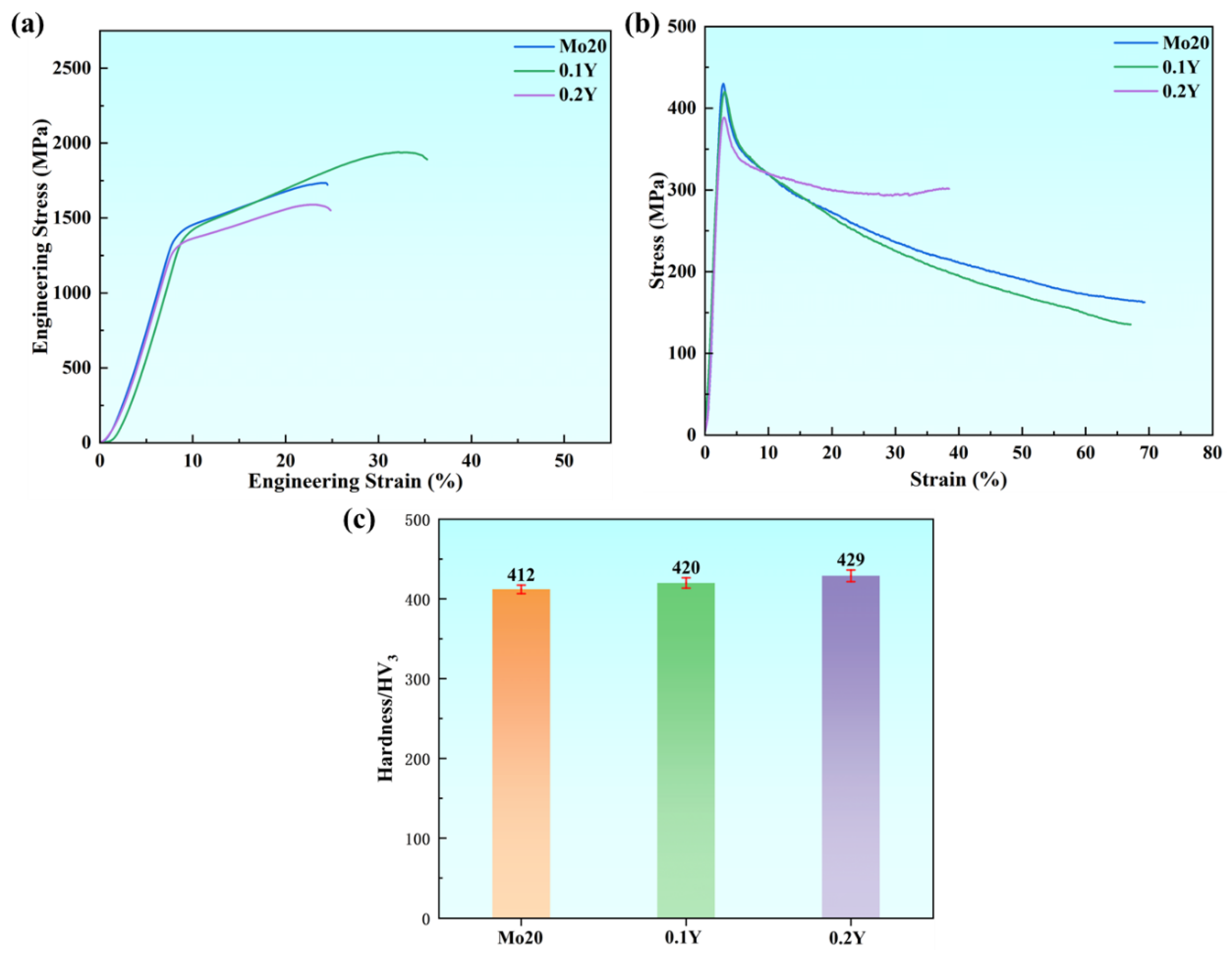
3.2.2. Mechanical Performance of Mo20 (0.1Y/0.2Y)
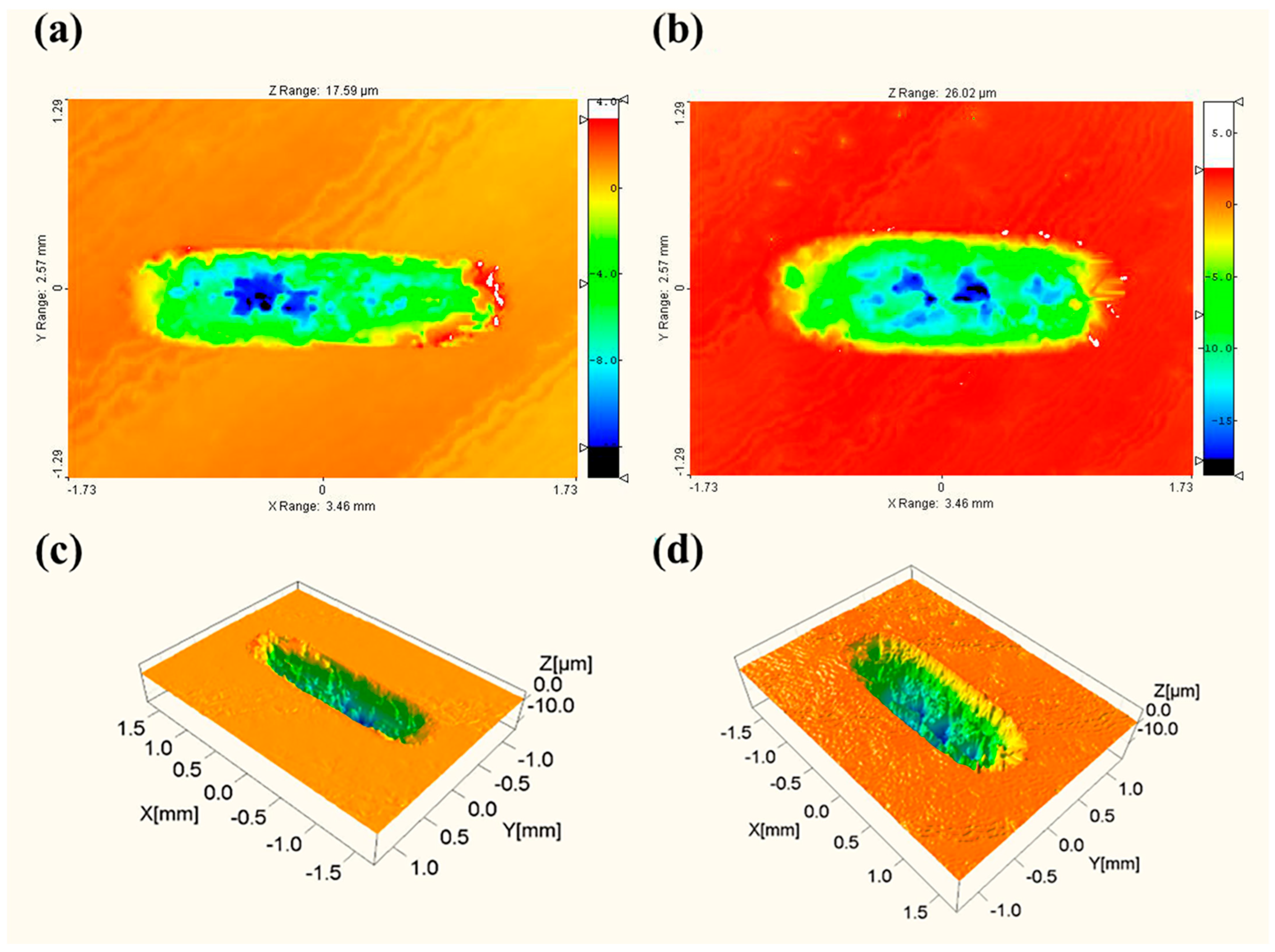
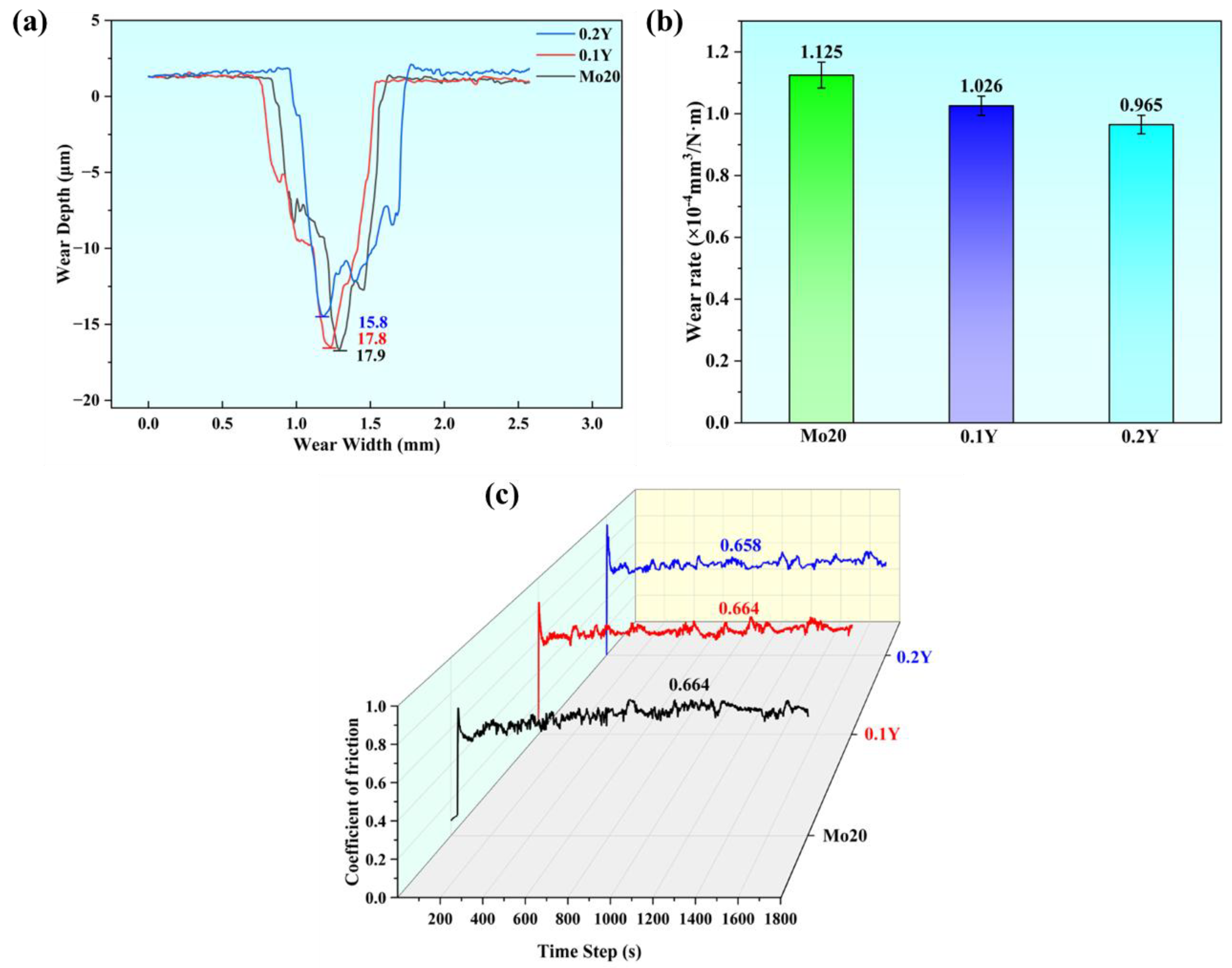
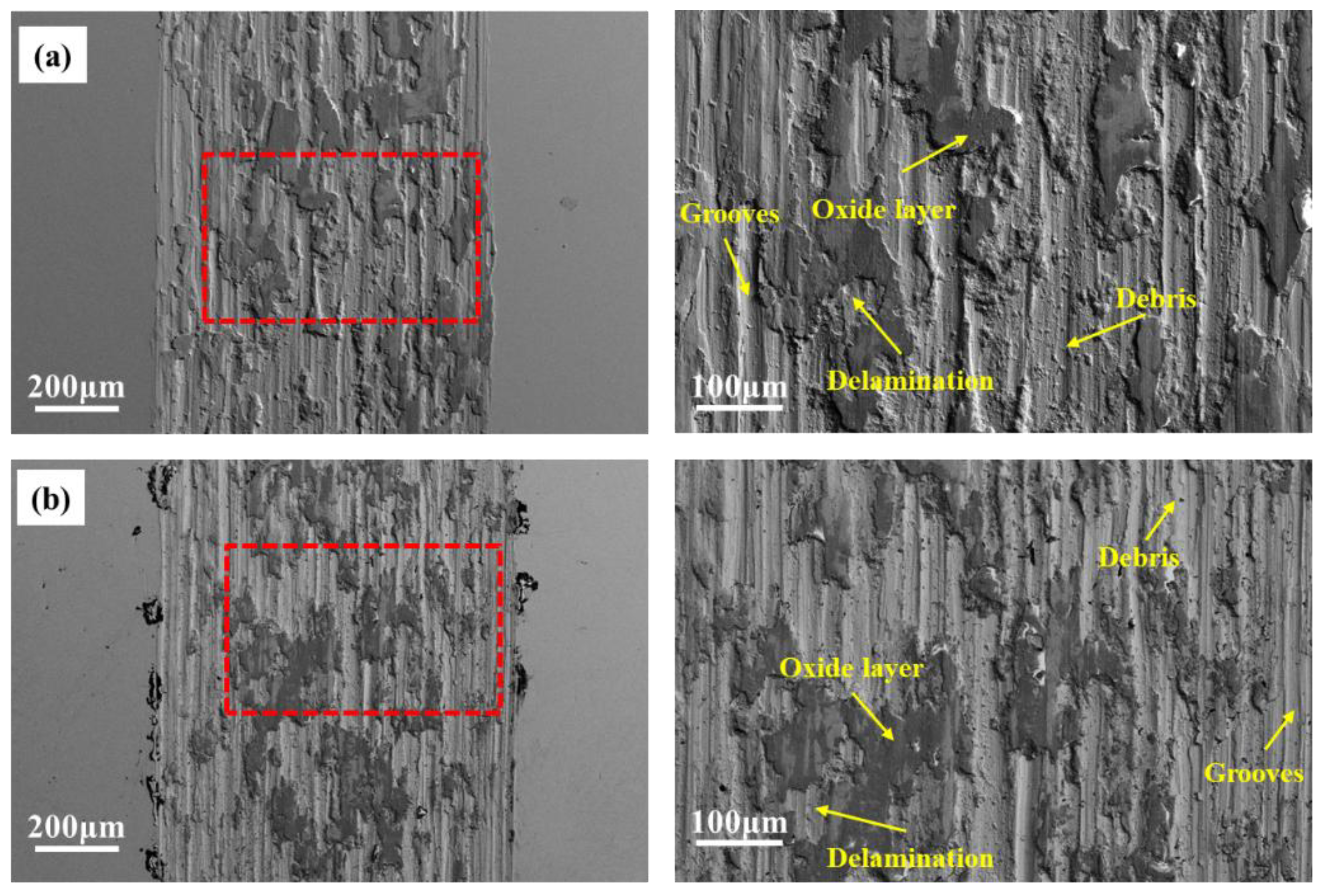
3.2.3. Mo20 (0.1Y/0.2Y) Room-Temperature Friction and Wear Test
4. Conclusions
- (1)
- With the increase in Mo element content, the solid solution strengthening effect of RHEAs enhances. Lattice distortion can impede dislocation movement, and its strength increases significantly in high-temperature environments. The room-temperature yield strength and high-temperature yield strength of Mo20 have increased by 35.1% and 227.5%, respectively, compared with Mo10. The high-temperature yield strength has increased significantly. However, its plasticity decreases, and the plasticity can be further improved by adding rare earth Y.
- (2)
- Incorporating an optimal amount of rare earth Y facilitates grain refinement and solid solution strengthening. With the incorporation of rare earth Y, the average grain size of Mo20 decreased from 131.5 μm to 54.5 μm. Moreover, the hardness and wear resistance of Mo20 also increase with the addition of Y.
- (3)
- With the addition of Y, it was found that shrinkage defects were discovered in 0.2Y, which deteriorated its mechanical properties. However, in 0.1Y, its mechanical properties were all improved. The breaking strain of 0.1Y was increased to 32%, the yield strength was raised to 1693 MPa, and the wear rate was reduced to 1.026 × 10⁻⁴ mm3.
Author Contributions
Funding
Data Availability Statement
Conflicts of Interest
References
- Yeh, J.W.; Chen, S.K.; Lin, S.J.; Gan, J.Y.; Chin, T.S.; Shun, T.T.; Tsau, C.H.; Chang, S.Y. Nanostructured High-Entropy Alloys with Multiple Principal Elements: Novel Alloy Design Concepts and Outcomes. Adv. Eng. Mater. 2004, 6, 299–303. [Google Scholar] [CrossRef] [Scilit]
- Han, Z.D.; Chen, N.; Zhao, S.F.; Fan, L.W.; Yang, G.N.; Shao, Y.; Yao, K.F. Effect of Ti additions on mechanical properties of NbMoTaW and VNbMoTaW refractory high entropy alloys. Intermetallics 2017, 84, 153–157. [Google Scholar] [CrossRef] [Scilit]
- Miracle, D.B.; Senkov, O.N. A critical review of high entropy alloys and related concepts. Acta Mater. 2017, 122, 448–511. [Google Scholar] [CrossRef] [Scilit]
- Ge, Y.; Guo, Y.; Su, H.; Zhang, Y.; Fan, H.; Deng, L.; Tian, Z.; Ran, C.; Arab, A.; Hu, Q.; et al. Novel high-density refractory high-entropy alloys with excellent mechanical properties at high temperatures and high strain rates. J. Alloys Compd. 2025, 1035, 181289. [Google Scholar] [CrossRef] [Scilit]
- Gómez-Esparza, C.D.; Ochoa-Gamboa, R.A.; Estrada-Guel, I.; Cabañas-Moreno, J.G.; Barajas-Villarruel, J.I.; Arizmendi-Morquecho, A.; Herrera-Ramírez, J.M.; Martínez-Sánchez, R. Microstructure of NiCoAlFeCuCr multi-component systems synthesized by mechanical alloying. J. Alloys Compd. 2011, 509, S279–S283. [Google Scholar] [CrossRef] [Scilit]
- Wang, S.-P.; Xu, J. TiZrNbTaMo high-entropy alloy designed for orthopedic implants: As-cast microstructure and mechanical properties. Mater. Sci. Eng. C 2017, 73, 80–89. [Google Scholar] [CrossRef] [Scilit]
- Lu, D.; Wang, C.; Peng, J. Phase compositions and properties of NbMoTaVTi refractory high-entropy alloy coating on Ti-6Al-4V alloy. Intermetallics 2025, 178, 108642. [Google Scholar] [CrossRef] [Scilit]
- Chen, K.-Y.; Huang, H.-H.; Wei, T.-H.; Huang, Z.-W.; Wang, W.-R.; Chen, C.-S.; Yeh, J.-W.; Tsai, C.-W. Investigations of nonequal molar CrMoNbTaTiZr RHEA in metal matrix composites with alumina. Mater. Chem. Phys. 2025, 333, 130273. [Google Scholar] [CrossRef] [Scilit]
- Chen, W.; Li, X. Microstructure and phase stability study of NbMoZrTi light refractory high entropy alloy. Int. J. Refract. Met. Hard Mater. 2025, 128, 107039. [Google Scholar] [CrossRef] [Scilit]
- You, X.; Li, T.; Song, J.; Du, Y.; Wang, H.; Lin, P.; Zhou, W.; Zhang, Y.; Hu, L. A systematic study on wear behavior of TiCrNbTaWx refractory high-entropy alloy: Inducing amorphization to achieve anti-wear. Tribol. Int. 2025, 201, 110208. [Google Scholar] [CrossRef] [Scilit]
- Hao, X.; Liu, H.; Zhang, X.; Tao, J.; Wang, Y.; Yang, C.; Liu, Y. Effect of Si3N4 content on microstructure and frictional-wear properties of MoNbTaWTi refractory high entropy alloy composite coatings. Mater. Today Commun. 2024, 40, 109416. [Google Scholar] [CrossRef] [Scilit]
- Gong, J.; Li, Y.; Wu, W.; Wang, Y.; Chen, Z. Chemical ordering enhancing mechanical properties of Nb25Ti35V5Zr35Alx refractory high-entropy alloys. J. Alloys Compd. 2025, 1017, 178990. [Google Scholar] [CrossRef] [Scilit]
- Guo, C.; Li, X.; Zhang, L.; Shi, Y.; Zhang, P.; Wei, Z.; Mei, E.; Que, Z.; Qin, M.; Qu, X. Tailoring an ultrafine-grained VNbMoTaW refractory high entropy alloy with ultrahigh strength. J. Alloys Compd. 2025, 1024, 180264. [Google Scholar] [CrossRef] [Scilit]
- Yang, L.; Sen, S.; Schliephake, D.; Vikram, R.J.; Laube, S.; Pramanik, A.; Chauhan, A.; Neumeier, S.; Heilmaier, M.; Kauffmann, A. Creep behavior of a precipitation-strengthened A2-B2 refractory high entropy alloy. Acta Mater. 2025, 288, 120827. [Google Scholar] [CrossRef] [Scilit]
- Li, J.; Wang, C.; Wang, T.; Wang, W.; Chai, L.; Luo, J. High-temperature wear mechanisms and oxidation properties of MoNbTaWTi refractory high entropy alloy prepared by direct laser deposition. Int. J. Refract. Met. Hard Mater. 2025, 128, 107025. [Google Scholar] [CrossRef] [Scilit]
- Senkov, O.N.; Wilks, G.B.; Miracle, D.B.; Chuang, C.P.; Liaw, P.K. Refractory high-entropy alloys. Intermetallics 2010, 18, 1758–1765. [Google Scholar] [CrossRef] [Scilit]
- Xiong, W.; Guo, A.X.Y.; Zhan, S.; Liu, C.-T.; Cao, S.C. Refractory high-entropy alloys: A focused review of preparation methods and properties. J. Mater. Sci. Technol. 2023, 142, 196–215. [Google Scholar] [CrossRef] [Scilit]
- Han, Z.D.; Luan, H.W.; Liu, X.; Chen, N.; Li, X.Y.; Shao, Y.; Yao, K.F. Microstructures and mechanical properties of TixNbMoTaW refractory high-entropy alloys. Mater. Sci. Eng. A 2018, 712, 380–385. [Google Scholar] [CrossRef] [Scilit]
- Ren, X.; Li, Y.; Qi, Y.; Wang, B. Review on Preparation Technology and Properties of Refractory High Entropy Alloys. Materials 2022, 15, 2931. [Google Scholar] [CrossRef] [Scilit]
- Senkov, O.N.; Scott, J.M.; Senkova, S.V.; Meisenkothen, F.; Miracle, D.B.; Woodward, C.F. Microstructure and elevated temperature properties of a refractory TaNbHfZrTi alloy. J. Mater. Sci. 2012, 47, 4062–4074. [Google Scholar] [CrossRef] [Scilit]
- Li, T.; Wang, S.; Fan, W.; Lu, Y.; Wang, T.; Li, T.; Liaw, P.K. CALPHAD-aided design for superior thermal stability and mechanical behavior in a TiZrHfNb refractory high-entropy alloy. Acta Mater. 2023, 246, 118728. [Google Scholar] [CrossRef] [Scilit]
- Czerwinski, F. Thermal stability of aluminum–cerium binary alloys containing the Al–Al11Ce3 eutectic. Mater. Sci. Eng. A 2021, 809, 140973. [Google Scholar] [CrossRef] [Scilit]
- Long, Y.; Che, J.; Wu, Z.; Lin, H.-T.; Zhang, F. High entropy alloy borides prepared by powder metallurgy process and the enhanced fracture toughness by addition of yttrium. Mater. Chem. Phys. 2021, 257, 123715. [Google Scholar] [CrossRef] [Scilit]
- Kotan, H.; Koç, R.C.; Batıbay, A.B. Remarkable thermal stability of nanocrystalline CoCrFeNi high entropy alloy achieved through the incorporation of rare-earth element samarium. Intermetallics 2025, 178, 108608. [Google Scholar] [CrossRef] [Scilit]
- Jiang, W.; Wang, T.; Wang, X.; Jiang, B.; Wang, Y.; Wang, X.; Xu, H.; Hu, M.; Zhu, D. A novel lightweight refractory high-entropy alloy. J. Mater. Res. Technol. 2024, 33, 9062–9066. [Google Scholar] [CrossRef] [Scilit]
- Yao, H.L.; Yu, Y.X.; Sha, J.B. Microstructural evolution at grain boundary and deformation mechanism of Nb0.5TiZrV0.5 refractory high entropy alloy doped with Ce at room temperature. J. Mater. Sci. Technol. 2024, 196, 25–39. [Google Scholar] [CrossRef] [Scilit]
- Zhang, L.J.; Zhang, M.D.; Zhou, Z.; Fan, J.T.; Cui, P.; Yu, P.F.; Jing, Q.; Ma, M.Z.; Liaw, P.K.; Li, G.; et al. Effects of rare-earth element, additions on the microstructure and mechanical properties of CoCrFeNi high entropy alloy. Mater. Sci. Eng. A 2018, 725, 437–446. [Google Scholar] [CrossRef] [Scilit]
- Yang, X.; Zhang, Y. Prediction of high-entropy stabilized solid-solution in multi-component alloys. Mater. Chem. Phys. 2012, 132, 233–238. [Google Scholar] [CrossRef] [Scilit]
- Zhang, Y.; Zhou, Y.J.; Lin, J.P.; Chen, G.L.; Liaw, P.K. Solid-Solution Phase Formation Rules for Multi-component Alloys. Adv. Eng. Mater. 2008, 10, 534–538. [Google Scholar] [CrossRef] [Scilit]
- Guo, S.; Liu, C.T. Phase stability in high entropy alloys: Formation of solid-solution phase or amorphous phase. Prog. Nat. Sci. Mater. Int. 2011, 21, 433–446. [Google Scholar] [CrossRef] [Scilit]
- Chen, Y.-Y.; Dhaiveegan, P.; Michalska, M.; Lin, J.-Y. Morphology-controlled synthesis of nanosphere-like NiCo2S4 as cathode materials for high-rate asymmetric supercapacitors. Electrochim. Acta 2018, 274, 208–216. [Google Scholar] [CrossRef] [Scilit]
- Xiao, J.-K.; Xu, G.-M.; Chen, J.; Rusinov, P.; Zhang, C. Tribocorrosion behavior of TiZrHfNb-based refractory high-entropy alloys. Wear 2024, 536–537, 205158. [Google Scholar] [CrossRef] [Scilit]
- Wang, D.; Jin, X.; Li, Y.; Zhang, M.; Qiao, J. Design and mechanical properties of easily castable refractory high entropy alloys. J. Alloys Compd. 2025, 1037, 181644. [Google Scholar] [CrossRef] [Scilit]
- Feng, R.; Feng, B.; Gao, M.C.; Zhang, C.; Neuefeind, J.C.; Poplawsky, J.D.; Ren, Y.; An, K.; Widom, M.; Liaw, P.K. Superior High-Temperature Strength in a Supersaturated Refractory High-Entropy Alloy. Adv. Mater. 2021, 33, 2102401. [Google Scholar] [CrossRef] [Scilit] [PubMed]
- Hai, W.; Ren, S.; Meng, J.; Lu, J. Tribo-oxidation of Self-mated Ti3SiC2 at Elevated Temperatures and Low Speed. Tribol. Lett. 2012, 48, 425–432. [Google Scholar] [CrossRef] [Scilit]
- Pei, X.; Du, Y.; Wang, H.; Hu, M.; Li, Y.; Zhou, W.; Wang, H. Attaining exceptional wear resistance in an in-situ ceramic phase reinforced NbMoWTa refractory high entropy alloy composite by Spark plasma sintering. Wear 2024, 558–559, 205572. [Google Scholar] [CrossRef] [Scilit]
- You, X.; Song, J.; Lin, P.; Zhang, X.; Su, Y.; Wang, H.; Zhang, Y.; Hu, L. Tribological properties and wear mechanisms of TixVNbTaWy RHEAs sliding against Si3N4 ceramic balls: The effects of Ti and W contents. Tribol. Int. 2022, 175, 107801. [Google Scholar] [CrossRef] [Scilit]
- Guo, Y.; He, J.; Li, Z.; Wu, X.; Lu, W.; Liu, C. Solidification segregation-driven microstructural evolution of trace yttrium-alloyed TaMoNbZrTiAl refractory high entropy alloys. Mater. Charact. 2022, 194, 112495. [Google Scholar] [CrossRef] [Scilit]
- Guo, Y.; Jia, L.; Zhang, H.; Zhang, F.; Zhang, H. Enhancing the oxidation resistance of Nb-Si based alloys by yttrium addition. Intermetallics 2018, 101, 165–172. [Google Scholar] [CrossRef] [Scilit]
- Wang, Y.; Li, P.; Ma, N.; Zhang, B.; Wei, Y.; Zhang, L.; Wang, J.; Liu, S. Effect of Y2O3 on the microstructure and tribology property of WMoTaNb refractory high entropy alloy coating prepared by laser cladding. Int. J. Refract. Met. Hard Mater. 2023, 115, 106273. [Google Scholar] [CrossRef] [Scilit]
- Bata, V.; Pereloma, E.V. An alternative physical explanation of the Hall–Petch relation. Acta Mater. 2004, 52, 657–665. [Google Scholar] [CrossRef] [Scilit]
- Chen, S.; Tseng, K.-K.; Tong, Y.; Li, W.; Tsai, C.-W.; Yeh, J.-W.; Liaw, P.K. Grain growth and Hall-Petch relationship in a refractory HfNbTaZrTi high-entropy alloy. J. Alloys Compd. 2019, 795, 19–26. [Google Scholar] [CrossRef] [Scilit]
- Huang, W.; Yin, S.; Wang, X.; Guo, R.; Wu, Y.; Qiao, J. Grain growth and Hall–Petch relationship in Ti37V15Nb22Hf23W3 refractory high-entropy alloys. J. Mater. Res. 2023, 38, 1719–1729. [Google Scholar] [CrossRef] [Scilit]
- Yang, J.; Qiao, J.W.; Ma, S.G.; Wu, G.Y.; Zhao, D.; Wang, Z.H. Revealing the Hall-Petch relationship of Al0.1CoCrFeNi high-entropy alloy and its deformation mechanisms. J. Alloys Compd. 2019, 795, 269–274. [Google Scholar] [CrossRef] [Scilit]
- Yan, X.; Zhang, Y.; Zou, Y. Near-superplastic behavior of a body-centered cubic Zr50Ti35Nb15 multi-principal element alloy via dynamic recrystallization. Scr. Mater. 2023, 227, 115308. [Google Scholar] [CrossRef] [Scilit]



| Alloys | Elements (at.%) | |||||
|---|---|---|---|---|---|---|
| Ti | Zr | Hf | Nb | Mo | ||
| Mo10 | Design | 22 | 25 | 25 | 18 | 10 |
| Actual | 25.08 | 21.61 | 26.07 | 17.45 | 9.80 | |
| Mo15 | Design | 22 | 25 | 20 | 18 | 15 |
| Actual | 24.84 | 21.00 | 19.78 | 17.81 | 16.57 | |
| Mo20 | Design | 22 | 25 | 15 | 18 | 20 |
| Actual | 24.42 | 24.35 | 16.38 | 15.58 | 19.39 | |
| 0.1Y | Design | 22 | 25 | 15 | 18 | 20 |
| Actual | 24.13 | 23.38 | 16.34 | 16.72 | 19.41 | |
| 0.2Y | Design | 22 | 25 | 15 | 18 | 20 |
| Actual | 23.69 | 24.11 | 15.12 | 16.30 | 20.78 | |
| Alloys | ΔSmix | ∆Hmix | δ | Ω | VEC | ρ | Tm |
|---|---|---|---|---|---|---|---|
| Mo10 | 13.01 | −0.027 | 5.19 | 1132.7 | 4.38 | 8.52 | 2095 |
| Mo15 | 13.26 | −0.943 | 5.42 | 33.6 | 4.48 | 8.36 | 2114 |
| Mo20 | 13.26 | −1.779 | 5.57 | 17.9 | 4.58 | 8.21 | 2134 |
| Alloy Regions | Elements (at.%) | |||||
|---|---|---|---|---|---|---|
| Ti | Zr | Hf | Nb | Mo | ||
| Mo10 | DR | 25.10 | 21.83 | 26.31 | 17.34 | 9.42 |
| ID | 25.62 | 21.87 | 26.29 | 16.98 | 9.24 | |
| Mo15 | DR | 24.53 | 20.08 | 20.23 | 18.42 | 16.72 |
| ID | 25.43 | 21.79 | 19.89 | 16.82 | 16.17 | |
| Mo20 | DR | 25.65 | 22.80 | 15.35 | 16.71 | 19.49 |
| ID | 26.53 | 25.93 | 15.18 | 14.19 | 18.17 | |
| Alloys | HV3 | σ0.2-RT (MPa) | σ0.2-HT (MPa) | ε (%) |
|---|---|---|---|---|
| Mo10 | 346 | 1206 | 131 | - |
| Mo15 | 375 | 1424 | 309 | - |
| Mo20 | 412 | 1629 | 429 | 24 |
| Alloys | HV3 | σ0.2-RT (MPa) | σ0.2-HT (MPa) | ε (%) |
|---|---|---|---|---|
| Mo20 | 412 | 1629 | 429 | 24 |
| 0.1Y | 420 | 1693 | 419 | 32 |
| 0.2Y | 429 | 1526 | 392 | 23.5 |
Disclaimer/Publisher’s Note: The statements, opinions and data contained in all publications are solely those of the individual author(s) and contributor(s) and not of MDPI and/or the editor(s). MDPI and/or the editor(s) disclaim responsibility for any injury to people or property resulting from any ideas, methods, instructions or products referred to in the content. |
© 2025 by the authors. Licensee MDPI, Basel, Switzerland. This article is an open access article distributed under the terms and conditions of the Creative Commons Attribution (CC BY) license (https://creativecommons.org/licenses/by/4.0/).
Share and Cite
Zhang, H.; Lai, L.; Zhang, C.; Tian, H. The Influence of Mo and Y on the Microstructure and Properties of TiZrHfNb Series Refractory High-Entropy Alloys. Metals 2025, 15, 1336. https://doi.org/10.3390/met15121336
Zhang H, Lai L, Zhang C, Tian H. The Influence of Mo and Y on the Microstructure and Properties of TiZrHfNb Series Refractory High-Entropy Alloys. Metals. 2025; 15(12):1336. https://doi.org/10.3390/met15121336
Chicago/Turabian StyleZhang, Haifei, Longzhen Lai, Cong Zhang, and Haixia Tian. 2025. "The Influence of Mo and Y on the Microstructure and Properties of TiZrHfNb Series Refractory High-Entropy Alloys" Metals 15, no. 12: 1336. https://doi.org/10.3390/met15121336
APA StyleZhang, H., Lai, L., Zhang, C., & Tian, H. (2025). The Influence of Mo and Y on the Microstructure and Properties of TiZrHfNb Series Refractory High-Entropy Alloys. Metals, 15(12), 1336. https://doi.org/10.3390/met15121336