Article

Study on Cold Cracking in 430Cb Ferritic Stainless Steel Castings Based on Multiscale Characterization and Simulation Analysis


Collaborative Innovation Center of Steel Technology, University of Science and Technology Beijing, Beijing 100083, China
*
Author to whom correspondence should be addressed.
Metals 2025, 15(12), 1310; https://doi.org/10.3390/met15121310
Submission received: 2 November 2025 / Revised: 21 November 2025 / Accepted: 26 November 2025 / Published: 28 November 2025
(This article belongs to the Special Issue Innovations in Heat Treatment of Metallic Materials)

Abstract

Cracks were found at the gate of the 430Cb ferritic stainless steel exhaust system jet base produced by investment casting. In this paper, the cracks of failed stainless steel castings were comprehensively analyzed by means of macroscopic inspection, laser confocal microscopy, field emission scanning electron microscopy, electron backscatter diffraction, X-ray diffractometer, ProCAST (version 2018, ESI Group, Paris, France) simulation and Thermo-Calc (TCFE10 database, 2022a, Thermo-Calc Software AB, Solna, Sweden) thermodynamic calculation. It can be concluded that all the cracks originate from the gate on the surface of the casting, and the fracture surface shows brittle intergranular characteristics, which can be determined as cold cracks. The formation of cold cracks can be attributed to the fact that the local stress generated during cooling after the casting solidifies exceeds the strength limit of the material itself. As the gate is the final solidification zone, shrinkage is limited and stress is concentrated. The grains are coarse, and the microstructure defects such as shrinkage porosity, pores and needle-like NbC further weaken the plasticity of the grain boundaries, promoting the crack to propagate along the direction of the maximum principal stress. The uneven cooling rate and shell constraint during the investment casting process make it difficult to release stress, and the existence of microstructure defects are the fundamental causes of crack generation.

1. Introduction

Investment casting is a production process widely used for automotive castings, capable of providing molds for components with highly complex geometries [1,2]. In automotive exhaust systems, injection bases are often fabricated from Nb-containing ferritic stainless steels via investment casting. As a representative medium-chromium ferritic stainless steel, 430 ferritic stainless steel is extensively employed in automotive exhaust systems due to its superior properties and low cost [3,4]. Studies have demonstrated that the addition of Nb in the solid solution of ferritic stainless steels can enhance the thermal fatigue resistance, high-temperature strength, and corrosion resistance of steels used in exhaust systems [5,6]. As a strong carbide-forming element, Nb generally exists in the form of carbonitrides in steel. NbC-type carbides contribute to improved strength and corrosion resistance by exerting effects such as pinning grain boundaries, promoting heterogeneous nucleation, refining grains, and simultaneously suppressing the precipitation of detrimental Cr23C6 [7,8].
Ferritic stainless steels exhibit relatively poor castability and often develop coarse grain structures during solidification [9]. These steels are highly susceptible to embrittlement phenomena, primarily including 475 °C embrittlement, sigma-phase embrittlement, and high-temperature embrittlement [10]. The high ductile-to-brittle transition temperature and notch sensitivity of ferritic stainless steels are mainly attributed to excessive levels of interstitial elements (such as carbon, nitrogen, and oxygen) and the resulting compound precipitation. These precipitates and inclusions act as potential stress concentration sites and crack initiation points [11,12]. Furthermore, the application of ferritic stainless steels is considerably limited due to their inferior mechanical properties—particularly low toughness—and inherent metallurgical defects [13]. Therefore, in both research and development efforts, a key focus lies in overcoming these performance shortcomings through improvements in casting processes or the application of heat treatments.
As a core component of the exhaust gas emission system, issues with the injection seat directly compromise the safe operation of the automobile. A specific manufacturing enterprise experienced problems with their production injection seats, where subsequent inspection revealed the presence of cracks on the castings. Therefore, it is essential to conduct a failure analysis to determine the root cause of the cracking and subsequently formulate effective preventive strategies.
Failure analysis necessitates the utilization of various inspection techniques and the collection of all available data to determine the root cause of failure and prevent subsequent mechanical malfunctions in new components, thereby addressing both safety and economic concerns [14,15]. According to both domestic and international research, the causes of casting cracks can be fundamentally categorized into two major factors: metallurgical and mechanical. The former encompasses metallurgical factors such as brittle phases, casting defects, and component segregation. The latter involves mechanical factors, specifically stress concentration induced by hindered solid-state shrinkage or improper casting design [6,9,16]. In the investment casting process, the susceptibility of castings to cracking is influenced not only by the intrinsic properties of the metal but also primarily depends on process parameters such as casting temperature, pouring rate, and cooling rate [17]. To suppress crack formation, it is essential to strictly control mechanical impacts during shell removal, cleaning, and rectification stages to avoid stress concentration [18]. From a processing perspective, extending the in-mold cooling time and implementing final stress-relief annealing are employed [19,20]. In terms of metallurgical processing, the crack resistance of the material can be enhanced through methods such as adding modifying agents to refine grains and regulating precipitate phases via heat treatment [21]. In this paper, methods including macroscopic inspection, phase analysis, metallographic examination, scanning electron microscopy (SEM), electron backscatter diffraction, ProCAST simulation, and Thermo-Calc thermodynamic calculations were employed to observe the microstructure, propagation direction, and path of the cracks, and to analyze their formation mechanism. Subsequently, a comprehensive review of the entire production process was conducted, incorporating process optimization and theoretical analysis, to investigate the root cause of crack generation, their impact on casting quality, and effective countermeasures.

2. Experiment Procedure

Three cast components were received from the manufacturing facility for the failure analysis of the injection seat cracking. Visual inspection revealed macroscopic, naked-eye visible cracks on the surface of several components post-casting. The estimated failure rate of this batch of components due to cracking is approximately 10%, significantly compromising the component’s safe and reliable service life. The casting material is Niobium-containing ferritic stainless steel, designated as grade 430Cb, and its detailed chemical composition is listed in Table 1.
The component was first immersed in hot hydrochloric acid to reveal the macrostructure of the casting surface. Subsequently, quantitative metallographic analysis was performed on grains near crack regions of the injection base using the equivalent diameter method with Image J (v1.8.0) software. The grain size was characterized by the equivalent circle diameter (ECD), as expressed by Equation (1).
D = 2[(A/π)]^(1/2)
D represents the grain size and A denotes the grain area.
Subsequently, metallographic specimens were sectioned from the vicinity of the crack in the component using molybdenum wire electrical discharge machining (EDM) for microstructural and crack analysis. The specimens were ground sequentially with 240#, 400#, 800#, 1500#, and 2000# grit sandpaper to achieve a flat surface. They were then polished on a P-2 model metallographic polisher using diamond paste until a scratch-free, mirror-like finish was obtained. Finally, electrolytic etching was conducted in a 10% oxalic acid solution at a parameter of 2.5 V for 60 s.
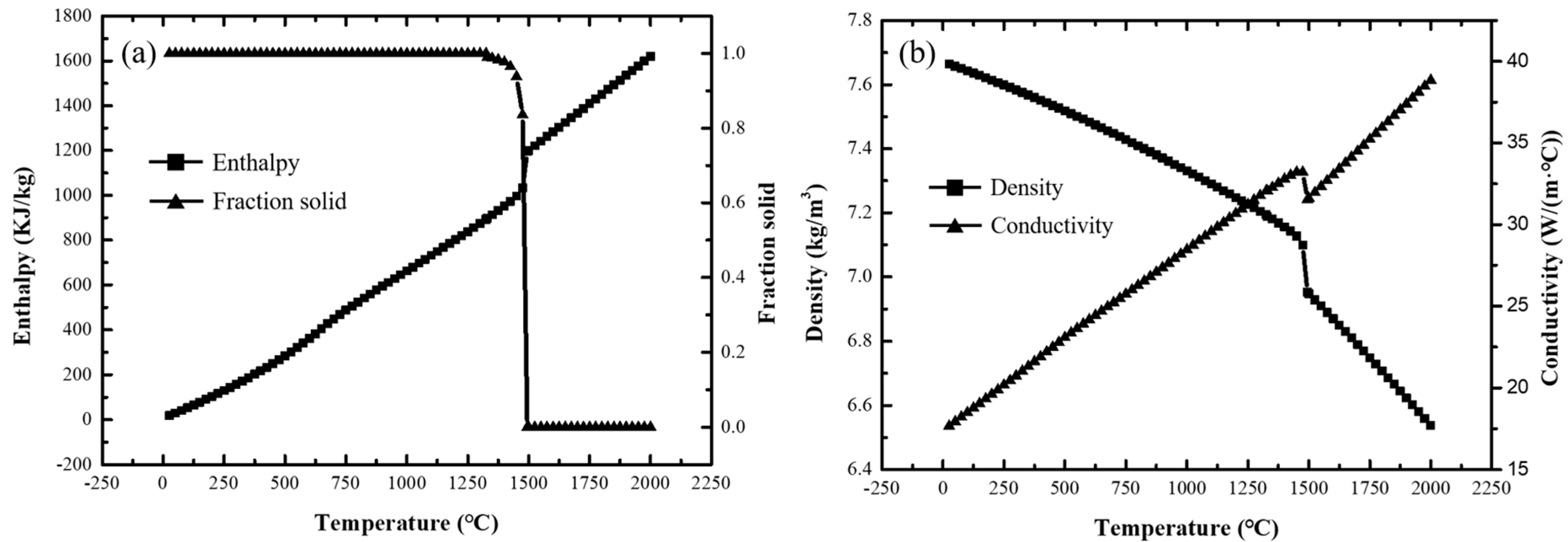
The microstructures were characterized using a laser confocal microscope (OLYMPUS), a LEICA DM2700M (Leica Microsystems GmbH, Wetzlar, Germany), and a ULTRA 55 thermal field emission scanning electron microscope (ZEISS, Carl Zeiss AG, Oberkochen, Germany). Energy-dispersive spectroscopy (EDS, Oxford Instruments NanoAnalysis, High Wycombe, UK) was employed to analyze the precipitates. Electron backscatter diffraction (EBSD, Oxford Instruments NanoAnalysis, High Wycombe, UK) analysis was conducted with an Oxford Symmetry S2 system (Oxford Instruments NanoAnalysis, High Wycombe, UK). Phase identification of the samples was conducted using a Rigaku D/max 2500 X-ray diffractometer (Rigaku Corporation, Tokyo, Japan). The equilibrium precipitation of secondary phases was calculated with the Thermo-Calc software, utilizing the TCFE10 database. Finally, based on actual pouring conditions, material parameters of the 430Cb casting were input to simulate the solidification sequence, temperature field, and stress field during the casting process using ProCAST software. The pouring temperature was set at 1550 °C, and the mold preheating temperature was 900 °C. The simulation covered the process from alloy pouring to complete solidification. The alloy material was defined as an elastic-plastic model, while the mold shell was treated as a rigid body. The thermophysical parameters required for ProCAST numerical simulation included thermal conductivity, enthalpy, density, and solid fraction. These parameters were calculated using the thermodynamic computation module of ProCAST software, with the results presented in Figure 1.
The analysis procedure of the component was as follows:
  • macro-examination
  • metallographic examination
  • microscopic analysis involving crack observation by field emission scanning electron microscopy (FESEM)
  • secondary phase analysis
  • thermodynamic calculations
  • simulation of the casting process
  • discussion of the failure mechanism with corresponding conclusions.

3. Result

3.1. Macroscopic Inspection

Given the diversity in crack origins and morphologies, a multi-dimensional analysis is essential. This approach mandates the examination of macro- and micro-morphologies, precise localization of the crack origin), tracking of the propagation path, observation of the surrounding features, and identification of terminal characteristics. Ultimately, by integrating these findings with manufacturing and service conditions, the nature of the crack can be definitively determined and its formation mechanism reconstructed. The macroscopic crack, delineated by the green lines in the figure, originated at the gate (ingate) location. During the investment casting process, the gate area is typically thinner and thus solidifies prematurely after the cessation of molten metal supply. As this region cools and shrinks, it is constrained by the already solidified metal surrounding the casting, resulting in the generation of tensile stresses, which subsequently facilitate crack opening. Cracks at the gate are frequently associated with the microstructure, and furthermore, the inevitable residual stresses generated during the casting process, particularly in irregularly shaped components like the injector base, must also be taken into consideration.
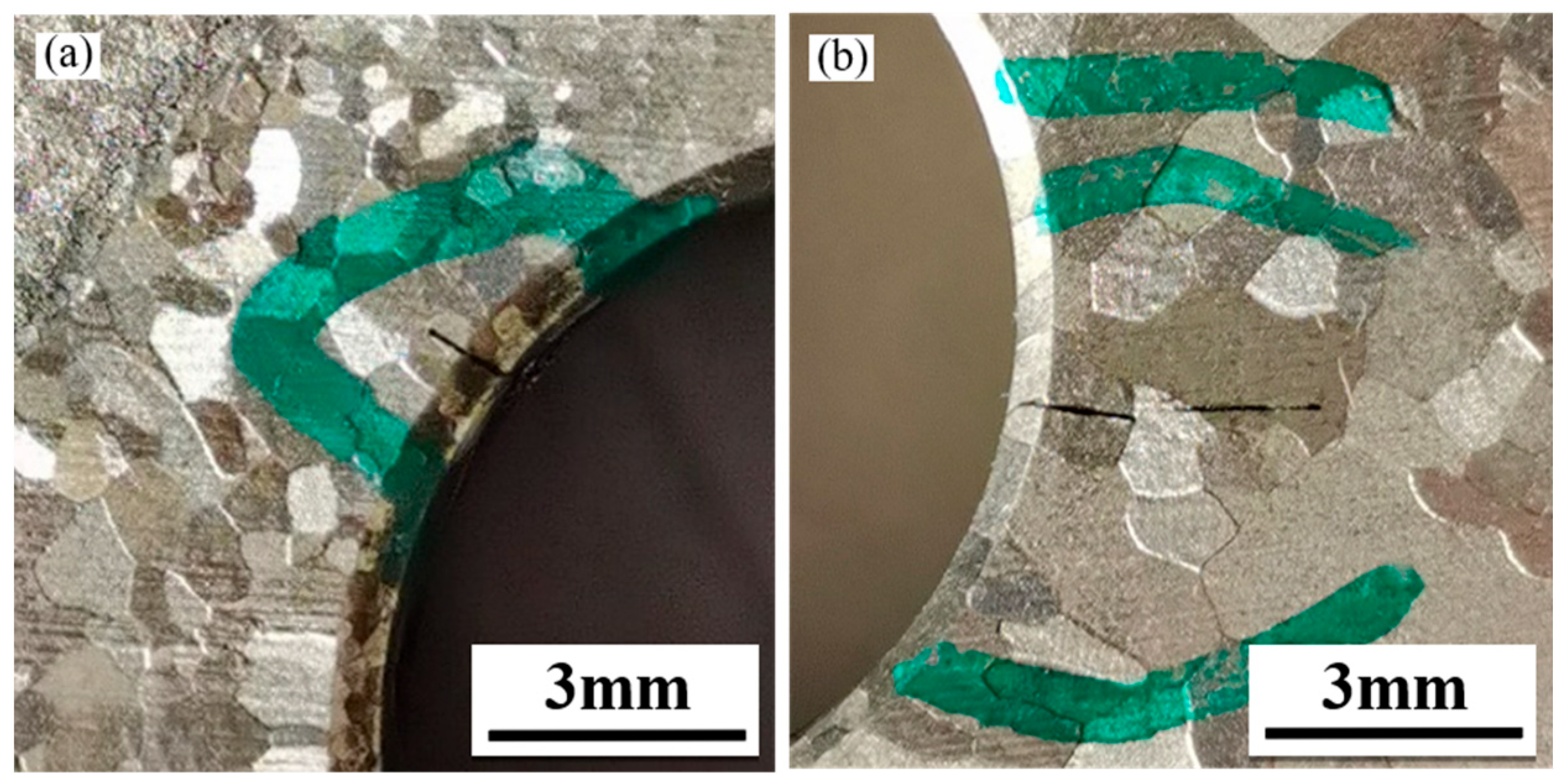
The component surface exhibited brittle trans-granular fracture. The fracture surface showed no evidence of oxidation, presenting a metallic luster, and was devoid of crack branching. The crack morphology was characterized by a uniform width, elongated straight or zig-zag line. Specifically, Figure 2a illustrates a single crack that extended to the inner surface of the casting, while Figure 2b displays a continuous crack segment with a zig-zag morphology, where non-uniform grain size distribution was simultaneously observed in and adjacent to the cracked area. Based on the preliminary analysis of these observed features, the defect was identified as a cold crack. The formation of this defect can be primarily attributed to non-uniform temperature distribution during the casting’s cooling process, which generated casting stresses that exceeded the material’s strength limit at the corresponding temperature, thereby initiating the fracture. Cold cracks typically form at relatively low temperatures below the solidus line, they are characterized by a relatively smooth surface appearance and propagate linearly along trans-granular paths [21,22].
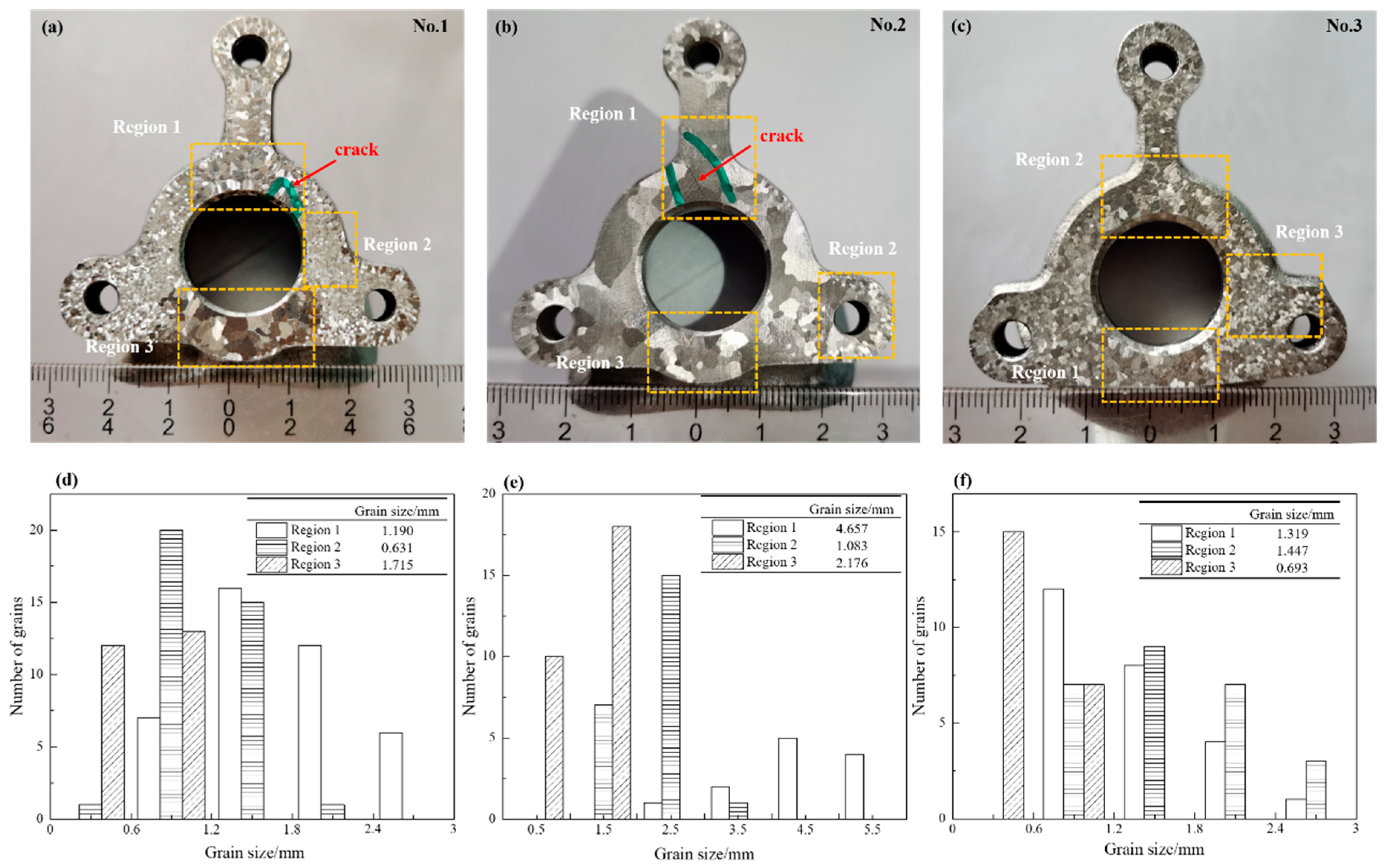
The ferritic grain sizes in the vicinity of cracks were statistically analyzed using Image J software, with the regions selected for grain size measurement illustrated in Figure 3a–c. The microstructure of the specimen predominantly exhibits equiaxed ferrite. A significant observation was the extremely coarse grain size and the substantial variation in grain size across different regions, resulting in a mixed grain structure. This heterogeneity is known to increase the susceptibility of the casting to brittle cracking. Statistical analyses of grain size distribution for three specimens are presented in Figure 3d–f. The results indicate that the average grain size in the casting ranges from a minimum of 0.631 mm to a maximum of 4.500 mm.
Although the chemical compositions of the three castings were identical, variations in pouring temperature, mold shell temperature, and cooling conditions across different batches led to differences in thermal gradients, grain nucleation, and growth behavior during solidification. Thus, even with identical composition, variations in grain size occurred among the castings. Specifically, the average grain sizes in the crack-affected regions of Specimen 1 and Specimen 2 are 1.190 mm and 4.657 mm, respectively. Cracks are observed in areas corresponding to the final solidification shrinkage zones of the casting. In Specimen 1, the crack initiates from the inner surface, whereas in Specimen 2, it originates within the specimen interior. Despite these differences, the crack locations in both Specimens 1 and 2 are similar, propagating radially along regions characterized by coarse grains. This suggests that these areas experience significant stress concentration. Additionally, the straight grain boundaries in these regions result in a reduced capacity for energy absorption during fracture, thereby deteriorating the mechanical properties of the material. The absence of cracks in Specimen 3 can be attributed to the fine grain size, which effectively suppresses crack initiation.

3.2. Metallographic Examination

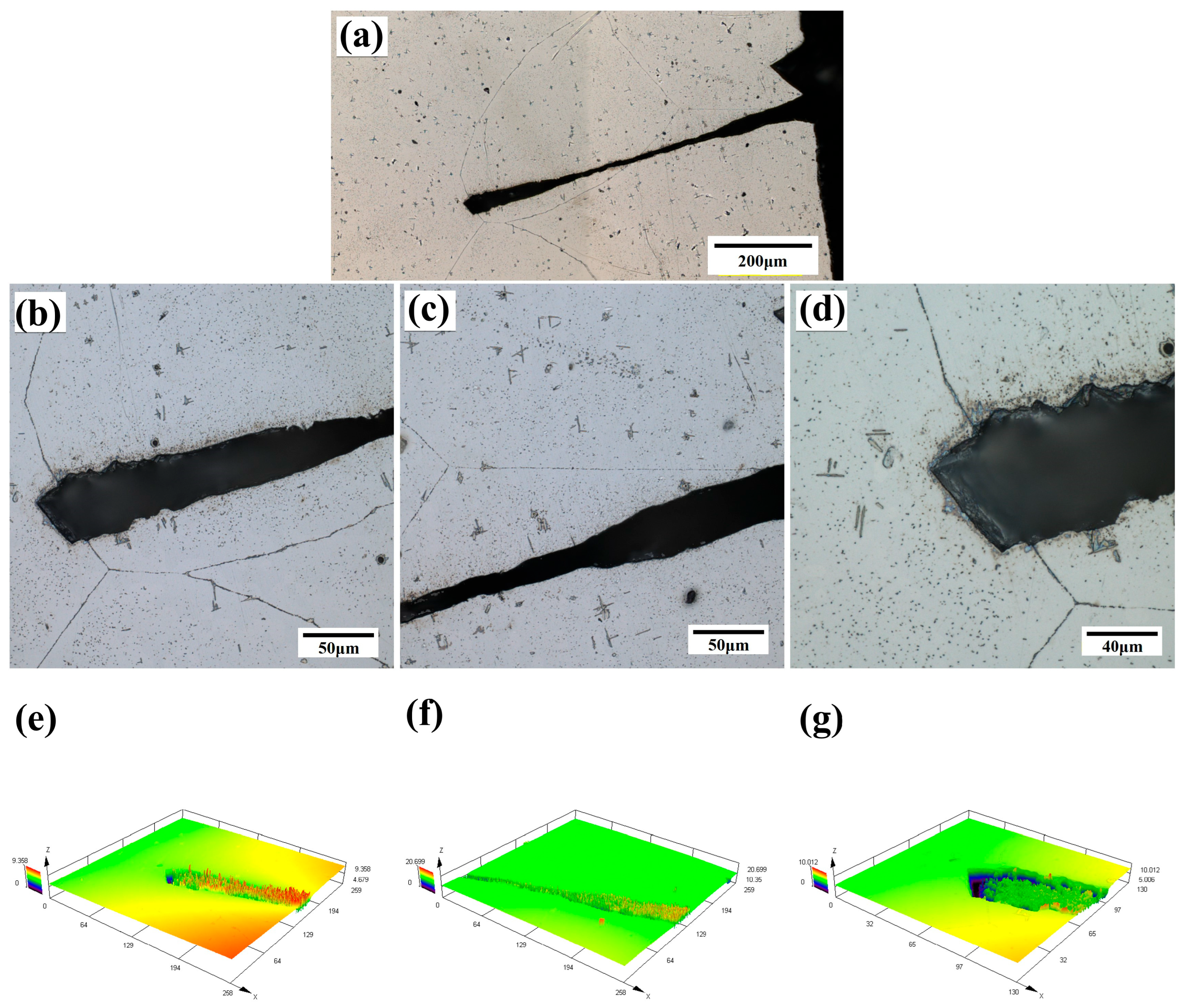
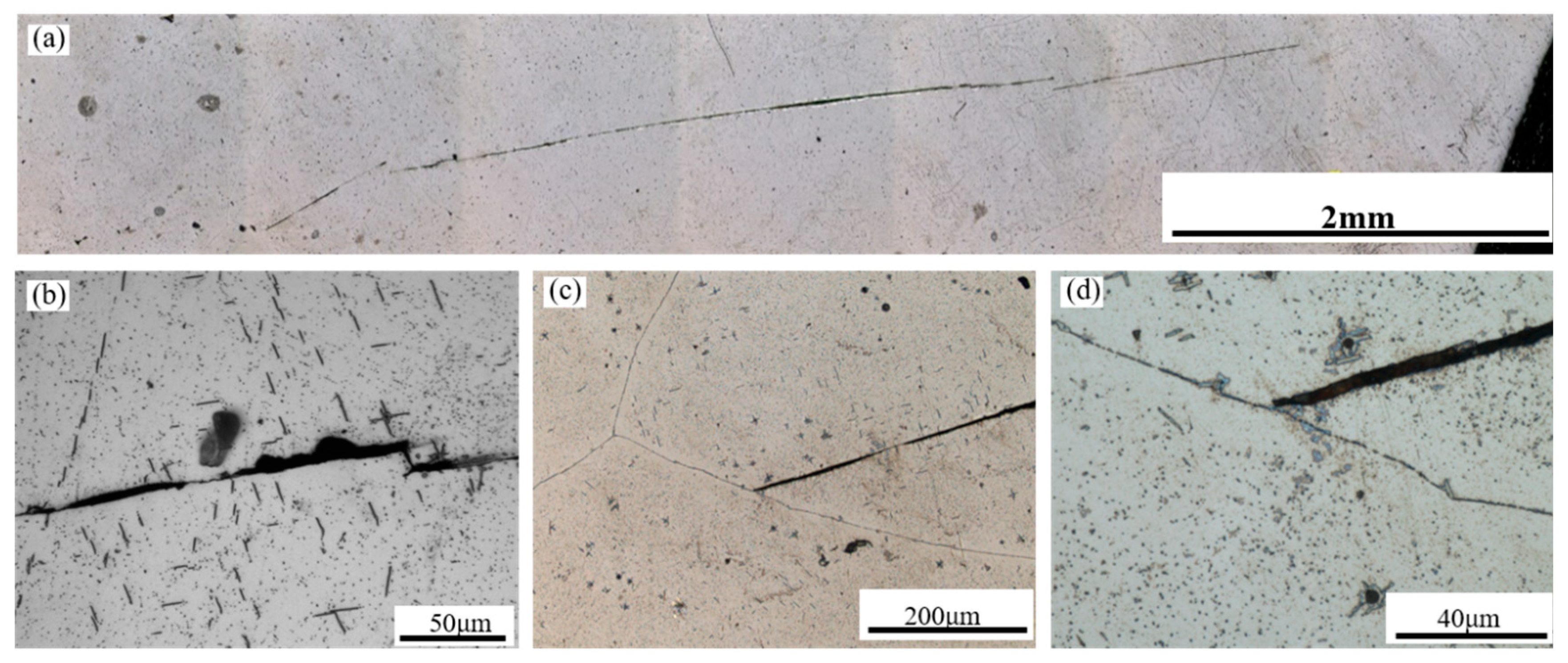
Metallographic specimens were sectioned from the transverse cross-section of the casting near the crack region. The microstructure, crack propagation path, and crack distribution after electrolytic etching with oxalic acid were examined using a laser confocal microscope. The microscopic morphology at the crack is shown in Figure 4. The as-cast microstructure exhibits coarse grains, consisting primarily of a ferrite matrix, acicular precipitates, precipitates with dark cores, and finely dispersed granular precipitates, all of which are mainly distributed within the matrix. The observed main crack is linear and extends straight along the radial direction of the casting, traversing the ferrite matrix and other microstructural constituents, which is characteristic of a cold crack. As shown in Figure 4b,c, acicular precipitates are present on both sides of the crack and within the matrix. Figure 4e–g present the corresponding crack depth maps, which clearly illustrate the crack morphology and propagation characteristics.
Another CLSM micrograph taken near a different crack is shown in Figure 5. The crack, with a total length of approximately 6 mm, is composed of three segments. As observed in Figure 5b, a large number of acicular precipitates, approximately 10 μm in size, are present around the crack. Precipitates with dark cores measure about 5 μm in size. These coarse, network-distributed secondary phases can induce local stress concentration, resulting in degraded tensile strength and elongation of the specimen. Voids are observed in the vicinity of the crack, some of which are intersected by the crack, indicating a strong correlation between crack formation and casting defects. During the final stage of solidification, shrinkage stresses concentrate in the central region of the casting, leading to the formation of such voids. These voids disrupt the continuity of the microstructure, not only reducing density but also acting as potential crack initiation sites, eventually triggering cracking in the central zone. As shown in Figure 5c,d, numerous acicular precipitates, dark-cored precipitates, and voids are present near the crack origin, with the acicular precipitates exhibiting a continuous distribution. The dense concentration of acicular precipitates around the crack tends to sever the matrix, thereby generating localized stress concentration. This significantly compromises the macroscopic integrity of the material and serves as a potential origin of failure.
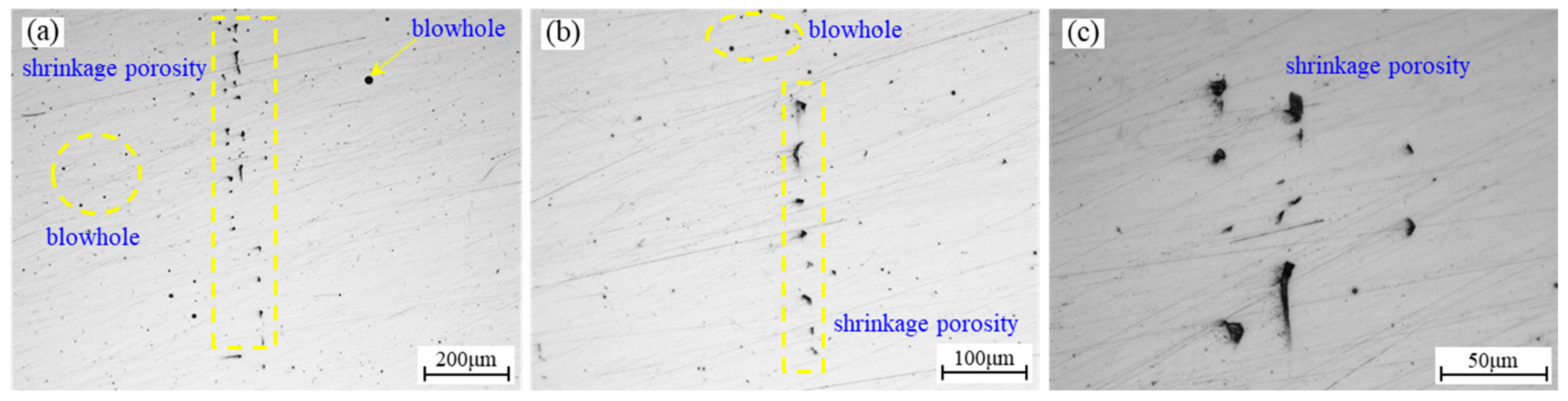
Further examination of the metallographic structure before sample etching was conducted, with the results presented in Figure 6. Dispersed micro-shrinkage porosity was observed in the microstructure, which reduces the structural density. The black pores marked by arrows and yellow circles exhibit smooth surfaces and approximately spherical contours, with no solid fillers inside, indicating that they are gas pores. These gas pores originate from the entrapment of gas generated in the mold or cavity during pouring, which fails to escape before solidification. The isolated spherical gas pores are likely precipitated gas pores, formed either by the decrease in gas solubility during solidification of the alloy melt or by gas entrapment during mold filling. Furthermore, the presence of shrinkage porosity in the alloy provides favorable conditions for the formation of precipitated gas pores. Meanwhile gas pores can obstruct the feeding flow of the melt, thereby exacerbating the formation of shrinkage porosity. These two defects exhibit a mutually promoting coupling relationship [23]. Both shrinkage and gas pores, regardless of their morphology, reduce the effective load-bearing area and induce stress concentration, significantly deteriorating the mechanical properties of the casting. Therefore, preventing shrinkage and gas porosity is crucial for controlling casting quality.

3.3. Microscopic Morphology Analysis of Cracks

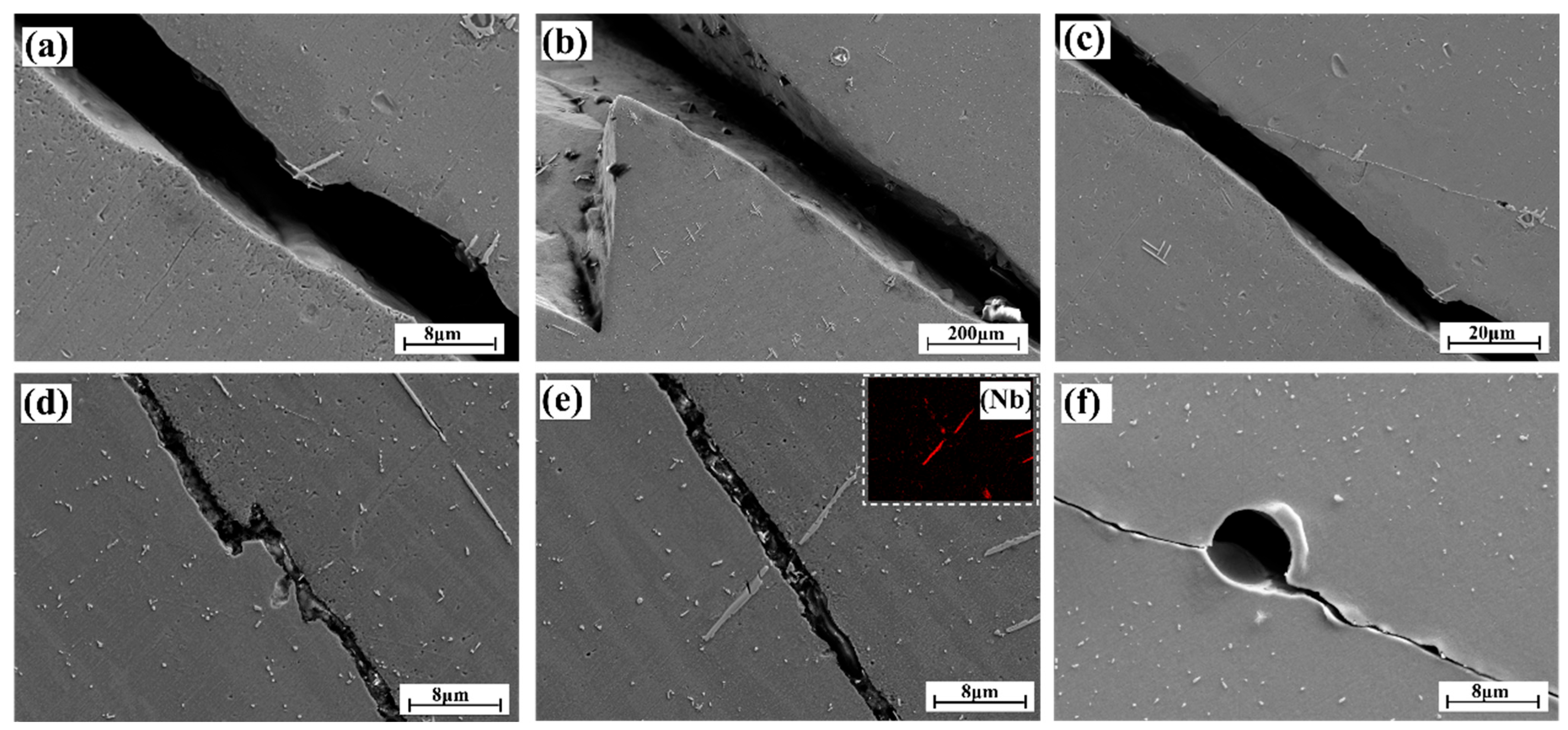
To better observe the morphology of the crack and the surrounding precipitates, the sample was examined using the FE-SEM. As shown in Figure 7a, interlaced acicular precipitates are observed near the crack, with the crack propagating through these precipitates. As shown in Figure 7a, interlaced acicular precipitates are observed near the crack, with the crack cutting through these precipitates. Figure 7c reveals that the crack traverses the grain boundary, accompanied by numerous dimples and poor microstructural densification. As illustrated in Figure 7d, two crack segments converge at the middle region. Closer observation indicates that the crack penetrates through shrinkage porosity at the convergence point, exhibiting a fissure-like morphology. The formation of shrinkage porosity is primarily attributed to insufficient feeding and inadequate gas venting during solidification. Additionally, coarse grains and increased internal stress further promote these defects, which can act as rapid pathways for crack propagation and facilitate cracking. The EDS elemental mapping results in the upper-right corner of Figure 7e reveal that Nb is predominantly enriched in the large acicular precipitates. As shown in Figure 7f, the crack propagates through a spherical gas pore.
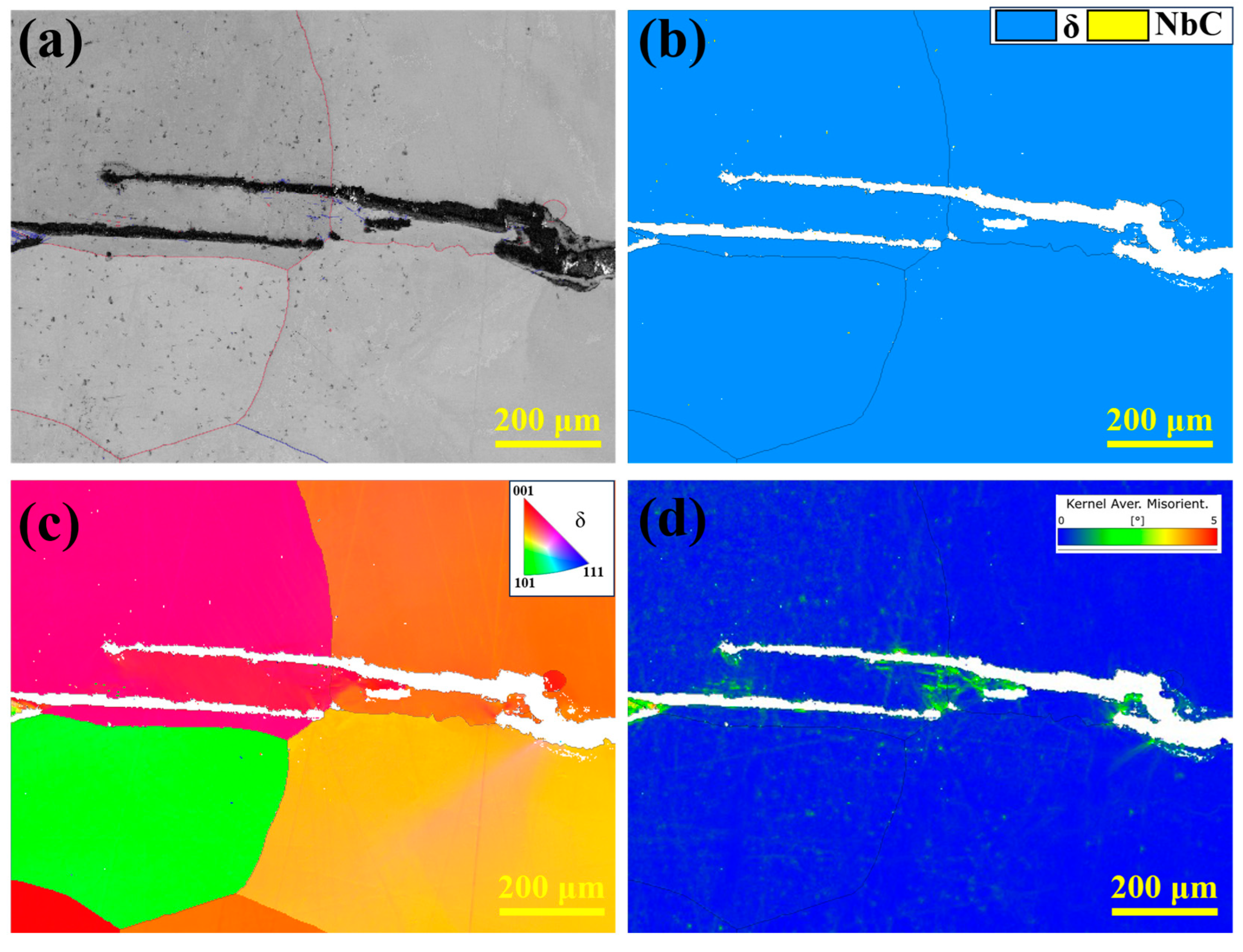
To further investigate the microstructural characteristics around the crack, Electron Backscatter Diffraction analysis was employed. Figure 8a displays the distribution of grain boundaries, classified as high-angle grain boundaries (HAGBs, misorientation > 15°, represented by red lines) and low-angle grain boundaries (LAGBs, misorientation between 2° and 15°, denoted by blue lines). The crack appears linear and propagates trans-granularly, crossing the HAGBs. The phase distribution map is presented in Figure 8b, where the ferrite matrix is colored blue and NbC particles are colored yellow. The results reveal that granular NbC particles are distributed within the ferrite matrix. Figure 8c shows the Inverse Pole Figure (IPF) map, illustrating the varying grain orientations in the vicinity of the crack. The local strain distribution around the crack was analyzed using the Kernel Average Misorientation (KAM) method, as shown in Figure 8d. Significant strain concentration was observed adjacent to the crack. Notably, strain concentration also exists around the NbC particles, which can be attributed to the incoherence between the acicular NbC and the matrix, making these interfaces potent sites for stress concentration [24]. When the local stress exceeds the material’s strength limit, these microscopic defects can grow and coalesce, ultimately forming micro-cracks.

3.4. Second-Phase Analysis

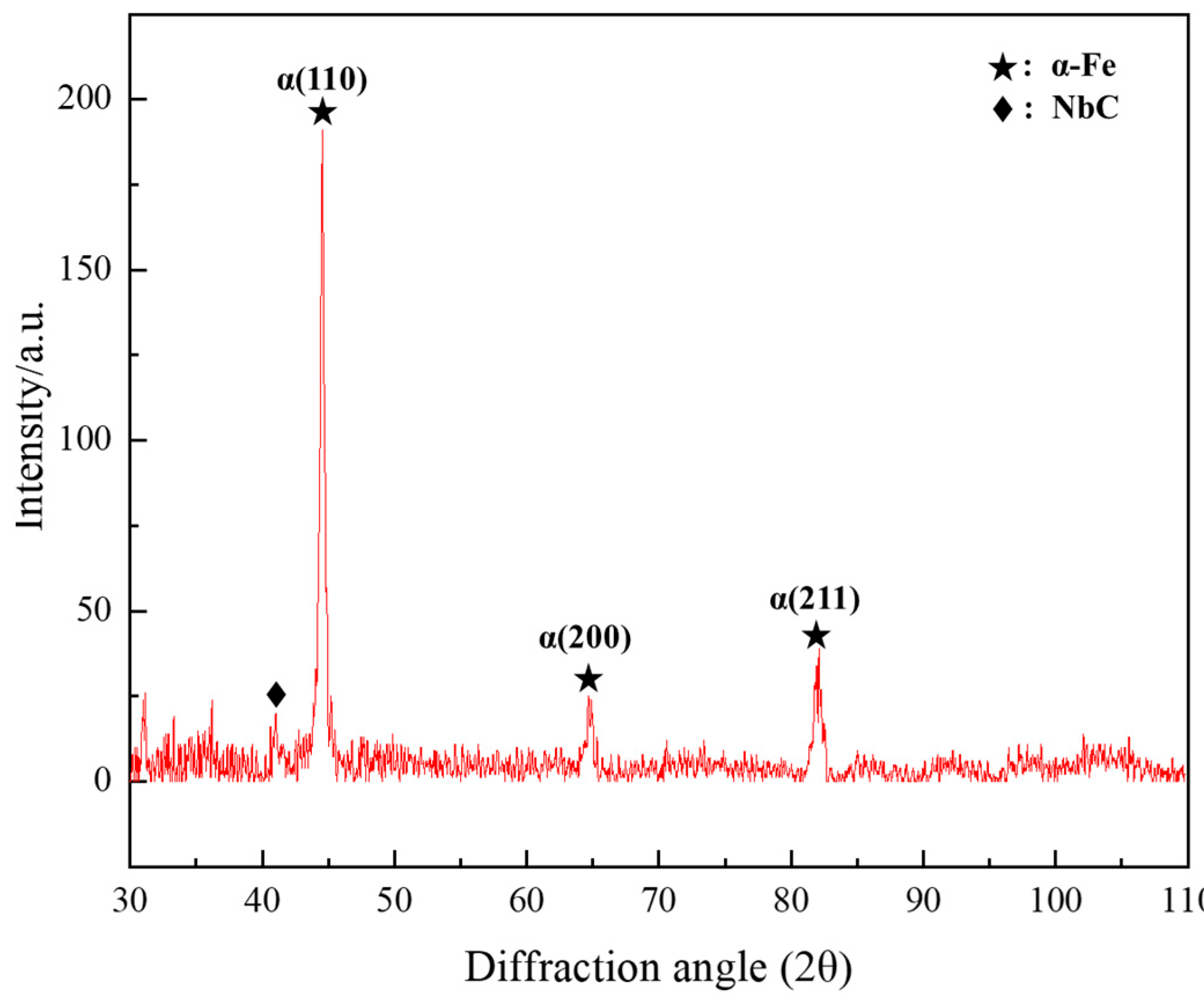
The XRD pattern of the sample is presented in Figure 9. The results indicate that the matrix consists of ferrite, and diffraction peaks corresponding to NbC carbides are identified. The presence of NbC is attributed to the gradual decrease in the critical solubility of Nb and C with decreasing temperature. Ultimately, NbC particles without oxide nuclei form as acicular precipitates within the grains [25].
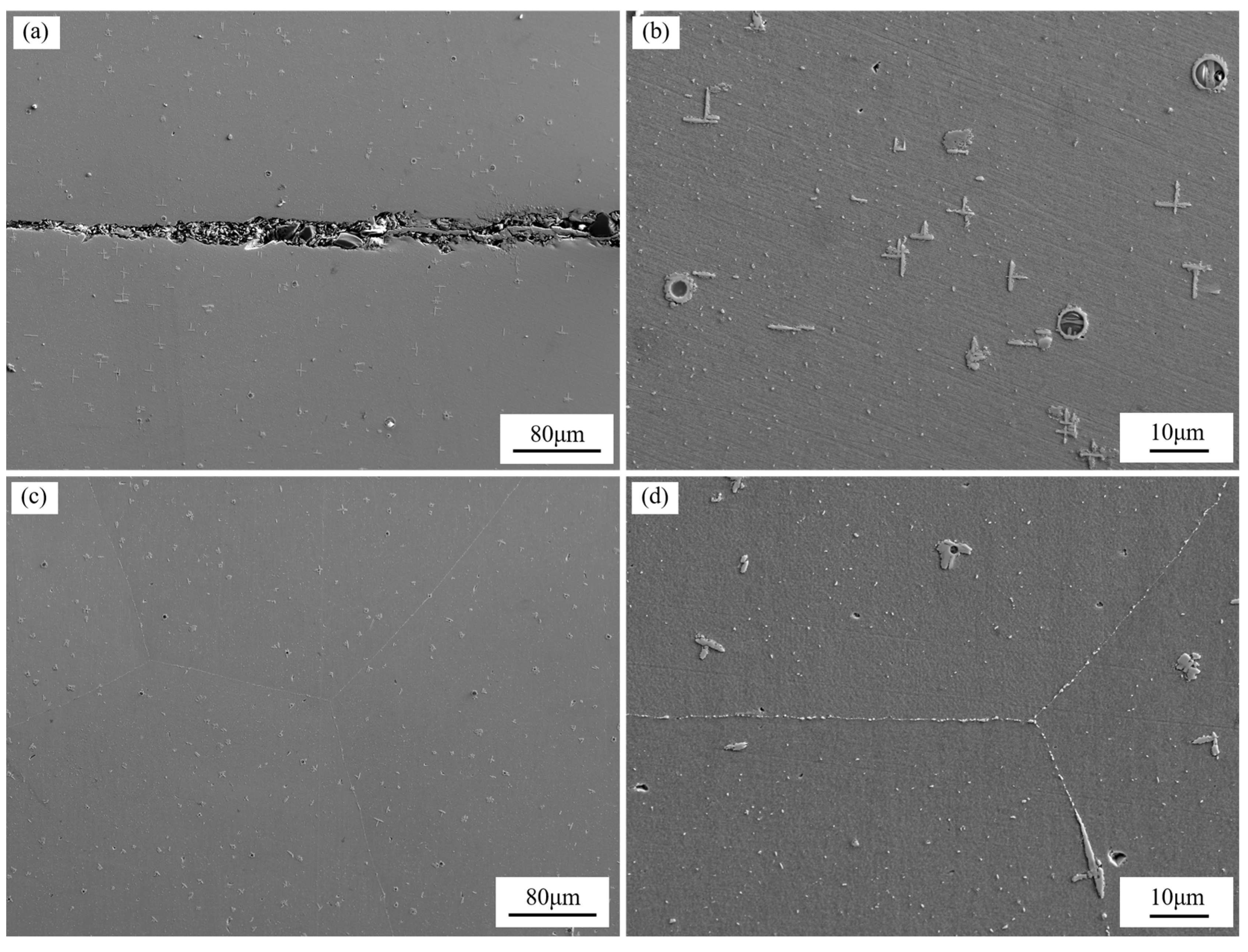
Figure 10 presents the SEM results of the cracked region and the crack-free region. In the cracked region, the precipitates are predominantly coarse acicular particles with sizes of approximately 10 μm. In contrast, the crack-free region exhibits significantly refined precipitates, which comprise not only acicular morphologies but also numerous granular particles. The tips of acicular precipitates act as stress concentration sites, whereas granular precipitates, with their larger radius of curvature, induce a less pronounced stress concentration effect. Consequently, cracks preferentially nucleate at the tips of acicular precipitates. Furthermore, the aggregation of multiple acicular precipitates can provide easy paths for rapid crack propagation, while granular precipitates impede crack advancement through a pinning effect.
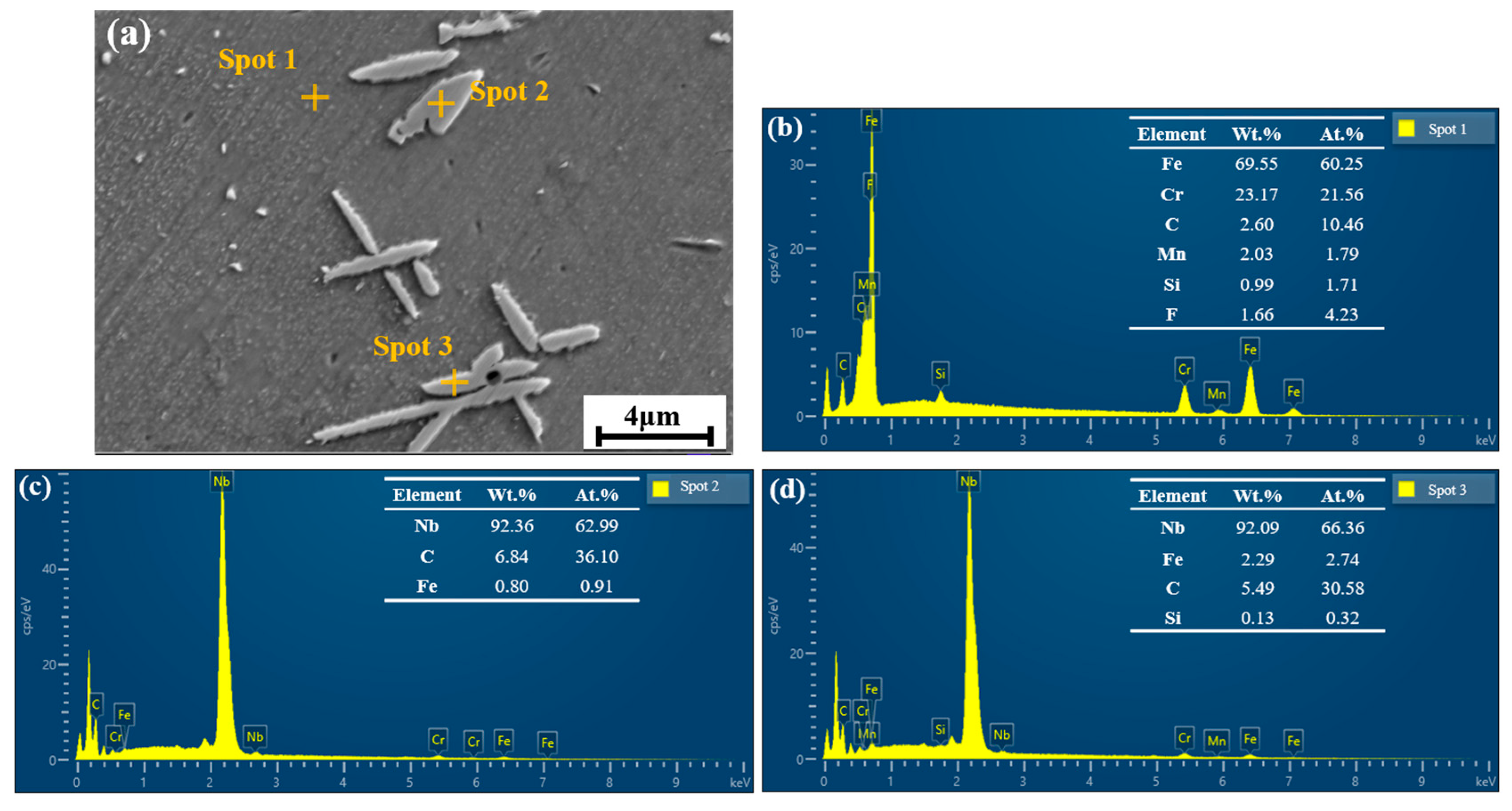
As shown in Figure 11, energy-dispersive spectroscopy (EDS) analysis was performed on the crack and the secondary phases around them. The results indicate that the matrix is enriched with Cr. The acicular and rod-like secondary phases at Points 2 and 3 are identified as an Nb-rich phase, with a Nb mass fraction reaching 92.36%, confirming them as NbC carbides. As a strong carbide-forming element, Nb exhibits high affinity for C. The NbC formed generally promotes heterogeneous nucleation and refines grains. However, in the present component, the NbC particles are large in size and densely distributed in an acicular morphology around the crack. Given the high hardness of NbC, this configuration deteriorates the tensile strength and elongation of the component.
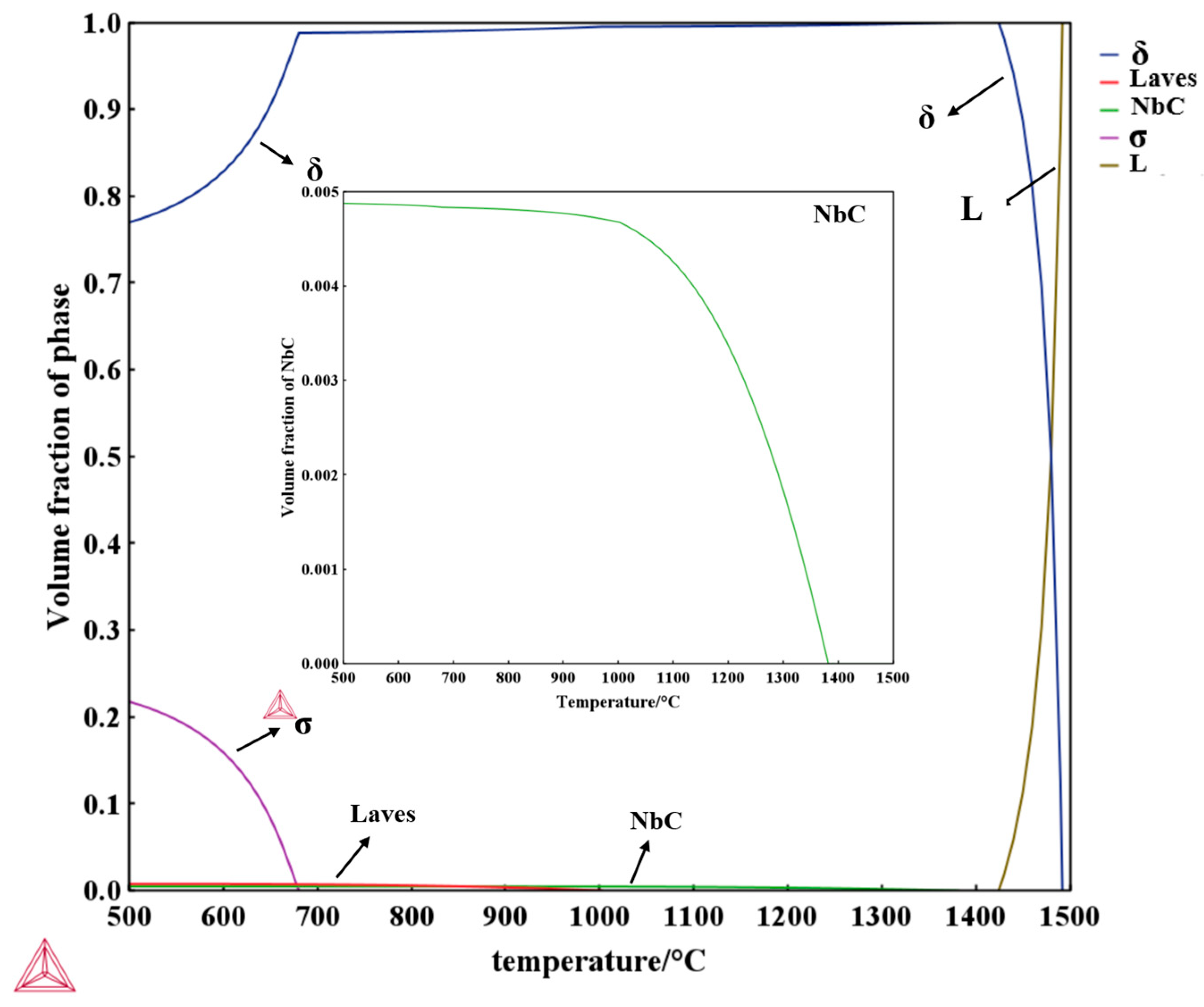
The equilibrium phases in the alloy were calculated using the Thermo-Calc thermodynamic software, with the results presented in Figure 12. The calculation indicates that the solidification start temperature of the experimental steel is 1496.0 °C, with a solidification temperature range of 50 °C. The microstructure of the steel consists of a single ferrite matrix from high temperature down to room temperature. The possible precipitates include NbC, σ phase, and Laves phase (Fe2Nb). According to the study by Dechang et al. [26], M23C6, NbC, and σ phase can form in ferritic stainless steels containing 17–18 wt.% Cr. The central region of the figure also reveals the precipitation of NbC, which occurred as a secondary phase from the solid solution upon completion of solidification. Its precipitation initiated at a temperature of 1382.1 °C, with a final amount of 0.5%.

4. Analysis and Discussion

4.1. Crack Analysis

Macroscopic and microscopic analyses confirm that the crack originated at the gating area on the casting surface. Its straight, trans-granular morphology is characteristic of a cold crack. This type of crack occurs when localized casting stresses exceed the material’s strength limit after the casting has cooled to the elastic state. Cold cracks typically initiate in regions subjected to tensile stress, particularly at stress concentration zones. In hollow ingots, the cooling rate of the outer wall is significantly higher than that of the inner wall, resulting in delayed solidification of the inner wall metal and the formation of a hot spot. As a consequence, this region remains under tensile stress, making it susceptible to cracking. Furthermore, during the final stage of solidification, the interruption of feeding channels prevents continuous heat transfer, leading to instantaneous supercooling in the gating area. This further increases thermal stress and ultimately induces crack formation at this location.

4.2. Casting Defect

The formation of cracks is driven by stress, with their nucleation sites determined by the combined influence of local material strength and stress concentration. In terms of material characteristics, the crack-affected region of the casting exhibits exceptionally coarse grains, with an average size ranging from 1 to 4 mm, along with significant grain size in homogeneity. This phenomenon is closely associated with the high diffusion rate of atoms in the ferrite phase and the relatively low grain coarsening temperature of the casting, where grain growth typically initiates above 600 °C. Essentially, coarse grains are considered a typical microstructural defect. In coarse-grained structures, the heightened stress concentration and reduced tortuosity of grain boundaries facilitate crack initiation and propagation along the boundaries. Meanwhile, such microstructures exhibit a diminished capacity to absorb energy during fracture, leading to overall degradation of mechanical properties and a notable reduction in toughness. Therefore, grain coarsening is regarded as a major contributing factor to crack initiation in the casting. Metallographic and SEM observations reveal the presence of shrinkage porosity and gas pores at the crack sites, with the crack propagating through some of these casting defects. These structurally weak areas and material imperfections readily act as nucleation sites for cracks. Shrinkage and gas pores exert a dual detrimental effect on material performance: firstly, they directly undermine the strength and toughness of the matrix; secondly, they serve as stress concentration sources, particularly in regions densely populated with shrinkage pores, significantly promoting crack initiation and leading to premature failure of the material under relatively low stress levels.

4.3. Acicular NbC Precipitates

Based on observations of the crack propagation process, the possibility of cracking at acicular and irregularly shaped NbC precipitates should also be considered. NbC possesses an extremely high hardness, reaching up to 2500 HV0.02, Its early precipitation within grains reduces the matrix hardness, thereby enlarging the hardness difference between the precipitates and the matrix. The NbC precipitates formed during solidification lead to a reduction in the cohesive strength of the surrounding area [22]. Larger secondary phases result in greater local-stress concentration around them, and a denser distribution of these phases promotes earlier fracture. The presence of large, interconnected acicular NbC precipitates in the gating area of the casting facilitates easy propagation of microcracks into adjacent regions, forming long cracks and ultimately leading to failure. The significant hardness-mismatch between NbC and the matrix activates the initiation and propagation of these cracks. The fractured structure cannot adequately withstand the applied stress, resulting in reduced strength [5].

4.4. ProCAST Casting Simulation

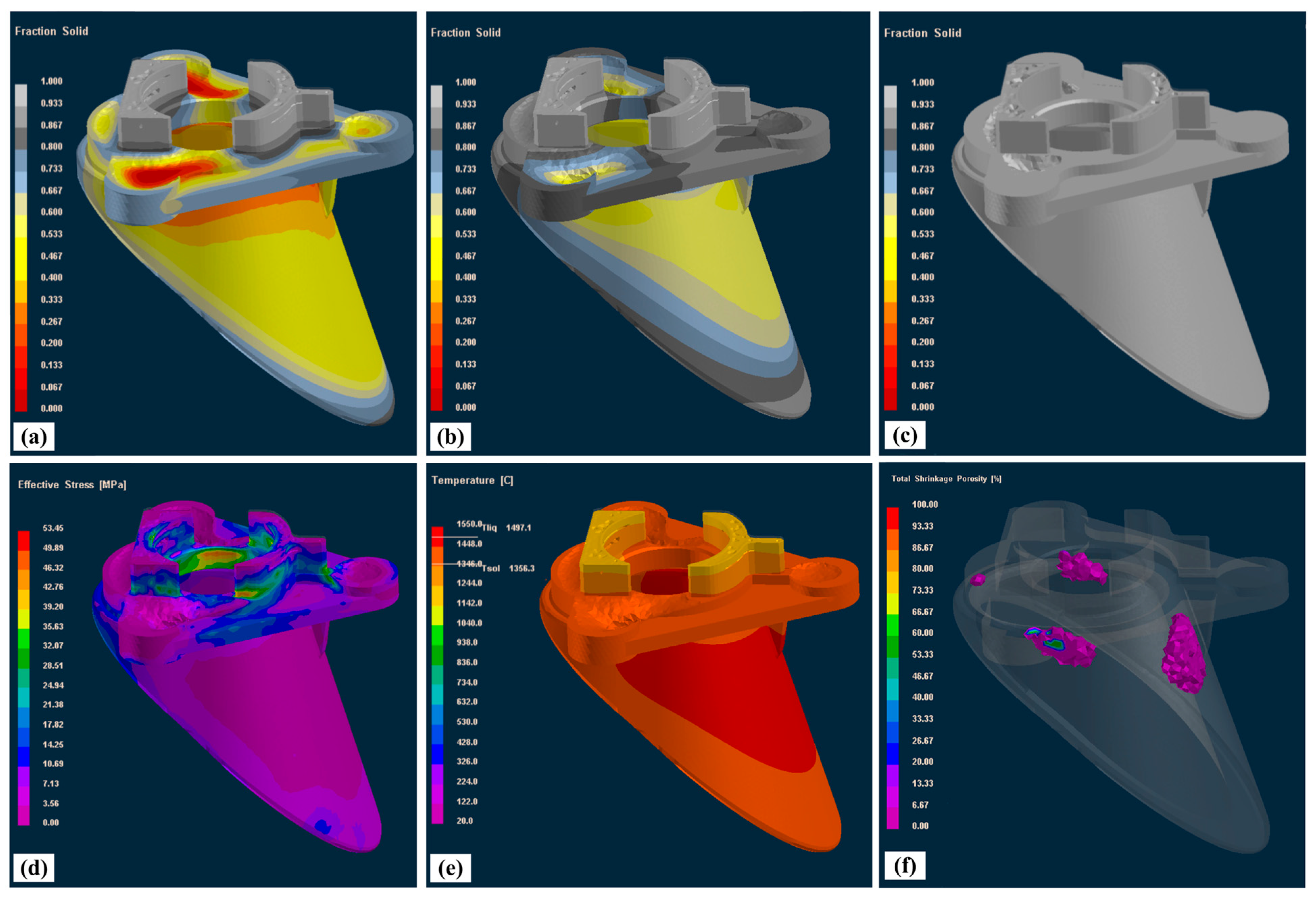
The evolution of the solid fraction within the casting, as simulated by ProCAST, is presented in Figure 11a–c. It can be observed that the sprue region exhibited a slower solidification rate and solidified later than other sections. This differential solidification led to variations in thermal contraction rates, thereby promoting the development of casting stress. Subsequent to solidification, shrinkage porosity was evident on the surface.
The simulated stress and temperature fields are shown in Figure 13d,e, respectively. The internal stress field is critically linked to the hot tearing susceptibility of the ingot; excessively high stress may induce crack formation [17]. The results indicate that stress was concentrated at the sprue. Compared to other regions, the sprue of the spray base features a greater thickness, resulting in a slower cooling rate during solidification. The earlier solidified sections constrained the thermal contraction of this slower-cooling, thicker region, generating significant tensile stress within the casting. Furthermore, the high curvature of the sprue acted as a stress concentrator, leading to a marked increase in tensile stress at this location. After complete solidification and cooling into the elastic temperature range, the casting becomes fully solid but retains substantial residual tensile stress. Cold cracks form and brittle fracture occurs when this residual tensile stress exceeds the material’s ultimate tensile strength.
When solidification is completed, the position of the shrinkage cavity in the casting is shown in Figure 13f. The results show that shrinkage cavities are concentrated on the surface of the casting and at the gate, and the defect locations overlap with the high-stress areas, which will increase the risk of demolding cracking. The prolonged solidification time in the sprue region led to the formation of isolated liquid pools, which subsequently resulted in shrinkage porosity, adversely affecting the internal quality of the casting.
Based on the analysis of the crack morphology and propagation path in the failed stainless steel casting, it is concluded that crack formation is primarily associated with the combined effects of coarse grains and defects such as shrinkage porosity, gas pores, and large acicular NbC precipitates in the gate area. These defects induce significant stress concentration in local areas and degrade the plasticity and continuity of grain boundaries. As the gate region is the last to solidify, its thermal contraction is constrained by the surrounding solidified metal, resulting in concentrated residual stress that cannot be effectively relieved through plastic deformation. When the local stress exceeds the strength limit of the material, cold cracks initiate and propagate along the direction of the maximum principal stress. The crack origin is located in the final solidification zone, where stress concentration is most severe, and is the result of the combined action of casting residual stress and microstructural defects. The root cause lies in the uneven cooling rates during the investment casting process and the constrained contraction of the casting by the mold shell, which collectively lead to high stress concentrations at sites of shrinkage porosity, gas pores, and NbC precipitation, ultimately triggering crack formation.

5. Conclusions

Based on macroscopic morphology and microstructural analysis of the cracks in the failed stainless steel casting, it is concluded that crack formation is attributed to the combined effects of coarse grains and defects such as shrinkage porosity, gas pores, and large acicular NbC precipitates in the gate region.
  • All cracks originated from the gate-proximal area on the casting surface, exhibiting typical brittle trans-granular fracture characteristics, confirming them as cold cracks.
  • The crack-affected zones displayed significantly coarse and non-uniform grains. The reduced number of grain boundaries diminished local plastic deformation capacity, promoting stress concentration and facilitating crack initiation.
  • Notable shrinkage porosity and gas pores were observed near the cracks, with propagation paths frequently traversing these voids. These defects act as structural weak points where stress concentrates at pore tips, serving as primary sites for crack nucleation and enabling rapid extension during solidification shrinkage.
  • The crack regions contained numerous coarse acicular NbC carbides. Their high hardness, sharp morphology, and weak interfacial bonding with the matrix render them prone to microcrack initiation under thermal stress.
  • Cracking originates from stress concentration in the last-to-solidify sprue region, where stress relief via plasticity is inadequate. This, combined with microstructural weaknesses—including coarse grains, porosity, and acicular NbC—embrittles grain boundaries and facilitates crack propagation under tensile stress. The primary root causes are thus the interplay of uncontrollable thermal stress from cooling and shell restraint, and inherent microstructural defects.

Author Contributions

Conceptualization, S.Q. and J.X.; methodology S.Q. and J.X.; software, J.X.; investigation, J.X. and S.Q.; visualization, J.X.; formal analysis, J.X.; supervision, S.Q. and A.Z.; writing—original draft preparation, J.X.; writing—review and editing, S.Q.; project administration, A.Z.; funding acquisition, A.Z. All authors have read and agreed to the published version of the manuscript.

Funding

This research was funded by the Fundamental Research Funds for the Central Universities (Grant No. FRF-BD-23-02).

Data Availability Statement

The original contributions presented in this study are included in the article. Further inquiries can be directed to the corresponding author.

Conflicts of Interest

The authors declare no conflicts of interest.

References

  1. Thanabumrungkul, S.; Jumpol, W.; Meemongkol, N.; Wannasin, J. Investment Casting of Semi-Solid 6063 Aluminum Alloy Using the GISS Process. Mater. Res. Express 2023, 10, 076501. [Google Scholar] [CrossRef]
  2. An, T.; Dourgaparsad, K.; Nicard, C.; Gruescu, I.-C.; Magnier, V.; Cristol, A.-L.; Jimenez, M.; Balloy, D. Production of Small Metallic Periodic Structures by Investment Casting: Investigations of the Technical Limits. J. Manuf. Process. 2025, 152, 222–236. [Google Scholar] [CrossRef]
  3. Wang, Z.; Dirrenberger, J.; Lapouge, P.; Dubent, S. Laser Treatment of 430 Ferritic Stainless Steel for Enhanced Mechanical Properties. Mater. Sci. Eng. A 2022, 831, 142205. [Google Scholar] [CrossRef]
  4. Zhu, S.; Yan, B. Effects of Cerium on Weld Solidification Crack Sensitivity of 441 Ferritic Stainless Steel. Metals 2019, 9, 372. [Google Scholar] [CrossRef]
  5. Ardila, M.A.N.; Labiapari, W.S.; de Mello, J.D.B. The Influence of Crystallographic Texture and Niobium Stabilisation on the Corrosion Resistance of Ferritic Stainless Steel. Mat. Res. 2017, 20, 576–583. [Google Scholar] [CrossRef]
  6. Hu, Y.-K.; Mao, W.-M. Annealing Treatment for Improving the Mechanical Properties of 00Cr18Nb Ferritic Stainless Steel Prepared by Investment Casting. Mater. Res. Express 2021, 8, 086503. [Google Scholar] [CrossRef]
  7. Tanure, L.P.d.A.R.; de Alcântara, C.M.; de Oliveira, T.R.; Santos, D.B.; Gonzalez, B.M. Microstructure, Texture and Microhardness Evolution during Annealing Heat Treatment and Mechanical Behavior of the Niobium-Stabilized Ferritic Stainless Steel ASTM 430 and Niobium-Titanium-Stabilized Ferritic Stainless Steel ASTM 439: A Comparative Study. Mat. Res. 2017, 20, 1650–1657. [Google Scholar] [CrossRef]
  8. Khaple, S.; Prakash, U.; Golla, B.R.; Satya Prasad, V.V. Effect of Niobium Addition on Microstructure and Mechanical Properties of Fe–7Al–0.35C Low-Density Steel. Metallogr. Microstruct. Anal. 2020, 9, 127–139. [Google Scholar] [CrossRef]
  9. Nishio, R.; Umetani, T.; Nakamura, Y.; Sasaki, T.T.; Shibata, A. Effect of Cooling Rate after High-Temperature Heating on the Ductility of 19Cr-0.020C-0.015N-0.4Nb Stabilized Ferritic Stainless Cast Steel. Mater. Sci. Eng. A 2025, 945, 148952. [Google Scholar] [CrossRef]
  10. Yamagishi, T.; Akita, M.; Nakajima, M.; Uematsu, Y.; Tokaji, K. Effect of σ-Phase Embrittlement on Fatigue Behaviour in High-Chromium Ferritic Stainless Steel. Procedia Eng. 2010, 2, 275–281. [Google Scholar] [CrossRef]
  11. Wang, X.; Lu, Q.; Zhang, W.; Xie, Z.; Shang, C. Investigation on the Correlation between Inclusions and High Temperature Urea Corrosion Behavior in Ferritic Stainless Steel. Metals 2021, 11, 1823. [Google Scholar] [CrossRef]
  12. Bansod, A.; Shukla, S.; Gahiga, G.; Verma, J. Influence of Filler Wire on Metallurgical, Mechanical, and Corrosion Behaviour of 430 Ferritic Stainless Steel Using a Fusion Welding Process. Mater. Res. Express 2023, 10, 036513. [Google Scholar] [CrossRef]
  13. Kuhn, B.; Talik, M.; Fischer, T.; Fan, X.; Yamamoto, Y.; Lopez Barrilao, J. Science and Technology of High Performance Ferritic (HiperFer) Stainless Steels. Metals 2020, 10, 463. [Google Scholar] [CrossRef]
  14. Guo, H.; Dong, Y.; Bastidas-Arteaga, E.; Gu, X.-L. Probabilistic Failure Analysis, Performance Assessment, and Sensitivity Analysis of Corroded Reinforced Concrete Structures. Eng. Fail. Anal. 2021, 124, 105328. [Google Scholar] [CrossRef]
  15. Xue, S.; Yang, T.; Guo, R.; Deng, A.; Liu, X.; Zheng, L. Crack Analysis of Cr-Mo-V-Si Medium-Carbon Alloy Steel in Casting Die. Eng. Fail. Anal. 2021, 120, 105083. [Google Scholar] [CrossRef]
  16. Iacoviello, F.; Di Cocco, V.; Franzese, E.; Natali, S. High Temperature Embrittled Duplex Stainless Steels: Influence of the Chemical Composition on the Fatigue Crack Propagation. Procedia Struct. Integr. 2017, 3, 308–315. [Google Scholar] [CrossRef]
  17. Kovacic, M.; Brezocnik, M. Reduction of Surface Defects and Optimization of Continuous Casting of 70MnVS4 Steel. Int. J. Simul. Model. 2018, 17, 667–676. [Google Scholar] [CrossRef]
  18. Lalpoor, M.; Eskin, D.G.; Ruvalcaba, D.; Fjær, H.G.; Ten Cate, A.; Ontijt, N.; Katgerman, L. Cold Cracking in DC-Cast High Strength Aluminum Alloy Ingots: An Intrinsic Problem Intensified by Casting Process Parameters. Mater. Sci. Eng. A 2011, 528, 2831–2842. [Google Scholar] [CrossRef]
  19. Kaiser, R.; Browne, D.J.; Williamson, K. Investigation of the Effects of Cooling Rate on the Microstructure of Investment Cast Biomedical Grade Co Alloys. IOP Conf. Ser. Mater. Sci. Eng. 2012, 27, 012071. [Google Scholar] [CrossRef]
  20. Hu, J.; Wang, Q.; Wang, K.; Wang, W.; Qiang, F.; Li, L. Coupled Temperature–Flow Field and Microstructure Numerical Simulation of the Solidification Process for Cu-3Ti-0.2Fe Alloy. Materials 2025, 18, 2478. [Google Scholar] [CrossRef]
  21. Sertucha, J.; Lacaze, J. Casting Defects in Sand-Mold Cast Irons—An Illustrated Review with Emphasis on Spheroidal Graphite Cast Irons. Metals 2022, 12, 504. [Google Scholar] [CrossRef]
  22. Wei, S. Suppressing Cold Cracking in Laser Powder Bed Fused Al-Fe-V-Si Alloy Using Top-Hat Laser Profile. Mater. Sci. Eng. A 2025, 924, 147858. [Google Scholar] [CrossRef]
  23. Wasim, M.; Ngo, T.D. Failure Analysis of Structural Steel Subjected to Long Term Exposure of Hydrogen. Eng. Fail. Anal. 2020, 114, 104606. [Google Scholar] [CrossRef]
  24. Xiao, J.; Tian, G.; Wang, D.; Cao, K.; Zhao, A. Effect of Aging at Different Temperatures on Microstructure Evolution of 347H Heat-Resistant Steel-Welded Joints. Metals 2025, 15, 518. [Google Scholar] [CrossRef]
  25. Kang, Y.; Mao, W.M.; Chen, Y.J.; Jing, J.; Cheng, M. Influence of Nb Content on Grain Size and Mechanical Properties of 18 wt% Cr Ferritic Stainless Steel. Mater. Sci. Eng. A 2016, 677, 453–464. [Google Scholar] [CrossRef]
  26. Zhang, D.; Shen, J.; Guo, X.; Liu, Q. Effect of Hydrogen on the Microstructural Evolution and Local Mechanical Properties of 430 Ferritic Stainless Steel at High-Temperature Conditions. Mater. Sci. Eng. A 2024, 913, 147031. [Google Scholar] [CrossRef]
Figure 1. The curve of the thermal physical parameters of the alloy varying with temperature: (a) enthalpy and solid phase fraction; (b) density and conductivity.
Metals 15 01310 g001
Figure 2. Macroscopic morphology of the crack (a) No.1; (b) No.2.
Metals 15 01310 g002
Figure 3. The grain statistics of each area of the casting (a,d) No.1, (b,e) No.2, (c,f) No.3.
Metals 15 01310 g003
Figure 4. Crack pattern under laser confocal microscope (a) complete crack morphology; (bd) local morphology of the crack; (eg) corresponding crack depth maps.
Metals 15 01310 g004
Figure 5. The crack pattern of under a laser confocal microscope (a) complete crack morphology; (bd) local morphology of the crack.
Metals 15 01310 g005
Figure 6. Metallographic structure before erosion (a,b) blowhole and shrinkage porosity; (c) shrinkage porosity.
Metals 15 01310 g006
Figure 7. Crack morphology under scanning electron microscope (ad) morphology around the crack; (e) the morphology around the crack and its EDS surface scanning results; (f) holes around the crack.
Metals 15 01310 g007
Figure 8. EBSD analysis results at the crack: (a) IQ plot, (b) phase distribution plot, (c) IPF plot, (d) KAM plot.
Metals 15 01310 g008
Figure 9. The XRD pattern of the sample.
Metals 15 01310 g009
Figure 10. Morphology of crack area and non-crack area under scanning electron microscope: (a,b) crack area; (c,d) noncrack area.
Metals 15 01310 g010
Figure 11. EDS point scan image. (a) spot position (b) spot 1 (c) spot 2 (d) spot 3.
Metals 15 01310 g011
Figure 12. Thermodynamic calculation results of the precipitated phase.
Metals 15 01310 g012
Figure 13. ProCAST simulation results: Solid phase fractions of castings at different times: (a) 29 s, (b) 39 s, (c) 49 s (solidification completed); (d) Stress distribution at the completion of solidification; (e) Temperature field distribution at the time of solidification completion; (f) Distribution of shrinkage cavity positions upon completion of solidification.
Metals 15 01310 g013
Table 1. Chemical composition wt.%.
CSiMnCrNbPSFe
0.051.01.217.80.80.040.015Bal.
Disclaimer/Publisher’s Note: The statements, opinions and data contained in all publications are solely those of the individual author(s) and contributor(s) and not of MDPI and/or the editor(s). MDPI and/or the editor(s) disclaim responsibility for any injury to people or property resulting from any ideas, methods, instructions or products referred to in the content.