Article

Mechanical Behavior of Additive Manufacturing (AM) and Wrought Ti6Al4V with a Martensitic Microstructure

Department of Civil and Mechanical Engineering, University of Cassino and Southern Lazio, 03043 Cassino, FR, Italy
*
Author to whom correspondence should be addressed.
Metals 2024, 14(9), 1028; https://doi.org/10.3390/met14091028
Submission received: 27 July 2024 / Revised: 16 August 2024 / Accepted: 20 August 2024 / Published: 10 September 2024
(This article belongs to the Special Issue Processing Technology and Properties of Light Metals)

Abstract

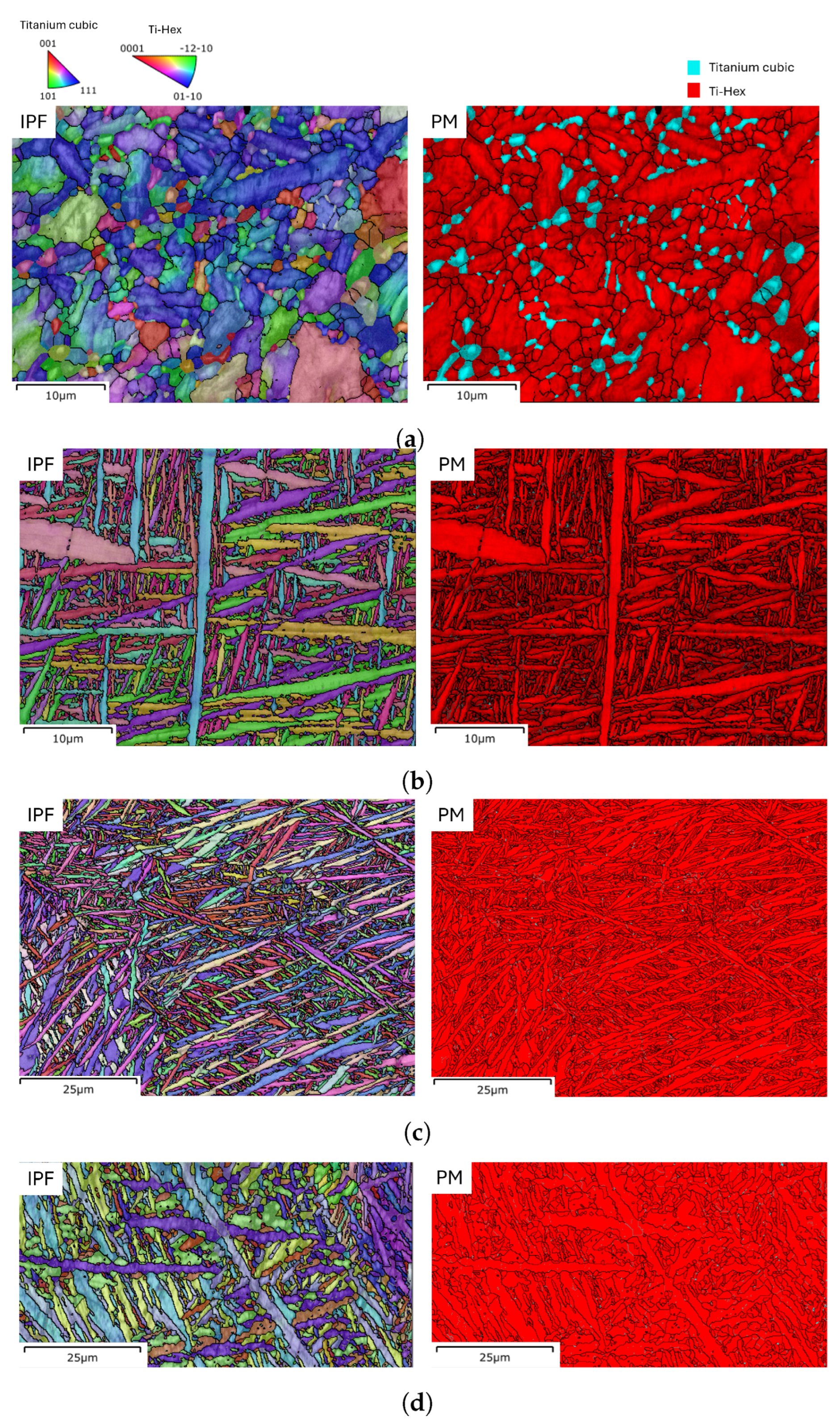
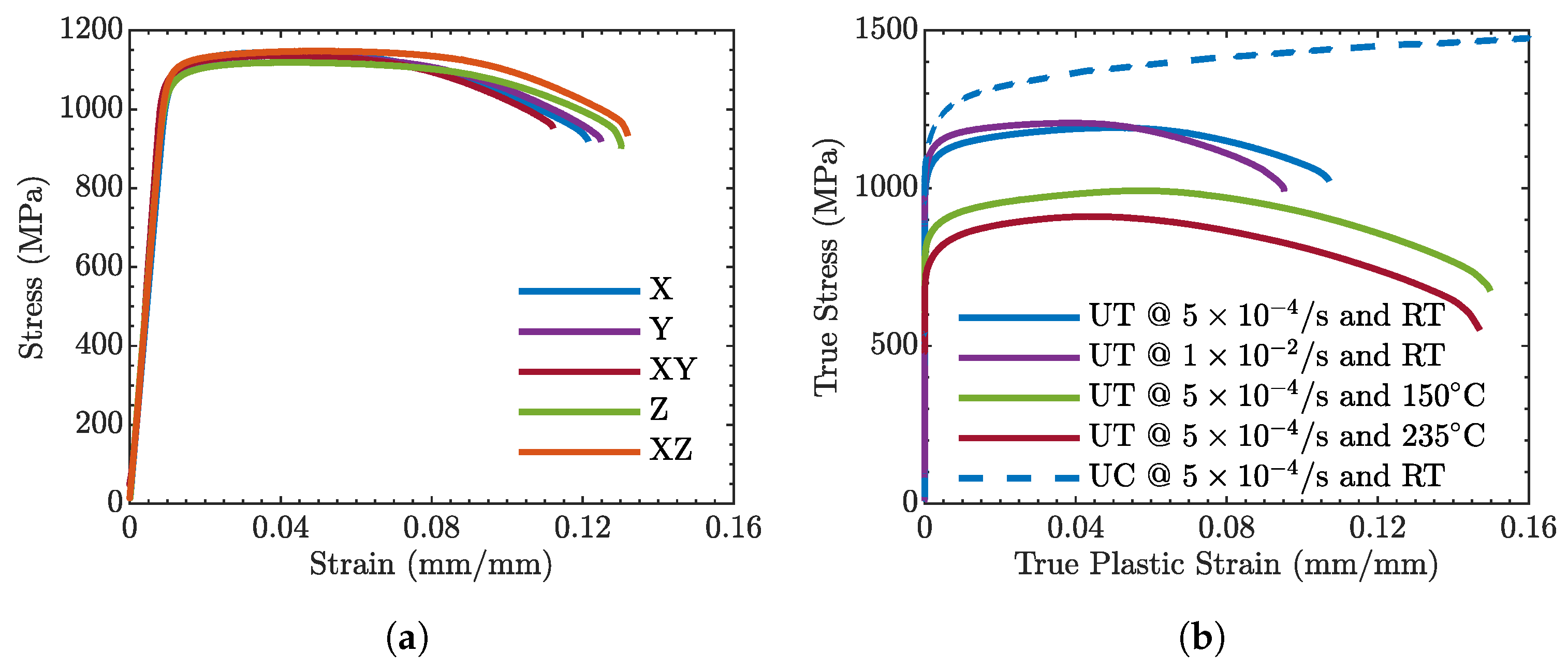
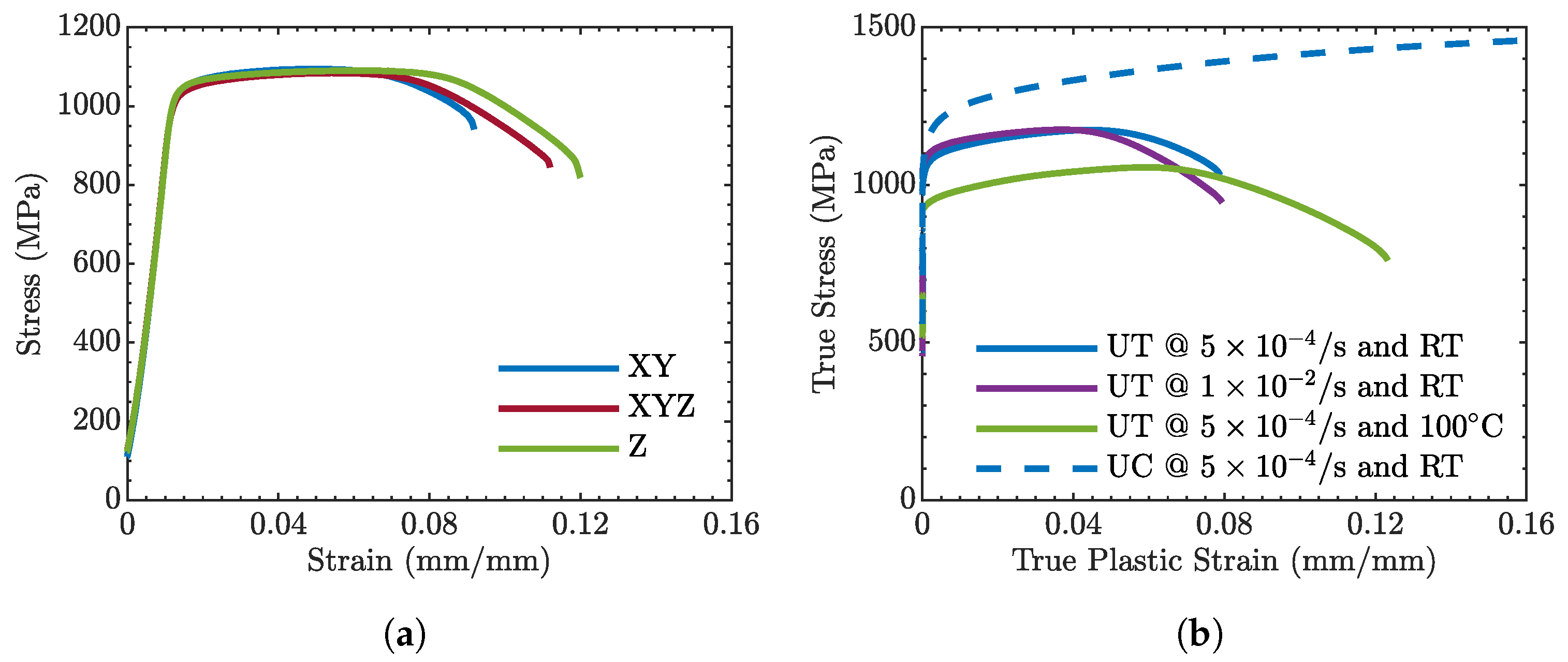
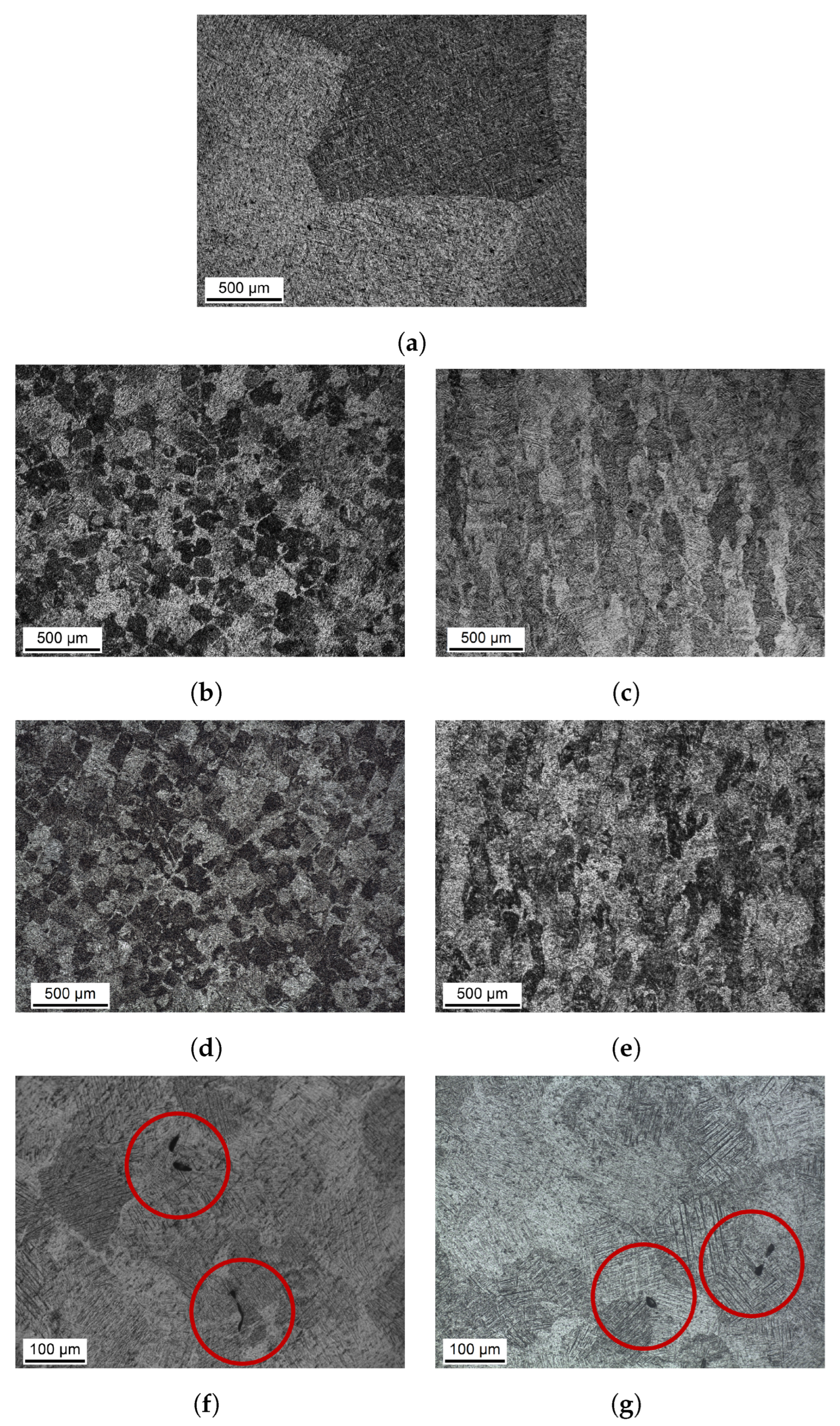
Processing and microstructure are fundamental in shaping material behavior and failure characteristics. Additively manufactured materials, due to the rapid heating and solidification process, exhibit unique microstructures compared to their as-cast counterparts, resulting in distinct material properties. In this work, the response of the titanium alloy Ti6Al4V has been investigated for different processing conditions through quasi-static testing. AM Ti6Al4V was fabricated by employing Selective Laser Sintering (SLS) and Selective Laser Melting (SLM) techniques. Both materials present a similar microstructure consisting of an acicular martensitic α-phase. Commercial Ti6Al4V-grade 5 (supplied as bars) was also examined after heat treatment to achieve a microstructure akin to the AM material. The heat treatment involved rapid heating above the β-phase region and water quenching to obtain a full martensite microstructure. A similar constitutive behavior and tensile–compressive asymmetry in strength were noted for the investigated materials. However, AM alloys exhibited a significantly higher deformation at failure, reaching nearly 40%, compared to only 6.1% for the wrought martensitic material, which can be attributed to the dissimilar distribution of both α laths and prior-β grain boundaries in the investigated materials. The results indicate that AM can be implemented for the fabrication of martensitic microstructures with mechanical properties superior to those obtained with conventional water-quenching.
Keywords: Ti6Al4V alloy; martensite α′; Selective Laser Melting; Selective Laser Sintering; mechanical properties Ti6Al4V alloy; martensite α′; Selective Laser Melting; Selective Laser Sintering; mechanical properties