Article

Phase Transformation Crystallography in Pipeline HSLA Steel after TMCP

by
Mikhail L. Lobanov
*,
Maria A. Zorina
,
Maxim S. Karabanalov
,
Nikolay V. Urtsev
and
Andrey A. Redikultsev
Heat Treatment & Physics of Metals Department, Ural Federal University, 19 Mira St., Ekaterinburg 620062, Russia
*
Author to whom correspondence should be addressed.
Metals 2023, 13(6), 1121; https://doi.org/10.3390/met13061121
Submission received: 28 April 2023 / Revised: 9 June 2023 / Accepted: 13 June 2023 / Published: 15 June 2023

Abstract

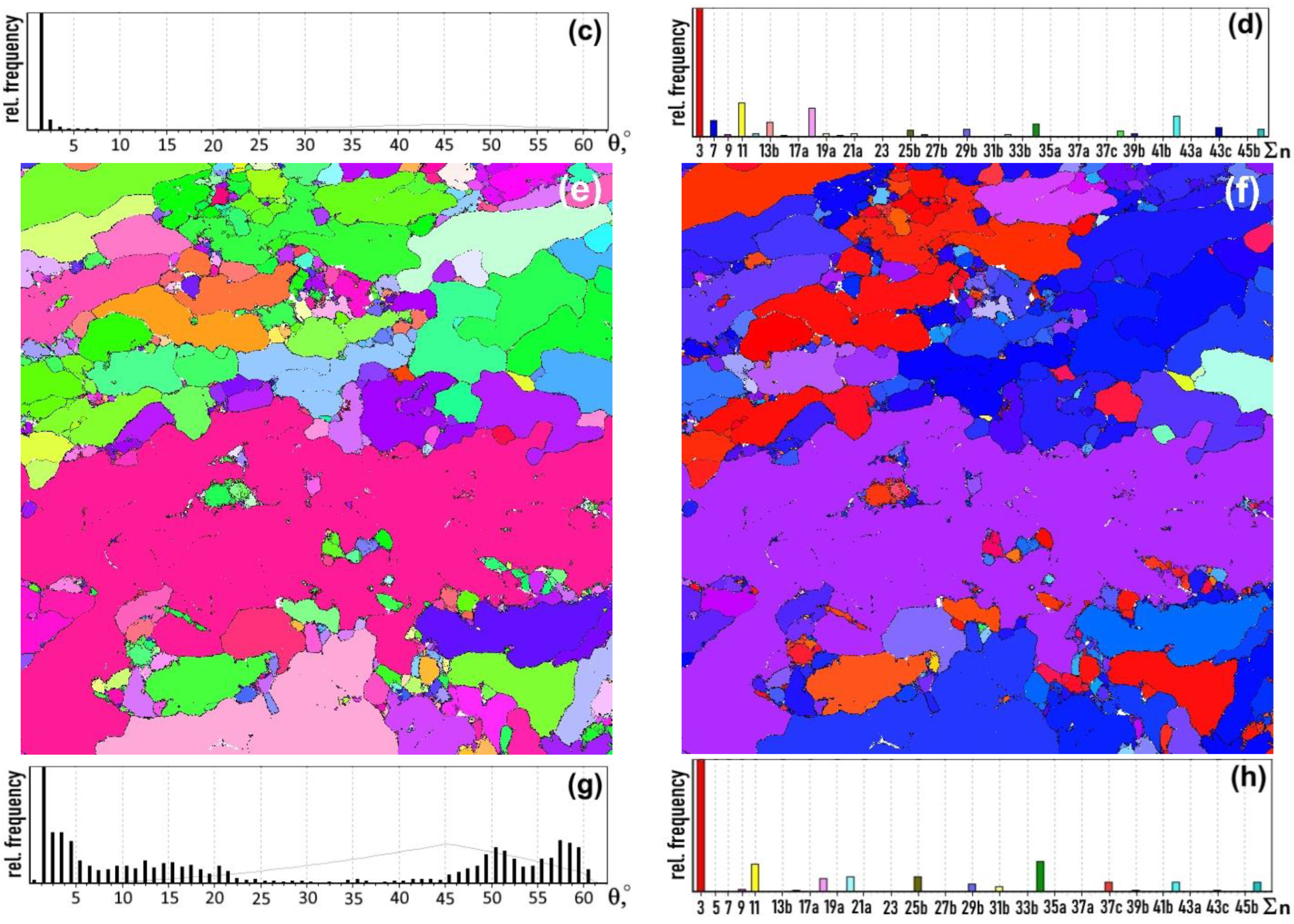
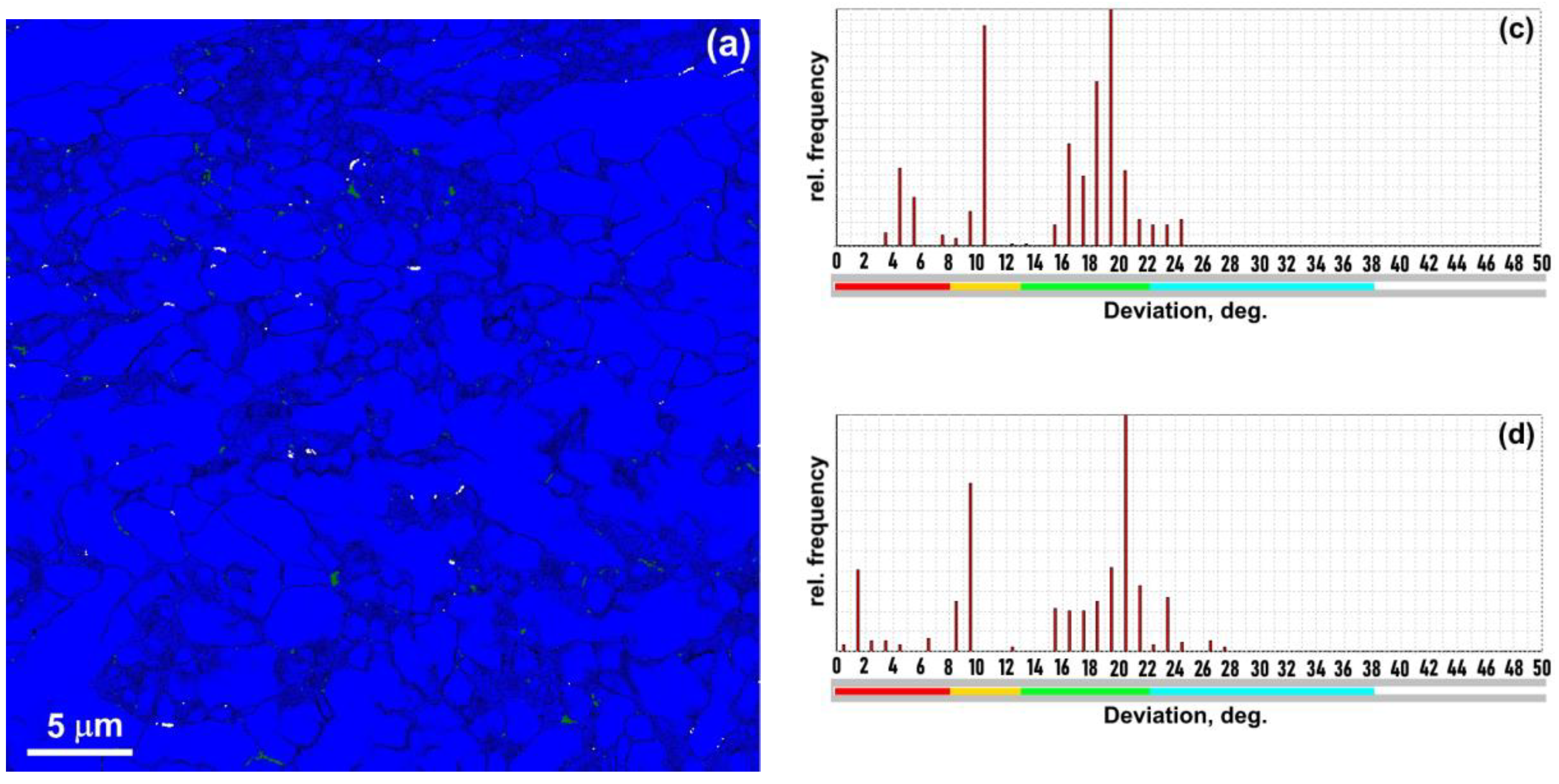
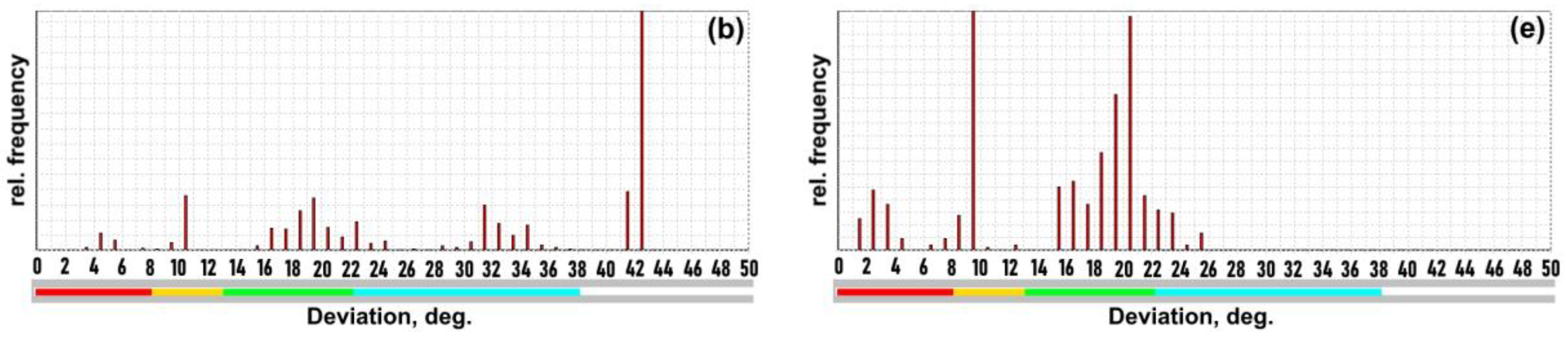
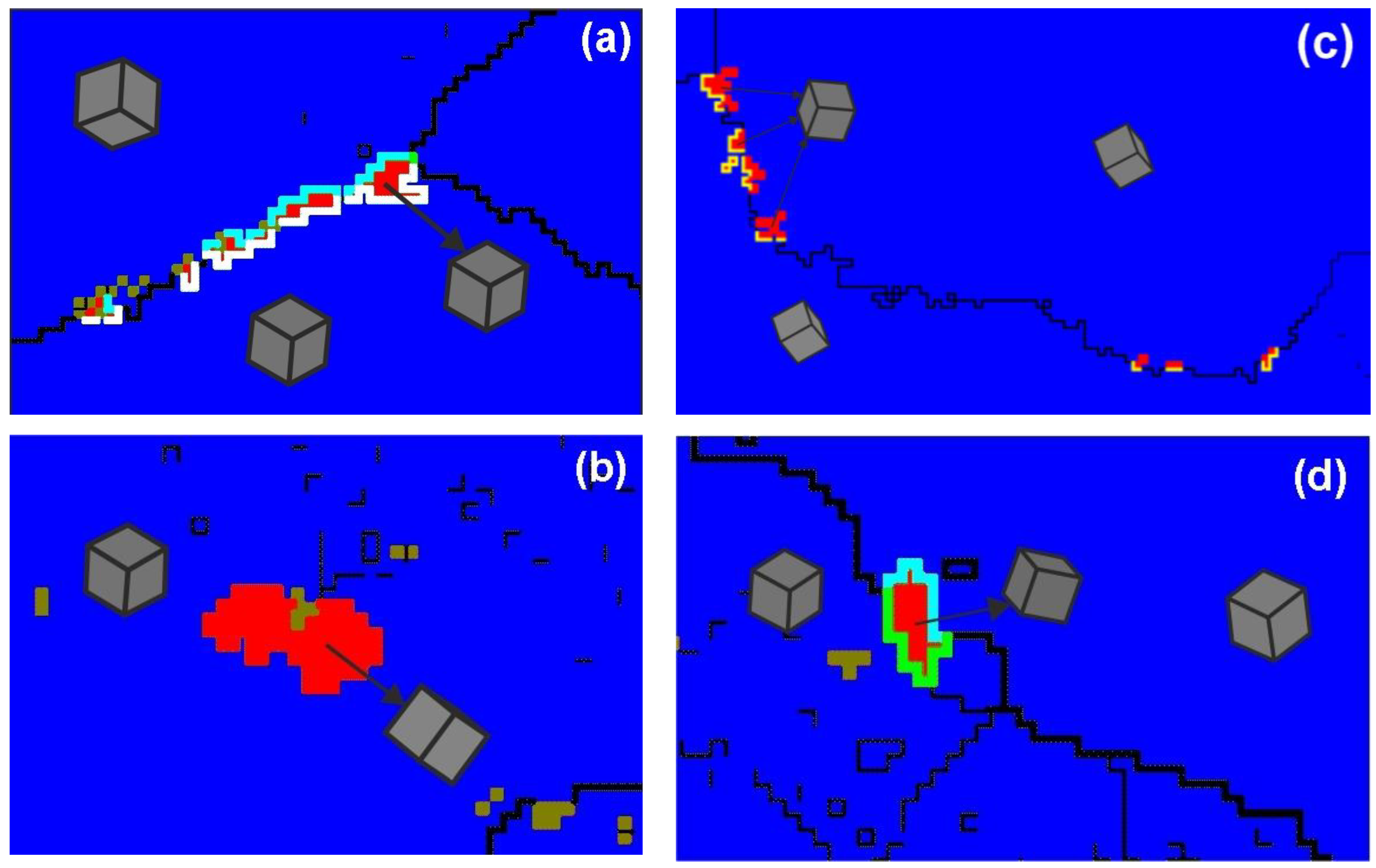
Thermo-mechanical controlled processing (TMCP) is employed to obtain the required level of mechanical properties of contemporary high-strength low-alloy (HSLA) steel plates utilized for gas and oil pipeline production. The strength, deformation behavior and resistance to the formation and propagation of running fractures of the pipeline steel are mainly determined by its microstructure and crystallographic texture. These are formed as a result of austenite deformation and consequent γ→α-transformation. This present study analyses the crystallographic regularities of the structural and textural state formation in a steel plate that has been industrially produced by means of TMCP. The values of the mechanical properties that have been measured in different directions demonstrate the significance of the crystallographic texture in the deformation and failure of steel products. An electron backscatter diffraction (EBSD) method and crystallographic analysis were utilized to establish the connection between the main texture components of the deformed austenite and α-phase orientations. This paper demonstrates that the crystallographic texture that is formed due to a multipath γ→α-transformation results from the α-phase nucleation on the special boundaries between grains with γ-phase orientations. The analysis of the spectra of the α-γ-interface boundary angle deviations from the Kurdjumov–Sachs (K–S), Nishiyama–Wassermann (N–W), and Greninger–Troiano (G–T) orientation relationships (ORs) allows to suggest that the observed austenite particles represent a secondary austenite (not retained) that precipitates at intercrystalline α-phase boundaries and correspond to the ORs with regard to only one adjacent crystallite.
Keywords: TMCP; HSLA steel; γ→α-transformation; deformation anisotropy; EBSD; texture; orientation relationships TMCP; HSLA steel; γ→α-transformation; deformation anisotropy; EBSD; texture; orientation relationships