Article

Microstructural Investigation of Some Bronze Artifacts Discovered in a Dacian Site Using Non-Destructive Methods


by
Aurora Petan
1,2,*,
Ioan Petean
3,*,
Gertrud Alexandra Paltinean
4,
Miuta Rafila Filip
4,
Gheorghe Borodi
5 and
Lucian Barbu Tudoran
5,6
1
Study Centre of Dacica Foundation, 337096 Boșorod, Romania
2
Center for Interdisciplinary Research of Movable and Immovable Archaeological Heritage Arheo Tim, West University of Timișoara, 300223 Timisoara, Romania
3
Faculty of Chemistry and Chemical Engineering, Babes-Bolyai University, 400028 Cluj-Napoca, Romania
4
Raluca Ripan Institute for Research in Chemistry, Babeș-Bolyai University, 400294 Cluj-Napoca, Romania
5
National Institute for Research and Development of Isotopic and Molecular Technologies, 400293 Cluj-Napoca, Romania
6
Faculty of Biology and Geology, Babes-Bolyai University, 400015 Cluj-Napoca, Romania
*
Authors to whom correspondence should be addressed.
Metals 2023, 13(5), 863; https://doi.org/10.3390/met13050863
Submission received: 29 March 2023 / Revised: 24 April 2023 / Accepted: 27 April 2023 / Published: 28 April 2023
(This article belongs to the Section Crystallography and Applications of Metallic Materials)

Abstract

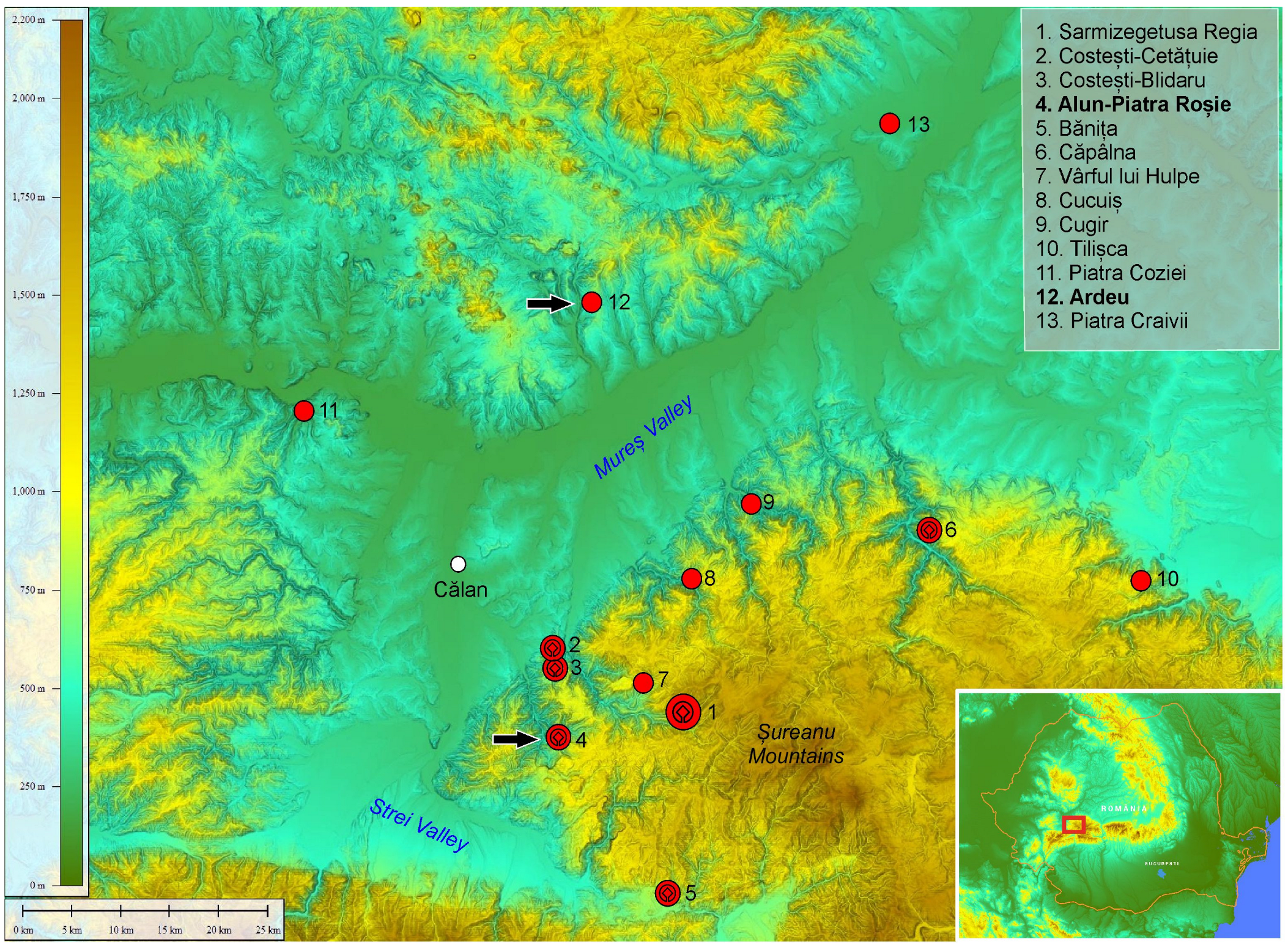
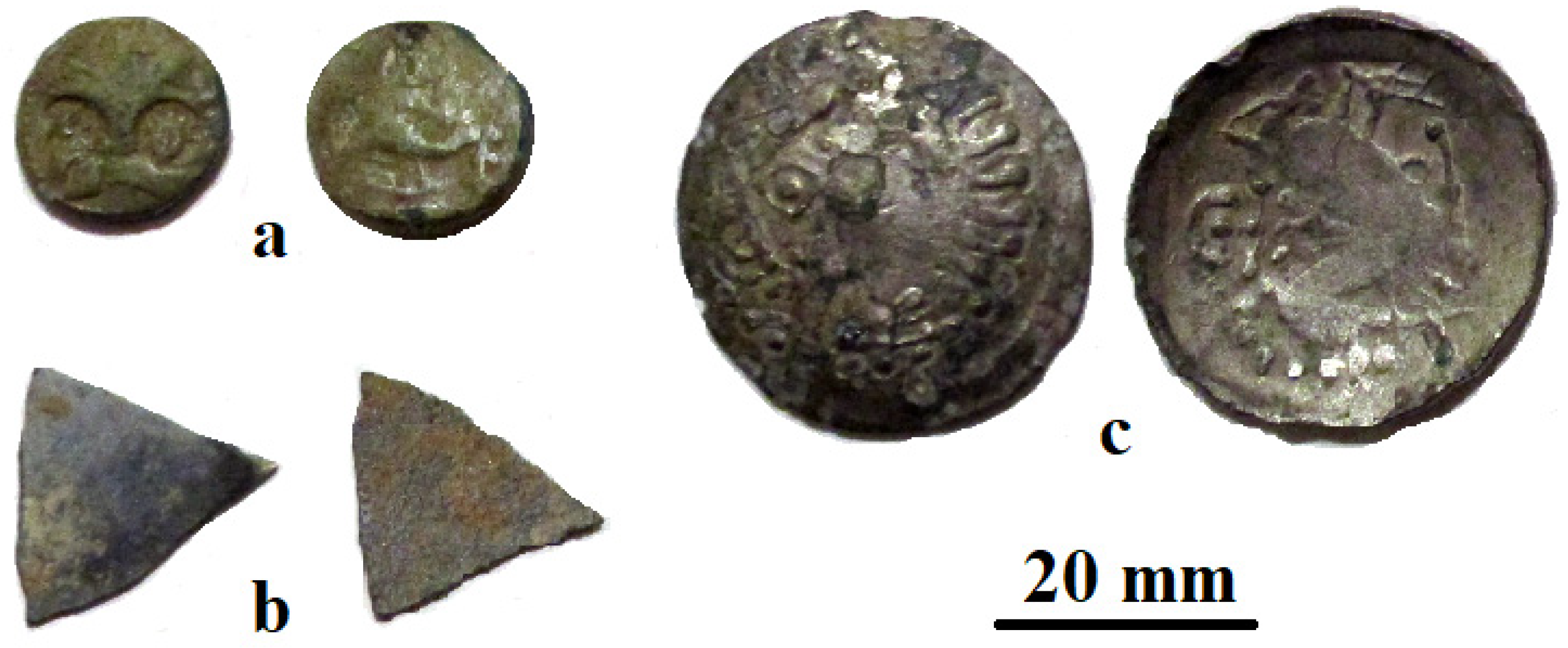
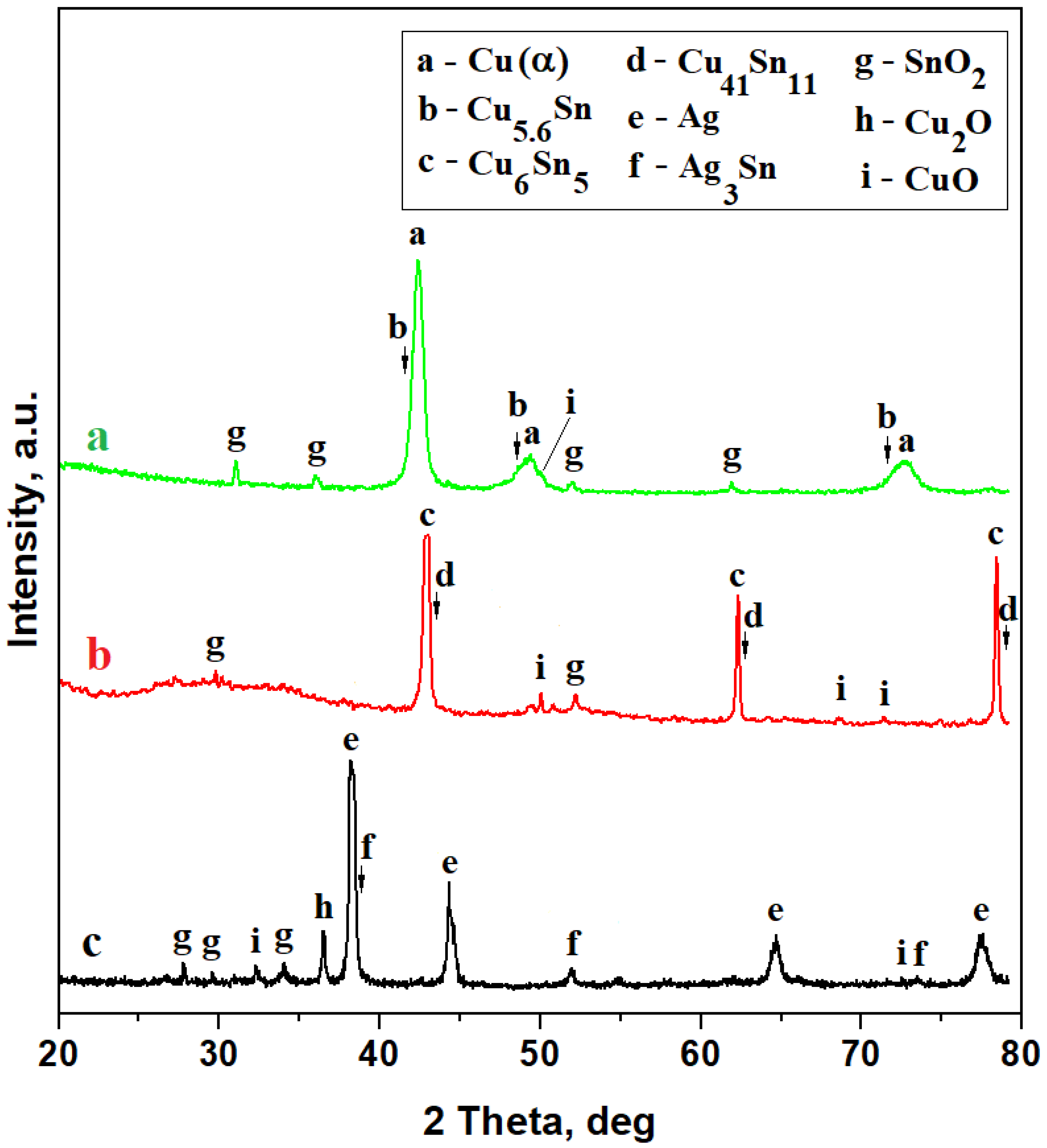
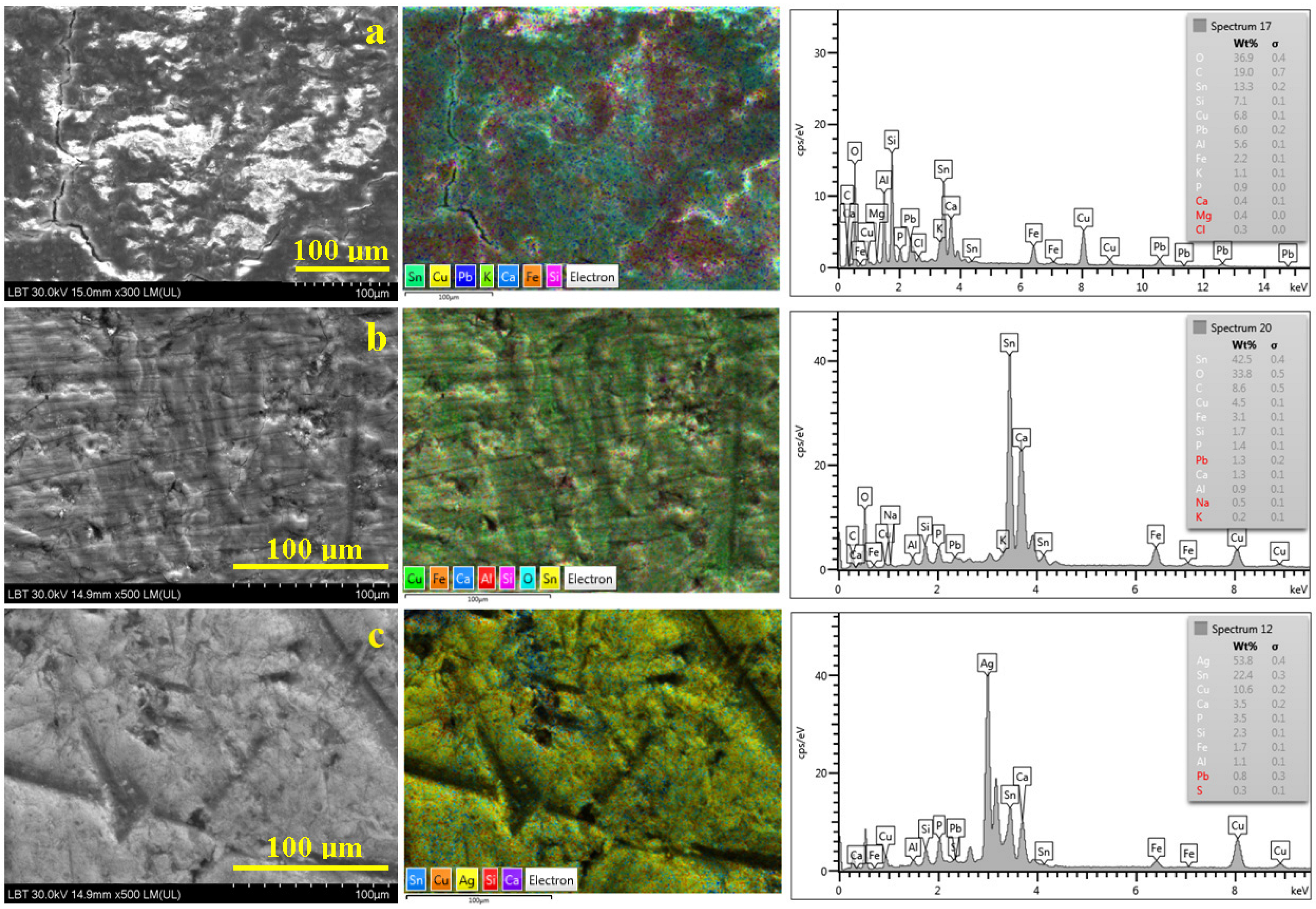
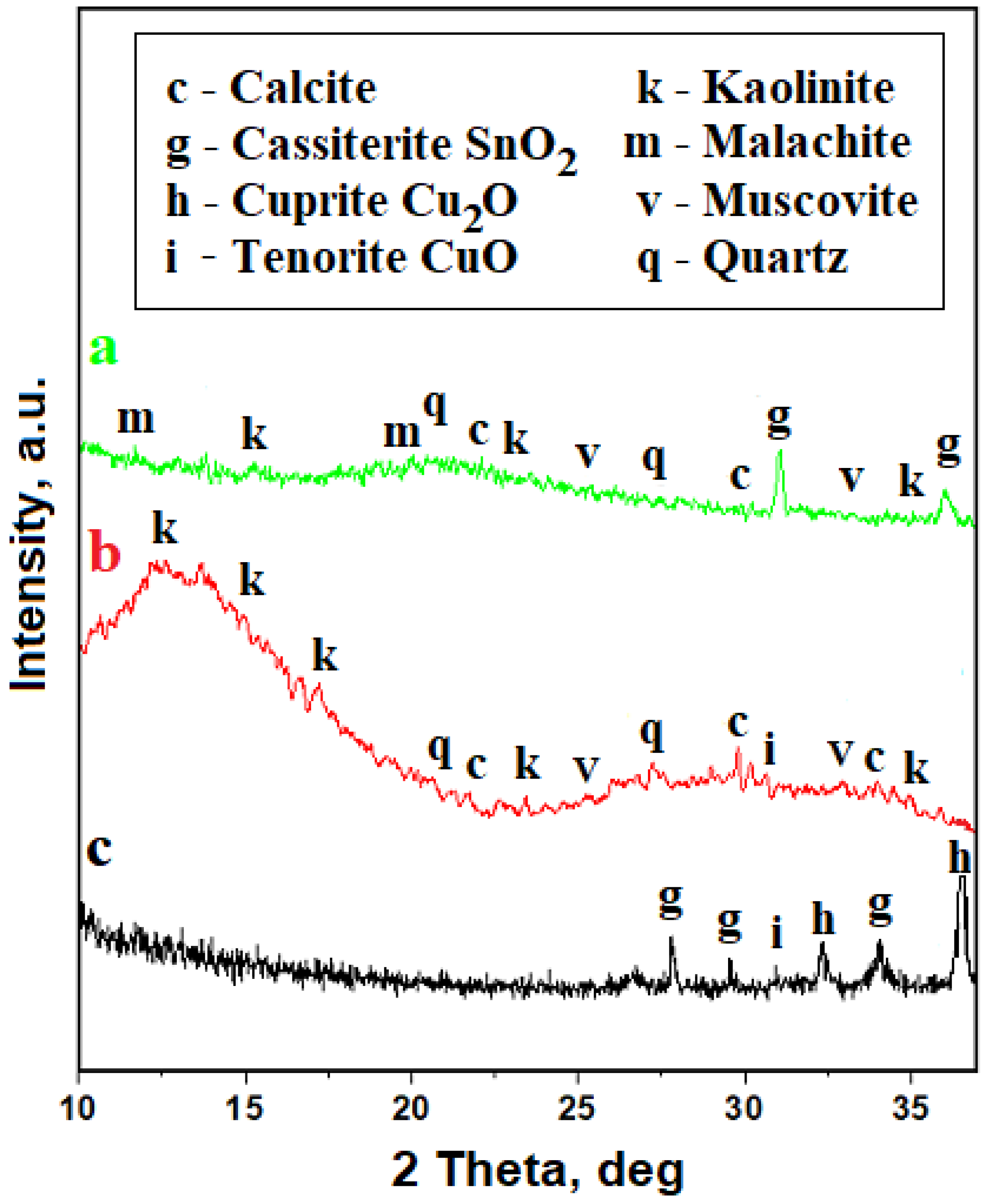
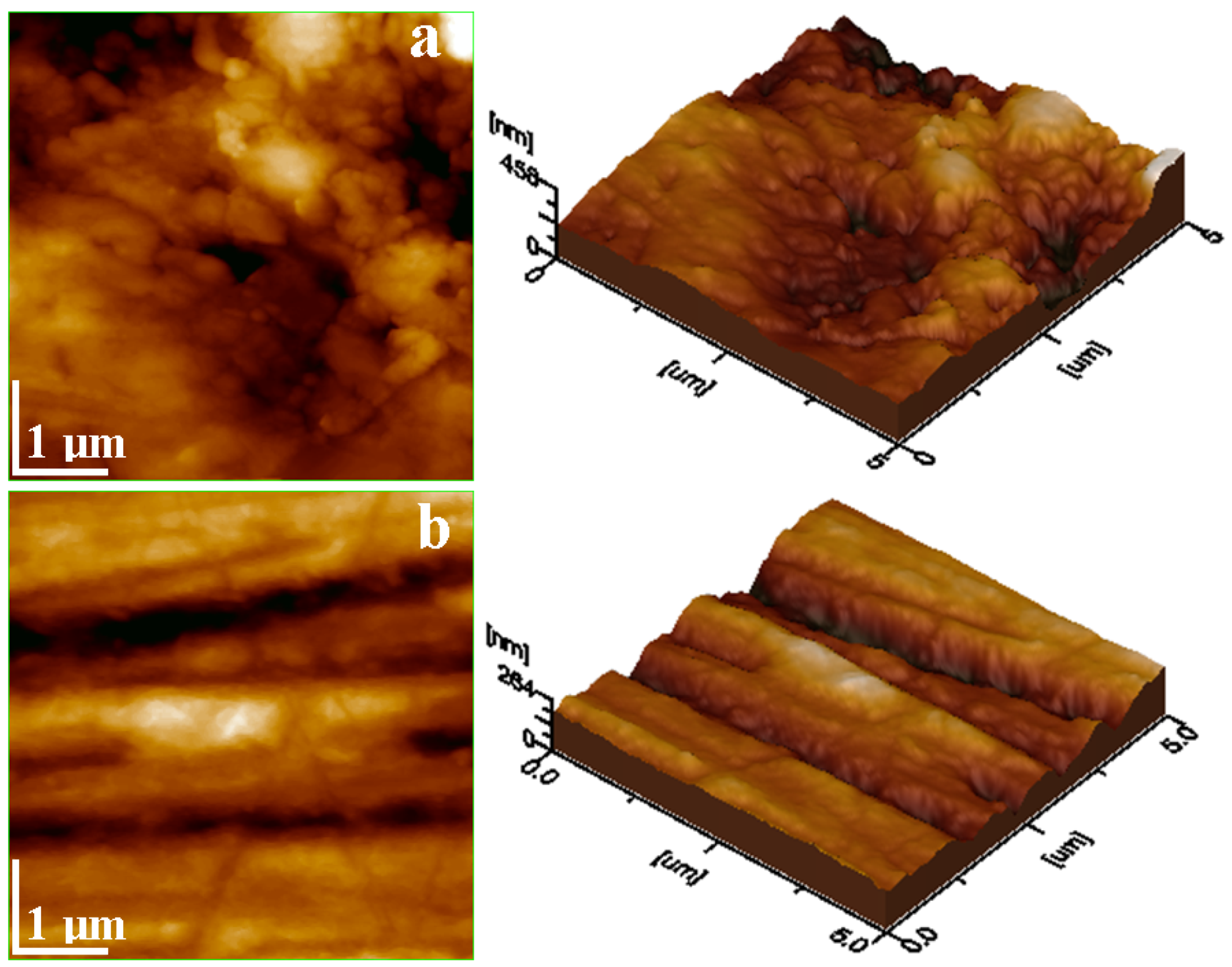
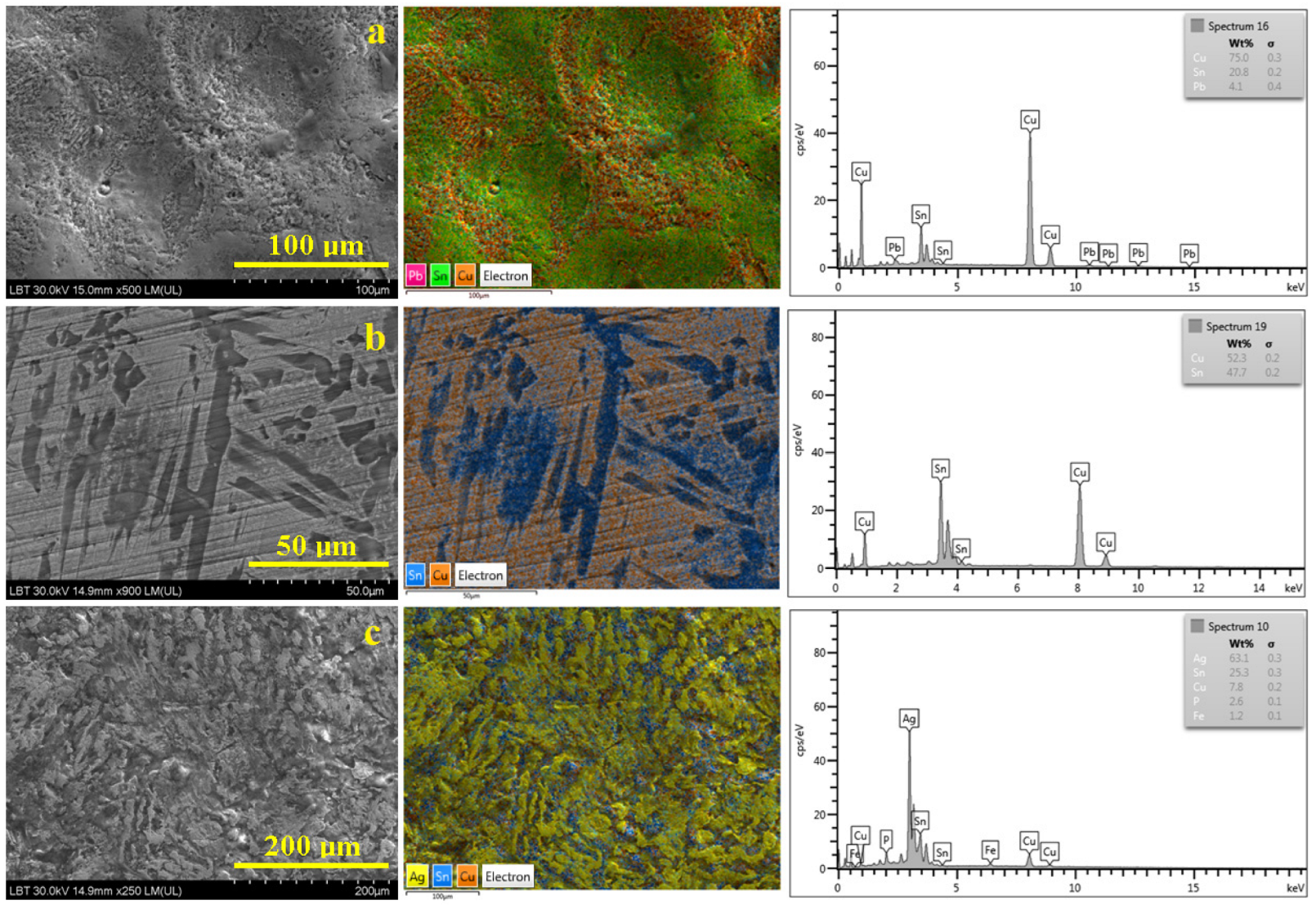
Dacian civilization flourished on the actual territory of Romania during the Late Iron Age and had its peak from the first century BC to the first century AD. They had intensive relations with Hellenistic and Roman civilizations. Therefore, it is difficult to evaluate the origin of some widely spread artifacts discovered in the Dacian archeological sites. The present research is focused on two bronze artifacts (a bronze coin and a mirror fragment) found in the Alun-Piatra Rosie site and a silver coin found in the Ardeu site. Artifacts were investigated with nondestructive methods such as SEM-EDX for microstructural and elemental characterization, and the crystalline phases were investigated using XRD. Bronze coin proves to be an Istrian issue having an elemental composition of 75.0% Cu, 20.8% Sn, and 4.1% Pb, which corresponds to a structure of Cu grains mixed with Cu5.6Sn grains. The bronze mirror fragment has an elemental composition of 52.3% Cu and 47.7% Sn, which corresponds to a structure containing grains of Cu6Sn5 mixed with grains of Cu41Sn11. It has a smooth surface that was investigated with AFM microscopy, which evidences a Ra roughness of 51 nm for the patina surface and 33.7 nm for the clean metal surface, proving the high quality of the original mirror luster of the artifact. The silver coin was identified as a Radulesti–Hunedoara type meaning that it was produced in local Dacian metallurgic workshops. It has an elemental composition of 63.1% Ag, 25.3% Sn, 7.8% Cu, and small traces of P and Fe, which corresponds to a structure of Ag grains and Ag3Sn grains. Silver coins show that Dacians uses Sn as alloying element in their metallurgic workshops. Istrian bronze coin proves to be typical for Hellenistic or Roman bronze type with Sn content no more than 25% Sn. The bronze mirror fragment has an unusual composition that might be a result of al local metal charge elaboration with several Hellenistic and Roman bronze pieces as raw material and an extra Sn addition during the melting process. This material facilitates the polishing properties of the active surface that has a very low roughness even after 2000 years of ground resting and adherent oxides patina.
Keywords: Dacian artifacts; bronze; nondestructive archeometry Dacian artifacts; bronze; nondestructive archeometry