Article

Dynamic Prediction Model of Silicon Content in Molten Iron Based on Comprehensive Characterization of Furnace Temperature
1
Hebei Engineering Research Center for the Intelligentization of Iron Ore Optimization and Ironmaking Raw Materials Preparation Processes, North China University of Science and Technology, Tangshan 063210, China
2
College of Science, North China University of Science and Technology, Tangshan 063210, China
3
Hebei Key Laboratory of Data Science and Application, North China University of Science and Technology, Tangshan 063210, China
4
The Key Laboratory of Engineering Computing in Tangshan City, North China University of Science and Technology, Tangshan 063210, China
5
Tangshan Intelligent Industry and Image Processing Technology Innovation Center, North China University of Science and Technology, Tangshan 063210, China
6
College of Metallurgy and Energy, North China University of Science and Technology, Tangshan 063210, China
*
Author to whom correspondence should be addressed.
Metals 2022, 12(9), 1403; https://doi.org/10.3390/met12091403
Submission received: 26 June 2022 / Revised: 17 August 2022 / Accepted: 18 August 2022 / Published: 24 August 2022
(This article belongs to the Special Issue Big Data of Steel and Low Carbon Intelligent Smelting)

Abstract

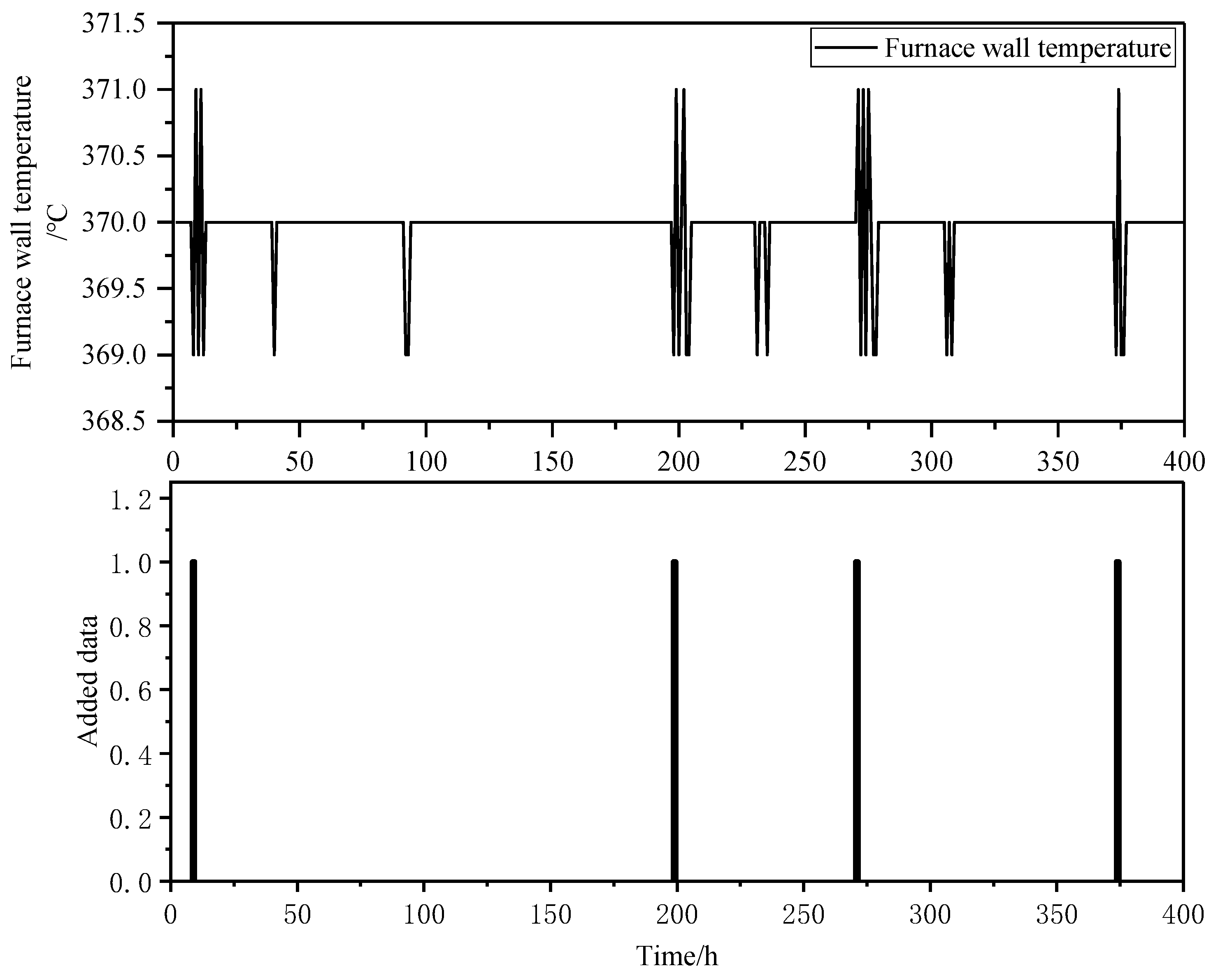
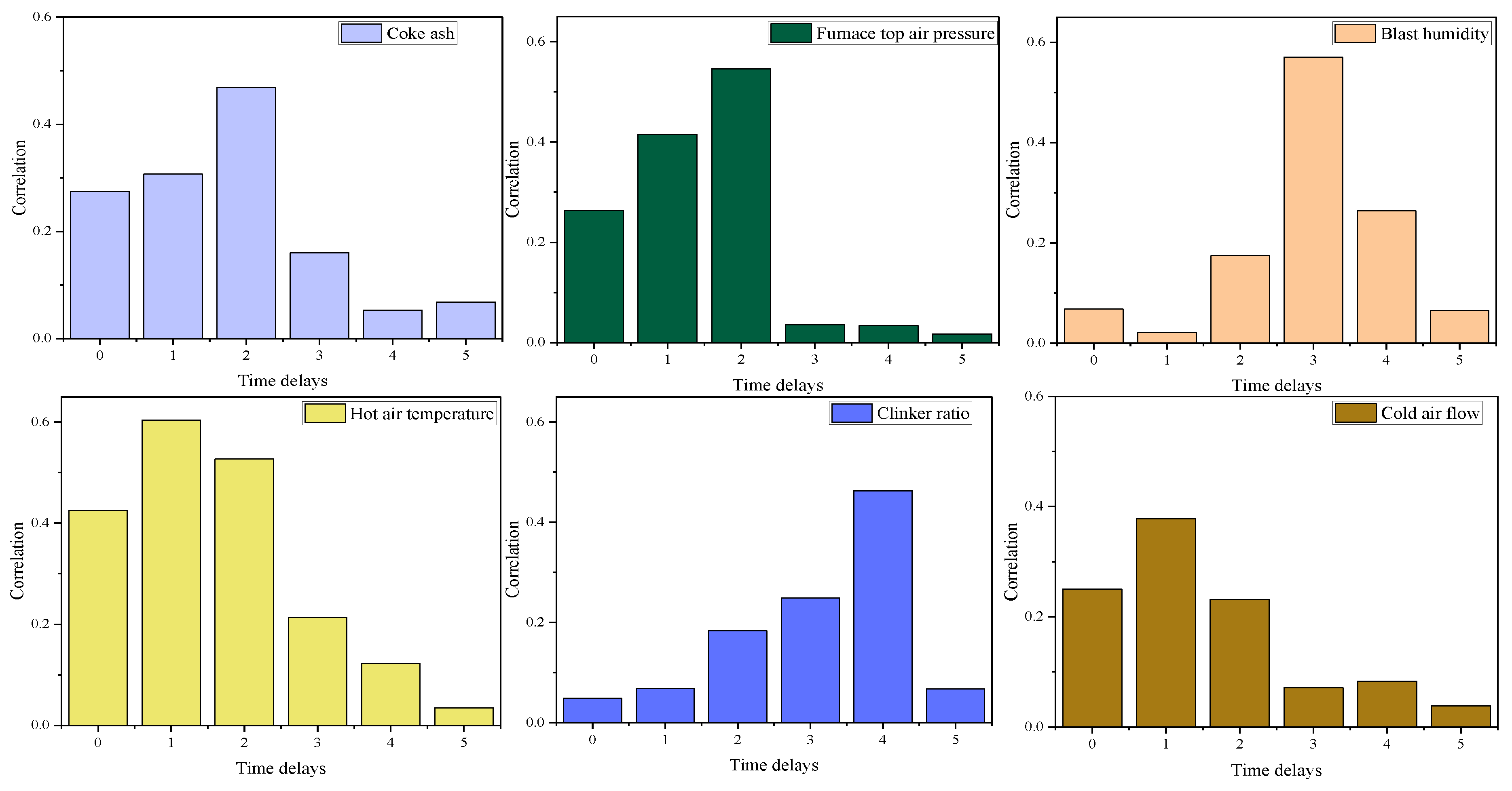
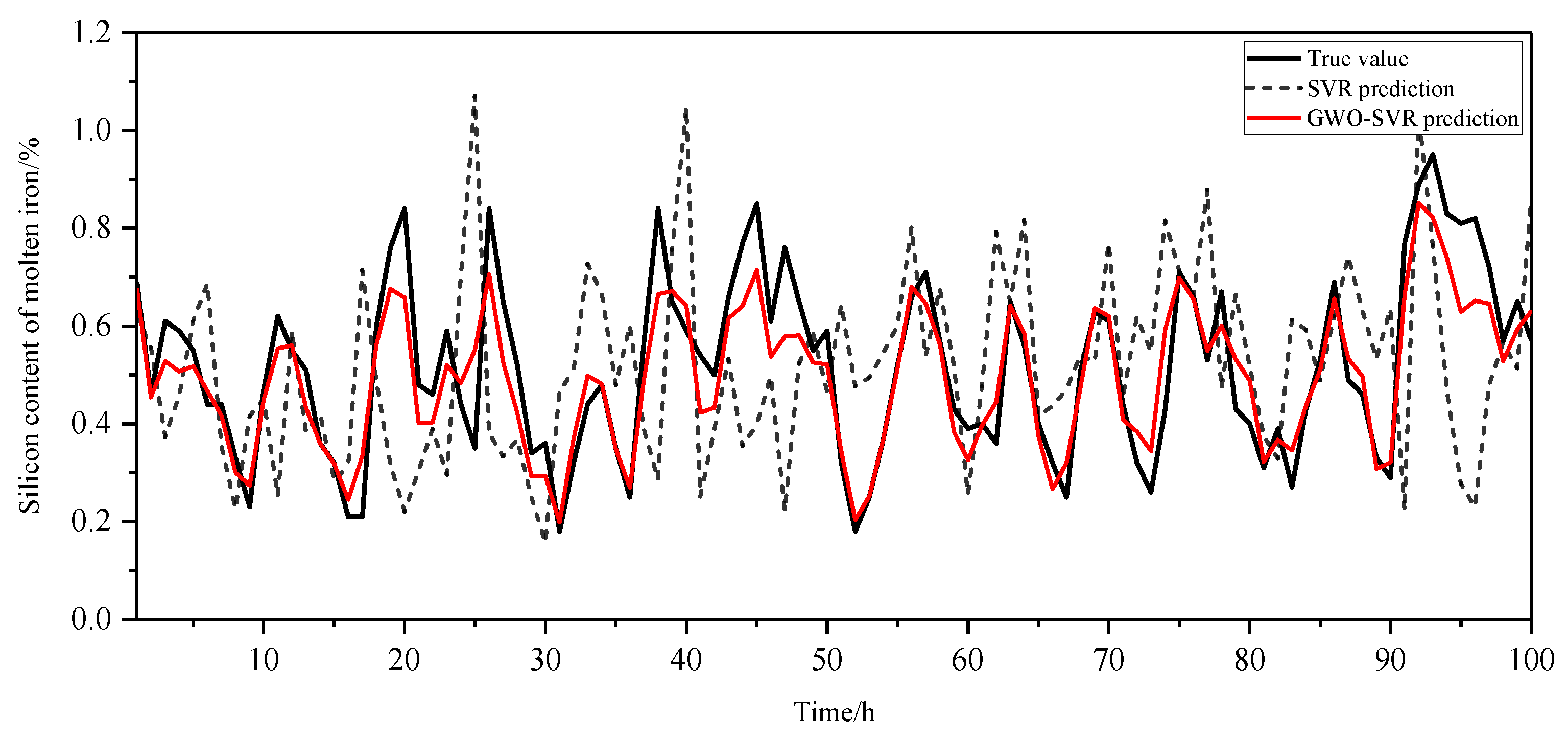
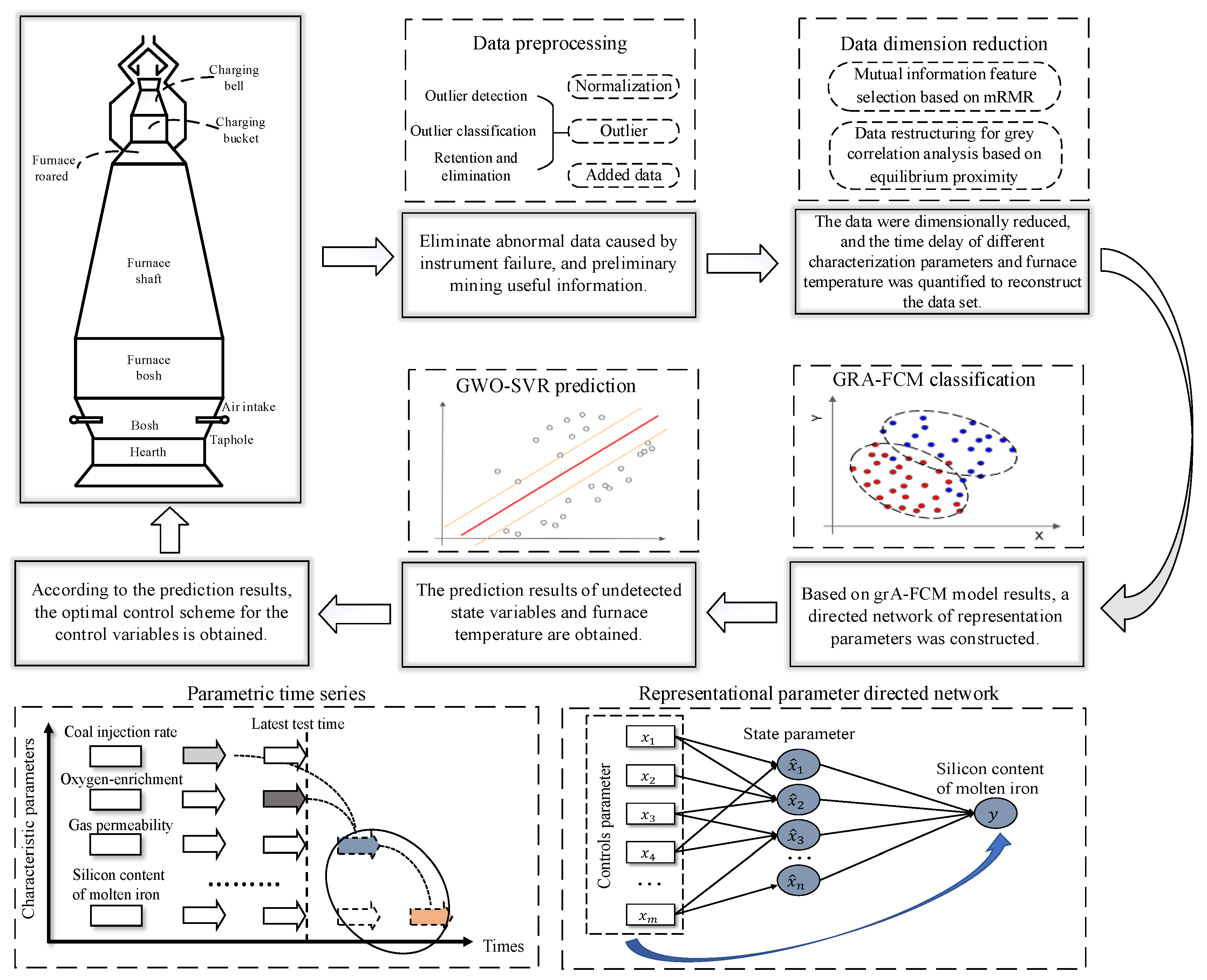
The silicon content of the molten iron is an important indicator of the furnace temperature trend in blast furnace smelting. In view of the multi-scale, non-linear, large time lag and strong coupling characteristics of the blast furnace smelting process, a dynamic prediction model for the silicon content of molten iron is established based on the analysis of comprehensive furnace temperature characterization data. The isolated forest algorithm is used to detect anomalies and analyze the causes of the anomalies in conjunction with the blast furnace mechanism. The maximum correlation-minimum redundancy mutual information feature selection method is used to reduce the dimensionality of the furnace temperature characterization data. The grey correlation analysis with balanced proximity is used to obtain the correlation between the furnace temperature characterization parameters and the silicon content of the molten iron at different time lags and to integrate the furnace temperature characterization data set. The GRA-FCM model is used to divide the parameter set of the integrated furnace temperature characterization and construct a parameter directed network from multiple control parameters to multiple state parameters. The GWO-SVR model is used to predict the state parameters of each delay step by step to achieve dynamic prediction of the silicon content of the molten iron. Finally, the control parameters are adjusted backwards according to the prediction results of the state parameters and the silicon content of the molten iron and expert experience to achieve accurate control of the furnace temperature. Starting from the actual production situation of a blast furnace, the characteristic parameters are divided into control parameters and state parameters. This model establishes a multi-step dynamic prediction and closed-loop control model of “control parameters-state parameters-silicon content in hot metal-control parameters”.
Keywords: blast furnace temperature; silicon content of iron; big data of steel; dynamic forecasting blast furnace temperature; silicon content of iron; big data of steel; dynamic forecasting