Article

An Effective Approach to Acquire the Impurity Diffusion Coefficients in Binary Alloys with Quantified Uncertainties

1
State Key Laboratory of Powder Metallurgy, Central South University, Changsha 410083, China
2
National Engineering Laboratory for Modern Materials Surface Engineering Technology, The Key Lab of Guangdong for Modern Surface Engineering Technology, Guangdong Institute of New Materials, Guangdong Academy of Science, Guangzhou 510651, China
*
Authors to whom correspondence should be addressed.
Metals 2021, 11(5), 809; https://doi.org/10.3390/met11050809
Submission received: 3 April 2021 / Revised: 29 April 2021 / Accepted: 12 May 2021 / Published: 16 May 2021

Abstract

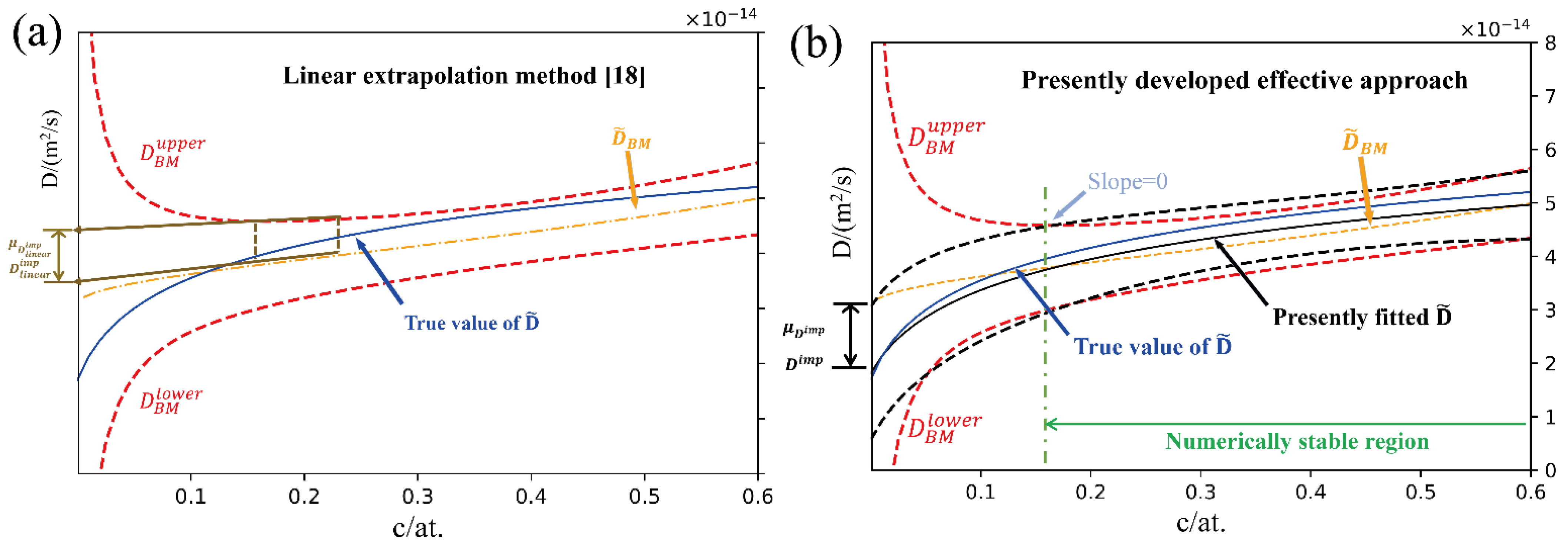
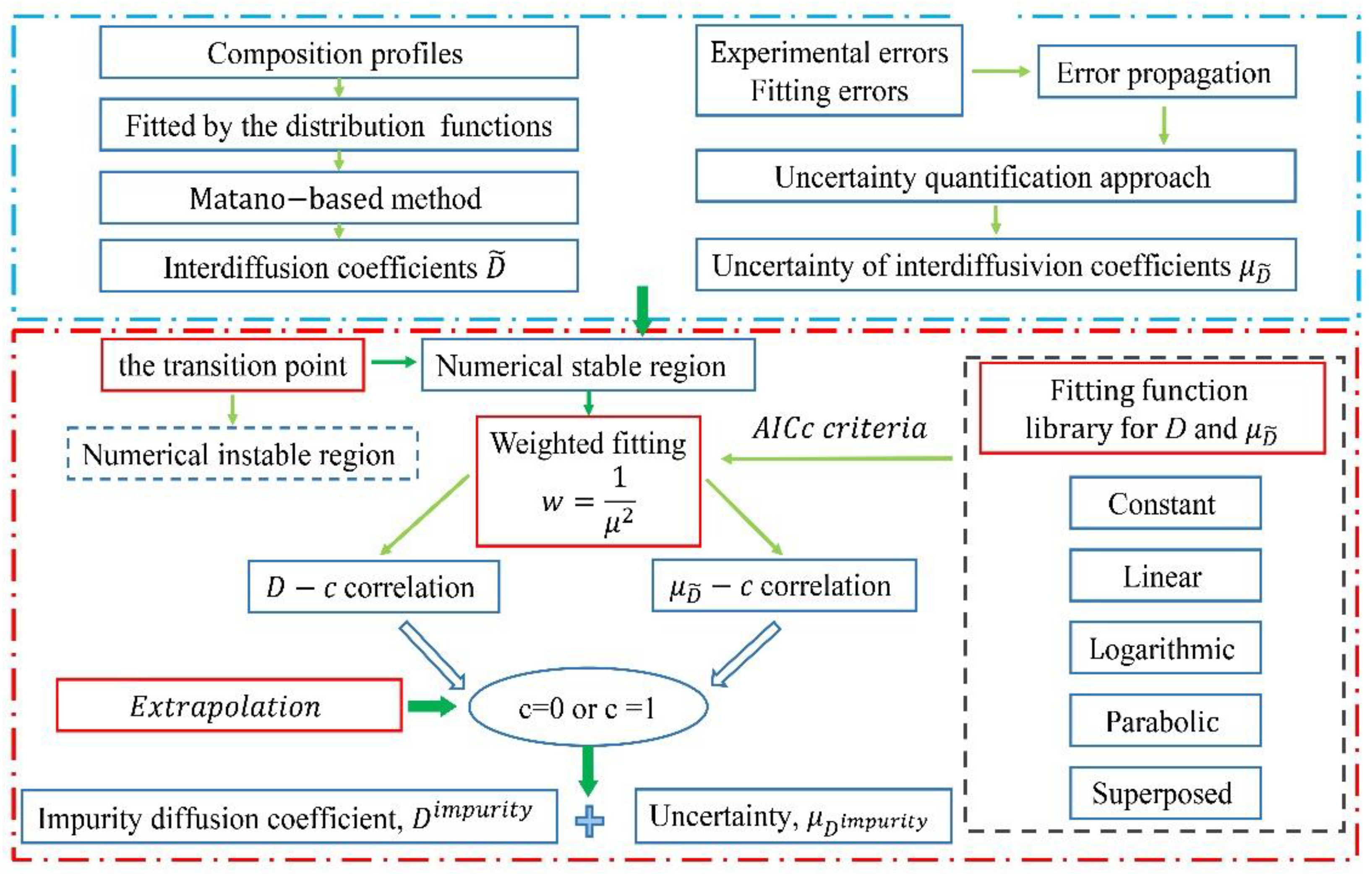
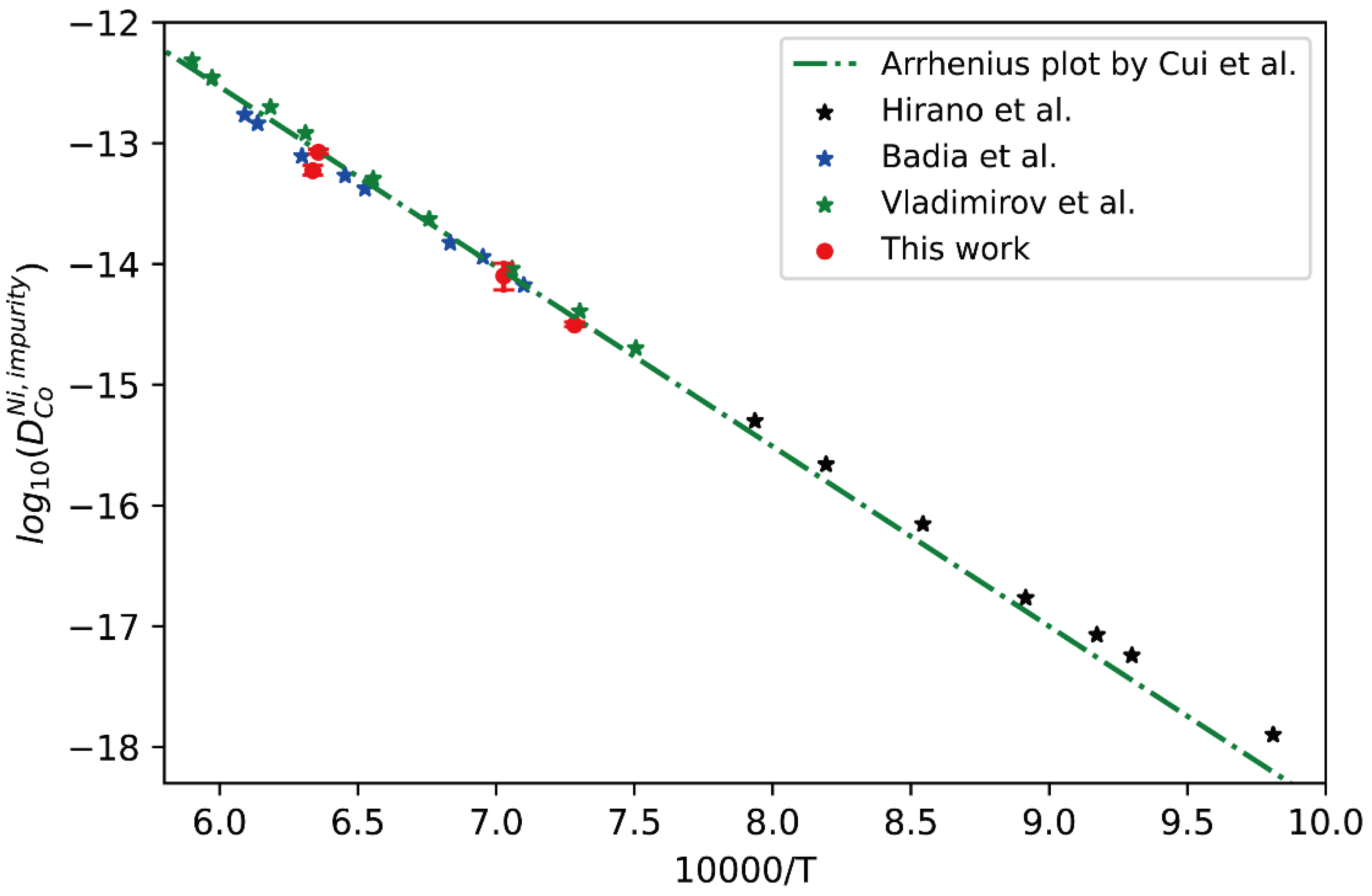
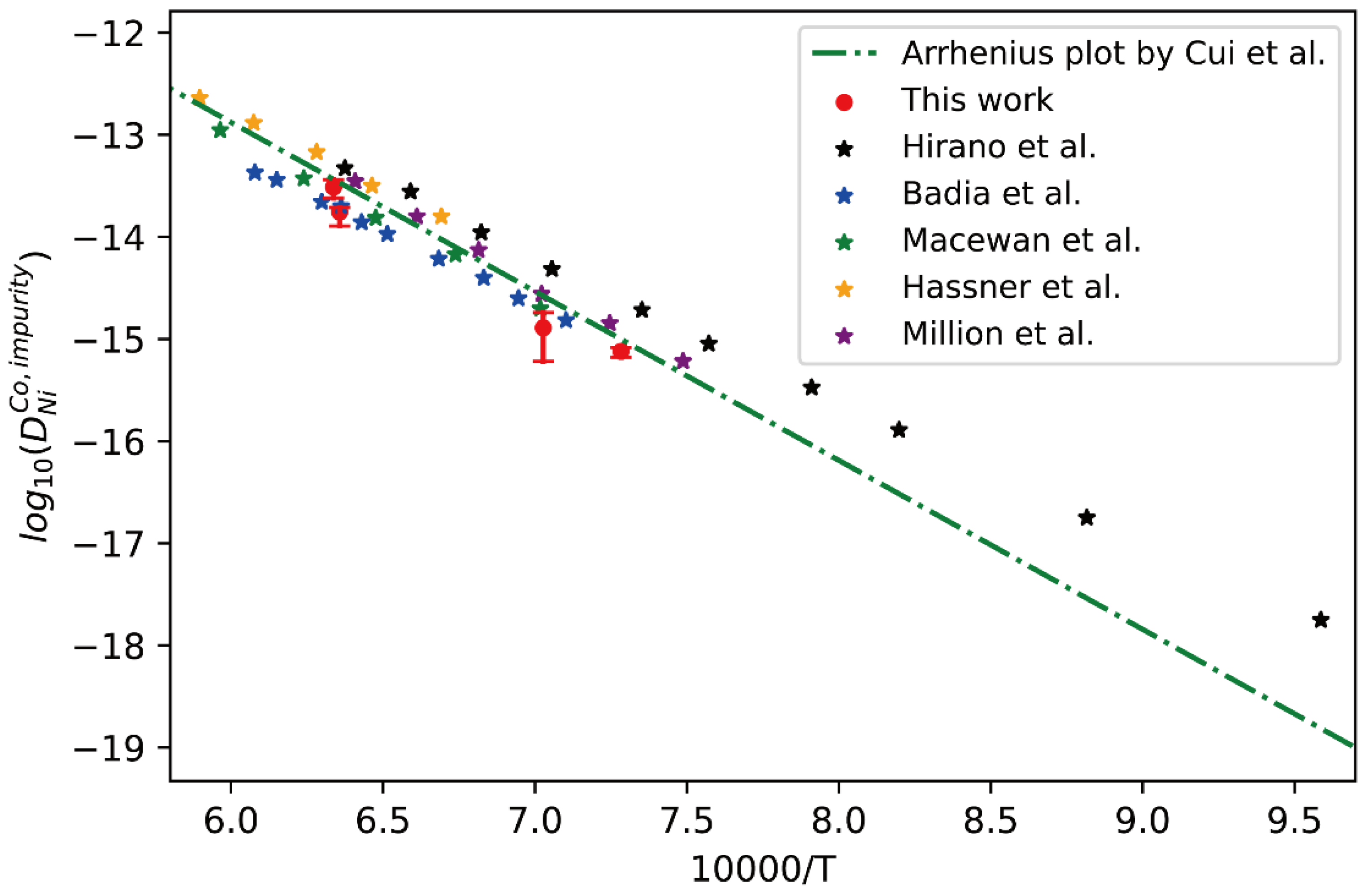
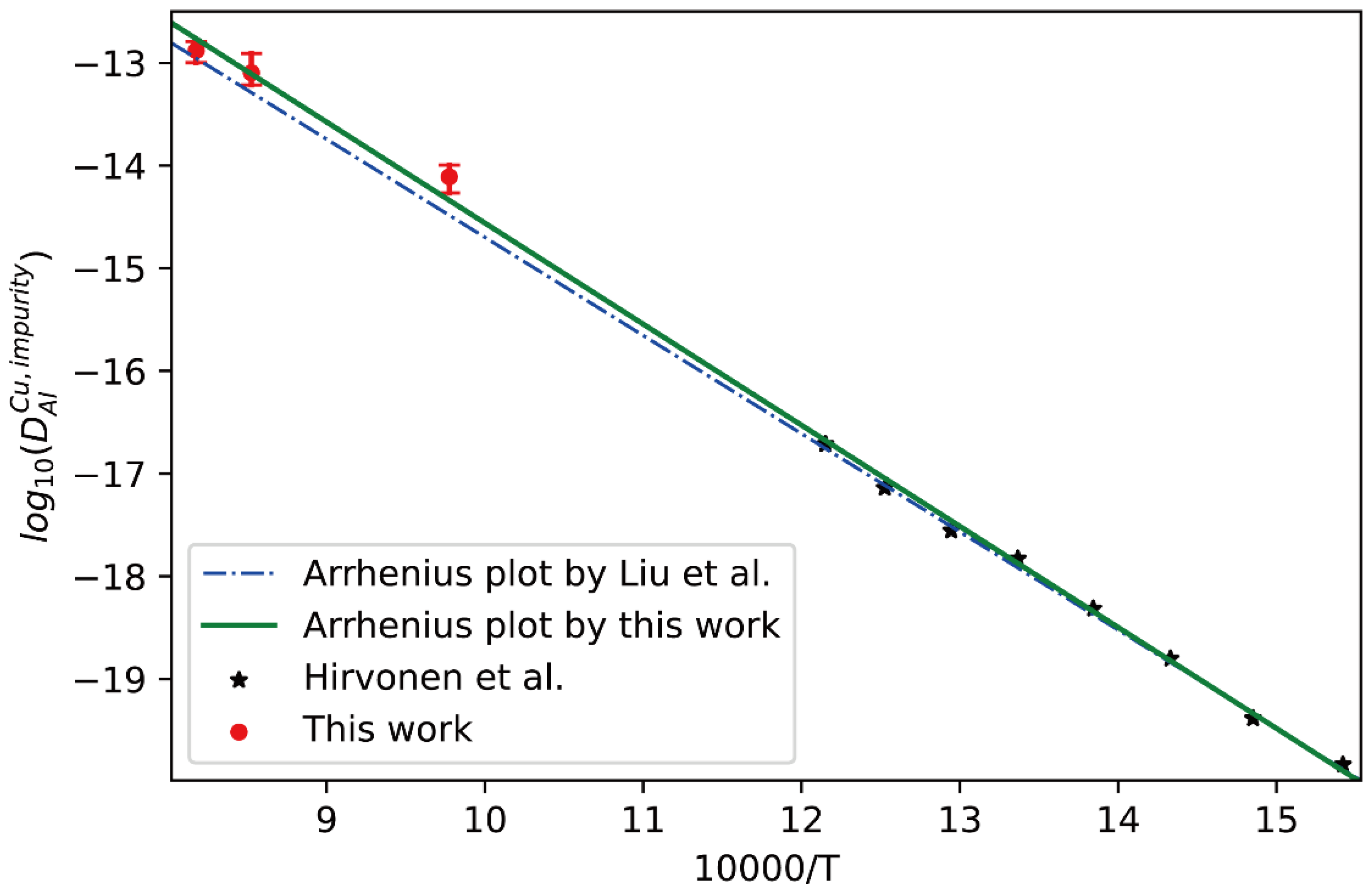
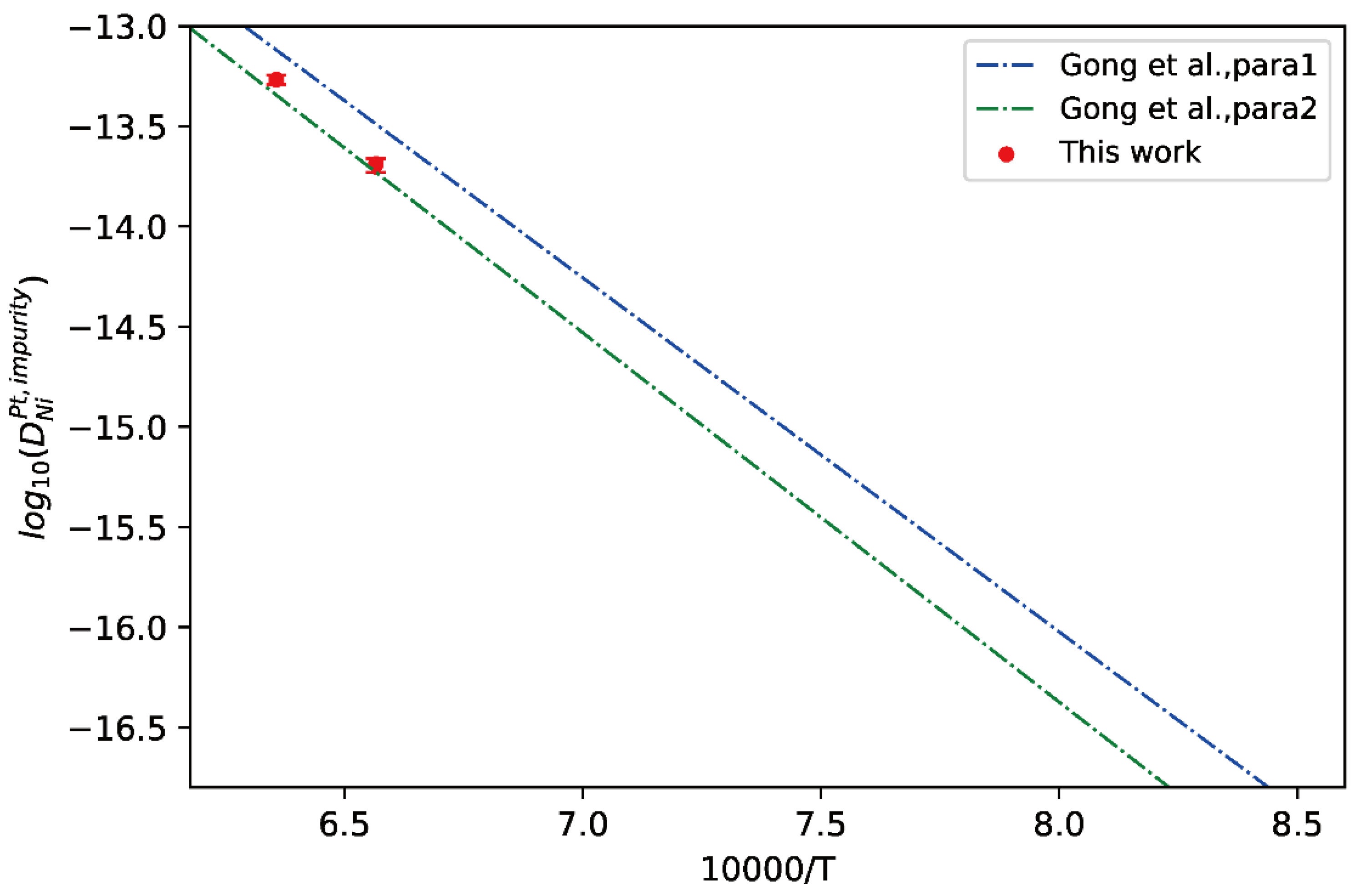
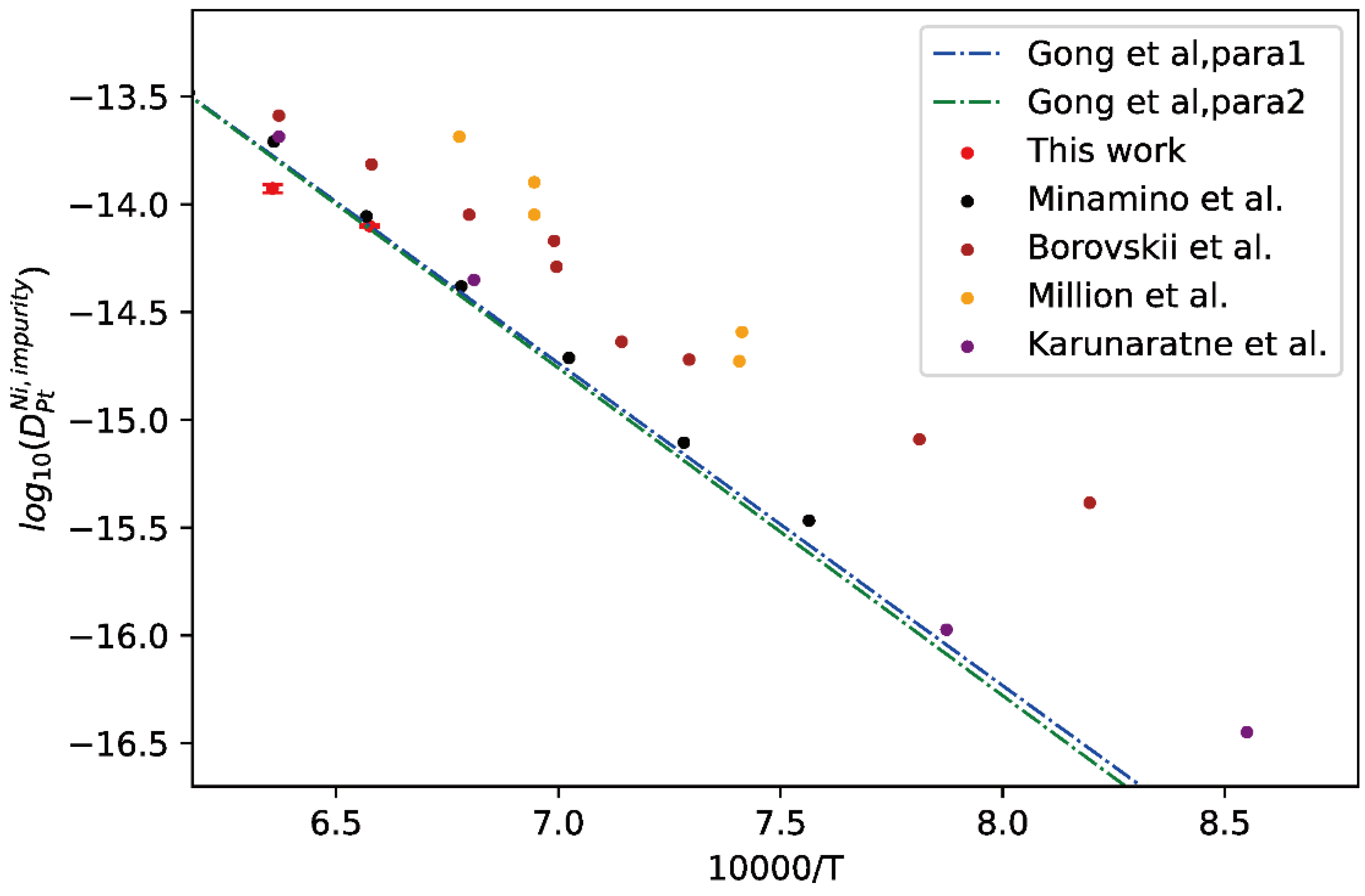
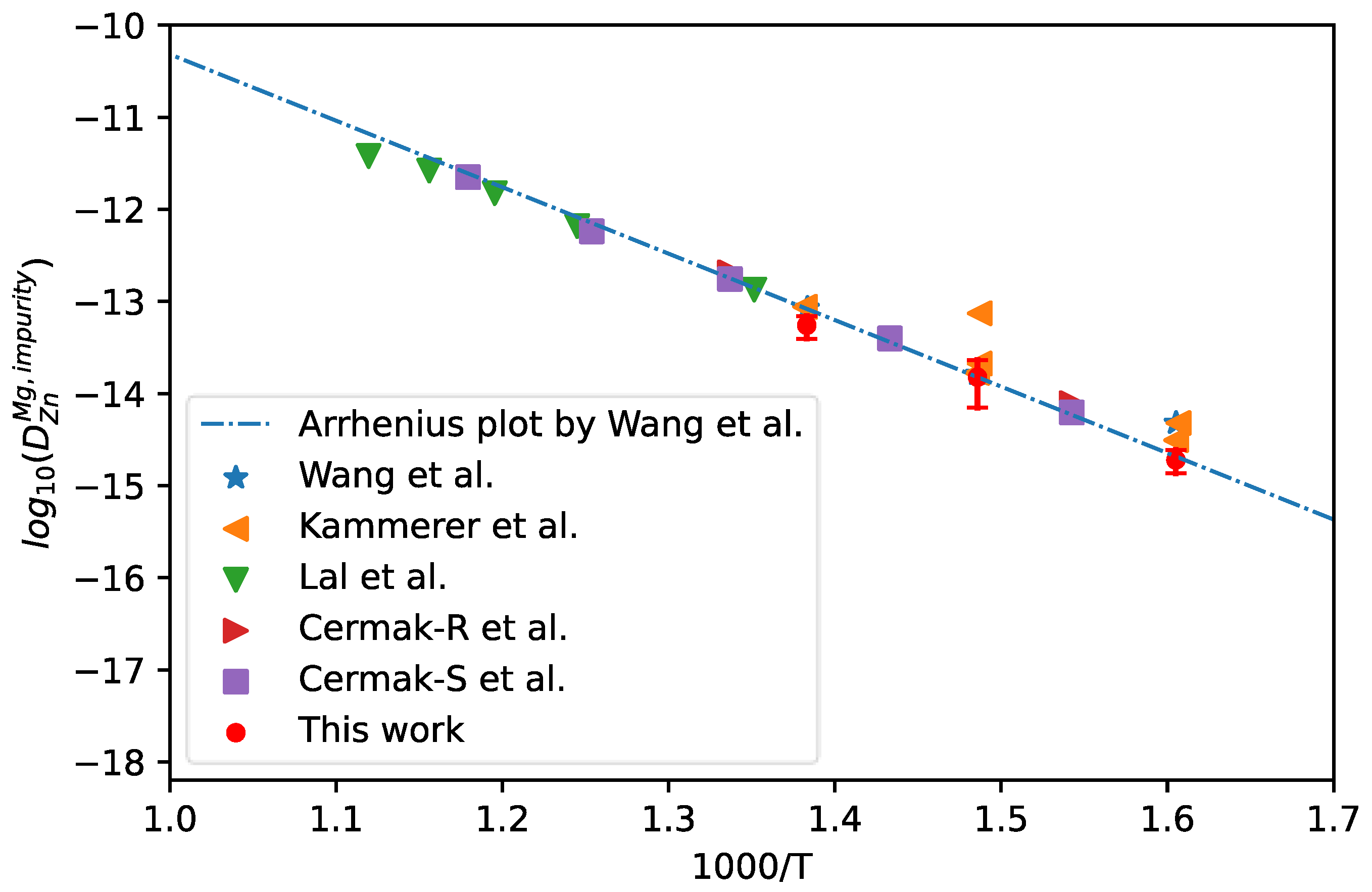
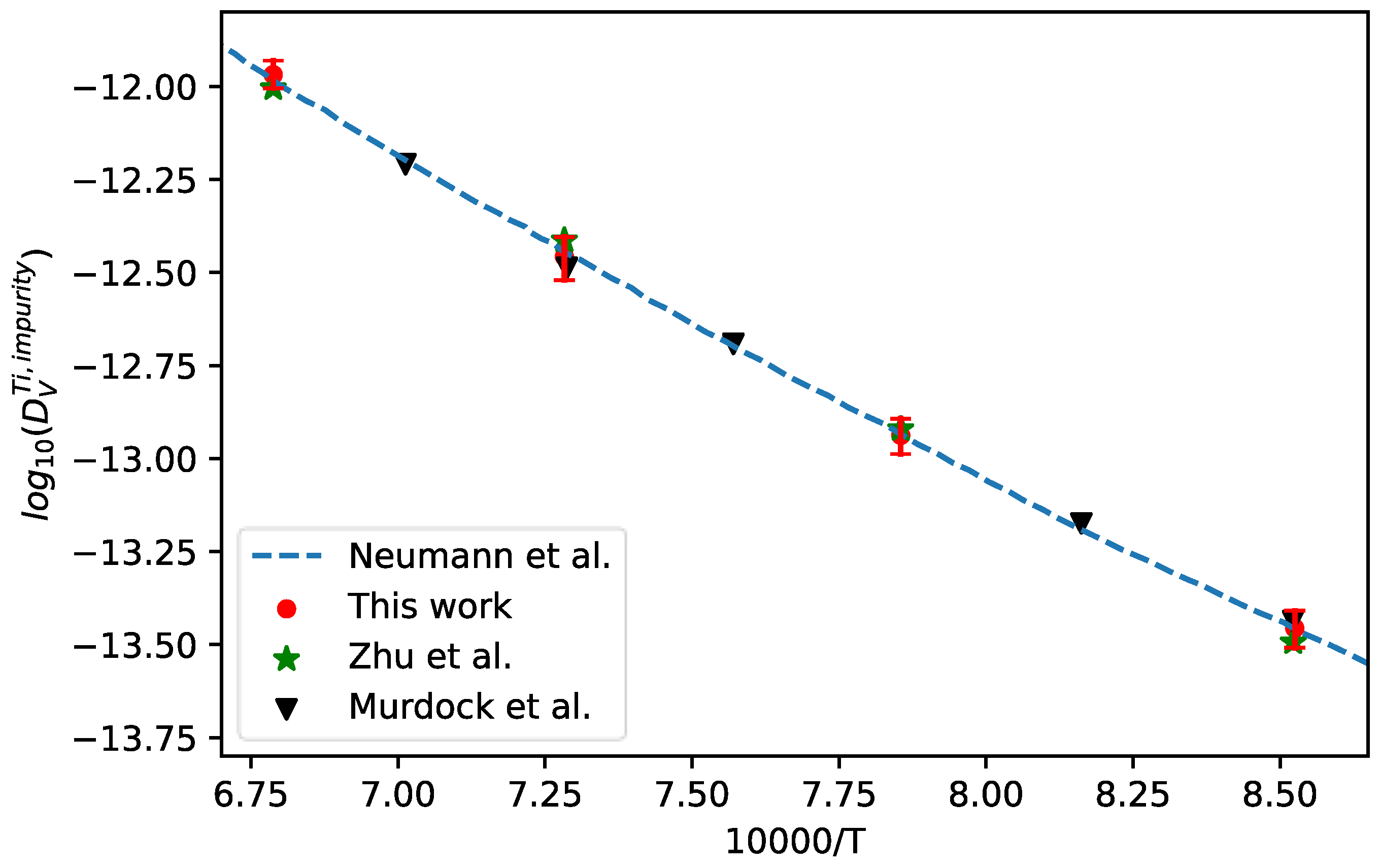
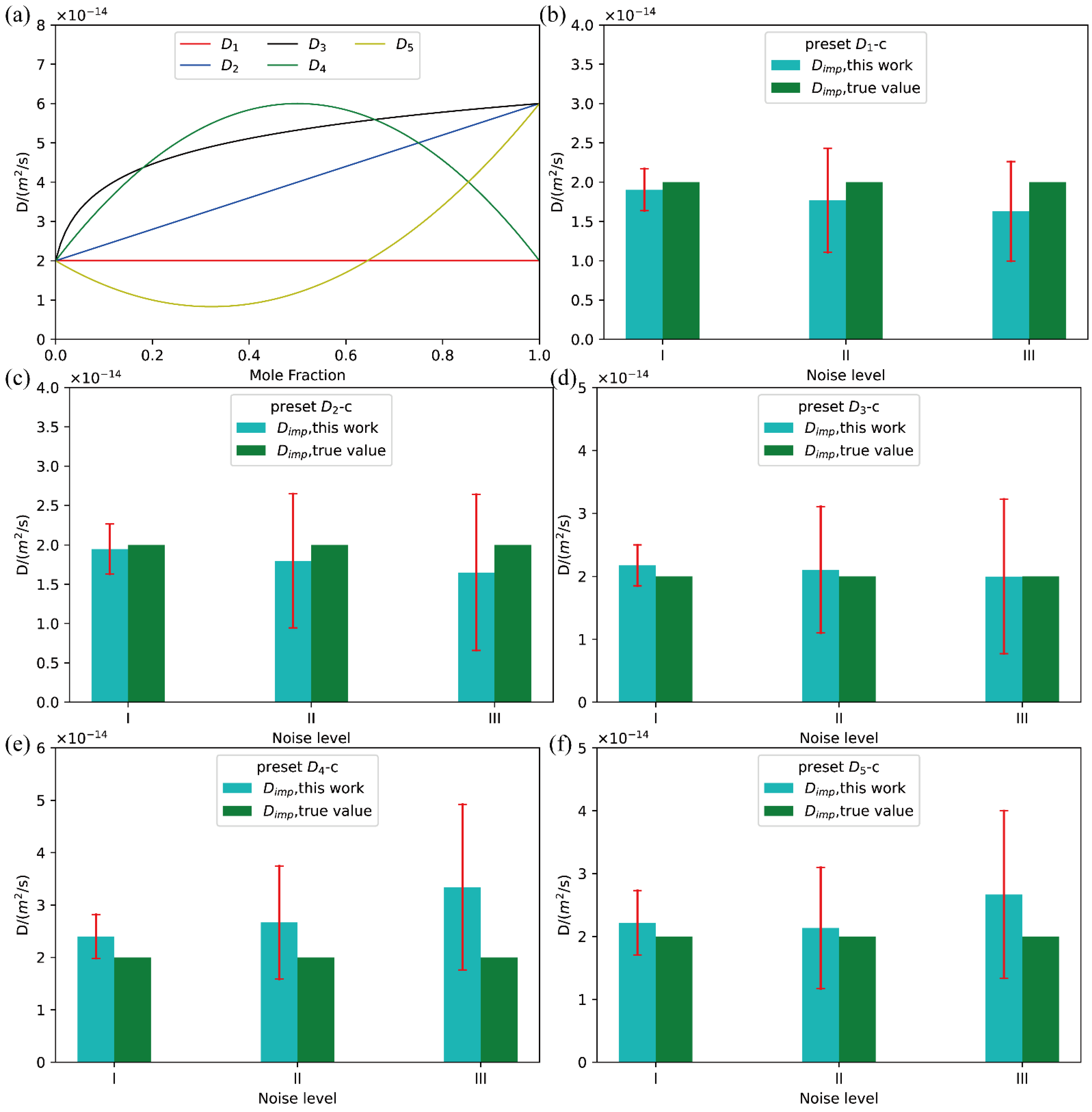
In this paper, we started from the composition-dependent interdiffusion coefficients with quantified uncertainties in binary alloys by integrating the Matano-based method, distribution functions, and uncertainty propagation approach. After carefully defining the numerically stable region for the interdiffusion coefficients, the suitable pre-set functions were screened to achieve the reasonable fit to the D-c and μ-c data according to the Akaike information criterion. With the fitted D-c and μ-c curves, the impurity diffusion coefficients with uncertainties can be directly determined. Benchmark tests in five hypothetical binary systems with different preset D-c relations were then utilized to validate the presently effective approach, followed by practical applications in five real cases, i.e., fcc Ni-Co, fcc Cu-Al, fcc Pt-Ni, hcp Mg-Zn, and bcc Ti-V alloys. The impurity diffusion coefficients with uncertainties derived by the presently effective approach were found to be in excellent agreement with the data by tracer experiments, indicating that this effective approach can serve as a standard one for acquiring the high-quality impurity diffusion coefficients in binary alloys with quantified uncertainties, especially for the noble metals and the cases without suitable radioactive tracer isotopes.
Keywords: impurity diffusion coefficient; uncertainty quantification; binary alloys; Akaike information criterion; noble metals; tracer isotope impurity diffusion coefficient; uncertainty quantification; binary alloys; Akaike information criterion; noble metals; tracer isotope