
Article

Prediction of Strain Path Changing Effect on Forming Limits of AA 6111-T4 Based on a Shear Ductile Fracture Criterion


1
School of Mechatronics and Mold Engineering, Taizhou Vocational College of Science & Technology, Taizhou 318020, China
2
School of Mechanical Engineering, Xi’an Jiaotong University, 28 Xianning West Road, Xi’an 710049, China
3
State Key Laboratory of High-Performance Complex Manufacturing, Central South University, Changsha 410083, China
*
Author to whom correspondence should be addressed.
Metals 2021, 11(4), 546; https://doi.org/10.3390/met11040546
Submission received: 27 February 2021 / Revised: 15 March 2021 / Accepted: 23 March 2021 / Published: 26 March 2021
(This article belongs to the Special Issue Forming of Aluminium Alloys)

Abstract

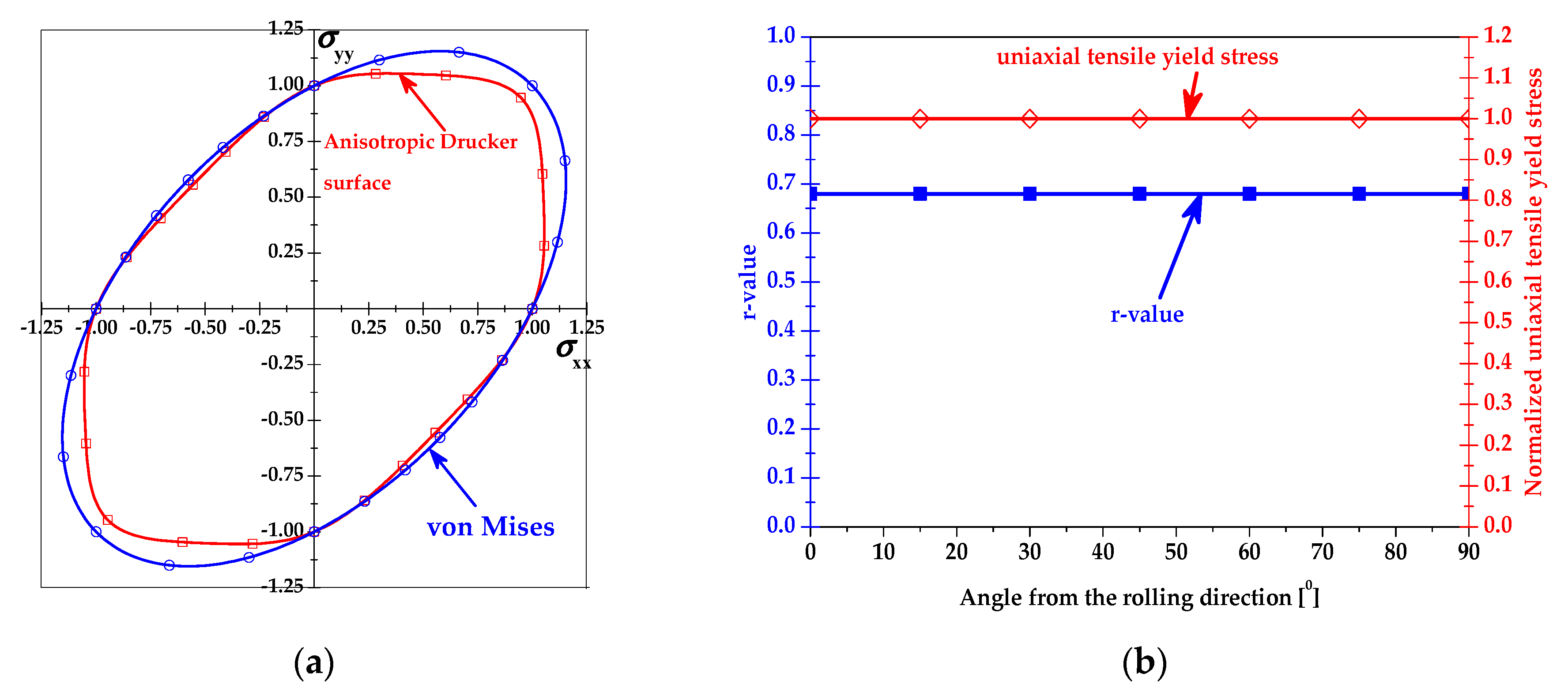
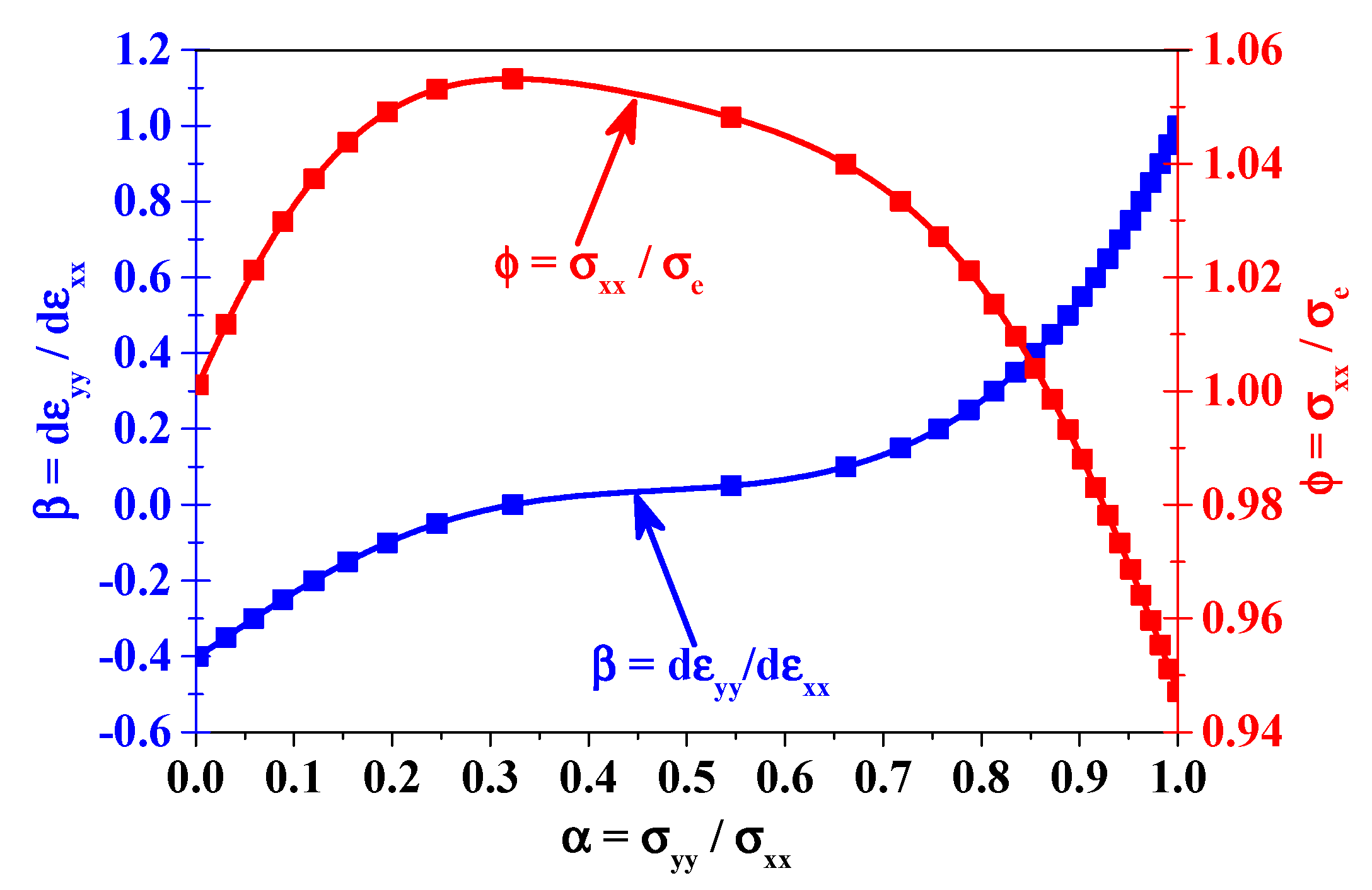
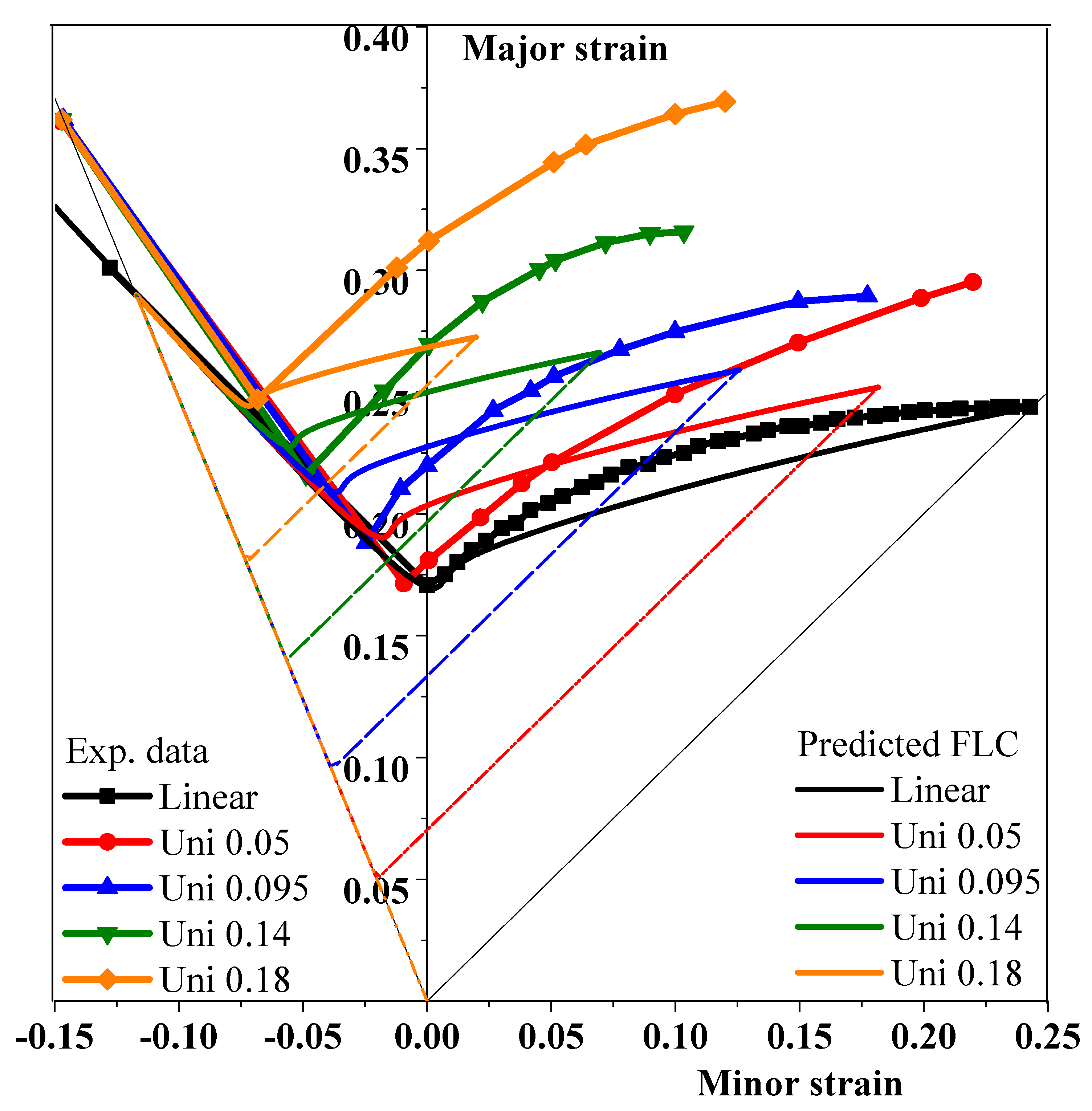
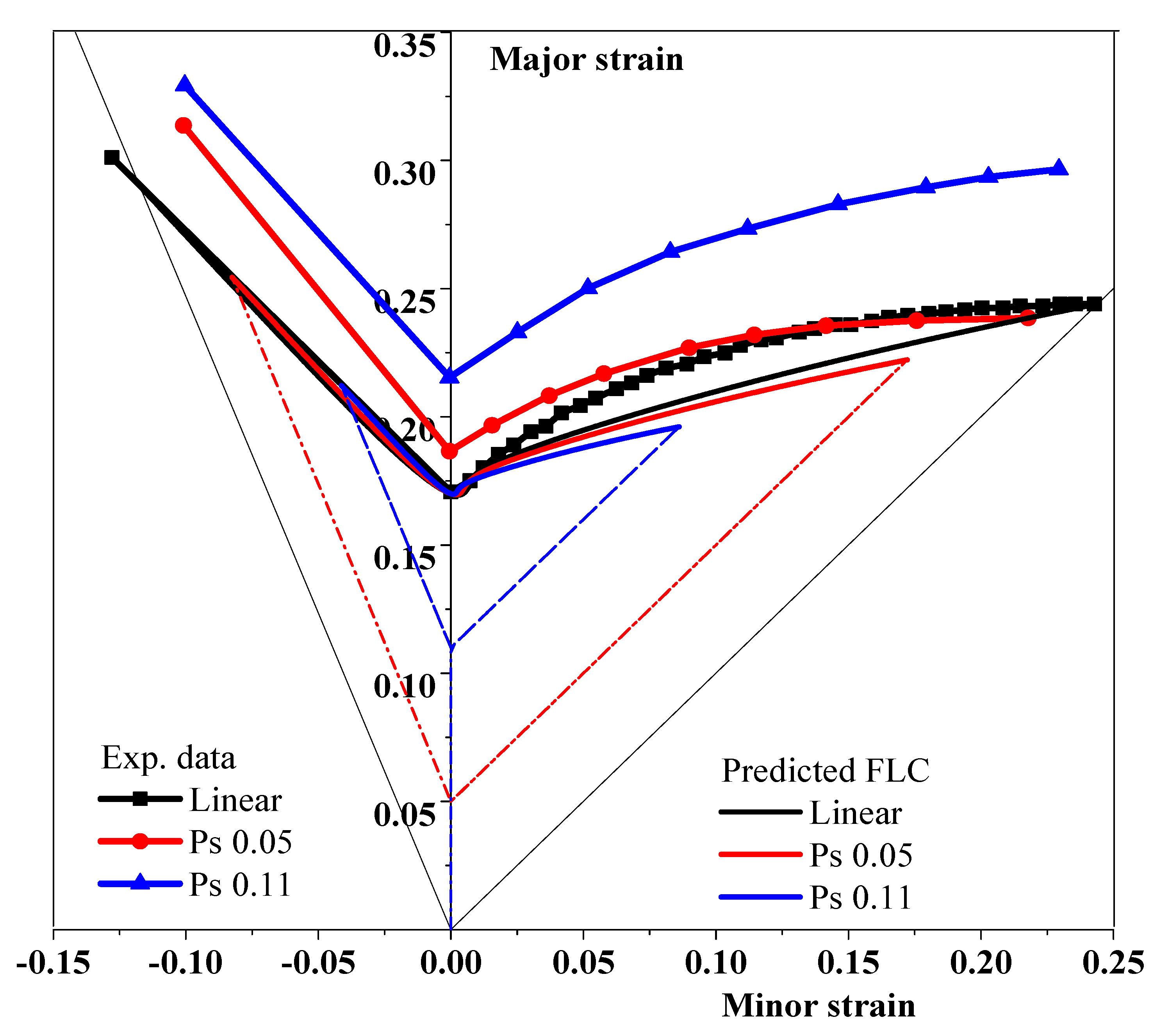
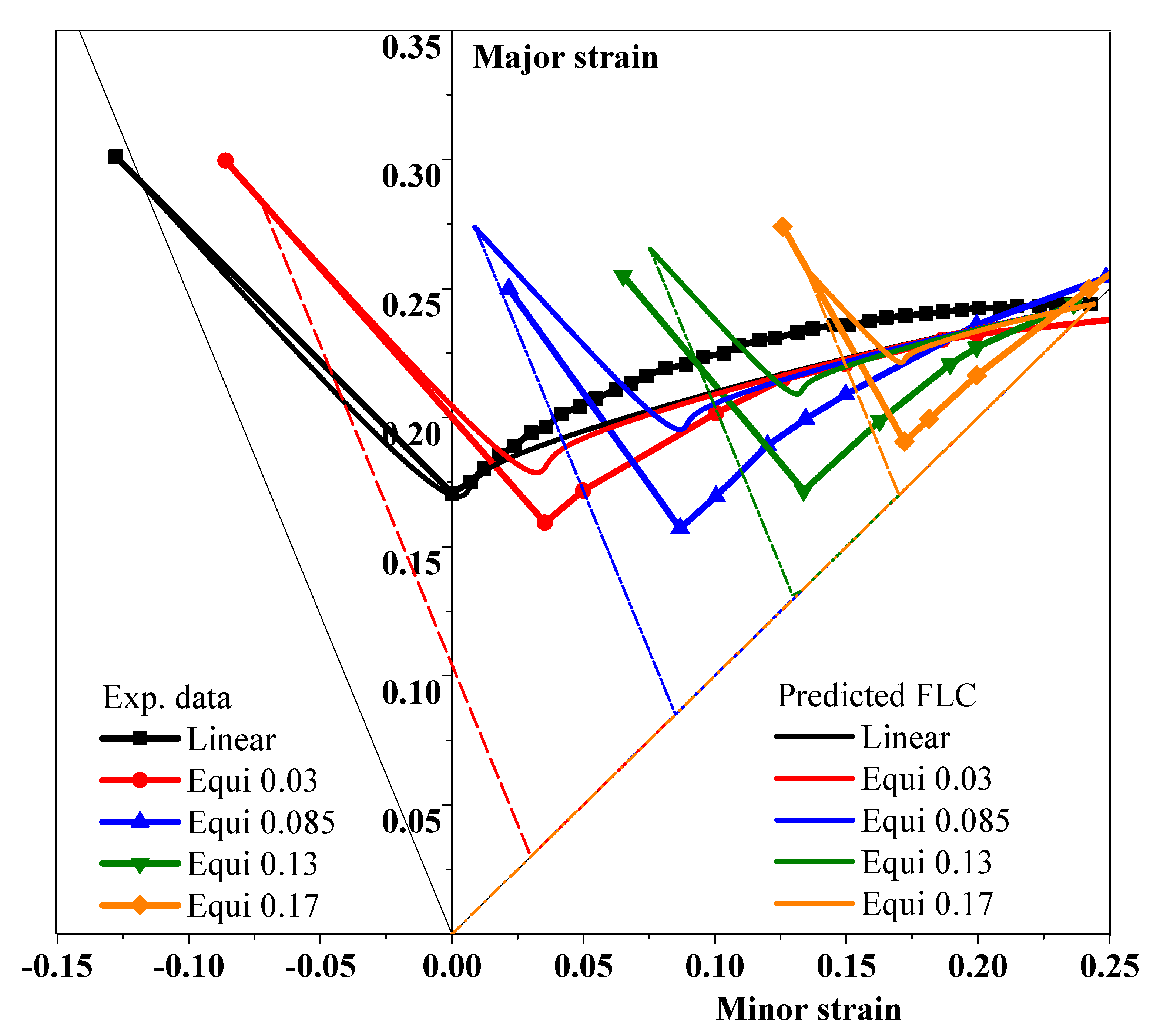
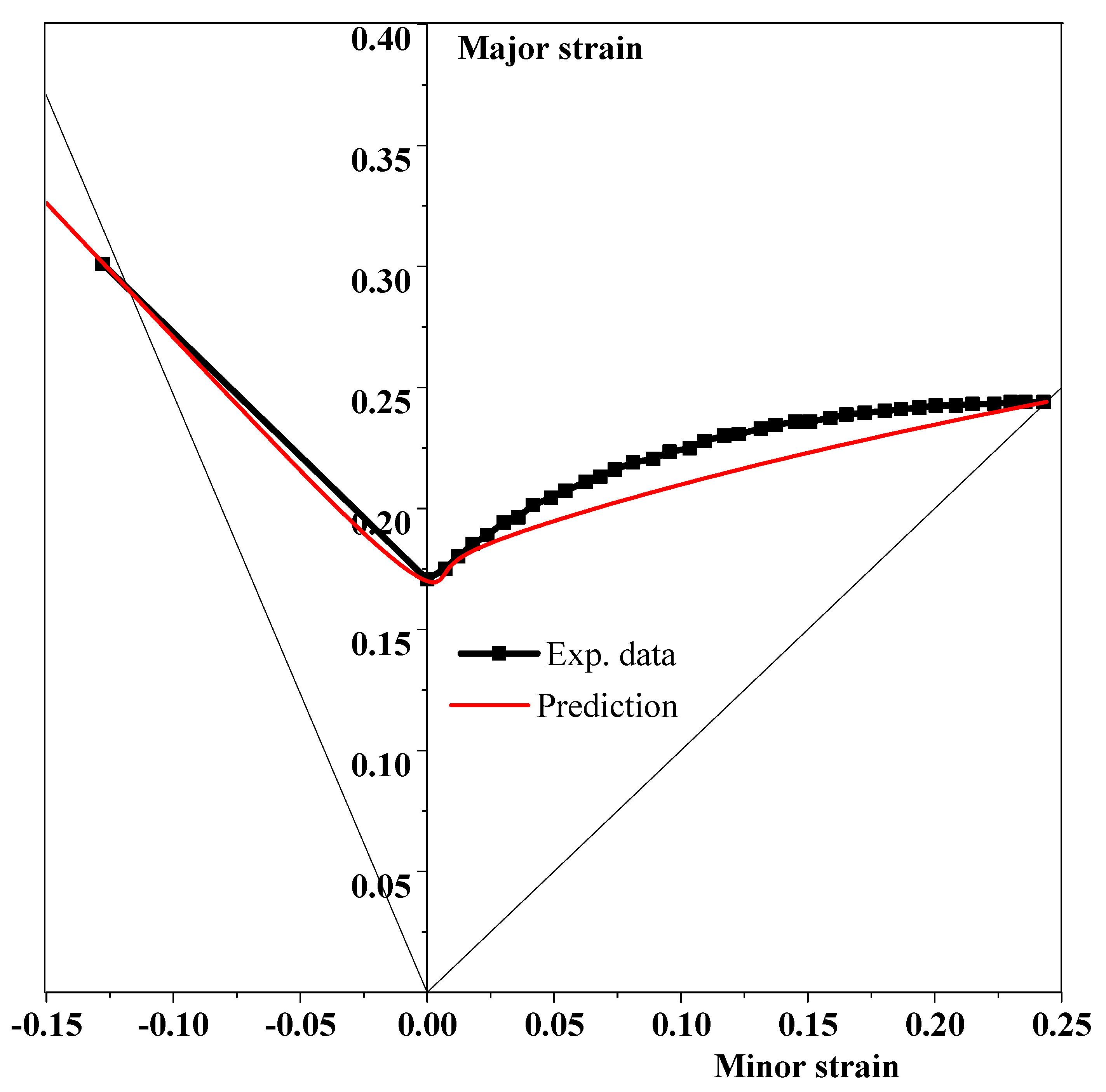
Strain path changing is a phenomenon in the stamping of complex panels or multiple-step stamping processes. In this study, the influence of the strain path changing effect was investigated and assessed for an aluminum alloy of 6111-T4 with a shear ductile fracture criterion. Plastic deformation of the alloy was modeled by an anisotropic Drucker yield function with the assumption of normal anisotropy. Then the shear ductile fracture criterion was calibrated by the fracture strains at uniaxial tension, plane strain tension and equibiaxial tension under proportional loading conditions. The calibrated fracture criterion was utilized to predict forming limit curves (FLCs) of the alloy stretched under bilinear strain paths. The analyzed bilinear strain paths included biaxial tension after uniaxial tension, plane strain tension and equibiaxial tension. The predicted FLCs of bilinear strain paths were compared with experimental results. The comparison showed that the shear ductile fracture criterion could reasonably describe the effect of strain path changing on FLCs, but its accuracy was poor for some bilinear paths, such as uniaxial tension followed by equibiaxial tension and equibiaxial tension followed by plane strain tension. Kinematic hardening is suggested to substitute the isotropic hardening assumption for better prediction of FLCs with strain path changing effect.
Keywords: shear ductile fracture; forming limit curve; strain path changing; sheet metal forming shear ductile fracture; forming limit curve; strain path changing; sheet metal forming