1. Introduction
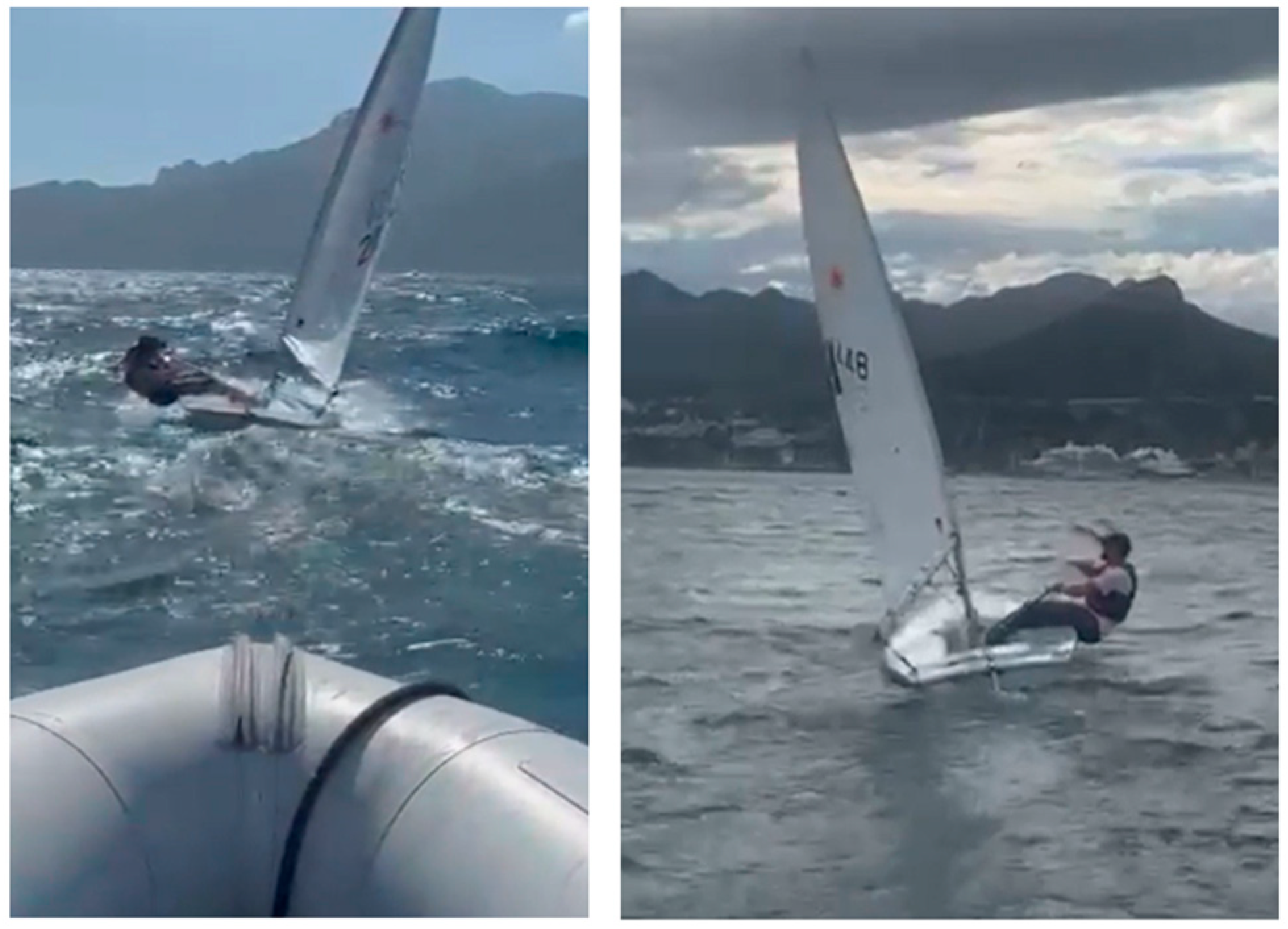
The Laser dinghy class has maintained its position as one of the most widely contested single-handed Olympic sailing disciplines for over five decades, attracting competitors across all levels of expertise and geographical regions [
1]. The physical and technical demands placed upon Laser sailors are considerable, requiring not only refined boat-handling skills and tactical acumen but also exceptional muscular endurance, explosive power, and postural control. Within the repertoire of maneuvers executed during competitive racing, pumping occupies a distinctive position. This technique—characterized by rhythmic, coordinated oscillations of both sail and sailor’s body mass—serves to generate supplementary propulsion when natural wind conditions prove marginal or unstable. Whilst pumping is regulated under World Sailing Racing Rules of Sailing [
2], permitting its use only under specific circumstances, mastery of this maneuver remains integral to competitive success, particularly in light and variable wind regimes.
From a biomechanical standpoint, pumping presents a complex motor task. The sailor must execute rapid, repetitive flexion–extension cycles involving the upper limbs, trunk, and lower limbs in a coordinated sequence, whilst simultaneously maintaining dynamic equilibrium on an inherently unstable platform [
3]. These movements generate substantial musculoskeletal loads, with force transmission occurring through multiple kinetic chains and across numerous anatomical structures. The cyclical nature of pumping—alternating between concentric and eccentric muscle actions at high frequency—distinguishes it fundamentally from the more extensively studied hiking position. Hiking, by contrast, involves sustained isometric contraction of the knee and trunk extensors to counterbalance heeling moments, and has been the subject of considerable research attention over the past three decades [
4,
5]. Pumping, however, has received comparatively little systematic investigation, despite anecdotal reports from athletes and coaches suggesting that it imposes unique physiological stresses and may contribute to specific patterns of musculoskeletal discomfort and injury.
This gap in knowledge is particularly salient given emerging evidence from related aquatic sports suggesting that repetitive, high-intensity dynamic movements can precipitate early-onset muscular fatigue, metabolic disturbances including lactate accumulation, and micro-traumatic tissue damage [
6]. Epidemiological data compiled by Neville and Folland indicate that sailing carries a non-negligible injury burden, with reported incidence rates of approximately 0.2 injuries per athlete per year among elite competitors [
7]. Nathanson and colleagues documented injury and illness patterns through survey methodology, identifying musculoskeletal complaints as predominant concerns [
8]. Specific anatomical regions appear particularly vulnerable: Kostański et al. reported elevated prevalence of lower back pain among youth Optimist sailors [
9], whilst Jansen et al. investigated discomfort associated with prolonged hiking and proposed ergonomic interventions to enhance comfort and reduce injury risk [
10].
The etiology of sailing-related musculoskeletal disorders likely reflects the interaction of multiple factors, including repetitive loading, sustained awkward postures, exposure to environmental stressors, and potentially inadequate physical conditioning or technical proficiency [
11]. Pumping, with its distinctive biomechanical profile, may contribute to this injury burden through mechanisms that differ from those associated with hiking or other sailing maneuvers. The rapid acceleration and deceleration of body segments during pumping cycles generate substantial inertial forces, whilst the requirement for precise timing and coordination may expose sailors to elevated risk during phases of fatigue or suboptimal technique. Furthermore, the regulatory constraints governing pumping use—limiting its application to specific wind and wave conditions—mean that sailors may have fewer opportunities to develop technical mastery and physiological adaptation compared with more frequently practiced maneuvers.
Assessment of biomechanical loading and injury risk in occupational and sporting contexts has been advanced considerably through development of standardized ergonomic evaluation tools. The Rapid Entire Body Assessment (REBA) method, introduced by Hignett and McAtamney, provides a systematic framework for quantifying postural risk based on joint angles, force requirements, coupling characteristics, and activity duration [
12]. REBA has been validated across diverse applications and demonstrates acceptable inter-rater reliability and sensitivity to intervention effects. Madani and Dababneh conducted a comprehensive literature review of REBA applications, confirming its utility for identifying high-risk postures and prioritizing ergonomic interventions [
13]. Whilst REBA was originally developed for occupational settings, its principles are readily transferable to sports biomechanics, where similar concerns regarding repetitive loading and awkward postures arise.
Complementing subjective and observational assessment methods, computational biomechanical modelling has emerged as a powerful approach for estimating internal loading conditions that are difficult or impossible to measure directly. Digital human modelling (DHM) platforms enable reconstruction of complex movements from kinematic data, typically obtained through motion capture or video analysis, and subsequent calculation of joint reaction forces, muscle forces, and activation patterns through inverse dynamics and optimization algorithms. These computational tools offer particular advantages when studying dynamic, whole-body movements in ecologically valid environments where laboratory-based measurement would be impractical or would fundamentally alter the task being studied [
14].
Despite the availability of these methodological approaches, no previous investigation has integrated subjective Discomfort assessment, kinematic analysis, ergonomic evaluation, and musculoskeletal simulation to provide a comprehensive characterization of pumping biomechanics in Laser sailing. This multidimensional gap constrains our understanding of the physiological and mechanical demands imposed by this maneuver, limits our capacity to identify specific risk factors for injury, and hinders development of evidence-informed training protocols and equipment design modifications.
The present study was designed to address these limitations through the application of a multifaceted analytical framework. The objectives were fourfold: (i) to quantify patterns of perceived muscular discomfort across different anatomical regions during and following the execution of the pumping maneuver; (ii) to characterize the kinematic and postural features of pumping through controlled land-based simulations and video-based analysis; (iii) to assess ergonomic risk associated with the maneuver using the Rapid Entire Body Assessment (REBA) method; and (iv) to estimate muscle activation patterns and joint loading through validated computational musculoskeletal modeling techniques. On the basis of the mechanical requirements of pumping, it was postulated that the upper limbs, trunk, and lumbar region would be subjected to the highest levels of discomfort and biomechanical loading, reflecting their central role in force generation, transmission, and postural stabilization during the maneuver [
15,
16]. The combined application of subjective assessment, kinematic analysis, ergonomic evaluation, and computational modeling was adopted to enable a comprehensive and methodologically robust characterization of the physical demands associated with the pumping maneuver.
3. Results
3.1. Subjective Evaluation
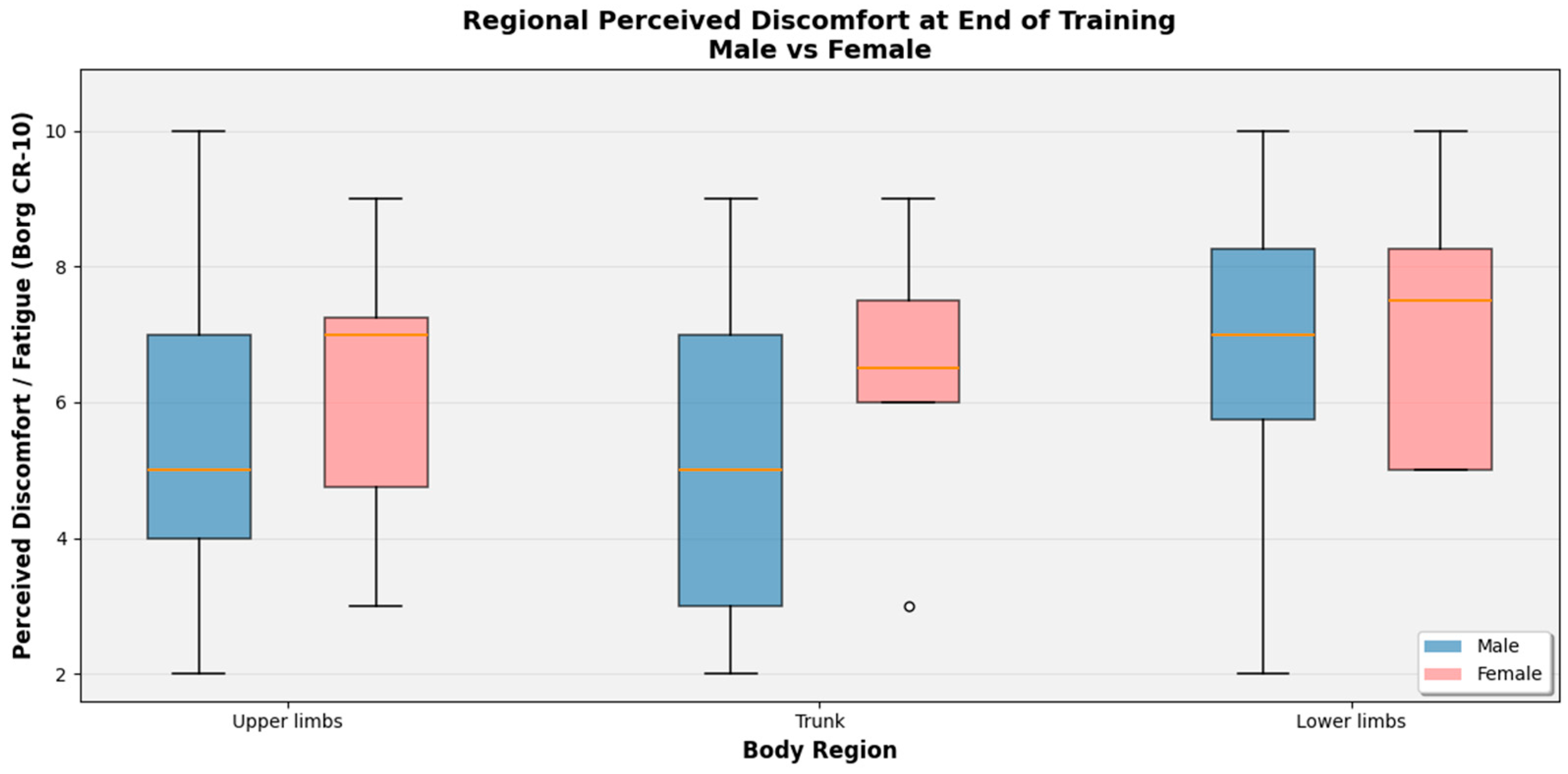
Across all three body regions, females tended to report higher regional discomfort than males at the end of training, with a distribution more concentrated toward the upper range of the Borg CR-10 scale (
Figure 3).
In the upper limbs, female medians clustered around 7, whereas males centered closer to 5, with a wider spread that included lower scores, suggesting a subset of male sailors experienced only moderate fatigue. A similar pattern was evident at the trunk: male ratings were more dispersed from low to high values, while female ratings were tightly grouped around 6–7, indicating consistently elevated trunk discomfort in women. In the lower limbs both genders reported the greatest fatigue, but again female scores were slightly higher and less variable, with most values between 7 and 9, whereas males showed a broader distribution extending down to lower levels of perceived effort. Taken together, these distributions suggest that, for a comparable training load, female athletes experienced more homogeneous and generally higher regional muscular fatigue, particularly in the upper body and trunk, while male athletes showed greater inter-individual variability with a subset reporting relatively lower discomfort.
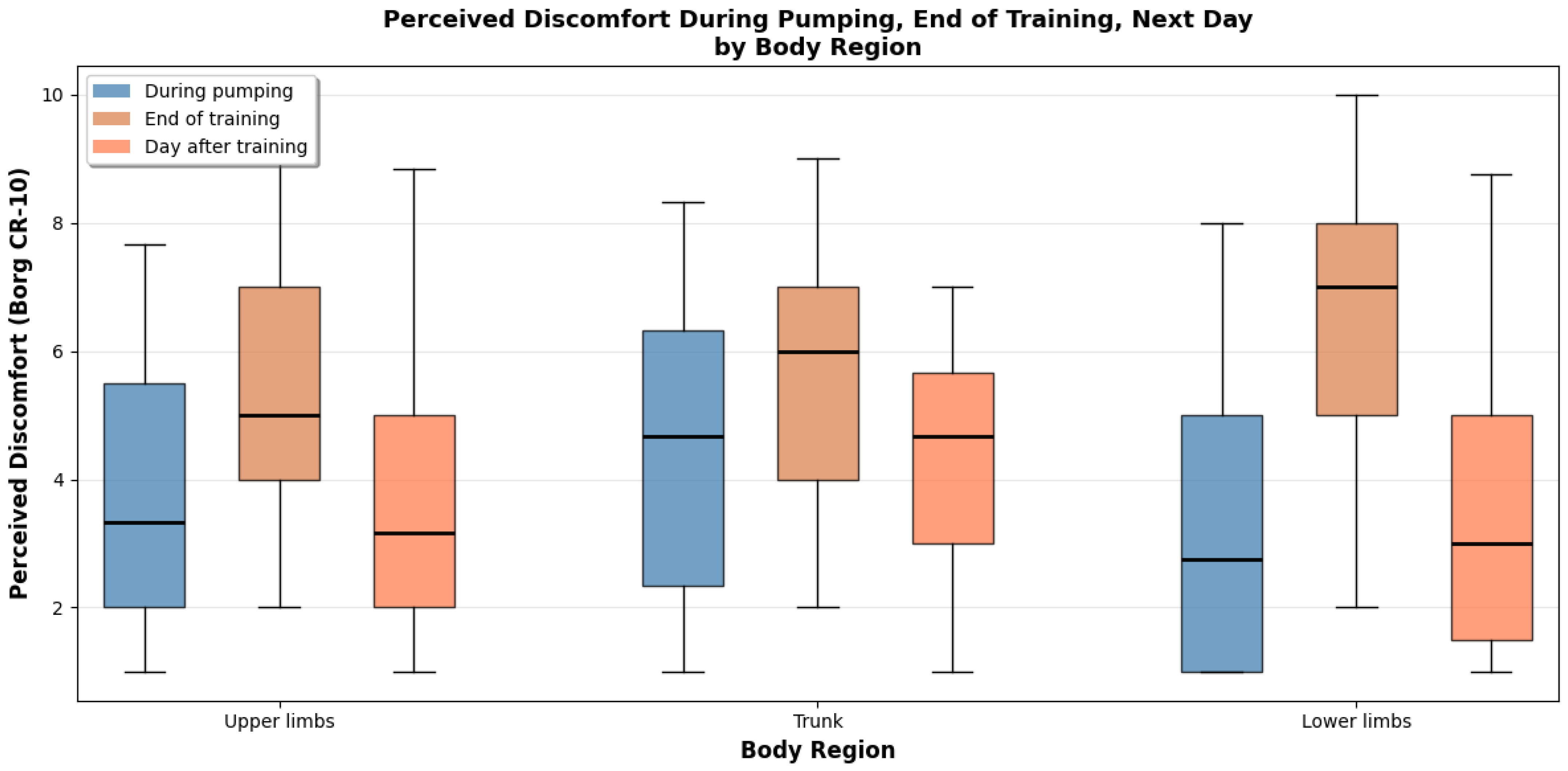
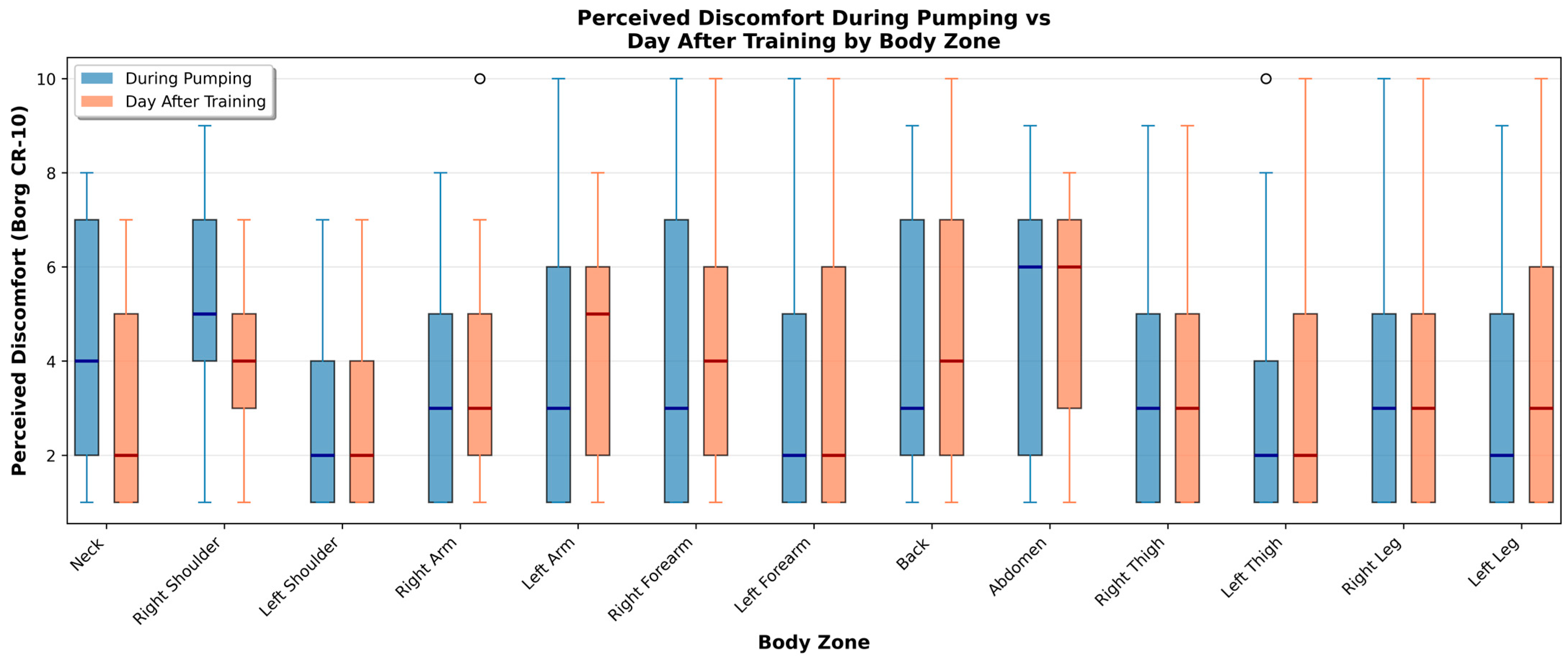
Box plots illustrating the distribution of discomfort scores in each scenario are presented in
Figure 4 and
Figure 5.
During pumping, the body regions reporting the highest levels of discomfort were both quadriceps, hamstrings, abdominals, and both arms. This is consistent with the biomechanical demands of the pumping motion, which strongly engages both upper and lower body musculature. Conversely, regions such as the head, neck, and glutes were associated with lower discomfort levels.
Immediately after sailing, athletes reported increased overall discomfort, likely due to acute muscle fatigue.
The day after training, discomfort remained elevated in the quadriceps, hamstrings, abdominals, and arms, suggesting the persistence of delayed onset muscle soreness in the most heavily used muscle groups.
Detailed analysis of perceived muscular engagement across body zones during pumping maneuvers identified substantial regional variation.
Table 2 summarizes perceived muscular engagement across body zones during pumping maneuvers (Borg CR-10), including ratings collected during pumping and on the day after training. During the execution of pumping, discomfort scores tended to be moderate and varied considerably across zones, with median values typically falling between 3 and 5 on the Borg CR-10 scale. In contrast, ratings collected the day after training were systematically higher and more homogeneous, indicating that delayed-onset muscular fatigue was more pronounced than the acute discomfort experienced during the activity. The right shoulder demonstrated the highest mean engagement score (5.36 ± 2.34), followed by the abdomen (4.81 ± 2.92), neck (4.30 ± 2.34), back (4.19 ± 2.72), and right forearm (3.86 ± 2.95). Conversely, the left leg (3.36 ± 2.93), left thigh (2.89 ± 2.45), and right leg (3.36 ± 2.53) exhibited the lowest engagement scores during pumping. This asymmetric pattern reflects the biomechanical asymmetry inherent to pumping technique, wherein the dominant upper limb and ipsilateral shoulder complex bear disproportionate mechanical load.
Comparison of perceived muscular engagement during pumping with residual fatigue reported on the subsequent day revealed notable temporal dynamics. Whilst certain zones, particularly the shoulders and back, demonstrated elevated engagement during pumping, the lower limbs exhibited disproportionately higher fatigue scores on the following day. Furthermore, the abdomen and trunk regions demonstrated relatively consistent scores across both time points, indicating sustained muscular demand throughout the training session and into the recovery period. A substantial majority of participants (91.7%) reported also that perceived exertion varied considerably as a function of meteorological conditions, particularly wind velocity. The primary factor attributed to increased exertion under high-wind conditions was the augmented force required to execute pumping maneuvers, followed by increased frequency of pumping actions.
3.2. Objective Evaluation
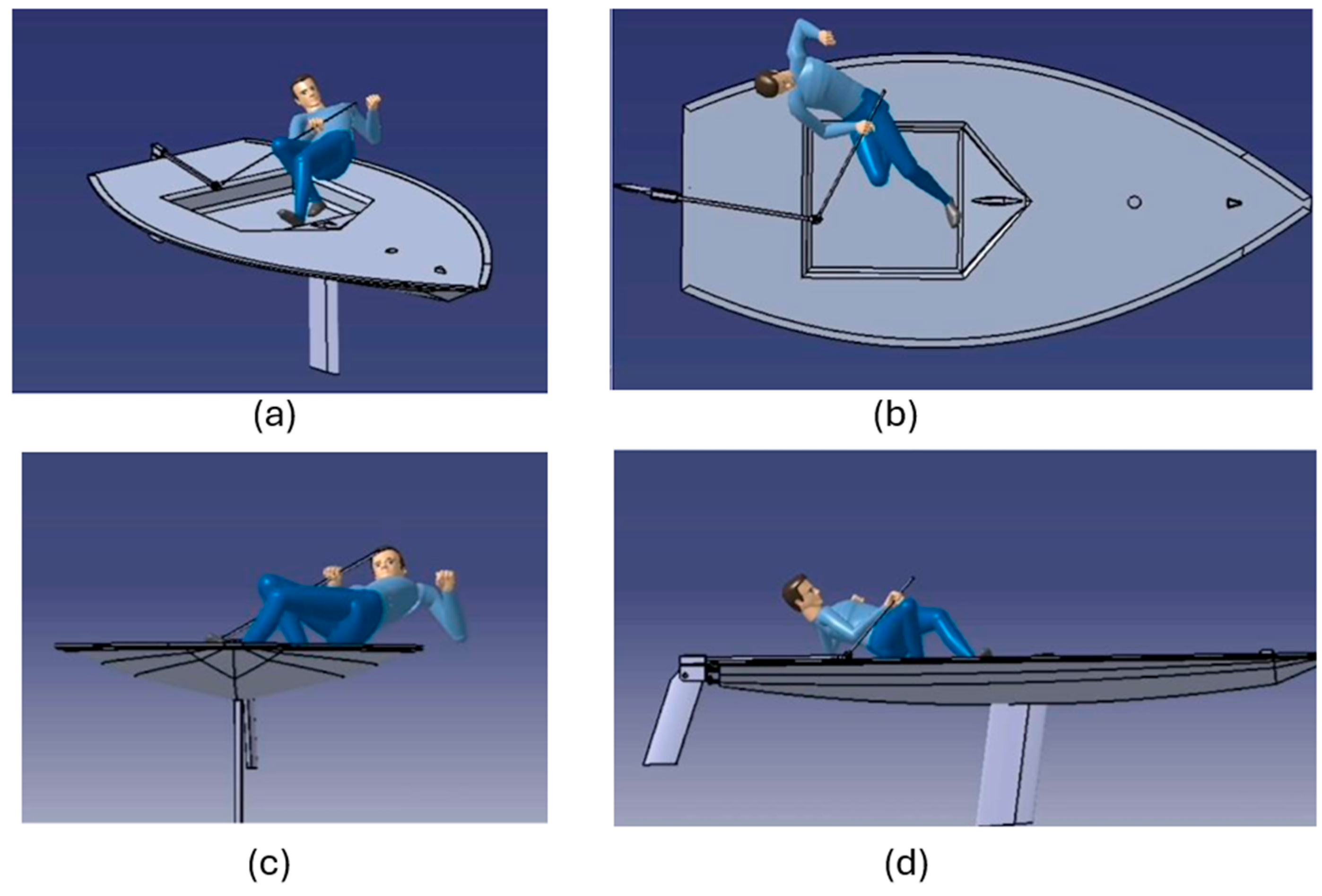
Four digital simulations of the pumping maneuver were conducted in Delmia
® using anthropometrically scaled digital human models representing a 50th percentile male (
Figure 6a–d).
The simulations enabled quantitative evaluation of the principal joint angles associated with the pumping maneuver using the Delmia
® Posture Editor.
Table 3 summarizes the minimum, mean, and maximum values of the main joint angles, as well as the range of motion (ROM), for the 50th percentile male model across a complete pumping cycle. These parameters provide an objective description of the postural demands imposed by the maneuver across the upper limbs, trunk, and lower limbs.
The analysis of joint kinematics across all anthropometric percentiles led to several observations. First, the magnitude of quadriceps flexion angles indicates a high level of mechanical demand on the knee extensor musculature, suggesting a potential source of discomfort during pumping. Similarly, the large variability observed in arm and forearm flexion angles reflects the dynamic nature of upper-limb involvement, in agreement with the elevated discomfort reported in the survey during active pumping. Second, trunk axial rotation exhibited a markedly negative minimum value with a high absolute magnitude, indicating that the trunk is frequently positioned in non-neutral, rotated postures that may contribute to discomfort and increased mechanical strain in the lumbar region. The remaining joint angles showed relatively limited variability and lower absolute values, consistent with the lower levels of perceived discomfort reported for these regions in the questionnaire data.
3.2.1. Ergonomic Risk Assessment
To evaluate the ergonomic risk associated with the pumping maneuver, a Rapid Entire Body Assessment was performed [
23].
For Group A (neck, trunk, and legs), the neck flexion angle ranged between 0° and 20°, corresponding to a score of 1, while the trunk inclination angle also fell within the 0–20° range, yielding a score of 2. The lower limbs were characterized by bilateral weight support (score 1) combined with knee flexion exceeding 60° (score 3). These values resulted in an initial Group A score of 4. Considering the rapid development of force, a Load/Force Score of 3 was assigned, resulting in a final Score A of 7.
For Group B (upper arms, lower arms, and wrists), the upper arm posture ranged between 0° and 45° of flexion, corresponding to a base score of 2, which was increased to 4 due to shoulder elevation and abduction. The lower arm flexion angle ranged between 60° and 100°, yielding a score of 1, while wrist angles remained below 15°, also corresponding to a score of 1. Combining these values after accounting for the grip score, Score B was 5. Scores A and B were combined and considering the repetitive and dynamic nature of the task, the final REBA score was 11, corresponding to a “very high risk” classification and indicating the need for immediate corrective and preventive interventions.
3.2.2. Biomechanical Modeling
Analysis of the muscle activation data revealed distinct patterns of muscular recruitment during the pumping maneuver.
Table 4 summarizes the activation percentages of the most activated muscles, grouped by body region. The muscle activation values reported from AnyBody
® refer to simulation-derived normalized muscle activity. Specifically, muscle activity was expressed as the ratio between predicted muscle force and the model-estimated current muscle strength. Accordingly, a value of 100% indicates that the predicted force reached the modeled force capacity for that muscle under the analyzed conditions and not the maximum exercisable force by the muscle itself.
As shown in
Table 4, the analysis identified the trunk musculature as the region of highest activation, with several deep stabilizers reaching maximal normalized activation (100.0%). Specifically, the right-side multifidus (100.0%), bilateral psoas major (100.0% right, 100.0% left), right quadratus lumborum (100.0%), bilateral oblique muscles (100.0% external oblique right, 100.0% internal oblique left), and right semispinalis (100.0%) demonstrated peak engagement. The right erector spinae exhibited 91.8% activation, while the left erector spinae showed 58.7% activation, reflecting pronounced lateral asymmetry in spinal stabilization demands. The shoulder girdle musculature demonstrated substantial activation predominantly on the left side, with the left latissimus dorsi reaching maximal activation (100.0%). The left rotator cuff muscles, including deltoid (56.2%), infraspinatus (56.2%), and supraspinatus (56.2%), exhibited moderate-to-high activation levels. The left serratus anterior (43.2%) and trapezius (43.2%) showed moderate engagement consistent with scapular stabilization requirements. This left-sided shoulder activation pattern contrasts with the right-sided trunk dominance, reflecting the asymmetric postural and force transmission demands of the pumping technique.
Upper extremity musculature exhibited moderate activation, with the left biceps brachii (56.2%) and left triceps brachii (56.2%) demonstrating comparable engagement levels. The rectus abdominis (34.1%) and transversus abdominis (32.5%) showed moderate activation, contributing to anterior core stability. The left sternocleidomastoid (33.1%) exhibited activation consistent with cervical stabilization and head positioning demands.
Lower extremity musculature demonstrated moderate activation across multiple muscle groups, with the right tibialis anterior (45.5%), peroneus tertius (45.5%), semimembranosus (45.5%), biceps femoris (45.5%), sartorius (45.5%), tensor fasciae latae (45.5%), gracilis (45.5%), plantaris (45.5%), and popliteus (45.5%) all exhibiting similar activation levels. The right gastrocnemius (26.6%) and hip stabilizers including gluteus medius (26.6%), gluteus minimus (26.6%), iliacus (26.6%), and piriformis (26.6%) showed lower but sustained activation.
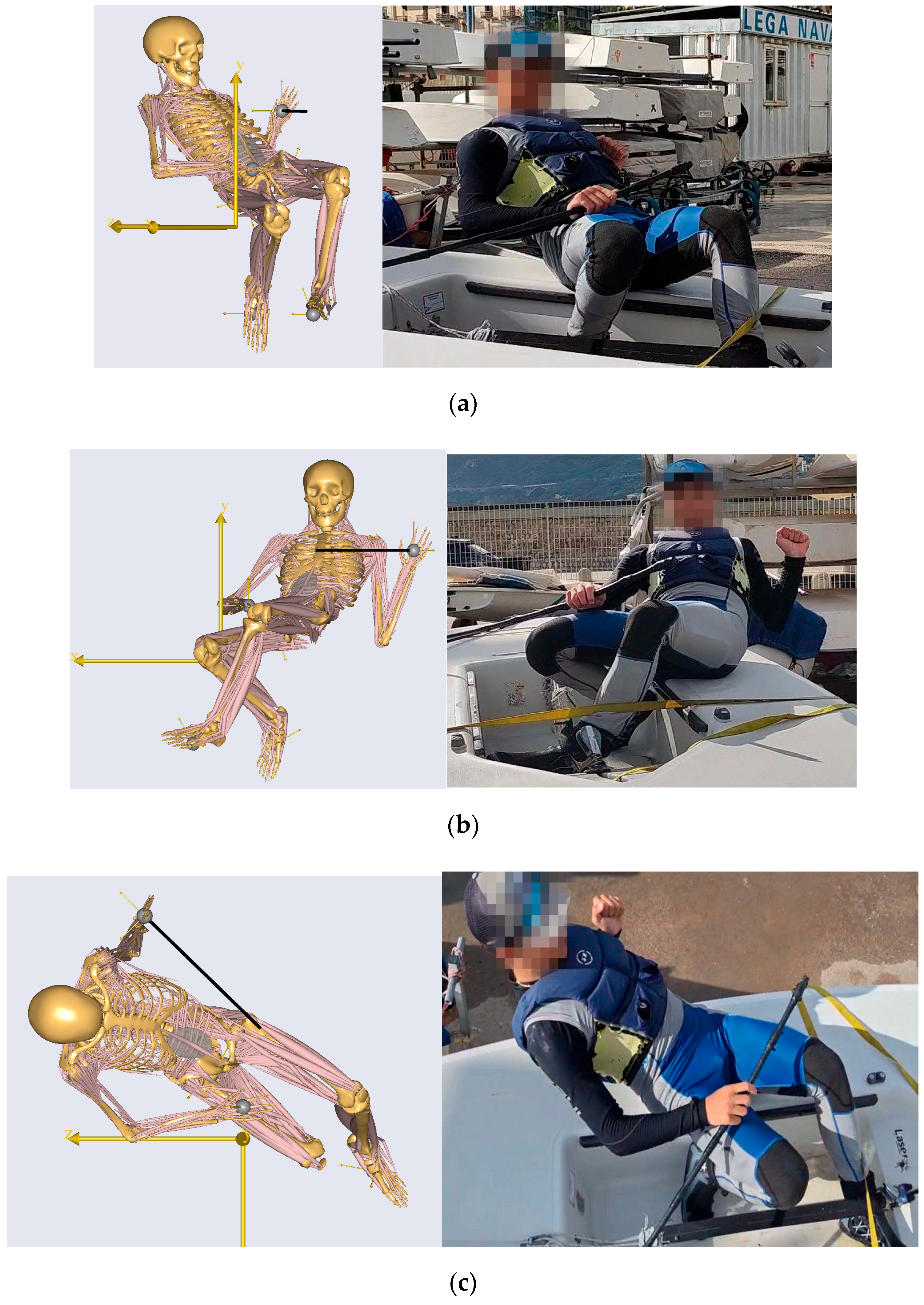
To visually validate the fidelity of the digital human model, a qualitative comparison was performed between the simulated pumping posture and representative land-based posture reproductions acquired during the controlled protocol.
Figure 7a–c juxtaposes the AnyBody
® simulation output (left) with the corresponding experimental frames (right) from lateral, frontal, and top viewpoints. Across panels, the overall body configuration, trunk inclination, shoulder elevation, and lower-limb positioning observed in the AnyBody
® simulation closely resemble those recorded during on-water pumping.
The activation pattern revealed pronounced lateral asymmetry, with right-sided dominance in trunk musculature and left-sided dominance in shoulder girdle musculature. This asymmetric loading reflects the biomechanical constraints of the pumping technique, in which the sailor maintains an asymmetric stance with differential force transmission through the right and left sides of the body. The maximal activation observed in multiple deep trunk stabilizers indicates that these muscles operate at or near their physiological capacity during pumping, suggesting substantial neuromuscular demand and potential fatigue accumulation with repeated execution.
The high activation of deep spinal stabilizers in conjunction with the global trunk muscles indicates coordinated engagement of both local and global stabilization systems. This pattern is consistent with the biomechanical requirements of maintaining spinal stability while generating and transmitting forces through the kinetic chain during the dynamic pumping motion. The moderate lower extremity activation suggests that while these muscles contribute to postural stability and force generation, they do not approach the same relative intensity as the trunk and shoulder musculature.
4. Discussion
The biomechanical analysis of the pumping maneuver in Laser-class sailing provides an integrated view of the neuromuscular, kinematic, postural, and ergonomic demands associated with this technique.
The musculoskeletal simulation identified a high demand on the trunk stabilizing system, with several deep spinal and trunk muscles reaching very high model-derived normalized activity, together with substantial activation of the shoulder–latissimus complex. A marked lateral asymmetry was also observed, characterized by right-sided dominance in trunk musculature and left-sided dominance in the shoulder girdle. Rather than reflecting isolated muscle overload, this pattern suggests a coordinated, asymmetrical strategy for force generation and transmission during pumping, in which trunk stabilization and upper-body force transfer are tightly coupled.
From a functional perspective, the concurrent involvement of deep stabilizers and global trunk muscles indicates that pumping requires both segmental spinal control and whole-body force transmission along the kinetic chain. This combined demand supports the interpretation of pumping as a mechanically demanding maneuver, particularly for the trunk–shoulder complex.
When considered alongside the questionnaire data, the simulation results reveal an apparent dissociation between objectively estimated muscle activity and subjectively perceived fatigue. Sailors reported the greatest perceived fatigue in the lower limbs, followed by the upper limbs and trunk, whereas the simulation identified the trunk musculature as the most highly loaded region. This pattern should not be interpreted as a contradiction between objective and subjective findings, but rather as evidence that the two measures capture complementary dimensions of pumping-related load: the musculoskeletal model provides simulation-derived normalized muscle activity under a standardized task configuration, whereas the questionnaire reflects a time-integrated perceptual response that includes cumulative effort, discomfort, and recovery-related sensations. Accordingly, contemporary models of perceived exertion emphasize that fatigue perception emerges from the integration of central motor command and afferent feedback, and therefore may not scale linearly with local muscle activity estimated by simulation [
24].
A plausible explanation for the greater perceived lower-limb fatigue, despite only moderate modeled activation, is the combined effect of prolonged postural stabilization, repeated isometric contractions, and cumulative metabolic demand during pumping and sailing more broadly. In practice, the lower limbs contribute continuously to balance control and body-position maintenance on an unstable platform, and this time-under-tension may generate a disproportionate perceptual burden relative to peak modeled activity. In addition, reactive stabilization demands associated with wave action, wind variability, and boat motion may further increase lower-limb fatigue during real sailing conditions, but are only partially represented in the standardized simulation framework.
By contrast, the trunk musculature, despite exhibiting the highest modeled activity, received comparatively lower subjective fatigue ratings. This may reflect the functional specialization of deep spinal stabilizers for tonic postural control, including greater fatigue resistance and lower perceptual salience of sustained activation. This interpretation is consistent with evidence that the lumbar multifidus is structurally and functionally specialized for tonic spinal stabilization, with properties compatible with sustained activation and relatively high fatigue resistance [
25].
Moreover, proprioceptive and afferent feedback from deep trunk musculature may contribute differently to conscious fatigue perception than feedback from more superficial limb musculature. In particular, the lumbar multifidus has been reported to exhibit a prominent proprioceptive role (e.g., high muscle-spindle density), which may modulate sensory salience and the conscious attribution of fatigue during stabilisation-dominant tasks [
26]. The relatively modest perceived trunk engagement may also indicate that experienced sailors develop efficient neuromuscular strategies that attenuate the sensation of effort even when operating near high mechanical demand. Finally, the distributed muscular loading and rhythmic characteristics of pumping may delay localized fatigue sensations through alternating recruitment patterns. Taken together, these mechanisms provide a plausible neuromuscular and perceptual framework for interpreting the observed activation–fatigue dissociation, while remaining hypotheses that require direct validation (e.g., subject-specific EMG and neurophysiological measurements).
Kinematic and ergonomic findings collectively indicate that the pumping maneuver imposes a demanding multi-planar load on the musculoskeletal system, with the lumbar region emerging as a key biomechanical constraint. In particular, the coexistence of large lumbar excursions and high stabilization demand suggests that the lumbar spine is exposed to both substantial angular displacement and high stabilization demand during pumping. This combination provides a plausible biomechanical basis for the frequent lower-back discomfort reported by sailors and may contribute to cumulative tissue stress over time, especially in the presence of the asymmetrical activation pattern observed in the simulation.
The REBA score (11; “Very High Risk”) further reinforces this interpretation by indicating an unfavorable postural and loading profile during pumping, characterized by trunk flexion/rotation, elevated shoulder postures, repetitive force production, and sustained lower-limb stabilization demands. Taken together, the kinematic, simulation, and ergonomic results support the view that pumping is associated with a substantial overuse-risk profile, particularly for the lumbar spine and shoulder–trunk kinetic chain.
Questionnaire findings were broadly consistent with this biomechanical profile, as most reported discomfort involved the lower back, shoulders, and knees, and 72.2% of participants reported pumping-related musculoskeletal discomfort. These subjective findings complement the biomechanical results and reinforce the relevance of combining model-based and self-reported measures when characterizing pumping-related load.
Although the present study focused on the pumping maneuver, our findings can be critically interpreted in light of the broader dinghy-sailing biomechanics literature, which is still predominantly centered on hiking. In line with previous reports, our results support the view that sailing-specific maneuvers impose substantial trunk and core demands, while the distribution of load across segments depends on the technical gesture being analyzed. Caraballo et al. emphasized that hiking performance is strongly influenced by anthropometric, strength, and endurance factors and noted the prolonged quasi-isometric demand on quadriceps and abdominal musculature, which is a key source of fatigue [
27]. Similarly, recent training and profiling studies in hikers have shown sailing-specific lower-limb strength adaptations and improvements in trunk/lower-limb muscle activation with reduced fatigue after targeted hiking-bench training [
28]. However, compared with this hiking-focused evidence, our pumping data suggest a more pronounced asymmetric contribution of the upper body/shoulder complex and trunk stabilizers, consistent with the unilateral force transmission required by the maneuver. This interpretation is also coherent with biomechanical observations showing that sailing postures are not purely static and involve multi-planar trunk motion, as well as with recent digital human modeling studies reporting measurable bilateral asymmetries and trunk/upper-limb activation patterns in Laser sailing [
29].
From an applied perspective, the present findings support more targeted training and recovery strategies for sailors performing repetitive pumping maneuvers. Given the high modeled demand on deep trunk stabilizers and the observed asymmetrical loading pattern, conditioning programs should include trunk endurance training (local and global stabilizers), anti-rotation and anti-lateral-flexion exercises, and unilateral/asymmetrically loaded drills to improve force transmission capacity and tolerance to side-dominant loading. For the shoulder girdle, particularly the latissimus dorsi and scapular stabilizers, training should emphasize repeated force production with postural control (e.g., rowing/pulling patterns, scapular control, and shoulder endurance work) in order to support sail handling under fatigue. For the lower extremities, despite moderate modeled activation, the high perceived fatigue suggests the need for strength-endurance and postural stabilization training (including prolonged isometric holds and dynamic balance tasks) to improve tolerance to cumulative loading during pumping and sailing. In addition, recovery and load-management strategies (e.g., monitoring of regional fatigue/discomfort, planned recovery for lumbar/shoulder/lower-limb regions, and technique pacing/refinement) may help reduce excessive fatigue and mitigate overuse risk. These recommendations should be considered practice-oriented implications of the present biomechanical findings and warrant confirmation in intervention studies.
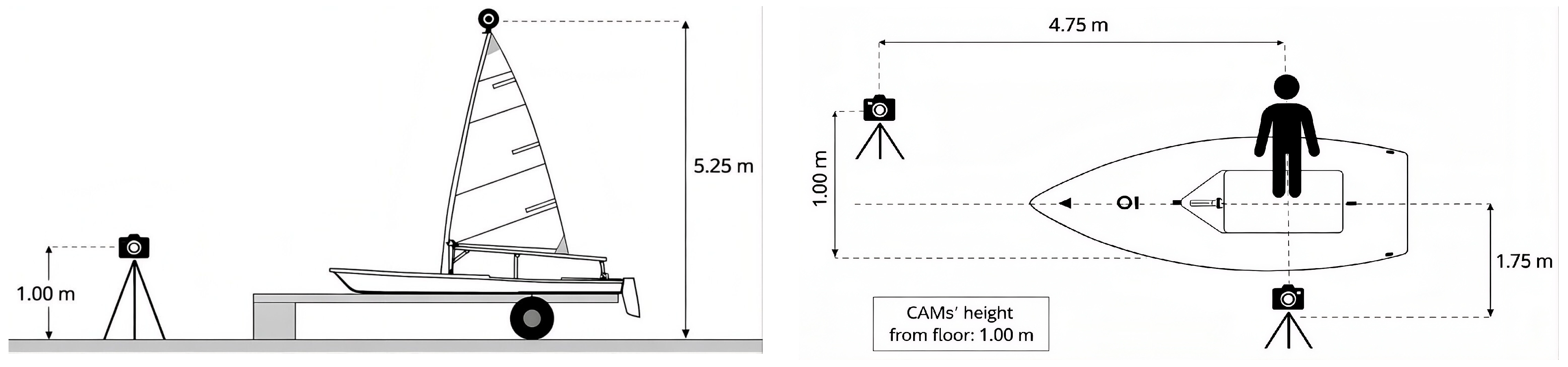
Several limitations should be acknowledged. First, although the land-based acquisition protocol improved measurement control and enabled accurate multi-angle postural reconstruction for the DELMIA® virtual twin, it may reduce ecological validity because it does not fully reproduce on-water perturbations such as wave-induced boat motion, wind variability, and impact loading. These factors may influence joint kinematics, muscle activation strategies, and perceived fatigue during real sailing. To mitigate this limitation, the present study integrated supplementary on-water observations and post-training subjective assessments; however, the simulation outputs should still be interpreted as a standardized biomechanical reference condition rather than a complete representation of all on-water dynamics.
In addition, the musculoskeletal simulation was based on a single representative pumping cycle performed by one experienced sailor, and individual variability in technique and anthropometry was not captured. The reliance on optimization algorithms also introduces uncertainty in the estimation of muscle forces. Questionnaire data, while informative, are subject to recall bias and may not fully reflect acute physiological responses. Future research should incorporate subject-specific EMG recordings to validate and refine simulation outputs and to better characterize inter-individual variability. Longitudinal investigations examining the relationship between pumping mechanics and injury incidence, as well as intervention studies assessing the effectiveness of targeted training and ergonomic modifications, would further advance evidence-based practice in competitive sailing.
5. Conclusions
This study provides an integrated biomechanical and ergonomic characterization of the pumping maneuver in Laser-class sailing by combining musculoskeletal simulation, kinematic analysis, REBA, and questionnaire data from competitive sailors. Taken together, these approaches offer a multidimensional description of the objective mechanical demands and the subjective fatigue/discomfort associated with pumping.
The main findings indicate that pumping is characterized by a marked asymmetrical neuromuscular pattern, with high activation of trunk stabilizers and a clear lateral redistribution of muscular demand between the trunk and shoulder girdle. In particular, the simulation identified substantial activation of deep trunk stabilizing muscles, together with pronounced asymmetry in spinal stabilization and upper-body recruitment. Kinematic analysis further showed relevant joint excursions, with the lumbar region exhibiting the greatest motion amplitudes. The combination of high trunk muscle demand and large lumbar excursions suggests that the lumbar spine is a key biomechanical constraint during pumping and may represent a primary site of cumulative mechanical stress.
The study also highlighted a discrepancy between simulated muscle activation and perceived fatigue, as sailors reported greater fatigue in the lower limbs despite the highest simulated activation occurring in the trunk musculature. This finding suggests that subjective fatigue during pumping is influenced not only by activation magnitude, but also by sustained postural demands, balance control, and repetitive dynamic loading.
From an applied perspective, these results support the need for targeted conditioning and prevention strategies focused on trunk stabilization, asymmetrical loading tolerance, and lumbar load management. The REBA score (“Very High Risk”) further underscores the ergonomic relevance of the pumping maneuver and the need for technique refinement and risk-mitigation strategies. Although the findings are promising, they should be interpreted in light of the simulation-based design and the absence of direct EMG validation. Future studies should include experimental validation and larger on-water datasets to strengthen the transferability of these results to competitive practice.