

Mapping Scientific Research on High-Intensity Interval Training (HIIT) in Overweight Populations (2011–2024)

 , , ,
, , ,  , , , and
Abstract
1. Introduction
2. Materials and Methods
2.1. Design
2.2. Data Extraction
2.3. Eligibility Criteria
2.4. Data Analysis
3. Results
3.1. Evolution of the Number of Documents
3.2. Documents by Type
3.3. Number of Articles by Population Type and Disease
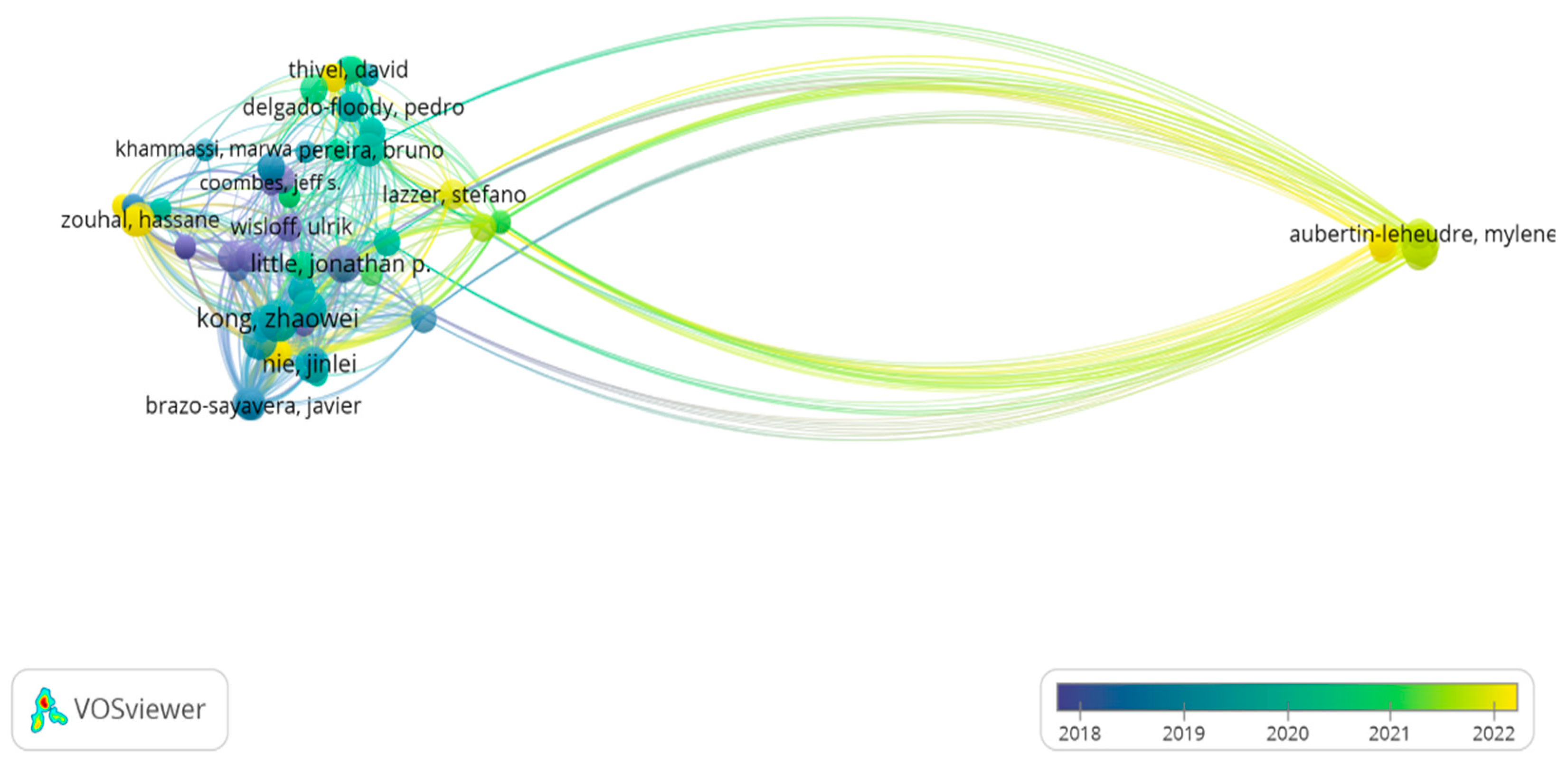
3.4. Authors’ Analysis
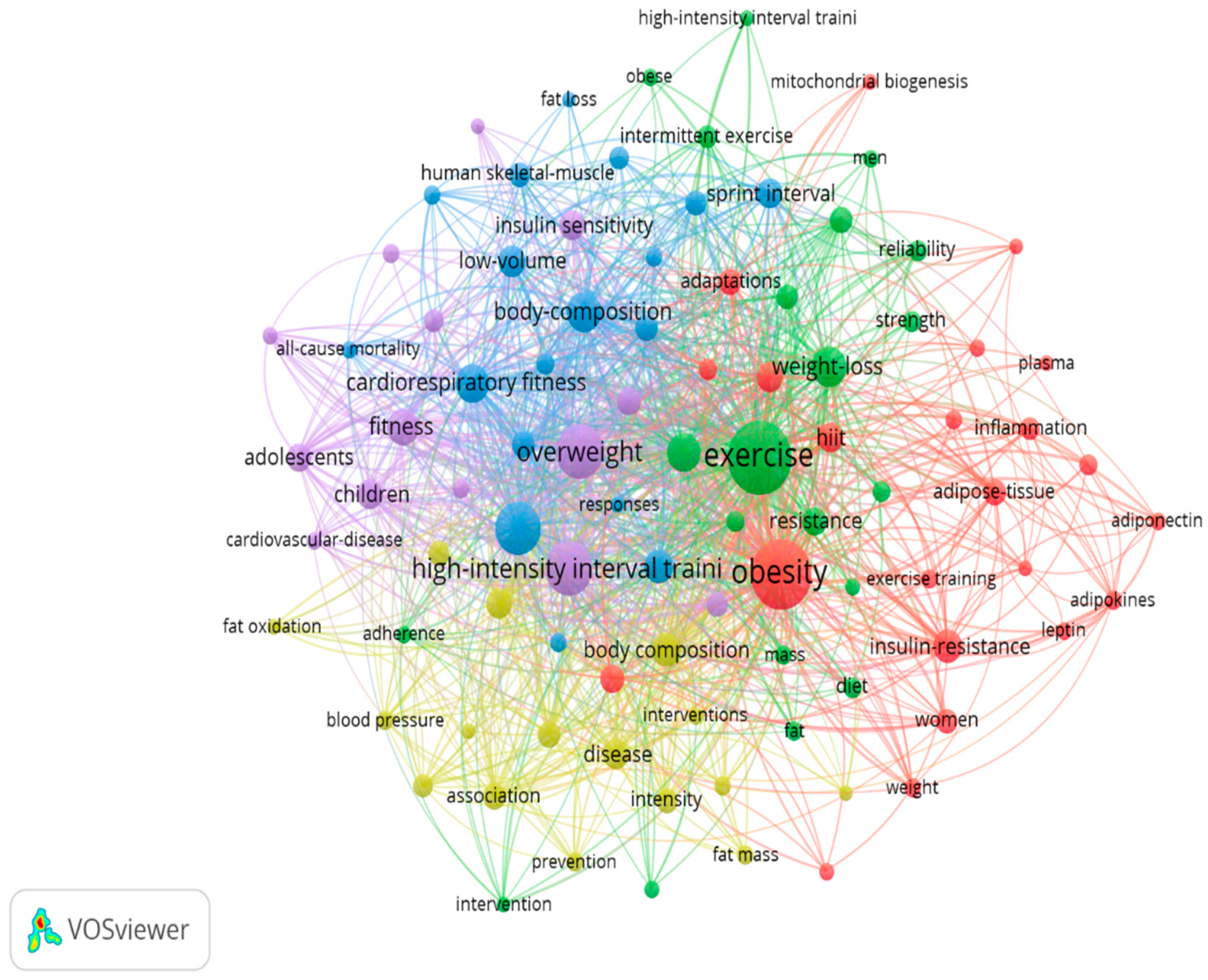
3.5. Keywords Analysis
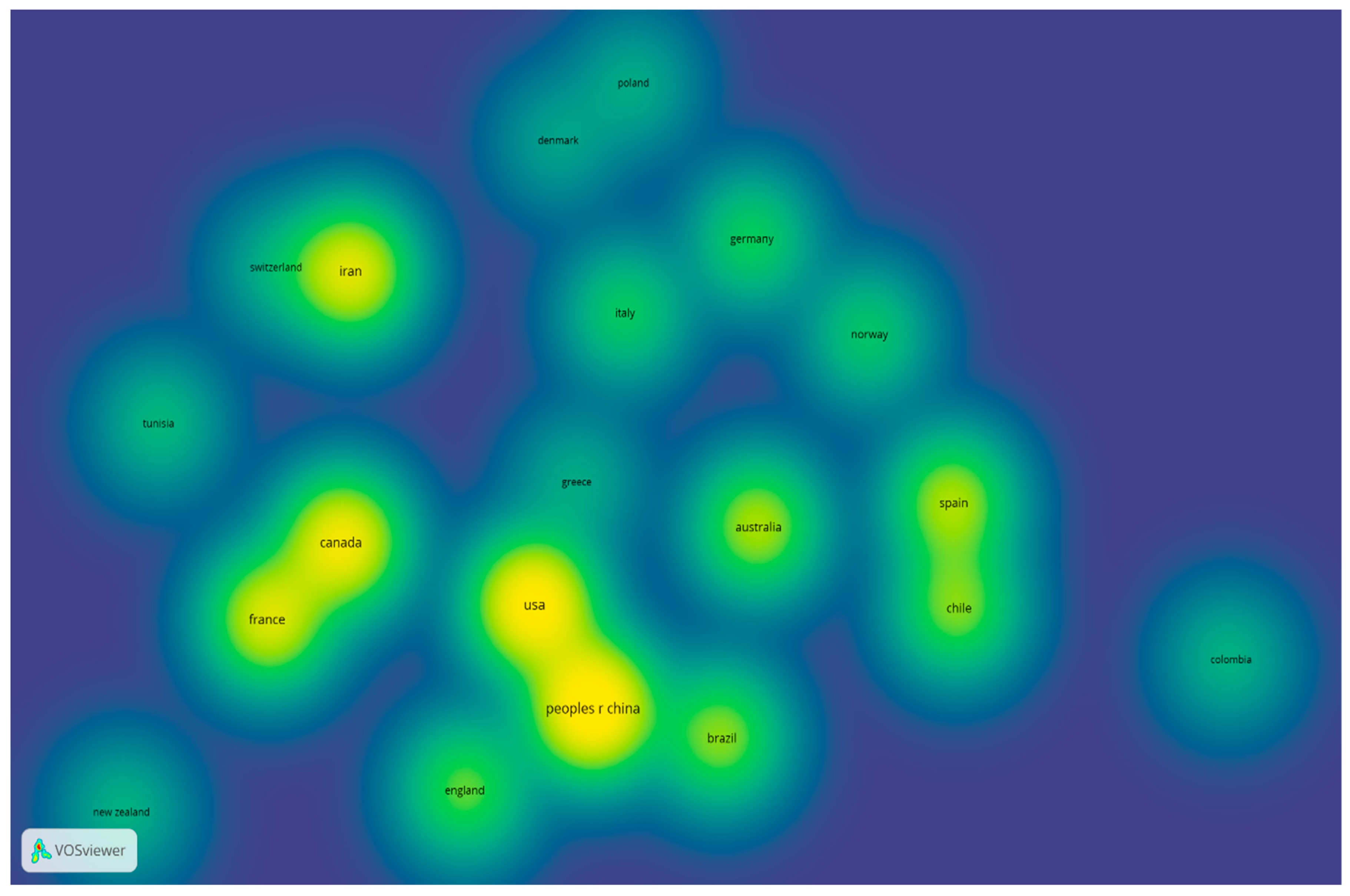
3.6. Citation and Country Analysis
3.7. Analysis of the Most Cited Studies
4. Discussion
4.1. Implications for Public Health
4.2. Limitations
5. Conclusions
Author Contributions
Funding
Institutional Review Board Statement
Informed Consent Statement
Data Availability Statement
Acknowledgments
Conflicts of Interest
References
- Global Burden of Cardiovascular Diseases and Risks 2023 Collaborators. Global, Regional, and National Burden of Cardiovascular Diseases and Risk Factors in 204 Countries and Territories, 1990–2023. J. Am. Coll. Cardiol. 2025, 86, 2167–2243. [CrossRef]
- Kaminsky, L.A.; German, C.; Imboden, M.; Ozemek, C.; Peterman, J.E.; Brubaker, P.H. The importance of healthy lifestyle behaviors in the prevention of cardiovascular disease. Prog. Cardiovasc. Dis. 2022, 70, 8–15. [Google Scholar] [CrossRef]
- Roth, G.A.; Mensah, G.A.; Johnson, C.O.; Addolorato, G.; Ammirati, E.; Baddour, L.M.; Barengo, N.C.; Beaton, A.Z.; Benjamin, E.J.; Benziger, C.P.; et al. Global Burden of Cardiovascular Diseases and Risk Factors, 1990–2019: Update from the GBD 2019 Study. J. Am. Coll. Cardiol. 2020, 76, 2982–3021. [Google Scholar] [CrossRef]
- Ng, M.; Gakidou, E.; Lo, J.; Abate, Y.H.; Abbafati, C.; Abbas, N.; Abbasian, M.; Abd ElHafeez, S.; Abdel-Rahman, W.M.; Abd-Elsalam, S.; et al. Global, regional, and national of adult overweight and obesity, 1990–2021, with forecasts to 2050: A forecasting study for the Global Burden of Disease Study 2021. Lancet 2025, 405, 813–838. [Google Scholar] [CrossRef] [PubMed]
- Weihrauch-Blüher, S.; Schwarz, P.; Klusmann, J.H. Childhood obesity: Increased risk for cardiometabolic disease and cancer in adulthood. Metab. Clin. Exp. 2019, 92, 147–152. [Google Scholar] [CrossRef] [PubMed]
- Shukla, A.; Kumar, K.; Singh, A. Association between obesity and selected morbidities: A study of BRICS countries. PLoS ONE 2014, 9, e94433. [Google Scholar] [CrossRef]
- Force, L.M.; Kocarnik, J.M.; May, M.L.; Bhangdia, K.; Crist, A.; Penberthy, L.; Pritchett, N.; Acheson, A.; Deitesfeld, L.; Aalruz, H.; et al. The global, regional, and national burden of cancer, 1990–2023, with forecasts to 2050: A systematic analysis for the Global Burden of Disease Study 2023. Lancet 2025, 406, 1565–1586. [Google Scholar] [CrossRef]
- Ahmed, S.K.; Mohammed, R.A. Obesity: Prevalence, causes, consequences, management, preventive strategies and future research directions. Metab. Open 2025, 27, 100375. [Google Scholar] [CrossRef]
- Romero-Corral, A.; Somers, V.K.; Sierra-Johnson, J.; Thomas, R.J.; Collazo-Clavell, M.L.; Korinek, J.; Allison, T.G.; Batsis, J.A.; Sert-Kuniyoshi, F.H.; Lopez-Jimenez, F. Accuracy of body mass index in diagnosing obesity in the adult general population. Int. J. Obes. 2008, 32, 959–966. [Google Scholar] [CrossRef]
- Guss, C.E.; McAllister, A.; Gordon, C.M. DXA in Children and Adolescents. J. Clin. Densitom. Off. J. Int. Soc. Clin. Densitom. 2021, 24, 28–35. [Google Scholar] [CrossRef] [PubMed]
- Kerr, J.A.; Patton, G.C.; Cini, K.I.; Abate, Y.H.; Abbas, N.; Abd Al Magied, A.H.; Abd ElHafeez, S.; Abd-Elsalam, S.; Abdollahi, A.; Abdoun, M.; et al. Global, regional, and national prevalence of child and adolescent overweight and obesity, 1990–2021, with forecasts to 2050: A forecasting study for the Global Burden of Disease Study 2021. Lancet 2025, 405, 785–812. [Google Scholar] [CrossRef]
- Hsu, K.J.; Liao, C.D.; Tsai, M.W.; Chen, C.N. Effects of exercise and nutritional intervention on body composition, metabolic health, and physical performance in adults with sarcopenic obesity: A meta-analysis. Nutrients 2019, 11, 2163. [Google Scholar] [CrossRef]
- Carbone, S.; Kirkman, D.L.; Garten, R.S.; Rodriguez-Miguelez, P.; Artero, E.G.; Lee, D.C.; Lavie, C.J. Muscular Strength and Cardiovascular Disease: AN updated state-of-the-art narrative review. J. Cardiopulm. Rehabil. Prev. 2020, 40, 302–309. [Google Scholar] [CrossRef]
- Mueller, S.; Winzer, E.B.; Duvinage, A.; Gevaert, A.B.; Edelmann, F.; Haller, B.; Pieske-Kraigher, E.; Beckers, P.; Bobenko, A.; Hommel, J.; et al. Effect of high-intensity interval training, moderate continuous training, or guideline-based physical activity advice on peak oxygen consumption in patients with heart failure with preserved ejection fraction: A randomized clinical trial. JAMA 2021, 325, 542–551. [Google Scholar] [CrossRef]
- Beals, J.W.; Kayser, B.D. When exercising for metabolic health, the work is never done, however, but hiit will save you time. J. Clin. Endocrinol. Metab. 2021, 106, e365–e366. [Google Scholar] [CrossRef] [PubMed]
- Bellicha, A.; van Baak, M.A.; Battista, F.; Beaulieu, K.; Blundell, J.E.; Busetto, L.; Carraça, E.V.; Dicker, D.; Encantado, J.; Ermolao, A.; et al. Effect of exercise training on weight loss, body composition changes, and weight maintenance in adults with overweight or obesity: An overview of 12 systematic reviews and 149 studies. Obes. Rev. Off. J. Int. Assoc. Study Obes. 2021, 22, E13256. [Google Scholar] [CrossRef]
- Koolhaas, C.M.; Dhana, K.; Schoufour, J.D.; Ikram, M.A.; Kavousi, M.; Franco, O.H. Impact of physical activity on the association of overweight and obesity with cardiovascular disease: The Rotterdam Study. Eur. J. Prev. Cardiol. 2017, 24, 934–941. [Google Scholar] [CrossRef]
- Lakka, T.A.; Bouchard, C. Physical activity, obesity and cardiovascular diseases. Handb. Exp. Pharmacol. 2005, 170, 137–163. [Google Scholar] [CrossRef]
- Visco, V.; Izzo, C.; Bonadies, D.; Di Feo, F.; Caliendo, G.; Loria, F.; Mancusi, C.; Chivasso, P.; Di Pietro, P.; Virtuoso, N.; et al. interventions to address cardiovascular risk in obese patients: Many hands make light work. J. Cardiovasc. Dev. Dis. 2023, 10, 327. [Google Scholar] [CrossRef]
- WHO. Guidelines on Physical Activity and Sedentary Behaviour; World Health Organization: Geneva, Switzerland, 2020. [Google Scholar]
- Vilela, E.M.; Ladeiras-Lopes, R.; Joao, A.; Braga, J.; Torres, S.; Viamonte, S.; Ribeiro, J.; Teixeira, M.; Nunes, J.P.; Fontes-Carvalho, R. Current role and future perspectives of cardiac rehabilitation in coronary heart disease. World J. Cardiol. 2021, 13, 695–709. [Google Scholar] [CrossRef] [PubMed]
- Atakan, M.M.; Li, Y.; Koşar, Ş.N.; Turnagöl, H.H.; Yan, X. Evidence-based effects of high-intensity interval training on exercise capacity and health: A review with historical perspective. Int. J. Environ. Res. Public Health 2021, 18, 7201. [Google Scholar] [CrossRef] [PubMed]
- Cao, M.; Tang, Y.; Li, S.; Zou, Y. Effects of high-intensity interval training and moderate-intensity continuous training on cardiometabolic risk factors in overweight and obesity children and adolescents: A meta-analysis of randomized controlled trials. Int. J. Environ. Res. Public Health 2021, 18, 11905. [Google Scholar] [CrossRef]
- Dias, K.A.; Ingul, C.B.; Tjønna, A.E.; Keating, S.E.; Gomersall, S.R.; Follestad, T.; Hosseini, M.S.; Hollekim-Strand, S.M.; Ro, T.B.; Haram, M.; et al. Effect of high-intensity interval training on fitness, fat mass and cardiometabolic biomarkers in children with obesity: A randomized controlled trial. Sports Med. 2018, 48, 733–746. [Google Scholar] [CrossRef]
- Van Biljon, A.; McKune, A.J.; DuBose, K.D.; Kolanisi, U.; Semple, S.J. Do short-term exercise interventions improve cardiometabolic risk factors in children? J. Pediatr. 2018, 203, 325–329. [Google Scholar] [CrossRef] [PubMed]
- Hottenrott, K.; Ludyga, S.; Schulze, S. Effects of high intensity training and continuous endurance training on aerobic capacity and body composition in recreationally active runners. J. Sports Sci. Med. 2012, 11, 483–488. [Google Scholar]
- Cao, M.; Quan, M.; Zhuang, J. Effect of high-intensity interval training versus moderate-intensity continuous training on cardiorespiratory fitness in children and adolescents: A meta-analysis. Int. J. Environ. Res. Public Health 2019, 16, 1533. [Google Scholar] [CrossRef]
- Buchheit, M.; Laursen, P.B. High-intensity interval training, solutions to the programming puzzle: Part I: Cardiopulmonary emphasis. Sports Med. 2013, 43, 313–338. [Google Scholar] [CrossRef] [PubMed]
- Bishop, D.J.; Botella, J.; Genders, A.J.; Lee, M.J.; Saner, N.J.; Kuang, J.; Yan, X.; Granata, C. High-intensity exercise and mitochondrial biogenesis: Current controversies and future research directions. Physiology 2019, 34, 56–70. [Google Scholar] [CrossRef]
- Gray, S.R.; Ferguson, C.; Birch, K.; Forrest, L.J.; Gill, J.M. High-intensity interval training: Key data needed to bridge the gap from laboratory to public health policy. Br. J. Sports Med. 2016, 50, 1231–1232. [Google Scholar] [CrossRef]
- Al-Mhanna, S.B.; Franklin, B.A.; Tarnopolsky, M.A.; Hawley, J.A.; Jakicic, J.M.; Stamatakis, E.; Little, J.P.; Pescatello, L.S.; Riebe, D.; Thompson, W.R.; et al. Impact of high-intensity interval training on cardiometabolic health in patients with diabesity: A systematic review and meta-analysis of randomized controlled trials. Diabetol. Metab. Syndr. 2025, 17, 406. [Google Scholar] [CrossRef]
- Ko, J.M.; So, W.Y.; Park, S.E. Narrative review of high-intensity interval training: Positive impacts on cardiovascular health and disease prevention. J. Cardiovasc. Dev. Dis. 2025, 12, 158. [Google Scholar] [CrossRef]
- Passas, I. Bibliometric Analysis: The Main Steps. Encyclopedia 2024, 4, 1014–1025. [Google Scholar] [CrossRef]
- Khatra, O.; Shadgan, A.; Taunton, J.; Pakravan, A.; Shadgan, B. A Bibliometric Analysis of the Top Cited Articles in Sports and Exercise Medicine. Orthop. J. Sports Med. 2021, 9, 2325967120969902. [Google Scholar] [CrossRef]
- Becerra Patiño, B.A.; Paucar Uribe, J.D.; Martínez-Benítez, C.F.; Gamonales, J.M. Determination of the scientific productivity of the Spanish Journal Retos according to bibliometric indicators: (2016–2024). Retos 2024, 58, 670–682. [Google Scholar] [CrossRef]
- Becerra Patiño, B.A.; Paucar-Uribe, J.D.; Montilla-Valderrama, V. Bibliometric Analysis of Plyometrics in Sport: 40 Years of Scientific Production. Retos 2024, 53, 183–195. [Google Scholar] [CrossRef]
- Donthu, N.; Kumar, S.; Mukherjee, D.; Pandey, N.; Lim, W.M. How to conduct a bibliometric analysis: An overview and guidelines. J. Bus. Res. 2021, 133, 285–296. [Google Scholar] [CrossRef]
- Li, K.; Rollins, J.; Yan, E. Web of Science use in published research and review papers 1997–2017: A selective, dynamic, cross-domain, content-based analysis. Scientometrics 2018, 115, 1–20. [Google Scholar] [CrossRef]
- Page, M.J.; Moher, D.; McKenzie, J.E. Introduction to PRISMA 2020 and implications for research synthesis methodologists. Res. Synth. Methods 2022, 13, 156–163. [Google Scholar] [CrossRef]
- Van Eck, N.J.; Waltman, L. Visualizing Bibliometric Networks. In Measuring Scholarly Impact; Ding, Y., Rousseau, R., Wolfram, D., Eds.; Springer International Publishing: Berlin/Heidelberg, Germany, 2014; pp. 285–320. [Google Scholar] [CrossRef]
- McAllister, J.T.; Lennertz, L.; Atencio Mojica, Z. Mapping a discipline: A guide to using Vosviewer for bibliometric and visual analysis. Sci. Technol. Libr. 2022, 41, 319–348. [Google Scholar] [CrossRef]
- Mukherjee, D.; Lim, W.M.; Kumar, S.; Donthu, N. Guidelines for advancing theory and practice through bibliometric research. J. Bus. Res. 2022, 148, 101–115. [Google Scholar] [CrossRef]
- Price, D.D.S. A general theory of bibliometric and other cumulative advantage processes. J. Am. Soc. Inf. Sci. 1976, 27, 292–306. [Google Scholar] [CrossRef]
- Coile, R.C. Lotka’s frequency distribution of scientific productivity. J. Am. Soc. Inf. Sci. 1977, 28, 366–370. [Google Scholar] [CrossRef]
- Bufrem, L.; Prates, Y. Recorded scientific knowledge and information measuring practices. Ciência Da Informação 2005, 34, 9–25. [Google Scholar] [CrossRef]
- Vega-Muñoz, A.; Salazar-Sepúlveda, G.; Contreras-Barraza, N.; Araya-Silva, L. Scientific mapping of coastal governance: Global benchmarks and trends. J. Mar. Sci. Eng. 2022, 10, 751. [Google Scholar] [CrossRef]
- Desai, N.; Veras, L.; Gosain, A. Using Bradford’s law of scattering to identify the core journals of pediatric surgery. J. Surg. Res. 2018, 229, 90–95. [Google Scholar] [CrossRef]
- Weston, K.S.; Wisløff, U.; Coombes, J.S. High-intensity interval training in patients with lifestyle-induced cardiometabolic disease: A systematic review and meta-analysis. Br. J. Sports Med. 2014, 48, 1227–1234. [Google Scholar] [CrossRef]
- Jelleyman, C.; Yates, T.; O’Donovan, G.; Gray, L.J.; King, J.A.; Khunti, K.; Davies, M.J. The effects of high-intensity interval training on glucose regulation and insulin resistance: A meta-analysis. Obes. Rev. Off. J. Int. Assoc. Study Obes. 2015, 16, 942–961. [Google Scholar] [CrossRef] [PubMed]
- Wewege, M.; Van Den Berg, R.; Ward, R.E.; Keech, A. The effects of high-intensity interval training vs. moderate-intensity continuous training on body composition in overweight and obese adults: A systematic review and meta-analysis. Obes. Rev. Off. J. Int. Assoc. Study Obes. 2017, 18, 635–646. [Google Scholar] [CrossRef] [PubMed]
- Maillard, F.; Pereira, B.; Boisseau, N. Effect of high-intensity interval training on total, abdominal and visceral fat mass: A meta-analysis. Sports Med. 2018, 48, 269–288. [Google Scholar] [CrossRef]
- Petridou, A.; Siopi, A.; Mougios, V. Exercise in the management of obesity. Metab. Clin. Exp. 2019, 92, 163–169. [Google Scholar] [CrossRef] [PubMed]
- Gillen, J.B.; Percival, M.E.; Ludzki, A.; Tarnopolsky, M.A.; Gibala, M.J. Interval training in the fed or fasted state improves body composition and muscle oxidative capacity in overweight women. Obesity 2013, 21, 2249–2255. [Google Scholar] [CrossRef]
- Fisher, G.; Brown, A.W.; Brown, M.M.B.; Alcorn, A.; Noles, C.; Winwood, L.; Resuehr, H.; George, B.; Jeansonne, M.M.; Allison, D.B. High intensity interval- vs moderate intensity- training for improving cardiometabolic health in overweight or obese males: A randomized controlled trial. PLoS ONE 2015, 10, e0138853. [Google Scholar] [CrossRef]
- Martinez, N.; Kilpatrick, M.W.; Salomon, K.; Jung, M.E.; Little, J.P. Affective and enjoyment responses to high-intensity interval training in overweight-to-obese and insufficiently active adults. J. Sport Exerc. Psychol. 2015, 37, 138–149. [Google Scholar] [CrossRef]
- Little, J.P.; Jung, M.E.; Wright, A.E.; Wright, W.; Manders, R.J. Effects of high-intensity interval exercise versus continuous moderate-intensity exercise on postprandial glycemic control assessed by continuous glucose monitoring in obese adults. Appl. Physiol. Nutr. Metab. 2014, 39, 835–841. [Google Scholar] [CrossRef]
- Vella, C.A.; Taylor, K.; Drummer, D. High-intensity interval and moderate-intensity continuous training elicit similar enjoyment and adherence levels in overweight and obese adults. Eur. J. Sport Sci. 2017, 17, 1203–1211. [Google Scholar] [CrossRef] [PubMed]
- Lee, D.H.; Keum, N.N.; Hu, F.B.; Orav, E.J.; Rimm, E.B.; Willett, W.C.; Giovannucci, E.L. Predicted lean body mass, fat mass, and all cause and cause specific mortality in men: Prospective US cohort study. BMJ 2018, 362, K2575. [Google Scholar] [CrossRef] [PubMed]
- Liu, M.; Zhang, Z.; Zhou, C.; Ye, Z.; He, P.; Zhang, Y.; Li, H.; Liu, C.; Qin, X. Predicted fat mass and lean mass in relation to all-cause and cause-specific mortality. J. Cachexia Sarcopenia Muscle 2022, 13, 1064–1075. [Google Scholar] [CrossRef]
- Tchernof, A.; Després, J.P. Pathophysiology of human visceral obesity: An update. Physiol. Rev. 2013, 93, 359–404. [Google Scholar] [CrossRef] [PubMed]
- Ross, R.; Bradshaw, A.J. The future of obesity reduction: Beyond weight loss. Nat. Rev. Endocrinol. 2009, 5, 319–326. [Google Scholar] [CrossRef]
- Hilton, C.; Sabaratnam, R.; Drakesmith, H.; Karpe, F. Iron, glucose and fat metabolism and obesity: An intertwined relationship. Int. J. Obes. 2023, 47, 554–563. [Google Scholar] [CrossRef]
- Rhéaume, C.; Arsenault, B.J.; Bélanger, S.; Pérusse, L.; Tremblay, A.; Bouchard, C.; Poirier, P.; Després, J.P. Low cardiorespiratory fitness levels and elevated blood pressure: What is the contribution of visceral adiposity? Hypertension 2009, 54, 91–97. [Google Scholar] [CrossRef] [PubMed]
- García-Hermoso, A.; Cerrillo-Urbina, A.J.; Herrera-Valenzuela, T.; Cristi-Montero, C.; Saavedra, J.M.; Martínez-Vizcaíno, V. Is high-intensity interval training more effective on improving cardiometabolic risk and aerobic capacity than other forms of exercise in overweight and obese youth? A meta-analysis. Obes. Rev. Off. J. Int. Assoc. Study Obes. 2016, 17, 531–540. [Google Scholar] [CrossRef] [PubMed]
- De Brito, L.C.; Rezende, R.A.; Da Silva, N.D.; Tinucci, T.; Casarini, D.E.; Cipolla-Neto, J.; Forjaz, C.L.M. PostPost-exercise hypotension and its mechanisms differ after morning and evening exercise: A randomized crossover study. PLoS ONE 2015, 10, e0132458. [Google Scholar] [CrossRef]
- Halliwill, J.R.; Taylor, J.A.; Eckberg, D.L. Impaired sympathetic vascular regulation in humans after acute dynamic exercise. J. Physiol. 1996, 495, 279–288. [Google Scholar] [CrossRef]
- Halliwill, J.R. Mechanisms and Clinical Implications of Post-exercise Hypotension in Humans. Exerc. Sport Sci. Rev. 2001, 29, 65–70. [Google Scholar] [CrossRef] [PubMed]
- Berry, J.D.; Willis, B.; Gupta, S.; Barlow, C.E.; Lakoski, S.G.; Khera, A.; Rohatgi, A.; de Lemos, J.A.; Haskell, W.; Lloyd-Jones, D.M. Lifetime risks for cardiovascular disease mortality by cardiorespiratory fitness levels measured at ages 45, 55, and 65 years in men: The cooper center longitudinal study. J. Am. Coll. Cardiol. 2011, 57, 1604–1610. [Google Scholar] [CrossRef]
- Bond, B.; Hind, S.; Williams, C.A.; Barker, A.R. The acute effect of exercise intensity on vascular function in adolescents. Med. Sci. Sports Exerc. 2015, 47, 2628–2635. [Google Scholar] [CrossRef]
- Saavedra, J.M.; Escalante, Y.; García-Hermoso, A. Improvement of aerobic fitness in obese children: A meta-analysis. Int. J. Pediatr. Obes. 2011, 6, 169–177. [Google Scholar] [CrossRef]
- Astorino, T.A.; Allen, R.P.; Roberson, D.W.; Jurancich, M. Effect of high-intensity interval training on cardiovascular function, VO2max, and muscular force. J. Strength Cond. Res. 2012, 26, 138–145. [Google Scholar] [CrossRef]
- Burgomaster, K.A.; Howarth, K.R.; Phillips, S.M.; Rakobowchuk, M.; Macdonald, M.J.; McGee, S.L.; Gibala, M.J. Similar metabolic adaptations during exercise after low volume sprint interval and traditional endurance training in humans. J. Physiol. 2008, 586, 151–160. [Google Scholar] [CrossRef]
- Little, J.P.; Safdar, A.; Wilkin, G.P.; Tarnopolsky, M.A.; Gibala, M.J. A practical model of low-volume high-intensity interval training induces mitochondrial biogenesis in human skeletal muscle: Potential mechanisms. J. Physiol. 2010, 588, 1011–1022. [Google Scholar] [CrossRef]
- Lazzer, S.; Tringali, G.; Caccavale, M.; De Micheli, R.; Abbruzzese, L.; Sartorio, A. Effects of high-intensity interval training on physical capacities and substrate oxidation rate in obese adolescents. J. Endocrinol. Investig. 2017, 40, 217–226. [Google Scholar] [CrossRef]
- Mølmen, K.S.; Almquist, N.W.; Skattebo, Ø. Effects of exercise training on mitochondrial and capillary growth in human skeletal muscle: A systematic review and meta-regression. Sports Med. 2024, 55, 115–144. [Google Scholar] [CrossRef]
- Després, J.P.; Lemieux, I.; Bergeron, J.; Pibarot, P.; Mathieu, P.; Larose, E.; Rodés-Cabau, J.; Bertrand, O.F.; Poirier, P. Abdominal obesity and the metabolic syndrome: Contribution to global cardiometabolic risk. Arterioscler. Thromb. Vasc. Biol. 2008, 28, 1039–1049. [Google Scholar] [CrossRef]
- Pellinger, T.K.; Emhoff, C.A.W. Skeletal muscle hyperemia: A potential bridge between postpost-exercise hypotension and glucose regulation. Front. Physiol. 2021, 12, 821919. [Google Scholar] [CrossRef]
- Hood, M.S.; Little, J.P.; Tarnopolsky, M.A.; Myslik, F.; Gibala, M.J. Low-volume interval training improves muscle oxidative capacity in sedentary adults. Med. Sci. Sports Exerc. 2011, 43, 1849–1856. [Google Scholar] [CrossRef]
- Cunha, F.A.; Midgley, A.W.; McNaughton, L.R.; Farinatti, P.T.V. Effect of continuous and intermittent bouts of isocaloric cycling and running exercise on excess postexercise oxygen consumption. J. Sci. Med. Sport 2016, 19, 187–192. [Google Scholar] [CrossRef] [PubMed]
- Zouhal, H.; Jacob, C.; Delamarche, P.; Gratas-Delamarche, A. Catecholamines and the effects of exercise, training and gender. Sports Med. 2008, 38, 401–423. [Google Scholar] [CrossRef] [PubMed]
- De Feo, P. Is high-intensity exercise better than moderate-intensity exercise for weight loss? Nutr. Metab. Cardiovasc. Dis. NMCD 2013, 23, 1037–1042. [Google Scholar] [CrossRef]
- Sultana, R.N.; Sabag, A.; Keating, S.E.; Johnson, N.A. The effect of low-volume high-intensity interval training on body composition and cardiorespiratory fitness: A systematic review and meta-analysis. Sports Med. 2019, 49, 1687–1721. [Google Scholar] [CrossRef] [PubMed]
- Wen, D.; Utesch, T.; Wu, J.; Robertson, S.; Liu, J.; Hu, G.; Chen, H. Effects of different protocols of high intensity interval training for VO2max improvements in adults: A meta-analysis of randomised controlled trials. J. Sci. Med. Sport 2019, 22, 941–947. [Google Scholar] [CrossRef] [PubMed]
- Daniels, K.; Lemmens, R.; Knippenberg, E.; Marinus, N.; Vonck, S.; Baerts, J.; Bergs, J.; Spooren, A.; Hansen, D.; Bonnechère, B. Promoting physical activity and a healthy active lifestyle in community-dwelling older adults: A design thinking approach for the development of a mobile health application. Front. Public Health 2023, 11, 1280941. [Google Scholar] [CrossRef]
- Sękowski, K.; Mazurek, A.; Grześczyk-Nojszewska, Z.; Jankowski, M.; Kamińska, A.; Olearczyk, A.; Silczuk, A.; Grudziąż-Sękowska, J. Public awareness of obesity causes, complications, and treatment methods in a representative sample of adults in Poland. Front. Public Health 2025, 13, 1656877. [Google Scholar] [CrossRef] [PubMed]



| N° Search | Boolean Operators | Search Date | Publication Date Intervals | Total Number of Found Articles | Document Type | Number of Documents by Type |
|---|---|---|---|---|---|---|
| 1 | HIIT AND (overweight OR obesity) | 28 September 2024 | 2011–2024 | 606–619 | Article | 516 |
| Review Article | 80 | |||||
| Early Access | 11 | |||||
| Meeting Abstract | 10 | |||||
| Proceeding Paper | 1 | |||||
| Retracted Publication | 1 | |||||
| 2 | HIIT AND (overweight AND obesity) | 29 September 2024 | 2011–2024 | 217–223 | Article | 173 |
| Review Article | 43 | |||||
| Early Access | 3 | |||||
| Meeting Abstract | 3 | |||||
| Proceeding Paper | 1 | |||||
| 3 | (HIIT OR “High-Intensity Interval Training”) AND (overweight OR obesity) | 30 September 2024 | 2011–2024 | 777–792 * | Article | 617 |
| Review Article | 104 | |||||
| Meeting Abstract | 41 | |||||
| Early Access | 12 | |||||
| Letter | 7 | |||||
| Correction | 4 | |||||
| Editorial | 2 | |||||
| Proceeding Paper | 2 | |||||
| Book Review | 1 | |||||
| News Item | 1 | |||||
| Retracted Publication | 1 |
| Document Type | Number of Documents | Percentage % |
|---|---|---|
| Research article | 229 | 81% |
| Review | 42 | 15% |
| Meeting summary | 5 | 2% |
| Early access review | 3 | 1% |
| Correction | 1 | 0% |
| Editorial | 1 | 0% |
| Letter | 1 | 0% |
| Total | 282 | 100% |
| Document Type | Number of Documents | Percentage % |
|---|---|---|
| Articles (interventions) | 232 | 82.3% |
| Systematic review and meta-analysis | 16 | 5.7% |
| Meta-analysis | 15 | 5.3% |
| Systematic review | 6 | 2.1% |
| Randomized trial | 5 | 1.8% |
| Systematic review and network meta-analysis | 3 | 1.1% |
| Controlled trial | 2 | 0.7% |
| Network meta-analysis | 1 | 0.4% |
| Systematic review | 1 | 0.4% |
| Umbrella review | 1 | 0.4% |
| Total | 282 | 100% |
| Population | Number of Articles | Percentage % |
|---|---|---|
| Adults | 67 | 23.80% |
| Females | 58 | 20.60% |
| Males | 37 | 13.10% |
| Not specified | 31 | 11.00% |
| Adolescents | 22 | 7.80% |
| Children | 18 | 6.40% |
| Young Females | 14 | 5.00% |
| Older adults | 9 | 3.20% |
| Young adults | 6 | 2.10% |
| Middle-age | 6 | 2.10% |
| Young Males | 5 | 1.80% |
| Male adolescents | 4 | 1.40% |
| Female Adolescents | 2 | 0.70% |
| Young | 2 | 0.70% |
| Middle-aged males | 1 | 0.40% |
| Total | 282 | 100% |
| Disease/Condition | Number of Articles | Percentage % |
|---|---|---|
| Not applicable/Not specified | 262 | 92.9% |
| Diabetes | 9 | 3.2% |
| Postmenopause | 6 | 2.1% |
| Cancer | 3 | 1.1% |
| Aterosclerosis | 1 | 0.4% |
| Mental health and polycystic ovary | 1 | 0.4% |
| Total | 282 | 100% |
| Authors and Year of Publication | Participants Characteristics | Main Findings | Total Citation |
|---|---|---|---|
| Weston et al. [48] | Individuals with lifestyle-related chronic cardiometabolic diseases. | Improvements in the highest value reached during a test (VO2peak) with HIIT and MICT. HIIT showed greater VO2peak increase. Both groups improved walking test performance and reduced systolic and diastolic blood pressure. HIIT reduced LDL and triglycerides, increased HDL, improved adiponectin, insulin sensitivity, beta-cell function, mitochondrial biogenesis, and Ca2+ reuptake. Greater nitric oxide and antioxidant availability. Improved left ventricular ejection fraction in heart failure patients. | 824 |
| Jelleyman et al. [49] | Participants with type 1 diabetes were excluded. | This review analyzed insulin resistance. HIIT reduced HOMA index compared to control group and continuous training group (CT). Insulin sensitivity improvement decreased over time after exercise session. Fasting glucose, with a reduction after HIIT, although not significant compared to control group. In individuals with metabolic syndrome or type 2 diabetes, reduction was greater. HbA1c showed no overall changes, but in individuals with metabolic syndrome/diabetes HIIT reduced HbA1c. Fasting insulin was reduced, but this reduction was not significant compared to control group. There were no significant differences compared to CT. VO2max increased after HIIT. | 364 |
| Wewege et al. [50] | It included apparently healthy individuals who were overweight or obese (mean age between 18 and 45 years). Overweight was defined as BMI > 25; obesity as a BMI > 30. Participants had no diagnoses of other medical comorbidities (e.g., coronary artery disease or diabetes). | This review showed that weekly training time was lower for HIIT than for MICT. Both HIIT and MICT significantly reduced body fat (1.7 kg and 2.1 kg, respectively) and waist circumference (3 cm each). There were no significant effects on body mass, lean mass, or trunk fat. In running protocols, both exercise methods had a greater impact on body fat reduction (2.6 kg) and a small effect on body mass. Cycle ergometer protocols showed no significant effects. | 332 |
| Maillard et al. [51] | Normal-weight and overweight/obese adults over the age of 18; high-performance athletes were not included. | La This review shows that HIIT reduces total fat mass, with running being more effective than cycling. High-intensity protocols are more effective than low-intensity protocols. Total fat reduction was greater in individuals with overweight/obesity, with no differences between sexes. HIIT reduces abdominal fat, with cycling being more effective than running. Low-intensity training was more effective than high-intensity in reducing abdominal fat, and the effect was significant only in individuals with overweight/obesity. For visceral fat, HIIT also shows reduction, especially in running. Low-intensity protocols were more effective in individuals with overweight/obesity, with no differences between sexes. | 189 |
| Petridou et al. [52] | Not applicable | Regarding HIIT, it is evident that it is advantageous because: it reduces body weight compared to groups that do not exercise, but is not more effective than moderate-intensity continuous training (MICT) in individuals with overweight or obesity. Both HIIT and MICT are equally effective in reducing body fat, although HIIT requires 40% less time. HIIT reduces body fat percentage more than traditional exercise. There are no differences in weight reduction, BMI, or waist circumference between both. | 160 |
| Authors and Year of Publication | Participants Characteristics | Main Findings | Total Citation |
|---|---|---|---|
| Gillen et al. [53] | 16 overweight/obese women. They were considered sedentary according to their usual self-reported BP (2 sessions/week of structured exercise of 30 min). | The authors, when experimenting with HIIT in overweight women, with and without prior fasting, observed that peak power and HRmax were associated with a subjective perception of effort with no differences between groups VO2peak increased similarly in both groups, body mass had a reduction in abdominal, leg, and total fat percentage. HIIT also decreased abdominal and total fat mass, and lean mass tended to increase. Citrate synthase activity increased 23% without fasting and 22% in fasting, while β-HAD showed a greater trend in fasting. GLUT4 protein increased 42% without fasting and 61% in fasting. | 162 |
| Fisher et al. [54] | 28 sedentary overweight/obese men (BMI 25–35 kg/m2; age 17–22 years). Criteria: BMI 25–35, sedentary lifestyle (<30 min/week of structured activity), normal glucose tolerance (fasting glucose < 100 mg/dL), no medications that affect metabolism, no smokers. | In this study, the HIIT group showed an average peak power of 810 watts in intervals and 140 watts in recovery, with heart rates of 178 BPM and 153 BPM, respectively. In the MIT group, average power was 138 watts and heart rate was 159 BPM. Both groups improved in several metabolic parameters: body fat reduction, total cholesterol, VLDL, HDL, triglycerides, insulin sensitivity index, QUICKI, and VO2peak. The MIT group improved VO2peak more significantly than the HIIT group. ITT analysis showed a significant difference in diastolic blood pressure. | 140 |
| Martinez et al. [55] | 20 adults (11 males, 9 females; age = 22 ± 4 years; BMI = 29 ± 3). Overweight or obese (BMI 25–35), insufficiently active (<3 days/week moderate BP), otherwise healthy. | This study shows that affect decreased over time in all trainings, with greater decrease in high-intensity continuous training and in 120 s intervals, compared to 30 s and 60 s intervals. There was a significant effect of training and time on enjoyment. The 30 and 60 s intervals were perceived as more pleasant than 120 s and continuous exercise. The 60 s training was perceived as more enjoyable than 120 s and continuous immediately after exercise. The trainings with 30 and 60 s intervals were perceived as more pleasant than 120 s and continuous exercise, especially after exercise. | 139 |
| Little et al. [56] | 10 individuals were overweight/obese (BMI > 25 kg/m2; 8 women, 2 men; age = 40.6 ± 10.7 years). Inactive (<2 exercise sessions/week of ≥30 min). Data: height = 165.7 ± 6.2 cm, body mass = 99.6 ± 20.0 kg, BMI = 36.1 ± 7.1, fasting glucose = 5.6 ± 0.8 mmol/L. | In this study, HIIT generated a higher average heart rate and greater perception of effort compared to CMI. Both types of exercise increased perception of effort over time. Before lunch, glucose levels were higher in the HIIT group compared to CMI and the control group. HIIT and CMI significantly reduced the area under the curve of glucose after dinner compared to the control group. HIIT showed a greater reduction in postprandial glycemic response (PPS) to dinner. The day after exercise, the postprandial glycemic response to breakfast was also lower with HIIT and there was a reduction in PPS. | 129 |
| Vella et al. [57] | 17 sedentary adults with overweight/obesity (7 males, 10 females; 18–44 years). Recruited from a university and surrounding community in the Pacific Northwest. | In this study, adherence to the exercise program was similar between MICT and HIIT, and both were equally enjoyed, with enjoyment scores between 74 and 125. Average daily energy expenditure was similar between groups. There was a greater decrease in LDL in the HIIT group compared to MICT after the intervention. There were no differences between groups in HDL cholesterol, triglycerides, total cholesterol, glucose, insulin, blood pressure, or waist circumference after 8 weeks. VO2peak increased more in the HIIT group than in the MICT group. Postintervention IL-6 and CRP levels were different between groups, with greater changes in HIIT. | 120 |
Disclaimer/Publisher’s Note: The statements, opinions and data contained in all publications are solely those of the individual author(s) and contributor(s) and not of MDPI and/or the editor(s). MDPI and/or the editor(s) disclaim responsibility for any injury to people or property resulting from any ideas, methods, instructions or products referred to in the content. |
© 2026 by the authors. Licensee MDPI, Basel, Switzerland. This article is an open access article distributed under the terms and conditions of the Creative Commons Attribution (CC BY) license.
Share and Cite
Paucar-Uribe, J.D.; Rendón-Sanchéz, A.J.; Peña-Giraldo, M.V.; Forero González, K.R.; Moreno, A.T.S.; Becerra-Patiño, B.A.; Prieto Mondragon, L.d.P.; Olivares-Arancibia, J.; Yáñez-Sepúlveda, R.; López-Gil, J.F. Mapping Scientific Research on High-Intensity Interval Training (HIIT) in Overweight Populations (2011–2024). Sports 2026, 14, 38. https://doi.org/10.3390/sports14010038
Paucar-Uribe JD, Rendón-Sanchéz AJ, Peña-Giraldo MV, Forero González KR, Moreno ATS, Becerra-Patiño BA, Prieto Mondragon LdP, Olivares-Arancibia J, Yáñez-Sepúlveda R, López-Gil JF. Mapping Scientific Research on High-Intensity Interval Training (HIIT) in Overweight Populations (2011–2024). Sports. 2026; 14(1):38. https://doi.org/10.3390/sports14010038
Chicago/Turabian StylePaucar-Uribe, Juan David, Andrés Julián Rendón-Sanchéz, Mauricio Vladimir Peña-Giraldo, Kevin Ricardo Forero González, Anyi Tatiana Sanabria Moreno, Boryi A. Becerra-Patiño, Laura del Pilar Prieto Mondragon, Jorge Olivares-Arancibia, Rodrigo Yáñez-Sepúlveda, and José Francisco López-Gil. 2026. "Mapping Scientific Research on High-Intensity Interval Training (HIIT) in Overweight Populations (2011–2024)" Sports 14, no. 1: 38. https://doi.org/10.3390/sports14010038
APA StylePaucar-Uribe, J. D., Rendón-Sanchéz, A. J., Peña-Giraldo, M. V., Forero González, K. R., Moreno, A. T. S., Becerra-Patiño, B. A., Prieto Mondragon, L. d. P., Olivares-Arancibia, J., Yáñez-Sepúlveda, R., & López-Gil, J. F. (2026). Mapping Scientific Research on High-Intensity Interval Training (HIIT) in Overweight Populations (2011–2024). Sports, 14(1), 38. https://doi.org/10.3390/sports14010038