Article

Effects of Training Sets Sequence on Swimming Performance, Training Load and Physiological Responses


by
Ioannis S. Nikitakis
1,
Gregory C. Bogdanis
2,
Giorgos P. Paradisis
2 and
Argyris G. Toubekis
1,2,*
1
Division of Aquatic Sports, School of Physical Education and Sports Science, National and Kapodistrian University of Athens, 17237 Athens, Greece
2
Sports Performance Laboratory, School of Physical Education and Sports Science, National and Kapodistrian University of Athens, 17237 Athens, Greece
*
Author to whom correspondence should be addressed.
Sports 2023, 11(12), 240; https://doi.org/10.3390/sports11120240

Submission received: 2 October 2023 / Revised: 28 October 2023 / Accepted: 30 November 2023 / Published: 4 December 2023
(This article belongs to the Special Issue Health and Performance of Water Based Exercise and Sports)

Abstract

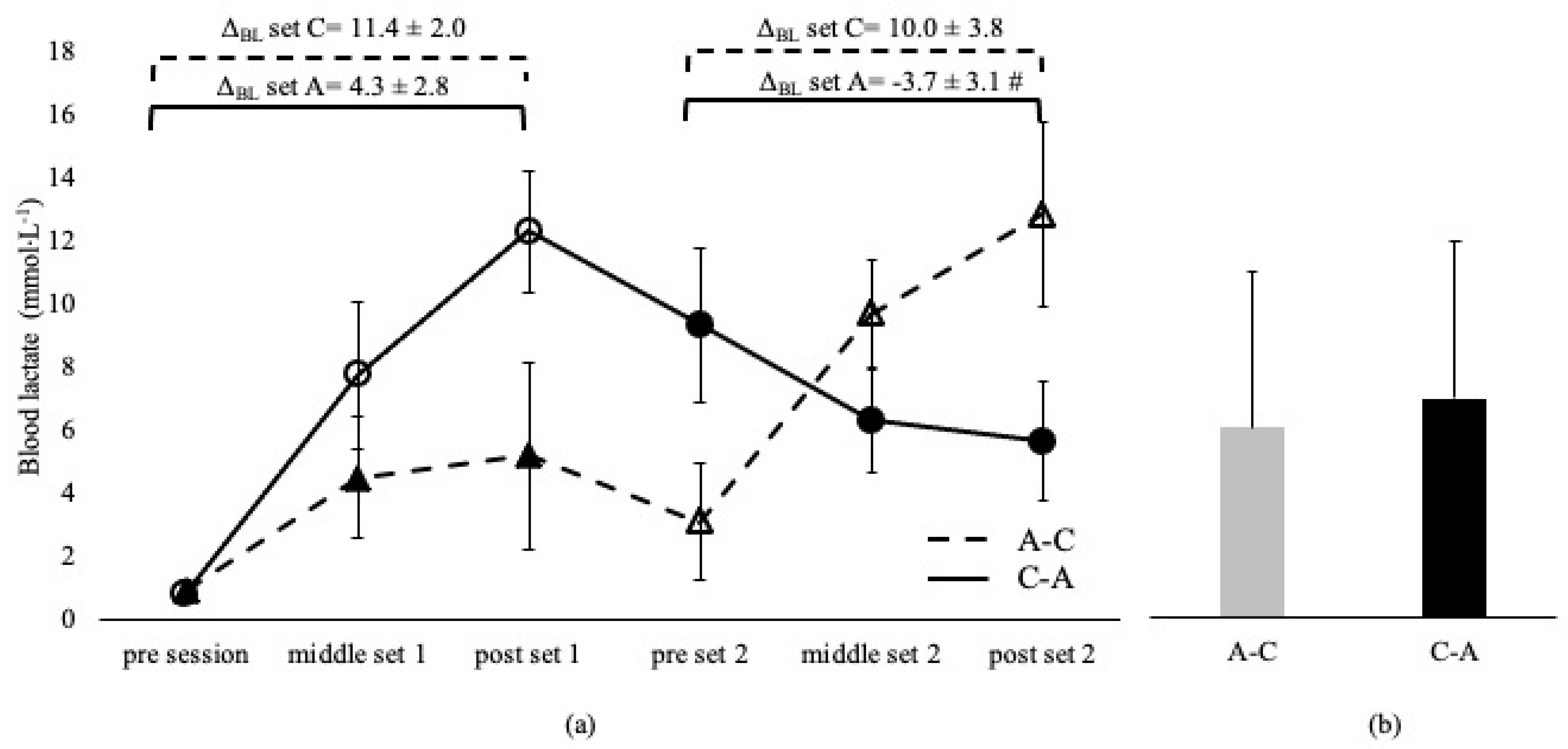
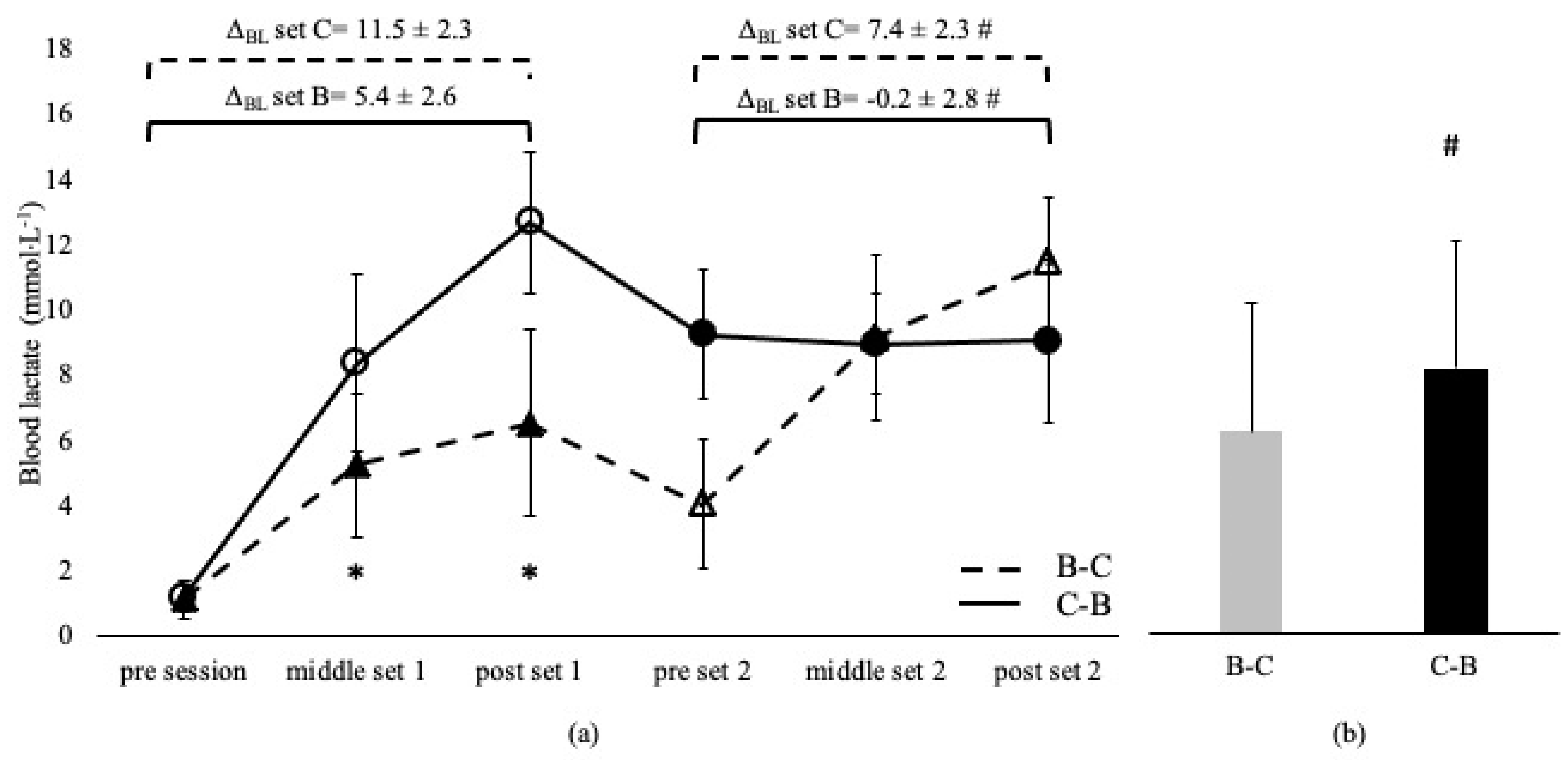
The study examined the effect of set sequence on performance and physiological responses in a training session and in each set separately. Twelve male swimmers performed four sessions in a randomized order, including a combination of two training sets: (i) set A-set C, (ii) set C-set A, (iii) set B-set C, (iv) set C-set B. Set A consisted of 8 × 200 m at a speed corresponding to lactate threshold (30 s recovery), set B included 8 × 100 m at the maximal aerobic speed (30 s recovery), set C included 8 × 50 m sprints at 95% of the maximum 50 m speed (30 s recovery). Speed, blood lactate, pH, base excess, bicarbonate and heart rate variability (HRV) were measured. Speed in each set was similar between sessions irrespective of set sequence (p > 0.05). Physiological responses during sets A and C were similar in all sessions (p > 0.05). In set B, when applied after set C, the metabolic response increased, and HRV decreased (p < 0.05). Overall, session biochemical disturbance was higher when set C was applied before sets A and B (p < 0.05). The magnitude of metabolic and HRV responses in a set conducted at maximal aerobic speed, but not at lactate threshold intensity, is increased when applied after sprint intervals.
Keywords: swimming; performance; interval training; heart rate variability; training load swimming; performance; interval training; heart rate variability; training load