Sublethal Effects and Associated Risks of Acaricides Used Against Varroa destructor in Honey Bee (Apis mellifera) Colonies


Simple Summary
Abstract
1. Introduction
2. Methodology
3. Mode of Action of Chemicals Used to Control Varroa destructor and Their Products
3.1. Organic Chemicals
3.1.1. Formic Acid
3.1.2. Oxalic Acid
3.1.3. Essential Oil Compound
3.2. Synthetic Chemicals
3.2.1. Formamidines
3.2.2. Organophosphothionates
3.2.3. Pyrethroids
4. Existing Treatments Used to Control Varroa destructor: Dosage, Duration, and Timing of Application
- Quantity of active ingredients: The toxicity of a chemical is linked to the quantity to which honey bees are exposed. Many acaricides are neurotoxic to insects, meaning that a low dose has an impact on a small number of targets and can lead to subtle changes in memory, learning and behavior, for example [37,38]. Whereas higher doses will have an impact on a larger number of targets, leading to death.
- Duration of treatment: Longer treatment times expose honey bees to chemicals for longer periods. Continuous or repeated exposure can result in cumulative toxicity, weakening bees over time, even if each individual exposure is below lethal levels [39]. Short-term exposure, on the other hand, can have more immediate effects.
- Method of application: The way the chemical is introduced to the bees influences its impact [40]. For example, contact treatments may be in contact only with the areas of the body in contact with the substance. In contrast, methods like sublimation or fumigation can enter the honey bee’s respiratory system, leading to a different response [41].
- Timing of treatment: The colony activity changes with the seasons, and the timing of chemical application can influence its impact [42]. For example, in spring, when drones are produced for mating and queens are preparing for reproduction, exposure to acaricides can have an impact on reproductive processes [43,44]. On the other hand, in early autumn, when the drones are expelled from the hive and die, the impact of acaricide exposure on the colony for this caste may be low.

| Commercially Available Products | Chemical | Application | Quantity of Active Ingredient per Treatment (g) | Treatment Duration (Weeks) | Treatment Prerequisites |
|---|---|---|---|---|---|
| Oxybee® | Oxalic acid, anise, and eucalyptus oils | Spray, trickling and sublimation | 1.97 | <1 | Colony without brood Absence of honey |
| Api-Bioxal RTU beehive solution | Oxalic acid | Spray, trickling and sublimation | 1–3 | <1 | Colony without brood |
| VarroxSanTM | Oxalic acid | Strips | 28 | 6 | One chamber separates the treatment of any honey to be extracted |
| EZ-OX Tablets | Oxalic acid | Tablets | 2–4 | <1 | Colony without brood |
| Formic ProTM | Formic acid | Strips | 136 | 2 | Colony with brood, temperature between 10–29 °C |
| VarroMed® | Oxalic acid/ formic acid | Spray, trickling and sublimation | 0.05 formic acid/0.04 oxalic acid | 4 | Absence of honey |
| Apiguard | Thymol | Gels | 12.5 | 6 | Temperature between 15–40 °C |
| Api Life Var | Thymol/oil of eucalyptus/menthol | Plates | 8 thymol/1.72 oil of eucalyptus/0.32 menthol | 4 | Temperature under 35 °C |
| THYMOVAR® | Thymol | Strips | 15 | 4 | Temperatures under 30 °C |
| APISTAN® | tau-fluvalinate | Strips | 1.65 | 6 | Absence of honey |
| Apivar® | Amitraz | Strips | 1 | 6 | Absence of honey |
| Amiflex® | Amitraz | Gels | 0.13 | 1 | Absence of honey |
| CheckMite+® | Coumaphos | Strips | 1.36 | 6 | Absence of honey |
| Perizin® | Coumaphos | Trickling | 0.03 | 6 | Absence of honey |
| BayvarolTM | Flumethrin | Strips | 0.01 | 6 | Absence of honey |
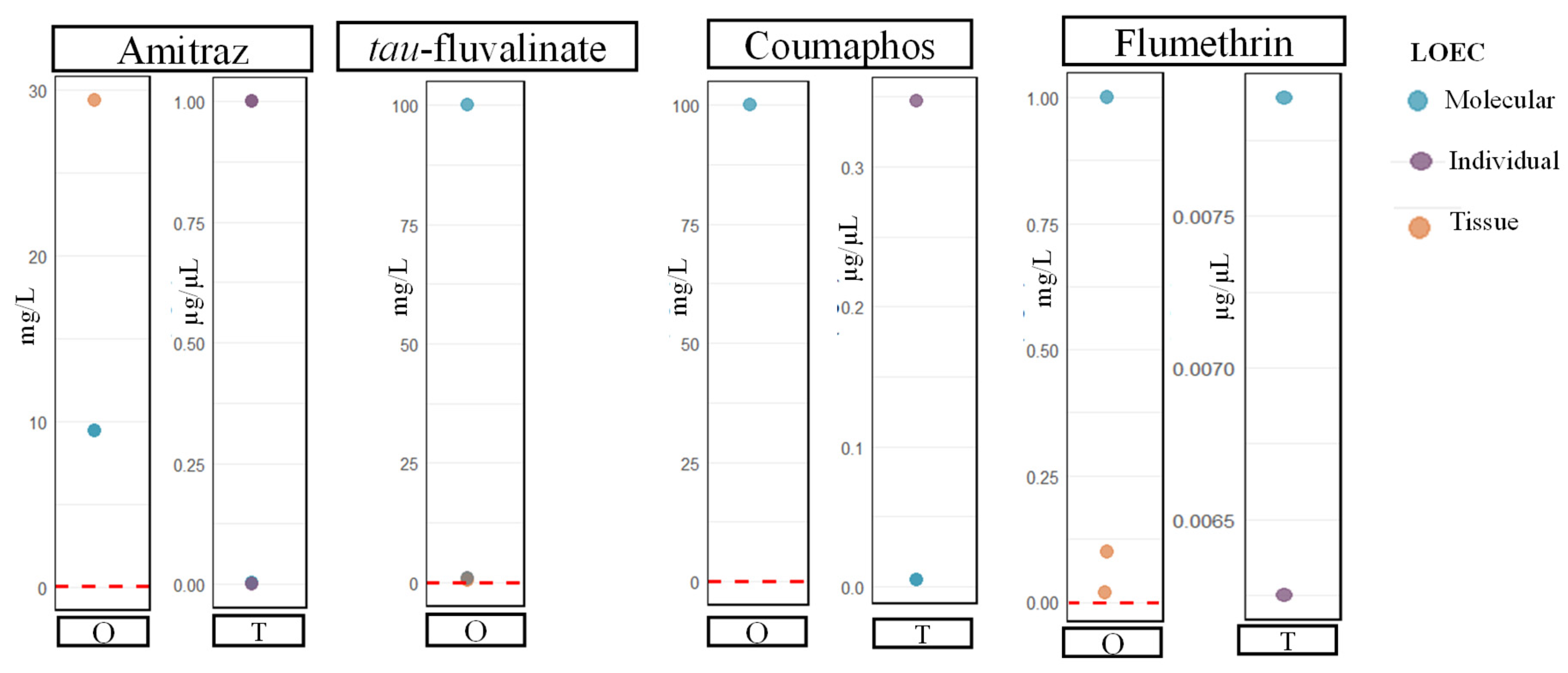
5. Impact of Acaricides at the Molecular Level
6. Impact of Acaricides at the Tissue Level
6.1. Muscle Tissue
6.2. Nervous Tissue
6.3. Digestive Tissue
6.3.1. Midgut and Hindgut
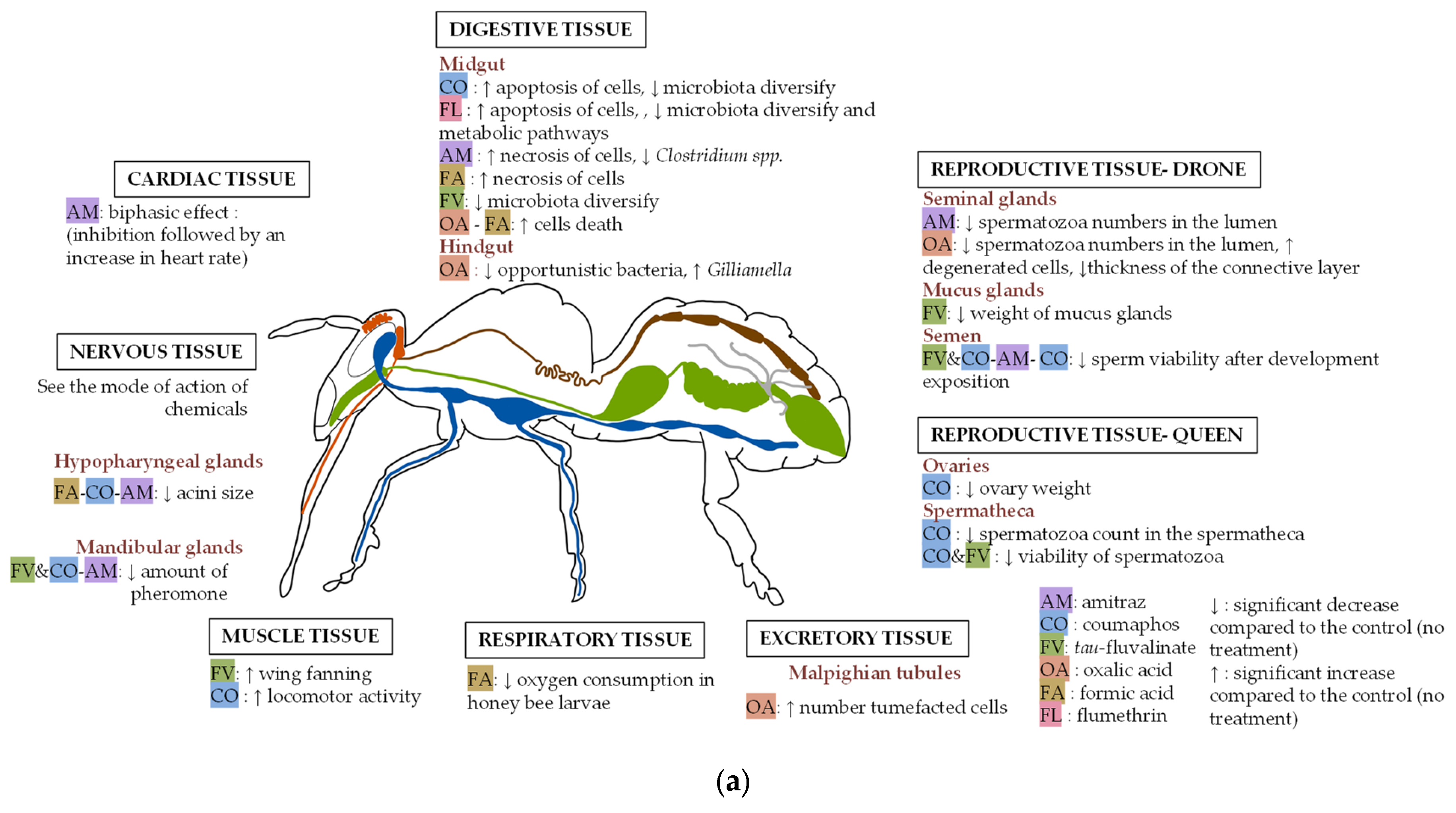
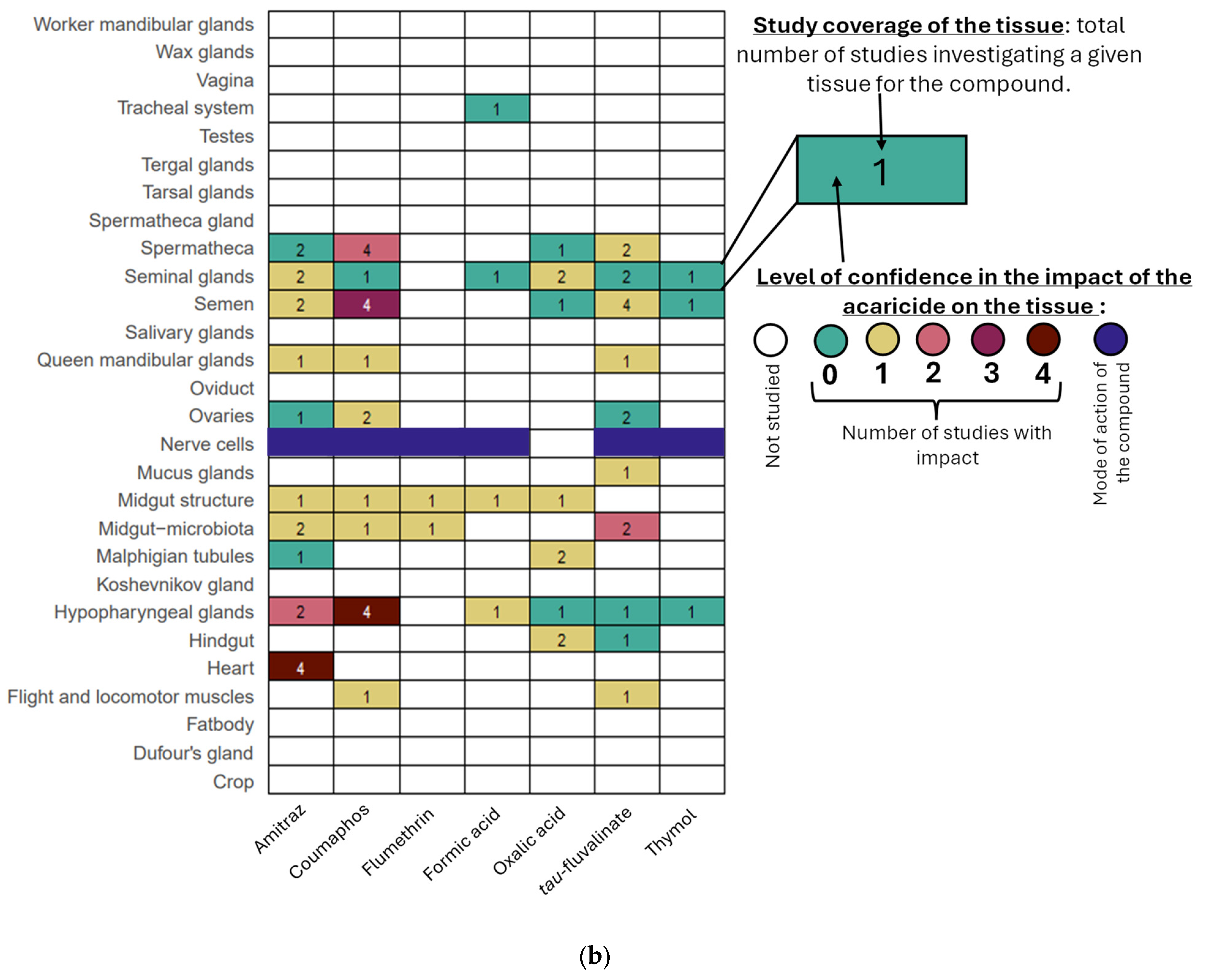
- Midgut: The honey bee midgut is the central part of its digestive system, functioning similarly to the stomach in other animals. Situated between the crop and the hindgut, it plays a role in nutrient absorption and digestion. Researchers have shown that amitraz, coumaphos, flumethrin, oxalic acid, and formic acid all can alter the midgut’s histological structure (Figure 4). For example, coumaphos-treated honey bees experience significant apoptosis in midgut tissue [74], as do those treated with flumethrin [75]. Necrosis has also been observed in honey bee midguts following amitraz [76] and formic acid [77] treatments. Furthermore, oxalic acid appears to increase cell death in the midgut [77,78]. Acaricides used for V. destructor control also impact the honey bee’s midgut microbiota. Amitraz, for instance, has shown minimal effects on honey bee microbiota, with studies indicating no significant changes in intestinal communities [79]. Another study, however, noted a minor change, including reduced levels of Escherichia coli and particularly Clostridium spp., and a decline in fungal communities [80]. The microbiota response to amitraz appears to be method dependent and suggests greater sensitivity under in-hive exposure conditions than under controlled laboratory exposure. However, it remains difficult to determine whether these changes to the microbiota are biologically meaningful. In contrast, flumethrin disrupts intestinal function by decreasing microbiota diversity and altering metabolic pathways [52]. tau-fluvalinate similarly affects microbiota composition, increasing the presence of Snodgrassella and Zygosaccharomyces while reducing Commensalibacter in worker bees [81]. In field conditions, both coumaphos and tau-fluvalinate exposure significantly affected bacterial community structure but did not alter fungal communities [82].
- Hindgut: The honey bee hindgut is a part of the digestive tract that includes the ileum and rectum. One study assessed the impact of tau-fluvalinate on the hindgut microbiota (Figure 4), finding no statistically significant differences in the relative abundance of Lactobacillus spp., Commensalibacter spp., Serratia spp., and Snodgrassella spp. [79]. Another study demonstrated that oxalic acid treatment in colonies caused a disrupted gut microbiota, reducing bacterial diversity by decreasing the presence of opportunistic bacteria. This treatment also enriched beneficial bacteria, such as Gilliamella, in both the hindgut and midgut of the honey bees [83]. Oxalic acid exposure also caused severe degeneration of the rectal epithelium within 48 h after treatment [84]. These effects may depend on the application method, particularly when oxalic acid is administered via trickling in a sucrose solution, as in the case of Martín-Hernández et al. [84], which can stimulate grooming behavior and increase ingestion, potentially increasing exposure of the hindgut. The observed enrichment of beneficial bacteria may also correspond to a microbiota recovery after initial disruption caused by the treatment.
6.3.2. Malpighian Tubules
6.4. Glandular Tissue
Hypopharyngeal and Mandibular Glands
6.5. Respiratory Tissue
6.6. Endocrine Tissue
Mandibular Glands
6.7. Reproductive Tissues
6.7.1. Queen Ovaries and Spermatheca
- Ovaries: Queen honey bees have two large, active ovaries capable of producing around 2000 eggs per day [96]. Queens reared in beeswax impregnated with amitraz or a combination of tau-fluvalinate and coumaphos show no change in the number of ovarioles per ovary [97]. However, exposure via beeswax may not accurately reflect actual chemical exposure, as not all compounds are equally bioavailable to developing bees. Similarly, colonies treated with tau-fluvalinate exhibit no significant differences in queen ovary weight compared to controls. However, colonies exposed to coumaphos demonstrate a significant reduction in ovary weight [98].
- Spermatheca: The spermatheca is a structure in queens that stores sperm and allows the queen to control which eggs are fertilized. Regarding queen spermatheca, no significant differences in sperm viability were observed in queens reared in amitraz-impregnated wax [99] or exposed to 2.0 ppm of amitraz in laboratory conditions [46]. Likewise, queens exposed to tau-fluvalinate or coumaphos during development via beeswax show no significant impact on sperm viability [99]. Queens from colonies treated with oxalic acid also exhibit no differences in sperm viability [100]. Honey bee queens topically treated with coumaphos at concentrations from 0.02 ppm to 0.4 ppm show no significant impact on sperm viability [50]. In contrast, queens reared in beeswax containing 100 mg/kg of coumaphos display a decrease in the percentage of queens with a clear or white spermatheca, indicating a reduction in spermatozoa count [101]. Additionally, queens reared in cups containing a combination of tau-fluvalinate and coumaphos showed a reduction in sperm viability in the spermatheca [102].
6.7.2. Drone Reproductive Organs
- Seminal glands: In honey bees, spermatozoa are transferred from the testes to the seminal vesicles as the drone matures. The seminal vesicles play a role in maintaining sperm quality (viability and motility) until the drone mates with the queen. Proteins produced by the seminal gland cells help to preserve the quality of spermatozoa both before and after mating [103]. Several studies have investigated the impact of acaricides on seminal gland size (Figure 4). One study reported that tau-fluvalinate did not significantly affect seminal vesicle weight [104] and another found that coumaphos had no impact on seminal vesicle length and width [105]. Researchers have also focused on acaricide effects on spermatozoa count in the seminal vesicle lumen. Researchers in one study observed a significant reduction in spermatozoa numbers following exposure to amitraz but found no differences for tau-fluvalinate, oxalic acid, formic acid, or thymol [106]. Another group reported a significant decrease in spermatozoa with oxalic acid exposure, but found no effects for amitraz [107]. Here, researchers also detected degenerated cells in drones exposed to oxalic acid and a notable reduction in the thickness of the connective layer, though not in the muscle layer [107]. These observations suggest that oxalic acid exposure may impair sperm quality.
- Semen: Honey bee drone semen is composed of spermatozoa and a seminal fluid. During mating, the drone inserts his endophallus into the queen’s vagina, depositing the semen. Ref. [44] found no significant impact on sperm viability in drone semen when exposed to amitraz, coumaphos, oxalic acid, thymol, or tau-fluvalinate via the hive (Figure 4). However, another study observed no significant effect of tau-fluvalinate on sperm viability but reported a significant reduction after exposure to coumaphos [108]. Additionally, when drones were developed in beeswax contaminated with amitraz or a combination of tau-fluvalinate and coumaphos, sperm viability significantly decreased [43]. Another study further confirmed a significant reduction in sperm viability after six weeks of coumaphos exposure during drone development, a result not observed with tau-fluvalinate [108].
7. Impact of Acaricides at the Individual Level
7.1. Immature Honey Bees
7.1.1. Brood Survival After Queen Exposure
7.1.2. Impact on Larval Survival
7.1.3. Impact on Pupal Survival
7.1.4. Impact on Immature Honey Bee External Physiology
7.2. Adult Worker Honey Bees
7.2.1. Honey Bee Learning
7.2.2. Honey Bee Behavior
7.2.3. Honey Bee Stressors
7.3. Queen Honey Bee
7.3.1. Queen Development
7.3.2. Egg Laying
7.3.3. Mating Behavior
7.4. Drone Honey Bee
7.4.1. Drone Survival
7.4.2. Drone External Physiology
8. Impact of Acaricides at the Colony Level
8.1. Food Collection, Processing and Consumption
8.2. Colony Respiration and Thermoregulation
8.3. Colony Immune System
8.4. Worker Population
8.5. Brood Area
8.6. Disease
8.7. Survival of the Colony
9. What Is the Real Sublethal Risk of Acaricides for Honey Bees?
10. Summary of Impacts of Acaricides on Honey Bee Systems
10.1. Circulatory System
10.2. Development System
10.3. Digestive System and Excretory System
10.4. Immune System
10.5. Muscular System
10.6. Nervous System
10.7. Reproduction System
10.8. Respiration System
11. Conclusions
Supplementary Materials
Author Contributions
Funding
Data Availability Statement
Conflicts of Interest
Abbreviations
| ACh | Acetylcholine |
| AChE | Acetylcholinesterase |
| CS | Conditioned stimulus |
| CYP | Cytochrome P450 |
| DMF | 2,4-dimethylformamide |
| DMPF | N-(2,4-dimethylphenyl)-N′-methylformamidine |
| ELISA | Enzyme-linked immunosorbent assay |
| GABA | Gamma-aminobutyric acid |
| IAPV | Israeli acute paralysis virus |
| LC-MS | Liquid chromatography–mass spectrometry |
| LOEC | Lowest observed effect concentration |
| NMDA | N-methyl-D-aspartate |
| Oamb | Octopamine receptor in mushroom bodies |
| Oct-TyrR | Octopamine–tyramine receptor |
| OctαR | Octopamine alpha-adrenergic-like receptor |
| Octβ2R | Octopamine beta 2 receptor |
| PCR | Polymerase chain reaction |
| PER | Proboscis extension reflex |
| qPCR | Quantitative polymerase chain reaction |
| RDL | Resistant to dieldrin |
| TRP | Transient receptor potential |
| USA | United States of America |
References
- Aurell, D.; Bruckner, S.; Wilson, M.; Steinhauer, N.; Williams, G.R. A National Survey of Managed Honey Bee Colony Losses in the USA: Results from the Bee Informed Partnership for 2020–21 and 2021–22. J. Apic. Res. 2024, 63, 1–14. [Google Scholar] [CrossRef]
- Le Conte, Y.; Ellis, M.; Ritter, W. Varroa Mites and Honey Bee Health: Can Varroa Explain Part of the Colony Losses? Apidologie 2010, 41, 353–363. [Google Scholar] [CrossRef]
- Rosenkranz, P.; Aumeier, P.; Ziegelmann, B. Biology and Control of Varroa destructor. J. Invertebr. Pathol. 2010, 103, S96–S119. [Google Scholar] [CrossRef]
- Vilarem, C.; Piou, V.; Vogelweith, F.; Vétillard, A. Varroa destructor from the Laboratory to the Field: Control, Biocontrol and IPM Perspectives—A Review. Insects 2021, 12, 800. [Google Scholar] [CrossRef]
- Morfin, N.; Goodwin, P.H.; Guzman-Novoa, E. Varroa destructor and Its Impacts on Honey Bee Biology. Front. Bee Sci. 2023, 1, 1272937. [Google Scholar] [CrossRef]
- BüChler, R. Varroa Tolerance in Honey Bees—Occurrence, Characters and Breeding. Bee World 1994, 75, 54–70. [Google Scholar] [CrossRef]
- Jack, C.J.; De Bem Oliveira, I.; Kimmel, C.B.; Ellis, J.D. Seasonal Differences in Varroa destructor Population Growth in Western Honey Bee (Apis mellifera) Colonies. Front. Ecol. Evol. 2023, 11, 1102457. [Google Scholar] [CrossRef]
- Korpela, S.; Aarhus, A.; Fries, I.; Hansen, H. Varroa jacobsoni Oud. in Cold Climates: Population Growth, Winter Mortality and Influence on the Survival of Honey Bee Colonies. J. Apic. Res. 1992, 31, 157–164. [Google Scholar] [CrossRef]
- Boncristiani, H.; Ellis, J.D.; Bustamante, T.; Graham, J.; Jack, C.; Kimmel, C.B.; Mortensen, A.; Schmehl, D.R. World Honey Bee Health: The Global Distribution of Western Honey Bee (Apis mellifera L.) Pests and Pathogens. Bee World 2021, 98, 2–6. [Google Scholar] [CrossRef]
- Emsen, B.; Guzman-Novoa, E.; Kelly, P.G. Honey Production of Honey Bee (Hymenoptera: Apidae) Colonies with High and Low Varroa destructor (Acari: Varroidae) Infestation Rates in Eastern Canada. Can. Entomol. 2014, 146, 236–240. [Google Scholar] [CrossRef]
- Shimanuki, H.; Calderone, N.W.; Knox, D.A. Parasitic Mite Syndrome: The Symptoms. Am. Bee J. 1994, 134, 827–828. [Google Scholar]
- Harbo, J.R.; Harris, J.W. Responses to Varroa by Honey Bees with Different Levels of Varroa Sensitive Hygiene. J. Apic. Res. 2009, 48, 156–161. [Google Scholar] [CrossRef]
- Boecking, O.; Genersch, E. Varroosis–The Ongoing Crisis in Bee Keeping. J. Verbraucherschutz Leb. 2008, 3, 221–228. [Google Scholar] [CrossRef]
- Jack, C.J.; Ellis, J.D. Integrated Pest Management Control of Varroa destructor (Acari: Varroidae), the Most Damaging Pest of (Apis mellifera L. (Hymenoptera: Apidae)) Colonies. J. Insect Sci. 2021, 21, 6. [Google Scholar] [CrossRef]
- Elzen, P.J.; Eischen, F.A.; Baxter, J.R.; Elzen, G.W.; Wilson, W.T. Detection of Resistance in US Varroa Jacobsoni Oud. (Mesostigmata: Varroidae) to the Acaricide Fluvalinate. Apidologie 1999, 30, 13–17. [Google Scholar] [CrossRef]
- Spreafico, M.; Eördegh, F.R.; Bernardinelli, I.; Colombo, M. First Detection of Strains of Varroa destructor Resistant to Coumaphos.Results of Laboratory Tests and Field Trials. Apidologie 2001, 32, 49–55. [Google Scholar] [CrossRef]
- Bogdanov, S.; Kilchenmann, V.; Imdorf, A. Acaricide Residues in Some Bee Products. J. Apic. Res. 1998, 37, 57–67. [Google Scholar] [CrossRef]
- Elzen, P.J.; Baxter, J.R.; Spivak, M.; Wilson, W.T. Control of Varroa jacobsoni Oud. Resistant to Fluvalinate and Amitraz Using Coumaphos. Apidologie 2000, 31, 437–441. [Google Scholar] [CrossRef]
- Touchard, A.; Aili, S.; Fox, E.; Escoubas, P.; Orivel, J.; Nicholson, G.; Dejean, A. The Biochemical Toxin Arsenal from Ant Venoms. Toxins 2016, 8, 30. [Google Scholar] [CrossRef]
- Keyhani, J.; Keyhani, E. Epr Study of the Effect of Formate on Cytochrome c Oxidase. Biochem. Biophys. Res. Commun. 1980, 92, 327–333. [Google Scholar] [CrossRef]
- Song, C.; Scharf, M.E. Formic Acid: A Neurologically Active, Hydrolyzed Metabolite of Insecticidal Formate Esters. Pestic. Biochem. Physiol. 2008, 92, 77–82. [Google Scholar] [CrossRef]
- Fries, I.; Aarhus, A.; Hansen, H.; Korpela, S. Comparison of Diagnostic Methods for Detection of Low Infestation Levels of Varroa jacobsoni in Honey-Bee (Apis mellifera) Colonies. Exp. Appl. Acarol. 1991, 10, 279–287. [Google Scholar] [CrossRef]
- Franceschi, V.R.; Nakata, P.A. CALCIUM OXALATE IN PLANTS: Formation and Function. Annu. Rev. Plant Biol. 2005, 56, 41–71. [Google Scholar] [CrossRef]
- Aliano, N.P.; Ellis, M.D.; Siegfried, B.D. Acute Contact Toxicity of Oxalic Acid to Varroa destructor (Acari: Varroidae) and Their Apis mellifera (Hymenoptera: Apidae) Hosts in Laboratory Bioassays. J. Econ. Entomol. 2006, 99, 1579–1582. [Google Scholar] [CrossRef]
- Gregorc, A.; Planinc, I. Acaricidal Effect of Oxalic Acid in Honeybee (Apis mellifera) Colonies. Apidologie 2001, 32, 333–340. [Google Scholar] [CrossRef][Green Version]
- Price, K.L.; Lummis, S.C.R. Characterisation of Thymol Effects on RDL Receptors from the Bee Parasite Varroa destructor. Pestic. Biochem. Physiol. 2022, 183, 105064. [Google Scholar] [CrossRef] [PubMed]
- Jukic, M.; Politeo, O.; Maksimovic, M.; Milos, M.; Milos, M. In Vitro Acetylcholinesterase Inhibitory Properties of Thymol, Carvacrol and Their Derivatives Thymoquinone and Thymohydroquinone. Phytother. Res. 2007, 21, 259–261. [Google Scholar] [CrossRef] [PubMed]
- Parnas, M.; Peters, M.; Dadon, D.; Lev, S.; Vertkin, I.; Slutsky, I.; Minke, B. Carvacrol Is a Novel Inhibitor of Drosophila TRPL and Mammalian TRPM7 Channels. Cell Calcium 2009, 45, 300–309. [Google Scholar] [CrossRef] [PubMed]
- Enan, E.E. Molecular Response of Drosophila melanogaster Tyramine Receptor Cascade to Plant Essential Oils. Insect Biochem. Mol. Biol. 2005, 35, 309–321. [Google Scholar] [CrossRef]
- Waliwitiya, R.; Belton, P.; Nicholson, R.A.; Lowenberger, C.A. Effects of the Essential Oil Constituent Thymol and Other Neuroactive Chemicals on Flight Motor Activity and Wing Beat Frequency in the Blowfly Phaenicia sericata. Pest Manag. Sci. 2010, 66, 277–289. [Google Scholar] [CrossRef]
- Mizunami, M.; Unoki, S.; Mori, Y.; Hirashima, D.; Hatano, A.; Matsumoto, Y. Roles of Octopaminergic and Dopaminergic Neurons in Appetitive and Aversive Memory Recall in an Insect. BMC Biol. 2009, 7, 46. [Google Scholar] [CrossRef]
- Farooqui, T. Review of Octopamine in Insect Nervous Systems. Open Access Insect Physiol. 2012, 1, 1–17. [Google Scholar] [CrossRef]
- Guo, L.; Fan, X.; Qiao, X.; Montell, C.; Huang, J. An Octopamine Receptor Confers Selective Toxicity of Amitraz on Honeybees and Varroa Mites. eLife 2021, 10, e68268. [Google Scholar] [CrossRef] [PubMed]
- Main, A.R. Mode of Action of Anticholinesterases. Pharmacol. Ther. 1979, 6, 579–628. [Google Scholar] [CrossRef]
- Narahashi, T. Mode of Action of Pyrethroids. Bull. World Health Organ. 1971, 44, 337–345. [Google Scholar] [PubMed]
- Toshio, N. Nerve Membrane Na+ Channels as Targets of Insecticides. Trends Pharmacol. Sci. 1992, 13, 236–241. [Google Scholar] [CrossRef]
- Williamson, S.M.; Wright, G.A. Exposure to Multiple Cholinergic Pesticides Impairs Olfactory Learning and Memory in Honeybees. J. Exp. Biol. 2013, 216, 1799–1807. [Google Scholar] [CrossRef]
- Gashout, H.A.; Guzman-Novoa, E.; Goodwin, P.H. Synthetic and Natural Acaricides Impair Hygienic and Foraging Behaviors of Honey Bees. Apidologie 2020, 51, 1155–1165. [Google Scholar] [CrossRef]
- Simon-Delso, N.; San Martin, G.; Bruneau, E.; Hautier, L. Time-to-Death Approach to Reveal Chronic and Cumulative Toxicity of a Fungicide for Honeybees Not Revealed with the Standard Ten-Day Test. Sci. Rep. 2018, 8, 7241. [Google Scholar] [CrossRef]
- Prouty, C.; Abou-Shaara, H.F.; Stanford, B.; Ellis, J.D.; Jack, C. Oxalic Acid Application Method and Treatment Intervals for Reduction of Varroa destructor (Mesostigmata: Varroidae) Populations in Apis mellifera (Hymenoptera: Apidae) Colonies. J. Insect Sci. 2023, 23, 13. [Google Scholar] [CrossRef]
- Bolli, H.K.; Bogdanov, S.; Imdorf, A.; Fluri, P. Zur Wirkungsweise von Ameisensäure Bei Varroa jacobsoni Oud Und Der Honigbiene (Apis mellifera L.). Apidologie 1993, 24, 51–57. [Google Scholar] [CrossRef]
- Jack, C.J.; Boncristiani, H.; Prouty, C.; Schmehl, D.R.; Ellis, J.D. Evaluating the Seasonal Efficacy of Commonly Used Chemical Treatments on Varroa destructor (Mesostigmata: Varroidae) Population Resurgence in Honey Bee Colonies. J. Insect Sci. 2024, 24, 11. [Google Scholar] [CrossRef] [PubMed]
- Fisher, A.; Rangel, J. Exposure to Pesticides during Development Negatively Affects Honey Bee (Apis mellifera) Drone Sperm Viability. PLoS ONE 2018, 13, e0208630. [Google Scholar] [CrossRef] [PubMed]
- Johnson, R.M.; Dahlgren, L.; Siegfried, B.D.; Ellis, M.D. Effect of In-Hive Miticides on Drone Honey Bee Survival and Sperm Viability. J. Apic. Res. 2013, 52, 88–95. [Google Scholar] [CrossRef]
- Garrido, P.M.; Antúnez, K.; Martín, M.; Porrini, M.P.; Zunino, P.; Eguaras, M.J. Immune-Related Gene Expression in Nurse Honey Bees (Apis mellifera) Exposed to Synthetic Acaricides. J. Insect Physiol. 2013, 59, 113–119. [Google Scholar] [CrossRef]
- Chaimanee, V.; Pettis, J.S. Gene Expression, Sperm Viability, and Queen (Apis mellifera) Loss Following Pesticide Exposure under Laboratory and Field Conditions. Apidologie 2019, 50, 304–316. [Google Scholar] [CrossRef]
- Ye, L.; Liu, P.; Shi, T.; Wang, A.; Zhu, Y.; Li, L.; Yu, L. Transcriptomic Analysis to Elucidate the Response of Honeybees (Hymenoptera: Apidae) to Amitraz Treatment. PLoS ONE 2020, 15, e0228933. [Google Scholar] [CrossRef]
- Glavinić, U.; Rajković, M.; Ristanić, M.; Stevanović, J.; Vejnović, B.; Djelić, N.; Stanimirović, Z. Genotoxic Potential of Thymol on Honey Bee DNA in the Comet Assay. Insects 2023, 14, 451. [Google Scholar] [CrossRef]
- Sebak, S.I.; Elelimy, H.A.S.; Seyam, H.; Elkenawy, S.A. Effect of Thymol and Propolis Extract on Genotoxicity, Biochemical Activities and Expression Profile of Some Genes on Honey Bee, Apis mellifera, Infected with Vairimorpha (Nosema) ceranae. Beni Suef Univ. J. Basic Appl. Sci. 2025, 14, 8. [Google Scholar] [CrossRef]
- Chaimanee, V.; Evans, J.D.; Chen, Y.; Jackson, C.; Pettis, J.S. Sperm Viability and Gene Expression in Honey Bee Queens (Apis mellifera) Following Exposure to the Neonicotinoid Insecticide Imidacloprid and the Organophosphate Acaricide Coumaphos. J. Insect Physiol. 2016, 89, 1–8. [Google Scholar] [CrossRef]
- Sabová, L.; Cingeľová Maruščáková, I.; Koleničová, S.; Mudroňová, D.; Holečková, B.; Sabo, R.; Sobeková, A.; Majchrák, T.; Ratvaj, M. The Adverse Effects of Synthetic Acaricide Tau-Fluvalinate (Tech.) on Winter Adult Honey Bees. Environ. Toxicol. Pharmacol. 2022, 92, 103861. [Google Scholar] [CrossRef]
- Liu, J.; Shi, J.; Hu, Y.; Su, Y.; Zhang, Y.; Wu, X. Flumethrin Exposure Perturbs Gut Microbiota Structure and Intestinal Metabolism in Honeybees (Apis mellifera). J. Hazard. Mater. 2024, 480, 135886. [Google Scholar] [CrossRef]
- Schmehl, D.R.; Teal, P.E.A.; Frazier, J.L.; Grozinger, C.M. Genomic Analysis of the Interaction between Pesticide Exposure and Nutrition in Honey Bees (Apis mellifera). J. Insect Physiol. 2014, 71, 177–190. [Google Scholar] [CrossRef]
- Reeves, A.M.; O’Neal, S.T.; Fell, R.D.; Brewster, C.C.; Anderson, T.D. In-Hive Acaricides Alter Biochemical and Morphological Indicators of Honey Bee Nutrition, Immunity, and Development. J. Insect Sci. 2018, 18, 8. [Google Scholar] [CrossRef]
- Cizelj, I.; Glavan, G.; Božič, J.; Oven, I.; Mrak, V.; Narat, M. Prochloraz and Coumaphos Induce Different Gene Expression Patterns in Three Developmental Stages of the Carniolan Honey Bee (Apis mellifera Carnica Pollmann). Pestic. Biochem. Physiol. 2016, 128, 68–75. [Google Scholar] [CrossRef]
- Zikic, B.; Aleksic, N.; Ristanic, M.; Glavinic, U.; Vejnovic, B.; Krnjaic, I.; Stanimirovic, Z. Anti-Varroa Efficiency of Coumaphos and Its Influence on Oxidative Stress and Survival of Honey Bees. Acta Vet. 2020, 70, 355–373. [Google Scholar] [CrossRef]
- Wu, X.; Liao, C.; He, X.; Zhang, L.; Yan, W.; Zeng, Z. Sublethal Fluvalinate Negatively Affect the Development and Flight Capacity of Honeybee (Apis mellifera L.) Workers. Environ. Res. 2022, 203, 111836. [Google Scholar] [CrossRef]
- Liu, C.; Wu, X.; Yang, H.; Yu, L.; Zhang, Y. Effects of Larval Exposure to the Insecticide Flumethrin on the Development of Honeybee (Apis mellifera) Workers. Front. Physiol. 2022, 13, 1054769. [Google Scholar] [CrossRef]
- Qi, S.; Al Naggar, Y.; Li, J.; Liu, Z.; Xue, X.; Wu, L.; El-Seedi, H.R.; Wang, K. Acaricide Flumethrin-Induced Sublethal Risks in Honeybees Are Associated with Gut Symbiotic Bacterium Gilliamella apicola through Microbe-Host Metabolic Interactions. Chemosphere 2022, 307, 136030. [Google Scholar] [CrossRef]
- Sagona, S.; Tafi, E.; Coppola, F.; Nanetti, A.; Boni, C.B.; Orlando, C.; Palego, L.; Betti, L.; Giannaccini, G.; Felicioli, A. Oxalic Acid Treatment: Short-Term Effects on Enzyme Activities, Vitellogenin Content, and Residual Oxalic Acid Content in House Bees, Apis mellifera L. Insects 2024, 15, 409. [Google Scholar] [CrossRef]
- Charpentier, G.; Vidau, C.; Ferdy, J.; Tabart, J.; Vetillard, A. Lethal and Sub-lethal Effects of Thymol on Honeybee (Apis mellifera) Larvae Reared in Vitro. Pest Manag. Sci. 2014, 70, 140–147. [Google Scholar] [CrossRef]
- Glavinic, U.; Blagojevic, J.; Ristanic, M.; Stevanovic, J.; Lakic, N.; Mirilovic, M.; Stanimirovic, Z. Use of Thymol in Nosema ceranae Control and Health Improvement of Infected Honey Bees. Insects 2022, 13, 574. [Google Scholar] [CrossRef]
- Golob, Š.; Božič, J.; Glavan, G. Potential Acaricide 2-Heptatone Induces Brain Apoptosis and Negatively Affects Survival in Honey Bees: Comparison with Thymol. Ecotoxicol. Environ. Saf. 2025, 302, 118723. [Google Scholar] [CrossRef]
- Majchrak, T.; Ratvaj, M.; Sabova, L.; Toporcak, J.; Molnar, L. Toxicity of Oxalic Acid and Its Toxic Effect on Antioxidative Enzymes in Honey Bee Larvae. Veterinární Medicína 2025, 70, 261–271. [Google Scholar] [CrossRef]
- Pinďáková, E.; Dostálková, S.; Jemelková, J.; Fürstová, J.; Hurychová, J.; Hyršl, P.; Titěra, D.; Petřivalský, M.; Dobeš, P.; Danihlík, J. Enhanced Immune Response and Antimicrobial Activity in Honey Bees (Apis mellifera) Following Application of Oxalic Acid-Glycerine Strips. Pestic. Biochem. Physiol. 2025, 209, 106353. [Google Scholar] [CrossRef]
- Gashout, H.A.; Guzman-Novoa, E.; Goodwin, P.H.; Correa-Benítez, A. Impact of Sublethal Exposure to Synthetic and Natural Acaricides on Honey Bee (Apis mellifera) Memory and Expression of Genes Related to Memory. J. Insect Physiol. 2020, 121, 104014. [Google Scholar] [CrossRef]
- O’Neal, S.T.; Brewster, C.C.; Bloomquist, J.R.; Anderson, T.D. Amitraz and Its Metabolite Modulate Honey Bee Cardiac Function and Tolerance to Viral Infection. J. Invertebr. Pathol. 2017, 149, 119–126. [Google Scholar] [CrossRef]
- Papaefthimiou, C.; Papachristoforou, A.; Theophilidis, G. Biphasic Responses of the Honeybee Heart to Nanomolar Concentrations of Amitraz. Pestic. Biochem. Physiol. 2013, 107, 132–137. [Google Scholar] [CrossRef]
- Papaefthimiou, C.; Theophilidis, G. Octopamine—A Single Modulator with Double Action on the Heart of Two Insect Species (Apis mellifera Macedonica and Bactrocera oleae): Acceleration vs. Inhibition. J. Insect Physiol. 2011, 57, 316–325. [Google Scholar] [CrossRef]
- Oliver, C.J.; Softley, S.; Williamson, S.M.; Stevenson, P.C.; Wright, G.A. Pyrethroids and Nectar Toxins Have Subtle Effects on the Motor Function, Grooming and Wing Fanning Behaviour of Honeybees (Apis mellifera). PLoS ONE 2015, 10, e0133733. [Google Scholar] [CrossRef]
- Belzunces, L.P.; Tchamitchian, S.; Brunet, J.-L. Neural Effects of Insecticides in the Honey Bee. Apidologie 2012, 43, 348–370. [Google Scholar] [CrossRef]
- Arslan, O.C.; Erdem, B.; Somel, M.; Giray, T.; Kence, M. Effects of Coumaphos on Locomotor Activities of Different Honeybee (Apis mellifera L.) Subspecies and Ecotypes. Apidologie 2023, 54, 39. [Google Scholar] [CrossRef]
- Yang, Z.; Yu, Y.; Zhang, V.; Tian, Y.; Qi, W.; Wang, L. Octopamine Mediates Starvation-Induced Hyperactivity in Adult Drosophila. Proc. Natl. Acad. Sci. USA 2015, 112, 5219–5224. [Google Scholar] [CrossRef]
- Gregorc, A.; Alburaki, M.; Rinderer, N.; Sampson, B.; Knight, P.R.; Karim, S.; Adamczyk, J. Effects of Coumaphos and Imidacloprid on Honey Bee (Hymenoptera: Apidae) Lifespan and Antioxidant Gene Regulations in Laboratory Experiments. Sci. Rep. 2018, 8, 15003. [Google Scholar] [CrossRef]
- Qi, S.; Niu, X.; Wang, D.H.; Wang, C.; Zhu, L.; Xue, X.; Zhang, Z.; Wu, L. Flumethrin at Sublethal Concentrations Induces Stresses in Adult Honey Bees (Apis mellifera L.). Sci. Total Environ. 2020, 700, 134500. [Google Scholar] [CrossRef]
- Gregorc, A.; Bowen, I.D. Histochemical characterization of cell death in honeybee larvae midgut after treatment with Paenibacillus larvae, amitraz and oxytetracycline. Cell Biol. Int. 2000, 24, 319–324. [Google Scholar] [CrossRef]
- Gregorc, A.; Pogacnik, A.; Bowen, I.D. Cell Death in Honeybee (Apis mellifera) Larvae Treated with Oxalic or Formic Acid. Apidologie 2004, 35, 453–460. [Google Scholar] [CrossRef]
- Gregorc, A.; Smodiš Škerl, M.I. Toxicological and Immunohistochemical Testing of Honeybees after Oxalic Acid and Rotenone Treatments. Apidologie 2007, 38, 296–305. [Google Scholar] [CrossRef]
- Yang, Y.; Ma, S.; Yan, Z.; Liu, F.; Diao, Q.; Dai, P. Effects of Three Common Pesticides on Survival, Food Consumption and Midgut Bacterial Communities of Adult Workers Apis cerana and Apis mellifera. Environ. Pollut. 2019, 249, 860–867. [Google Scholar] [CrossRef]
- Żebracka, A.; Chmielowiec-Korzeniowska, A.; Nowakowicz-Dębek, B.; Wlazło, Ł.; Dziechciarz, P.; Borsuk, G. Intestinal Microbiota of Honey Bees (Apis mellifera) Treated with Amitraz. J. Apic. Sci. 2022, 66, 199–207. [Google Scholar] [CrossRef]
- Liu, J.; Liao, C.; Li, Z.; Shi, X.; Wu, X. Synergistic Resistance of Honeybee (Apis mellifera) and Their Gut Microorganisms to Fluvalinate Stress. Pestic. Biochem. Physiol. 2024, 201, 105865. [Google Scholar] [CrossRef]
- Kakumanu, M.L.; Reeves, A.M.; Anderson, T.D.; Rodrigues, R.R.; Williams, M.A. Honey Bee Gut Microbiome Is Altered by In-Hive Pesticide Exposures. Front. Microbiol. 2016, 7, 1255. [Google Scholar] [CrossRef]
- Gorrochategui-Ortega, J.; Muñoz-Colmenero, M.; Galartza, E.; Estonba, A.; Zarraonaindia, I. Colonies under Dysbiosis Benefit from Oxalic Acid Application: The Role of Landscape and Beekeeping Practices in Microbiota Response to Treatment. J. Pest Sci. 2025, 98, 1187–1201. [Google Scholar] [CrossRef]
- Martín-Hernández, R.; Higes, M.; Pérez, J.L.; Nozal, M.J.; Gómez, L.; Meana, A. Short Term Negative Effect of Oxalic Acid in Apis mellifera Iberiensis. Span. J. Agric. Res. 2007, 5, 474–480. [Google Scholar] [CrossRef]
- Papežíková, I.; Palíková, M.; Kremserová, S.; Zachová, A.; Peterová, H.; Babák, V.; Navrátil, S. Effect of Oxalic Acid on the Mite Varroa Destructor and Its Host the Honey Bee Apis mellifera. J. Apic. Res. 2017, 56, 400–408. [Google Scholar] [CrossRef]
- Moon, S.E. The Effects of DMPF on Honey Bee Pathophysiology; University of Maryland: College Park, MD, USA, 2020. [Google Scholar]
- Tomé, H.V.V.; Schmehl, D.R.; Wedde, A.E.; Godoy, R.S.M.; Ravaiano, S.V.; Guedes, R.N.C.; Martins, G.F.; Ellis, J.D. Frequently Encountered Pesticides Can Cause Multiple Disorders in Developing Worker Honey Bees. Environ. Pollut. 2020, 256, 113420. [Google Scholar] [CrossRef]
- Risse, M.; Dainat, B.; Jeker, L. Sub-Lethal Effects at Stake: Does the Acaricide Coumaphos and Fungicide Folpet Affect the Hypopharyngeal Glands Size? Julius Kühn Archiv 2018, 462, 67–68. [Google Scholar] [CrossRef]
- Smodiš Škerl, M.I.; Kmecl, V.; Gregorc, A. Exposure to Pesticides at Sublethal Level and Their Distribution Within a Honey Bee (Apis mellifera) Colony. Bull. Environ. Contam. Toxicol. 2010, 85, 125–128. [Google Scholar] [CrossRef]
- Smodiš Škerl, M.I.; Gregorc, A. Heat Shock Proteins and Cell Death in Situ Localisation in Hypopharyngeal Glands of Honeybee ( Apis mellifera Carnica ) Workers after Imidacloprid or Coumaphos Treatment. Apidologie 2010, 41, 73–86. [Google Scholar] [CrossRef]
- Weisbrod, J.M. Effects of Pesticide Residue Accumulation on Honey Bee (Apis mellifera L.) Development and Implications for Hive Management. Master’s Thesis, Department of Entomology, University of Nebraska–Lincoln, Lincoln, NE, USA, 2020. [Google Scholar]
- Salem, R.A.; El-sayıed, H.M.; Amro, A.; Abd Alla, A. Impact of acaricides on Varroa destructor infestation in honey bee colonies (Apis mellifera L.) and their histological effects on hypopharyngeal glands. Uludağ Arıcılık Derg. 2024, 24, 53–63. [Google Scholar] [CrossRef]
- Aboushaara, H.; Staron, M.; Čermáková, T. Impacts of Oxalic Acid, Thymol, and Potassium Citrate as Varroa Control Materials on Some Parameters of Honey Bees. Turk. J. Vet. Anim. Sci. 2017, 41, 238–247. [Google Scholar] [CrossRef]
- Slessor, K.N.; Kaminski, L.-A.; King, G.G.S.; Borden, J.H.; Winston, M.L. Semiochemical Basis of the Retinue Response to Queen Honey Bees. Nature 1988, 332, 354–356. [Google Scholar] [CrossRef]
- Walsh, E.M.; Sweet, S.; Knap, A.; Ing, N.; Rangel, J. Queen Honey Bee (Apis mellifera) Pheromone and Reproductive Behavior Are Affected by Pesticide Exposure during Development. Behav. Ecol. Sociobiol. 2020, 74, 33. [Google Scholar] [CrossRef]
- Nolan, W.J. The Brood-Rearing Cycle of the Honeybee; U.S. Department of Agriculture Bulletin No. 1349; United States Department of Agriculture: Washington, DC, USA, 1925.
- Walsh, E.M.; Khan, O.; Grunseich, J.; Helms, A.M.; Ing, N.H.; Rangel, J. Pesticide Exposure During Development Does Not Affect the Larval Pheromones, Feeding Rates, or Morphology of Adult Honey Bee (Apis mellifera) Queens. Front. Ecol. Evol. 2021, 9, 681506. [Google Scholar] [CrossRef]
- Haarmann, T.; Spivak, M.; Weaver, D.; Weaver, B.; Glenn, T. Effects of Fluvalinate and Coumaphos on Queen Honey Bees (Hymenoptera: Apidae) in Two Commercial Queen Rearing Operations. J. Econ. Entomol. 2002, 95, 28–35. [Google Scholar] [CrossRef]
- Walsh, E.M.; Janowiecki, M.A.; Zhu, K.; Ing, N.H.; Vargo, E.L.; Rangel, J. Elevated Mating Frequency in Honey Bee (Hymenoptera: Apidae) Queens Exposed to the Miticide Amitraz During Development. Ann. Entomol. Soc. Am. 2021, 114, 620–626. [Google Scholar] [CrossRef]
- Tellarini Prieto, E.E.; Pietropaoli, M.; Camus, Y.; Polizel Camilli, M.; Raza, M.F.; Jose, M.S.; Obshta, O.; Bezerra Da Silva, M.C.; Kozii, I.; Moshynskyy, I.; et al. Safety Assessment of High Doses of Vaporized Oxalic Acid on Honey Bee Worker Health and Queen Quality. Front. Bee Sci. 2024, 2, 1442030. [Google Scholar] [CrossRef]
- Collins, A.M.; Pettis, J.S.; Wilbanks, R.; Feldlaufer, M.F. Performance of Honey Bee (Apis mellifera) Queens Reared in Beeswax Cells Impregnated with Coumaphos. J. Apic. Res. 2004, 43, 128–134. [Google Scholar] [CrossRef]
- Rangel, J.; Tarpy, D.R. The Combined Effects of Miticides on the Mating Health of Honey Bee (Apis mellifera L.) Queens. J. Apic. Res. 2015, 54, 275–283. [Google Scholar] [CrossRef]
- Hayashi, S.; Satoh, T. Sperm Maturation Process Occurs in the Seminal Vesicle Following Sperm Transition from Testis in Honey Bee Males. Apidologie 2019, 50, 369–378. [Google Scholar] [CrossRef]
- Rinderer, T.; De Guzman, L.; Lancaster, V.; Stelzer, A. Varroa in the Mating Yard: I. The Effects of Varroa jacobsoni and Apistan on Drone Honey Bee. Am. Bee J. 1998, 139, 134–139. [Google Scholar]
- Delaney, D.A. Consequences of Coumaphos and Varroa destructor on Drone Honey Bee Sperm Quantity. Master’s Thesis, Department of Entomology, Oregon State University, Corvallis, OR, USA, 2003. [Google Scholar]
- Shoukry, R.S.; Khattaby, A.M.; El-Sheakh, A.A.; Abo-Ghalia, A.H.; Elbanna, S.M. Effect of some materials for controlling varroa mite on the honeybee drones (Apis mellifera) L. Egypt. J. Agric. Res. 2013, 91, 825–834. [Google Scholar] [CrossRef]
- Ben Abdelkader, F.; Çakmak, İ.; Çakmak, S.S.; Nur, Z.; İncebıyık, E.; Aktar, A.; Erdost, H. Toxicity Assessment of Chronic Exposure to Common Insecticides and Bee Medications on Colony Development and Drones Sperm Parameters. Ecotoxicology 2021, 30, 806–817. [Google Scholar] [CrossRef]
- Burley, L.M.; Fell, R.D.; Saacke, R.G. Survival of Honey Bee (Hymenoptera: Apidae) Spermatozoa Incubated at Room Temperature from Drones Exposed to Miticides. J. Econ. Entomol. 2008, 101, 1081–1087. [Google Scholar] [CrossRef]
- Kayode, A.; Lizette, D.; Johnson, R.; Siegfried, B.D.; Ellis, M. Effect of Amitraz on Queen Honey Bee Egg and Brood Development; Mellifera: Ptuj, Slovenia, 2014. [Google Scholar]
- Ko, C.-Y.; Nai, Y.-S.; Lo, W.; Chen, C.-T.; Chen, Y.-W. Low-Level Fluvalinate Treatment in the Larval Stage Induces Impaired Olfactory Associative Behavior of Honey Bee Workers in the Field. Insects 2022, 13, 273. [Google Scholar] [CrossRef]
- Zhu, W.; Schmehl, D.R.; Mullin, C.A.; Frazier, J.L. Four Common Pesticides, Their Mixtures and a Formulation Solvent in the Hive Environment Have High Oral Toxicity to Honey Bee Larvae. PLoS ONE 2014, 9, e77547. [Google Scholar] [CrossRef]
- Dai, P.; Jack, C.J.; Mortensen, A.N.; Bustamante, T.A.; Ellis, J.D. Chronic Toxicity of Amitraz, Coumaphos and Fluvalinate to Apis mellifera L. Larvae Reared in Vitro. Sci. Rep. 2018, 8, 5635. [Google Scholar] [CrossRef]
- Kast, C.; Droz, B.; Kilchenmann, V. Toxicity of Coumaphos Residues in Beeswax Foundation to the Honey Bee Brood. Environ. Toxicol. Chem. 2023, 42, 1816–1822. [Google Scholar] [CrossRef]
- Yordanova, M.; Zhang, X.; Torres, C.B.; Evison, S.E.F.; Gill, R.J.; Graystock, P. Friend or Foe? Concentration of a Commensal Microbe Induces Distinct Responses in Developing Honey Bees Exposed to Field-Realistic Pesticide Concentrations. FEMS Microbiol. Ecol. 2025, 101, fiaf080. [Google Scholar] [CrossRef]
- Rix, R.R.; Christopher Cutler, G. Acute Exposure to Worst-Case Concentrations of Amitraz Does Not Affect Honey Bee Learning, Short-Term Memory, or Hemolymph Octopamine Levels. J. Econ. Entomol. 2016, 110, 127–132. [Google Scholar] [CrossRef]
- Wu, X.; Li, Z.; Yang, H.; He, X.; Yan, W.; Zeng, Z. The Adverse Impact on Lifespan, Immunity, and Forage Behavior of Worker Bees (Apis mellifera Linnaeus 1758) after Exposure to Flumethrin. Sci. Total Environ. 2023, 858, 160146. [Google Scholar] [CrossRef]
- Bonnafé, E.; Drouard, F.; Hotier, L.; Carayon, J.-L.; Marty, P.; Treilhou, M.; Armengaud, C. Effect of a Thymol Application on Olfactory Memory and Gene Expression Levels in the Brain of the Honeybee Apis mellifera. Environ. Sci. Pollut. Res. 2015, 22, 8022–8030. [Google Scholar] [CrossRef]
- Colin, T.; Plath, J.A.; Klein, S.; Vine, P.; Devaud, J.-M.; Lihoreau, M.; Meikle, W.G.; Barron, A.B. The Miticide Thymol in Combination with Trace Levels of the Neonicotinoid Imidacloprid Reduces Visual Learning Performance in Honey Bees (Apis mellifera). Apidologie 2020, 51, 499–509. [Google Scholar] [CrossRef]
- Chapuy, C.; Ribbens, L.; Renou, M.; Dacher, M.; Armengaud, C. Thymol Affects Congruency Between Olfactory and Gustatory Stimuli in Bees. Sci. Rep. 2019, 9, 7752. [Google Scholar] [CrossRef]
- Frost, E.H.; Shutler, D.; Hillier, N.K. Effects of Fluvalinate on Honey Bee Learning, Memory, Responsiveness to Sucrose, and Survival. J. Exp. Biol. 2013, 216, 2931–2938. [Google Scholar] [CrossRef]
- Carayon, J.-L.; Téné, N.; Bonnafé, E.; Alayrangues, J.; Hotier, L.; Armengaud, C.; Treilhou, M. Thymol as an Alternative to Pesticides: Persistence and Effects of Apilife Var on the Phototactic Behavior of the Honeybee Apis mellifera. Environ. Sci. Pollut. Res. 2014, 21, 4934–4939. [Google Scholar] [CrossRef]
- Hsieh, E.M.; Berenbaum, M.R.; Dolezal, A.G. Ameliorative Effects of Phytochemical Ingestion on Viral Infection in Honey Bees. Insects 2020, 11, 698. [Google Scholar] [CrossRef]
- Akyol, E.; Yeninar, H.; Kaftanoglu, O. Live Weight of Queen Honey Bees (Apis mellifera L.) Predicts Reproductive Characteristics. J. Kans. Entomol. Soc. 2008, 81, 92–100. [Google Scholar] [CrossRef]
- Collins, A.M.; Pettis, J.S. Correlation of Queen Size and Spermathecal Contents and Effects of Miticide Exposure during Development. Apidologie 2013, 44, 351–356. [Google Scholar] [CrossRef]
- Ilyasov, R.; Lim, S.; Lee, M.L.; Kwon, H.W.; Nikolenko, A. Effect of miticides amitraz and fluvalinate on reproduction and productivity of honey bee Apis mellifera. Uludağ Arıcılık Derg. 2021, 21, 21–30. [Google Scholar] [CrossRef]
- Westcott, L.C.; Winston, M.L. Chemical acaricides in Apis mellifera (hymenoptera: Apidae) colonies; do they cause nonlethal effects? Can. Entomol. 1999, 131, 363–371. [Google Scholar] [CrossRef]
- De Guzman, L.; Rinderer, T.; Lancaster, V.; Delatte, G.; Stelzer, A. Varroa in the Mating Yard: III. The Effects of Formic Acid Gel Formulation On drone production. Am. Bee J. 1999, 139, 304–307. [Google Scholar]
- Manzano Sánchez, L.; Gómez Ramos, M.J.; Gómez-Ramos, M.D.M.; Parrilla Vazquez, P.; Flores, J.M.; Fernández-Alba, A.R. Presence, Persistence and Distribution of Thymol in Honeybees and Beehive Compartments by High Resolution Mass Spectrometry. Environ. Adv. 2021, 5, 100085. [Google Scholar] [CrossRef]
- Jack, C.J.; Van Santen, E.; Ellis, J.D. Determining the Dose of Oxalic Acid Applied via Vaporization Needed for the Control of the Honey Bee (Apis mellifera) Pest Varroa destructor. J. Apic. Res. 2021, 60, 414–420. [Google Scholar] [CrossRef]
- Berry, J.A.; Bartlett, L.J.; Bruckner, S.; Baker, C.; Braman, S.K.; Delaplane, K.S.; Williams, G.R. Assessing Repeated Oxalic Acid Vaporization in Honey Bee (Hymenoptera: Apidae) Colonies for Control of the Ectoparasitic Mite Varroa destructor. J. Insect Sci. 2022, 22, 15. [Google Scholar] [CrossRef]
- Borsuk, G.; Olszewski, K.; Paleolog, J.; Strachecka, A.; Gryzińska, M. The Effect of Different Varroacides on the Acidity of Winter Stores and Honey Stores. Ann. UMCS Zootech. 2012, 30, 11–16. [Google Scholar] [CrossRef]
- De Mattos, I.M.; Soares, A.E.E.; Tarpy, D.R. Effects of Synthetic Acaricides on Honey Bee Grooming Behavior against the Parasitic Varroa destructor Mite. Apidologie 2017, 48, 483–494. [Google Scholar] [CrossRef]
- Colin, T.; Lim, M.Y.; Quarrell, S.R.; Allen, G.R.; Barron, A.B. Effects of Thymol on European Honey Bee Hygienic Behaviour. Apidologie 2019, 50, 141–152. [Google Scholar] [CrossRef]
- Gregorc, A. A Clinical Case of Honey Bee Intoxication after Using Coumaphos Strips against Varroa destructor. J. Apic. Res. 2012, 51, 142–143. [Google Scholar] [CrossRef]
- Toomemaa, K.; Martin, A.-J.; Williams, I.H. The Effect of Different Concentrations of Oxalic Acid in Aqueous and Sucrose Solution on Varroa Mites and Honey Bees. Apidologie 2010, 41, 643–653. [Google Scholar] [CrossRef]
- Kulhanek, K.; Hopkins, B.K.; Sheppard, W.S. Comparison of Oxalic Acid Drip and HopGuard for Pre-Winter Varroa destructor Control in Honey Bee (Apis mellifera) Colonies. J. Apic. Res. 2023, 62, 992–998. [Google Scholar] [CrossRef]
- Pohorecka, K.; Skubida, P.; Semkiw, P. Varroacidal Efficiency of Treatment with Amitraz in Honey Bee Colonies with Brood. J. Apic. Sci. 2018, 62, 285–292. [Google Scholar] [CrossRef]
- Ostermann, D.J.; Currie, R.W. Effect of Formic Acid Formulations on Honey Bee (Hymenoptera: Apidae) Colonies and Influence of Colony and Ambient Conditions on Formic Acid Concentration in the Hive. J. Econ. Entomol. 2004, 97, 1500–1508. [Google Scholar] [CrossRef]
- Hatjina, F.; Haristos, L. Indirect Effects of Oxalic Acid Administered by Trickling Method on Honey Bee Brood. J. Apic. Res. 2005, 44, 172–174. [Google Scholar] [CrossRef]
- Özüiçli, M.; Aydin, L.; Girişgin, A.O.; Selova, S.; Sabanci, A.Ü. Determination of the Efficacy of Thymol, Artemisia absinthium Oil and Nanoparticle Ozone in the Treatment of Nosema ceranae in Adult Honey Bees. J. Apic. Res. 2024, 63, 859–867. [Google Scholar] [CrossRef]
- Papežíková, I.; Palíková, M.; Navrátil, S.; Heumannová, R.; Fronc, M. The Effect of Oxalic Acid Applied by Sublimation on Honey Bee Colony Fitness: A Comparison with Amitraz. Acta Vet. Brno 2016, 85, 255–260. [Google Scholar] [CrossRef]
- El-Nahhal, Y. Pesticide Residues in Honey and Their Potential Reproductive Toxicity. Sci. Total Environ. 2020, 741, 139953. [Google Scholar] [CrossRef] [PubMed]
- Mattila, H.R.; Harris, J.L.; Otis, G.W. Timing of Production of Winter Bees in Honey Bee (Apis mellifera) Colonies. Insectes Sociaux 2001, 48, 88–93. [Google Scholar] [CrossRef]
- Barroso-Arévalo, S.; Fernández-Carrión, E.; Goyache, J.; Molero, F.; Puerta, F.; Sánchez-Vizcaíno, J.M. High Load of Deformed Wing Virus and Varroa destructor Infestation Are Related to Weakness of Honey Bee Colonies in Southern Spain. Front. Microbiol. 2019, 10, 1331. [Google Scholar] [CrossRef]
- Rinkevich, F.D. Detection of Amitraz Resistance and Reduced Treatment Efficacy in the Varroa Mite, Varroa destructor, within Commercial Beekeeping Operations. PLoS ONE 2020, 15, e0227264. [Google Scholar] [CrossRef]



Disclaimer/Publisher’s Note: The statements, opinions and data contained in all publications are solely those of the individual author(s) and contributor(s) and not of MDPI and/or the editor(s). MDPI and/or the editor(s) disclaim responsibility for any injury to people or property resulting from any ideas, methods, instructions or products referred to in the content. |
© 2026 by the authors. Licensee MDPI, Basel, Switzerland. This article is an open access article distributed under the terms and conditions of the Creative Commons Attribution (CC BY) license.
Share and Cite
Petit, L.; Jack, C.J. Sublethal Effects and Associated Risks of Acaricides Used Against Varroa destructor in Honey Bee (Apis mellifera) Colonies. Insects 2026, 17, 517. https://doi.org/10.3390/insects17050517
Petit L, Jack CJ. Sublethal Effects and Associated Risks of Acaricides Used Against Varroa destructor in Honey Bee (Apis mellifera) Colonies. Insects. 2026; 17(5):517. https://doi.org/10.3390/insects17050517
Chicago/Turabian StylePetit, Louise, and Cameron J. Jack. 2026. "Sublethal Effects and Associated Risks of Acaricides Used Against Varroa destructor in Honey Bee (Apis mellifera) Colonies" Insects 17, no. 5: 517. https://doi.org/10.3390/insects17050517
APA StylePetit, L., & Jack, C. J. (2026). Sublethal Effects and Associated Risks of Acaricides Used Against Varroa destructor in Honey Bee (Apis mellifera) Colonies. Insects, 17(5), 517. https://doi.org/10.3390/insects17050517