Article

Two New Chalcid Wasps (Hymenoptera: Eulophidae and Megastigmidae) Are Parasitoids of Ophelimus bipolaris (Hymenoptera: Eulophidae) on Eucalyptus in China

1
Guangxi Key Laboratory of Agro-Environment and Agric-Products Safety, College of Agriculture, Guangxi University, Nanning 530004, China
2
Guangxi Zhuang Autonomous Region State-Owned Qipo Forest Farm, Nanning 530031, China
3
The Steinhardt Museum of Natural History, Israel National Center for Biodiversity Studies and Department of Zoology, Tel Aviv University, Tel Aviv 6997801, Israel
*
Authors to whom correspondence should be addressed.
Insects 2026, 17(5), 449; https://doi.org/10.3390/insects17050449
Submission received: 17 March 2026 / Revised: 8 April 2026 / Accepted: 21 April 2026 / Published: 24 April 2026

Simple Summary

Two new parasitoid species, Aprostocetus eucalyptus sp. nov. (Hymenoptera: Eulophidae) and Megastigmus bipolaris sp. nov. (Hymenoptera: Megastigmidae), were discovered in Guangxi, China, parasitizing the invasive gall-forming pest Ophelimus bipolaris on Eucalyptus. Based on morphological characterization and 28S rRNA-based molecular evidence, we provided detailed descriptions, illustrations, and an identification key for both sexes of the two species. Their potential for the biological control of this invasive Eucalyptus pest was also discussed.

Abstract

Two new species, Aprostocetus eucalyptus Zheng & Yefremova sp. nov. (Hymenoptera: Eulophidae) and Megastigmus bipolaris Zheng & Yefremova sp. nov. (Hymenoptera: Megastigmidae), were discovered on populations of the invasive gall wasp Ophelimus bipolaris (Hymenoptera: Eulophidae) infesting Eucalyptus in Guangxi, China. An integrative taxonomic approach combining morphological characterization and 28S rRNA-based phylogenetic analysis was used for species identification and classification. Detailed morphological descriptions, illustrations, and an identification key for both sexes are provided. Field parasitism data confirm their potential as native natural enemies, supporting their utility for the biological control of this economically important pest.

1. Introduction

Gall-forming insects are a major threat to Eucalyptus plantations globally, with the genus Ophelimus (Hymenoptera: Eulophidae) standing out as one of the most destructive invasive groups [1,2]. Native to Australia, these wasps have invaded continents across the world via human-mediated dispersal, inducing abnormal galls on various Eucalyptus species [3,4]. The galls disrupt plant nutrient transport, reduce photosynthetic capacity, cause extensive defoliation, and suppress tree growth, ultimately leading to substantial economic losses in infested areas [3]. To date, several prominent Ophelimus species, e.g., O.maskelli (Ashmead) and O.eucalypti (Gahan), have established widespread invasive populations, inflicting severe damage on Eucalyptus ecosystems and industries worldwide [5,6].
Ophelimus bipolaris Chen & Yao, first reported in China in 2021, is a newly emerging invasive gall wasp that specifically targets hybrid Eucalyptus (Eucalyptus grandis × E. urophylla) [4]. Its rapid expansion and high infestation intensity have posed a serious threat to local Eucalyptus plantations, calling for urgent and effective control measures. Biological control using native or co-evolved parasitoids is recognized as a sustainable strategy to manage the invasive Eucalyptus gall wasp [7,8,9]. Notably, recent taxonomic studies have documented specialized parasitoids associated with O. bipolaris in China, including a new Aprostocetus species and Chrysonotomyia ophelimi sp. nov., highlighting the potential of hymenopteran parasitoids as targeted biocontrol agents for this invasive gall wasp [10,11].
The genus Aprostocetus (Hymenoptera: Eulophidae) comprises over 800 described species worldwide, many of which are primary parasitoids of gall-forming insects, including cynipids, cecidomyiids, and other eulophids [12,13]. Species such as Aprostocetus causalis La Salle & Wu have been found to exhibit potential for biological control of the eucalyptus gall wasp Leptocybe invasa Fisher & La Salle (Hymenoptera: Eulophidae), parasitizing its mature larvae and pupae [14]. Its parasitism rates vary across regions in China, ranging from 2.3% to 26.3%, and can reach up to ~57.1% when combined with other parasitoids [15]. For the newly recorded Aprostocetus bipolaris Zheng & Yefremova, field investigations have confirmed a parasitism rate of 18.52% on its specific host O. bipolaris, reflecting its inherent capacity to suppress populations of this invasive gall wasp [11]. Another species, Aprostocetus gala (Walker), acts as a parasitoid of L. invasa in India and associates with gall midges on multiple plant species, demonstrating its potential as a biocontrol agent [16].
Megastigmus (Hymenoptera: Megastigmidae) includes more than 150 species globally, with some of its members parasitizing gall-forming hymenopterans and dipterans [17,18,19]. Parasitic species of Megastigmus have been widely used to control insect pests. For example, Megastigmus brevivalvus Girault for biocontrol of Bruchophagus fellis Girault, which makes galls on Citrus glauca (Lindl.) Burkill (Sapindales: Rutaceae), grapefruit, and other Citrus spp. [20]. Several species of Megastigmus are considered as biocontrol agents against L. invasa [9]. Notably, their introduction into Israel led to effective control of L. invasa, which was the case with M. lawsoni Dogănlar and M. zvimendeli Dogănlar [8]. Doganalar and Hassan [21] reviewed total of 33 species of Megastigmus Dalman 1820 related with Eucalyptus spp. and provided an identification key. Overall, these examples underscore the notable biocontrol potential of Megastigmus species.
In July and October 2025, during a survey of natural enemies of O. bipolaris in Nanning City and Liuzhou City, Guangxi Zhuang Autonomous Region, China, two unknown parasitoid species emerged from mature galls induced by O. bipolaris on hybrid Eucalyptus. Preliminary morphological observations suggested that they are species of the Aprostocetus and Megastigmus genera. To confirm their taxonomic status, we conducted an integrated study using morphological characterization (including SEM and light microscopy) and molecular phylogenetic analyses based on 28S gene sequences. Our aim is to identify these parasitoid species and evaluate their potential as biological control agents against O. bipolaris. Here, we describe these two new species as Aprostocetus eucalyptus sp. nov. and Megastigmus bipolaris sp. nov. and discuss their potential roles in the biological control of O. bipolaris.

2. Materials and Methods

2.1. Insect Sampling

In July 2025, branches infested with mature galls induced by O. bipolaris were collected from Qipo Forest Farm (108°04′35″ E, 22°36′46″ N) in Nanning City. In October 2025, the same host materials were collected from Sanmenjiang Forest Farm (109°42′12″ E, 24°22′10″ N) in Liuzhou City, Guangxi Zhuang Autonomous Region, China. To maintain the branches’ turgor and freshness, the collected materials were placed in a cylindrical plastic container (height × diameter = 15 cm × 13 cm) filled with deionized water and subsequently transferred to a sealed net cage (100 mesh) with dimensions of 40 cm × 40 cm × 80 cm (length × width × height).
For adult eclosion, the branches were incubated at temperature of 26 ± 1 °C, a relative humidity of 70–80%, and a photoperiod of 13 h light: 11 h dark. The mesh cage was examined daily, and newly emerged adults resting on the inner wall of the cage were individually collected using 1.5 mL sterile centrifuge tubes. All adult specimens were temporarily preserved in the centrifuge tubes prior to being euthanized in 75% (v/v) ethanol and subsequently processed for morphological characterization and molecular identification. Holotypes and paratypes of the two new species were deposited in the College of Agriculture, Guangxi University (GXU).

2.2. Morphology

Morphological terminology follows Burks et al. [22]. The following acronyms are applied to morphology: fu1–fu7, funicular segments 1–7; clv1–clv3, claval segments 1–3; smv, submarginal vein; mv, marginal vein; pmv, postmarginal vein; stv, stigmal vein; POL, postocellar line; OOL, ocellocular line; msc, mesoscutum; Gt1–Gt7, gastral tergites 1–7.
Body, ovipositor, and genitalia lengths were measured absolutely (μm), whereas relative measurements were used for other dimensions.
Specimens were identified and photographed with a Keyence VHX-6000 (Keyence, Osaka, Japan) digital microscope and a scanning electron microscope (FEI Quattro S, Thermo Fisher Scientific, Brno, Czech Republic). Final images were processed in Adobe Photoshop 2018 software.

2.3. DNA Extraction, Amplification, and Sequencing

Genomic DNA was isolated from adult individuals using the TIANamp Genomic DNA Kit (DP304-02, TianGen, Beijing, China) in strict accordance with the manufacturer’s instructions. For molecular characterization, the 28S rRNA gene was chosen for amplification, with the specific primer pair D2-3551F (5′-CGTGTTGCTTGATAGTGCAGC-3′) and D2-4057R (5′-TCAAGACGGGTCCTGAAAAGT-3′) [23]. All PCR amplifications were performed on a T100™ Thermal Cycler (Bio-Rad Laboratories Pty. Ltd., Singapore) in a total volume of 40 μL, which consisted of 20 μL premix Taq polymerase (RR902A, Takara, Dalian, China), 16 μL ddH2O, 1 μL of each primer (10 pmol/μL), and 2 μL of DNA template (50 ng/μL). The thermal cycling program was set as follows: an initial denaturation step at 94 °C for 3 min; followed by 35 cycles of 94 °C for 30 s, 53 °C for 30 s, and 72 °C for 1 min; with a final extension at 72 °C for 5 min. The quality and fragment size of the resulting PCR amplicons were verified by 1.0% agarose gel electrophoresis, and the qualified products were subjected to bidirectional Sanger sequencing by Sangon Biotech Co., Ltd. (Shanghai, China).

2.4. Sequence Alignments and Phylogenetic Analysis

Sequences generated from sequencing were assembled and subjected to preliminary analysis using DNAMAN V6 software. Following quality assessment, all consensus sequences were deposited in the GenBank database (http://www.ncbi.nlm.nih.gov, accessed on 19 August 2025) to acquire unique accession numbers. Homology searches for related sequences were then conducted via the NCBI Nucleotide BLAST tool (version 2.16.0; https://blast.ncbi.nlm.nih.gov/Blast.cgi, accessed on 23 August 2025).
Multiple sequence alignments of the nucleotide data were performed using ClustalW V2 [24]. Phylogenetic analyses were carried out in MEGA V7 [25], with maximum likelihood (ML) phylogenetic trees reconstructed using 1000 bootstrap replicates to assess node support [26].

3. Results

3.1. Taxonomy

Hymenoptera
Eulophidae Westwood, 1829
Tetrastichinae Graham, 1987
Aprostocetus Westwood, 1833
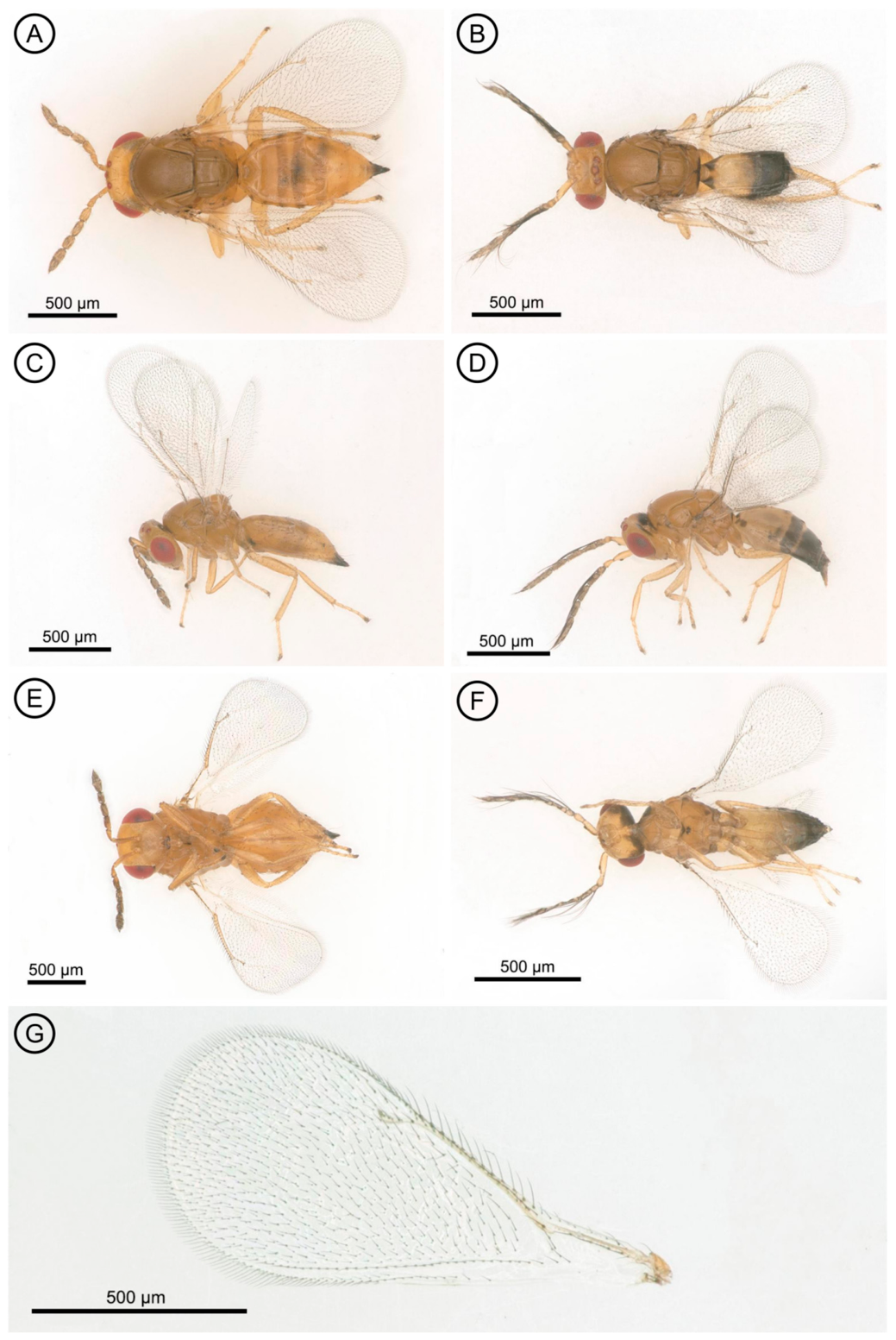
Aprostocetus eucalyptus Zheng & Yefremova sp. nov. (Figure 1, Figure 2, Figure 3 and Figure 4).
LSID urn:lsid:zoobank.org:act:E78EA11D-4322-4B81-BEA8-1BAF77A473E3.
Diagnosis. The mesoscutum possesses a distinct median groove, with 5–7 adnotaular setae arranged in a single row along each lateral margin. The propodeal callus bears four setae arranged in two distinct rows. Female: The antenna has a 3.7× longer than wide scape; fu1 is 2.0× as long as broad, fu2 1.9× as long as broad, and fu3 1.8× as long as broad. The 3-segmented clava is 2.5× as long as broad and 1.6× the length of fu3. The gaster is 1.85× as long as broad. Male: The antenna has a scape 3.6× as long as broad and a ventral plaque accounting for 0.4× the scape length. Funicular segment proportions are as follows: fu1 1.2× as long as broad, fu2 2.7× as long as broad, fu3 3.0× as long as broad, and fu4 2.9× as long as broad. The 3-segmented clava is 3.6× as long as broad. In terms of relative length, fu1 is 0.5× that of fu2, fu2 ≈ 0.83× that of fu3, and the clava is 2.5× that of fu4. Whorls of fu1 reaching tip base of fu3. Gaster 2.0× as long as broad. The genitalia, digiti with one developed spine.
Description.
Female: Body length 1.5 mm.
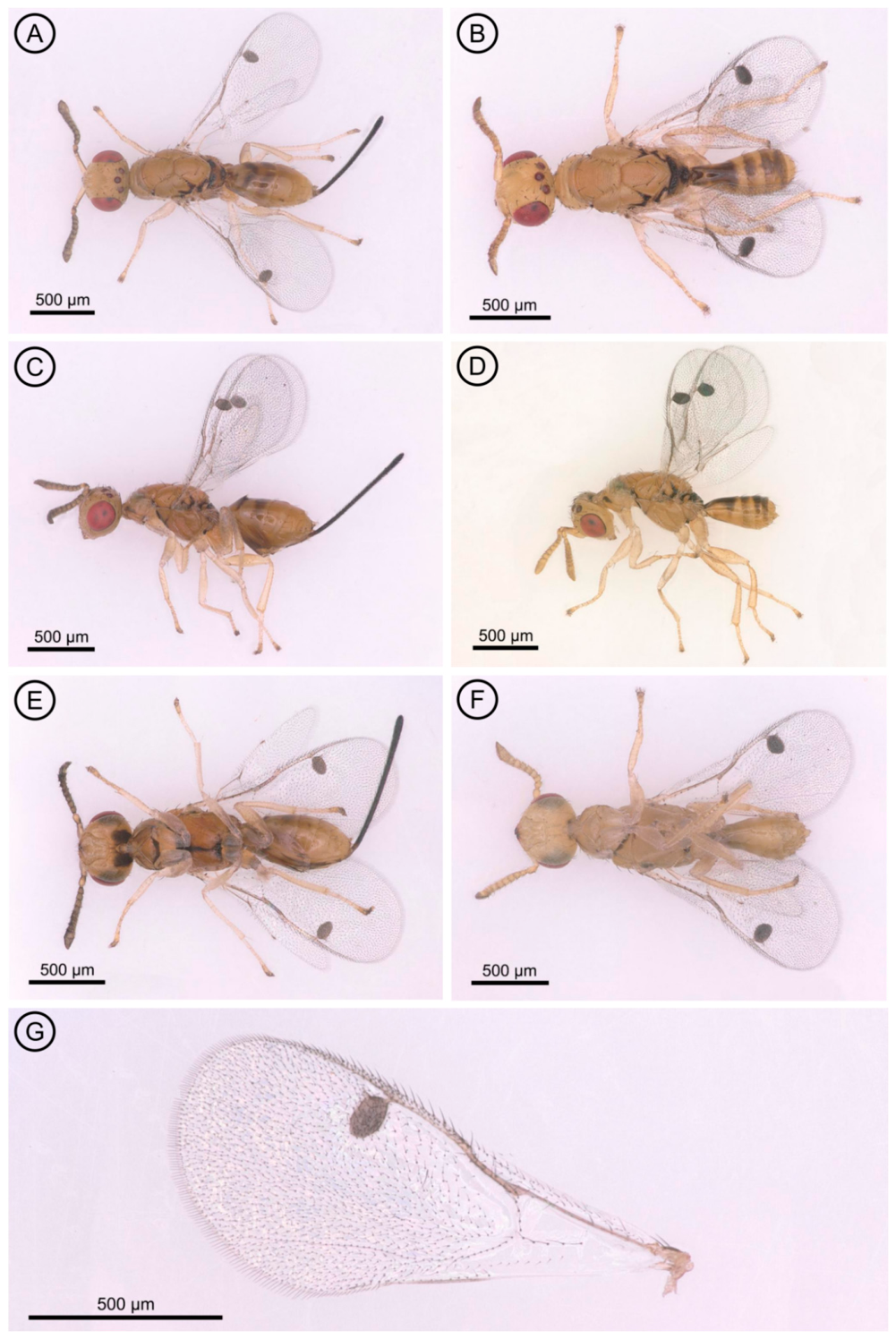
Color (Figure 1A,C,E). Head yellow, vertex laterally brown; eye red; ocelli reddish. Antenna flagellum brown, scape and pedicel yellow. Mesosoma dark brown, dorsellum dark, propodeum yellow. Legs yellow. Gaster yellow with transverse brownish bands on Gt3, Gt4, Gt5 and Gt6 (Figure 1A).
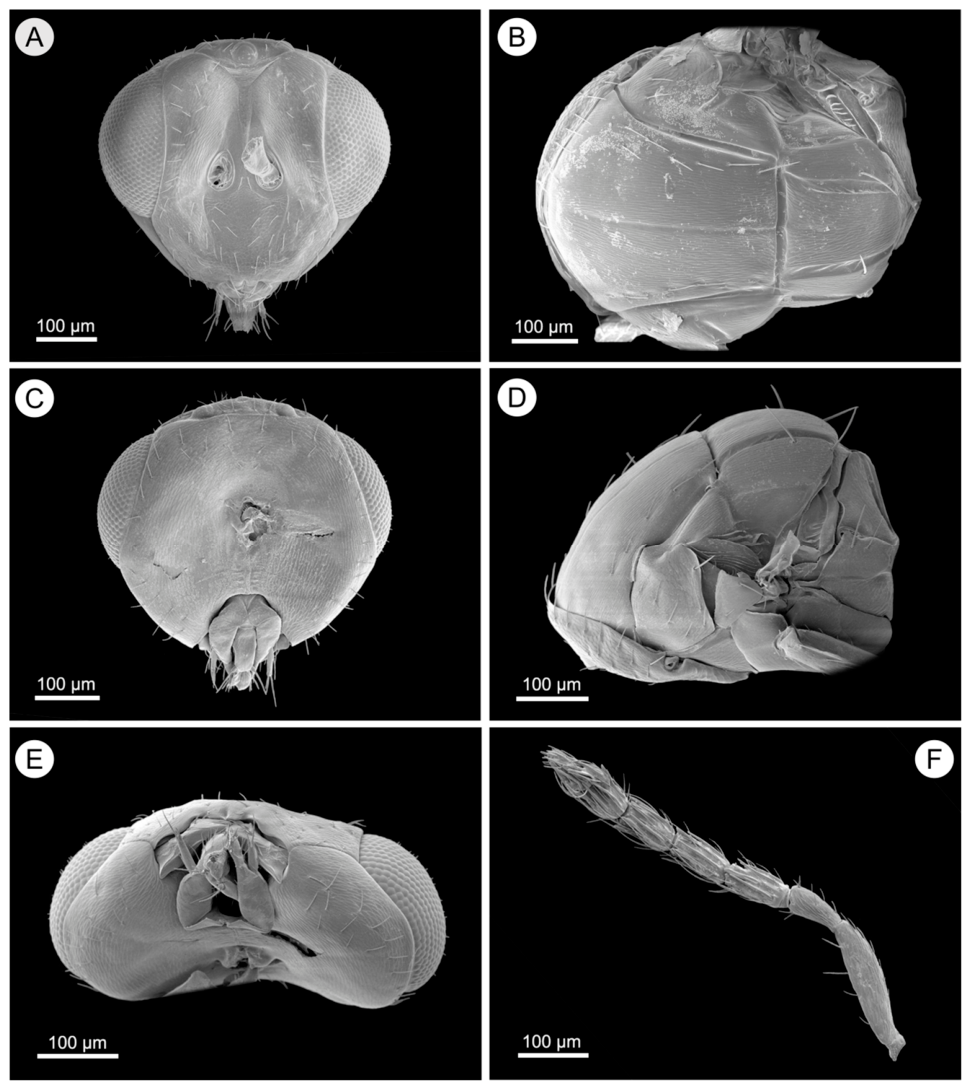
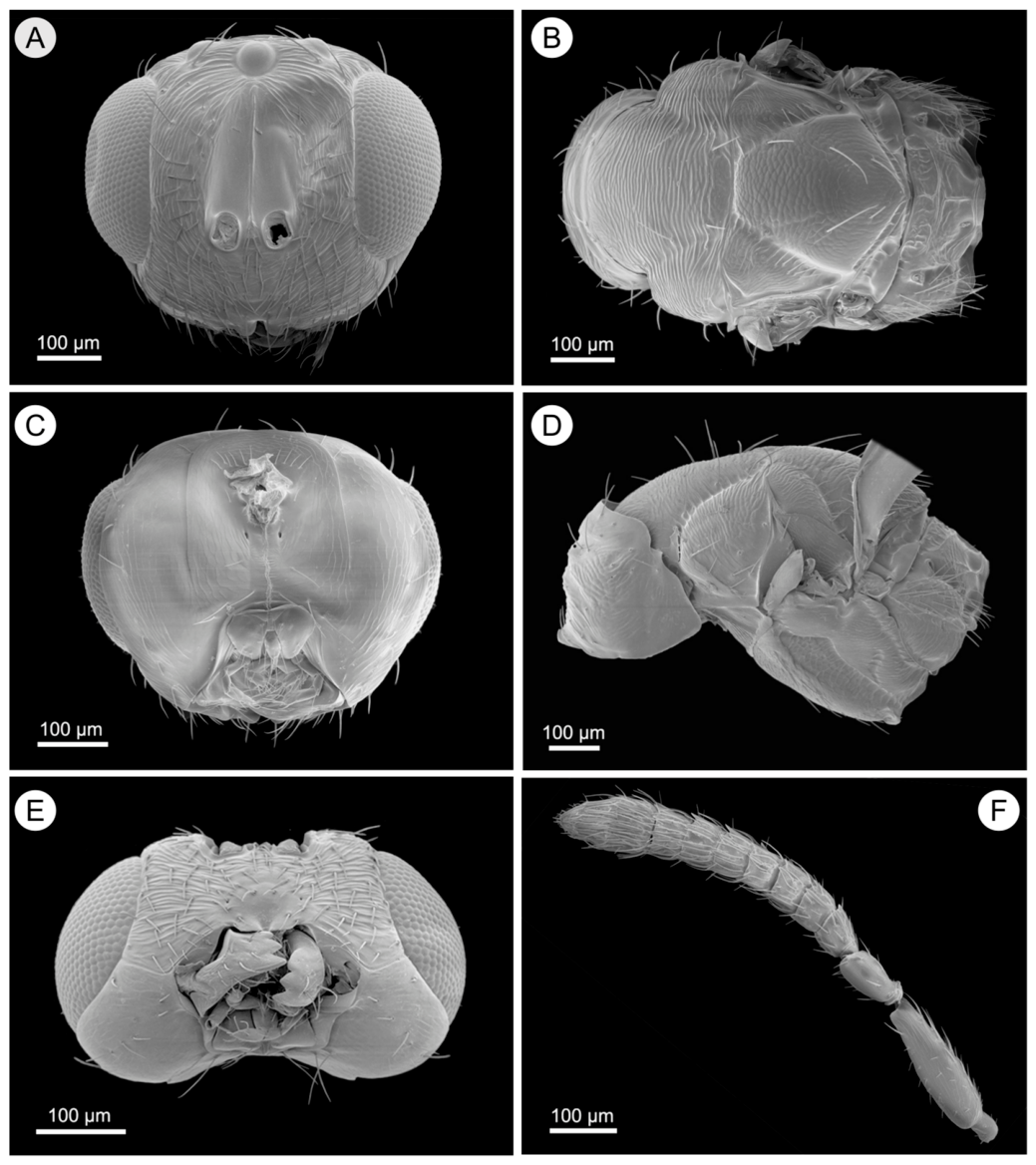
Head (Figure 2A,C,E). Measuring 1.3× as long as broad, POL 1.6× the length of OOL. The clypeus is bilobed, and a median longitudinal carina is present on the frons. The mandibles have two large teeth, the eyes are glabrous, and the malar sulcus is straight. The oral opening is 0.77× as wide as the malar space is long. Antenna (Figure 2F) comprises a scape 3.7× as long as broad, a pedicel 2.0× as long as broad, and a single anellus. Funicular segment proportions are as follows: fu1 2.0× as long as broad, fu2 1.9× as long as broad, fu3 1.8× as long as broad. The 3-segmented clava is 2.5× as long as broad, 1.6× the length of fu3.
Mesosoma (Figure 2B,D). The mesoscutum is 1.35× as broad as long, with a median line and five adnotaular setae in a single row on each lateral side. The scutellum is 1.5× as broad as long, with two pairs of setae. The distance between the two submedian lines is twice that between the submedian and sublateral lines. The dorsellum is 0.83× the length of the propodeum. The propodeum is 6.0× as broad as long, with rounded spiracles located near its anterior margin and surrounded by a postspiracular rim; its surface is superficially reticulate, and the callus has four setae in two rows. Forewing (Figure 1G) is 2.4× as long as broad, with smv:mv:stv = 24:30:8. mv is as long as the costal cell, and pmv is a short stub. The closed speculum extends to one quarter below mv. smv has three setae, and mv bears 12 setae.
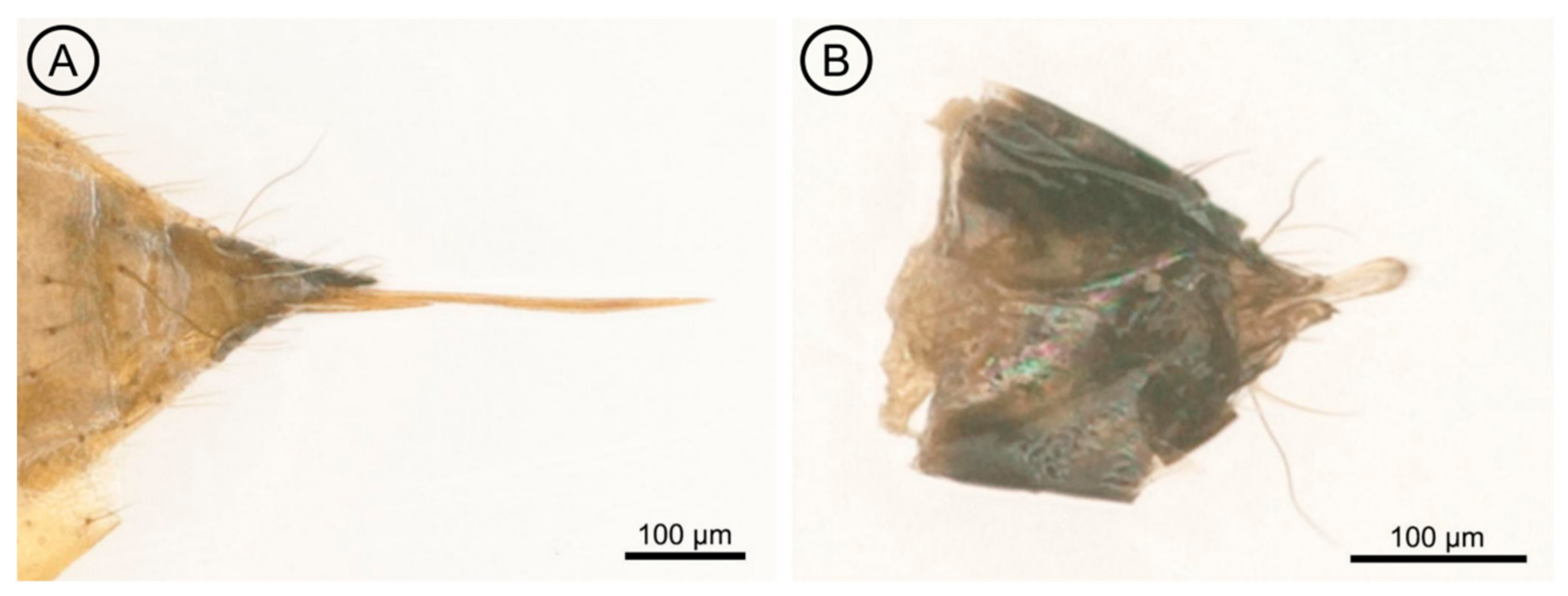
Metasoma. The petiole bears a transverse, small and smooth surface. The gaster (Figure 1A) is 1.85× as long as broad; the cercus has three setae, with the longest seta kinked and 2.5× longer than the next cercal seta (Figure 3A). The ovipositor sheaths (Figure 3A) are slightly extended, with several setae covering their apex.
Figure 1. Aprostocetus eucalyptus. (A) Dorsal view of female; (B) Dorsal view of male; (C) Lateral view of female; (D) Lateral view of male; (E) Ventral view of female; (F) Ventral view of male; (G) Fore wing of female.
Insects 17 00449 g001
Male: Body length 1.3 mm.
Color similar to female in general body coloration, except for the gaster, which has a pale yellow basal portion and a darkish brown to black apical half, forming a clear color division (Figure 1B,D,F).
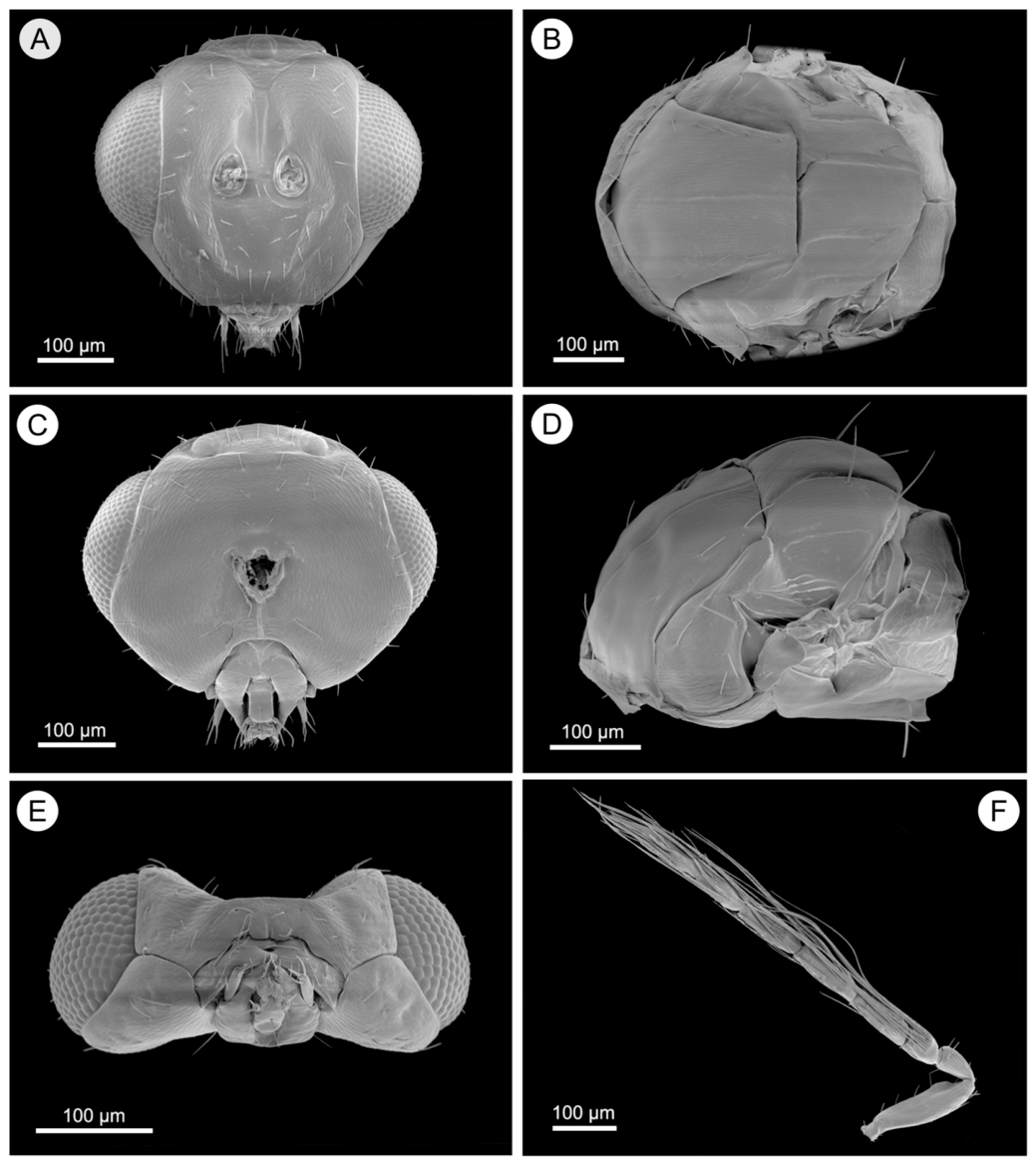
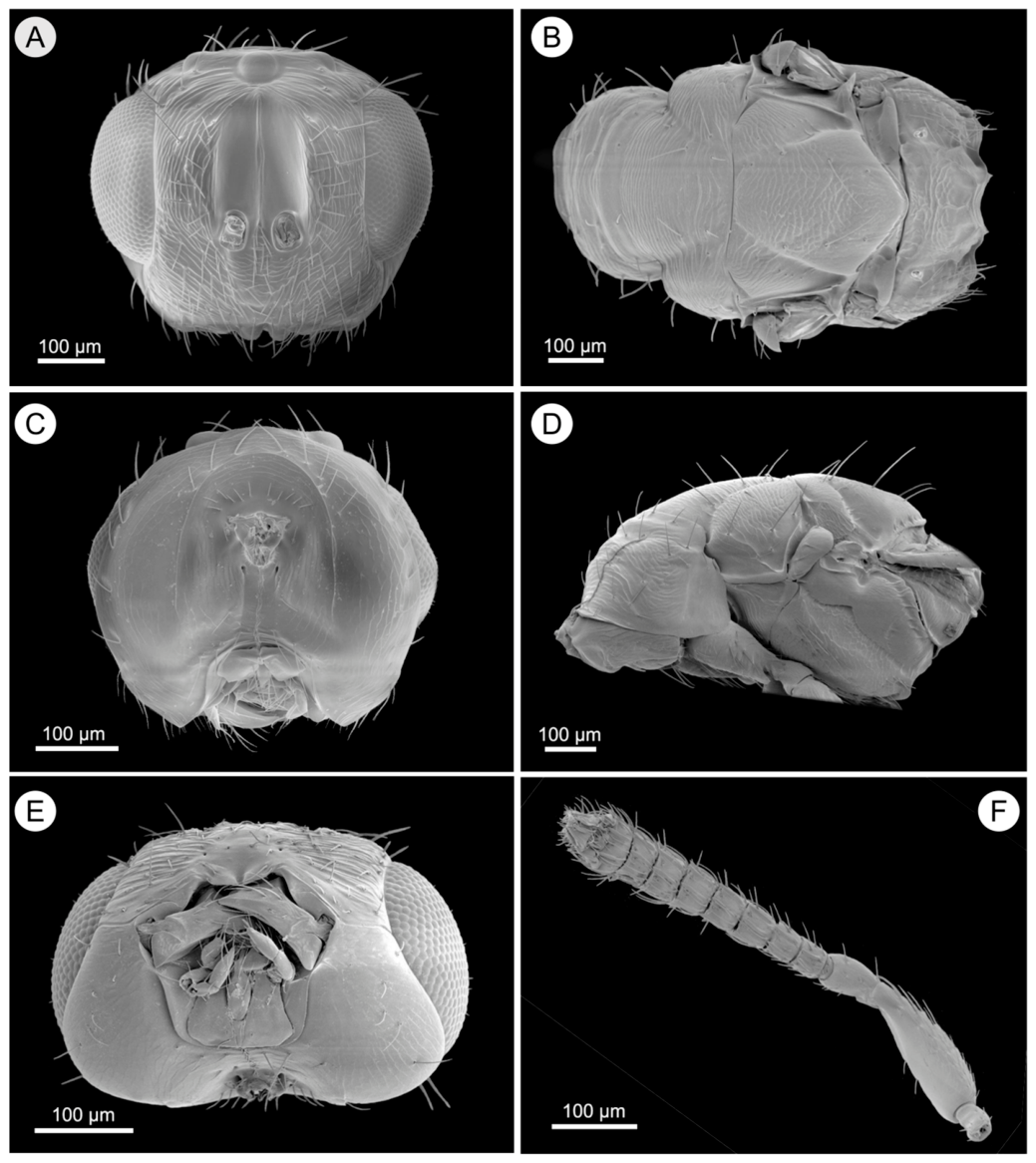
Head (Figure 4A,C,E). Antenna (Figure 4F) with scape 3.6× as long as broad; ventral plaque 0.4× the length of scape, located in upper part. Pedicel 1.9× as long as broad; fu1 1.2× as long as broad, fu2 2.7× as long as broad, fu3 3.0× as long as broad, fu4 2.9× as long as broad; clava 3-segmented 3.6× as long as broad; fu1 0.5× as long as fu2, fu2 ~0.83× as long as fu3. Clava 2.5× as long as fu4. Whorls of fu1 reaching tip base of fu3; Whorls of fu3 reaching base of clv2; Whorls of fu4 reaching base of clv3, with whorls of clv1 extending.
Figure 2. Aprostocetus eucalyptus female. (A) Frontal view of head; (B) Dorsal view of mesosoma; (C) Posterior view of head; (D) Lateral view of mesosoma; (E) Ventral view of head; (F) Antenna.
Insects 17 00449 g002
Figure 3. Aprostocetus eucalyptus. (A) Ovipositor; (B) Male genitalia.
Insects 17 00449 g003
Mesosoma (Figure 4B,D). Measuring 1.1× as broad as long, the mesoscutum features a distinct median line and five adnotaular setae in a single row on each lateral side. The scutellum is 1.6× as broad as long. The propodeum, which is 7.0× as broad as long, has a superficially reticulate texture, with the callus bearing four setae in the anterior row and two in the posterior row.
Metasoma. The petiole is transverse in shape. The gaster (Figure 1B) is 2.0× as long as broad. The cercus has two dorsal setae, the longest of which is kinked and 1.7× longer than the other cercal seta (Figure 3B). The genitalia is only partially exserted (Figure 3B). Parameres positioned on either side of the aedeagus each have two setae (Figure 3B), and the digiti each possess a single well-developed spine.
Figure 4. Aprostocetus eucalyptus male. (A) Frontal view of head; (B) Dorsal view of mesosoma; (C) Posterior view of head; (D) Lateral view of mesosoma; (E) Ventral view of head; (F) Antenna.
Insects 17 00449 g004
Material. Holotype: ♀, China: Nanning City, Qipo Forest Farm (108°04′35″ E, 22°36′46″ N, alt. 160 m), reared from O. bipolaris on E. urophylla × E. grandis, 9-VII-2025, leg. J.-B. Sun, G.-B. Qin & J.-Z. Ning.
Paratypes: 10 ♀ and 2 ♂, same data as holotype (deposited in GXU, preserved in 75% ethanol).
Distribution. China (Guangxi).
Etymology. The species is named after its host plant Eucalyptus (the host of O. bipolaris). The Chinese name for it is 桉树叶疱长尾啮小蜂 (eucalyptus torymid wasps).
Comments. Comparison with A. bipolaris Zheng & Yefremova, 2025
  • Female antenna with scape 4.0× as long as broad and clava 2.0× as long as broad. Gaster 1.6× as long as broad. Male antenna with ventral plaque 0.33× the length of scape; clava 2.4× as long as fu4 and 5.6× as long as broad. Whorls of fu1 reaching ⅓ basal part of fu2. Body dark brown with green tint; vertex metallic green. Parasitoid of Ophelimus bipolaris......................................................................................................................................................A. bipolaris Zheng & Yefremova
-
Female antenna with scape 3.7× as long as broad and clava 2.5× as long as broad. Gaster 1.85× as long as broad. Male antenna with ventral plaque 0.4× the length of scape; clava 2.5× as long as fu4 and 3.6× as long as broad. Whorls of fu1 reaching tip of fu3. Body brownish without metallic tint; vertex yellow. Parasitoid of Ophelimus bipolaris.........................................................................................................................................................................A. eucalyptus sp. nov.
Hymenoptera
Megastigmidae Janšta et al., 2018 [27]
Megastigminae Thomson, 1876
Megastigmus Dalman, 1820
Megastigmus bipolaris Zheng & Yefremova sp. nov. (Figure 5, Figure 6 and Figure 7).
LSID urn:lsid:zoobank.org:act:DE420136-F29D-41A2-967F-2A92192A010A.
Diagnosis. Female. Antenna: all funicular segments transverse; length of clava equal to length 2.8 preceding segments. Scutellum with 3 pairs of setae; frenal groove distinct, frenum crenulated. Propodeum with median carina, which is interrupted in ⅓ anterior part by transverse carina; plicae present, and the area between spiracles with superficial reticulation. Gaster 2.2× as long as wide. Sheaths of ovipositor 1.45× as long as gaster. Ovipositor 0.55× as long as body, 1.4× as long as metasoma, 2.6× as long as hind tibia. Male. Antenna: scape cylindrical, 2.1× as long as broad; funicular subquadrate, two last funiculars transverse. Length of clava equal to that of the preceding 2.5 segments. Propodeum with indistinct median carina and interrupted in ⅓ anterior part by transverse carina; plicae present. Gaster 2.6× as long as wide. Body yellow, pilosity black.
Description.
Female. Body size (without ovipositor) 1.66 mm; length of the exerted part of sheaths 0.83 mm.
Color (Figure 5A,C,E). Body yellow. Head with yellow vertex. Face yellow. Eyes and ocelli red. Mesosoma yellow; anterior margin of propodeum brown. Gaster yellow, with Gt1, Gt3 and Gt5 brown. Wings hyaline; veins yellow; parastigma and stigma dark brown. Legs yellow. Pilosity of body black.
Head (Figure 6A,C,E). Width 1.3× as long as height and 1.5× as long as length. POL 2.0× as long as OOL. Antennae inserted slightly above the lower margin of eyes. Relative measurements. Antenna (Figure 6F): scape (60 × 20), pedicel (29 × 15); one anellus; fu1 (15 × 17), fu2 (14 × 18), fu3 (15 × 18), fu4 (14 × 18), fu5 (14 × 20), fu6 (14 × 20), fu7 (14 × 20); all funiculars transverse; clava (40 × 24).
Mesosoma (Figure 6B,D). Pronotum 3.5× as broad as long, with superficial reticulation; midlobe of mesoscutum with scapulae 1.5× as broad as long, finely transversely striate; scutellum 1.1× as long as broad, with superficial reticulation and three pairs of setae, frenal groove distinct, frenum crenulated; propodeum 3.2× as broad as long, propodeal callus with numerous setae in three rows. Propodeum 1.1× as long as scutellum; median carina present, interrupted in ⅓ anterior part by transverse carina; plicae present, with the area between spiracles bearing superficial reticulation; spiracles with rim. Fore wing 2.5× as long as broad. Relative measurements of forewing: smv:mv (including parastigma):pmv:stv (including stigma) = 47:53:34:17. So, pmv 2.0× as long as stv. Stigma 1.7–1.8× as long as width (Figure 5G). Costal cell at most 13× as long as its maximum width, hairy; basal cell open and bare; speculum open and broad. Parastigma 0.4× as long as mv; area below mv narrow on both sides, without row of admarginal setae; area between pmv and uncus narrow, with two setae on upper side, bare on under side.
Metasoma. Petiole short and transverse. Gaster (Figure 5A) 2.2× as long as wide. Sheaths of ovipositor 0.7× as long as body. Sheaths of ovipositor 1.45× as long as gaster. Ovipositor 0.55× as long as body, 1.4× as long as metasoma, 2.6× as long as hind tibia.
Male. Body size 1.8 mm.
Color similar to female except as follows: body darker; propodeum fully dark brown; gaster with Gt1, Gt2, Gt5, Gt7 dark brown (Figure 5B,D,F).
Head (Figure 7A,C,E). POL 1.5× as long as OOL. Antenna (Figure 7F): scape (75 × 26), pedicel (28 × 18); one anellus; fu1 (15 × 15), fu2 (17 × 17), fu3 (17 × 18), fu4 (17 × 18), fu5 (17 × 18), fu6 (16 × 18), fu7 (14 × 20); two last funiculars transverse; clava (60 × 26).
Figure 5. Megastigmus bipolaris. (A) Dorsal view of female; (B) Dorsal view of male; (C) Lateral view of female; (D) Lateral view of male; (E) Ventral view of female; (F) Ventral view of male; (G) Fore wing of female.
Insects 17 00449 g005
Mesosoma (Figure 7B,D). Pronotum 4.2× as broad as long; midlobe of mesoscutum 2.0× as broad as long; scutellum 1.5× as long as broad. Pronotum and msc finely transversely striate. Scutellum with 3 pairs of setae and with superficial reticulation. Propodeum 3.4× as broad as long; propodeal callus with numerous setae in three rows; median carina indistinct, interrupted in ⅓ anterior part by transverse carina; plicae present, with the area between spiracles bearing superficial reticulation; spiracle with rim. Fore wing 2.1× as long as broad; smv with 6 setae.
Metasoma. Petiole short; gaster (Figure 5B) (65 × 25), 2.6× as long as wide.
Material. Holotype: ♀, China: Nanning City, Qipo Forest Farm (108°04′35″ E, 22°36′46″ N, alt. 160 m), reared from O. bipolaris on E. urophylla × E. grandis, 9-VII-2025, leg. J.-B. Sun, G.-B. Qin & J.-Z. Ning.
Figure 6. Megastigmus bipolaris female. (A) Frontal view of head; (B) Dorsal view of mesosoma; (C) Posterior view of head; (D) Lateral view of mesosoma; (E) Ventral view of head; (F) Antenna.
Insects 17 00449 g006
Paratypes: 276 ♀ and 247 ♂, China: Guangxi Zhuang Autonomous Region, Liuzhou City, Sanmenjiang Forest Farm (109°42′12″ E, 24°22′10″ N, alt. 311 m), reared from the same host and plant, 15-X-2025, leg. J.-B. Sun & Y. Qin (deposited in GXU, preserved in 75% ethanol).
Distribution. China (Guangxi).
Etymology. The species is named after its host, O. bipolaris. The Chinese name for it is 桉树叶疱大痣小蜂 (eucalyptus megastigmine wasps).
Identification
In the key to the Palearctic species of Megastigmus native and introduced to the West Palearctic region [28], M. bipolaris sp. nov. (female) runs to couplet 8, which should be modified as follows:
8.
Thorax mostly brownish black, except pronotum more or less yellowish; funicular segments subquadrate [28] (p. 150); pronotum more than 2.0× wider than long; frenal area smooth, without longitudinal carinae [28] (p. 193); forewing stigma oblong, 1.4× as long as broad, with a very long uncus about half as long as stigma length [28] (p. 164). Body 1.8 mm. Host: seeds of Sorbus spp. and Amelanchier spp. (Rosaceae)....................................................................................M. brevicaudis Ratzeburg
8a.
Thorax mostly yellow including pronotum; funicular segments transverse (Figure 5A); pronotum more than 3.0× wider than long; frenal area reticulate, with longitudinal carinae (Figure 5C); forewing stigma oblong, 1.8× as long as broad, with uncus about ¼ as long as stigma length (Figure 5G). Body 1.66 mm. Host: galls of Ophelimus bipolaris on Eucalyptus....................................................................................................................................................................M. bipolaris sp. nov.
Figure 7. Megastigmus bipolaris male. (A) Frontal view of head; (B) Dorsal view of mesosoma; (C) Posterior view of head; (D) Lateral view of mesosoma; (E) Ventral view of head; (F) Antenna.
Insects 17 00449 g007
In the key to the species of Megastigmus Dalman, 1820 reared from galls of Leptocybe invasa Fisher & La salle, 2004 [29], based on the characters of body, except forewing, M. bipolaris sp. nov. (female) runs to couplet 8, which should be modified as follows:
8.
Ovipositor 0.62× as long as body, 1.3× as long as metasoma, 3.5× as long as hind tibia; propodeum without median carina; metasoma 1.4× as long as mesosoma; antenna with 1-st funicular segment 2.0× as long as wide. Body 1.5–2.1 mm. Hosts: gall of Leptocybe invasa on Eucalyptus...................................................................................................M. thailandiensis Doğanlar & Hassan
8a.
Ovipositor 0.55× as long as body, 1.4× as long as metasoma, 2.6× as long as hind tibia; propodeum with median carina; metasoma as long as mesosoma; antenna (Figure 6F) with with 1-st funicular segment 1.02× as wide as long. Body 1.66 mm. Host: galls of Ophelimus bipolaris on Eucalyptus......................................................................................................M. bipolaris sp. nov.
In the key to the species of Megastigmus (33 species) associated with Eucalyptus spp. in Australia [21], M. bipolaris sp. nov. (female) runs to couplet 46(45), which should be modified as follows:
46(45′).
Mesosoma 2.3× as long as mesoscutum broad; pronotum about 1.6× as broad as long. Metasoma 0.7× as long as mesosoma. Body 2.0 + 1.2 mm. Thailand, 2001 from galls of Leptocybe invasa on Eucalyptus…...........................................................................................................................….M. thitipornae Doğanlar & Hassan
46a(45′).
Mesosoma 1.76× as long as mesoscutum broad; pronotum about 3.5× as broad as long. Metasoma as long as mesosoma. Body 1.66 + 0.83 mm. China, 2025 from galls of Ophelimus bipolaris on Eucalyptus..........................................................................................................................................................M. bipolaris sp. nov.
Megastigmus bipolaris sp. nov. (male) runs to couplet 53(52), which should be modified as follows:
52.
Scutellum with 3 pairs of setae..............................................................................................................................................................53
53(52).
Scape 1.3× as long as transfer diameter of eye; club as long as 3 preceding segments combined; metasoma 1.4× as long as hind tibia and 0.7× as long as mesosoma.................................................................................M. thitipornae Doğanlar & Hassan
53a(52).
Scape 1.25× as long as transfer diameter of eye; club as long as 2.5 preceding segments combined; metasoma 1.66× as long as hind tibia and as long as mesosoma..................................................................................................M. bipolaris sp. nov.

3.2. Phylogenetic Analyses

The 28S rRNA gene was successfully amplified using PCR. The amplified products from A. eucalyptus sp. nov. and M. bipolaris sp. nov. specimen were 583 bp and 610 bp. These obtained sequences have been submitted to the NCBI database (A. eucalyptus: PX212766; M. bipolaris: PX212767). NCBI Nucleotide Blast showed that Aprostocetus sp. (PV911623) exhibited the highest sequence similarity (99.33%) to the target sequences of A. eucalyptus sp. nov., and Megastigmus sp. 1 (MT383732) exhibited the highest sequence similarity (100.00%) to the target sequences of M. bipolaris sp. nov. Complete pairwise genetic distance matrices for all analyzed Aprostocetus and Megastigmus species are provided in Supplementary Tables S1 and S2, respectively.
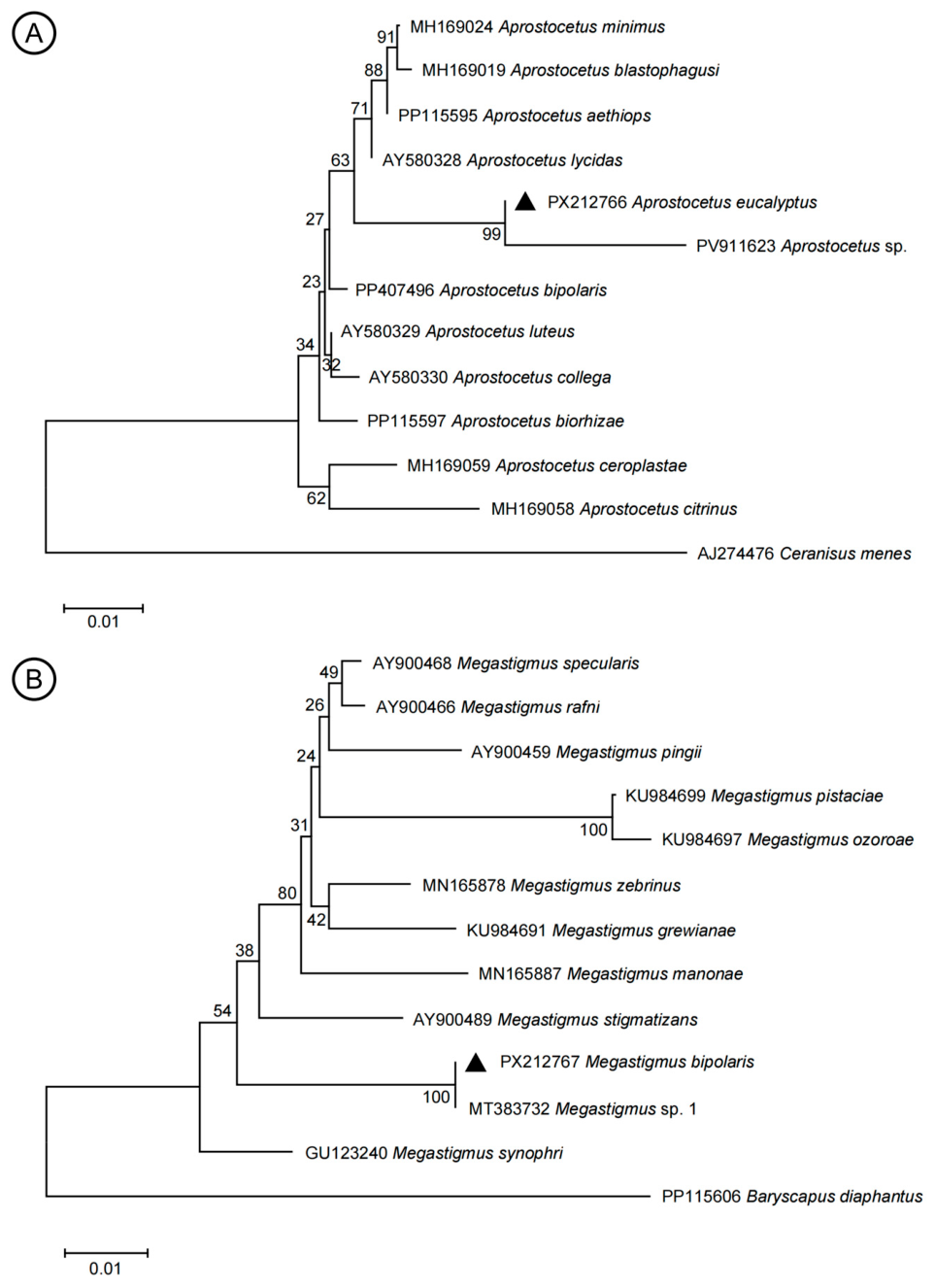
For the target gene sequence of A. eucalyptus sp. nov. in this study, phylogenetic analysis clarified its phylogenetic placement as follows (Figure 8A): A. eucalyptus sp. nov. formed a subclade with Aprostocetus sp. (PV911623). This subclade was further clustered with the lineage containing Aprostocetus lycidas (AY580328), and these combined lineages were nested within a larger monophyletic clade composed of multiple Aprostocetus species. This topological structure indicates a close evolutionary relationship between A. eucalyptus sp. nov. and other representatives of the genus Aprostocetus. In addition, the subclade harboring A. eucalyptus sp. nov. shows clear divergence from other subclades within the Aprostocetus clade, suggesting that A. eucalyptus sp. nov. has genetic distinctness relative to the known congeneric species included in this phylogenetic framework. The genetic distance between A. eucalyptus sp. nov. and Aprostocetus sp. (PV911623) is 1.6%, and between A. eucalyptus sp. nov. and other analyzed Aprostocetus species ranges from 1.8% to 11.6% (Supplementary Table S1). These phylogenetic findings collectively confirm that A. eucalyptus sp. nov. belongs to the genus Aprostocetus, exhibiting close evolutionary affinity with congeneric species while being genetically differentiated from the reported Aprostocetus taxa analyzed herein.
For the target gene sequence corresponding to M. bipolaris sp. nov. in this study, phylogenetic analysis results demonstrated the following (Figure 8B): M. bipolaris sp. nov. clustered with Megastigmus sp. 1 (MT383732) into an independent subclade, indicating an extremely close phylogenetic relationship between these two taxa. Meanwhile, this subclade was nested within the same major clade together with multiple Megastigmus species, which suggests a close evolutionary affinity between M. bipolaris sp. nov. and members of the genus Megastigmus. Furthermore, the subclade comprising M. bipolaris sp. nov. and Megastigmus sp. 1 (MT383732) showed distinct genetic differentiation from other subclades of Megastigmus species within the same major clade, implying a certain genetic uniqueness of M. bipolaris sp. nov. relative to the known species in this genus. The genetic distance between M. bipolaris sp. nov. and Megastigmus sp. 1 (MT383732) is 0.0%, and between M. bipolaris sp. nov. and other analyzed Megastigmus species ranges from 3.7% to 11.8% (Supplementary Table S2). These phylogenetic findings confirm that M. bipolaris sp. nov. in this study is a member of the genus Megastigmus and is genetically distinct from other reported congeneric species.
Figure 8. Maximum likelihood trees based on 28S rRNA sequences. (A) Aprostocetus eucalyptus sp. nov. (black triangle); (B) Megastigmus bipolaris sp. nov. (black triangle). The number at each branch indicates the percentage supported by bootstrap. The scale bar indicates substitutions per site.
Insects 17 00449 g008

3.3. Biology and Biological Control Potential

Aprostocetus eucalyptus sp. nov. and Megastigmus bipolaris sp. nov. were reared from galls of O. bipolaris on E. urophylla × E. grandis in Guangxi, China. At Qipo Forest Farm in July 2025, adults of A. eucalyptus sp. nov. (n = 107) showed a male-biased sex ratio (♀:♂ = 1:1.18; 49♀/58♂) and a parasitism rate of 5.84%. Adults of M. bipolaris sp. nov. (n = 196) from the same site showed a female-biased sex ratio (♀:♂ = 1:0.83; 107♀/89♂) and a parasitism rate of 10.7%. At Sanmenjiang Forest Farm in October 2025, adults of M. bipolaris sp. nov. (n = 225) showed a female-biased sex ratio (♀:♂ = 1:0.76; 128♀/97♂) and a higher parasitism rate of 14.49%. These parasitism rates suggest potential biocontrol utility against O. bipolaris.

4. Discussion

Morphological analyses confirmed the distinctiveness of both new species within their respective genera. For A. eucalyptus sp. nov., key diagnostic traits such as specific setation patterns on the mesoscutum and propodeum and sexual dimorphism in antennae structure (e.g., female scape 3.7× as long as broad, male ventral plaque 0.4× the length of the scape) clearly differentiate it from congeneric species like A. bipolaris [11] and A. causalis [14]. Similarly, M. bipolaris sp. nov. is distinguished by unique morphological features including transverse funicular segments in females, a distinctively crenulated frenum, and an ovipositor 0.55× the body length—traits that separate it from closely related taxa such as M. thailandiensis [21] and M. brevicaudis [28]. These morphological characters align with the diagnostic frameworks of the genera Aprostocetus and Megastigmus, confirming the placement of the new species within these lineages.
Molecular phylogenetic analyses based on 28S rRNA gene sequences further validated the taxonomic status of the new species. Aprostocetus eucalyptus sp. nov. formed a well-supported subclade with Aprostocetus lycidas (AY580328), with a genetic distance of 1.8%, and other congeneric species, exhibiting 99.33% sequence similarity to Aprostocetus sp. (PV911623), a specimen isolate collected from Lohaghat, Uttarakhand, India, corresponding to a genetic distance of 1.6%. Such a high degree of sequence similarity strongly indicates that these two isolates may represent conspecific populations. Notably, no formal morphological description, voucher specimen information, or definitive host association records have been published for the Indian isolate to date, with genetic distances ranging from 1.8% to 11.6% from other analyzed congeneric species, while showing clear genetic divergence from other reported Aprostocetus taxa. This result is consistent with the utility of 28S rRNA in resolving phylogenetic relationships within Eulophidae [30,31]. For M. bipolaris sp. nov., the 100% sequence similarity to Megastigmus sp. 1 (MT383732) from Conjola, New South Wales, Australia, which was reared from galls on Eucalyptus sp. [19], corresponding to a genetic distance of 0.0%, and clustering within the Megastigmus genus clade confirm its affinity to this group, and the complete sequence identity of the 28S rRNA gene confirms an extremely close phylogenetic affinity and potential conspecificity. However, definitive taxonomic resolution requires a direct morphological comparison with authentic voucher specimens from the type locality in Australia, with genetic distances ranging from 3.7% to 11.8% from other analyzed Megastigmus species, while distinct genetic differentiation from other subclades highlights its uniqueness. The congruence between morphological and molecular data underscores the robustness of integrative taxonomy in resolving species boundaries, particularly for small, morphologically conserved parasitoid wasps [32].
The discovery of A. eucalyptus sp. nov. and M. bipolaris sp. nov. holds significant implications for the biological control of O. bipolaris. As an invasive pest with expanding distribution in southern China, O. bipolaris currently lacks effective and environmentally friendly management strategies, with chemical insecticides offering limited success due to the protected gall-forming larvae [7]. Parasitoid wasps are among the most effective biocontrol agents for gall-forming insects, owing to their high host specificity and ability to target concealed larvae [33]. Collectively, these findings indicate that these two parasitoid lineages may possess a broader transcontinental distribution range than previously recognized, which is likely associated with the global anthropogenic dispersal of Eucalyptus plantations and their co-evolved gall-forming hymenopteran pests. Congeners of the new species, such as A. causalis, have been successfully deployed against Eucalyptus gall wasps like Leptocybe invasa [14], while Megastigmus species have been documented as natural enemies of gall-forming hymenopterans [34]. This suggests that A. eucalyptus sp. nov. and M. bipolaris sp. nov. may exhibit similar biocontrol potential, warranting further investigation into their life history and field adaptability to provide theoretical basis and biological materials for the sustainable management of O. bipolaris in China.

Supplementary Materials

The following supporting information can be downloaded at: https://www.mdpi.com/article/10.3390/insects17050449/s1, Table S1. Interspecific analysis of genetic distance values based on 28S sequences between various species of Aprostocetus analyzed in this study. Table S2. Interspecific analysis of genetic distance values based on 28S sequences between various species of Megastigmus analyzed in this study.

Author Contributions

Conceptualization, Z.Y. and X.-L.Z.; Methodology, J.-B.S., G.-B.Q. and J.-Z.N.; Validation, J.-B.S.; Formal analysis, J.-B.S., G.-B.Q., J.-Z.N. and J.L.; Investigation, J.-B.S., G.-B.Q., J.-Z.N. and Y.Q.; Resources, Y.Q. and X.-L.Z.; Writing – original draft, J.-B.S. and Z.Y.; Writing – review & editing, J.-B.S., Z.Y. and X.-L.Z.; Project administration, X.-L.Z.; Funding acquisition, X.-L.Z. and J.L. All authors have read and agreed to the published version of the manuscript.

Funding

This work was funded by the Guangxi Forestry Pest Control Project (grant number 2604140034), the Innovation Project of Guangxi Graduate Education (grant number YCBZ2024069) and the Improvement Project for Technological Innovation and Service Capacity of Universities in Guangxi (grant number 202500814).

Data Availability Statement

The original contributions presented in the study are included in the article; further inquiries can be directed to the corresponding authors.

Acknowledgments

The authors are grateful to the staff of the forest farm for their support during the field surveys.

Conflicts of Interest

The authors declare no conflicts of interest.

References

  1. Withers, T.; Raman, A.; Berry, J. Host range and biology of Ophelimus eucalyptii (Gahan) (Hym.: Eulophidae) a pest of New Zealand eucalypts. N. Z. Plant Prot. 2000, 53, 339–344. [Google Scholar] [CrossRef]
  2. Borowiec, N.; La Salle, J.; Brancaccio, L.; Thaon, M.; Warot, S.; Branco, M.; Ris, N.; Malausa, J.C.; Burks, R. Ophelimus mediterraneus sp. n. (Hymenoptera, Eulophidae): A new Eucalyptus gall wasp in the Mediterranean region. Bull. Entomol. Res. 2019, 109, 678–694. [Google Scholar] [CrossRef]
  3. Protasov, A.; La Salle, J.; Blumberg, D.; Brand, D.; Saphir, N.; Assael, F.; Fisher, N.; Mendel, Z. Biology, revised taxonomy and impact on host plants of Ophelimus maskelli, an invasive gall inducer on Eucalyptus spp. in the Mediterranean Area. Phytoparasitica 2007, 35, 50–76. [Google Scholar] [CrossRef]
  4. Chen, H.Y.; Yao, J.M.; Huang, S.B.; Pang, H. Ophelimus bipolaris sp. n. (Hymenoptera, Eulophidae), a new invasive Eucalyptus pest and its host plants in China. Insects 2021, 12, 778. [Google Scholar] [CrossRef]
  5. Garcia, A.; Gonçalves, H.; Borowiec, N.; Franco, J.C.; Branco, M. Ophelimus sp., a new invasive gall wasp of Eucalyptus globulus in Europe, escapes the parasitism by Closterocerus chamaeleon due to an asynchronous life cycle. Biol. Control 2019, 131, 1–7. [Google Scholar] [CrossRef]
  6. Sinulingga, N.G.H.B.; Tarigan, M.; Tavares, W.S.; Ansor, K.; Pasaribu, I.; Kkadan, S.K.; Panjaitan, R.A.; Puspita, K.D.; Abad, J.I.M.; Duran, A. The parasitoid Closterocerus chamaeleon has a greater development and survival rate than of its hosts, the Eucalyptus gall wasps Ophelimus eucalypti and Ophelimus maskelli in Sumatra, Indonesia. Ann. Appl. Biol. 2021, 179, 354–367. [Google Scholar] [CrossRef]
  7. De Clercq, P.; Mason, P.G.; Babendreier, D. Benefits and risks of exotic biological control agents. Biocontrol 2011, 56, 681–698. [Google Scholar] [CrossRef]
  8. Mendel, Z.; Protasov, A.; La Salle, J.; Blumberg, D.; Brand, D.; Branco, M. Classical biological control of two Eucalyptus gall wasps; main outcome and conclusions. Biol. Control 2017, 105, 66–78. [Google Scholar] [CrossRef]
  9. Huang, Z.Y.; Li, J.; Lu, W.; Zheng, X.L.; Yang, Z.D. Parasitoids of the eucalyptus gall wasp Leptocybe spp.: A global review. Environ. Sci. Pollut. Res. 2018, 25, 29983–29995. [Google Scholar] [CrossRef]
  10. Li, Y.H.; Su, J.H.; Hu, J.; Sun, J.B.; Qin, Y.; Yefremova, Z.; Zheng, X.L. Description of Chrysonotomyia ophelimi sp. nov., parasitoid of the Eucalyptus gall wasp Ophelimus bipolaris in China (Hymenoptera: Eulophidae). Neotrop. Entomol. 2025, 54, 80. [Google Scholar] [CrossRef]
  11. Su, J.H.; Li, Y.H.; Hu, J.; Qin, Y.; Li, J.; Yefremova, Z.; Zheng, X.L. A new species of Aprostocetus (Hymenoptera: Eulophidae), a parasitoid from China of the invasive gall wasp Ophelimus bipolaris (Hymenoptera: Eulophidae) on Eucalyptus. Insects 2025, 16, 755. [Google Scholar] [CrossRef]
  12. La Salle, J. North American genera of Tetrastichinae (Hymenoptera: Eulophidae). J. Nat. Hist. 1994, 28, 109–236. [Google Scholar] [CrossRef]
  13. Gates, M.W.; Zhang, Y.M.; Buffington, M.L. The great greenbriers gall mystery resolved? New species of Aprostocetus Westwood (Hymenoptera, Eulophidae) gall inducer and two new parasitoids (Hymenoptera, Eurytomidae) associated with Smilax L. in southern Florida, USA. J. Hymenopt. Res. 2020, 80, 71–98. [Google Scholar] [CrossRef]
  14. Yang, M.M.; Lin, Y.C.; Wu, Y.J.; Fisher, N.; Saimanee, T.; Sangtongpraow, B.; Zhu, C.; Chiu, W.C.H.; La Salle, J. Two new Aprostocetus species (Hymenoptera: Eulophidae: Tetrastichinae), fortuitous parasitoids of invasive eulophid gall inducers (Tetrastichinae) on Eucalyptus and Erythrina. Zootaxa 2014, 3846, 261–272. [Google Scholar] [CrossRef]
  15. Zheng, X.L.; Huang, Z.Y.; Dong, D.; Guo, C.H.; Li, J.; Yang, Z.D.; Yang, X.H.; Lu, W. Parasitoids of the eucalyptus gall wasp Leptocybe invasa (Hymenoptera: Eulophidae) in China. Parasite 2016, 23, 58. [Google Scholar] [CrossRef]
  16. Ramanagouda, S. Studies on Biological Control, Host Plant Resistance and Genetic Diversity of Eucalyptus Gall Wasp, Leptocybe invasa Fisher & La Salle (Hymenoptera: Eulophidae). Doctoral Dissertation, University of Agricultural Sciences, Dharwad, Dharwad, India, 2012. [Google Scholar]
  17. Sangtongpraow, B.; Charernsom, K. Evaluation of parasitism capacity of Megastigmus thitipornae Dogănlar & Hassan (Hymenoptera: Torymidae), the local parasitoid of Eucalyptus gall wasp, Leptocybe invasa Fisher & La Salle (Hymenoptera: Eulophidae). Agric. Nat. Resour. 2013, 47, 191–204. [Google Scholar]
  18. Böhmová, J.; Rasplus, J.Y.; Taylor, G.S.; Janšta, P. Description of two new Australian genera of Megastigmidae (Hymenoptera: Chalcidoidea) with notes on the biology of the genus Bortesia. J. Hymenopt. Res. 2022, 90, 75–99. [Google Scholar] [CrossRef]
  19. Universal Chalcidoidea Database Website. Available online: https://ucd.chalcid.org (accessed on 10 January 2026).
  20. Noble, N.S. Epimegastigmus (Megastigmus) brevivalvus Girault: A Parasite of the Citrus Gall Wasp (Eurytoma fellis Girault); with Notes on Several Other Species of Hymenopterous Gall Inhabitants; Science Bulletin; Department of Agriculture: Sydney, Australia, 1938; Volume 65.
  21. Doğanlar, M.; Hassan, E. Review of Australian species of Megastigmus (Hymenoptera: Torymidae) associated with Eucalyptus, with descriptions of new species. Aust. J. Basic Appl. Sci. 2010, 4, 5059–5120. [Google Scholar]
  22. Burks, R.A.; Gibson, G.A.P.; Heraty, J.M. External morphology of adult Chalcidoidea. In Chalcidoidea of the World, 1st ed.; Heraty, J., Woolley, J., Eds.; CAB International: Wallingford, UK, 2025; pp. 69–110. [Google Scholar] [CrossRef]
  23. Gillespie, J.J.; Munro, J.B.; Heraty, J.M.; Yoder, M.J.; Owen, A.K.; Carmichael, A.E. A secondary structural model of the 28S rRNA expansion segments D2 and D3 for Chalcidoid wasps (Hymenoptera: Chalcidoidea). Mol. Biol. Evol. 2005, 22, 1593–1608. [Google Scholar] [CrossRef]
  24. Larkin, M.A.; Blackshields, G.; Brown, N.P.; Chenna, R.; McGettigan, P.A.; McWilliam, H.; Valentin, F.; Wallace, I.M.; Wilm, A.; Lopez, R.; et al. Clustal W and Clustal X version 2.0. Bioinformatics 2007, 23, 2947–2948. [Google Scholar] [CrossRef]
  25. Kumar, S.; Stecher, G.; Tamura, K. MEGA7: Molecular Evolutionary Genetics Analysis Version 7.0 for Bigger Datasets. Mol. Biol. Evol. 2016, 33, 1870–1874. [Google Scholar] [CrossRef]
  26. Felsenstein, J. Confidence limits on phylogenies: An approach using the Bootstrap. Evolution 1985, 39, 783–791. [Google Scholar] [CrossRef]
  27. Janšta, P.; Cruaud, A.; Delvare, G.; Genson, G.; Heraty, J.; Křížková, B.; Rasplus, J.Y. Torymidae (Hymenoptera, Chalcidoidea) revised: Molecular phylogeny, circumscription and reclassification of the family with discussion of its biogeography and evolution of life-history traits. Cladistics 2018, 34, 627–651. [Google Scholar] [CrossRef]
  28. Roques, A.; Skrzypczyńska, M. Seed-infesting chalcids of the genus Megastigmus Dalman, 1820 (Hymenoptera: Torymidae) native and introduced to the West Palearctic region: Taxonomy, host specificity and distribution. J. Nat. Hist. 2003, 37, 127–238. [Google Scholar] [CrossRef]
  29. Doğanlar, M. Diagnosis of Megastigmus spp. (Hymenoptera: Torymidae) reared from galls of Leptocybe invasa Fisher & La Salle, 2004, (Hymenoptera: Eulophidae) on Eucalyptus spp. (Myrtaceae); with description of a new species from South Africa. Entomofauna 2015, 36, 561–580. [Google Scholar]
  30. Burks, R.A.; Heraty, J.M.; Gebiola, M.; Hansson, C. Combined molecular and morphological phylogeny of Eulophidae (Hymenoptera: Chalcidoidea), with focus on the subfamily Entedoninae. Cladistics 2011, 27, 581–605. [Google Scholar] [CrossRef]
  31. Gumovsky, A.V. Molecular data support the existence of four main lineages in the phylogeny of the family Eulophidae (Hymenoptera). Russ. Entomol. J. 2011, 20, 273–286. [Google Scholar] [CrossRef]
  32. Le, N.H.; Nahrung, H.F.; Morgan, J.A.T.; Lawson, S.A. Multivariate ratio analysis and DNA markers reveal a new Australian species and three synonymies in eucalypt-gall-associated Megastigmus (Hymenoptera: Megastigmidae). Bull. Entomol. Res. 2020, 110, 709–724. [Google Scholar] [CrossRef]
  33. Lazaro, J.; Pudjianto; Harahap, I.S. First record of parasitoids Megastigmus sp. and Quadrastichus mendeli as potential biological control agents of eucalyptus gall inducers in Tanzania. IOP Conf. Ser. Earth Environ. Sci. 2023, 1220, 012005. [Google Scholar] [CrossRef]
  34. Protasov, A.; Doĝanlar, M.; La Salle, J.; Mendel, Z. Occurrence of two local Megastigmus species parasitic on the eucalyptus gall wasp Leptocybe invasa in Israel and Turkey. Phytoparasitica 2008, 36, 449–459. [Google Scholar] [CrossRef]
Disclaimer/Publisher’s Note: The statements, opinions and data contained in all publications are solely those of the individual author(s) and contributor(s) and not of MDPI and/or the editor(s). MDPI and/or the editor(s) disclaim responsibility for any injury to people or property resulting from any ideas, methods, instructions or products referred to in the content.