Contrasting Invasion Strategies, Convergent Outcomes: Establishment of Zaprionus tuberculatus and Ceroplastes ceriferus in Italy

 , , , , , , and
Simple Summary
Abstract
1. Introduction
- (1)
- Characterise Z. tuberculatus and C. ceriferus distributions and host associations;
- (2)
- Generate novel genetic data for Z. tuberculatus, supporting taxonomic and phylogeographic studies, and experimentally assess its ability to infest healthy fruits of different host species;
- (3)
- Evaluate evidence of acclimatization of both species to Italian environmental conditions;
- (4)
- Compare levels of genetic variability in Italian populations with those reported worldwide;
- (5)
- Assess whether contrasting life-history strategies are associated with different patterns of genetic variability during invasion and evaluate whether successful establishment under reduced genetic diversity supports the genetic paradox across divergent invasion strategies.
2. Materials and Methods
2.1. Sampling Activity
2.1.1. Zaprionus tuberculatus
2.1.2. Ceroplastes ceriferus
2.2. Evaluation of Capacity to Damage Fruits
2.3. Integrative Identification
2.3.1. Morphological Identification
2.3.2. Molecular Analysis
Zaprionus tuberculatus
Ceroplastes ceriferus
2.4. Evaluation of Genetic Diversity
Zaprionus tuberculatus and Ceroplastes ceriferus
3. Results
3.1. Sampling Activity
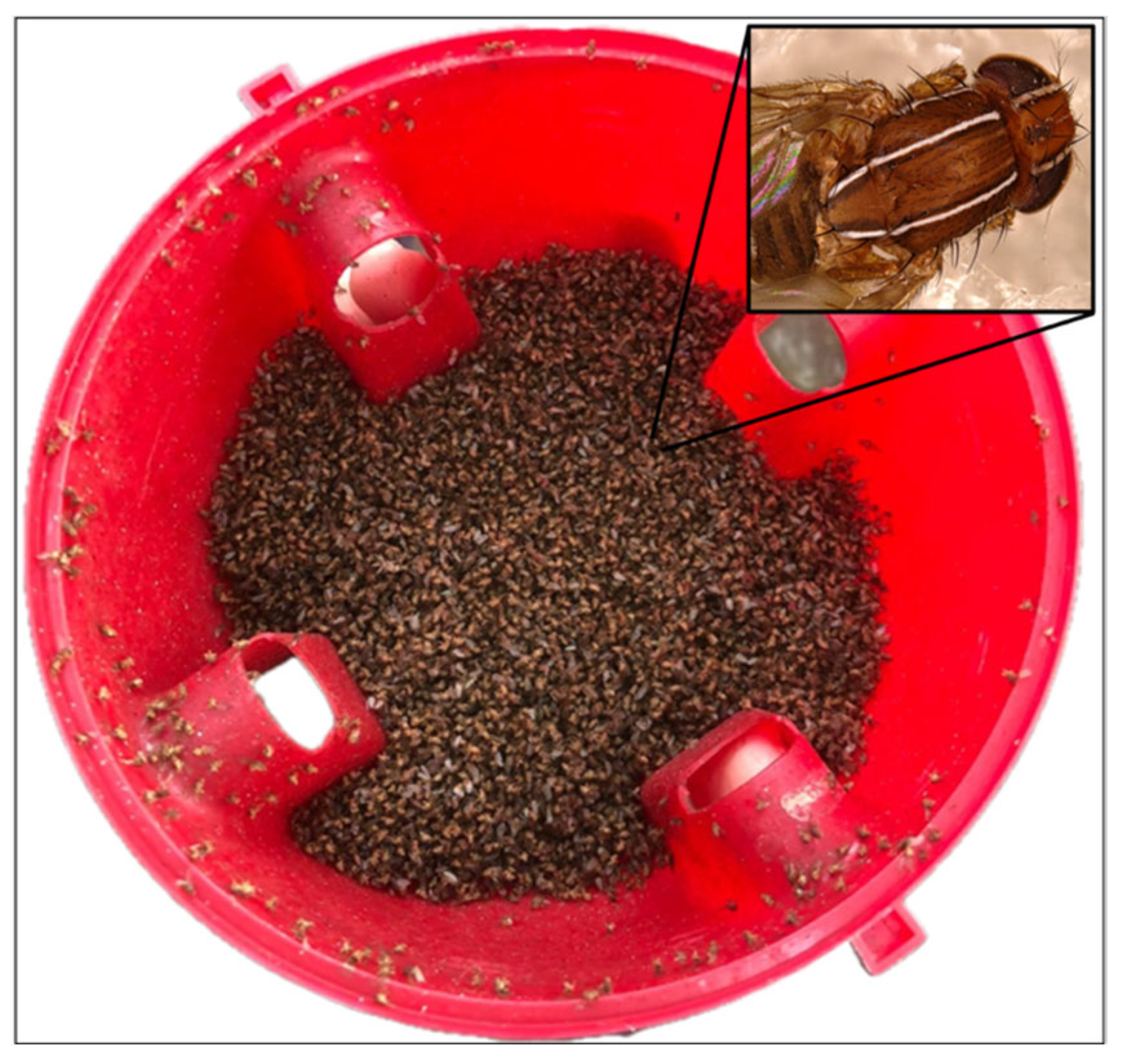
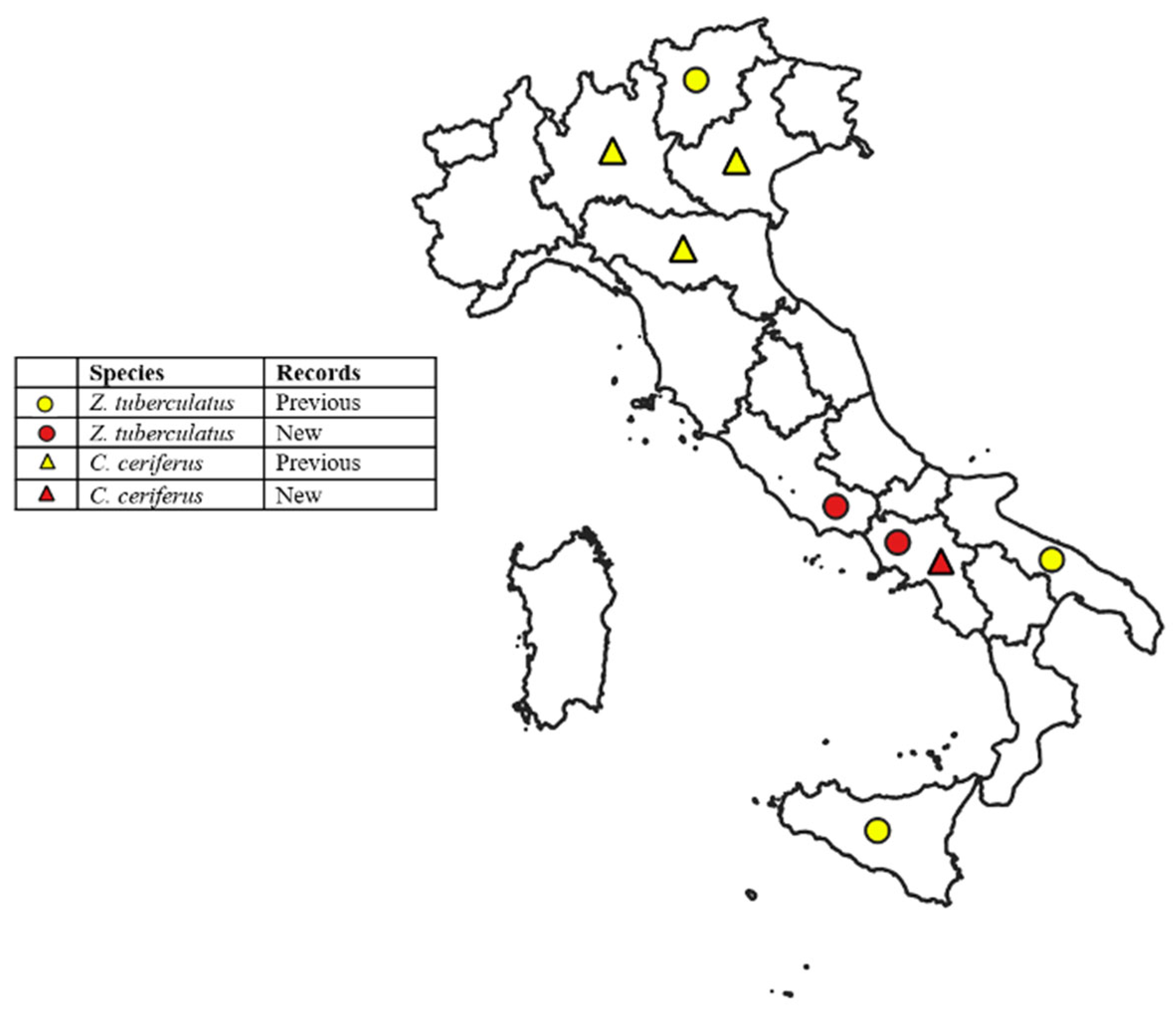
3.1.1. Zaprionus tuberculatus
3.1.2. Ceroplastes ceriferus
3.2. Evaluation of Capacity to Damage Fruits
3.3. Integrative Identification
3.3.1. Morphological Identification
3.3.2. Molecular Analysis
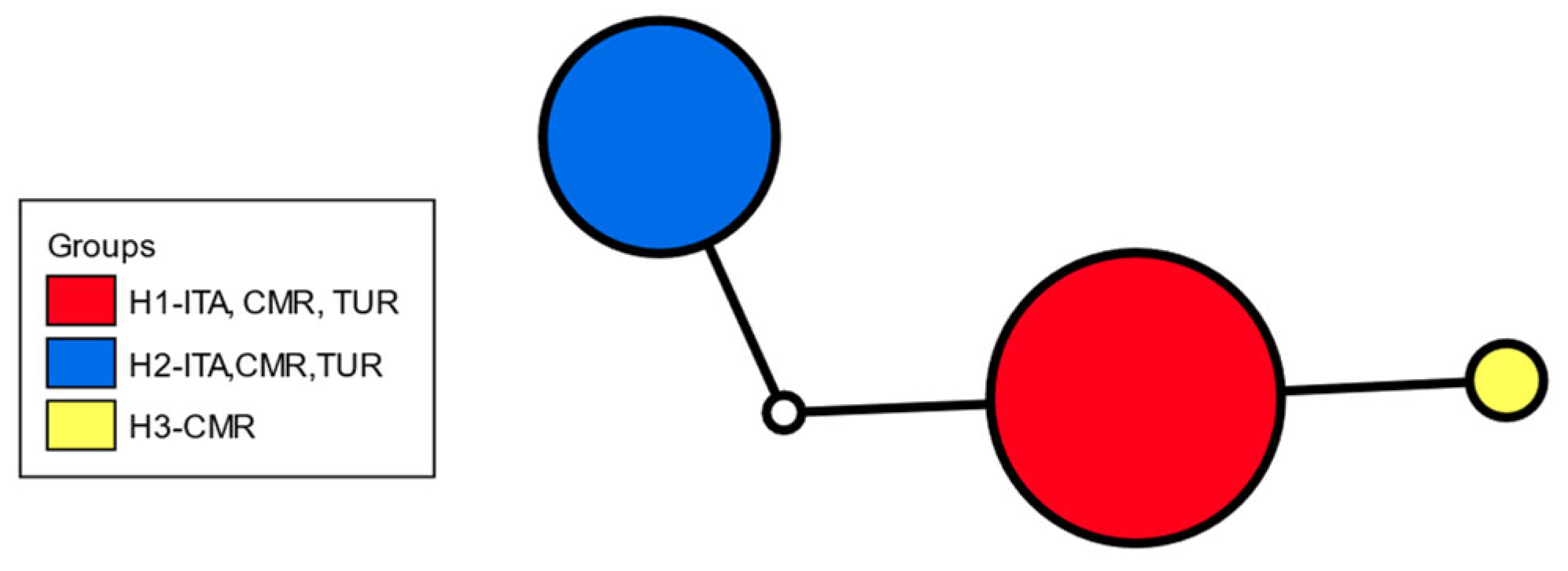
Zaprionus tuberculatus
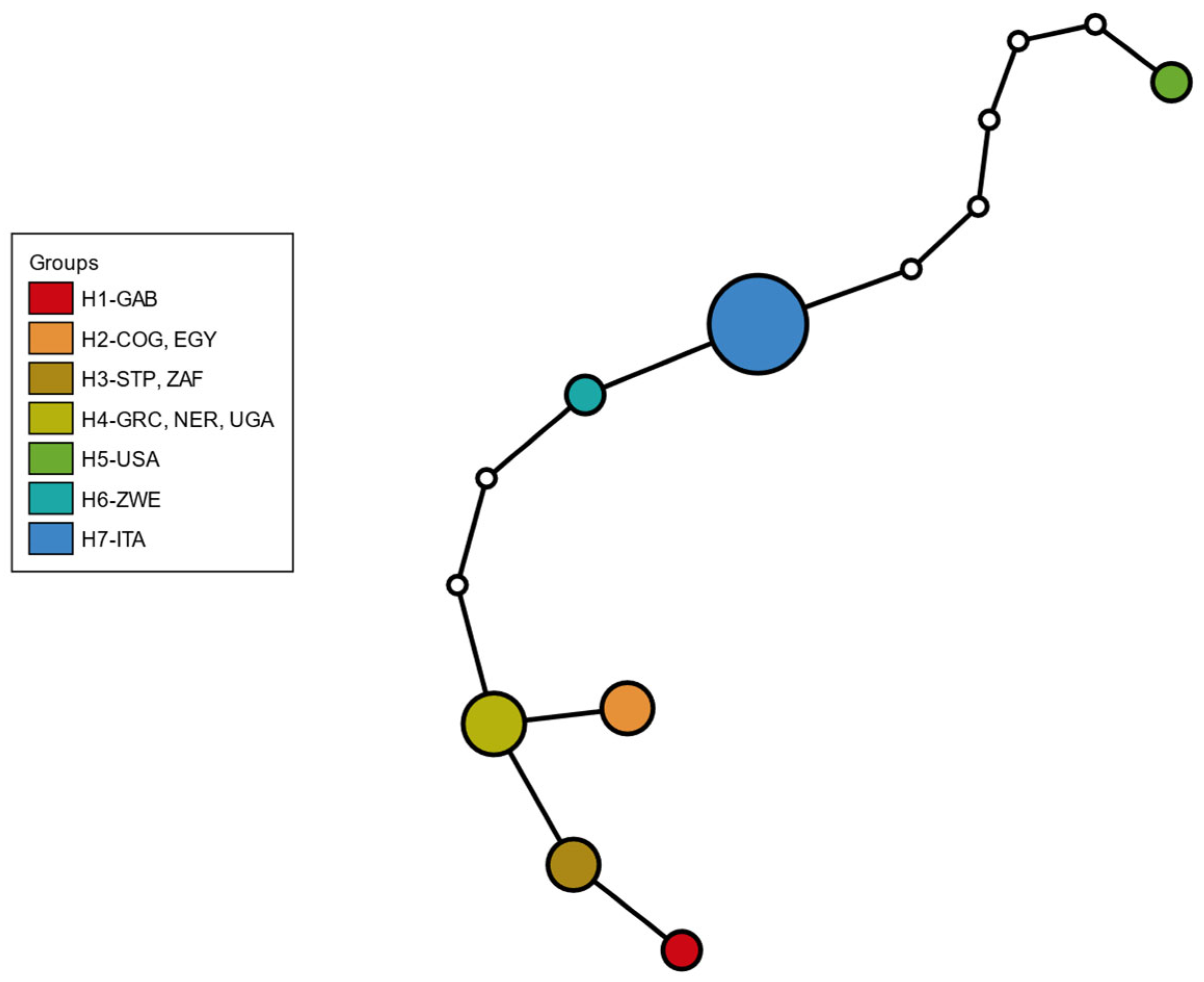
Ceroplastes ceriferus
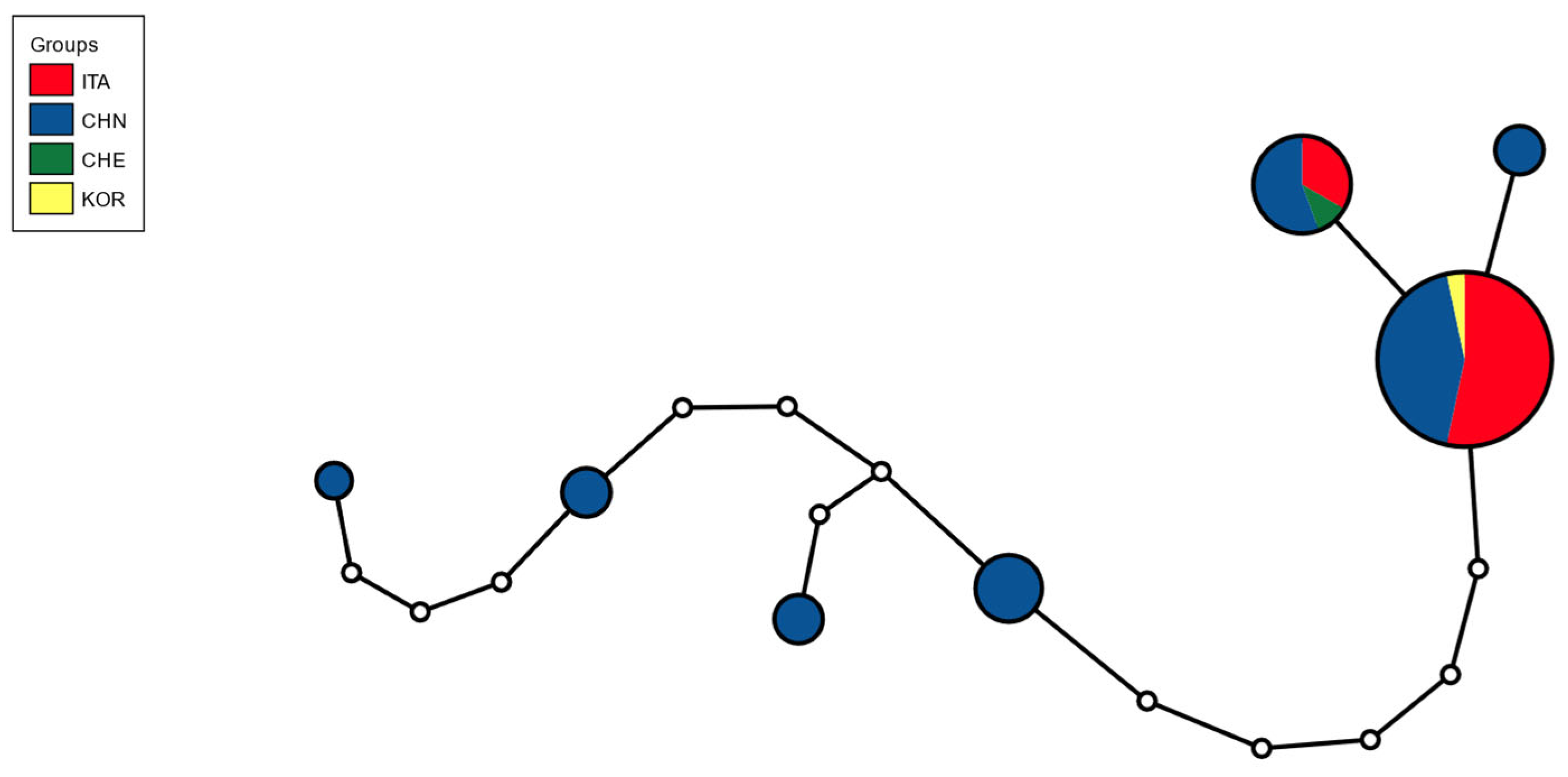
3.4. Evaluation of Genetic Diversity
3.4.1. Zaprionus tuberculatus
3.4.2. Ceroplastes ceriferus
4. Discussion
4.1. Zaprionus tuberculatus
4.2. Ceroplastes ceriferus
4.3. Genetic Variability and Invasion Success
4.4. Implications and Future Perspectives
5. Conclusions
Supplementary Materials
Author Contributions
Funding
Data Availability Statement
Acknowledgments
Conflicts of Interest
References
- Szyniszewska, A.M.; Tatem, A.J. Global assessment of seasonal potential distribution of Mediterranean fruit fly, Ceratitis capitata (Diptera: Tephritidae). PLoS ONE 2014, 9, 111582. [Google Scholar] [CrossRef] [PubMed]
- Szyniszewska, A.M.; Bieszczak, H.; Kozyra, K.; Papadopoulos, N.T.; De Meyer, M.; Nowosad, J.; Ota, N.; Kriticos, D.J. Evidence that recent climatic changes have expanded the potential geographical range of the Mediterranean fruit fly. Sci. Rep. 2024, 14, 2515. [Google Scholar] [CrossRef]
- Gilioli, G.; Sperandio, G.; Colturato, M.; Pasquali, S.; Gervasio, P.; Wilstermann, A.; Dominic, A.R.; Schrader, G. Non-linear physiological responses to climate change: The case of Ceratitis capitata distribution and abundance in Europe. Biol. Invasions 2022, 24, 261–279. [Google Scholar] [CrossRef]
- Intergovernmental Panel on Climate Change (IPCC). Climate Change 2014: Impacts, Adaptation, and Vulnerability. Part A: Global and Sectoral Aspects. Contribution of Working Group II to the Fifth Assessment Report of the IPCC. Available online: https://www.ipcc.ch/site/assets/uploads/2018/02/WGIIAR5-FrontMatterA_FINAL.pdf (accessed on 25 October 2025).
- Diez, J.M.; D’Antonio, C.M.; Dukes, J.S.; Grosholz, E.D.; Olden, J.D.; Sorte, C.J.; Blumenthal, D.M.; Bradley, B.A.; Early, R.; Ibáñez, I.; et al. Will extreme climatic events facilitate biological invasions? Front. Ecol. Environ. 2012, 10, 249–257. [Google Scholar] [CrossRef]
- Nugnes, F.; Laudonia, S.; Jesu, G.; Jansen, M.G.M.; Bernardo, U.; Porcelli, F. Aleurocanthus spiniferus (Hemiptera: Aleyrodidae) in some European countries: Diffusion, hosts, molecular characterization, and natural enemies. Insects 2020, 11, 42. [Google Scholar] [CrossRef]
- Roques, A.; Shi, J.; Auger-Rozenberg, M.A.; Ren, L.; Augustin, S.; Luo, Y.Q. Are invasive patterns of non-native insects related to woody plants differing between Europe and China? Front. For. Glob. Change 2020, 2, 91. [Google Scholar] [CrossRef]
- Capinha, C.; Essl, F.; Porto, M.; Seebens, H. The worldwide networks of spread of recorded alien species. Proc. Natl. Acad. Sci. USA 2023, 120, e2201911120. [Google Scholar] [CrossRef]
- Genovesi, P.; Shine, C. European Strategy on Invasive Alien Species. Convention on the Conservation of European Wildlife and Natural Habitats (Bern Convention), Council of Europe. 2004. Available online: https://www.cbd.int/doc/external/cop-09/bern-01-en.pdf (accessed on 25 October 2025).
- de Benedetta, F.; Gargiulo, S.; Miele, F.; Figlioli, L.; Innangi, M.; Audisio, P.; Nugnes, F.; Bernardo, U. The spread of Carpophilus truncatus is on the razor’s edge between an outbreak and a pest invasion. Sci. Rep. 2022, 12, 18841. [Google Scholar] [CrossRef]
- Ascolese, R.; Miele, F.; Pica, F.; Carbone, C.; de Benedetta, F.; Avventura, G.; Griffo, R.; Nugnes, F.; Bernardo, U. First record of the invasive fruit fly Dacus ciliatus Loew (Diptera: Tephritidae) in Italy. BioInvasions Rec. 2025, 14, 289–306. [Google Scholar] [CrossRef]
- Roques, A.; Rabitsch, W.; Rasplus, J.Y.; Lopez-Vaamonde, C.; Nentwig, W.; Kenis, M. Alien terrestrial invertebrates of Europe. In Handbook of Alien Species in Europe; Invading Nature—Springer Series in Invasion Ecology; Springer: Dordrecht, The Netherlands, 2009; Volume 3, pp. 63–79. [Google Scholar] [CrossRef]
- Vaes-Petignat, S.; Nentwig, W. Environmental and economic impact of alien terrestrial arthropods in Europe. NeoBiota 2014, 22, 23–42. [Google Scholar] [CrossRef]
- Inghilesi, A.F.; Mazza, G.; Cervo, R.; Gherardi, F.; Sposimo, P.; Tricarico, E.; Zapparoli, M. Alien insects in Italy: Comparing patterns from the regional to European level. J. Insect Sci. 2013, 13, 73. [Google Scholar] [CrossRef]
- Sun, Z.; Chen, Y.; Lu, Z.; Gui, F. Tracking adaptive pathways of invasive insects: Novel insight from genomics. Int. J. Mol. Sci. 2023, 24, 8004. [Google Scholar] [CrossRef] [PubMed]
- Levine, J.M.; D’Antonio, C.M. Forecasting biological invasions with increasing international trade. Conserv. Biol. 2003, 17, 322–326. [Google Scholar] [CrossRef]
- Early, R.; Bradley, B.; Dukes, J.; Lawler, J.J.; Olden, J.D.; Blumenthal, D.M.; Gonzalez, P.; Grosholz, E.D.; Ibanez, I.; Miller, L.P.; et al. Global threats from invasive alien species in the twenty-first century and national response capacities. Nat. Commun. 2016, 7, 12485. [Google Scholar] [CrossRef]
- Seebens, H.; Blackburn, T.M.; Dyer, E.E.; Genovesi, P.; Hulme, P.E.; Jeschke, J.M.; Pagad, S.; Pyšek, P.; Winter, M.; Arianoutsou, M.; et al. No saturation in the accumulation of alien species worldwide. Nat. Commun. 2017, 8, 14435. [Google Scholar] [CrossRef] [PubMed]
- Seebens, H.; Blackburn, T.M.; Dyer, E.E.; Genovesi, P.; Hulme, P.E.; Jeschke, J.M.; Pagad, S.; Pyšek, P.; van Kleunen, M.; Winter, M.; et al. Global rise in emerging alien species results from increased accessibility of new source pools. Proc. Natl. Acad. Sci. USA 2018, 115, 2264–2273. [Google Scholar] [CrossRef] [PubMed]
- EFSA Panel on Plant Health (PLH); Bragard, C.; Dehnen Schmutz, K.; Di Serio, F.; Gonthier, P.; Jacques, M.A.; Jaques Miret, J.A.; Justesen, A.F.; MacLeod, A.; Magnusson, C.S.; et al. Scientific opinion on the import of Musa fruits as a pathway for the entry of non-EU Tephritidae into the EU territory. EFSA J. 2021, 19, e06426. [Google Scholar] [CrossRef]
- Pace, R.; Ascolese, R.; Miele, F.; Russo, E.; Griffo, R.V.; Bernardo, U.; Nugnes, F. The bugs in the bags: The risk associated with the introduction of small quantities of fruit and plants by airline passengers. Insects 2022, 13, 617. [Google Scholar] [CrossRef]
- Liebhold, A.M.; Brockerhoff, E.G.; Garrett, L.J.; Parke, J.L.; Britton, K.O. Eradication of invading insect populations: From concepts to applications. Annu. Rev. Entomol. 2016, 61, 335–352. [Google Scholar] [CrossRef]
- EPPO. Annual Report 2023. European and Mediterranean Plant Protection Organization (EPPO). Available online: https://www.eppo.europa.eu/sites/default/files/2024-03/EPPO_Annual_Report_2023.pdf (accessed on 25 October 2025).
- Haubrock, P.J.; Cuthbert, R.N.; Sundermann, A.; Diagne, C.; Golivets, M.; Courchamp, F. Economic costs of invasive species in Germany. NeoBiota 2021, 67, 225–246. [Google Scholar] [CrossRef]
- Griffo, R.; Carbone, C.; Murano, V.; Nugnes, F.; Palmieri, A.; Pica, F.; Bernardo, U. Bactrocera dorsalis: Si riduce la zona infestata in Campania. L’Informatore Agrar. 2024, 22, 57–59. [Google Scholar]
- Keller, R.P.; Lodge, D.M.; Lewis, M.A.; Shogren, J.F. Bioeconomics of Invasive Species: Integrating Ecology, Economics, Policy, and Management; Oxford University Press: Oxford, UK, 2009. [Google Scholar] [CrossRef]
- Lockwood, J.L.; Hoopes, M.F.; Marchetti, M.P. Invasion Ecology, 2nd ed.; Wiley-Blackwell: Oxford, UK, 2013. [Google Scholar]
- Lodge, D.M.; Simonin, P.W.; Burgiel, S.W.; Keller, R.P.; Bossenbroek, J.M.; Jerde, C.L.; Kramer, A.M.; Rutherford, E.S.; Barnes, M.A.; Wittmann, M.E.; et al. Risk analysis and bioeconomics of invasive species to inform policy and management. Annu. Rev. Environ. Resour. 2016, 41, 453–488. [Google Scholar] [CrossRef]
- European Commission. Biodiversity: New IPBES Report Finds Invasive Alien Species a Growing and Costly Threat Worldwide. 2023. Available online: https://environment.ec.europa.eu/news/biodiversity-new-ipbes-report-finds-invasive-alien-species-growing-and-costly-threat-worldwide-2023-09-04_en (accessed on 22 September 2025).
- Kenis, M.; Rabitsch, W.; Auger-Rozenberg, M.A.; Roques, A. How can alien species inventories and interception data help us prevent insect invasions? Bull. Entomol. Res. 2007, 97, 489–502. [Google Scholar] [CrossRef]
- Mehta, S.V.; Haight, R.G.; Homans, F.R.; Polasky, S.; Venette, R.C. Optimal detection and control strategies for invasive species management. Ecol. Econ. 2007, 61, 237–245. [Google Scholar] [CrossRef]
- Leung, B.; Lodge, D.M.; Finnoff, D.; Shogren, J.F.; Lewis, M.A.; Lamberti, G. An ounce of prevention or a pound of cure: Bioeconomic risk analysis of invasive species. Proc. R. Soc. Lond. B 2002, 269, 2407–2413. [Google Scholar] [CrossRef]
- Aukema, J.E.; Leung, B.; Kovacs, K.; Chivers, C.; Britton, K.O.; Englin, J.; Frankel, S.J.; Haight, R.G.; Holmes, T.P.; Liebhold, A.M.; et al. Economic impacts of non-native forest insects in the continental United States. PLoS ONE 2011, 6, e24587. [Google Scholar] [CrossRef]
- Paini, D.R.; Sheppard, A.W.; Cook, D.C.; De Barro, P.J.; Worner, S.P.; Thomas, M.B. Global threat to agriculture from invasive species. Proc. Natl. Acad. Sci. USA 2016, 113, 7575–7579. [Google Scholar] [CrossRef]
- Ahmed, D.A.; Hudgins, E.J.; Cuthbert, R.N.; Kourantidou, M.; Diagne, C.; Haubrock, P.J.; Leung, B.; Petrovskii, S.; Courchamp, F. Managing biological invasions: The cost of inaction. Biol. Invasions 2022, 24, 1927–1946. [Google Scholar] [CrossRef]
- Yassin, A. Molecular and morphometrical revision of the Zaprionus tuberculatus species subgroup (Diptera: Drosophilidae), with descriptions of two cryptic species. Ann. Entomol. Soc. Am. 2008, 101, 978–988. [Google Scholar] [CrossRef]
- Raspi, A.; Grassi, A.; Benelli, G. Zaprionus tuberculatus (Diptera: Drosophilidae): First records from the European mainland. Bull. Insectol. 2014, 67, 157–160. [Google Scholar]
- Chireceanu, C.; Teodoru, A.C. The first detection of fruit fly Zaprionus tuberculatus Malloch (Diptera: Drosophilidae) in the eastern part of Europe (Romania). Univ. Din. Craiova 2015, 20, 377–382. [Google Scholar]
- Antonacci, R.; Tritto, P.; Cappucci, U.; Fanti, L.; Piacentini, L.; Berloco, M. Drosophilidae monitoring in Apulia (Italy) reveals Drosophila suzukii as one of the four most abundant species. Bull. Insectol. 2017, 70, 139–146. [Google Scholar]
- Cavalcanti, F.A.; Ribeiro, L.B.; Marins, G.; Tonelli, G.S.; Báo, S.N.; Yassin, A.; Tidon, R. Geographic expansion of an invasive fly: First record of Zaprionus tuberculatus (Diptera: Drosophilidae) in the Americas. Ann. Entomol. Soc. Am. 2022, 115, 267–274. [Google Scholar] [CrossRef]
- Viana, J.P.C.; Viana, M.C.; Cavalcanti, F.A.G.S.; Mateus, R.P.; Bitner-Mathé, B.C.; Garcia, F.R.M.; Jobim, K.; Madi-Ravazzi, L.; Rohde, C.; Martins, M.B.; et al. Assessing the potential spread of Zaprionus tuberculatus (Diptera: Drosophilidae) in the Americas: Insights for proactive management and agricultural protection. J. Econ. Entomol. 2025, 118, 195–202. [Google Scholar] [CrossRef]
- Jobim, K.; da Rosa, B.R.; da Luz Kaster, P.; Ovruski, S.M.; Garcia, F.R.M. Interactions of the Invasive Fruit Flies Drosophila suzukii, Zaprionus indianus, Zaprionus tuberculatus and Ceratitis capitata with Their Hosts in the Brazilian Pampa Biome. Insects 2025, 16, 1285. [Google Scholar] [CrossRef]
- Amouroux, P.; Crochard, D.; Germain, J.F.; Correa, M.; Ampuero, J.; Groussier, G.; Kreiter, P.; Malausa, T.; Zaviezo, T. Genetic diversity of armored scales (Hemiptera: Diaspididae) and soft scales (Hemiptera: Coccidae) in Chile. Sci. Rep. 2017, 7, 2014. [Google Scholar] [CrossRef] [PubMed]
- Mori, N.; Pellizzari, G.; Tosi, L. Già acclimatato in Italia il coccide Ceroplastes ceriferus (Fabricius) (Hemiptera, Coccoidea). Inf. Fitopatol. 2001, 10, 41–43. [Google Scholar]
- Ben-Dov, Y.; Miller, D.R.; Gibson, G.A.P. ScaleNet: A Database of the Scale Insects of the World. 2006. Available online: https://scalenet.info (accessed on 22 September 2025).
- Karpun, N.N.; Omarova, Z.M.; Shoshina, E.I.; Belous, O.G. Resistance of collection cultivars of persimmon (Diospyros L.) to damage by the invasive scale Ceroplastes ceriferus (Fabricius, 1798) in the Russian subtropics. Agric. Biol. 2025, 60, 923–936. [Google Scholar] [CrossRef]
- Tranfaglia, A.; Viggiani, G. Cocciniglie D’importanza Economica in Italia e Loro Controllo; Istituto di Entomologia Agraria, Università di Napoli-Portici: Portici, Italy, 1988; 30p. [Google Scholar]
- Mazzeo, G.; Longo, S.; Pellizzari, G.; Porcelli, F.; Russo, A. Le cocciniglie esotiche delle ornamentali recentemente introdotte in Italia e in Europa. Atti Accad. Naz. Ital. Entomol. 2013, 123–130. [Google Scholar]
- Estoup, A.; Ravigné, V.; Hufbauer, R.; Vitalis, R.; Gautier, M.; Facon, B. Is there a genetic paradox of biological invasion? Annu. Rev. Ecol. Evol. Syst. 2016, 47, 51–72. [Google Scholar] [CrossRef]
- Bernardo, U.; Pica, F.; Carbone, C.; Nugnes, F.; Viggiani, G. First record and characterization of Aganaspis daci (Weld, 1951), a parasitoid of fruit flies. J. Hymenopt. Res. 2023, 96, 15. [Google Scholar] [CrossRef]
- Sasso, R.; Gualtieri, L.; Russo, E.; Nugnes, F.; Gebiola, M.; Bernardo, U. The establishment of a rearing technique for the fruit fly parasitoid Baryscapus silvestrii increases knowledge of biological, ecological and behavioural traits. BioControl 2020, 65, 47–57. [Google Scholar] [CrossRef]
- Kuyulu, A.; Yücel, S.; Genç, H. Molecular identification of invasive drosophilid Zaprionus tuberculatus Malloch (Diptera: Drosophilidae) in Çanakkale, Turkey. Turk. J. Zool. 2019, 43, 531–535. [Google Scholar] [CrossRef]
- Chassagnard, M.-T.; McEvey, S.F. The Zaprionus of Madagascar, with descriptions of five new species (Diptera: Drosophilidae). Ann. Soc. Entomol. Fr. 1992, 28, 317–336. [Google Scholar] [CrossRef]
- Yassin, A.; David, J.R. Revision of the Afrotropical species of Zaprionus (Diptera: Drosophilidae), with descriptions of two new species and notes on internal reproductive structures and immature stages. ZooKeys 2010, 51, 33–72. [Google Scholar] [CrossRef] [PubMed]
- Gimpel, W.F.; Miller, D.R.; Davidson, J.A. A Systematic Revision of the Wax Scales: Genus Ceroplastes in the United States (Homoptera: Coccoidea: Coccidae); Miscellaneous Publication, Agricultural Experiment Station, University of Maryland: College Park, MD, USA, 1974; Volume 841, pp. 1–85. [Google Scholar]
- Kosztarab, M.; Kozár, F. Scale Insects of Central Europe; Springer: Dordrecht, The Netherlands, 1988; pp. 1–456. [Google Scholar]
- Papadopoulou, S.; Kaydan, M.; Manganaris, A.; Loukovitis, D.; Chrysochoidis, C. First record of Ceroplastes japonicus (Gray) (Hemiptera: Coccidae) in Greece and a combined approach of morphological identification and DNA barcoding. EPPO Bull. 2020, 50, 299–303. [Google Scholar] [CrossRef]
- Gebiola, M.; Bernardo, U.; Monti, M.M.; Navone, P.; Viggiani, G. Pnigalio agraules (Walker) and Pnigalio mediterraneus (Ferriere and Delucchi) (Hymenoptera: Eulophidae): Two closely related valid species. J. Nat. Hist. 2009, 43, 2465–2480. [Google Scholar] [CrossRef]
- Bernardo, U.; Nugnes, F.; Gualtieri, L.; Nicoletti, R.; Varricchio, P.; Sasso, R.; Viggiani, G. A new gall midge species of Asphondylia (Diptera: Cecidomyiidae) inducing flower galls on Clinopodium nepeta (Lamiaceae) from Europe, its phenology, and associated fungi. Environ. Entomol. 2018, 47, 609–622. [Google Scholar] [CrossRef]
- Deng, J.; Yu, F.; Zhang, T.X.; Hu, H.Y.; Zhu, C.D.; Wu, S.A.; Zhang, Y.Z. DNA barcoding of six Ceroplastes species (Hemiptera: Coccoidea: Coccidae) from China. Mol. Ecol. Resour. 2012, 12, 791–796. [Google Scholar] [CrossRef] [PubMed]
- Hall, T.A. BioEdit: A user-friendly biological sequence alignment editor and analysis program for Windows 95/98/NT. Nucleic Acids Symp. Ser. 1999, 41, 95–98. [Google Scholar]
- Keklik, G. Understanding evolutionary relationships and analysis methods through MEGA software. Int. J. New Horiz. Sci. 2023, 1, 83–90. [Google Scholar]
- Múrias dos Santos, A.; Cabezas, M.P.; Tavares, A.I.; Xavier, R.; Branco, M. tcsBU: A tool to extend TCS network visualization. Bioinformatics 2016, 32, 627–628. [Google Scholar] [CrossRef]
- Bella, S.; Mouttet, R. Geographic expansion in the Mediterranean region of the drosophilid genus Zaprionus: Establishment of the invasive African fruit fly, Zaprionus tuberculatus Malloch (Diptera: Drosophilidae), in Corsica (France) and Sicily (Italy). EPPO Bull. 2025, 55, 158–165. [Google Scholar] [CrossRef]
- Ben Halima Kamel, M.; Ben Cheik, Z.; Zouari, S.; Mdellel, L.; Balmès, V. First report of Zaprionus indianus and Z. tuberculatus (Diptera: Drosophilidae) in Tunisia. EPPO Bull. 2020, 50, 307–310. [Google Scholar] [CrossRef]
- Georges, R.; Yassin, A.; Colinet, H. First record of Zaprionus tuberculatus (Diptera: Drosophilidae) in mainland France. Entomol. Res. 2024, 54, e12725. [Google Scholar] [CrossRef]
- Kohlmeier, P.; Kohlmeier, P. A non-overwintering urban population of the African fig fly (Diptera: Drosophilidae) impacts the reproductive output of locally adapted fruit flies. Fla. Entomol. 2025, 108, 20240064. [Google Scholar] [CrossRef]
- El-Sabrout, A.M.; Moreno, C.; Temperville, M.; Ferreira, E.A.; Ogereau, D.; Hassani, I.M.; Raveloson Ravaomanarivo, L.H.; Bastide, H.; Abou-Youssef, A.Y.; Yassin, A. Divergence and parallelism in two tropical Drosophilids simultaneously invading a desert environment. Genome Biol. Evol. 2025, 17, evaf146. [Google Scholar] [CrossRef]
- Nugnes, F.; Carbone, C.; Ascolese, R.; Miele, F.; Pica, F.; Palmieri, A.; Griffo, R.V.; Bernardo, U. The enemy is already inside! Bactrocera dorsalis is a serious threat to European orchards and crops. Entomol. Gen. 2024, 44, 1243–1251. [Google Scholar] [CrossRef]
- Grassi, A.; Gottardello, A.; Dalton, D.T.; Tait, G.; Rendon, D.; Ioriatti, C.; Gibeaut, D.; Rossi Stacconi, M.V.; Walton, V.M. Seasonal reproductive biology of Drosophila suzukii (Diptera: Drosophilidae) in temperate climates. Environ. Entomol. 2018, 47, 166–174. [Google Scholar] [CrossRef]
- EPPO. Mini Datasheet on Zaprionus tuberculatus (Diptera: Drosophilidae); European and Mediterranean Plant Protection Organization: Paris, France, 2020. [Google Scholar]
- Moreira, M.M.; de Dias, L.P.B.; de Paula Sena, L.C.; Neto, J.L.; de Medeiros, H.F.; Yotoko, K. First record of Zaprionus tuberculatus Malloch, 1932 (Diptera: Drosophilidae) in Minas Gerais, Brazil. Rev. Bras. Entomol. 2023, 67, e20230031. [Google Scholar] [CrossRef]
- Santos, J.P.; Bitner-Mathé, B.C.; Rosa, J.M.; Fiedler, M.; Scapin, V.L.V.; Garcia, F.R.M.; Santos, F.C.P.; Oliveira, M.A.; Antunes, A. First records of Zaprionus tuberculatus (Diptera: Drosophilidae) in strawberry in Brazil. Braz. J. Biol. 2024, 84, e283652. [Google Scholar] [CrossRef]
- Dittrich-Schröder, G.; Hoareau, T.B.; Hurley, B.P.; Wingfield, M.J.; Lawson, S.; Nahrung, H.F.; Slippers, B. Population genetic analyses of complex global insect invasions in managed landscapes: A Leptocybe invasa (Hymenoptera) case study. Biol. Invasions 2018, 20, 2395–2420. [Google Scholar] [CrossRef]
- Fetykó, K.; Kozár, F. Records of Ceroplastes Gray 1828 in Europe, with an identification key to species in the palaearctic region. Bull. Insectol. 2012, 65, 291–295. [Google Scholar]
- Sutter, L.; Dekumbis, V.; Ançay, A.; Mattei, G.; Frey, B.; Frey, J.E.; Blaser, S. First records of Ceroplastes ceriferus (Fabricius) (Hemiptera: Coccidae) and Ceroplastes japonicus (Gray) in Switzerland identified by DNA barcoding. EPPO Bull. 2022, 52, 130–134. [Google Scholar] [CrossRef]
- Bertelsmeier, C.; Bonnamour, A.; Garnas, J.R.; Liu, T.; Perreault, R.; Ollier, S. Temporal dynamics and global flows of insect invasions in an era of globalization. Nat. Rev. Biodivers. 2025, 1, 90–103. [Google Scholar] [CrossRef]
- Pencheva, A.; Yovkova, M. New data on alien insect pests of ornamental plants in Bulgaria. For. Ideas 2016, 22, 17–33. [Google Scholar]
- Ülgentürk, S. A new introduced wax scale to Turkey: Ceroplastes ceriferus (Fabricius) (Hemiptera: Coccidae). Munis Entomol. Zool. 2016, 11, 359. [Google Scholar]
- Allendorf, F.W.; Lundquist, L.L. Introduction: Population biology, evolution, and control of invasive species. Conserv. Biol. 2003, 17, 24–30. [Google Scholar] [CrossRef]
- Sherpa, S.; Després, L. The evolutionary dynamics of biological invasions: A multi-approach perspective. Evol. Appl. 2021, 14, 1463–1484. [Google Scholar] [CrossRef]
- Weng, Y.M.; Shashank, P.R.; Godfrey, R.K.; Plotkin, D.; Parker, B.M.; Wist, T.; Kawahara, A.Y. Evolutionary genomics of three agricultural pest moths reveals rapid evolution of host adaptation and immune-related genes. GigaScience 2024, 13, giad103. [Google Scholar] [CrossRef]
- Facon, B.; Hufbauer, R.A.; Tayeh, A.; Loiseau, A.; Lombaert, E.; Vitalis, R.; Guillemaud, T.; Lundgren, J.G.; Estoup, A. Inbreeding depression is purged in the invasive insect Harmonia axyridis. Curr. Biol. 2011, 21, 424–427. [Google Scholar] [CrossRef] [PubMed]
- Tsutsui, N.D.; Suarez, A.V.; Holway, D.A.; Case, T.J. Reduced genetic variation and the success of an invasive species. Proc. Natl. Acad. Sci. USA 2000, 97, 5948–5953. [Google Scholar] [CrossRef]
- Dlugosch, K.M.; Parker, I.M. Founding events in species invasions: Genetic variation, adaptive evolution, and the role of multiple introductions. Mol. Ecol. 2008, 17, 431–449. [Google Scholar] [CrossRef]
- Puillandre, N.; Dupas, S.; Dangles, O.; Zeddam, J.L.; Dula, C.C.; Barbin, K.; Leguizamon, M.T.; Silvain, J.F. Genetic bottleneck in invasive species: The potato tuber moth adds to the list. Biol. Invasions 2008, 10, 319–333. [Google Scholar] [CrossRef]
- Valade, R.; Kenis, M.; Hernandez-Lopez, A.; Augustin, S.; Mari Mena, N.; Magnoux, E.; Rougerie, R.; Lakatos, F.; Roques, A.; Lopez-Vaamonde, C. Mitochondrial and microsatellite DNA markers reveal a Balkan origin for the highly invasive horse-chestnut leaf miner Cameraria ohridella (Lepidoptera: Gracillariidae). Mol. Ecol. 2009, 18, 3458–3470. [Google Scholar] [CrossRef]
- Bernardo, U.; van Nieukerken, E.J.; Sasso, R.; Gebiola, M.; Gualtieri, L.; Viggiani, G. Characterization, distribution, biology and impact on Italian walnut orchards of the invasive North-American leafminer Coptodisca lucifluella (Lepidoptera: Heliozelidae). Bull. Entomol. Res. 2015, 105, 210–224. [Google Scholar] [CrossRef]
- Nugnes, F.; Gebiola, M.; Monti, M.M.; Gualtieri, L.; Giorgini, M.; Wang, J.; Bernardo, U. Genetic diversity of the invasive gall wasp Leptocybe invasa (Hymenoptera: Eulophidae) and of its Rickettsia endosymbiont, and associated sex-ratio differences. PLoS ONE 2015, 10, e0124660. [Google Scholar] [CrossRef]
- Magalhaes, V.S.; Czepak, C.; Van Niekerk, M.; Du Plessis, H.; Court, L.; Tay, W.T. Phthorimaea absoluta (Meyrick) (Lepidoptera: Gelechiidae) draft mitogenomes and insecticide resistance gene characterisation support multiple maternal lineages in invasive African, Asian, and European populations. Bull. Entomol. Res. 2025, 115, 437–451. [Google Scholar] [CrossRef] [PubMed]
- Clarke, D.A.; McGeoch, M.A. Invasive alien insects represent a clear but variable threat to biodiversity. Curr. Res. Insect Sci. 2023, 4, 100065. [Google Scholar] [CrossRef] [PubMed]
- Keane, R.M.; Crawley, M.J. Exotic plant invasions and the enemy release hypothesis. Trends Ecol. Evol. 2002, 17, 164–170. [Google Scholar] [CrossRef]
- Sesay, R.E.V.; Sesay, F.; Azizi, M.I.; Rahmani, B. Invasive species and biodiversity: Mechanisms, impacts, and strategic management for ecological preservation. Asian J. Environ. Ecol. 2024, 23, 82–95. [Google Scholar] [CrossRef]



| Host Plant Species | Locality | Coordinates | Date of Collection | Number of Specimens (Sequenced) | Sequenced Specimen Code | Mt-Haplotype | Accession Number | |
|---|---|---|---|---|---|---|---|---|
| COI | COII | |||||||
| Citrus reticulata Blanco | Palma Campania | 40°51′08″ N 14°33′14″ E | 14 November 2023 | 7 | - | - | - | - |
| 40°51′05″ N 14°33′17″ E | 20 November 2023 | 10 (2) | AA_725 | H1 | PX533121 | PX644770 | ||
| AA_726 | H2 | PX533137 | PX644775 | |||||
| Citrus sinensis (L.) | Palma Campania | 40°51′52″ N 14°33′07″ E | 24 October 2023 | 3 | - | - | - | - |
| 40°51′53″ N 14°33′18″ E | 14 November 2023 | 1 (1) | AA_724 | H2 | PX533136 | - | ||
| 40°51′20″ N 14°33′20″ E | 9 | - | - | - | - | |||
| 40°51′09″ N 14°33′26″ E | 20 November 2023 | 10 | - | - | - | - | ||
| Sarno | 40°50′30″ N 14°34′11″ E | 13 November 2023 | 9 (1) | AA_736 | H1 | PX533127 | - | |
| Diospyros kaki | Palma Campania | 40°51′36″ N 14°33′20″ E | 20 September 2023 | 3 | - | - | - | - |
| 40°51′27″ N 14°33′19″ E | 18 October 2023 | 8 (1) | AA_648 | H1 | PX533117 | - | ||
| 40°51′18″ N 14°33′24″ E | 24 October 2023 | 1 (1) | AA_635 | H2 | PX533129 | - | ||
| 40°51′13″ N 14°33′06″ E | 6 (1) | AA_650 | H1 | PX533119 | - | |||
| 40°52′06″ N 14°33′08″ E | 6 (1) | AA_649 | H1 | PX533118 | - | |||
| 40°50′33″ N 14°33′05″ E | 31 October 2023 | 9 | - | - | - | - | ||
| 40°50′40″ N 14°32′03″ E | 7 | - | - | - | - | |||
| 40°51′09″ N 14°33′26″ E | 14 November 2023 | 4 | - | - | - | - | ||
| Vico Equense | 40°39′38″ N 14°26′49″ E | 14 October 2024 | 3 (1) | AA_901 | H1 | PX533125 | PX644769 | |
| Roma | 42°07′29″ N 12°34′08″ E | 5 October 2023 | 37 (2) | AA_651 | H2 | PX533131 | - | |
| AA_652 | H1 | PX533120 | - | |||||
| Eriobotrya japonica (Thunb.) Lindl. | Palma Campania | 40°51′37″ N 14°33′16″ E | 30 May 2024 | 2 (1) | AA_864 | H2 | PX533132 | - |
| Juglans regia L. | Sarno | 40°50′16″ N 14°34′36″ E | 20 September 2024 | 3 (1) | AA_860 | H2 | PX533133 | - |
| Malus domestica (Suckow) Borkh. | Palma Campania | 40°52′47″ N 14°32′22″ E | 9 January 2024 | 1 (1) | AA_729 | H2 | PX533134 | - |
| Opuntia ficus-indica (L.) Mill. | Sarno | 40°50′30″ N 14°34′11″ E | 30 November 2023 | 3 (3) | AA_728 | H1 | PX533128 | - |
| AA_732 | H1 | PX533122 | PX644771 | |||||
| AA_727 | H2 | PX533124 | PX644776 | |||||
| Punica granatum L. | Cisterna di Latina | 41°34′9″ N 12°46′39″ E | 12 November 2023 | 28 (2) | AA_730 | H1 | PX533123 | PX644774 |
| AA731 | H2 | PX533135 | PX644773 | |||||
| Vitis vinifera | Sant’ Agnello | 40°37′4″ N 14°24′19″ E | 22 October 2024 | 5 (1) | AA_857 | H1 | PX533126 | PX644772 |
| Ziziphus jujuba Mill. | Palma Campania | 40°51′8″ N 14°33′14″ E | 1 October 2024 | 4 (1) | AA_859 | H2 | PX533130 | - |
| Host Plant Species | Locality | Coordinates | Date of Collection | Number of Specimens (Sequenced) | Sequenced Specimen Code | Mt Haplotype | Accession Number |
|---|---|---|---|---|---|---|---|
| Diospyros kaki | San Giuseppe Vesuviano | 40°50′37″ N 14°29′16″ E | 4 December 2023 | 3 (3) | AA658 | H1 | PX508461 |
| AA659 | H1 | PX508462 | |||||
| AA660 | H1 | PX508463 | |||||
| Palma Campania | 40°50′52″ N 14°33′28″ E | 6 February 2024 | 3 (1) | BB029 | H1 | PX508471 | |
| 40°51′10″ N 14°32′43″ E | 23 February 2024 | 8 (1) | AA720 | H1 | PX508470 | ||
| 40°50′52″ N 14°33′28″ E | 14 August 2024 | 1 | - | - | - | ||
| Saviano | 40°53′54″ N 14°29′29″ E | 5 May 2024 | 2 (2) | BB032 | H1 | PX508474 | |
| BB033 | H1 | PX508475 | |||||
| 40°53′23″ N 14°29′35″ E | 7 November 2024 | 2 (2) | BB035 | H1 | PX508477 | ||
| BB034 | H1 | PX508476 | |||||
| San Gennaro Vesuviano | 40°51′28″ N 14°30′55″ E | 7 November 2024 | 2 (2) | BB037 | H2 | PX508479 | |
| BB036 | H1 | PX508478 | |||||
| Laurus nobilis L. | Palma Campania | 40°52′46″ N 14°32′59″ E | 21 May 2024 | 27 (3) | AA754 | H1 | PX508465 |
| AA752 | H1 | PX508464 | |||||
| AA755 | H1 | PX508466 | |||||
| Morus sp. | San Giuseppe Vesuviano | 40°49′21″ N 14°31′37″ E | 10 October 2024 | 6 (2) | BB031 | H2 | PX508473 |
| BB030 | H2 | PX508472 | |||||
| Photinia serratifolia (Desf.) Kalkman | Ottaviano | 40°51′09″ N 14°29′23″ E | 2 February 2024 | 11 (3) | AA717 | H1 | PX508467 |
| AA718 | H1 | PX508468 | |||||
| AA719 | H1 | PX508469 |
| Country | ITA | TUR | CMR |
| ITA | 0.16 (±0.112) | ||
| TUR | 0.15 (±0.102) | 0.13 (±0.094) | |
| CMR | 0.20 (±0.114) | 0.12 (±0.071) | 0.1 (±0.103) |
| Country | AFR | USA | ITA |
| AFR | 0.26 (±0.115) | ||
| USA | 1.50 (±0.425) | n.c. | |
| ITA | 0.63 (±0.270) | 0.87 (±0.334) | n.c. |
| Country | ITA | CHN | KOR | CHE |
| ITA | 0.04 (±0.042) | |||
| CHN | 0.50 (±0.154) | 0.76(±0.225) | ||
| KOR | 0.03 (±0.028) | 0.48 (±0.151) | n.c. | |
| CHE | 0.14 (±0.134) | 0.62 (±0.218) | 0.20 (±0.189) | n.c. |
Disclaimer/Publisher’s Note: The statements, opinions and data contained in all publications are solely those of the individual author(s) and contributor(s) and not of MDPI and/or the editor(s). MDPI and/or the editor(s) disclaim responsibility for any injury to people or property resulting from any ideas, methods, instructions or products referred to in the content. |
© 2026 by the authors. Licensee MDPI, Basel, Switzerland. This article is an open access article distributed under the terms and conditions of the Creative Commons Attribution (CC BY) license.
Share and Cite
Nugnes, F.; Carbone, C.; Miele, F.; Pica, F.; Pierro, S.; Sasso, R.; Bodini, M.; Bernardo, U. Contrasting Invasion Strategies, Convergent Outcomes: Establishment of Zaprionus tuberculatus and Ceroplastes ceriferus in Italy. Insects 2026, 17, 198. https://doi.org/10.3390/insects17020198
Nugnes F, Carbone C, Miele F, Pica F, Pierro S, Sasso R, Bodini M, Bernardo U. Contrasting Invasion Strategies, Convergent Outcomes: Establishment of Zaprionus tuberculatus and Ceroplastes ceriferus in Italy. Insects. 2026; 17(2):198. https://doi.org/10.3390/insects17020198
Chicago/Turabian StyleNugnes, Francesco, Carmela Carbone, Fortuna Miele, Feliciana Pica, Sara Pierro, Raffaele Sasso, Mariagrazia Bodini, and Umberto Bernardo. 2026. "Contrasting Invasion Strategies, Convergent Outcomes: Establishment of Zaprionus tuberculatus and Ceroplastes ceriferus in Italy" Insects 17, no. 2: 198. https://doi.org/10.3390/insects17020198
APA StyleNugnes, F., Carbone, C., Miele, F., Pica, F., Pierro, S., Sasso, R., Bodini, M., & Bernardo, U. (2026). Contrasting Invasion Strategies, Convergent Outcomes: Establishment of Zaprionus tuberculatus and Ceroplastes ceriferus in Italy. Insects, 17(2), 198. https://doi.org/10.3390/insects17020198