Vertical Migration of Adult Plecoptera and Trichoptera above Forested Headwater Streams
1
Department of Biology, Lycoming College, Williamsport, PA 17814, USA
2
Department of Biology, University of Mississippi, 504 Shoemaker Hall, Oxford, MS 38677, USA
*
Author to whom correspondence should be addressed.
Insects 2021, 12(9), 770; https://doi.org/10.3390/insects12090770
Submission received: 3 August 2021
/
Revised: 20 August 2021
/
Accepted: 25 August 2021
/
Published: 27 August 2021
(This article belongs to the Collection Ecology and Biology of Aquatic Insects)
Simple Summary
Stream insects are essential components of aquatic and terrestrial ecosystems, but fewer studies have examined the terrestrial stage compared to the aquatic stage. Most adult stream insects are flight capable, which allows for short- and long-distance movements away from the stream channel into riparian or upland habitats. This study examined if adult stream insects migrate vertically into riparian forest canopies above the stream. We found a meaningful number of adult Trichoptera and Plecoptera in the forest canopy above the stream that was comparable to horizontal migrations. This result demonstrated that adult stream insects utilize riparian forest canopies and that numerous avenues for additional basic and applied research on terrestrial–aquatic linkages exist. Discovering how riparian canopy habitats are important for stream insects and how stream insects are linked to canopy ecosystems can inform restoration and conservation actions.
Abstract
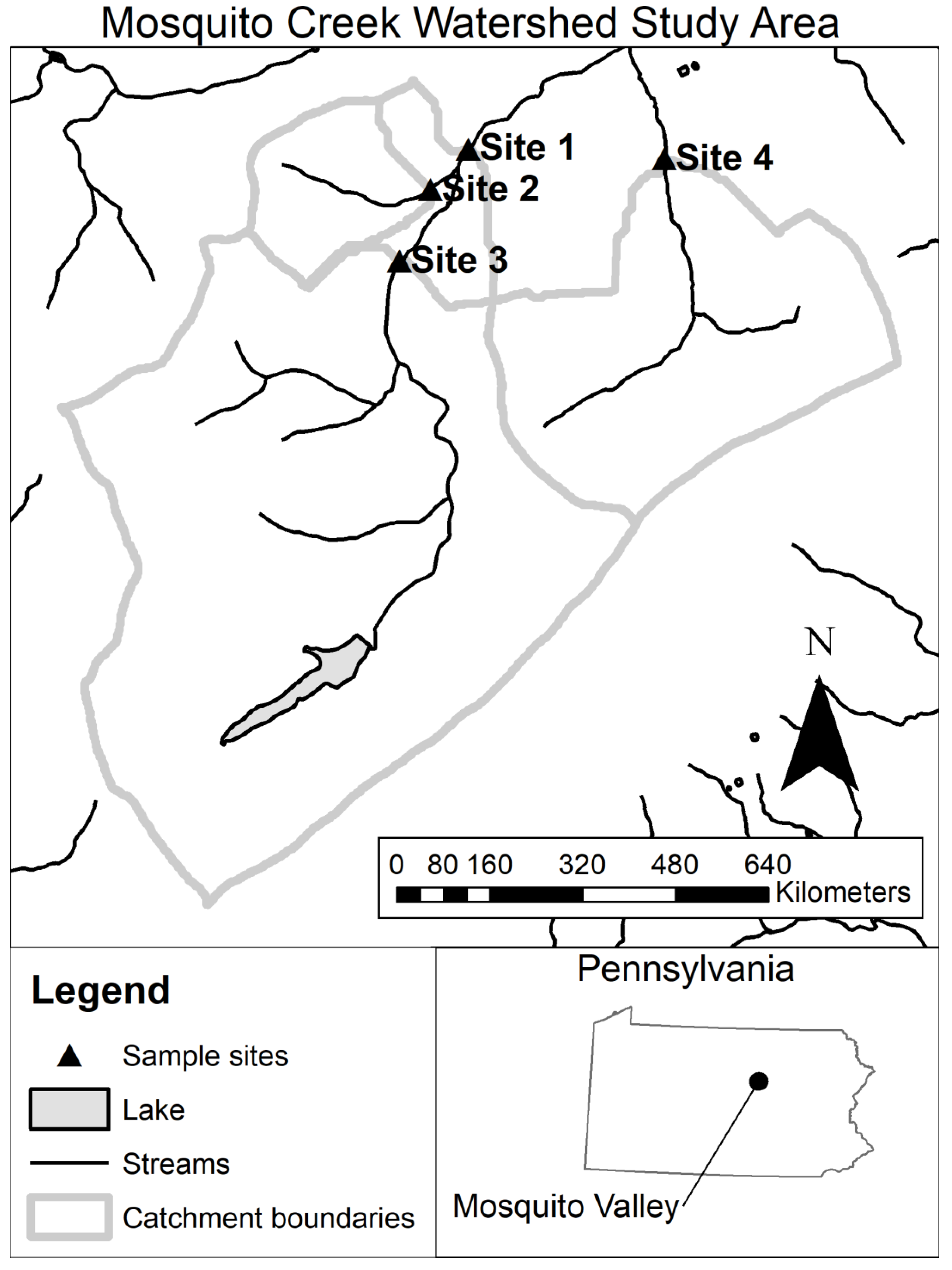
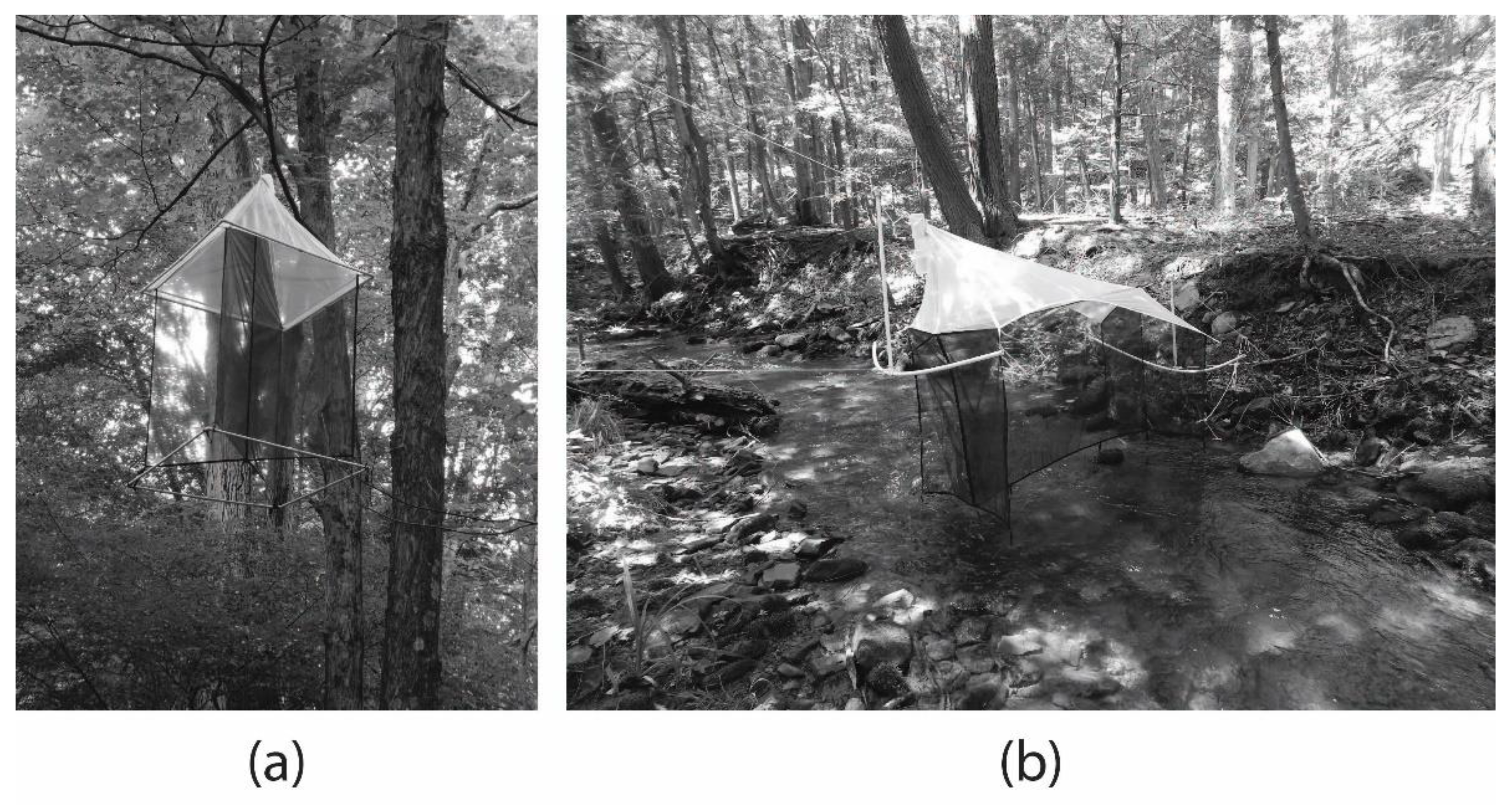
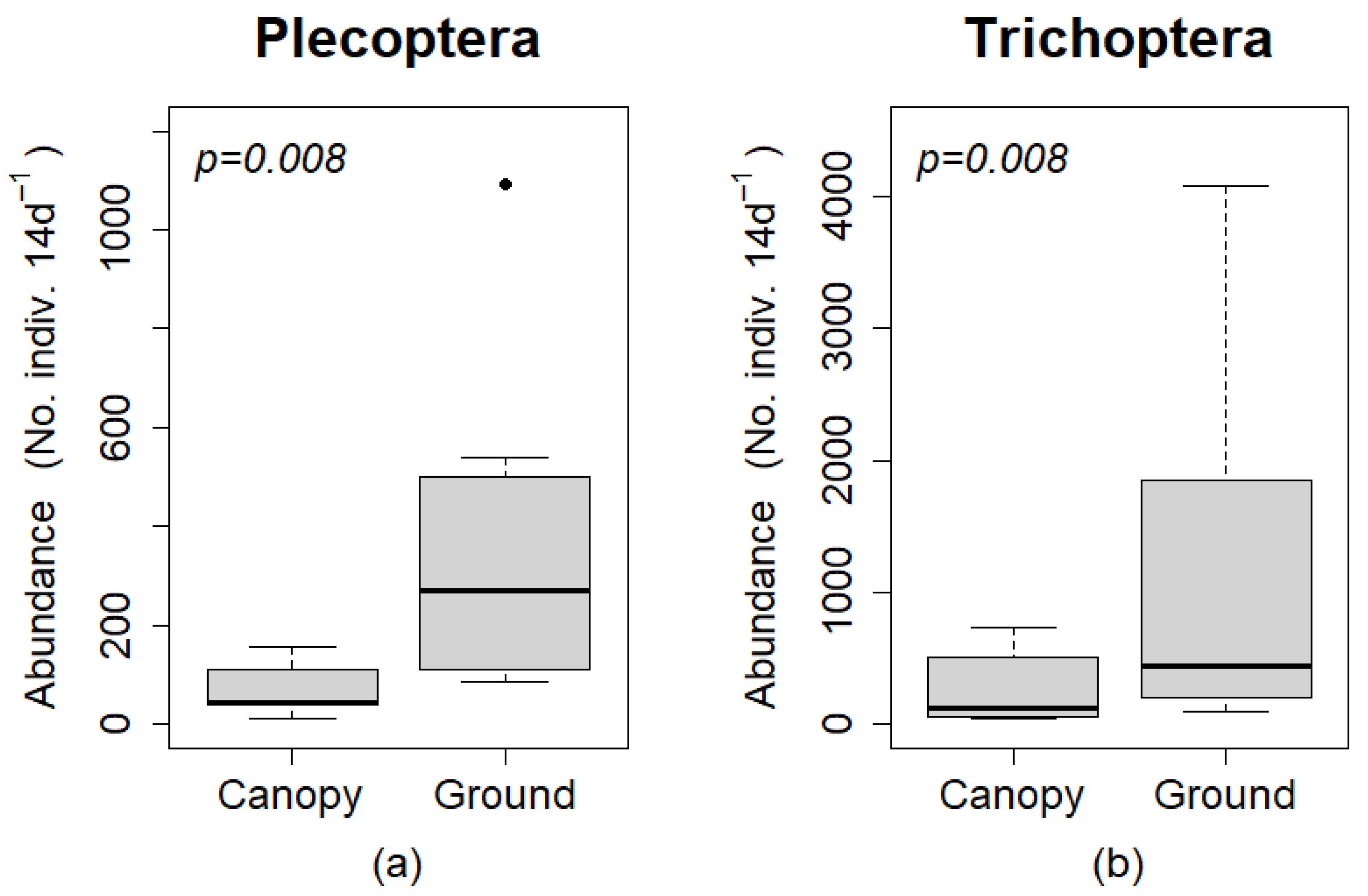
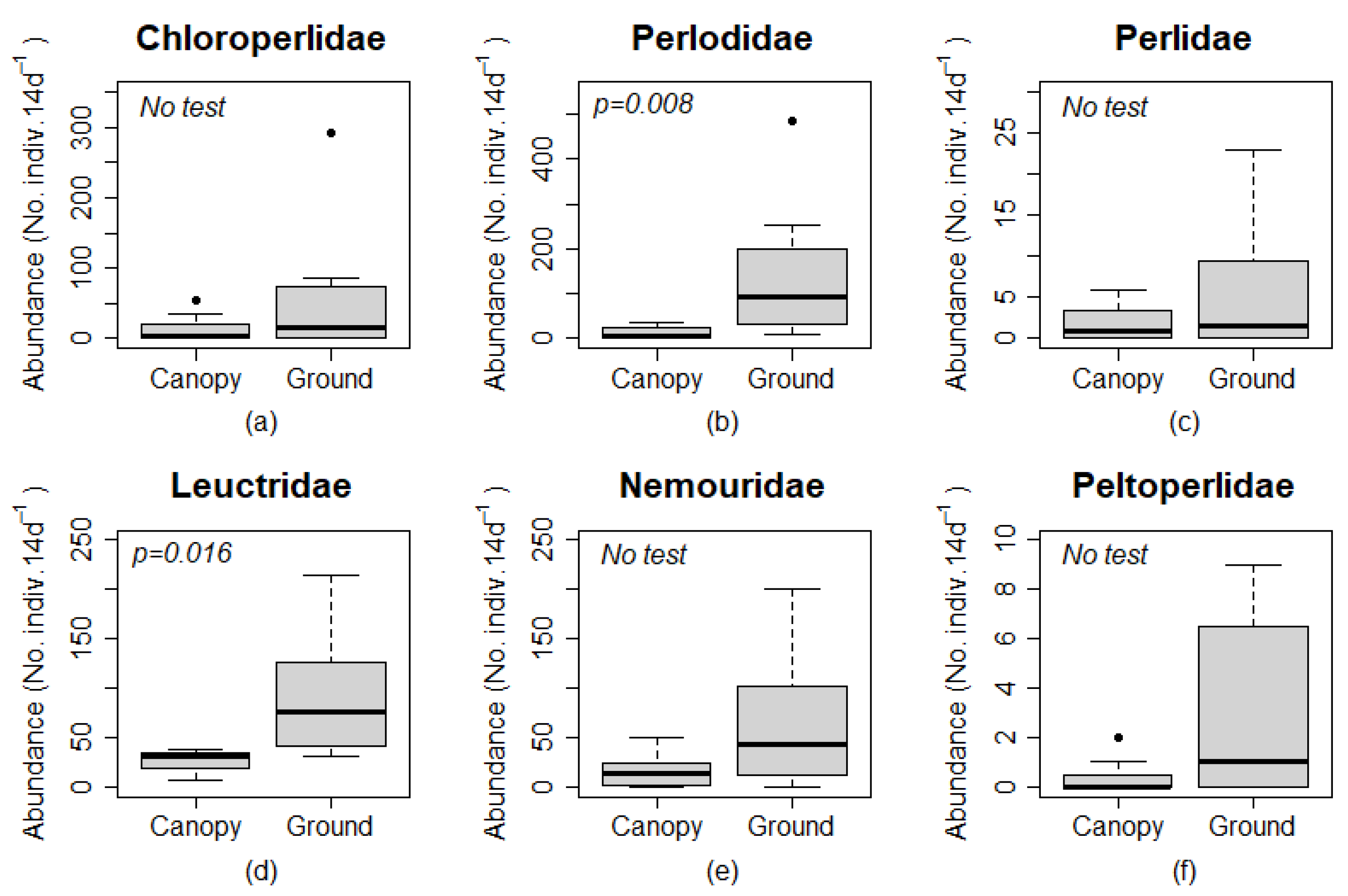
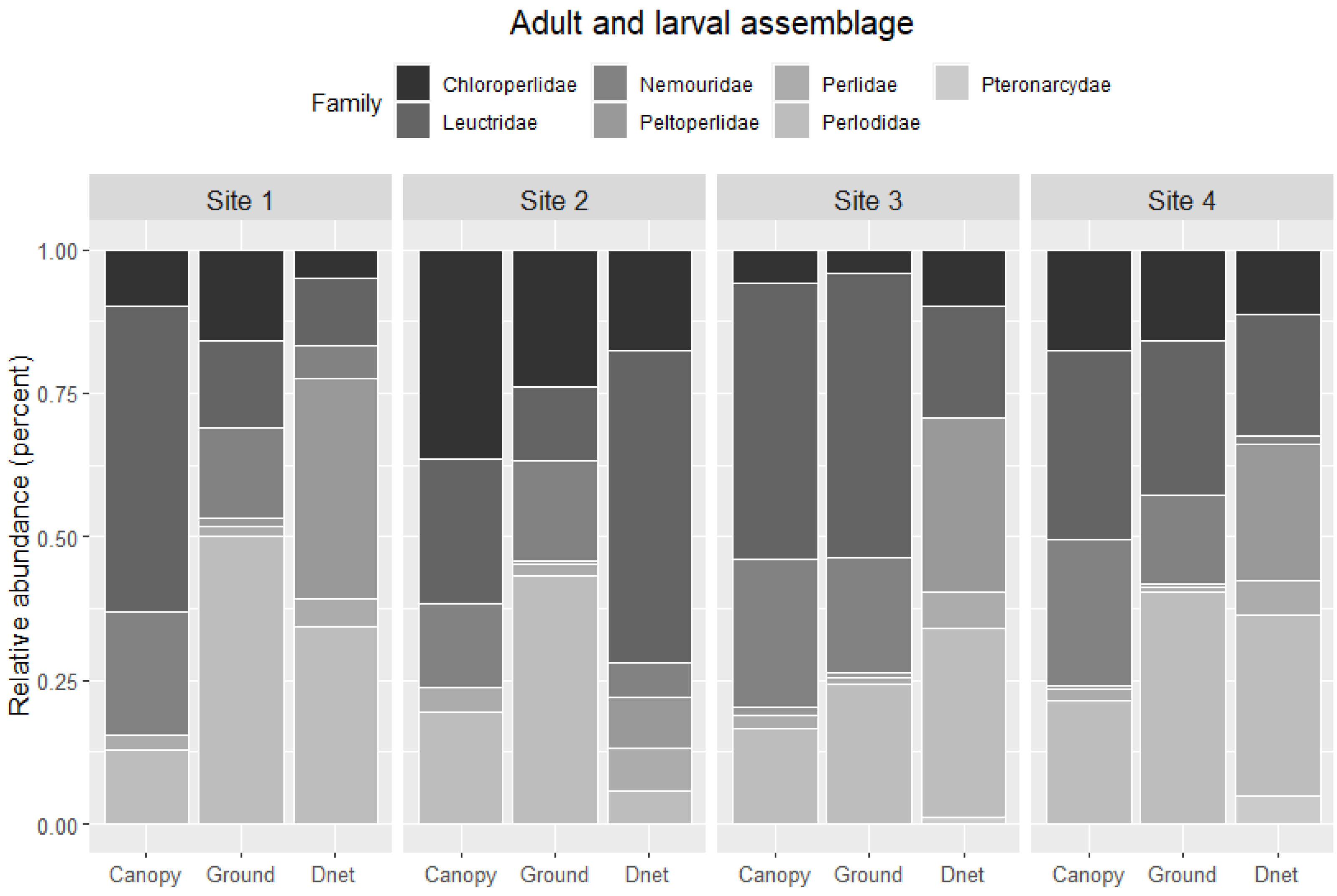
Stream insects are essential components of aquatic and terrestrial ecosystem structure and function. Terrestrial stages are important components of terrestrial food webs, and flight-capable individuals are responsible for long-distance dispersal. Horizontal migrations by flying or crawling adults away from stream channels that link insects to riparian food webs and movements across catchment boundaries are well established through empirical research, but studies examining vertical migration of adult stream insects into forest canopies are generally lacking. This study focused on differences in adult Plecoptera and Trichoptera abundance at ground level versus the riparian canopy and differences in abundances among summer and autumn sampling periods to empirically demonstrate use of canopy ecosystems by stream insects. Malaise traps at ground level and canopy traps placed 8 to 10 m above the stream at four sites in the Mosquito Creek watershed (Pennsylvania) were used to examine vertical migration. Larval assemblages were collected and compared to adult assemblage to investigate patterns of local migration in the catchment. We found significantly more stream insects at ground level than in the forest canopy for Trichoptera, Plecoptera, and all individual plecopteran families, but a meaningful number of individuals were found in the riparian canopy. Canopy abundances were similar to abundances captured in adjacent ground-level habitats in other studies. Comparisons of adult and larval abundances among sites, taxa, and stages indicated site- and taxon-specific patterns for vertical movement into riparian canopies. Demonstrating that adult stream insects utilize riparian forest canopies indicates that riparian forest conservation should be prioritized over reforestation and that several potential research questions exist to inform riparian management.