Article

Effects of Substrate Material, Surface Preparation, and Operating Conditions on the Surface Characteristics and Tribological Performance of MoS2 Dry Film Lubricants


1
NASA Jet Propulsion Laboratory, California Institute of Technology, Pasadena, CA 91109, USA
2
Department of Mechanical & Aerospace Engineering, University of California Merced, Merced, CA 95343, USA
*
Author to whom correspondence should be addressed.
Lubricants 2026, 14(9), 355; https://doi.org/10.3390/lubricants14090355
Submission received: 16 July 2026 / Revised: 8 September 2026 / Accepted: 10 September 2026 / Published: 17 September 2026

Abstract

Molybdenum disulfide (MoS2) dry film lubricants (DFLs) are widely used in aerospace mechanisms when conventional liquid lubricants are impractical. While the effects of environment on MoS2 are well established, the influence of substrate characteristics and operating conditions remains less understood. In this work, three commercial MoS2-based DFLs (Lube-Lok 4396, Everlube 620C, and Everlube 9002) were applied to five aerospace-relevant substrate materials and characterized in terms of surface roughness, flatness, coating thickness, friction, wear life, and load-carrying capacity. Vendor surface preparation and DFL deposition increased roughness, reduced flatness, and shifted the surface toward a more peak-dominated morphology, with the magnitude of these changes depending on both the substrate and coating. Tribological performance was evaluated for a subset of the samples which showed that friction was substantially lower in dry nitrogen than in ambient air, increasing contact pressure reduced friction, and sliding speed had little effect. Lube-Lok 4396 exhibited the longest wear life and highest load-carrying capacity, while Everlube 620C exhibited the lowest friction. Measured friction, wear life, and load-carrying capacity also differed from vendor specifications. These results highlight the effects of substrate material, surface preparation, and operating conditions on the surface characteristics and tribological performance of commercial MoS2 DFLs for aerospace applications.

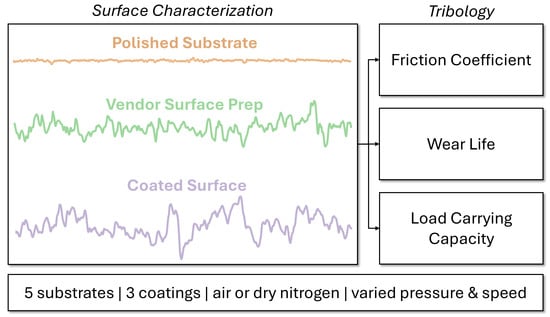
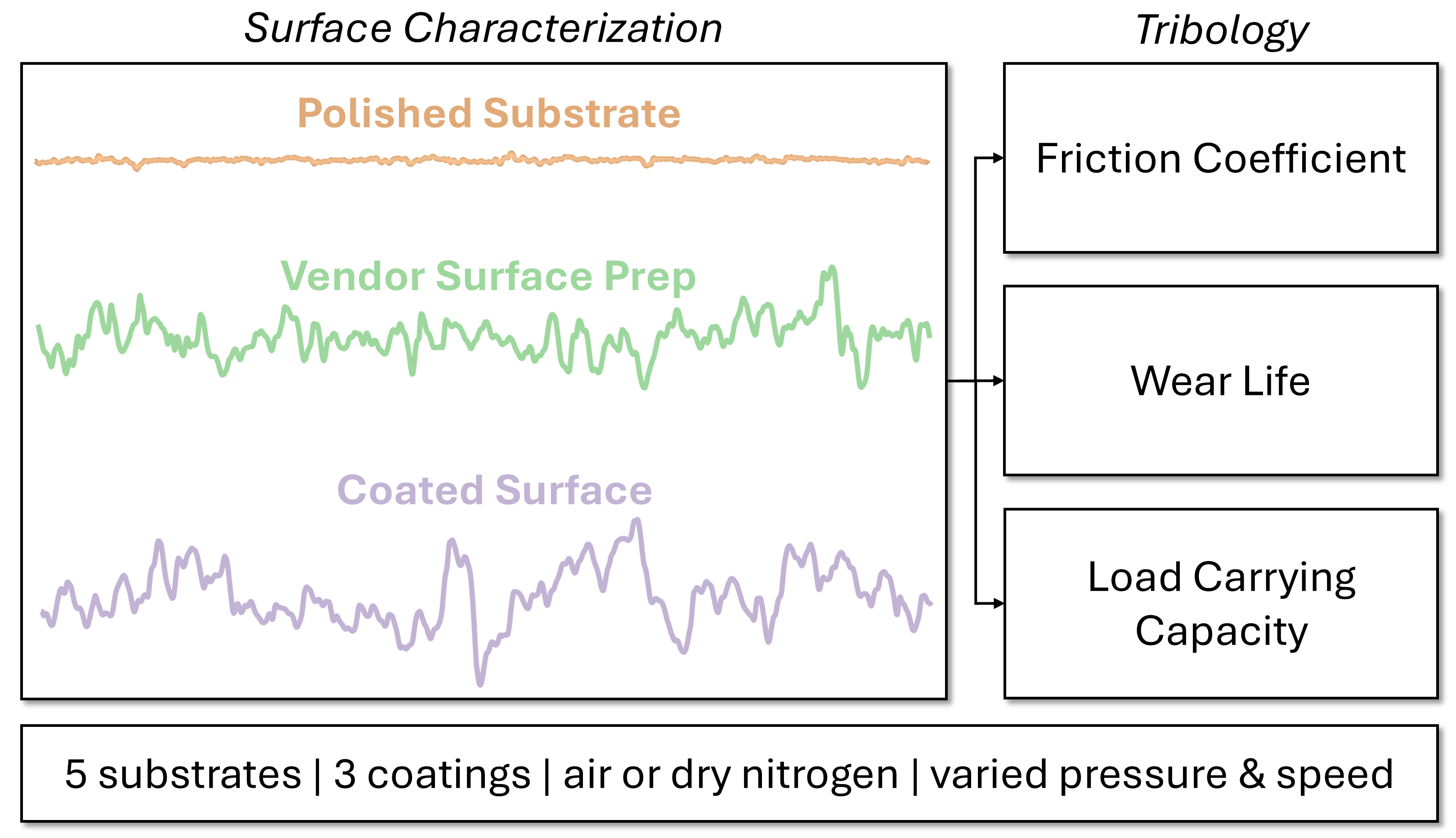
Graphical Abstract

1. Introduction

Dry film lubricants (DFLs) based on molybdenum disulfide (MoS2) provide low friction and wear in environments where liquid lubrication is impractical [1,2,3]. Despite this excellent performance and broad use, especially for space applications, the design of mechanisms with MoS2 lubrication remains challenging since the performance of the coatings is sensitive to many different interrelated parameters, including the environment, substrate material and roughness, and operating conditions.
MoS2 DFLs exhibit higher friction and wear, as well as a shorter wear life, in air compared to vacuum or dry-nitrogen environments. The adverse effect of air has been attributed to exposure to water and oxygen that impacts the inter-lamellar interactions and ordering of MoS2 lamellae under shear [4]. Water tends to cluster at defects, such as edge sites or vacancies on the basal plane, which impedes relative motion between MoS2 lamella [5]. The combination of shear with environmental water can cause the formation of a less lubricous oxide or oxy-sulfide layer [6]. Oxidation resistance is better for highly ordered MoS2 films [7] and ordering is affected by the deposition of the film [8] and the run-in process [6]. Oxidation resistance is also affected by coating composition, especially the type and concentration of dopants [9].
MoS2 DFLs can be affected by the temperature of operation [10]. In inert environments, cold temperatures cause friction to increase and wear life to decrease. Studies have proposed that cold temperatures adversely affect the lubricity of MoS2 DFLs by disrupting the formation of stable MoS2 lamella [11], causing thermal stress in the DFL [12], or slowing beneficial thermally activated process [13]. Above room temperature, friction and wear remain low until very high temperatures at which loss of lubrication has been observed [14]. In air, the performance of MoS2 DFLs exhibits a non-monotonic trend with increasing temperature. Particularly of note, DFL performance is determined by water and water adsorption at lower temperatures, while performance is determined by oxygen and oxidation at higher temperatures [15].
The tribological behavior of a DFL is also affected by the substrate material because the substrate plays a role in coating adhesion and provides mechanical support that governs contact deformation and stress distribution during sliding. A few studies have compared different substrate materials. One reported that the friction coefficient of an impinged MoS2 on a Ti-6Al-4V titanium alloy was lower and more stable than the coating on 440C steel in both air and dry-nitrogen testing [16]. Another study comparing bonded MoS2 on 2017 aluminum alloy, 304 stainless steel, and 440C stainless steel reported that there was no significant difference between the substrates in terms of friction, but the wear life of the DFL on 304 stainless was much longer than on the other two substrate materials [17]. A study comparing MoS2 sputter deposited on 52100 steel, silicon nitride, and a titanium alloy found that wear life was much shorter for the titanium alloy than the other two substrates [18].
The roughness of the substrate can also affect DFL tribological performance. One study reported that friction and the wear rate of a sputtered MoS2/titanium composite on 400C steel in boundary lubrication generally increased with increasing surface roughness. However, when average roughness was below 0.05 μm, the dependence of life on roughness was relatively small [19]. In another study, MoS2 DFLs were sputter-deposited on 52100 bearing steel with roughness between 0.04 and 0.4 μm, where increasing roughness had no effect on friction but shortened the wear life of the coatings [20]. A different trend was reported in a study using electrophoretic deposition of MoS2 on 304 stainless, which showed that wear life was longer and friction lower for rougher substrates [21]. Longer wear life on rougher substrates was also reported for MoS2 on titanium alloy substrates, although this trend was not consistently observed on 52100 steel or silicon nitride [18]. Finally, increasing substrate roughness was reported to extend wear life in both moist air and dry argon, a trend that was attributed to rougher surfaces providing reservoirs for MoS2; the friction coefficient was lower for rougher substrates in air but was unaffected by roughness in dry agon [22].
The effect of surface roughness is related to coating thickness because effective thickness is relative to the heights of substrate asperities peaks. In the study of MoS2/titanium composite DFLs in boundary lubrication, results showed that friction decreased with increasing coating thickness, an effect that was more significant for smoother substrate surfaces [19]. Wear was relatively unaffected by thickness for smooth surfaces but, for rougher surfaces, wear decreased with increasing film thickness [19]. For a given roughness, increasing coating thickness from 10 to 16 µm was reported to increase fretting wear life for bonded MoS2 DFLs [23]. The optimal thickness for bonded DFLs may depend on load since, at low loads, wear life has been reported to increase with increasing thickness, while wear life decreased with thickness at higher loads [24]. As a general guideline, it has been suggested that DFL thickness should be more than twice the average roughness of the coating [24]. However, despite the benefit of thicker coatings in some cases, it is desirable for DFLs to be thin for many components where dimensioning and tolerancing are important. Finally, it is important to note that the roughness of the substrate does not necessarily determine the roughness of coated surfaces. A recent study comparing three commercial, bonded MoS2 coatings applied to substrates with the same roughness reported that the coated surface roughness of the Everlube 811 was up to four times higher than that of the Esnalube 382 or Everlube 620C [25].
Once a coating is applied, its performance as a DFL may depend on the operating conditions, particularly contact pressure and sliding speed. Several studies measured the friction coefficient as a function of contact pressure at a constant sliding speed. These studies consistently reported that friction decreased with increasing pressure for both sputtered and bonded coatings [4,9,26,27,28]. This trend has been explained in terms of the effect of contact stress on recrystallization [9] and the fact that the films obey Hertzian contact mechanics such that contact area increases with normal force [4,26,27]. One study evaluated the effect of sliding speed at constant pressure on friction and wear rate of a sputtered MoS2-WS2 composite film tested in various atmospheric conditions [29]. It was reported that, in vacuum, there was a slight improvement in performance with increasing speed. However, in atomic oxygen irradiation, friction increased with time at fast speeds (indicative of coating failure) but the trend was not observed at a slow sliding speed. This behavior was attributed to the relative rates of oxidization and oxide removal [29].
A few studies have varied both speed and pressure simultaneously. One study evaluated commercial, bonded MoS2 films in both air and vacuum. It was reported that the effects of pressure and speed were negligible in vacuum, but in air, the wear life was shorter at higher pressures [30]. Another study of commercial impinged coatings conducted at two different pressure and speed conditions indicated that the friction coefficient was slightly higher at lower pressure and faster speed conditions. There was also more variability from test to test at these conditions, which was proposed to be due to non-flatness of the disk samples [16]. Finally, the wear life of sputter-deposited DFLs was measured at varying pressure and speed conditions designed to mimic the conditions in a gear box and the results showed that wear life decreased with the combination of increasing pressure and decreasing speed [31].
The existing literature demonstrates that substrate characteristics and operating conditions can substantially affect MoS2 DFL performance, but several important gaps remain. First, studies of surface roughness have primarily characterized the substrate before DFL application, with relatively little attention given to the surface state of the applied coating. Second, comparisons of different substrate materials have produced inconsistent trends in friction and wear life, making it difficult to determine if there is a relationship between substrate characteristics and DFL performance. Third, much of this work has been performed using sputtered or otherwise specially prepared MoS2 coatings rather than commercial bonded DFLs representative of those used in aerospace applications. Finally, measured tribological performance has rarely been compared directly with vendor specifications, limiting the understanding of how well these specifications represent performance under independently controlled test conditions.
These gaps were addressed through a comprehensive evaluation of three DFLs commonly used in aerospace: Lube-Lok 4396, Everlube 620C, and Everlube 9002. The coatings were applied by the vendor on five different substrate materials. For each substrate, the surface roughness and flatness were characterized after initial sample preparation, after DFL vendor surface preparation, and then after coating application. DFL thickness was also characterized and analyzed. The tribological performance of the coating-substrate combinations was compared in terms of the friction coefficient measured in air and inert gas environments. Additional measurements were performed for the three DFLs on the 440C substrate. The effects of contact pressure (in air and inert environments) and sliding speed (in air) on the friction coefficient were characterized. Finally, the wear life and load-carrying capacity were measured in air to enable comparison of the DFLs to each other and to vendor specifications.

2. Materials and Methods

Five different substrate materials were used: two martensitic and precipitation-hardened stainless steels (Custom 465 and 15-5 PH), a high-carbon martensitic stainless bearing alloy (440C), an austenitic anti-galling stainless steel (Nitronic 60), and the alpha–beta titanium alloy Ti-6Al-4V. These alloys are widely used in aerospace systems for components because they provide combinations of high strength, wear resistance, and corrosion resistance required for demanding operating environments. Here, these materials were used to create sample disks of 2.5″ diameter and 0.25″ thickness.
Disk specimens were prepared in two steps. First, sample surfaces were ground and polished with SiC abrasive papers on a Struers ApS lapping machine (Ballerup, Denmark) using water as a lubricating medium. This produced a multi-directional surface lay with an average surface roughness in the range of 0.10–0.20 μm and average surface flatness < 12 μm. Second, the surfaces were prepared for DFL application by the vendors using their standard surface preparation processes.
Three different commercial MoS2-based DFLs were deposited on all five substrates leading to 15 distinct substrate material-coating combinations. Lube-Lok 4396 contains both MoS2 and graphite with a phenolic binder. Everlube 620C is a common MIL-spec DFL containing MoS2 and phenolic binder. Everlube 9002 contains MoS2 with an epoxy binder. These coatings and their deposition methods are proprietary; so, additional information is not available. However, all three are widely used in aerospace and other high-reliability mechanical systems to provide low friction and wear protection in applications where conventional liquid lubricants are impractical.
Surface roughness characterizations were performed using a Mitutoyo AVANT Formtracer (Kawasaki, Japan) following the parameters outlined in ISO 21920-3:2021. Four radial traces were made at 90° intervals on each disk beginning at the center and radiating outward to the edge of the disk. Multiple evaluation lengths were collected and averaged over the length of each radial trace. This same characterization was performed on the sanded, vendor prepared, and DFL-coated disks.
Flatness characterizations were performed using a Mitutoyo Roundtest RA-2200 (Kawasaki, Japan) following the parameters outlined in ISO 12781-1:2011 [32]. Eight circumferential traces were obtained on the disk surface beginning at 0.3 inches and continuing to 1.0 inches in 0.1-inch steps. A least-squares fit calculation was used for the characterization.
DFL thickness was measured using two complementary methods. The first estimated thickness from wear tracks on tests that had reached, but not penetrated, the substrate. Wear-track depth was determined by comparing the average DFL surface height to the bottom of the wear track using four radial Formtracer measurements taken at 90° intervals. Three disks of each DFL type were characterized, and the four measurements from each disk were averaged before combining the results across all three disks. The second method measured DFL thickness directly by locally removing the coating with aluminum oxide sanding media. Formtracer depth measurements were then collected at multiple locations on three disks and averaged. The reported DFL thickness values represent the combined results from both methods, capturing coating thickness variation across individual disk surfaces, as well as disk-to-disk variability.
The tribological performance of the three DFLs was characterized as summarized in the test matrix in Table 1. Polished (Grade 25) off-the-shelf 440C stainless steel balls of 0.25-inch diameter and HRC 60 hardness were used as the counter-body. Unidirectional sliding tests were run using a ball-on-disk setup on Rtec Instruments Multi-Function Tribometer (San Jose, CA, USA) as described by ASTM G-99 [33] to measure the coefficient of friction (CoF). Friction tests were run at sliding speeds of 100 mm/s and 1000 mm/s and contact pressures of 300 MPa and 800 MPa. The environment of the tests was either ambient or purged with dry gaseous nitrogen (GN2). End-of-life tests were performed in ambient conditions at 1000 mm/s and 800 MPa used to determine wear life in terms of sliding distance to failure. These tests involved sliding on the coated disks until CoF increased above 0.25, became characteristically noisy, and did not drop back to lower values. For all tests, the steady-state CoF was averaged over the data collected between run-in (determined by visual analysis of the data using the same criterion by one evaluator for all tests) and coating failure, if failure occurred. In the ambient-air tests, the humidity ranged from 46 to 65 RH%. All tests were performed at room temperature.
ASTM D2625-94 [34] Procedure B was followed to measure the load-carrying capacity of the DFLs. This involved a unidirectional sliding 440C ball with linearly increasing load in ambient-air conditions to determine the contact pressure at which the DFL failed after less than one minute after sliding began. First, contact pressure was increased from 800 MPa to 3000 MPa (in steps of 100 MPa) using a 0.25-inch diameter 440C ball and one minute of sliding at each load. If no failure was observed in this pressure range, a smaller 0.125-inch diameter ball was used to test at an elevated contact pressure range of 3000 to 5500 MPa.

3. Results

3.1. Surface Characterization

The average roughness of the samples was measured after griding and polishing internally, then after surface preparation at the DFL vendor, and again after the DFL was deposited. Representative radial traces from the surface profilometry are shown in Figure 1. The evolution of the surface roughness due to vendor preparation and then DFL application is visually evident. There are also qualitative differences between the surfaces of the three coatings. The roughness data was analyzed statistically to quantify these effects.
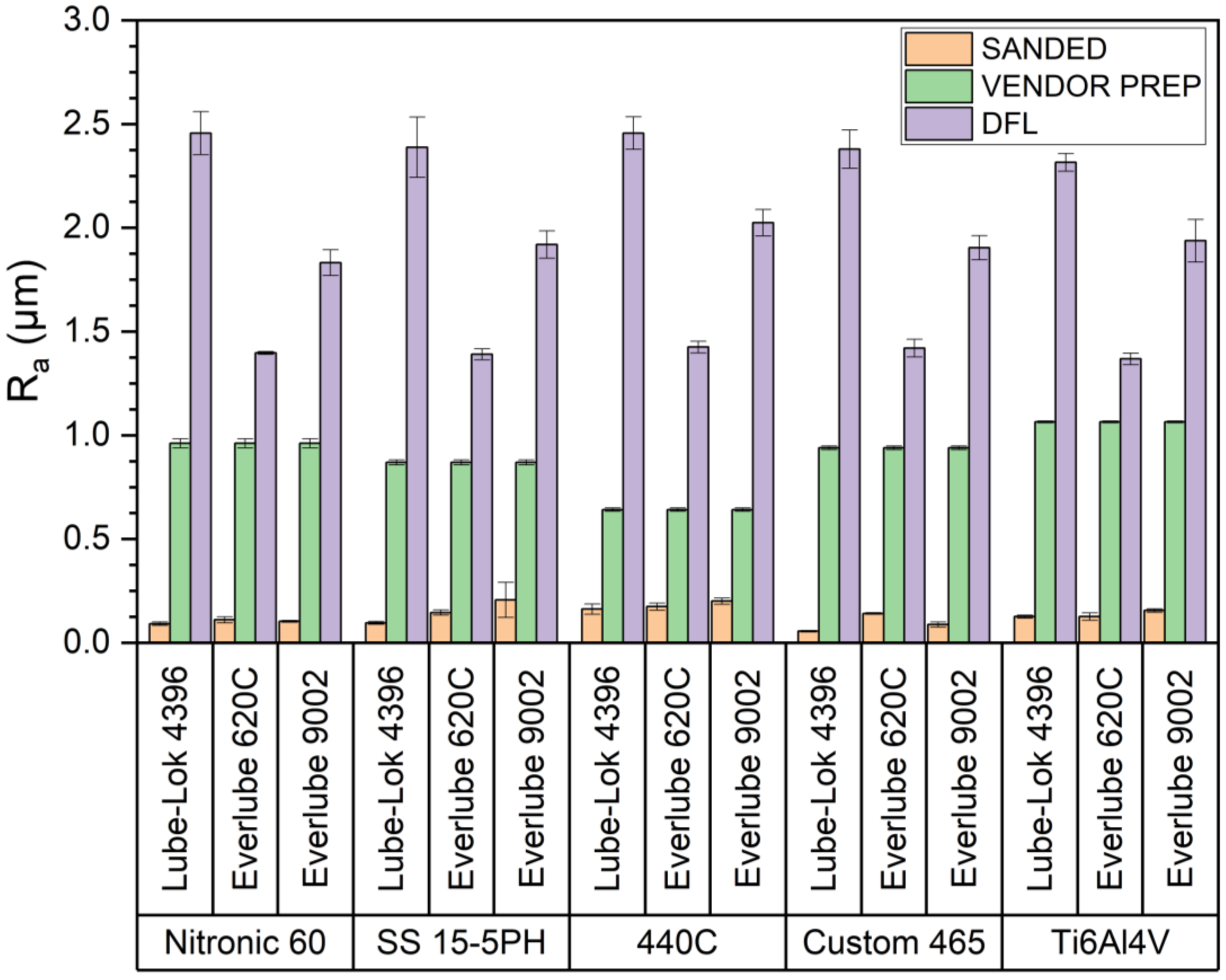
The average roughness values, calculated from multiple radial traces per sample, are shown in Figure 2. In all cases, the average roughness of the sanded samples sent to the vendor was between 0.06 and 0.21 µm. Within this range, the roughness scaled with the hardness of the substrate material, with the highest roughness being on 440C and the lowest on Custom 465.
Vendor surface preparation, which included grit blasting, increased average roughness significantly (by a factor of about seven) such that the surfaces had average roughness between 0.64 and 1.07 µm. After vendor preparation, harder materials had lower average roughness, a trend opposite to that measured after initial polishing. During polishing, higher hardness can limit plastic smoothing and preserve abrasive scratches or microstructural relief, increasing roughness, while, during grit blasting, higher hardness limits impact-induced plastic deformation and crater formation, reducing roughness. Skewness and kurtosis of the surfaces were also characterized and, on average, vendor surface preparation caused skewness to decrease in magnitude from −0.88 to −0.13 and caused kurtosis to decrease from 6.01 to 3.55. This indicates that vendor preparation modified the surface to have a more symmetric and uniformly distributed roughness profile.
After application of the DFLs, the average roughness of the DFL-coated surfaces was between 1.37 and 2.46 µm, an order of magnitude rougher than the originally prepared surfaces. DFL application had an even more dramatic effect on the roughness profiles, which had an average skewness and kurtosis of 0.53 and 3.61, respectively. The increase in surface skewness (from −0.13 to 3.55 after vendor preparation), while the kurtosis remained unchanged, indicates that the coating introduced a broader population of elevated surface features or thickness variations rather than isolated asperities, shifting the surface toward a more peak-dominated topography after DFL application.
Post-application roughness was relatively insensitive to the substrate but varied between the three DFLs. Across all substrates, Lube-Lok 4396 had the highest roughness, followed by Everlube 9002 and Everlube 620C. The higher roughness of the Lube-Lok 4396 may be attributable to the fact that it contains both MoS2 and graphite, i.e., two particulate phases, resulting in a more pronounced particulate surface texture. Lube-Lock 4396 also had the largest skewness and kurtosis of the three DFLs. The roughness difference between the two Everlube samples may be due to the binder, although the current research does not suggest a specific mechanism to explain why the epoxy bonder used in the Everlube 9002 results in rougher surfaces. Regardless, the key observation from Figure 2 is that the roughness of the samples after DFL application is an order of magnitude higher than that of the initially prepared surfaces.
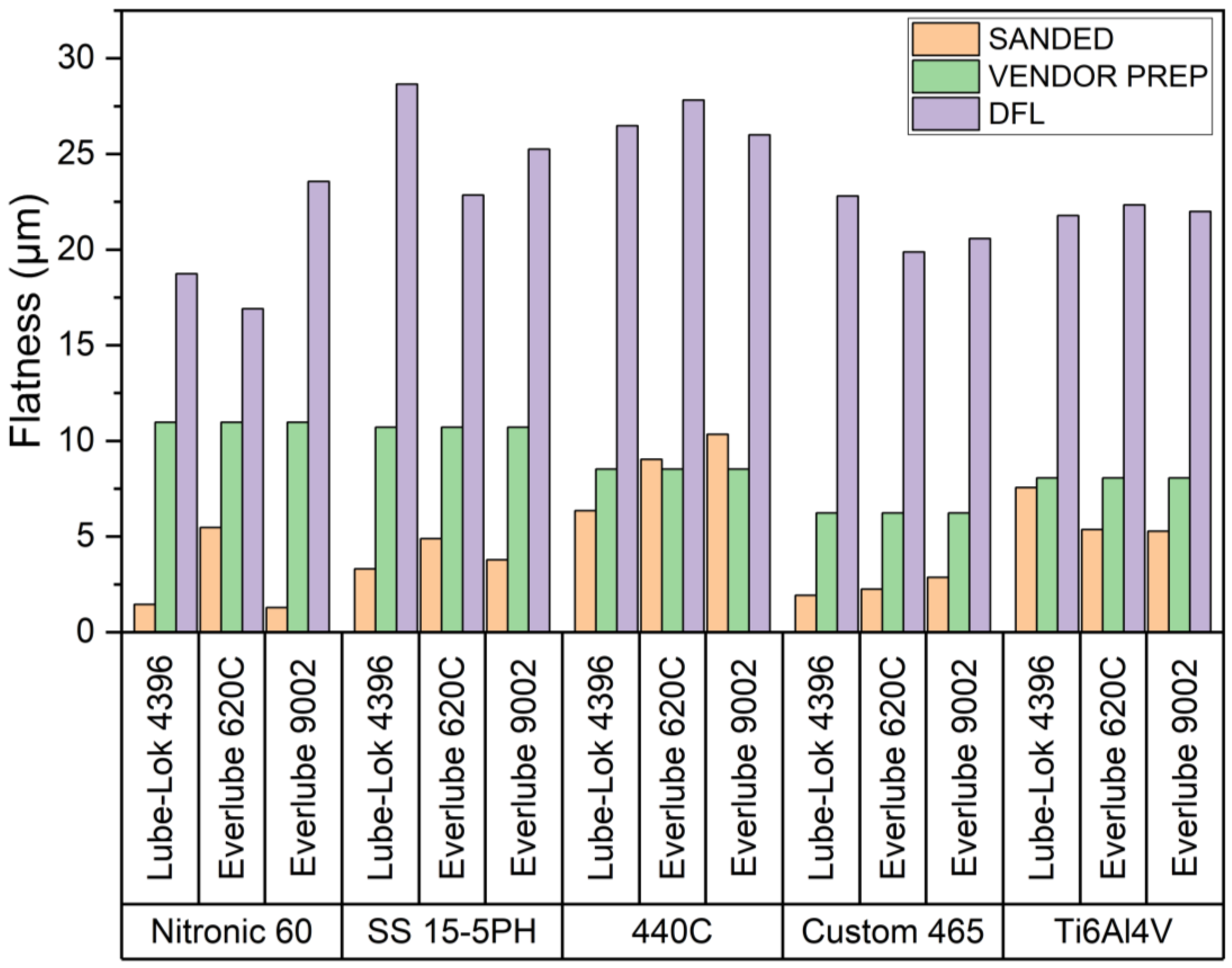
The flatness of the samples after griding and polishing, after vendor surface preparation, and after DFL application is reported in Figure 3. The flatness of the samples before being sent to the vendor was consistently low, between 1.28 and 10.3 µm. Like roughness, flatness was higher (surfaces were less flat) after polishing for harder surfaces, with the highest value exhibited by 440C and the lowest by Custom 465. Flatness increased, i.e., surfaces became less flat, with vendor preparation for most samples, especially those that initially had very low flatness. After vendor preparation, the flatness of the samples was between 6.23 and 11.0 µm.
The application of the DFL increased flatness further (by a factor of five on average relative to the original polished samples) such that the flatness of the DFL-coated surfaces was between 16.9 and 28.7 µm. There was minimal difference between the three DFLs in terms of flatness. However, for a given DFL, the highest flatness was measured for 440C or SS 15-5PH substrates and the lowest for Custom 465 or Nitronic 60, indicating that substrate affects the flatness of a DFL-coated sample.
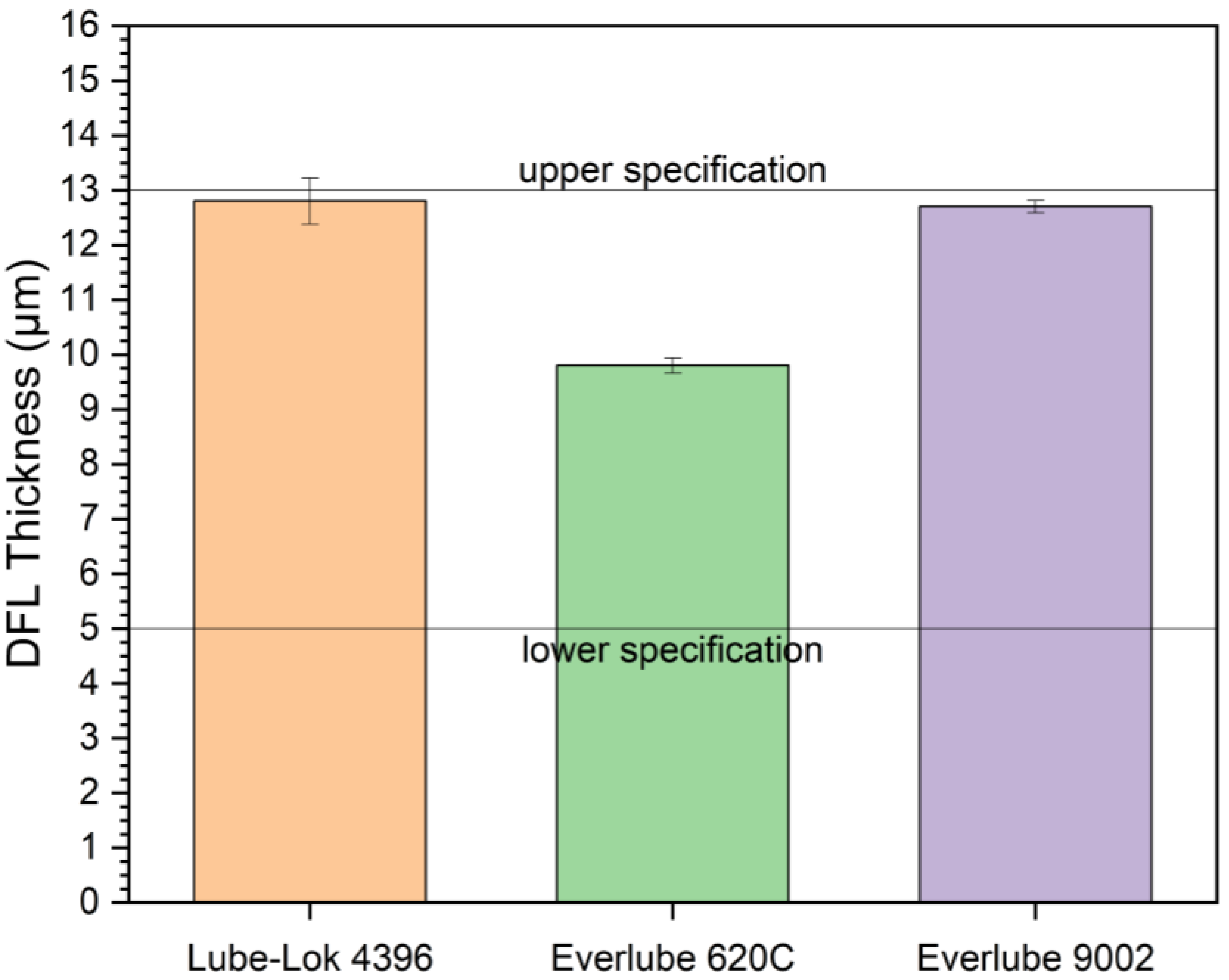
The thickness of the coatings is shown in Figure 4. All samples were within the vendor-specified thickness range. Lube-Lok 4396 and Everlube 9002 had comparable thickness, with average values just below the upper vendor specification. Everlube 620C was on average 3 µm thinner than the other two coatings. Everlube 620C also had the lowest surface roughness (Figure 1) such that all three DFLs were between five and seven times thicker than their average roughness, consistent with guidance that thickness should be more than twice the roughness of the coating [24].

3.2. Tribological Evaluation

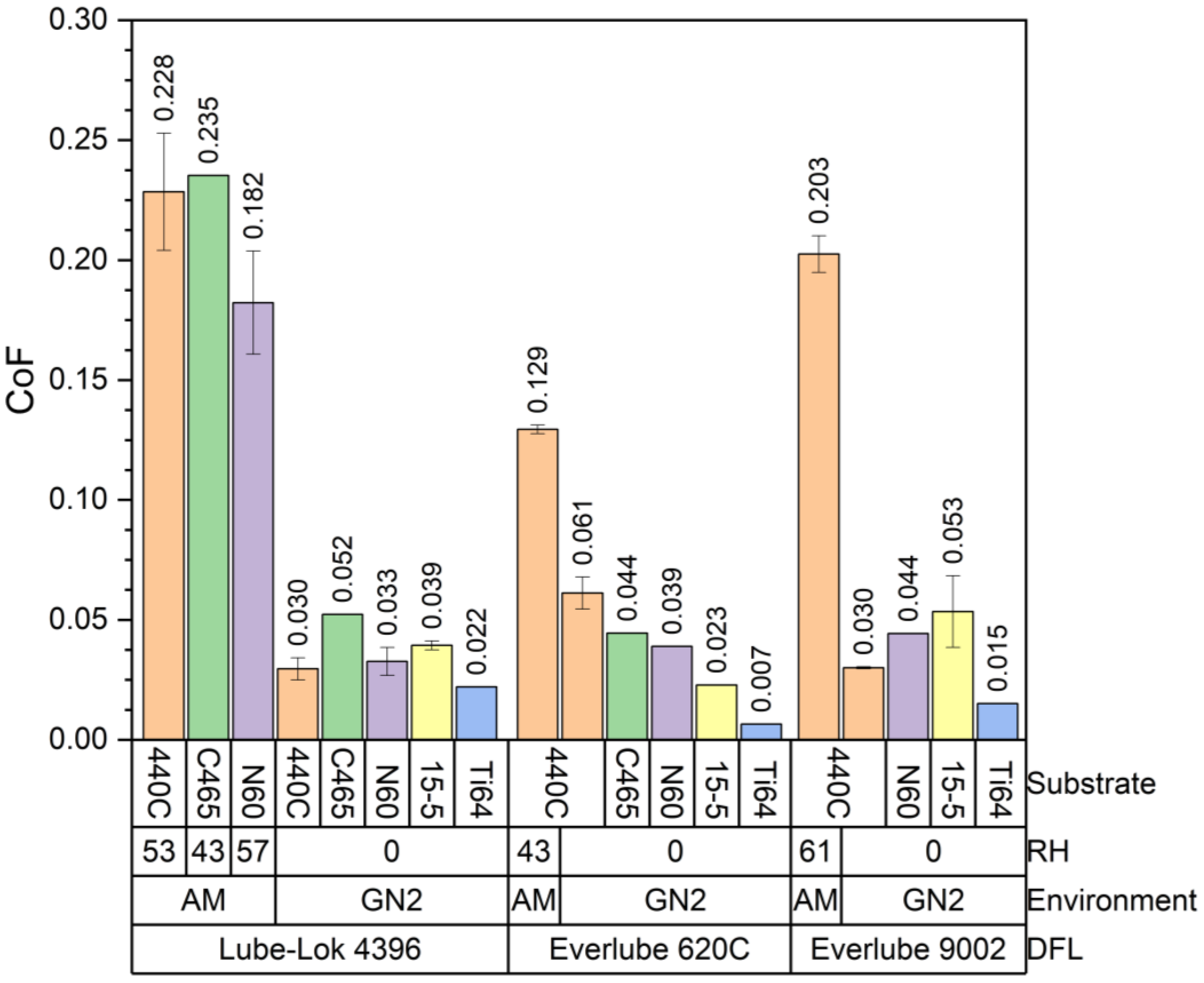
Figure 5 reports the friction coefficient of the three DFLs deposited on various substrates. In ambient conditions, the substrate effect was compared for Lube-Lok 4396 only and those results showed lower CoF for Nitronic 60 than the other two substrates. The three DFLs were compared in ambient conditions for the 440C substrate only and it was found that the CoF was lowest for the Everlube 620C and highest for Lube Lok 4396. However, the relative humidity was not the same for these tests; so, the differences may be attributed to humidity as opposed to coating performance.
In GN2, the CoF was consistently lower than in ambient conditions, with values below 0.07 for all cases. For any DFL, the lowest CoF was observed for the Ti-6Al-4V substrate. This observation is consistent with a previous study that compared a Ti-6Al-4V titanium alloy to 440C [16]. Other trends with respect to substrate differed across the three DFLs. Comparing the three DFLs, CoF was lowest for Everlube 620C on all substrates except for 440C. On that substrate, both Everlube 9002 and Lube-Lok 4396 exhibited lower friction. The lowest CoF overall was measured for Everlube 620C on Ti-6Al-4V in GN2.
The friction results were analyzed in the context of the surface roughness parameters reported in the previous section. However, the effects of surface roughness were less significant than the effects of coating composition and environment. Analyses performed per DFL and environment revealed only one statistically significant trend for the Everlube 620C coating in GN2, where CoF decreased with increasing skewness (R2 of the linear fit > 0.77). Higher skewness is associated with peak-dominated surfaces. It is hypothesized that peaks of MoS2 on the surface are preferentially sheared during sliding, promoting the generation, redistribution, and reorientation of MoS2 into lubricious tribofilms.
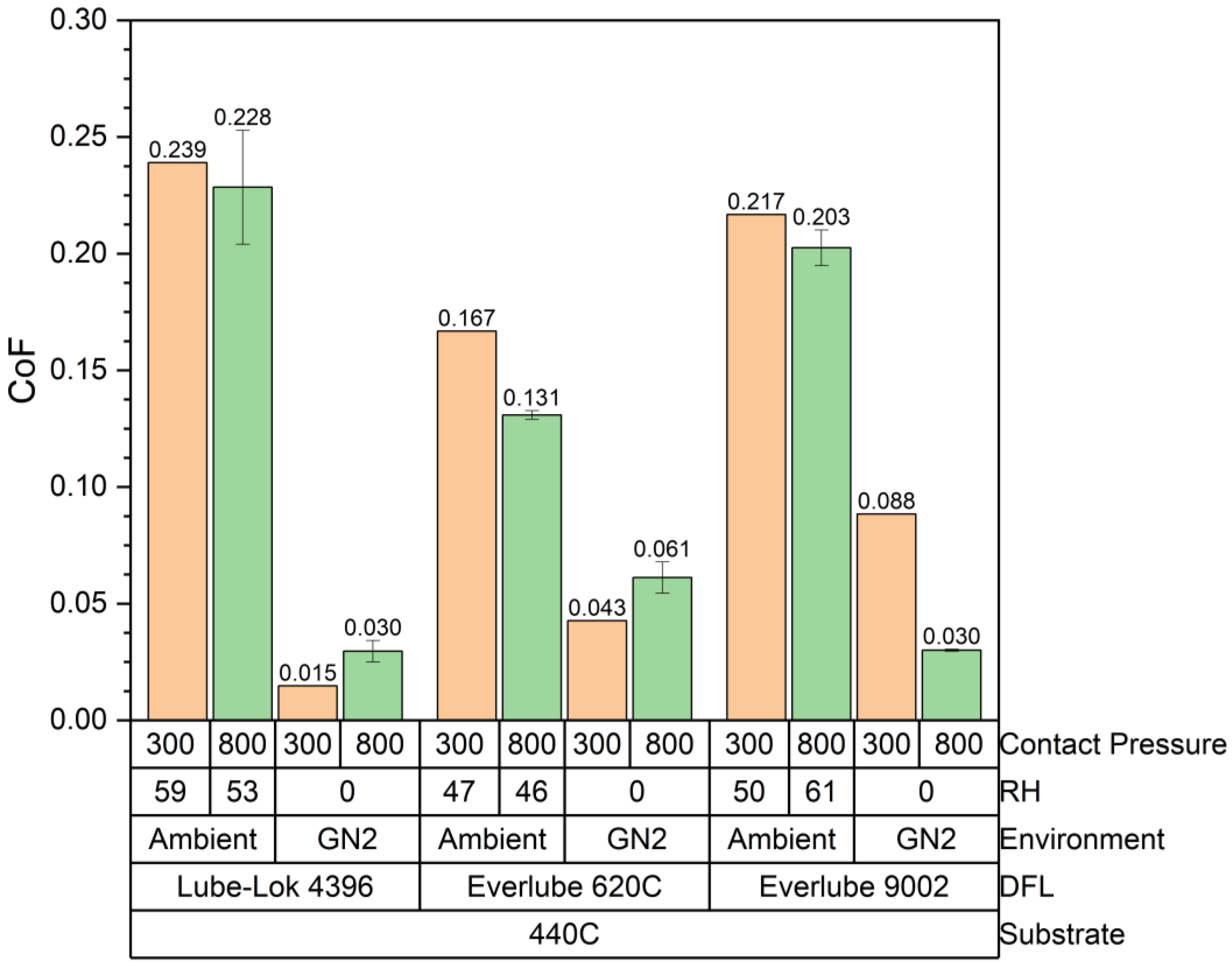
The effect of contact pressure on friction was evaluated for the 440C substrate only. This evaluation was performed in both ambient air and GN2. The results are shown in Figure 6 (note that only one test was performed per coating at 300 MPa). In air, the CoF was lower at the higher pressure for all three coatings, although this difference is not statistically significant for Lube-Lok 4396, and the relative humidities were not the same for the tests at the different pressures. The trend of lower friction at higher pressures was observed previously and attributed to the effect of contact stress on recrystallization [9] and the increase in contact area with normal force [4,26,27]. In GN2, the opposite trend was observed for Lube-Lok 4396 and Everlube 620C, where friction was higher at higher pressure, although this cannot be confirmed due to the lack of repeat tests at 300 MPa. The most significant effect of pressure was observed for Everlube 9002 in GN2, where the friction was almost three times lower at 800 MPa than 300 MPa.
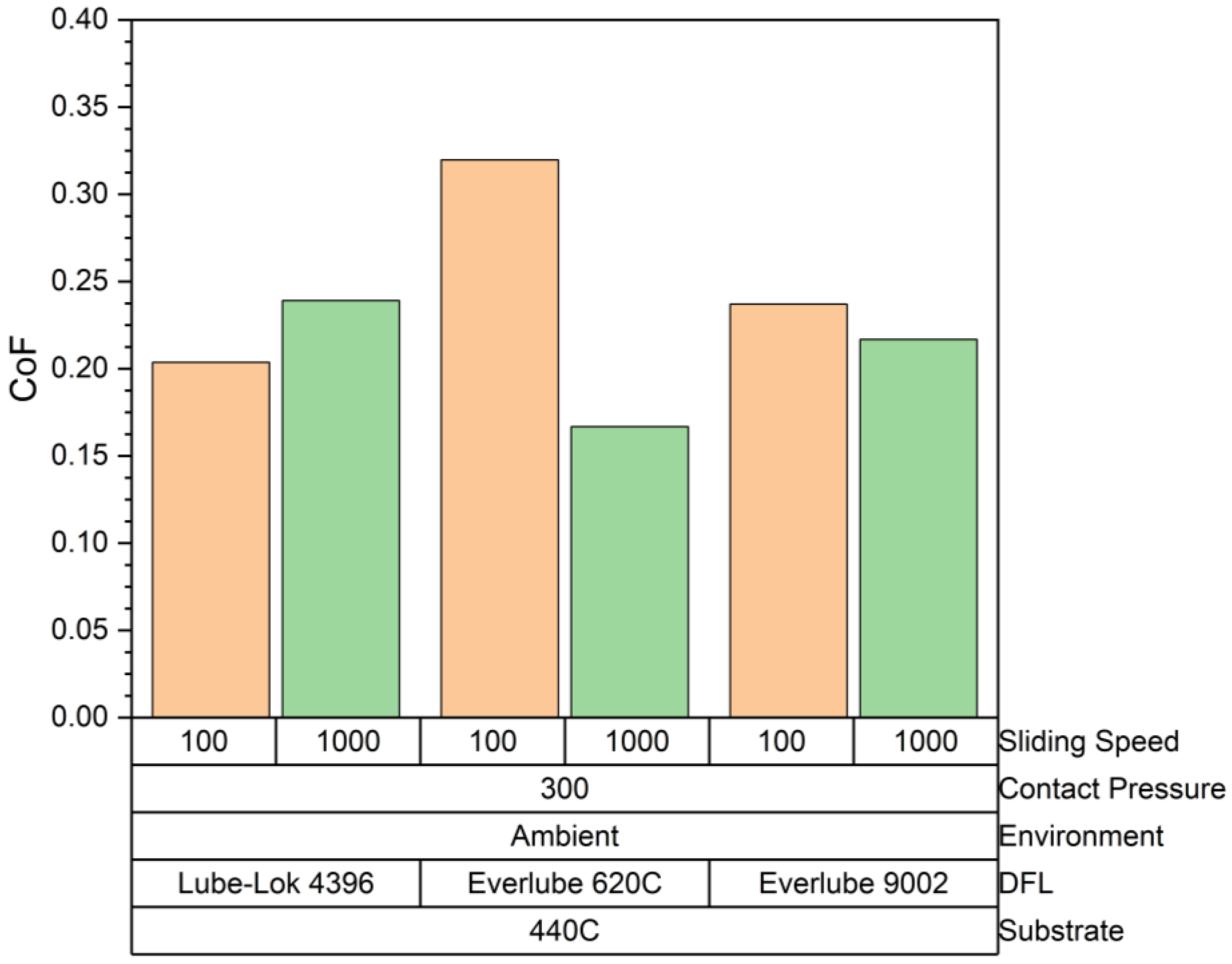
The effect of sliding speed on friction was evaluated in ambient conditions. The results shown in Figure 7 are based on just one test per speed, but the preliminary trends suggest that friction coefficients are similar at the two speeds for Lube-Lok 4396 and Everlube 9002. This is consistent with previous work in which changing the speed had little effect on CoF [30]. The only significant effect of speed was observed for Everlube 620C, where the faster speed test resulted in a lower CoF, consistent with a previous study showing that the friction coefficient and wear rate of MoS2 DFLs were lower at faster speeds both before and after atomic oxygen irradiation [29].
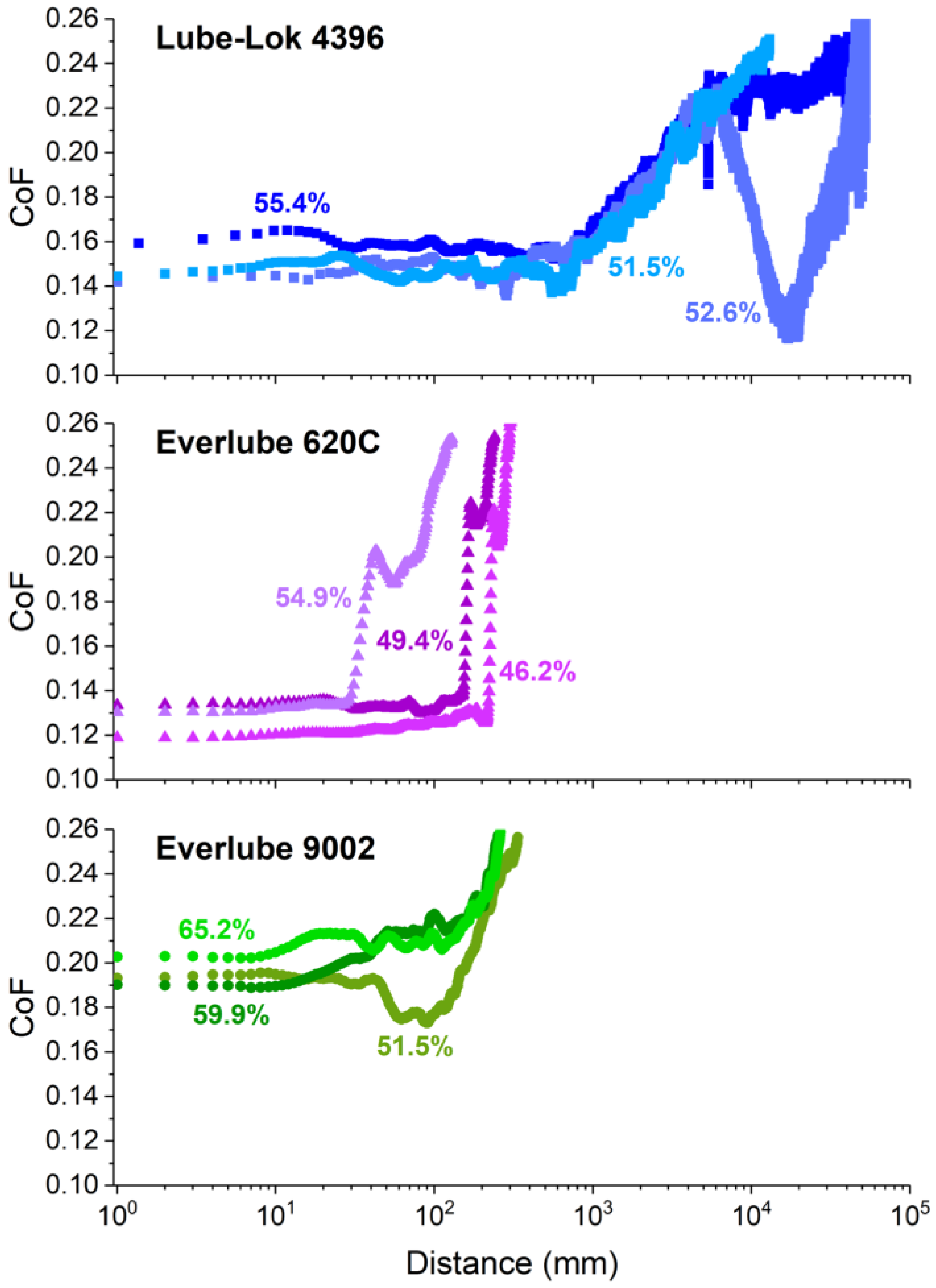
Lastly, the three DFLs were compared directly to each other by evaluating their friction and wear life on 440C at one operating condition. Tests performed in GN2 did not reach coating failure before the test was stopped, even after two days; so, wear life could not be compared in that condition. Therefore, comparisons were made between the coatings in ambient conditions (humidity was not constant between the tests and ranged from 46 to 65%). Friction coefficient traces from these tests are shown in Figure 8. The qualitative friction behavior differed dramatically between the three coatings. Prior to failure, the friction coefficient was lowest for Everlube 620 C and highest for Everlube 9002. The transition from steady state to coating failure also differed. For Everlube 620C, the friction coefficient increased suddenly at the point of failure and never returned to a lower value after that initial increase. The increase in friction coefficient was more gradual for Everlube 9002 but occurred at around the same sliding distance. The sensitivity of friction to humidity also differed between the coatings, with Everlube 620C exhibiting a clear trend of wear life decreasing with increasing humidity.
Lube-Lok 4396 lasts much longer than the other two coatings (note the log scale in Figure 8). Its transition to failure was also much more gradual and one of the three tests exhibited a decrease in friction coefficient after the initial increase, suggesting temporary coating recovery. In this study, wear life was defined as the sliding distance at which the friction coefficient increased and stayed above 0.25. For Lube-Lok 4396, the friction coefficient began increasing from its steady-state value well before reaching this threshold. In a practical DFL application, the appropriate end-of-life criterion would depend on the steady-state friction coefficient and the associated performance loss that the mechanism can tolerate. However, a fixed threshold of 0.25 was used here to enable consistent comparison of the wear life of all three coatings.
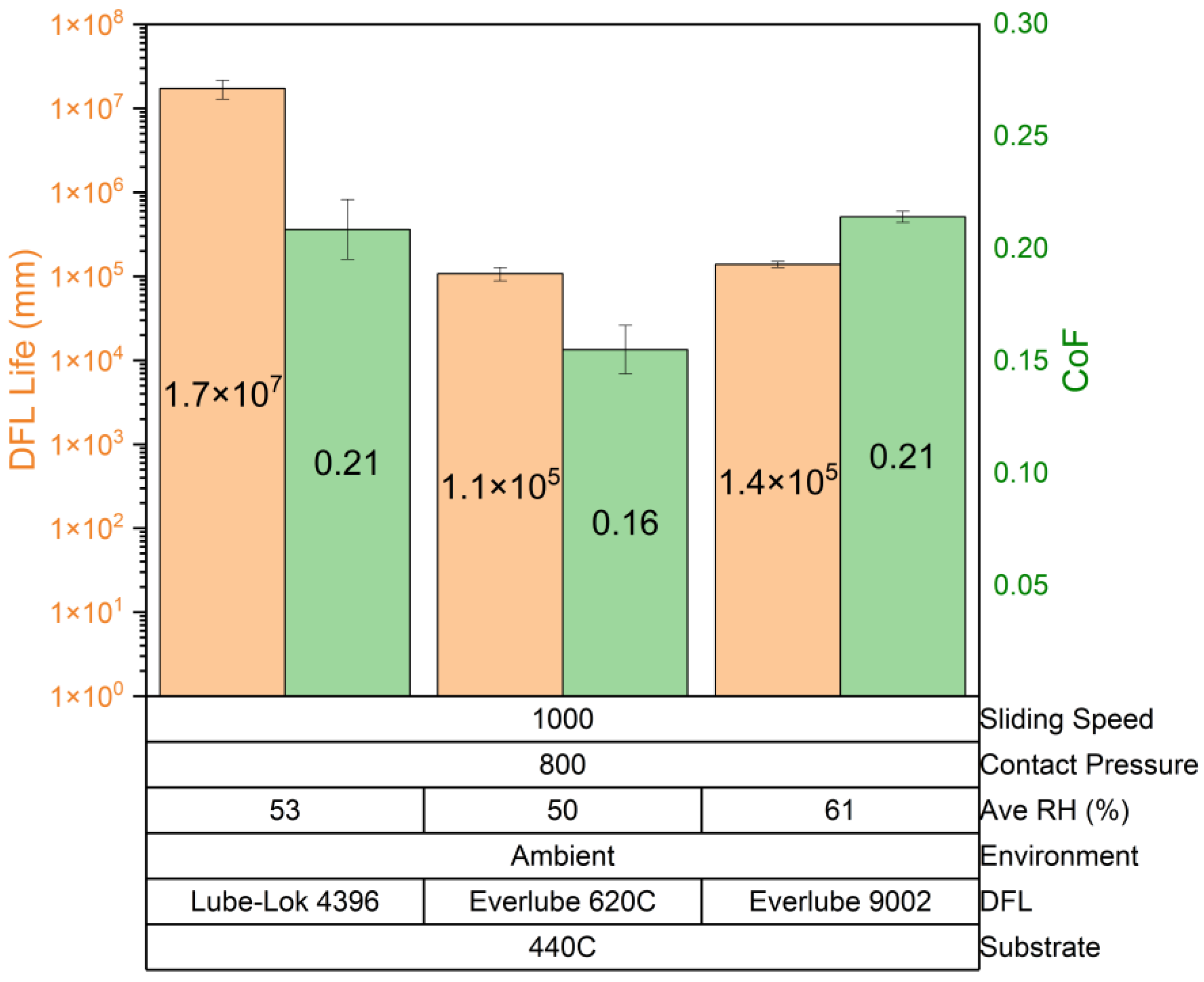
The average friction coefficient and wear life are shown in Figure 9. The lowest friction was exhibited by the Everlube 620C, while the longest wear life was exhibited by the Lube-Lok 4396. This friction–wear tradeoff has been observed previously for commercial MoS2-based DFLs [25]. Further, the wear life trend is consistent with a previous study that compared Everlube 620C and Lube-Lok 4396, which reported that the latter exhibited lower wear and attributed the trend to better MoS2 crystallite alignment during sliding [26]. The long wear life of Lube-Lok 4396 may also be attributed to the fact that it contains graphite, which has been reported to be expressed at sliding interfaces in the presence of water in the air [35]. The wear life of the two Everlube coatings was comparable, although Everlube 620C exhibited lower friction, possibly due to its phenolic binder, which has been reported to have good surface adhesion and be harder than epoxies [24]. To gain further insight, the wear tracks on the disk and counterbody after testing were analyzed.
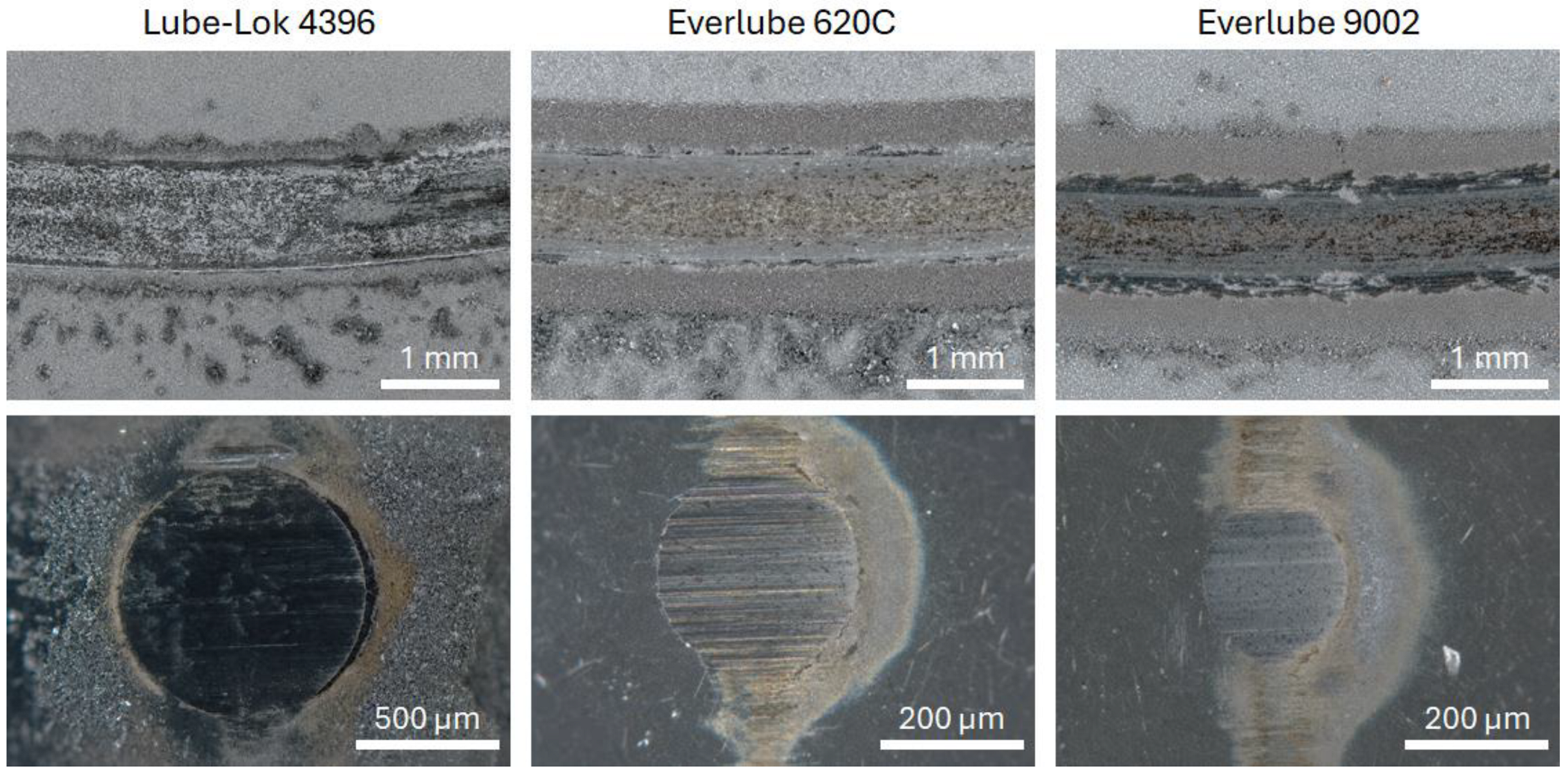
Optical microscope images of representative wear scars after the life tests are shown in Figure 10. Since these images were taken after coating failure, the DFL is mostly gone from the middle of the wear track, leaving the substrate with some residual coating material. For all three DFLs, the disk wear tracks exhibit rough edges and discoloration, consistent with the concept of MoS2 lubrication via lubricious debris supplied from the edges of the wear track [31]. The wear scars on the balls differ more between the three DFLs, especially between Lube-Lok 4396 and the two Everlube coatings. Particularly, the ball from the Lube-Lok 4396 life test exhibited more transferred material around the wear scar, indicating a more robust transfer film was formed during the test. The formation of an effective transfer film is known to play a key role in MoS2 lubrication [22,36]. Material transfer could have been facilitated by the rougher (Figure 2) and more peak-dominated Lube-Lok 4396 surfaces. This hypothesis is analogous to that proposed in previous work to explain why MoS2 had extended wear life on rougher substrates [22]. In our case, all substrates had the same roughness, but the taller peaks of the rougher Lube-Lok 4396-coated surface were readily moved during the run-in process such that lubricious debris was available to be transferred to the counterbody. Roughness has been reported to have a smaller (or negligible) effect on friction compared to wear life [20,22]. Therefore, the higher friction of Lube-Lok 4396 is likely attributable to its composition as opposed to topography or thickness.
The vendor of these DFLs provides tribological performance specifications according to ASTM D2714 [37]. Per these specifications, the CoF of Lube-Lok 4396 should be 0.02 to 0.04, while the CoF of Everlube 620C and Everlube 9002 should be 0.04 to 0.06. The steady-state friction coefficients in the present study, measured following ASTM G-99 [33], were consistently higher. Although the two tests were conducted at the same contact pressure and sliding speed, their contact geometries and loading configurations differed. Prior work showed that MoS2 DFL friction coefficients were higher in point than line contact [25], which may explain the discrepancy observed here. In terms of wear life, Everlube specifications state that the life measured per ASTM 2625 [34] Method A should be >250 min for Everlube 620C and >450 min for Everlube 9002. The current study did not reflect a statistically significant difference in wear life between the two coatings, although life was measured using a different tribotest.
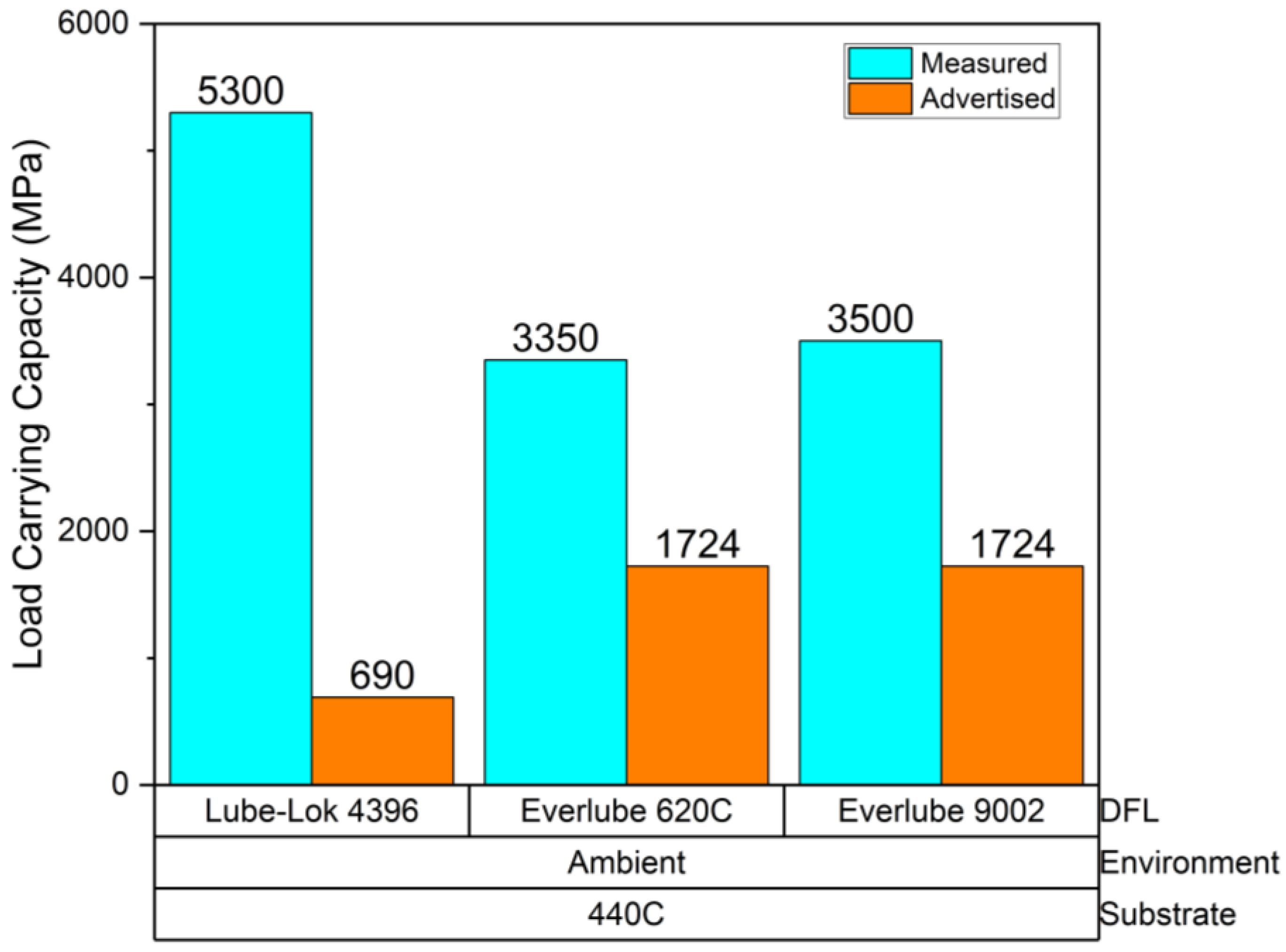
The load-carrying capacity of the DFLs was measured using ASTM 2625 Method B and compared to the vendor-reported values. Although only one test was performed per case, the preliminary results shown in Figure 11 indicate that Lube-Lok 4396 has the highest load-carrying capacity. This performance could be due to its thickness and the high roughness and skewness, which, as discussed previously, may facilitate the generation, redistribution, and reorientation of MoS2 into lubricious tribofilms. Comparison of these results to the vendor specifications based on the same ASTM standard shows that all three DFLs exceed the vendor-reported load-carrying capacity. The trends also differ, with Lube-Lok 4396 having the highest load-carrying capacity in Figure 11, whereas it was predicted to have the lowest capacity per vendor specifications. These comparisons emphasize the importance of application-specific testing.

4. Conclusions

This work evaluated the effects of substrate material, surface preparation, and operating conditions on the surface characteristics and tribological performance of three commercial MoS2-based dry film lubricants commonly used in aerospace applications. The surface preparation performed by the vendor substantially increased surface roughness and reduced the magnitude of skewness and kurtosis, producing surfaces with more symmetric roughness distributions. DFL application further increased roughness and deviations from flatness, resulting in coated surfaces that were considerably different from the originally polished substrates. While the roughness and flatness of the vendor-prepared substrates depended on substrate material, the final coated-surface characteristics were more influenced by the DFL than by the substrate.
Tribological testing showed that, as expected, all coatings exhibited substantially lower friction in dry nitrogen than in ambient air. Substrate effects on friction were present but depended on both coating and environment, indicating that no single substrate consistently produced superior performance for the tested substrate–coating combinations. Increasing contact pressure from 300 to 800 MPa generally reduced friction in ambient air, while the effect in GN2 was coating-dependent, with the most pronounced response observed for Everlube 9002, for which the CoF was nearly three times lower at higher pressure. The effect of sliding speed was inconsistent between the coatings based on preliminary measurements reported here, but definitive trends could not be established.
Comparing the three coatings, Everlube 620C exhibited the lowest friction in ambient conditions, whereas Lube-Lok 4396 provided the longest wear life and highest load-carrying capacity within the tested conditions. Comparisons between the DFLs were analyzed here in the context of surface roughness and coating thickness, but it is important to note that differences may reflect the combined effects of these measured parameters, as well as formulation, binder, vendor preparation, and deposition process, which are unknown due to the proprietary nature of the coatings. Comparison with vendor specifications showed that measured friction coefficients were consistently higher and wear life was lower than vendor specifications, although load-carrying capacities exceeded vendor-reported values. This finding underscores the need for application-specific qualification testing and suggests that vendor specifications should be used as general guidance rather than direct predictors of performance in a particular system.
These results demonstrate that the final surface state of a DFL-coated component is not determined solely by the initial substrate finish but is influenced by the substrate material, surface preparation, and DFL application processes. Since surface roughness was affected by substrate material and coating composition, this work did not reveal quantitative correlations between coated-surface state and tribological performance. However, it encourages future studies specifically on this topic where roughness is intentionally varied without changing other parameters. Subsequent studies may also explore a wider range of pressure and speed conditions to fully characterize the effects of these important operating conditions on DFL performance. Together, these findings will provide a basis for understanding how material selection, surface preparation, and operating conditions can be considered in the characterization and application of MoS2 DFLs.

Author Contributions

Conceptualization, D.A.J.; methodology, D.A.J.; formal analysis, D.A.J., A.V. and A.M.; investigation, D.A.J. and A.V.; writing—original draft preparation, A.M.; writing—review and editing, A.M., D.A.J. and A.V. All authors have read and agreed to the published version of the manuscript.

Funding

This research was partially conducted at the Jet Propulsion Laboratory, California Institute of Technology, under NASA sponsorship (80NM0018D0004). Reference herein to any specific commercial product, process, or service by trade name, trademark, manufacturer, or otherwise does not constitute or imply its endorsement by the United States Government or the Jet Propulsion Laboratory, California Institute of Technology.

Data Availability Statement

The raw data supporting the conclusions of this article will be made available by the authors on request.

Conflicts of Interest

The authors declare no conflicts of interest.

Abbreviations

The following abbreviations are used in this manuscript:
MoS2Molybdenum disulfide
DFLDry film lubricant

References

  1. Scharf, T.W.; Prasad, S.V. Solid lubricants: A review. J. Mater. Sci. 2013, 48, 511–531. [Google Scholar] [CrossRef] [Scilit]
  2. Mukhtar, S.H.; Gulzar, A.; Saleem, S.; Wani, M.F.; Sehgal, R.; Yakovenko, A.A.; Goryacheva, I.G.; Sharma, M.D. Advances in development of solid lubricating MoS2 coatings for space applications: A review of modeling and experimental approaches. Tribol. Int. 2024, 192, 109194. [Google Scholar] [CrossRef] [Scilit]
  3. Zhou, M.; Tong, R.; Zhang, T.; Liu, G. Application of MoS2 in the space environment: A review. Front. Mech. Eng. 2023, 18, 39. [Google Scholar] [CrossRef] [Scilit]
  4. Curry, J.F.; Ohta, T.; DelRio, F.W.; Mantos, P.; Jones, M.R.; Babuska, T.F.; Bobbitt, N.S.; Argibay, N.; Krick, B.A.; Dugger, M.T.; et al. Structurally Driven Environmental Degradation of Friction in MoS2 Films. Tribol. Lett. 2021, 69, 96. [Google Scholar] [CrossRef] [Scilit]
  5. Bobbitt, N.S.; Curry, J.F.; Babuska, T.F.; Chandross, M. Water adsorption on MoS2 under realistic atmosphere conditions and impacts on tribology. RSC Adv. 2024, 14, 4717–4729. [Google Scholar] [CrossRef] [Scilit] [PubMed]
  6. Babuska, T.F.; Curry, J.F.; Dugger, M.T.; Lu, P.; Xin, Y.; Klueter, S.; Kozen, A.C.; Grejtak, T.; Krick, B.A. Role of environment on the shear-induced structural evolution of MoS2 and impact on oxidation and tribological properties for space applications. ACS Appl. Mater. Interfaces 2022, 14, 13914–13924. [Google Scholar] [CrossRef] [Scilit] [PubMed]
  7. Curry, J.F.; Wilson, M.A.; Luftman, H.S.; Strandwitz, N.C.; Argibay, N.; Chandross, M.; Sidebottom, M.A.; Krick, B.A. Impact of Microstructure on MoS2 Oxidation and Friction. ACS Appl. Mater. Interfaces 2017, 33, 28019–28026. [Google Scholar] [CrossRef] [Scilit] [PubMed]
  8. Babuska, T.F.; Curry, J.F.; Dugger, M.T.; Jones, M.R.; DelRio, F.W.; Lu, P.; Xin, Y.; Grejtak, T.; Chrostowski, R.; Mangolini, F.; et al. Quality Control Metrics to Assess MoS2 Sputtered Films for Tribological Applications. Tribol. Lett. 2022, 70, 103. [Google Scholar] [CrossRef] [Scilit]
  9. Babuska, T.F.; Mings, A.; Larson, S.R.; Dugger, M.T.; Curry, J.F. Environmental Impact on Crystallization of MoS2 Composites Under Pressure and Shear. Tribol. Lett. 2026, 74, 23. [Google Scholar] [CrossRef] [Scilit]
  10. Faiyad, A.; Miliate, D.; Leventini, S.; Lince, J.R.; Martini, A. Temperature-dependent friction, wear, and life of MoS2 dry film lubricants for space mechanisms: A comprehensive review. Tribol. Lett. 2025, 73, 114. [Google Scholar] [CrossRef] [Scilit] [PubMed]
  11. Curry, J.F.; Babuska, T.F.; Brumbach, M.T.; Argibay, N. Temperature-dependent friction and wear of MoS2/Sb2O3/Au nanocomposites. Tribol. Lett. 2016, 64, 18. [Google Scholar] [CrossRef] [Scilit]
  12. Gradt, T.; Schneider, T. Tribological performance of MoS2 coatings in various environments. Lubricants 2016, 4, 32. [Google Scholar] [CrossRef] [Scilit]
  13. Zhao, X.; Phillpot, S.R.; Sawyer, W.G.; Sinnott, S.B.; Perry, S.S. Transition from thermal to athermal friction under cryogenic conditions. Phys. Rev. Lett. 2009, 102, 186102. [Google Scholar] [CrossRef] [Scilit] [PubMed]
  14. Brainard, W.A. The Thermal Stability and Friction of the Disulfides, Diselenides, and Ditellurides of Molybdenum and Tungsten in Vacuum (10−9 to 10−6 Torr); NASA: Washington, DC, USA, 1969. Available online: https://ntrs.nasa.gov/api/citations/19690013627/downloads/19690013627.pdf (accessed on 6 June 2026).
  15. Khare, H.S.; Burris, D.L. The effects of environmental water and oxygen on the temperature-dependent friction of sputtered molybdenum disulfide. Tribol. Lett. 2013, 52, 485–493. [Google Scholar] [CrossRef] [Scilit]
  16. Johnson, D.A.; Gori, M.; Vellore, A.; Clough, A.J.; Sitzman, S.D.; Lince, J.R.; Martini, A. Evaluation of a commercial MoS2 dry film lubricant for space applications. Lubricants 2024, 12, 307. [Google Scholar] [CrossRef] [Scilit]
  17. Hiraoka, N. Wear life of bonded MoS2 film lubricant. In Tribology of Machine Elements—Fundamentals and Applications; IntechOpen: London, UK, 2022. [Google Scholar] [CrossRef] [Scilit]
  18. Roberts, E.W.; Williams, B.J.; Ogilvy, J.A. The effect of substrate surface roughness on the friction wear of sputtered MoS2 films. J. Phys. D Appl. Phys. 1992, 25, A65–A70. [Google Scholar] [CrossRef] [Scilit]
  19. Siu, J.H.W.; Li, L.K.Y. An investigation of the effect of surface roughness and coating thickness on the friction and wear behaviour of a commercial MoS2–metal coating on AISI 440C steel. Wear 2000, 237, 283–287. [Google Scholar] [CrossRef] [Scilit]
  20. Cunningham, J.M.; Ford, I.J.; Ogilvy, J.A.; Roberts, E.W. Interpretation of friction and wear properties of MoS2 coated steel substrates. Wear 1994, 177, 93–101. [Google Scholar] [CrossRef] [Scilit]
  21. Wang, C.; Zhang, J.; Le, K.; Niu, Y.; Gao, X.; Che, Q.; Xu, S.; Liu, Y.; Liu, W. Effect of substrate roughness and contact scale on the tribological performance of MoS2 coatings. Lubricants 2023, 11, 191. [Google Scholar] [CrossRef] [Scilit]
  22. Fusaro, R.L. Effect of substrate surface finish on the lubrication and failure mechanisms of molybdenum disulfide films. ASLE. Trans. 1982, 25, 141–156. [Google Scholar] [CrossRef] [Scilit]
  23. Xu, J.; Zhu, M.H.; Zhou, Z.R.; Kapsa, P.; Vincent, L. An investigation on fretting wear life of bonded MoS2 solid lubricant coatings in complex conditions. Wear 2003, 255, 253–258. [Google Scholar] [CrossRef] [Scilit]
  24. Lince, J.R. Effective application of solid lubricants in spacecraft mechanisms. Lubricants 2020, 8, 74. [Google Scholar] [CrossRef] [Scilit]
  25. Leventini, S.; Martini, A. Effect of contact geometry on MoS2-based dry film lubricants. Tribol. Lett. 2026, 74, 32. [Google Scholar] [CrossRef] [Scilit]
  26. Tonge, P.; Roy, A.; Patel, P.; Beall, C.J.; Stoyanov, P. Tribological evaluation of lead-free MoS2-based solid film lubricants as environmentally friendly replacements for aerospace applications. Lubricants 2022, 10, 7. [Google Scholar] [CrossRef] [Scilit]
  27. Ye, Y.; Chen, J.; Zhou, H. An investigation of friction and wear performances of bonded molybdenum disulfide solid film lubricants in fretting conditions. Wear 2009, 266, 859–864. [Google Scholar] [CrossRef] [Scilit]
  28. Su, Y.L.; Kao, W.H. Tribological behaviour and wear mechanism of MoS2–Cr coatings sliding against various counterbodies. Tribol. Int. 2003, 36, 11–23. [Google Scholar] [CrossRef] [Scilit]
  29. Fu, Y.; Jiang, D.; Wang, D.; Gao, X.; Hu, M.; Yang, W. Tribological Performance of MoS2–WS2 Composite Film under the Atomic Oxygen Irradiation Conditions. Materials 2020, 13, 1407. [Google Scholar] [CrossRef] [Scilit] [PubMed]
  30. Hiraoka, N. Wear life mechanism of journal bearings with bonded MoS2 film lubricants in air and vacuum. Wear 2002, 249, 1014–1020. [Google Scholar] [CrossRef] [Scilit]
  31. Vellore, A.; Romero Garcia, S.; Walters, N.; Johnson, D.A.; Kennett, A.; Heverly, M.; Martini, A. Ni-Doped MoS2 Dry Film Lubricant Life. Adv. Mater. Interfaces 2020, 7, 2001109. [Google Scholar] [CrossRef] [Scilit]
  32. ISO 12781-1:2011; Geometrical Product Specifications (GPS)—Flatness—Part 1: Vocabulary and Parameters of Flatness. International Organization for Standardization: Geneva, Switzerland, 2011.
  33. ASTM G99-23; Standard Test Method for Wear and Friction Testing with a Pin-on-Disk or Ball-on-Disk Apparatus. ASTM International: West Conshohocken, PA, USA, 2023. [CrossRef] [Scilit]
  34. ASTM D2625-94(2015); Standard Test Method for Endurance (Wear) Life and Load-Carrying Capacity of Solid Film Lubricants (Falex Pin and Vee Method). ASTM International: West Conshohocken, PA, USA, 2015. [CrossRef] [Scilit]
  35. Zabinski, J.S.; Bultman, J.E.; Sanders, J.H.; Hu, J.J. Multi-environmental lubrication performance and lubrication mechanism of MoS2/Sb2O3/C composite films. Tribol. Lett. 2006, 23, 155–163. [Google Scholar] [CrossRef] [Scilit]
  36. Fleischauer, P.D.; Bauer, R. The influence of surface chemistry on MoS2 transfer film formation. ASLE Trans. 1987, 30, 160–166. [Google Scholar] [CrossRef] [Scilit]
  37. ASTM D2714-24; Standard Test Method for Calibration and Operation of the Falex Block-on-Ring Friction and Wear Testing Machine. ASTM International: West Conshohocken, PA, USA, 2024. [CrossRef] [Scilit]
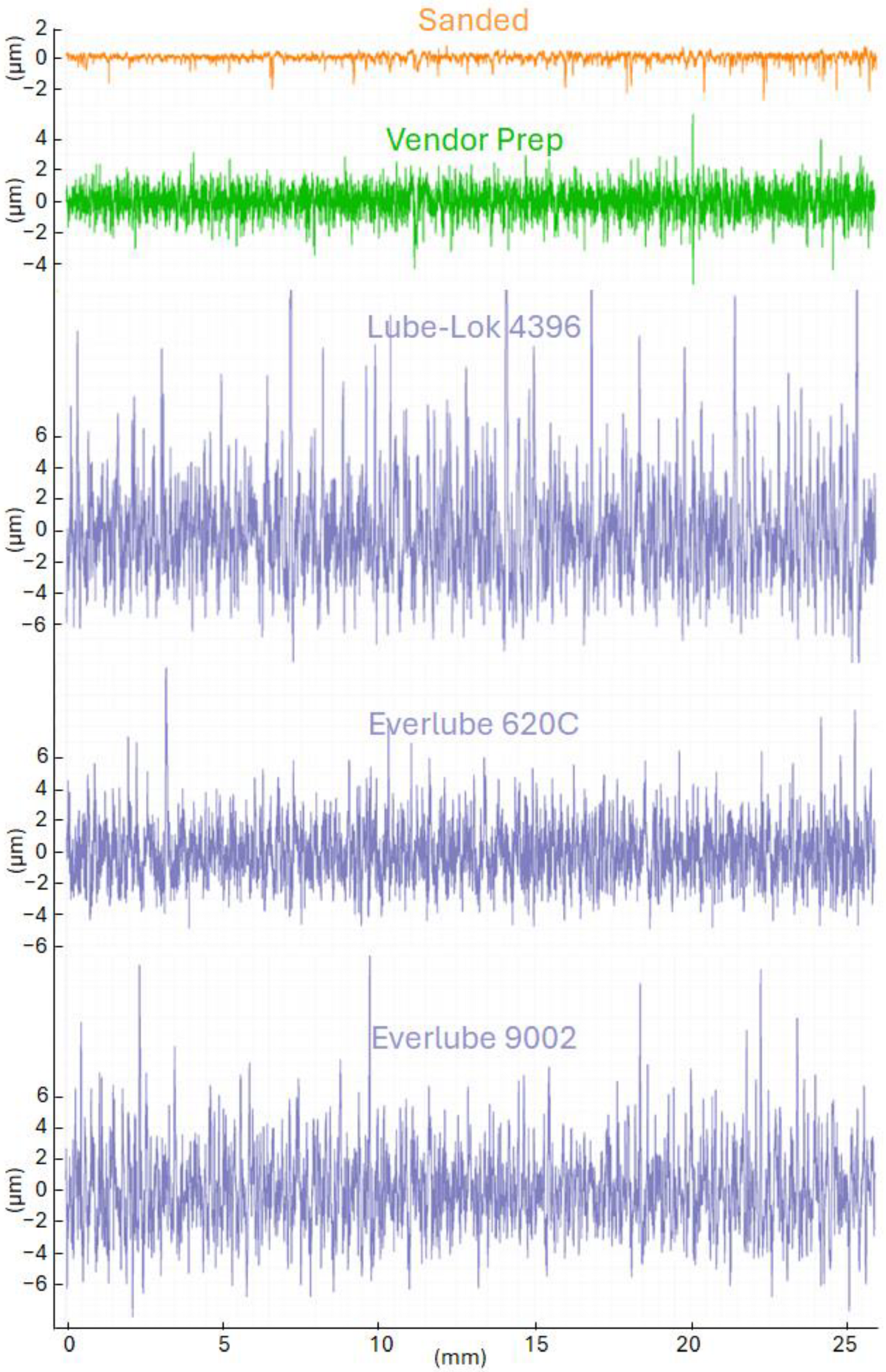
Figure 1. Representative radial traces of the topography of 440 C disk surfaces measured after initial polishing performed internally (tan), after vendor surface preparation (green), and again after DFL deposition (purple) for three DFLs. Topographies reflect the roughness of the surfaces after waviness is removed.
Lubricants 14 00355 g001
Figure 2. Surface roughness measured after initial polishing (tan), after vendor surface preparation (green), and again after DFL deposition (purple) for three DFLs on five different substrate materials.
Lubricants 14 00355 g002
Figure 3. Surface flatness measured after initial polishing (tan), after vendor surface preparation (green), and again after the DFL was deposited (purple) for three DFLs on five different substrate materials.
Lubricants 14 00355 g003
Figure 4. Measured thickness of the DFL coatings where error bars reflect standard error from two different measurement approaches carried out on at least two disks for each DFL. The upper and lower ranges of the vendor-specified thickness are shown as horizontal lines.
Lubricants 14 00355 g004
Figure 5. Effect of substrate and DFL on the coefficient of friction. Tests were performed in ambient (AM) and GN2 environments at 800 MPa contact pressure and 1000 mms−1 sliding speed. For ambient conditions, the average relative humidity (RH) is specified. Error bars reflect the standard error from repeat tests; test conditions run only once do not have an error bar.
Lubricants 14 00355 g005
Figure 6. Effect of contact pressure (300 MPa in tan and 800 MPa in green) on the coefficient of friction. Tests performed in either ambient air or dry GN2 at 1000 mm/s sliding speed for the 440C substrate. Error bars for the 800 MPa results reflect standard error from repeat tests. Only one test was performed per case at 300 MPa contact pressure.
Lubricants 14 00355 g006
Figure 7. The effect of sliding speed (100 mm/s in tan and 1000 mm/s in green) on the coefficient of friction in either ambient conditions or dry GN2. Tests performed in ambient air at 300 MPa contact pressure. Each test condition was performed once.
Lubricants 14 00355 g007
Figure 8. Friction coefficient as a function of sliding distance from three independent wear-life tests for each of the DFLs. Friction coefficient data was processed using a 10-point moving average and plotted against sliding distance on a log scale. Each curve is labeled with the relative humidity corresponding to that test.
Lubricants 14 00355 g008
Figure 9. Comparison of the three DFLs in terms of wear life (left y-axis, tan) and coefficient of friction (right y-axis, green). Tests were performed in ambient air at 800 MPa contact pressure and 1000 mm/s sliding speed. The relative humidity reported is the average of the three tests and error bars reflect the standard error over those tests.
Lubricants 14 00355 g009
Figure 10. Representative optical microscope images of the wear scars on the disk (top) and ball (bottom) after life testing on each of the three DFLs. Note that the magnification of the ball wear scars is not the same across all three images.
Lubricants 14 00355 g010
Figure 11. Load-carrying capacity of the DFLs as measured (blue) compared to the vendor-advertised values (orange) as per ASTM D2625-94 Procedure B. Each test was performed once.
Lubricants 14 00355 g011
Table 1. Summary of tests run for three DFLs on five substrates. The value in each cell indicates the number of repeat tests per condition.
DFLSubstrateFriction
GN2
800 MPa
1000 mm/s
Friction
Air
800 MPa
1000 mm/s
Friction
GN2
300 MPa
1000 mm/s
Friction
Air
300 MPa
1000 mm/s
Friction
Air
300 MPa
100 mm/s
Wear Life
Air
800 MPa
1000 mm/s
Load
Carrying
Capacity in Air
Lube-Lok 4396440C2311131
Lube-Lok 4396Custom 46511
Lube-Lok 4396Nitronic 6024
Lube-Lok 4396SS 15-5PH4
Lube-Lok 4396Ti6Al4V1
Everlube 620C440C2311131
Everlube 620CCustom 4651
Everlube 620CNitronic 601
Everlube 620CSS 15-5PH1
Everlube 620CTi6Al4V1
Everlube 9002440C2311131
Everlube 9002Nitronic 601
Everlube 9002SS 15-5PH5
Everlube 9002Ti6Al4V1
Disclaimer/Publisher’s Note: The statements, opinions and data contained in all publications are solely those of the individual author(s) and contributor(s) and not of MDPI and/or the editor(s). MDPI and/or the editor(s) disclaim responsibility for any injury to people or property resulting from any ideas, methods, instructions or products referred to in the content.