1. Introduction
Wheel hubs serve as the primary load-transfer interface between axles, bearings, and wheel assemblies, and they are therefore central to the structural reliability of rotating mechanical systems. In agricultural trailer applications, these components are subjected to high stress levels and complex multi-axial loading, as they operate over uneven terrain, withstand impact forces, and carry highly variable load spectra. Accordingly, the reliable design and structural assessment of hub systems constitute an important area of research in machine design [
1,
2,
3].
A considerable body of work has examined the structural behaviour of wheel hubs in automotive and heavy-machinery contexts. Mohite [
4] performed stress analysis and optimisation of a front wheel hub and identified the flange root as the dominant stress-concentration site under cornering loads. Yuvaraja and Kumar [
5] used finite element analysis to optimise an automotive wheel hub and reported that targeted geometric refinement at load-transfer regions reduces peak stress without compromising stiffness. Li and Zhou [
6] evaluated wheel hub performance under complex multi-axial loading and showed that out-of-plane bending substantially elevates stress at the flange–body junction. Liu et al. [
7] coupled bionic optimisation with fatigue life prediction for a honeycomb-structured wheel hub and demonstrated that biologically inspired stiffening patterns extend service life under cyclic loading. Shin and Jin [
8] conducted numerical impact stress prediction for a wheel and showed that transient terrain-induced peaks can exceed static design values by a factor of three. Taken together, these contributions indicate that stress concentrations consistently arise in the flange region [
4,
6], at bearing-seating surfaces [
6,
7], and in body transition zones [
7,
8], all of which are critical from a fatigue damage standpoint.
In recent years, weight reduction strategies have become an increasingly prominent topic in engineering design. In this context, topology optimisation has emerged as a powerful method for rearranging material distribution within load-bearing structures so as to achieve a high performance-to-mass ratio. The theoretical foundations were established by Bendsøe and Sigmund [
9], whose monograph formalises the SIMP density-based formulation, and were subsequently consolidated by Sigmund and Maute [
10] in a comparative review of topology optimisation approaches. Zhu et al. [
11] documented the extension of these methods to aerospace structural design, while Mirzendehdel and Behandish [
12] addressed manufacturing accessibility constraints, a key requirement for casting and machining workflows. Mantovani and Leali [
13] further demonstrated the synergy between topology optimisation and additive manufacturing for structural components. In the automotive and manufacturing domains, Erdoğan [
14] applied topology optimisation to drive plate components under mechanical loading and reported substantial mass savings while preserving structural stiffness; Costa and Vieira [
15] developed an integrated CFD–FEA optimisation framework for rotating mechanical components; Flores and Silva [
16] analysed agricultural trailer axles subjected to impact loads; and Kashid and Mane [
17] performed finite element analysis and optimisation of a tractor trolley axle. More recently, SIMP-based topology optimisation has been extended to tribological and fluid–structure applications. Kong et al. [
18] applied topology optimisation to textured journal bearings and showed that distributed micro-texture patterns can be obtained as optimisation outputs; Shi et al. [
19] reported experimental and numerical results for topology-optimised liquid-cooled heat sinks; and Zhou et al. [
20] proposed a novel mini-channel heat sink design with an arc-type design domain obtained by topology optimisation.
Research on agricultural machinery components consistently indicates that terrain-induced dynamic loads can reach several times the corresponding static values. Andersson [
21] redesigned a wheel hub to reduce unsprung mass for a rallycross car and reported peak loads markedly above quasi-static estimates. The commercial design data published in the ADR Group catalogue [
22] and in the Çayırova Makina catalogue [
23] confirm that heavy-duty agricultural axle hubs are routinely sized with conservative safety factors to accommodate such transient peaks, while Totten [
24] documents that bearing systems in heavy off-road machinery must withstand repeated impact-induced load amplification. For this reason, realistic load scenarios must be considered when designing trailer axles and suspension systems. Nonetheless, the majority of existing studies focus on automotive applications, and investigations directed specifically at the structural optimisation of heavy-duty agricultural axle hubs remain limited.
Multi-disciplinary numerical analysis methods have gained widespread use in engineering design processes. The finite element method (FEM) has become a fundamental tool for structural evaluation, while computational fluid dynamics (CFD) methods afford notable advantages for analysing lubrication behaviour and internal flow in rotating systems. Spikes [
25] reviewed the role of friction-modifier additives in lubricant performance; Versteeg and Malalasekera [
26] established the finite volume formulation that underpins modern CFD codes; Ferziger and Perić [
27] consolidated the corresponding numerical methods for fluid dynamics; and Menter [
28] reported best-practice guidelines for scale-resolving simulations in engineering flows. Furthermore, studies in manufacturing engineering have demonstrated that integrated design approaches, combining structural analysis with optimisation, can materially improve the performance of mechanical systems. Costa and Cunha [
29] developed a topology-optimised milling cutter head with integrated internal cooling channels; Costa et al. [
30] subsequently extended this concept to additive manufacturing and reported that manufacturing-constraint-compliant designs preserve cost competitiveness.
Despite these advances, the concurrent application of SIMP-based topology optimisation and CFD-based lubrication analysis to a single rotating machine component has received limited attention in the open literature. Topology optimisation studies on rotating components have predominantly addressed structural compliance and mass reduction in isolation [
9,
10,
11,
12,
13,
18], while CFD investigations of bearing lubrication have focused on flow field characterisation without coupling to structural redesign [
19,
20,
23,
24,
25]. The few integrated FEA–CFD studies that exist for mechanical components [
15,
26,
30,
31,
32] demonstrate that joint optimisation of structural and fluid performance yields outcomes that cannot be achieved by sequential, discipline-specific design. Specifically, material redistribution through topology optimisation alters the internal geometry of the bearing housing, which in turn modifies the oil-flow boundary conditions and channel cross-sections, creating a direct coupling between structural and tribological performance. This coupling is particularly significant in heavy-duty agricultural wheel hubs, where the simultaneous demands of structural reliability under high dynamic loads and continuous bearing lubrication under contaminated operating conditions cannot be addressed adequately by single-discipline design methods [
21,
22,
23,
24].
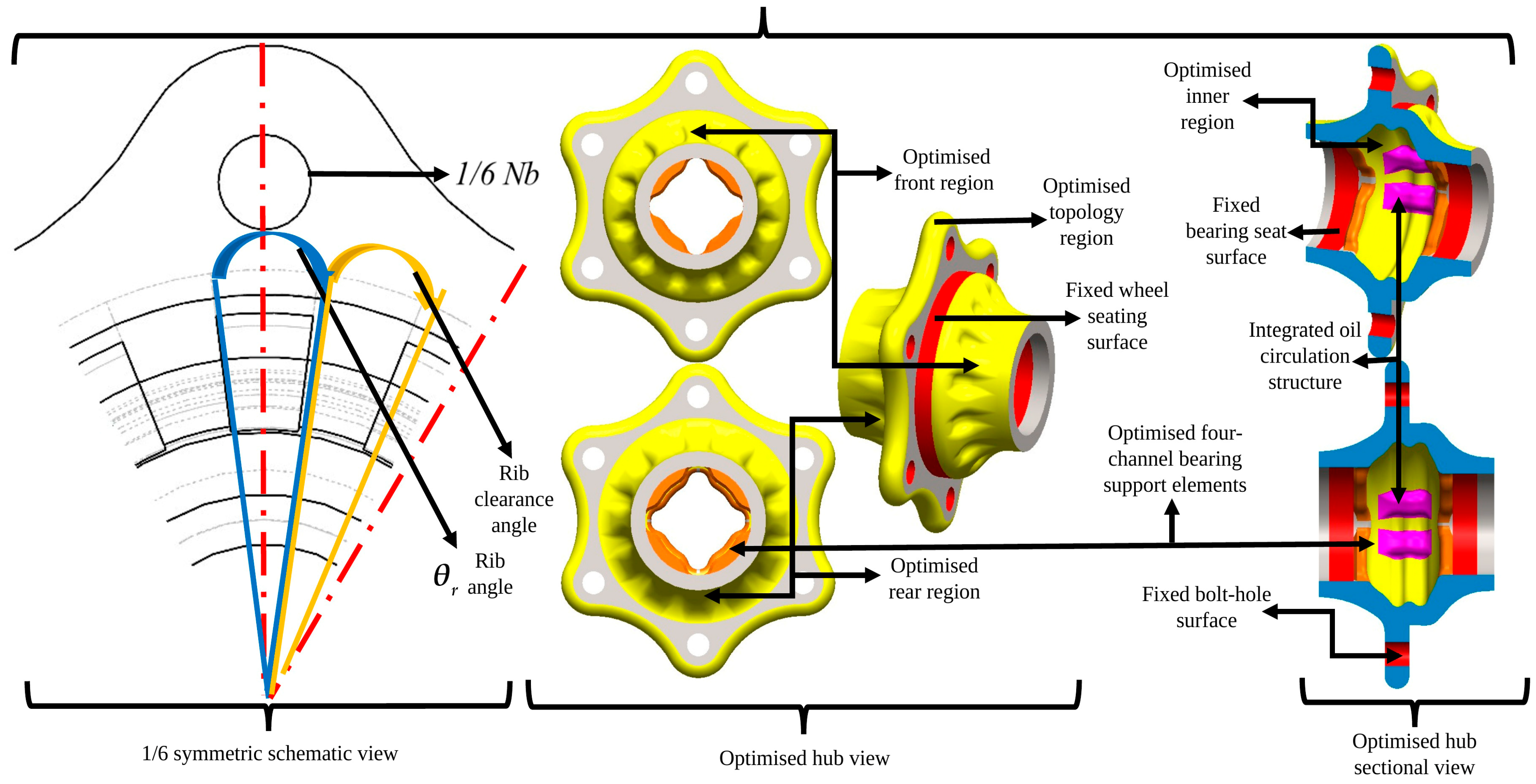
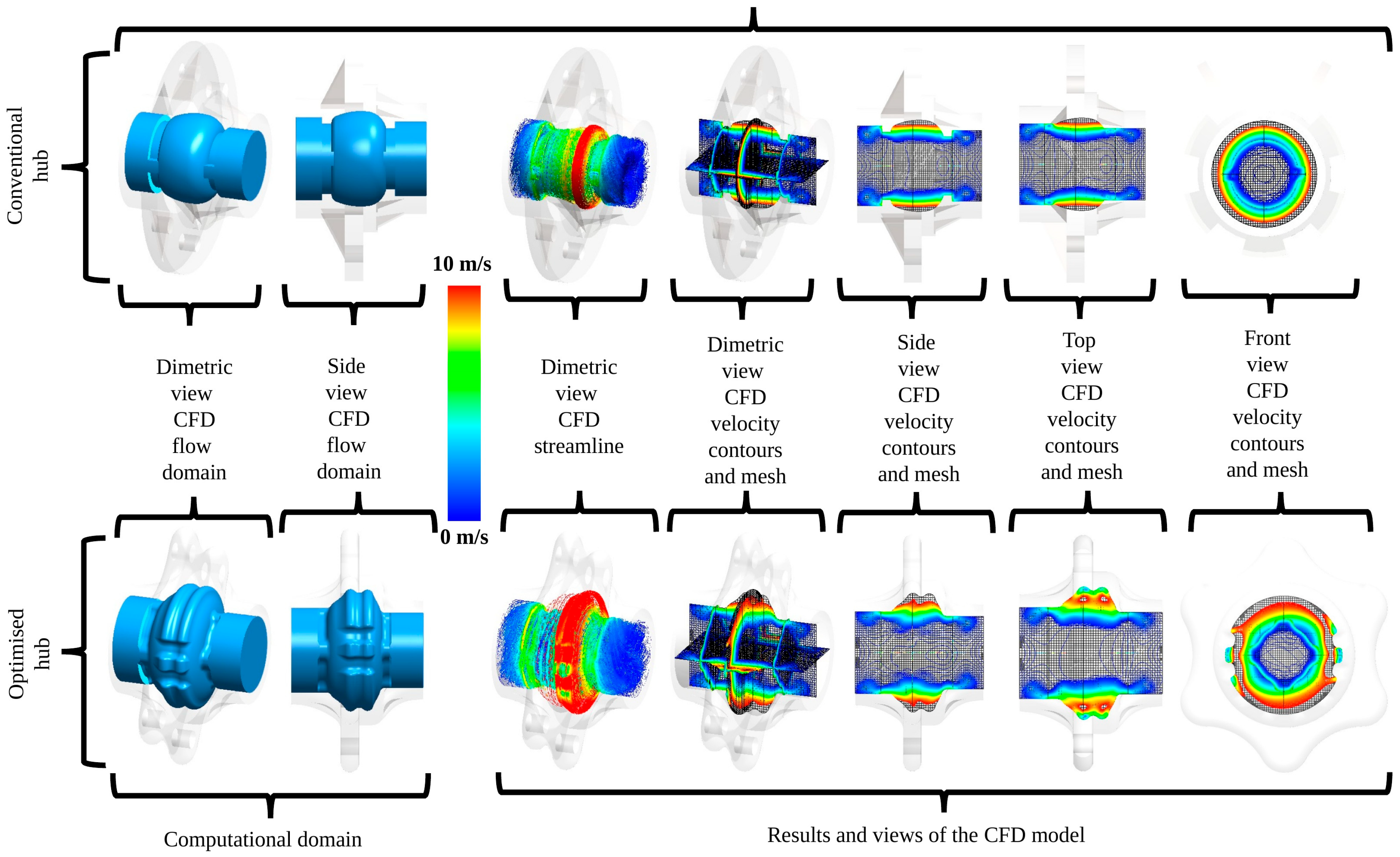
In this study, we develop an integrated design optimisation approach for a heavy-duty agricultural wheel hub manufactured from GGG40 spheroidal graphite cast iron. In the proposed methodology, structural behaviour is evaluated through finite element analysis, material distribution is rearranged via density-based topology optimisation, and the oil-circulation performance within the hub is examined by means of CFD analysis. The overarching objective is to reduce the hub mass while simultaneously improving stress distribution and lubrication performance.
Although numerous studies have addressed the structural strength, fatigue behaviour, and lightweighting strategies of wheel hubs, the overwhelming majority focus on automotive applications. Integrated design approaches that simultaneously consider multiple load scenarios, parametric design analysis, and topology optimisation for heavy-duty agricultural wheel hubs made of GGG40 spheroidal graphite cast iron remain scarce; indeed, most commercial hub designs still rely on experience-based sizing methods. The synergy between SIMP-based topology optimisation and CFD-based lubrication analysis has not been systematically explored for agricultural wheel hub components, representing a clear research gap.
The present study addresses this gap by developing an integrated engineering approach that concurrently evaluates structural strength, mass optimisation, and lubrication performance for a heavy-duty agricultural wheel hub manufactured from GGG40. To this end, parametric analyses were conducted under multiple load conditions based on a reference commercial bearing geometry, density-based topology optimisation was applied subject to casting manufacturability constraints, and the performance of internally designed lubrication channels was assessed through CFD analysis.
The principal contributions of this work are: (1) the development of a parametric design approach incorporating multiple load scenarios for agricultural wheel hubs; (2) the application of a topology-optimisation-based lightweighting strategy compatible with casting manufacturing constraints; (3) the formulation of an integrated design methodology in which FEA and CFD analyses are employed jointly; and (4) the proposal of a general hub design approach applicable to different bearing configurations and bolt arrangements.
5. Conclusions
This study presented an integrated multi-physics design methodology for a GGG40 spheroidal graphite cast iron agricultural trailer wheel hub, combining FEA, density-based topology optimisation (SIMP), and CFD within a unified framework. The methodology demonstrates that structural weight reduction and tribological performance enhancement can be pursued concurrently within a single, manufacturing-compatible design process.
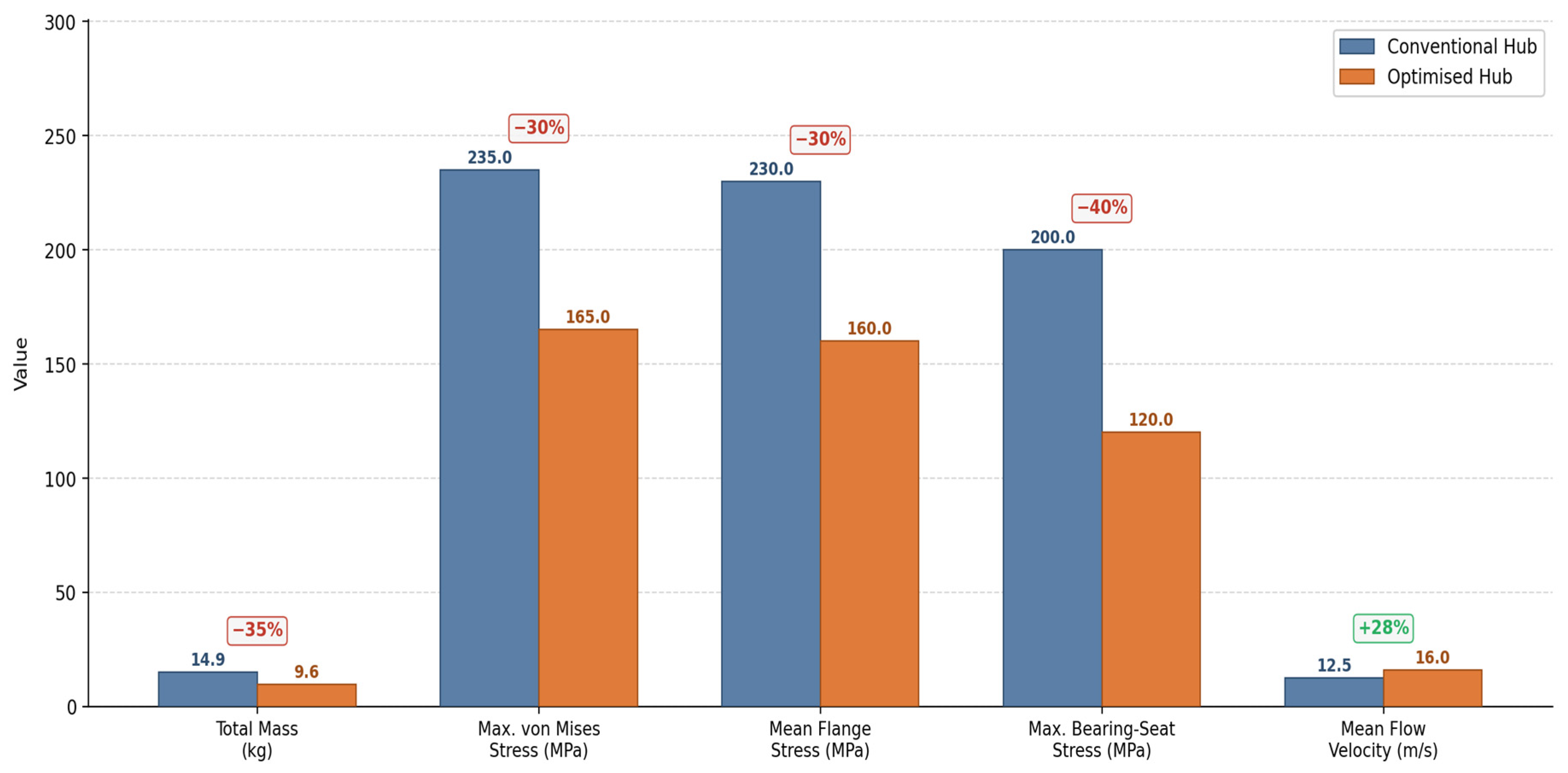
The principal quantitative findings, summarised in
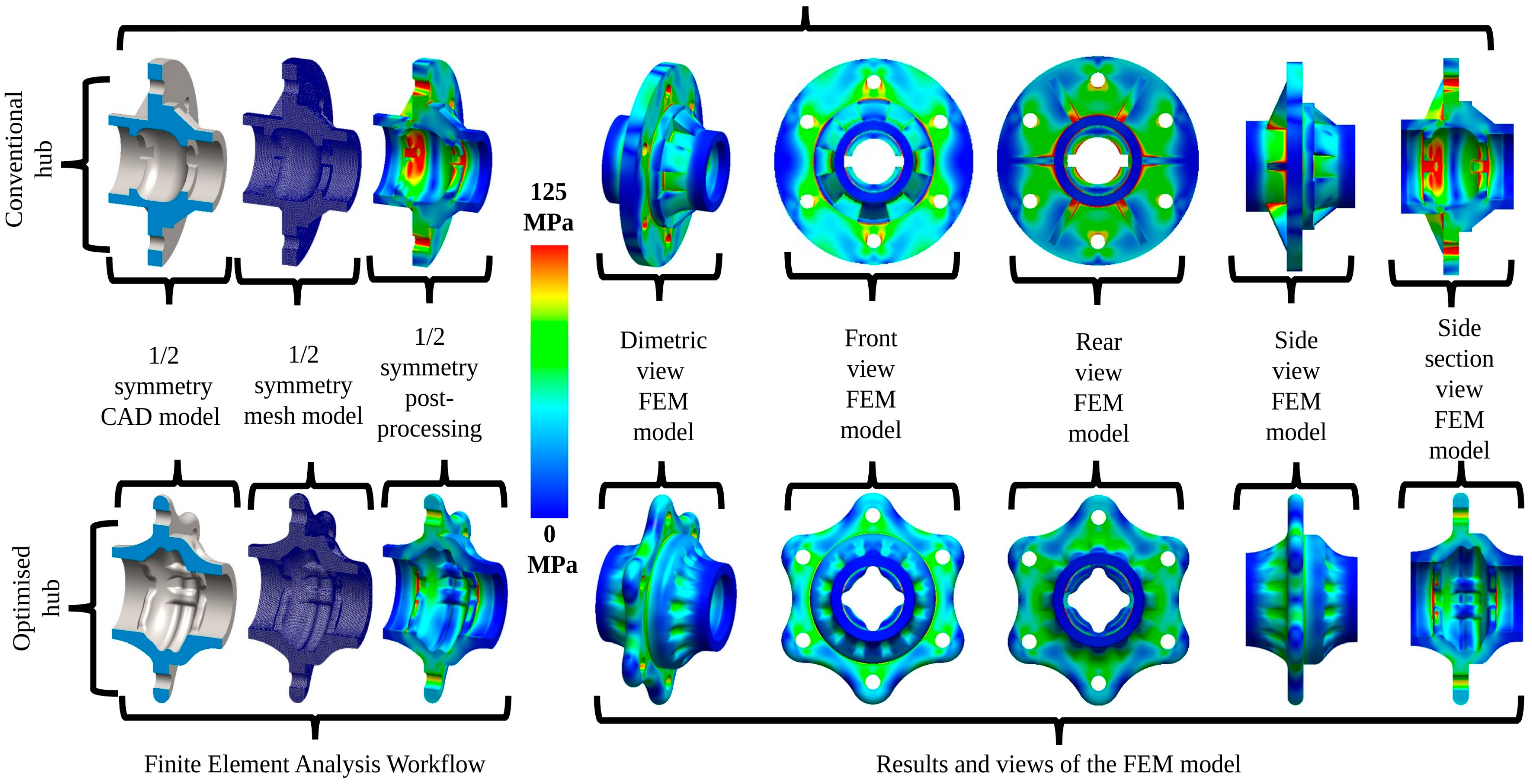
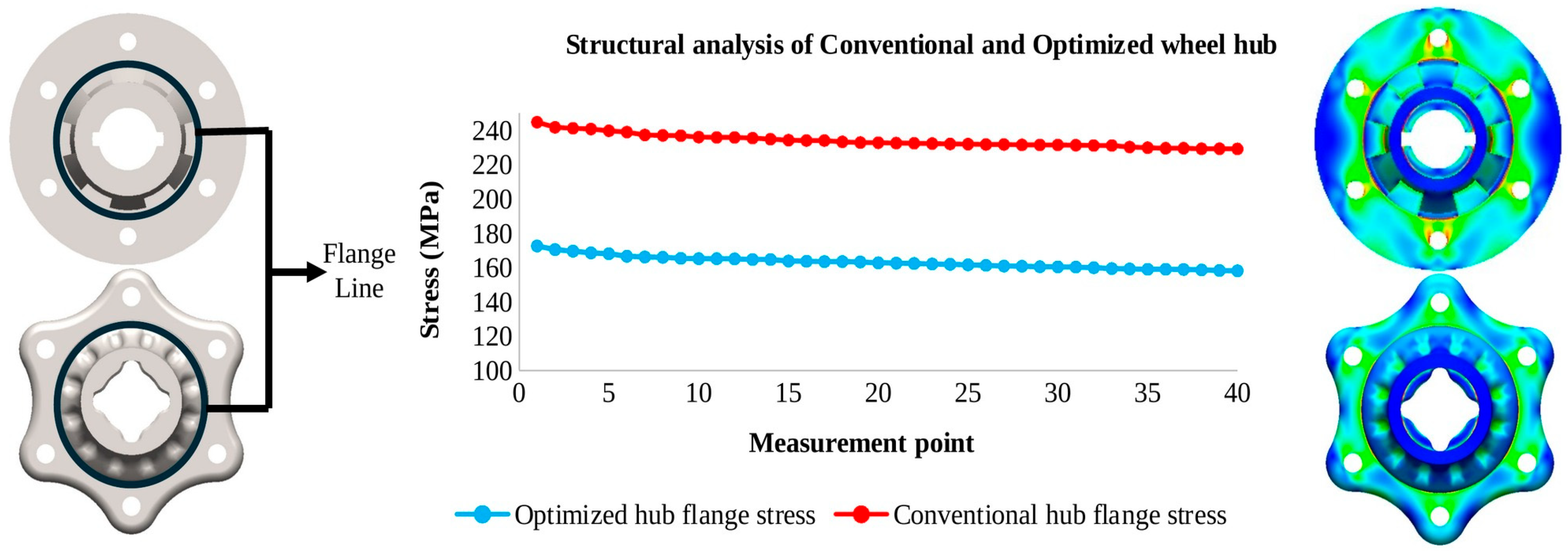
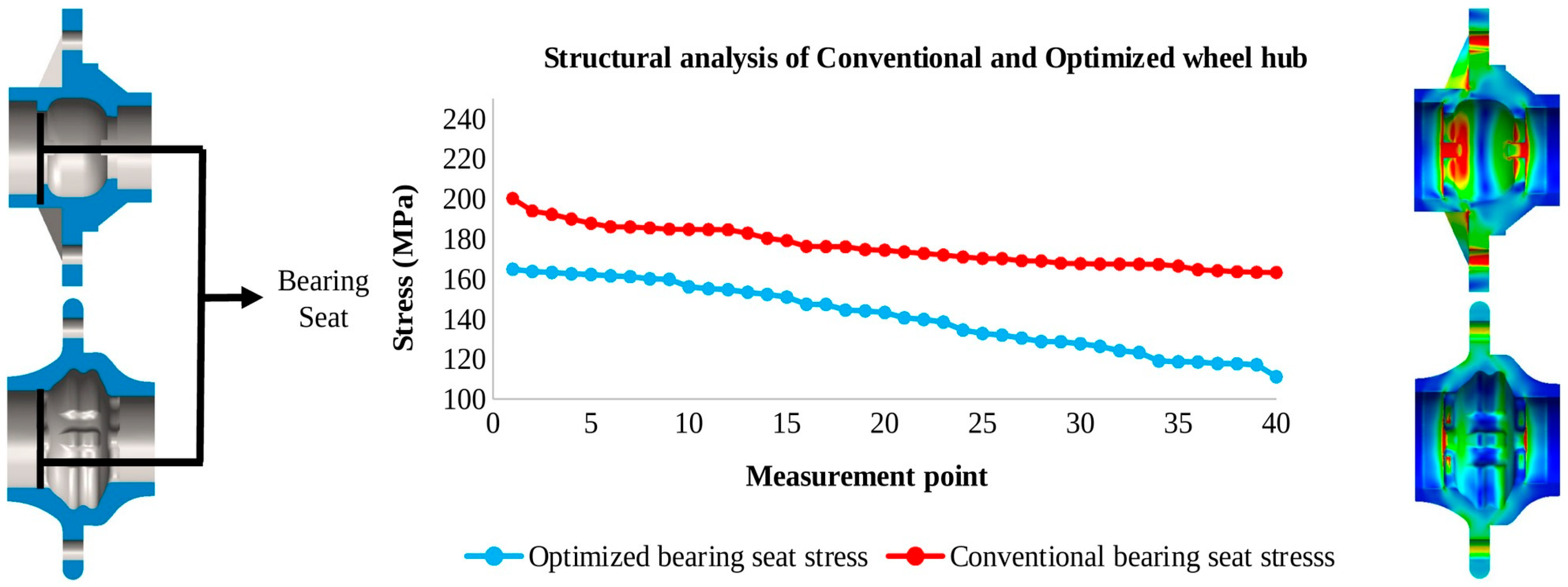
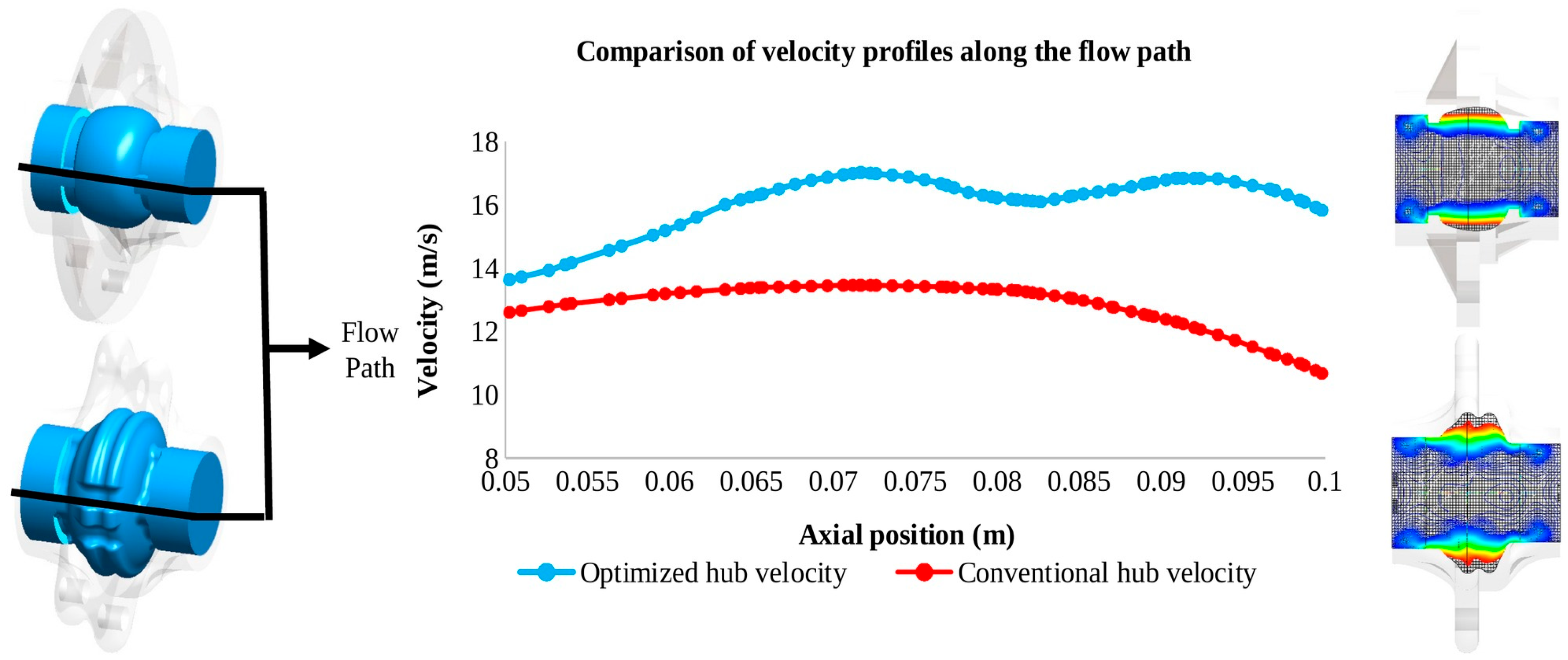
Table 6, demonstrate that the optimised hub achieves a 35% mass reduction (14.9 to 9.6 kg), a 30% reduction in maximum von Mises stress (235 to 165 MPa), and up to 40% stress reduction in the bearing-seat region. The integration of internal oil-circulation channels increased mean lubrication flow velocity by 28% (12.5 to 16.0 m/s) and eliminated stagnation zones, directly improving tribological operating conditions in the bearing region.
From an industrial perspective, the proposed integrated design approach addresses a recognised gap in heavy-duty agricultural equipment design, where component sizing has traditionally relied on empirical methods rather than systematic multi-physics analysis. The framework, validated numerically under a safety factor of 5, is directly transferable to industrial applications targeting mass reduction, improved energy efficiency, and extended service life and is equally applicable to hub systems with different bearing configurations and bolt arrangements [
37].
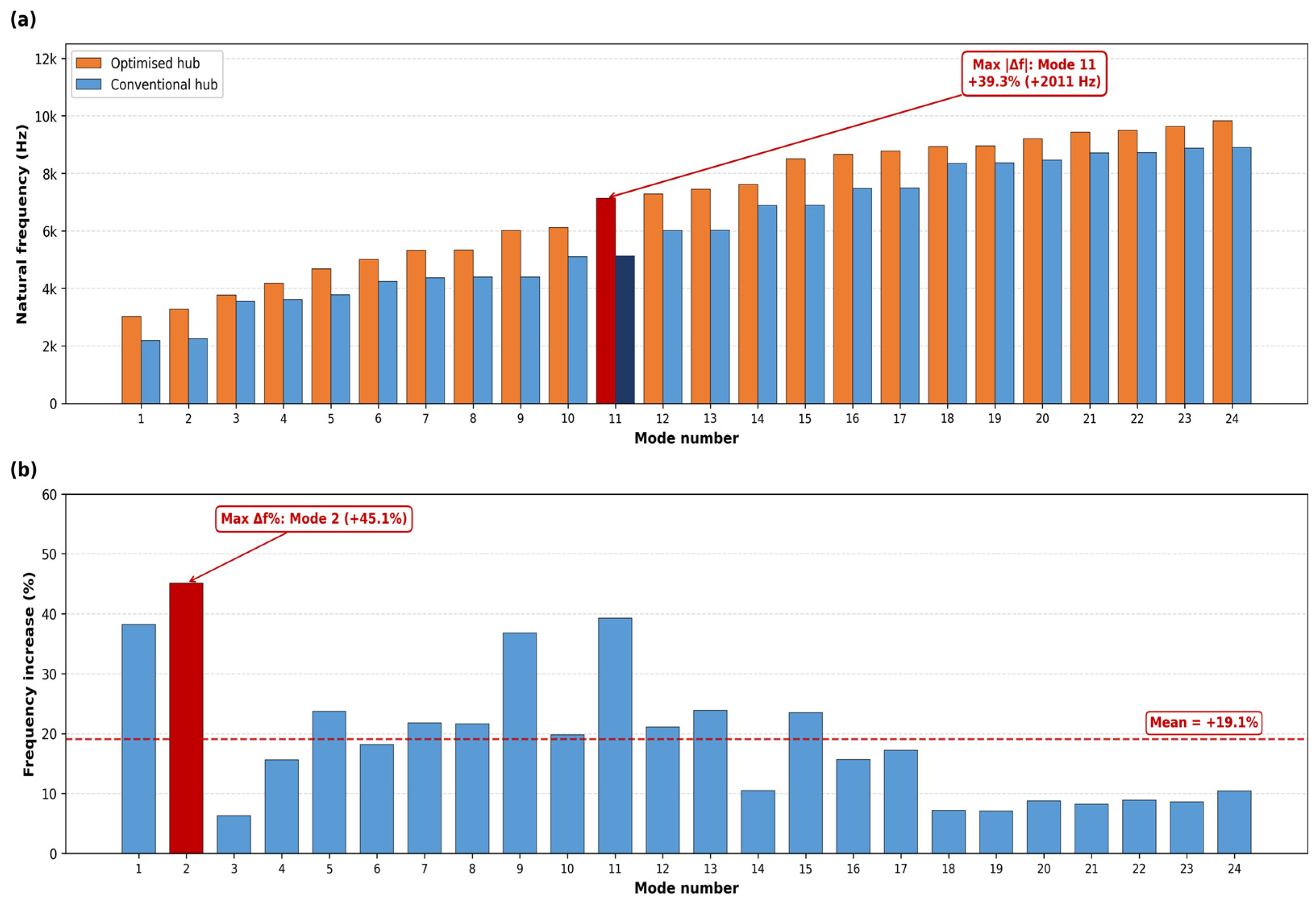
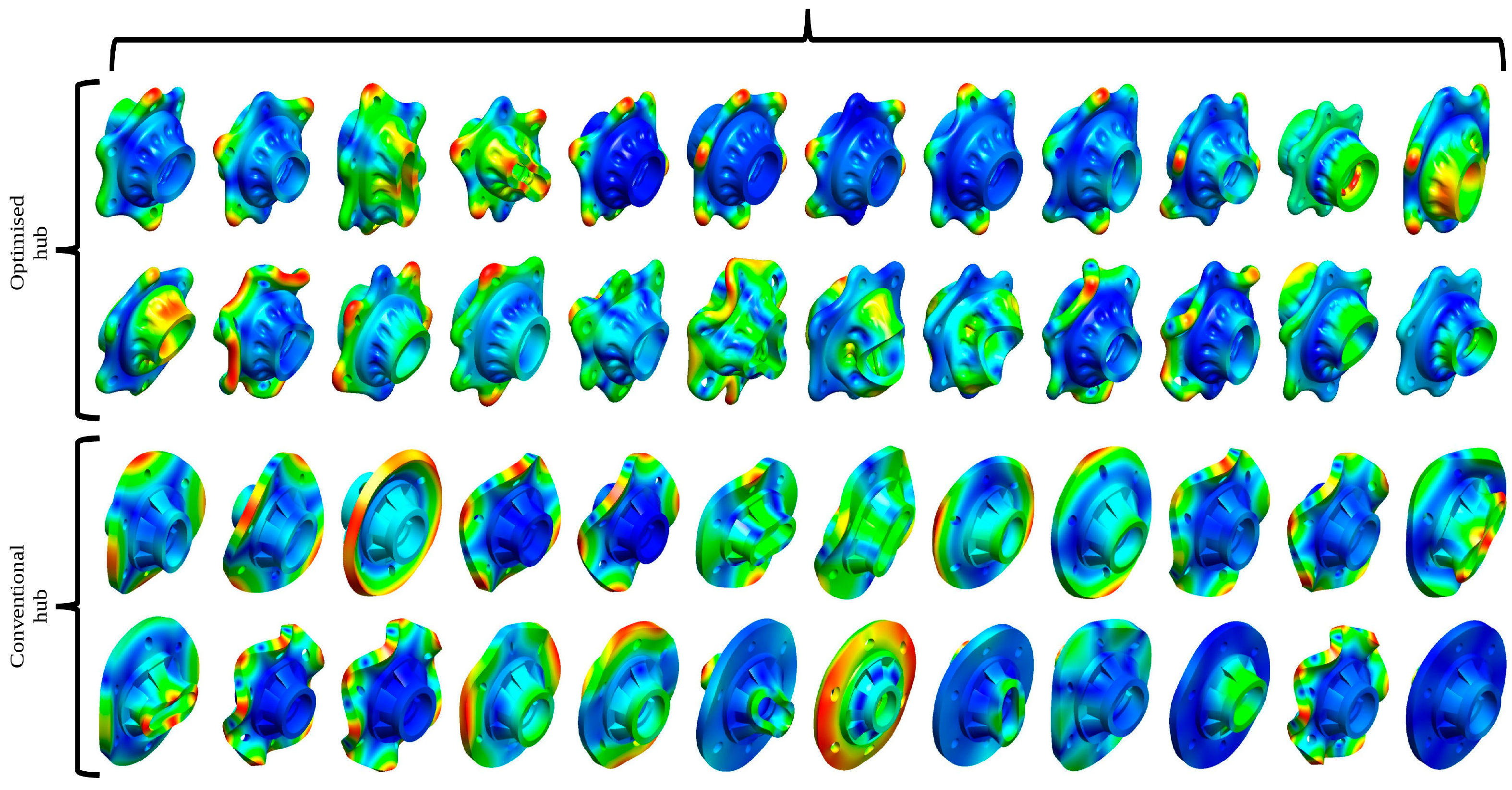
From a dynamic standpoint, the modal analysis presented in
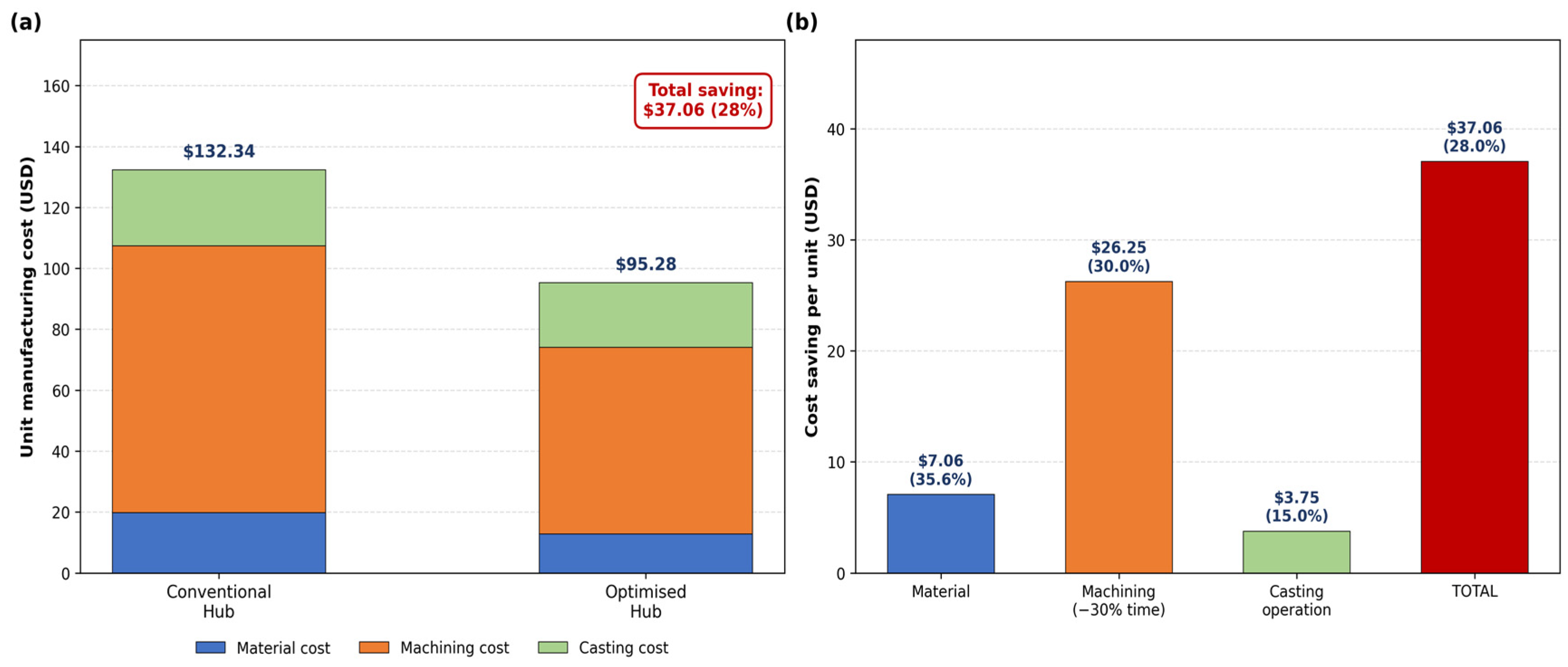
Section 4.5 confirms that all 24 extracted natural frequencies of the optimised hub exceed those of the conventional design, with a mean frequency increase of +19.1%, reducing the risk of resonance excitation by terrain-induced loads. The optimised geometry was constrained throughout to comply with GGG40 sand-casting practice, ensuring that no new tooling categories are required, and the unit-level cost analysis indicates a 28% reduction in total manufacturing cost.
The present study is subject to certain limitations. The numerical framework lacks physical prototype testing; experimental validation through strain-gauge measurements and bearing-housing flow measurements is recommended as a priority for future work. Additionally, nonlinear impact analyses and the integration of field-measured load histories are warranted to capture fatigue accumulation under variable terrain-induced load spectra.