Article

Effects of Different Particles on the High-Temperature Oxidative Degradation Behavior of Aviation Lubricating Oil

1
School of Chemical Engineering & Technology, China University of Mining and Technology, Xuzhou 221000, China
2
Air Force Logistics Academy, Xuzhou 221000, China
*
Authors to whom correspondence should be addressed.
Lubricants 2026, 14(4), 143; https://doi.org/10.3390/lubricants14040143
Submission received: 4 February 2026 / Revised: 8 March 2026 / Accepted: 17 March 2026 / Published: 29 March 2026

Abstract

The effects of dust, copper particles, and iron particles on the high-temperature oxidative degradation behavior of aviation lubricating oil were systematically examined, and the high-temperature catalytic oxidation effects of single-particle and mixed-particle systems on the lubricating oil were further analyzed, respectively. Gas chromatography/mass spectrometry analysis results indicated that significant differences exist in the catalytic oxidation activity of particles toward lubricating oils, with the activity ranking in the descending order of copper particles > iron particles > dust. Notably, following oxidation by both metal and dust particles, the acid value, particle size, and viscosity of the oil sample exhibit a significant synergistic catalytic effect, even exceeding those of the oil sample oxidized by the same amount of metal particles. Specifically, relative to the pristine oil, the oil oxidized with 5 mg of copper particles and 5 mg of dust exhibits respective increases of 213.3%, 316.11%, and 661.43% in the aforementioned properties. This variation is attributed to the physical adsorption and chemical reactions between dust and antioxidants during oxidation, which deplete antioxidants and thereby exacerbate oil oxidation. Furthermore, this study further elucidates the potential synergistic oxidation mechanism induced by metal particles and dust particles.

1. Introduction

Aviation lubricating oils are widely recognized as the core functional fluids of aero-engines, fulfilling an irreplaceable role in ensuring the stable and efficient operation of these power units [1,2,3,4,5]. Therefore, avoiding the performance degradation of aviation lubricating oils under service conditions has long been a research priority in both academia and industry, with elevated temperatures generally recognized as a critical factor triggering oil degradation [6]. Generally, the oxidative failure mechanisms of synthetic aviation lubricants conform to the free radical chain reaction pathway. Specifically, hydrocarbon molecules in the lubricant oil undergo bond scission to generate organic free radicals under thermal stimuli, which subsequently react with oxygen to generate peroxyl radicals and peroxides. These intermediates further undergo a polymerization reaction to produce oligomers, which in turn induce an increase in system viscosity and the formation of carbonaceous deposits, leading to engine internal coking and ultimately hindering the full exertion of the aircraft’s superior operational performance [7,8,9]. Consequently, investigating the intrinsic oxidation behavior of aviation lubricating oils holds substantial theoretical and engineering significance.
Hayashi et al. [10] revealed that the factors concerning carbonaceous deposits formation in the piston grooves of direct-injection diesel engines are closely associated with aromatic compounds and carbonaceous particles, which are mainly generated by the effects of elevated temperature. Furthermore, Far et al. [11] found that as the oxidation temperature increases, the content of insoluble high-molecular-weight polymers in the lubricating oil increases, and the kinematic viscosity of the sample also increases correspondingly, thereby affecting its abrasion resistance. However, under elevated-temperature conditions, the mechanisms underlying deposit and coking formation in aviation lubricating oils are highly complex, as these phenomena are generally attributed to the contacting between carbon deposits, dispersed or detached metallic particles, and the surfaces of polar oils [12,13]. It is noteworthy that Li et al. [14] identified that the reduction in antioxidant content and contact with metallic materials are both pivotal factors contributing to increased lubricating oil viscosity, promoted sediment formation, and the generation of coking species. In detail, Yao et al. [15] investigated the impact of iron and copper materials on the thermal oxidative stability of ester-based synthetic aviation lubricants, wherein iron sheets exhibited a more pronounced catalytic effect on the degradation of the 50-1-4 ester-based aviation lubricant relative to copper sheets, thereby significantly accelerating the deterioration of its physicochemical properties (e.g., kinematic viscosity and total acid number).
Notably, existing studies have solely focused on the effects of different metals (e.g., iron and copper) on the oxidative degradation of lubricating oil, while failing to thoroughly explore the influences of particle size and dosage on catalytic oxidation. Moreover, the impacts of more ubiquitous dust particles (e.g., filter residues in the air intake system and externally infiltrating particles) on lubricating oil performance have been neglected, both alone and in synergy with metal particles. Although several studies have indicated that silicon dioxide, the primary component of dust, can react with amine compounds (e.g., antioxidants in the oil), this mechanism remains unvalidated in lubricating oil oxidation systems and relevant research is currently in progress.
In summary, considering the actual service environment of aviation lubricating oils, this study selected iron particles, copper particles, and dust particles, with their mass and particle size as key characteristic parameters. Subsequently, high-temperature oxidation–corrosion tests were conducted at 218 °C under the conditions of individual and mixed existence of these particles to simulate their catalytic effects on the oxidative degradation of aviation lubricating oils. Meanwhile, a series of performance characterizations were carried out on the lubricating oil samples both before and after oxidation, including chemical composition, acid number, kinematic viscosity, and particle size. The above test results found that the physical adsorption and chemical reactions between dust and antioxidants in the lubricating oil effectively reduce the antioxidant content, thereby accelerating the oxidation processes of the lubricating oil. Additionally, to further elucidate the high-temperature coking mechanism, simulated tests were conducted on the high-temperature coking behavior of aviation lubricating oils at 230 °C. This experimental protocol provides theoretical references and practical support for the long-term service of aviation lubricating oils under harsh operating environments.

2. Materials and Methods

2.1. Simulated Coking Tests of Aviation Lubricating Oils Under Elevated Temperatures

Standard High-Temperature Oxidation–Corrosion Test of Aviation Lubricating Oil: This experiment was conducted in accordance with the MIL-L-23699E standard [16]. The detailed information is as follows: oxygen or air flow rate: 83 mL/min, oxygen partial pressure: ordinary pressure, stirring conditions: without stirring, number of replicates: 3. First, standard copper sheets and iron sheets (25 × 25 × 5 mm) were polished to eliminate surface impurities and contaminants. Subsequently, the polished metal sheets were immersed in a reaction vessel containing 100 mL of 4050 synthetic aviation lubricating oil and subjected to thermal oxidation at 218 °C for 72 h. For control purposes, 100 mL of 4050 synthetic aviation lubricating oil without the addition of metal sheets was subjected to the same thermal oxidation procedure, designated as Control Group 2, while the pristine 4050 synthetic aviation lubricating oil was defined as Control Group 1.
Meanwhile, nano-copper particles, micro-copper particles, nano-iron particles, A2 dust, and A3 dust were accurately weighed at three distinct mass levels (5 mg, 10 mg, and 20 mg) per material. Each weighed sample was added separately to a test tube containing 100 mL of 4050 synthetic aviation lubricating oil, and the mixtures were thermally oxidized at 218 °C for 72 h. The resulting oil samples were designated as 5 mg nano-copper particles, 5 mg micro-copper particles, 5 mg nano-iron particles, 5 mg A2 dust and 5 mg A3 dust, 10 mg nano-copper particles, 10 mg micro-copper particles, 10 mg nano-iron particles, 10 mg A2 dust and 10 mg A3 dust, 20 mg nano-copper particles, 20 mg micro-copper particles, 20 mg nano-iron particles, and 20 mg A2 dust and 20 mg A3 dust, respectively.
Furthermore, to explore the synergistic catalytic effect of different materials on the thermally oxidative degradation of aviation lubricating oils, nano-copper particles, nano-iron particles, and A3 dust were each accurately weighed in 5 mg portions in this experiment. Subsequently, every two distinct materials were mixed separately and added to a reaction vessel containing 100 mL of the pristine 4050 synthetic aviation lubricating oil, and the mixtures were oxidized at 218 °C for 72 h. Corresponding to the three material combinations, the resulting samples were named 5 mg nano-copper particles + 5 mg nano-iron particles oxidized oil, 5 mg nano-iron particles + 5 mg A3 dust oxidized oil, and 5 mg nano-copper particles + 5 mg A3 dust oxidized oil, respectively. Noteworthy, the oxidation-treated lubricating oil samples were filtered prior to viscosity, acid number, and particle size testing to eliminate the adverse effects of suspended particles on the experiment.

2.2. Simulated Coking Tests of Aviation Lubricating Oils Under High-Temperature

To further elucidate the high-temperature coking mechanism of aviation lubricating oils, this study accurately weighed four aliquots of 4050 synthetic aviation lubricating oil (100 g per aliquot). Among them, three portions were individually spiked with 30 mg of nano-iron particles, 30 mg of nano-copper particles, and 30 mg of A3 dust, respectively, while the remaining aliquot was designated as the blank control group. All samples were thermally oxidized at 230 °C for 72 h; subsequently, the coking particles adhering to the surface of the air duct and the inner wall of the reaction vessel were collected, rinsed with petroleum ether, and characterized via scanning electron microscopy and energy-dispersive X-ray spectroscopy.

2.3. Characterizations

The kinematic viscosity of the aviation lubricating oil samples before and after oxidation was determined in accordance with GB/T 265-1998 [17] using an automatic kinematic viscosity tester (A1011, Beijing Delite Co., Ltd., Beijing, China), the testing temperature was set as 40 °C, and three sets of tests values were averaged for each sample (±0.2–0.3). The acid number of the lubricating oil samples was determined pursuant to NB/SH/T 6011-2020 [18] using an automatic temperature titrator (8019, Metrohm AG, Herisau, Switzerland), with three valid data points measured and averaged for each sample (±0.01–0.04). The particle size of the aviation lubricating oil was characterized by a nano laser particle size analyzer (Winner803, Jinan Winner Laser Particle Size Analyzer Co., Ltd., Jinan, China). The oil product was diluted with ethanol at a 1:3 ratio prior to the test, and the result for each specimen was obtained by averaging three measurements (±0.2). The chemical composition of the aviation lubricating oil samples before and after oxidation was analyzed via gas chromatography/mass spectrometry (6890/5973, Agilent Technologies, Inc., Santa Clara, CA, USA). Most importantly, the high-temperature simulation experiments of the lubricating oil were conducted by employing a high-temperature oxidative corrosion tester for lubricating oils (equipped with standard test metal sheets, Dalian Beifang Analytical Instrument Co., Ltd., Dalian, China).

3. Results

3.1. High-Temperature Oxidation–Corrosion Test Results of Different Samples

3.1.1. Single Nanoparticle System

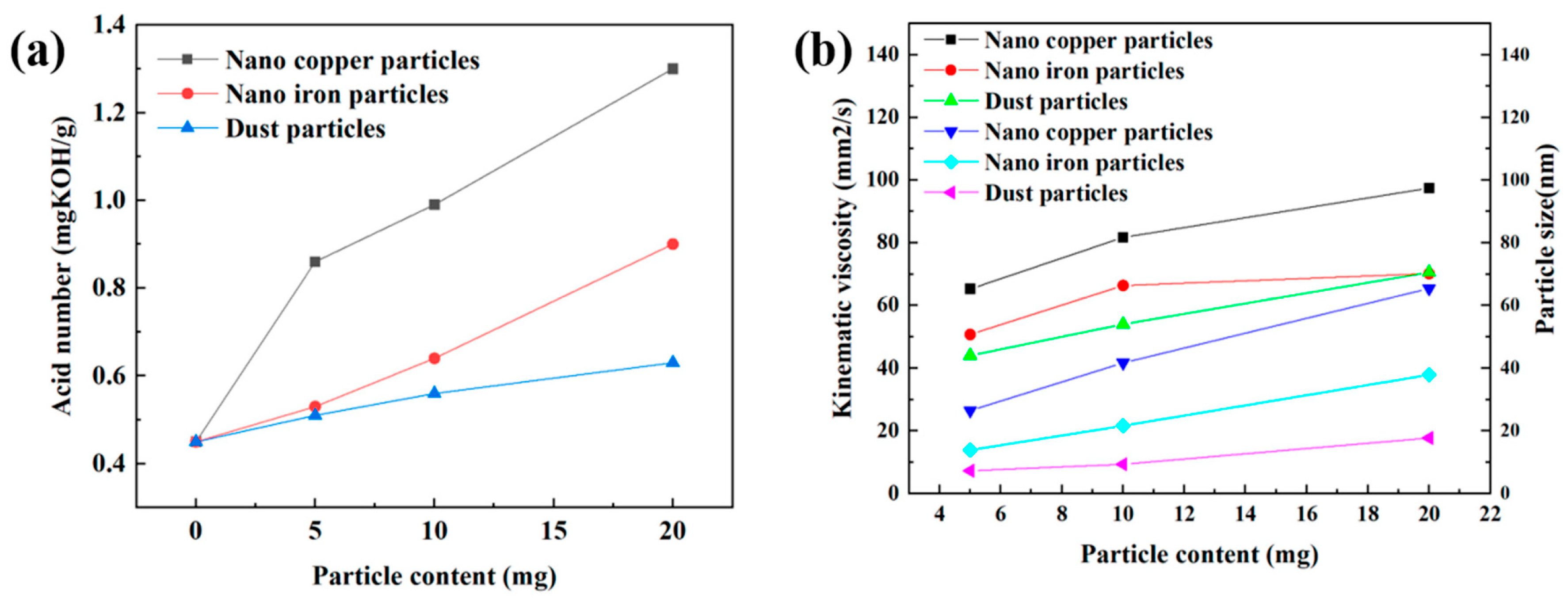
Table 1 and Figure 1 present the results of oxidative corrosion tests investigating the effects of different materials on aviation lubricating oil. For individual particles, as the additive dosage of particles gradually increases, the physicochemical performances of the oxidized oil samples exhibit a corresponding upward trend. Specifically, the acid number, kinematic viscosity, and particle size of oil sample oxidized with 5 mg nano-copper particles are 0.862 mg KOH/g, 65.25 mm2/s, and 26.82 nm, respectively, representing an increase of 190%, 255%, and 420% compared with Control Group 2 (4050 synthetic aviation lubricating oil oxidized at 218 °C for 72 h). When the dosage of nano-copper powder reaches 20 mg, the aforementioned indices increase by 287%, 382%, and 1037% relative to Control Group 2.
Especially when particles with the same mass but different types were incorporated into the aviation lubricating oil, the acid number, kinematic viscosity, and particle size of the resulting oil samples exhibit an almost consistent variation trend, following the order of nano-copper particles > nano-iron particles > dust particles. For instance, the acid number, kinematic viscosity, and particle size of the oil sample oxidized with 20 mg nano-copper particles are 1.30 mg KOH/g, 97.46 mm2/s, and 65.36 nm, respectively, representing increases of 190%, 255%, and 420% compared with Control Group 2, as well as increases of 116.67%, 26.16%, and 339.54% which relate to the oil sample treated with 20 mg A2 dust. Overall, particle addition exerts a distinct catalytic effect on the oxidative degradation behavior of oils, the stronger the catalytic activity of the particles, the more severe the oxidative degradation degree of the oil samples, and the more significant the changes in acid number and kinematic viscosity of oil samples. Noteworthy, the detailed investigation into the effects of metal particles, including particle size and dosage, on the oxidative degradation of lubricating oil is fully presented in the Supporting Information (Section S2).
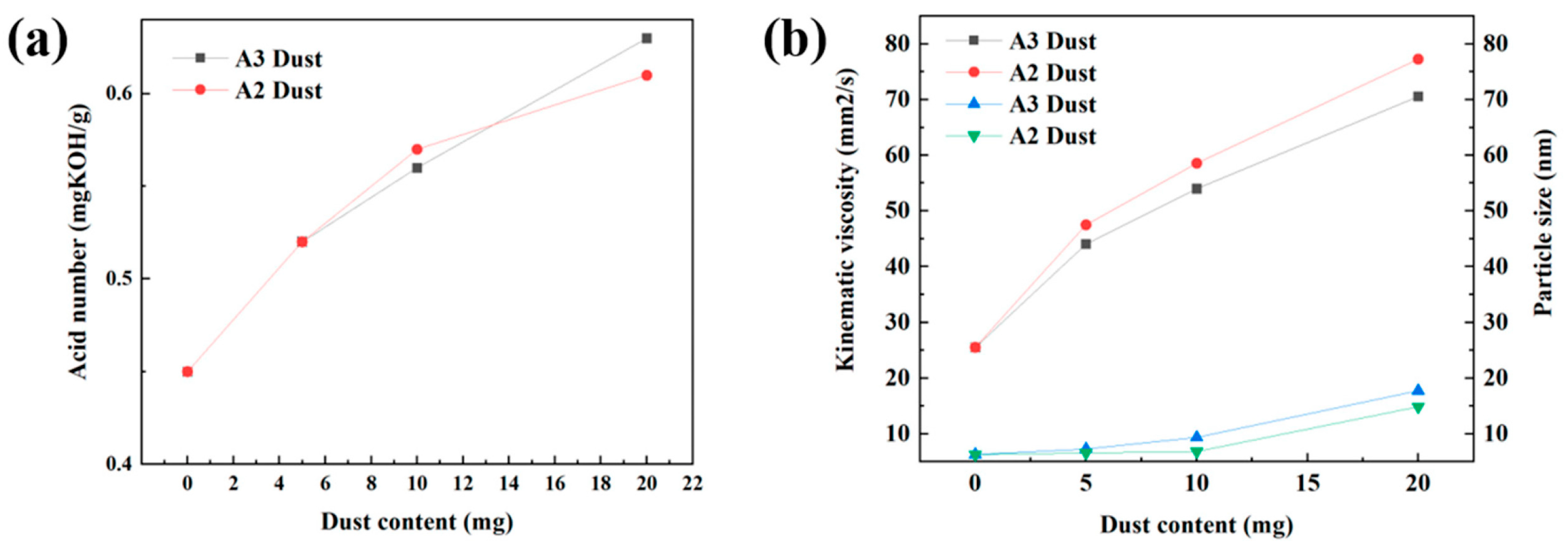
The acid number and particle size are generally recognized as key indicators reflecting the oxidative polymerization degree of lubricating oils [19]. As shown in Figure 2, the acid number and particle size of oils exhibit a non-linear relationship with increasing dust particle dosage, with only slight variations. The primary rationale lies in the inherently weak catalytic activity of silica (the main component of the dust) toward lubricating oil oxidation, which renders it difficult to trigger free radical generation, thus resulting in a lower oxidation extent. Precisely, as the dust dosage increases, the elevations in physicochemical properties of A2 dust-oxidized lubricating oil samples are more remarkable than those of A3 dust-oxidized counterparts, which is ascribed to the fact that A2 dust exhibits a slightly lower density and has a smaller particle size relative to A3 dust, facilitating the participation of a marginally higher quantity of A2 dust in the heterogeneous catalytic oxidation reactions within the oil matrix. This, in turn, leads to a more profound oxidation extent of the lubricating oil.
In contrast to the results of metal particle-catalyzed oxidation, the kinematic viscosity of oxidized aviation lubricating oil increases linearly with dust dosage. For example, the kinematic viscosity of the oil sample oxidized with 5 mg of A3 dust reaches 44.05 mm2/s, which is 1.72 times that of Control Group 2. When the A3 dust dosage is increased to 20 mg, this value rises to 70.54 mm2/s, equivalent to 2.76 times that of Control Group 2. Extraordinary, the kinematic viscosity of the oil sample oxidized by A2 dust is higher than that oxidized by A3 dust at the same dosage. When 20 mg of A3 dust and 20 mg of A2 dust are incorporated into oil samples, respectively, their kinematic viscosities were 65.54 mm2/s and 77.25 mm2/s, showing a significant difference. The above phenomenon can be attributed to the fact that kinematic viscosity is not only related to the microscopic molecular size and shape of the oil sample, which is determined by the oxidation degree, but also associated with the molecular size and quantity of foreign substances dispersed in the oil. Among them, dust contains numerous fine particles that are easily encapsulated by the oil during the oxidative corrosion process, thereby affecting the particle size and kinematic viscosity of the oil sample. In particular, the particle size of A2 dust is smaller than that of A3 dust, resulting in a larger number of suspended A2 dust particles being encapsulated in the oil, thus the kinematic viscosity of the oil subjected to A2 dust-induced oxidation was higher than that of the oil oxidized by A3 dust.
In summary, fundamental differences exist between the effects of dust particles and metal particles on the kinematic viscosity of oil samples. Firstly, with increasing metal particle concentration, the kinematic viscosity of the oil samples exhibits a non-linear variation trend, displaying an overall increase with a relatively small fluctuation amplitude. This phenomenon can be attributed to the fact that metal particle-induced catalytic oxidation of lubricating oil proceeds via a free radical reaction mechanism, accompanied by the cleavage and recombination of hydrocarbon molecular chains during the oxidation process. Specifically, carbon chain cleavage tends to reduce oil viscosity, whereas molecular recombination and polymerization contribute to viscosity enhancement. These two opposing effects counterbalance each other, resulting in a moderate overall change in kinematic viscosity. In contrast, the acid value and particle size are primarily correlated with the oxidative degradation degree of the samples and the molecular dimensions of oxidation-derived macromolecules. A higher oxidative degradation degree leads to a greater acid number, longer molecular chains and larger particle size, thus yielding a linear growth relationship. Notably, the mechanism by which dust particles affect kinematic viscosity is fundamentally different from that of metal particles, with viscosity showing a linear correlation with dust particle dosage. This is mainly because most fine dust particles are randomly dispersed in the oil matrix, thereby increasing the oil viscosity through physical dispersion rather than chemical catalysis.

3.1.2. Mixed Nanoparticle System

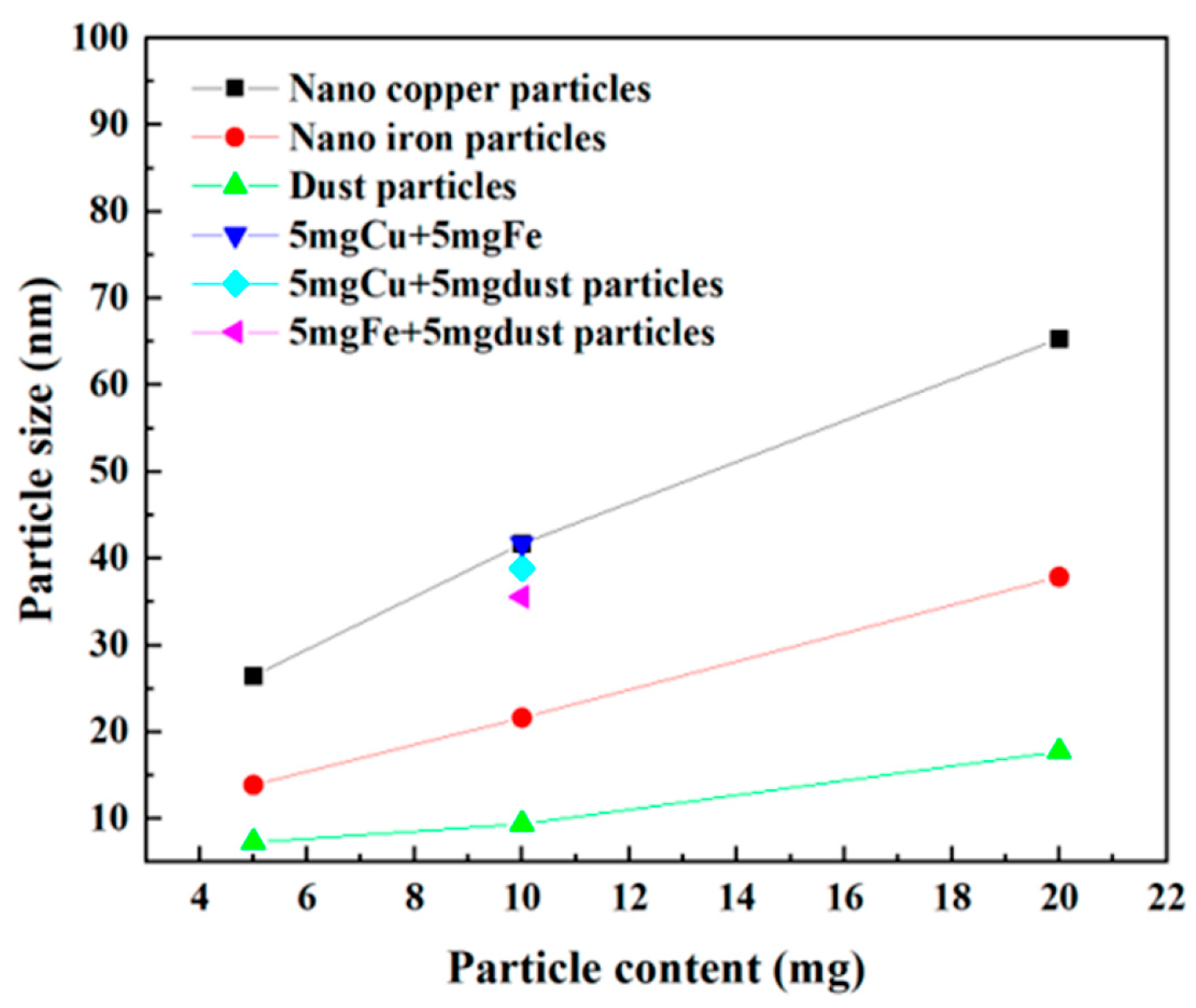
Mixed particle systems exhibit distinct behaviors in regulating the catalytic oxidation of aviation lubricating oil (Table 1). For the oil sample treated with 5 mg of nano-copper particles and 5 mg of nano-iron particles, the acid number, kinematic viscosity, and particle size reached 0.967 mg KOH/g, 73.282 mm2/s, and 38.88 nm, respectively, values comparable to those of the oil sample oxidized by 10 mg of nano-copper particles alone. Furthermore, when 5 mg of nano-iron particles and 5 mg of dust particles were co-added to the aviation lubricating oil sample for oxidative corrosion testing, the acid number, kinematic viscosity, and particle size were 0.627 mg KOH/g, 68.62 mm2/s, and 33.58 nm, respectively. All these parameters were higher than the corresponding values of the oil sample oxidized by 10 mg of nano-iron particles alone. Obviously, the kinematic viscosity and particle size of the oxidized oil sample increase significantly after mixing metal particles with dust (Table 1). For instance, the oil sample treated with a mixture of 5 mg of nano-iron particles and 5 mg of dust particles exhibited a kinematic viscosity of 68.62 mm2/s and a particle size of 33.58 nm. In comparison, the oil sample treated with a mixture of 5 mg of nano-copper particles and 5 mg of dust showed a kinematic viscosity of 80.67 mm2/s and a particle size of 41.67 nm. Both sets of data exceeded the corresponding indicators of oil samples oxidized by 10 mg of nano-iron or nano-copper particles alone (Figure 3). The possible mechanisms underlying this phenomenon are as follows: (1) dust particles exhibit superior suspendability in the lubricating oil, directly contributing to an increase in its kinematic viscosity; (2) particles with distinct properties collide with each other in the oil matrix, thereby enhancing the contact efficiency between the mixed particles and the lubricating oil; (3) during the oxidation experiment, air was introduced into the reaction system via an upper catheter, agitating the particles deposited at the bottom and thereby increasing the kinematic viscosity of the oil. The metal–dust mixed particles are more prone to being suspended in the oil, which extends the suspension time, collision frequency, and catalytic oxidation duration of particles in the oil. These factors collectively bolster the overall oxidation effect of particles on the lubricating oil.

3.2. GC/MS Analysis of Oxidized Aviation Lubricating Oil Samples

To further elucidate the oxidative catalytic mechanism of various particles on aviation lubricating oil under high-temperature conditions, GC/MS was employed to characterize the chemical composition of oxidized oil samples. As presented in Table S1, negligible amounts of antioxidants were detected in the oil sample treated with 5 mg of dust particles, while nearly no nitrogen-containing compounds were identified in its oxidation products. In contrast, trace amounts of amine-based antioxidants were detected in the samples oxidized with the same dosage of nano-iron particles or nano-copper particles. The above results indicate that dust particles may interact with antioxidants in the oil through adsorption or other chemical reactions, thereby consuming the antioxidants in the lubricating oil matrix.
Specifically, after high-temperature oxidation, the base oil content in the pristine oil sample (Control Group 2) decreased from 88.91% to 17.61%, while the antioxidant content declined from 5.41% to 0.158% (Table 2). Concurrently, the content of alkenyl ester compounds increased significantly, along with the generation of trace amounts of small-molecule species (e.g., alcohols, ketones, and carboxylic acids). This finding indicates that a series of chemical reactions occurred during the oxidation process. Furthermore, in the single-particle systems, the oxidized oil sample treated with nano-copper particles exhibited an acidic component proportion of 3.83%, a saturated ester proportion of 40.62%, and a base oil proportion of 4.55%. These values corresponded to the extreme levels (either maximum or minimum) among all single-particle systems involving nano-iron particles or dust particles alone, demonstrating the potent catalytic oxidation activity of nano-copper particles. When the pristine oil was treated with dust particles, the contents of acidic components and alkenyl ester compounds in the oxidized sample were found to be comparable to those in the oxidized 4050 aviation lubricating oil, implying a relatively mild oxidation degree of the oil sample after dust treatment. Notably, the antioxidant content in the dust-treated oxidized oil sample was extremely low, whereas the proportion of nitrogen-containing species in the oxidation products was relatively high. This phenomenon suggests that dust particles may facilitate the oxidation of nitrogen-containing species in the oil during the oxidation process.
For the mixed-particle systems, the base oil in the sample of lubricating oil treated with 5 mg nano-copper particles and 5 mg dust particles was completely oxidized, with the acidic components increasing to 6.76%. For the oil sample treated with a mixture of 5 mg nano-iron particles and 5 mg dust particles, only 2.54% of the base oil remained, and the acidic component proportion reached 4.25%. Notably, neither diisooctyldiphenylamine, phenyl-α-naphthylamine, nor residual base oil components were detected, whereas the relative contents of alkenyl esters and saturated esters were relatively high (Table S1). Meanwhile, the GC/MS analysis results of the oil samples showed a reduction in the number of compound species, particularly in the retention time range of 6–11 min, where almost no small molecule compounds were observed. These results indicate that the mixed-particle systems exhibit significantly stronger oxidative capacity toward the lubricating oil.
For the different aviation lubricating oil samples oxidized with dust particles, the GC/MS testing results consistently demonstrated the presence of silicon-containing compounds (Table S1). Specifically, (1) for the oil sample treated with dust alone, low-molecule-weight silane compounds (e.g., trimethylsilane and hexylsilane) were detected; (2) for the oil sample oxidized by the mixed system of nano-copper powders and dusts, macromolecular siloxane-containing compounds (e.g., 4-(trimethylsilylmethyl)cyclopentylbenzoyl) were identified; (3) for the oxidized oil sample treated with the mixture system of nano-iron powder and dust, macromolecular silane ester compounds (including 3-butoxy-1,1,1,5,5,5-hexamethyl-3-(3-methylsiloxy) trisiloxane and ethyl vanillylmandelic acid silyl derivative) were detected. Furthermore, tert-butyldimethylsilyl cyanide, a compound containing both nitrogen and silicon, was unexpectedly detected at a retention time of 11.367 min. Owing to the presence of unsaturated bonds in the cyano group, this compound may act as an intermediate in the formation of macromolecular silane-based compounds. These results indicate that the presence of dust in aviation lubricating oil intensifies the oxidative degradation of the oil, thereby promoting the formation of small-molecule-weight silane compounds. When dust coexists with metal particles, the metal particle-induced oxidation of the lubricating oil is further enhanced, as dust particles exert a synergistic promoting effect. This process potentially facilitates the formation of structurally complex macromolecular siloxane compounds, which not only possess high relative molecular weights but also exhibit viscous characteristics, thereby rendering them highly prone to further oxidation and subsequent conversion into coking substances.
However, research on the reaction between hydrocarbons and dust under high-temperature conditions has frequently been overlooked, resulting in an unclear understanding of the reaction mechanism between dust and hydrocarbons. Notably, the high-temperature oxidation of lubricating oil proceeds via a free radical pathway, and dust is primarily composed of SiO2. As revealed by the aforementioned GC/MS results, the oxidation products of the lubricating oil primarily consist of small-molecule-weight silicon-containing compounds (silanes and silane nitriles) and macromolecular polymers (silane esters), which confirms that SiO2 is likely to react with the components of aviation lubricating oil during high-temperature oxidation.

3.3. Results of Coking Formation Simulation Tests for Aviation Lubricating Oil

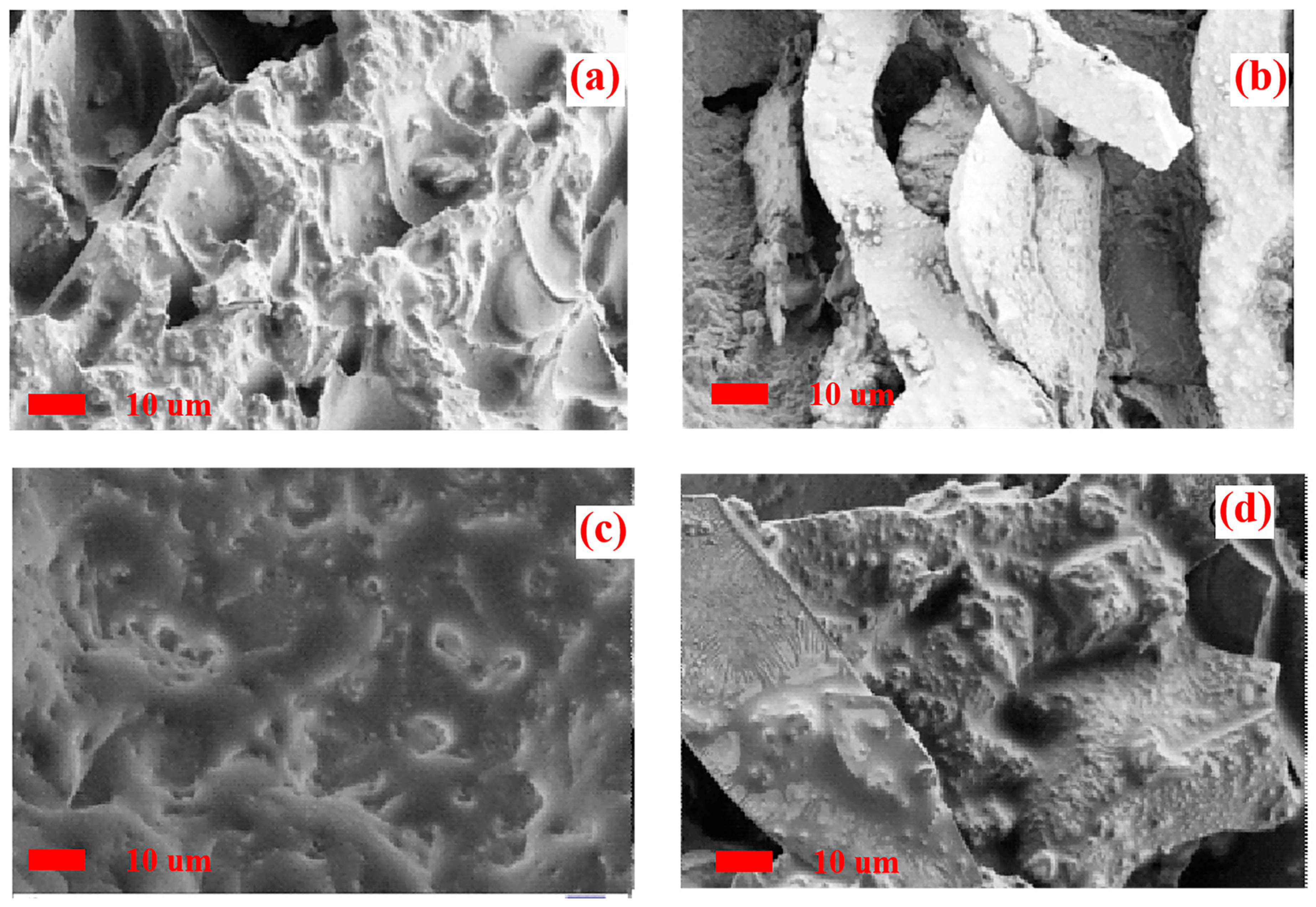
Figure 4 presents the surface morphology of coking samples generated from the oxidation–corrosion test conducted at 230 °C. Irregular flake-like crystalline structures were observed on the surfaces of all four samples, with their main morphological characteristics being essentially similar. Specifically, the crystalline structures on the surface of the coked sample obtained from aviation lubricating oil oxidized by nano-copper particles are relatively dense, whereas those on the surface of the coked sample from pristine 4050 synthetic aviation lubricating oil are relatively loose.
Table 3 exhibits the types and contents of different elements in the lubricating oil coking samples, which contain only four elements: C, O, N, and Si. Among these elements, C and O are derived from aliphatic compounds, aromatic compounds, carboxyl groups, and carbonyl groups, all products of lubricating oil oxidative degradation [20]. In addition, a small amount of silicon was detected in all coking samples, even in those without any dust addition. This phenomenon can be attributed to airborne dust entering the oil samples through the ventilation system and participating in the coking process, which also indirectly confirms that Si-containing substances tend to combine with polar high-temperature oxidation products to form coking materials.
Meanwhile, a relatively high nitrogen content was detected in the coking samples; for instance, the N content in the dust-oxidized lubricating oil sample reaches 6.56% (Table 3), while that in the nano-copper particle-oxidized sample reaches as high as 12%. Nitrogen in 4050 synthetic aviation lubricating oil exists in the form of antioxidants and tolyltriazole. The GC/MS analysis results of the oxidation products from 4050 aviation lubricating oil reveal only trace amounts of phenyl-α-naphthylamine, with no tolyltriazole detected. This result indicates that antioxidants, along with tolyltriazole, form nitrogen-containing oxidation products during the high-temperature oxidation of the lubricating oil, which are then adsorbed onto the surfaces of dust or copper particles during the coking process. Additionally, copper was detected in two of the samples, while silicon was identified in all four. This phenomenon demonstrates that fine particulate matter (e.g., nano-copper particles and dust) acts as coking centers in the experiments, primarily relying on their intrinsic adsorption capacity for nitrogen-containing and oxygen-containing polar species. During high-temperature oxidation, macromolecular oxidation products subsequently and continuously adhere to these particles, eventually accumulating to form coking deposits.
The GC/MS analysis results confirm that the presence of dust and metal particles consumes a significant amount of antioxidants in lubricating oil during oxidation [21]. Among these particles, metal particles can catalyze free radical generation in lubricating oil. Electrons from Fe and Cu are transferred into the free radical chain, thereby inducing the oxidation of hydrocarbon species in the oil and the consequent antioxidant consumption [22]. However, current research has predominantly focused on metal ions-induced lubricating oil oxidation, whereas the mechanism underlying dust-induced antioxidant consumption remains largely overlooked, which is primarily due to the low dust content in lubricating oils, a factor that has not garnered sufficient attention.
The main component of the dust employed in this study is SiO2, which contains active carbonyl functional groups. In other fields, researchers utilize these surface carbonyl groups of SiO2 to react with amines, silanes, and alcohol esters, thereby enhancing its polarity. Therefore, amines and alcohol esters are more susceptible to chemical grafting onto SiO2 particles at temperatures ranging from 200 to 500 °C, forming stable SiO2-centered materials [23]. Additionally, SiO2 reacted with ammonia-based compounds possesses the ability to adsorb metal particles [24,25,26]. In summary, polar organic compounds containing amines, amino groups, and alcohol esters can replace hydroxyl groups on SiO2 to form Si-N bonds, which serve as cores to bind other alcohol ester compounds, ultimately leading to the formation of large deposits. Therefore, amine antioxidants, metal corrosion inhibitors, acidic oxidation products, and esters present in lubricating oil have the potential to undergo grafting reactions with the carbonyl groups of SiO2, forming coking substances during the high-temperature oxidation–corrosion test (230 °C). These coking materials are firmly adsorbed onto SiO2 on the inner walls of test tubes and the outer surfaces of air ducts, making them difficult to elute.
In conclusion, the mechanism underlying dust’s role in aviation lubricating oil oxidation and coking may be summarized as follows: (1) the relatively high nitrogen content in coking particles formed via dust-catalyzed lubricating oil oxidation–corrosion tests indicates that dust particles undergo physical adsorption or chemical reactions with amines, tolyltriazole, and other nitrogen-containing species in the oil. As the dust content in oil samples increases, the extent of such adsorption or chemical reactions is correspondingly enhanced, leading to a linear increase in oil viscosity with rising dust content. (2) When a mixed system composed of metal and dust particles is employed in lubricating oil oxidation–corrosion tests, dust particles adsorb or graft with nitrogen-containing substances, further reducing the antioxidant content in the oil. This amplifies the catalytic oxidation effect of metals on the oil, which synergistically accelerates the oxidative degradation and coking rates of the oil. (3) Furthermore, the presence of abundant dust and metal particles in the oil significantly modulates the thermal behavior of the lubricant, analogous to the role of nanoparticles in nanofluids [27,28]. Suspended nanoparticles in the lubricating oil extend the effective path length of thermal energy propagation and enhance its thermal diffusivity, prolonging the contact time and oxidation duration between these particles and the oil matrix, thereby accelerating oil oxidative degradation.

4. Conclusions

This study systematically investigated the effects of dust, copper particles, and iron particles with different specifications on the high-temperature oxidation behavior of aviation lubricating oil. Specifically, the increase in particle content exhibits a nonlinear correlation with the acid value and kinematic viscosity of oxidized oils, while it shows a linear relationship with the particle size of the oils. By contrast, as the dust content increases, its impact on the acid value and particle size of oxidized oils follows a nonlinear trend, whereas its effect on kinematic viscosity is linear. This difference reflects an inherent distinction in their underlying mechanisms of dusts and metal particles. Furthermore, following lubricating oil treatment under the combined action of metals and dust, the oxidation degree of the oil sample is synergistically intensified to a significant extent. This phenomenon is primarily ascribed to dust particles that consume antioxidants through physical interactions and chemical grafting reactions, with metal particles further enhancing the oxidative extent of the lubricant. Meanwhile, fine metal and dust particles serve as coking nuclei by virtue of their capacity to adsorb nitrogen-containing and oxygen-containing species, continuously growing via the adsorption of macromolecular oxidation products during high-temperature oxidation and eventually accumulating to form coke.

Supplementary Materials

The following supporting information can be downloaded at https://www.mdpi.com/article/10.3390/lubricants14040143/s1: Figure S1. The variation trends of acid number (a) and kinematic viscosity and particle size (b) of copper particles after oxidation corrosion; Table S1. GC/MS analysis of high-temperature oxidized aviation lubricant samples with different particles.

Author Contributions

Conceptualization, S.Y.; methodology, S.Y.; software, X.X.; validation, J.M.; formal analysis, J.M. and X.X.; investigation, J.G., L.T. and J.Z.; resources, L.T. and J.Z.; data curation, S.Y., J.G. and X.X.; writing—original draft preparation, S.Y. and J.G.; writing—review and editing, S.Y., J.G. and P.Q.; visualization, J.H. and X.X.; supervision, J.C. and J.H.; project administration, J.C. and J.H.; funding acquisition, J.C. and J.H. All authors have read and agreed to the published version of the manuscript.

Funding

This research was funded by the Project for National Natural Science Foundation of China (22578476).

Data Availability Statement

The data that supports the findings of this study are available in the Supplementary Material of this article.

Conflicts of Interest

The authors declare no conflicts of interest.

References

  1. Chen, T.; Gao, H.; Qi, P.; Yang, S.; Xu, X.; Ma, J.; Guo, L.; Cao, J.; Hu, J. Origin and forming mechanism of coking substance in ester aviation lubricating oil. Fuel 2026, 405, 136806. [Google Scholar] [CrossRef]
  2. Duran, B.; Cavoret, J.; Philippon, D.; Ville, F.; Ruellan, A.; Berens, F. Influence of a transmission oil degradation on physico-chemical properties and tribological performance. Tribol. Int. 2024, 191, 109084. [Google Scholar] [CrossRef]
  3. Zhang, X.; Huang, X.; Li, J.; Tang, Z.; Wang, J. Thermal oxidation of aviation lubricating oil: Mechanism, influencing factors, evaluation methods, and antioxidants. Asia-Pac. J. Chem. Eng. 2024, 19, e3114. [Google Scholar] [CrossRef]
  4. Zhou, R.; Ma, R.; Bao, L.; Cai, M.; Zhou, F.; Li, W.; Wang, X. “Lubrication Brain”―A machine learning framework of lubrication oil molecule design. Tribol. Int. 2023, 183, 108381. [Google Scholar] [CrossRef]
  5. Azam, S.; Park, S.-S. Impact of Biosynthesized CeO2 Nanoparticle Concentration on the Tribological, Rheological, and Thermal Performance of Lubricating Oil. Lubricants 2024, 12, 400. [Google Scholar] [CrossRef]
  6. Cao, C.; Li, H.; Han, S.; Li, J. Study on the Formation Mechanism of Oil Sludge in Polyol Esters in Presence of High-Temperature Antioxidant N-Phenyl-α-naphthylamine. Lubricants 2025, 13, 403. [Google Scholar] [CrossRef]
  7. Xiong, W.; Zhao, X.; Luan, Y.; Wang, R.; Wu, S. Effect of the natural antioxidant ferulic acid and its ester derivatives on the oxidative stability of ester-based lubricants: Experimental and molecular simulation investigations. Thermochim. Acta 2023, 723, 179474. [Google Scholar] [CrossRef]
  8. Gan, Z.; Yao, T.; Zhang, M.; Hu, J.; Liao, X.; Shen, Y. Effect of Temperature on the Composition of a Synthetic Hydrocarbon Aviation Lubricating Oil. Materials 2020, 13, 1606. [Google Scholar] [CrossRef]
  9. Distaso, E.; Calò, G.; Amirante, R.; Palma, P.D.; Mehl, M.; Pelucchi, M.; Stagni, A.; Tamburrano, P. Linking lubricant oil contamination to pre-ignition events in hydrogen engines–The HyLube mechanism. Fuel 2025, 379, 133041. [Google Scholar] [CrossRef]
  10. Diaby, M.; Singhal, P.; Ousmane, M.; Sablier, M.; Le Négrate, A.; El Fassi, M.; Zymla, V. Impact factors for the degradation of engine oil causing carbonaceous deposits in the piston’s grooves of Diesel engines. Fuel 2013, 107, 90–101. [Google Scholar] [CrossRef]
  11. Farfan-Cabrera, L.I.; Gallardo-Hernández, E.A.; Pérez-González, J.; Marín-Santibáñez, B.M.; Lewis, R. Effects of Jatropha lubricant thermo-oxidation on the tribological behaviour of engine cylinder liners as measured by a reciprocating friction test. Wear 2019, 426–427, 910–918. [Google Scholar] [CrossRef]
  12. Chen, T.; Xie, F.; Ji, F.; Xu, X.; Hu, J.; Guo, L.; Yang, S.; Ma, J.; Xiao, Y. Probing the electrical conductivity attenuation of current jet fuel during storage and transportation. Fuel Process. Technol. 2023, 241, 107608. [Google Scholar] [CrossRef]
  13. Chen, T.; Yang, S.; Ma, J.; Gao, H.; Xu, X.; Xie, F.; Cao, J.; Hu, J. Real-time oxidation and coking behavior of ester aviation lubricating oil in aircraft engines. Tribol. Int. 2024, 192, 109240. [Google Scholar] [CrossRef]
  14. Li, L.; Bai, P.; Wen, X.; Zhou, X.; Ma, K.; Meng, Y.; Ding, J.; Tian, Y. Wear mechanism and evolution of tribofilm of ceramic on steel pairs under ester oil lubrication in wide temperature range. J. Mater. Res. Technol. 2023, 27, 6984–6996. [Google Scholar] [CrossRef]
  15. Yao, T.; Zhang, N.; Zhang, M.; She, X.; Liao, X.; Shen, Y.; Gan, Z. Effect of iron and copper on the thermal oxidation stability of synthetic hydrocarbon aviation lubricating oil. Catal. Commun. 2021, 161, 106363. [Google Scholar] [CrossRef]
  16. MIL-L-23699E; Lubricating Oil, Aircraft Turbine Engine, Synthetic Base. Naval Publications and Form Center (NPFC): Washington, DC, USA, 1994.
  17. GB/T 265-1998; Petroleum Products—Determination of Kinematic Viscosity and Calculation of Dynamic Viscosity. Standardization Administration of the People’s Republic of China: Beijing, China, 1998.
  18. NB/SH/T 6011-2020; Acid Number of Crude Oil and Petroleum Products by Catalytic Thermometric Titration. Standardization Administration of the People’s Republic of China: Beijing, China, 2020.
  19. Li, T.; Xue, H.; Fu, P.; Zhou, Y.; Zhang, K.; Gu, L.; Wu, L. The superior lubricity of the ultra-dispersive DETS-CNTs as additives for oil lubrication. Tribol. Int. 2024, 200, 110072. [Google Scholar] [CrossRef]
  20. Owrang, F.; Mattsson, H.; Nordlund, A.; Olsson, J.; Pedersen, J. Characterization of combustion chamber deposits from a gasoline direct injection SI engine. SAE Trans. 2003, 112, 752–761. [Google Scholar]
  21. Ardy, H.; Hanifah, A.I.; Wibowo, A. Thermal Stability Study of Commercial Lube Oil at Moderate Temperature and Long Working Period; AIP Publishing LLC: Melville, NY, USA, 2020; Volume 2237, p. 020055. [Google Scholar]
  22. Su, R.; Cao, W.; Jin, Z.; Wang, Y.; Ding, L.; Maqsood, M.; Wang, D. Deterioration Mechanism and Status Prediction of Hydrocarbon Lubricants under High Temperatures and Humid Environments. Lubricants 2024, 12, 116. [Google Scholar] [CrossRef]
  23. Zhang, W.; Zou, W.; Guan, Q.; Liu, P. Amino-modified silica-supported alkaline ionic liquids for catalysis of Knoevenagel reaction. Petrochem. Technol. 2024, 53. [Google Scholar] [CrossRef]
  24. Zhang, J.W.C.; Wang, J.; Yuan, W. Preparation of quaternary ammonium-modified silica and its adsorption of vanadium(V). Ind. Water Treat. 2025, 45, 104–114. [Google Scholar]
  25. Zhan, Y.C.Y.; Wang, J.; Yu, Z. Nano-silica modified stainless steel mesh for oil-water separation. Fine Chem. 2024, 41, 9. [Google Scholar]
  26. Fu, M.L.; Cen, J.M.; Chen, Z.X. Study on preparation of magnetic SiO2/chitosan composite aerogel and its adsorption for Cu2+. Inorg. Chem. Ind. 2023, 55. [Google Scholar] [CrossRef]
  27. Madiwal, S.; Naduvinamani, N.B. Heat and Mass Transformation of Casson Hybrid Nanofluid (MoS2 + ZnO) Based on Engine Oil over a Stretched Wall with Chemical Reaction and Thermo-Diffusion Effect. Lubricants 2024, 12, 221. [Google Scholar] [CrossRef]
  28. Swapna, M.S.; Vimal, R.; Kumar, K.S.; Sankararaman, S. Soot effected sample entropy minimization in nanofluid for thermal system design: A thermal lens study. J. Mol. Liq. 2020, 318, 114038. [Google Scholar] [CrossRef]
Figure 1. The variation trends of acid number (a) and kinematic viscosity and particle size (b) of copper particles after oxidation corrosion.
Lubricants 14 00143 g001
Figure 2. Effects of dust on acid number (a), kinematic viscosity, and particle size (b) trends of oil samples.
Lubricants 14 00143 g002
Figure 3. Synergistic effect of mixed particles on the oxidation and corrosion of oil samples.
Lubricants 14 00143 g003
Figure 4. SEM micrographs of carbonized oil samples: (a) dust-carbonized oil sample, (b) 4050-carbonized oil sample, (c) copper particle-carbonized oil sample, (d) iron particle-carbonized sample.
Lubricants 14 00143 g004
Table 1. High-temperature oxidation–corrosion test results of different test samples.
Serial NumberSampleAcid Number (mg KOH/g)Kinematic Viscosity (mm2/s, 40 °C)Particle Size (nm)
1Control Group 10.2224.760.65
2Control Group 20.4525.526.30
3copper sheet0.6538.2828.54
4iron sheet0.5234.749.75
55 mg nano-copper particles0.8665.2526.48
610 mg nano-copper particles0.9981.6541.70
720 mg nano-copper particles1.3097.4665.36
85 mg micro-copper particles0.7067.9322.62
910 mg micro-copper particles0.8871.3534.47
1020 mg micro-copper particles1.0984.4553.41
115 mg nano-iron particles0.5350.7213.89
1210 mg nano-iron particles0.6466.3421.65
1320 mg nano-iron particles0.9070.1237.87
145 mg A3 dust0.5144.027.28
1510 mg A3 dust0.5653.989.37
1620 mg A3 dust0.6370.5417.74
175 mg A2 dust0.5247.486.58
1810 mg A2 dust0.5758.566.83
1920 mg A2 dust0.6177.2514.87
205 mg nano-copper particles + 5 mg nano-iron particles0.9773.2838.88
215 mg nano-copper particles + 5 mg dust0.9680.6741.67
225 mg nano-iron particles + 5 mg dust0.6368.6235.58
Table 2. Content of base oil, olefin ester, antioxidant, and nitrogen-containing substances in different oxidized oil samples.
Sample4050 OxidizedNano-Copper ParticlesNano-Iron ParticlesDust Particles5 mg Cu + 5 mg Dust Particles5 mg Fe + 5 mg Dust Particles
Component
(Relative Content)
Acid0.6593.832.310.776.764.25
Base oil17.6134.557.616.69-2.54
Alkenyl ester18.21325.7727.71321.34918.21421.01
Antioxidant0.158-0.0230.035--
Saturated esters36.41640.62433.85725.25346.25147.267
Nitrogen-containing materials9.94919.70617.23221.70816.85616.173
Silicon-containing substances---0.6891.400.458
Table 3. Elemental composition results of coking particles and coking precursors.
SampleCuCOSiN
Weight PercentageAtomic RatioWeight PercentageAtomic RatioWeight PercentageAtomic RatioWeight PercentageAtomic RatioWeight PercentageAtomic Ratio
30 mg dust--60.5075.2536.2025.351.420.686.566.38
4050 aviation oil--72.075.6125.6220.720.400.193.783.49
30 mg copper powder 1.270.2753.4960.0632.4427.350.120.3212.8012.33
30 mg iron powder4.861.0463.521.8328.9924.610.050.022.592.51
Disclaimer/Publisher’s Note: The statements, opinions and data contained in all publications are solely those of the individual author(s) and contributor(s) and not of MDPI and/or the editor(s). MDPI and/or the editor(s) disclaim responsibility for any injury to people or property resulting from any ideas, methods, instructions or products referred to in the content.