


Abstract
The unbalanced excitation of a rotor has a significant impact on the dynamic stiffness of the bearing. Traditional unbalanced excitation force models for the calculation of bearing stiffness are usually simplified as single-directional excitation models, which cannot fully reflect the impact of unbalanced excitation of the rotor on the dynamic stiffness of the bearing. A bidirectional excitation model based on orthogonal decomposition is used in this paper and is introduced into the finite element model of the bearing based on ABAQUS. The proposed bearing mechanics model is verified through numerical software and a bearing rotor system test rig. The effects of single/bidirectional excitation models on the dynamic stiffness of bearings were compared. The variation in bearing dynamic stiffness characteristics under rotor excitation and axial load were discussed. The results show that the presented model has good consistency with experimental results (the proposed model yields a maximum stress deviation of only 2.42% compared to MESYS numerical results and a maximum dynamic stiffness difference of 9.12% against experimental data). The traditional unidirectional excitation force model can only consider the influence of excitation frequency on the dynamic stiffness of bearings. However, the unbalanced excitation force model considering bidirectional excitation can further take into account the influence of excitation amplitude on the dynamic stiffness of bearings. Under the combined effect of excitation frequency and excitation amplitude, the radial dynamic stiffness of bearings shows a quadratic nonlinear hardening trend with rotational speed. As the rotational speed increases, the contribution of axial load to the radial stiffness significantly enhances: in the low-speed zone, its influence is only approximately 8%, while in the high-speed zone, it increases to 34%. Although the modeling method formed in this paper does not take into account the thermal–fluid dynamic coupling effect of the lubricating oil film, the obtained laws can provide a basis for the dynamic design of rotor systems of actual liquid rocket engines and have certain engineering application value.
1. Introduction
Rolling bearings are the core components of liquid rocket engine turbopumps, and their dynamic stiffness characteristics are of great significance to the study of the dynamic characteristics of turbopump rotor systems. Advanced liquid rocket engines require bearings to have high-speed capability and multi-directional load capacity, which further increases the complexity of their dynamic stiffness characteristics. Consequently, scholars have conducted extensive theoretical analysis and experimental research on the dynamic stiffness characteristics of rolling bearings.
The load of the bearing and speed are the main factors affecting the dynamic stiffness characteristics of the bearing [1,2,3,4,5]. Among them, the influence of load change caused by rotation on bearing dynamic stiffness has always been a research hotspot. It mainly includes two aspects:
(1) The rotation of the bearing itself [6,7]: The high-speed rotation of bearing components generates significant centrifugal forces and gyroscopic moments. Fang [8] established a modeling method to study stiffness variations with speed, while Wang et al. [9] analyzed the evolutionary regularity of dynamic characteristics under combined loads. Building upon inertial effects, scholars have incorporated multi-physics coupling. Lei et al. [10] integrated thermal effects to reveal combined load influences. Yun et al. [11] constructed a thermal–solid coupling model considering time-varying friction states. Lei et al. [12] and Li et al. [13] developed comprehensive models integrating ball spin, centrifugal expansion, and thermal deformation. Li et al. [14] clarified the inherent laws of stiffness enhancement or weakening under thermal–centrifugal coupling. Recent works have further expanded this scope: Gao et al. [15] quantified stiffness degradation due to frictional heat, and Li et al. [2] discovered a competition between “softening” and “hardening” characteristics at high speeds. Furthermore, Zhang et al. [16] demonstrated that minor assembly errors, such as spacer inclination, induce significant stiffness anisotropy during high-speed rotation. Overall, this line of research primarily emphasizes how speed-dependent inertial and coupled effects within the bearing reshape the stiffness through changes in load sharing, contact state, and anisotropy.
(2) Rotation of the shaft [17,18]: Apart from the bearing itself, shaft rotation—particularly unbalanced excitation—is the primary vibration source. Chen [19] experimentally validated stiffness models considering speed effects. Li et al. [20,21] analyzed flexible rotor-bearing systems under combined loads, while Liu et al. [22] focused on the influence of rotor flexural deformation on frequency and amplitude characteristics. Critical speeds and unbalanced responses were calculated by Weng et al. [23]. For extreme scenarios, Li et al. [24] investigated transient responses under sudden unbalance. Most recently, Chen et al. [25] explored time-varying stiffness under combined loads. However, in many existing studies, unbalanced forces are represented by unidirectional excitation models [26,27]. Such a simplification can capture the frequency-related effect of speed, but it treats the excitation as a fixed-direction projection and thus does not explicitly preserve the rotating-vector nature of unbalance. In practical rotor systems, rotational speed simultaneously changes both excitation frequency and excitation amplitude. Therefore, ignoring the speed-induced excitation amplitude modulation may lead to significant deviations in stiffness prediction.
Based on the above literature, current research efforts mainly focus on how speed-dependent inertial loads (e.g., rolling-element centrifugal force and gyroscopic moment) influence bearing stiffness, whereas the influence of speed-dependent excitation loads on bearing stiffness prediction is much less explicitly addressed [20,26]. In actual rotor systems, unbalanced excitation differs from general static radial loads in that its amplitude and direction evolve with rotational speed, which can lead to more complex stiffness variations. As a result, neglecting the influence of excitation amplitude may cause noticeable discrepancies in predicted bearing stiffness.
In response to the above deficiencies, this paper proposes a bearing stiffness calculation method that takes rotational speed as the independent variable of the excitation load. This method can simultaneously consider the influence of the changes in excitation frequency and excitation amplitude caused by rotational speed on the stiffness of bearings. In Section 2 of the paper, a rotor unbalanced excitation force model considering bidirectional excitation is established through orthogonal decomposition; in Section 3, the correctness of this model is verified through the numerical simulation software MESYS and experiments; on this basis, Section 4 of the paper analyzes the variation laws of the dynamic stiffness characteristics of bearings under the action of unbalanced excitation loads, axial loads, etc. It should be emphasized that the bidirectional representation of unbalance itself is not the novelty; rather, the contribution of this work lies in incorporating the speed-dependent excitation amplitude into the stiffness evaluation framework and clarifying, under the same bearing/load settings, how the excitation force representation affects stiffness prediction. This provides a practical approach for dynamic stiffness analysis of rolling bearings under complex operating conditions relevant to turbopump rotor systems.
2. Bearing Dynamics Modeling
In order to accurately predict the dynamic stiffness characteristics of the bearing, a three-dimensional model of the bearing is established based on the finite element method. The model considers the contact between the rolling element and the outer ring, the contact between the rolling element and the inner ring, the radial unbalanced excitation load and the axial load. The lubricating oil film stiffness/damping and thermal effects are not explicitly included, because this study aims to isolate the influence of unbalanced excitation modeling on stiffness prediction. Ref. [27] indicates that lubrication tends to increase the effective contact stiffness of high-speed ball bearings. Therefore, omitting the oil film contribution is expected to primarily shift the absolute stiffness level (and damping), while not altering the comparative stiffness variation trends associated with different excitation representations within the scope of this work.
2.1. Contact Model
The normal contact conditions are as follows:
where p is the normal contact pressure and g is the contact gap [3]:
In the above formula, n is the normal unit vector of the main surface of the contact position, and xs and xm are the position coordinates of the nodes from the surface and the main surface, respectively.
The relationship between the normal contact pressure and the contact gap is constructed by the penalty function method:
kn is the normal contact stiffness.
The Coulomb friction model is used to describe the tangential contact friction t:
μ is the friction coefficient.
2.2. Unbalanced Excitation Force Model Considering Bidirectional Excitation
The radial load is the unbalanced excitation force generated by the rotor. It is assumed that the amplitude of the excitation force is F0 and the phase lag is α. Orthogonal decomposition is used to decompose the unbalanced excitation force into two excitation forces Fy and Fz with a phase difference of 90°, which are expressed in complex numbers, as follows:
Here, Ω is the whirling speed; the expanded form is
When the imbalance is equal to me,
In the formula, m is the unbalanced mass, e is the eccentric distance of the unbalanced mass, and ω is the rotational speed of the shaft. When the rotor is in synchronous positive precession,
2.3. Kinetic Equation
Based on the principle of minimum potential energy, the differential equation of motion is established as follows:
Among them,
In the formula, M, C, and K are the mass, damping and stiffness matrices of the bearing system, respectively. F is the node load vector, including unbalanced excitation load and axial load. i is the node number. R is the contact force and Γ is the contact area. x is the position coordinate of the contact interface node.
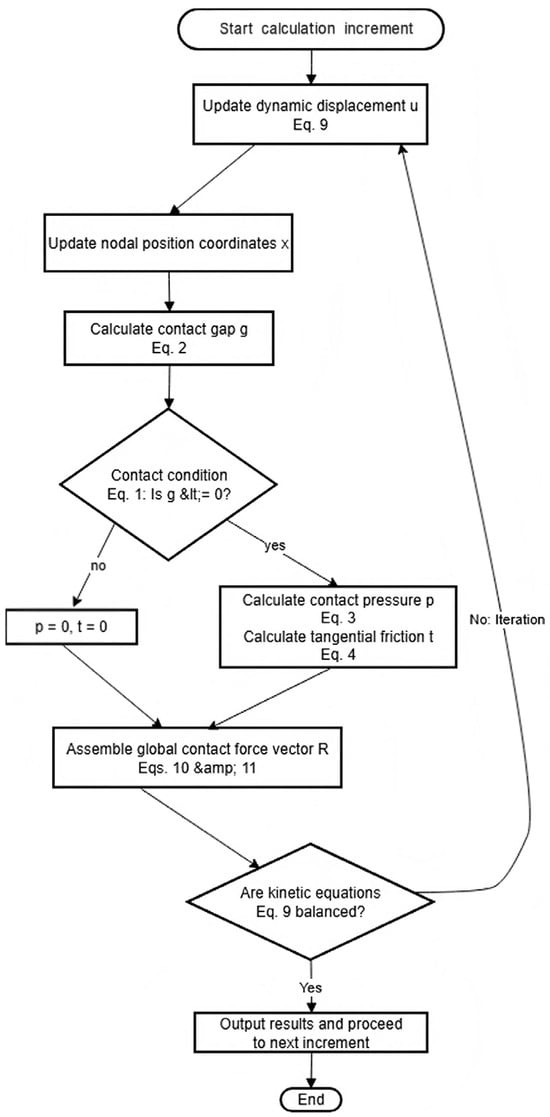
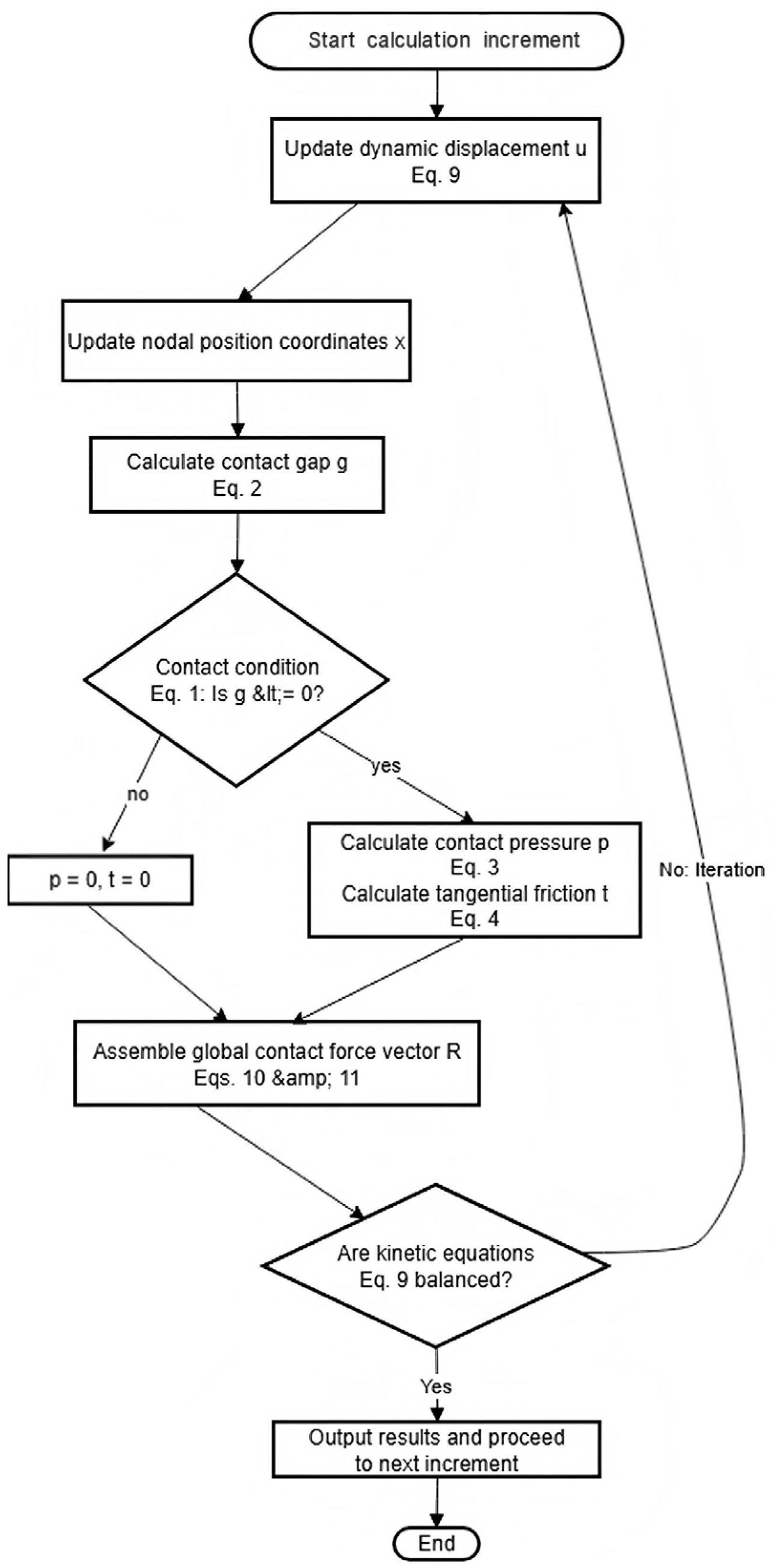
In the actual finite element calculation process, the equations presented in Section 2.1 to Section 2.3 are strongly coupled and solved jointly. Specifically, the dynamic displacements of the bearing components are solved as u in the kinetic equation (Equation (9)). Based on these derived displacements, the current nodal position coordinates x are dynamically updated at each calculation step. Subsequently, the contact gap g is evaluated using these updated coordinates via Equation (2). The contact area Γ is not predetermined; rather, it is identified continuously by finding the nodes where penetration occurs g < 0. For these active contact nodes, the contact pressure p and the tangential friction t are calculated using the penalty function method (Equation (3)) and the Coulomb friction model (Equation (4)), respectively. The main hyperparameters for these methods are the normal contact stiffness kn and the friction coefficient μ = 0.03. Finally, p and t are integrated over the contact area Γ to formulate the global contact force vector R (Equations (10) and (11)). Because R depends on x (and consequently on u), and Equation (9) requires R to solve for u, this forms a closed-loop dependency. Therefore, these equations are solved jointly through an iterative calculation procedure until the kinetic equations are balanced. A flowchart describing this comprehensive iterative procedure is illustrated in Figure 1.
Figure 1.
Flowchart of the iterative calculation process.
3. Model Verification
3.1. Bearing Model
Taking a B7206 bearing as the research object, the bearing structure size parameters are shown in Table 1.
Table 1.
The structure parameters of the bearing.
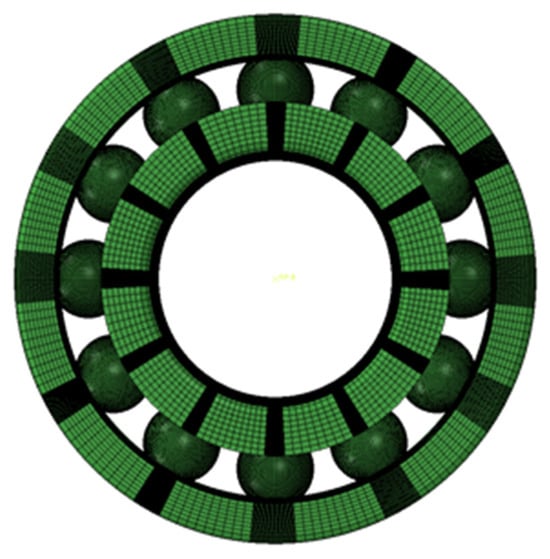
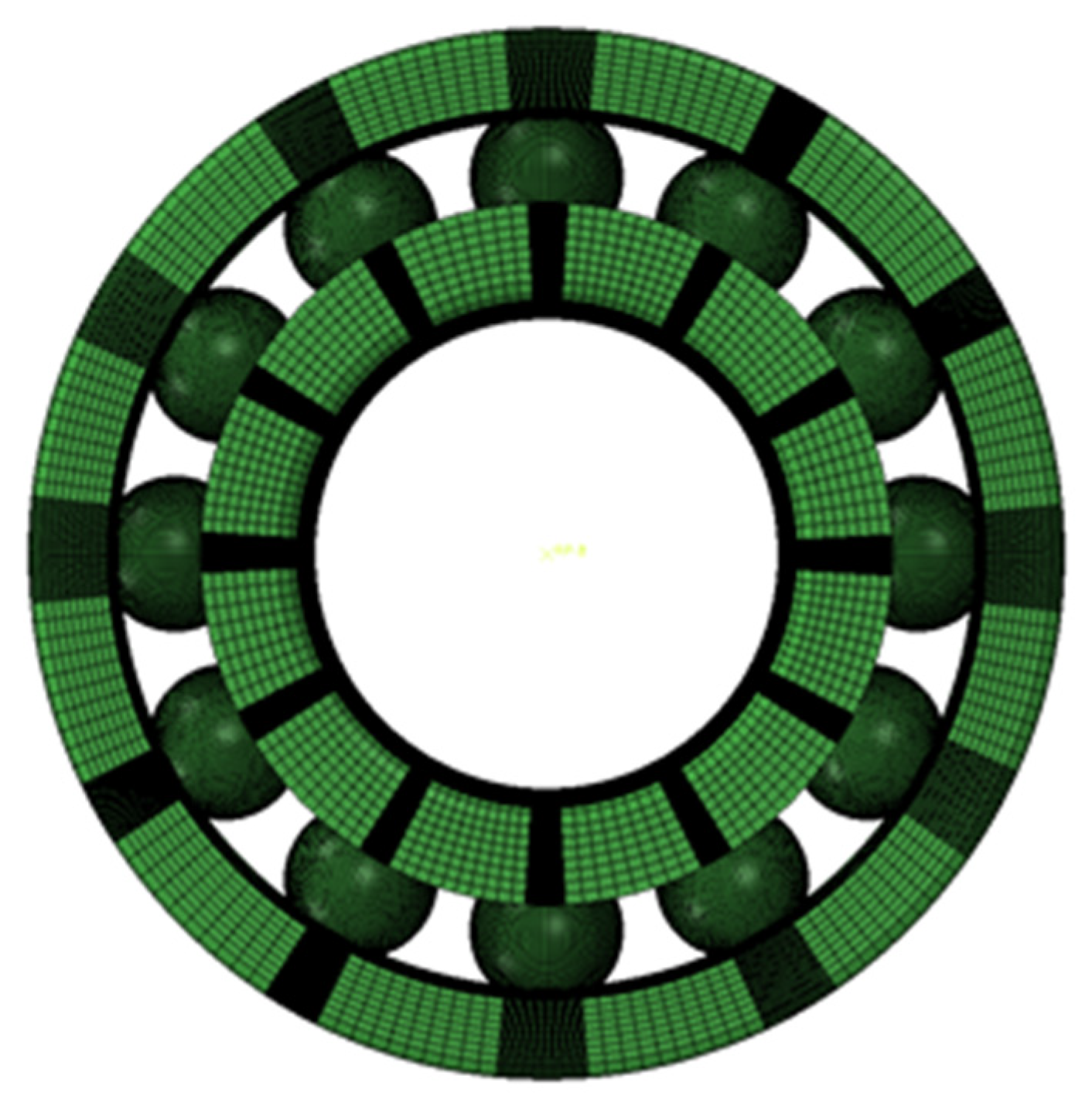
The C3D8R hexahedron element is used for the whole bearing, and the structured grid is established by the built-in cube method for the rolling element. Grid refinement is carried out for the contact area between the rolling element and the inner and outer rings to ensure the convergence of the calculation. The bearing mesh model is shown in Figure 2. The number of grids is 1,061,016. The maximum unit size is 0.5 mm, to fully consider the contact behavior between the balls and the inner and outer rings, and the mesh in the contact area is refined. The inner and outer rings and the rolling element are considered as linear elastic material models. The material density is 7810 kg/m3, Young’s modulus is 212 GPa, and Poisson’s ratio is 0.29.
Figure 2.
Mesh model of bearing.
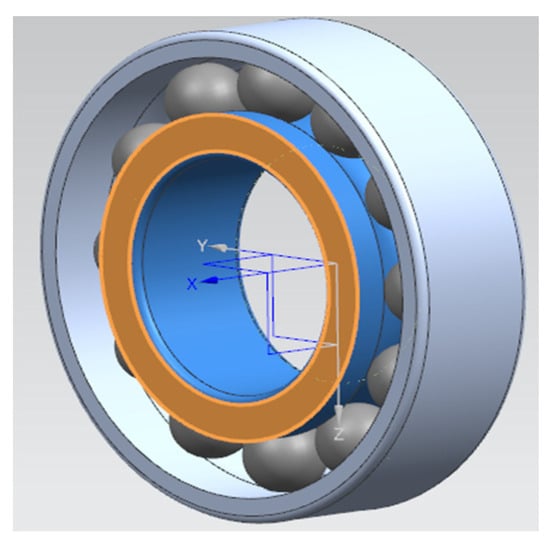
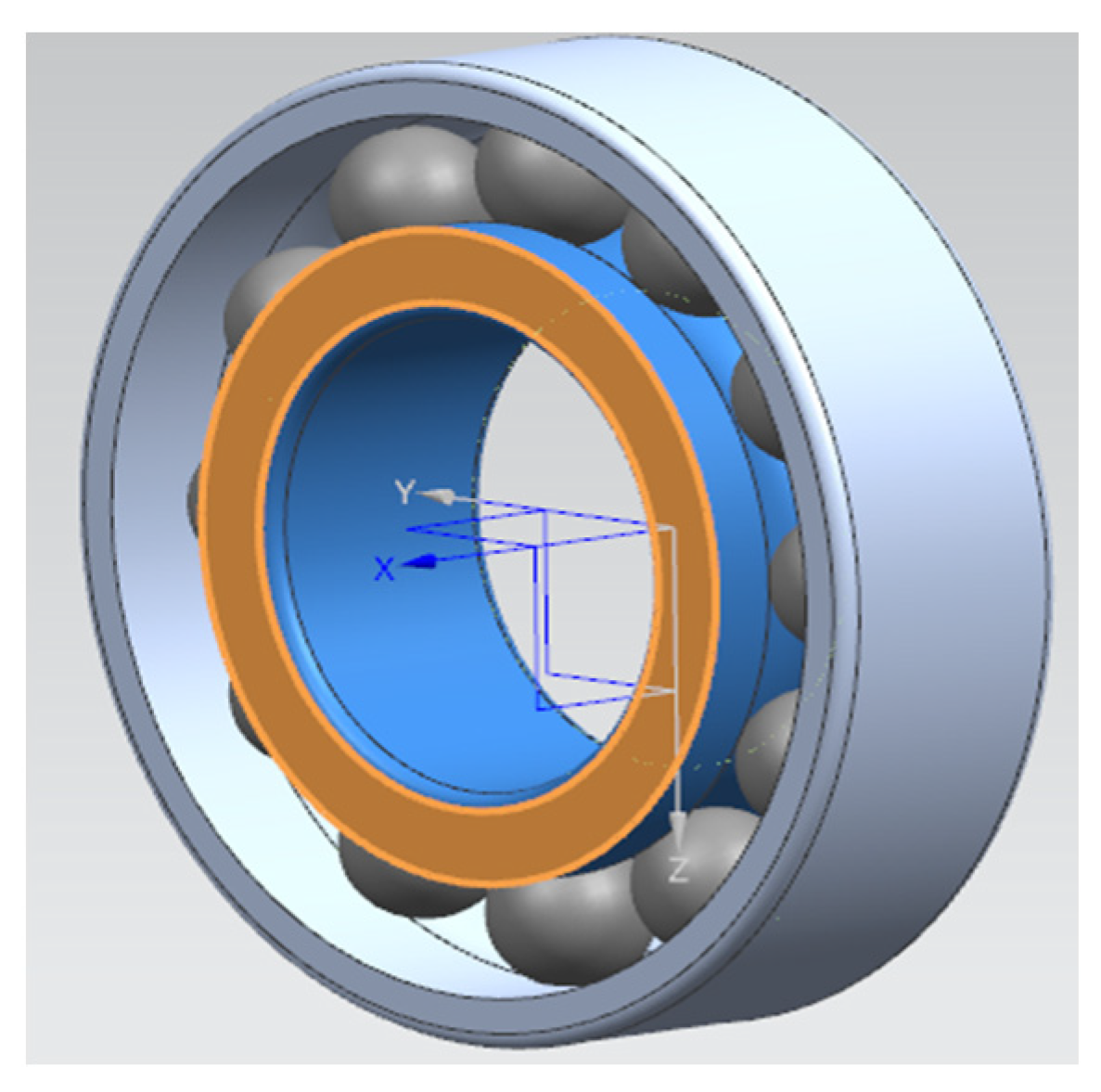
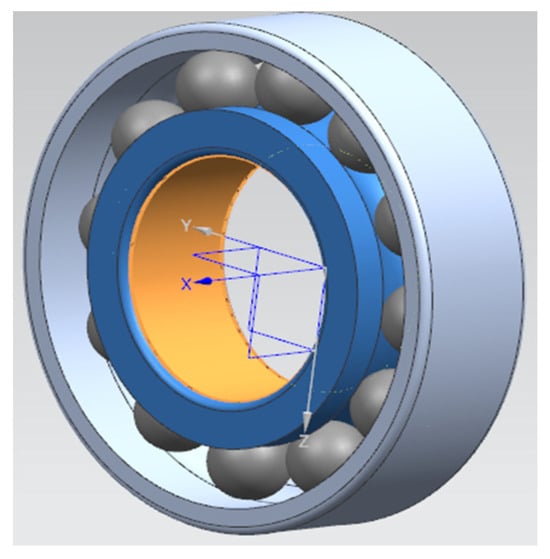
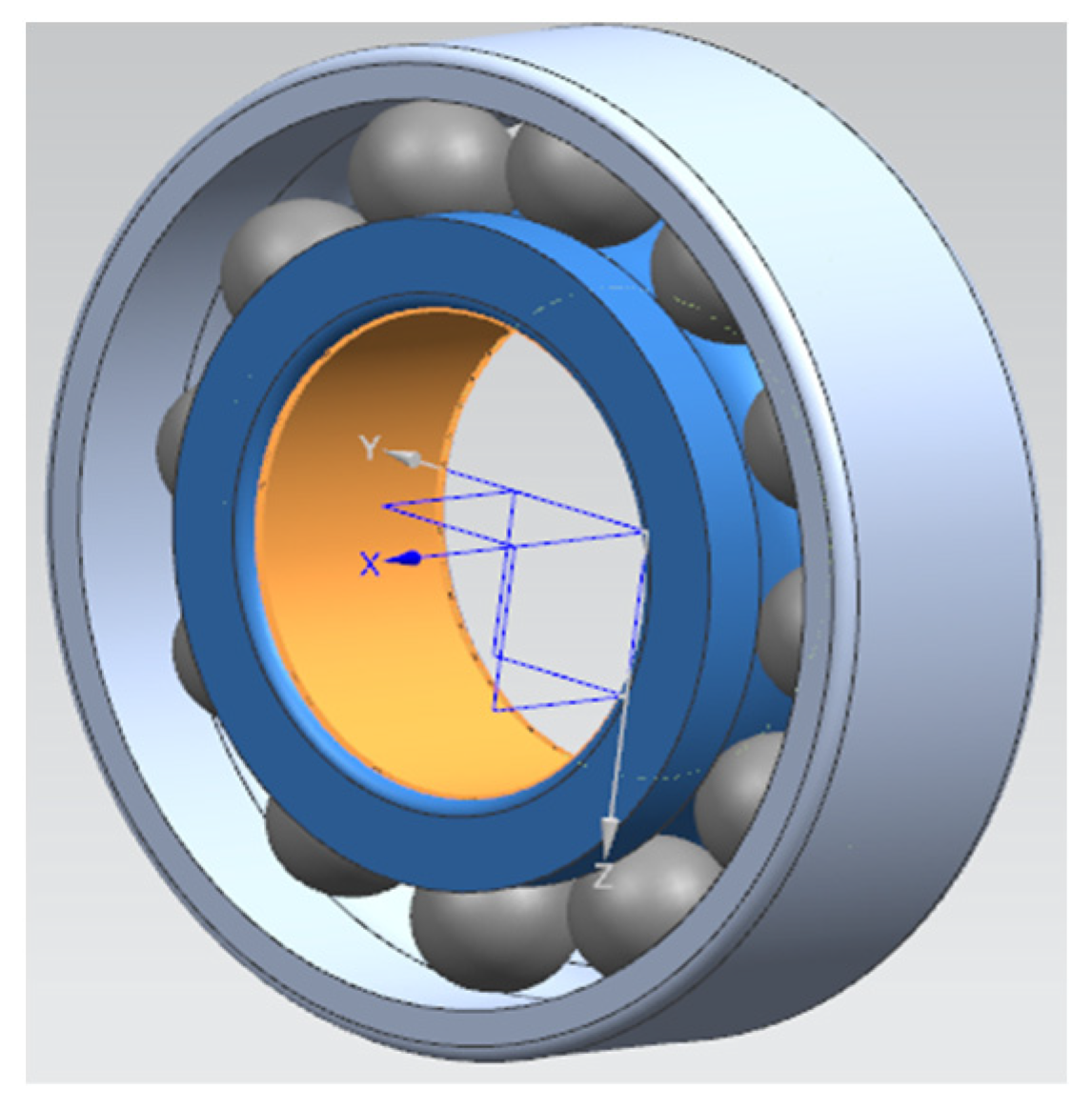
The outer surface of the bearing outer ring is a fixed constraint. Ignoring the influence of the cage, the axial load and radial load are applied to the inner ring. The applied position is the bright orange plane in Figure 3 and Figure 4, where the negative direction of the x-axis is the direction of the axial load. The friction coefficient between the ball and the inner and outer rings is 0.03, and the damping is 0.001 N∙s/m [3].
Figure 3.
Locations of axial loads.
Figure 4.
Locations of radial loads.
3.2. Numerical Verification
Ignoring the unbalanced excitation force and only considering the ordinary radial and axial loads, the bearing mechanical model established in this paper is compared with the calculation results of the commercial software MESYS (Version 2022). Since MESYS uses accurate Hertz contact theory to establish the analytical model of the bearing, this comparison is not only intended to preliminarily verify the correctness of the mechanical model in this paper but also to verify the mesh independence of the finite element model.
The comparison results are shown in Table 2. On the one hand, under various working conditions, the maximum stress error between the model in this paper and the MESYS calculation does not exceed 2.42%, which preliminarily proves the overall reliability of the basic mechanical model built in this paper and provides a basis for the subsequent establishment of the model considering the unbalanced excitation force. On the other hand, in finite element contact analysis, the maximum contact stress is usually the most sensitive variable to mesh density. Especially under the most severe load condition 4, the error between the maximum stress of the inner ring calculated by the current mesh model (including 1061016 elements) and the analytical solution of MESYS is only 0.33%. This high degree of consistency strongly indicates that the current mesh density is sufficiently fine to accurately capture the steep stress gradient in the contact area. Further refinement of the grid leads to little improvement in the calculation accuracy, but it greatly increases the calculation cost. Therefore, the current model has fully met the requirements of grid independence.
Table 2.
Comparison of bearing maximum stress.
However, because the MESYS software cannot consider the unbalanced excitation force, this paper will further introduce the unbalanced excitation force on the basis of the verified mechanical model and carry out experimental verification.
3.3. Experimental Verification
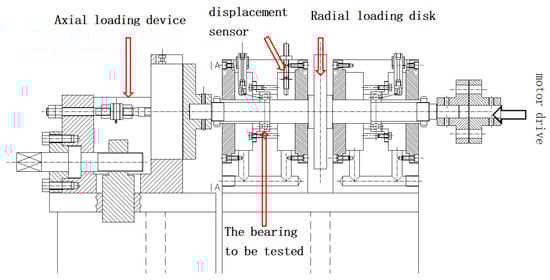
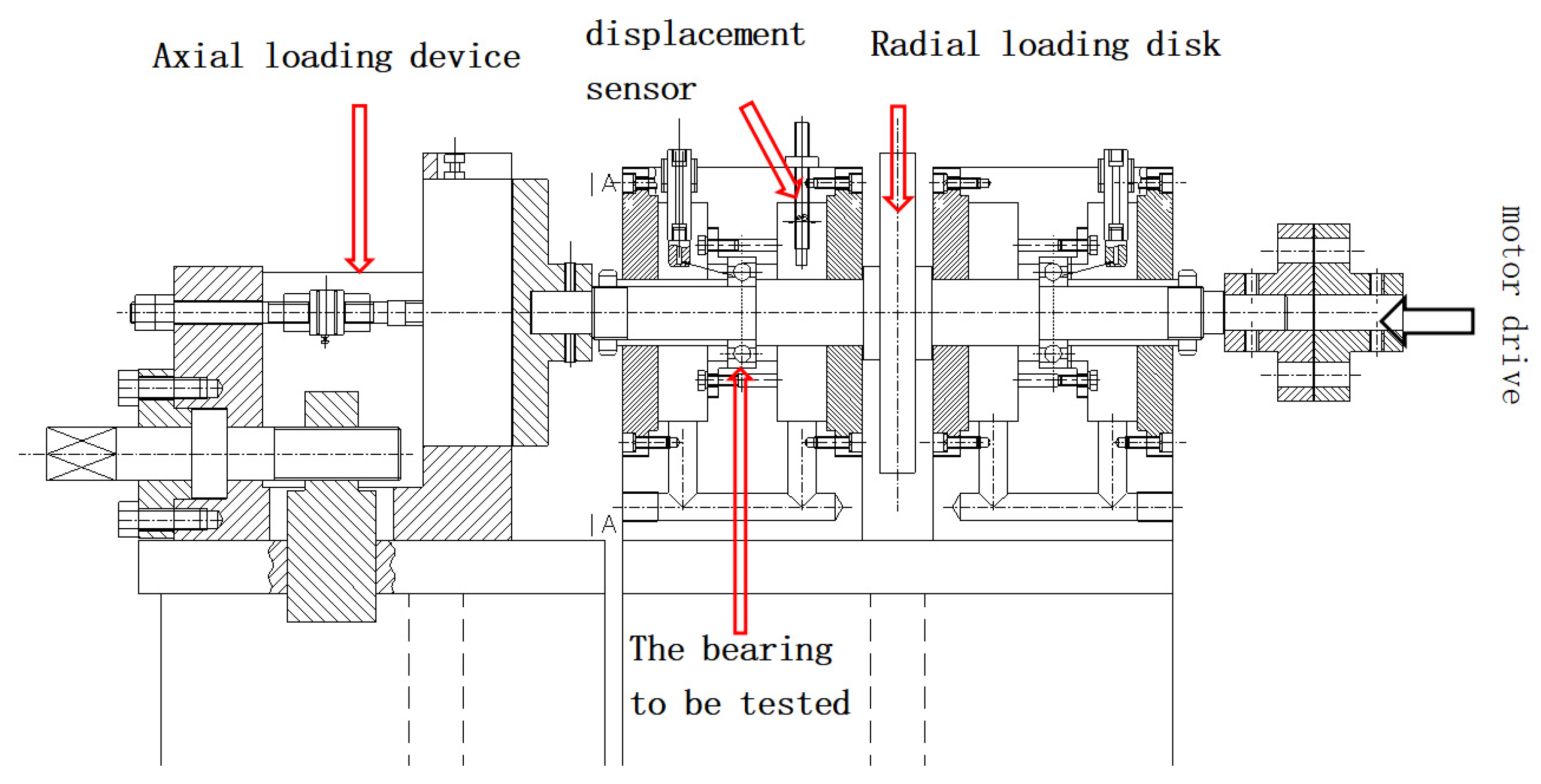
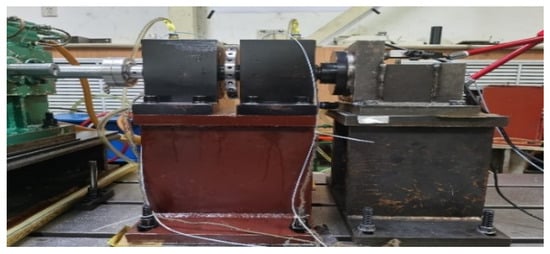
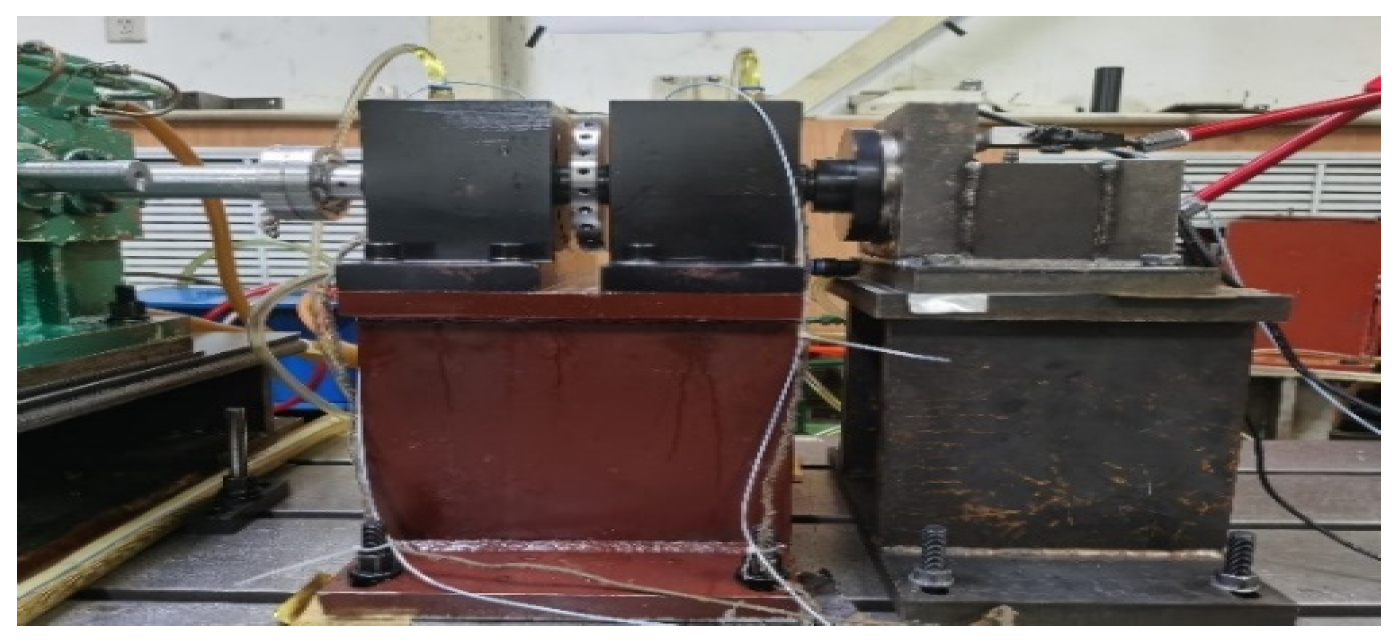
The unbalanced excitation force model is introduced to further verify the correctness of the bearing mechanical model considering the unbalanced excitation force. In this section, the model is verified using the bearing–rotor test device. The structure of the test device is shown in Figure 5. The length of the rotation axis is 426 mm. The disk is located in the middle of the axis, with a thickness of 20 mm and a radius of 90 mm. The two bearings are symmetrically distributed around the disk, and the distance between the centers of the two bearings is 175 mm. The bearing to be tested is installed on a single disk rotor. The disk is located in the middle of the rotor. The disk on the rotor is a radial loading disk. The outer edge of the radial loading disk has uniform threaded holes. Different weights of bolts can be added as unbalanced mass, resulting in an unbalanced excitation force. The left side of the rotor is an axial loading device, which is composed of an electromagnet and a force sensor. The electromagnetic force generated by the electromagnet can apply an axial load to the bearing. The axial load is measured by the force sensor (model: CL-YB-7/1t; linear error 0.5% F. S; the full-scale output range is 0–1.25 mm); the right side of the rotor is connected to the motor through the coupling to measure the dynamic characteristics of the bearing under different speed conditions. The bearing test speeds are selected as 11,000 r/min, 13,000 r/min, and 15,000 r/min, and the axial load is applied. The range is 400 N and 2000 N. The eddy current displacement sensor (model: 3300XL/5 mm; accuracy: (200 mv/mil) ±5%) and speed sensor are used to measure the vibration signal and rotor speed of the system. The test device is shown in Figure 6.
Figure 5.
Structure of test rig.
Figure 6.
Bearing test rig.
The specific test steps are as follows:
(1) Apply an additional unbalance of 7.1 g to the radial loading plate with a radius of e = 90 mm after dynamic balance.
(2) Adjust the axial load to a fixed value and start the motor.
(3) Accelerate the motor to the specified speed and collect the displacement signal after stabilization (Figure 7). Then detrend the acquired displacement signal and denoise to remove DC components and interference; subsequently, use the fast Fourier transform (FFT) to extract the fundamental (1×) amplitude and phase for stiffness identification.
(4) Calculate the radial dynamic stiffness of the bearing. The bearing is considered as a single-degree-of-freedom system, and its mechanical impedance is [25]
In the formula, K(ω), m and C(ω) are the equivalent stiffness, equivalent mass and equivalent damping coefficient of the bearing, respectively. When the bearing is working, the unbalanced excitation load causes the bearing to bear the rotating radial load Ftr = meω2/2, causing the corresponding radial displacement of the bearing center.
Here, δ represents the radial displacement of the bearing center and φ represents the phase difference between the displacement vector and the force vector. The equivalent dynamic stiffness of the test bearing can be obtained by Formula (12).
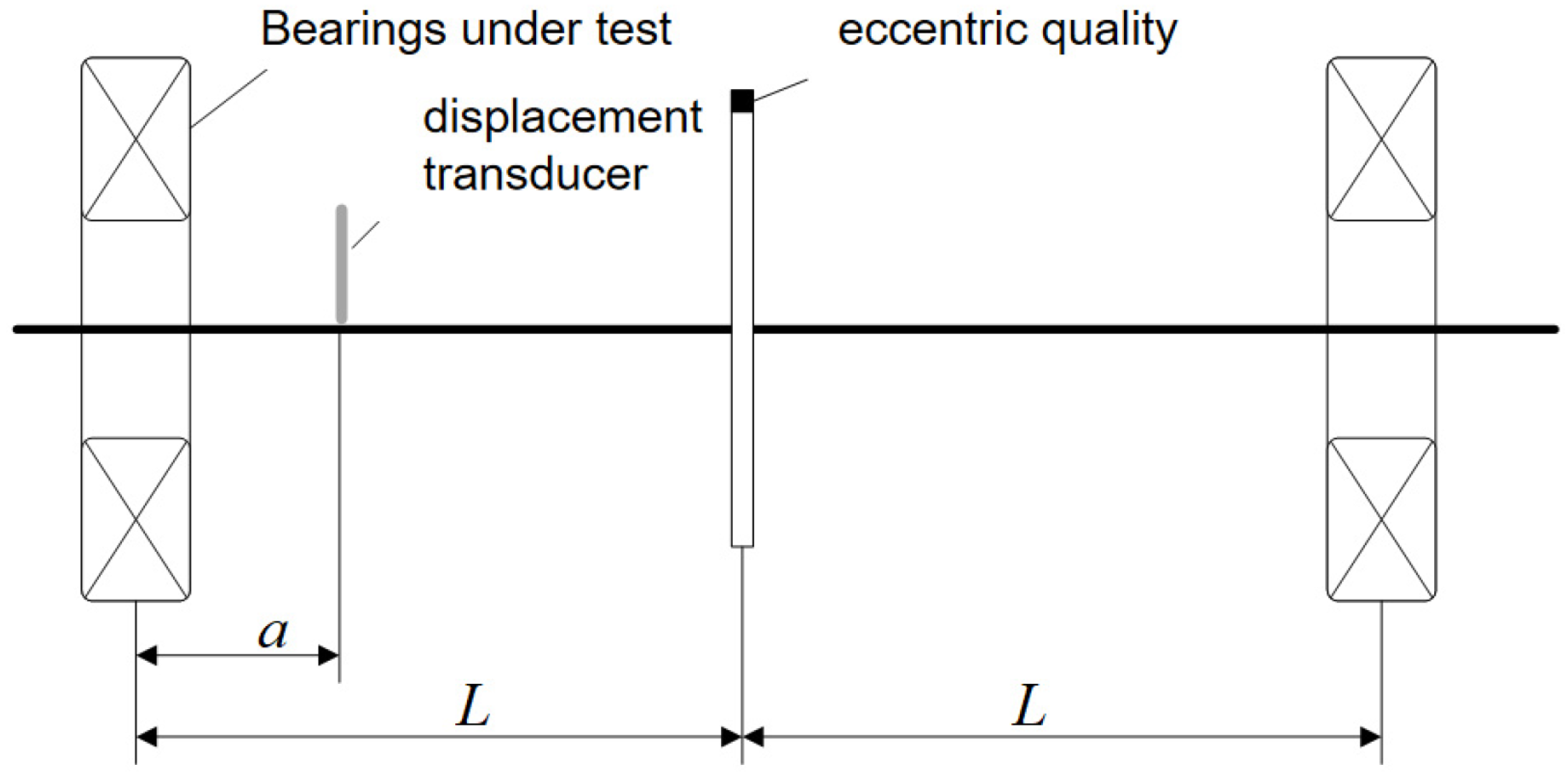
Because it is difficult to directly measure the displacement of the bearing, this paper measures the displacement δc near the bearing and indirectly obtains the displacement δ [25] of the bearing position through the following geometric relationship (see Figure 8):
In the formula, δs is the dynamic deformation of the shaft caused by the unbalanced force, δst is the static deformation, r is the ratio of the working speed to the critical speed, E and I are the elastic modulus and the section inertia moment of the shaft, ɑ is the horizontal distance between the displacement sensor and the test bearing, and L represents the span length between the support bearings as shown in Figure 8.
Figure 7.
The displacement response of the test rig.
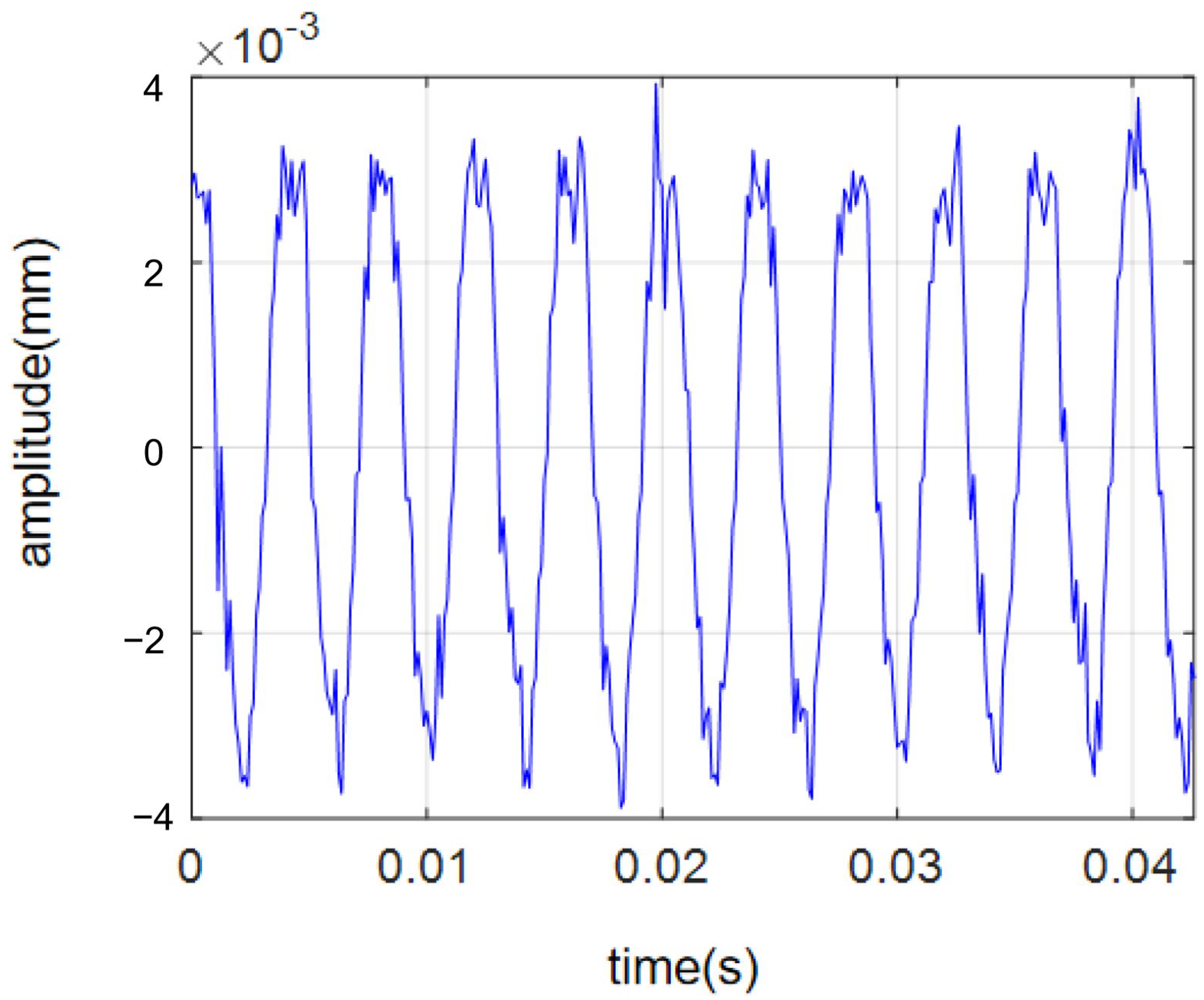
Figure 8.
The geometric relationship of the bearing test rig.
The error comparison between the experimental and simulation results is shown in Table 3. It can be found that the simulation results of this paper are in good agreement with the experimental results, and the maximum difference is 9.12%. Considering the influence of measurement error and other factors, although there is a certain error in the stiffness of the test and simulation, the variation trend of the two with the speed is basically the same, and these error magnitudes are consistent with findings reported in the recent literature on high-speed bearing dynamics. For instance, Chen et al. [25] reported experimental stiffness errors ranging from 8.29% to 14.58% in their study of four-point contact ball bearings. Similarly, Li et al. [2] observed deviations between 10.5% and 12.3% when validating spindle axial operating stiffness. Compared to these benchmarks, the prediction accuracy of the proposed model is well within the acceptable range. The fact that experimental values are slightly lower than theoretical predictions can be primarily attributed to the simplification of thermal–fluid coupling effects [15] and inevitable minor assembly errors [16] in the test rig, which slightly alter the effective preload and contact states during operation.
Table 3.
Comparison of test and simulation dynamic stiffness (N/m).
4. Analysis of Dynamic Characteristics of Bearings Under Combined Loads Considering Rotor Unbalanced Excitation
In order to facilitate the analysis, the dimensionless rotational speed ω* is defined as shown in Formula (15). The minimum and maximum rotational speeds are 10,980 r/min and 15,000 r/min respectively.
The subscripts ‘max’ and ‘min’ represent the maximum and minimum values of the rotational speed, respectively. Similarly, the dimensionless axial load Fs* can be obtained.
The dimensionless radial dynamic stiffness k* is defined as shown in Formula (16):
In the formula, ks the radial dynamic stiffness, and k(ωmin) represents the radial dynamic stiffness of the bearing corresponding to the minimum speed.
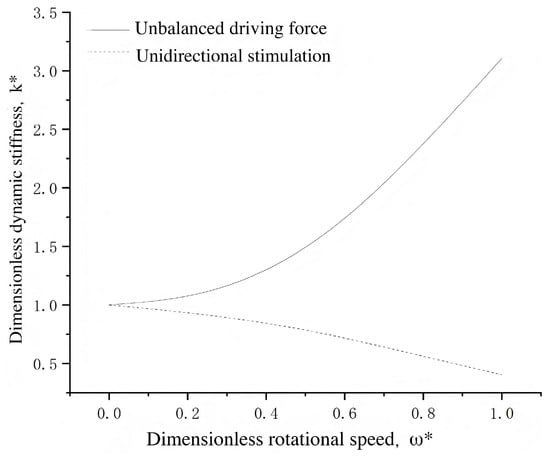
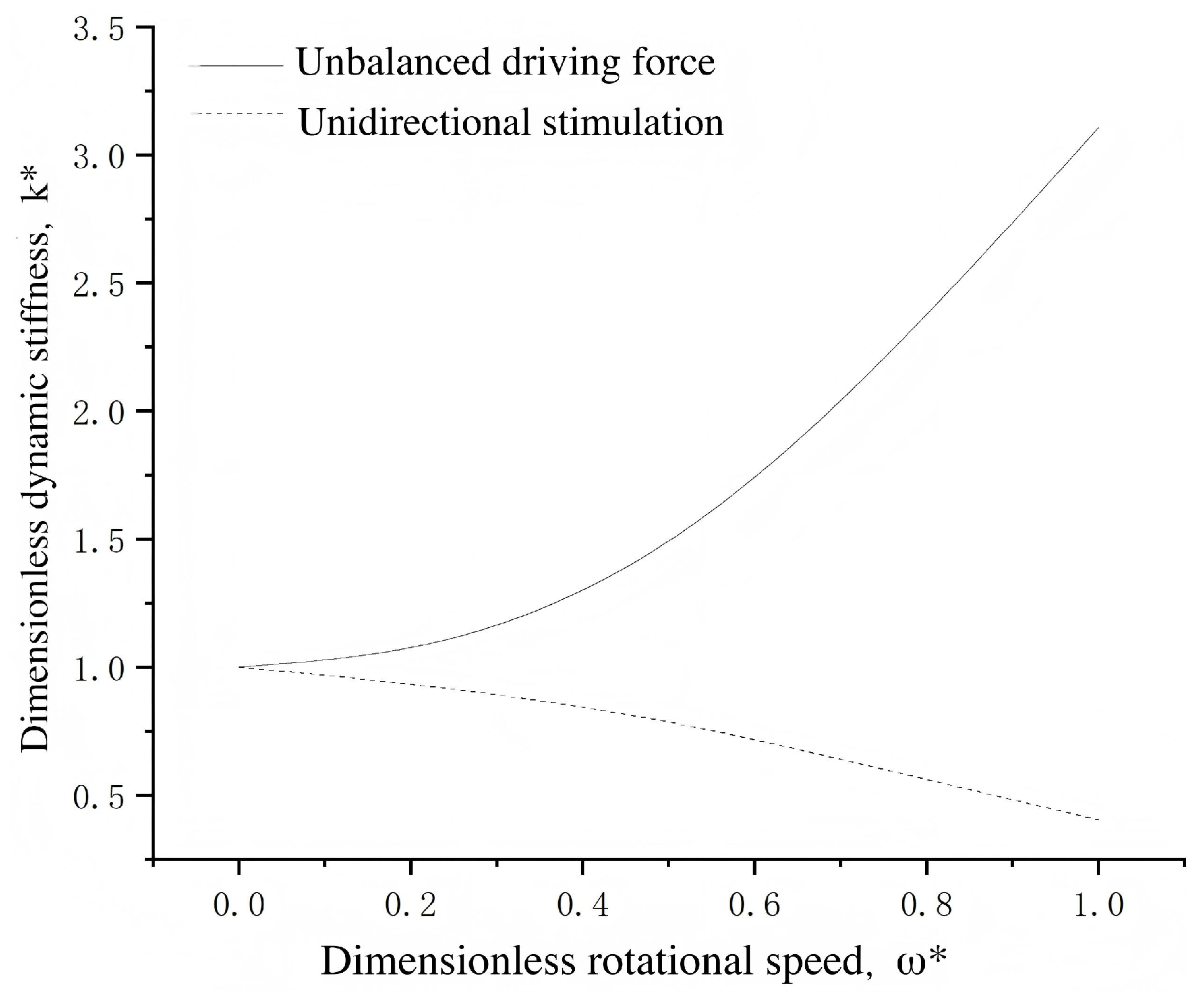
Figure 9 shows the comparison between the unbalanced excitation force model considering bidirectional excitation and the bearing radial dynamic stiffness considering unidirectional excitation. It can be found that under the action of the unidirectional excitation force, the radial dynamic stiffness of the bearing decreases with the increase in the rotational speed. The main reason is that the unidirectional model does not consider the centrifugal force-related amplitude effect introduced by unbalance, and it mainly retains the influence of excitation frequency (speed: 183–250 Hz). As a result, the frequency increase tends to weaken the radial stiffness prediction (see Reference [14]). Under the action of the unbalanced excitation force considering bidirectional excitation, the radial dynamic stiffness of the bearing increases approximately in a quadratic nonlinear manner as the rotational speed increases. This is because the bidirectional excitation can consider the influence of unbalanced excitation amplitude in addition to the influence of frequency. The amplitude of unbalanced excitation increases with the increase in rotational speed. Because the angle between the direction of the unbalanced excitation force and the dynamic deflection of the shaft is constant at constant speed [23], the amplitude of unbalanced excitation will have an effect similar to that of radial load (direction constant); that is, the radial dynamic stiffness will increase with the increase in unbalanced excitation amplitude. Its essence is that the increase in radial load leads to a change in the contact angle and contact load of the bearing [14], thus ‘strengthening’ the radial dynamic stiffness of the bearing. The reason for the nonlinear increase in dynamic stiffness may be the superposition of the unbalanced excitation amplitude and frequency. The unbalanced excitation amplitude is proportional to the square of the rotational speed (F = meω2). With the increase in the rotational speed, the ‘strengthening’ phenomenon dominates, so the radial dynamic stiffness of the bearing generally shows a trend of nonlinear increase with the rotational speed. Reference [28] gave a similar change rule through experiments but did not analyze this phenomenon from the perspective of the excitation force.
Figure 9.
The variation in the radial dynamic stiffness of the bearing with rotational speed.
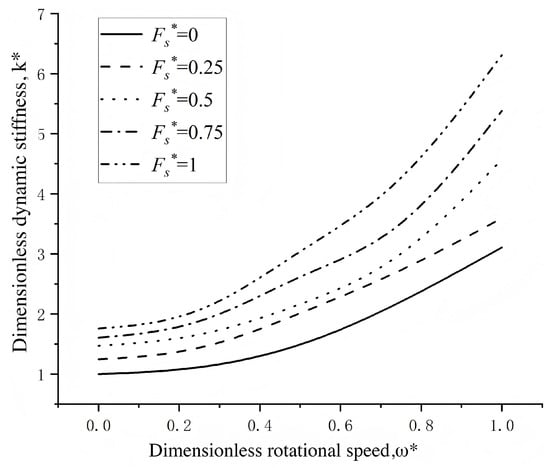
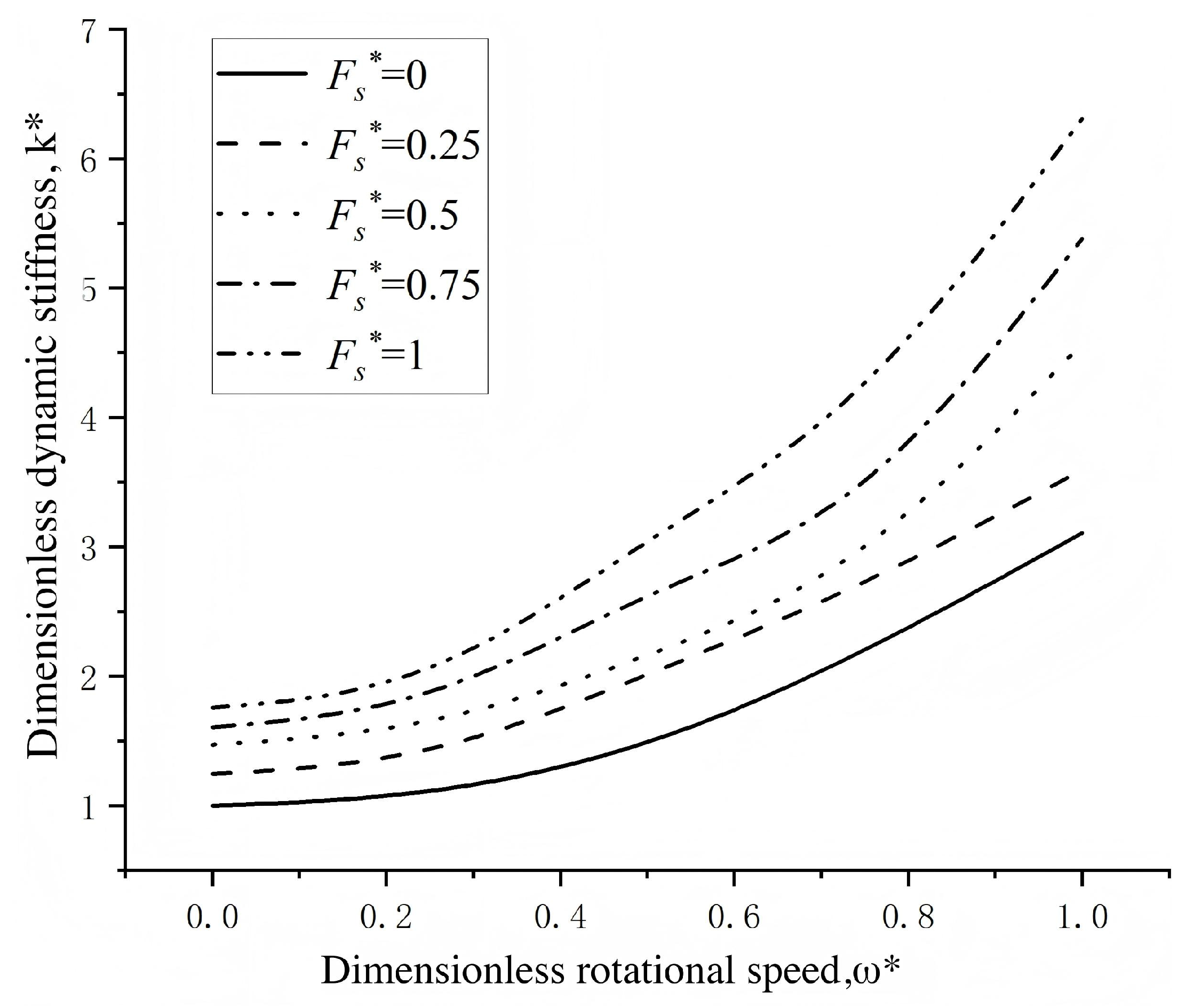
Figure 10 shows the variation trend of the radial dynamic stiffness of the bearing with respect to the rotational speed under different axial loads. It can be observed that at low rotational speeds, the change in axial load has a relatively small impact on the radial dynamic stiffness of the bearing. As the rotational speed increases, the impact of the change in axial load on the radial dynamic stiffness gradually increases, indicating that compared with low-speed bearings, high-speed bearings should consider the influence of axial loads more. This significantly enhanced coupling effect at high rotational speeds is consistent with the findings of Chen et al. [25] regarding the evolution of stiffness under combined loads. The reason for this phenomenon is that when the rotational speed is low, the inertial force is small. The contact state and load distribution are mainly determined by the static geometry and load. Changing the axial load has a relatively small impact on the radial deformation, resulting in a small change in radial stiffness. At high rotational speeds, centrifugal force causes the contact angle of the balls to change. At this point, a slight change in the axial load will cause a significant change in the load distribution by altering the contact angle, thereby resulting in a large change in radial stiffness.
Figure 10.
The variation in radial dynamic stiffness of the bearing with rotational speed under different axial loads.
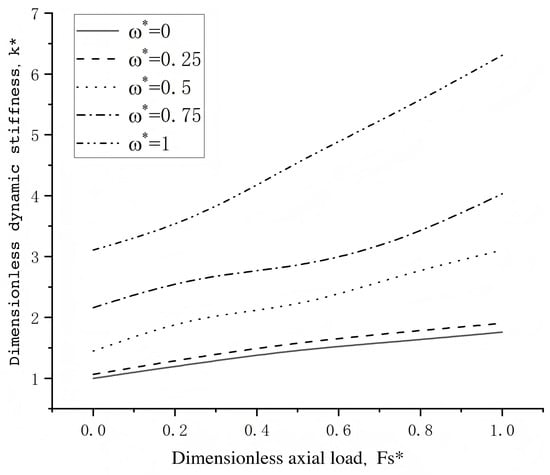
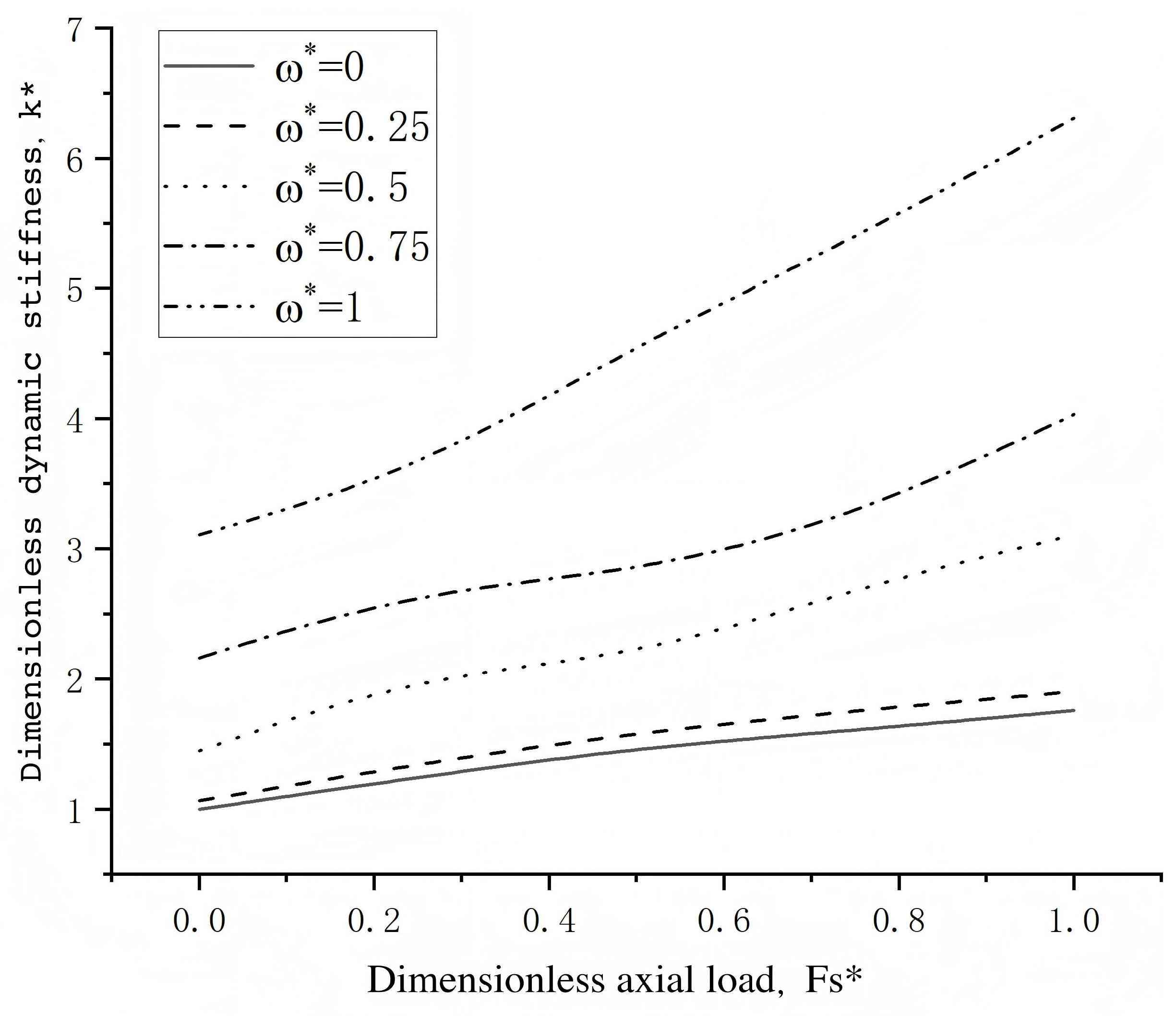
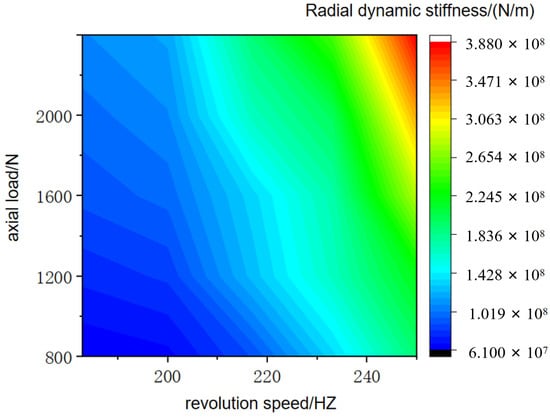
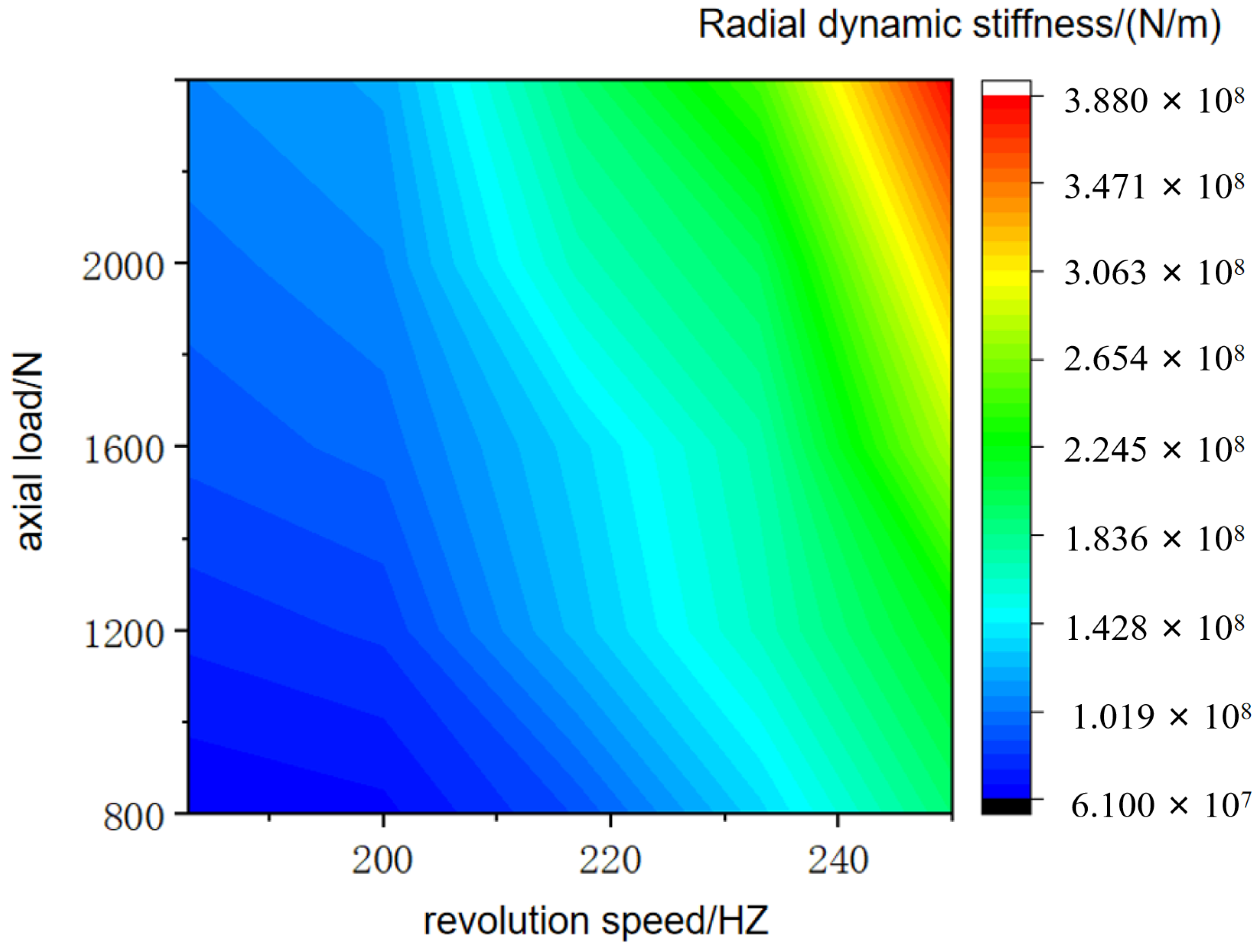
Figure 11 shows the variation in radial dynamic stiffness of the bearing with axial load. It can be found that the radial stiffness of the bearing increases with the increase in axial load. The reason is that with the increase in axial load, the number of contact balls in the inner and outer rings of the bearing increases, resulting in an increase in radial dynamic stiffness. Figure 12 shows that under the combined action of axial load and radial unbalanced excitation, the radial dynamic stiffness of the bearing increases with the increase in axial load and rotational speed, and the greater the axial load, the more obvious the influence of rotational speed on the radial dynamic stiffness of the bearing.
Figure 11.
The variation in the radial dynamic stiffness of the bearing with axial loads under different rotational speeds.
Figure 12.
The variation in radial dynamic stiffness under combined loads.
Although the bidirectional excitation model proposed in this paper significantly improves the stiffness prediction accuracy under high-speed conditions, it still has certain limitations. Currently, the model is based on the assumption of dry contact friction and ignores the thermal–elastic–fluid dynamic lubrication effect of the lubricating oil film. As Gao et al. [15] pointed out, the heat generated by friction at ultra-high rotational speeds may cause material thermal softening, which may to some extent counteract the centrifugal hardening effect observed in this study. Future research efforts will focus on the following two aspects: (1) Multi-physics field coupling: We aim to introduce thermal–fluid–solid coupling mechanisms to more comprehensively assess the correction effect of thermal factors on the stiffness hardening trend [29]. (2) Quantitative analysis under high axial loads: Future work will focus on quantifying the impact of increasing rotational speed on radial stiffness under higher axial loads. Under such conditions, the internal contact angle of the bearing undergoes significant changes, which may alter the sensitivity of radial stiffness to rotational speed. We aim to map the stiffness evolution law under the ‘high axial load–ultra-high rotational speed’ coupling field, determine the saturation point of the stiffness hardening effect, and provide a comprehensive design reference for heavy-duty turbopump bearings.
5. Conclusions
In this paper, a bearing stiffness calculation method is proposed, which takes the rotational speed as the independent variable of the excitation load. This method can consider the influence of the change in excitation frequency and excitation amplitude caused by the rotational speed on the bearing stiffness. It is introduced into the finite element model of the bearing based on ABAQUS. The accuracy of the model is verified by MESYS software and a bearing test device and compared with the unidirectional excitation force model. Finally, based on the model, the variation trend of bearing dynamic stiffness under unbalanced excitation and axial load is obtained. The main conclusions are as follows:
(1) MESYS software and a bearing test device are used to verify the model in this paper, and the maximum errors are 2.42% and 9.12% respectively. The correctness of the method in this paper is proved.
(2) Compared with the unidirectional excitation force model, the unbalanced excitation force model established in this paper can not only consider the influence of excitation frequency but also consider the influence of excitation amplitude on the dynamic stiffness of the bearing. Under the combined action of unbalanced excitation amplitude and frequency, the radial dynamic stiffness of the bearing increases nonlinearly with the increase in rotational speed.
(3) At low speed (in this paper, ω* < 0.25), the change in axial load has little effect on the radial dynamic stiffness of the bearing (the dynamic stiffness changes about 8% from ω* = 0 to ω* = 0.25). With the increase in speed, the influence of axial load change on the radial dynamic stiffness of the bearing gradually increases (the dynamic stiffness changes about 34% from ω* = 0.75 to ω* = 1), indicating that compared with low-speed bearings, high-speed bearings should consider the influence of axial load more.
(4) Under the combined action of axial load and radial unbalanced excitation, the radial dynamic stiffness of the bearing increases with the increase in axial load and rotational speed, and the greater the axial load, the more obvious the influence of rotational speed on the radial dynamic stiffness of the bearing.
Finally, while the current model is sufficient for exploring comparative trends, it still relies on several simplifications, notably the assumption of dry contact friction. As discussed in Section 4, a more detailed treatment involving thermal–fluid–solid coupling and varying axial load limits is recommended for future work to further refine the stiffness prediction.
Author Contributions
Conceptualization, W.D. and X.K.; methodology, W.D.; software, S.S.; validation, W.D., X.K. and X.Z.; formal analysis, X.Z.; investigation, S.S., W.D. and X.Z.; resources, W.D.; data curation, S.S., W.D., X.K. and X.Z.; writing—original draft preparation, S.S.; writing—review and editing, X.Z. and W.D.; visualization, X.K.; supervision, Z.J.; project administration, Z.J.; funding acquisition, W.D. All authors have read and agreed to the published version of the manuscript.
Funding
This research was funded by the Basic Research Project of National Defense Technology, grant number JSZL2019203A003, National Natural Science Foundation of China, grant number 52575095, and Beijing Natural Science Foundation, grant number L258043.
Data Availability Statement
The original contributions presented in this study are included in the article. Further inquiries can be directed to the corresponding author.
Conflicts of Interest
The authors declare no conflicts of interest.
References
- Liu, Y.; Zhang, Y. A research on the time-varying stiffness of the ball bearing considering the time-varying number of laden balls and load distribution. Proc. Inst. Mech. Eng. Part C J. Mech. Eng. Sci. 2019, 233, 4381–4396. [Google Scholar] [CrossRef] [Scilit]
- Li, J.; Wang, Q.; Sun, X.; Qu, J.; Qiu, A.; Kang, W.; Ma, S. Research on the effect of spindle speed on the softening and hardening characteristics of the axial operating stiffness of machine tool spindle. Lubricants 2022, 10, 132. [Google Scholar] [CrossRef] [Scilit]
- Liu, Z.; Zhou, H.; Zhao, Y.S. Characteristics analysis of angular contact ball bearing based on the oil film stiffness. Key Eng. Mater. 2011, 480–481, 599–604. [Google Scholar] [CrossRef] [Scilit]
- Geng, L.; Lv, H.; Zhao, Z. Dynamic reliability analysis of angular contact ball bearing based on maximum entropy quadratic fourth moment method. Aust. J. Mech. Eng. 2025, 23, 471–487. [Google Scholar] [CrossRef] [Scilit]
- Xie, Z.; Sun, Y.; Tian, J.; Gao, W.; Zhang, X.; Zhang, M.; Dong, Q. Theoretical and experimental analysis of the characteristics of a novel tilting-pad bearing with preload effects. Mech. Syst. Signal Process. 2026, 242, 113461. [Google Scholar] [CrossRef] [Scilit]
- Jones, A.B. A general theory for elastically constrained ball and radial roller bearings under arbitrary load and speed conditions. J. Basic Eng. 1960, 82, 309–320. [Google Scholar] [CrossRef] [Scilit]
- Ni, W.H.; Yao, Z.Q.; Xi, J.T. Effects of interference fit and preload on the performance of low-speed angular contact ball bearing. Adv. Mater. Res. 2010, 97–101, 3408–3412. [Google Scholar] [CrossRef] [Scilit]
- Fang, B.; Zhang, J.; Yan, K.; Hong, J.; Wang, M.Y. A comprehensive study on the speed-varying stiffness of ball bearing under different load conditions. Mech. Mach. Theory 2019, 136, 1–13. [Google Scholar] [CrossRef] [Scilit]
- Wang, M.-K.; Yan, K.; Ma, S.-J.; Hong, J. Evolutionary regularity of dynamic characteristics for precision angular contact ball bearing under combined loads. J. Aerosp. Power 2022, 37, 1134–1149. [Google Scholar] [CrossRef]
- Lei, C.; Cui, P.; Cao, P.; Liu, K.; Song, R. Research on comprehensive stiffness characteristics of angular contact ball bearings under multi-factor coupling condition. J. Adv. Mech. Des. Syst. Manuf. 2021, 15, JAMDSM0073. [Google Scholar] [CrossRef] [Scilit]
- Yun, X.; Han, Q.; Wen, B.; Hao, X. Dynamic stiffness and vibration analysis model of angular contact ball bearing considering vibration and friction state variation. J. Vibroeng. 2022, 24, 221–255. [Google Scholar] [CrossRef] [Scilit]
- Lei, C.; Li, F.; Gong, B.; Jia, X. An integrated model to characterize comprehensive stiffness of angular contact ball bearings. Math. Probl. Eng. 2020, 2020, 4951828. [Google Scholar] [CrossRef] [Scilit]
- Li, J.; Lei, C.; Gong, B.; Cui, P.; Jia, X. Modeling and analysis of the composite stiffness for angular contact ball bearings. Shock Vib. 2020, 2020, 8832750. [Google Scholar] [CrossRef] [Scilit]
- Li, Z.; Guan, X.-L.; Zhong, R.; Wang, Q. Analysis of dynamic characteristics of angular contact bearings with combined loads. J. Mech. Eng. 2020, 56, 116–125. [Google Scholar] [CrossRef] [Scilit]
- Gao, C.; Xu, T.; Chen, Y.; Zhang, S. Stiffness characteristics of angular contact ball bearing considering thermal–mechanical coupling. Res. Sq. 2024. preprint. [Google Scholar] [CrossRef] [Scilit]
- Zhang, Y.; Li, Y.; Kong, L.; Yang, Z.; Si, Y. Research on the mechanism of the stiffness performance of rolling bearings under wrong assembly state. Lubricants 2022, 10, 116. [Google Scholar] [CrossRef] [Scilit]
- Liu, Y.; Han, J.; Zhao, S.; Meng, Q.; Shi, T.; Ma, H. Study on the dynamic problems of double-disk rotor system supported by deep groove ball bearing. Shock Vib. 2019, 2019, 8120569. [Google Scholar] [CrossRef] [Scilit]
- Rui, H.; Hu, X.; Guo, D. Test method for dynamic characteristic parameters of angular contact ball bearings. Vib. Shock 2013, 32, 88–90. [Google Scholar]
- Chen, R.; Xu, F.; Liu, G.; Li, J.; Zhao, S.; Fan, X.; Zhang, Y.; Lv, S. Stiffness characteristics and experimental study of angular contact ball bearings considering the influence of rotational speed. Adv. Mech. Eng. 2024, 16, 16878132241284352. [Google Scholar] [CrossRef] [Scilit]
- Li, Z.; Wang, Q.; Qin, B.; Shao, W. Vibration characteristic analysis of flexible rotor-bearing system subjected to external combined loads. Eur. J. Mech. A/Solids 2022, 96, 104688. [Google Scholar] [CrossRef] [Scilit]
- Li, Z.; Wang, Q.; Wang, R.; Qin, B. Dynamic contact and stiffness characteristic analysis of angular contact ball bearings under combined external loads. J. Low Freq. Noise Vib. Act. Control 2024, 43, 1567–1592. [Google Scholar] [CrossRef] [Scilit]
- Liu, J.; Tang, C.; Pan, G. Dynamic modeling and simulation of a flexible-rotor ball bearing system. J. Vib. Control 2022, 28, 3495–3509. [Google Scholar] [CrossRef] [Scilit]
- Weng, L.; Yang, Z.-C.; Cao, Y.-Y. The calculation of critical speeds and unbalance response of rotor system. J. Ordnance Equip. Eng. 2012, 33, 65–69, 72. [Google Scholar]
- Li, Y.; Cui, Y.; Deng, S. Research on sudden unbalance response of rigid-elastic-oil coupled ball bearings. Lubricants 2024, 12, 161. [Google Scholar] [CrossRef] [Scilit]
- Chen, R.; Li, J.; Wang, Y.; Deng, R.; Chen, W.; Li, W. Study on the time-varying stiffness characteristics of four-point contact ball bearings. Lubricants 2025, 13, 118. [Google Scholar] [CrossRef] [Scilit]
- He, P.-P. Dynamic stiffness analysis on high speed angular contact ball bearing under combined loads. Bearing 2020, 7, 40–45. [Google Scholar]
- Zhao, Z. Study on the Coupling Behavior of Dynamics and Thermo-Elasto-Hydrodynamic Lubrication in High-Speed Aerospace Ball Bearings. Ph.D. Thesis, Nanjing University of Aeronautics and Astronautics, Nanjing, China, 2021. [Google Scholar] [CrossRef]
- Luo, H.; Fu, J.; Yu, C.; Liu, G.; Wang, W.; Wang, P. Numerical simulation and experimental testing of dynamic stiffness of angular contact ball bearing. Adv. Mech. Eng. 2018, 10, 1687814018798973. [Google Scholar] [CrossRef] [Scilit]
- Xie, Z.; Tian, Y.; Liu, S.; Ma, W.; Gao, W.; Du, P.; Zhao, B. Fluid-structure interaction analysis of a novel water-lubricated bearing with particle-dynamic effect: Theory and experiment. Tribol. Int. 2025, 204, 110474. [Google Scholar] [CrossRef] [Scilit]

Disclaimer/Publisher’s Note: The statements, opinions and data contained in all publications are solely those of the individual author(s) and contributor(s) and not of MDPI and/or the editor(s). MDPI and/or the editor(s) disclaim responsibility for any injury to people or property resulting from any ideas, methods, instructions or products referred to in the content. |
© 2026 by the authors. Licensee MDPI, Basel, Switzerland. This article is an open access article distributed under the terms and conditions of the Creative Commons Attribution (CC BY) license.