Article

Performance Analysis of a Novel Shallow Oil Chamber Hybrid Journal Bearing with Adjustable Depth

1
School of Mechanical Science and Engineering, Huazhong University of Science and Technology, Wuhan 430074, China
2
State Key Laboratory of Intelligent Manufacturing Equipment and Technology, Huazhong University of Science and Technology, Wuhan 430074, China
3
Guangdong Provincial Key Laboratory of Manufacturing Equipment Digitization, Guangdong HUST Industrial Technology Research Institute, Dongguan 523835, China
4
Institute of Machinery Manufacturing Technology, China Academy of Engineering Physics, Mianyang 621022, China
*
Author to whom correspondence should be addressed.
Lubricants 2026, 14(3), 129; https://doi.org/10.3390/lubricants14030129
Submission received: 12 February 2026 / Revised: 6 March 2026 / Accepted: 16 March 2026 / Published: 17 March 2026
(This article belongs to the Special Issue Hydrostatic and Hydrodynamic Bearings)

Abstract

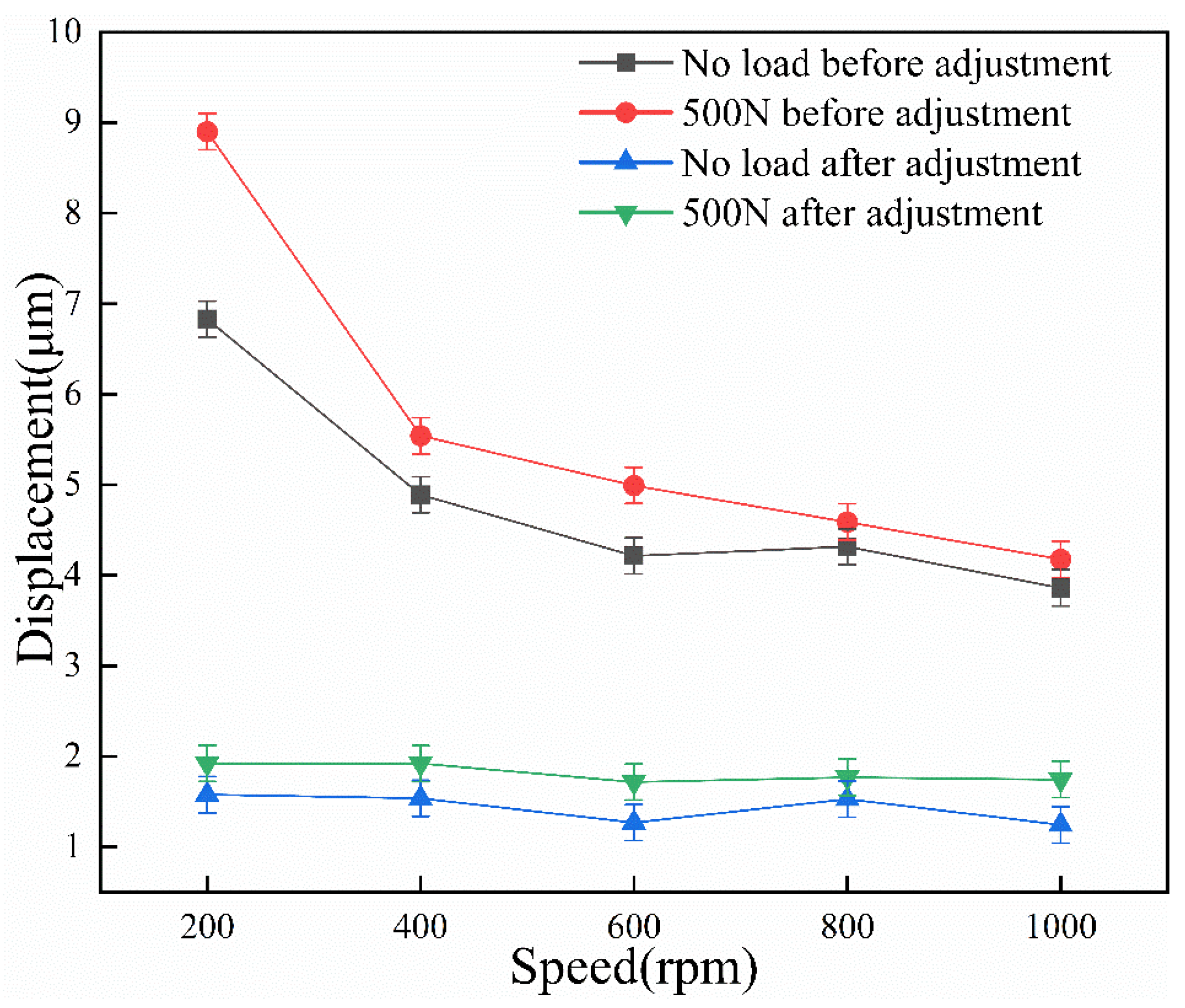
A novel shallow oil chamber hybrid journal bearing with adjustable oil chamber depth was designed based on piezoelectric ceramics, inspired by conventional shallow oil chamber bearing structures. The computational fluid dynamics method is used to analyze the bearing characteristics of shallow oil chamber bearings, including the volume flow, the seal oil pressure, load capacity and stiffness. An experimental platform equipped with signal acquisition device and piezoelectric ceramic control device was developed. The eddy current sensors collected the displacement signal at the shaft end. The required voltage was calculated by the displacement signal. The piezoelectric ceramics elongated or shortened, causing a displacement of the same magnitude in the depth of the oil chamber, thereby controlling the radial displacement of the shaft. The adjustment effect of this bearing was verified by experiment for no-load and 500 N load at 200–1000 rpm, with a baseline initial oil chamber depth of 20 and an oil supply pressure of 2 MPa. The results showed that compared with the case without adjustment, the accuracy in Y direction has increased from 8.9 μm to 1.9 μm (max. 78.4%) after adjustment. Under the above load conditions, the displacement can be controlled below 2 μm, indicating a significant improvement in shaft vibration resistance.

1. Introduction

Hybrid journal bearings combine the advantages of the hydrodynamic bearings and the hydrostatic bearings, which are widely used in precision and high-speed working conditions due to its high rigidity, low friction, good seismic performance, and long service life [1].
The static and dynamic characteristics of the hybrid bearing can be obtained by the analytical solution of Reynolds equation. However, due to the diversity and complexity of the bearing geometry and boundary conditions, it is difficult to obtain an analytical solution for all cases. Various innovative methods have been proposed to investigate bearing performance. Liang et al. [2] analyzed the static performance of hydrostatic journal bearing using Gauss–Legendre integral formula. Horvat et al. [3] found that the vortex disturbance close to the wall had a significant impact on the bearing capacity of the oil film. Zhang et al. [4] studied the influence rule of the center deviation and turning angle error of hydrostatic bearing under the quasi-static condition based on the balance equation, and verified the theoretical model by experimental means. Wang et al. [5] proposed a novel calculation method for investigating the performance of a four-rectangle recessed hydrostatic journal bearing. Li et al. [6] analyzed the dynamic coefficients of hydrostatic journal bearings using DMT.
The bearing structural parameters have a certain impact on the bearing performance for the hydrostatic bearing with definite structure. Michalec et al. [7] reviewed recent advances in the bearing geometry optimization, pressurized fluid supply components, and flow control devices. Hale et al. [8] conducted numerical studies on the factors influencing load capacity and stiffness. Chen et al. [9] explicitly pointed out that eccentricity enhances oil film stiffness by increasing the pressure gradient within the oil film. Johnson et al. [10] investigated the oil pocket structure of hydrostatic bearing and applied the design of shallow oil pocket to hydrostatic bearings. Gao et al. [11] studied the influences of various orifice length–diameter ratios on the performance of the hydrostatic thrust bearing. Strok et al. [12] investigated the effect of the surface roughness on the characteristics of an open axial hydrostatic bearing with throttle compensation of the lubricant consumption. Rana et al. [13] studied performance characteristics of a conical multi-recess hydrostatic journal bearing employing constant flow valve compensation.
In order to improve the stiffness and accuracy of hybrid bearings, some scholars had carried out research on active control technology for the working performance of hybrid bearings. Bently et al. [14] and Cai et al. [15] both proposed the application prospects of active control restrictor in high-precision and high stiffness hydrostatic spindles. Zhang et al. [16] designed the membrane restrictor controlled by piezoelectric. They investigated the dynamic characteristics of the spindle based on active piezoelectric restrictors. Liu et al. [17] studied the operational characteristics of the piezoelectric actuation membrane feedback hydrostatic spindle. Xiong et al. [18] proposed a pre-pressure and pre-conditioning controllable restrictor, which could obviously enhance the oil film stiffness of hydrostatic bearings. Wang et al. [19] proposed a novel throttling configuration of hydrostatic thrust bearing with servo control. Yang et al. [20] studied the dynamic characteristics of hydrostatic spindle based on PID control electro-hydraulic servo valve. Renn et al. [21] proposed a design scheme of throttle controlled by an active diaphragm, achieving precise closed-loop control of hydrostatic bearing oil film clearance through servo valve. Marcinkevicius et al. [22] designed a tilting pad bearing. Through active control, it suppressed temperature rise during high-speed operation while ensuring high rigidity at low speed. Wu et al. [23] studied active control by regulating the oil pressure injected into the bearing oil recess. Lai et al. [24] designed a hydrostatic bearing with the membrane restrictor, which had high static stiffness. Sawano et al. [25] designed a hydrostatic bearing using a variable restrictor by a thin metal plate. By adjusting this variable throttle device, the oil film clearance of the hydrostatic bearing could be compensated.
Piezoelectric drive bearings demonstrate rapid response (<10 ms) and effective vibration suppression (60–70%) in high-speed rotors and precision micro-machining tools [17,26]. Most of them still rely on valves, diaphragms, or servo mechanisms to indirectly regulate oil film pressure or flow. Few studies have been conducted to control bearing performance by adjusting oil chamber depth. The oil chamber in traditional hydrostatic bearings provides an effective bearing surface area, maintains stable pressure, and suppresses fluctuations. Its depth is twenty to forty times the oil film clearance. Due to their depth being on the same order of magnitude as the oil film clearance, the oil chamber in shallow oil chamber bearings can function as throttles, exhibiting favorable hydrostatic and hydrodynamic effects. This study designed an adjustable oil chamber depth structure driven by piezoelectric ceramics based on the critical parameter of shallow oil chamber depth. It overcomes the design limitations of existing bearings, enabling regulation of bearing load capacity, stiffness, and rotational precision. However, its effectiveness is constrained by the driving range of piezoelectric ceramics. The influence of the oil chamber depth of a shallow oil chamber bearing on the bearing performance was studied through numerical simulation. An adjustment system and a test platform were built. The feasibility of this structure in the control of bearing rotation accuracy was verified through experiment.

2. The Bearing Model

2.1. Original Structure

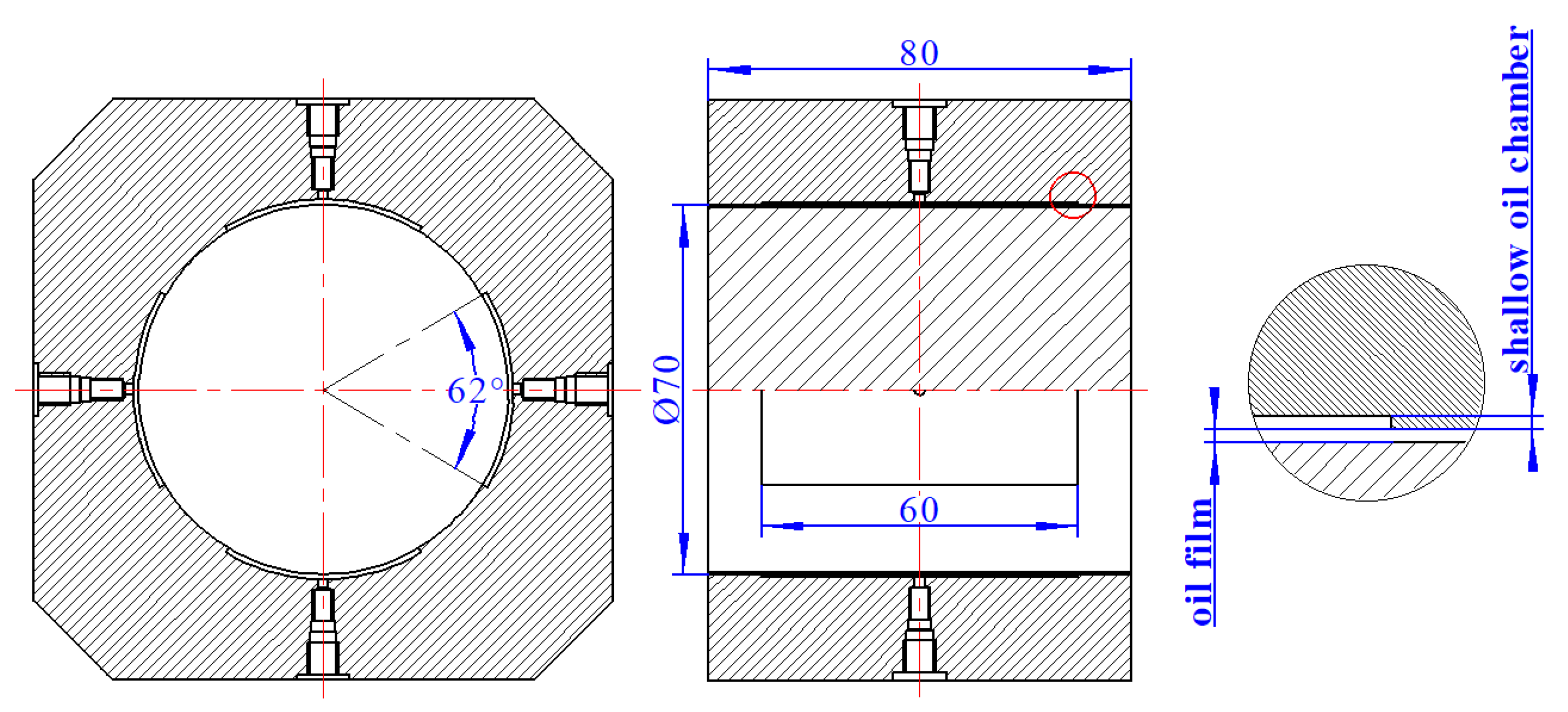
Shallow oil chamber bearings are widely used hybrid bearings, and the oil chamber depth and bearing clearance of this bearings are of the same order of magnitude, as shown in Figure 1. Conventional shallow oil chamber bearings are a type of stepped radial hydrostatic bearing, which exhibits dynamic pressure effect at high rotational speeds and static pressure effect at low speeds. The shallow oil chamber can be used as the restrictor for this bearing, so the restrictor is not required for this bearing. It was well known that changes in film thickness led to changes in bearing capacity. Similarly, changes in the shallow oil chamber depth also led to changes in bearing capacity. Therefore, in this study, the influence of oil chamber depth on bearing performance was analyzed. The inner diameter of the studied bearing is 70 mm. The length of the studied bearing is 80 mm. The expansion size of shallow oil chamber is 60 × 36.06 mm, which means that the axial length of the oil chamber is 60 mm, with an oil chamber angle of 62°. The value of 36.06 mm represents the chord length calculated based on the oil chamber angle and bearing diameter. The confirmation of this parameter primarily relies on classical hydrostatic/hybrid bearing design theory and recommended dimension ranges [1].

2.2. Novel Structure

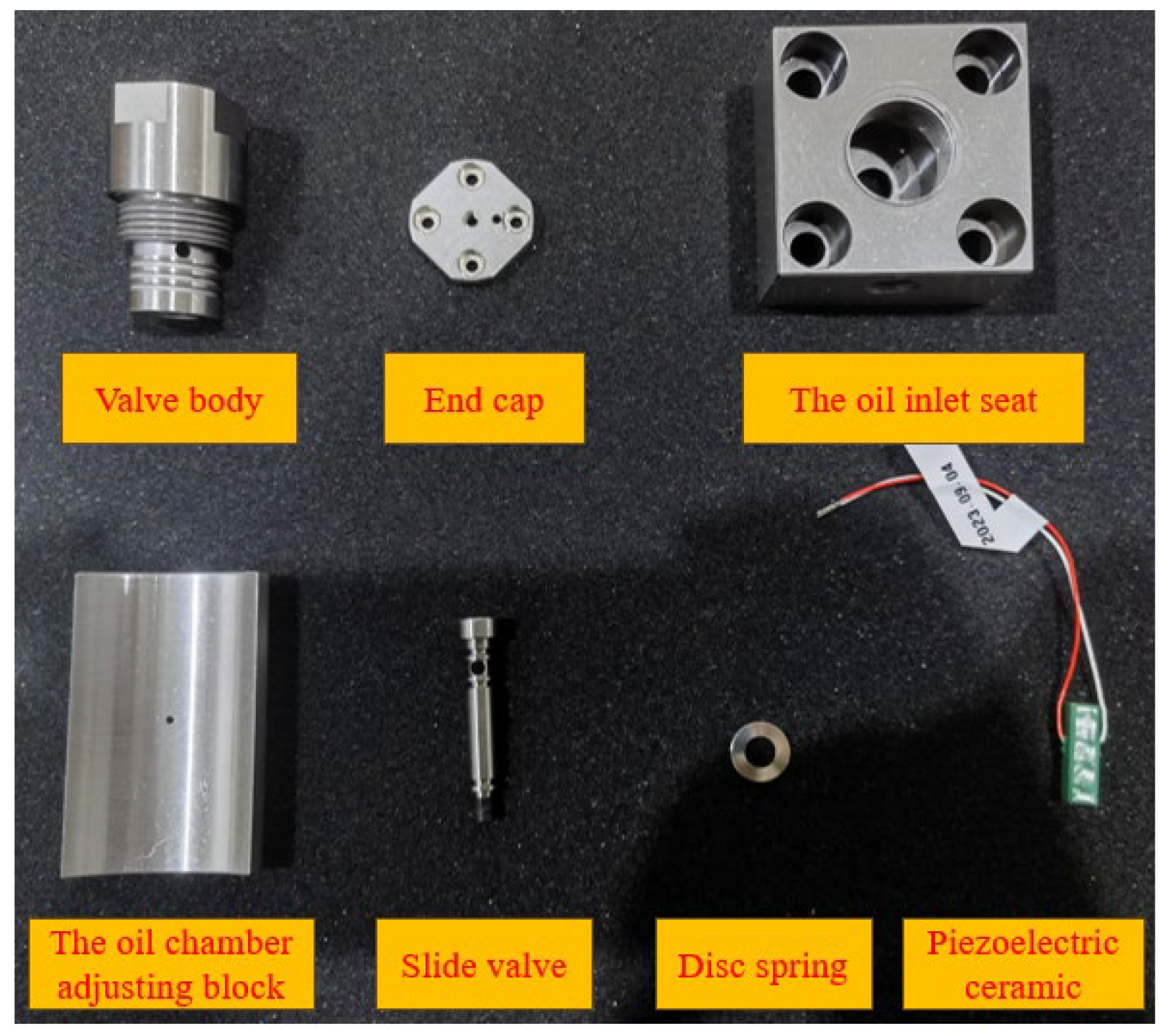
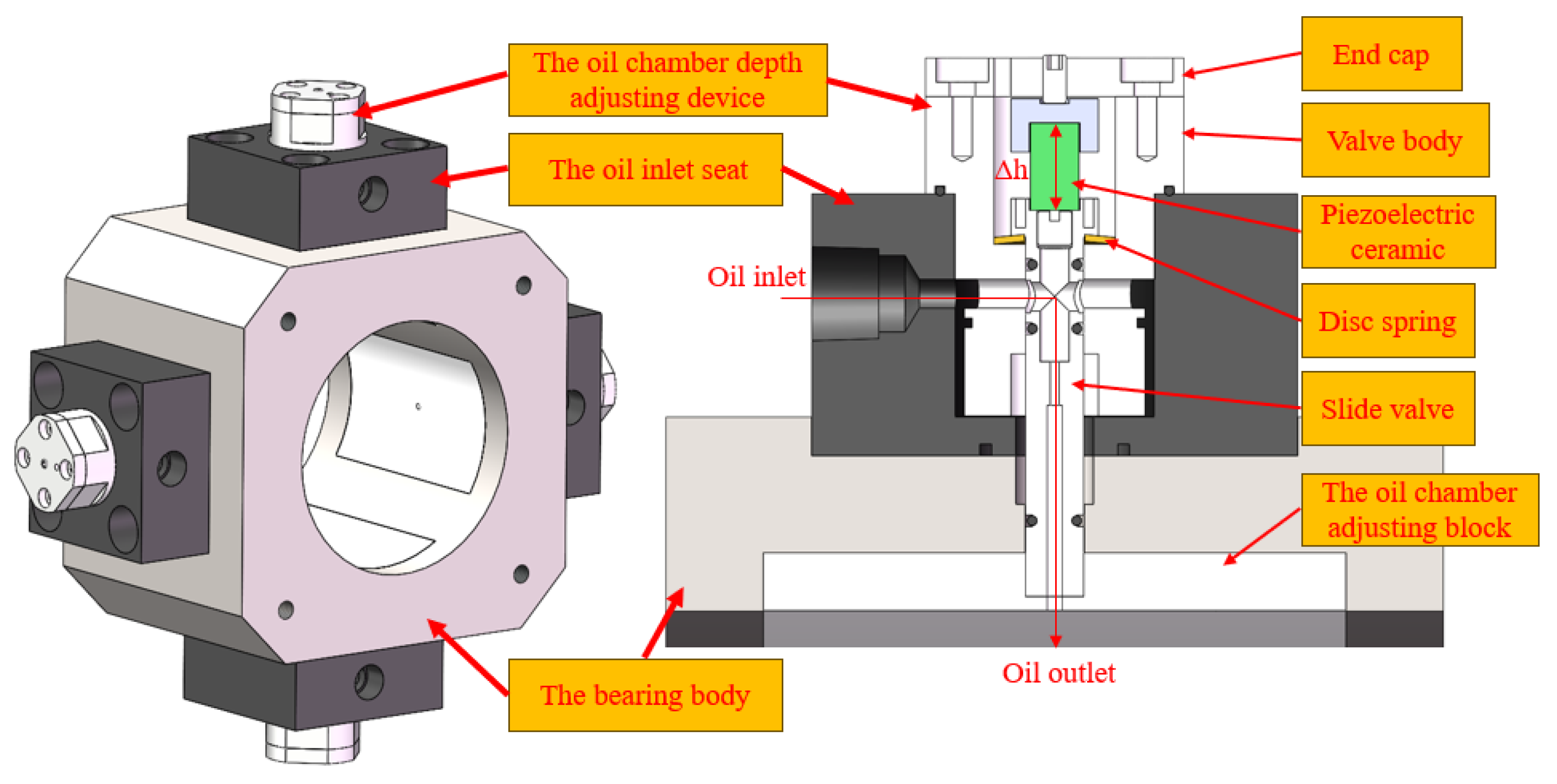
With reference to original structure, a four-oil chamber hybrid journal bearing designed in this study with adjustable oil chamber depth, as shown in Figure 2. The main dimension parameters are shown in Table 1. The main structure included the bearing body, the oil chamber depth adjusting device and the oil inlet seat. In the oil chamber adjusting device, the oil chamber adjusting block, disc spring, slide valve and piezoelectric ceramic were directly connected. The internal flow passage diameter of the oil inlet seat and the upper half of the slide valve is 3 mm. The internal flow passage diameter of the oil chamber adjustment block and the lower half of the slide valve is 2 mm. All components are manufactured to IT5 precision grade. The mating surface roughness is Ra 0.4, ensuring no hydraulic oil leakage at the interface. Piezoelectric ceramics feature high precision, fast response, compact structure, and low power consumption, making them widely applicable in the field of actively controlled structural design [16,17]. The extension or shortening of the piezoelectric ceramic could cause the movement of the oil chamber adjusting block. The use of disc spring could ensure that the oil chamber adjusting block can smoothly return to the original position. Several sealing structures were designed on the main body to ensure no oil leakage during the test.
The extension of piezoelectric ceramic is controlled by the input voltage, so as to control the change in oil chamber depth. The type of piezoelectric ceramic used in this study is PSt150/5 × 5/20, whose range is 20 μm within 150 V voltage. The piezoelectric ceramic is mounted on the top of the oil chamber adjusting device, resulting in that the bearing cannot be supplied with oil directly from the top. Therefore, the bearing supplies oil from the side of the oil inlet seat. The runner was accurately machined at the specified positions on the valve body and slide valve to ensure that the pressure oil can enter the bearing clearance smoothly.

3. Methods

In this study, the computational fluid dynamics method is used to analyze the bearing characteristics of shallow oil chamber bearings. Theoretically, the flow state of a fluid is primarily determined by the Reynolds number. When the Reynolds number is less than 2300, the fluid exhibits laminar flow. Based on the parameters of the bearings and hydraulic oil in this study, the maximum Reynolds number for this bearing system is calculated to be 62.3, corresponding to laminar flow conditions. Since the fluid domain of the shallow oil chamber bearing exhibits no abrupt dimensional changes, vortex formation does not occur in this study. In the process of theoretical analysis, the following assumptions should be met:
(1)
The flow of the fluid is laminar without vortex and turbulence generation;
(2)
No external force acting on the oil film;
(3)
Compared to the viscous shear force, the inertial force of the fluid is negligible;
(4)
Pressure, density and viscosity are constant along the oil film thickness direction;
(5)
No slip occurs between fluid and bearing surface.
For transient three-dimensional fluids, the continuity equation in rectangular coordinates can be reduced to Equation (1).
v x x + v y y + v z z = 0
Meanwhile, the expansion of the steady-state Navier–Stokes (N–S) equation in rectangular coordinate is
ρ v x v x x + v y v x y + v z v x z = F x p x + μ 2 v x x 2 + 2 v x y 2 + 2 v x z 2 ρ v x v y x + v y v y y + v z v y z = F y p y + μ 2 v y x 2 + 2 v y y 2 + 2 v y z 2 ρ v x v z x + v y v z y + v z v z z = F z p z + μ 2 v z x 2 + 2 v z y 2 + 2 v z z 2
Using ϕ to represent the general variable, Γ to represent the diffusion coefficient and S ϕ to represent the source term, Equation (2) could be simplified into Equation (3):
d i v ρ u ϕ = d i v Γ g r a d ϕ + S ϕ
The computational domain was divided into a finite number of discrete grids, and a control volume was formed around each grid element node. The control differential equation was integrated in the control volume to obtain Equation (4):
V d i v ρ u ϕ d V = V d i v Γ g r a d ϕ d V + V S ϕ d V
The calculation process must satisfy the following boundary conditions. The pressure at the inlet of the fluid domain equals the oil supply pressure, while the outlet pressure equals the ambient pressure. At junctions where structural changes occur, such as the connection between the oil chamber and the sealing oil surface, the pressure change is zero. Negative pressure during calculations is set to zero to account for oil film rupture.
Based on the above equations, the volume of flow could be calculated by integrating the normal velocity on the target surface:
Q = v d A
The calculation equation of oil film bearing capacity is
F x = L 2 L 2 ϕ a ϕ b p sin ϕ r d ϕ d z F y = L 2 L 2 ϕ a ϕ b p cos ϕ r d ϕ d z
F = F x 2 + F y 2
Based on the oil film bearing capacity and oil film thickness change, the stiffness calculation equation could be obtained as follows:
J = F h
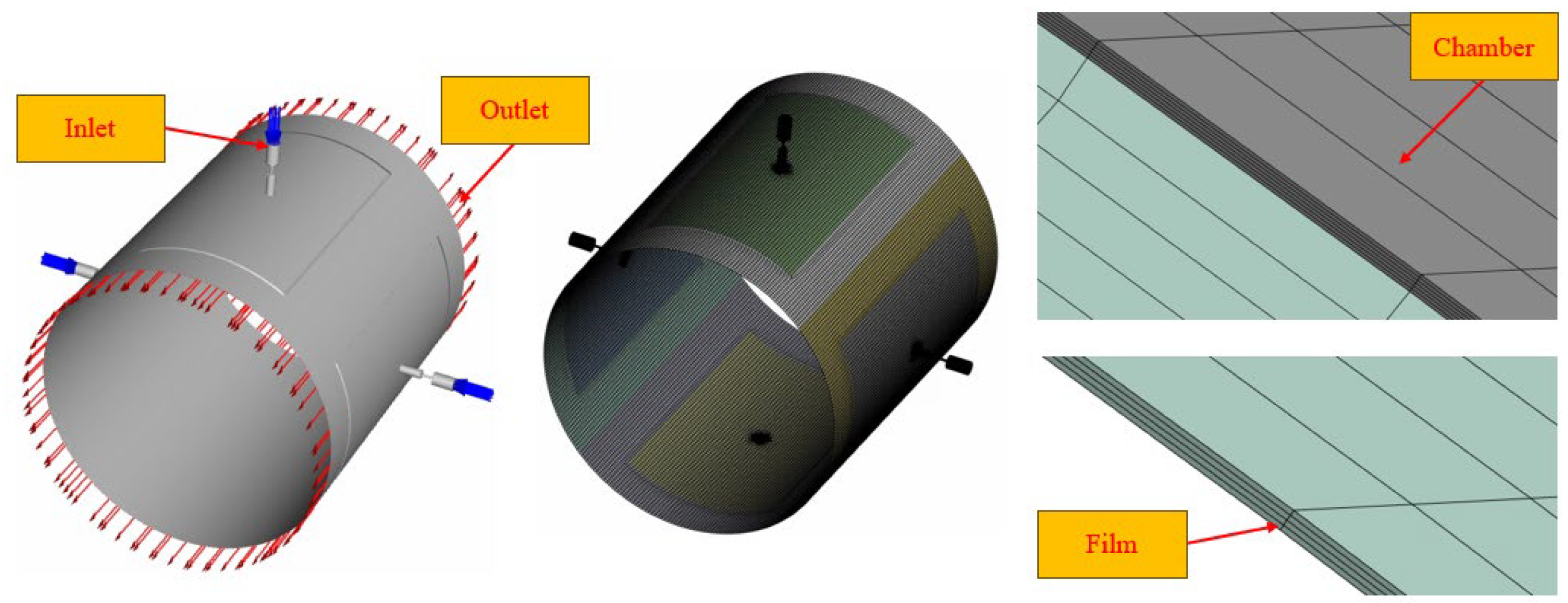
To verify that the variable oil chamber proposed in this study can regulate bearing performance, a fluid domain model of the shallow oil chamber bearing was established, as shown in Figure 3. The number of mesh cells in the fluid domain is 751,285. A thin-volume mesh was employed to subdivide the thickness direction of oil film and shallow oil chamber. Using a laminar flow model, the computational results for flow rate, sealing surface pressure, force and stiffness were analyzed under different oil chamber depths and rotational speeds.
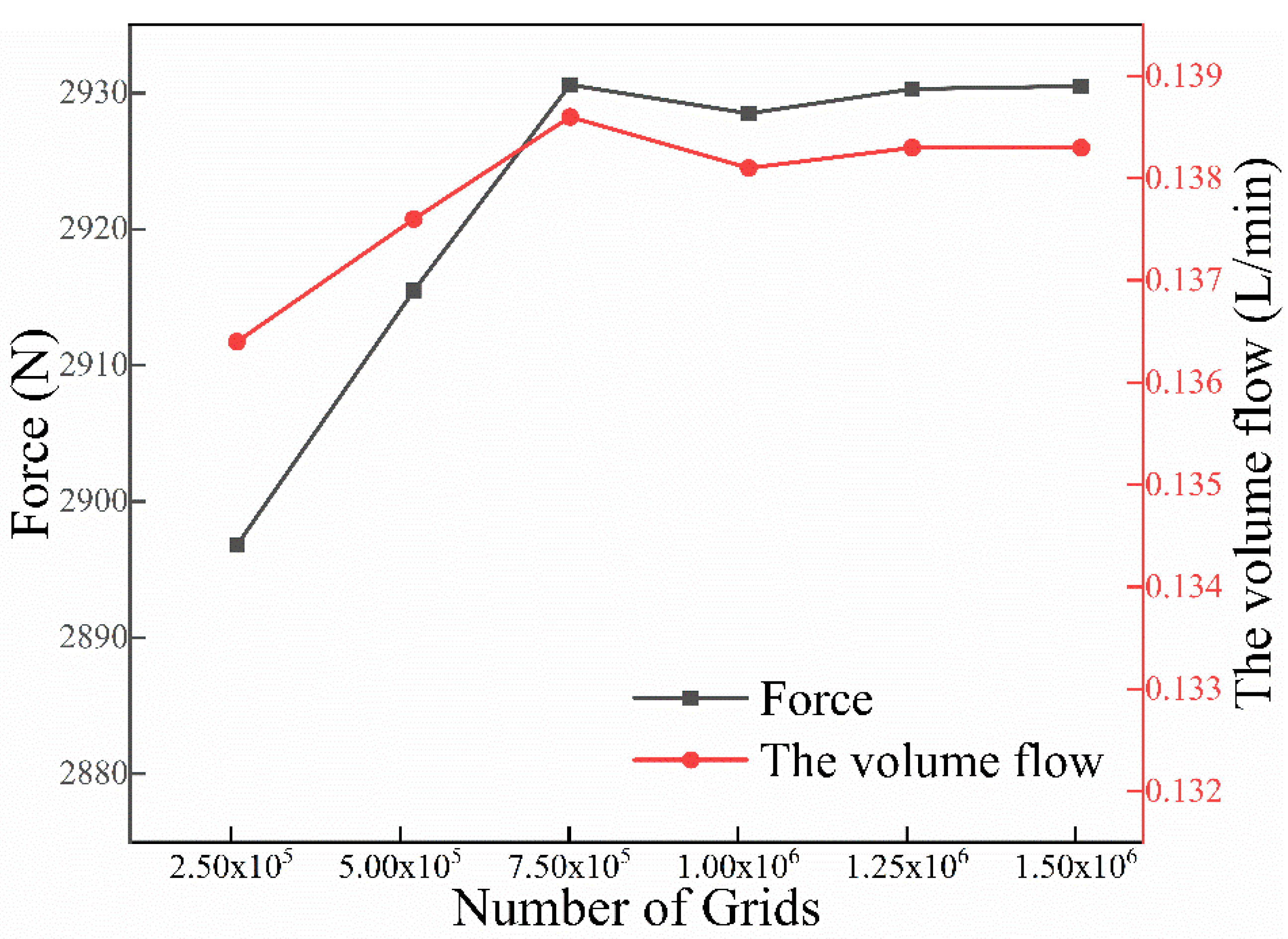
A mesh independence verification was conducted under the following conditions: rotational speed of 1000 rpm, oil supply pressure of 2 MPa, and oil chamber depth of 10 µm. The bearing load capacity and flow rate were calculated for six different mesh configurations, as shown in Figure 4. The computational results for the number of grids selected in this study differed by only 0.2% from those obtained with 1,508,097 grids. To balance computational accuracy and efficiency, this study employs 751,285 grids.

4. Experimental Platform

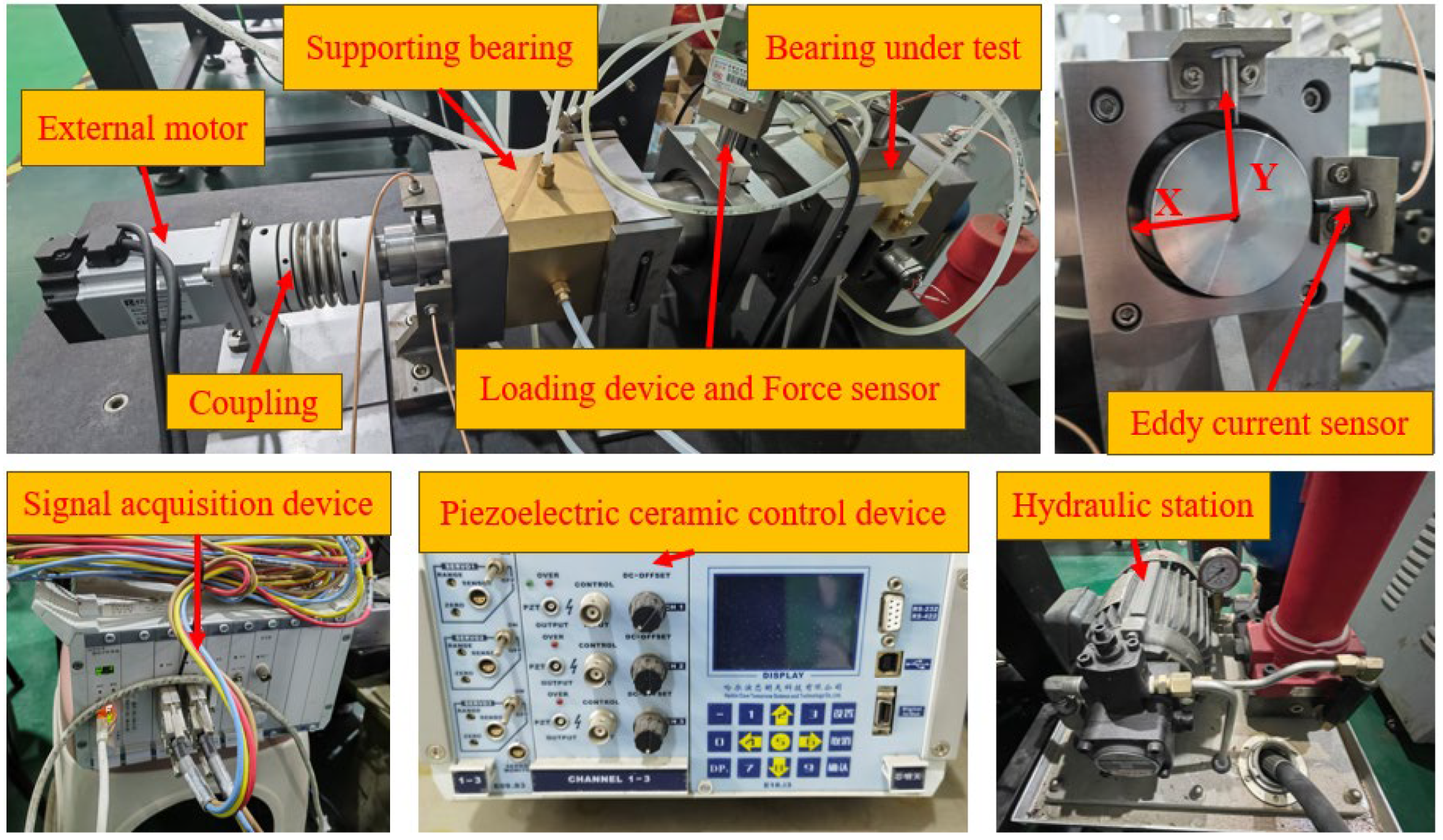
Figure 5 shows the main part of the oil chamber adjustment device. The main structure of the test platform is shown in Figure 6, including hydraulic station, external motor, coupling, supporting bearing, loading device, force sensor (moedl: LCZ-204B/500KG; linear error 0.05% F.S), bearing under test, eddy current sensor (model: U05; the measurement range is 0.05–0.55 mm; the absolute error ≤ ±0.25% F.S), signal acquisition device and piezoelectric ceramic control device. The support bearing is a self-designed hydrostatic bearing. The bearing under test is a hybrid bearing with adjustable oil chamber depth. The loading device is directly loaded on the shaft by means of a rolling bearing connection, which does not affect the rotation of the shaft. The force sensor is installed on the loading device, which can directly obtain the loading force. Eddy current sensor is installed at the shaft end to obtain the shaft offset data. The signal acquisition device can acquire the force data and displacement data in real time.
The hydraulic oil selected for this study is VG5 lubricant, with a density of 869 kg/m3, specific heat capacity of 1943 J/(kg·K), thermal conductivity of 0.13 W/(m·K), and dynamic viscosity of 4.345 mPa·s at 40 °C. Under conditions of 1000 rpm rotational speed, 2 MPa oil supply pressure, 10 µm oil film thickness, and an initial temperature of 300 K, calculations indicate that the maximum temperature rise in the oil film occurs at the outer edge of the sealing surface, reaching 4.4 K. Therefore, it is concluded that the viscosity of the hydraulic oil remains constant.
Based on the designed bearing structure and selected piezoelectric ceramic parameters, the shallow oil chamber depth at the initial experimental state is 20 μm, with an oil supply pressure of 2 MPa. The eddy current displacement sensor has a measurement range of 50 μm and a nominal absolute error of ±0.1 μm. Considering the combined effects of sensor accuracy, repeatability, and inherent bench errors, the overall combined standard uncertainty for displacement measurement is ±0.2 μm.
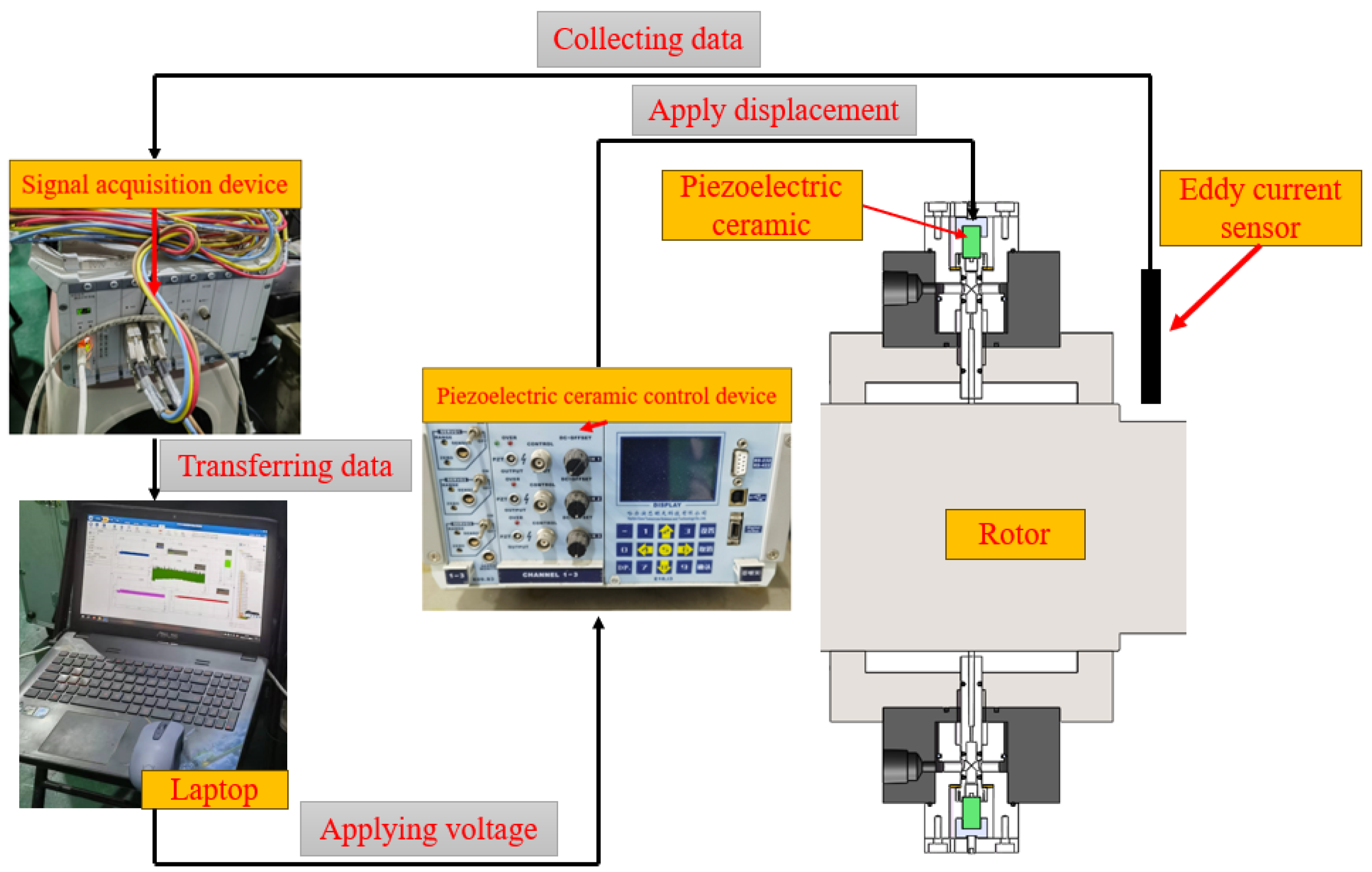
Figure 7 shows the process of adjusting the depth of the bearing oil chamber. During the rotation of the shaft, the eddy current sensors collect the displacement signal of the shaft end. The data is transmitted to the computer through the signal acquisition device. After data analysis, the required voltage is calculated by displacement. The input voltage is supplied to the piezoelectric ceramic control device. The piezoelectric ceramics elongate or shorten, causing a displacement of the same magnitude in the depth of the oil chamber, thereby controlling the radial displacement of the shaft.

5. Results and Discussion

5.1. Effect of Oil Chamber Depth on Load Capacity

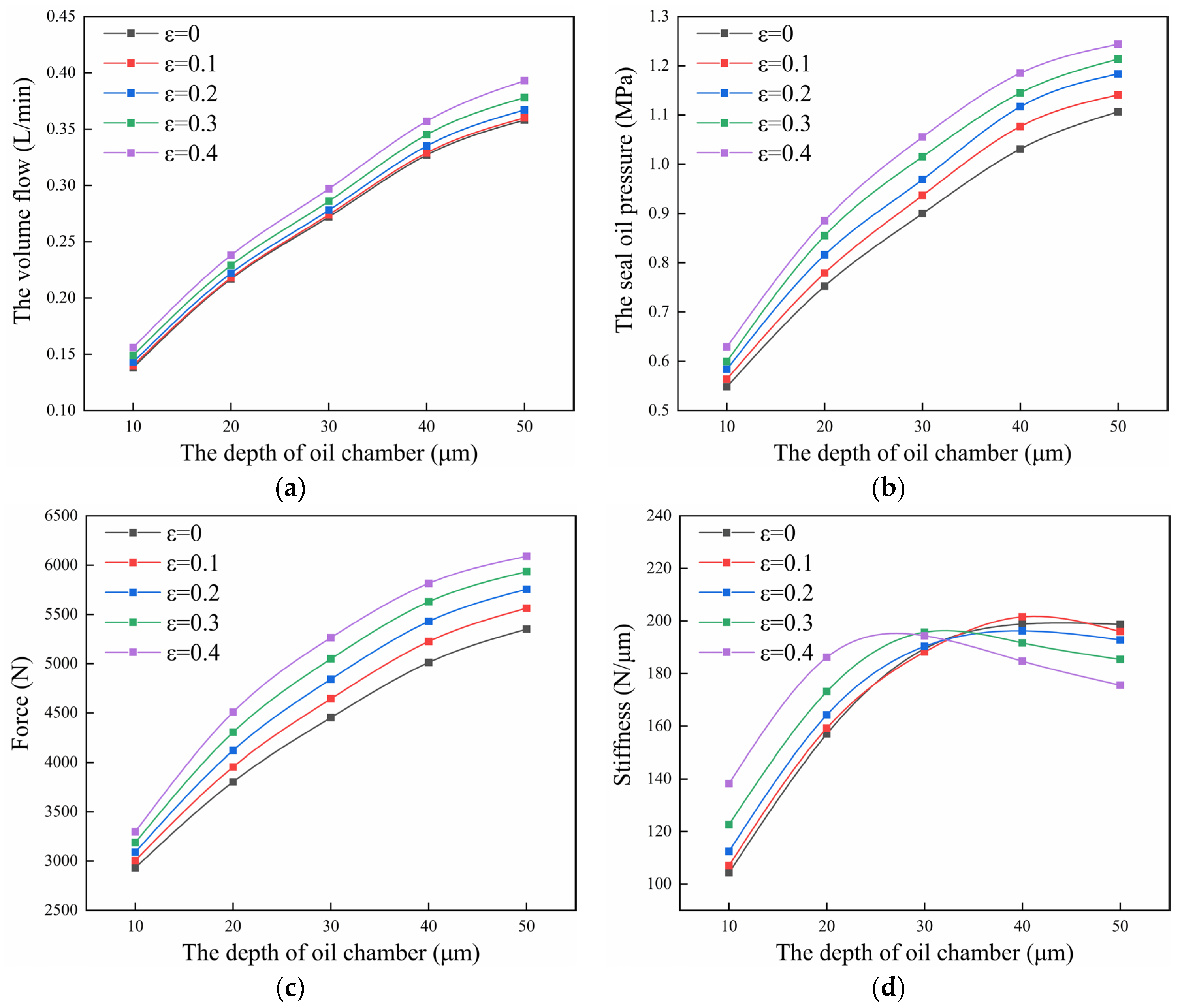
In order to confirm the feasibility of the designed range of oil chamber depth variations, and to provide a theoretical basis for subsequent oil chamber adjustment experiments. Based on the fluid domain model, the influence of oil chamber depth on bearing performance under different eccentricity was analyzed. The rotating speed is 200 rpm. The oil supply pressure is 2 MPa. Figure 8a–c showed that as the oil chamber depth increased, the volume flow, the seal oil pressure and the bearing capacity gradually increased. This was because the volume of the shallow oil chamber increases, resulting in more oil in the oil film gap. Increasing the depth of the shallow oil chambers increases the volumetric hold-up of lubricant in the bearing’s pressure region, thereby maintaining higher pressure within the oil film. We observed that as the oil chamber depth increased, the volume flow, the seal oil pressure, and the bearing capacity rose in tandem, consistent with the findings of the research on shallow oil chamber hydrostatic bearings [10]. Similarly, as the eccentricity increased, the volume flow, the seal oil pressure and the bearing capacity also increased gradually. This occurs because as the eccentricity increases, the asymmetric oil film thickness creates an asymmetric pressure distribution in the oil film, with a sharp rise in pressure on the eccentric side that dominates the total bearing capacity. This asymmetric pressure distribution increases the oil pressure in the land regions and the total volume flow through the bearing, as the reduced film thickness on the eccentric side increases the local flow velocity and pressure gradient, consistent with previous research findings on the effect of eccentricity on bearing performance [5].
Figure 8d shows that with the increase in oil chamber depth, the oil film stiffness increased first and then decreased, and there was the maximum stiffness between the depth of 30–40 μm. With the increase in eccentricity, the oil film rigidity increased gradually. This trend was due to the fact that the stiffness of the shallow oil chamber bearing is influenced by both the bearing capacity and the oil chamber depth. This occurs because as the eccentricity increases, the asymmetric oil film thickness creates an asymmetric pressure distribution in the oil film, with a sharp rise in pressure on the eccentric side that dominates the total bearing capacity. This asymmetric pressure distribution increases the oil pressure in the land regions and the total volume flow through the bearing, as the reduced film thickness on the eccentric side increases the local flow velocity and pressure gradient, consistent with previous research findings on the effect of eccentricity on bearing performance [9]. Above all, the results showed that the bearing capacity could be changed with the change in oil chamber depth. It is a good idea to control the bearing performance by adjusting the oil cavity depth.
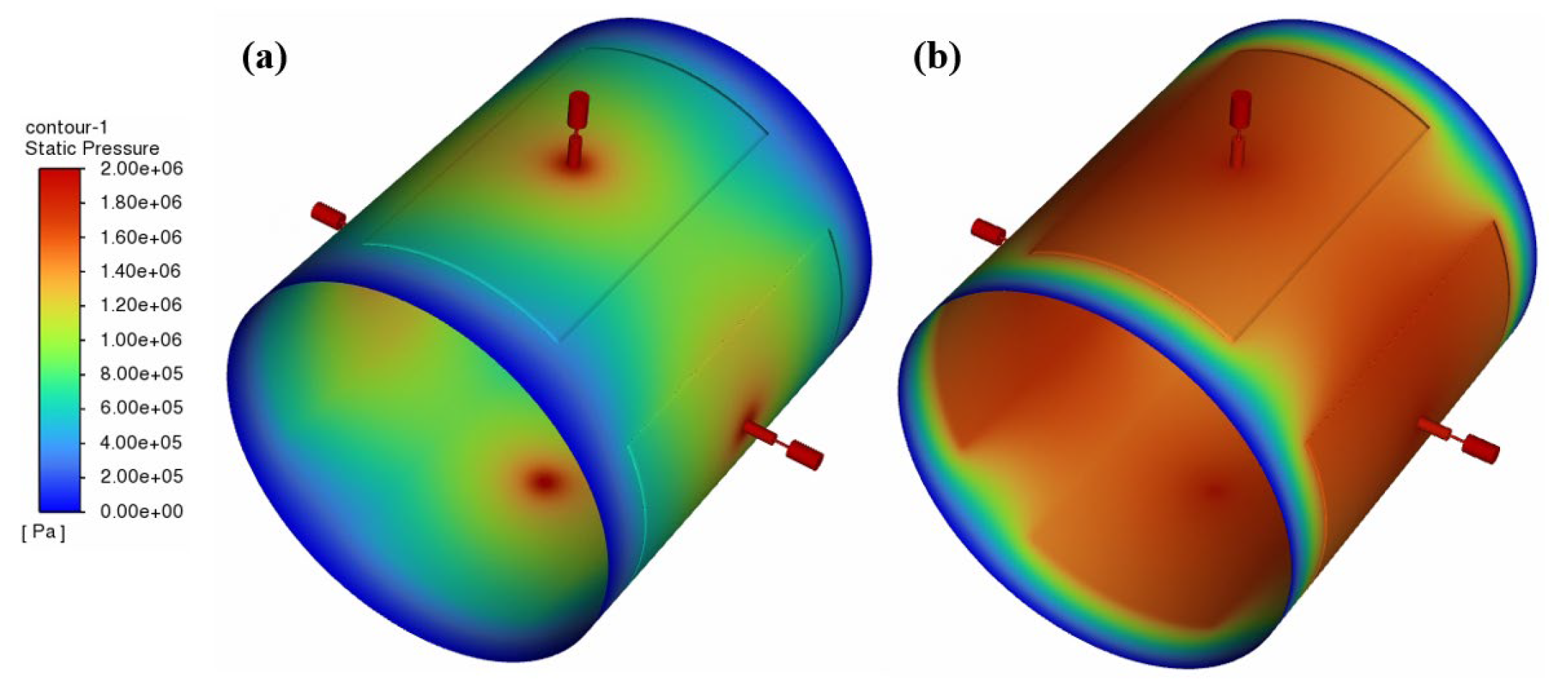
Figure 9 shows pressure contours for oil chamber depths of 10 μm and 50 μm at a rotational speed of 200 rpm. As mentioned earlier, shallow oil chamber exhibit throttling effects, which are evident in Figure 9a where the hydraulic oil pressure drop occurs within the shallow chamber region. As the oil chamber depth increases, the throttling effect diminishes, and the pressure drop within the chamber also weakens, as shown in Figure 9b.

5.2. Effect of Rotational Speed on Load Capacity

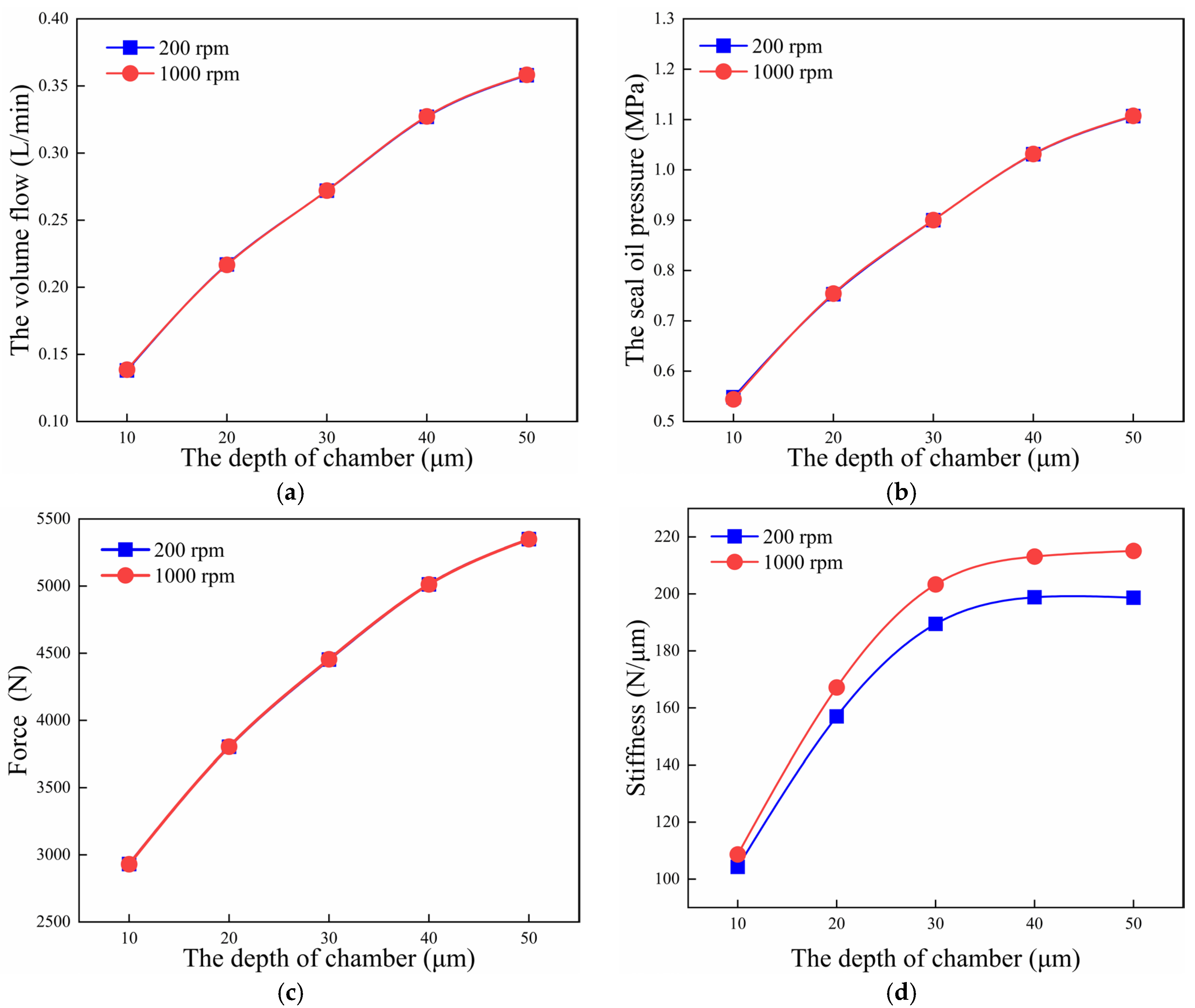
Figure 10 compares the flow rate, sealing surface pressure, load capacity and stiffness of the bearing with different oil chamber depth under 200 rpm and 1000 rpm conditions. It can be observed that the characteristics of this bearing exhibit minimal variation across both rotational speeds, with the maximum change not exceeding 9%, within the rotational speed range of 0–1000 rpm. This indicates that load capacity of this bearing remains unaffected by rotational speed, disregarding the influence of temperature rise.
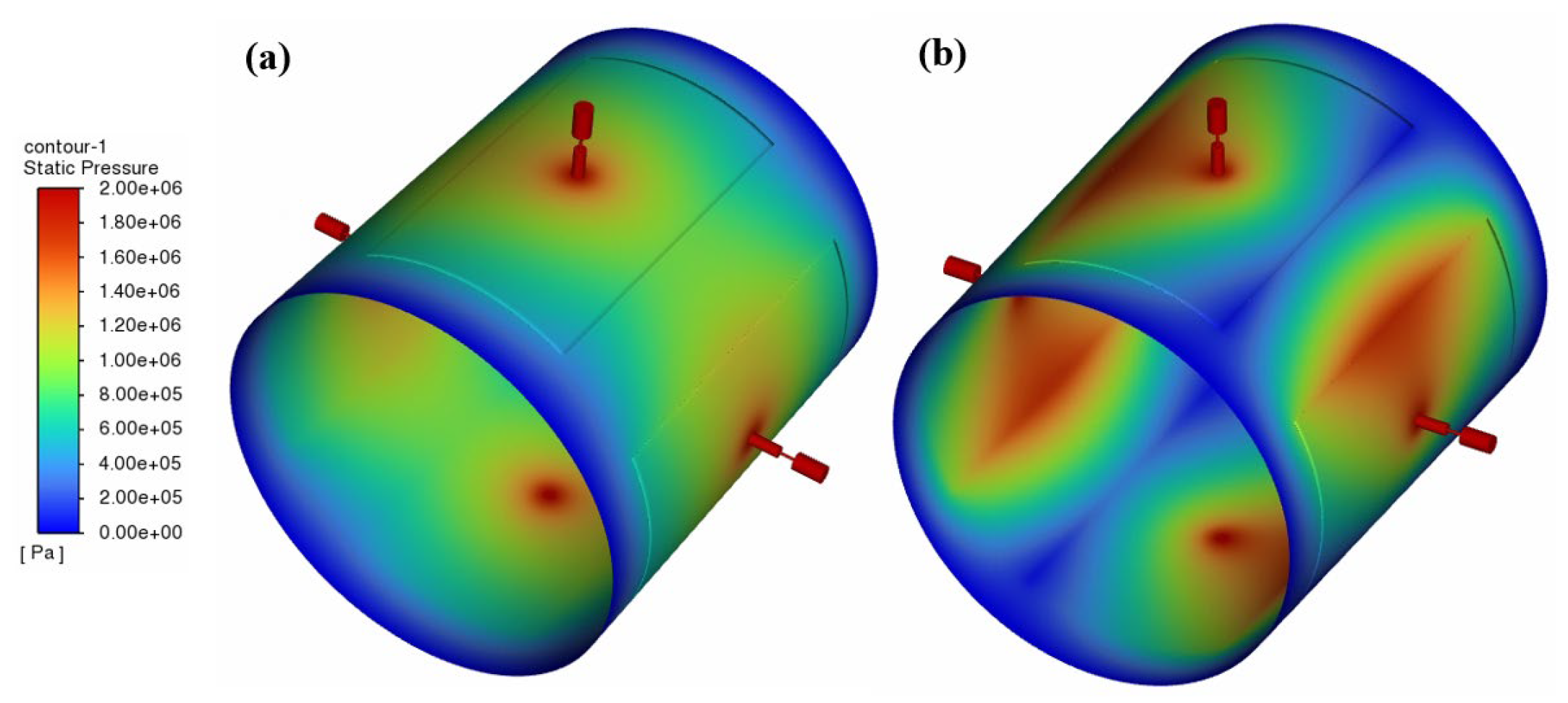
Furthermore, Figure 11 shows the pressure contours of the bearing with a 10 μm oil chamber depth under rotational speeds of 200 rpm and 1000 rpm. As rotational speed increases, the pressure distribution within the oil chamber and oil film shifts due to the influence of hydraulic oil viscous forces. This bearing design lacks a return oil groove. Compared to bearings with such grooves [1,16], this means increased rotational speed does not accelerate the circulation of hydraulic oil between the bearing and the hydraulic station. Consequently, it does not affect the bearing’s load capacity. The bearing without oil grooves allows pressure oil to flow out only from the edges of the axial sealing surface. Hydraulic oil forms an internal flow phenomenon within the oil film along the circumferential direction. Rotational speed only affects the internal flow velocity of the hydraulic oil, which in turn causes a deflection in the pressure distribution across the oil film.

5.3. Experimental Analysis of Regulatory Capability

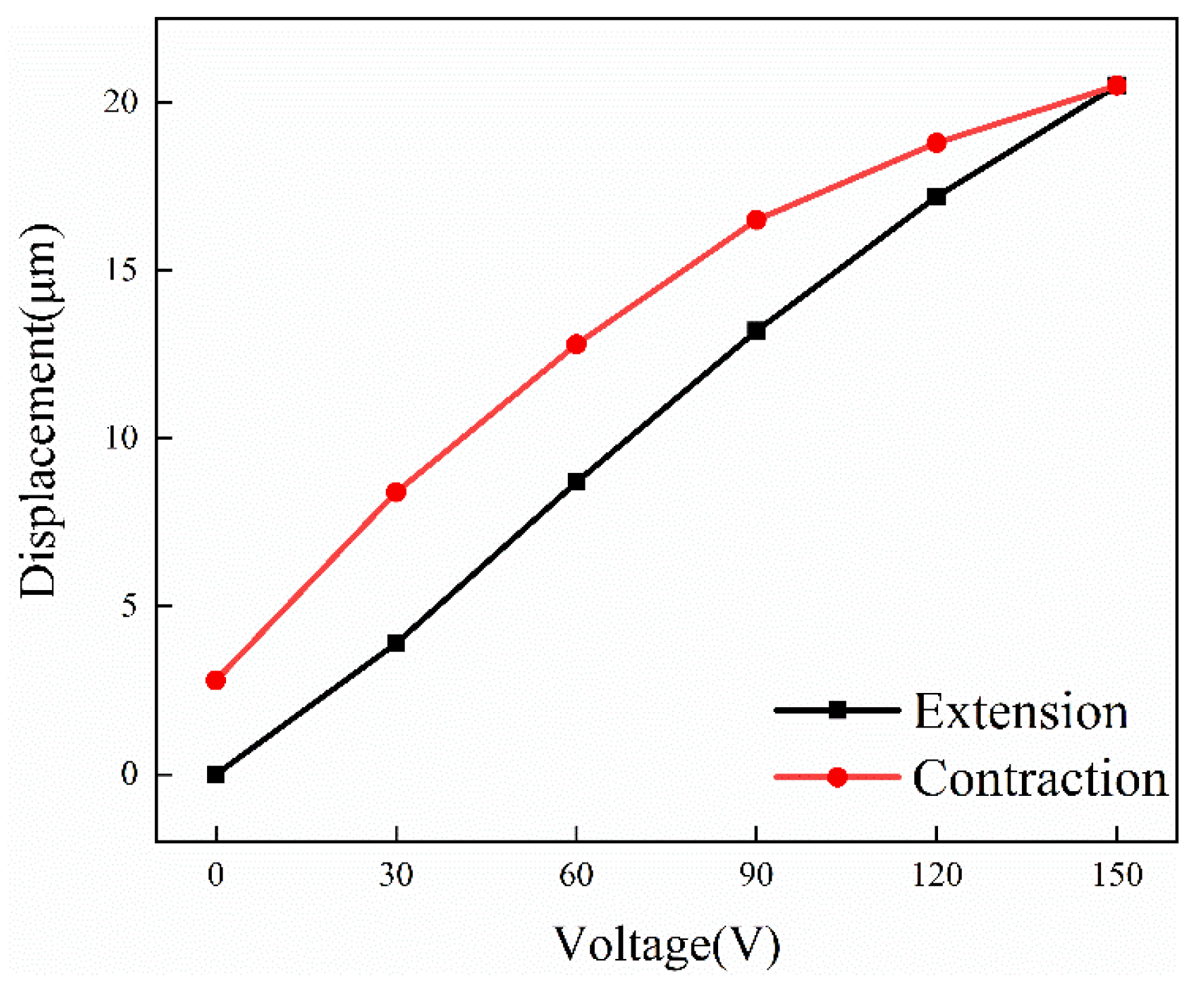
The displacement of the piezoelectric ceramic within the measuring range was measured by inductance micrometer, as shown in Figure 12. As the piezoelectric ceramic is directly connected with the oil chamber adjusting block, the displacement of the piezoelectric ceramic is equal to the displacement of the oil chamber depth. The displacement is 20.5 μm, which meets the requirements for depth adjustment of the bearing oil chamber. Under open-loop control, the restoration of piezoelectric ceramic had hysteresis, which can be solved by applying a bias voltage.
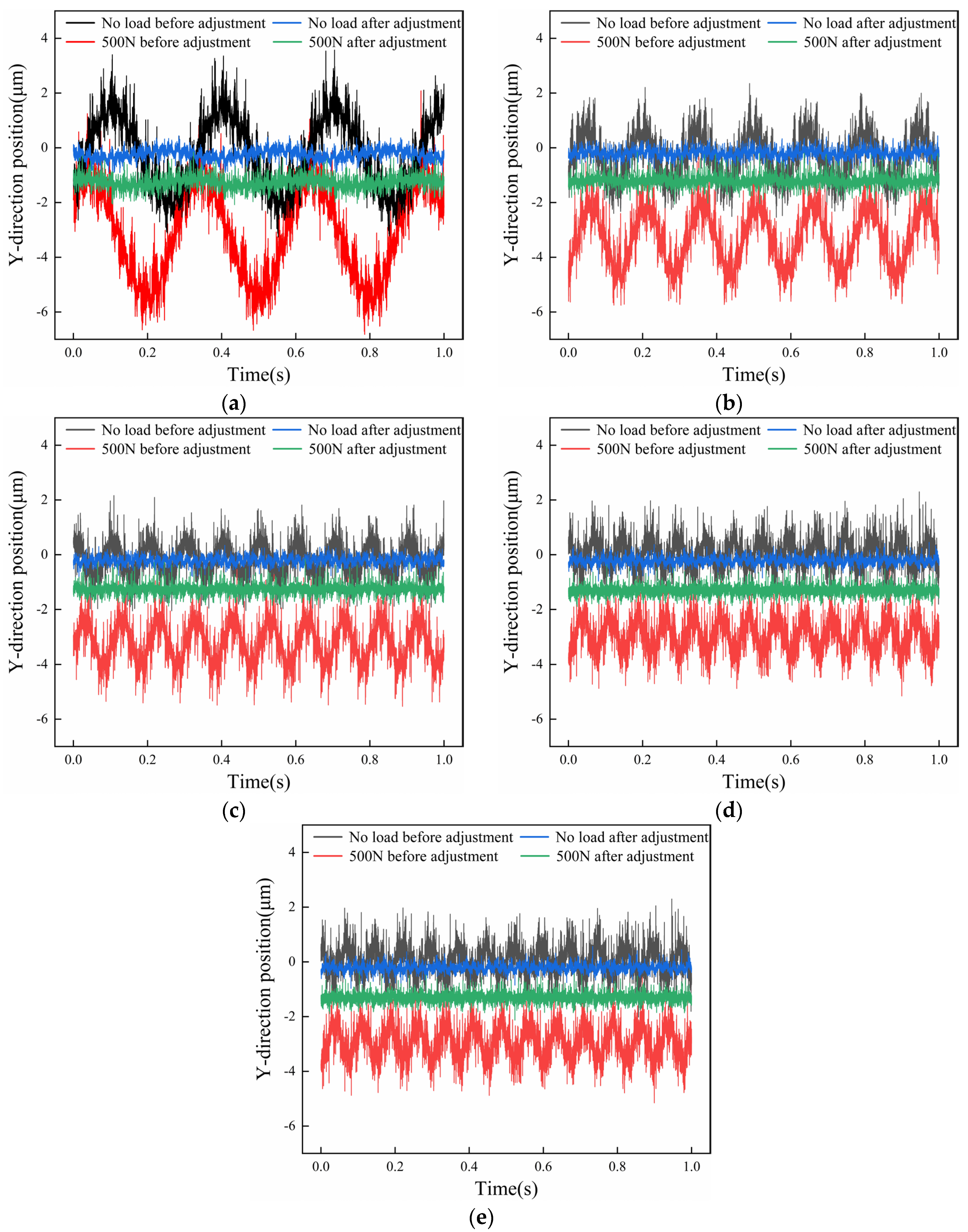
This study validated the feasibility of this shallow oil chamber adjustment device through open-loop control experiments. Calculations based on Figure 9 determined the selected piezoelectric ceramic’s proportional gain coefficient to be 7.5 V/μm. The initial voltage applied to the piezoelectric ceramic was 150 V. The Y direction specified in this study is shown in Figure 6. In this study, the position of the shaft end in the Y direction was analyzed for no-load and 500 N load at 200–1000 rpm. It can be seen from Figure 13a–e that the position of the shaft end fluctuates before adjustment because of manufacturing or assembly errors in the test platform or because of unstable oil supply to the bearing. As the frequency is directly proportional to the rotational speed, regardless of loading, with the increase in rotational speed, the frequency of shaft end position gradually increases. At the same time, the dynamic pressure oil film is gradually formed, so the amplitude is gradually reduced.
Under different rotating speeds, the voltage was applied to the piezoelectric ceramic through the piezoelectric ceramic control device. After a period of stable operation, it was found that the displacement fluctuation in the Y direction of the shaft end decreases by adjusting the depth of the oil chamber, because the flow and oil film pressure increase after adjustment, which increases the anti-vibration capacity of the shaft. As shown in Figure 13d, the maximum design stiffness of this bearing was calculated as 201.6 N/μm according to the governing equations. In the experiment under 500 N load condition, the displacement of shaft end was still 1.9 μm after adjustment.
Figure 14 shows a comparison of displacement measurements with and without adjustment under different rotational speeds and load conditions. The error band represents the overall combined standard uncertainty of the displacement measurement, with a value of ±2 μm. As shown in Figure 14, at 200 rpm, the shaft end displacement was reduced from 8.9 μm to 1.9 μm after adjustment. The accuracy in the Y direction was increased by a maximum of 78.4% after adjustment compared to the case before adjustment. at 200–1000 rpm, the displacement of shaft end in Y direction can be controlled below 2 μm without obvious fluctuation after adjustment which indicates that the depth adjustment device has a certain effect on the control of bearing rotation accuracy. As discussed in Section 5.1, increasing the oil chamber depth reduces throttling pressure drop within the chamber, elevates oil film pressure. For offset shafts, this targeted pressure enhancement generates compensatory radial hydraulic force acting in the direction opposite to shaft offset, counteracting the forces causing shaft displacement. This force centers the shaft relative to the bearing bore, eliminating initial misalignment.

6. Conclusions

This paper analyzed the influence of the oil chamber depth on the performance of the shallow oil chamber hybrid bearing, and designed a novel shallow oil chamber depth adjustment structure by piezoelectric ceramics according to this influence law. It had been proven through experiments that bearings with this structure have the ability to adjust performance. The main conclusions can be summarized as follows:
A fluid domain model of the shallow oil chamber bearing was established and the influence of oil chamber depth on shallow oil chamber hybrid bearings was analyzed.
A shallow oil chamber hybrid bearing with a depth adjustment structure had been designed, which could be controlled through piezoelectric ceramics.
It had been verified that this bearing could regulate its performance in real time by comparative experiments.
This study illustrated that the shallow oil chamber hybrid bearing with depth adjustment structure can improve accuracy. Compared with the case without adjustment, the accuracy in Y direction has increased by a maximum of 78.4%, under load conditions of 500 N and rotational speed of 200 rpm. The shaft end Y direction displacement can be stably controlled below 2 μm under the above load and speed conditions, indicating a significant improvement in the shaft’s anti-vibration capacity and rotational accuracy. In the following study, fluid–structure–thermal coupling analysis and dynamic characteristics studies of this bearing under high rotational speeds will be conducted. This bearing will be installed on the grinding spindle and grinding verification experiments will be carried out to verify the advantages of this bearing in performance control.

Author Contributions

Conceptualization, H.H.; Data curation, H.H.; Investigation, H.H.; Methodology, H.H.; Writing—original draft, H.H.; Validation, H.Z.; Resources, Y.R., H.C. and Y.H.; Writing—review and editing, Y.R., H.C., H.Z., Y.H. and G.Z. All authors have read and agreed to the published version of the manuscript.

Funding

This work was funded by National Natural Science Foundation of China (No. 52322510), the Major Science and Technology Programs in Henan Province, China (No. 241100220200) and the Innovation Consortium Project of Machine Tools and Moulds in Dongguan (No. 20251201500012).

Data Availability Statement

The original contributions presented in this study are included in the article. Further inquiries can be directed to the corresponding author.

Conflicts of Interest

The authors declare no conflicts of interest.

References

  1. Rowe, W.B. Hydrostatic, Aerostatic and Hybrid Bearing Design; Butterworth-Heinemann: Oxford, UK, 2012. [Google Scholar] [CrossRef]
  2. Liang, P.; Lu, C.; Pan, W.; Li, S. A new method for calculating the static performance of hydrostatic journal bearing. Tribol. Int. 2014, 77, 72–77. [Google Scholar] [CrossRef]
  3. Horvat, F.E.; Braun, M.J. Comparative experimental and numerical analysis of flow and pressure fields inside deep and shallow pockets for a hydrostatic bearing. Tribol. Trans. 2011, 54, 548–567. [Google Scholar] [CrossRef]
  4. Zhang, P.; Chen, Y.; Zhang, C.; Zha, J.; Wang, T. Influence of geometric errors of guide rails and table on motion errors of hydrostatic guideways under quasi-static condition. Int. J. Mach. Tools Manuf. 2018, 125, 55–67. [Google Scholar] [CrossRef]
  5. Wang, J.; Huang, J.; Jiang, S.; Kouediatouka, A.N.; Liu, Q.; Dong, G. Analysis of maximum radial load capacity of hydrostatic journal bearing considering supply pressure limitation by a novel method. Tribol. Int. 2023, 184, 108484. [Google Scholar] [CrossRef]
  6. Li, Q.; Zhang, S.; Ma, L.; Xu, W.; Zheng, S. Stiffness and damping coefficients for journal bearing using the 3D transient flow calculation. J. Mech. Sci. Technol. 2017, 31, 2083–2091. [Google Scholar] [CrossRef]
  7. Michalec, M.; Svoboda, P.; Křupka, I.; Hartl, M. A review of the design and optimization of large-scale hydrostatic bearing systems. Eng. Sci. Technol. Int. J. 2021, 24, 936–958. [Google Scholar] [CrossRef]
  8. Hale, L.C.; Donaldson, R.R. Development of a hydrostatic journal bearing with slit-step compensation. In Proceedings of the American Society of Precision Engineering, 2006 Annual Meeting, Monterey, CA, USA, 15 February–20 October 2006. [Google Scholar]
  9. Chen, Z.; Wang, J.; Liu, Y.; Li, R. Numerical study on the static and dynamic performance of worn water-lubricated journal bearings considering cavitation. Proc. Inst. Mech. Eng. Part J J. Eng. Tribol. 2026, 240, 183–202. [Google Scholar] [CrossRef]
  10. Johnson, R.E.; Manring, N.D. Sensitivity Studies for the Shallow-Pocket Geometry of a Hydrostatic Thrust Bearing. In Proceedings of the ASME 2003 International Mechanical Engineering Congress & Exposition, Washington, DC, USA, 15–21 November 2003. [Google Scholar] [CrossRef]
  11. Gao, S.; Shang, Y.; Gao, Q.; Lu, L.; Zhu, M.; Sun, Y.; Yu, W. CFD-Based Investigation on Effects of Orifice Length–Diameter Ratio for the Design of Hydrostatic Thrust Bearings. Appl. Sci. 2021, 11, 959. [Google Scholar] [CrossRef]
  12. Strok, L.V.; Sekatskii, V.S.; Pikalov, Y.Y.; Kodnyanko, V.A. Effect of Roughness Directed Radially on the Hydrostatic Support Characteristics. J. Mach. Manuf. Reliab. 2020, 49, 1021–1026. [Google Scholar] [CrossRef]
  13. Rana, N.K.; Gautam, S.S.; Verma, S.; Rahmani, F. On the Stiffness and Damping Coefficients of Constant Flow Valve Compensated Conical Hydrostatic Journal Bearing with Micropolar Lubricant. Procedia Technol. 2016, 23, 42–50. [Google Scholar] [CrossRef][Green Version]
  14. Bently, D.E.; Grant, J.W.; Hanifan, P.C. Active Controlled Hydrostatic Bearings for a New Generation of Machines. In Proceedings of the ASME Turbo Expo 2000: Power for Land, Sea, and Air, Munich, Germany, 8–11 May 2000. [Google Scholar] [CrossRef]
  15. Cai, Z.; de Queiroz, M.S.; Khonsari, M.M. On the active stabilization of tilting-pad journal bearings. J. Sound Vib. 2004, 273, 421–428. [Google Scholar] [CrossRef]
  16. Zhang, Y.; Pan, W.; Zhan, S.; Huang, R.; Chen, S.; Lu, C. Investigating the Dynamic Characteristics of the Hydrostatic Bearing Spindle System with Active Piezoelectric Restrictors. J. Tribol. 2022, 144, 071803. [Google Scholar] [CrossRef]
  17. Liu, Z.; Pan, W.; Lu, C.; Zhang, Y. Numerical analysis on the static performance of a new piezoelectric membrane restrictor. Ind. Lubr. Tribol. 2016, 68, 521–529. [Google Scholar] [CrossRef]
  18. Xiong, W.; Hu, C.; Lu, L.; Zheng, L. Research on the Influence of Controllable Restrictor Parameters on the Characteristics of Hydrostatic Journal Bearings. J. Mech. Eng. 2018, 54, 63–71. [Google Scholar] [CrossRef]
  19. Wang, Y.; Zhou, X.; Liu, Z.; Yan, X.C.; Jiang, G.Y. Study on Dynamic Characteristics of Hydrostatic Thrust Bearing with Servo Control. J. Sichuan Univ. (Eng. Sci. Ed.) 2012, 44, 201–205. [Google Scholar] [CrossRef]
  20. Yang, X.; Wang, Y.; Jiang, G.; Yan, X.-C.; Luo, Y.-X. Dynamic Characteristics of Hydrostatic Active Journal Bearing of Four Oil Recesses. Tribol. Trans. 2015, 58, 7–17. [Google Scholar] [CrossRef]
  21. Renn, J.C.; Wu, G.Y. A Study on Active Closed-Loop Gap Control for Hydrostatic Bearing. Appl. Mech. Mater. 2019, 894, 51–59. [Google Scholar] [CrossRef]
  22. Marcinkevicius, A.H.; Jurevicius, M. Automatic Control of Loading Forces in a Tilting Pad Journal Bearing. Adv. Mech. Eng. 2014, 2014, 590695. [Google Scholar] [CrossRef]
  23. Wu, A.; Cai, Z.; de Queiroz, M.S. Model-Based Control of Active Tilting-Pad Bearings. IEEE/ASME Trans. Mechatron. 2007, 12, 689–695. [Google Scholar] [CrossRef]
  24. Lai, T.; Lin, S. A Simulation Study for the Design of Membrane Restrictor in an Opposed-Pad Hydrostatic Bearing to Achieve High Static Stiffness. Lubricants 2018, 6, 71. [Google Scholar] [CrossRef]
  25. Sawano, H.; Nakamura, Y.; Yoshioka, H.; Shinno, H. High performance hydrostatic bearing using a variable inherent restrictor with a thin metal plate. Precis. Eng. 2015, 41, 78–85. [Google Scholar] [CrossRef]
  26. Vernekar, N.K.; Pai, R.; Aroor, G.; Kumar, N.; Hariharan, G. Advancements in Active Journal Bearings: A Critical Review of Performance, Control, and Emerging Prospects. Modelling 2025, 6, 97. [Google Scholar] [CrossRef]
Figure 1. Structural diagram of shallow oil chamber bearing.
Lubricants 14 00129 g001
Figure 2. The main structure of the shallow oil chamber bearing with adjustable oil chamber depth.
Lubricants 14 00129 g002
Figure 3. Fluid domain and mesh division.
Lubricants 14 00129 g003
Figure 4. Grid independent verification.
Lubricants 14 00129 g004
Figure 5. The main part in the oil chamber adjusting device.
Lubricants 14 00129 g005
Figure 6. The main component of the test platform.
Lubricants 14 00129 g006
Figure 7. The process of adjusting the depth of bearing oil chamber.
Lubricants 14 00129 g007
Figure 8. The influence of oil chamber depth on bearing performance under different eccentricity: (a) Flow; (b) The seal oil pressure; (c) Force; (d) Stiffness.
Lubricants 14 00129 g008
Figure 9. Pressure contours for different oil chamber depths: (a) 10 μm; (b) 50 μm.
Lubricants 14 00129 g009
Figure 10. The influence of rotational speed on bearing performance: (a) Flow; (b) The seal oil pressure; (c) Force; (d) Stiffness.
Lubricants 14 00129 g010
Figure 11. Pressure contours for different rotational speeds: (a) 200 rpm; (b) 1000 rpm.
Lubricants 14 00129 g011
Figure 12. The displacement of the piezoelectric ceramic under different voltage.
Lubricants 14 00129 g012
Figure 13. Position in Y direction at different speeds: (a) 200 rpm; (b) 400 rpm; (c) 600 rpm; (d) 800 rpm; (e) 1000 rpm.
Lubricants 14 00129 g013
Figure 14. Comparison of displacement with and without adjustment.
Lubricants 14 00129 g014
Table 1. The main dimension parameters.
PropertyUnitValue
Bearing inner diametermm70
Film thicknessμm25
Shallow oil chamber depthμm20–40
Oil outlet diametermm2
Bearing Widthmm80
Width of axial seal oil mm10
Disclaimer/Publisher’s Note: The statements, opinions and data contained in all publications are solely those of the individual author(s) and contributor(s) and not of MDPI and/or the editor(s). MDPI and/or the editor(s) disclaim responsibility for any injury to people or property resulting from any ideas, methods, instructions or products referred to in the content.