Interesting Images

Unexpected Movement of the Esophagus across the Aorta
1
Department of Internal Medicine, Uijeongbu St. Mary’s Hospital, College of Medicine, The Catholic University of Korea, Seoul 11765, Korea
2
Department of Radiation Oncology, Eunpyeong St. Mary’s Hospital, College of Medicine, The Catholic University of Korea, Seoul 03312, Korea
3
Division of Oncology, Department of Internal Medicine, Eunpyeong St. Mary’s Hospital, College of Medicine, The Catholic University of Korea, Seoul 03312, Korea
*
Author to whom correspondence should be addressed.
Diagnostics 2022, 12(7), 1758; https://doi.org/10.3390/diagnostics12071758

Submission received: 28 June 2022 / Revised: 18 July 2022 / Accepted: 19 July 2022 / Published: 20 July 2022
(This article belongs to the Special Issue Image-Guided Cancer Diagnosis and Therapy)

Abstract

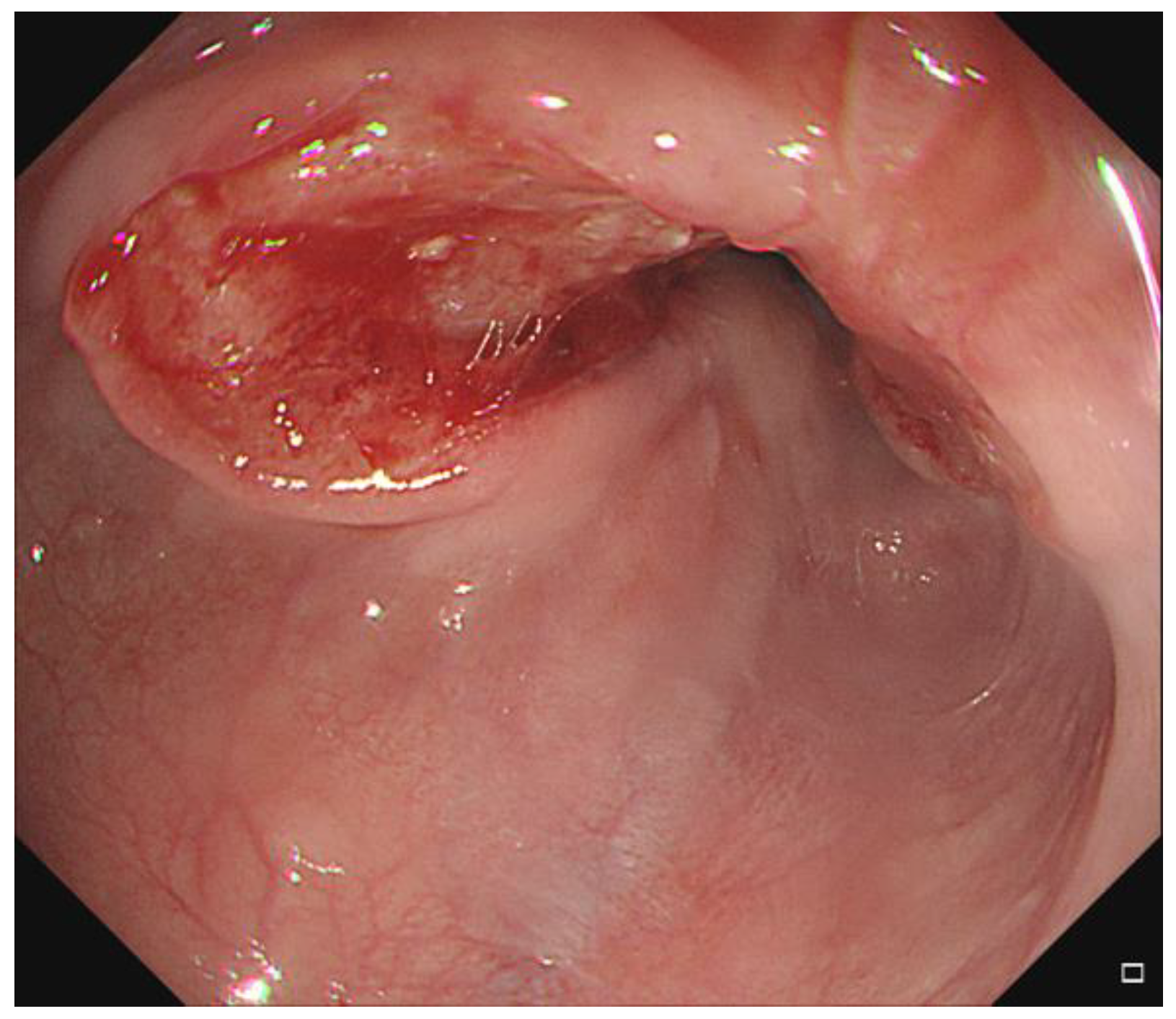
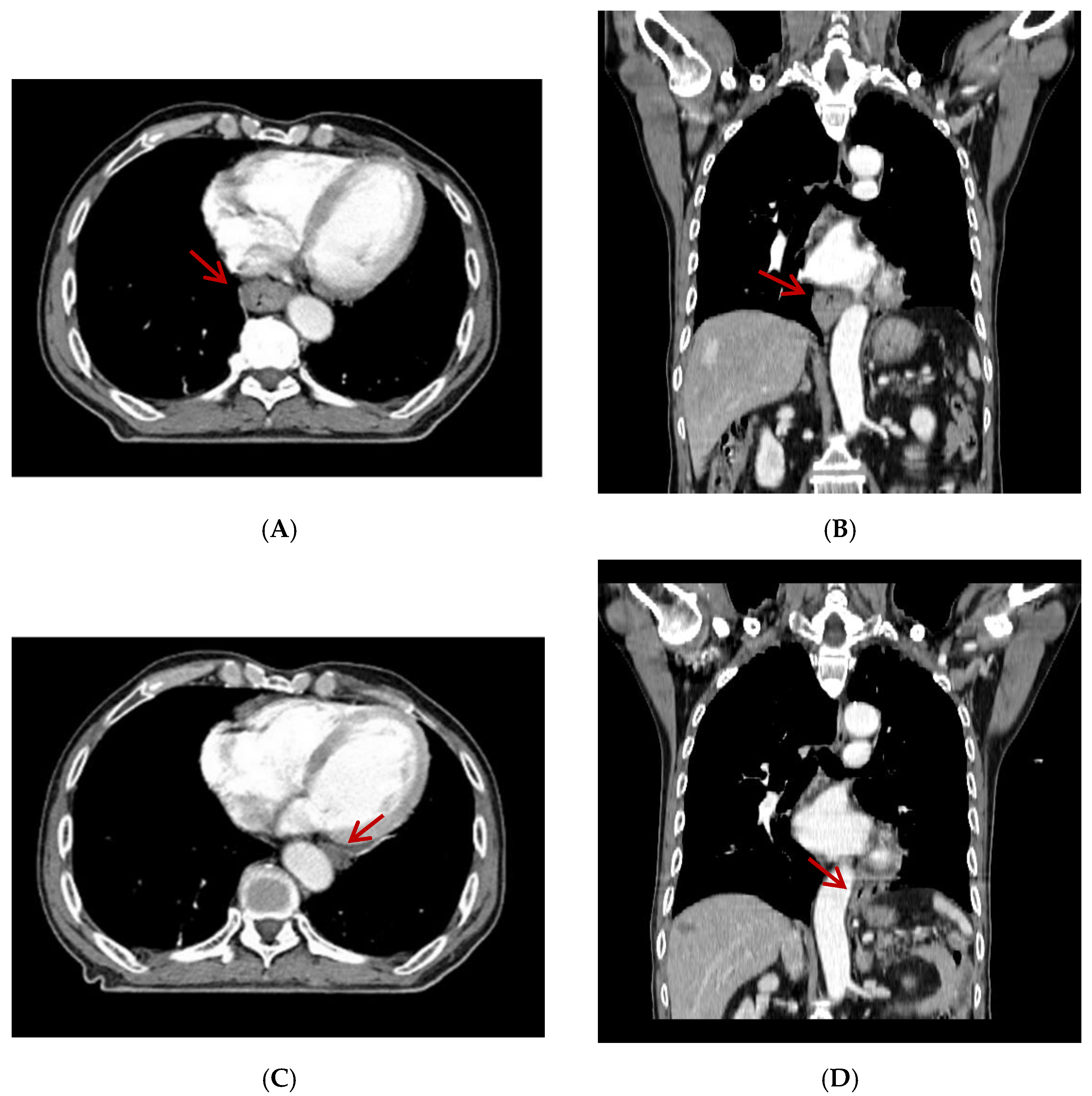
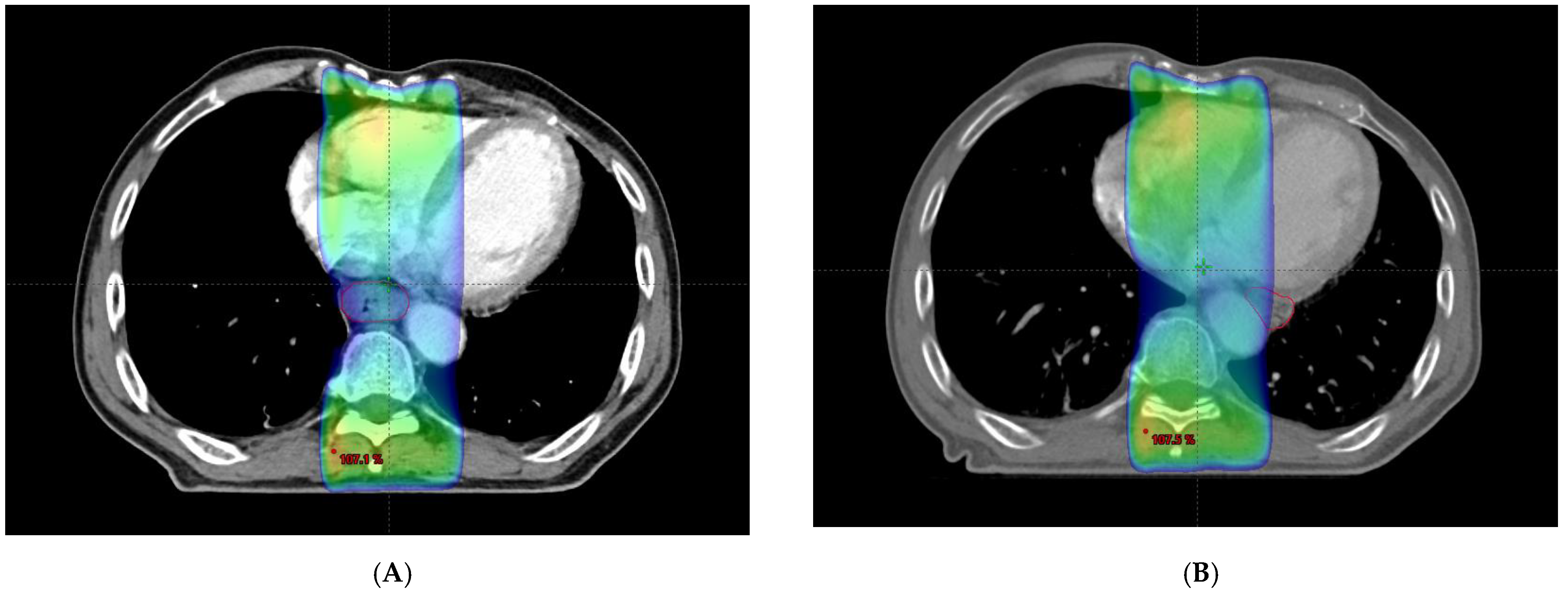
Tumor regression throughout treatment would induce organ movement, but little is known of this in the esophagus. To achieve successful tumor regression, radiation therapy requires several weeks of radiation to be delivered accurately to the tumor. Usually, a 5–10 mm margin is allowed for set-up error and internal organ motion. Our case exhibited an unexpectedly large movement of the esophagus across the aorta with tumor regression that extended outside the margin and thus outside the radiotherapy field. These movements may affect subsequent invasive procedures or treatment during cancer therapy. After the unexpected large movement of the esophagus due to tumor regression, we revised the radiotherapy plan to reflect the new esophageal position. This implied that regular imaging and close monitoring are required during treatment of esophageal cancer.
Keywords: esophagus; movement; tumor regression esophagus; movement; tumor regression