Article

UVC Box: An Effective Way to Quickly Decontaminate Healthcare Facilities’ Wheelchairs

1
Université de Reims Champagne-Ardenne, UR 4691 Biomatériaux et Inflammation en Site Osseux (BIOS), UFR de Pharmacie, SFR CAP-Santé, 51 rue Cognacq Jay, 51100 Reims, France
2
Université de Lorraine, LCOMS, EA7306 Lorraine, France
3
Université de Lorraine LEM 3, UMR CNRS 7239, 7 Rue Félix Savart, 57073 Metz, France
*
Author to whom correspondence should be addressed.
These authors contributed equally to this work.
Life 2024, 14(2), 256; https://doi.org/10.3390/life14020256
Submission received: 9 January 2024 / Revised: 10 February 2024 / Accepted: 12 February 2024 / Published: 16 February 2024
(This article belongs to the Collection Feature Papers in Microbiology)

Abstract

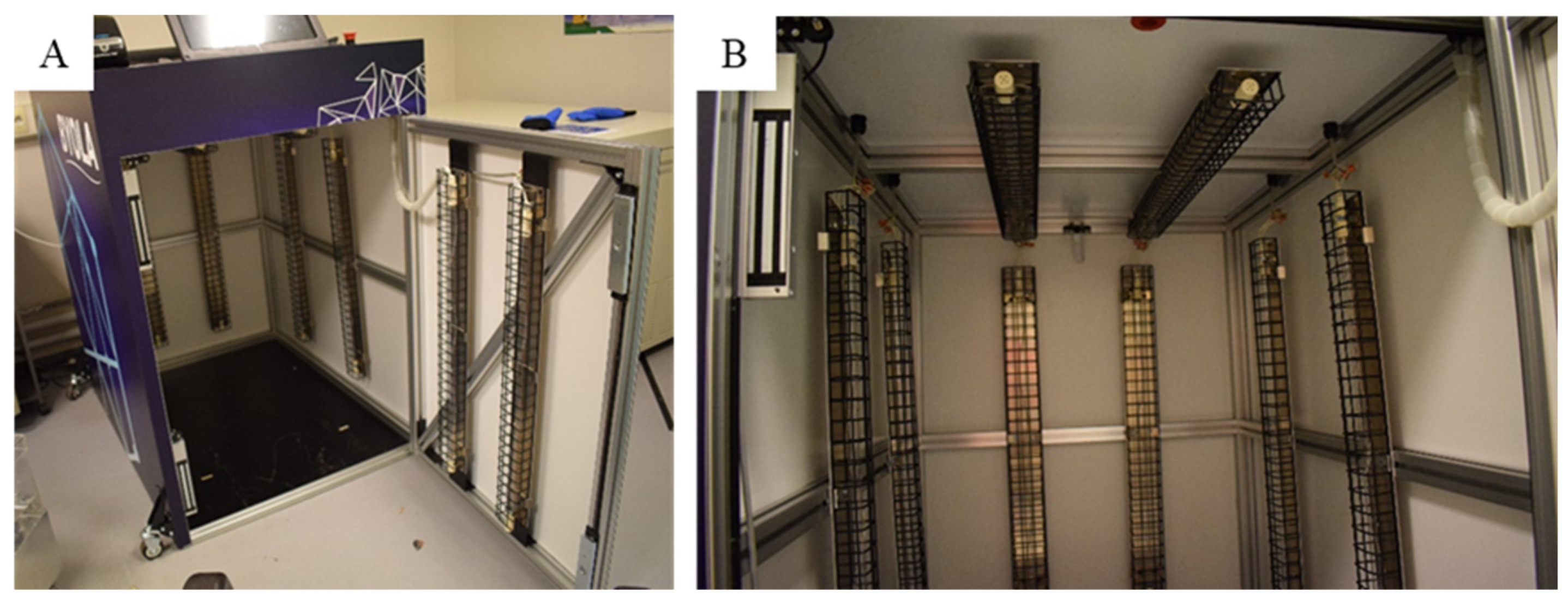
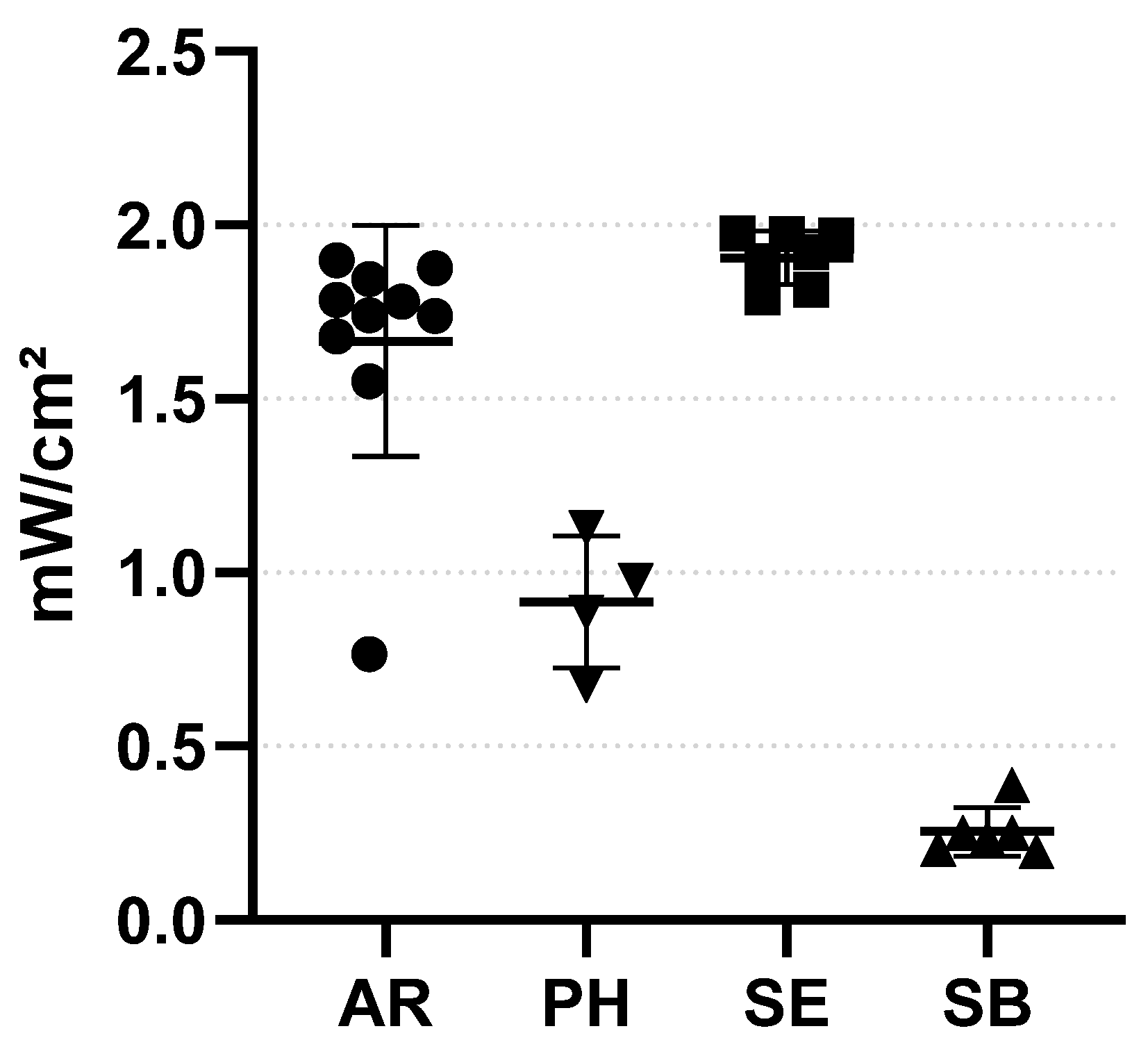
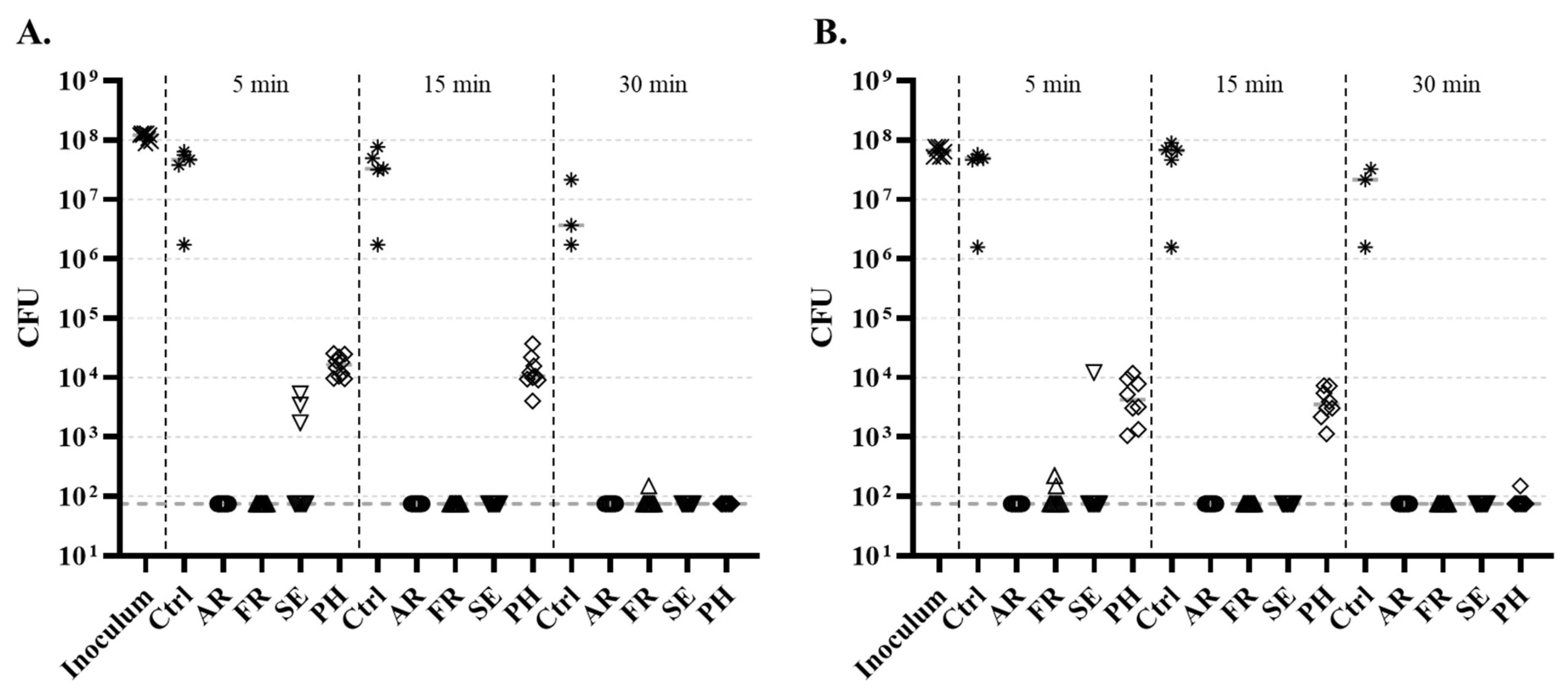
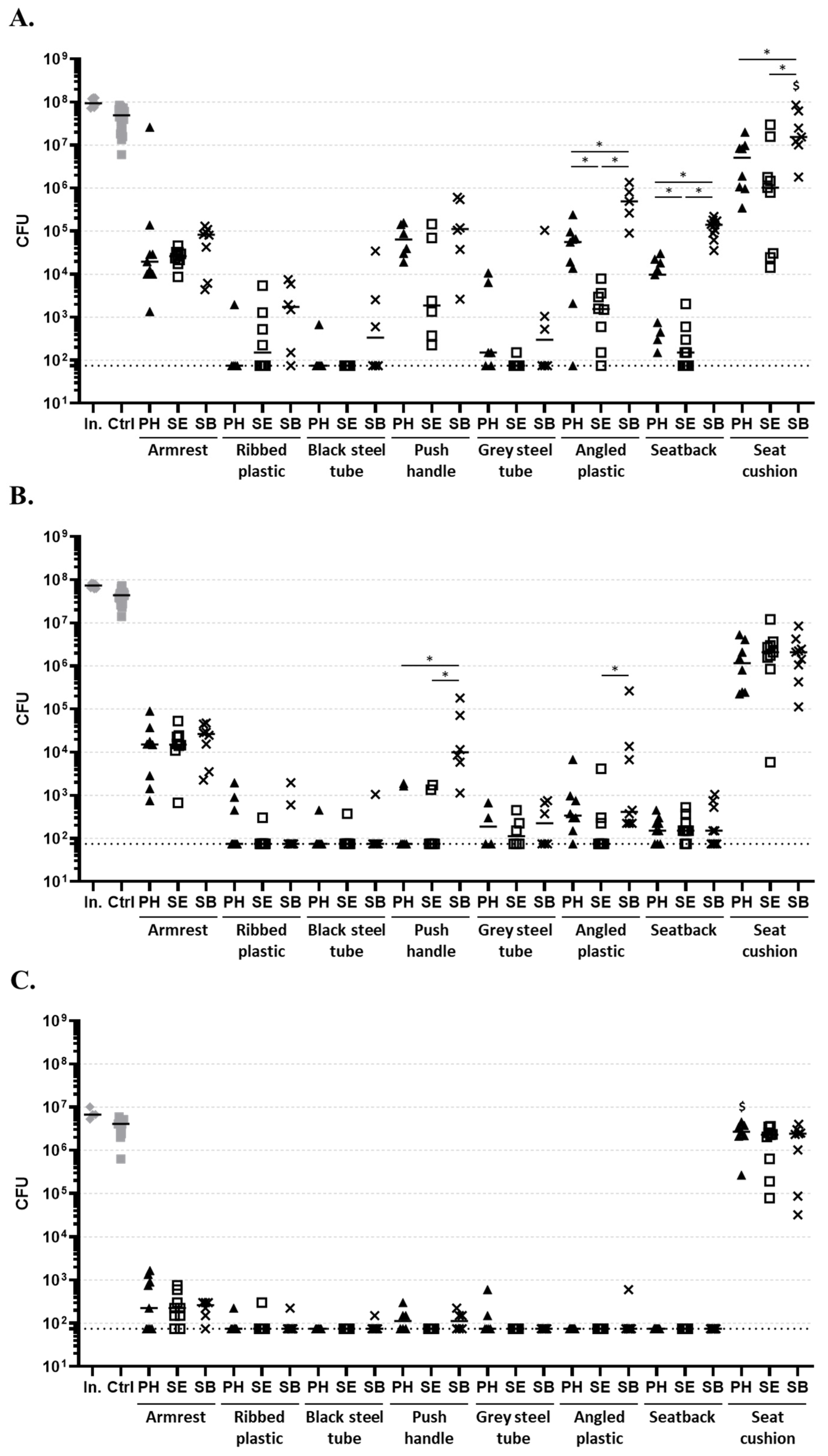
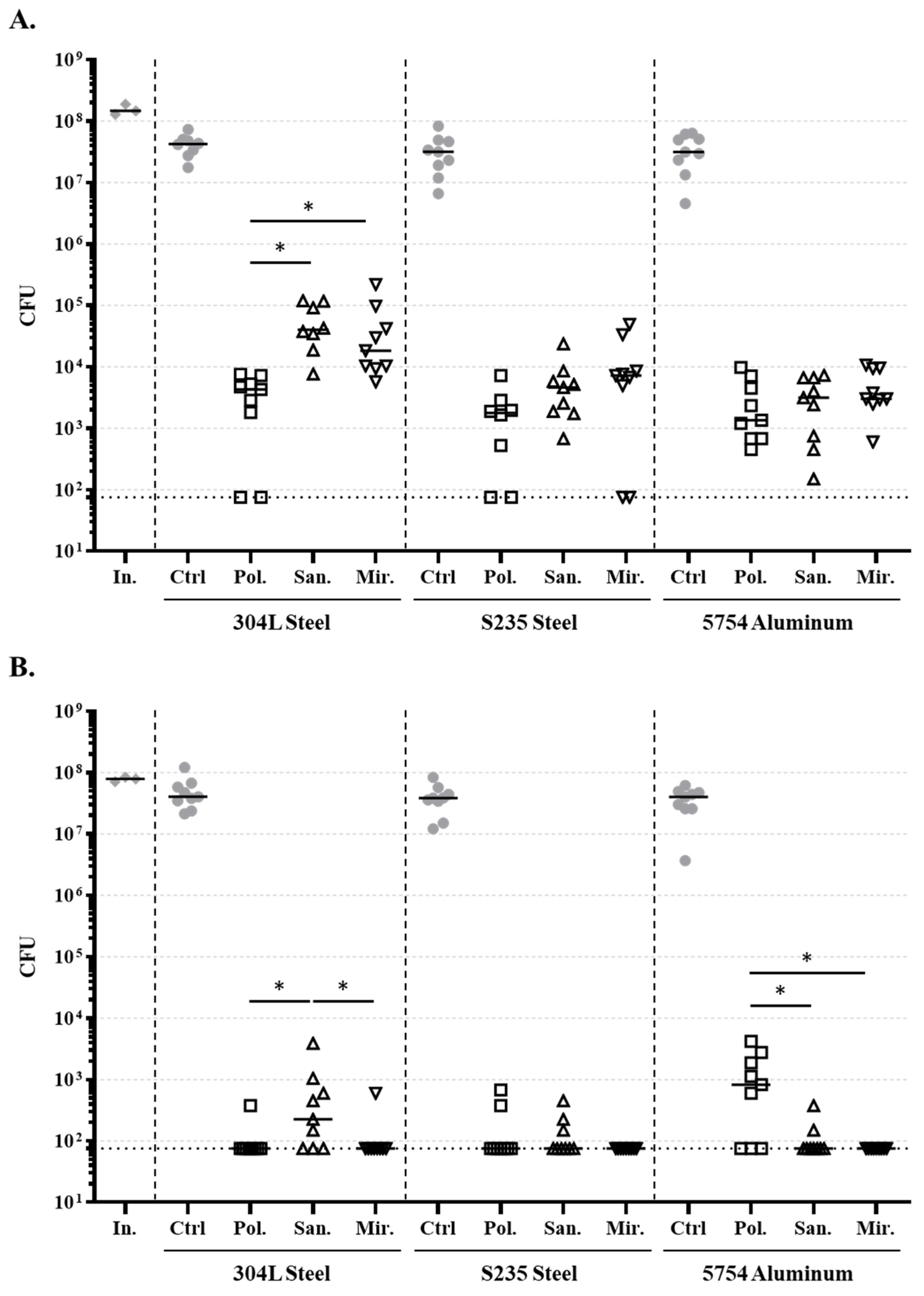
Disinfection in the hospital environment remains challenging, especially for wide and structurally complex objects such as beds or wheelchairs. Indeed, the regular disinfection of these objects with chemicals is manually carried out by healthcare workers and is fastidious and time-consuming. Alternative antibacterial techniques were thus proposed in the past decades, including the use of naturally antimicrobial UVC. Here, the antibacterial efficiency of a large UVC box built to accommodate wheelchairs was investigated through testing bacterial burden reductions on various parts of a wheelchair, with various support types and with several treatment durations. The results demonstrate a time-dependent antibacterial effect, with a strong burden reduction at only five minutes of treatment (>3-log median reduction in Escherichia coli and Staphylococcus epidermidis). The UVC flux and residual bacterial burden both significantly varied depending on the spatial location on the wheelchair. However, the nature of the support impacted the antibacterial efficiency even more, with residual bacterial burdens being the lowest on rigid materials (steel, plastics) and being the highest on tissue. On metallic samples, the nature of the alloy and surface treatment had various impacts on the antibacterial efficiency of the UVC. This study highlights the efficiency of the tested UVC box to efficiently and quickly decontaminate complex objects such as wheelchairs, but also gives rise to the warning to focus on rigid materials and avoid porous materials in the conception of objects, so as to ensure the efficiency of UVC decontamination.
Keywords: UVC; decontamination; antibacterial; healthcare-associated infections; wheelchair UVC; decontamination; antibacterial; healthcare-associated infections; wheelchair