Article

A Reproducible Deep-Learning-Based Computer-Aided Diagnosis Tool for Frontotemporal Dementia Using MONAI and Clinica Frameworks

by
Andrea Termine
1,†,
Carlo Fabrizio
1,†,
Carlo Caltagirone
2,
Laura Petrosini
3,* and
on behalf of the Frontotemporal Lobar Degeneration Neuroimaging Initiative
1
Data Science Unit, IRCCS Santa Lucia Foundation, 00143 Rome, Italy
2
Department of Clinical and Behavioral Neurology, IRCCS Santa Lucia Foundation, 00179 Rome, Italy
3
Experimental and Behavioral Neurophysiology, IRCCS Santa Lucia Foundation, 00143 Rome, Italy
*
Author to whom correspondence should be addressed.
These authors contributed equally to this work.
The FTLDNI investigators are listed below in the Acknowledgments.
Life 2022, 12(7), 947; https://doi.org/10.3390/life12070947

Submission received: 25 May 2022 / Revised: 16 June 2022 / Accepted: 21 June 2022 / Published: 23 June 2022
(This article belongs to the Special Issue Computational Analysis of Biomedical Data)

Abstract

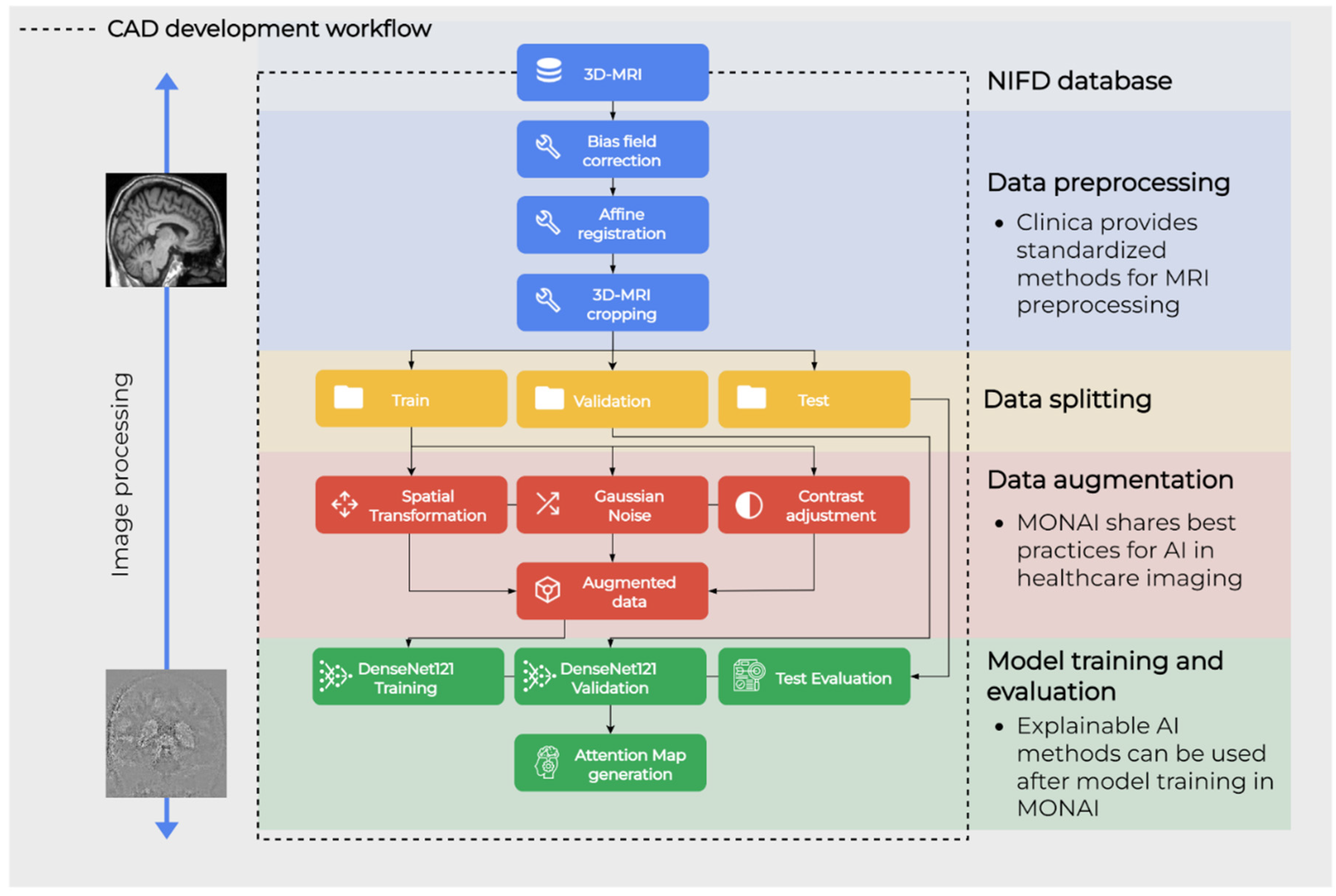
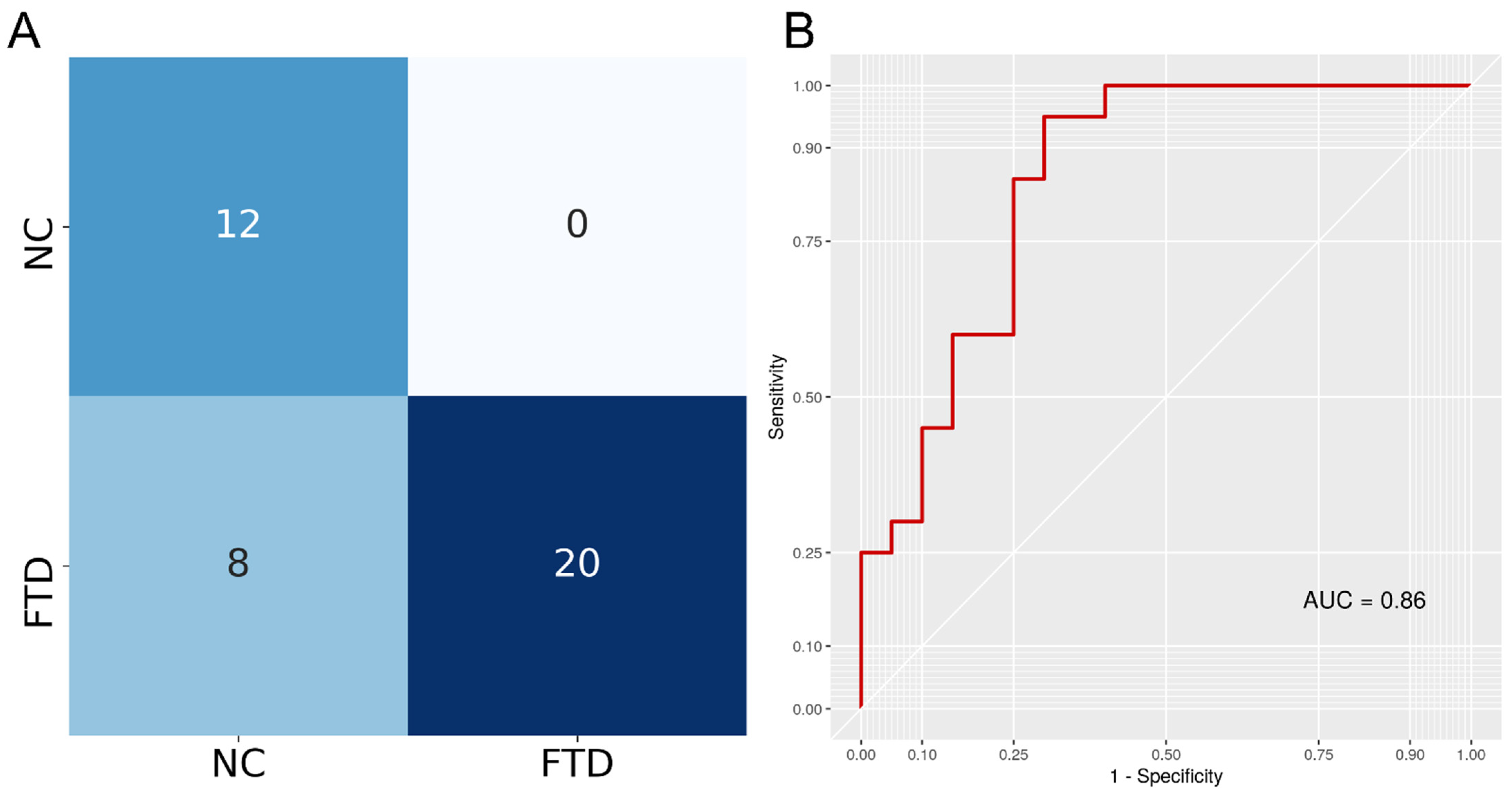
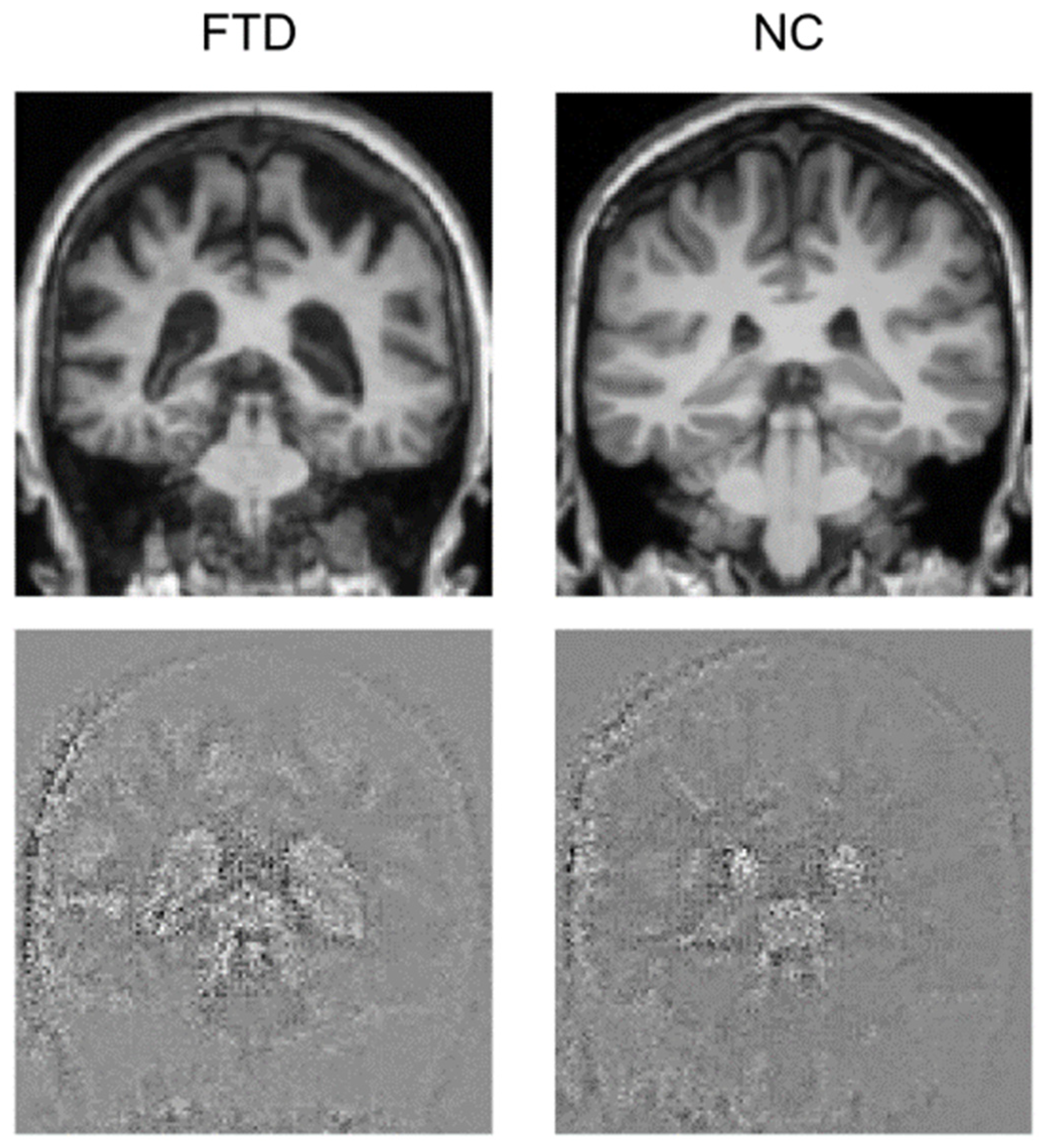
Despite Artificial Intelligence (AI) being a leading technology in biomedical research, real-life implementation of AI-based Computer-Aided Diagnosis (CAD) tools into the clinical setting is still remote due to unstandardized practices during development. However, few or no attempts have been made to propose a reproducible CAD development workflow for 3D MRI data. In this paper, we present the development of an easily reproducible and reliable CAD tool using the Clinica and MONAI frameworks that were developed to introduce standardized practices in medical imaging. A Deep Learning (DL) algorithm was trained to detect frontotemporal dementia (FTD) on data from the NIFD database to ensure reproducibility. The DL model yielded 0.80 accuracy (95% confidence intervals: 0.64, 0.91), 1 sensitivity, 0.6 specificity, 0.83 F1-score, and 0.86 AUC, achieving a comparable performance with other FTD classification approaches. Explainable AI methods were applied to understand AI behavior and to identify regions of the images where the DL model misbehaves. Attention maps highlighted that its decision was driven by hallmarking brain areas for FTD and helped us to understand how to improve FTD detection. The proposed standardized methodology could be useful for benchmark comparison in FTD classification. AI-based CAD tools should be developed with the goal of standardizing pipelines, as varying pre-processing and training methods, along with the absence of model behavior explanations, negatively impact regulators’ attitudes towards CAD. The adoption of common best practices for neuroimaging data analysis is a step toward fast evaluation of efficacy and safety of CAD and may accelerate the adoption of AI products in the healthcare system.
Keywords: deep learning; computer aided diagnosis; artificial intelligence; MONAI; Clinica; frontotemporal dementia; neurodegenerative diseases; neuroimaging; 3D MRI deep learning; computer aided diagnosis; artificial intelligence; MONAI; Clinica; frontotemporal dementia; neurodegenerative diseases; neuroimaging; 3D MRI