Article

Nitrogen Accumulation in Oyster (Crassostrea gigas) Slurry Exposed to Virucidal Cold Atmospheric Plasma Treatment

1
Unit of Food Hygiene and Technology, Food Technology and Veterinary Public Health, Institute of Food Safety, University of Veterinary Medicine Vienna, Veterinärpl. 1, 1210 Vienna, Austria
2
Viral Zoonoses, Emerging and Vector-Borne Infections Group, Institute of Virology, University of Veterinary Medicine Vienna, Veterinärpl. 1, 1210 Vienna, Austria
3
Department of Basic Medical Sciences, College of Medicine, Mohammed Bin Rashid University of Medicine and Health Sciences, Dubai Healthcare City, Dubai, United Arab Emirates
*
Author to whom correspondence should be addressed.
Life 2021, 11(12), 1333; https://doi.org/10.3390/life11121333
Submission received: 15 October 2021 / Revised: 26 November 2021 / Accepted: 28 November 2021 / Published: 2 December 2021
(This article belongs to the Special Issue Cold Plasmas: A New Frontier for Disinfection?)

Abstract

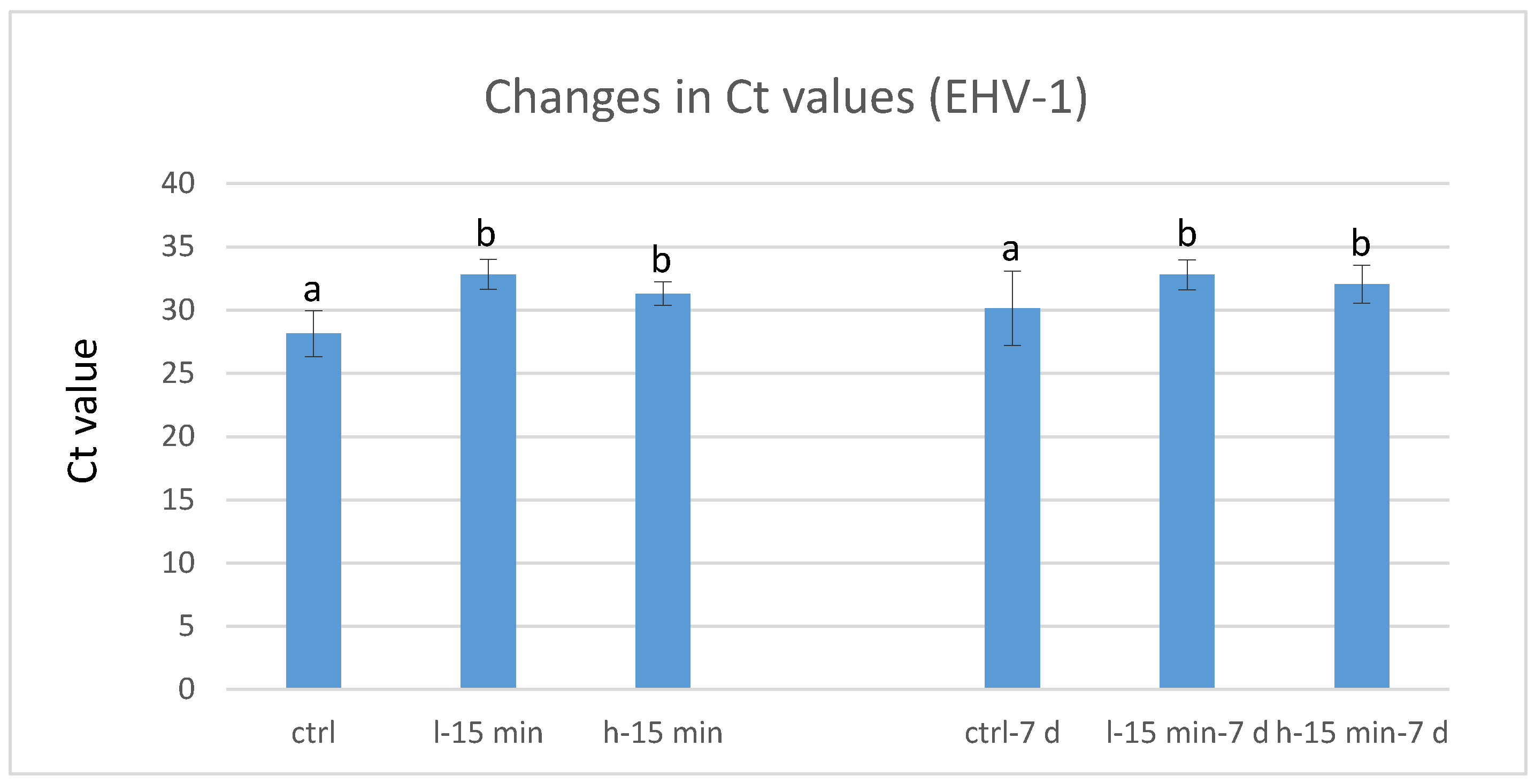
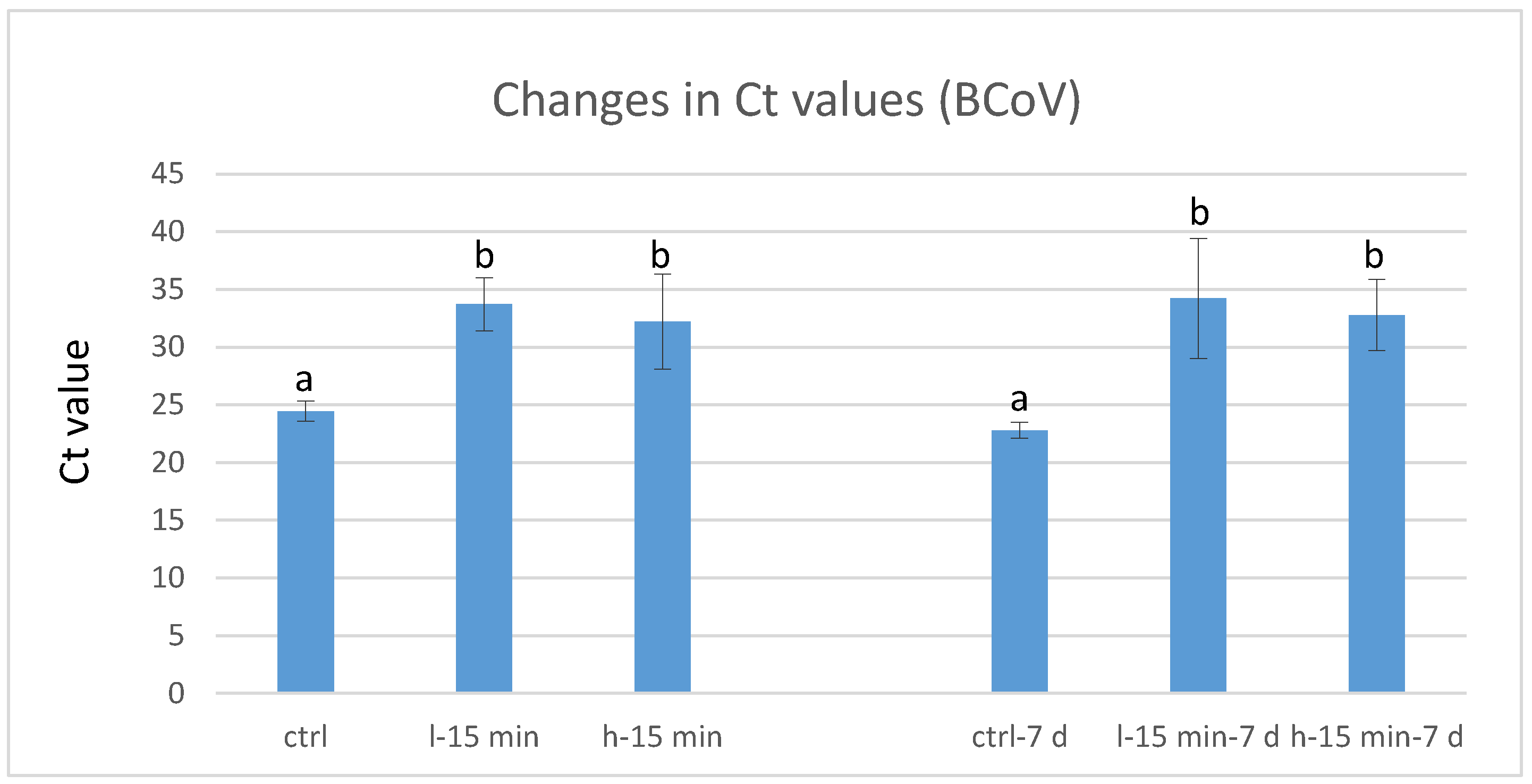
Viral contamination of edible bivalves is a major food safety issue. We studied the virucidal effect of a cold atmospheric plasma (CAP) source on two virologically different surrogate viruses [a double-stranded DNA virus (Equid alphaherpesvirus 1, EHV-1), and a single-stranded RNA virus (Bovine coronavirus, BCoV)] suspended in Dulbecco’s Modified Eagle’s Medium (DMEM). A 15 min exposure effectuated a statistically significant immediate reduction in intact BCoV viruses by 2.8 (ozone-dominated plasma, “low power”) or 2.3 log cycles (nitrate-dominated, “high power”) of the initial viral load. The immediate effect of CAP on EHV-1 was less pronounced, with “low power” CAP yielding a 1.4 and “high power” a 1.0 log reduction. We observed a decline in glucose contents in DMEM, which was most probably caused by a Maillard reaction with the amino acids in DMEM. With respect to the application of the virucidal CAP treatment in oyster production, we investigated whether salt water could be sanitized. CAP treatment entailed a significant decline in pH, below the limits acceptable for holding oysters. In oyster slurry (a surrogate for live oysters), CAP exposure resulted in an increase in total nitrogen, and, to a lower extent, in nitrate and nitrite; this was most probably caused by absorption of nitrate from the plasma gas cloud. We could not observe a change in colour, indicative for binding of NOx to haemocyanin, although this would be a reasonable assumption. Further studies are necessary to explore in which form this additional nitrogen is deposited in oyster flesh.
Keywords: herpesvirus; coronavirus; cold atmospheric plasma; oysters; mussels; nitrogen accumulation herpesvirus; coronavirus; cold atmospheric plasma; oysters; mussels; nitrogen accumulation